It has just been brought to my attention that at the beginning of this month Enphase Energy issued a press release announcing that:
Enphase Energy, Inc., a global energy technology company and the world’s leading supplier of microinverter-based solar and battery systems, announced today a successful demonstration of its bidirectional EV charger enabling vehicle-to-home (V2H) and vehicle-to-grid (V2G) functionality.
This product will leverage the power of grid-forming IQ8™ Microinverters and Ensemble™ energy management technology to seamlessly integrate into Enphase® home energy systems. In addition, Enphase’s bidirectional EV charger is expected to work with most EVs that support standards such as CCS (Combined Charging System) and CHAdeMO (a Japanese charging standard).
Here’s Enphase’s introductory V2G video:
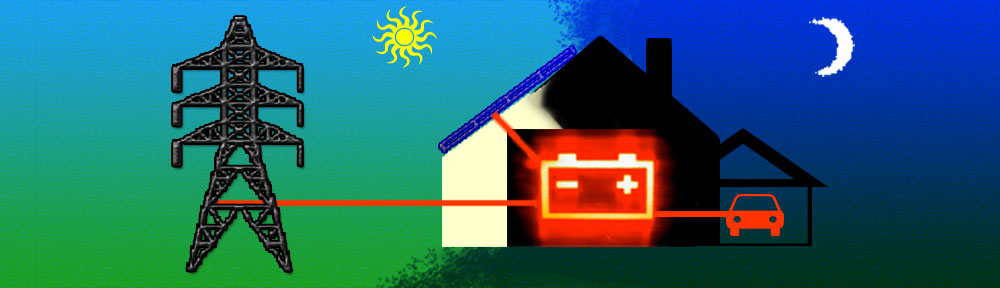
Here too is a still image from the video, which once again looks remarkably reminiscent of the decade old V2G UK banner at the top of this article!
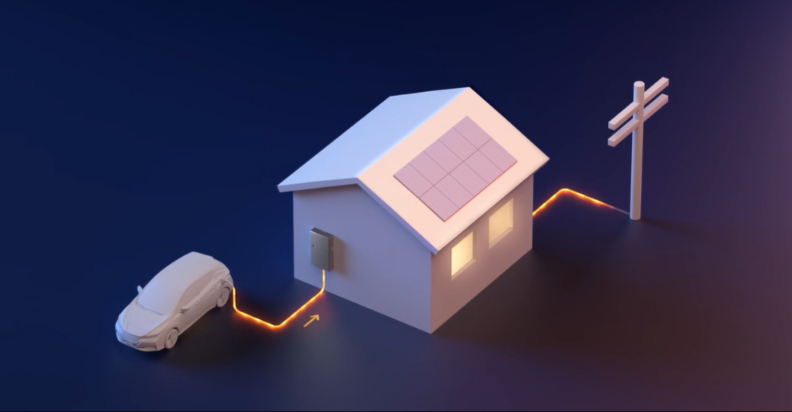
The press release continues:
In addition to charging an EV, Enphase’s bidirectional charger will support the following functionality:
Vehicle-to-home (V2H) –enables the EV battery to provide uninterrupted power to a home during a power outage.
Vehicle-to-grid (V2G) –allows the EV battery to share energy with the grid to help relieve the strain on electric utilities during times of peak energy demand.
Green charging –sends clean solar energy directly to the EV battery.
Raghu Belur, co-founder and chief products officer at Enphase Energy, said that:
The new bidirectional EV charger, along with Enphase’s solar and battery storage system, can be controlled from the Enphase App, empowering homeowners to make, use, save, and sell their own power. We are working with standards organizations, EV manufacturers, and regulators to bring this charger to market in 2024.”
Since I sit on numerous EV (dis)charging and energy management standard development committees it would be very interesting to discover precisely which “standards organizations, EV manufacturers, and regulators” Enphase is working with!
Mohammad Alkuran, Ph.D., senior director of systems engineering at Enphase Energy, added that:
“ The Enphase bidirectional EV charger is the next step on our roadmap to building a solar-powered, all-in-one home energy system that further unlocks electrification, resilience, savings, and control for homeowners. This product will be a game changer for homeowners who want maximum control over their energy usage.”
For those of us that are more technically inclined Enphase Energy has also published a white paper about their bidirectional EV charger. Here’s an extract:
The Enphase Bidirectional EV Charger is part of the Ensemble energy management technology, which is the heart of the Enphase® Energy System™. The Enphase Energy System is a complete solution that produces, stores, monitors, exports, controls, and analyzes the energy in your home.
To achieve this, Enphase Energy System brings solar, batteries, other energy resources like generators, fuel cells, connected appliances and software together in one complete package so that a homeowner can make, use, save, and sell their own power—all through the Enphase mobile app.
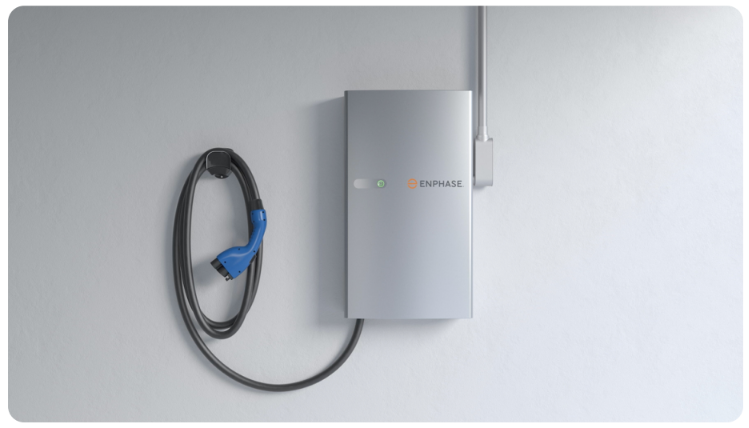
Enphase has pioneered power conversion devices called IQ8™ Microinverters. These microinverters are best-in class power electronics components that convert power and comply with standards like UL 1741 for grid reliability functions and IEEE 1547 for interconnection of distributed energy resources (DER). These microinverters can create their own grid, also known as microgrid. They can operate in on-grid mode (as grid-tied) and off-grid mode (creating a microgrid). Enphase microinverter technology is at the forefront of the grid interface for our solar microinverters, storage batteries, and EV chargers.
The Enphase Bidirectional EV Charger leverages Enphase’s IQ Microinverter technology and IQ™ Battery architecture. When the charger is used with a vehicle that supports bidirectional charging, it enables the transfer of power and communication between the Enphase Energy System and the EV. The combination of the EV and the bidirectional charger is similar to an Enphase IQ Battery and can be controlled in an equivalent fashion.
The use of the terms “grid-forming” and “microgrid” is of particular interest to yours truly, since not all V2x charging stations are so well endowed.
Roll on 2024!
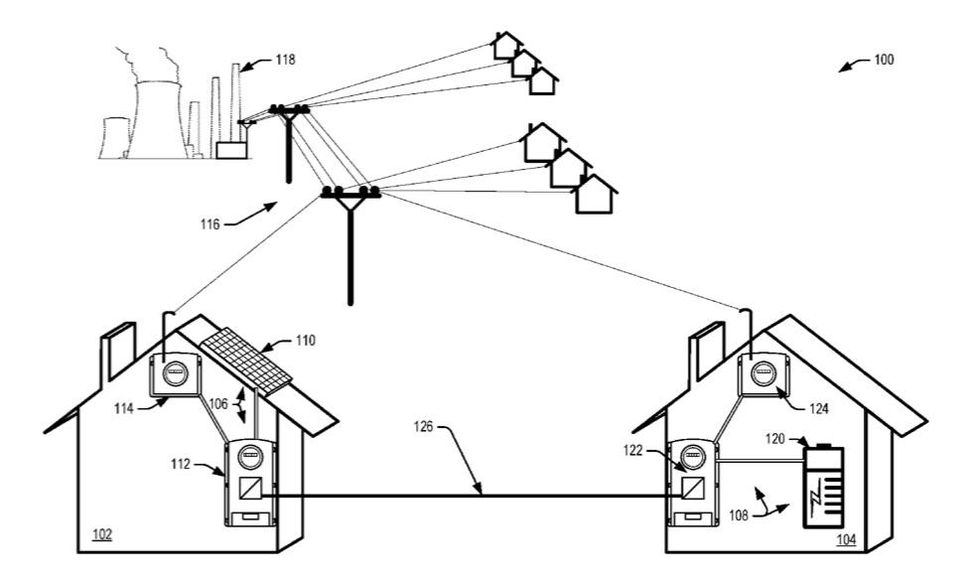
 On Aug. 29, the team successfully commissioned five bidirectional chargers and the aggregating control system as part of the Smart Power Infrastructure Demonstration for Energy Reliability and Security (