What Should Be In SEWTHA 2.0?

In case the six letter acronym (SLA for short) in our title for today means nothing to you it stands for “Sustainable Energy Without The Hot Air“, the title of a 2008 book by David MacKay, who amongst other things is Regius Professor of Engineering at the University of Cambridge. We first mentioned SEWTHA back in 2012, when Bill Gates praised it in an interview with the Wall Street Journal. I mention it again today because my attention was drawn by a bit of a barney (BoB for short) on Twitter between Prof. MacKay and Jeremy Leggett, who amongst other things is a founding director of solar PV company Solarcentury.

First of all here’s the BoB in question, including the V2G UK addendum!


In case you would like to listen to the edition of Evan Davies’ “The Bottom Line” on the topic of “Renewable Energy” under discussion, here it is:

http://bbc.in/1PIZD9G

Evan’s guests were Jeremy Leggett, Juliet Davenport of Good Energy and Paul Cowley, managing director of RWE Energy UK. Here are of few of my own “edited highlights”:

01:30 JD – One of the examples is Wyke Farm Cheeses. When they wash down the dairy every night and when they make the cheese, that they then anaerobically digest which creates a gas and they generate power. That’s one of our generators.

02:37 JL – A small cottage with bespoke solar tiles. these are different from the modules you use in solar farms or on a big installation on a commercial roof because they really are tiles. They go straight on the battens of the house. They generate electricity. They’re waterproof.

08:45 ED – I also wanted to talk about the physical constraints on whether you can get, in a country like ours, to 100% renewables. I’ve been very influenced by a particular book called SEWTHA by David MacKay.

09:30 JL – That book was published a good few years ago now. It’s out of date and I don’t think Dr. MacKay even believes that any more.

10:18 JD – We did some work, following David MacKay’s book actually, and used the work that he did. He went on to be the scientific advisor to DECC. He developed these pathways/models and we used them to look at how hard can you push the system to get it 100%. The UK has sufficient resource, whether it’s wind, whether it’s solar, to get to 100% on the current usage. [My emphasis!]

One of the things about climate change, it’s going to change the way we use power as well. So we saw last year energy usage in the domestic gas market dropped by 10%. 2014 one of the warmest years ever. You’ve also had the highest ever wind power production this winter. We’ve seen a lot of storms come through… So the parameters that David used in that book, I think we’re now looking for Hot Air 2.0.

11:30 ED – To give another example from the book, taking that it’s out of date, to get 50 kWh per day per person, and we’re currently using 125 kWh per day, to get 50 from offshore wind would mean filling a sea area twice the size of Wales. It would be expensive. It would be a very big deal.

One of things here, and it’s been much under-discussed in this area, is not only do we need to get our current electricity decarbonised, but we’re talking about decarbonising the transport industry to a large degree, and David MacKay’s good on this. You’ve got to almost double or triple your electricity generation, so not only do we have to replace the nuclear power and the coal that’s falling out of use over the next decade. You’ve got to replace that and add in plug-in cars. [My emphasis!]

12:59 JD – That’s what really exciting about right now. We’ve got a different problem on our hands. We’re going to have different technologies coming through, and we’re going to have to figure out how consumers use that. And actually the car storage part is really interesting because each car has a battery in it, and suddenly you’ve got a flexible power source that you can either use for transport or potentially use within people’s homes. And that piece of technology hasn’t really been thought through, about what that can really deliver [Juliet’s emphasis!]

13:45 PC – We see it in the press all the time. Wind turbines not running because the wind’s not blowing! The reality is that turbines generate around 85% of the time. They start generating at a very low wind speed… and then builds up to an optimum wind speed.

14:13 ED – We haven’t got yet a very efficient mechanism for storing electricity have we?

14:25 JL – Things are moving so fast. Let’s not forget, Apple is going to be mass producing electric vehicles four years from now. That is their stated intent. Each one of those is going to be a little power plant, and who knows how they’re all going to be hooked up to each other? It’s going to move so fast Evan, and I think this is the criticism that people like me have of, you know good guys like David MacKay with his book. They’re still flogging the idea of these vast centralised, humongously expensive centralised power plants, nuclear in particular, that take 10 years to construct.

The upshot of all this, apart from the BoB? More and more people are mentioning the concept of vehicle-to-grid technology in public pronouncements here in the UK. Andrea Leadsom at DECC assures us that she’s “as keen as mustard” on energy storage. That is of course nice to hear, but what do Physics & Chemistry have to tell us about the hard realities of distributed energy storage? And what about DECC & Ofgem too, with their assorted rules and regulations?

I might also have a minor quibble about Juliet’s “hasn’t really been thought through” remark. Some people have been thinking quite hard about V2H and V2G for quite some time!

OECD Advocates Investment in Infrastructure

It’s a point we’ve been peddling for years now, but it looks like the OECD have at long last come to the conclusion that investment in infrastructure is in fact an excellent idea. By way of some proof that we haven’t been in a minority of one up to now, here’s The Economist from October 2014, underneath a picture of a parrot pushing up the daisies:

Germany’s chancellor, Angela Merkel, should allow France and Italy to slow the pace of their fiscal cuts; in return, those countries should accelerate structural reforms. Germany, which can borrow money at negative real interest rates, could spend more building infrastructure at home.

That would help, but not be enough. It is a bit like the early years of the euro debacle, before Mr Draghi’s whatever-it-takes pledge, when half-solutions only fed the crisis. Something radical is needed. The hitch is that European law bans many textbook solutions, such as ECB purchases of newly issued government bonds. The best legal option is to couple a dramatic increase in infrastructure spending with bond-buying by the ECB. Thus the European Investment Bank could launch a big (say €300 billion, or $383 billion) expansion in investments such as faster cross-border rail links or more integrated electricity grids — and raise the money by issuing bonds, which the ECB could buy in the secondary market.

Obviously here at V2G UK we were particularly keen on the bit about “more integrated electricity grids”. More recently the United Kingdom’s House of Commons Energy & Climate Change Select Committee put much the same message this way:

This promising new demand-side response technology has been disadvantaged in the auctions under the Government’s Capacity Market – meaning costs and emissions could be higher than necessary. Only a fraction of the £1 billion pounds that will be spent keeping the lights on through the Capacity Market will actually provide new capacity and just 0.4% will go on demand-side response – with most of the rest going to existing fossil fuel power stations, paying some of them to stand idle for much of the year.

Today the OECD announced its latest “Interim Economic Outlook” in a blaze of publicity under the headline “Stronger growth remains elusive: Urgent policy response is needed”:

Global GDP growth in 2016 is projected to be no higher than in 2015, itself the slowest pace in the past five years. Forecasts have again been revised down in light of disappointing recent data. Growth is slowing in many emerging economies with a very modest recovery in advanced economies and low prices depressing commodity exporters. Trade and investment remain weak. Sluggish demand is leading to low inflation and inadequate wage and employment growth.

Financial instability risks are substantial. Financial markets globally have been reassessing growth prospects, leading to falls in equity prices and higher market volatility. Some emerging markets are particularly vulnerable to sharp exchange rate movements and the effects of high domestic debt.

A stronger collective policy response is needed to strengthen demand. Monetary policy cannot work alone. Fiscal policy is now contractionary in many major economies. Structural reform momentum has slowed. All three levers of policy must be deployed more actively to create stronger and sustained growth. The recipe varies by country, especially with regard to needed structural reforms.

Diving into the depths of the OECD report itself, the bit that caught my attention runs as follows:

A stronger collective fiscal policy response is needed to support growth and provide a more favourable environment for productivity-enhancing structural policies. Governments in many countries are currently able to borrow for long periods at very low interest rates, which in effect increases fiscal space. Many countries have room for fiscal expansion to strengthen demand. This should focus on policies with strong short-run benefits and that also contribute to long-term growth.

A commitment to raising public investment collectively would boost demand while remaining on a fiscally sustainable path. Investment spending has a high-multiplier, while quality infrastructure projects would help to support future growth, making up for the shortfall in investment following the cuts imposed across advanced countries in recent years. These effects would be enhanced by, indeed need to be undertaken in conjunction with, structural reforms that would allow the private sector to benefit from the additional infrastructure; notably in the Europe Union, cross-border regulatory barriers are a significant obstacle.

Here’s a video of the proceedings in Paris earlier today:

The presentation was given by Catherine Mann, the OECD’s chief Economist, and the bit where she mentions the OECD’s concerns about the need for fiscal stimulus and investment in infrastructure is is around half an hour into the video:

Implementation of the “Juncker” investment plan has yet to deliver the targeted boost to investment. The further harmonisation in regulation needed to make the plan work also lags.

Note also Ms. Mann’s remark during the Q&A session, at around 48 minutes:

Fiscal spending on just any old thing, to the same white elephants, that is not the type of collective action that is going to generate the improvement in growth and the improvement in debt to GDP fiscal sustainability that we can see as possible. So our recipe is very much one that we started talking about more than a year ago. The recipe is we deploy the full set of tools that we have at our disposal as policymakers. Fiscal and monetary policy under the demand side, and a range of structural reforms that are unique to each country, depending on what it is they need to do.

Consumer Attitudes to Smart Meters

According to a press release from Smart Energy GB:

Consumers who have upgraded to a smart meter as part of Britain’s national rollout are continuing to demonstrate high satisfaction with their new technology, and greater control over their energy bills.

Smart Energy GB, the national campaign for Britain’s smart meter rollout, today publishes the third Smart energy outlook, the largest independent barometer of national public opinion on energy and smart meters. The research surveys more than 10,000 people around the country.

The bullet point from the “Smart Energy Outlook” report are:

  • More than half (52 per cent) of people with smart meters say their new meter is helping them save money
  • Eight in ten (80 per cent) people with smart meters have taken at least one step to reduce how much energy they use
  • Eight in ten (79 per cent) people with smart meters would recommend them to others
  • 85 per cent of those with smart meters say they have a better understanding of what they are spending on energy
  • People with smart meters are more confident in the accuracy of their bills (81 per cent) when compared to those with traditional meters (64 per cent)
  • Three quarters of people with smart meters (75 per cent) say that they understand their energy bills, while just 61 per cent of people using traditional meters said the same
  • Nearly three quarters (72 per cent) of people with smart meters say that they have the information they need to choose the right energy tariff, far higher than those with traditional meters (57 per cent)

Just in case you are now wondering “How do smart meters work?” here’s a video explanation from Smart Energy GB:

I wonder how many of the people surveyed by Populus would be interested in having an electric vehicle capable of powering their home, together with a smart meter and a “Smart Grid” that allowed them to optimise the charging and discharging of their EV’s batteries to their own financial advantage?

In partial answer to that supplementary question, here is our report on consumer attitudes to “Smart Charging” of electric vehicles

Riversimple Launch the Rasa Hydrogen FCEV

We’ve mentioned the Riversimple open source hydrogen fuel cell electric vehicle before, and we could not help but notice the countdown to the launch of their new “Rasa” model on their Twitter feed:

Today there’s an in depth article in the Financial Times about the Rasa and the reasoning behind it. Here’s the edited highlights:

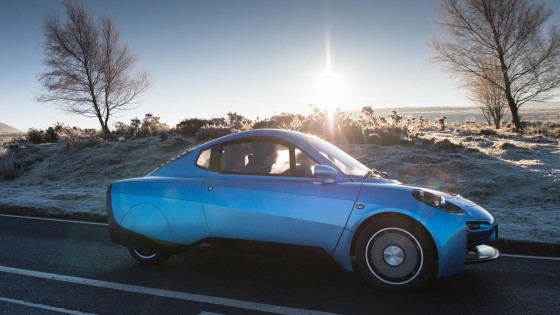
Riversimple Movement is taking its hydrogen fuel-cell project — now 15 years in the making — to the next stage with the unveiling of its first production-ready, road-legal prototype and the start of a public trial.

In the autumn, about 20 people will have the chance to drive away a carbon-fibre Rasa, which may look slightly kooky with its rear-wheel spats and butterfly doors but packs four electric motors and can travel for 300 miles on a single fill-up.

“We’re not targeting the ecological market. We want it to look good,” says Hugo Spowers, who founded the company in 2001.

The Rasa was named for the blank-slate approach the company says it is taking to carmaking. Parts are chosen not on the basis of how cheap, light or powerful they are but how they will affect the business model.

“One investor told me this was the first time he’d seen a car built for a business model rather than the other way round,” says Mr Spowers.

Please read the FT article in full, but also take a look at what Riversimple themselves have to say. According to “Technology behind the car” section of their web site:

Every aspect of the hydrogen Mark ll Alpha has been created and interrogated for simplicity, efficiency, lightness, strength, affordability, safety and sustainability.

This first car is a two seater ‘network electric’ car, powered by a hydrogen fuel cell. The chassis is a carbon fibre monocoque made from very lightweight but extremely stiff carbon fibre composites. The monocoque chassis weighs less than 40kg.

Our car is very light – we have a target weight of 520 kg. It embodies various key features:

  • Four electric motors, one in each wheel
  • Motors as brakes – recovering over 50% of kinetic energy when braking
  • Super-capacitors to store this energy and provide most of the power for acceleration
  • A low powered hydrogen fuel cell ( 8.5 kW)
  • A body made of lightweight composites

It’s the synthesis of all these technologies that delivers the groundbreaking efficiency and range, many times better than inserting fuel cells into conventional, heavy, vehicles. The production prototype should do c.250 mpg (equivalent), with a range of 300 miles. Emissions are zero at tailpipe and c.40gCO2/km Well-to-Wheel – even if the hydrogen comes from natural gas.

We’ll keep you posted as the Rasa launch countdown continues. According to Twitter:

Here’s a teaser video to whet the appetite for the big reveal on 17 Feb – 5days to go!

[Edit – February 17th 2016]

The Riversimple Rasa has been unveiled today:

According to the Riversimple blog:

The new car reflects a simple idea that was first mooted in the 4th century BC by the great philosopher and scientist, Aristotle. It is the idea that something new begins, not with predetermined structure and characteristics, but with a blank slate – tabula rasa – moment of potential.

We set out with a blank slate, to design a car for the world in which we now live, shaped by the best technology available to us and answerable to our most pressing concerns. We set out to build a local car that will take people on their local journeys, in the way that they wish to travel, at a cost that is affordable – and without leaving a heavy footprint of air pollution and environmental degradation. To do this we selected a still evolving, but incredibly promising and safe technology. This is hydrogen fuel cell technology.

Here’s another video, this time revealing the Rasa in all its low drag glory:

I did enquire on Twitter where the nearest suitable filling station for a Rasa might ultimately be. I haven’t received an answer yet, but if it isn’t “Exeter” then I rather hope it will be “Plymouth”. According to the SWARM Project web site:

This project will establish a demonstration fleet of small passenger vehicles that builds on and expands existing hydrogen refuelling infrastructure. Three European regions will be participating in this effort: the UK (the Midlands and Plymouth), the Brussels area and Wallonia, and the Weser-Ems region in NorthWest Germany. Each of these regions will deploy a new hydrogen refuelling site to close the gaps in a continuous ‘hydrogen highways’ that leads from Scotland via the Midlands to London, connecting to Brussels and on to Cologne and Hamburg/Scandinavia/Berlin via Bremen.

The vehicles employed are low-cost, high fuel-efficiency, hybridised, light-weight passenger cars specifically designed for city and regional transport. These vehicles provide a complementary pathway to commercialisation to the large Original Equipment Manufacturer (OEM) of hydrogen fuel cell options, by allowing near-term rollout on a commercial basis to a wide range of users – in parallel with the planned rollouts for large OEM vehicles from 2015. Their deployment regions will gain the infrastructure, public exposure and technological understanding to act as seed locations for future large scale OEM vehicle rollout.

You will note that Riversimple are a member of the SWARM project consortium.

Robin Berg’s TEDx talk on “A new local energy and transport system”

I had the pleasure of meeting Robin Berg in Utrecht last summer at the launch of the LomboXnet solar PV powered bi-directional vehicle to grid system. Here is a video of Robin’s recent presentation at TEDx Utrecht:

Robin says many interesting and enlightening things, but for the moment please consider this one:

Tomorrow your car will run electric. The day after it will power your house. It will be 100% renewable, it will be 100% clean, and it will be the end of coal, oil and gas.

Storm Imogen Follows Floods in South-West England

The United Kingdom’s Met Office is just down the road from here in Exeter, and they have just announced that the newly named “Storm Imogen” is heading our way:

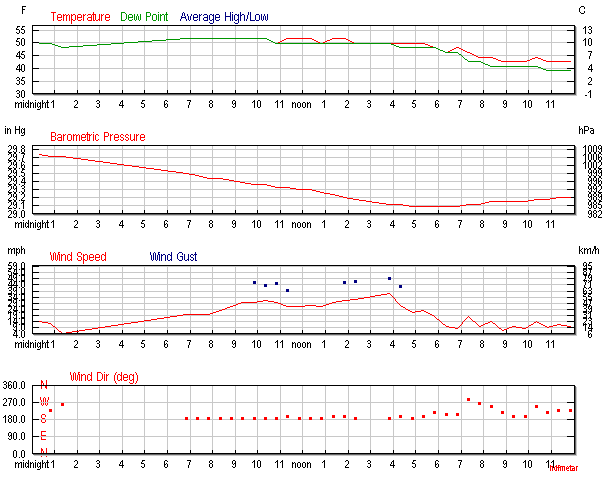
Imogen follows in the footsteps of her brother Henry further north and the unnamed storm that has just deposited 57.8 mm of rain on Okehampton in 24 hours:

whilst Exeter Airport endured gusts of wind up to 50 mph and a mere 21.0 mm of rainfall:

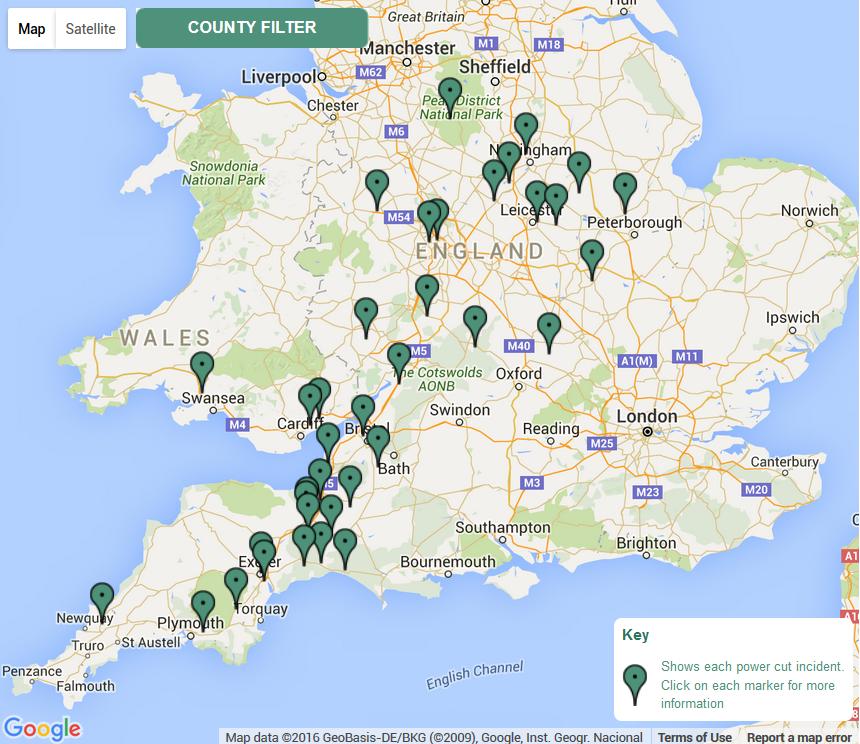
We have previously speculated about the effects of such storms on Western Power Distribution’s network in the South-West Peninsula, so here is how things look qualitatively at the moment, following today’s flooding:

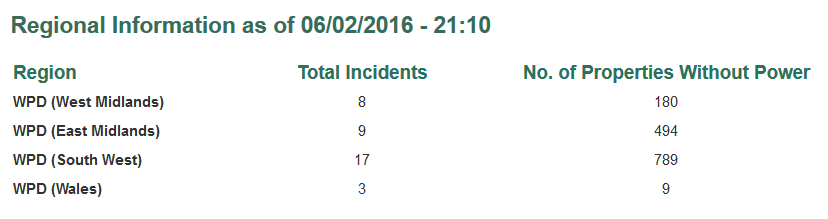
and here’s the associated quantities

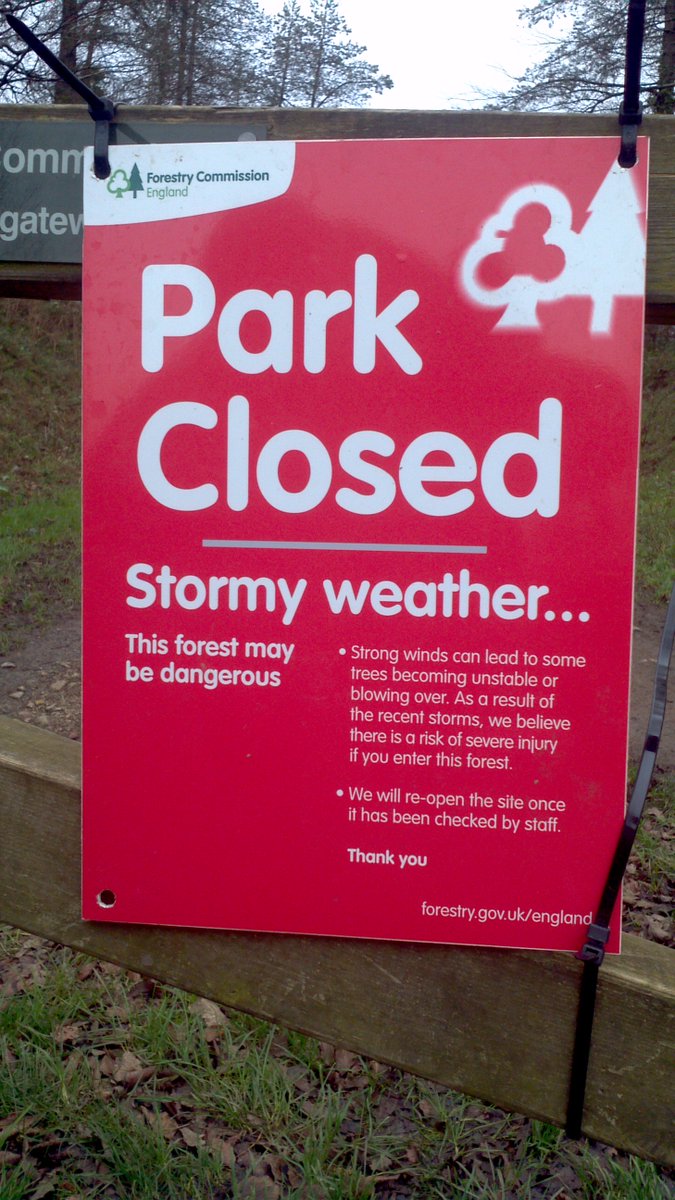
Here’s how Haldon Hill has been preconditioned for Imogen’s imminent arrival:

and here is the Met Office’s forecast [updated Sunday AM] for our back yard on Monday:

Do you suppose there will be another power cut here tomorrow?

UK Parliament Debates Energy Storage

It’s all go on the energy storage front in the UK. Yesterday not only was V2G mentioned in the mainstream media but it was also debated by a committee in the House of Commons. The summary of the Energy Bill [Lords] 2015-16 states that it is:

A Bill to make provision about the Oil and Gas Authority and its functions; to make provision about fees in respect of activities relating to oil, gas, carbon dioxide and pipelines; to make provision about wind power; and for connected purposes.

I presume energy storage must count as a “connected purpose”, since the proposed New Clause 14 which was under discussion yesterday, reads as follows:

Electricity storage

(1) Section 4 of the electricity Act 1989 is amended as follows.

(2) After subsection (1)(c) insert—

“(d) stores electricity for the purpose of giving a supply to any premises or enabling a supply to be so given,”

(3) At end of subsection (4) insert—

““Store” means the conversion of electricity into a form of energy which can be stored, the storing of the energy which has been so converted and the reconversion of the stored energy into electrical energy in devices with an individual capacity of more than 50MW.”

(4) Section 6 of the electricity Act 1989 is amended as follows.

(5) After subsection (1)(d) insert—

“(e) a licence authorising a person to store electricity for the purpose of giving a supply to any premises or enabling a supply to be so given (‘a storage licence’);”

(6) After subsection (2) insert—

“(2ZA) In addition to holding a storage licence, the same person may be a holder of—

(a) a distribution licence,

(b) a transmission licence, or

(c) a generation licence.

(2ZB) The Secretary of State may by order determine the circumstances under which a person may hold a storage licence in addition to a distribution licence, a transmission licence or a generation licence under subsection (2ZA).

Events in The House were recorded for posterity, and the debate about NC14 can be seen in this video:

In some of the edited highlights Dr. Alan Whitehead, who is Shadow Minister for Energy and Climate Change, pointed out that:

A number of the issues we have discussed in the Committee—intermittency of wind, base-load problems and a whole range of other issues—can begin to be addressed by battery storage of electricity.

For example, if a battery storage system is attached to a solar array, the life of that solar array can be extended far beyond the period during the day when the sun shines. Clearly, the power that comes from it can go right through the night. We are already seeing that effect, to a minor extent, with solar arrays on streetlights, but on a much larger scale it could revolutionise the way in which solar is used in future.

Battery storage can also be used in relation to wind. We have heard that wind, quite self-evidently, does not always blow, and sometimes when it does blow, it blows rather a lot. Ensuring that the capturing of that variability is smoothed out into a regular supply through the attachment of battery storage to the wind turbine is clearly a positive step forward as far as wind supply is concerned.

However Andrea Leadsom, who is The Minister of State at the Department of Energy and Climate Change ultimately responded by saying:

On this last new clause, I am as keen as mustard on electricity storage; it has a vital contribution to make to dealing with intermittency and I wish we were five years ahead—it will be interesting to see how much we have managed to achieve in creating this new ability to store intermittent generation.

New clause 14 would create a new licence category for electricity storage operators and allow other licence holders, such as generators and transmission and distribution network operators, to hold an electricity storage licence. The creation of a separate electricity storage licence is an option that is being considered by my Department and one of a number of issues for storage operators to be included in a call for evidence in the spring. This will enable us to test it against other options, which may be less regulatory and burdensome, more targeted and, importantly, faster to implement. So, much as I would love to say, on this very last new clause, that we agree with the hon. Gentleman, the problem is that licensing storage now would be premature. Indeed, the Electricity Storage Network, which is a key trade body for the storage industry, has criticised this new clause on the grounds that it

“pre-empts the current work by the Department” and

“may hinder, rather than help, the progress of well thought-out strategies to support … the storage industry.”

following which Dr. Whitehead withdrew his proposed amendment.

All of which does rather beg the question of what “well thought-out strategies to support the storage industry” here in the United Kingdom will eventually look like, and whether they will accommodate “EV owners”, “Communities” and/or “Aggregators” as well as Distribution Network Operators, Transmission System Operators and electricity generators, whether distributed or centralised.

V2G and Energy Storage are in the News. In the UK!

Spring is in the air here in the United Kingdom. Several of the people I debate the future of distributed energy storage with on a regular basis have been in the news this week!

First up was Mark Thompson of Innovate UK. According to the headline in an article in Utility Week:

EVs are stable energy storage asset, says Innovate UK

The article goes on to explain that:

Innovate UK has brushed aside ongoing fears around using electric and plug-in vehicles as an energy storage facility, insisting they present a “car park of energy storage” for UK network companies after 2025.

Innovate UK’s lead technologist for energy systems Mark Thompson said at a recent storage event that fears that using EV batteries for grid support will rapidly degrade the batteries are unfounded. Innovation projects already undertaken into EV charging reveal the batteries will be accessible to the grid 95 per cent of the time.

Thompson said “a lot of anxiety” around using EVs as energy storage centres on battery recycling, but tests show that using an EV battery to provide 7kW of grid support is equivalent to driving at just 20mph.

Mark went on to point out:

That is a modest amount of power but aggregated would be very useful for a distribution network operator. The stress level on that battery of sitting there continually pushing out 7kW compared to a 35 minute journey is a no-brainer, it’s an extremely calm and un-stressful environment for that vehicle. Car manufacturer Nissan has been very vocal on the potential benefits of using EVs for grid support because there really isn’t an issue compared to the complexities and stresses that the battery goes through for a pretty normal driving scenario.

If we can be clever and come up with the right business models to engage people in moving their charging and allow network operators to have some control, if we can be savvy about that then network investment costs are virtually zero until you are well into the 2020s

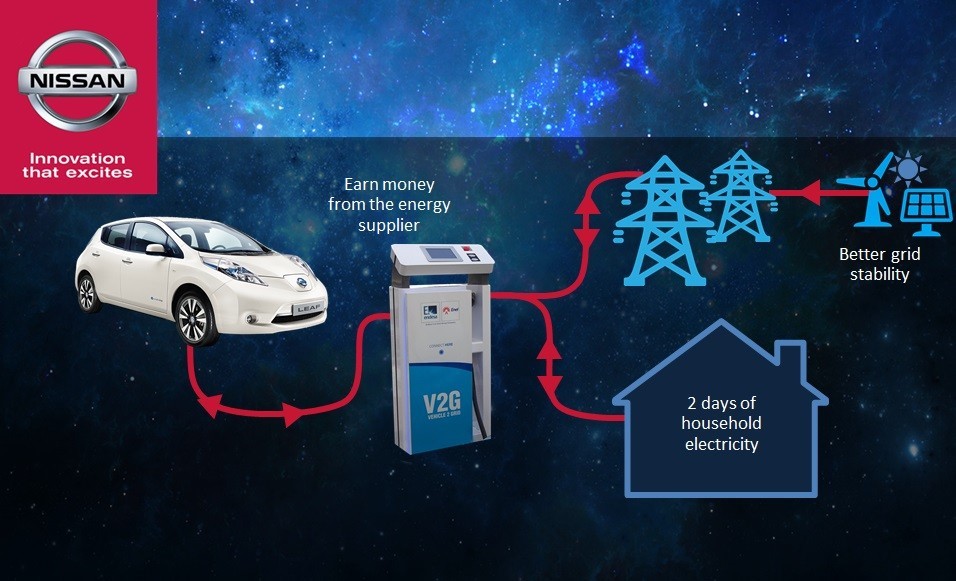
Here’s one of Nissan’s infographics showing how they see the technology working:

UK Plc “being savvy” and providing support for the “right business models” is another matter entirely however! Utility Week continued:

Projects such as My Electric Avenue have revealed that vehicles are sat stationary at either the home or workplace, both potential charging locations, 95 percent of the time making EVs a “stable storage asset”. Based on “very modest projections” there could be as many as 300,000 EV or hybrid vehicles on UK roads by 2025, presenting around 4GW of potential storage to the UK’s electricity system with very little network reinforcement required.

Having discussed the Utility Week article with Mark Thompson it seems they have misinterpreted a couple of points:

I didn’t wish to imply that cars would be 95% available, just that they are “parked for 95% of the time” but that data DNO projects such as My Electric Avenue and ETI analysis indicate that a “very healthy proportion” of plugins will be accessible over the 24 hour cycle for grid support given charging and use patterns. The 95% figure as currently illustrated is not of course realistic, but perhaps eventually grid “connected availability” may be in the region of 30-60% depending on the time of day, which in time will amount to a significant amount of grid connected resource.

Also, the 4GW figure should be 4GWh.

Here’s the original slide from Mark’s presentation, with the correct units clearly visible on the Y axis and in big letters towards the end of the headline:

Today the mainstream media picked up the story in the form of an article by Damian Carrington in The Guardian entitled “From liquid air to supercapacitors, energy storage is finally poised for a breakthrough”. Damian opens with a quote from Jill Cainey, director of the UK’s Electricity Storage Network.

It doesn’t always rain when you need water, so we have reservoirs – but we don’t have the same system for electricity.

A battery project can take 12-18 months from saying we will do it, to completion. California is aggressively pursuing a low-carbon agenda and they don’t want diesel [generator back-up] on the system. Amber Rudd is talking a lot about energy storage, but we need a clear regulatory steer. The planes are circling, but there is no runway to land on.

Next Mark Thompson is quoted once again, apparently from the Utility Week article rather than from his actual presentation:

Using electric car batteries as a smart storage network while still in the cars is a promising option in the future, according to Mark Thompson at Innovate UK, a government agency. He says there could be 4GW capacity – a nuclear power station is about 1GW – by 2025 across the 300,000 electric cars projected to be on UK roads by then. He says cars are stationary for 95% of the time and using them could save billions of pounds, removing the need for new power stations and power lines.

However the article continues:

While interest in energy storage projects in the UK is surging – a recent call from National Grid for 200MW of short-term storage was oversubscribed six times – it is starting from a low base: just 24MW has been installed compared to the 5,000MW the government’s official advisers, the Committee on Climate Change, envisages in a low-carbon nation in 2030.

In November, energy secretary Amber Rudd said: “Locally generated energy supported by storage, interconnection and demand response, offers the possibility of a radically different model… We are looking at removing regulations that are holding back smart solutions, such as demand side response and storage.”

Removing the regulations that are holding back smart solutions is one of the reasons Mark and Jill were already on my list of people to call this week. That’s because DECC’s current consultation about how to “Ensure Regulation in the Energy Sector Encourages Innovation” closes on February 11th!

The Great Storm Henry Blackout Saga

Regular readers will realise that here at V2G UK we take an unhealthy interest in power cuts, or outages as they call them on the other side of the Atlantic. Not least that’s because we suffered an extended lack of mains electricity ourselves not so very long ago!

We recently followed the progress of the controversially named “Storm Jonas” along the eastern seaboard of the United States using helpful information provided online by Distribution System Operators (DSO using the generic term, or ISO if you’re from the US!) such as Duke Energy. Here’s an example:

Since “Storm Henry” was officially named by the UK’s Met Office a couple of days ago, and is due to arrive over on this side of the North Atlantic today, we thought we’d undertake a similar exercise for the western seaboard of the United Kingdom this week. However there is a fly in the blackout ointment. After perusing the web sites of the Distribution Network Operators (DNO in the Queen’s English) most likely to be affected by Storm Henry it seems none of them provide the summary information available in the top left hand corner of Duke Energy’s power outage map, including in particular “Active outages” and “Affected customers”.

Following some conversations with the DNOs on Twitter it appears as though we’ll need to keep track of a set of press releases to try and keep real-time tabs on the forthcoming Great British Blackouts. The first of these that we’ll bring to your attention is from Scottish Hydro Electric Power Distribution (SHEPD for short), the Scottish portion of Scottish and Southern Energy Power Distribution (SSEPD for short):

Scottish Hydro Electric Power Distribution (SHEPD) has moved to Yellow Alert after closely monitoring the development of high winds.

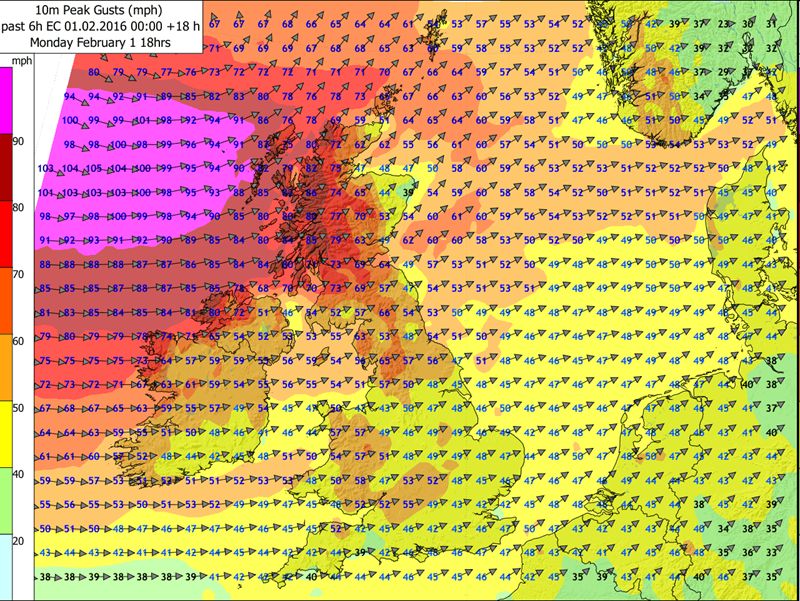
Our weather models anticipate Storm Henry will bring wind speeds over 90 mph in the Western Isles and Skye. All other parts of our network area will see winds reach 70-90 mph.

We have frontline and support staff standing by and we have engineers in the areas we expect to be hit by the storm.

Our customer service team has been making outbound calls to customers on our Priority Service Register in the affected areas to alert them and offer extra assistance, where required.

Members of the public should not approach fallen or damaged power lines, which may still be live.

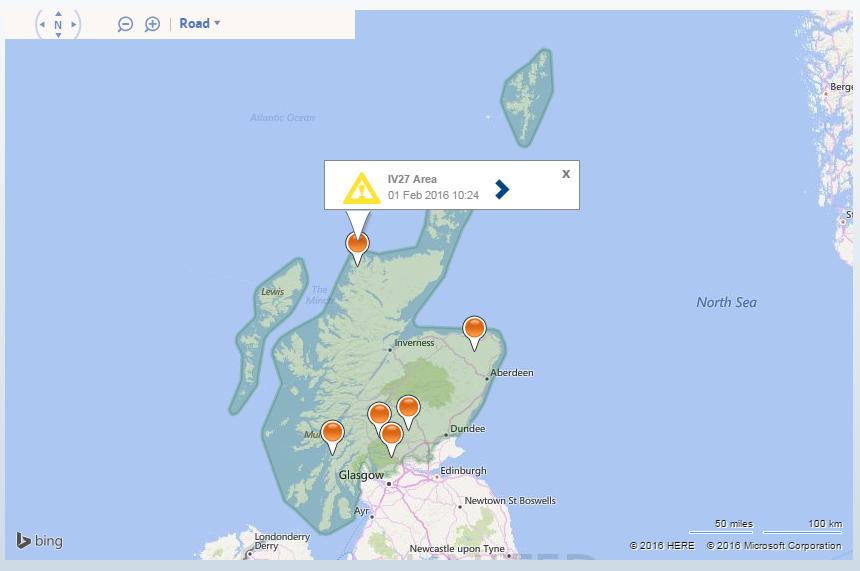
Whilst we wait for the full force of Storm Henry to hit, here’s how the SHEPD live power cut map looks at lunchtime on Monday February 1st 2016: