Power Packed Cyber Security?

Given my evident enthusiasm for all things V2x, regular readers may be wondering why I have been more hesitant than most commentators to unequivocally applaud Greg Jackson’s announcement of Octopus Energy’s “Power Pack” retail vehicle-to-grid offer last week? £299 per month which covers all your electric mobility needs including “fuel”. What’s not to like? Surely it’s “a compelling consumer offer”, as I myself put it!

As already hinted at in my introductory article linked to above, perhaps it’s not quite so attractive if you are in fact a “prosumer”, with a few solar PV panels already installed on your very own roof? Here are some other recent items of news to ponder too. In these troubled times hackers are hard at work around the world. There was initial speculation that the recent Spanish “blackout” was a cyber attack. However, according to the BBC on April 29th:

The Spanish grid operator has ruled out a cyber attack as the cause of a massive power cut that crippled Spain, Portugal and parts of France on Monday.

Red Eléctrica’s operations director Eduardo Prieto said preliminary findings suggest “there was no kind of interference in the control systems” to imply an attack, echoing Portuguese Prime Minister Luís Montenegro the day before.

But the exact reason behind the cut is still unclear.

More recently, it was announced on June 17th that:

In January 2025, we participated in Pwn2Own Automotive with multiple targets. One of them was the Tesla Wall Connector — the home charger for electric vehicles (including non-Tesla ones)…

This article explains how we studied the device, how we built a Tesla car simulator to communicate with the charger, and how we exploited this logic bug during the competition.
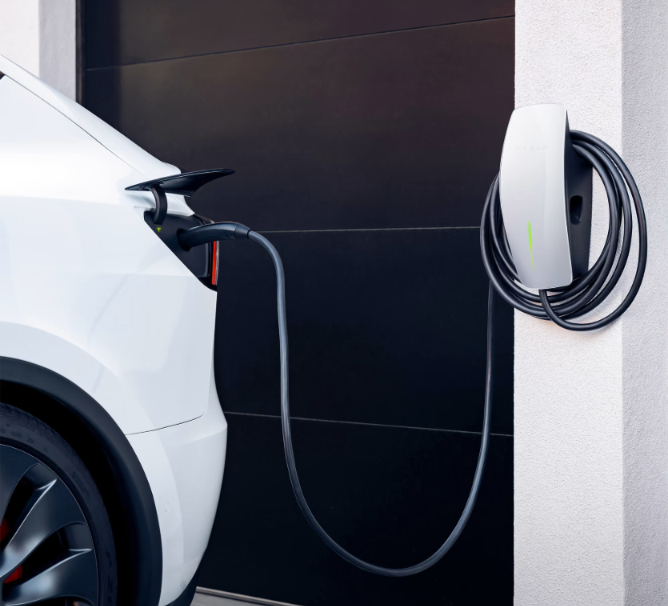
The “hackers” of the Tesla wallbox wore “white hats”, but what might have happened if they had been wearing “black hats” instead? While you ponder your answer to that question, you may find it reassuring that the United Kingdom’s National Cyber Security Centre has been worrying about it for quite some time. According to the NCSC’s web site their mission is:

Making the UK the safest place to live and work online.

We support the most critical organisations in the UK, the wider public sector, industry, SMEs as well as the general public. When incidents do occur, we provide effective incident response to minimise harm to the UK, help with recovery, and learn lessons for the future.

The first example use case for their efforts reads:

Defending the digital infrastructure on which a sustainable world depends.

For example, by helping to protect a flexible energy system from cyber threats.

Image courtesy of ImageFX

In November 2023 the NCSC published a blog post that began as follows:

In 2020, the NCSC published a white paper on Preparing for Quantum-Safe Cryptography. This paper explained the threat that a possible future quantum computer – one much larger, and much more capable, than any that exist today – would pose to a large class of widely deployed cryptography. That cryptography is known as public-key cryptography (PKC). PKC is the enabling technology for secure communication at scale, on the internet and many other networks.

The same white paper also explains why NCSC’s recommended mitigation of the quantum computing threat is quantum-safe cryptography, or post-quantum cryptography (PQC). PQC is cryptography that is resistant to attack by quantum computers, and also to today’s digital, or classical, computers. Furthermore, PQC offers broadly equivalent functionality to the quantum-vulnerable PKC currently in use, and can be deployed in many of today’s devices (including PCs, smartphones etc.) with a software update.

This seems like a simple solution to the threat from a potentially disruptive technology. And conceptually, it is – but the migration to PQC is a very complicated undertaking. This blog explains why.

Do you suppose that Greg and/or the Octopus Power Pack team have read it?
Ofgem’s Flexibility Open Letter to the ENA

Eleanor Warburton, Interim Director of Energy Systems Management and Security at Ofgem, has written an open letter to:

The CEOs of the Energy Networks Assocation, the Distribution Network Operators and National Grid ESO

Here are the first few paragraphs:

I am writing to you to emphasise the importance of the Open Networks Project and the flexibility-enabling activities it is driving forward, which remain a priority for Ofgem.

Flexibility at scale is essential for achieving net zero. We recognise there has been progress made in recent years in developing flexibility markets, but we are clear that further significant changes are needed to unlock the full value of flexibility.

In recent publications we proposed reforms to help unlock this value. We set out the need for fair and transparent rules and processes for procuring flexibility services, which are standardised to minimise friction. Flexibility service providers must be able to stack revenue and participate easily in open, transparent and coordinated markets.

There is strong support for the case for change and for our proposed direction of travel, however respondents raised concerns about a risk of hiatus in the growth of local flexibility markets.

We wish to emphasise that we see no reason for there to be any deceleration in progress and we strongly expect the Energy Networks Association (ENA) and Distribution Network Operators (DNOs) to continue to progress key flexibility enabling activities through the Open Networks Project. We are confident from our recent engagements that you, the ENA and DNOs, share this view too.

The importance of growing local flexibility markets and standardising rules and processes for procuring flexibility services is reflected in RIIO-ED2 arrangements and the Distribution System Operation (DSO) incentive. Any loss of momentum could impact DSO incentive performance, through both the stakeholder survey and the performance panel assessment.

The Open Networks Project has been pivotal to the growth of local flexibility markets in the UK and building on that to drive further, faster success is very much a priority for Ofgem. We look forward to seeing the progress it makes over the coming year.

Etc. etc.

I have not yet been able to locate an “open reply” from the ENA et al. to Ofgem’s point in the introduction to their “Call for Input: The Future of Distributed Flexibility” that:

We are not seeing the scale of distributed flexibility that we need due to market access and coordination issues. This is especially true for Consumer Energy Resources (CER) like electric vehicles and heat pumps. We need a flex-centric system which facilitates distributed flexibility, but it is not clear that this will emerge organically.

Will GB Energy be keen on V2G?

Just in case you missed the news, the Labour Party have been holding their annual conference this week. During his well received speech current Labour Party leader Keir Starmer had this to say:

We will set up Great British Energy in the first year of a Labour Government. A new company that takes advantage of the opportunities in clean British power. And because it is right for jobs. Because it is right for growth. Because it is right for energy independence from tyrants like Putin…

The exciting news about the potential “GB Energy” publicly-owned low carbon energy company seems to have been generally well received. For example the New Civil Engineer had this to say:

Labour leader Keir Starmer’s plan to create a publicly-owned renewable energy company is a positive step for the industry, according to Energy and Climate Intelligence Unit senior analyst Jess Ralston.

At the Labour Party conference, Starmer announced proposals to create the new company, named Great British Energy, if Labour wins the next general election.

The company would be similar to France’s EDF and aim to ensure an expansion in clean energy, focusing on offshore wind, onshore wind, nuclear, solar, hydrogen and tidal power.

Ralston told NCE that the clean power industry will be “boosted” by the plans.

“The devil will be in the detail but more broadly it does show that Labour clearly see clean power – whether it be nuclear or wind, solar and renewables – as the future of the energy system and putting government money behind it would help investors see the security there and help private investment be leveraged as well,” she said.

A few years ago, in the days when Jeremy Corbyn was Labour leader, John McDonnell had this to say concerning vehicle-to-grid technology:

Speaking on the Today programme, Shadow Chancellor John McDonnell announced that Labour will introduce 2.5 million interest free loans for the purchase of electric cars.

The loans of up to £33,000 will allow low to income households, those living in rural areas and independent contractors and SMEs middle to save on new electric cars. The government will cover the £1,500 cost of interest on a loan, with individuals saving up to £5,000 over time.
The scheme will ensure that access to the Electric Car Revolution is broadened beyond elites, as part of Labour’s vision of clean transport for everyone.

The interest-free loans will require participation in a mass trial of Vehicle-2-Grid technology which will allow the UK to transition to renewable energy.

This new technology will allow electric cars to store excess energy from the national grid, smoothing energy supply from renewable sources.
The scheme will boost the British automobile industry and support the UK’s transition away from petrol and diesel cars.

One cannot help but wonder what views the current Shadow Chancellor,
Rachel Reeves, holds on the three letter acronym most dear to our hearts here at V2G UK?

Ditto for the current Chancellor of the Great British Exchequer!

Watch this space!

An Open Letter to Trudy Harrison, Scott Mann et al.

Particularly given recent events in Ukraine and the publication of the IPCC’s AR6 WG2 report the urgency of this issue increases with every day that passes. Hence I reproduce below an email I sent to Trudy Harrison MP on December 17th 2021.

Below that is the only response I have received to date:

Electric Vehicles (Smart Charge Points) Regulations 2021

To: Trudy Harrison MP
Cc: Scott Mann MP

Hello Trudy,

I originally e-met Rachel Maclean via a Cicero Group webinar. Since you have now taken over her role it seemed appropriate to introduce myself to you, particularly in view of the Prime Minister’s recent announcement about electric vehicle charging points.

In particular I am the only UK representative on a wide range of “smart grid” and “EV charging” international (and hence British) standards setting committees. I also sit on the British Standards Institution’s L/13 “smart energy overview” committee as the UK’s leading expert on V2G technology.

If possible I would like to discuss some of the “interoperability standards” implications of the draft legislation associated with the Prime Minister’s statement with someone in Government. Who do you recommend?

Best wishes,

Jim Hunt
CEO
V2G EVSE Limited

=================================================================

Thank you for contacting me.  Please accept this as an acknowledgement of your email. You will receieve a response within 7 days.

Please note the following:

·  If you are a constituent please ensure that you have provided your full name and address, including postcode. There is a strict Parliamentary protocol that MPs only deal with matters raised by residents of their own constituency. 

· Where possible, all circular email campaigns will be responded to by letter and on my website – https://www.trudyharrison.co.uk/

· I may need to pass your details and email to any relevant authority deemed appropriate to help answer your query. If you do not wish this to happen you need to inform my office to this effect.

Thank you for taking the time to write to me.

=================================================================

Cornwall Climate Emergency Energy Workshop

Earlier this year Cornwall Council declared a climate emergency. According to the Council’s original announcement:

Cornwall Councillors met at the Full Council on the 22 January 2019, where Councillors debated a significant motion on tackling climate change and voted to support the declaration of a climate change emergency.

This was an amendment tabled by Councillor Jayne Kirkham to the motion put forward by Councillor Dominic Fairman calling for ‘Urgency on Climate Change’. The amended motion was agreed by the Council and a climate emergency was declared.

View the minutes of the Full Council meeting on meeting on 22 January 2019

The declaration requires the Council to prepare a report outlining how it can sufficiently reduce carbon emissions through energy and other Council Strategies, plans and contracts to ensure Cornwall works towards carbon neutrality by 2030.

Section CC/381 of the minutes concerning “Urgency on Climate Change” reveals that:

A key element of the planning system was reduced car dependency and a move towards electrification was now government policy to help improve air quality. Other issues included highly energy efficient homes to tackle fuel poverty and well insulated homes also added protection for the vulnerable during heatwaves. Members were reminded that Cornwall was the sweet spot of the UK for renewable energy having the best resource in Western Europe and the best solar and geothermal resource in the UK.

A few days ago there was a lively debate on the topic in the Council chamber. Now as part of the process of drawing up that action plan the Council held an energy strategy workshop at the Penryn campus of the University of Exeter yesterday. Here is my brief report on what went on behind the closed doors of the Green seminar room:

Here too is one of our own suggestions for “reducing car dependency and moving towards electrification of transport” whilst improving air quality in Camelford:

“The Camelford Electric Car Club”

Apart from improving air quality an electric vehicle club in Camelford would also reduce the number of cars sitting unused in garages and car parks for much of the time. One car club vehicle can result in 10-20 private cars being taken off the road. If you don’t possess a car you’re more likely to indulge in healthier alternatives such as walking or cycling for short journeys. In rural areas with poor public transport car clubs allow people who could never afford a car of their own to make occasional longer trips they would otherwise be unable to, except perhaps by taxi.

Here are a couple of popular potential car club vehicles:

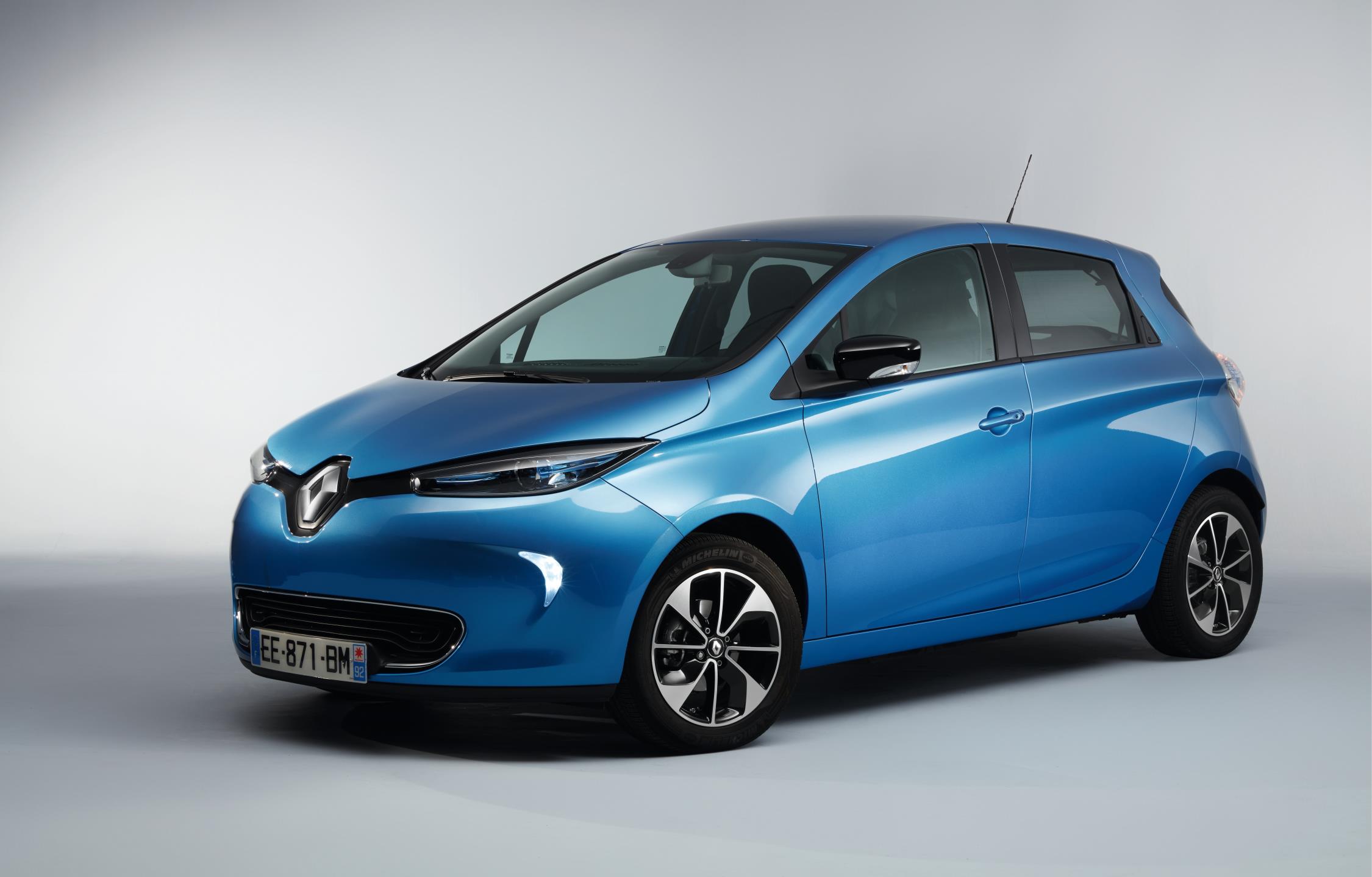
Renault ZOE

Renault ZOE

Production begins of the new Nissan LEAF in Europe

Production begins of the new Nissan LEAF in Europe

Which would you prefer to drive?

An Electric Car Club for Camelford?

We think the answer to the question posed in our title for today is YES! Here’s one reason:

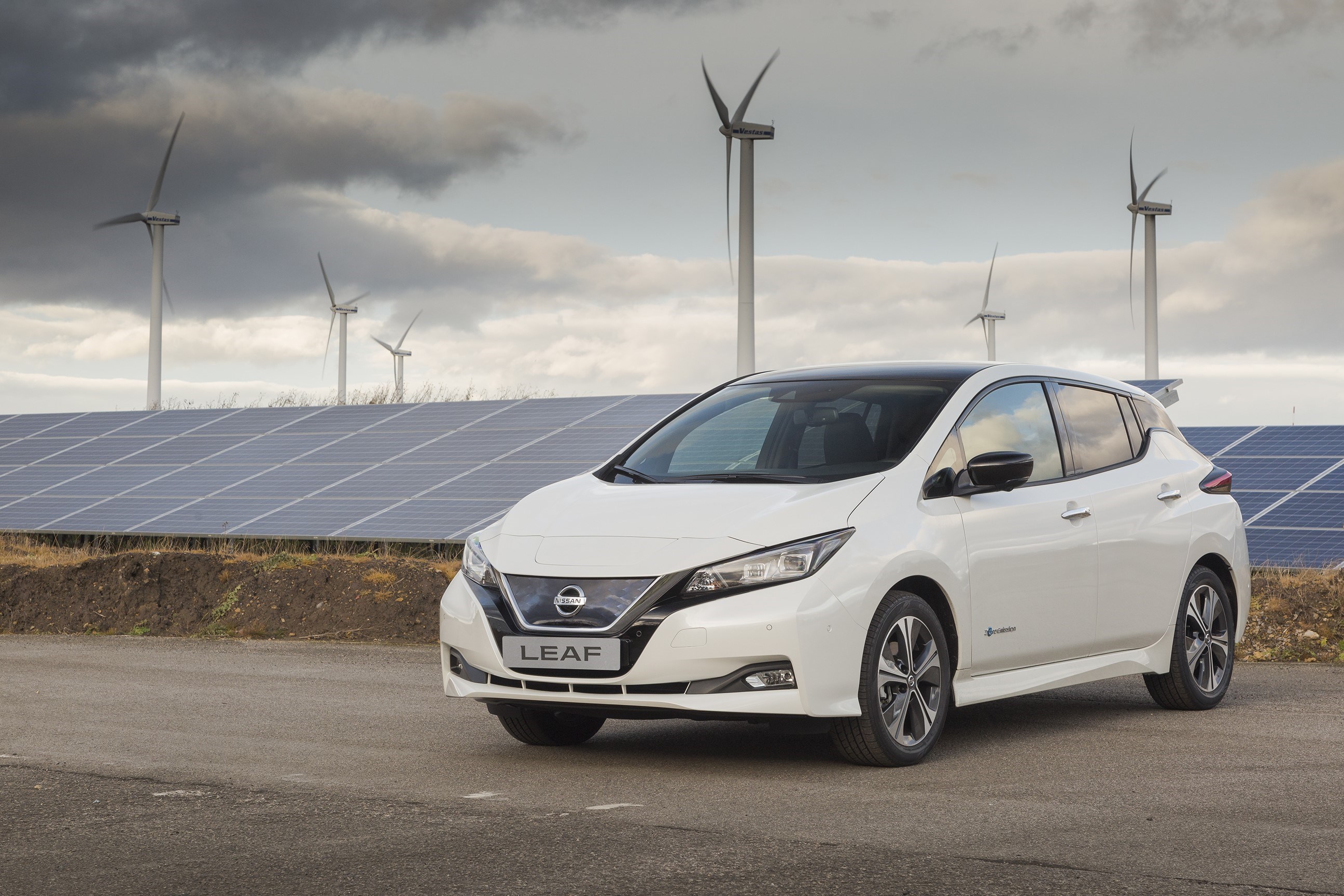
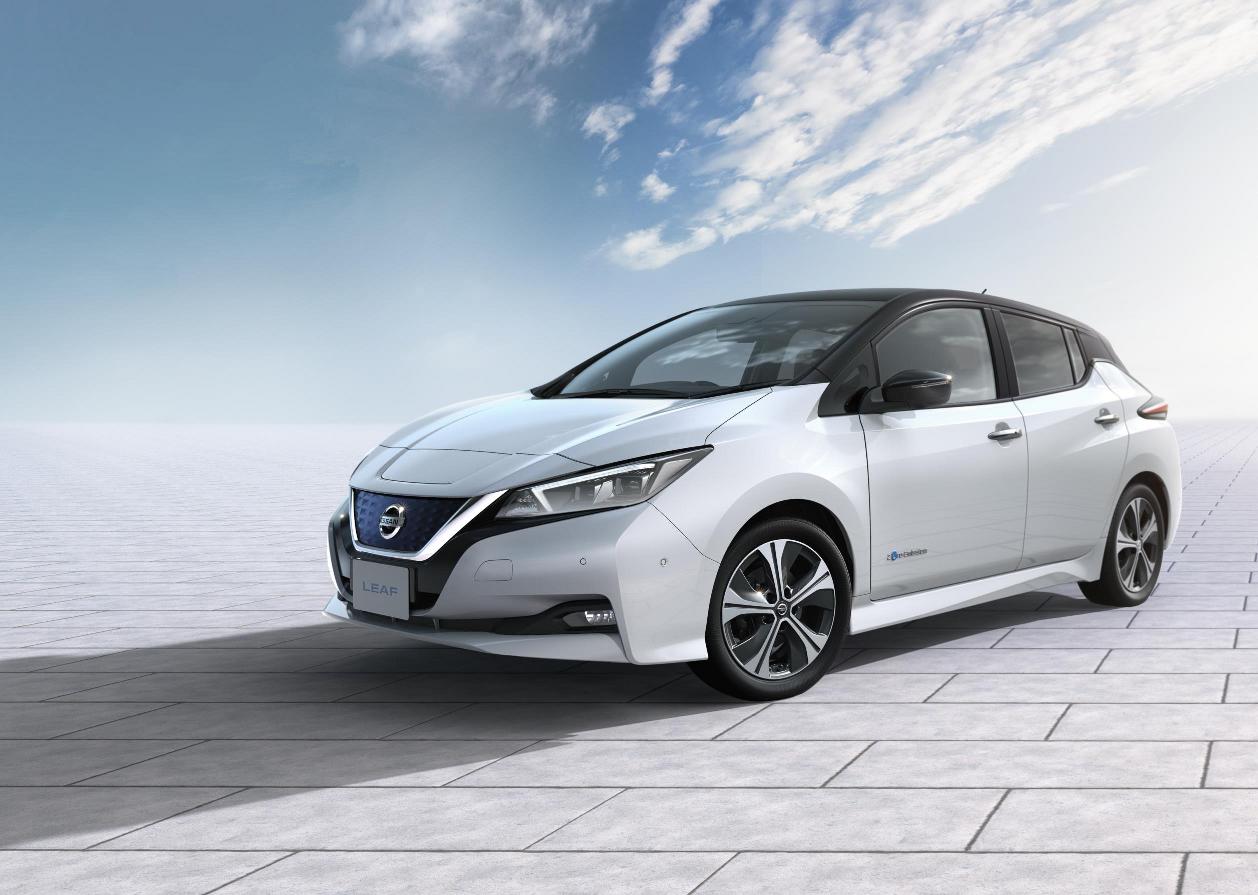
Nissan recently announced the new 2018 edition of their popular LEAF saloon, with increased range over the previous model thanks to a 40 kWh battery pack. Over the weekend a “leak” revealed that a 40 kWh version of Nissan’s e-NV200 van is on the way. That will provide a big increase in range over the e-NV200’s current 24 kWh battery pack, and make the “van” a much more realistic choice for a wide variety of small businesses. Note also that there is an MPV/taxi version of the e-NV200 known as the “Combi”, which I have taken a ride in over the North Sea in the Netherlands:

2015-06-09_11-46-07_453

That means we’re really talking about an electric vehicle club, not a mere “car” club. That’s one way of implementing the concept known as “Mobility as a Service” (or MaaS for short).

Here’s another very good reason to try and put more electric vehicles on the streets of Camelford:

Earlier this year Camelford was declared an Air Quality Management Area (AQMA for short). According to the Town Council web site:

Cllr Claire Hewlett… said “I’m very pleased that Camelford has now been declared an air quality management area, as it means that Cornwall Council and Defra have offically acknowledged we have an air quality problem. The Clean Air Group have been working closely with Cornwall Council’s environmental protection team to get this far. Talking to people in town today, everyone is excited that something might actually happen.”

As part of the consultation, the council asked for residents and businesses to convey their ideas for improving air quality, and some of these will be investigated as part of a range of options before the final plan is published.

Now electric vehicles improve air quality in town and city centres by reducing nitrogen oxide emissions and particulates from exhaust pipes and brake dust, so here’s our idea.

Apart from improving air quality an electric vehicle club in Camelford would also reduce the number of cars sitting unused in garages and car parks for much of the time. One car club vehicle can result in 10-20 private cars being taken off the road. If you don’t possess a car you’re more likely to indulge in healthier alternatives such as walking or cycling for short journeys. In rural areas with poor public transport car clubs allow people who could never afford a car of their own to make occasional longer trips they would otherwise be unable to, except perhaps by taxi. For more on the benefits of car clubs see:

Obviously a few extra EVs in and around Camelford won’t initially result in a vast improvement in air quality if lots of diesel engines keep running whilst queueing along the A39, but you have to start somewhere! The same principle applies to charging infrastructure. Camelford has the advantage of already possessing a rapid charging point in the Churchfields car park, but additional lower power EV charging points would need to be installed. If that could be achieved then a 100% electric car club would allow people to experiment with driving an electric vehicle at very little cost, and thereby discover the many benefits of EVs for themselves. Assuming that hurdle can be overcome we’d like to perform a consultation of our own.

Please take our short survey and let us know your opinion about which sort of vehicle should be the first one to be made available to Camelford residents:

[yop_poll id=”1″]


Here are those options in more detail:

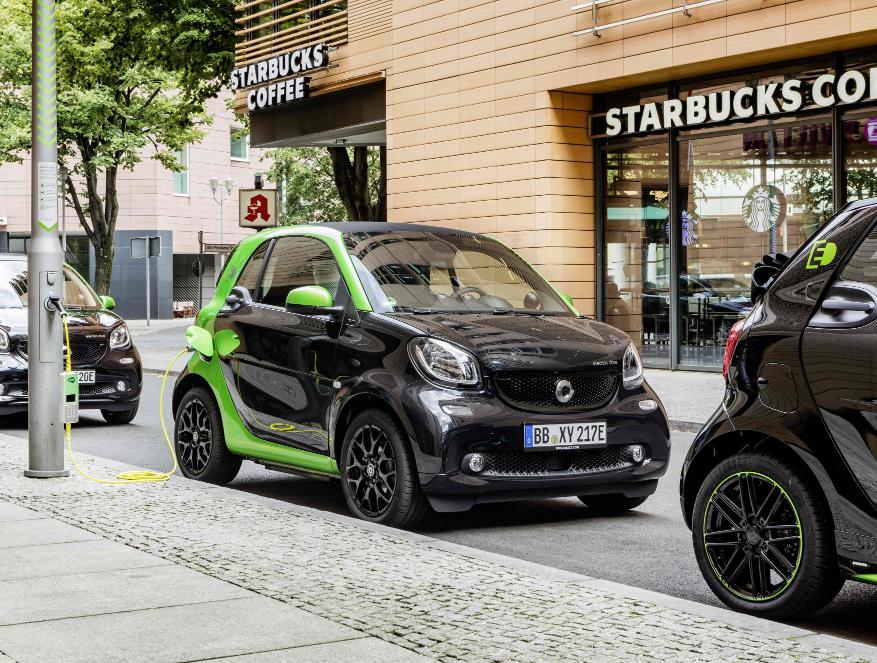
smart fortwo:

Smart-e42

Renault ZOE:

Nissan LEAF:

BMW i3:

Mitsubishi Outlander PHEV 4×4:

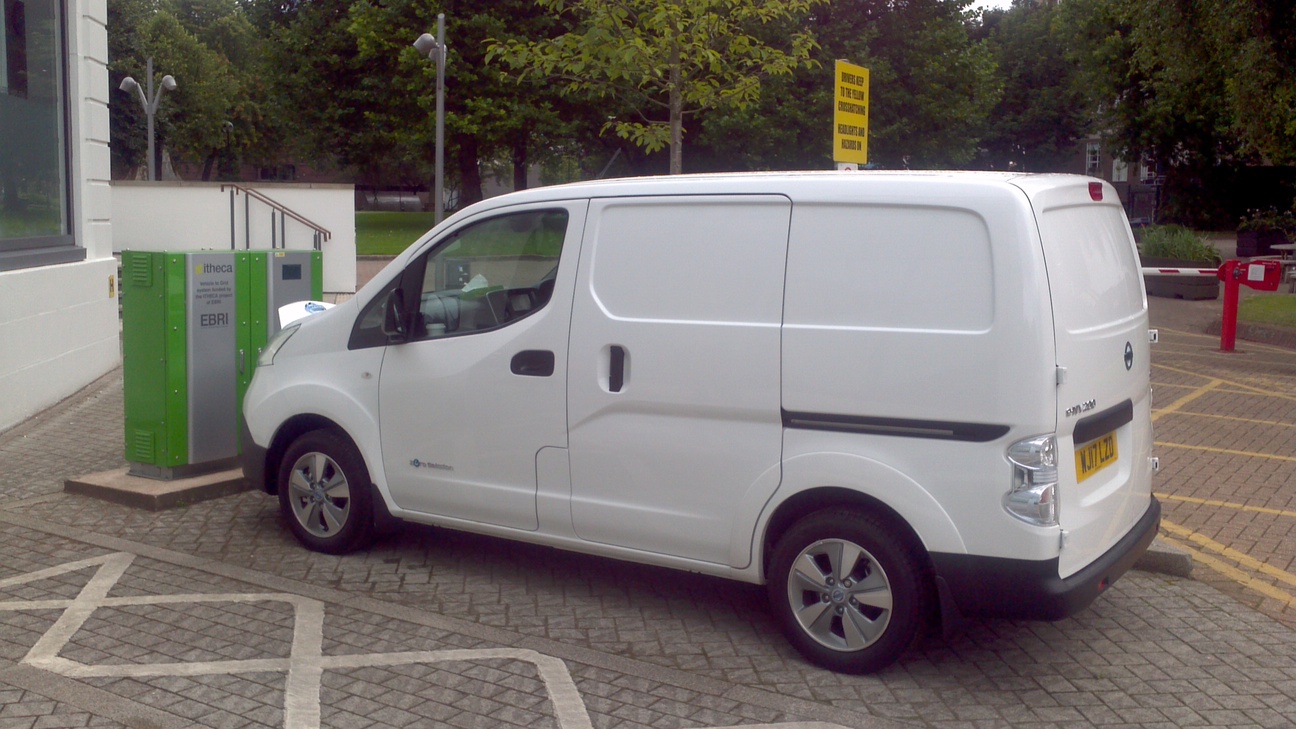
Nissan e-NV200 Van:

Nissan e-NV200 Combi:

Please also feel free to elaborate on the reason for your selection in the space provided for that purpose below.

UK Parliament Debates Energy Storage

It’s all go on the energy storage front in the UK. Yesterday not only was V2G mentioned in the mainstream media but it was also debated by a committee in the House of Commons. The summary of the Energy Bill [Lords] 2015-16 states that it is:

A Bill to make provision about the Oil and Gas Authority and its functions; to make provision about fees in respect of activities relating to oil, gas, carbon dioxide and pipelines; to make provision about wind power; and for connected purposes.

I presume energy storage must count as a “connected purpose”, since the proposed New Clause 14 which was under discussion yesterday, reads as follows:

Electricity storage

(1) Section 4 of the electricity Act 1989 is amended as follows.

(2) After subsection (1)(c) insert—

“(d) stores electricity for the purpose of giving a supply to any premises or enabling a supply to be so given,”

(3) At end of subsection (4) insert—

““Store” means the conversion of electricity into a form of energy which can be stored, the storing of the energy which has been so converted and the reconversion of the stored energy into electrical energy in devices with an individual capacity of more than 50MW.”

(4) Section 6 of the electricity Act 1989 is amended as follows.

(5) After subsection (1)(d) insert—

“(e) a licence authorising a person to store electricity for the purpose of giving a supply to any premises or enabling a supply to be so given (‘a storage licence’);”

(6) After subsection (2) insert—

“(2ZA) In addition to holding a storage licence, the same person may be a holder of—

(a) a distribution licence,

(b) a transmission licence, or

(c) a generation licence.

(2ZB) The Secretary of State may by order determine the circumstances under which a person may hold a storage licence in addition to a distribution licence, a transmission licence or a generation licence under subsection (2ZA).

Events in The House were recorded for posterity, and the debate about NC14 can be seen in this video:

In some of the edited highlights Dr. Alan Whitehead, who is Shadow Minister for Energy and Climate Change, pointed out that:

A number of the issues we have discussed in the Committee—intermittency of wind, base-load problems and a whole range of other issues—can begin to be addressed by battery storage of electricity.

For example, if a battery storage system is attached to a solar array, the life of that solar array can be extended far beyond the period during the day when the sun shines. Clearly, the power that comes from it can go right through the night. We are already seeing that effect, to a minor extent, with solar arrays on streetlights, but on a much larger scale it could revolutionise the way in which solar is used in future.

Battery storage can also be used in relation to wind. We have heard that wind, quite self-evidently, does not always blow, and sometimes when it does blow, it blows rather a lot. Ensuring that the capturing of that variability is smoothed out into a regular supply through the attachment of battery storage to the wind turbine is clearly a positive step forward as far as wind supply is concerned.

However Andrea Leadsom, who is The Minister of State at the Department of Energy and Climate Change ultimately responded by saying:

On this last new clause, I am as keen as mustard on electricity storage; it has a vital contribution to make to dealing with intermittency and I wish we were five years ahead—it will be interesting to see how much we have managed to achieve in creating this new ability to store intermittent generation.

New clause 14 would create a new licence category for electricity storage operators and allow other licence holders, such as generators and transmission and distribution network operators, to hold an electricity storage licence. The creation of a separate electricity storage licence is an option that is being considered by my Department and one of a number of issues for storage operators to be included in a call for evidence in the spring. This will enable us to test it against other options, which may be less regulatory and burdensome, more targeted and, importantly, faster to implement. So, much as I would love to say, on this very last new clause, that we agree with the hon. Gentleman, the problem is that licensing storage now would be premature. Indeed, the Electricity Storage Network, which is a key trade body for the storage industry, has criticised this new clause on the grounds that it

“pre-empts the current work by the Department” and

“may hinder, rather than help, the progress of well thought-out strategies to support … the storage industry.”

following which Dr. Whitehead withdrew his proposed amendment.

All of which does rather beg the question of what “well thought-out strategies to support the storage industry” here in the United Kingdom will eventually look like, and whether they will accommodate “EV owners”, “Communities” and/or “Aggregators” as well as Distribution Network Operators, Transmission System Operators and electricity generators, whether distributed or centralised.

DECC Launches a “Consultation to Ensure Regulation in the Energy Sector Encourages Innovation”!

This is such exciting news (to yours truly at least!) that I reproduce the United Kingdom’s Department of Energy & Climate Change’s announcement in full. From their headquarters in London:

Image courtesy of DECC

DECC has today launched a Consultation to ensure regulation in the energy sector encourages innovation.

DECC invites stakeholders to offer their views on how effective the current regulatory framework is in enabling innovation.

The consultation focuses on the activities of DECC and the Oil and Gas Authority, with other energy sector regulators undertaking parallel engagement exercises.

Lord Bourne commented:

  • Innovation has the power to transform the energy sector and the way we live every day.
  • We are committed to cutting red tape and creating industry environments that foster new ideas and give technologies a commercial edge.
  • Collaboration is key and I look forward to hearing the ideas from industry so we can ensure an innovative energy sector that works for hardworking families and businesses.

The Consultation on ensuring regulation encourages innovation will run for four weeks.

For more information and to have your say please email [email protected]

Rest assured that one way or another I shall be getting in touch with the innovation team at DECC before the deadline of 5 PM on February 11th 2016. Perhaps I’ll send them my past musings on the regulatory framework here in the United Kingdom? If you would like to do so as well all the small print is available from:

https://www.gov.uk/government/consultations/consultation-on-ensuring-regulation-encourages-innovation

which adds that:

In its Productivity Plan, the government required all departments to publish an Innovation Plan by spring 2016. The purpose of each Plan is to set out how departments and regulators are adapting legislation and enforcement frameworks to enable innovation in the form of emerging technologies and innovative business models.

This consultation enables stakeholders to offer their views on current regulatory activities led by DECC and the OGA and how they interact with energy sector innovation. Other regulators are conducting parallel engagement exercises, for which links and contacts are provided within the document.

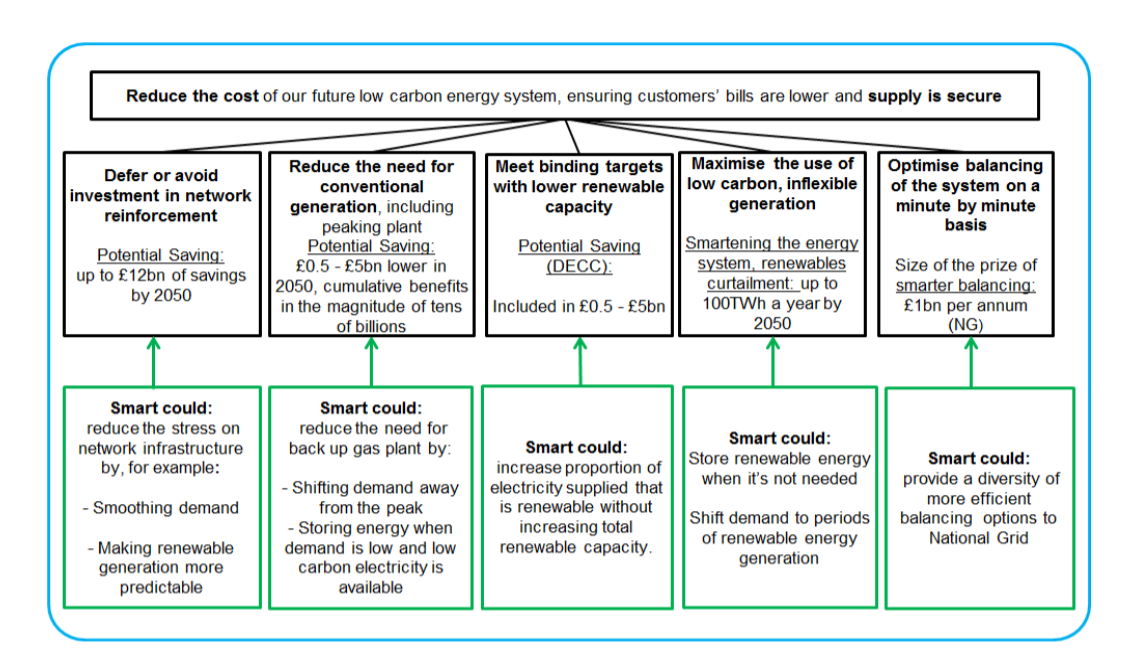
A related document from DECC, published last month and entitled “Towards a Smart Energy System“, is also well worth a read. It explains some smart energy innovations that the authors would presumably like to see implemented:

A smart, flexible energy system would involve incorporating new forms of flexibility in combination, including energy storage, demand side response (DSR), smart networks,as well as increasing interconnection. It could also involve energy efficiency improvements which target peak demand. Combining these solutions in a whole-system approach would help us achieve the following benefits:

  • Defer or avoid investment in network reinforcement.
  • Reduce the need for a significant increase in reserve generation capacity.
  • Meet binding climate change targets with less low carbon generation.
  • Make the best use of our low carbon generation.
  • Optimise balancing of our energy system on a minute-by-minute basis.

It also summarises some of the associated regulatory “barriers” currently facing us here in the UK:

We have identified some potential barriers that mean new forms of flexibility such as DSR and storage may not develop in a timely or adequate way. This includes market and regulatory barriers, where we need to take a whole system perspective in some of our policies and regulatory arrangementin the future. Existing business models may also mean incumbents have incentives to stick with the status quo. Cultural inertia and skills gaps within existing energy companies may also be a factor in slowing the uptake of these technologies. The presence of these barriers shows that further action is likely to be needed if we want to realise the full potential of smarter energy system.

Energy and Climate Change Committee Discusses V2G

Last year the United Kingdom’s House of Commons Energy and Climate Change Committee launched an inquiry into low carbon network infrastructure in the UK. Initially they sought written submissions of evidence, and are now televising live oral submissions to the committee. Fortunately these events are also recorded, and during the one that took place on January 12th there was much discussion of energy storage in general and electric vehicle batteries in particular. Here’s an extract:

Amongst a variety of other contributions you can hear the chair Angus MacNeil MP ask:

To what extent will electricity demand in future exhibit greater peaks and troughs due to the electrification of heat and transport? What changes will that make in demand?

The first expert witness to respond was Sara Bell, the Chief Executive of Tempus Energy:

I think that depends very much on how we manage that demand. Both the demands that you have mentioned are highly flexible, so that offers an enormous opportunity to match that demand to generation, and variable generation can be matched very successfully to that flexible demand. Every electric vehicle could be charged when we have excess renewable generation. There is a way, from an economic standpoint, of managing that sensibly.

The experts went on to discussheat pumps for bit, and then Dr Philipp Grünewald from the Environmental Change Institute at Oxford University pointed out that:

Electric vehicles could play a very interesting role in helping to balance the system, because they have inbuilt storage, but another debate is ongoing on the extent to which you want to use that type of storage for the grid. We might come back to that.

to which Dr Jill Cainey of the Electricity Storage Network added:

On electric vehicles, it is more that the charging is the critical thing that you need to control, not necessarily using the battery device for the system services. National Grid has a project in which it has looked at that — at providing frequency response.

You may correctly surmise from the name of this blog that I don’t entirely agree with Jill on that point! “Smart charging” certainly has its place, but so might “using EV batteries for system services” in a rather different market and regulatory environment to the current one. The panel discussed that issue a bit later in the proceedings. Sara Bell again:

We have not even started the process of making the demand side flexible. Tempus Energy is the only electricity supplier that unlocks flexibility in customer premises. We go to our customers and we put control and sensor technology into their premises so that we can move their demand. Every time — and I mean every time — we go into customer premises, they are using electricity at times in a very expensive way, completely unnecessarily, because no supplier has ever rewarded them for their flexibility before, so why should they bother?

We are one small new supplier. If the whole market operated like this, we would unlock a great deal of flexibility, which would reduce the total system cost.

Jill Cainey again:

There are some issues with capacity now. That is why we have the capacity market. I guess Electricity Storage Network would argue that that incentivises particular types of technology for security of supply but doesn’t necessarily support the new innovative approaches such as demand side and electricity storage because of the way that market has been designed…

There are technologies and approaches, such as demand side response and aggregation — aggregators are providing demand side response as well. We need to facilitate those approaches to move forward. That is a market approach.

That we can agree on 101%, and I also agree with Dr Gordon Edge who is Director of Policy at RenewableUK who said:

I would argue that some of the time-limiting steps are not technology but the regulatory market approaches. We need to be thinking about how we make the market so that these things, when they are economic, just happen automatically. At the moment, there are too many barriers.

and with Stephen Goldspink who is Director of Strategy and Business Development at Siemens Energy Management, who added that:

Technology and solutions are already available, as my colleagues has already said, so it is about how fast we deploy those technologies and the regulatory barriers that need to be removed to deploy them. Energy storage, demand side management, energy efficiency — all these things can support this capacity margin issue and put us on the journey to low-carbon networks much quicker.

Angus MacNeil then said:

Thank you. I understand what you are saying about regulatory barriers, but we will leave that section there.

Hence so will we, for the moment at least.

An Open Letter to Mel Stride, George Osborne, David Cameron et al.

Productivity Plan? NegaWatts are cheaper than MegaWatts!


To: Mel Stride MP
Cc: William Dartmouth MEP
Cc: Ashley Fox MEP
Cc: Julie Girling MEP
Cc: Clare Moody MEP
Cc: Julia Reid MEP
Cc: Molly Scott Cato MEP


Hello again Mel,

Further to our previous conversations about UK plc’s so called energy policy, I urge you to protest in the strongest possible terms to Messrs Cameron and Osborne about the following paragraph in the Chancellor’s so called “Productivity Plan“:

“The government does not intend to proceed with the zero carbon Allowable Solutions carbon offsetting scheme, or the proposed 2016 increase in on-site energy efficiency standards.”

Do they not comprehend that NegaWatts are cheaper than MegaWatts? Do they not realise how many research hours at Exeter University they are unceremoniously flushing down the pan, or the effect those innocent sounding words will have on the forthcoming “South West Exeter” housing development in Teignbridge? Are they deliberately setting out to destroy investment in the “Energy Efficiency” and “Renewable Energy” industries in South West England in general, and in your constituency in particular, or do they simply have no idea what they are doing?

I await your substantive response at your earliest convenience, and preferably sooner.

Yours in shock,

Jim Hunt

Smart Grid Consultant
V2G Limited

P.S. According to Andrew Marr “We’re all still dancing on the precipice”