Octopus Energy Announce “V2G EV Bundle” at Energy Tech Summit

Over the last few days Octopus Energy have dropped some heavy hints about an “exciting announcement” at their Energy Tech Summit in London at 12:30 this afternoon. Here is what transpired at the appointed time:

As the video title puts it, Octopus CEO Greg Jackson launched the WORLD FIRST vehicle-to-grid EV bundle! As you can see from the video thumbnail, Greg was joined on stage by motoring journalist Quentin Willson and 1996 Formula One World Champion Damon Hill as he outlined the Octopus Power Pack consumer offer:

Power Pack Bundle gives a car lease, two-way charger, and a smart tariff for £299/month with 100% FREE smart charging – saving £1,000/year on fuel vs petrol.

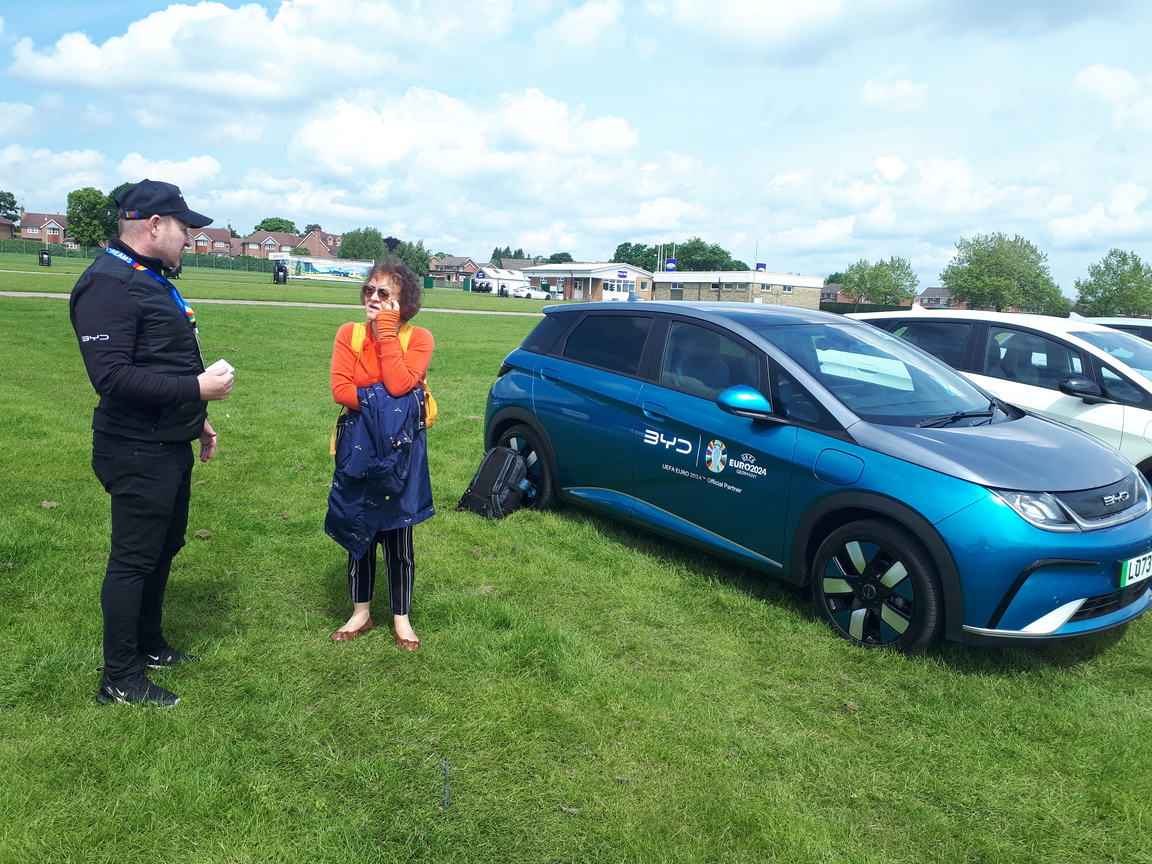
The EV part of the bundle is the BYD Dolphin, which I test drove when I was up in Harrogate last year to contribute to two V2x panel discussions at the Everything Electric North show:

Continue reading →

BSI Requests Comments on a New Draft of PAS 1878

Regular readers may recall that in 2021 the British Standards Institution published the first edition of their Publicly Available Specification 1878 on the subject of “Energy smart appliances”? You may also recall that I wrote at the time:

A “smart” EV charging station is a special case of an interoperable Energy Smart Appliance.

The BSI has recently published a draft version of a new edition of the PAS 1878 specification, and is inviting comments from interested parties. Note that the deadline for submitting any such comments is July 9th 2025.

The BSI’s request for comments points out that:

This PAS specifies the following aspects of a system for the delivery of certain demand side response (DSR) services for domestic and small business premises…

This PAS is intended to be used by manufacturers of ESAs and CEMs.

NOTE 1 – Other audiences that might have an interest in this PAS are maintainers of ESAs, manufacturers and maintainers of interfacing products, software developers and service providers.

The introduction to the new draft includes the following information:

This is a full revision of the document, and introduces the following principal changes:

  • defined system architecture for both on-premises and hybrid cloud/on-premises implementations of ESAs and CEMs, and both 1-to-1 and 1-to-many CEM to ESA connections;
  • minimum requirements for secure communication between CEMs, ESAs and DSRSPs;
  • detailed sequence of DSR-based activities from consumer registration to decommissioning;
  • a move from OpenADR 2.0b to OpenADR 3.0 as the minimum application layer protocol to be supported by Interface A (between DSRSP-CEM);
  • the optional provision of flexibility performance requests from the DSRSP to enable ESAs to calculate relevant flexibility offers more easily;
  • updated compatibility with GB smart metering and a wide range of smart appliances – including EV charge points and battery storage;
  • new provisions for Open ADR 3 as the Interface A

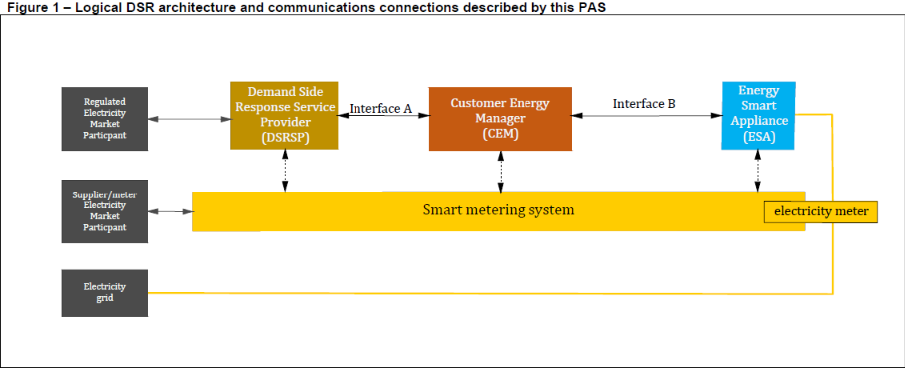
By way of a brief introduction to some of the assorted acronyms mentioned above, here is figure 1 from the draft PAS:

Clause 8 of the draft PAS includes these specific requirements regarding electric vehicle charging:

The smart EV chargepoint ESA shall be capable of reporting forecast power profiles based on operating capabilities, consumer preferences, including expected departure/arrival schedule and journey distance/ duration/characteristics, and external information, including estimates of EV battery capacity, EV state of charge (or state of charge if available via the charger – e.g. V2G, or accessible via the vehicle telematics) and EV physical operating limits. If a smart EV chargepoint supports V2G functionality and has been configured to present itself to the DSRSP as an ESA, it shall meet the information and messaging requirements specified in Clause 5 and Clause 6.

NOTE Smart EV chargepoints are not required to support V2G functionality.

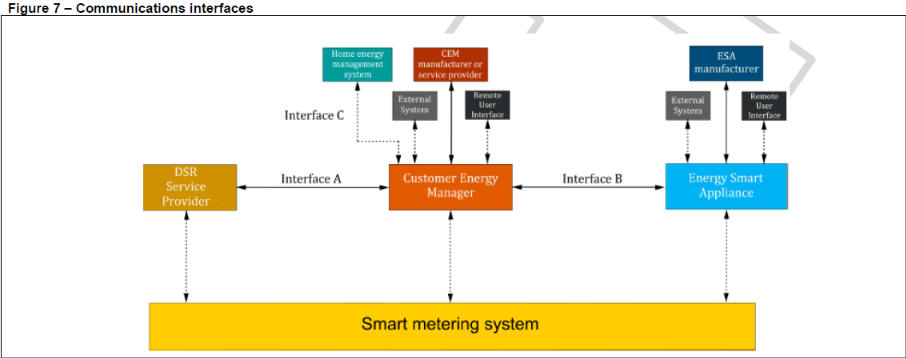
Clause 5 is entitled “Communications and messaging” and includes this diagram:

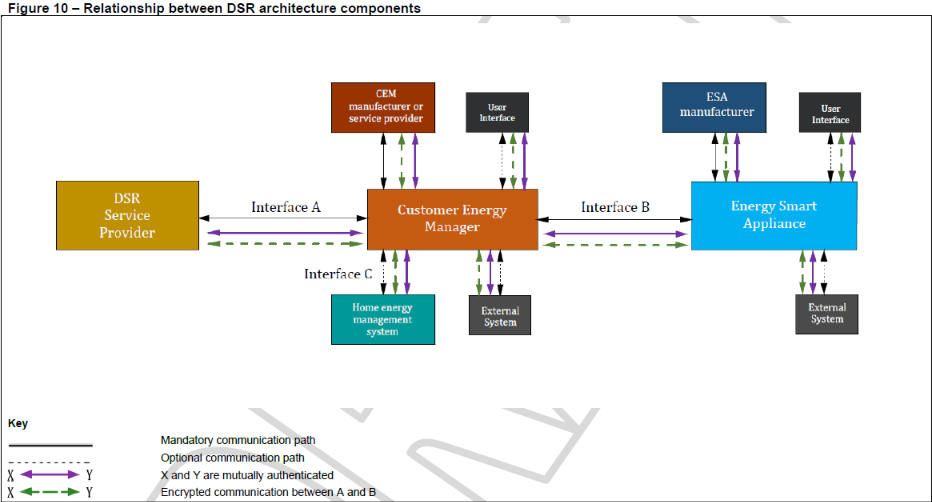
Clause 6 is entitled “Cyber security” and includes this diagram:

If you have any questions please do not hesitate to ask using the space provided for that purpose below.

An Open Letter to Trudy Harrison, Scott Mann et al.

Particularly given recent events in Ukraine and the publication of the IPCC’s AR6 WG2 report the urgency of this issue increases with every day that passes. Hence I reproduce below an email I sent to Trudy Harrison MP on December 17th 2021.

Below that is the only response I have received to date:

Electric Vehicles (Smart Charge Points) Regulations 2021

To: Trudy Harrison MP
Cc: Scott Mann MP

Hello Trudy,

I originally e-met Rachel Maclean via a Cicero Group webinar. Since you have now taken over her role it seemed appropriate to introduce myself to you, particularly in view of the Prime Minister’s recent announcement about electric vehicle charging points.

In particular I am the only UK representative on a wide range of “smart grid” and “EV charging” international (and hence British) standards setting committees. I also sit on the British Standards Institution’s L/13 “smart energy overview” committee as the UK’s leading expert on V2G technology.

If possible I would like to discuss some of the “interoperability standards” implications of the draft legislation associated with the Prime Minister’s statement with someone in Government. Who do you recommend?

Best wishes,

Jim Hunt
CEO
V2G EVSE Limited

=================================================================

Thank you for contacting me.  Please accept this as an acknowledgement of your email. You will receieve a response within 7 days.

Please note the following:

·  If you are a constituent please ensure that you have provided your full name and address, including postcode. There is a strict Parliamentary protocol that MPs only deal with matters raised by residents of their own constituency. 

· Where possible, all circular email campaigns will be responded to by letter and on my website – https://www.trudyharrison.co.uk/

· I may need to pass your details and email to any relevant authority deemed appropriate to help answer your query. If you do not wish this to happen you need to inform my office to this effect.

Thank you for taking the time to write to me.

=================================================================

Sono Announce AC V2G Wallbox

On a press release a couple of days ago Sono Motors announced that:

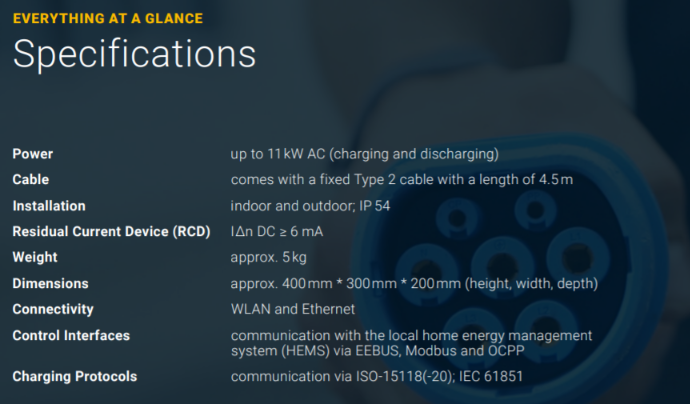
Mobility provider Sono Motors is fulfilling the Community’s desire for an affordable wall charging station, suitable for home charging, vehicle-to-grid (V2G) and vehicle-to-home (V2H) with the first bidirectional AC wallbox on the market. This brings the company a significant step closer to its vision of a world without fossil fuels. The wallbox enables the Sion to be used as a mobile power plant and also to feed stored electricity either back into their house or into the grid itself. Homeowners with photovoltaic systems especially save a large amount of money as they are able to use more of their own electricity without having to buy an expensive home storage system. The Sono wallbox charges and discharges the Sion with up to 11 kW via the integrated Type 2 charging cable, and will save up to 70% of costs incurred by DC bidirectional wallboxes available to date. It is already possible to reserve the new wallbox free of charge, delivery is expected to take place with the Sion start of production in 2023.

This is of course very exciting news, and Sono also address a question that we have been pondering for many years, and which we discussed in detail more recently with the British Standard Institution’s launch of its PAS 1878 specification for home energy management systems:

A home energy management system (HEMS) controls when the Sion is charged and discharged: the wallbox communicates with the HEMS via various protocols such as EEBUS, Modbus or OCPP. A recommendation as to which HEMS are compatible with the Sono wallbox will be available shortly after its sales launch. The Sono app and Sono infotainment can also be used to set the level of the vehicle’s battery at which discharging can be terminated. This ensures that it always has enough range to cover any mobility needs.

The specification for the Sono bidirectional wallbox looks like this:

That all looks very good, but there are a couple of flies in Sono’s ointment. Their wallbox won’t be available until 2023, and there appear to be no plans to release it in the United Kingdom.

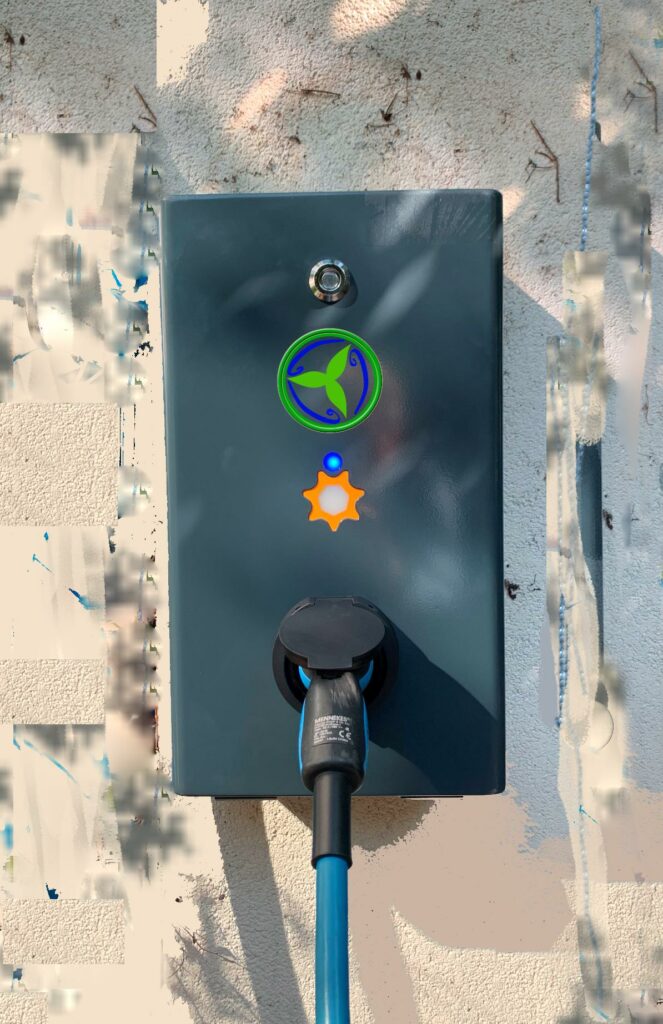
What’s more Sono’s copywriter needs a slight slap on the wrist. Here’s a picture of a 22 kW 3 phase bidirectional AC wallbox that has been available off the shelf for over a year!

Here’s Sono’s video explaining the benefits of their forthcoming, albeit less powerful, piece of equipment:

Perhaps Tillman would be good enough to appear in another Sion Motors video with more accurate commentary in the not too distant future?

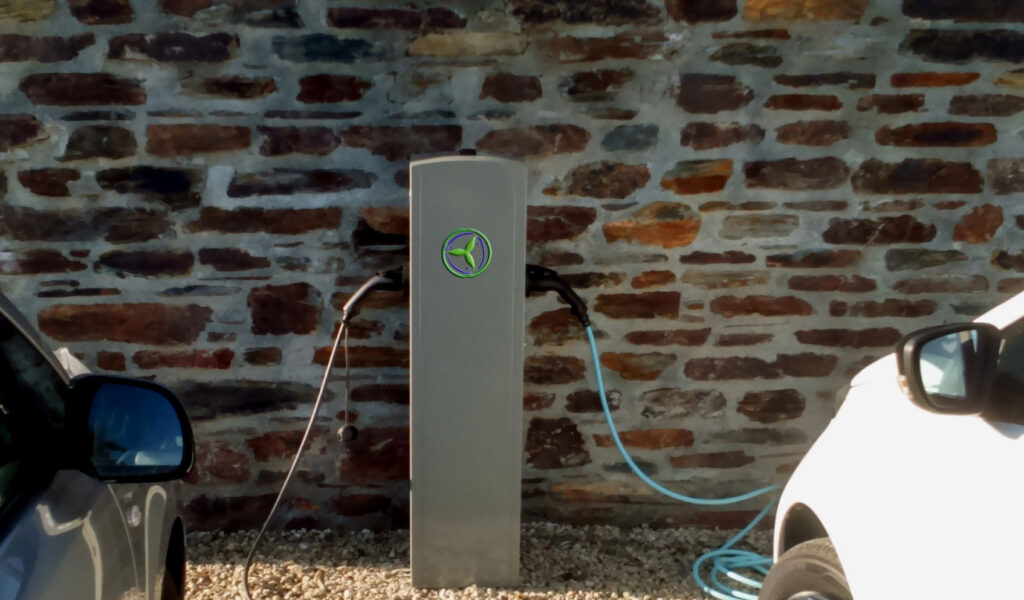
Finally, for the moment at least, here once again is a dual 22 kW bidirectional AC charging pillar that has been installed in our car park for over two years:

Merging/Migrating OCPP to IEC 63110

Today’s article is another in our occasional series endeavouring to explain the arcane world of international standards. Hence it is more technical than is usual here on the V2G UK blog, but it is possibly even more relevant than the latest V2x announcements from assorted electric vehicle manufacturers.

This morning I attended the first meeting of an IEC Technical Committee 69 Joint Working Group 11 task force set up to develop an “information document” aiming to provide helpful advice to EV charging station manufacturers as they develop future “smart grid” enabled products. This document will be more like the British Standards Institution’s recently released PAS 1878 “specification” than a full blown international standard, albeit hopefully nowhere near as long!

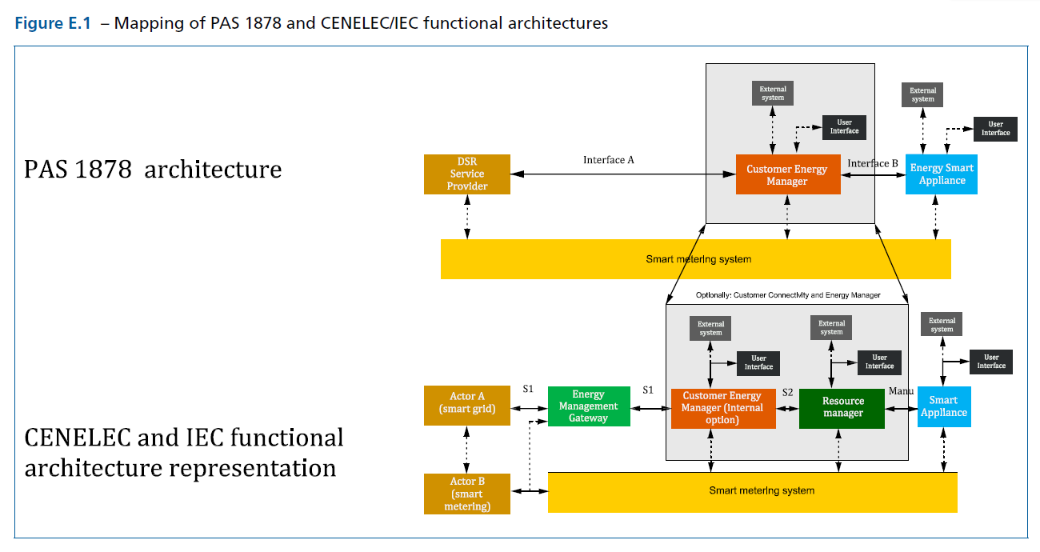
By way of an example of the sort of things that were discussed in the meeting here is an infographic from PAS 1878 which hopefully illustrates the extensive overlap between the BSI’s concept of a future “smart home” and the related concepts emerging from the work of the European CENELEC Technical Committee 205 and other standards development committees:

BSI PAS 1878 figure E.1.
PAS 1878 figure E.1. (Click to enlarge)

As annex E from the PAS explains:

This annex provides information on the relationship between the functional architecture described in this PAS and an amalgamation of the “smart grid” functional architecture included in several CENELEC and IEC standards. The representations in the CENELEC and IEC documents, whilst broadly similar, do differ slightly, hence the need for an amalgamated representation. The two architectures and how they are mapped are shown in Figure E.1. The CENELEC/IEC architecture is configured assuming that the CEM is internal to the consumer premises. As this is a functional architecture, a configuration with the CEM external to the consumer premises (e.g. in the cloud) is also permissible.

Figure E.1. shows the relationship between the PAS 1878 functional architecture and an amalgamated representation of the smart grid flexibility functional architecture depicted in several CENELEC and IEC standards, including BS EN 50491-12-1:2018, BS EN 50631-1:2017, PD IEC/TR 62746-2:2015, and prEN50491-12-2.

Expect to hear much more over the coming months and years about such esoteric things as the “Customer Energy Manager”, the “Resource Manager”, assorted “Demand Side Response Service Providers” and any number of other novel terms and acronyms. The diagram above is generic, but for the EV charging use case note that the charging station is equivalent to the “Smart Appliance” and the OCPP and/or IEC 63110 protocols are equivalent to “Interface B” in the top half of the diagram or the “Manufacturer protocol” in the lower half.

Hopefully that’s all crystal clear by now? If not hopefully it will become so by the time the newly constituted IEC task force has completed it’s work and you have read the resulting guidance document!

Electric Vehicles as “Energy Smart Appliances”

The British Standards Institution has just published a new “specification”, and unlike most BSI “standards” this one is free to download, as long as you don’t mind parting with an email address. As the download page puts it:

BSI is working with the UK Government to encourage the uptake of safe, secure and interoperable Energy Smart Appliances (ESAs). These are needed for the active management of demand on the electricity network, known as Demand Side Response (DSR). PAS 1878 is a critical component in this because it details the requirements and criteria necessary to make an energy smart appliance compatible with DSR activities.

At this point you may have a couple of question, such as “What on Earth is a PAS?”. The BSI have a ready answer for that question:

A PAS (Publicly Available Specification) is a fast-track standardization document – the result of an expert consulting service from BSI. It defines good practice for a product, service or process. It’s a powerful way to establish the integrity of an innovation or approach.

The next obvious question is “What has this got to do with electric vehicles and/or vehicle-to-grid technology?”. The answer to which is that a “smart” EV charging station is a special case of an interoperable Energy Smart Appliance. As the foreword to PAS 1878 states:

Continue reading →

V2G in the BEIS Basement

Last Thursday we took the train up to London because the next morning we were attending a meeting organised by the British Standards Institution on the topic of “The future of standards for a smart, flexible energy system“. Instead of one of the BSI’s own offices the venue for the event was the conference centre of the Department for Business, Energy and Industrial Strategy, just around the corner from Westminster Abbey.

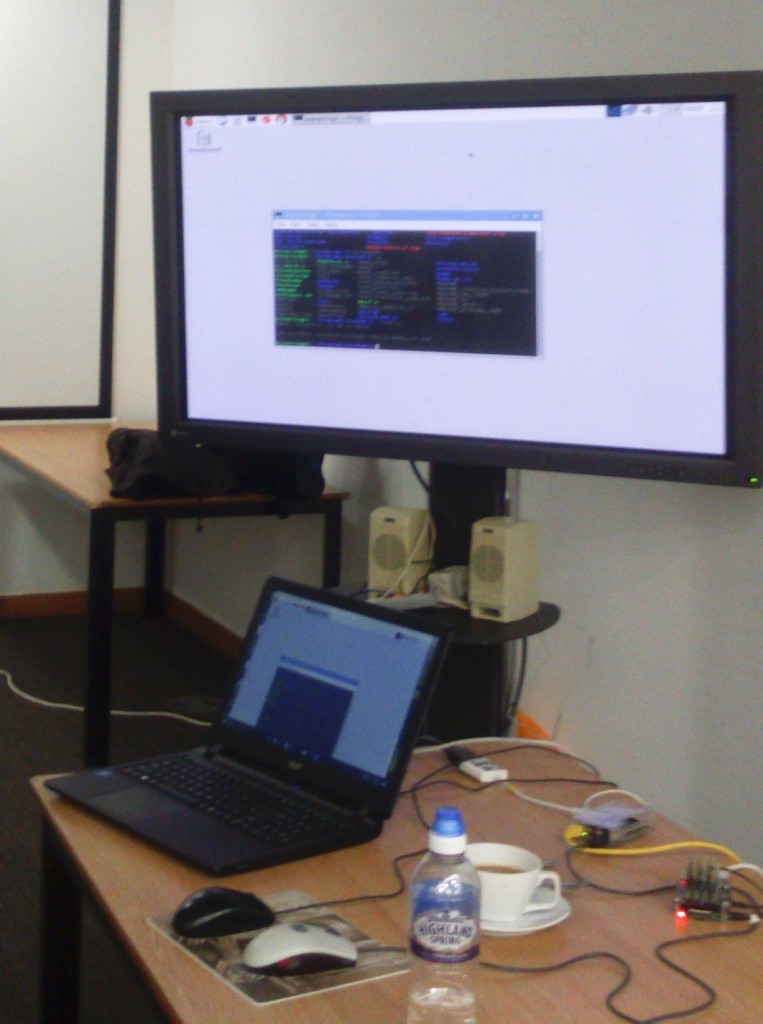
Apart from attending the event itself we were also one of five SMEs displaying our wares in an adjacent room. Here’s how our stand looked when we’d just about finished setting up:
RasPisGalore

That was when a BEIS engineer told us what we’d missed during our journey the previous day. The announcement of the UK Government’s new Clean Growth Strategy:

An ambitious blueprint for Britain’s low carbon future.

This strategy sets out our proposals for decarbonising all sectors of the UK economy through the 2020s. It explains how the whole country can benefit from low carbon opportunities, while meeting national and international commitments to tackle climate change.

No doubt we’ll have much more to say on all that in due course, but for the moment here’s an overview of V2G Limited’s clean growth strategy, as displayed in the BEIS basement last week. First of all let’s take a look at the problem UK plc has committed to tackle:
DSC_1252

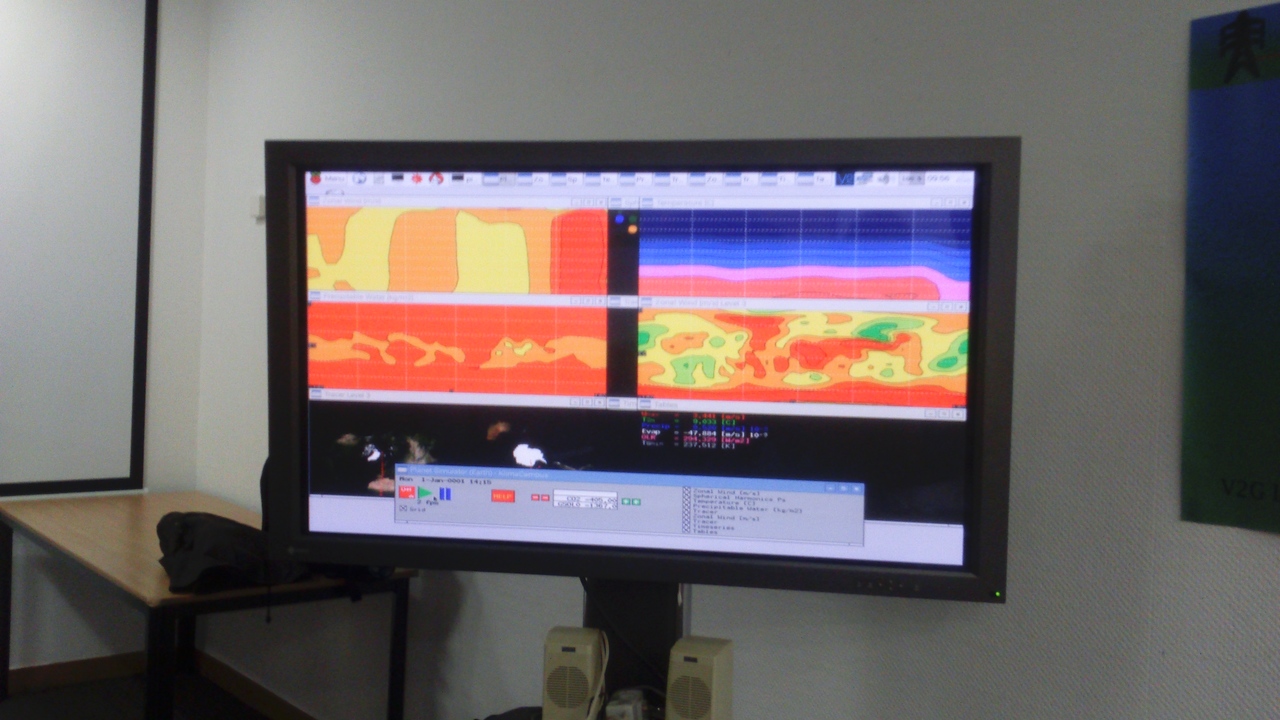
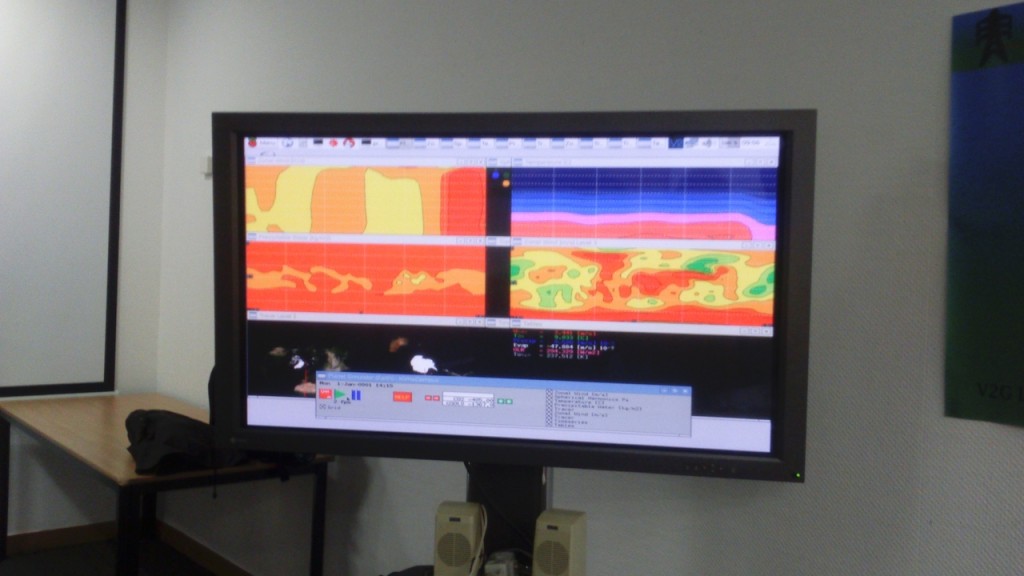
That’s the output of a “medium complexity” climate model running on V2G’s trusty Raspberry Pi 3B and displayed on BEIS’ 55 inch screen. Note that the carbon dioxide concentration had been increased to 405 ppm from the default 280. Amongst other things that’s a graphical demonstration of just how much number crunching bang you get for 1.3 bucks in this day and age. Now our little computational engine doesn’t forecast the weather of course, but the United States’ National Hurricane Center’s much larger engine does. Here is its Friday 13th forecast for Hurricane Ophelia:
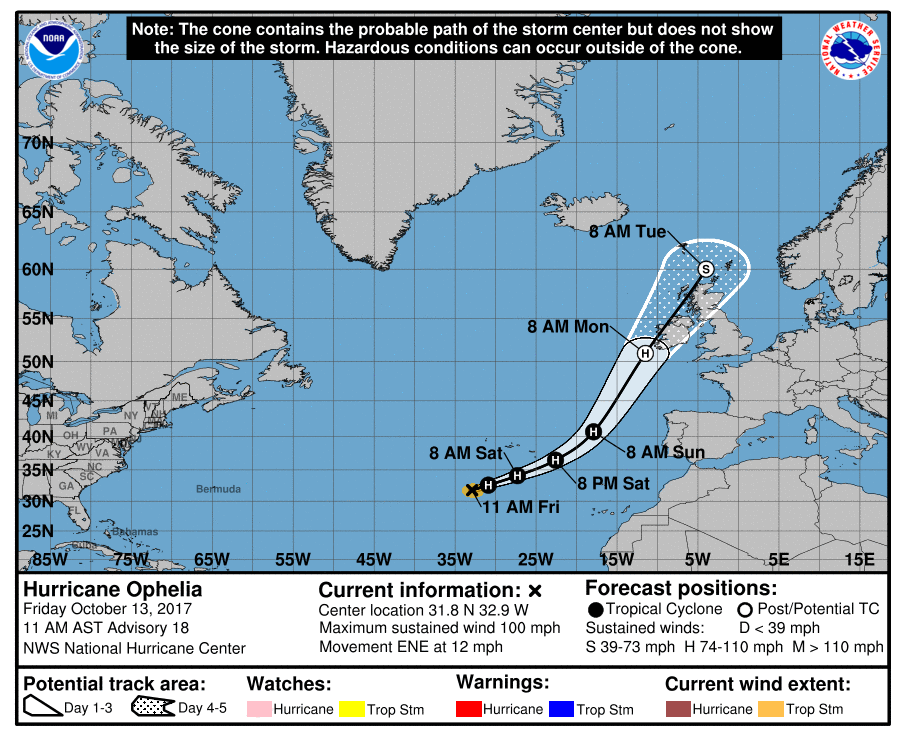
ophelia_5day_cone_20171013-15Z

I don’t think anybody’s accurately added up the costs attributable to Ophelia yet, but according to Wikipedia at the moment:

Damage has been estimated at 1 billion euros ($1.18 billion USD), making it one of the most expensive storms ever to strike the UK and Ireland.

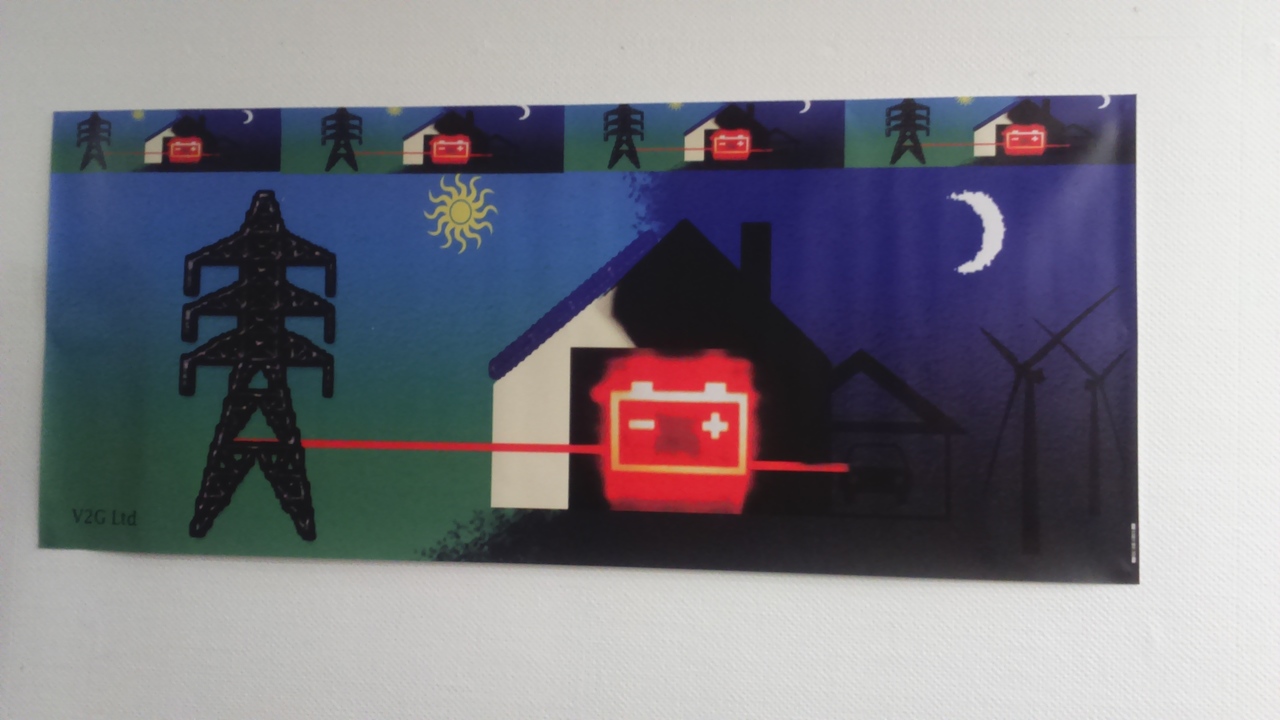
Having outlined the problem, here’s a slightly modified version of V2G’s 5 year old artist’s impression of part of the solution that was also on display in the BEIS basement:
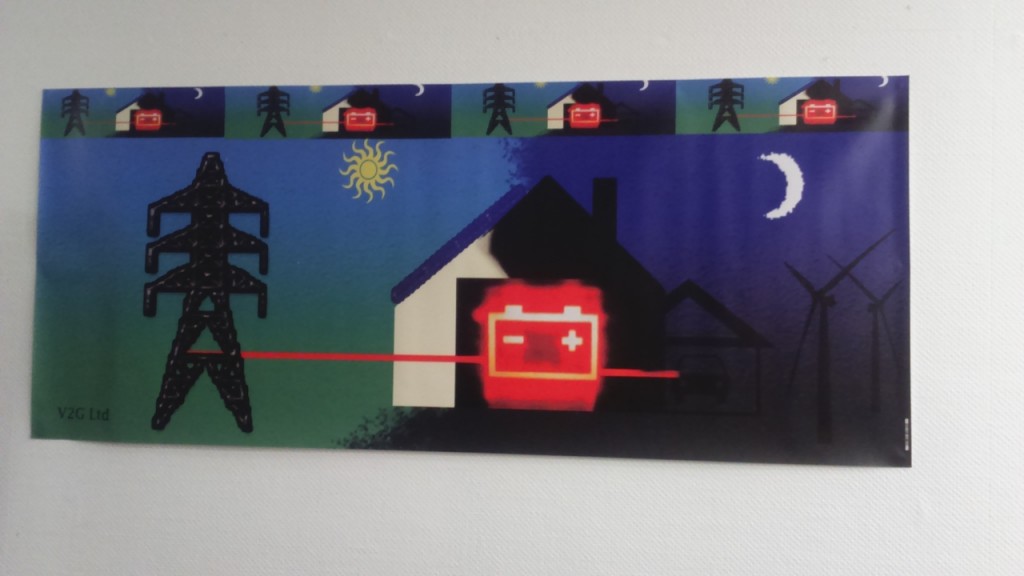
DSC_1251

How much might the financial damage caused by Ophelia’s passage have been reduced if every building in the UK and Ireland had access to some local energy generation plus some static and/or mobile energy storage? Whilst you ponder that question, here’s a close up of our RasPi 3B together with its cousin, a Raspberry Pi 2B with a cluster of 4 baby Raspberry Pi Zeros on its back:
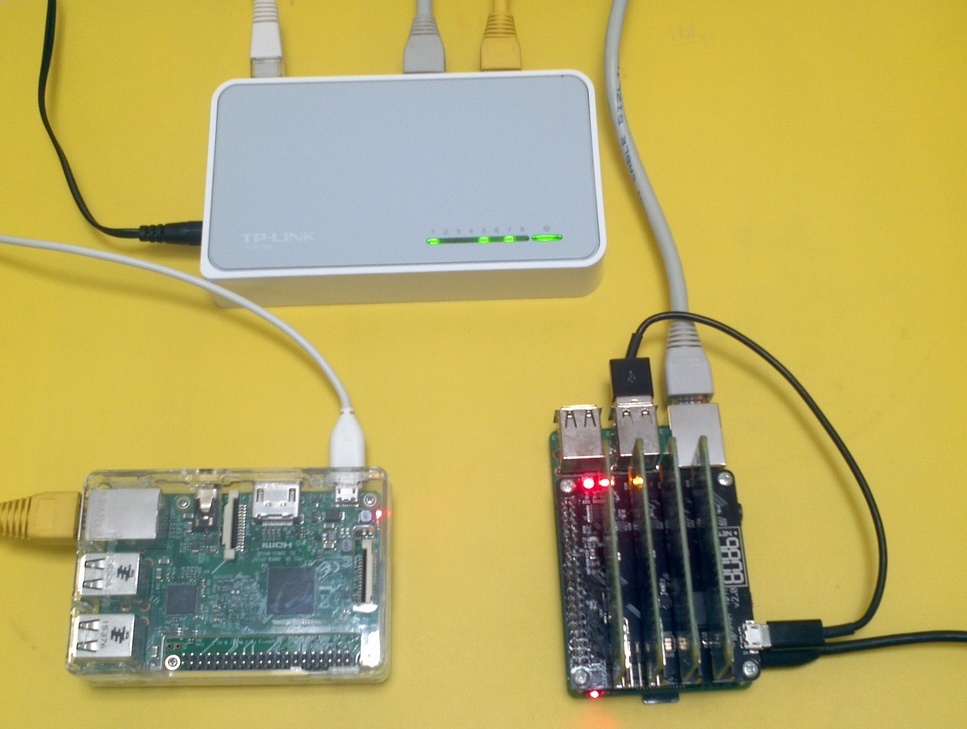
2017-10-13-RasPis

The RasPi 2 was running our new open source UK plc carbon intensity plotter. Here’s what that revealed on Friday the 13th of October 2017:
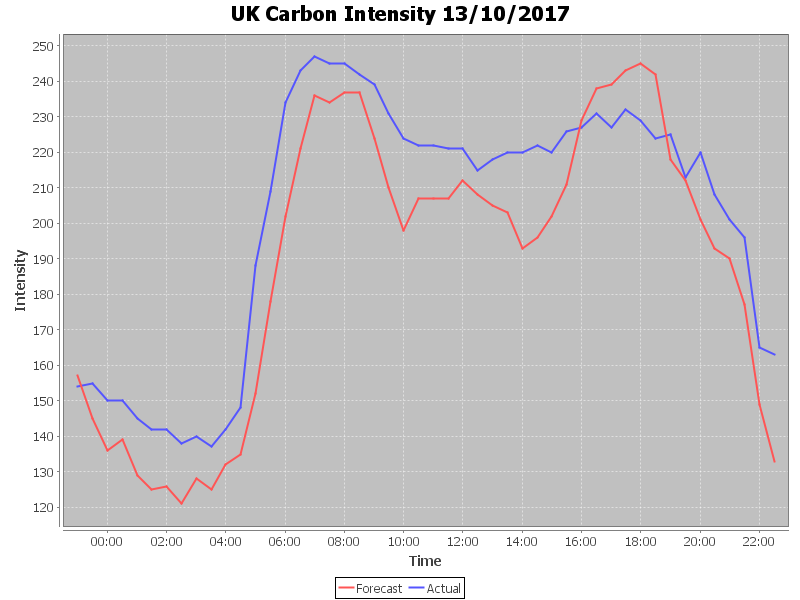
CarbonIntensity-20171013

As you can no doubt readily appreciate the graph is not a horizontal line! The value at any time is dependent on demand of course, but also on the amount of renewable generation in the mix. That is highly dependent on the weather, and indeed the weather forecast should you be attempting to control UK plc’s carbon emissions. If you’re “committed to tackling climate change” you really should be committed to minimising the integral of the blue line representing UK plc’s actual carbon intensity. Unfortunately that’s not how the UK’s energy markets currently operate. Perhaps they need a redesign?

The Raspberry Pi Zeros only have a single core rather than the 4 cores on the climate modelling 3B. Nonetheless at a cost of four Great British Pounds a pop (plus tax) they are more than capable of acting as a highly “intelligent” device connected to a Great British “smart grid”. Ours already run a variety of British “standards for a smart, flexible energy system”. If you doubt that please feel free to read all about the time V2G’s offices suffered their very own “blackout”. As I pointed out way back then:

Such a piece of electronics wouldn’t in and of itself add a whole lot to the price of an electric vehicle and/or a garage in Dunchideock, or anywhere else on the planet for that matter.

I cannot help but wonder how much the Great Dunchideock Blackout cost Western Power Distribution, how much the evidently changing climate in this part of the world is costing and will cost them, and how their electricity distribution network is coping with the assorted stresses and strains generated by all the renewable power sources currently being tacked onto it down here in not so Sunny South West England that do not currently have any form of energy storage associated with them.

Moving on to the near end of our table at BEIS, here’s a LEGO tableau representing our artist’s impression of a passenger free connected vehicle driven by a “robot” deciding which of three possible electric vehicle charging stations it should connect to:
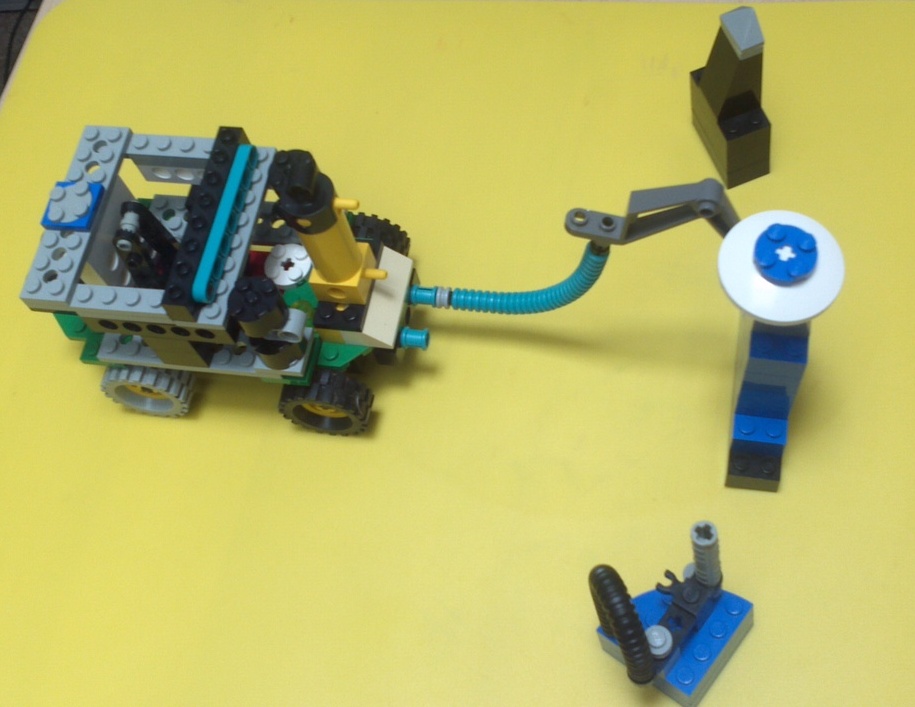
2017-10-13-Connected-2

In this instance its battery is nearly flat, it’s in a hurry to pick up another human and the grid is in good shape so it’s therefore decided to select the ultra rapid “robotic” charging station. This may seem like child’s play, but it isn’t. On Friday Julian Anderson of Thales e-Security stopped by our stand. We had a bit of a play with the Lego and a longer discussion about the cyber security implications of connected vehicles and autonomous EV charging.

Here’s another point to ponder. Apart from BEIS and Thales we also had a long conversation with an engineer from Ofgem about “community energy markets“. However the people who make policy were conspicuous only by their absence from our audience.

N.B. There’s already another big storm on the way to us here in South West England, as well as Ireland once again. This one’s called Brian, and according to the Met Office:

Between 04:00 Sat 21st and 23:59 Sat 21st

A spell of strong southwesterly winds is expected. Some coastal routes and communities are likely to be affected by large waves, with potential for flooding of properties. Some transport disruption is likely across the warning area, with delays to road, rail, air and ferry transport. Short term loss of power and other services is also possible.


Brian-20171019+2d