Over the last few days Octopus Energy have dropped some heavy hints about an “exciting announcement” at their Energy Tech Summit in London at 12:30 this afternoon. Here is what transpired at the appointed time:
As the video title puts it, Octopus CEO Greg Jackson launched the WORLD FIRST vehicle-to-grid EV bundle! As you can see from the video thumbnail, Greg was joined on stage by motoring journalist Quentin Willson and 1996 Formula One World Champion Damon Hill as he outlined the Octopus Power Pack consumer offer:
Power Pack Bundle gives a car lease, two-way charger, and a smart tariff for £299/month with 100% FREE smart charging – saving £1,000/year on fuel vs petrol.
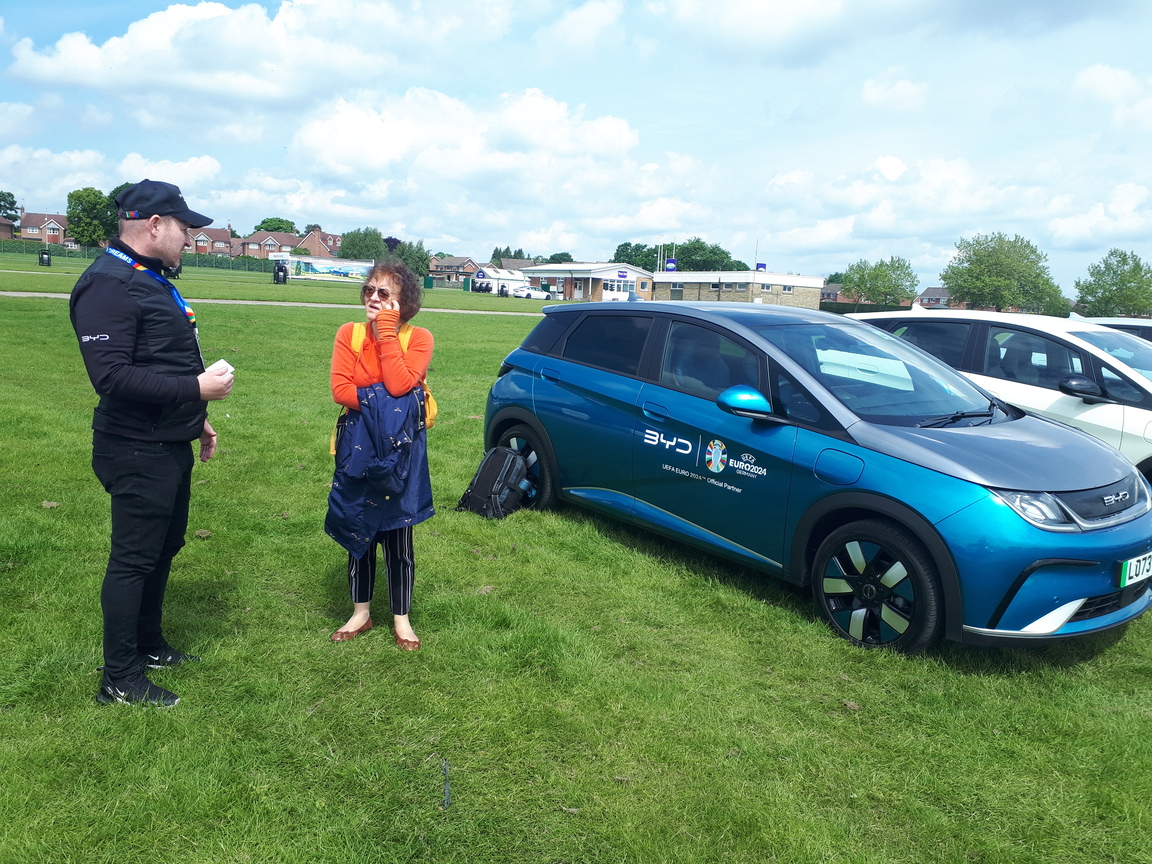
The EV part of the bundle is the BYD Dolphin, which I test drove when I was up in Harrogate last year to contribute to two V2x panel discussions at the Everything Electric North show:
How do you catch a cloud and pin it down? How do you find a word that means Flexibility?
We’ll get back to answering that question in due course. First some exciting news.
On November 22nd I attended the kick off meeting of a new International Electrotechnical Commission “smart grid” committee. This one is catchily entitled the “System Committee Smart Energy ad hoc Group 11 on Energy flexibility and residential DSR: common ground”, or “SyC SE ahG 11” for short.
If you follow the link just above you will discover that ahG 11’s mission is:
To consider the implementation of international residential flexibility system standards, their compatibility with national requirements, and propose best practice:
* To ensure the compatibility of end-to-end system solutions at international level,
* To identify emerging challenges related to the uptake of residential DSR,
* To consider terminology alignment, and
* To develop an accelerated report containing requirements for residential flexibility. This would give recommendations for alignment of existing national publications and flexibility projects under development with international standards. It would also identify, if relevant, the need for further standardization
Amongst other questions discussed at the kick off meeting was “How do you define the term ‘flexibility'”. Your mileage may vary of course, but since I spent 5 years of my life meeting 2 or 3 times per week on the committee developing the IEC 63110-1 document I will quote from the Committee Draft for Vote (CDV for short) of that international standard:
General concept of elasticity of resource use, (demand, storage, generation) modification of consumption and/or generation of energy/power, on an individual or aggregated level, in 371 reaction to an external signal (price signal or request) in order to provide a service within the energy system
Elasticity of resource use (demand, storage, generation), modification of consumption and/or generation of energy/power, on an individual or aggregated level, in reaction to an external signal (price signal or request) in order to provide a service within the energy system.
If you have strong objections to that definition please do not hesitate to join ahG 11, or failing that to send your preferred term of words to me so that I can bring it to the committee’s attention.
My other main action item before the next meeting in the New Year is to generate a list of existing standards, regulations etc. relevant to my particular area of expertise, which is bi-directional power transfer during electric vehicle (dis)charging (BPT for short). More commonly referred to as V2x. Since ahG 11’s term of reference includes the word “residential” this suggests an emphasis on vehicle-to-home technology (V2H for short) . However, homes are of course connected to the local electricity distribution grid, and are not forbidden from feeding electrical energy back into the grid as long as all the associated rules and regulations are adhered to.
Please let me or any other member of the committee know of any “standards” within your own area of expertise that may be relevant to “residential demand side response” (using the UK’s non standard nomenclature!), whether they be international, national, “industry de facto” or even the learnings from relevant “pilot projects”.
Please feel free to suggest candidates for “standards” for communicating across any of the arrowed lines in the diagram, and alternative diagrams for that matter!
A number of commenters on Twitter are getting very excited about an announcement from General Motors earlier today. Here’s GM’s Mary Barra and PG&E’s Patti Poppe talking with Phil LeBeau on CNBC’s “Squawk Box”:
As Mary says to Phil:
Bi-directional charging will help when there’s a power outage or additional demand, to really help supply energy and keep everybody having the energy they need to live their lives.
Phil suggests:
What you guys are talking about doing is making smart vehicles and a smart grid, where the communication happens and I don’t need to be involved. Correct?
Patti responds:
Automatically! There’s like this value stack for electric vehicles that I don’t think people fully appreciate yet. The first is obviously decarbonising transportation, number one and everybody gets that. And it’s a great driving experience. But then you stack on the resiliency play because of the effects of climate change, and then on a peak summer day imagine being able to leverage the fleet of electric vehicles. In California, in fact in my service area alone, one in five electric vehicles sold in America are in my service area, so we can really deploy them to power homes and to enable the grid.
In the accompanying press release General Motors reveal that:
Pacific Gas and Electric Company and General Motors today announced a breakthrough collaboration to pilot the use of GM electric vehicles as on-demand power sources for homes in PG&E’s service area.
PG&E and GM will test vehicles with cutting-edge bidirectional charging technology that can help safely power the essential needs of a properly equipped home. EVs play a critical role in achieving California’s goals for reducing greenhouse gas emissions and already provide customers with many benefits. Bidirectional charging capabilities add even further value by improving electric resiliency and reliability…
Skipping to the “How the pilot will work” section of the news release GM explain that:
PG&E and GM aim to test the pilot’s first vehicle-to-home capable EV and charger by summer 2022. The pilot will include the use of bidirectional hardware coupled with software-defined communications protocols that will enable power to flow from a charged EV into a customer’s home, automatically coordinating between the EV, home and PG&E’s electric supply. The pilot will include multiple GM EVs.
Following lab testing, PG&E and GM plan to test vehicle-to-home interconnection allowing a small subset of customers’ homes to safely receive power from the EV when power stops flowing from the electric grid. Through this field demonstration, PG&E and GM aim to develop a user-friendly vehicle-to-home customer experience for this new technology. Both teams are working quickly to scale the pilot with the goal of opening larger customer trials by the end of 2022.
It seems as though Mary, Patti, Phil et al. are blissfully unaware that pilot projects involving V2H/V2G and several hundred electric vehicles have been under way here in the United Kingdom since 2018.
We have even been running a “cutting-edge bidirectional charging technology” project in our very own car park here in wild and woolly South West England for the last couple of years:
For a more detailed overview of the UK pilot projects referred to above please download the presentation available at our sister web site:
That’s a question I’ve been wondering about since UK retail electricity prices started rising and suppliers started going bust in droves. And I am not the only one. Here’s Enel CEO Francesco Starace speaking to CNBC back in the summer:
If you look at Europe this [electricity price spike] was quite easy to predict. 2021 is the first year in which the ETS (Emissions Trading Scheme) gets into this mechanism of cutting quotas as the slack shows up, and that’s working, and I think that is something that everyone was expecting to work and it’s doing the job. The question is whether this will become too much, or whether politicians will be able to understand that they have to be part of this game, and use fiscal levers to mitigate the impact on the most vulnerable customers.
No doubt there are also other factors at work, but one way and another we here in the United Kingdom seem be losing “this game” by many a mile at the moment.
Those “most vulnerable customers” are currently feeling the impact, as indeed are we when perusing our own electricity bills. I’ve been documenting that impact via videos of our own local friendly neighbourhood wind turbine at Upper Tremail when the wind is blowing, thanks to both Storm Arwen:
The British Standards Institution has just published a new “specification”, and unlike most BSI “standards” this one is free to download, as long as you don’t mind parting with an email address. As the download page puts it:
BSI is working with the UK Government to encourage the uptake of safe, secure and interoperable Energy Smart Appliances (ESAs). These are needed for the active management of demand on the electricity network, known as Demand Side Response (DSR). PAS 1878 is a critical component in this because it details the requirements and criteria necessary to make an energy smart appliance compatible with DSR activities.
At this point you may have a couple of question, such as “What on Earth is a PAS?”. The BSI have a ready answer for that question:
A PAS (Publicly Available Specification) is a fast-track standardization document – the result of an expert consulting service from BSI. It defines good practice for a product, service or process. It’s a powerful way to establish the integrity of an innovation or approach.
The next obvious question is “What has this got to do with electric vehicles and/or vehicle-to-grid technology?”. The answer to which is that a “smart” EV charging station is a special case of an interoperable Energy Smart Appliance. As the foreword to PAS 1878 states:
Honda has invested in advanced bi-directional charging technology at its European R&D site in Offenbach, Germany, which is helping to balance demand and store energy more efficiently across the facility. The new charging system incorporates renewable energy generation, and is a test bed for hardware that will be available to private households in the future.
The technology installation in Germany follows the debut of the domestic Honda Power Manager Concept at the 2017 Frankfurt Motor Show in September. The concept previewed a fully-integrated energy transfer, which takes power from the grid and can return stored energy from electric vehicle (EV) batteries – through ‘Vehicle-to-Grid’ or ‘V2G’ technology. This latest trial installation at Honda’s Offenbach site applies the same principles on a larger scale.
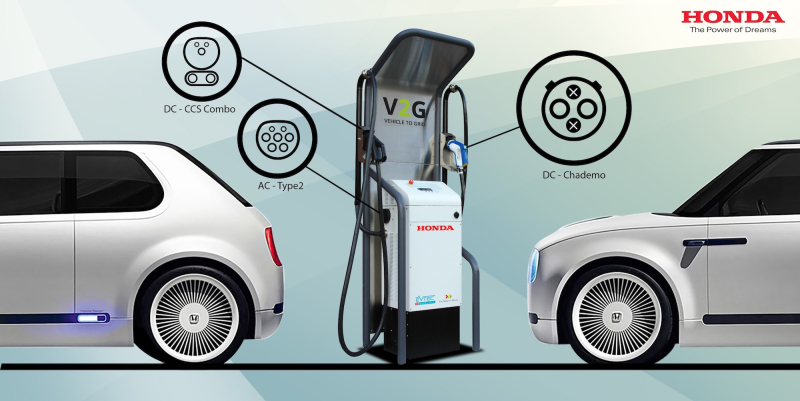
Here’s how Honda’s new bi-directional V2G capable charging station looks, albeit not in situ in Offenbach by the looks of it!
Honda installs new bi-directional charging technology at European R&D centre
According to Jörg Böttcher, Vice President of Honda R&D Europe:
With the installation of the latest bi-directional charging technology at our R&D site in Germany, we are adding the next technology to our Smart Company project, which will further enhance our research activity in the field of zero-emission society and future mobility.
Here at V2G UK we have come to associate the word “Honda” with “hydrogen“, although Honda did take part in a V2G trial in the United States back in 2013. Here in Europe in 2017 they point out that:
With the help of the bi-directional hardware and with the technology of The Mobility House, Honda aims to optimise energy management at its European R&D campus, maximising the use of renewable solar power in particular. The project is testing the interaction, compatibility and power flow between specific electrical components, including the renewable energy cells and the EV batteries. The installation represents a collaboration between Honda R&D Europe, energy service provider The Mobility House and Swiss technology company EVTEC.
The investment in the bi-directional energy transfer technology further enhances the world’s most advanced public charging station for plug-in vehicles, which was launched at Honda R&D Europe in summer 2017. Its state-of-the-art 940V capability can deliver up to 150kW of energy, enabling as many as four vehicles to charge simultaneously with different types of connectors. Since its installation in June, the EV charging station has supplied power for 447 charge sessions and has saved 3.87 tonnes of CO2.
Here’s a video from The Mobility House explaining their vision of a future “V2G enabled” world:
https://youtu.be/qGtCClE4tcY
There’s more information on that topic in a press release from EVTEC which doesn’t seem to be available online at the moment. In slightly stilted English the Swiss company explain that:
With the growing importance of electric mobility, the two worlds of energy and mobility are merging. The closer this connection becomes, the more importance gain intelligent technologies that ensure this development secures a sustainable future. Such a technology is Vehicle-to-Grid, in short “V2G”. What is behind this term, is the intelligent integration of electric vehicles in the energy system and markets.
This advantage is well known to Honda, where the V2G technology is already in use today: with the help of a bidirectional charging solution, the company aims to optimize energy management at its European R & D campus in Offenbach. Within the framework of a comprehensive project over the last 12 month, the interaction of various energy components – from vehicle battery to photovoltaic system – is being tested here.
A reliable, precise, and fast acting bi-directional charger is the necessary base for every V2G application, like peak shaving and energy optimization.
All in all that EVTEC charging station sounds like just the sort of thing we need to try out at V2G Towers over here in North Cornwall, located in a distant corner of sunny South West England amongst an impressive array of large scale solar PV and onshore wind “farms”!
The same may well apply to Honda’s Power Manager mentioned above, which was announced at the Frankfurt Motor Show in September. According to a Honda press release once again:
Its all-new Power Manager Concept, a fully-integrated energy transfer system, is designed to incorporate electric vehicles into a smart power grid. It enables the collection and distribution of electricity between the grid, homes and businesses and electric vehicles, to intelligently balance demand and efficient storage of energy. Honda will apply its Power Manager technology as part of a smart grid pilot scheme in the west of France.
Power Manager Concept works by aggregating and distributing energy to and from the grid, solar panel-equipped homes or workplaces, and electric vehicles.
Electricity is received into the system from the grid or is generated by the solar panels and can be used to power and heat the building as well as to charge the EV. While the EV is plugged in, the energy can be stored and used at home or sold back to the grid, potentially generating value for EV owners.
The Power Manager Concept system can help to stabilise the grid at times of either short or surplus supply, as well as representing a revenue opportunity for EV owners.
That sounds like just the sort of thing that Western Power Distribution needs to help stabilise the electricity distribution grid in our neck of the woods, which is currently heavily “constrained”:
Do you suppose that we could possibly persuade Honda to apply its Power Manager technology as part of a smart grid pilot scheme here in the south west of England too?
Last Thursday we took the train up to London because the next morning we were attending a meeting organised by the British Standards Institution on the topic of “The future of standards for a smart, flexible energy system“. Instead of one of the BSI’s own offices the venue for the event was the conference centre of the Department for Business, Energy and Industrial Strategy, just around the corner from Westminster Abbey.
Apart from attending the event itself we were also one of five SMEs displaying our wares in an adjacent room. Here’s how our stand looked when we’d just about finished setting up:
That was when a BEIS engineer told us what we’d missed during our journey the previous day. The announcement of the UK Government’s new Clean Growth Strategy:
An ambitious blueprint for Britain’s low carbon future.
This strategy sets out our proposals for decarbonising all sectors of the UK economy through the 2020s. It explains how the whole country can benefit from low carbon opportunities, while meeting national and international commitments to tackle climate change.
No doubt we’ll have much more to say on all that in due course, but for the moment here’s an overview of V2G Limited’s clean growth strategy, as displayed in the BEIS basement last week. First of all let’s take a look at the problem UK plc has committed to tackle:
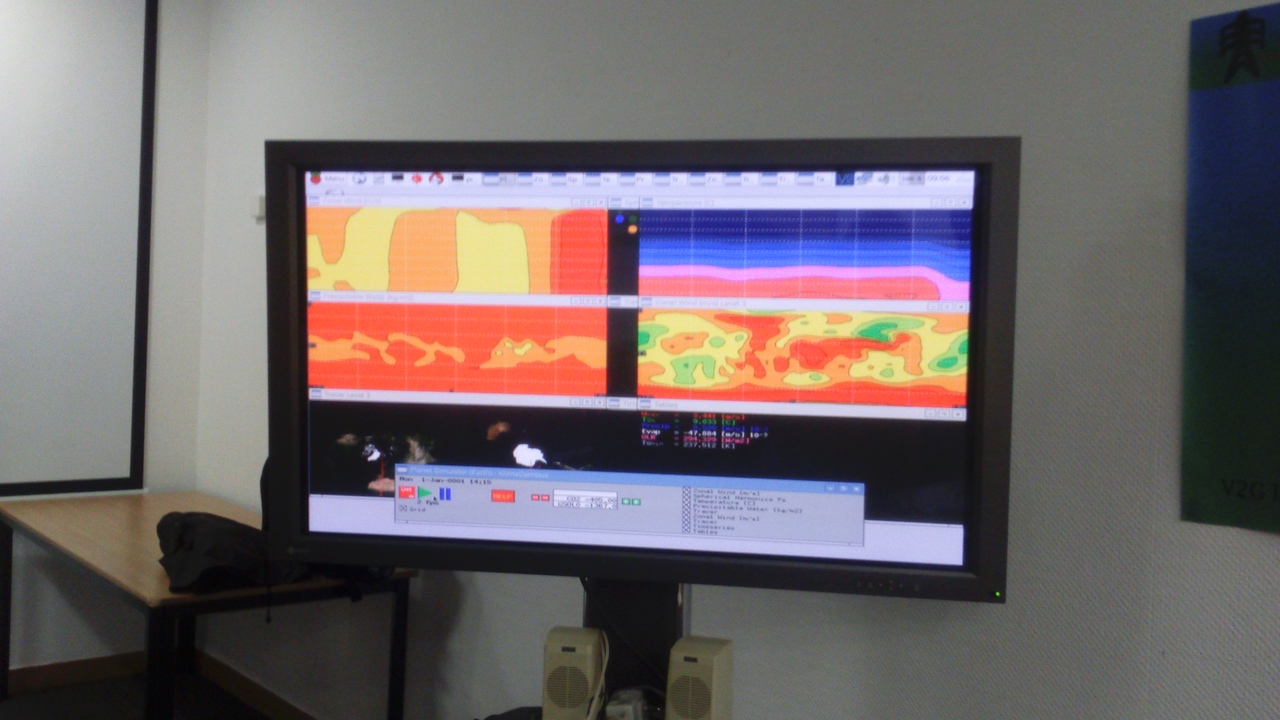
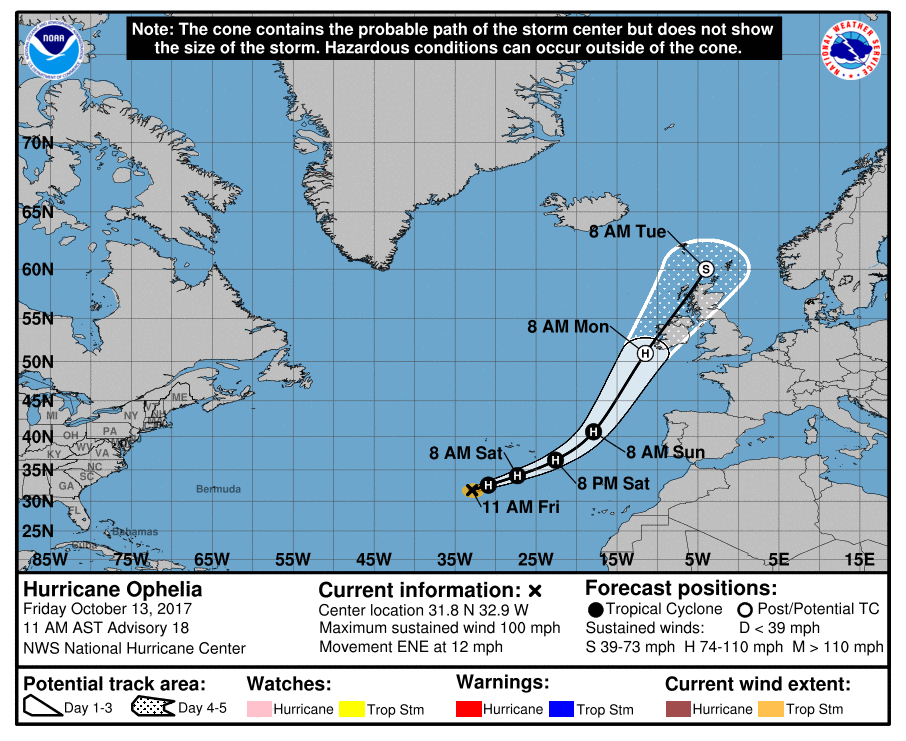
That’s the output of a “medium complexity” climate model running on V2G’s trusty Raspberry Pi 3B and displayed on BEIS’ 55 inch screen. Note that the carbon dioxide concentration had been increased to 405 ppm from the default 280. Amongst other things that’s a graphical demonstration of just how much number crunching bang you get for 1.3 bucks in this day and age. Now our little computational engine doesn’t forecast the weather of course, but the United States’ National Hurricane Center’s much larger engine does. Here is its Friday 13th forecast for Hurricane Ophelia:
I don’t think anybody’s accurately added up the costs attributable to Ophelia yet, but according to Wikipedia at the moment:
Damage has been estimated at 1 billion euros ($1.18 billion USD), making it one of the most expensive storms ever to strike the UK and Ireland.
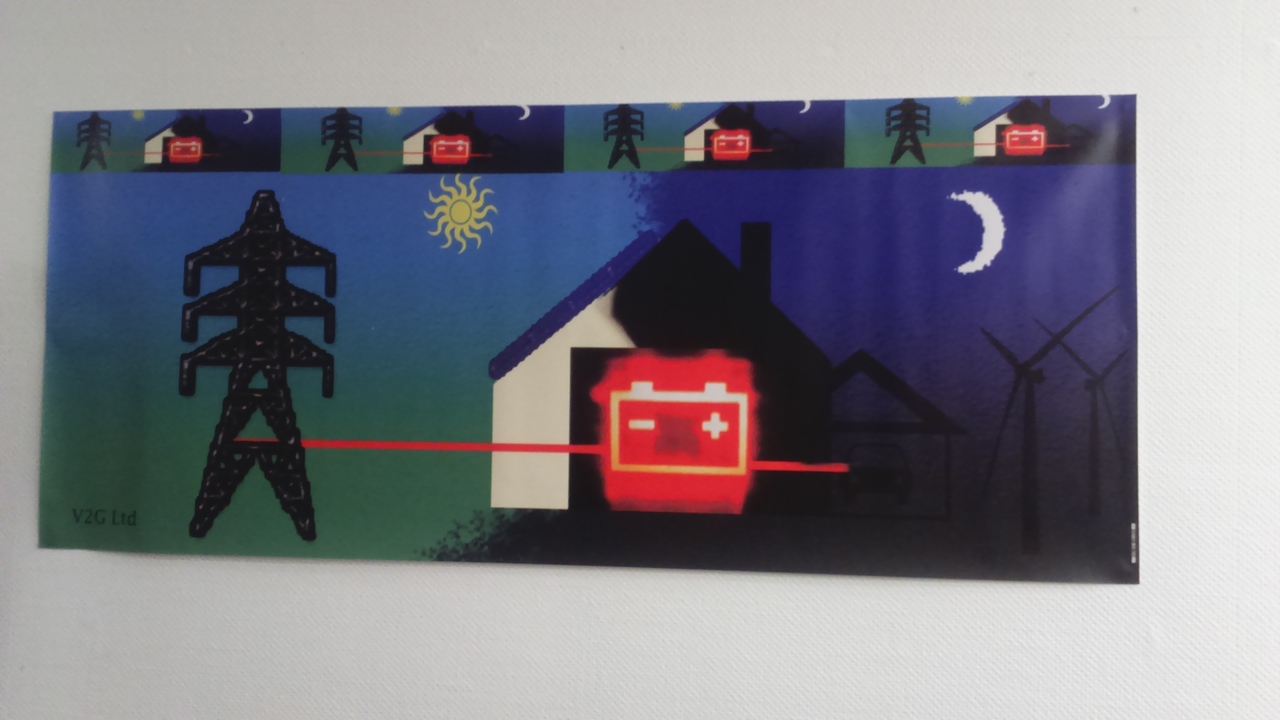
Having outlined the problem, here’s a slightly modified version of V2G’s 5 year old artist’s impression of part of the solution that was also on display in the BEIS basement:
How much might the financial damage caused by Ophelia’s passage have been reduced if every building in the UK and Ireland had access to some local energy generation plus some static and/or mobile energy storage? Whilst you ponder that question, here’s a close up of our RasPi 3B together with its cousin, a Raspberry Pi 2B with a cluster of 4 baby Raspberry Pi Zeros on its back:
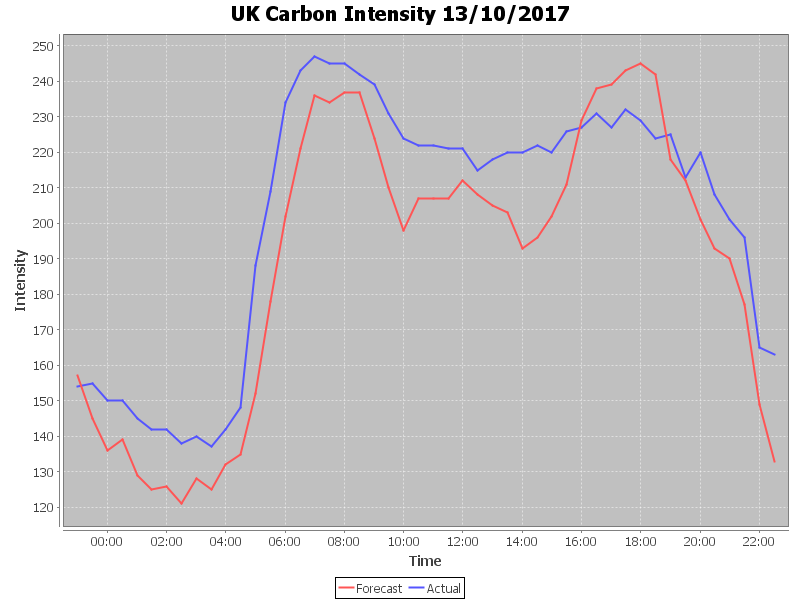
The RasPi 2 was running our new open source UK plc carbon intensity plotter. Here’s what that revealed on Friday the 13th of October 2017:
As you can no doubt readily appreciate the graph is not a horizontal line! The value at any time is dependent on demand of course, but also on the amount of renewable generation in the mix. That is highly dependent on the weather, and indeed the weather forecast should you be attempting to control UK plc’s carbon emissions. If you’re “committed to tackling climate change” you really should be committed to minimising the integral of the blue line representing UK plc’s actual carbon intensity. Unfortunately that’s not how the UK’s energy markets currently operate. Perhaps they need a redesign?
The Raspberry Pi Zeros only have a single core rather than the 4 cores on the climate modelling 3B. Nonetheless at a cost of four Great British Pounds a pop (plus tax) they are more than capable of acting as a highly “intelligent” device connected to a Great British “smart grid”. Ours already run a variety of British “standards for a smart, flexible energy system”. If you doubt that please feel free to read all about the time V2G’s offices suffered their very own “blackout”. As I pointed out way back then:
Such a piece of electronics wouldn’t in and of itself add a whole lot to the price of an electric vehicle and/or a garage in Dunchideock, or anywhere else on the planet for that matter.
I cannot help but wonder how much the Great Dunchideock Blackout cost Western Power Distribution, how much the evidently changing climate in this part of the world is costing and will cost them, and how their electricity distribution network is coping with the assorted stresses and strains generated by all the renewable power sources currently being tacked onto it down here in not so Sunny South West England that do not currently have any form of energy storage associated with them.
Moving on to the near end of our table at BEIS, here’s a LEGO tableau representing our artist’s impression of a passenger free connected vehicle driven by a “robot” deciding which of three possible electric vehicle charging stations it should connect to:
In this instance its battery is nearly flat, it’s in a hurry to pick up another human and the grid is in good shape so it’s therefore decided to select the ultra rapid “robotic” charging station. This may seem like child’s play, but it isn’t. On Friday Julian Anderson of Thales e-Security stopped by our stand. We had a bit of a play with the Lego and a longer discussion about the cyber security implications of connected vehicles and autonomous EV charging.
Here’s another point to ponder. Apart from BEIS and Thales we also had a long conversation with an engineer from Ofgem about “community energy markets“. However the people who make policy were conspicuous only by their absence from our audience.
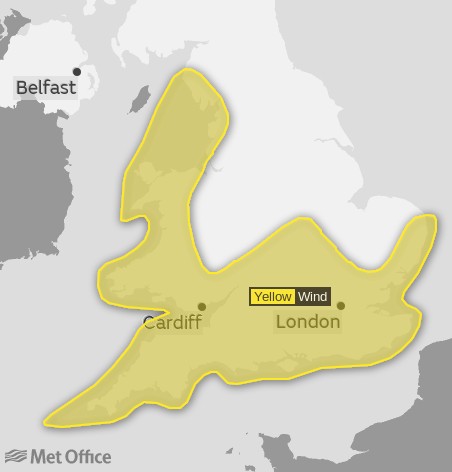
N.B. There’s already another big storm on the way to us here in South West England, as well as Ireland once again. This one’s called Brian, and according to the Met Office:
Between 04:00 Sat 21st and 23:59 Sat 21st
A spell of strong southwesterly winds is expected. Some coastal routes and communities are likely to be affected by large waves, with potential for flooding of properties. Some transport disruption is likely across the warning area, with delays to road, rail, air and ferry transport. Short term loss of power and other services is also possible.
Groupe Renault, Europe’s number one manufacturer of electric vehicles, is pleased to announce the creation of Renault Energy Services. The aim of this new subsidiary is to have an active presence in the energy and smart grid sectors, both of which are fundamental to the expansion of electric mobility.
We certainly won’t argue with that proposition, since we’ve been saying much the same thing at much greater length for over 5 years now! The press release continues:
Renault Energy Services will function much like a start-up and its objective is to invest in smart grid-related projects by forging privileged ties with the energy industry’s various stakeholders. Renault Energy Services will focus chiefly on the development of smart charging, vehicle to grid interaction and second-life batteries.
It seems as though Renault are 5 years behind us on this one? There is more. According to Renault’s Senior Vice President for Electric Vehicles, Gilles Normand:
The creation of Renault Energy Services marks an important step forward. Investing in smart grids is key to both reinforcing the lead we enjoy in the European electric vehicle market and accelerating the EV industry’s scale-up.
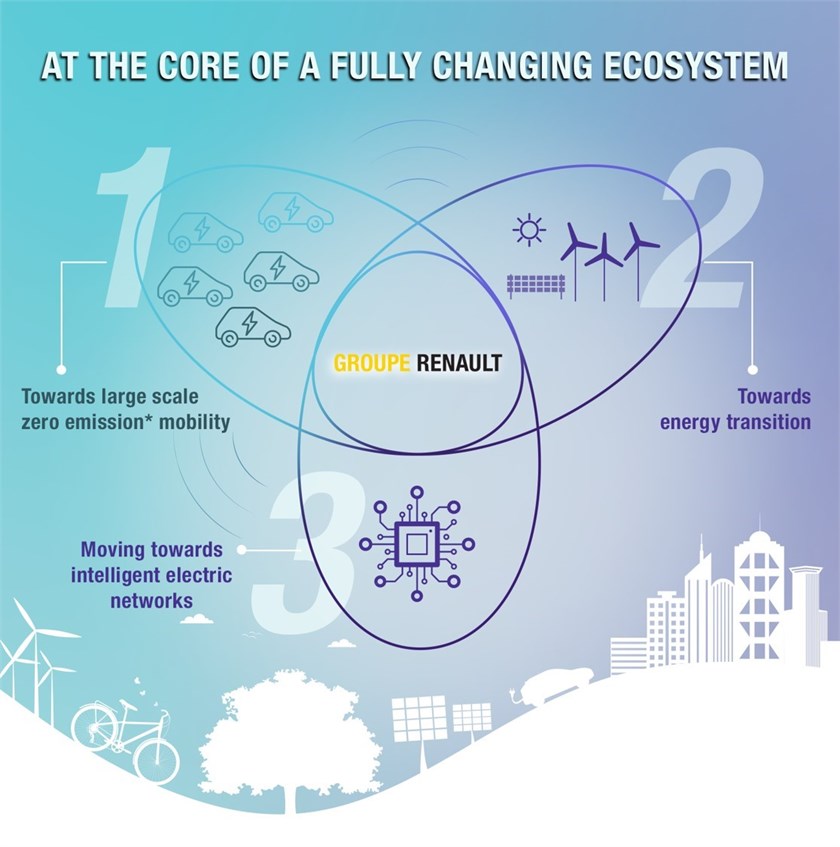
This is what Renault’s “Smart Grid” infographic looks like:
According to Renault’s press release once again:
Groupe Renault intends to make a real contribution to the expansion of smart charging networks which, by facilitating the communication of data, are capable of making real-time adjustments to the supply of electricity for more-efficient management of resources. Renault electric vehicles connected to smart grids will benefit from more economical, lower-carbon electricity. In addition to permitting the development of smart charging, smart grids favour both interaction between electric vehicles and networks (vehicle to grid) and projects involving second-life batteries:
Smart charging adjusts battery charging rates as a function of customers’ needs and the availability of electricity via the grid. Batteries are charged when supply exceeds demand, notably during renewable energy production peaks and when rates are at their cheapest.
In vehicle to grid systems, electric vehicles provide electricity to the grid during peak hours. In this way, not only do they benefit from the advantages of smart charging but they also serve as a means to temporarily store energy.
Even once their life as a power source for electric vehicles is over, EV batteries continue to be capable of storing a significant amount of energy. Renault is able to harness this energy, notably for the purposes of stationary energy storage. By giving batteries a second lease of life, Renault is today in a position where it can cover the full spectrum of energy storage needs, from individual homes to office buildings, factories, schools and apartment blocks, and even the charging of electric vehicles.
Unfortunately the press release doesn’t include Gilles’ mobile number. That’s a shame, because I’d love to have a quick word with him!
I’ve been out on the road this week, explaining the potential benefits of vehicle-to-grid technology to a variety of audiences. First up on Wednesday evening was the “Autumn Connect” event at Exeter City Futures, where I made a presentation entitled “V2G – How to simultaneously store energy and reduce congestion.”. I had the luxury of being allowed 5 minutes to present an “elevator pitch” on that subject to the assembled throng:
Here’s an expanded version of the PowerPoint slide deck I used. They all had Kasia’s “artist’s impression” of V2G in action at the top, so I’ll omit that part here. The first two slides are taken from a 2 minute pitch I presented at the Met Office on Thursday (see below) and have to conform to a template provided by the Knowledge Transfer Network. Hence:
V2G Limited
A small “smart grid” consultancy located amongst the wind and solar “farms” of North Cornwall
The “smart grid” is actually the “internet of big things”!
Producing embedded firmware for 35 years
Under a previous name provided multi-drop fleet routing interfaced to SAP for a FTSE 250 company
Long experience in electricity distribution. The Lucy Switchgear Gemini RTU firmware is our baby
Whilst we understand hardware our expertise is in designing software/firmware
Evangelising Vehicle-to-Grid technology for 5 years
I trust that is all self explanatory?! If not please see below or ask questions in the space made available for that purpose in the comments section at the bottom.
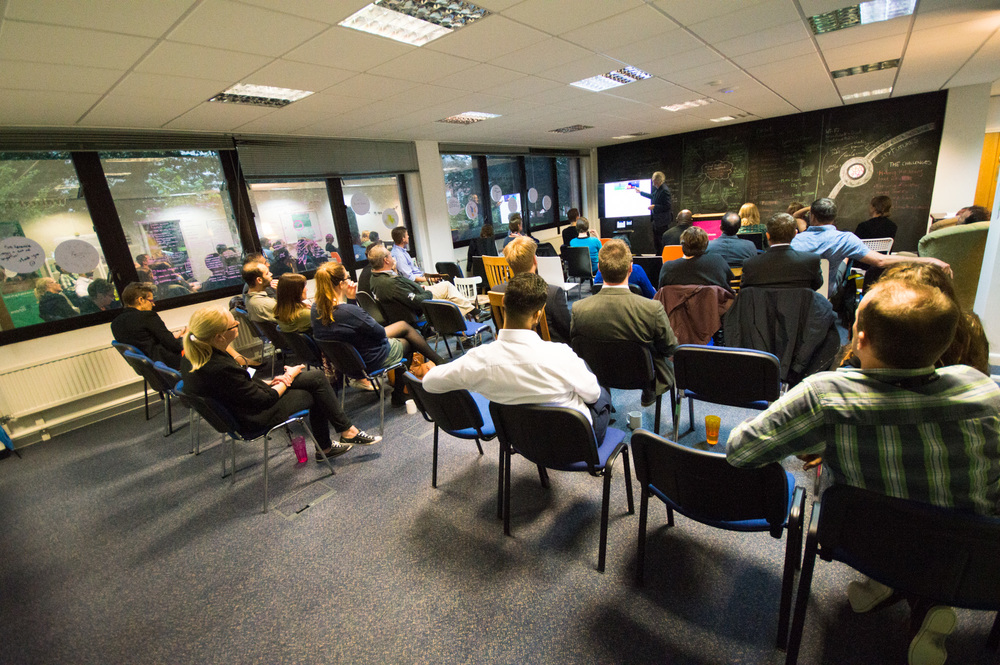
I always like to encourage some audience participation at these events, and Exeter City Futures delivered in spades! For the first time ever I didn’t need to blow my own bidirectional trumpet:
Timekeeper Lyndsey volunteered to blow the V2G trumpet for me, though ultimately it informed me that my time was up before I even managed to display the last slide, so make sure to read all about that below!
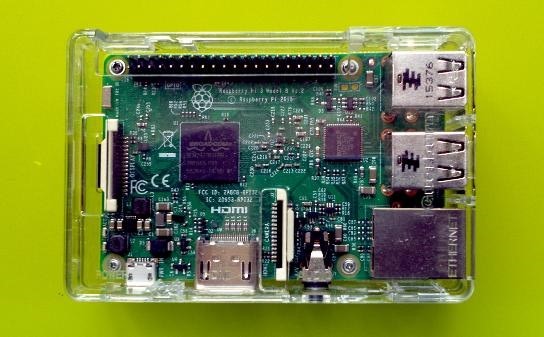
To make my “internet of big things” point I waved my trusty Raspberry Pi 3B at the audience. Here is what it looks like close up:
Dr. Sarah Ward from the University of Exeter correctly, if somewhat hesitantly, identified the mystery object. Now I’ve been programming the firmware (i.e. the software inside the hardware) in those sorts of devices for a very long time. 35 years ago single board computers were a lot slower and a lot bigger, but they still did the same sort of job. In those days they didn’t have USB ports like the Pi. Instead they had serial ports that conformed to the RS-232 standard. Getting two devices to talk to each other was always “interesting”!
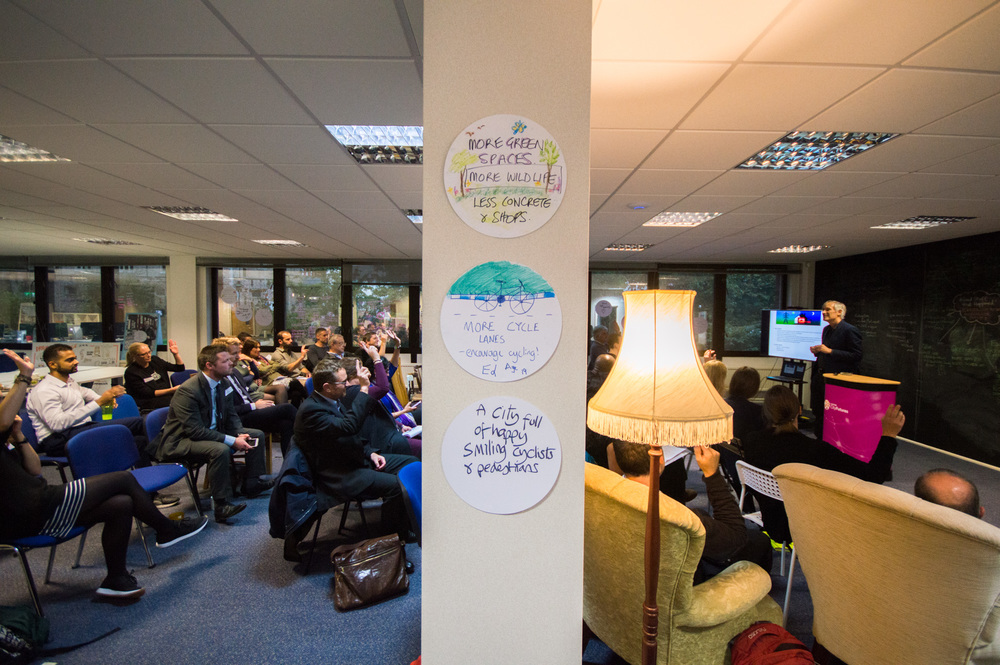
I asked the audience to raise their hands if they’d previously heard of the “smart grid”. Quite a lot had:
Then I asked who had heard of the “internet of things”. Slightly more hands were raised. The point being that hardware a lot like the Raspberry Pi is at the heart of your smartphone, at the heart of the Smart Grid and (albeit in a smaller form factor) at the heart of the Internet of Things. The main difference being that the smart grid has been around quite a lot longer than the IoT! A point that some of my audience at the Met Office on Thursday seemed to agree with since they nodded their heads vigorously at that juncture!
Moving on to slide 2:
1. Our project idea
See the infographic above
North Cornwall is ideal!
Charge EVs on sunny lunchtimes
2. What’s innovative about it?
Nobody’s done it yet
On all sorts of levels!
Price signals / regulation?
3. The services we can offer?
Vast systems integration experience
Vast enthusiasm
AI for Energy Systems
4. The partners/services we seek?
Kite marked V2G hardware
An all electric car club
A suitable site
I asked the audience if it was obvious what the infographic represented. I was subsequently informed that a hand had gone up in the far corner of the room, but I didn’t notice at the time. To explain, imagine a conventional home with solar PV panels on the roof exporting excess electricity to the local distribution grid. Now add some static batteries in the utility room or the garage. Store any excess “free” energy generated when the sun is shining in that battery. When the household electric vehicle returns from the daily commute charge it up from the battery rather than from the mains, since by now the sun will be low in the sky or already below the horizon in winter.
If you have that basic hardware setup available then there’s lots of other things you can do with it! How about buying electricity from the grid when it’s cheap and storing it in your static and/or mobile batteries. Then just for starters you could sell it back to the grid when electricity’s more expensive? There are other possibilities too, which brings me on to slide 3:
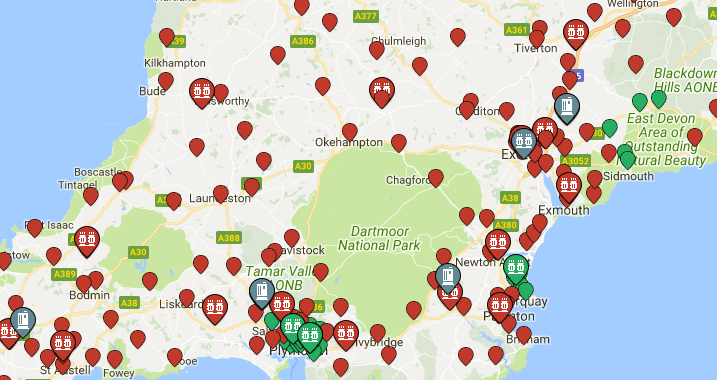
That’s a portion of Western Power Distribution‘s network constraint map. Note that most of Devon & Cornwall is plastered in red due to all the intermittent renewable electricity generation we have down here. One day (hopefully!) soon you’ll be able to earn money by allowing WPD to charge and discharge your batteries when it suits them, in order to help them cope with the stresses that intermittent generation can subject their electricity distribution grid to. The current fly in that particular pot of ointment are the rules and regulations currently enforced by Ofgem, which make it nigh on impossible for neighbouring energy “prosumers” to trade electricity with each other. Highlighting bullet point 2(c) I idly enquired if anybody else in the room “has had problems with Ofgem’s red tape?”. Not a single hand was raised in protest.
As regular readers will be aware, the town of Camelford in North Cornwall is an Air Quality Management Area (AQMA for short). Much like the centre of Exeter, the air quality in the centre of Camelford is fairly foul due to the noxious emissions of all the diesel engines that travel slowly through it. Electric vehicles can help with that, since they have no exhaust pipes and by and large use regenerative braking rather than rubbing dust off brake pads when they want to slow down. Hence slide 4 consisted of pictures of V2G capable examples of such vehicles, plus an image of the xStorage static battery storage device being produced from ex Nissan LEAF batteries by Eaton. An electric car club in Camelford and/or Exeter would be a small step along the road to reducing congestion and air pollution in both town and city centres, whilst V2G enabled vehicles in the fleet would also provide a mobile energy storage facility!
That’s about as far as I got on Wednesday before Lyndsey blew the metaphorical whistle on me, so I hastily concluded by mentioning this apposite comment from blog reader Chris:
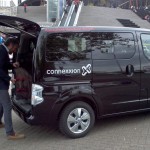
It seems that struck a chord with at least one member of the audience. In the first image above you can see the back of Mark Hodgson’s head, if you know where to look. Mark’s Co-Cars car club certainly isn’t 100% electric, but it has just installed a couple of EV charging points in the Exeter area. That would seem to fit the bill for my bullet point 4(b) quite nicely?
Here’s the final slide I never had a chance to mention on Wednesday evening:
Of course solar PV isn’t the only form of RE generation, and batteries aren’t the only way of storing energy, at home or in the office. There’s also heat, and cold, and eddi & zappi: http://myenergi.uk/products/
What do you suppose that’s all about? To help answer that question let’s move on to Thursday and my trip to the Met Office. At least the previous evening’s rain had stopped:
I was presenting at a briefing event for Innovate UK’s Emerging and Enabling Technologies competition. I got the feeling that since this was (one of?) the first KTN briefing(s) held in Exeter most delegates weren’t making the most of the KTN’s “Meeting Mojo” facility. Anybody who ventured in there would have discovered that I was hoping to meet:
Partners who appreciate that the “Smart grid” is a subset of “The internet of things”, and predates the IoT!
whilst offering a potential consortium:
Smart Grid Consultancy: 5 years vehicle-to-grid, 15 years electricity distribution, 35 years system integration. Now with added blockchain!
Shortly before the event proper got underway I explained to the KTN’s Simon Yarwood, MC for the pitch session, that although I only had 2 slides in my deck I was actually representing 2 companies from a nascent V2G consortium. He graciously allowed me to overrun my allotted 2 minutes, and here’s what I added to the top two slides above:
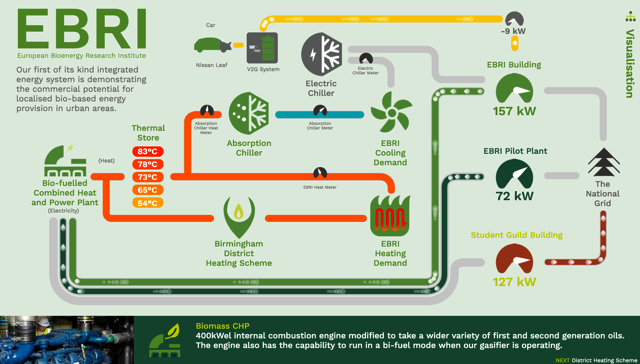
As you can see at the top of that page, a bidirectional charging station with associated static storage connected to a Nissan LEAF pool car is employed at EBRI as both an energy source and sink, in what is the UK’s first V2x pilot project. Strictly speaking it’s vehicle to building (V2B) rather than fully fledged V2G, but as far as the charging station itself is concerned that is of no consequence.
The BMS software at EBRI is now being further developed by Grid Edge Ltd. who assure me that it utilises various machine learning methods using a variety of inputs including weather forecasts, energy usage history, WiFi connections and football match schedules to optimise the overall energy use profile of the building and the assets within. As well as a modest amount of battery storage the EBRI building also includes energy storage in the form of large tanks of both hot and cold water in the basement, as indicated on the real time infographic shown above. That’s where the MyEnergi system depicted in slide 5 above comes in. It doesn’t use complex prediction or optimisation software, but it does attempt to sensibly direct the electricity generated by domestic solar PV panels to charge your EV, heat up your hot water, or if all else fails export some to the grid.
Consumers who have upgraded to a smart meter as part of Britain’s national rollout are continuing to demonstrate high satisfaction with their new technology, and greater control over their energy bills.
Smart Energy GB, the national campaign for Britain’s smart meter rollout, today publishes the third Smart energy outlook, the largest independent barometer of national public opinion on energy and smart meters. The research surveys more than 10,000 people around the country.
More than half (52 per cent) of people with smart meters say their new meter is helping them save money
Eight in ten (80 per cent) people with smart meters have taken at least one step to reduce how much energy they use
Eight in ten (79 per cent) people with smart meters would recommend them to others
85 per cent of those with smart meters say they have a better understanding of what they are spending on energy
People with smart meters are more confident in the accuracy of their bills (81 per cent) when compared to those with traditional meters (64 per cent)
Three quarters of people with smart meters (75 per cent) say that they understand their energy bills, while just 61 per cent of people using traditional meters said the same
Nearly three quarters (72 per cent) of people with smart meters say that they have the information they need to choose the right energy tariff, far higher than those with traditional meters (57 per cent)
Just in case you are now wondering “How do smart meters work?” here’s a video explanation from Smart Energy GB:
I wonder how many of the people surveyed by Populus would be interested in having an electric vehicle capable of powering their home, together with a smart meter and a “Smart Grid” that allowed them to optimise the charging and discharging of their EV’s batteries to their own financial advantage?