Nissan LEAF V2G Qualifies as a “Power Station” in Germany

In a press release earlier today Nissan proudly announced that:

An important milestone on the road to emission-free energy and mobility has been achieved by technology company The Mobility House, energy supplier ENERVIE, transmission system operator Amprion and car maker Nissan. With the Nissan Leaf and an innovative charging and energy management technology, the project partners have now succeeded in qualifying an electric car for all the TSO regulatory requirements for primary power regulation. This means that the car can be integrated as a regulating reserve for the German electricity grid – a breakthrough in the establishment of Vehicle-to-Grid (V2G) technology in Germany.

For some strange reason Nissan don’t mention the manufacturer of the V2G capable electric vehicle charging station displayed in their publicity pictures:
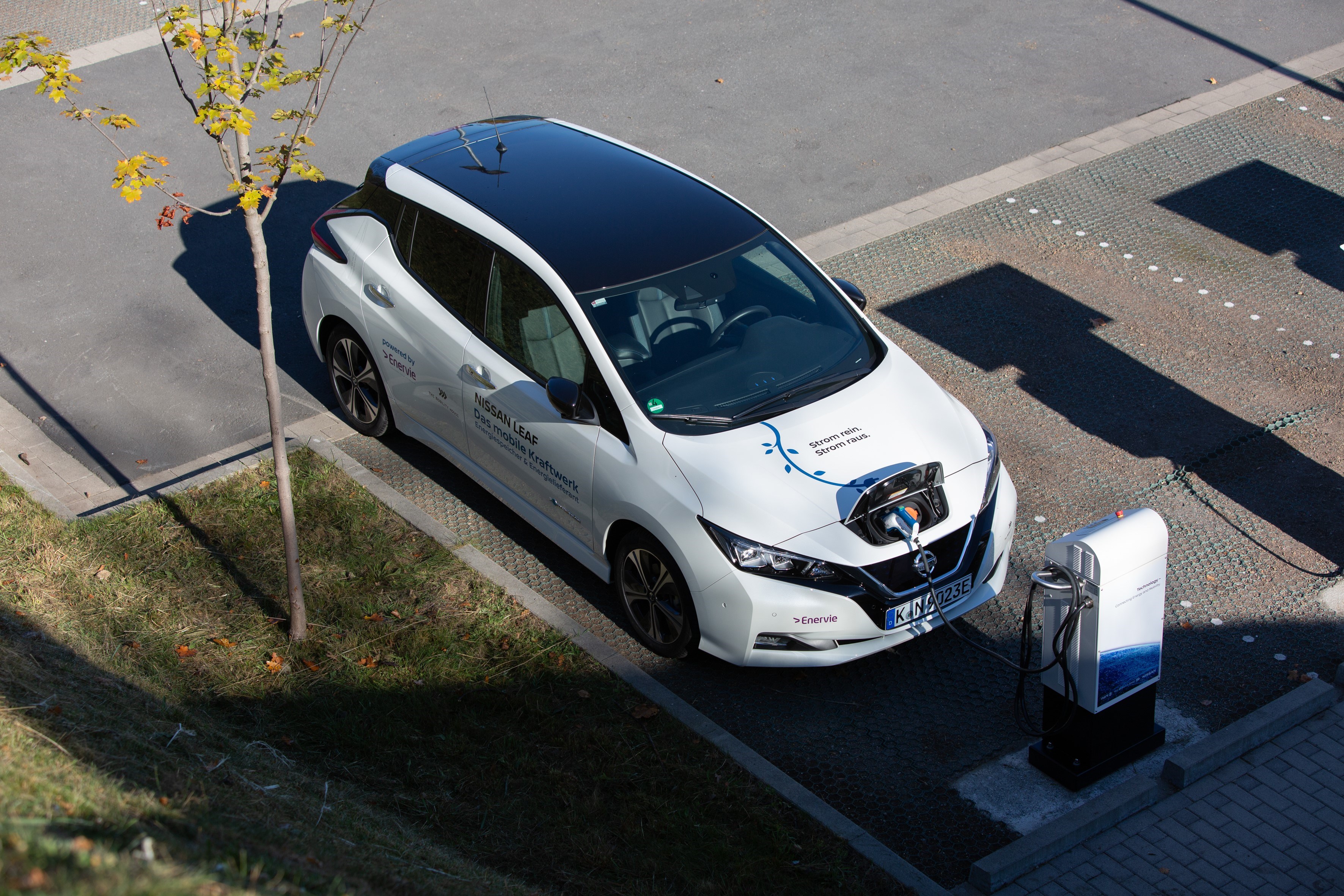
Nissan LEAF

Nissan 2018 LEAF and EVTEC V2G charging station

Those pretty white boxes look a lot like the EVTEC units we have mentioned previously here on the V2G UK blog. Nissan’s press release continues:

To meet the universal desire for a transition to decentralised energy generation from renewable sources here in Germany, new and innovative solutions for stabilising the electricity grid are necessary. The increasing use of renewable energy leads to fluctuations in the grid, which must be initially balanced by primary regulation, able to prevent impending power cuts at a second’s notice.

Electric cars such as the Nissan Leaf, with integrated bidirectional charging technology, could play an important part in this. With its CHAdeMO charging connector, the Leaf is able not only to extract power from the grid and store it in its traction battery, but, if necessary, also to feed power back. This is called the Vehicle-to-Grid (V2G) concept.

As luck would have it here at V2G UK we are very familiar with the V2G concept and CHAdeMO connectors. In fact our V2G EVSE subsidiary has recently received an Office for Low Emission Vehicles (OLEV for short) grant to assess the feasibility of using such technology on the streets of Plymouth, Exeter and Falmouth in order to provide flexibility services to Western Power Distribution’s electricity grid over here, and thereby defer expensive reinforcement of South West England’s distribution grid. Here’s a close up of the Vehicle-to-Grid Electric Vehicle Supply Equipment for (V2G EVSE for short) in ENERVIE‘s car park over in Hagen:
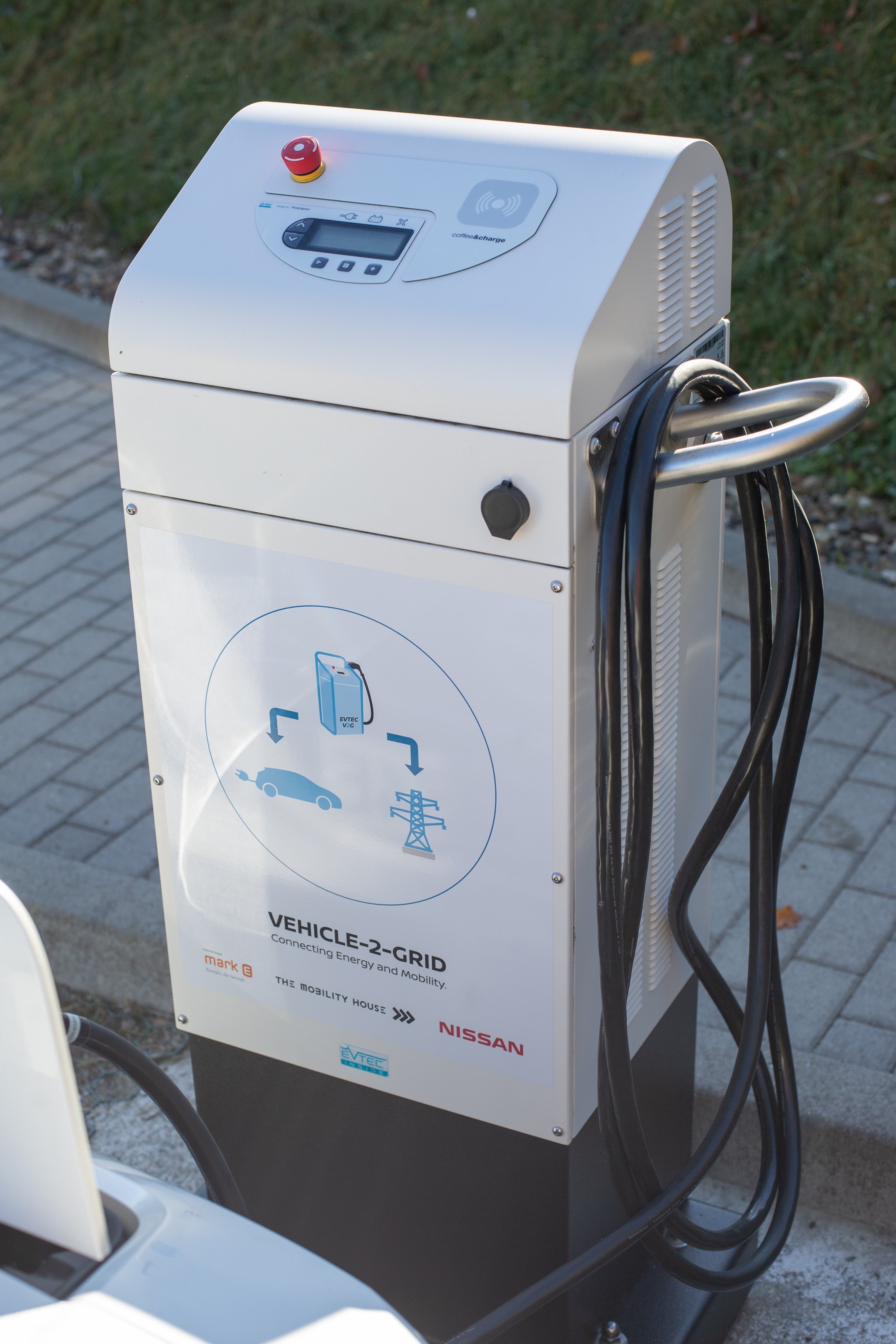
Nissan LEAF

EVTEC Vehicle-to-Grid capable charging station

whilst here’s our concept for the inner city streets of Devon and Cornwall, Urban Electric‘s UEone “pop up” charging post:
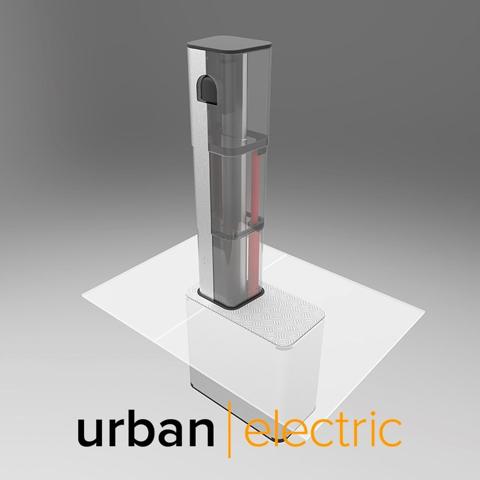
UEone-Concept

According to Guillaume Pelletreau, the Vice President and Managing Director of Nissan Center Europe:

We strongly believe in an emission-free future. Accordingly, we are also very proud that the Nissan Leaf has, as the first electric car ever, been approved as suitable for stabilising grid frequencies. LEAF batteries could make an important contribution to energy transition in Germany and a sustainable future.
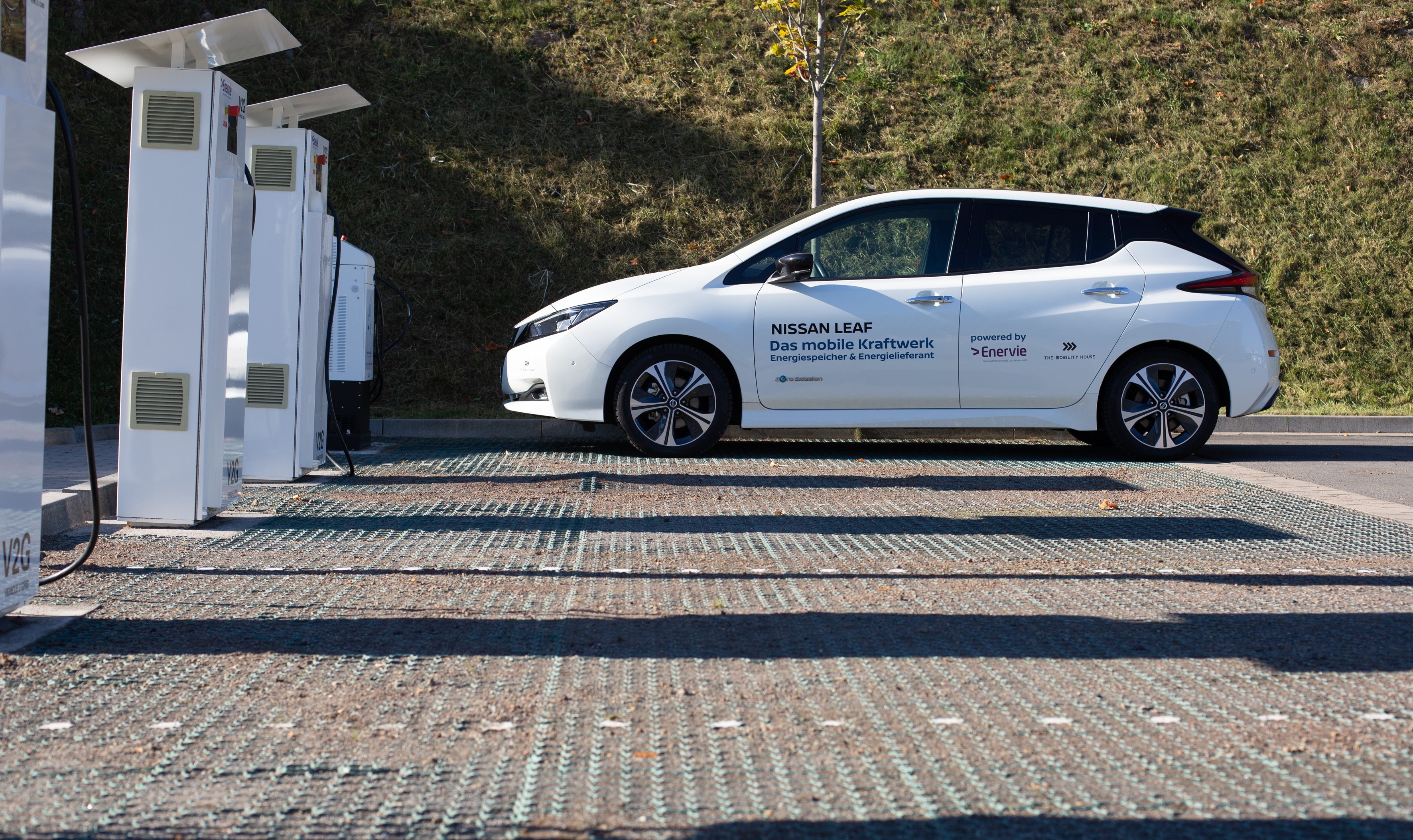
Nissan LEAF

Nissan LEAF in ENERVIE’s car park in Hagen

Here at V2G UK we strongly believe that Nissan LEAF traction batteries could make an important contribution to the energy transition and a sustainable future here in the United Kingdom.
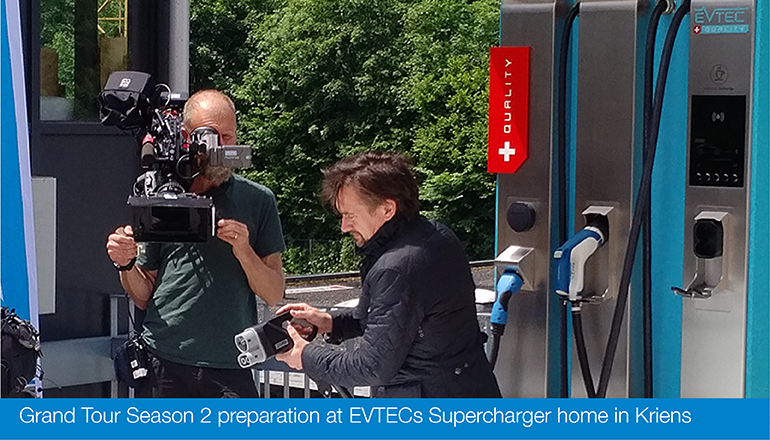
Jeremy Clarkson on a Grand Tour to Save the World!

We’re currently planning a Grand Tour in an electric vehicle ourselves at the moment, heading to Italy via Switzerland. We were therefore both surprised and delighted to discover that ex Top Gear presenters Jeremy Clarkson, Richard Hammond and James May had revealed how to approach the challenge of charging an EV in Switzerland in the very first episode of the second series of Amazon’s “The Grand Tour” series!

In the boys supercar tour around Switzerland Jeremy was driving a Lamborghini Aventador S ICE, James was behind the wheel of a Honda NSX hybrid and Richard was piloting a Rimac Concept One all battery electric vehicle! Here’s a brief extract of some of Jeremy’s words of wisdom from the preview of the new series:

Here too is a sample of some of today’s other Grand Tour related Tweets:

It’s great to hear the Grand Tour team singing the praises of a 100% electric vehicle. However it looks to us as if Jeremy et al’s researchers didn’t do their due diligence desperately doggedly. By way of one example, the episode was cut to suggest that Richard needed to go to the Swiss Museum of Transport on the edge of Lucerne in order to charge his Concept One. However in actual fact the ultra rapid EVTEC charger shown is located on the other side of Lucerne in Kriens. Here it is in all its glory in a photo on EVTEC’s web site:

Grandtour_EVTEC_Richard_Hammond_1

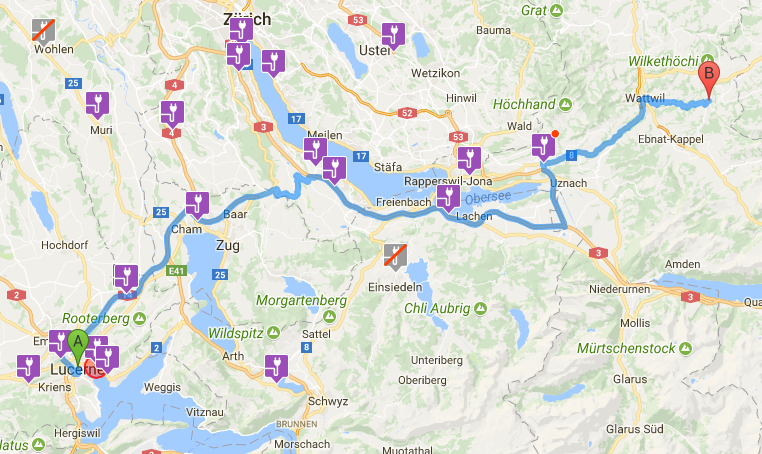
As you can see, the supercar fast charges via a CCS connector. Which leads us on to another example of The Grand Tour’s undue lack of diligence, since here is Chargemap.com‘s current map of CCS rapid chargers en route from Lucerne to Hemberg:

GrandTourCH

As you can see, there was really no need for Richard to drive the Rimac to Hemberg on the back of a truck, since there are any number of eminently suitable rapid chargers en route. I guess we’ll just have to put that down to dramatic licence on behalf of The Grand Tour’s producers?

Once the Rimac was unloaded from the back of the lorry, presumably with a fully charged battery pack, Richard managed to successfully negotiate the hill climb course. Here is what happened next:

Somehow I don’t think that was in the original script, do you?

Honda Research V2G Technology in Europe

Honda have just announced in a press release that:

Honda has invested in advanced bi-directional charging technology at its European R&D site in Offenbach, Germany, which is helping to balance demand and store energy more efficiently across the facility. The new charging system incorporates renewable energy generation, and is a test bed for hardware that will be available to private households in the future.

The technology installation in Germany follows the debut of the domestic Honda Power Manager Concept at the 2017 Frankfurt Motor Show in September. The concept previewed a fully-integrated energy transfer, which takes power from the grid and can return stored energy from electric vehicle (EV) batteries – through ‘Vehicle-to-Grid’ or ‘V2G’ technology. This latest trial installation at Honda’s Offenbach site applies the same principles on a larger scale.

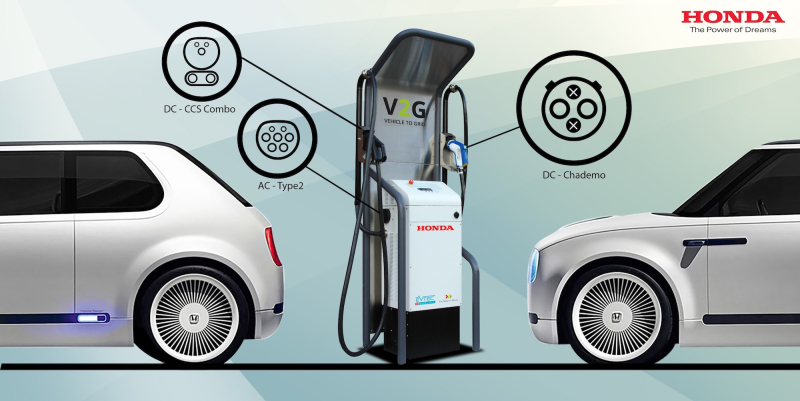
Here’s how Honda’s new bi-directional V2G capable charging station looks, albeit not in situ in Offenbach by the looks of it!

Honda installs new bi-directional charging technology at European R&D centre

Honda installs new bi-directional charging technology at European R&D centre

According to Jörg Böttcher, Vice President of Honda R&D Europe:

With the installation of the latest bi-directional charging technology at our R&D site in Germany, we are adding the next technology to our Smart Company project, which will further enhance our research activity in the field of zero-emission society and future mobility.

Here at V2G UK we have come to associate the word “Honda” with “hydrogen“, although Honda did take part in a V2G trial in the United States back in 2013. Here in Europe in 2017 they point out that:

With the help of the bi-directional hardware and with the technology of The Mobility House, Honda aims to optimise energy management at its European R&D campus, maximising the use of renewable solar power in particular. The project is testing the interaction, compatibility and power flow between specific electrical components, including the renewable energy cells and the EV batteries. The installation represents a collaboration between Honda R&D Europe, energy service provider The Mobility House and Swiss technology company EVTEC.

The investment in the bi-directional energy transfer technology further enhances the world’s most advanced public charging station for plug-in vehicles, which was launched at Honda R&D Europe in summer 2017. Its state-of-the-art 940V capability can deliver up to 150kW of energy, enabling as many as four vehicles to charge simultaneously with different types of connectors. Since its installation in June, the EV charging station has supplied power for 447 charge sessions and has saved 3.87 tonnes of CO2.

Here’s a video from The Mobility House explaining their vision of a future “V2G enabled” world:

https://youtu.be/qGtCClE4tcY

There’s more information on that topic in a press release from EVTEC which doesn’t seem to be available online at the moment. In slightly stilted English the Swiss company explain that:

With the growing importance of electric mobility, the two worlds of energy and mobility are merging. The closer this connection becomes, the more importance gain intelligent technologies that ensure this development secures a sustainable future. Such a technology is Vehicle-to-Grid, in short “V2G”. What is behind this term, is the intelligent integration of electric vehicles in the energy system and markets.

This advantage is well known to Honda, where the V2G technology is already in use today: with the help of a bidirectional charging solution, the company aims to optimize energy management at its European R & D campus in Offenbach. Within the framework of a comprehensive project over the last 12 month, the interaction of various energy components – from vehicle battery to photovoltaic system – is being tested here.

According to EVTEC co-founder and CEO Markus Kramis:

A reliable, precise, and fast acting bi-directional charger is the necessary base for every V2G application, like peak shaving and energy optimization.

All in all that EVTEC charging station sounds like just the sort of thing we need to try out at V2G Towers over here in North Cornwall, located in a distant corner of sunny South West England amongst an impressive array of large scale solar PV and onshore wind “farms”!

The same may well apply to Honda’s Power Manager mentioned above, which was announced at the Frankfurt Motor Show in September. According to a Honda press release once again:

Its all-new Power Manager Concept, a fully-integrated energy transfer system, is designed to incorporate electric vehicles into a smart power grid. It enables the collection and distribution of electricity between the grid, homes and businesses and electric vehicles, to intelligently balance demand and efficient storage of energy. Honda will apply its Power Manager technology as part of a smart grid pilot scheme in the west of France.

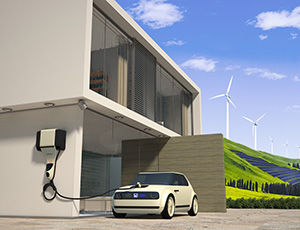
Honda-Power-Manager

Power Manager Concept works by aggregating and distributing energy to and from the grid, solar panel-equipped homes or workplaces, and electric vehicles.

Electricity is received into the system from the grid or is generated by the solar panels and can be used to power and heat the building as well as to charge the EV. While the EV is plugged in, the energy can be stored and used at home or sold back to the grid, potentially generating value for EV owners.

The Power Manager Concept system can help to stabilise the grid at times of either short or surplus supply, as well as representing a revenue opportunity for EV owners.

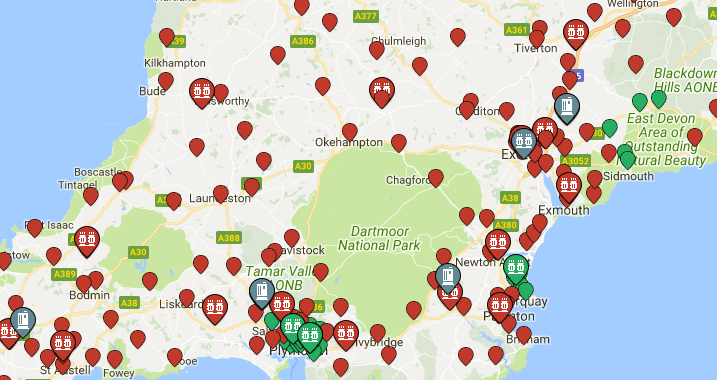
That sounds like just the sort of thing that Western Power Distribution needs to help stabilise the electricity distribution grid in our neck of the woods, which is currently heavily “constrained”:

WPD-NoCapacity

Do you suppose that we could possibly persuade Honda to apply its Power Manager technology as part of a smart grid pilot scheme here in the south west of England too?