OVO Energy Install UK’s First V2G Home EV Chargepoint?

OVO Energy sent me a very nice birthday present yesterday via Twitter:

In an associated press release OVO announced:

Following the unveiling of the world’s first widely available, domestic vehicle-to-grid charger, at the Energy Technology Product Showcase in April, OVO can confirm it has successfully installed the first charger in a customer’s home.

Tom Pakenham, Director of Electric Vehicles, said: “We’re excited to install a vehicle-to-grid charger in a customer’s home. By developing vehicle-to-grid technology we’re enabling drivers to store renewable energy in their cars, use that to power their homes and to sell energy back to the grid at peak times, allowing our customers to earn rewards from smart charging their electric vehicle.”

By way of additional background information OVO added that:

The 6kW OVO Vehicle-to-Grid (V2G) Charger is the world’s first domestic bi-directional charger. It offers drivers of certain electric vehicles the opportunity to discharge excess electricity from their cars back to the electric grid to help supply energy at times of peak demand. It is the first such product to be produced and made commercially available at volume in the world.

Available to Nissan LEAF drivers with a 30 or 40kWh battery, the OVO Vehicle-to-Grid Charger could enable Nissan drivers to have free power for their electric vehicles by selling energy back to the grid. This is an important step for both companies to deliver their mission to offer customers free power for their electric vehicles.

This is part of the Innovate UK Vehicle-to-Grid competition, funded by the Office for Low Emission Vehicles (OLEV) and the department for Business Energy and Industrial Strategy (BEIS), in partnership with Nissan, CENEX, Indra and OVO.

Nissan LEAF V2G Qualifies as a “Power Station” in Germany

In a press release earlier today Nissan proudly announced that:

An important milestone on the road to emission-free energy and mobility has been achieved by technology company The Mobility House, energy supplier ENERVIE, transmission system operator Amprion and car maker Nissan. With the Nissan Leaf and an innovative charging and energy management technology, the project partners have now succeeded in qualifying an electric car for all the TSO regulatory requirements for primary power regulation. This means that the car can be integrated as a regulating reserve for the German electricity grid – a breakthrough in the establishment of Vehicle-to-Grid (V2G) technology in Germany.

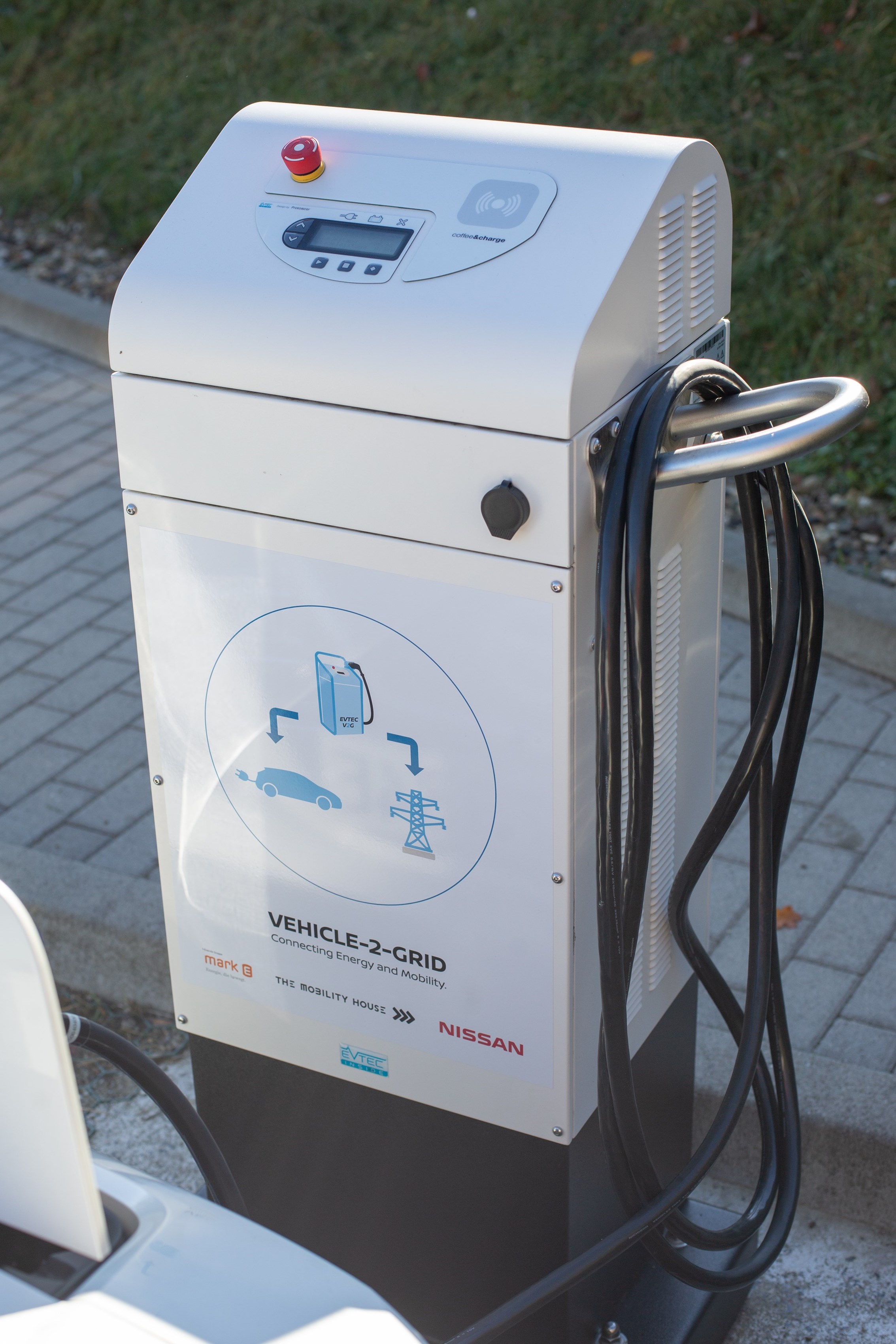
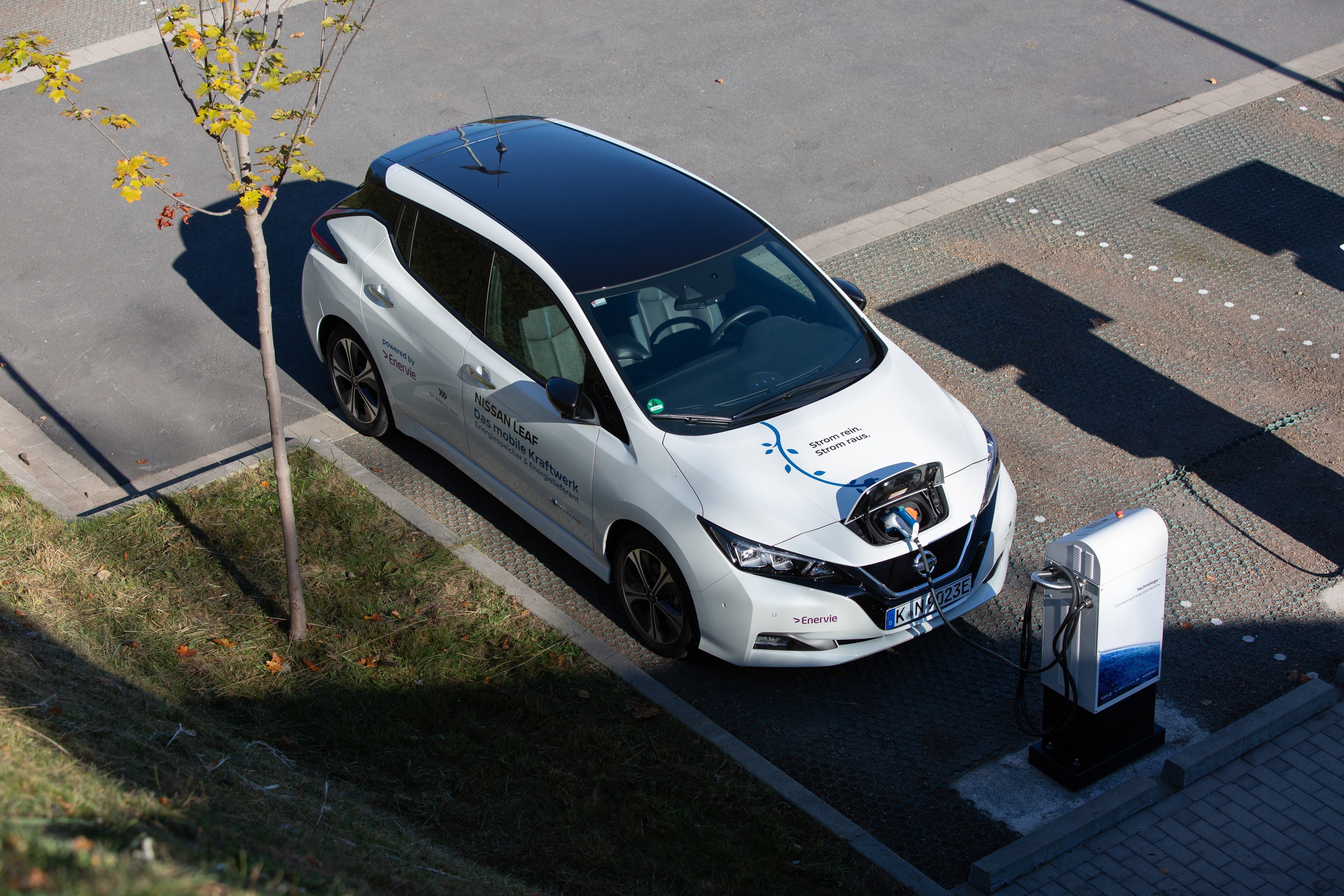
For some strange reason Nissan don’t mention the manufacturer of the V2G capable electric vehicle charging station displayed in their publicity pictures:

Nissan LEAF

Nissan 2018 LEAF and EVTEC V2G charging station

Those pretty white boxes look a lot like the EVTEC units we have mentioned previously here on the V2G UK blog. Nissan’s press release continues:

To meet the universal desire for a transition to decentralised energy generation from renewable sources here in Germany, new and innovative solutions for stabilising the electricity grid are necessary. The increasing use of renewable energy leads to fluctuations in the grid, which must be initially balanced by primary regulation, able to prevent impending power cuts at a second’s notice.

Electric cars such as the Nissan Leaf, with integrated bidirectional charging technology, could play an important part in this. With its CHAdeMO charging connector, the Leaf is able not only to extract power from the grid and store it in its traction battery, but, if necessary, also to feed power back. This is called the Vehicle-to-Grid (V2G) concept.

As luck would have it here at V2G UK we are very familiar with the V2G concept and CHAdeMO connectors. In fact our V2G EVSE subsidiary has recently received an Office for Low Emission Vehicles (OLEV for short) grant to assess the feasibility of using such technology on the streets of Plymouth, Exeter and Falmouth in order to provide flexibility services to Western Power Distribution’s electricity grid over here, and thereby defer expensive reinforcement of South West England’s distribution grid. Here’s a close up of the Vehicle-to-Grid Electric Vehicle Supply Equipment for (V2G EVSE for short) in ENERVIE‘s car park over in Hagen:

Nissan LEAF

EVTEC Vehicle-to-Grid capable charging station

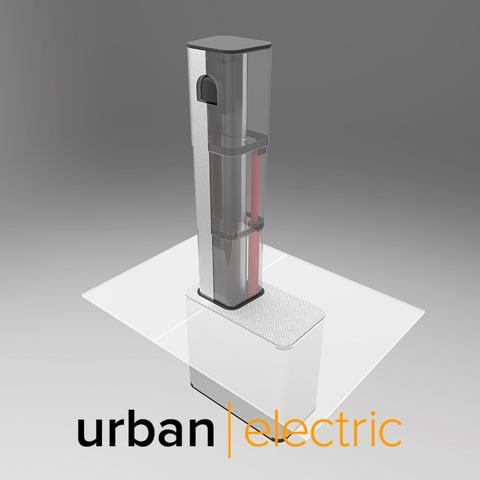
whilst here’s our concept for the inner city streets of Devon and Cornwall, Urban Electric‘s UEone “pop up” charging post:

UEone-Concept

According to Guillaume Pelletreau, the Vice President and Managing Director of Nissan Center Europe:

We strongly believe in an emission-free future. Accordingly, we are also very proud that the Nissan Leaf has, as the first electric car ever, been approved as suitable for stabilising grid frequencies. LEAF batteries could make an important contribution to energy transition in Germany and a sustainable future.

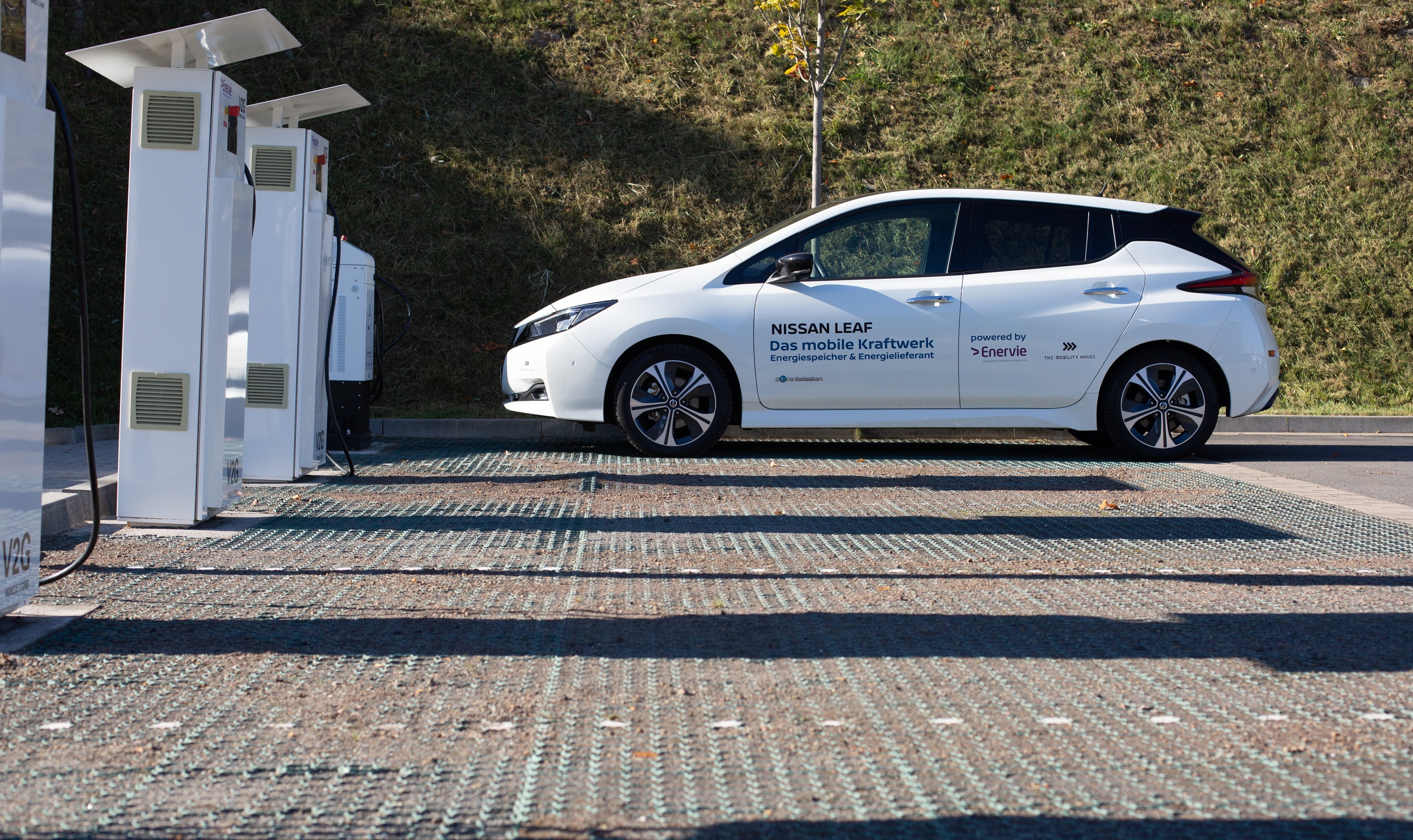
Nissan LEAF

Nissan LEAF in ENERVIE’s car park in Hagen

Here at V2G UK we strongly believe that Nissan LEAF traction batteries could make an important contribution to the energy transition and a sustainable future here in the United Kingdom.

Nissan Announce 1000 V2G Installations in the UK

Since it mentions “1000 V2G installations” and comes with a nice picture of a 2018 LEAF plugged in to a V2G charging station Nissan’s announcement of its “e4Future” project’s successful entry in the recent Innovate UK V2G funding competition deserves an article of its very own:

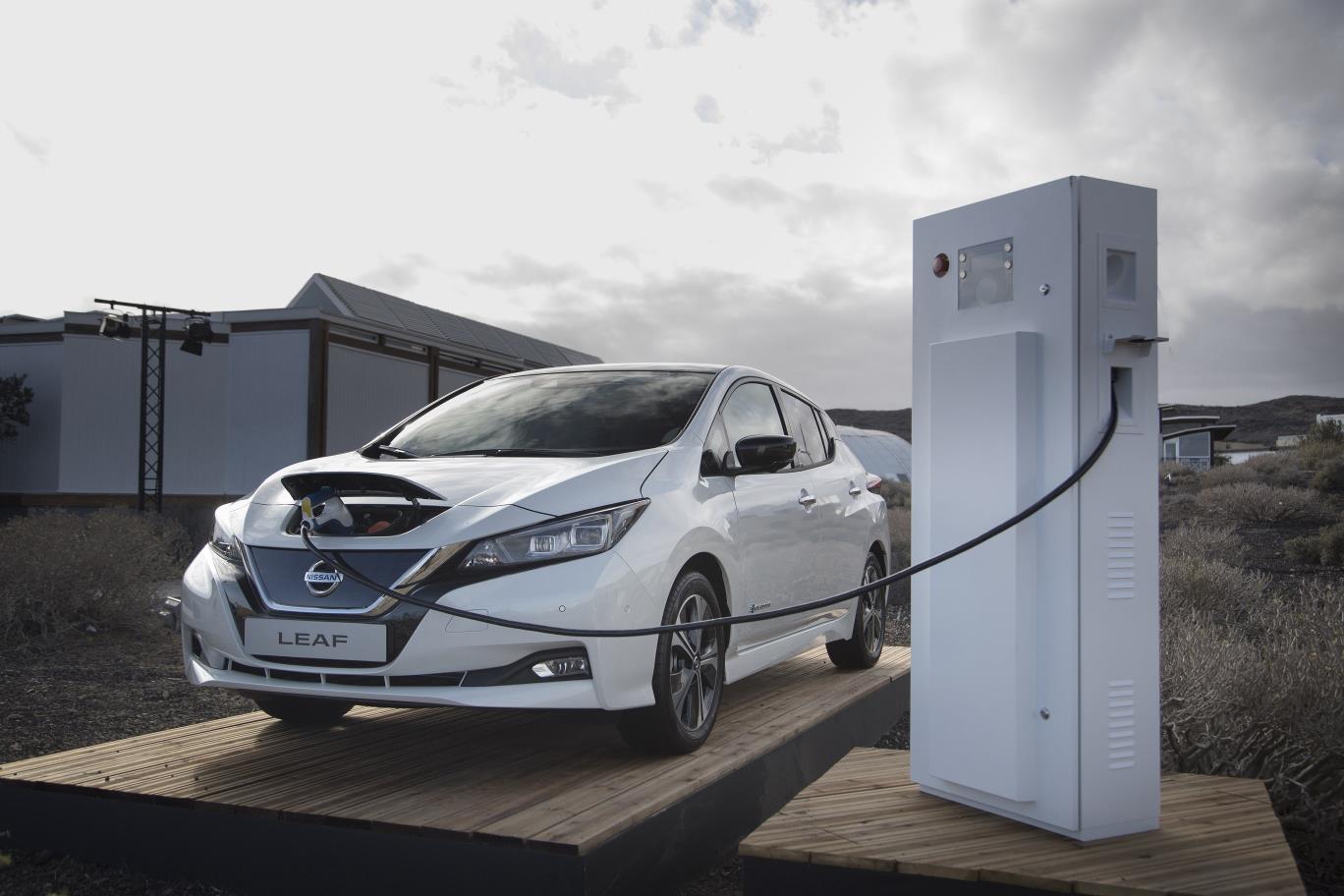
2018-LEAF-V2G

Whilst it is certainly connected to the vehicle the charging station doesn’t seem to be connected to the grid! Regarding their successful bid Nissan say that:

Nissan and its partners welcome the announcement by Department for Business, Energy and Industrial Strategy minister Richard Harrington to award £9.8m for a Vehicle-to-Grid demonstrator project.

The project foundation is for a large-scale demonstrator targeting 1000 Vehicle-to-Grid (V2G) installations that will evaluate a commercial offer to electric vehicle fleet customers. The chargers will be controlled by an aggregator and data will be collected to understand the technical characteristics of vehicle to grid charging for both the vehicles and the electricity networks.

A consortium, led by Nissan, will bring expertise from across the whole Vehicle-to-Grid value chain: V2G infrastructure/aggregator provider Nuvve, the energy community represented by National Grid, two Distribution Network Operators (DNOs); UK Power Networks and Northern Powergrid, with varied grid infrastructure. The research and analysis activities will be supported by Newcastle University and Imperial College London.

Vehicle-to-Grid technology and this project will leverage Nissan’s brand commitment to Nissan Intelligent Mobility to transform the way people drive and live, creating a more exciting and sustainable future.

Once again V2G charging station manufacturers are conspicuous by their absence from the list of Nissan’s collaborators, and there is no label on the white charging station displayed above. Nissan also provide the following bullet points summarising the e4Future project:

  • In January 2018, OLEV and BEIS announced that 21 projects (8 feasibility studies, 5 collaborative research and development projects, and 8 real-world V2G trial projects) were to receive funding of £30m to develop the business proposition and core technology around V2G, and demonstrate those with large scale trials. The projects involve more than 50 industrial partners and research organisations from both the Energy and Automotive sector, marking the largest and most diverse activities on V2G in the world, and trialling more than 2700 vehicles across UK.
  • The V2G projects represent a significant step towards the transition to a low carbon transportation and a smart energy system. Allowing EVs to return energy to the Power Grid when parked and plugged for charging, will increase Grid resilience, allow for better exploitation of renewable sources and lower the cost of ownership for EV owners, leading to new business opportunities and clear advantages for EV users and energy consumers.

Amongst other things Nissan’s Managing Director of Nissan Energy at Nissan Europe, Francisco Carranza, said that:

Our EVs can be plugged into the grid and support the transmission and distribution companies in making the UK grid more sustainable and more stable. The increase of electric vehicles penetration, the introduction of more and more distributed generation and storage and the overall increase in renewable energy penetration should be done smartly.

To ensure Nissan plays a wider role in the advancement and protection of our cities, our electric V2G-ready vehicles will be used as clean mobile energy units.

Nissan has also reiterated its bold mission to offer customers free power for their EVs. V2G introduction will change the rules of the game and make energy cheaper for everyone.

The press release also contains a long list of quotes from Nissan’s collaborators on the project. Let’s take a look at this one from Myriam Neaimeh of Newcastle University:

The Government’s announcement will be a real game changer as we move towards decarbonising the grid.

This will be the first, large scale demonstration of vehicle to grid technology anywhere in the world and crucially, this project brings together all the key players for the first time – a giant of the automotive industry with energy providers, infrastructure experts and academics – so we can work together to really make this happen. It’s a really exciting time and fantastic that Newcastle University has been involved right from the beginning.

I still cannot help but wonder who will be manufacturing the all important V2G capable charging stations that will be installed as part of the e4Future project, and what de facto or international standards they will comply with?

UK Spends £30 million on V2G Technology

As we reported back in the summer:

The United Kingdom Government… pledged to pump £20 million into vehicle-to-grid technology.

After an apparently interminable wait it was announced on Twitter yesterday that:

Today a plethora of press releases have added some flesh to those bare bones. According to UK Power Networks:

UK Power Networks is part of a consortium that has won £11m government funding for four electric vehicle demonstration projects as part of a series of Vehicle to Grid (V2G) innovation bids.

Vehicle to Grid technology enables energy stored in an electric vehicle’s battery to be fed back into the electricity network at times of peak demand. By recharging when demand is low and putting energy into the electricity network when it is high, V2G helps manage the peaks and troughs, balance the network and make it more efficient.

The government is to ban the sale of all new diesel and petrol cars and vans by 2040, and it sees a smarter and more flexible electricity system as a major benefit to consumers and a key enabler to transport’s future growth.

UK Power Networks currently has more than 30,000 electric vehicles connected to our networks and by 2030 we anticipate that figure will rise to between 1.2-1.9m. Many of these electric vehicles will be V2G capable and could be used to support delivering electricity reliably and at the lowest possible cost.

The competition is funded by the Department for Business, Energy and Industrial Strategy (BEIS) and the Office for Low Emission Vehicles (OLEV) and is delivered by Innovate UK.

The four V2G projects that UK Power Networks will be taking part in are:

  • Bus2Grid: Supporting a project to turn a 30-bus garage into the first of its kind in the UK Vehicle-to-grid (V2G) bus garage.
  • e4Future: A trial on 1,000 V2G fleet vehicles
  • Beating Home: Domestic customer V2G trial involving customers in specific areas.
  • V2Street: Public charging networks with a local authority and a charge point provider. Targeted at the 60-70% of Londoners without off-street charging capability.

Note that the £20 million on offer last August has been increased to £30 million today! Perhaps that’s at least a partial explanation for the delay in the appearance of the announcement? UKPN don’t provide much detail on the four out of twenty one projects revealed so far, so let’s look a bit further afield shall we? Heading back to Twitter there’s an announcement of a new product offering and a new EV web site from Octopus Energy unsurprisingly entitled Octopus Electric Vehicles:

which was swiftly followed by another Tweet explaining that:

which put us on the trail of this press release from ChargePoint Services:

Octopus Energy today launched a new consortium to develop the first large-scale domestic trial of vehicle-to-grid (V2G) charging in the UK, following a £3 million funding injection by BEIS and OLEV delivered by InnovateUK.

Comprising Octopus Energy, Octopus Electric Vehicles, UK Power Networks, ChargePoint Services, Open Energi, Energy Saving Trust and Navigant, the consortium will roll out vehicle-to-grid charging technology to UK electric vehicle (EV) drivers this year.

The £7million project will install 135 V2G chargers in a ‘cluster’ delivery model that will facilitate research into the impact of widespread EV rollout on the UK’s electricity grid. The project will demonstrate the benefits of using domestic electric vehicle batteries to provide grid flexibility, cheaper transport and energy to homeowners, and faster decarbonisation of the UK’s power and transport sectors.

Customers will be able to discover electric vehicles, take them for a test drive and access a special V2G bundle, Octopus PowerLoop, when leasing a V2G compatible car. A two-way charger will enable the driver to charge their vehicle intelligently, using their vehicle battery to power their home during peak times or selling spare power back to the grid – creating value for the driver.

The technology could revolutionise the energy system by enabling electric vehicles to act as battery packs for the grid, helping to solve the challenge of how to harness the full potential of renewable energy whilst making sure that it is always available on demand. Evidence also shows that V2G use has the potential to increase battery life.

The ChargePoint announcement goes on to quote Octopus Electric Vehicles CEO Fiona Howarth:

Octopus Energy was founded to drive down the cost of energy to customers and the planet, and Octopus Electric Vehicles is the next phase in that mission.

There has been a lot of talk from the sidelines about how vehicle-to-grid technology will change the face of energy, but with this consortium we will be the first in the UK to actually deliver it to hundreds of households. We’re delighted to be working with this consortium of visionary companies, and proud to be backed by Innovate UK.

It sounds as though the Octopus Group are intent on competing head on with OVO Energy who previously “embraced” V2G technology:

We’re hurtling towards a place where ‘two-way’ electric car chargers can enable homeowners with electric cars to sell their energy back to the national network. It’s a smart idea when you consider that over 90% of cars are parked at any one time – which is a lot of energy just sitting there doing nothing. This technology will give you the opportunity to manage your energy your way, and potentially become energy self-sufficient, reducing everyone’s reliance on energy companies. Get solar panels fitted, then adopt vehicle to grid technology and your home could become a private mini-power station!

There are a number of other quotes too. Mark Thompson, Senior Innovation Lead at Innovate UK added:

Vehicle-to-Grid is one of the most iconic parts of the electric vehicle domain, and one that represents a great opportunity for engaging society with the energy system for win-win benefit. The Octopus V2G project is part of a creative, diverse and ambitious group of V2G projects announced today that are way ahead of anything being done currently world-wide, and give the UK a genuine competitive edge in the electrification of transport.

Alex Bamberg, Managing Director, ChargePoint Services, said:

ChargePoint Services’ GeniePoint Network continues to be at the cutting edge of delivering the smartest and most reliable electric vehicle charging network in the UK. With this consortium, we join with existing partners to enable us to provide real benefits to the end user both in terms of efficiency and reduced cost. Our investment in the GeniePoint Network and its class leading reliability is further enhanced, whilst at the same time ensuring protection and flexibility of the UK’s energy Grid.

Ian Cameron, Head of Innovation at UK Power Networks said:

Electric vehicles are effectively energy sources on wheels, so there are tremendous opportunities to explore how electricity networks can use any spare capacity in those batteries to benefit our customers.

In the future you could use your car battery to power your house or earn money by selling its spare energy back into the network at peak times, and all of this whilst ensuring you have enough energy for your next day’s commute. We’re innovating to keep our customers moving at the lowest possible cost.

Dagoberto Cedillos, Strategy and Innovation Lead at Open Energi said:

Smart charging solutions that align the needs of drivers and the electricity grid are fundamental to the future of sustainable energy and transport. In partnership with our fellow consortium members, we’re applying cutting-edge tech to help realise the enormous opportunity that is domestic V2G charging in the UK, and internationally.

That is of course all very good news, but it raises one big question, in my mind at least. For some strange reason the Beating Home/PowerLoop (depending on which press release you prefer) consortium doesn’t seem to include a bi-directional electric vehicle charging point manufacturer and none of the assorted news releases and quotations mentions that rather essential piece of hardware, or indeed shows a picture of such equipment in action. To right that particular wrong, here’s one I prepared earlier:
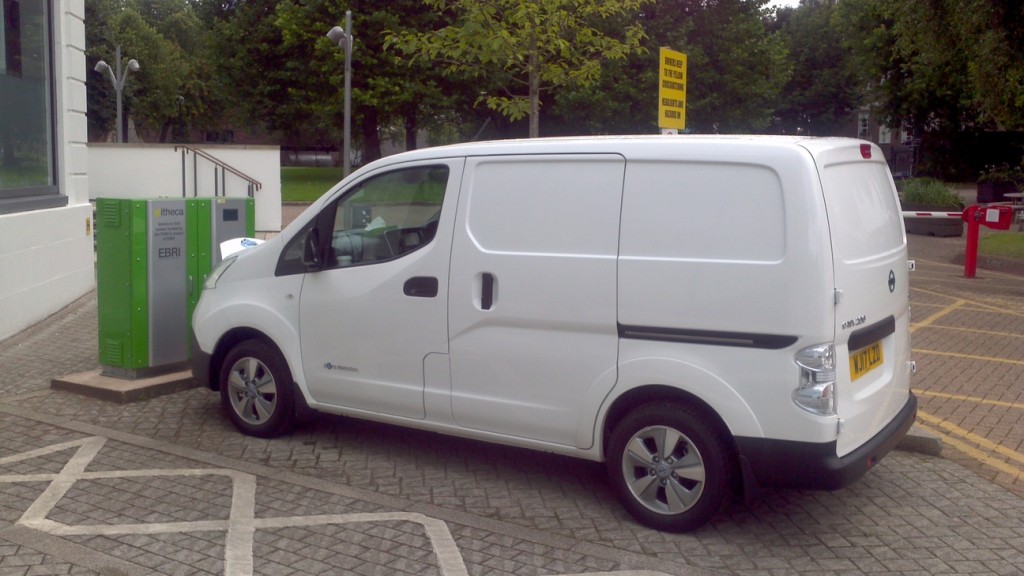
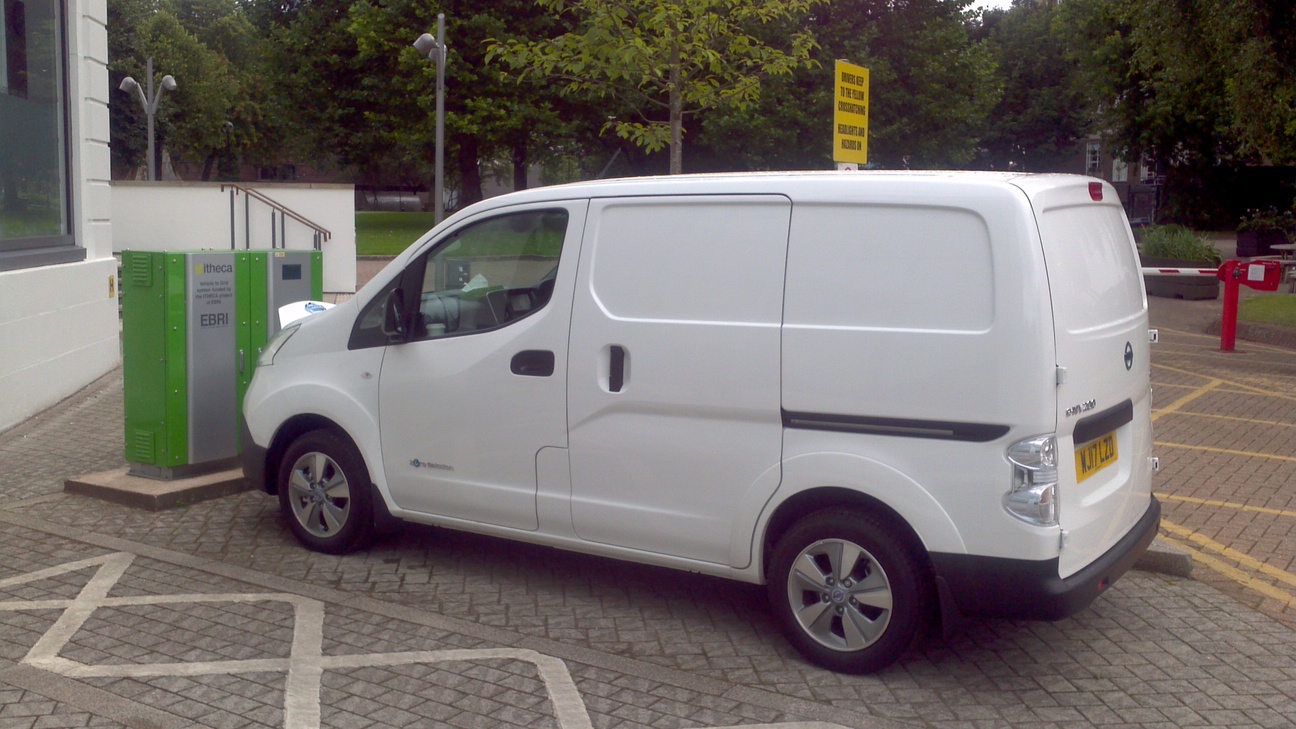
A Exeter Nissan e-NV200 plugged in to the V2G charging station at EBRI

There’s also no mention of the activity that I’m currently engaged in. Developing international standards for the protocols that ChargePoint Services’s charging station management system (CSMS for short) might one day use to communicate with the unnamed electric vehicle supply equipment (EVSE for short) OEM’s V2G capable hardware installed in 135 Great British homes:

An Exeter Nissan e-NV200 Heads North

The United Kingdom Government have finally seen the light and have pledged to pump £20 million into vehicle-to-grid technology:

Up to £20 million is available from the Department for Business, Energy & Industrial Strategy – working with the Office for Low Emission Vehicles and Innovate UK – to fund projects that investigate new business models, consumer awareness and technologies that support interaction between electric vehicles and the grid.

So-called vehicle-to-grid technologies are expected to play a big part in making the UK’s electricity supply network smarter and in encouraging take-up.

Vehicles that can take electricity from the grid when demand is low and return it when demand is high could help to even out peaks and troughs and make the grid more efficient.

The UK government wants nearly all cars to be zero emission by 2050, and it sees a smarter and more flexible electricity system as a major benefit to consumers and a key to future growth.

This is of course very good news, apart from the time it has taken UK plc to get around to it! As a consequence of the announcement V2G UK booked ourselves in to give a two minute “elevator pitch” at a Knowledge Transfer Network V2G briefing event at the Energy Systems Catapult offices in Birmingham.

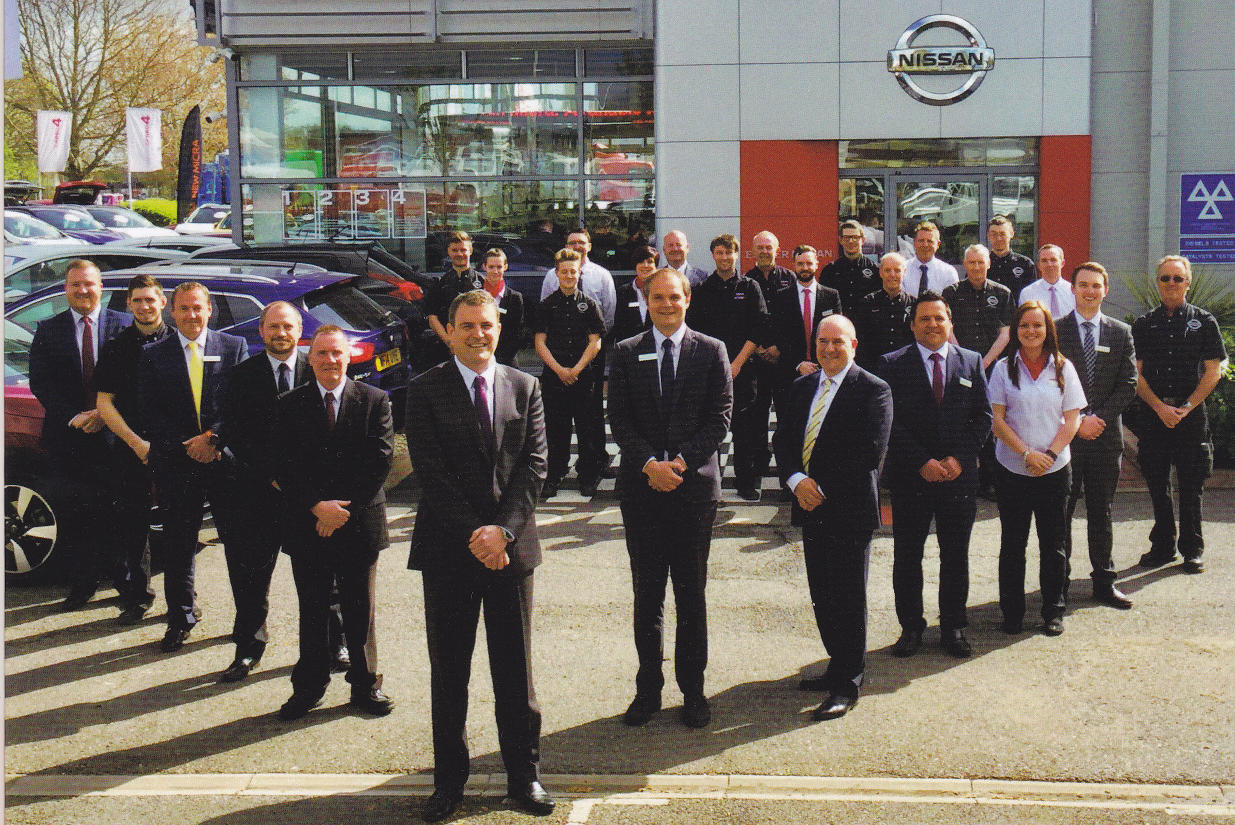
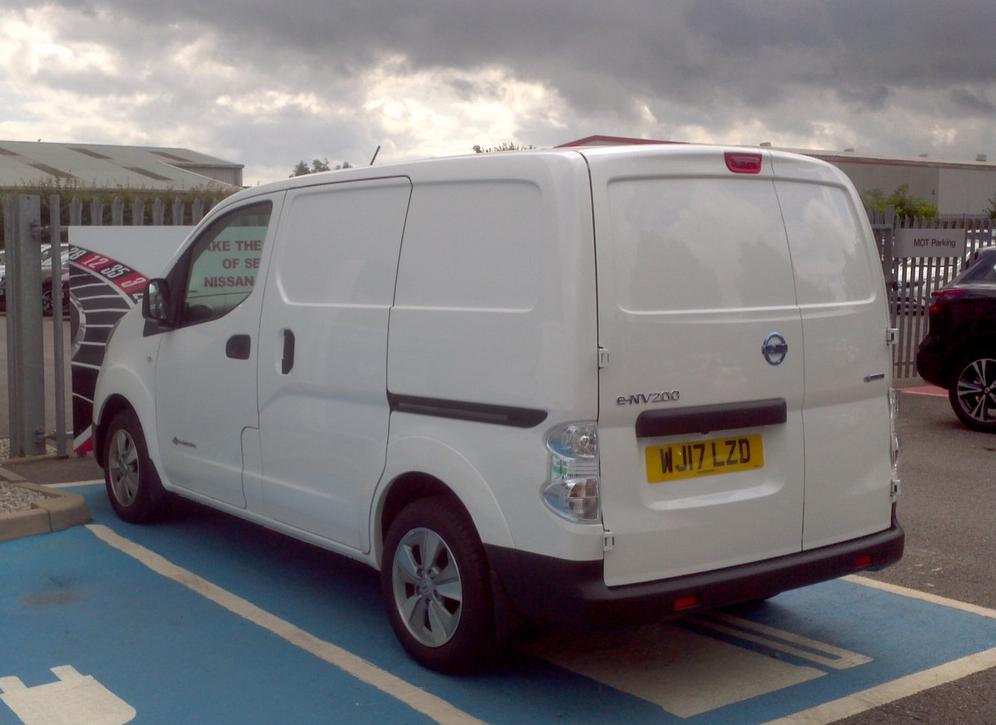
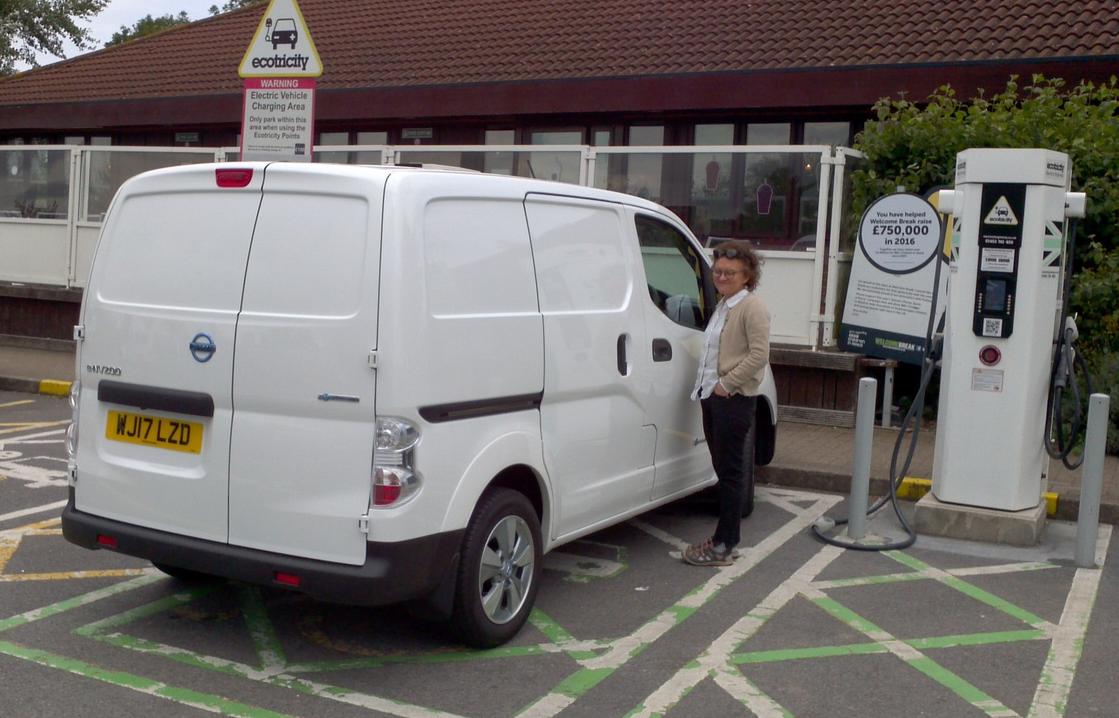
We decided we should travel in style, and Exeter Nissan kindly offered us an extended test drive in an almost brand new Nissan e-NV200 van! That’s much better for our purposes than a black stretch limo, which we will hopefully prove to you in due course. Here’s a photo of the Exeter Nissan team for posterity:

Exeter Nissan - Arguably the most enthusiastic and experienced Nissan team in the UK!

Arguably the most enthusiastic and experienced Nissan team in the UK!

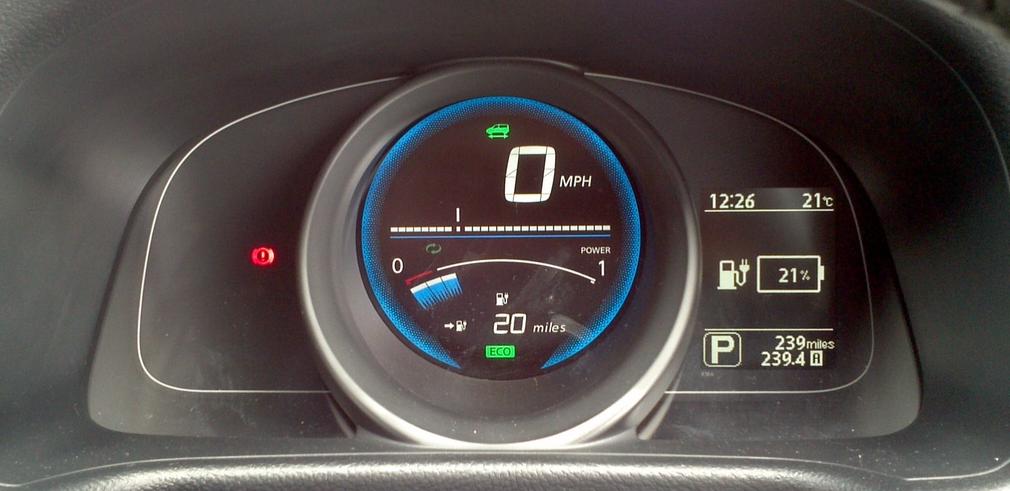
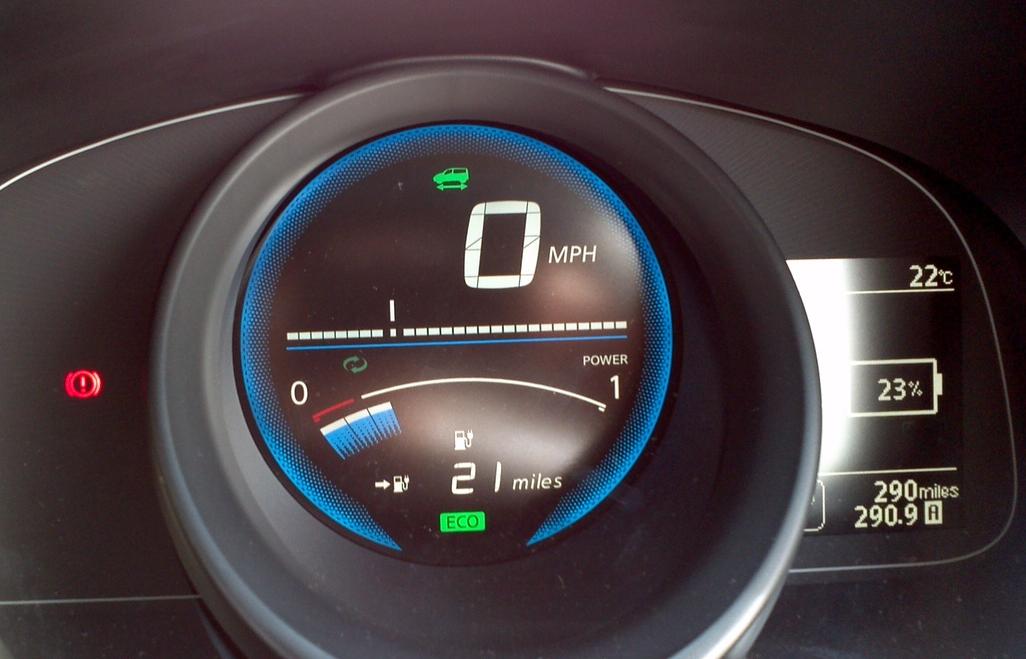
We picked up the e-NV200 from them almost fully charged, and here’s how it looked at the time:

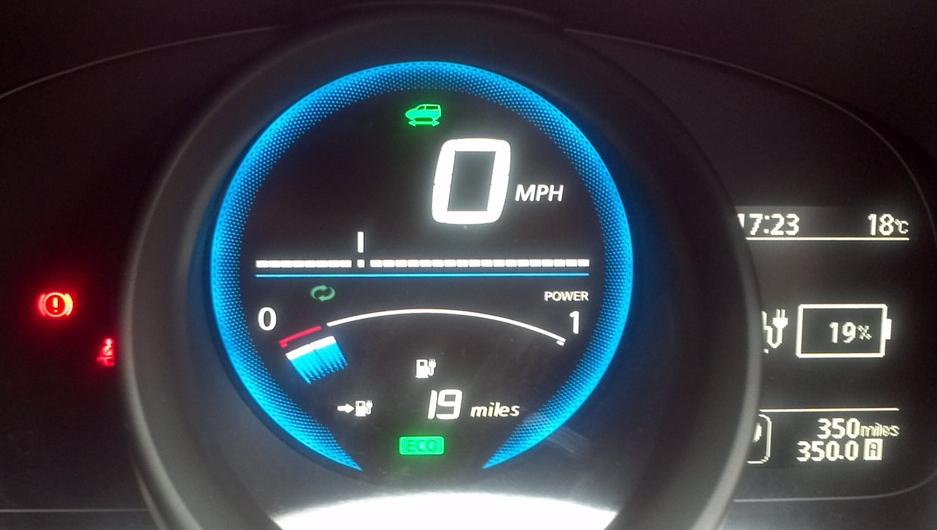
The weather wasn’t too bad, so we jumped straight in and drove the 56 and a bit miles up the M5 to Sedgemoor Services in “Eco” mode at a steady 60 mph or thereabouts. Now zooming up the motorway carrying an overnight bag and a couple of suits in the back isn’t a typical days work for a van, but with that proviso in mind here are some of the sights we saw on arrival at Sedgemoor:

The e-NV200 dashboard will be familiar to LEAF drivers, although there are some other differences. The “gear stick” is mounted below the dashboard, and the foot operated parking brake has morphed back into a conventional handbrake. In our case the 56 miles we’d travelled plus 20 left in “the tank” equates to a range of 76 miles by my reckoning, which is roughly what we achieved during the entire journey.

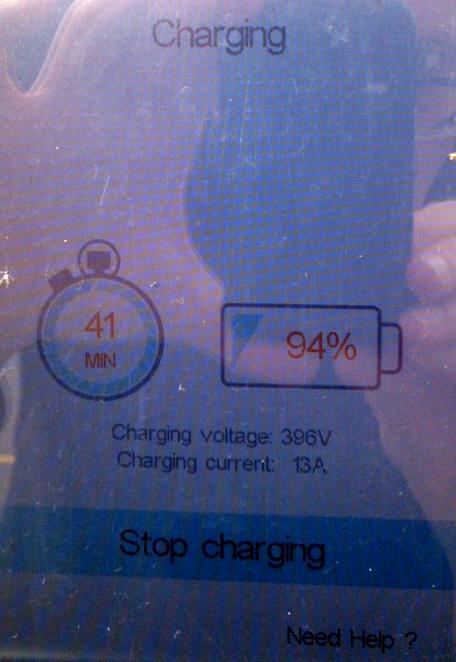
We’d used the old Ecotricity free “smart card” system on previous test drives, but this time we had to pay through the nose using their new smartphone app. That refused to install on my ancient Motorola Atrix, but we eventually got things working on Kasia’s more modern Sony Xperia. After a lengthy lunch break we returned to see this:

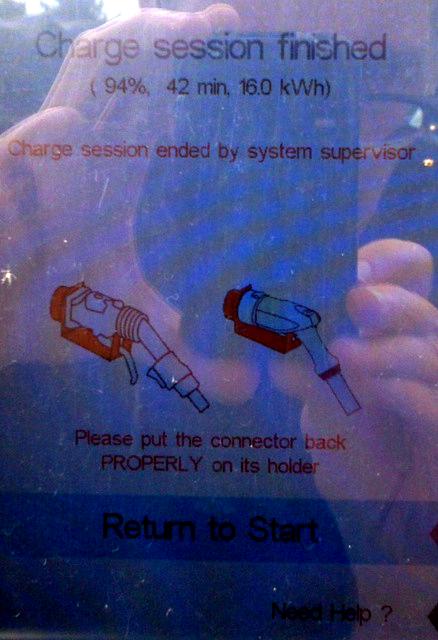
Stopping charging proved to be a non trivial procedure. Pressing the button on the charging station prompted Kasia to tap a button on her phone. That seemed to do the trick on the physical equipment but the virtual app insisted that charging hadn’t stopped yet.

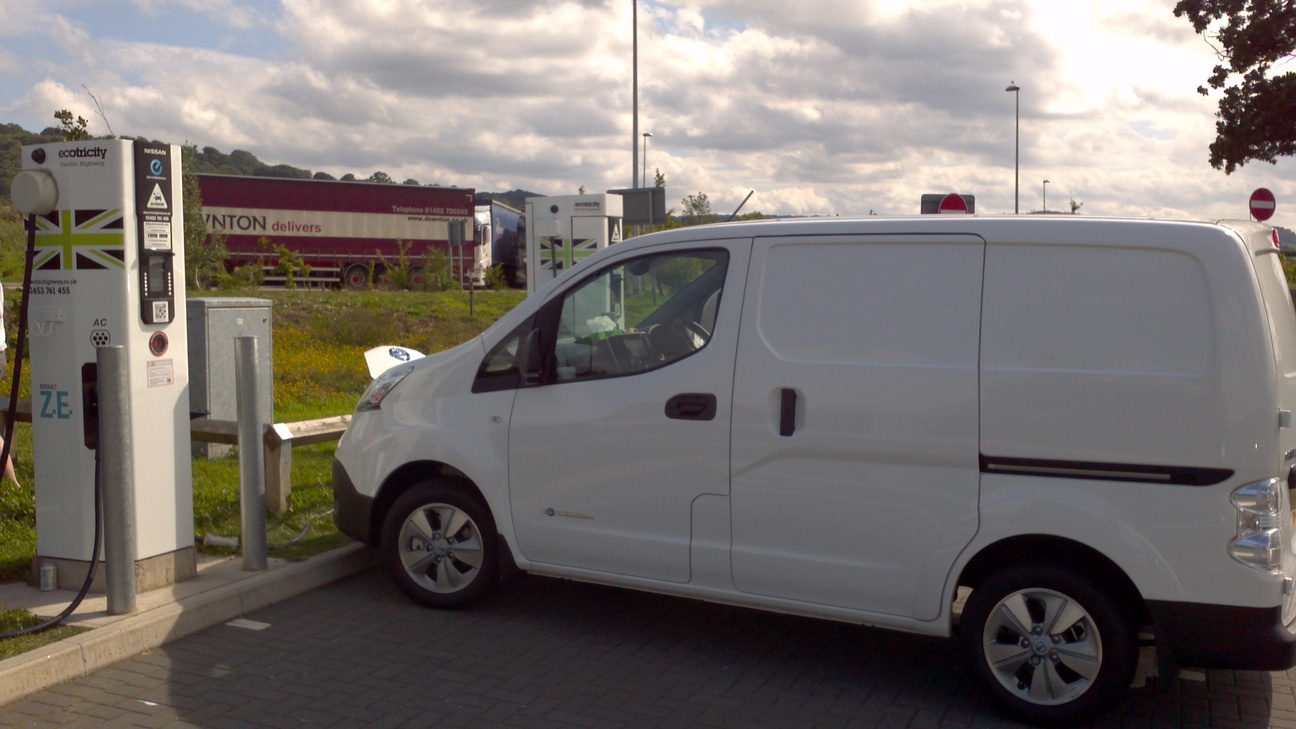
We eventually pressed on regardless to the shiny new Gloucester Services:

51.7 miles according to Google maps. 51 miles according to the e-NV200:

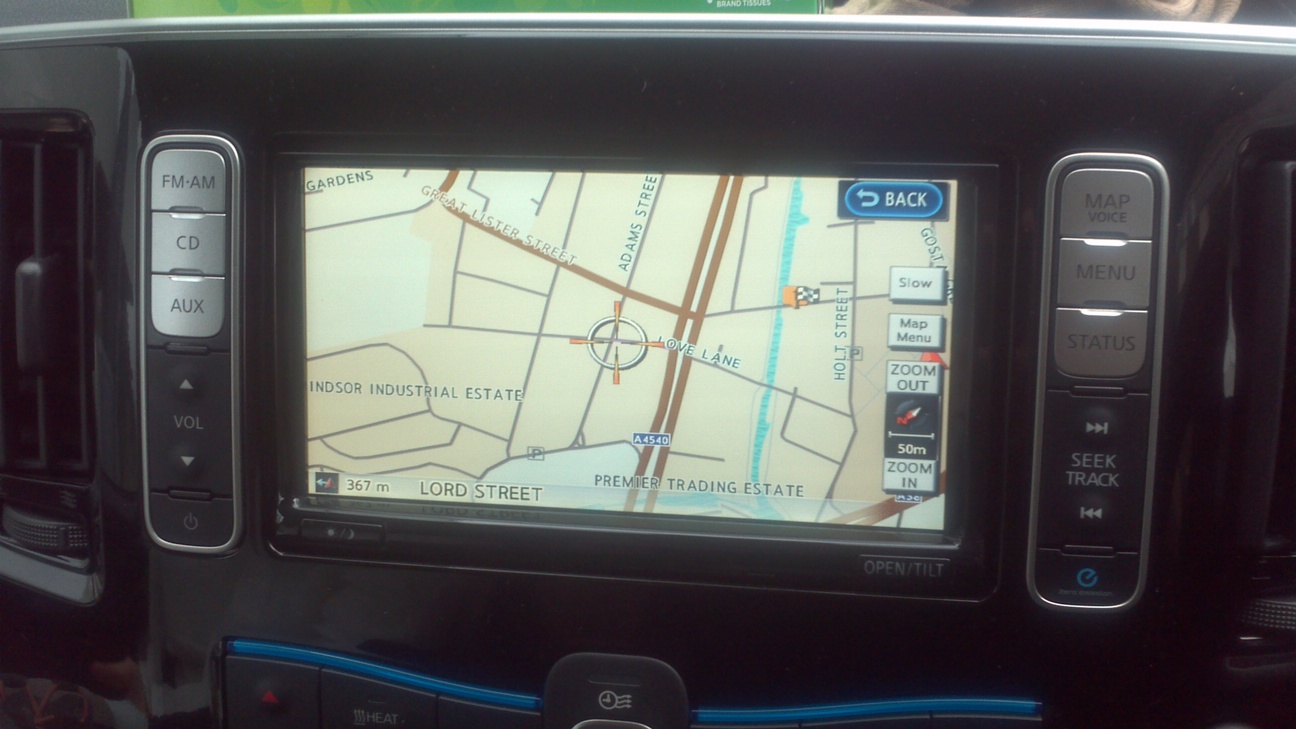
Kasia’s Ecotricity app was still insisting the charging session at Sedgemoor hadn’t finished yet! Power cycling her phone enabled us to get a new session started. After a slightly swifter coffee break this time we set off on the last leg to Birmingham with a 95% charge. That was when our troubles really began. The Nissan satellite navigation system kept insisting “you may be unable to reach your destination” even though there was apparently plenty of juice in the battery. It seems the M5 north of junction 5 was jammed solid. The sat nav eventually suggested an alternative route taking the A38 around Bromsgrove and then the M42 before heading towards Aston University in the centre of Birmingham. After several apologetic phone calls we eventually arrived at the European Bioenergy Research Institute well behind schedule:

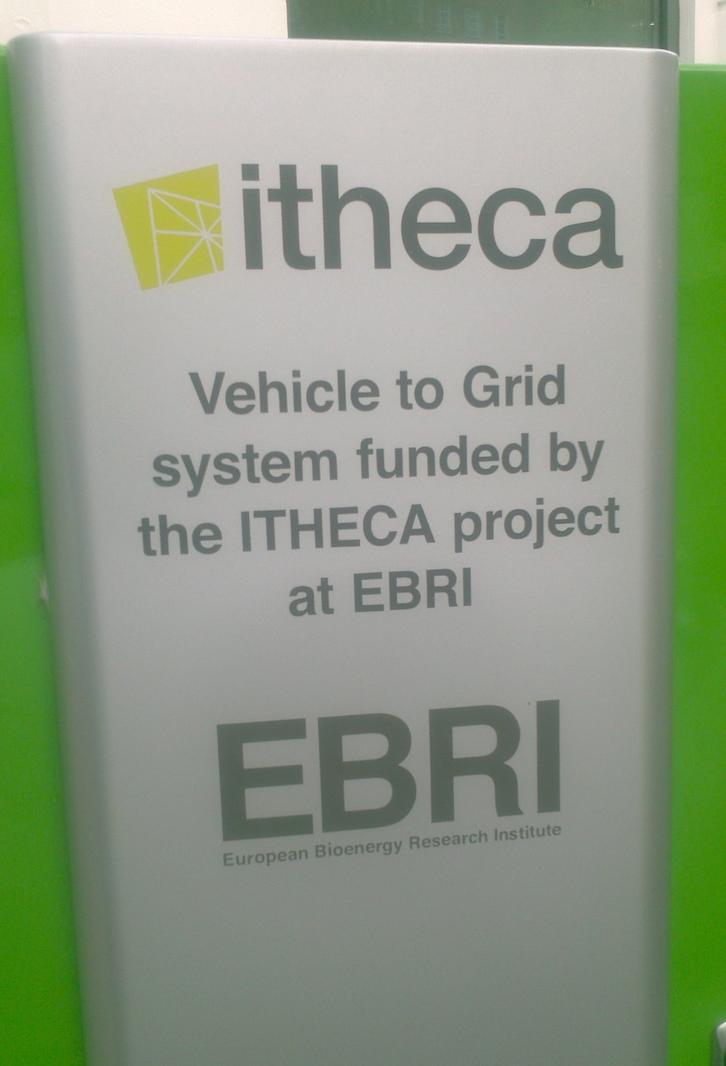
Thankfully in all the circumstances our e-NV200 started charging without problems on the ITHECA project‘s bright green bi-directional charger!

To be continued….

UK Government Consultation on EV Charging Infrastructure

Earlier this year the OECD’s chief Economist recommended “fiscal stimulus and investment in infrastructure”. Perhaps Theresa May was listening? I ponder that point because earlier this week the Department for Transport unveiled their “Plans for more charging stations to encourage low emission vehicles”. According to the accompanying press release:

As part of our ongoing commitment to making transport greener and improving air quality, the Department for Transport is consulting on a series of measures that will make chargepoints more accessible, making it easier for drivers to recharge as demand for low emission vehicles increases. The measures are due to be included in the Modern Transport Bill.

The government has pledged more than £600 million over this parliament to further boost the ultra low emission vehicle market, which is going from strength to strength after the number of new ultra low emission vehicles registered rose by 250% in just 2 years.

According to Chris Grayling, the United Kingdom’s new Secretary of State for Transport:

  • We are committed to making transport cleaner and giving even more drivers the option of using a low emission vehicle as we strive to improve air quality across the country.
  • Our ambition is for nearly all new cars and vans to be zero emission by 2040, and we are taking real steps to achieve this in the Modern Transport Bill. We now want to hear the views of businesses and the wider public.

That final bullet point is addressed by an announcement from the Office for Low Emission Vehicles:

This consultation seeks views on measures to support the uptake of ultra low emission vehicles (ULEVs), proposed for inclusion in the Modern Transport Bill.

The proposed measures relate to refueling and recharging infrastructure for ULEVs and focus specifically on:

  • the consumer experience of infrastructure
  • smart charging – infrastructure and the electricity system
  • the provision of infrastructure

The consultation closes at 11:45 PM on November 23rd 2016, so if you have strong views on the UK’s EV charging infrastructure in general or “smart charging” in particular now is the time to start putting your thoughts on virtual paper before sending them to Chris Grayling.

Perhaps I’ll have to precis this blog for him, since the consultation document itself summarises the proposed measures in the Modern Transport Bill as follows:

Consumer experience of infrastructure

a) Power to require operators of publicly accessible chargepoints and hydrogen refuelling stations, and networks, to provide data in an open source format on the geographical location and live availability of charging and refuelling infrastructure

b) Power to require operators of publicly accessible chargepoints and hydrogen refuelling stations, and networks, to ensure consumers can use them without the need for multiple memberships

c) Power to require operators of publicly accessible chargepoints and hydrogen refuelling stations, and networks, to publish transparent and comparable pricing information

d) Power to specify minimum standards of design and functionality for new publicly accessible chargepoints and hydrogen refuelling stations and networks

Smart charging – Infrastructure and the electricity system

e) Power to require infrastructure installed for the purposes of charging EVs to have ‘smart’ functionality to receive, understand and respond to signals sent by energy system participants (e.g. Distribution Network Operators (DNOs), energy suppliers, National Grid or other third parties) for the purposes of balancing energy supply and demand, and to require any technological functionality in EVs necessary to ensure ‘smart’ functionality

f) Power to require that technical standards used by operators of chargepoints and networks comply with the requirements set out in these measures are available and implemented on an open access basis. This includes making publicly accessible the necessary protocols to allow the charging infrastructure to communicate, understand and respond to signals or grid balancing

Provision of infrastructure

g) Power to require that operators of motorway service areas (MSAs) ensure a minimum provision of electric and hydrogen fuels for ULEVs at MSAs

h) Power to require a minimum provision of electric and hydrogen fuels for ULEVs at large fuel retailers

i) Power to franchise hydrogen refuelling

I’m sure Chris will be interested to discover more about “technical standards used by operators of chargepoints and networks… implemented on an open access basis”. Perhaps he’d like to learn more about vehicle-to-grid technology too?

Four Cities Awarded £40 million “Go Ultra Low” Funding

The United Kingdom’s Department for Transport has just announced that:

Nottingham, Bristol, Milton Keynes and London named as winners of multi-million fund to encourage drivers to go green.

Four cities have been awarded significant funds today (25 January 2016) to promote green vehicle technology after successfully bidding for a share of a multi-million pot created to support the take-up of plug-in electric cars across the United Kingdom”.

Here’s the video version of the announcement:

Transport Secretary Patrick McLoughlin said:

  • These Go Ultra Low Cities have proposed exciting, innovative ideas that will encourage drivers to choose an electric car. I want to see thousands more greener vehicles on our roads and I am proud to back this ambition with £40 million to help the UK become international pioneers of emission cutting technology.
  • The UK is a world leader in the uptake of low emission vehicles and our long-term economic plan is investing £600 million by 2020 to improve air quality, create jobs and achieve our goal of every new car and van in theUK being ultra-low emission by 2040.

Third in the list of winners is Bristol, just up the M5 motorway from us here in Exeter, who were actually bidding under the banner of the “West of England”. According to this morning’s announcement:

Bristol get £7 million to offer residents free residential parking for ULEVs, access to 3 carpool lanes in the city, over 80 rapid and fast chargers across the city and a scheme encouraging people to lease a plug-in car for up to 4 weeks to help them better understand the range of benefits that electric vehicles bring.

There’s no mention anywhere in OLEV’s announcement about vehicle-to-grid or distributed storage however. Perhaps that sort of thing is still not on UK plc’s shopping list?

UK Smart Grid Vision Lukewarm on V2G

Last week the United Kingdom’s Department of Energy & Climate Change published their new “Smart Grid Vision and Routemap“. According to DECC’s introduction to the document it:

Sets out the wide ranging benefits that smart grids will bring, for example: minimising consumer bills; allowing consumers to play a more active role in managing the energy system; increasing energy security; helping to facilitate the integration of low carbon technologies; and supporting economic growth.


Great Britain is already recognised as a European leader with respect to the investment in smart grid research and demonstration projects and has begun the nationwide rollout of smart meters, which will help improve network management and facilitate demand response. The Smart Grid Vision and Routemap outlines what action is now needed to build on this initial success to ensure the benefits are realised as soon as possible.

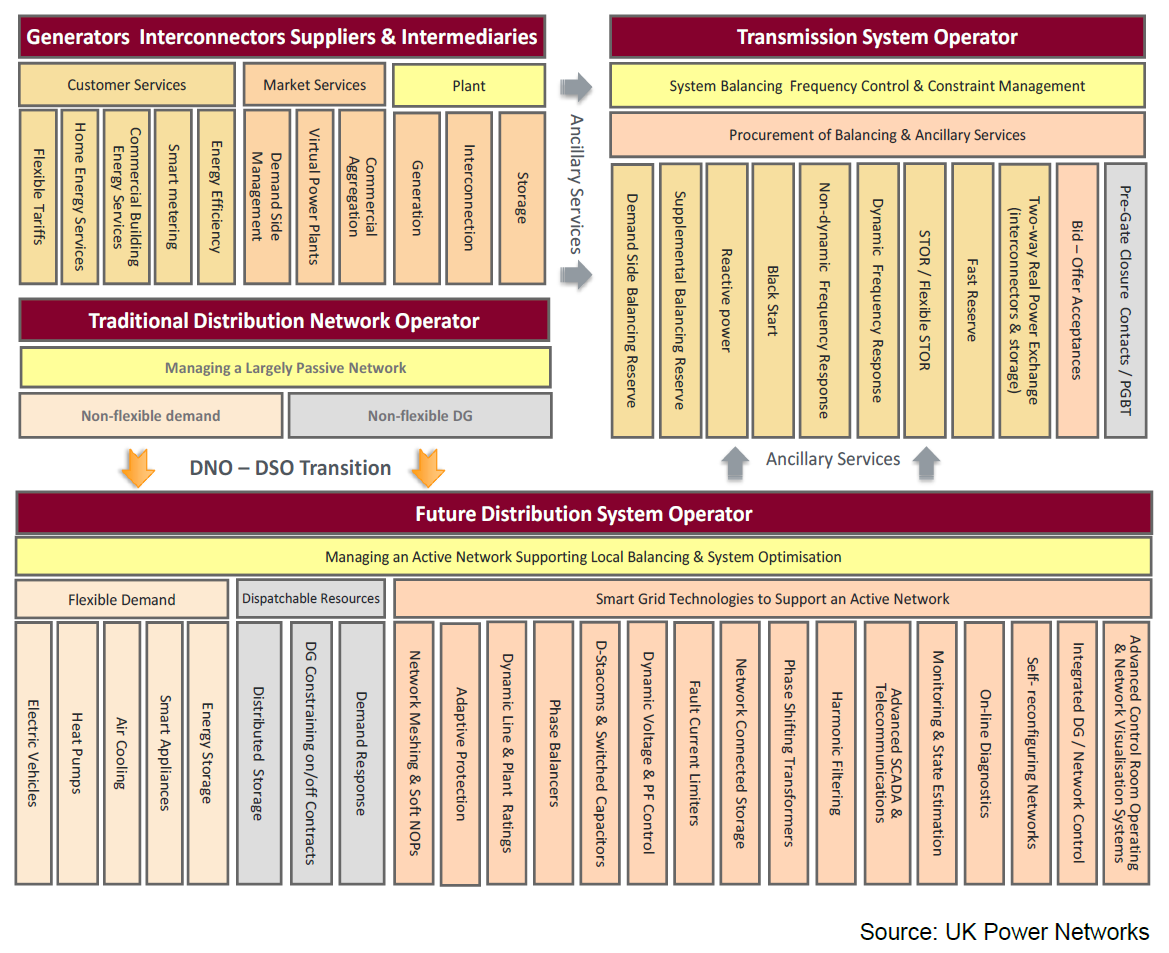
Delving into the routemap itself, I searched for any substantive reference to electric vehicles in general, or vehicle to grid technology in particular. Here’s what I managed to dig up. Firstly a diagram illustrating where EVs fit into the grand design of the future Great British Smart Grid:

February 2014 UK "Smart Grid Vision and Routemap" graphic

February 2014 UK "Smart Grid Vision and Routemap" graphic

Click on the image to see a larger version, where you will note it is anticipated that the “Traditional Distribution Network Operator, managing a largely passive network” will be transformed into a “Future Distribution System Operator, managing an active network supporting local balancing & system optimisation”. Electric vehicles are down in the extreme bottom left hand corner, under the heading of “Flexible Demand”, apparently totally separate from either “Energy Storage” or even “Distributed Storage”.

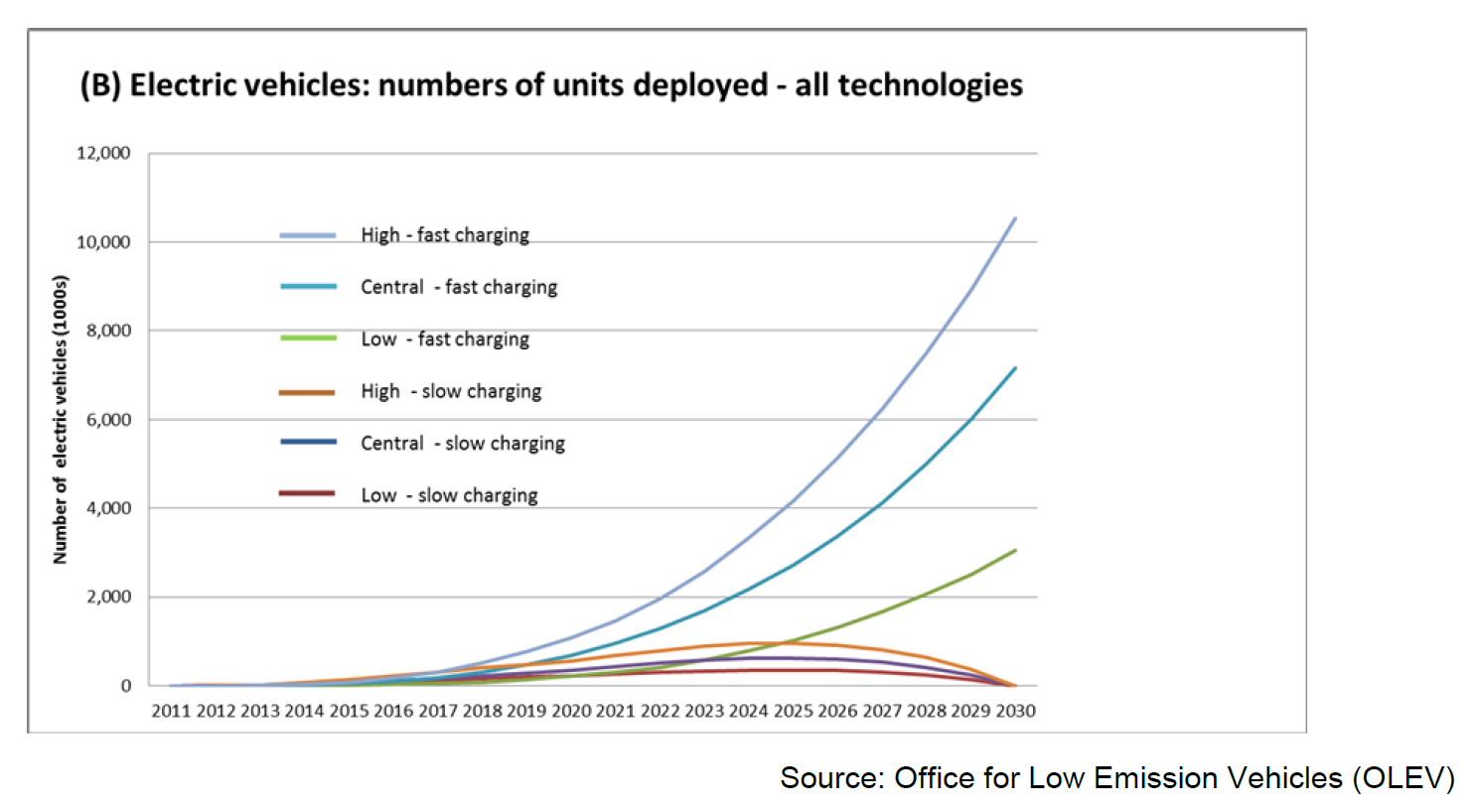
Secondly there is a forecast for the future growth in the number of EVs humming along the UK’s highways and byways, which looks like this:

February 2014 OLEV projection for number of electric vehicles deployed in the UK

February 2014 OLEV projection for number of electric vehicles deployed in the UK

The significant bullet points in the document that mention electric vehicles seem to think that an EV is much like a heat pump. A future British smart grid will:

  • Minimise consumer bills – more efficient use of network assets helps reduce the need to invest in costly infrastructure and ultimately reduces the costs passed through to consumer bills. It is estimated that by 2050, smart grids will reduce the cost of additional distribution reinforcement needed to accommodate the connection of low carbon technologies such as heat pumps, solar PV and electric vehicles by between £2.5bn and £12bn (a 20 to 30 per cent reduction)
  • Enable new low carbon technology to be deployed – heat pumps and electric vehicles will deliver significant carbon reductions, but will increase demand on the electricity network. Using smart grid technology to phase operating times, these devices can be incorporated into the network in conjunction with distributed generation to balance supply and demand, reducing the need for costly network reinforcement.

Finally there is a reference to another document, “Driving the future today – a strategy for ultra-low emission vehicles in the UK” from the Office for Low Emission Vehicles, which contains a few more bullet points about electric vehicles combined with smart grids:

  • The mass adoption of ULEVs will have significant implications for the energy sector at both a local and a national level. As the number of plug-in vehicles on our roads increases, so will the demand for electricity, placing additional pressures on the electricity system.
  • However, ULEVs can also help to balance the demand for electricity at peak periods and support the efficient use of energy by consumers. This will be facilitated by the introduction of intelligent power supply networks (smart grids) and the roll out of electricity smart meters across all domestic properties in the UK by 2020.
  • The majority of plug-in vehicle owners will charge their vehicles at home, at night time, during the off-peak period. This is not only most convenient for drivers, but also maximises the environmental and economic benefits of plug-in vehicles by using cheaper, lower carbon night-time electricity generation.
  • To help people charge at home as easily as possible, the Government is ensuring that smart metering in Great Britain includes the functionality to support charging of plug-in vehicles. This will allow recharging to happen when it is cheapest for consumers and the energy system (subject to appropriate technology in the chargepoint or plug-in vehicle).
  • Plug-in vehicles could also act as distributed energy storage during periods when renewable (or nuclear) electricity generation exceeds demand. This could happen during the life of the vehicle or as a potential end-of-life use for batteries. There may even be the potential for these vehicles to be used as an energy store, to power the house or feed electricity back to the grid at peak periods.

At long last a reference to something resembling V2G, or at the very least V2H! Moving on to page 71 of “Driving the future today” I finally found what I was searching for, an explicit (if somewhat grudging) reference to V2G technology. I reproduce it here in full:

Vehicle to home and vehicle to grid

As the smart grid and battery technologies develop, there may be the potential for plug-in vehicles to act as backup energy sources for homes and supplement the grid during peak demand periods. Nissan already offers a ‘power control system’ to its customers in Japan which allows their LEAF car to power a house for up to two days from its battery pack. Development of this technology was brought forward following the Fukushima nuclear reactor disaster.


There remain issues about the potential impact of taking charge from vehicles on battery life and the investment necessary to facilitate this on a large scale. However, Government will continue to talk to industry and researchers in this area and monitor developments.

Storage has the technical ability to provide a number of benefits to the electricity system – for example, smoothing supply profiles from variable generation and potentially reducing constraint costs by allowing generation to run during periods of low demand. It can also potentially save or defer network upgrade costs that may be required in the future to meet peak demand. Sixteen organisations have recently been awarded a share of £2 million by Government to help develop innovative storage solutions for energy. This funding is helping to drive forward innovation and encourage private sector investment.

The only trouble then is that none of those sixteen projects mention V2G or V2H, although both the the EVEREST project and Aston University’s Hybrid Batteries to Grid project refer to “‘Second Life’ EV batteries” but unfortunately not to EV batteries in situ. It rather sounds as though “Storage to Grid” (or S2G for short) is a more likely prospect here in the United Kingdom than fully fledged V2G.