OVO Energy Install UK’s First V2G Home EV Chargepoint?

OVO Energy sent me a very nice birthday present yesterday via Twitter:

In an associated press release OVO announced:

Following the unveiling of the world’s first widely available, domestic vehicle-to-grid charger, at the Energy Technology Product Showcase in April, OVO can confirm it has successfully installed the first charger in a customer’s home.

Tom Pakenham, Director of Electric Vehicles, said: “We’re excited to install a vehicle-to-grid charger in a customer’s home. By developing vehicle-to-grid technology we’re enabling drivers to store renewable energy in their cars, use that to power their homes and to sell energy back to the grid at peak times, allowing our customers to earn rewards from smart charging their electric vehicle.”

By way of additional background information OVO added that:

The 6kW OVO Vehicle-to-Grid (V2G) Charger is the world’s first domestic bi-directional charger. It offers drivers of certain electric vehicles the opportunity to discharge excess electricity from their cars back to the electric grid to help supply energy at times of peak demand. It is the first such product to be produced and made commercially available at volume in the world.

Available to Nissan LEAF drivers with a 30 or 40kWh battery, the OVO Vehicle-to-Grid Charger could enable Nissan drivers to have free power for their electric vehicles by selling energy back to the grid. This is an important step for both companies to deliver their mission to offer customers free power for their electric vehicles.

This is part of the Innovate UK Vehicle-to-Grid competition, funded by the Office for Low Emission Vehicles (OLEV) and the department for Business Energy and Industrial Strategy (BEIS), in partnership with Nissan, CENEX, Indra and OVO.

BP Buys Chargemaster

We have previously reported on Shell’s plans to add “ultra rapid” charging points for electric vehicles on their filling station forecourts here in the UK. Now BP are following suit, according to today’s press release:

BP today announced that it has entered into an agreement to purchase Chargemaster, the UK’s largest electric vehicle (EV) charging company. Chargemaster operates the UK’s largest public network of EV charging points, with over 6,500 across the country. It also designs, builds, sells and maintains EV charging units for a wide range of locations, including for home charging.

According to BP Downstream’s chief executive, Tufan Erginbilgic:

Bringing together the UK’s leading fuel retailer and its largest charging company, BP Chargemaster will deliver a truly differentiated offer for the country’s growing number of electric vehicle owners.

At BP we believe that fast and convenient charging is critical to support the successful adoption of electric vehicles. Combining BP’s and Chargemaster’s complementary expertise, experience and assets is an important step towards offering fast and ultra-fast charging at BP sites across the UK and to BP becoming the leading provider of energy to low carbon vehicles, on the road or at home.

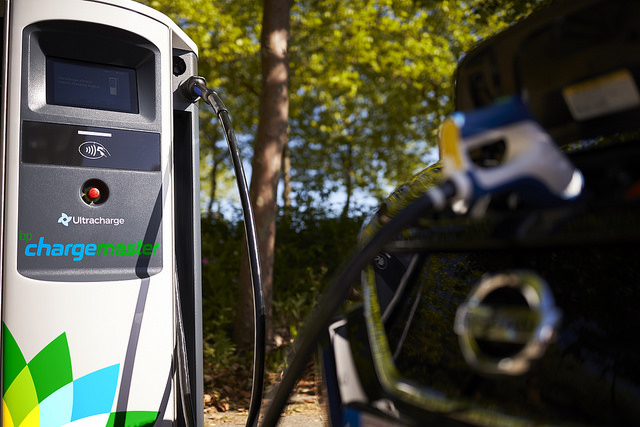
Here’s an artist’s impression of a BP Chargemaster branded “electric pump”:

BP-Chargemaster-1

BP’s press release continues:

The number of EVs on the road is anticipated to increase rapidly in coming decades. By 2040 BP estimates that there will be 12 million EVs on UK roads, up from around 135,000 in 2017.

The development of convenient and innovative EV charging technologies and networks is a key part of BP’s strategy to advance the energy transition. BP is committed to developing new offers to meet changing customer demand and growing new businesses and supporting opportunities for customers to reduce their emissions.

BP believes that to accelerate the adoption of EVs, customers will require convenient access to fast and ultra-fast charging. BP’s UK retail network is well positioned to provide this access with over 1,200 service stations across the country. A key priority for BP Chargemaster will be the rollout of ultra-fast charging infrastructure, including 150kW rapid chargers capable of delivering 100 miles of range in just 10 minutes. BP customers in the UK can expect to access BP Chargemaster chargers on forecourts over the next 12 months.

Chargemaster’s Chief Executive David Martell added:

The acquisition of Chargemaster by BP marks a true milestone in the move towards low carbon motoring in the UK. I am truly excited to lead the Chargemaster team into a new era backed by the strength and scale of BP, which will help us maintain our market-leading position and grow the national POLAR charging network to support the large range of exciting new electric vehicles that are coming to market in the next couple of years.

As we idly wondered after Shell’s announcement, “when will BP’s plans extend as far as South West England though, if ever?”

UK Spends £30 million on V2G Technology

As we reported back in the summer:

The United Kingdom Government… pledged to pump £20 million into vehicle-to-grid technology.

After an apparently interminable wait it was announced on Twitter yesterday that:

Today a plethora of press releases have added some flesh to those bare bones. According to UK Power Networks:

UK Power Networks is part of a consortium that has won £11m government funding for four electric vehicle demonstration projects as part of a series of Vehicle to Grid (V2G) innovation bids.

Vehicle to Grid technology enables energy stored in an electric vehicle’s battery to be fed back into the electricity network at times of peak demand. By recharging when demand is low and putting energy into the electricity network when it is high, V2G helps manage the peaks and troughs, balance the network and make it more efficient.

The government is to ban the sale of all new diesel and petrol cars and vans by 2040, and it sees a smarter and more flexible electricity system as a major benefit to consumers and a key enabler to transport’s future growth.

UK Power Networks currently has more than 30,000 electric vehicles connected to our networks and by 2030 we anticipate that figure will rise to between 1.2-1.9m. Many of these electric vehicles will be V2G capable and could be used to support delivering electricity reliably and at the lowest possible cost.

The competition is funded by the Department for Business, Energy and Industrial Strategy (BEIS) and the Office for Low Emission Vehicles (OLEV) and is delivered by Innovate UK.

The four V2G projects that UK Power Networks will be taking part in are:

  • Bus2Grid: Supporting a project to turn a 30-bus garage into the first of its kind in the UK Vehicle-to-grid (V2G) bus garage.
  • e4Future: A trial on 1,000 V2G fleet vehicles
  • Beating Home: Domestic customer V2G trial involving customers in specific areas.
  • V2Street: Public charging networks with a local authority and a charge point provider. Targeted at the 60-70% of Londoners without off-street charging capability.

Note that the £20 million on offer last August has been increased to £30 million today! Perhaps that’s at least a partial explanation for the delay in the appearance of the announcement? UKPN don’t provide much detail on the four out of twenty one projects revealed so far, so let’s look a bit further afield shall we? Heading back to Twitter there’s an announcement of a new product offering and a new EV web site from Octopus Energy unsurprisingly entitled Octopus Electric Vehicles:

which was swiftly followed by another Tweet explaining that:

which put us on the trail of this press release from ChargePoint Services:

Octopus Energy today launched a new consortium to develop the first large-scale domestic trial of vehicle-to-grid (V2G) charging in the UK, following a £3 million funding injection by BEIS and OLEV delivered by InnovateUK.

Comprising Octopus Energy, Octopus Electric Vehicles, UK Power Networks, ChargePoint Services, Open Energi, Energy Saving Trust and Navigant, the consortium will roll out vehicle-to-grid charging technology to UK electric vehicle (EV) drivers this year.

The £7million project will install 135 V2G chargers in a ‘cluster’ delivery model that will facilitate research into the impact of widespread EV rollout on the UK’s electricity grid. The project will demonstrate the benefits of using domestic electric vehicle batteries to provide grid flexibility, cheaper transport and energy to homeowners, and faster decarbonisation of the UK’s power and transport sectors.

Customers will be able to discover electric vehicles, take them for a test drive and access a special V2G bundle, Octopus PowerLoop, when leasing a V2G compatible car. A two-way charger will enable the driver to charge their vehicle intelligently, using their vehicle battery to power their home during peak times or selling spare power back to the grid – creating value for the driver.

The technology could revolutionise the energy system by enabling electric vehicles to act as battery packs for the grid, helping to solve the challenge of how to harness the full potential of renewable energy whilst making sure that it is always available on demand. Evidence also shows that V2G use has the potential to increase battery life.

The ChargePoint announcement goes on to quote Octopus Electric Vehicles CEO Fiona Howarth:

Octopus Energy was founded to drive down the cost of energy to customers and the planet, and Octopus Electric Vehicles is the next phase in that mission.

There has been a lot of talk from the sidelines about how vehicle-to-grid technology will change the face of energy, but with this consortium we will be the first in the UK to actually deliver it to hundreds of households. We’re delighted to be working with this consortium of visionary companies, and proud to be backed by Innovate UK.

It sounds as though the Octopus Group are intent on competing head on with OVO Energy who previously “embraced” V2G technology:

We’re hurtling towards a place where ‘two-way’ electric car chargers can enable homeowners with electric cars to sell their energy back to the national network. It’s a smart idea when you consider that over 90% of cars are parked at any one time – which is a lot of energy just sitting there doing nothing. This technology will give you the opportunity to manage your energy your way, and potentially become energy self-sufficient, reducing everyone’s reliance on energy companies. Get solar panels fitted, then adopt vehicle to grid technology and your home could become a private mini-power station!

There are a number of other quotes too. Mark Thompson, Senior Innovation Lead at Innovate UK added:

Vehicle-to-Grid is one of the most iconic parts of the electric vehicle domain, and one that represents a great opportunity for engaging society with the energy system for win-win benefit. The Octopus V2G project is part of a creative, diverse and ambitious group of V2G projects announced today that are way ahead of anything being done currently world-wide, and give the UK a genuine competitive edge in the electrification of transport.

Alex Bamberg, Managing Director, ChargePoint Services, said:

ChargePoint Services’ GeniePoint Network continues to be at the cutting edge of delivering the smartest and most reliable electric vehicle charging network in the UK. With this consortium, we join with existing partners to enable us to provide real benefits to the end user both in terms of efficiency and reduced cost. Our investment in the GeniePoint Network and its class leading reliability is further enhanced, whilst at the same time ensuring protection and flexibility of the UK’s energy Grid.

Ian Cameron, Head of Innovation at UK Power Networks said:

Electric vehicles are effectively energy sources on wheels, so there are tremendous opportunities to explore how electricity networks can use any spare capacity in those batteries to benefit our customers.

In the future you could use your car battery to power your house or earn money by selling its spare energy back into the network at peak times, and all of this whilst ensuring you have enough energy for your next day’s commute. We’re innovating to keep our customers moving at the lowest possible cost.

Dagoberto Cedillos, Strategy and Innovation Lead at Open Energi said:

Smart charging solutions that align the needs of drivers and the electricity grid are fundamental to the future of sustainable energy and transport. In partnership with our fellow consortium members, we’re applying cutting-edge tech to help realise the enormous opportunity that is domestic V2G charging in the UK, and internationally.

That is of course all very good news, but it raises one big question, in my mind at least. For some strange reason the Beating Home/PowerLoop (depending on which press release you prefer) consortium doesn’t seem to include a bi-directional electric vehicle charging point manufacturer and none of the assorted news releases and quotations mentions that rather essential piece of hardware, or indeed shows a picture of such equipment in action. To right that particular wrong, here’s one I prepared earlier:
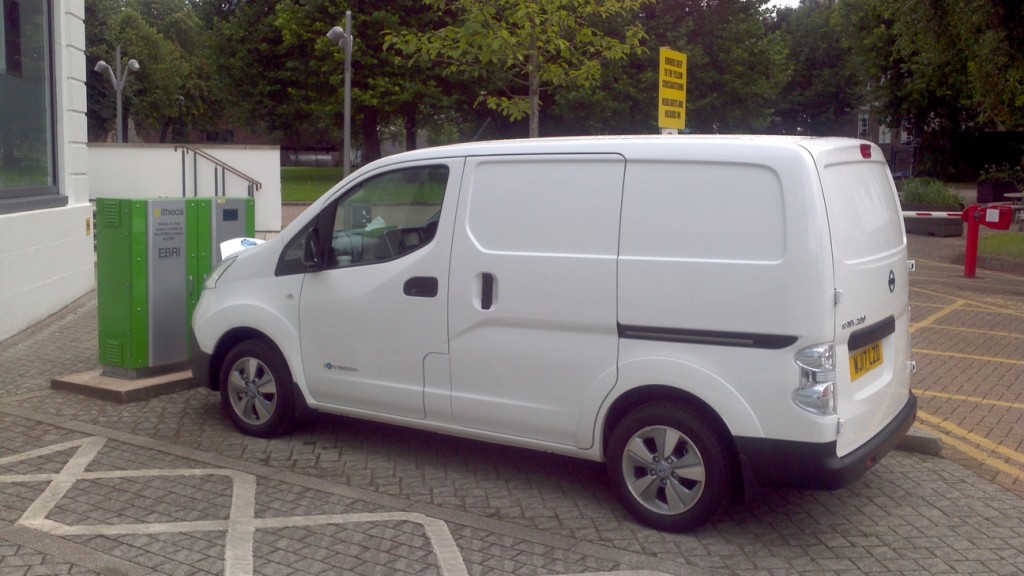
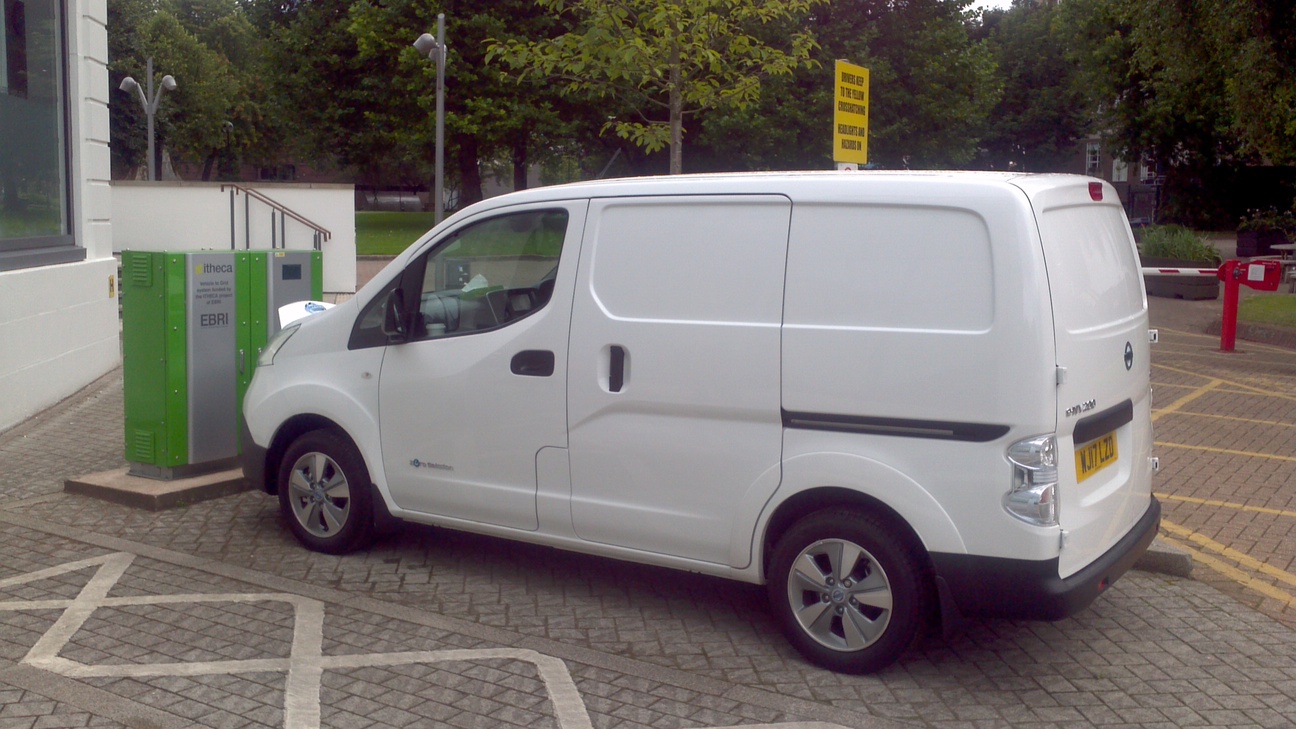
A Exeter Nissan e-NV200 plugged in to the V2G charging station at EBRI

There’s also no mention of the activity that I’m currently engaged in. Developing international standards for the protocols that ChargePoint Services’s charging station management system (CSMS for short) might one day use to communicate with the unnamed electric vehicle supply equipment (EVSE for short) OEM’s V2G capable hardware installed in 135 Great British homes:

Last Call for IEC 63110 Use Case Submissions

Our regular reader(s) will be aware that quite some time ago I suggested that:

There’s a few more urgent things to be ticked off on the to do list. How about OCPP 2.0 or even fully fledged British and international standards for “smart charging”, V2B and ultimately pukka V2G protocols for starters?

I am happy to now be able to report that my wish has come true! An international standard is now being developed for electric vehicle supply equipment (EVSE for short) communications with the “back office”, including vehicle to grid (V2G for short) functionality. For my sins I now sit on IEC technical committee 69 joint working group 11 (TC69/JWG11 for short). According to the Wikipedia article on the subject, which I wrote:

IEC 63110 is an international standard defining a protocol for the management of electric vehicles charging and discharging infrastructures, which is currently under development. IEC 63110 is one of the International Electrotechnical Commission’s group of standards for electric road vehicles and electric industrial trucks.

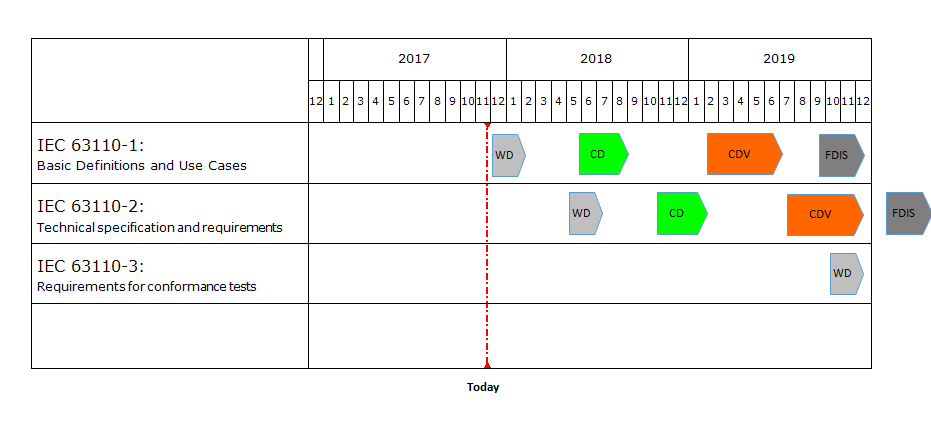
You will no doubt be delighted to discover that proceedings are still at a fairly early stage. Here’s the current IEC 63110 roadmap:

IEC-63110-2017-11-24

The top line indicates to the initiated that I am still able to point out that IEC TC69/JWG11 is currently seeking submissions for potential use cases to add to our initial list. The current deadline is December 6th. It is probably safe for you to assume that all the obvious stuff from the Open Charge Alliance’s Open Charge Point Protocol and ISO/IEC’s 15118 protocol is already included on our list.

However if you have a use case that isn’t in amongst the obvious stuff then please do not hesitate to get in touch!

Are you ready?

Static and Mobile Distributed Energy Storage Launched At Long Last

Our roadmap didn’t call for this announcement just yet, but on Autumn 2017 budget day Philip Hammond, the Great British Chancellor of the Exchequer, had this to say:

The next day Nissan’s Francisco Carranza made an interesting announcement on Twitter:

In a bit more detail, Nissan announced:

Nissan Motor Parts Center in Europe is the first company in the Netherlands to make its roof available to others for the production of sustainable energy on a large scale. The electricity generated is sufficient for the power consumption of 900 households. The first section becomes operational at the end of February. The project will be fully completed in May.

With the installation of this immense solar roof, Nissan is taking a further step toward its strategy focusing on Intelligent Mobility, with sustainable energy as one of its cornerstones.

“This project is perfectly suited to Nissan’s endeavors to make mobility smarter and more sustainable,” said Koen Maes, managing director Nissan Benelux (Belgium, Netherlands and Luxembourg). “That’s why we are working on sustainable energy production and on projects such as energy storage in used batteries – vehicles which return energy to the network and car sharing. The solar roof is one of the cornerstones.”

That’s pretty much the way we see things too, and after a couple of false starts over the years the team here at V2G UK decided to accelerate our plans:

Here are some other things that have been happening on Twitter over recent days:

In case it’s not yet obvious to you, our Static and Mobile Distributed Energy Storage project roadmap includes rolling out just the right sort of V2G capable electric vehicle charging station for our purposes. My personal Twitter profile reads as follows:

I’ve been programming computers since the late 60s. We had to build our own! Now what can I program next? Will I have to build it first?

It looks as though the answer to that question is YES!

Meanwhile the V2G UK Twitter profile concludes:

A friendly local neighbourhood energy market would also be nice!

Are we going to have to build that too?

30 kWh Nissan LEAF Extended Test Drive

We have mentioned the new “go further” Nissan LEAF previously on the V2G blog, and now thanks to JFE Nissan in Exeter we have the chance to test the new 30 kWh battery pack equipped 2016 LEAF for ourselves. According to the Nissan UK web site:

Every full charge will give you a range of up to 155 miles.

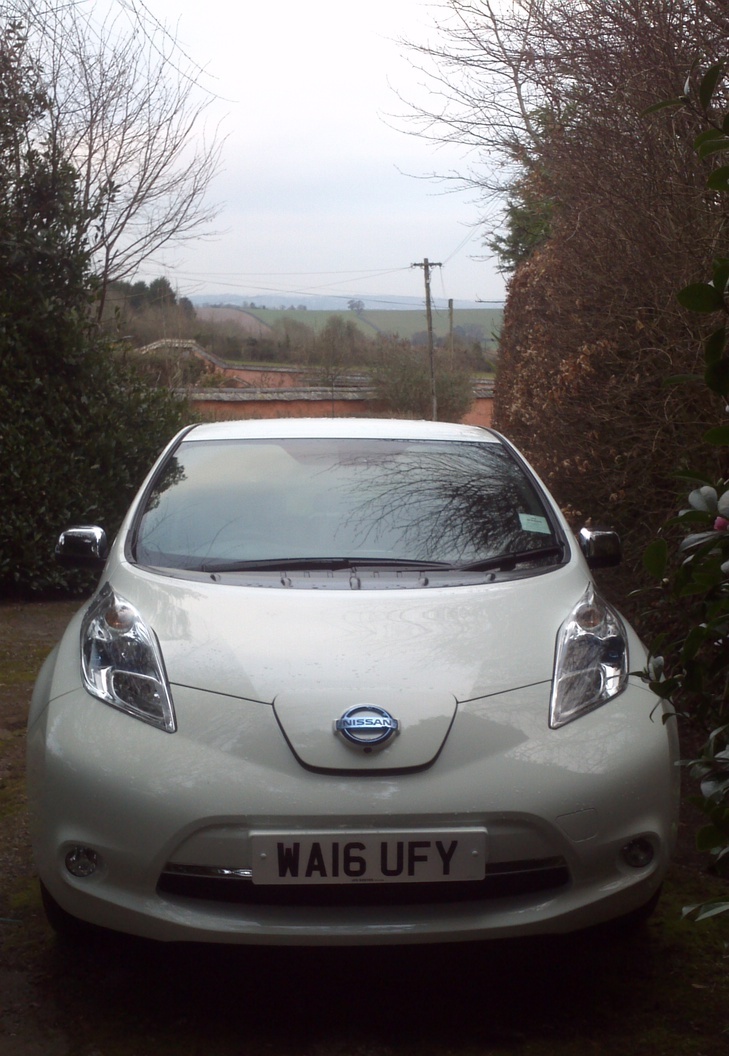
I don’t know about you, but we’d like to check that claim for ourselves! At the very start of our test the odometer on the bright white LEAF we were borrowing read 6 miles as we collected it earlier today, and had advanced to 11 miles by the time we got back to base:

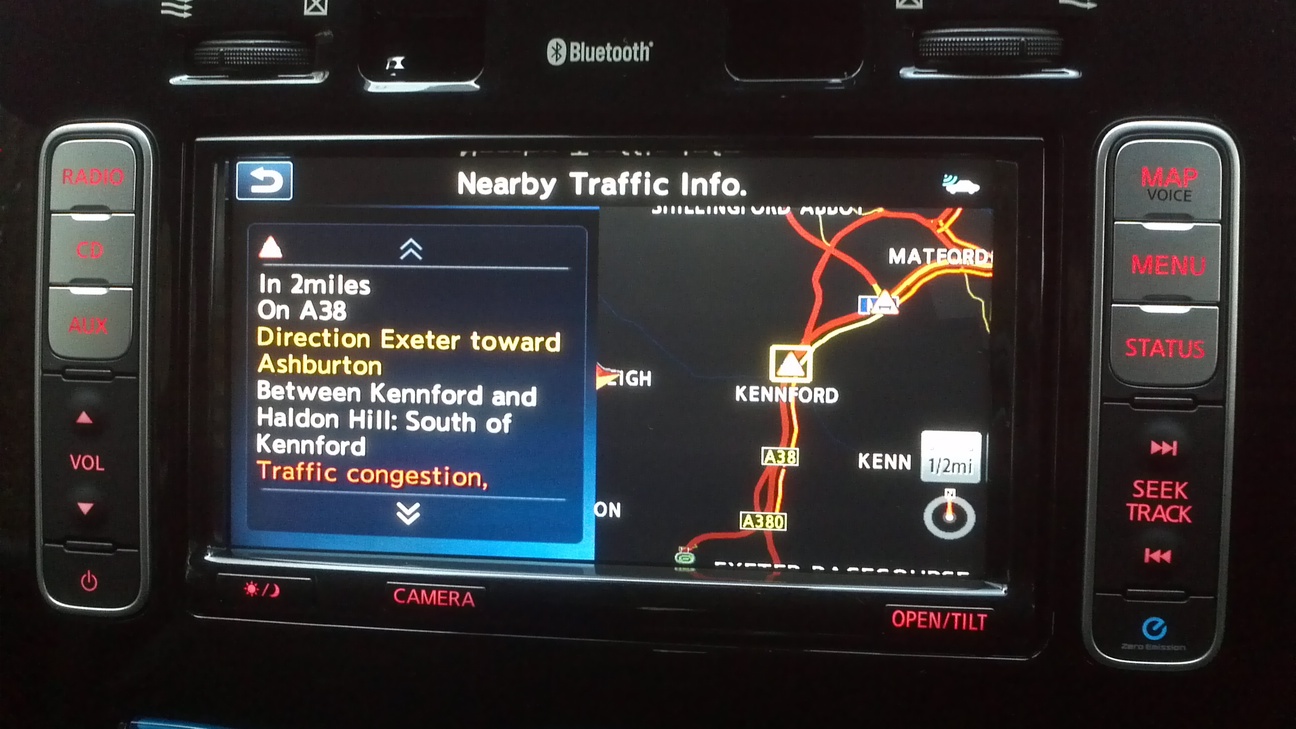
We had intended returning from Exeter to the wilds of the Haldon Hills via a main road. However before we left the Marsh Barton trading estate we consulted the LEAF’s handy traffic news feed, which revealed this:

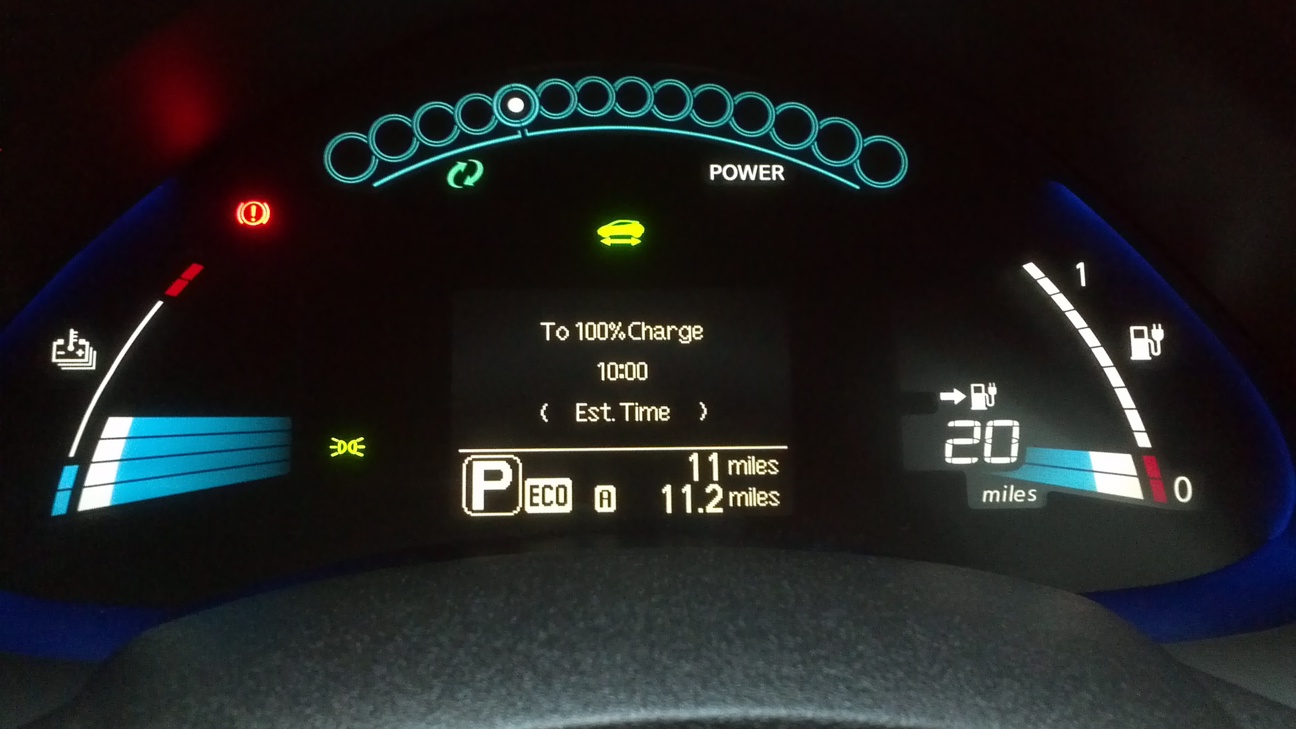
According to Radio Devon “a caravan’s been abandoned in the inside lane on Telegraph Hill”! Hence we took the scenic route through some narrow Devon country lanes, and ended up with 20 miles worth of range left in the traction battery pack, according to the LEAF’s dashboard at least:

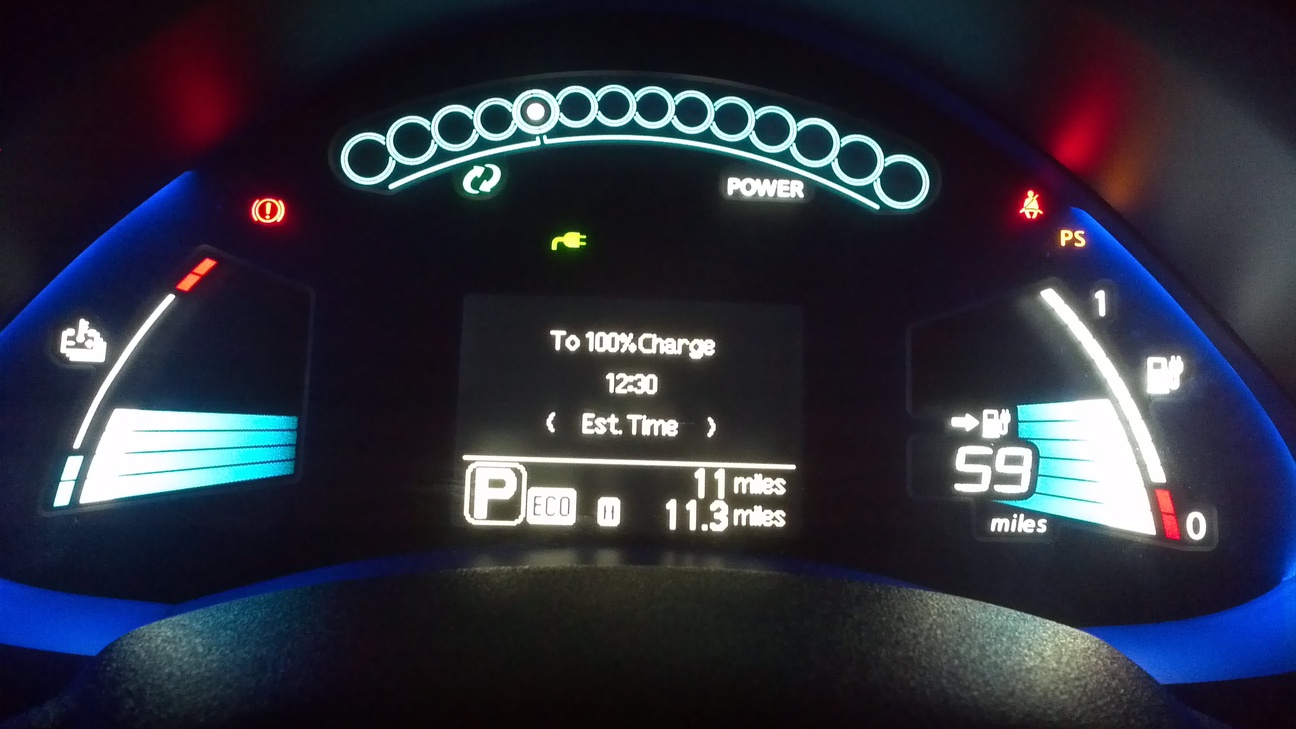
Having previously had some trouble using the rapid charger at Exeter Services, and having to avoid the motorway for other reasons on this occasion, we were in the perfect position to test the LEAF’s 13 amp “Electric Vehicle Supply Equipment” charging lead. We plugged it in at 18:30, and by 22:30 tonight the dashboard told us this:

More from us tomorrow on our Spring 2016 LEAF test, but for now we leave you with the inimitable Robert Llewellyn’s take on the new LEAF:

À bientôt, as I believe they say in France.