Will There Be Blackouts in the UK This Winter?

According to an “exclusive” report in The Guardian:

Ministers are discussing launching a public information campaign to encourage households to reduce their energy use this winter as fears grow over winter blackouts.

Households could be asked to turn their thermostats down and use their dishwashers and washing machines during the night and at times when energy demand is lower, under plans being discussed between the business department, energy companies and the network operator National Grid.

No names are mentioned of course, but allegedly:

Sources close to the discussions said that government officials and industry executives were determined to avoid blackouts disrupting the supply of energy to Britons’ homes. A public information campaign could help ease pressure on energy supplies during the winter.
Ministers have so far resisted calls to tell consumers to cut their energy use, saying consumption of gas and electricity was a “decision for individuals”.

The article mentions the recent trial in Scotland run by Octopus Energy and SP Energy Networks, in which a financial incentive was offered to domestic consumers to shift the timing of their electricity demand.

Over 2,500 Octopus Energy customers across Dumfries and Galloway participated in the six-week trial*. Directed to power up their usage when green energy supply was highest, households used 20MWh more energy across the six two-hour trial windows.
Households who increased their usage by more than 10% were credited back all the energy they had used during the two-hour timeframe. Those who used more than 100% extra were credited double the amount they had used. Participating customers were rewarded with an average of £5 of free energy, with some saving up to £73.

According to The Guardian once again:

National Grid will lay out its outlook for winter energy supplies on Thursday, giving the first comprehensive assessment of the risk of blackouts this winter.

The eagerly awaited document should show how resilient Britain’s energy supplies are over the coming months. An early view, published in August, showed the UK should be able to meet its energy demand in the coming months. However, since then Norway has indicated it may prioritise supplying its domestic market over exporting power.

Here’s how things stacked up for the National Grid in August:
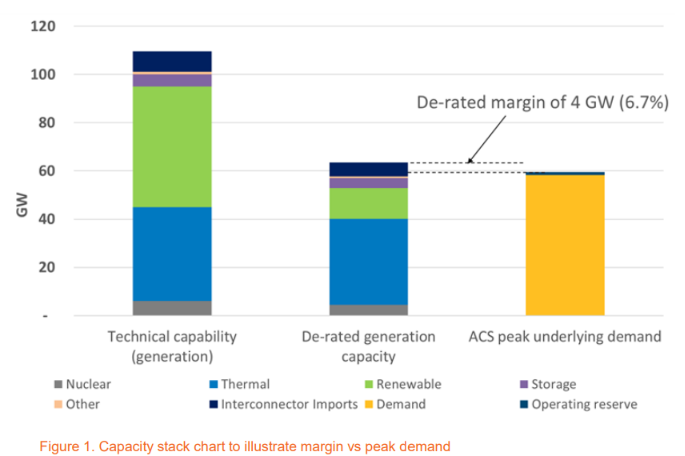
We eagerly await any changes revealed in tomorrow’s report!

[Edit – October 6th]

The National Grid Electricity System Operator has now published its “Winter Outlook Report” for 2022/23. Here is the executive summary in full:

Our first illustrative scenario examines what would happen if there were no electricity imports from continental Europe . In this scenario we would deploy our mitigation strategies – dispatching the retained coal units and our Demand Flexibility Service. By securing 4GW through these actions, we would maintain adequate margins and mitigate impacts on customers.

Our Demand Flexibility Service is new and innovative, and we have worked with suppliers, aggregators, industry, Ofgem and BEIS on the design to ensure it is ready for the winter and capable of delivering the required level of participation and response (2 GW+). It will launch on 1 November, and we are encouraging suppliers and aggregators to work with their customers to ensure the highest levels of engagement and participation. We see particular potential from commercial organisations who can shift their load from peak hours and have had positive feedback from British companies on this.

Without the Demand Flexibility Service, we would expect to see a reduction in margins. In this scenario on days when it was cold (therefore likely high demand), with low levels of wind (reduced available generation), there is the potential to need to interrupt supply to some customers for limited periods of time in a managed and controlled manner. However, we expect the mitigations outlined above to be effective.

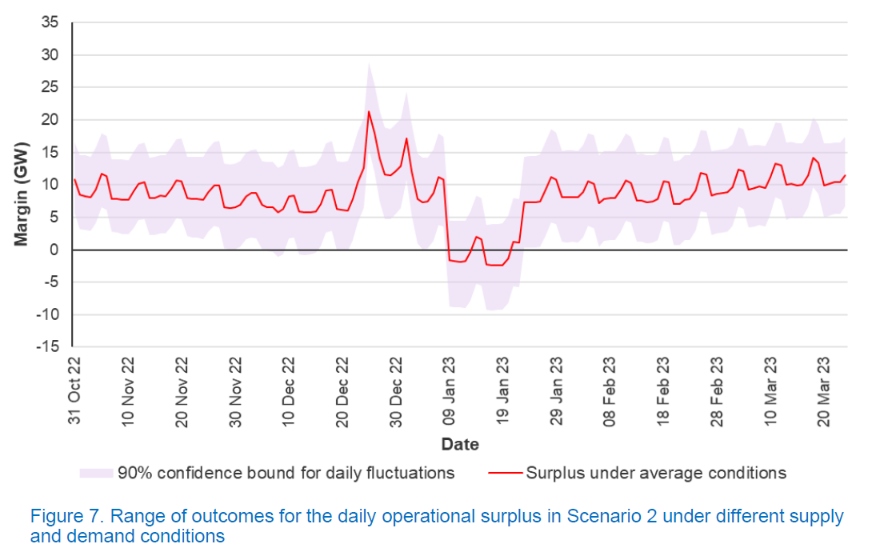
A second, more extreme scenario, looks at a hypothetical escalation of the energy crisis in Europe such that there is insufficient gas supply available in Great Britain (in addition to no electricity available to import from continental Europe as per above scenario). In the unlikely event that escalation of the situation in Europe means that insufficient gas supply were to be available in Great Britain this would further erode electricity supply margins6 potentially leading to interruptions to customers for periods. All possible mitigating strategies, including our new measures, would be deployed to minimise the disruption.

Overall, this is likely to be a challenging winter for energy supply throughout Europe. We have taken extensive measures to try to mitigate the impacts for British consumers and expect that, under our base case, margins will be adequate. Nevertheless, there remain scenarios, driven principally by factors outside of Great Britain which could impact upon British electricity supplies. Plans are in place to ensure the impact is minimised and the overall security and integrity of Britain’s energy systems are protected.

Here too is the updated version of the “base case” supply margin chart shown above:

The chart is accompanied by these two provisos, amongst others:

Our base case assumes electricity imports from Europe are available at times when we need them to meet demand, delivering in line with their Capacity Market agreements, and that there is no disruption to gas supplies.

Our base case does not assume any material reduction of consumer demand due to high energy prices. It does not include any of our mitigation measures such as coal contracts or the Demand Flexibility Service as we would not expect to deploy them here.

The winter outlook also considers “Scenario 1” in which there are “reduced electricity imports from Europe”:
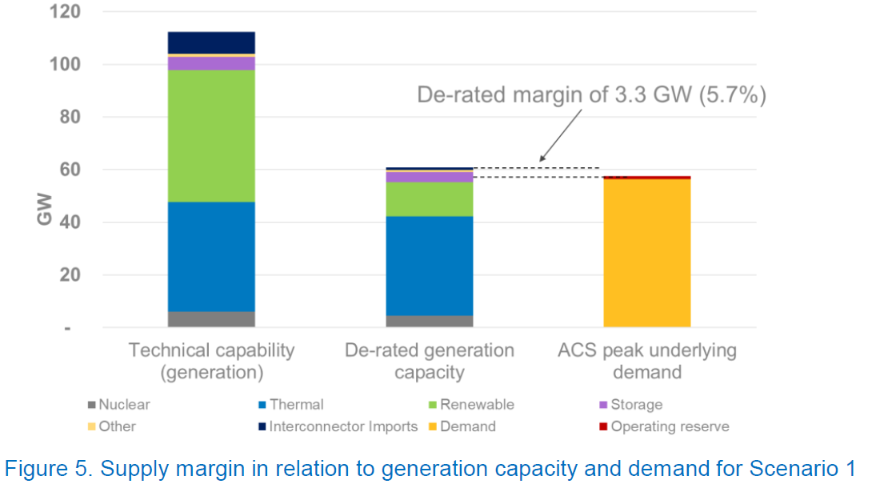
The bar chart is accompanied by a graph of “operational surplus”:
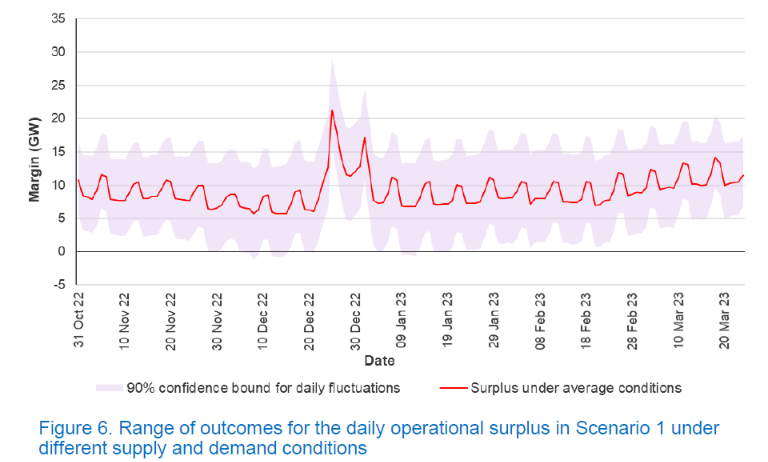
That shows National Grid’s “90% confidence” that the surplus will not turn negative over the winter. However now let’s take a look at “Scenario 2” in which there is in addition “insufficient gas supply in Great Britain”:
Note that according to Ofgem a few days ago:

Due to the war in Ukraine and gas shortages in Europe, there is a significant risk that gas shortages could occur during the winter 2022/23 in Great Britain. As a result, there is a possibility that GB could enter into a Gas Supply Emergency.

Perhaps it would be prudent at this juncture for us all to cross our fingers and hope that the gas keeps arriving at Great British shores over the coming months, whether via pipeline or LNG tankers?

[Edit – October 7th]

The Energy Networks Association has published an article entitled “How planned emergency power cuts would work if they are needed this winter“. They state, in part, that:

Though no power cuts are currently planned, in their winter outlook National Grid ESO raised the possibility of the need for planned national power cuts, in order to manage the possibility of energy demand outstripping the supply available.

Firstly, it’s important to know that before any emergency planned power cut instruction is given, National Grid ESO takes several steps to protect customers. These include:

* Encouraging additional generation through the supply market.
* Asking heavy industrial users to limit their demand during peak periods.
* Reducing domestic power demand – this could include paying customers to change how and when they use appliances like washing machines and dishwashers or reducing voltage across the country by a small percentage, which would be undetectable.

Procedures for emergency planned power cuts like this have existed for decades and are simulated in emergency exercises by the energy sector each year ahead of the winter.

If needed, the emergency procedures are designed to minimise the impact on customers as far as possible, by limiting power cuts to shorter periods in order to manage overall electricity demand. However, while the winter is expected to be challenging, there is no guarantee emergency measures will be necessary.

If an emergency power cut is implemented, customers in certain parts of the country would typically be without power for around three hours per day during the emergency.

Distribution network operators, which run the local power networks, would be legally instructed by National Grid ESO, which controls the flow of energy around the country, to disconnect power supplies using established procedures. These procedures are set out by the government in a document known as the Electricity Supply Emergency Code, sometimes referred to as ESEC. The procedures ensure that power is shared fairly across all customers during a national energy emergency…

If emergency power cuts are needed customers will be able to find their rota and what it means for them at powercut105.com by entering their postcode. The rota will only be published once emergency power cuts have been approved to take place.

[Edit – October 17th]

In an article in today’s Financial Times, energy correspondent Nathalie Thomas writes that:

National Grid’s chief executive has warned British households to prepare for blackouts between 4pm and 7pm on “really, really cold” weekdays in January and February in the event of reduced gas imports from Europe.

John Pettigrew said the company would have to impose rolling power cuts on “those deepest darkest evenings in January and February” if generators failed to secure enough gas from the continent to meet demand, particularly if the country suffers a cold snap.

Pettigrew’s comments at the Financial Times’s Energy Transition Summit came after National Grid, which oversees Britain’s electricity and gas systems, this month took the unusual step of setting out various “unlikely” scenarios in which Britain might not have sufficient energy supplies this winter.

[Edit – November 4th]

National Grid ESO’s Director of Corporate Affairs, Jake Rigg explained their
Demand Flexibility Service on BBC Breakfast this morning. · According to a BBC article:

Households will be offered discounts on their electricity bills if they cut peak-time use on a handful of days over the winter, as part of National Grid’s efforts to avoid blackouts.

The network operator has announced details of the scheme, which it said could save households up to £100.

There will be 12 “test” days initially, designed to see how customers respond, between November and March.

But only homes with smart meters will be able to take part.

Only 14 million, less than half, of households in England, Scotland and Wales, where the scheme is being tested, have a smart electricity meter installed.

Customers taking part will be given 24 hours’ notice of a “test” day where they will be asked to reduce their peak-time electricity use if they can during a one-hour period identified by National Grid, likely to be between 16:00 and 19:00.

That could include delaying use of a tumble-dryer or washing machine, or cooking dinner in the microwave rather than the oven.

National Grid said it will pay energy suppliers, which will be required to sign up to the scheme to operate it for customers, £3 for every kilowatt-hour during the test periods.

Individual suppliers will decide how much customers will receive and whether the money is taken off bills, credited to accounts, or if there’s an option to withdraw the cash…

Watch this space!

Rolls-Royce SMR Seeks Regulatory Approval

In a press release yesterday Rolls Royce SMR Ltd. announced that:

Rolls-Royce SMR Ltd has submitted a 470MW Small Modular Reactor (SMR) design for entry to the UK’s Generic Design Assessment (GDA) regulatory process.

The first step is to secure clearance from the Department for Business Energy and Industrial Strategy (BEIS) through its initial screening process, which will confirm the Rolls-Royce SMR business is suitability qualified to enter the Office for Nuclear Regulation, Natural Resources Wales and Environment Agency’s combined GDA process.

This initial screening process reviews whether a company has the capability and capacity to successfully enter the UK GDA process. The Government evaluation process is expected to take up to four months before the regulators can begin their formal review process.

Continue reading →

Icebreaker One Win UKRI’s MEDA Competition

In a press release this morning Ofgem, the United Kingdom’s energy regulator, announced that:

UKRI’s £2m Modernising Energy Data Access (MEDA) competition, which saw three rounds of increasingly competitive requirements to design and build a data access solution for the energy sector, completed the beta-stage build in July 2021. Icebreaker One, the competition winners, have developed Open Energy a non-profit service that provides data search, data access control and has been designed through collaborative industry groups.

Managed by UKRI as part of the MEDA project, Icebreaker One will deliver a pilot phase of Open Energy over the next 6 months to the end of February 2022. The aim of the pilot phase is to carry out further research and development activities that will prepare the product for public launch. This phase will include developing capabilities that enable organisational and data onboarding, developing further use-case(s), and delivering an operational pilot programme. 

The Open Energy initiative has already delivered value in improving visibility and access to data in the sector. It aims to act as a key enabler to innovation, help to drive down costs for consumers and support an open data landscape.

UKRI, BEIS and Ofgem are supportive of energy data sharing solutions and we will work with industry over the coming months to ensure that these solutions can operate within the energy market.

Here is Gavin Starks from Icebreaker One with a brief overview of the Open Energy initiative:


Global Power System Transformation Consortium Announced

Imperial College announced in a news release yesterday that:

US and UK ministers launch a global effort – which features Imperial expertise – to speed up the energy transition.

An innovative public-private partnership to accelerate the clean energy transition by transforming our power systems has been formally launched, ahead of US President Joe Biden’s Earth Day climate summit.

The Global Power System Transformation Consortium (G-PST), which includes technical expertise from Imperial, was officially launched by the UK Secretary of State for Business, Energy and Industrial Strategy Kwasi Kwarteng and US Secretary of the Department of Energy Jennifer Granholm, alongside CEOs of power system operators and institutions from around the world.

G-PST aims to enable the integration of renewable energy sources into power systems at an unprecedented scope and scale, contributing to a 50 per cent reduction in emissions of all pollutants over the next ten years.

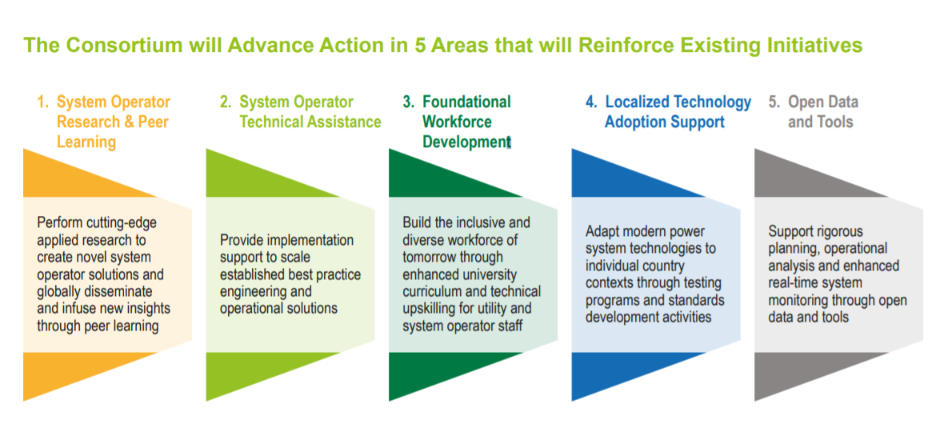
The Global PST Consortium Action Areas

Kwasi Kwarteng pointed out that:

Tackling climate change requires international cooperation and if we want to successfully achieve cost-efficient, green energy networks that work for everyone, we need to work together.

As a world leader in both technological innovation and the renewable energy market, I am delighted that the UK is co-hosting the launch of this new consortium, uniting the very best of business, research and academia to bring world-class renewable energy to the grid – key for economic growth, job creation, the climate and building back greener.

Unfortunately Kwasi didn’t go into detail about exactly how “building back greener” would “bring world-class renewable energy to the grid “, desirable as that undoubtedly is.

However some academics and engineers are members of the Global PST Consortium:

Continue reading →

Sero Group Announce “UK’s largest domestic DSR trial”

In a press release on Tuesday the Sero Group announced that:

FLATLINE, an industry led research project aiming to demonstrate the viability of a demand-side approach to energy management at domestic level, has reached a major milestone as residents move into three pilot homes at The Mill site in Cardiff.

Backed by the Department of Business, Energy & Industrial Strategy, the ‘Fixed Level Affordable Tariffs Led by Intelligently Networked Energy’ (FLATLINE) project aims to significantly reduce residents’ energy bills, using a combination of domestic Demand Side Response and demand shifting for both heat and electricity.

The specially built pilot homes at The Mill development site in Cardiff will be closely followed by a further 46 homes at a separate site, Parc Eirin in Tonyrefail – which will see first residents move in this autumn as the first phase of the 225 new home scheme is complete.

According to the “Zero Carbon Lifestyle” section of the Sero Homes web site:

Every Sero Home is built ready for future generations, and that includes the future of travel.

Our homes are built with three phase electricity – the “broadband” of power – and electric vehicle (EV) fast charging points. You can recharge your car at a Sero Home in less than four hours, compared to around twelve hours in a traditional home (or about three days on a 13amp plug).

Sero Homes’ class-leading recharging times are only useful if you can afford the car in the first place. To tackle this, on most of our sites we offer our residents an option to take an EV lease with inclusive miles bundled in.

It’s probably no coincidence that today Robert Llewellyn announced a new edition of his Fully Charged Show. An introduction to the “Affordable Eco Housing” at The Mill and Parc Eirin:

Continue reading →

The Labour Party Likes V2G!

The United Kingdom’s Labour Party has issued two related press releases recently. According to the first one from September 21st:

Speaking on the Today programme, Shadow Chancellor John McDonnell announced that Labour will introduce 2.5 million interest free loans for the purchase of electric cars.

The loans of up to £33,000 will allow low to income households, those living in rural areas and independent contractors and SMEs middle to save on new electric cars. The government will cover the £1,500 cost of interest on a loan, with individuals saving up to £5,000 over time.

The scheme will ensure that access to the Electric Car Revolution is broadened beyond elites, as part of Labour’s vision of clean transport for everyone.

The interest-free loans will require participation in a mass trial of Vehicle-2-Grid technology which will allow the UK to transition to renewable energy.

This new technology will allow electric cars to store excess energy from the national grid, smoothing energy supply from renewable sources.

The scheme will boost the British automobile industry and support the UK’s transition away from petrol and diesel cars.

Then two days later the second one announced that:

In order to jumpstart the transition to electric cars and tackle the climate emergency Labour will invest £3.6 billion into a mammoth expansion of the UK’s electric vehicle (EV) charging networks.

Labour’s rapid roll out of charging stations will eliminate concerns over driving range and lack of electric car charging infrastructure by providing enough electric charge points for 21.5 million electric cars – 65% of the UK’s fleet – by 2030. This would double the number of electric cars that the Conservatives are planning for by 2030.

The networks will be made up of ‘en-route’ Ultra-Fast charge stations along motorways, and a mixture of ‘about town’ Rapid and Ultra-Fast charge stations in more urban environments.

Electricity will be generated from renewable sources and distributed by Labour’s publicly owned grid and newly created National and Regional Energy Agencies. These bodies will also oversee the roll out of the EV charging networks and create up to 3,000 new jobs for electricians and network engineers.

These plans will create the infrastructure necessary to transition the UK away from fossil fuel driven cars to low-carbon electric cars – tackling climate change and boosting the UK’s automobile industry.

On the expansion of the UK’s EV charging networks charging Shadow Secretary for BEIS, Rebecca Long Bailey said:

“The Tories have sat on their hands as air pollution poisons our children and the climate emergency intensifies. Their inaction on electric charging infrastructure has held back the transition to cleaner vehicles and put our industry behind the curve.

“Labour is ready to jumpstart an Electric Car Revolution. We will roll out electric vehicle charging infrastructure to every city, town and village, and along our motorways.

“Under Labour, nobody buying an electric car needs to worry about running out of fuel.”

All of which is of course sweet music to our ears. Now all we need is for the Labour Party to win the forthcoming election! Failing that presumably a coalition with the Lib Dems and/or the Green Party would also approve of similar plans? Here’s our local Lib Dem candidate, Danny Chambers, inspecting the AC V2G charging post currently installed in our North Cornwall car park:

20190920_164833

I wonder who the local Labour candidate is?

OVO Energy Install UK’s First V2G Home EV Chargepoint?

OVO Energy sent me a very nice birthday present yesterday via Twitter:

In an associated press release OVO announced:

Following the unveiling of the world’s first widely available, domestic vehicle-to-grid charger, at the Energy Technology Product Showcase in April, OVO can confirm it has successfully installed the first charger in a customer’s home.

Tom Pakenham, Director of Electric Vehicles, said: “We’re excited to install a vehicle-to-grid charger in a customer’s home. By developing vehicle-to-grid technology we’re enabling drivers to store renewable energy in their cars, use that to power their homes and to sell energy back to the grid at peak times, allowing our customers to earn rewards from smart charging their electric vehicle.”

By way of additional background information OVO added that:

The 6kW OVO Vehicle-to-Grid (V2G) Charger is the world’s first domestic bi-directional charger. It offers drivers of certain electric vehicles the opportunity to discharge excess electricity from their cars back to the electric grid to help supply energy at times of peak demand. It is the first such product to be produced and made commercially available at volume in the world.

Available to Nissan LEAF drivers with a 30 or 40kWh battery, the OVO Vehicle-to-Grid Charger could enable Nissan drivers to have free power for their electric vehicles by selling energy back to the grid. This is an important step for both companies to deliver their mission to offer customers free power for their electric vehicles.

This is part of the Innovate UK Vehicle-to-Grid competition, funded by the Office for Low Emission Vehicles (OLEV) and the department for Business Energy and Industrial Strategy (BEIS), in partnership with Nissan, CENEX, Indra and OVO.

Nissan Announce 1000 V2G Installations in the UK

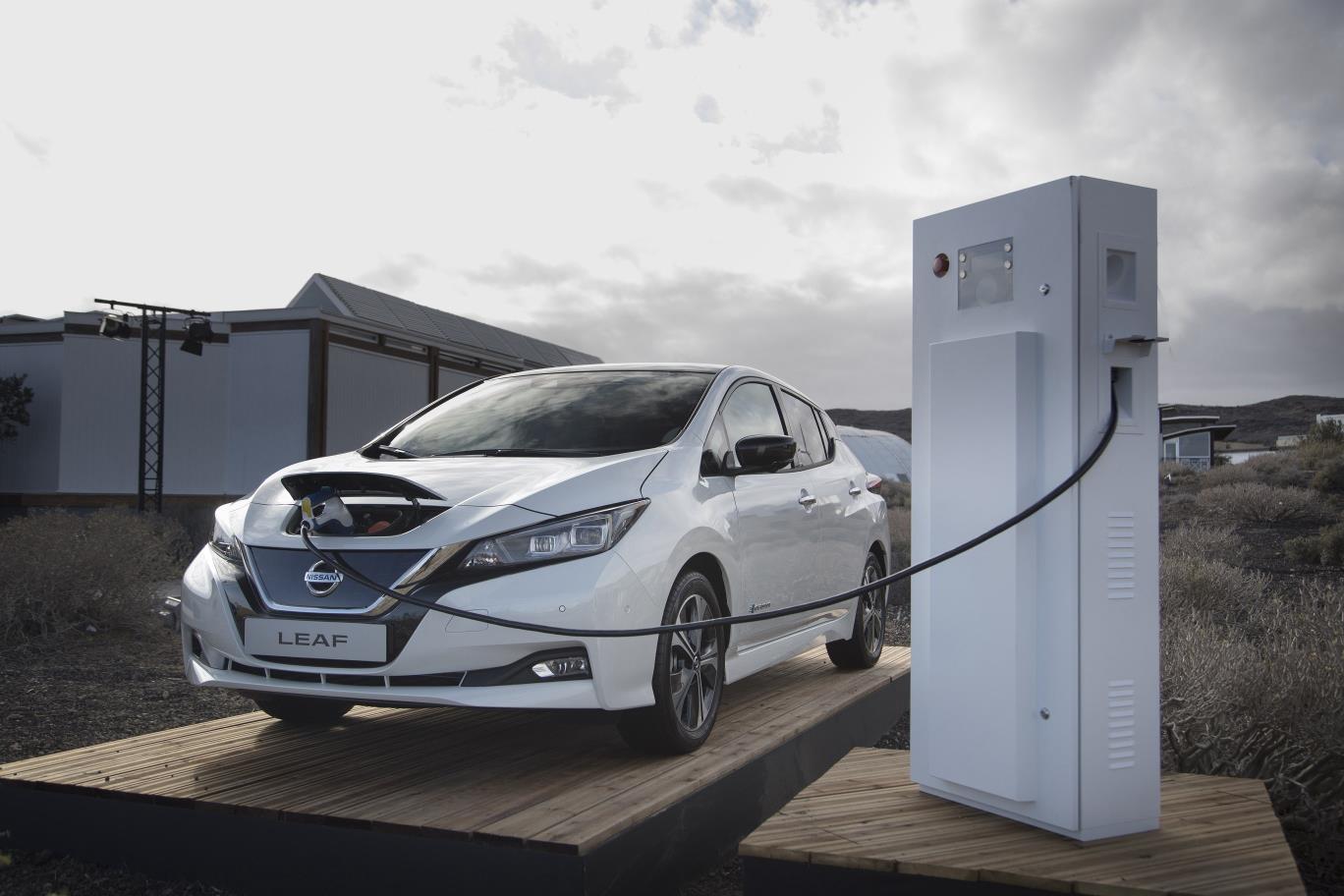
Since it mentions “1000 V2G installations” and comes with a nice picture of a 2018 LEAF plugged in to a V2G charging station Nissan’s announcement of its “e4Future” project’s successful entry in the recent Innovate UK V2G funding competition deserves an article of its very own:

2018-LEAF-V2G

Whilst it is certainly connected to the vehicle the charging station doesn’t seem to be connected to the grid! Regarding their successful bid Nissan say that:

Nissan and its partners welcome the announcement by Department for Business, Energy and Industrial Strategy minister Richard Harrington to award £9.8m for a Vehicle-to-Grid demonstrator project.

The project foundation is for a large-scale demonstrator targeting 1000 Vehicle-to-Grid (V2G) installations that will evaluate a commercial offer to electric vehicle fleet customers. The chargers will be controlled by an aggregator and data will be collected to understand the technical characteristics of vehicle to grid charging for both the vehicles and the electricity networks.

A consortium, led by Nissan, will bring expertise from across the whole Vehicle-to-Grid value chain: V2G infrastructure/aggregator provider Nuvve, the energy community represented by National Grid, two Distribution Network Operators (DNOs); UK Power Networks and Northern Powergrid, with varied grid infrastructure. The research and analysis activities will be supported by Newcastle University and Imperial College London.

Vehicle-to-Grid technology and this project will leverage Nissan’s brand commitment to Nissan Intelligent Mobility to transform the way people drive and live, creating a more exciting and sustainable future.

Once again V2G charging station manufacturers are conspicuous by their absence from the list of Nissan’s collaborators, and there is no label on the white charging station displayed above. Nissan also provide the following bullet points summarising the e4Future project:

  • In January 2018, OLEV and BEIS announced that 21 projects (8 feasibility studies, 5 collaborative research and development projects, and 8 real-world V2G trial projects) were to receive funding of £30m to develop the business proposition and core technology around V2G, and demonstrate those with large scale trials. The projects involve more than 50 industrial partners and research organisations from both the Energy and Automotive sector, marking the largest and most diverse activities on V2G in the world, and trialling more than 2700 vehicles across UK.
  • The V2G projects represent a significant step towards the transition to a low carbon transportation and a smart energy system. Allowing EVs to return energy to the Power Grid when parked and plugged for charging, will increase Grid resilience, allow for better exploitation of renewable sources and lower the cost of ownership for EV owners, leading to new business opportunities and clear advantages for EV users and energy consumers.

Amongst other things Nissan’s Managing Director of Nissan Energy at Nissan Europe, Francisco Carranza, said that:

Our EVs can be plugged into the grid and support the transmission and distribution companies in making the UK grid more sustainable and more stable. The increase of electric vehicles penetration, the introduction of more and more distributed generation and storage and the overall increase in renewable energy penetration should be done smartly.

To ensure Nissan plays a wider role in the advancement and protection of our cities, our electric V2G-ready vehicles will be used as clean mobile energy units.

Nissan has also reiterated its bold mission to offer customers free power for their EVs. V2G introduction will change the rules of the game and make energy cheaper for everyone.

The press release also contains a long list of quotes from Nissan’s collaborators on the project. Let’s take a look at this one from Myriam Neaimeh of Newcastle University:

The Government’s announcement will be a real game changer as we move towards decarbonising the grid.

This will be the first, large scale demonstration of vehicle to grid technology anywhere in the world and crucially, this project brings together all the key players for the first time – a giant of the automotive industry with energy providers, infrastructure experts and academics – so we can work together to really make this happen. It’s a really exciting time and fantastic that Newcastle University has been involved right from the beginning.

I still cannot help but wonder who will be manufacturing the all important V2G capable charging stations that will be installed as part of the e4Future project, and what de facto or international standards they will comply with?

UK Spends £30 million on V2G Technology

As we reported back in the summer:

The United Kingdom Government… pledged to pump £20 million into vehicle-to-grid technology.

After an apparently interminable wait it was announced on Twitter yesterday that:

Today a plethora of press releases have added some flesh to those bare bones. According to UK Power Networks:

UK Power Networks is part of a consortium that has won £11m government funding for four electric vehicle demonstration projects as part of a series of Vehicle to Grid (V2G) innovation bids.

Vehicle to Grid technology enables energy stored in an electric vehicle’s battery to be fed back into the electricity network at times of peak demand. By recharging when demand is low and putting energy into the electricity network when it is high, V2G helps manage the peaks and troughs, balance the network and make it more efficient.

The government is to ban the sale of all new diesel and petrol cars and vans by 2040, and it sees a smarter and more flexible electricity system as a major benefit to consumers and a key enabler to transport’s future growth.

UK Power Networks currently has more than 30,000 electric vehicles connected to our networks and by 2030 we anticipate that figure will rise to between 1.2-1.9m. Many of these electric vehicles will be V2G capable and could be used to support delivering electricity reliably and at the lowest possible cost.

The competition is funded by the Department for Business, Energy and Industrial Strategy (BEIS) and the Office for Low Emission Vehicles (OLEV) and is delivered by Innovate UK.

The four V2G projects that UK Power Networks will be taking part in are:

  • Bus2Grid: Supporting a project to turn a 30-bus garage into the first of its kind in the UK Vehicle-to-grid (V2G) bus garage.
  • e4Future: A trial on 1,000 V2G fleet vehicles
  • Beating Home: Domestic customer V2G trial involving customers in specific areas.
  • V2Street: Public charging networks with a local authority and a charge point provider. Targeted at the 60-70% of Londoners without off-street charging capability.

Note that the £20 million on offer last August has been increased to £30 million today! Perhaps that’s at least a partial explanation for the delay in the appearance of the announcement? UKPN don’t provide much detail on the four out of twenty one projects revealed so far, so let’s look a bit further afield shall we? Heading back to Twitter there’s an announcement of a new product offering and a new EV web site from Octopus Energy unsurprisingly entitled Octopus Electric Vehicles:

which was swiftly followed by another Tweet explaining that:

which put us on the trail of this press release from ChargePoint Services:

Octopus Energy today launched a new consortium to develop the first large-scale domestic trial of vehicle-to-grid (V2G) charging in the UK, following a £3 million funding injection by BEIS and OLEV delivered by InnovateUK.

Comprising Octopus Energy, Octopus Electric Vehicles, UK Power Networks, ChargePoint Services, Open Energi, Energy Saving Trust and Navigant, the consortium will roll out vehicle-to-grid charging technology to UK electric vehicle (EV) drivers this year.

The £7million project will install 135 V2G chargers in a ‘cluster’ delivery model that will facilitate research into the impact of widespread EV rollout on the UK’s electricity grid. The project will demonstrate the benefits of using domestic electric vehicle batteries to provide grid flexibility, cheaper transport and energy to homeowners, and faster decarbonisation of the UK’s power and transport sectors.

Customers will be able to discover electric vehicles, take them for a test drive and access a special V2G bundle, Octopus PowerLoop, when leasing a V2G compatible car. A two-way charger will enable the driver to charge their vehicle intelligently, using their vehicle battery to power their home during peak times or selling spare power back to the grid – creating value for the driver.

The technology could revolutionise the energy system by enabling electric vehicles to act as battery packs for the grid, helping to solve the challenge of how to harness the full potential of renewable energy whilst making sure that it is always available on demand. Evidence also shows that V2G use has the potential to increase battery life.

The ChargePoint announcement goes on to quote Octopus Electric Vehicles CEO Fiona Howarth:

Octopus Energy was founded to drive down the cost of energy to customers and the planet, and Octopus Electric Vehicles is the next phase in that mission.

There has been a lot of talk from the sidelines about how vehicle-to-grid technology will change the face of energy, but with this consortium we will be the first in the UK to actually deliver it to hundreds of households. We’re delighted to be working with this consortium of visionary companies, and proud to be backed by Innovate UK.

It sounds as though the Octopus Group are intent on competing head on with OVO Energy who previously “embraced” V2G technology:

We’re hurtling towards a place where ‘two-way’ electric car chargers can enable homeowners with electric cars to sell their energy back to the national network. It’s a smart idea when you consider that over 90% of cars are parked at any one time – which is a lot of energy just sitting there doing nothing. This technology will give you the opportunity to manage your energy your way, and potentially become energy self-sufficient, reducing everyone’s reliance on energy companies. Get solar panels fitted, then adopt vehicle to grid technology and your home could become a private mini-power station!

There are a number of other quotes too. Mark Thompson, Senior Innovation Lead at Innovate UK added:

Vehicle-to-Grid is one of the most iconic parts of the electric vehicle domain, and one that represents a great opportunity for engaging society with the energy system for win-win benefit. The Octopus V2G project is part of a creative, diverse and ambitious group of V2G projects announced today that are way ahead of anything being done currently world-wide, and give the UK a genuine competitive edge in the electrification of transport.

Alex Bamberg, Managing Director, ChargePoint Services, said:

ChargePoint Services’ GeniePoint Network continues to be at the cutting edge of delivering the smartest and most reliable electric vehicle charging network in the UK. With this consortium, we join with existing partners to enable us to provide real benefits to the end user both in terms of efficiency and reduced cost. Our investment in the GeniePoint Network and its class leading reliability is further enhanced, whilst at the same time ensuring protection and flexibility of the UK’s energy Grid.

Ian Cameron, Head of Innovation at UK Power Networks said:

Electric vehicles are effectively energy sources on wheels, so there are tremendous opportunities to explore how electricity networks can use any spare capacity in those batteries to benefit our customers.

In the future you could use your car battery to power your house or earn money by selling its spare energy back into the network at peak times, and all of this whilst ensuring you have enough energy for your next day’s commute. We’re innovating to keep our customers moving at the lowest possible cost.

Dagoberto Cedillos, Strategy and Innovation Lead at Open Energi said:

Smart charging solutions that align the needs of drivers and the electricity grid are fundamental to the future of sustainable energy and transport. In partnership with our fellow consortium members, we’re applying cutting-edge tech to help realise the enormous opportunity that is domestic V2G charging in the UK, and internationally.

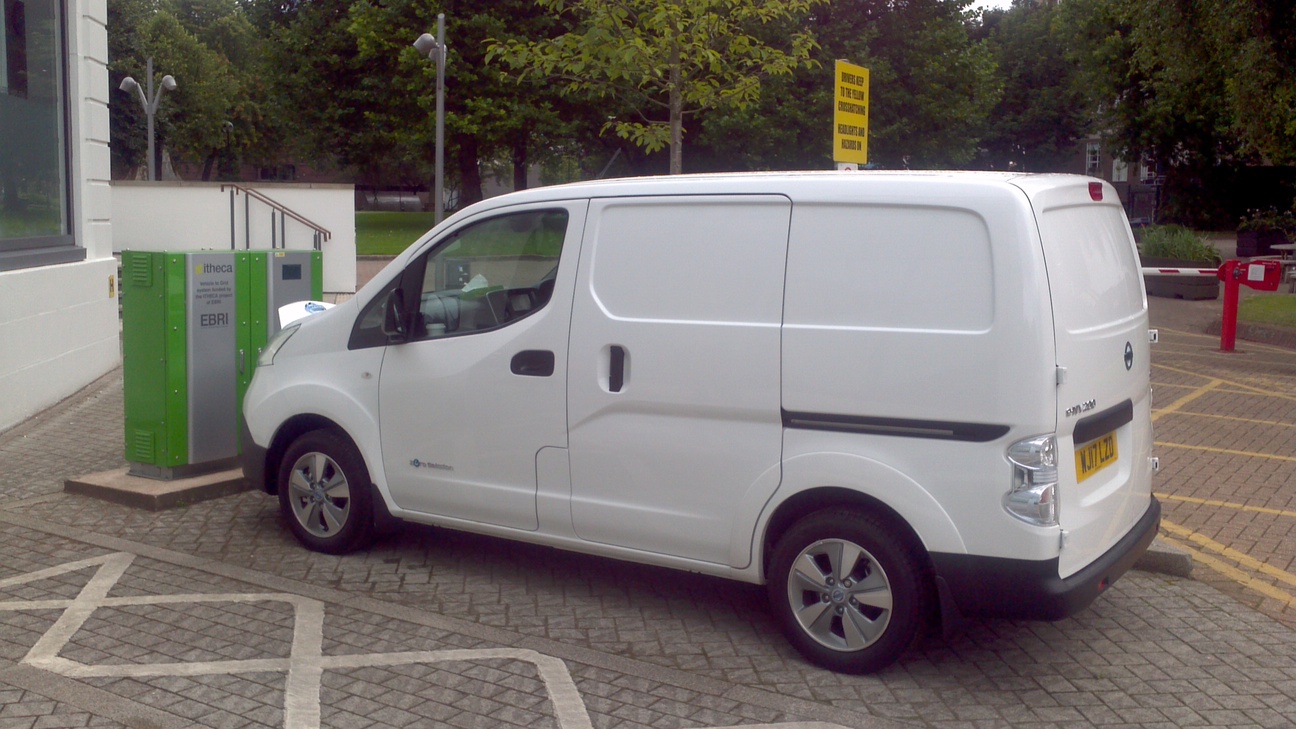
That is of course all very good news, but it raises one big question, in my mind at least. For some strange reason the Beating Home/PowerLoop (depending on which press release you prefer) consortium doesn’t seem to include a bi-directional electric vehicle charging point manufacturer and none of the assorted news releases and quotations mentions that rather essential piece of hardware, or indeed shows a picture of such equipment in action. To right that particular wrong, here’s one I prepared earlier:

A Exeter Nissan e-NV200 plugged in to the V2G charging station at EBRI

There’s also no mention of the activity that I’m currently engaged in. Developing international standards for the protocols that ChargePoint Services’s charging station management system (CSMS for short) might one day use to communicate with the unnamed electric vehicle supply equipment (EVSE for short) OEM’s V2G capable hardware installed in 135 Great British homes:

Building a Britain Fit for the Future?

The UK’s new “Industrial Strategy” was published last week. The last time we had a good look at UK plc’s strategy was three years ago, when we concluded that “it rather sounds as though ‘Storage to Grid’ (or S2G for short) is a more likely prospect here in the United Kingdom than fully fledged V2G”. So how about this year?

The foreword by Greg Clark, Secretary of State for Business,Energy and Industrial Strategy (or BEIS for short), states that:

This Industrial Strategy deliberately strengthens the five foundations of productivity: innovation, people, infrastructure, places and the business environment.

At the very least “innovation” and “infrastructure” sound like the sort of things we get up to here at V2G UK. Here’s how Gov.UK visualises our future infrastructure:

655638110

Moving on, Greg continues:

As well as setting a path to improved productivity, our Industrial Strategy sets out four areas where Britain can lead the global technological revolution. These four Grand Challenges – in artificial intelligence and big data; clean growth; the future of mobility; and meeting the needs of an ageing society – have been identified on the advice of the our leading scientists and technologists. They will be supported by investment from the Industrial Strategy Challenge Fund and matched by commercial investment.

There’s a video explaining the ISCF:

There’s even a video summarising each of the Grand Challenges. Electric vehicles get a mention in the one about mobility:

https://youtu.be/wlqQRp5vhOU

We’ve previously touched on the Government’s new “clean growth” strategy on the V2G blog, and obviously we’re inordinately interested in the “future of mobility”, so there really should be something of interest to us in the 131 page white paper. Let’s delve a little deeper shall we? Under the “infrastructure” heading we’re told that:

Our approach is to undertake a comprehensive package of measures to promote the uptake of zero emission vehicles. We have announced a further £100m for the plug-in car grant to incentivise the purchase of battery electric vehicles, and we are committing to 25 per cent of the cars in central government department fleets being electric by 2022. We are announcing an additional £200m of public investment, to be matched by private investment, to create a new £400m Charging Infrastructure Investment Fund, and we will regulate to support further expansion of the charging infrastructure network.

That certainly sounds like very good news for our Camelford electric car club project! What’s more:

After the Grenfell Review, we will update building regulations to mandate that all new residential developments must contain the enabling cabling for charge-points in the homes. We will also provide £40m to support new technologies for on-street and wireless charging.

All of which sounds like very good news for our SaMDES project which envisages installing static battery storage and V2G charging stations in homes and small businesses across the South West of England. The news gets even better! A little further on we discover:

The zero emission road transport strategy, to be published in the coming months, and work on the options for the long-term decarbonisation of heating will build on this. They will support the growth of markets for technologies that create synergies between systems, such as energy storage, smart meters, vehicle-to-grid charging and heat networks.

Will the sweet music to our ears never stop? Not for the moment at least. Next we discover that:

We are determined to tackle air pollution and support affected areas, given the significant negative impact it has on public health, the economy and the environment. We will provide £220m for a new Clean Air Fund that will allow local authorities in England with the most challenging pollution problems to help individuals and businesses adapt as measures to improve air quality are implemented. This new fund is in addition to the £255m provided to implement the Air Quality plan earlier this year.

That sounds like more potential assistance for Camelford due to the town’s Air Quality Management Area status. Moving on once more, regular readers will be aware that we are proponents of energy efficiency. “Negawatts not Megawatts!” we cried when the predecessor to BEIS pulled the plug on zero carbon homes a couple of years ago. Will they make amends now? Unfortunately not really. There are a couple of sentences to the effect that:

In the more immediate term, energy efficiency and reforms to the retail energy market will provide the opportunity to lower bills. Up to £6bn could be saved in 2030 through investment in cost effective energy saving technologies in the industrial and commercial sector.

We will encourage greater investment in energy efficiency measures and technologies, including by developing a new scheme to support investment in industrial energy efficiency, to help large businesses install measures that will cut their energy use and bills, as we as improve their productivity.

Plus there’s:

We want to support greater collaboration between councils, a more strategic approach to planning housing and infrastructure, more innovation and high quality design in new homes and creating the right conditions for new private investment.

From where I’m sat I’m afraid that’s not a patch on “the proposed 2016 increase in on-site energy efficiency standards” that bit the dust in 2015. The white paper contains some great news if you’re into decarbonising transport, as we most certainly are. However unfortunately reducing the energy wasted by the UK’s poorly insulated housing stock, both old and new, still seems to be very much on UK plc’s back burner.

It seems as though we still have a long wait in store before homes like this will be constructed as a matter of urgency:

SOLCERHouse