National Grid Launches Carbon Intensity Data Feed

In a press release last week National Grid announced that:

The company today launches innovative new software that forecasts the carbon intensity of electricity generation up to two days ahead, helping people to understand and control their energy use.

National Grid is working with Environmental Defense Fund Europe and WWF to make the software openly available to the public. WWF has used the data as the basis of an online tool which points users to the best times to turn on or turn off home appliances to minimise carbon emissions, while Environmental Defense Fund Europe are working on policy implications of having this data available and widely understood. Shifting activities like dishwasher cycles or electric vehicle charges could help relieve pressure on the energy system, reduce the need to use back-up fossil fuel plants, and potentially reduce bills for households.

Here’s how National Grid’s visualisation of their carbon intensity data looks at the moment:
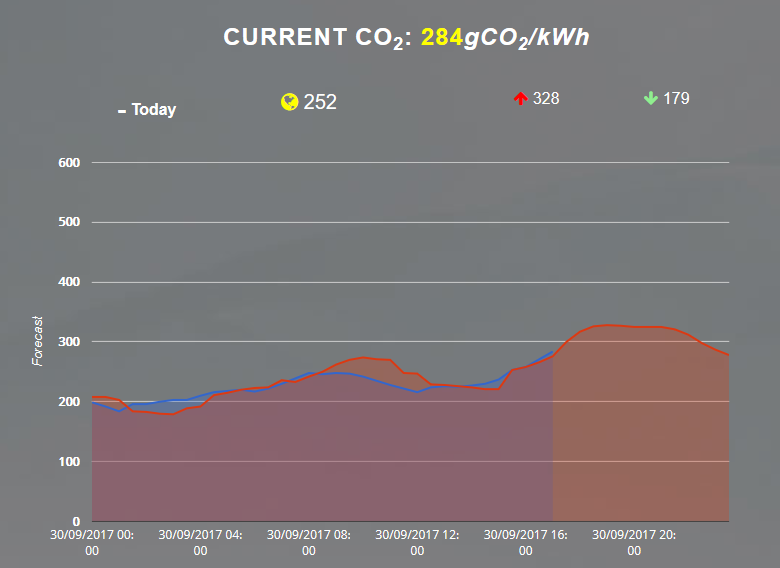
NGIntensity-20170930-1700

According to Duncan Burt, Director of the System Operator at National Grid:

We’re providing our forecast data in a format that allows technology companies to build innovative apps and software that could make a real difference to how and when people use energy. Clear and concise information that can tell you in advance when’s best to turn on the washing machine, load the dishwasher or charge your car for example, is a step in the right direction towards a low carbon future. This technology puts people at the heart of it, helping everyone to use power when it’s greenest, and likely, more cost efficient.

Simultaneously the WWF published a web page entitled “How do you make a green cup of tea” that presents the carbon intensity data in a “user friendly” fashion. According to the WWF:

Electricity is changing in the 21st century. Coal is being phased out and renewable energy sources like wind and solar now make up a quarter of our electricity.

This means that the greenness of our electricity now varies throughout the day. When it’s sunny and windy, we’ve got more green power. When it’s overcast and calm, we’ve got more fossil fuels online.

This new forecasting tool shows you what the greenest and dirtiest times of day will be up to two days ahead. This can help people plan their energy use, switching things on when energy is green and off when it’s not.

Being flexible with our energy use boosts our energy security and cuts carbon emissions by reducing the need for back-up fossil fuel generation. It could potentially save people money as well if they’re on time of use tariffs.

So if you want to make a green cup of tea, check out our forecast to find the greenest time of day to stick the kettle on.

Here’s how that forecast looks at the moment:
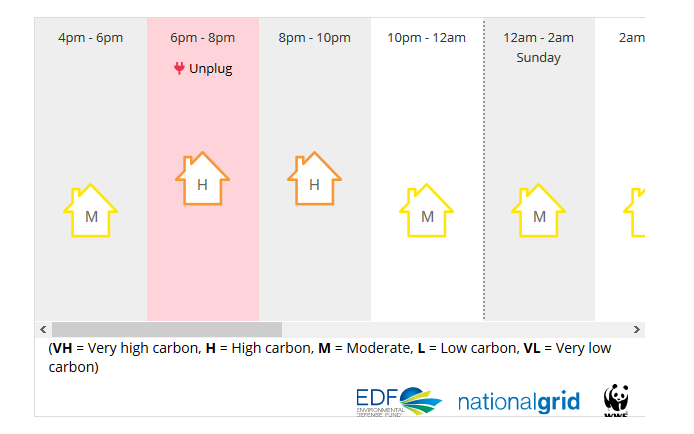
WWFIntensity-20170930-1700

Apart from the assorted press releases about the carbon intensity API there’s also a blog post from National Grid:

Working with WWF and Environmental Defense Fund Europe to finesse the science, we agreed to make the data that sits behind the forecast publicly available. The aim is to see tech developers creating consumer-friendly apps that can tell the public, in advance, when electricity generation is expected to be cleaner and greener, and more likely cost efficient.

The new software was a good idea hatched at a GB System Operator Hackathon and is yet another example of how our System Operator continues to be at the forefront of the energy revolution.

This new tool is a credit to the team in Wokingham – led by James Kelloway and his team members Alasdair Bruce and Lyndon Ruff, along with the sponsorship and guidance of Director of System Operations Duncan Burt and support from Corporate Affairs.

Not to be outdone the Met Office has also written another blog post on the topic:

Using hourly weather data from the Met Office and combining it with historical data from the grid, National Grid are able to forecast demand for electricity and also identify the contribution from renewable energy flowing into the grid. Using this information, they can forecast the carbon output of the grid over a 48-hour period, and identify the periods of lowest carbon output and highest carbon output. In other words, how green the grid will be during that period.

Using this information, the partners involved in the project hope that electricity consumers across Great Britain will be able to plan their electricity use around periods of high availability for renewable energy, reducing carbon output.

Patrick Sachon, Met Office Business Group Leader for Energy said: “The green energy forecast is a great example of innovative re-use of Met Office data. As a scientific organisation we encourage the re-use of our data, particularly if it can be applied to develop a deeper understanding of the interrelation between weather and something that is so integral to our everyday lives such energy.”

Down here at V2G UK we like to think of ourselves as an “innovative technology company” so we’ve already started using the new API. It’s very easy to use if you’ve ever written a JSON parser before, which fortunately we have. Here’s how the raw data for today looks as decoded by our trusty Raspberry Pi:
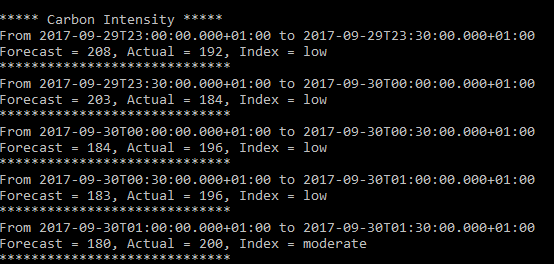
CarbonIntensity-20170930

We haven’t persuaded our Pi to produce any pretty pictures as yet, so for now here’s National Grid’s forecast for tomorrow, which is forecast by the Met Office to be rather wet and windy:
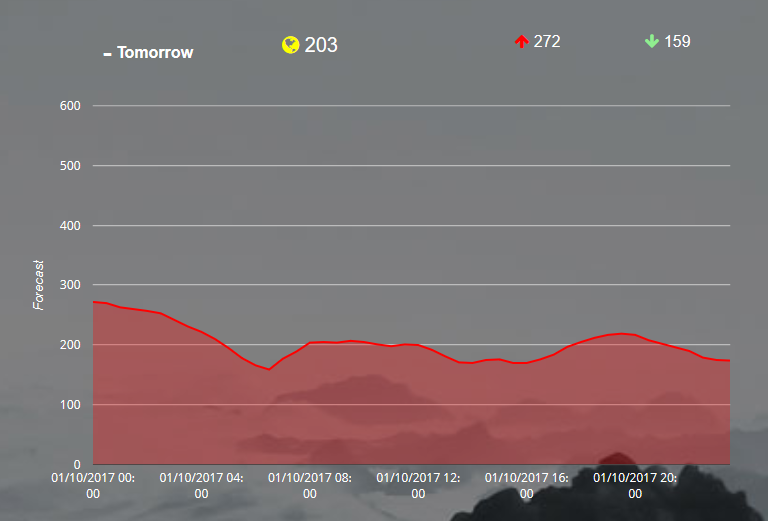
NGIntensity-20170930+24h

Having slaved over a hot keyboard typing in this article I could really do with a nice hot cup of tea now, but it looks as though now is not a very good time. Wouldn’t it be a good idea if I could boil a kettle using electrical energy obtained from my very own battery instead of from the local grid? Another good idea would be if, much like the Met Office already do for the weather, National Grid could supply us with a carbon intensity forecast for Camelford as well as for the UK as a whole.

[Edit – October 1st]

Our experimental application is now producing simple graphs. If you’d like to experiment along similar lines we’ve uploaded our Java source code to GitHub. For further details see our new project page:

“National Grid Carbon Intensity API“

Evangelising V2G in South West England

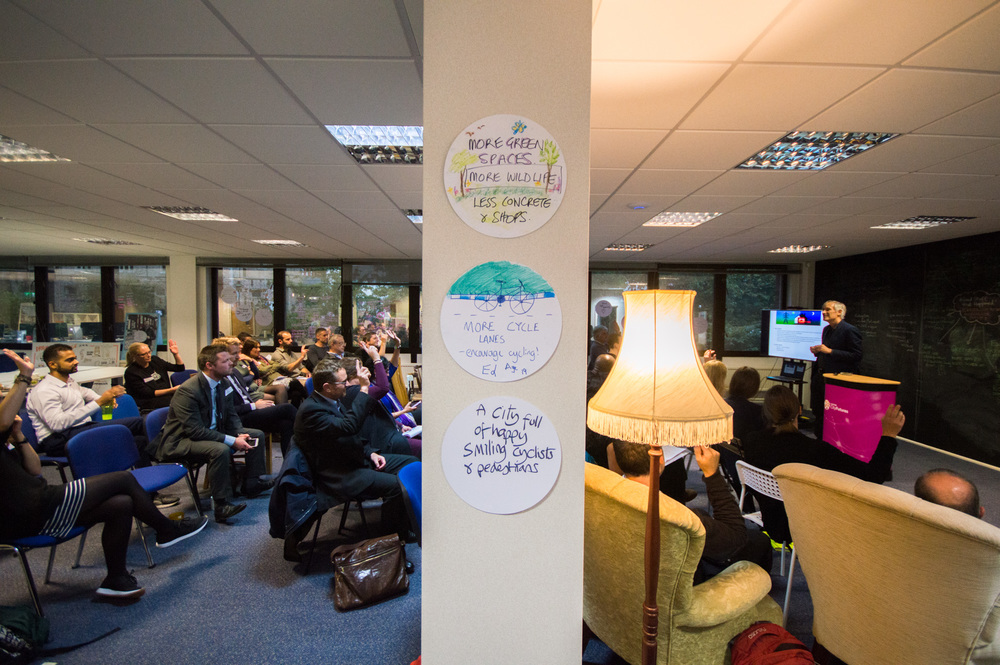
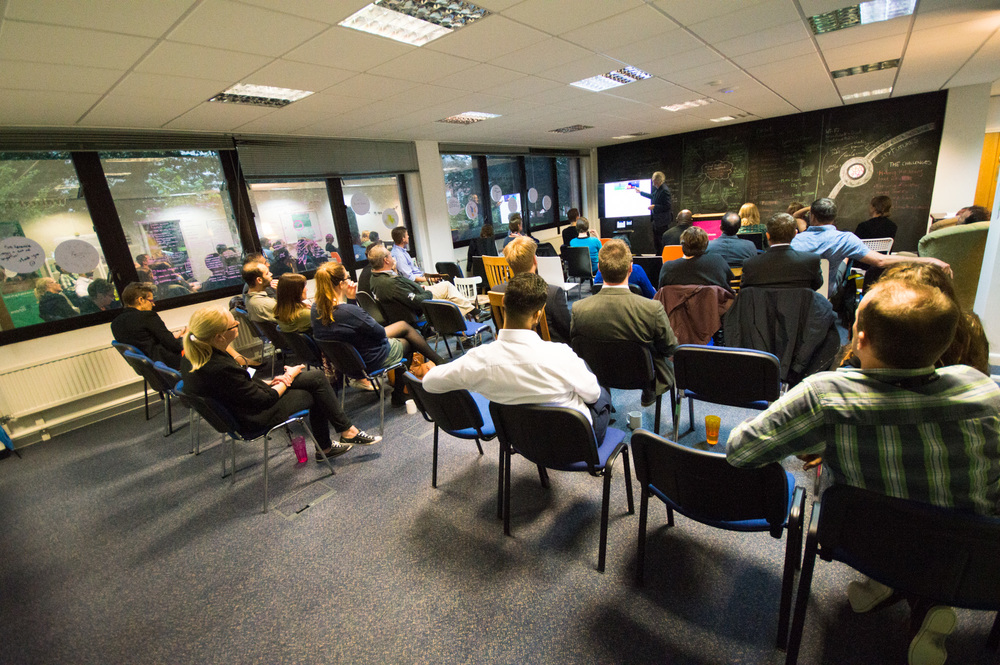
I’ve been out on the road this week, explaining the potential benefits of vehicle-to-grid technology to a variety of audiences. First up on Wednesday evening was the “Autumn Connect” event at Exeter City Futures, where I made a presentation entitled “V2G – How to simultaneously store energy and reduce congestion.”. I had the luxury of being allowed 5 minutes to present an “elevator pitch” on that subject to the assembled throng:

Image Autumn Connect 2017 (for web)_013 (1)

Here’s an expanded version of the PowerPoint slide deck I used. They all had Kasia’s “artist’s impression” of V2G in action at the top, so I’ll omit that part here. The first two slides are taken from a 2 minute pitch I presented at the Met Office on Thursday (see below) and have to conform to a template provided by the Knowledge Transfer Network. Hence:

V2G Limited

  • A small “smart grid” consultancy located amongst the wind and solar “farms” of North Cornwall
  • The “smart grid” is actually the “internet of big things”!
  • Producing embedded firmware for 35 years
  • Under a previous name provided multi-drop fleet routing interfaced to SAP for a FTSE 250 company
  • Long experience in electricity distribution. The Lucy Switchgear Gemini RTU firmware is our baby
  • Whilst we understand hardware our expertise is in designing software/firmware
  • Evangelising Vehicle-to-Grid technology for 5 years

I trust that is all self explanatory?! If not please see below or ask questions in the space made available for that purpose in the comments section at the bottom.

I always like to encourage some audience participation at these events, and Exeter City Futures delivered in spades! For the first time ever I didn’t need to blow my own bidirectional trumpet:

BiDirectionalTrumpet-Horiz

Timekeeper Lyndsey volunteered to blow the V2G trumpet for me, though ultimately it informed me that my time was up before I even managed to display the last slide, so make sure to read all about that below!

To make my “internet of big things” point I waved my trusty Raspberry Pi 3B at the audience. Here is what it looks like close up:

RasPi3B-Horiz

Dr. Sarah Ward from the University of Exeter correctly, if somewhat hesitantly, identified the mystery object. Now I’ve been programming the firmware (i.e. the software inside the hardware) in those sorts of devices for a very long time. 35 years ago single board computers were a lot slower and a lot bigger, but they still did the same sort of job. In those days they didn’t have USB ports like the Pi. Instead they had serial ports that conformed to the RS-232 standard. Getting two devices to talk to each other was always “interesting”!

I asked the audience to raise their hands if they’d previously heard of the “smart grid”. Quite a lot had:

Image Autumn Connect 2017 (for web)_012 (1)

Then I asked who had heard of the “internet of things”. Slightly more hands were raised. The point being that hardware a lot like the Raspberry Pi is at the heart of your smartphone, at the heart of the Smart Grid and (albeit in a smaller form factor) at the heart of the Internet of Things. The main difference being that the smart grid has been around quite a lot longer than the IoT! A point that some of my audience at the Met Office on Thursday seemed to agree with since they nodded their heads vigorously at that juncture!

Moving on to slide 2:

WP-banner-V2G

1. Our project idea

  • See the infographic above
  • North Cornwall is ideal!
  • Charge EVs on sunny lunchtimes
2. What’s innovative about it?

  • Nobody’s done it yet
  • On all sorts of levels!
  • Price signals / regulation?
3. The services we can offer?

  • Vast systems integration experience
  • Vast enthusiasm
  • AI for Energy Systems
4. The partners/services we seek?

  • Kite marked V2G hardware
  • An all electric car club
  • A suitable site

I asked the audience if it was obvious what the infographic represented. I was subsequently informed that a hand had gone up in the far corner of the room, but I didn’t notice at the time. To explain, imagine a conventional home with solar PV panels on the roof exporting excess electricity to the local distribution grid. Now add some static batteries in the utility room or the garage. Store any excess “free” energy generated when the sun is shining in that battery. When the household electric vehicle returns from the daily commute charge it up from the battery rather than from the mains, since by now the sun will be low in the sky or already below the horizon in winter.

If you have that basic hardware setup available then there’s lots of other things you can do with it! How about buying electricity from the grid when it’s cheap and storing it in your static and/or mobile batteries. Then just for starters you could sell it back to the grid when electricity’s more expensive? There are other possibilities too, which brings me on to slide 3:

WPD-NoCapacity

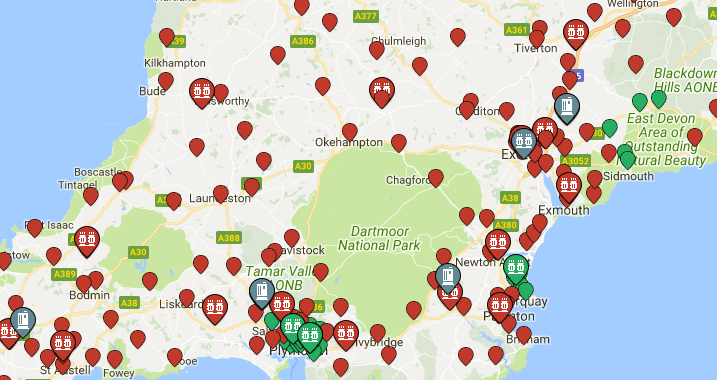
That’s a portion of Western Power Distribution‘s network constraint map. Note that most of Devon & Cornwall is plastered in red due to all the intermittent renewable electricity generation we have down here. One day (hopefully!) soon you’ll be able to earn money by allowing WPD to charge and discharge your batteries when it suits them, in order to help them cope with the stresses that intermittent generation can subject their electricity distribution grid to. The current fly in that particular pot of ointment are the rules and regulations currently enforced by Ofgem, which make it nigh on impossible for neighbouring energy “prosumers” to trade electricity with each other. Highlighting bullet point 2(c) I idly enquired if anybody else in the room “has had problems with Ofgem’s red tape?”. Not a single hand was raised in protest.

As regular readers will be aware, the town of Camelford in North Cornwall is an Air Quality Management Area (AQMA for short). Much like the centre of Exeter, the air quality in the centre of Camelford is fairly foul due to the noxious emissions of all the diesel engines that travel slowly through it. Electric vehicles can help with that, since they have no exhaust pipes and by and large use regenerative braking rather than rubbing dust off brake pads when they want to slow down. Hence slide 4 consisted of pictures of V2G capable examples of such vehicles, plus an image of the xStorage static battery storage device being produced from ex Nissan LEAF batteries by Eaton. An electric car club in Camelford and/or Exeter would be a small step along the road to reducing congestion and air pollution in both town and city centres, whilst V2G enabled vehicles in the fleet would also provide a mobile energy storage facility!

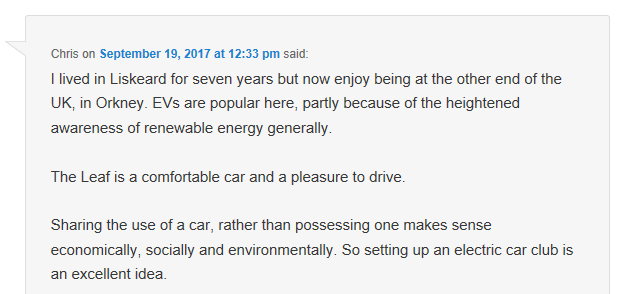
That’s about as far as I got on Wednesday before Lyndsey blew the metaphorical whistle on me, so I hastily concluded by mentioning this apposite comment from blog reader Chris:

Chris-CarClub

It seems that struck a chord with at least one member of the audience. In the first image above you can see the back of Mark Hodgson’s head, if you know where to look. Mark’s Co-Cars car club certainly isn’t 100% electric, but it has just installed a couple of EV charging points in the Exeter area. That would seem to fit the bill for my bullet point 4(b) quite nicely?

Here’s the final slide I never had a chance to mention on Wednesday evening:

Of course solar PV isn’t the only form of RE generation, and batteries aren’t the only way of storing energy, at home or in the office. There’s also heat, and cold, and eddi & zappi: http://myenergi.uk/products/

MyEnergi

What do you suppose that’s all about? To help answer that question let’s move on to Thursday and my trip to the Met Office. At least the previous evening’s rain had stopped:

2017-09-21_16-12-28_189

I was presenting at a briefing event for Innovate UK’s Emerging and Enabling Technologies competition. I got the feeling that since this was (one of?) the first KTN briefing(s) held in Exeter most delegates weren’t making the most of the KTN’s “Meeting Mojo” facility. Anybody who ventured in there would have discovered that I was hoping to meet:

Partners who appreciate that the “Smart grid” is a subset of “The internet of things”, and predates the IoT!

whilst offering a potential consortium:

Smart Grid Consultancy: 5 years vehicle-to-grid, 15 years electricity distribution, 35 years system integration. Now with added blockchain!

Shortly before the event proper got underway I explained to the KTN’s Simon Yarwood, MC for the pitch session, that although I only had 2 slides in my deck I was actually representing 2 companies from a nascent V2G consortium. He graciously allowed me to overrun my allotted 2 minutes, and here’s what I added to the top two slides above:

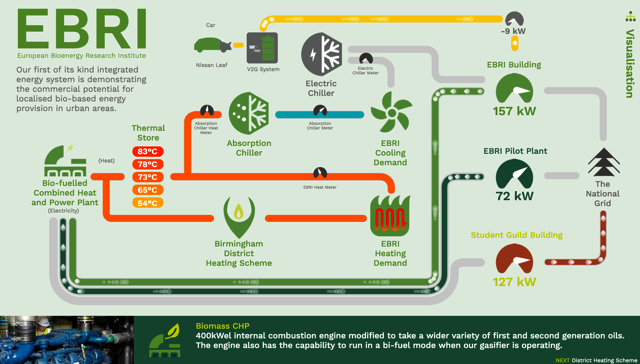
EBRI-Live-2017-09-23-0924

That’s a still from a web page that provides real time updates on the state of the building management system at the European Bioenergy Research Institute at Aston University:

https://youtu.be/89RDjp1E3W4

As you can see at the top of that page, a bidirectional charging station with associated static storage connected to a Nissan LEAF pool car is employed at EBRI as both an energy source and sink, in what is the UK’s first V2x pilot project. Strictly speaking it’s vehicle to building (V2B) rather than fully fledged V2G, but as far as the charging station itself is concerned that is of no consequence.

The BMS software at EBRI is now being further developed by Grid Edge Ltd. who assure me that it utilises various machine learning methods using a variety of inputs including weather forecasts, energy usage history, WiFi connections and football match schedules to optimise the overall energy use profile of the building and the assets within. As well as a modest amount of battery storage the EBRI building also includes energy storage in the form of large tanks of both hot and cold water in the basement, as indicated on the real time infographic shown above. That’s where the MyEnergi system depicted in slide 5 above comes in. It doesn’t use complex prediction or optimisation software, but it does attempt to sensibly direct the electricity generated by domestic solar PV panels to charge your EV, heat up your hot water, or if all else fails export some to the grid.

Q.E.D?

An Electric Car Club for Camelford?

We think the answer to the question posed in our title for today is YES! Here’s one reason:

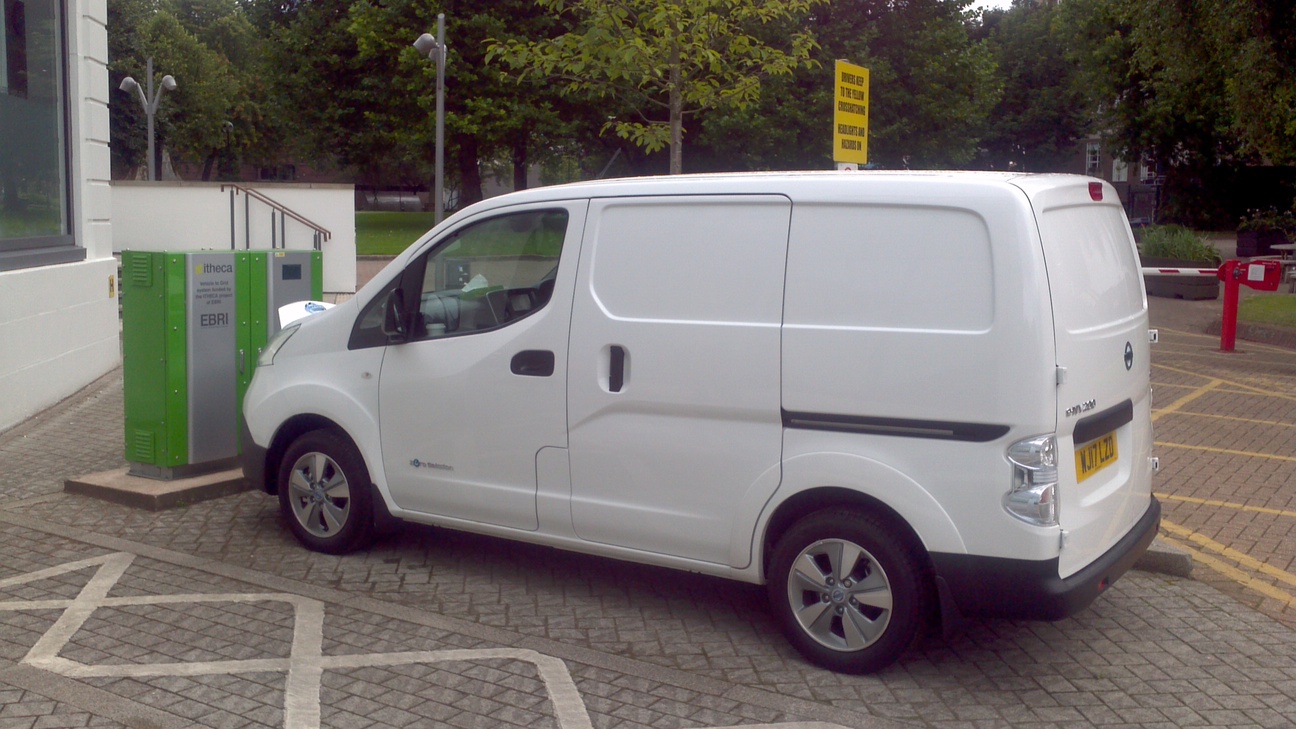
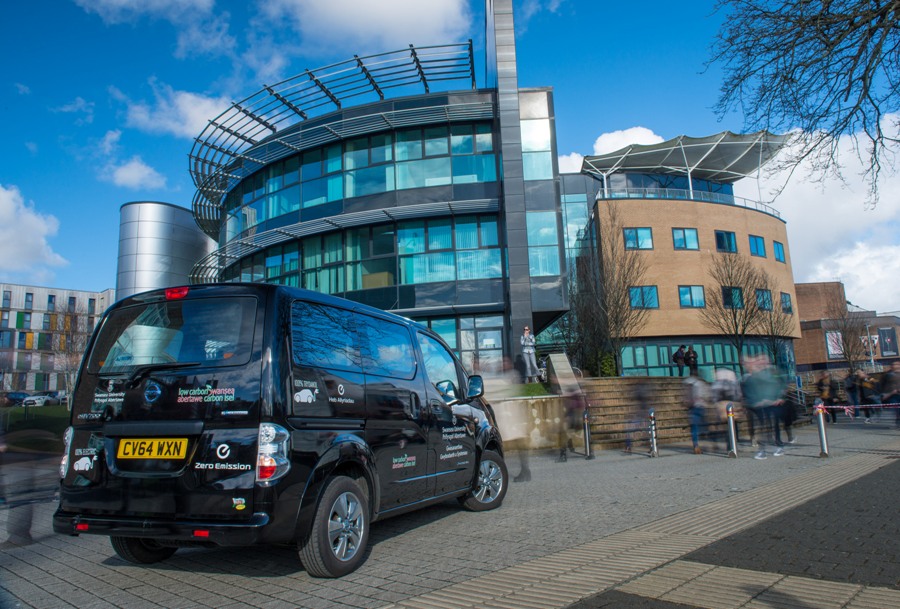
Nissan recently announced the new 2018 edition of their popular LEAF saloon, with increased range over the previous model thanks to a 40 kWh battery pack. Over the weekend a “leak” revealed that a 40 kWh version of Nissan’s e-NV200 van is on the way. That will provide a big increase in range over the e-NV200’s current 24 kWh battery pack, and make the “van” a much more realistic choice for a wide variety of small businesses. Note also that there is an MPV/taxi version of the e-NV200 known as the “Combi”, which I have taken a ride in over the North Sea in the Netherlands:

2015-06-09_11-46-07_453

That means we’re really talking about an electric vehicle club, not a mere “car” club. That’s one way of implementing the concept known as “Mobility as a Service” (or MaaS for short).

Here’s another very good reason to try and put more electric vehicles on the streets of Camelford:

Earlier this year Camelford was declared an Air Quality Management Area (AQMA for short). According to the Town Council web site:

Cllr Claire Hewlett… said “I’m very pleased that Camelford has now been declared an air quality management area, as it means that Cornwall Council and Defra have offically acknowledged we have an air quality problem. The Clean Air Group have been working closely with Cornwall Council’s environmental protection team to get this far. Talking to people in town today, everyone is excited that something might actually happen.”

As part of the consultation, the council asked for residents and businesses to convey their ideas for improving air quality, and some of these will be investigated as part of a range of options before the final plan is published.

Now electric vehicles improve air quality in town and city centres by reducing nitrogen oxide emissions and particulates from exhaust pipes and brake dust, so here’s our idea.

Apart from improving air quality an electric vehicle club in Camelford would also reduce the number of cars sitting unused in garages and car parks for much of the time. One car club vehicle can result in 10-20 private cars being taken off the road. If you don’t possess a car you’re more likely to indulge in healthier alternatives such as walking or cycling for short journeys. In rural areas with poor public transport car clubs allow people who could never afford a car of their own to make occasional longer trips they would otherwise be unable to, except perhaps by taxi. For more on the benefits of car clubs see:

Obviously a few extra EVs in and around Camelford won’t initially result in a vast improvement in air quality if lots of diesel engines keep running whilst queueing along the A39, but you have to start somewhere! The same principle applies to charging infrastructure. Camelford has the advantage of already possessing a rapid charging point in the Churchfields car park, but additional lower power EV charging points would need to be installed. If that could be achieved then a 100% electric car club would allow people to experiment with driving an electric vehicle at very little cost, and thereby discover the many benefits of EVs for themselves. Assuming that hurdle can be overcome we’d like to perform a consultation of our own.

Please take our short survey and let us know your opinion about which sort of vehicle should be the first one to be made available to Camelford residents:

[yop_poll id=”1″]


Here are those options in more detail:

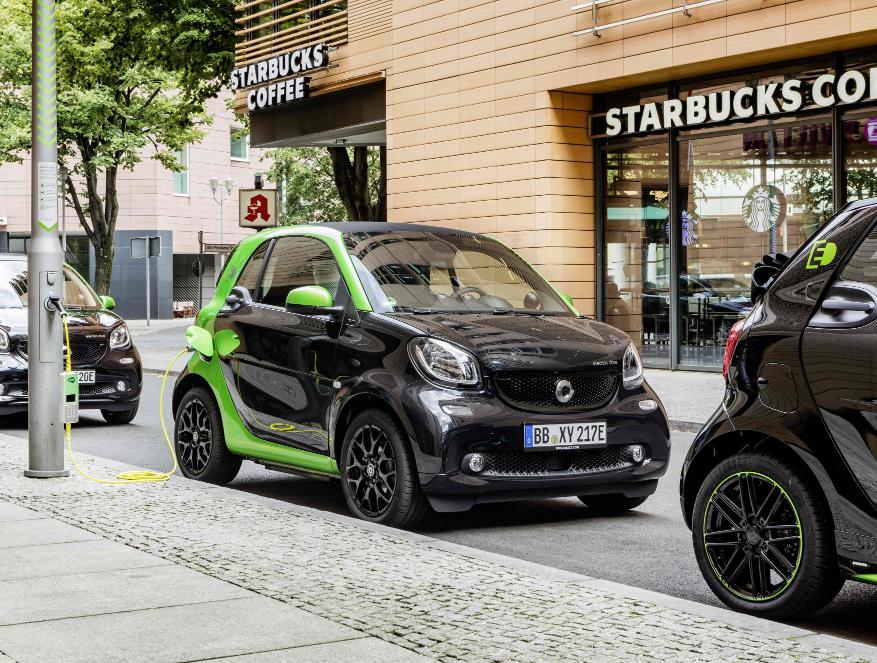
smart fortwo:

Smart-e42

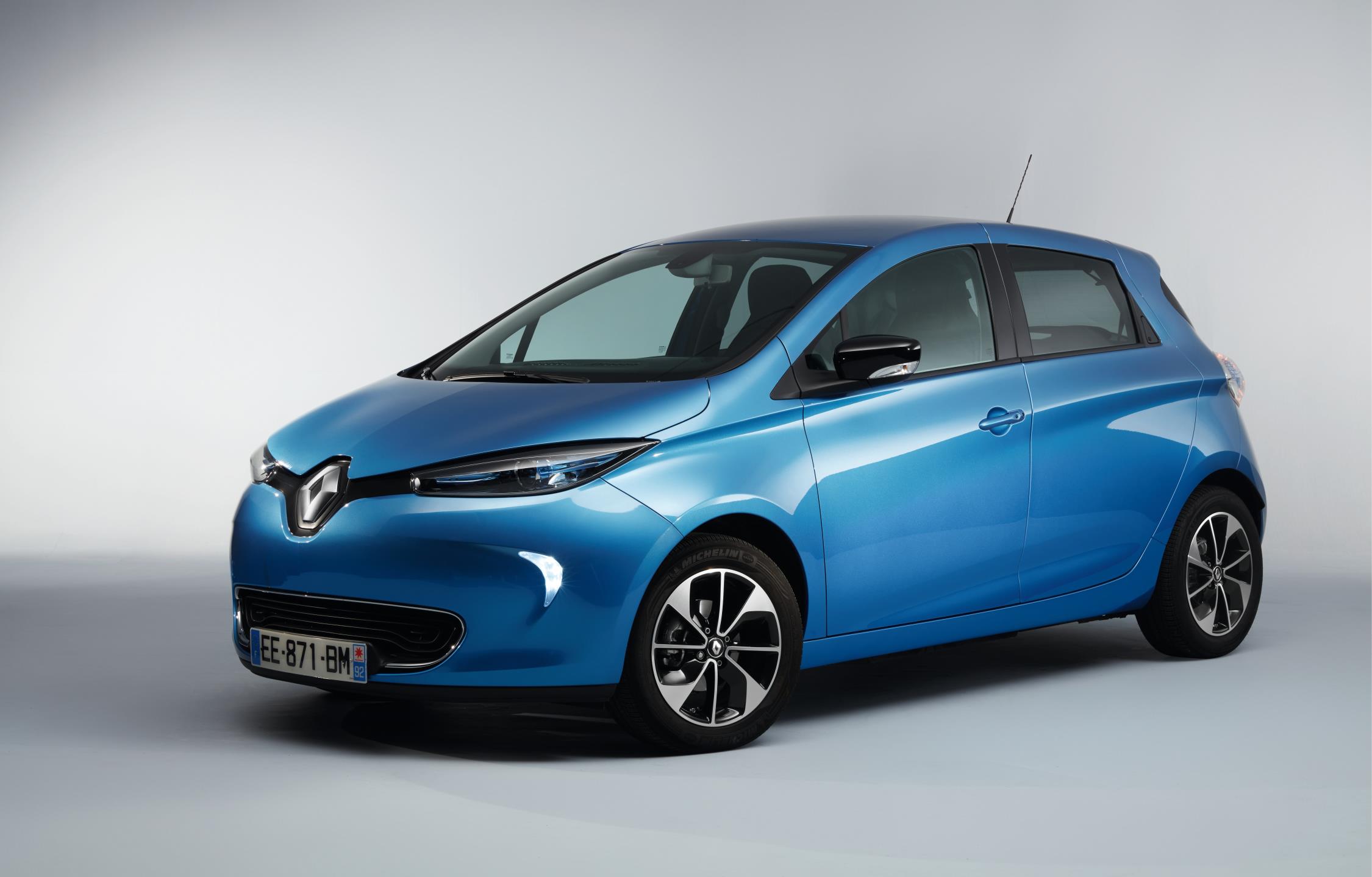
Renault ZOE:

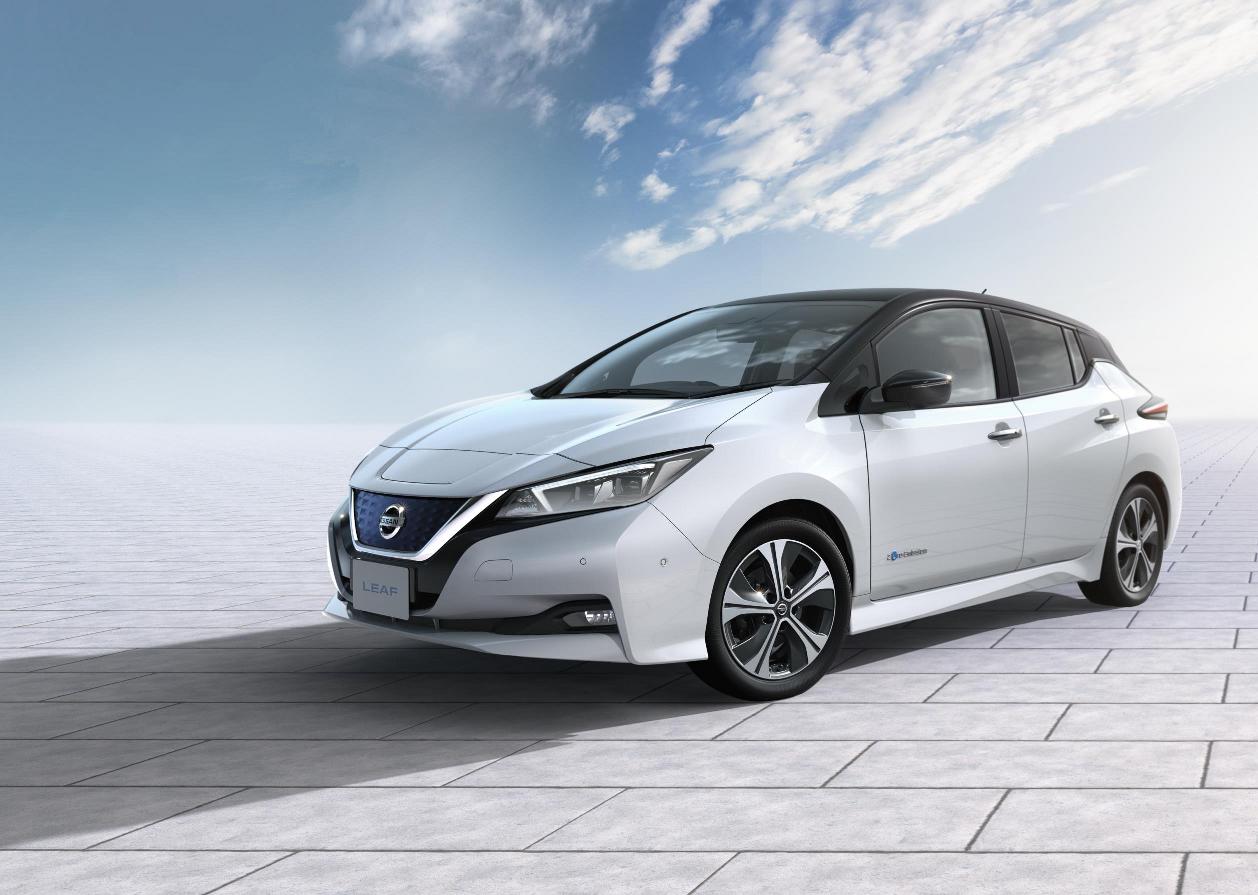
Nissan LEAF:

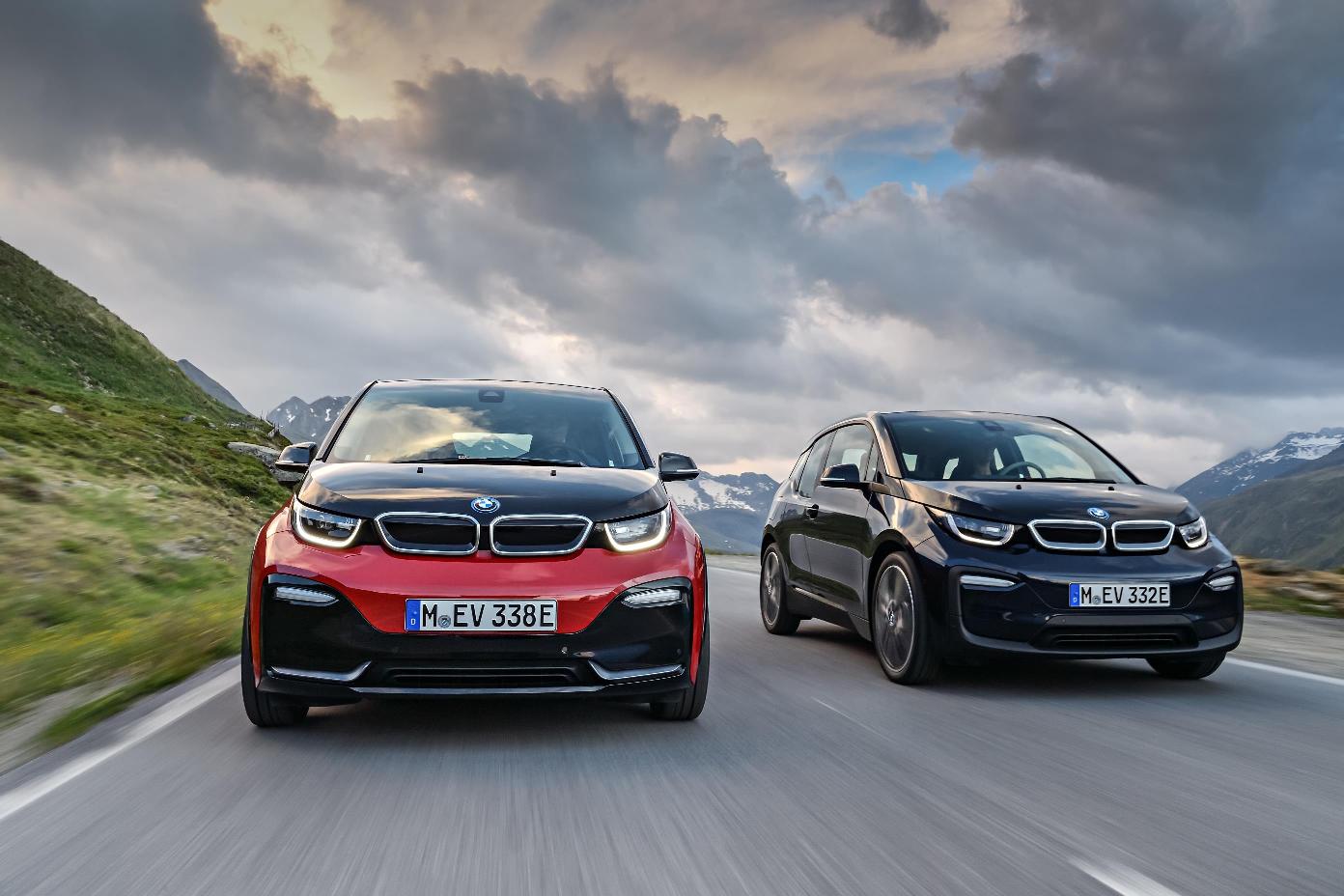
BMW i3:

Mitsubishi Outlander PHEV 4×4:

Nissan e-NV200 Van:

Nissan e-NV200 Combi:

Please also feel free to elaborate on the reason for your selection in the space provided for that purpose below.

Hurricane Irma Power Outages

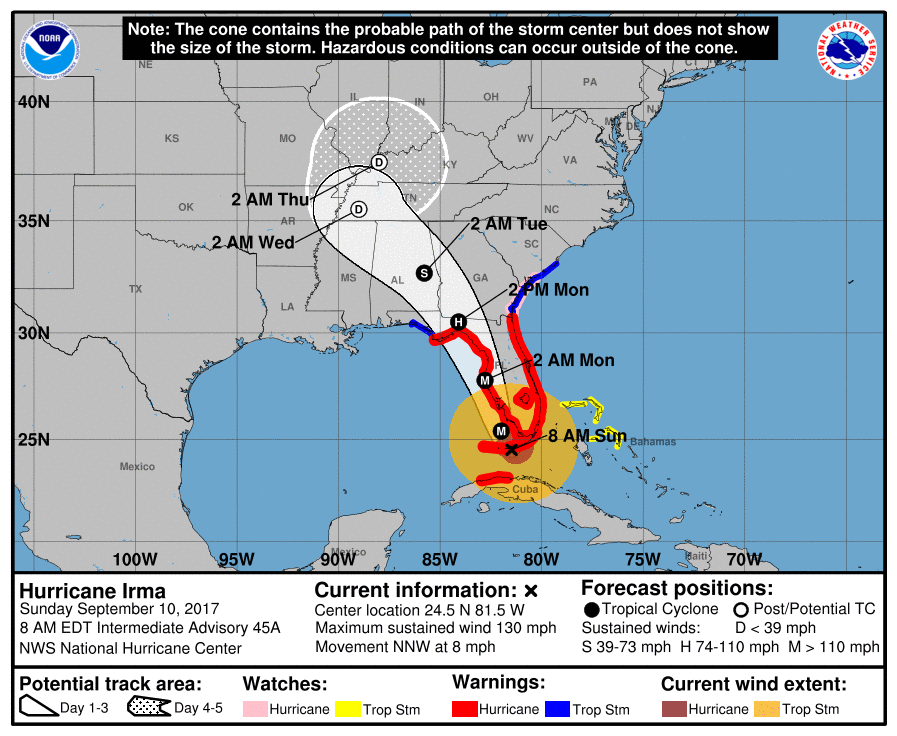
The power outages in Texas caused by the recent passage of Hurricane Harvey haven’t all been repaired yet. Now a whole lot more people next door in Florida are finding themselves without electricity thanks to the arrival of Hurricane Irma. According to the latest update on Irma from the United States’ National Hurricane Center:

The center of Hurricane Irma made landfall at Cudjoe Key in the
lower Florida Keys at 9:10 am EDT. A gust to 106 mph (171 km/h)
was just reported at the National Key Deer Refuge in Big Pine Key.

SUMMARY OF 910 AM EDT…1310 UTC…INFORMATION
———————————————-
LOCATION…24.7N 81.5W
ABOUT 20 MI…30 KM ENE OF KEY WEST FLORIDA
MAXIMUM SUSTAINED WINDS…130 MPH…215 KM/H
PRESENT MOVEMENT…NNW OR 330 DEGREES AT 8 MPH…13 KM/H
MINIMUM CENTRAL PRESSURE…929 MB…27.43 INCHES

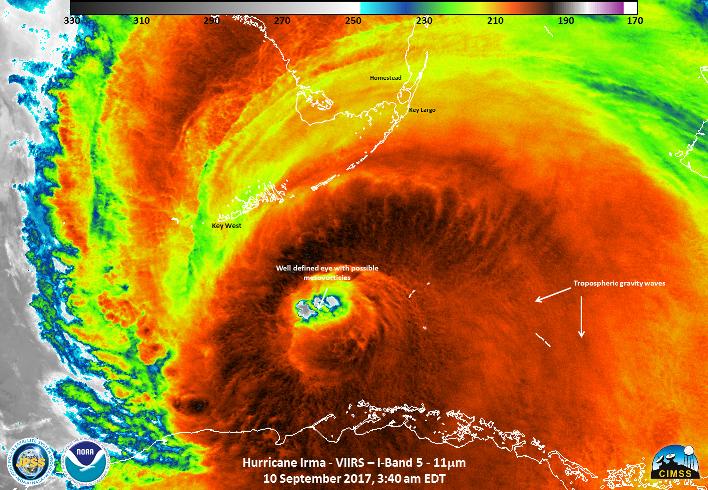
Here’s how Irma looked from the Suomi satellite whilst crossing the Straits of Florida:

and here’s a NOAA video showing Irma making landfall at Cudjoe Key:

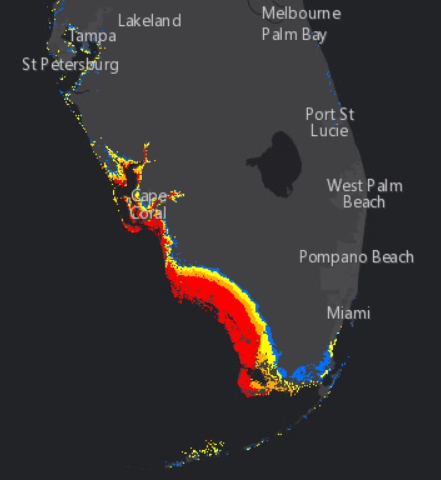
This is the National Hurricane Center’s storm surge forecast for the next three days:

The red area represents a greater than 10% chance of a surge of nine feet and over. Finally, for the moment at least, here’s Irma’s current forecast track from slightly earlier in the day:

Already over 750,000 premises across Florida are without electric power.


[Edit – September 11th]

Here’s a video from ABC about the effects of Hurricane Irma on Florida’s electricity distribution infrastructure:

Another video in which Rob Gould of Florida Power and Light says:

What we will see on the west coast is a wholesale rebuild of our electric grid.

At 9 AM this morning British Summer time the lights have started going out in Georgia, and over 4.5 million premises across Florida are without electric power.


[Edit – September 11th PM]

Florida Governor Rick Scott reports on the impact of what is now Tropical Storm Irma:

There are now over 6.5 million premises across Florida, Georgia and the Carolinas without electric power.

2018 Nissan LEAF Revealed

The speculation is over. The new Nissan LEAF has been revealed. Here’s a picture of it:

and here’s a video showing it in action:

According to the Nissan press release:

The Nissan LEAF has been completely reinvented, combining greater range with a dynamic new design and advanced technologies*, representing Nissan’s technological leadership.

“The new Nissan LEAF drives Nissan Intelligent Mobility, which is the core brand strategy for Nissan’s future,” said Hiroto Saikawa, president and chief executive officer of Nissan. “The new Nissan LEAF, with its improved range, combined with the evolution of autonomous drive technology such as ProPILOT Park, and the simple operation of the e-Pedal, strengthens Nissan’s EV leadership as well as the expansion of EVs globally. It also has core strengths that will be embodied by future Nissan models.”

Although the main press release doesn’t mention the fact the new LEAF does of course still incorporate V2G technology. However another press release does point out that:

Nissan’s pioneering vision of the potential of electric vehicles doesn’t stop at powering the new Nissan LEAF. The car’s batteries can also be used as mobile energy devices.

Vehicle-to-Grid (V2G) technology combines two-way charging allowing electric vehicles to be fully integrated into the electricity grid. It helps improve the capability to handle non-programmable renewable energy flows, making renewable sources even more widely integrated and affordable. The system works by allowing Nissan EV owners to connect to the grid to play an active role in grid services, while providing the opportunity for an alternate source of income. Once scaled up, the V2G technology will be a game-changer for owners of Nissan electric vehicles as they become active participants in the energy market.

Working towards a more sustainable society means making better choices every day. xStorage, energy storage system, draws on the collective experience of the industry’s best to make home energy consumption more efficient and more sustainable. xStorage Home stores energy at the most economical times of the day while controlling how and when that energy is put to use, saving customers money and improving the entire energy system. It seamlessly integrates all the hardware and software needed to manage and store all of the energy the home needs in a single unit. Used to provide Grid services, xStorage Home could charge from the grid or discharge to the grid in order to generate the flexibility needed to further increase the usage of renewable energy.

Yet another press release points out that:

The new Nissan LEAF links drivers, vehicles and communities through the user-friendly NissanConnect feature and systems that share power between electric vehicles and homes, buildings and power grids.

Using vehicle-to-home systems, the battery makes it possible to store surplus solar power during the daytime and then use it to help power the home in the evening. The customer can also recharge the battery in the middle of the night, when prices are lowest in some markets, and then use the electricity during the day to reduce energy costs.

All this is of course music to our ears at V2G UK, but there is still a fly in our ointment. When will UK owners of Nissan electric vehicles be able to play an active role in grid services by becoming active participants in our antiquated energy markets?

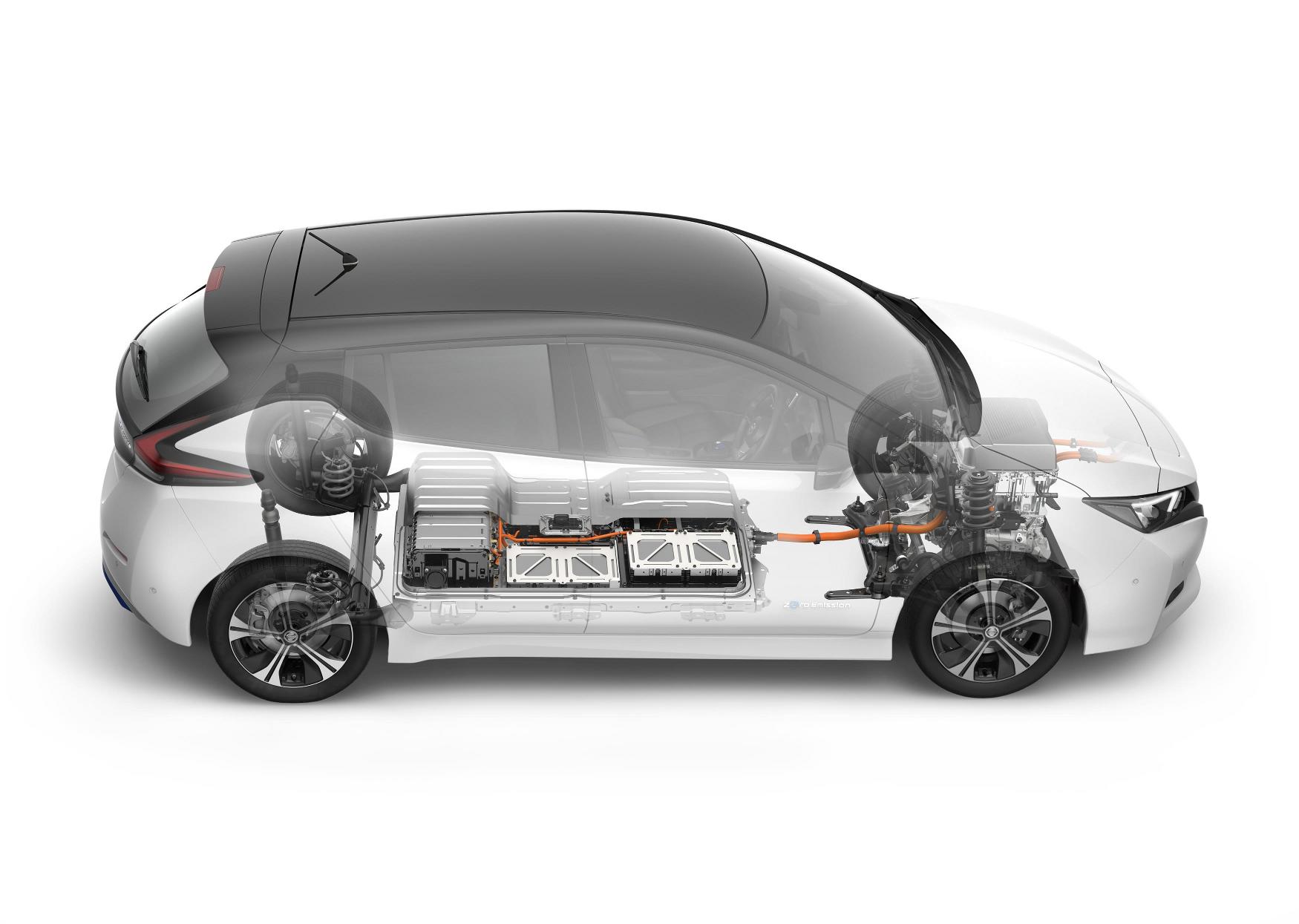
And what of the new LEAF battery pack? Here’s a picture of that:

According to the main press release once again:

The new Nissan LEAF offers a range of 400 km (Japan JC08 cycle**), allowing drivers to enjoy a safer and longer journey. The new e-powertrain gives the new Nissan LEAF 110 kW of power output and 320 Nm of torque, improving acceleration and driver enjoyment.

** 150 miles with EPA, 380 km with NEDC, both subject to homologation.

For customers who want more excitement and performance, Nissan will also offer a version with more power and longer range at a higher price in 2018 (timing may vary by market).

So it’s 40 kWh in the short term then, and perhaps the rumoured 60 kWh in the not too distant future?

The new Nissan LEAF will go on sale Oct. 2 in Japan. The model is slated for deliveries in January 2018 in the U.S., Canada and Europe.

Now I cannot help but wonder when Nissan will announce a 40 kWh version of the e-NV200. I also cannot help but wonder whether UK energy markets will get a matching upgrade in 2018?

P.S. The inimitable Robert Llewellyn reports from the 2018 LEAF launch near Tokyo:

P.P.S. It seems that our prayers have been answered! According to Pedro Lima at PushEVs:

Thanks to chrissy, a Nissan dealer and active member of the German forum Going Electric we now know that the electric van from Nissan will finally get its range increased in the spring of next year. According to chrissy, since yesterday it’s no longer possible to order the current model year (MY), because the new one with better range is coming soon.