Octopus and Ohme Announce a Smart Cable

This is a piece of electric vehicle smart charging (V1G for short) news rather than directly related to vehicle-to-grid technology. It is extremely interesting nonetheless. In a press release this morning it was announced that:

Octopus Energy and Ohme are today announcing a partnership to offer Octopus Energy customers the chance to have smart charging at home – enabling them to charge any electric car when Octopus’s green electricity is cheapest.

By integrating with Agile Octopus, the UK’s only smart time-of-use tariff, the Ohme cable and app brings smart charging to any home.

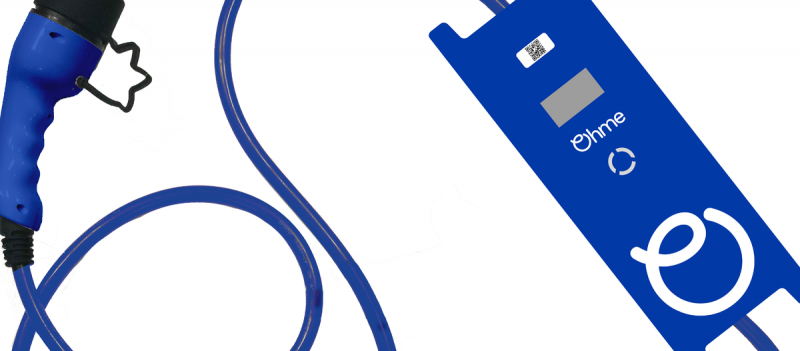
Here’s the image of Ohme’s new “smart cable” that accompanied the press release:

OHME_cable_launch

The press release continues:

Once the cable is connected, the driver can just open up the app and enter the amount they would like to charge their car and by when, and then let Ohme manage it for them. For example: “On weekdays, charge my car battery to 100% by 7am”. Ohme then uses the Octopus Agile API to automatically deliver the right amount of electricity when it is cheapest.

By optimising their charging in this smart way, Octopus Energy and Ohme estimate that customers using Ohme in parallel with the Agile Octopus tariff could save around £300 per year on their charging costs in comparison to charging on a typical industry standard variable tariff.

The cable will cost £399, but the first 1,000 Octopus Energy customers get a special launch price of £199.

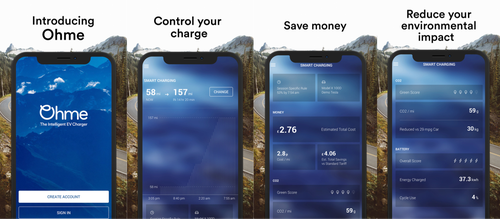
The Ohme cable is available for pre-order on the Octopus Energy web site. Whilst we wait for them to start shipping the new product, here’s an image of the Ohme app in action:

OHME_app_launch

According to Ohme’s CEO, David Watson:

At Ohme we believe the future of transport is electric and that flexible home charging is the key to mass adoption. Ohme’s innovative smart charging cable is the first App-controlled, intelligent EV charger, that combined with Octopus’ smart energy tariffs, delivers real savings and environmental benefits. All you need to do is plug in and let Ohme do the rest.

I cannot help but think that the likes of Wallbox might well quibble with David’s “first app-controlled, intelligent EV charger” remark? The press release didn’t include a telephone number, but we’ll let you know Ohme’s thoughts on the matter when we manage to get hold of them.


[Edit – March 30th]

After desperately doing my due diligence I eventually managed to have a long chat with Ohme’s technical guru, Dan Hollingworth, yesterday evening. As I strongly suspected, the Ohme “smart cable” isn’t actually that smart, by V2G UK’s standards at least. It contains a microprocessor and a 4G modem, not unlike our sister company V2G EVSE’s “smart controller” except that it doesn’t optionally do WiFi, Bluetooth, 2.5 G, 3G, LTE-M and NB-IoT as well.

Ohme’s device doesn’t determine the electric vehicle (EV for short) battery pack’s state of charge by communicating with the EV through the cable. Instead it finds out that useful piece of information by using its 4G modem to communicate with assorted EV original equipment manufacturer’s (OEM for short) cloud platforms, which in turn communicate wirelessly with the EV the Ohme’s cable is plugged into using proprietary protocols.

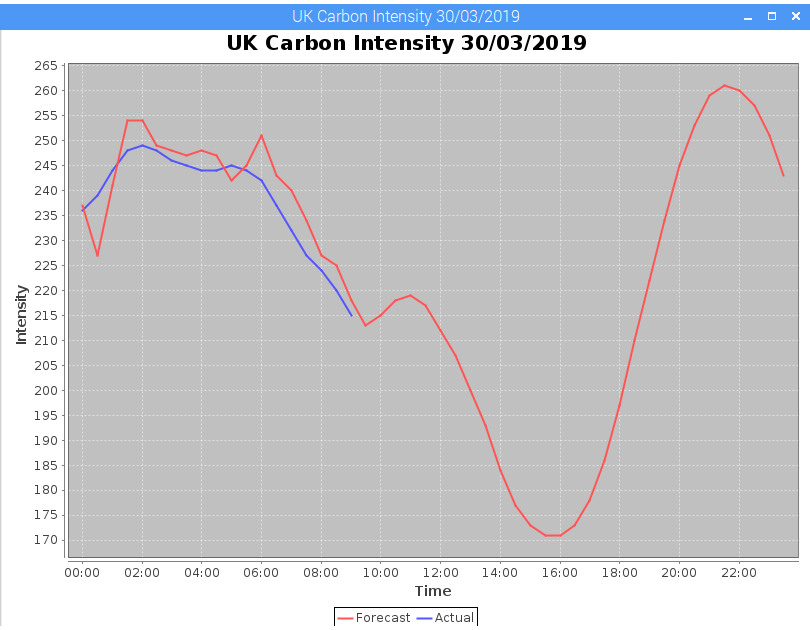
Ohme’s cloud platform is somewhat smarter since it communicates with National Grid’s Application Programming Interface (API for short) to forecast the “carbon intensity” of the UK Grid and thus determine the “greenness” of the electricity used to charge the EV to which the “smart cable” is attached. Here’s the current output of our open source example of how to go about doing that, generated by the V2G EVSE smart controller:

Screenshot from 2019-03-30 10-05-54

Ohme’s cloud platform also determines the price of electricity on Octopus Energy’s Agile or Go tariffs by communicating with the Octopus Energy API

Ohme’s smartphone application (app for short) allows the EV’s owner to instruct Ohme’s cloud based platform how much charge they’d like in their EV battery pack by when. On the basis of all the information Ohme’s cloud based platform has acquired it then uses version 1.6 of the Open Charge Point Protocol (OCPP for short) to instruct the cable when and how fast to charge the EV it’s connected to. In case it’s of interest here’s our open source smart charging station simulator, based on a mildly modified clone of Thomas Volden’s OCPP 1.6 library over on GitHub:

https://github.com/V2G-Ltd/OCPP-1.6-EVSE-Demo

Does that all make perfect sense now?

Power Cuts in SW England from Stormin’ Noname

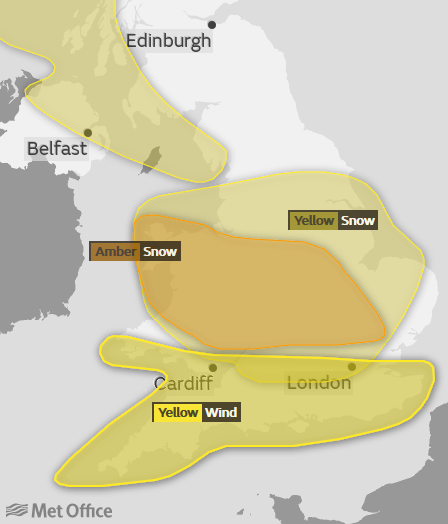
Following in the footsteps of Storm Caroline a couple of days ago, another storm is now putting some people’s lights out here in South West England. This one doesn’t have an official name, but nonetheless here is the United Kingdom Met Office’s recent forecast:

Whilst areas further north have an “amber” warning for snow, here is the Met Office’s official “yellow” wind warning for Southern England this morning:

UKMO-2017-12-10_0400

A spell of strong winds is expected to spread eastwards across the far south of the UK. Gusts of 50 mph are likely quite widely, with 60 mph gusts in places and close to 70 mph at times in the most exposed coastal locations. The highest gusts and strongest winds are expected Bristol Channel coastal areas during Sunday morning. High winds will also be accompanied by heavy showers, with a chance of hail and thunder, in parts of south Wales and southwest England.

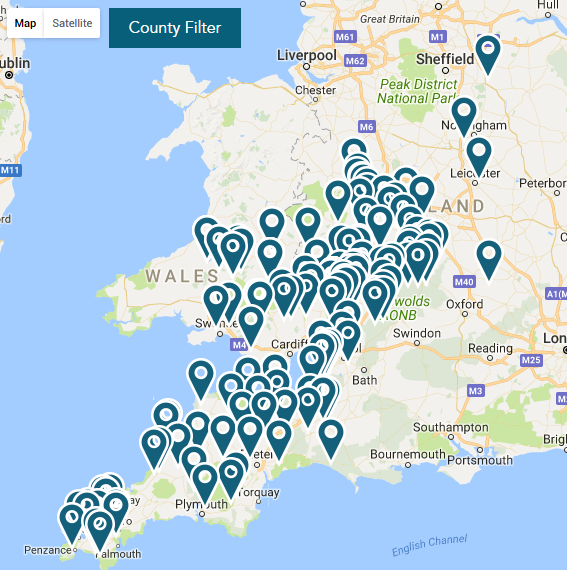
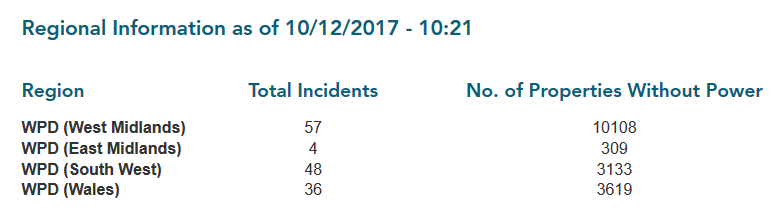
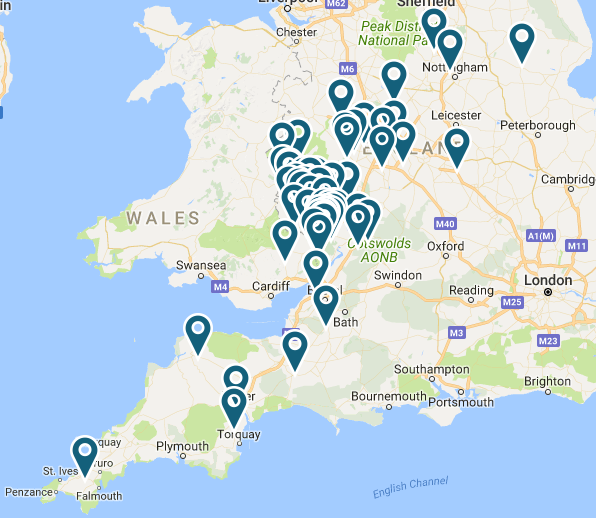
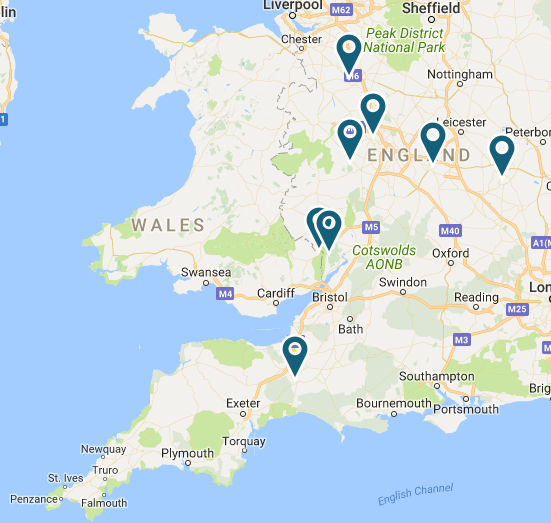
Those “strongest winds in Bristol Channel coastal areas” have certainly done some damage to Western Power Distribution’s electricity distribution grid this morning. It looks as though the snow and ice across the Midlands has had an effect too:

WPD-Map-2017-12-10_1028

WPD-Table-2017-12-10_1028

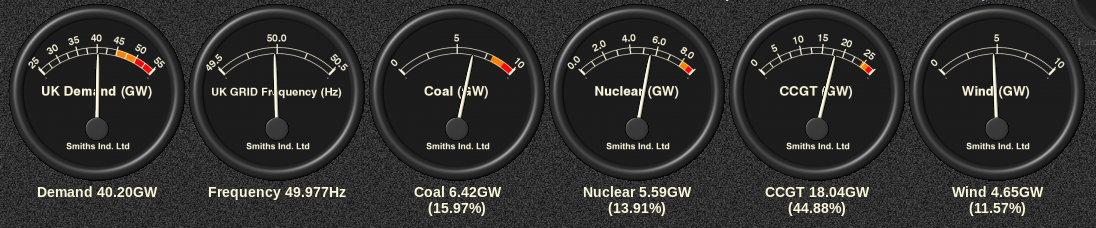
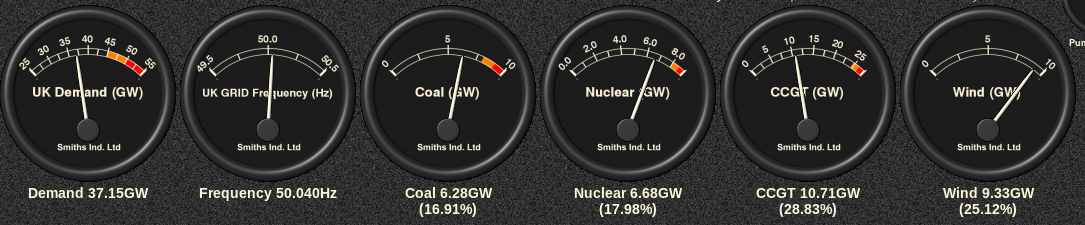
As has been our recent custom, here too is UK plc’s current electricity generation mix courtesy of Gridwatch:

GridWatch-Main-20171210-1030

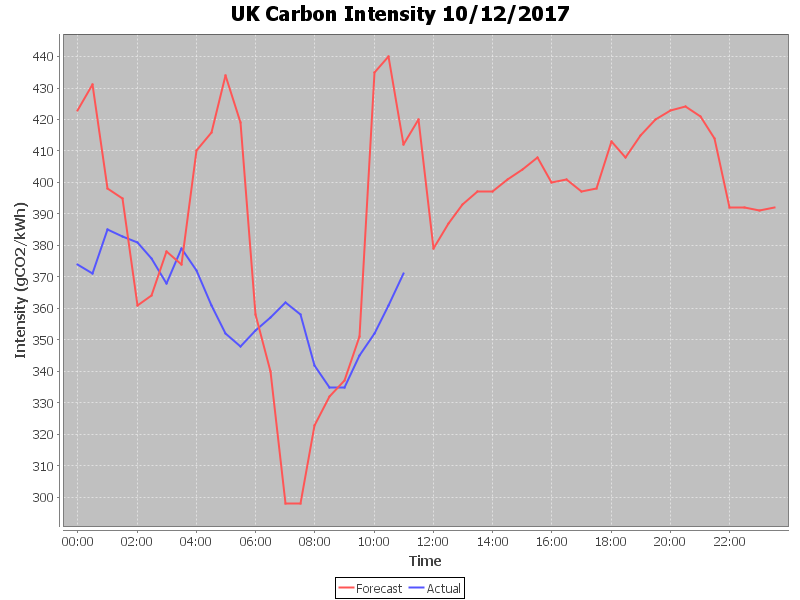
and here is a graph of UK plc’s carbon intensity so far today:

CarbonIntensity_20171210-115134


[Edit – December 11th 10:00]

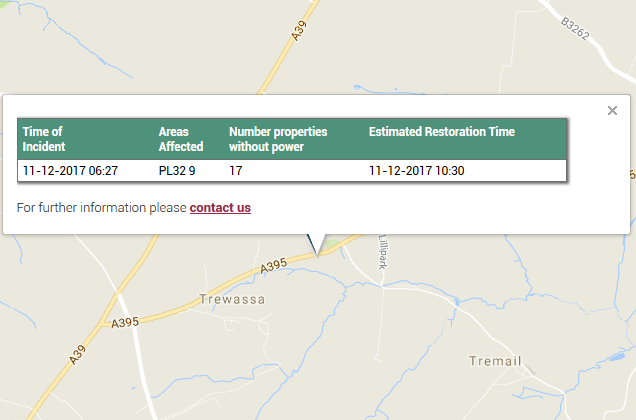
STOP PRESS! We had a brief power cut here at V2G Towers in Tremail this morning. It only lasted for a couple of minutes, and is presumably related to this problem just up the road in Davidstow:

WPD-Davidstow2017-12-11_1000


[Edit – December 11th 17:45]

Suppy has now been restored to the remaining 15 properties in the Davidstow area that have been without mains electricity for most of today.

WPD-Map-2017-12-11_1745

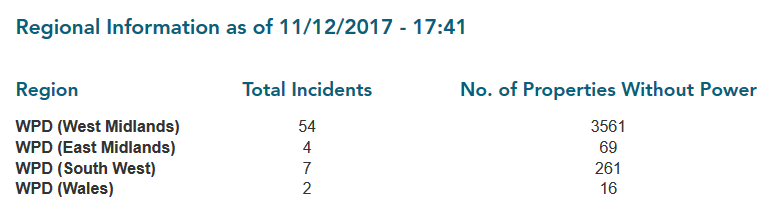
Whilst the number of properties without power across WPD’s network has been reducing today there are still a little under 4,000 remaining, largely in the West Midlands:

WPD-Table-2017-12-11_1745

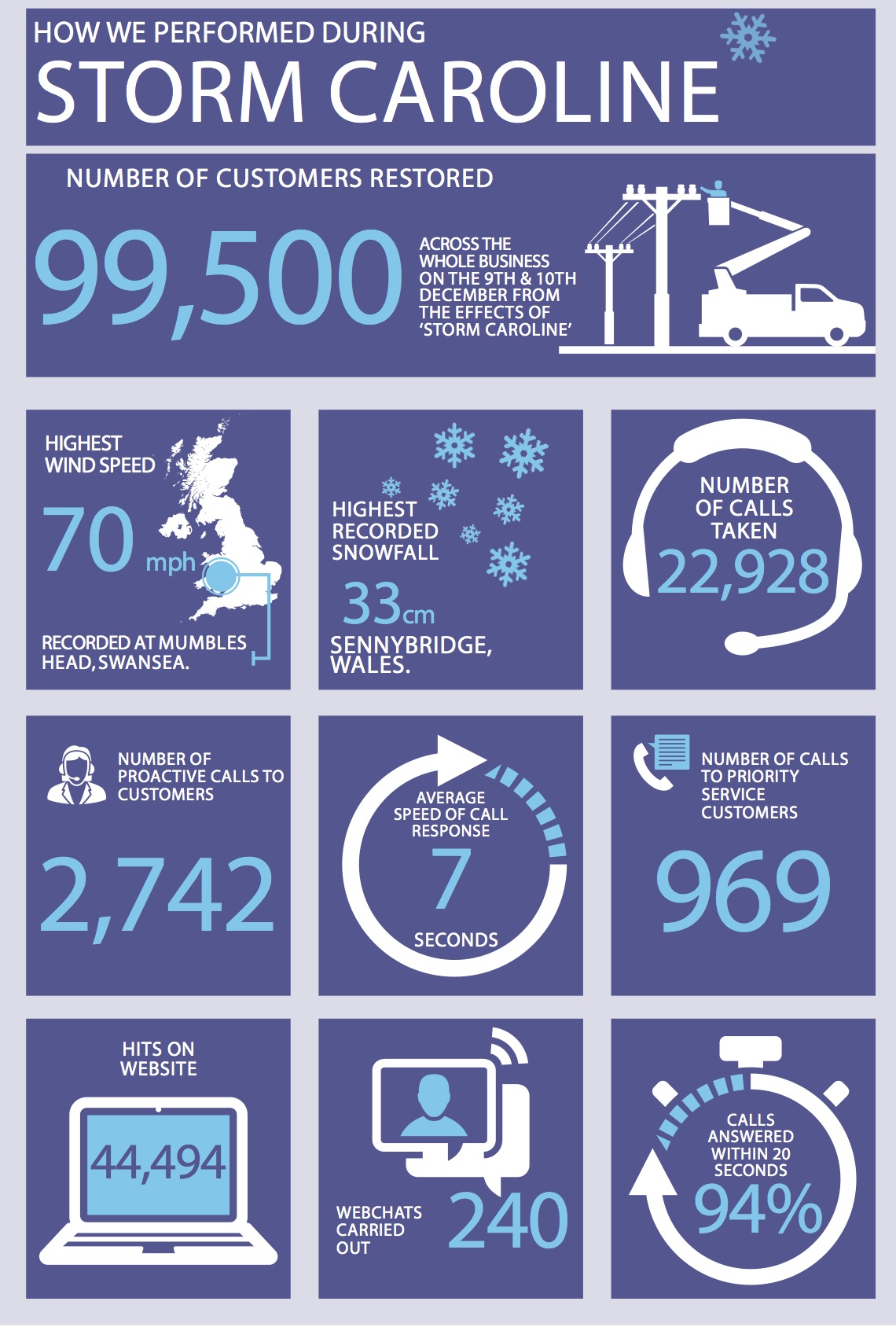
Earlier today WPD issued a press release concerning the effects of Storm Caroline on their distribution network:

Over the weekend we restored just over 99,500 customers, 70,000 of those were in the West Midlands and 15,000 in South Wales which have been the two worst affected areas.

We do not anticipate any further disruption to be caused by the weather conditions based on the latest forecasts we have received.

Since first light this morning, additional resources from other areas have been drafted into the West Midlands to aid with outstanding restorations and repairs.

Over the course of Saturday and Sunday the Contact Centre handled over 20,000 calls with an average speed of response of 7 seconds. 94% of calls were answered in twenty seconds or under. Extra staff worked in both Centres with Ramp Up Rooms opened in our Bristol and Plymouth offices in addition to homeworkers being logged in as well. The transport team also assisted in getting staff into the Contact Centres who were struggling due to the adverse weather conditions.

The British Red Cross were activated twice but were also offered to multiple customers in addition to this who turned down the offer of the support. 969 proactive calls were also made to registered vulnerable customers offering support and advising them when their power supply would be restored.

Below is a snapshot of our performance and associated information covering Saturday 9th and Sunday 10th December.

WPD-Storm-Caroline


[Edit – December 11th 23:55]

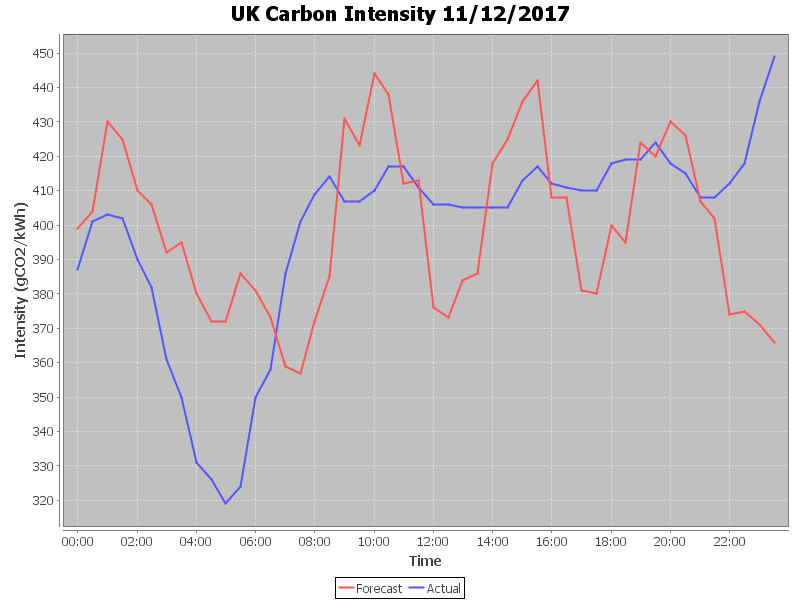
An intriguing carbon intensity graph for the coldest night of the winter so far:

CarbonIntensity_20171211

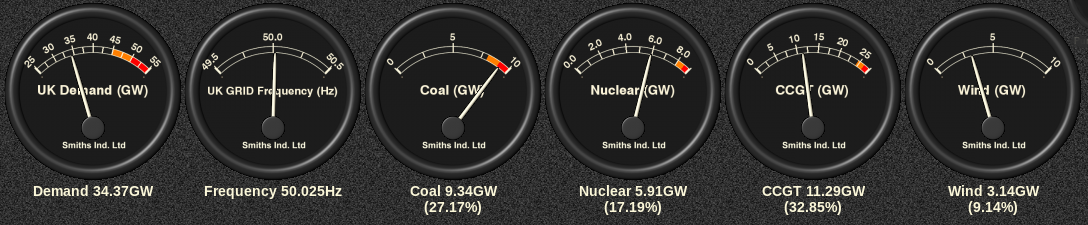
Coal fired generation is working quite hard at the moment!

GridWatch-Main-20171211-2355


[Edit – December 12th 11:00]

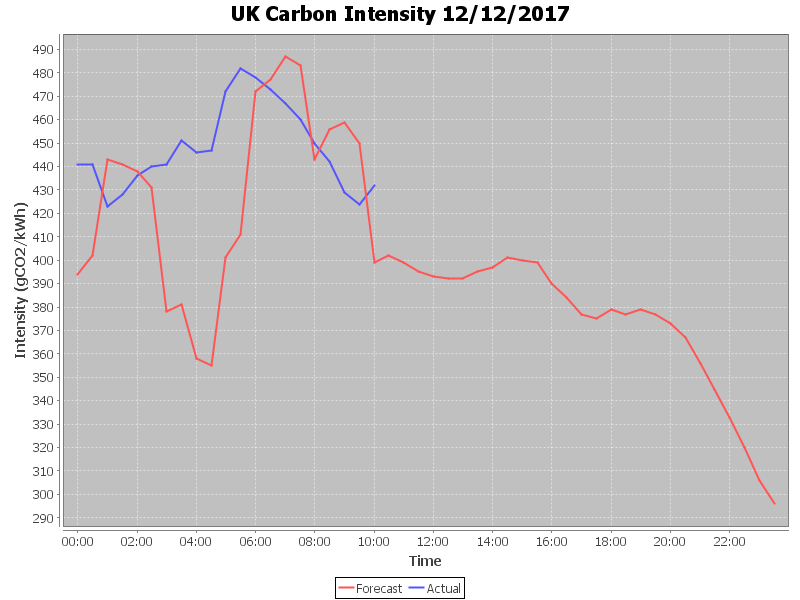
UK plc’s carbon intensity reached a peak of over 480 gCO₂/kWh overnight:

CarbonIntensity_20171212-105540

Meanwhile WPD’s power cut map has finally reverted to something approaching normality:

WPD-Map-2017-12-12_0706

Storm Caroline Power Cuts

Yesterday the UK Met Office issued an amber warning for strong winds caused by Caroline, the third named storm of the winter in this part of the world:

With up to 90 mph gusts expected in the north of Scotland the Met Office pointed out that:

Flying debris is likely and could lead to injuries or danger to life. Some damage to buildings is possible, such as tiles blowing off roofs. Longer journey times and cancellations are likely, as road, rail, air and ferry services may be affected. There is a good chance that power cuts may also occur. Large waves are expected and beach material may be thrown onto coastal roads, sea fronts and properties.

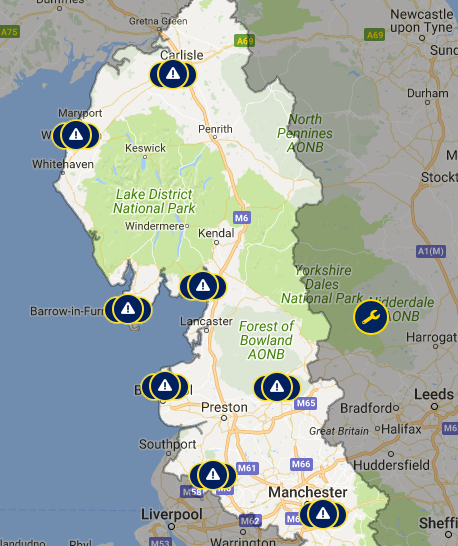
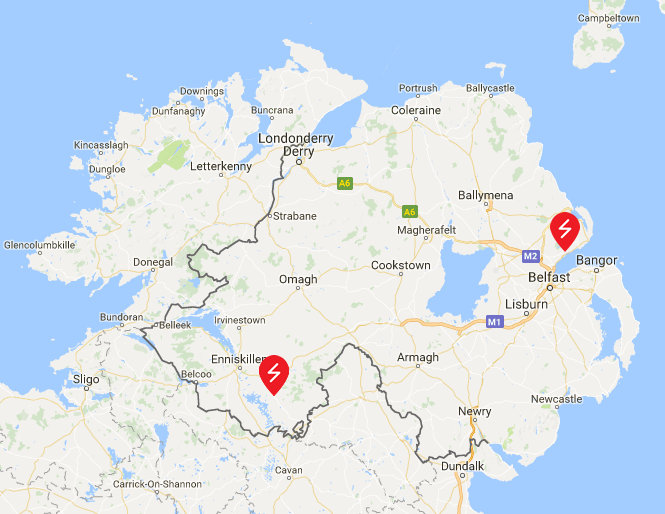
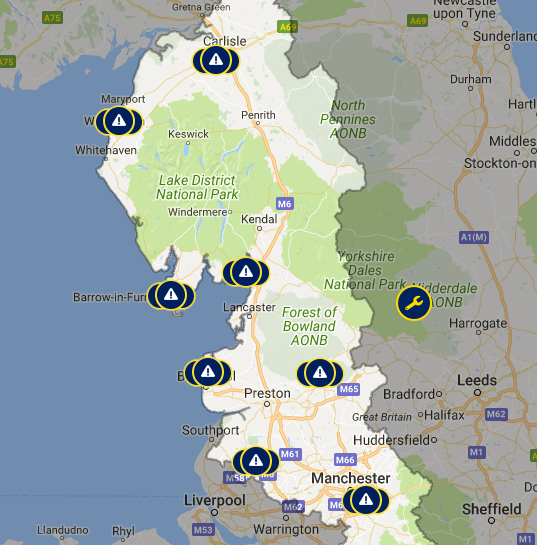
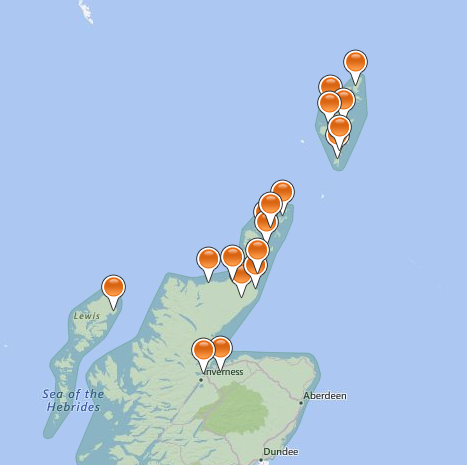
Sticking with those power cuts for the moment, here are the lunchtime maps from the assorted Distribution Network Operators spread across the west and north of the British Isles:
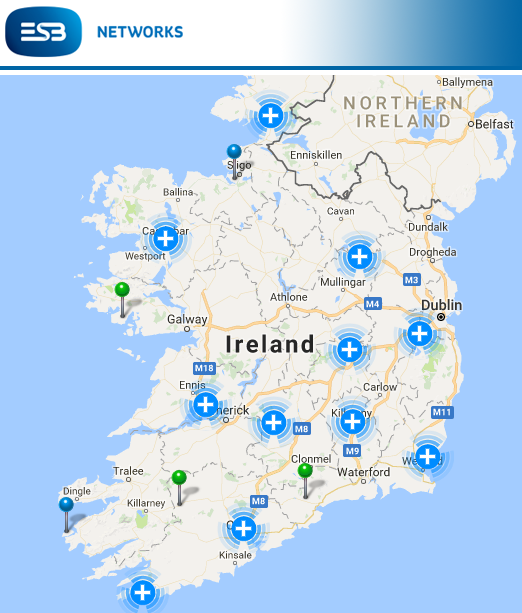
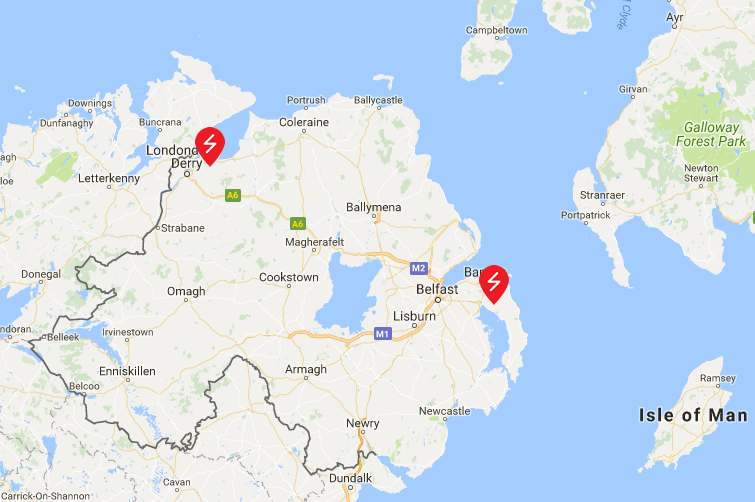
ESB-2017-12-07_1308

NIE-2017-12-07_1309

ENW-2017-12-07_1311

Scottish and Southern Energy Networks:
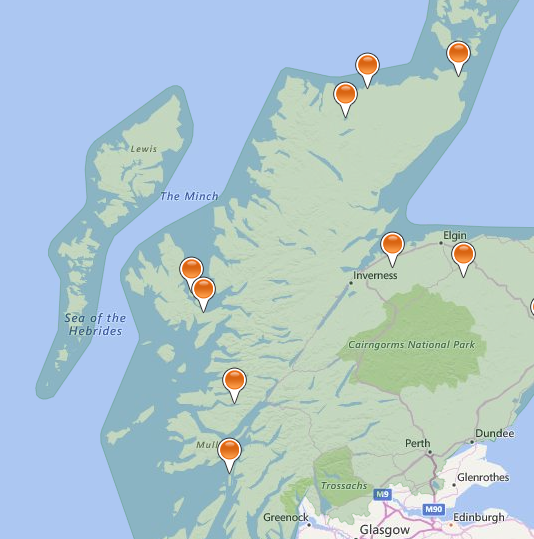
SSEN-2017-12-07_1312

Scottish Power Energy Networks don’t provide an overview map of the area covered by their network, but they do issue severe weather updates from time to time. Today’s currently states that:

The MET Office has issued a yellow/amber warnings for Thursday 7th December 2017 to much of Scotland. Storm Caroline is expected to bring a spell of very windy weather reaching up to speeds of 80mph over the higher grounds.

Moving into Friday 8th and Saturday 9th, the yellow Met Office warning is still in place and it now covers Scotland, North Wales and Northwest Midlands. The yellow warning continues to bring strong winds but also frequent snow showers of 2-5cm, with 10-20cm in some places.

Icy surfaces are also likely to be an additional hazard, especially overnight. The heaviest and most frequent snow showers will progressively become confined to northeast Scotland during Saturday.

We have not yet seen any impact of Storm Caroline on our Network and as such we are presently working as business as usual, however, we will continue to monitor the weather situation closely.

Scottish and Southern do however provide timely news updates. The lunchtime edition reports that:

As forecast, gale-force winds reached the Western Isles from the early hours of this morning, with wind gusts in excess of 85mph recorded. SSEN’s network has stood up well to the initial impact and power has been safely restored to over 3,900 customers, mainly on the Western Isles and north-west Highlands, with around 780 homes currently without power as of 12pm today.

The full impact of Storm Caroline has not yet been felt across much of SSEN’s network region and it is expected there will be further faults throughout the day as the weather front continues to track across the north Highlands, into the Moray Firth and up to Orkney. Winds are expected to peak between midday and 6pm this evening with gusts of 70 -95mph forecast. Shetland is expected to feel the full force of Storm Caroline from midnight tonight through to lunchtime on Friday.

With snow and falling temperatures forecast for Friday, there is also a risk of line icing, where snow accumulates and freezes on the overhead electricity network, which can result in damage due to the sheer weight of accumulated snow and ice. Infrequent lightning also remains a risk.


[Edit – December 7th 18:00]

Firstly here are the tea time power cut maps:
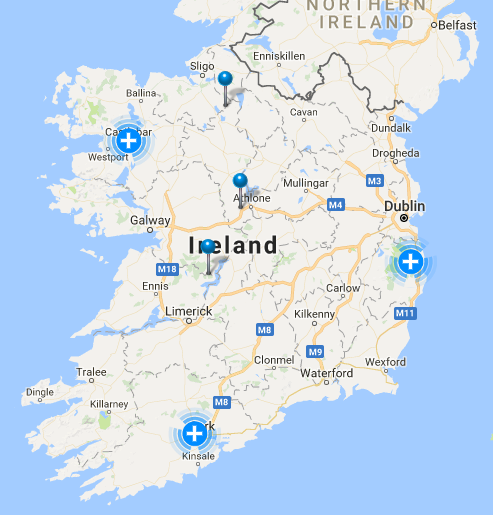
ESB-2017-12-07_1751

NIE-2017-12-07_1753

ENW-2017-12-07_1754

SSEN-2017-12-07_1757

SPEN still haven’t updated their “Severe weather update” from yesterday.

SSEN have issued a 4 PM update, which reads as follows:
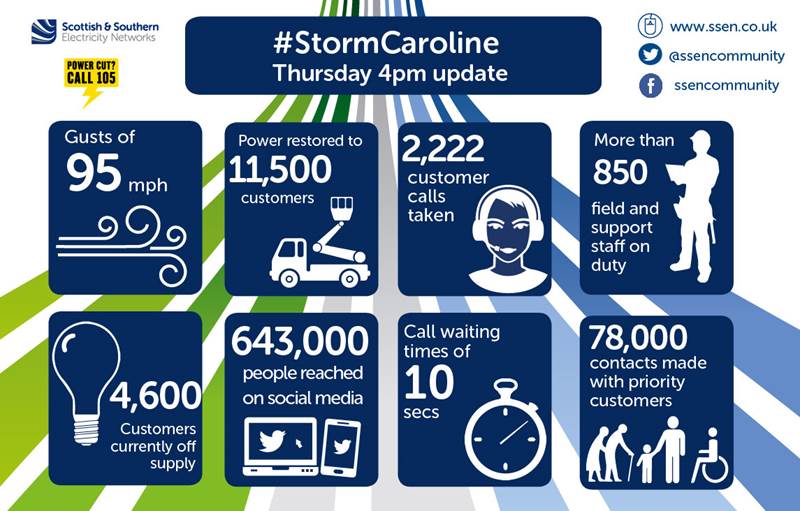
SSEN-News-2017-12-07-1600

As forecast, gale-force winds have tracked slowly across SSEN’s network region, starting in the Western Isles in the early hours of the morning with the storm moving from west to east throughout the day. Wind gusts of 95mph have been recorded at Burgar Hill in Orkney, with widespread gusts in excess of 80mph observed across the north of Scotland.

SSEN’s network continues to stand up well to the impact of Storm Caroline and power has been safely restored to over 11,500 customers. The main areas affected have been the Western Isles, north-west Highlands, Caithness, Moray, north-east Aberdeenshire, Orkney and Shetland.

As of 4pm, around 4,600 homes remain without power, mainly in Caithness, Orkney and Shetland. All faults are resourced with teams working to restore power, where it is safe to do so.

Wind speeds are forecast to subside for most parts from around 6pm this evening, with the exception of Shetland which is expected to continue to feel the effects of Storm Caroline through to tomorrow morning.

With snow and falling temperatures forecast for Friday, SSEN will remain on Yellow Alert due to the risk of line icing, where snow accumulates and freezes on the overhead electricity network, which can result in damage due to the sheer weight of accumulated snow and ice. A risk of lightning also remains.

Whilst the far north of Scotland may be experiencing very strong winds, further south wind turbines across the nation will be spinning furiously, so lets now take a look at the mix of UK electricity generation at the moment, courtesy of Gridwatch:
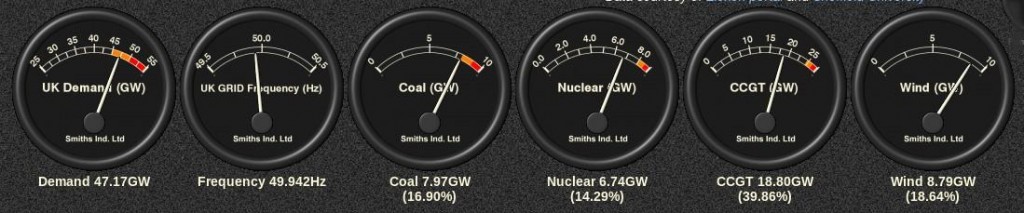
GridWatch-Main-20171207-1720

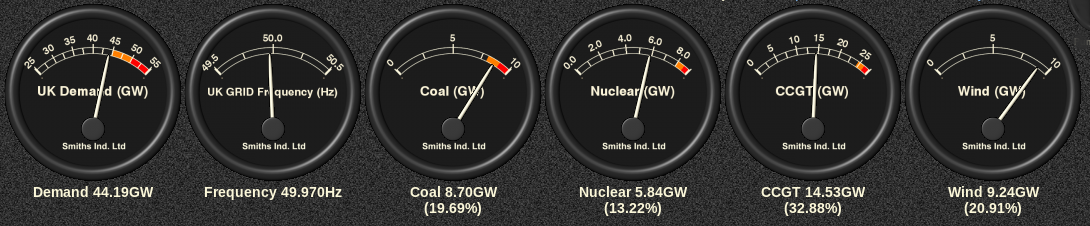
We’re currently experiencing the usual early evening peak in demand and we’re also experiencing a bit of a cold snap at the moment:

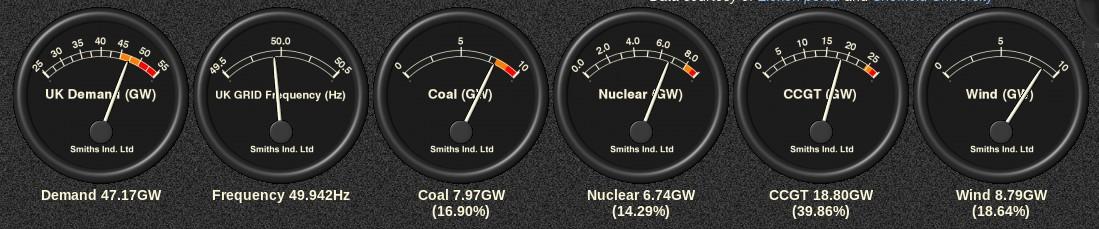
Hence there’s also an “amber warning” for electricity demand this evening, with wind contributing almost 9 GW of the required 47.17 GW. Here’s how that looks expressed as UK plc’s “Carbon intensity“:
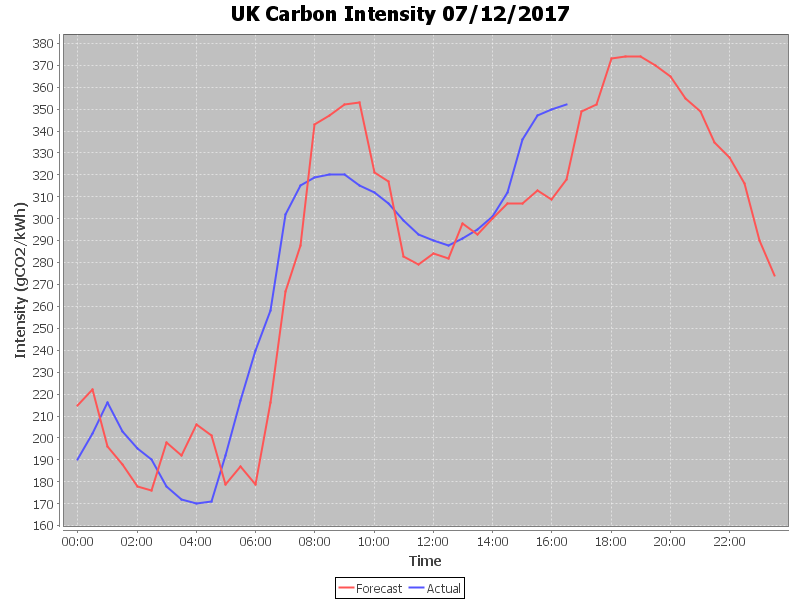
CarbonIntensity_20171207-053211


[Edit – December 7th 22:30]

Our suite of power cut maps reveal that the worst effects of Storm Caroline are now confined to the far north east of Scotland, including Orkney and Shetland:
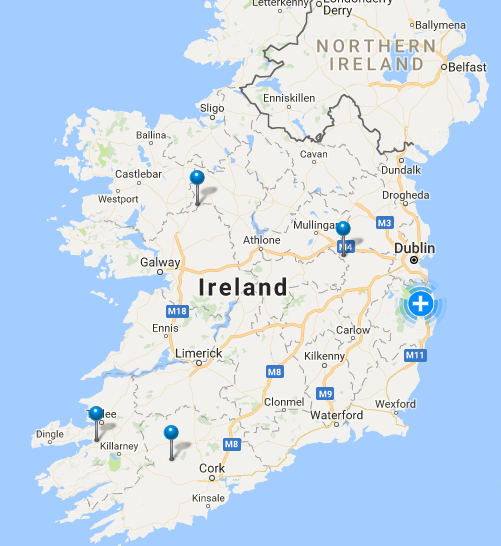
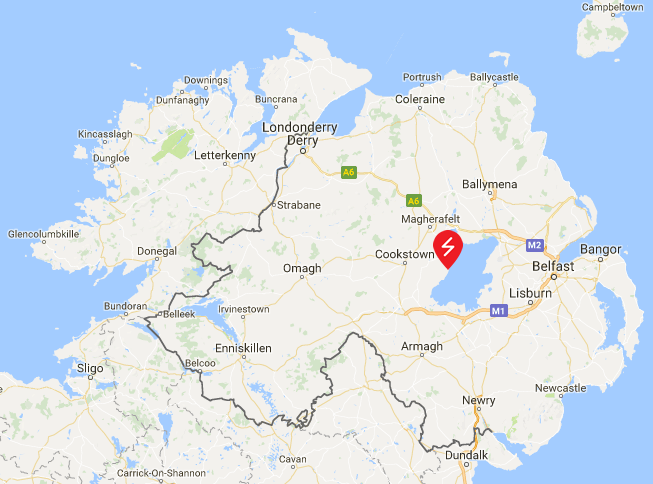
ESB-2017-12-07_2226

NIE-2017-12-07_2227

ENW-2017-12-07_2229

SSE-2017-12-07_2231

Scottish and Southern have issued another updates:
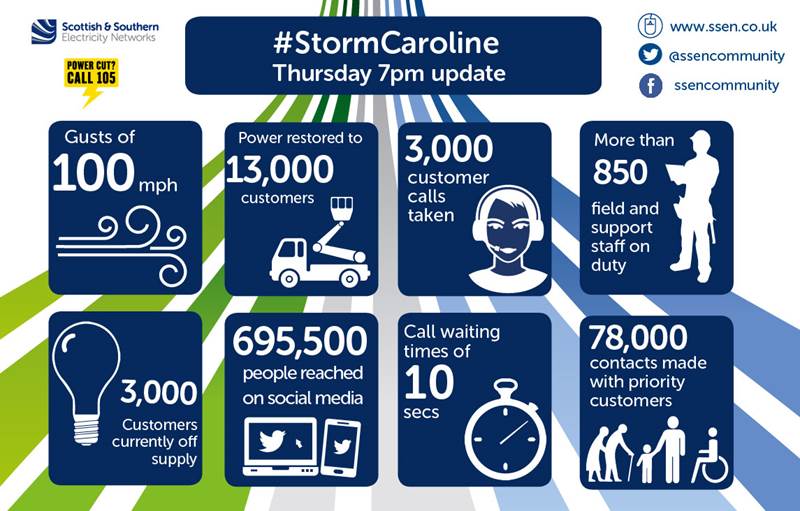
SSEN-News-2017-12-07-1900

From the early hours of this morning, gale-force winds have battered the north of Scotland, tracking slowly across SSEN’s network region from west to east throughout the course of the day. Over the last few hours, Shetland has borne the brunt of Storm Caroline, with wind gusts of over 100mph recorded at Gremista.

Power has been safely restored to over 13,000 customers across SSEN’s network, the main areas affected being the Western Isles, north-west Highlands, Caithness, Moray, north-east Aberdeenshire, Orkney and Shetland. With wind speeds now starting to subside for most areas it is anticipated the vast majority of customers will be restored this evening. As of 7pm, there are currently 3,000 customers still off supply, 1,300 of which are in Shetland.

Due to the continued severity of the wind speeds experienced in Shetland, which are forecast to continue through to tomorrow morning, and access issues affecting a small number of customers on Orkney, it is likely that some homes will remain off supply overnight. SSEN’s teams remain on standby and will carry out repairs as soon as it is safe to do so.

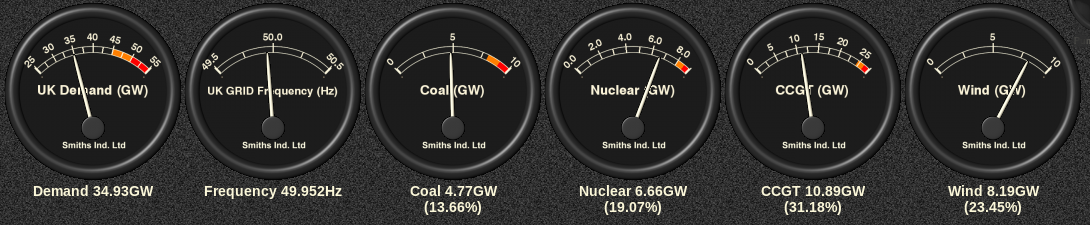
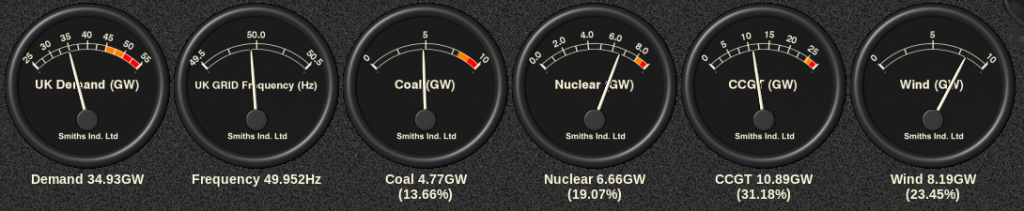
As the evening has progressed UK electricity demand has dropped as forecast, and the generation mix now looks like this:
GridWatch-Main-20171207-2250


[Edit – December 8th 07:00]

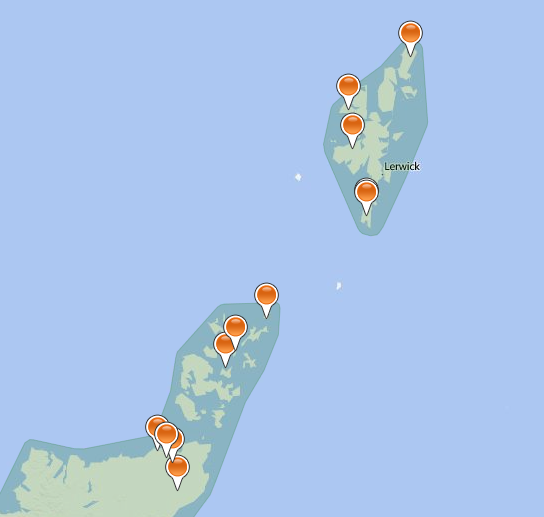
There’s still a wind warning in place for the Northern Isles:

Consequently Scottish and Southern’s map of power cuts in the area still looks like this at the moment:
SSEN-2017-12-08_0657

Scottish and Southern issued a further update on Storm Caroline late last night:

Following the impact of Storm Caroline, which has seen prolonged gale force winds affecting many areas across the north of Scotland, SSEN has now successfully reconnected the vast majority of homes affected, with power safely restored to over 14,000 customers. The main areas affected have been the Western Isles, north-west Highlands, Caithness, Moray, north-east Aberdeenshire, Orkney and Shetland.

Due to the persistent and severe nature of wind speeds still being felt across parts of Caithness, Orkney and Shetland, coupled with difficulty gaining access to faults, as of 10pm this evening SSEN has taken the decision to stand down its field based teams in these locations for safety reasons and around 500 customers will remain off supply overnight.

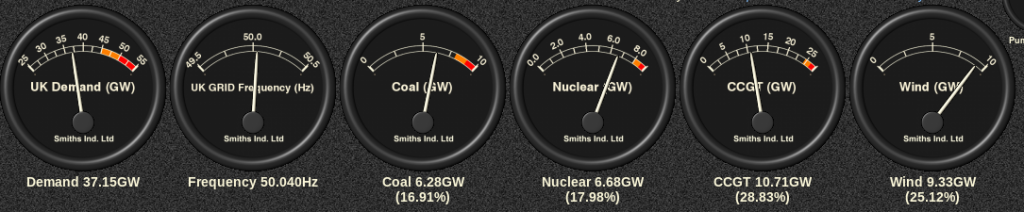
Here’s the UK’s generation mix this morning:
GridWatch-Main-20171208-0700

and here’s the final UK plc carbon intensity graph for yesterday:
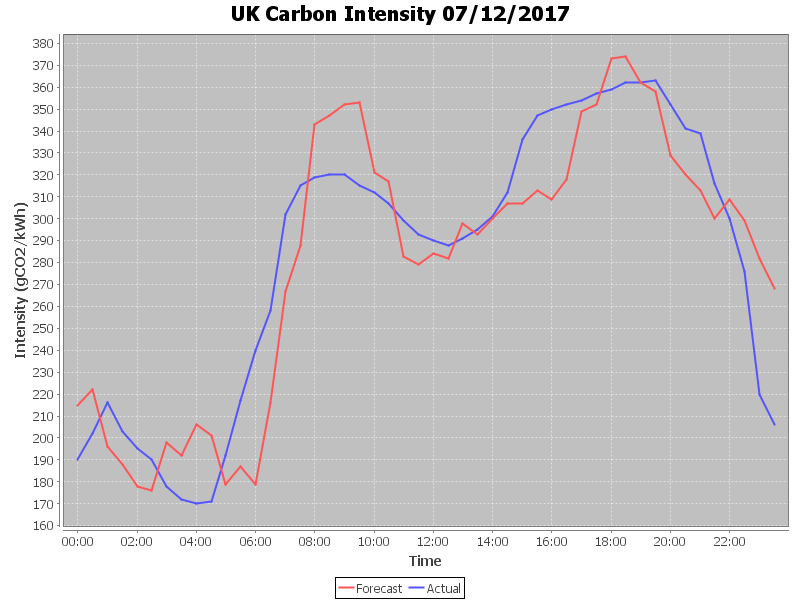
CarbonIntensity_20171207

plus today’s thus far:

CarbonIntensity_20171208-070858


[Edit – December 8th 15:00]

Scottish and Southern’s map of power cuts still shows several outages this afternoon:
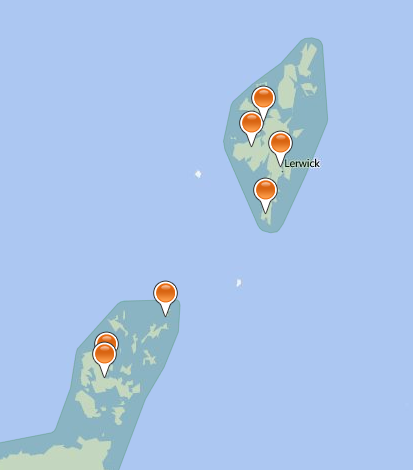
SSEN-2017-12-08_1452

In their latest bulletin they say that:

SSEN’s teams continue to make good progress to restore power to the last remaining customers affected by the impact of Storm Caroline, which brought sustained gale force winds to many areas across the north of Scotland. Throughout the course of the event, SSEN has successfully reconnected power to over 18,000 homes. The main areas affected have been the Western Isles, north-west Highlands, Caithness, Moray, north-east Aberdeenshire, Orkney and Shetland.

As of 2.30pm, just 250 homes remain off supply, with the main areas still affected being Orkney and Shetland. All faults have been resourced and SSEN anticipates all homes will have power restored by this evening.

To support efforts to restore power to those homes who remained off supply overnight, SSEN has moved additional teams to the areas affected and is also working closely with its resilience partners to help overcome challenges with gaining access to faults as a result of cancellations to local ferry services and road closures due to snow. This includes working in coordination with the RNLI, who are providing a helicopter to get additional teams and resource to South Ronaldsay, Orkney.

Here’s the current generation mix:
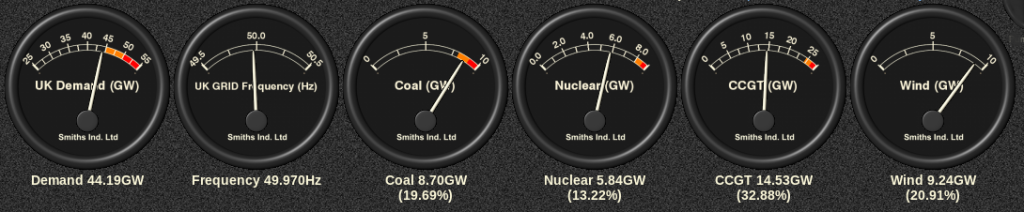
GridWatch-Main-20171208-1430


[Edit – December 8th 18:15]

Scottish and Southern Electricity Networks say they:

Have now returned to business as usual but we will continue to monitor conditions and are well prepared to respond to whatever other challenges the Scottish weather has in store for us this winter.

Their current power cut map confirms that:
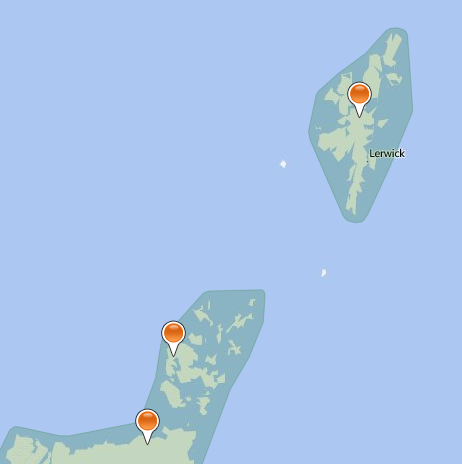
SSEN-2017-12-08_1802

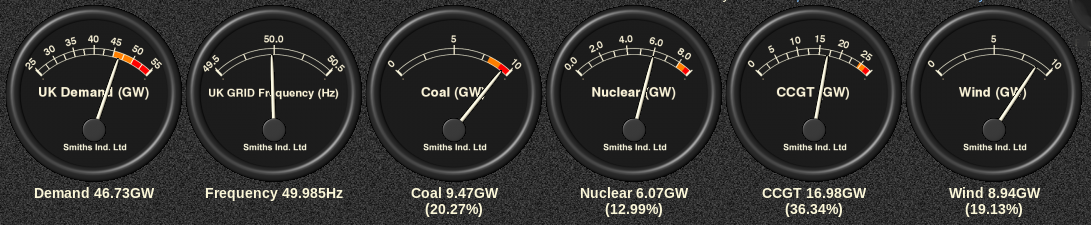
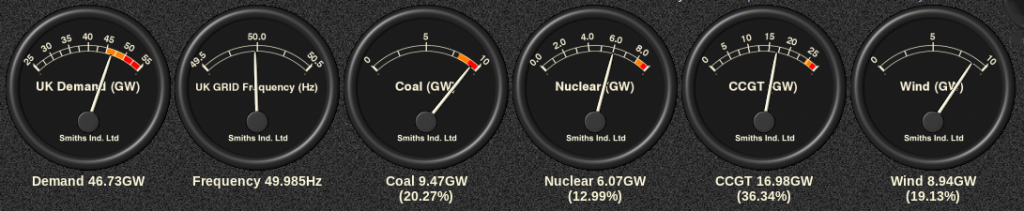
Much like yesterday, this evening’s demand is back up in the amber zone:
GridWatch-Main-20171208-1815


[Edit – December 9th]

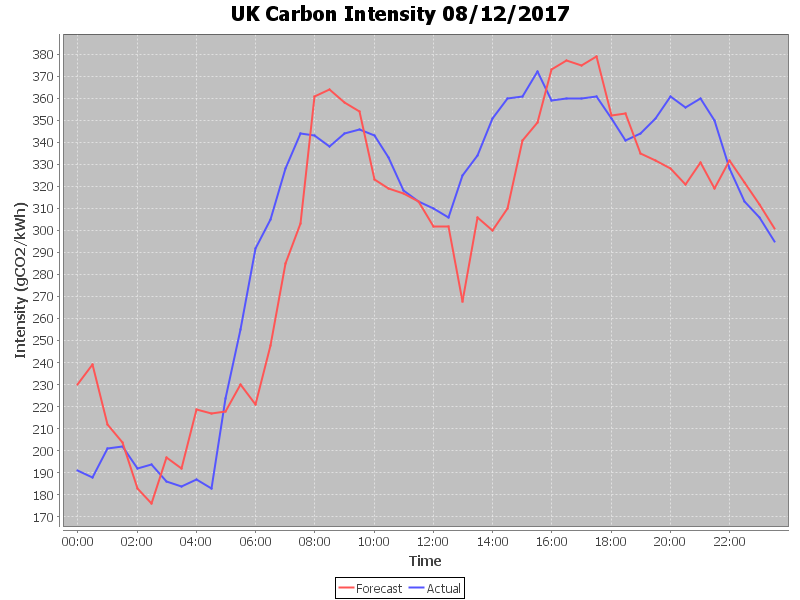
Here is the final UK plc carbon intensity graph for yesterday:
CarbonIntensity_20171208

National Grid Launches Carbon Intensity Data Feed

In a press release last week National Grid announced that:

The company today launches innovative new software that forecasts the carbon intensity of electricity generation up to two days ahead, helping people to understand and control their energy use.

National Grid is working with Environmental Defense Fund Europe and WWF to make the software openly available to the public. WWF has used the data as the basis of an online tool which points users to the best times to turn on or turn off home appliances to minimise carbon emissions, while Environmental Defense Fund Europe are working on policy implications of having this data available and widely understood. Shifting activities like dishwasher cycles or electric vehicle charges could help relieve pressure on the energy system, reduce the need to use back-up fossil fuel plants, and potentially reduce bills for households.

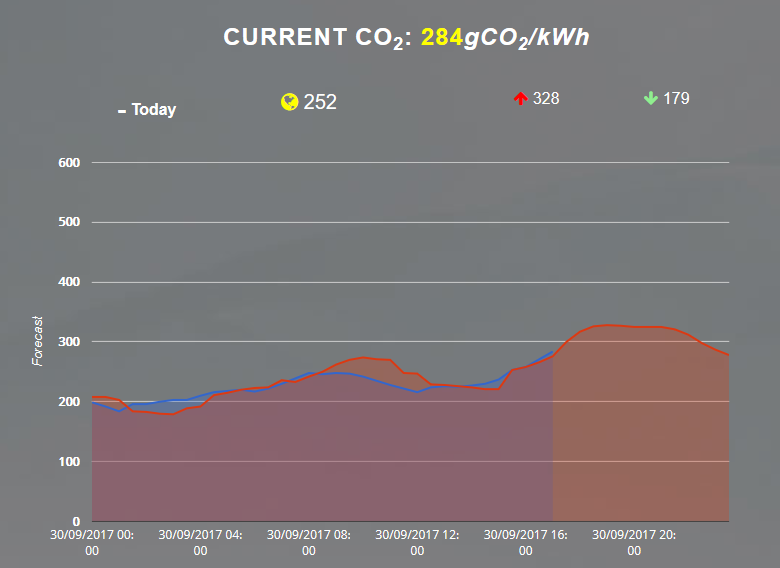
Here’s how National Grid’s visualisation of their carbon intensity data looks at the moment:

NGIntensity-20170930-1700

According to Duncan Burt, Director of the System Operator at National Grid:

We’re providing our forecast data in a format that allows technology companies to build innovative apps and software that could make a real difference to how and when people use energy. Clear and concise information that can tell you in advance when’s best to turn on the washing machine, load the dishwasher or charge your car for example, is a step in the right direction towards a low carbon future. This technology puts people at the heart of it, helping everyone to use power when it’s greenest, and likely, more cost efficient.

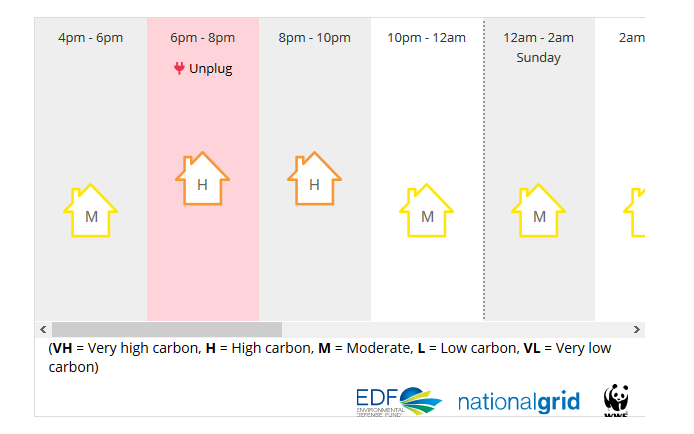
Simultaneously the WWF published a web page entitled “How do you make a green cup of tea” that presents the carbon intensity data in a “user friendly” fashion. According to the WWF:

Electricity is changing in the 21st century. Coal is being phased out and renewable energy sources like wind and solar now make up a quarter of our electricity.

This means that the greenness of our electricity now varies throughout the day. When it’s sunny and windy, we’ve got more green power. When it’s overcast and calm, we’ve got more fossil fuels online.

This new forecasting tool shows you what the greenest and dirtiest times of day will be up to two days ahead. This can help people plan their energy use, switching things on when energy is green and off when it’s not.

Being flexible with our energy use boosts our energy security and cuts carbon emissions by reducing the need for back-up fossil fuel generation. It could potentially save people money as well if they’re on time of use tariffs.

So if you want to make a green cup of tea, check out our forecast to find the greenest time of day to stick the kettle on.

Here’s how that forecast looks at the moment:

WWFIntensity-20170930-1700

Apart from the assorted press releases about the carbon intensity API there’s also a blog post from National Grid:

Working with WWF and Environmental Defense Fund Europe to finesse the science, we agreed to make the data that sits behind the forecast publicly available. The aim is to see tech developers creating consumer-friendly apps that can tell the public, in advance, when electricity generation is expected to be cleaner and greener, and more likely cost efficient.

The new software was a good idea hatched at a GB System Operator Hackathon and is yet another example of how our System Operator continues to be at the forefront of the energy revolution.

This new tool is a credit to the team in Wokingham – led by James Kelloway and his team members Alasdair Bruce and Lyndon Ruff, along with the sponsorship and guidance of Director of System Operations Duncan Burt and support from Corporate Affairs.

Not to be outdone the Met Office has also written another blog post on the topic:

Using hourly weather data from the Met Office and combining it with historical data from the grid, National Grid are able to forecast demand for electricity and also identify the contribution from renewable energy flowing into the grid. Using this information, they can forecast the carbon output of the grid over a 48-hour period, and identify the periods of lowest carbon output and highest carbon output. In other words, how green the grid will be during that period.

Using this information, the partners involved in the project hope that electricity consumers across Great Britain will be able to plan their electricity use around periods of high availability for renewable energy, reducing carbon output.

Patrick Sachon, Met Office Business Group Leader for Energy said: “The green energy forecast is a great example of innovative re-use of Met Office data. As a scientific organisation we encourage the re-use of our data, particularly if it can be applied to develop a deeper understanding of the interrelation between weather and something that is so integral to our everyday lives such energy.”

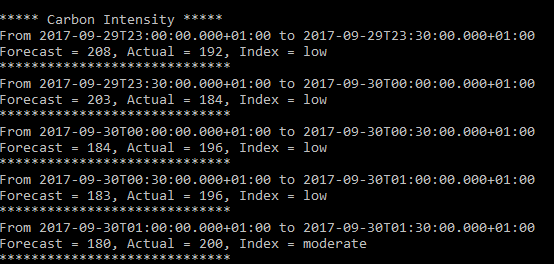
Down here at V2G UK we like to think of ourselves as an “innovative technology company” so we’ve already started using the new API. It’s very easy to use if you’ve ever written a JSON parser before, which fortunately we have. Here’s how the raw data for today looks as decoded by our trusty Raspberry Pi:

CarbonIntensity-20170930

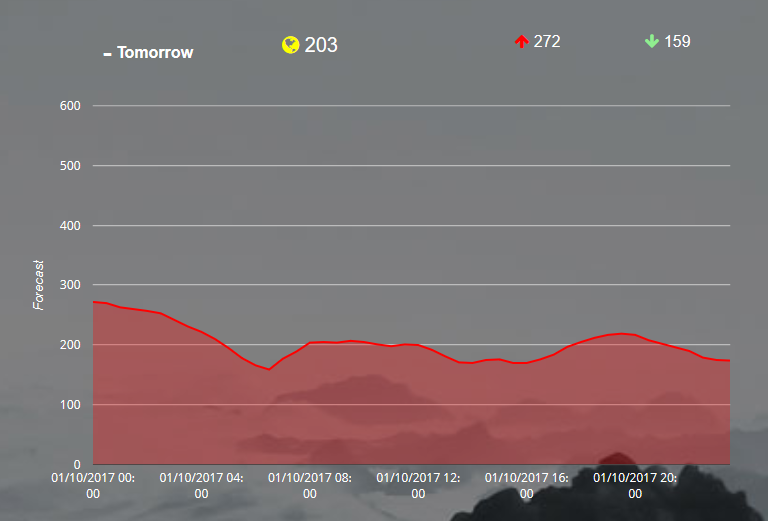
We haven’t persuaded our Pi to produce any pretty pictures as yet, so for now here’s National Grid’s forecast for tomorrow, which is forecast by the Met Office to be rather wet and windy:

NGIntensity-20170930+24h

Having slaved over a hot keyboard typing in this article I could really do with a nice hot cup of tea now, but it looks as though now is not a very good time. Wouldn’t it be a good idea if I could boil a kettle using electrical energy obtained from my very own battery instead of from the local grid? Another good idea would be if, much like the Met Office already do for the weather, National Grid could supply us with a carbon intensity forecast for Camelford as well as for the UK as a whole.

[Edit – October 1st]

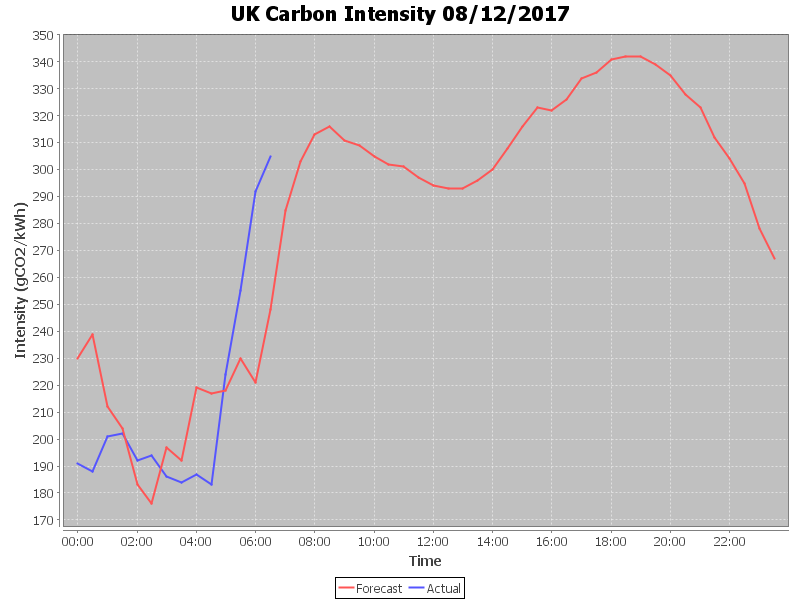
Our experimental application is now producing simple graphs. If you’d like to experiment along similar lines we’ve uploaded our Java source code to GitHub. For further details see our new project page:
“National Grid Carbon Intensity API“