It’s been a very long time coming, but the International Standards Organisation has finally published what is formally known as ISO 15118-20:2022/Amd 1:2026. According to the ISO web site the amendment adds the following improvements to the previously published 15118-20 standard:
AC DER service, MCS service, and improved security concept
If the acronyms above seem somewhat opaque and your internet address indicates that you are located in the United Kingdom you will see this not entirely helpful notice when you click the link above, :
Sadly the associated British standard is not yet available for purchase from the BSI web site! Instead we are told:
Approval start date: 17/04/2026
Publication start date: 06/08/2026
Fortunately in all the circumstances I don’t need to wait for the BSI to start selling the document, or pay ISO CHF 227 for the original 15118-20 standard plus another CHF 227 for the new amendment. As a member of the committee that developed the standards I already have PDF copies on my hard drive.
Quoting extracts from the brief sample of the amendment provided on the ISO web site:
3.73 megawatt charging system MCS charging system according to IEC61851-23-3
3.76 distributed energy resource DER source of electric power that is not directly connected to a bulk power system EXAMPLE Generators and energy storage technologies capable of exporting active power to the electrical grid..
3.78 frequency droop curve parameterized curve of the frequency-watt function
3.87 ride-through ability to withstand voltage or frequency disturbances inside defined limits and to continue operating as specified
If you would like further insight into the implications of the above information, please do not hesitate to get in touch.
On the same day as the announcement by Octopus Energy & Ford about their “PowerDrive” V2G consumer offer in Germany, BMW and E.ON issued a similar press release. This time in optional English:
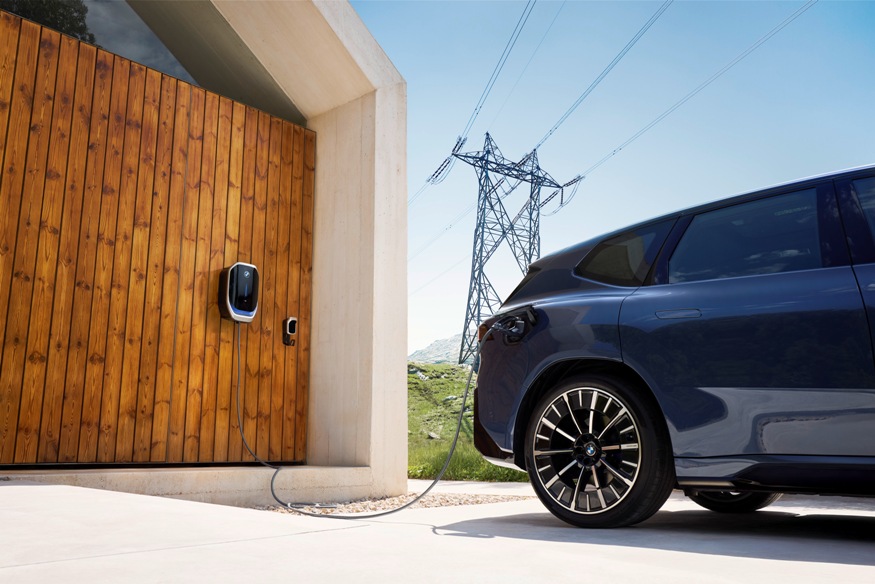
With the Neue Klasse, BMW is taking bidirectional charging to the next level, making Vehicle-to-Home (V2H), Vehicle-to-Load (V2L) and Vehicle-to-Grid (V2G) accessible to all customers. V2G is launching now: The BMW Group and E.ON are continuing their long-standing strategic partnership and are taking the next step following the successful announcement of Germany’s first commercial Vehicle‑to‑Grid offer at IAA Mobility in September 2025. As of today, private customers can order the complete product package, consisting of the BMW Wallbox Professional, the V2G electricity tariff from E.ON (E.ON ÖkoStrom Home & Drive V2G together with the E.ON V2G Plus feed-in contract), and – if not already installed – an intelligent metering system (smart meter).
With strong echoes of last summer’s announcement here in the UK of Octopus Energy’s Power Pack “World First vehicle-to-grid EV bundle”, Octopus Deutschland have just issued a German language press release along similar lines. Here is an extract, auto translated by Google:
Octopus Energy and Ford are introducing bidirectional vehicle-to-grid (V2G) charging for private customers in Germany. This collaboration will make electric cars an active part of the power grid. Starting in summer 2026, owners of a new Ford Capri or Ford Explorer will be able to benefit from significant cost advantages by using their vehicle as an energy storage device. These savings will allow for up to 16,000 kilometers of free driving per year.
With V2G (Vehicle-to-Grid), electric cars become flexible energy storage devices that can not only absorb energy but also feed it back into the grid. Octopus Energy’s solution prioritizes charging the vehicle during off-peak hours when electricity is cheap, and the vehicle feeds power back into the grid when it is most valuable – for example, in the early evening when demand is high. For electric car owners, this means that if their car is connected to the bidirectional wallbox at home, it works for them. Collectively, this makes a significant contribution to the stability of the German energy system and, ideally, reduces the cost of electricity for driving to zero.
A new page has recently appeared on the Tesla web site, entitled “What is Powershare Grid Support“. In answer to that question Tesla state that:
With Powershare, your Cybertruck can support the electric grid when needed and earn you money. In participating regions listed below, Powershare Grid Support allows your vehicle to send energy back to the grid during high-demand energy events. For each event where you send energy to the grid, you’ll receive credit on your energy bill while helping your community’s energy resilience.
Given my evident enthusiasm for all things V2x, regular readers may be wondering why I have been more hesitant than most commentators to unequivocally applaud Greg Jackson’s announcement of Octopus Energy’s “Power Pack” retail vehicle-to-grid offer last week? £299 per month which covers all your electric mobility needs including “fuel”. What’s not to like? Surely it’s “a compelling consumer offer”, as I myself put it!
As already hinted at in my introductory article linked to above, perhaps it’s not quite so attractive if you are in fact a “prosumer”, with a few solar PV panels already installed on your very own roof? Here are some other recent items of news to ponder too. In these troubled times hackers are hard at work around the world. There was initial speculation that the recent Spanish “blackout” was a cyber attack. However, according to the BBC on April 29th:
The Spanish grid operator has ruled out a cyber attack as the cause of a massive power cut that crippled Spain, Portugal and parts of France on Monday.
Red Eléctrica’s operations director Eduardo Prieto said preliminary findings suggest “there was no kind of interference in the control systems” to imply an attack, echoing Portuguese Prime Minister Luís Montenegro the day before.
But the exact reason behind the cut is still unclear.
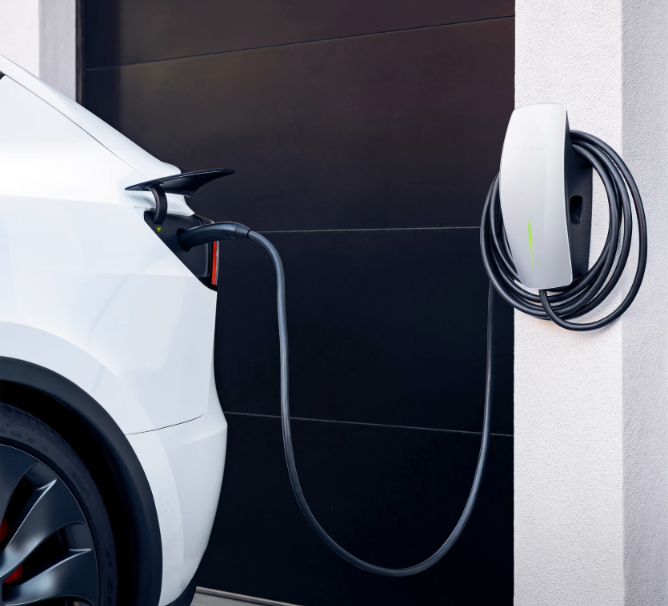
In January 2025, we participated in Pwn2Own Automotive with multiple targets. One of them was the Tesla Wall Connector — the home charger for electric vehicles (including non-Tesla ones)…
This article explains how we studied the device, how we built a Tesla car simulator to communicate with the charger, and how we exploited this logic bug during the competition.
The “hackers” of the Tesla wallbox wore “white hats”, but what might have happened if they had been wearing “black hats” instead? While you ponder your answer to that question, you may find it reassuring that the United Kingdom’s National Cyber Security Centre has been worrying about it for quite some time. According to the NCSC’s web site their mission is:
Making the UK the safest place to live and work online.
We support the most critical organisations in the UK, the wider public sector, industry, SMEs as well as the general public. When incidents do occur, we provide effective incident response to minimise harm to the UK, help with recovery, and learn lessons for the future.
The first example use case for their efforts reads:
Defending the digital infrastructure on which a sustainable world depends.
For example, by helping to protect a flexible energy system from cyber threats.
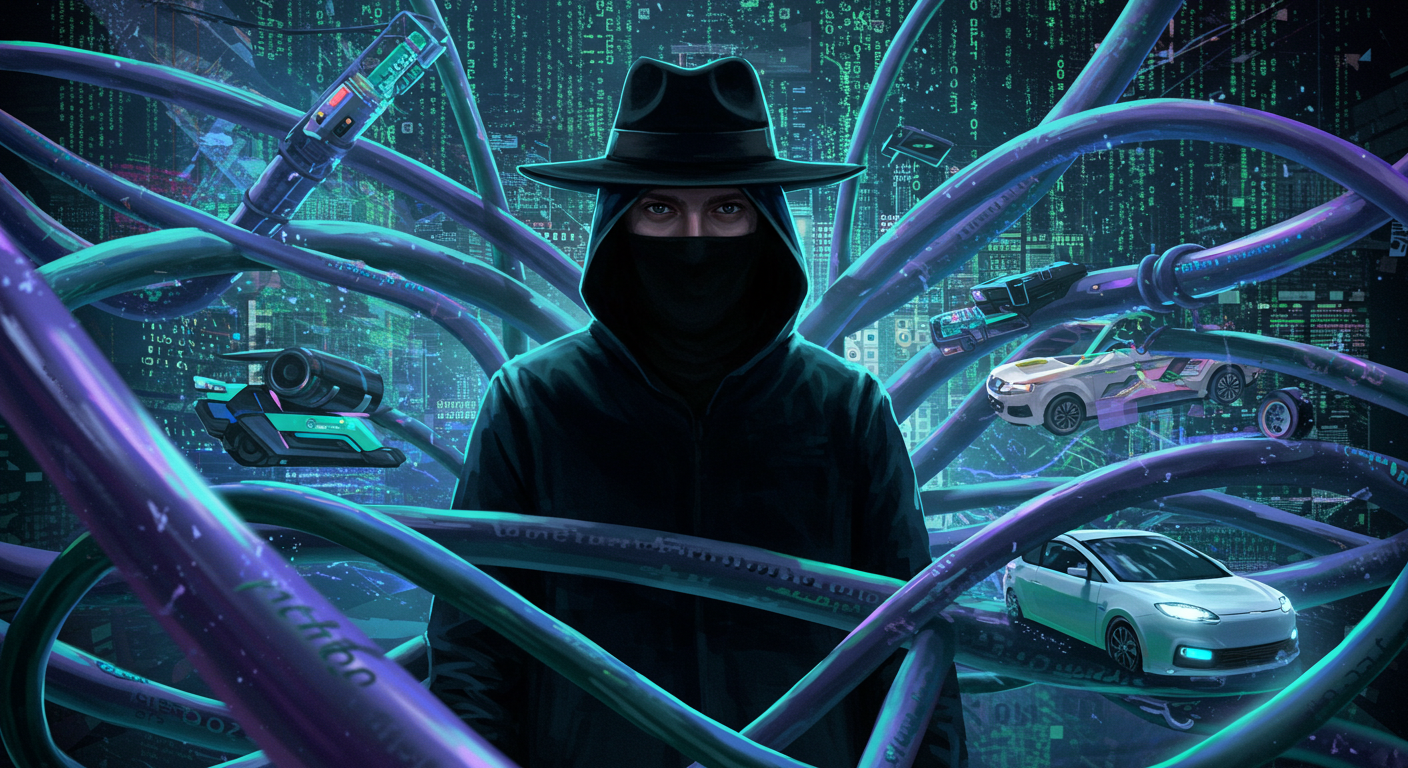
Image courtesy of ImageFX
In November 2023 the NCSC published a blog post that began as follows:
In 2020, the NCSC published a white paper on Preparing for Quantum-Safe Cryptography. This paper explained the threat that a possible future quantum computer – one much larger, and much more capable, than any that exist today – would pose to a large class of widely deployed cryptography. That cryptography is known as public-key cryptography (PKC). PKC is the enabling technology for secure communication at scale, on the internet and many other networks.
The same white paper also explains why NCSC’s recommended mitigation of the quantum computing threat is quantum-safe cryptography, or post-quantum cryptography (PQC). PQC is cryptography that is resistant to attack by quantum computers, and also to today’s digital, or classical, computers. Furthermore, PQC offers broadly equivalent functionality to the quantum-vulnerable PKC currently in use, and can be deployed in many of today’s devices (including PCs, smartphones etc.) with a software update.
This seems like a simple solution to the threat from a potentially disruptive technology. And conceptually, it is – but the migration to PQC is a very complicated undertaking. This blog explains why.
Do you suppose that Greg and/or the Octopus Power Pack team have read it?
Over the last few days Octopus Energy have dropped some heavy hints about an “exciting announcement” at their Energy Tech Summit in London at 12:30 this afternoon. Here is what transpired at the appointed time:
As the video title puts it, Octopus CEO Greg Jackson launched the WORLD FIRST vehicle-to-grid EV bundle! As you can see from the video thumbnail, Greg was joined on stage by motoring journalist Quentin Willson and 1996 Formula One World Champion Damon Hill as he outlined the Octopus Power Pack consumer offer:
Power Pack Bundle gives a car lease, two-way charger, and a smart tariff for £299/month with 100% FREE smart charging – saving £1,000/year on fuel vs petrol.
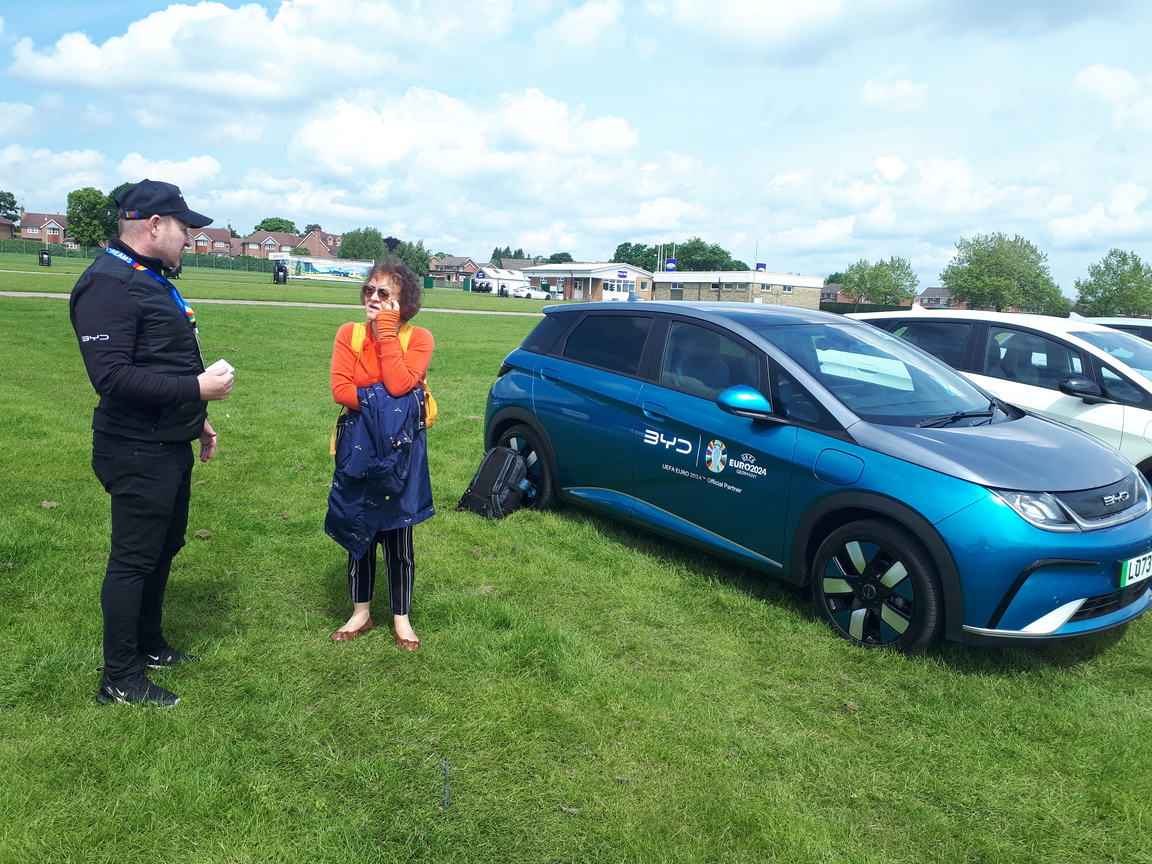
The EV part of the bundle is the BYD Dolphin, which I test drove when I was up in Harrogate last year to contribute to two V2x panel discussions at the Everything Electric North show:
At the beginning of June I attended the “Utrecht Energized” extravaganza at the Jaarbeurs Convention Centre in the heart of Utrecht in the Netherlands. According to Renault’s press release about the event:
Renault Group, MyWheels and We Drive Solar, together with the Municipality of Utrecht, announce the go-live of Europe’s first large‑scale Vehicle‑to‑Grid (V2G) car‑sharing service: Utrecht energized. The initiative supports a more sustainable, efficient energy system in a city where 35 % of rooftops are already fitted with solar panels. Thanks to the V2G technology, electric vehicles can store energy and feed it back to the local grid during peak periods, so renewable power remains available around the clock. By combining a shared‑mobility service with advanced technology, the project keeps the local grid in balance while accelerating the transition to sustainable urban transport.
Here’s Renault Nederland’s brief promotional video:
More about all that in due course, but first of all please note these paragraphs from the press release:
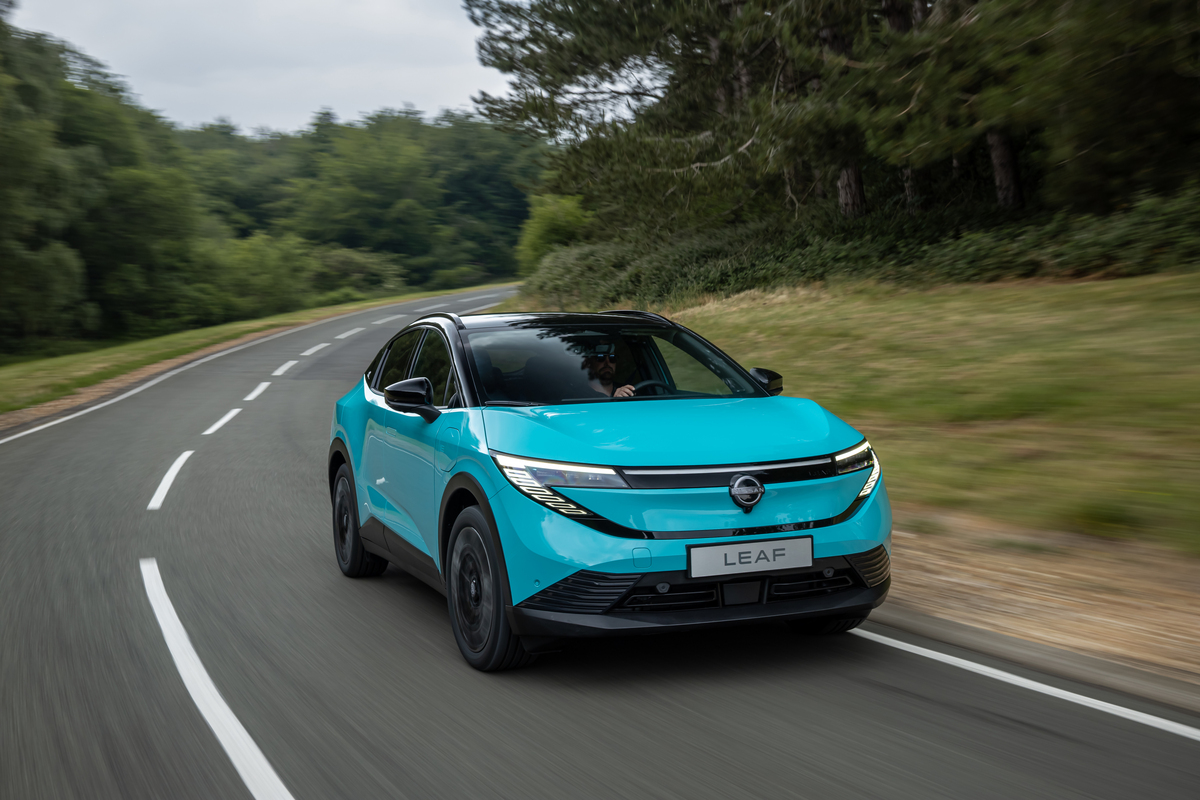
There have recently been a series of press releases from Nissan UK about their forthcoming range of electrically powered vehicles. At the end of May Nissan UK announced the electric MICRA. Yesterday they launched what was described as “The all-new LEAF“:
Today marks the debut of the all-new version of the Nissan LEAF – a British-built electric car icon.
The all-new Nissan LEAF is the next step in Nissan’s EV journey, building on its legacy as the world’s first mass-market electric car
The sleek, aerodynamic, and spacious crossover design comes with two battery options for an impressive range of up to 375 miles (WLTP), ensuring confident driving for everyday and long-distance trips
Delivers a fully connected mobility experience with Google built-in, dual 14.3” screens, and advanced driver assistance technologies
Built in Sunderland, UK, as part of Nissan’s EV36Zero initiative, supporting a sustainable electric future for Europe
This third generation of the pioneering LEAF continues to lead the charge in Nissan’s electrification strategy with a sleek design, significantly extended range, and intuitive technology that is seamlessly integrated for today’s connected driver.
Engineered to tackle key barriers to EV adoption, the all-new LEAF has a substantially increased maximum range of up to 375 miles on a single charge for a no-compromise driving experience. It also offers enhanced charging speeds (up to 260 miles of range in 30 minutes) and a suite of technologies that make both driving easier and EV ownership more rewarding.
Since its debut in 2010, the Nissan LEAF has sold close to 700,000 units worldwide, earning its place in history as the world’s first mass-market electric vehicle. Today, Nissan is ushering in a new chapter for this nameplate, re-designed and re-engineered to meet the needs of modern EV customers, while remaining true to its innovative roots…
Designed at Nissan’s Global Design Studio in Atsugi, Japan, the all-new LEAF introduces a stylish silhouette that reflects its dynamic character and aerodynamic efficiency. With a drag coefficient of just 0.25, its sleek design optimises airflow to enhance both performance and range. Flush door handles, a flowing roofline, full under floor cover, and sculpted surfaces create a modern profile, while its signature front and rear lighting delivers a distinct, high-tech identity on the road.
Pretty pictures and low drag coefficients are all very well, but “What about the all new LEAF’s V2x capabilities?” I hear you ask. Heading for the small print I learn that:
Regular readers may recall that in 2021 the British Standards Institution published the first edition of their Publicly Available Specification 1878 on the subject of “Energy smart appliances”? You may also recall that I wrote at the time:
A “smart” EV charging station is a special case of an interoperable Energy Smart Appliance.
The BSI has recently published a draft version of a new edition of the PAS 1878 specification, and is inviting comments from interested parties. Note that the deadline for submitting any such comments is July 9th 2025.
The BSI’s request for comments points out that:
This PAS specifies the following aspects of a system for the delivery of certain demand side response (DSR) services for domestic and small business premises…
This PAS is intended to be used by manufacturers of ESAs and CEMs.
NOTE 1 – Other audiences that might have an interest in this PAS are maintainers of ESAs, manufacturers and maintainers of interfacing products, software developers and service providers.
The introduction to the new draft includes the following information:
This is a full revision of the document, and introduces the following principal changes:
defined system architecture for both on-premises and hybrid cloud/on-premises implementations of ESAs and CEMs, and both 1-to-1 and 1-to-many CEM to ESA connections;
minimum requirements for secure communication between CEMs, ESAs and DSRSPs;
detailed sequence of DSR-based activities from consumer registration to decommissioning;
a move from OpenADR 2.0b to OpenADR 3.0 as the minimum application layer protocol to be supported by Interface A (between DSRSP-CEM);
the optional provision of flexibility performance requests from the DSRSP to enable ESAs to calculate relevant flexibility offers more easily;
updated compatibility with GB smart metering and a wide range of smart appliances – including EV charge points and battery storage;
new provisions for Open ADR 3 as the Interface A
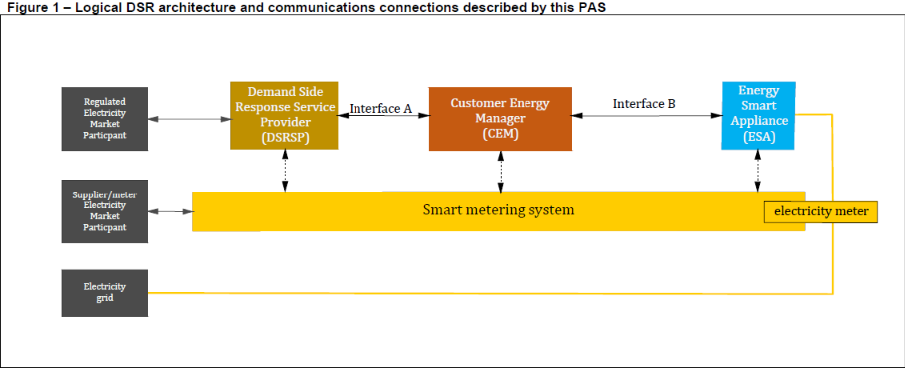
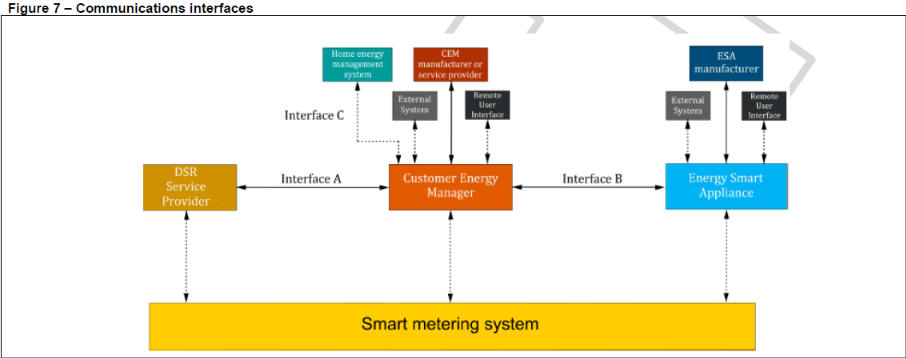
By way of a brief introduction to some of the assorted acronyms mentioned above, here is figure 1 from the draft PAS:
Clause 8 of the draft PAS includes these specific requirements regarding electric vehicle charging:
The smart EV chargepoint ESA shall be capable of reporting forecast power profiles based on operating capabilities, consumer preferences, including expected departure/arrival schedule and journey distance/ duration/characteristics, and external information, including estimates of EV battery capacity, EV state of charge (or state of charge if available via the charger – e.g. V2G, or accessible via the vehicle telematics) and EV physical operating limits. If a smart EV chargepoint supports V2G functionality and has been configured to present itself to the DSRSP as an ESA, it shall meet the information and messaging requirements specified in Clause 5 and Clause 6.
NOTE Smart EV chargepoints are not required to support V2G functionality.
Clause 5 is entitled “Communications and messaging” and includes this diagram:
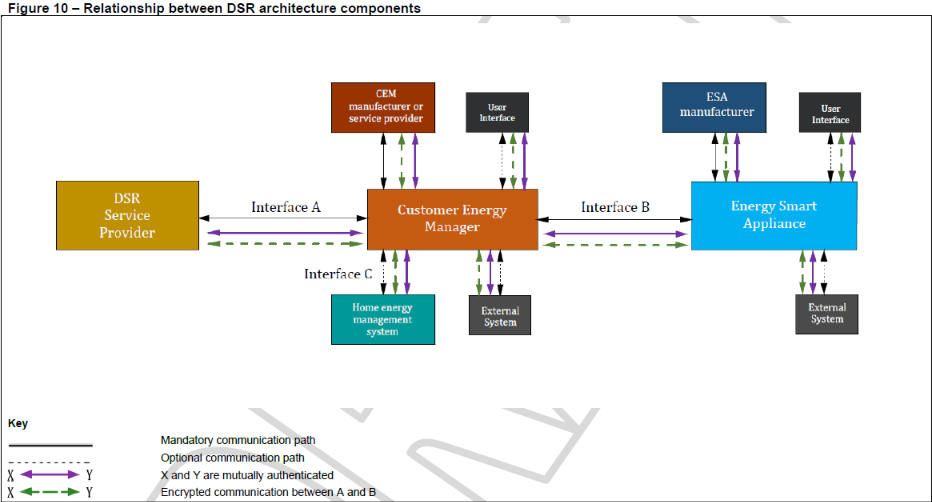
Clause 6 is entitled “Cyber security” and includes this diagram:
If you have any questions please do not hesitate to ask using the space provided for that purpose below.
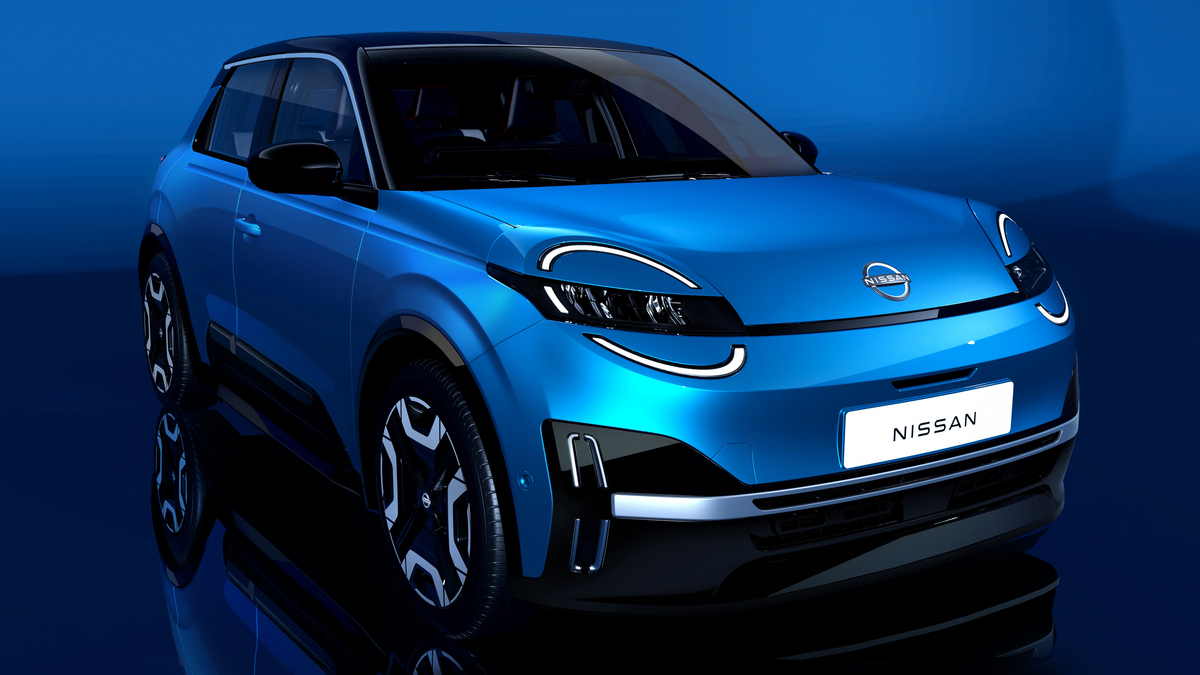
The all-new, sixth-generation Nissan MICRA will return to the B-segment in 2025 as a fully-connected, pure EV. Combining an assertive personality with zero-emission mobility, the new MICRA will stay true to its guiding principles as a stylish and unpretentious car, which has underpinned its popularity and success as an iconic compact car across five generations and more than 40 years.
Its arrival signals the next major step in Nissan’s bold product offensive in Europe, where the company will introduce four new fully electric models by 2027 as part of its push towards electrification. These include the all-new MICRA, followed by the Nissan LEAF, Nissan JUKE, and a A-Segment model, as well as the upgraded third generation of Nissan’s unique e-Power technology – to be rolled out on the best-selling Nissan Qashqai.
Needless to say I headed straight for the V2x small print, where I read that: