Prospering from the Energy Revolution

I attended the Knowledge Transfer Network’s briefing about the Industrial Strategy Challenge Fund’s Clean Growth Grand Challenge in Cardiff on Wednesday, but now I’m a bit confused. At the start of the event we were invited to “live tweet” the proceedings. Perhaps fortunately in all the circumstances my ageing Android refused to do that, and by the end of the event we were told that the assorted presenters’ slides wouldn’t be distributed as per usual since some of the information they contained was still “top secret”!

However it seems safe to reproduce Innovate UK’s own “live tweets” about the event, so here’s Rob Saunders in full flow on the topic of the forthcoming Great British Energy Revolution, courtesy of Jon Wood:

Then there’s Mike Pitts waxing lyrical about “Transforming Construction”:

In the question and answer session I asked Rob if he could clarify Innovate UK’s Transport/Energy/Infrastructure/Construction competition roadmap for 2018/19 for those of us in the vehicle-to-grid arena. Broadly speaking his message “expect more announcements in May”.

Finally, for the moment at least, here’s a not quite live tweet of my very own:

Pop back here in a couple of weeks when hopefully we’ll be able to reveal much more concerning how to go about “Prospering from the Energy Revolution“!

OVO Energy Reveal “Domestic V2G Charger” Images

We’ve previously mentioned OVO Energy’s announcements about the vehicle-to-grid technology they’ve been working on, and now we can show you some pictures too! In a news release to accompany the launch event in London OVO announced yesterday that:

Today at its first ever Energy Technology Product Showcase, OVO unveiled a range of products that together with its intelligent platform VCharge will form the components of a distributed, domestic energy system for the future.

The range includes the world’s first widely available, domestic electric vehicle-to-grid charger, designed and manufactured in the UK. The charger will accelerate the global transition to electric vehicles and will enable drivers to sell surplus energy from their electric vehicle batteries back to the electricity grid – meaning they may never have to pay to be on the road again.

On the new V2G page on OVO’s web site they even revealed what their “domestic electric vehicle-to-grid charger” will look like. Here it is:
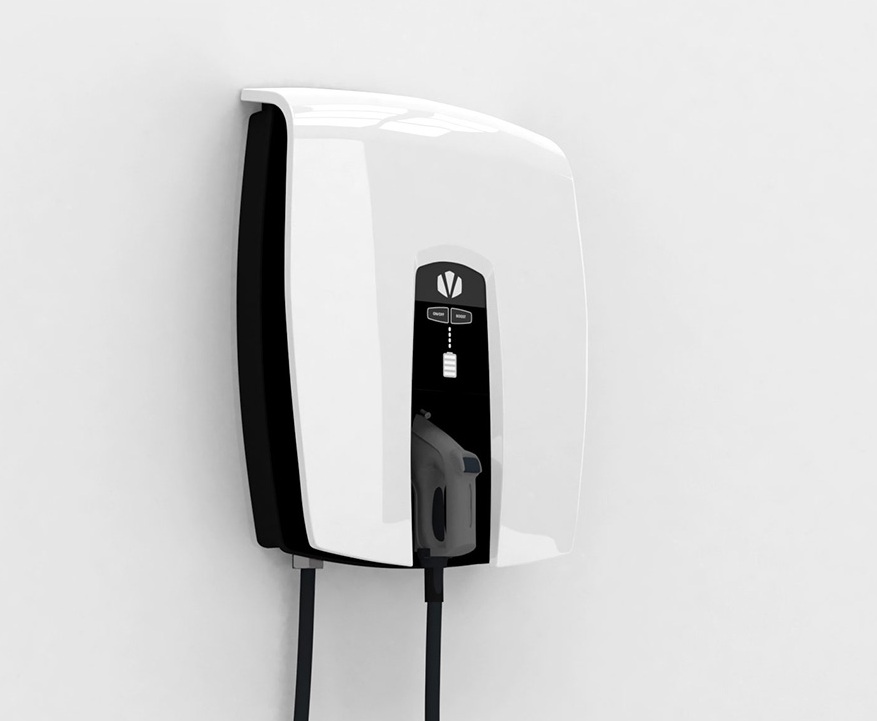
OVO-V2G-1

According to OVO’s CEO Stephen Fitzpatrick:

Renewable energy and electric vehicles are perfect partners for the 21st Century. Today we’re launching the world’s first widely available vehicle-to-grid charger, helping to solve one of the biggest challenges facing the energy sector. We’re enabling thousands of EV batteries to help balance the grid in times of peak demand, more renewable energy to come onto the system, and households to reduce their electricity bills.

This is the first step in building the distributed energy system of the future. One that is truly customer centric and built around households and their connected energy storage devices.

Our completely new approach to energy has been made possible by the convergence of emerging technologies, applying intelligence, and years of working with customers to redesign the entire energy system.

The technical specification of their V2G charger available on OVO’s web site doesn’t give one an awful lot to go on:

The OVO Vehicle-to-Grid Charger is 520 x 210 x 690 mm. It weighs 17kg. And it can be installed indoors or outdoors.

although the snaps from the launch event also reveal:

Power rating: 6 kW charge and discharge.

The news release continues:

The OVO Vehicle-to-Grid Charger is the world’s first widely available domestic bi-directional charger. Using VCharge, this charger will give drivers the option to discharge and sell surplus electricity from their electric vehicle batteries back to the electricity grid, helping to supply energy at times of peak demand. VCharge will also optimise vehicle charging to take advantage of cheaper electricity when it’s available and when there are more renewables in the system. Through their partnership, Nissan and OVO are leading the way with this technology.

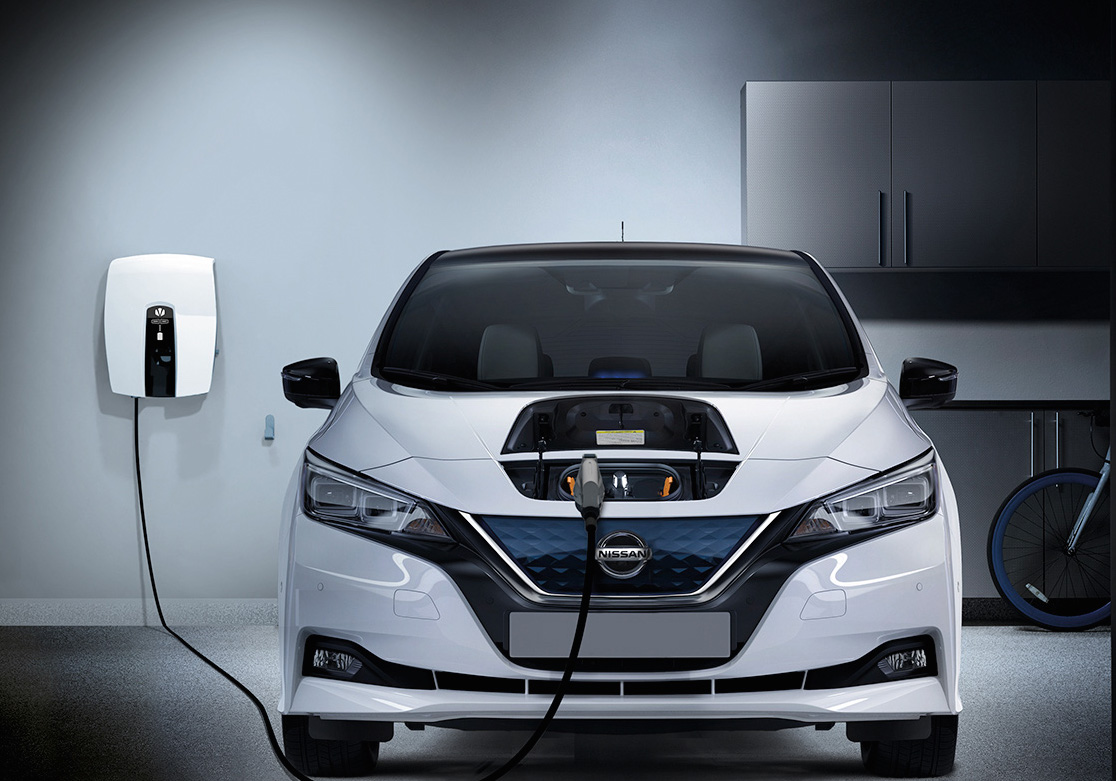
Here’s another image, this time portraying OVO’s partnership with Nissan:
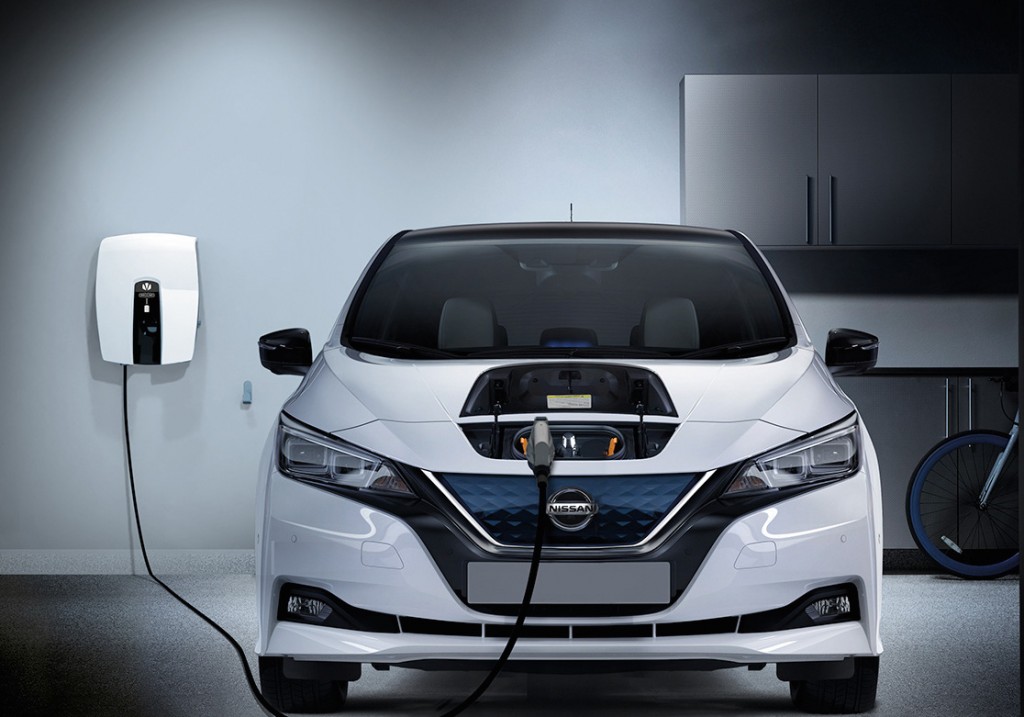
OVO-V2G-2

With slightly less fanfare OVO also pointed out that:

OVO is launching a Smart Charger which, like the vehicle-to-grid charger, will enable electric vehicles to be charged during off-peak hours, thereby easing pressure on the electricity grid as well as allowing drivers to take advantage of cheaper off-peak electricity.

There don’t seem to be any pictures available of the OVO smart charger yet, apart from snaps taken at the launch event:

However as the image above suggests OVO had more exciting news to reveal yesterday:

OVO is also announcing its debut in the home battery market with a Home Energy Storage solution. This powerful battery with a custom built control and communications unit will dynamically and proactively manage energy and power use. It will enable everyone to store, use and sell back electricity, whether or not they produce it themselves.

As if that wasn’t enough, there is still more to tell you!

The smart electrification of heating is an essential component of decarbonising our energy system. Showcased at the event was the OVO Heat Dynamo, an internet connected smart switch that can be retrofitted to electric storage heaters. It allows users to control the level of heat they want, when they want it via OVO’s Smart Heat Customer App, while reducing their electricity bills by as much as 30% and providing balancing services to the electricity grid.

Here at V2G UK we did of course sign up for news of OVO’s V2G activities many moons ago. They’ve asked us to do that again so we did, only to be informed:

2018-04-19_0852_FreeV2G

It would seem that OVO’s announcement of the “the world’s first widely available, domestic electric vehicle-to-grid charger” is a trifle premature? According to their web site it’s:

Arriving this summer.

P.S. Here’s a better picture of the OVO smart charger:
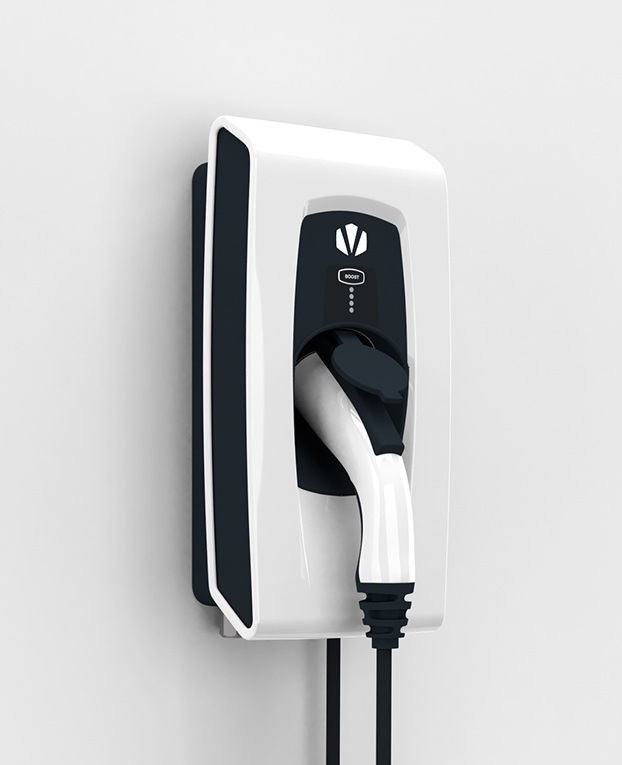
OVO-Smart-1

“Arriving this autumn”

Mitsubishi Motors Reveals New “Hyper Energy Station”

Mitsubishi Motors recently revealed a vehicle-to-building (V2B for short) pilot project here in Europe, and now they’ve announced an even more ambitious project in Japan, in a new release last week they announced that:

MMC already has 28 showrooms throughout Japan which have solar panels and the ability to use an electric vehicle’s battery power as an emergency power source, via a Vehicle-to-Building (V2B) charger. However the new Omiya “Hyper Energy Station”, opened this week in Saitama City, has also been fitted with its own lithium-ion battery packs to provide substantial power back up to the local electricity grid.

Saitama City has partially subsidized the cost of the facilities and the dealership has been designated a Next-generation Automobile & Smart Energy Special Zone by the Japanese government. The Omiya showroom, run by the Kanto Mitsubishi Motors Sales Group, is the fourth private facility and the first automobile dealer to adopt the system.

Featuring lithium-ion batteries with a capacity of 12kWh, the building can supply power for recharging electric vehicles (EV) in the event of a natural disaster or power outage, when normal power supplies are cut off. EVs have played a key role in transporting people and good in previous emergencies in Japan, when conventional fuel supplies have been severely disrupted.

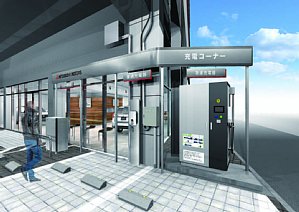
Here’s an artist’s impression of the combined “Static and Mobile Distributed Energy Storage” (SaMDES for short) unit:

HyperSaMDES

Apart from the new hardware that combines both static and mobile lithium ion battery storage Mitsubishi also pointed out that:

MMC has already opened 28 “DENDO Drive Station” showrooms across Japan, all featuring solar panels and V2B charging stations. It plans to increase this number to 200 by 2020.

In addition to charging vehicles, V2B allows the EV’s battery to provide power to the building in times of high demand or an emergency. The building will then switch to charging the car at times of low grid demand, or when renewable energy production is at a peak. This has major benefits for the grid and provides cheaper, sustainable power for the EV owner.

IEC 63110 Project Team 2 Kicks Off

In our continuing endeavour to explain the arcane workings of the International Electrotechnical Commission’s (IEC for short) electric vehicle standards development committees we have some exciting news to report!

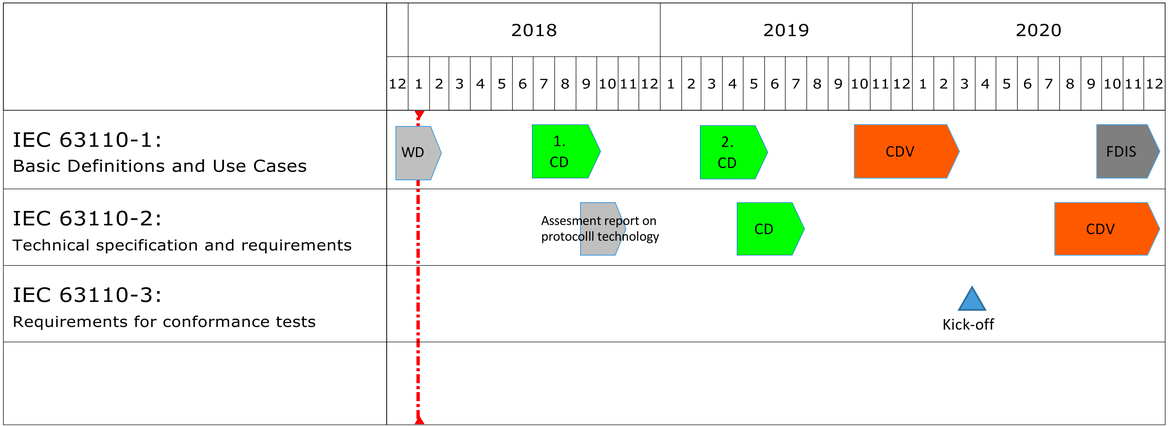
As predicted last November:

2018-01-IEC-63110-Roadmap

it was agreed at the IEC Technical Committee 69 Joint Working Group 11 (TC 69/JWG 11 for short) meeting in Toronto last week that work on the IEC 63110 part 2 standard (IEC 63110-2 for short) should begin by setting up a task force (TF for short) to “evaluate possible options for message encoding and transmission technology”. We swiftly volunteered for the new task force, not least because our V2G EVSE subsidiary is already evaluating precisely that for the United Kingdom’s Department for Transport (DfT for short).

In actual fact the Project Team 1 (PT1 for short) schedule has slipped a bit, so if you still have any out of the ordinary new “protocol for the management of electric vehicles charging and discharging infrastructures” use cases to bring to our attention there is still time before the Committee Draft (CD for short) stage of the IEC process is reached. In addition if you have any suggestions for “message encoding and transmission technologies” above and/or beyond the industry standard TCP/IP over cellular comms please do not hesitate to get in touch.

Lastly, but certainly not least, the existing IEC 63110 Security Task Force is still seeking input from suitably qualified experts in that particularly important domain.