I was fortunate enough to find myself on stage for two different panel sessions at the Everything Electric NORTH show in Harrogate last weekend. We recorded those two sessions in full for posterity, but there were plenty of other interesting topics apart from V2x. Some extracts from those can also be found below.
My first panel on Saturday was on the topic of “Vehicle to Everything? What’s the true potential?”, held in the EEN “Giga Theatre”. The tagline for the session was “We believe that V2X could be the biggest benefit of all in a world with battery electric vehicles, but how do we go ‘bidirectional’?”:
As you can see from the video below, I found myself sat next to Robert Llewellyn of Fully Charged fame as a last minute replacement for host Dan Caesar:
Mark Potter from 3ti explained the full suite of V2x three letter acronyms (TLAs for short).
Our title for today is shamelessly plagiarised from an article of the same name on the Electric Nation web site, which begins as follows:
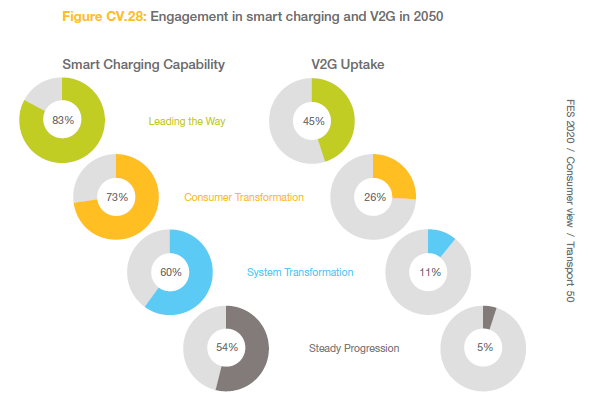
By 2050, up to 45% of households will actively provide Vehicle to Grid (V2G) services, according to National Grid’s Future Energy Scenarios, published in July 2020. But will the average Electric Vehicle (EV) driver be able to use V2G charging over the next few years?
A very good question and a very interesting infographic! The article continues:
The rapid growth in the numbers of electric vehicles on our roads will mean more demand on local electricity networks if EVs are all plugged in at the same time, such as during the peak between 5pm and 7pm in the evening. Smart charging, or ‘V1G’, which allows management of the time when EV charging occurs – as trialled by the original Electric Nation project – will help to avoid this situation.
V2G charging will be more effective than smart charging. This is due to the ability to link EVs together and put significant levels of energy back into the grid at peak times, like a huge decentralised power station. V2G will therefore help to reduce the grid’s need for additional energy generation, typically supplied by fossil fuels at peak times, as well as reducing demand on electricity networks, and allowing EV drivers to use greener and cheaper electricity.
So far so good, I agree entirely. However the next paragraph states:
UPS today said its venture capital arm, UPS Ventures, has completed a minority investment in Arrival, which makes electric vehicle (EV) platforms and purpose-built vehicles that offer a highly competitive value proposition when compared with both traditional internal combustion engine vehicles, as well as existing EVs. Along with the investment in Arrival, UPS also announced a commitment to purchase 10,000 electric vehicles to be built for UPS with priority access to purchase additional electric vehicles.
One thing that other news reports seem to have missed is that ARRIVAL are members of the Innovate UK Vehicle to Grid Oxford consortium (V2GO for short):
Arrival is a technology company fuelled by the ambition to make EVs the new normal. Driven by a team curated from the world’s most renowned technology and automotive brands, Arrival have taken a blank canvas and turned it into something extraordinary. Designed from the ground up, Arrival has created electric vehicles as they should be – simple, smart, modular. One skateboard platform, easily scaled, easily manufactured, easily turned into multiple vehicle types. This completely unique approach is what will pave the way to delivering premium, autonomous ready, electric vehicles on mass without a premium price tag.
Arrival will be developing the vehicle-to-grid enabled light commercial vehicle for project V2GO. This will be used for the real life assessment of V2G.
Here’s Katherine Collett from the University of Oxford explaining the benefits of combining vehicle-to-grid technology with a fleet of electric delivery vans:
Hence one cannot help but wonder whether any of the thousands of ARRIVAL vans that UPS have just ordered will be equipped with V2G capabilities? If so we have just the thing for charging and discharging them in our car park:
Perhaps UPS would like to order a few of those for research purposes?
I attended the Knowledge Transfer Network’s briefing about the Industrial Strategy Challenge Fund’s Clean Growth Grand Challenge in Cardiff on Wednesday, but now I’m a bit confused. At the start of the event we were invited to “live tweet” the proceedings. Perhaps fortunately in all the circumstances my ageing Android refused to do that, and by the end of the event we were told that the assorted presenters’ slides wouldn’t be distributed as per usual since some of the information they contained was still “top secret”!
However it seems safe to reproduce Innovate UK’s own “live tweets” about the event, so here’s Rob Saunders in full flow on the topic of the forthcoming Great British Energy Revolution, courtesy of Jon Wood:
In the question and answer session I asked Rob if he could clarify Innovate UK’s Transport/Energy/Infrastructure/Construction competition roadmap for 2018/19 for those of us in the vehicle-to-grid arena. Broadly speaking his message “expect more announcements in May”.
Finally, for the moment at least, here’s a not quite live tweet of my very own:
Pop back here in a couple of weeks when hopefully we’ll be able to reveal much more concerning how to go about “Prospering from the Energy Revolution“!
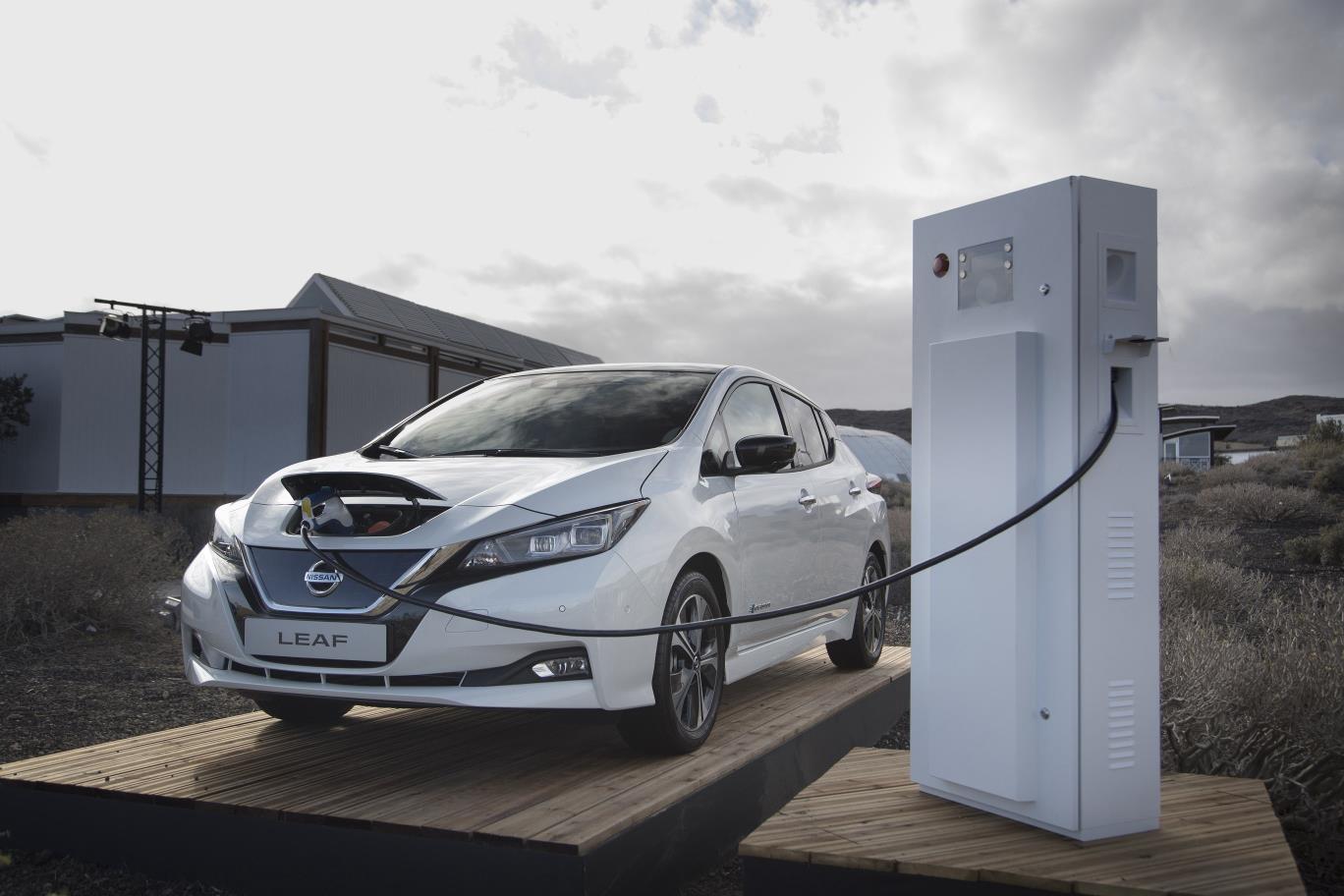
Since it mentions “1000 V2G installations” and comes with a nice picture of a 2018 LEAF plugged in to a V2G charging station Nissan’s announcement of its “e4Future” project’s successful entry in the recent Innovate UK V2G funding competition deserves an article of its very own:
Whilst it is certainly connected to the vehicle the charging station doesn’t seem to be connected to the grid! Regarding their successful bid Nissan say that:
Nissan and its partners welcome the announcement by Department for Business, Energy and Industrial Strategy minister Richard Harrington to award £9.8m for a Vehicle-to-Grid demonstrator project.
The project foundation is for a large-scale demonstrator targeting 1000 Vehicle-to-Grid (V2G) installations that will evaluate a commercial offer to electric vehicle fleet customers. The chargers will be controlled by an aggregator and data will be collected to understand the technical characteristics of vehicle to grid charging for both the vehicles and the electricity networks.
A consortium, led by Nissan, will bring expertise from across the whole Vehicle-to-Grid value chain: V2G infrastructure/aggregator provider Nuvve, the energy community represented by National Grid, two Distribution Network Operators (DNOs); UK Power Networks and Northern Powergrid, with varied grid infrastructure. The research and analysis activities will be supported by Newcastle University and Imperial College London.
Vehicle-to-Grid technology and this project will leverage Nissan’s brand commitment to Nissan Intelligent Mobility to transform the way people drive and live, creating a more exciting and sustainable future.
Once again V2G charging station manufacturers are conspicuous by their absence from the list of Nissan’s collaborators, and there is no label on the white charging station displayed above. Nissan also provide the following bullet points summarising the e4Future project:
In January 2018, OLEV and BEIS announced that 21 projects (8 feasibility studies, 5 collaborative research and development projects, and 8 real-world V2G trial projects) were to receive funding of £30m to develop the business proposition and core technology around V2G, and demonstrate those with large scale trials. The projects involve more than 50 industrial partners and research organisations from both the Energy and Automotive sector, marking the largest and most diverse activities on V2G in the world, and trialling more than 2700 vehicles across UK.
The V2G projects represent a significant step towards the transition to a low carbon transportation and a smart energy system. Allowing EVs to return energy to the Power Grid when parked and plugged for charging, will increase Grid resilience, allow for better exploitation of renewable sources and lower the cost of ownership for EV owners, leading to new business opportunities and clear advantages for EV users and energy consumers.
Amongst other things Nissan’s Managing Director of Nissan Energy at Nissan Europe, Francisco Carranza, said that:
Our EVs can be plugged into the grid and support the transmission and distribution companies in making the UK grid more sustainable and more stable. The increase of electric vehicles penetration, the introduction of more and more distributed generation and storage and the overall increase in renewable energy penetration should be done smartly.
To ensure Nissan plays a wider role in the advancement and protection of our cities, our electric V2G-ready vehicles will be used as clean mobile energy units.
Nissan has also reiterated its bold mission to offer customers free power for their EVs. V2G introduction will change the rules of the game and make energy cheaper for everyone.
The press release also contains a long list of quotes from Nissan’s collaborators on the project. Let’s take a look at this one from Myriam Neaimeh of Newcastle University:
The Government’s announcement will be a real game changer as we move towards decarbonising the grid.
This will be the first, large scale demonstration of vehicle to grid technology anywhere in the world and crucially, this project brings together all the key players for the first time – a giant of the automotive industry with energy providers, infrastructure experts and academics – so we can work together to really make this happen. It’s a really exciting time and fantastic that Newcastle University has been involved right from the beginning.
I still cannot help but wonder who will be manufacturing the all important V2G capable charging stations that will be installed as part of the e4Future project, and what de facto or international standards they will comply with?
UK Power Networks is part of a consortium that has won £11m government funding for four electric vehicle demonstration projects as part of a series of Vehicle to Grid (V2G) innovation bids.
Vehicle to Grid technology enables energy stored in an electric vehicle’s battery to be fed back into the electricity network at times of peak demand. By recharging when demand is low and putting energy into the electricity network when it is high, V2G helps manage the peaks and troughs, balance the network and make it more efficient.
The government is to ban the sale of all new diesel and petrol cars and vans by 2040, and it sees a smarter and more flexible electricity system as a major benefit to consumers and a key enabler to transport’s future growth.
UK Power Networks currently has more than 30,000 electric vehicles connected to our networks and by 2030 we anticipate that figure will rise to between 1.2-1.9m. Many of these electric vehicles will be V2G capable and could be used to support delivering electricity reliably and at the lowest possible cost.
The competition is funded by the Department for Business, Energy and Industrial Strategy (BEIS) and the Office for Low Emission Vehicles (OLEV) and is delivered by Innovate UK.
The four V2G projects that UK Power Networks will be taking part in are:
Bus2Grid: Supporting a project to turn a 30-bus garage into the first of its kind in the UK Vehicle-to-grid (V2G) bus garage.
e4Future: A trial on 1,000 V2G fleet vehicles
Beating Home: Domestic customer V2G trial involving customers in specific areas.
V2Street: Public charging networks with a local authority and a charge point provider. Targeted at the 60-70% of Londoners without off-street charging capability.
Note that the £20 million on offer last August has been increased to £30 million today! Perhaps that’s at least a partial explanation for the delay in the appearance of the announcement? UKPN don’t provide much detail on the four out of twenty one projects revealed so far, so let’s look a bit further afield shall we? Heading back to Twitter there’s an announcement of a new product offering and a new EV web site from Octopus Energy unsurprisingly entitled Octopus Electric Vehicles:
Introducing Octopus PowerLoop! Sell spare energy from your EV back to the grid. pic.twitter.com/5Sp40op6XB
which was swiftly followed by another Tweet explaining that:
We're launching Octopus PowerLoop as part of a consortium revolutionising EV vehicle-to-grid charging tech. Power your house using your car as a giant battery pack. Sell spare energy back to the grid. Read more here: https://t.co/qDLwVamEFj#v2g#ElectricVehicle#green
which put us on the trail of this press release from ChargePoint Services:
Octopus Energy today launched a new consortium to develop the first large-scale domestic trial of vehicle-to-grid (V2G) charging in the UK, following a £3 million funding injection by BEIS and OLEV delivered by InnovateUK.
Comprising Octopus Energy, Octopus Electric Vehicles, UK Power Networks, ChargePoint Services, Open Energi, Energy Saving Trust and Navigant, the consortium will roll out vehicle-to-grid charging technology to UK electric vehicle (EV) drivers this year.
The £7million project will install 135 V2G chargers in a ‘cluster’ delivery model that will facilitate research into the impact of widespread EV rollout on the UK’s electricity grid. The project will demonstrate the benefits of using domestic electric vehicle batteries to provide grid flexibility, cheaper transport and energy to homeowners, and faster decarbonisation of the UK’s power and transport sectors.
Customers will be able to discover electric vehicles, take them for a test drive and access a special V2G bundle, Octopus PowerLoop, when leasing a V2G compatible car. A two-way charger will enable the driver to charge their vehicle intelligently, using their vehicle battery to power their home during peak times or selling spare power back to the grid – creating value for the driver.
The technology could revolutionise the energy system by enabling electric vehicles to act as battery packs for the grid, helping to solve the challenge of how to harness the full potential of renewable energy whilst making sure that it is always available on demand. Evidence also shows that V2G use has the potential to increase battery life.
The ChargePoint announcement goes on to quote Octopus Electric Vehicles CEO Fiona Howarth:
Octopus Energy was founded to drive down the cost of energy to customers and the planet, and Octopus Electric Vehicles is the next phase in that mission.
There has been a lot of talk from the sidelines about how vehicle-to-grid technology will change the face of energy, but with this consortium we will be the first in the UK to actually deliver it to hundreds of households. We’re delighted to be working with this consortium of visionary companies, and proud to be backed by Innovate UK.
We’re hurtling towards a place where ‘two-way’ electric car chargers can enable homeowners with electric cars to sell their energy back to the national network. It’s a smart idea when you consider that over 90% of cars are parked at any one time – which is a lot of energy just sitting there doing nothing. This technology will give you the opportunity to manage your energy your way, and potentially become energy self-sufficient, reducing everyone’s reliance on energy companies. Get solar panels fitted, then adopt vehicle to grid technology and your home could become a private mini-power station!
There are a number of other quotes too. Mark Thompson, Senior Innovation Lead at Innovate UK added:
Vehicle-to-Grid is one of the most iconic parts of the electric vehicle domain, and one that represents a great opportunity for engaging society with the energy system for win-win benefit. The Octopus V2G project is part of a creative, diverse and ambitious group of V2G projects announced today that are way ahead of anything being done currently world-wide, and give the UK a genuine competitive edge in the electrification of transport.
Alex Bamberg, Managing Director, ChargePoint Services, said:
ChargePoint Services’ GeniePoint Network continues to be at the cutting edge of delivering the smartest and most reliable electric vehicle charging network in the UK. With this consortium, we join with existing partners to enable us to provide real benefits to the end user both in terms of efficiency and reduced cost. Our investment in the GeniePoint Network and its class leading reliability is further enhanced, whilst at the same time ensuring protection and flexibility of the UK’s energy Grid.
Ian Cameron, Head of Innovation at UK Power Networks said:
Electric vehicles are effectively energy sources on wheels, so there are tremendous opportunities to explore how electricity networks can use any spare capacity in those batteries to benefit our customers.
In the future you could use your car battery to power your house or earn money by selling its spare energy back into the network at peak times, and all of this whilst ensuring you have enough energy for your next day’s commute. We’re innovating to keep our customers moving at the lowest possible cost.
Dagoberto Cedillos, Strategy and Innovation Lead at Open Energi said:
Smart charging solutions that align the needs of drivers and the electricity grid are fundamental to the future of sustainable energy and transport. In partnership with our fellow consortium members, we’re applying cutting-edge tech to help realise the enormous opportunity that is domestic V2G charging in the UK, and internationally.
That is of course all very good news, but it raises one big question, in my mind at least. For some strange reason the Beating Home/PowerLoop (depending on which press release you prefer) consortium doesn’t seem to include a bi-directional electric vehicle charging point manufacturer and none of the assorted news releases and quotations mentions that rather essential piece of hardware, or indeed shows a picture of such equipment in action. To right that particular wrong, here’s one I prepared earlier:
There’s also no mention of the activity that I’m currently engaged in. Developing international standards for the protocols that ChargePoint Services’s charging station management system (CSMS for short) might one day use to communicate with the unnamed electric vehicle supply equipment (EVSE for short) OEM’s V2G capable hardware installed in 135 Great British homes:
I’ve been out on the road this week, explaining the potential benefits of vehicle-to-grid technology to a variety of audiences. First up on Wednesday evening was the “Autumn Connect” event at Exeter City Futures, where I made a presentation entitled “V2G – How to simultaneously store energy and reduce congestion.”. I had the luxury of being allowed 5 minutes to present an “elevator pitch” on that subject to the assembled throng:
Here’s an expanded version of the PowerPoint slide deck I used. They all had Kasia’s “artist’s impression” of V2G in action at the top, so I’ll omit that part here. The first two slides are taken from a 2 minute pitch I presented at the Met Office on Thursday (see below) and have to conform to a template provided by the Knowledge Transfer Network. Hence:
V2G Limited
A small “smart grid” consultancy located amongst the wind and solar “farms” of North Cornwall
The “smart grid” is actually the “internet of big things”!
Producing embedded firmware for 35 years
Under a previous name provided multi-drop fleet routing interfaced to SAP for a FTSE 250 company
Long experience in electricity distribution. The Lucy Switchgear Gemini RTU firmware is our baby
Whilst we understand hardware our expertise is in designing software/firmware
Evangelising Vehicle-to-Grid technology for 5 years
I trust that is all self explanatory?! If not please see below or ask questions in the space made available for that purpose in the comments section at the bottom.
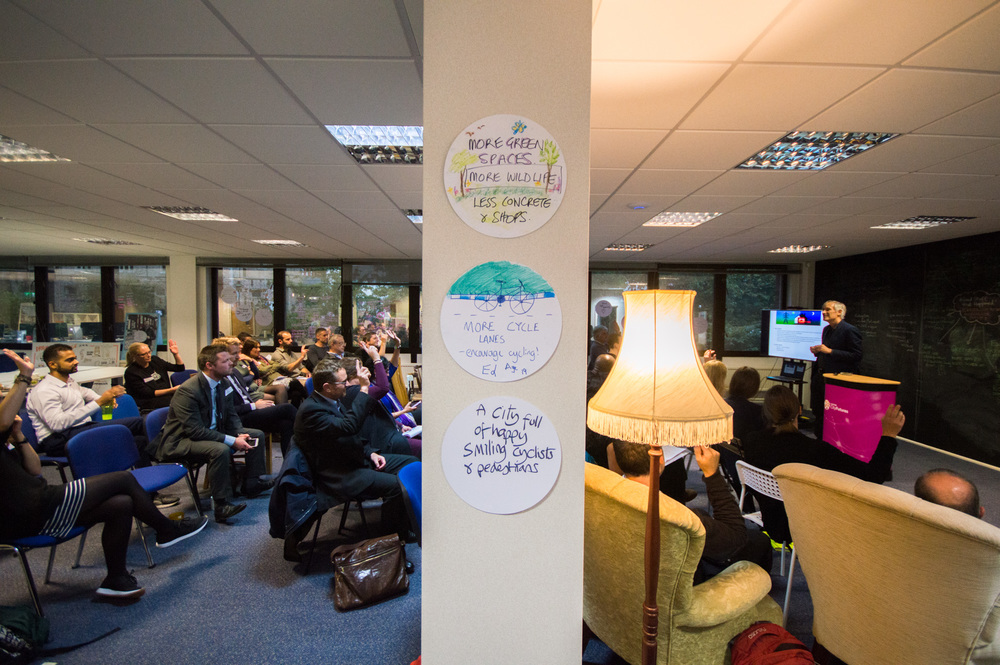
I always like to encourage some audience participation at these events, and Exeter City Futures delivered in spades! For the first time ever I didn’t need to blow my own bidirectional trumpet:
Timekeeper Lyndsey volunteered to blow the V2G trumpet for me, though ultimately it informed me that my time was up before I even managed to display the last slide, so make sure to read all about that below!
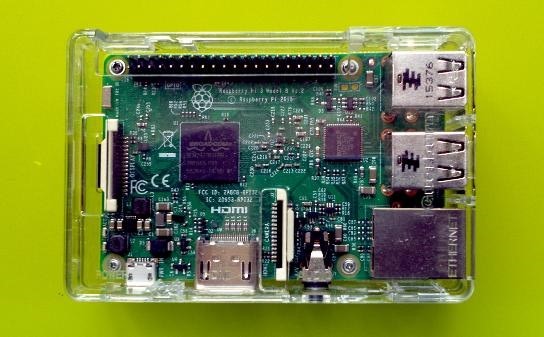
To make my “internet of big things” point I waved my trusty Raspberry Pi 3B at the audience. Here is what it looks like close up:
Dr. Sarah Ward from the University of Exeter correctly, if somewhat hesitantly, identified the mystery object. Now I’ve been programming the firmware (i.e. the software inside the hardware) in those sorts of devices for a very long time. 35 years ago single board computers were a lot slower and a lot bigger, but they still did the same sort of job. In those days they didn’t have USB ports like the Pi. Instead they had serial ports that conformed to the RS-232 standard. Getting two devices to talk to each other was always “interesting”!
I asked the audience to raise their hands if they’d previously heard of the “smart grid”. Quite a lot had:
Then I asked who had heard of the “internet of things”. Slightly more hands were raised. The point being that hardware a lot like the Raspberry Pi is at the heart of your smartphone, at the heart of the Smart Grid and (albeit in a smaller form factor) at the heart of the Internet of Things. The main difference being that the smart grid has been around quite a lot longer than the IoT! A point that some of my audience at the Met Office on Thursday seemed to agree with since they nodded their heads vigorously at that juncture!
Moving on to slide 2:
1. Our project idea
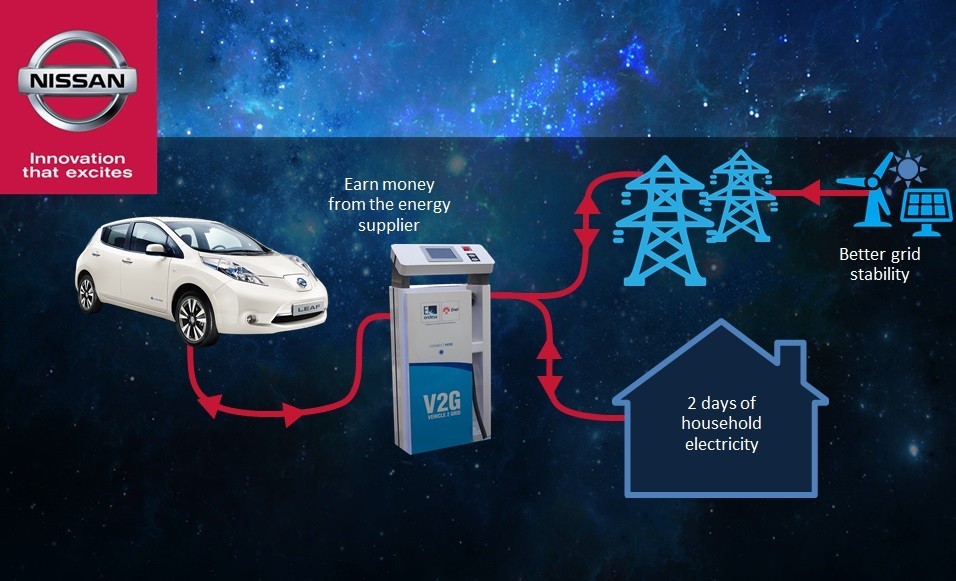
See the infographic above
North Cornwall is ideal!
Charge EVs on sunny lunchtimes
2. What’s innovative about it?
Nobody’s done it yet
On all sorts of levels!
Price signals / regulation?
3. The services we can offer?
Vast systems integration experience
Vast enthusiasm
AI for Energy Systems
4. The partners/services we seek?
Kite marked V2G hardware
An all electric car club
A suitable site
I asked the audience if it was obvious what the infographic represented. I was subsequently informed that a hand had gone up in the far corner of the room, but I didn’t notice at the time. To explain, imagine a conventional home with solar PV panels on the roof exporting excess electricity to the local distribution grid. Now add some static batteries in the utility room or the garage. Store any excess “free” energy generated when the sun is shining in that battery. When the household electric vehicle returns from the daily commute charge it up from the battery rather than from the mains, since by now the sun will be low in the sky or already below the horizon in winter.
If you have that basic hardware setup available then there’s lots of other things you can do with it! How about buying electricity from the grid when it’s cheap and storing it in your static and/or mobile batteries. Then just for starters you could sell it back to the grid when electricity’s more expensive? There are other possibilities too, which brings me on to slide 3:
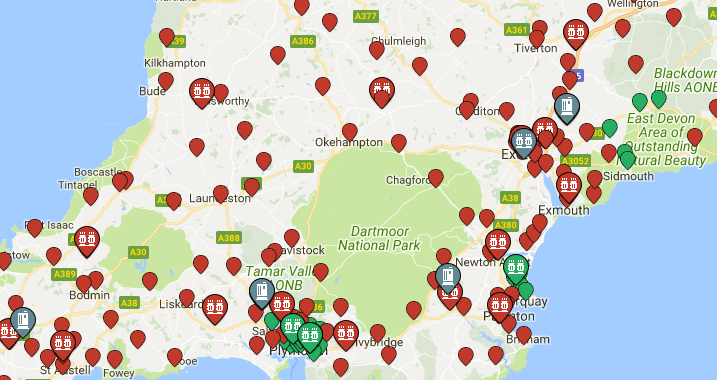
That’s a portion of Western Power Distribution‘s network constraint map. Note that most of Devon & Cornwall is plastered in red due to all the intermittent renewable electricity generation we have down here. One day (hopefully!) soon you’ll be able to earn money by allowing WPD to charge and discharge your batteries when it suits them, in order to help them cope with the stresses that intermittent generation can subject their electricity distribution grid to. The current fly in that particular pot of ointment are the rules and regulations currently enforced by Ofgem, which make it nigh on impossible for neighbouring energy “prosumers” to trade electricity with each other. Highlighting bullet point 2(c) I idly enquired if anybody else in the room “has had problems with Ofgem’s red tape?”. Not a single hand was raised in protest.
As regular readers will be aware, the town of Camelford in North Cornwall is an Air Quality Management Area (AQMA for short). Much like the centre of Exeter, the air quality in the centre of Camelford is fairly foul due to the noxious emissions of all the diesel engines that travel slowly through it. Electric vehicles can help with that, since they have no exhaust pipes and by and large use regenerative braking rather than rubbing dust off brake pads when they want to slow down. Hence slide 4 consisted of pictures of V2G capable examples of such vehicles, plus an image of the xStorage static battery storage device being produced from ex Nissan LEAF batteries by Eaton. An electric car club in Camelford and/or Exeter would be a small step along the road to reducing congestion and air pollution in both town and city centres, whilst V2G enabled vehicles in the fleet would also provide a mobile energy storage facility!
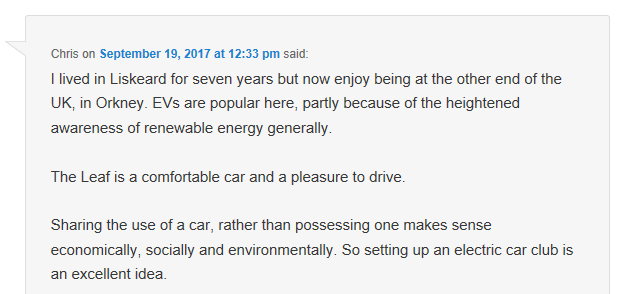
That’s about as far as I got on Wednesday before Lyndsey blew the metaphorical whistle on me, so I hastily concluded by mentioning this apposite comment from blog reader Chris:
It seems that struck a chord with at least one member of the audience. In the first image above you can see the back of Mark Hodgson’s head, if you know where to look. Mark’s Co-Cars car club certainly isn’t 100% electric, but it has just installed a couple of EV charging points in the Exeter area. That would seem to fit the bill for my bullet point 4(b) quite nicely?
Here’s the final slide I never had a chance to mention on Wednesday evening:
Of course solar PV isn’t the only form of RE generation, and batteries aren’t the only way of storing energy, at home or in the office. There’s also heat, and cold, and eddi & zappi: http://myenergi.uk/products/
What do you suppose that’s all about? To help answer that question let’s move on to Thursday and my trip to the Met Office. At least the previous evening’s rain had stopped:
I was presenting at a briefing event for Innovate UK’s Emerging and Enabling Technologies competition. I got the feeling that since this was (one of?) the first KTN briefing(s) held in Exeter most delegates weren’t making the most of the KTN’s “Meeting Mojo” facility. Anybody who ventured in there would have discovered that I was hoping to meet:
Partners who appreciate that the “Smart grid” is a subset of “The internet of things”, and predates the IoT!
whilst offering a potential consortium:
Smart Grid Consultancy: 5 years vehicle-to-grid, 15 years electricity distribution, 35 years system integration. Now with added blockchain!
Shortly before the event proper got underway I explained to the KTN’s Simon Yarwood, MC for the pitch session, that although I only had 2 slides in my deck I was actually representing 2 companies from a nascent V2G consortium. He graciously allowed me to overrun my allotted 2 minutes, and here’s what I added to the top two slides above:
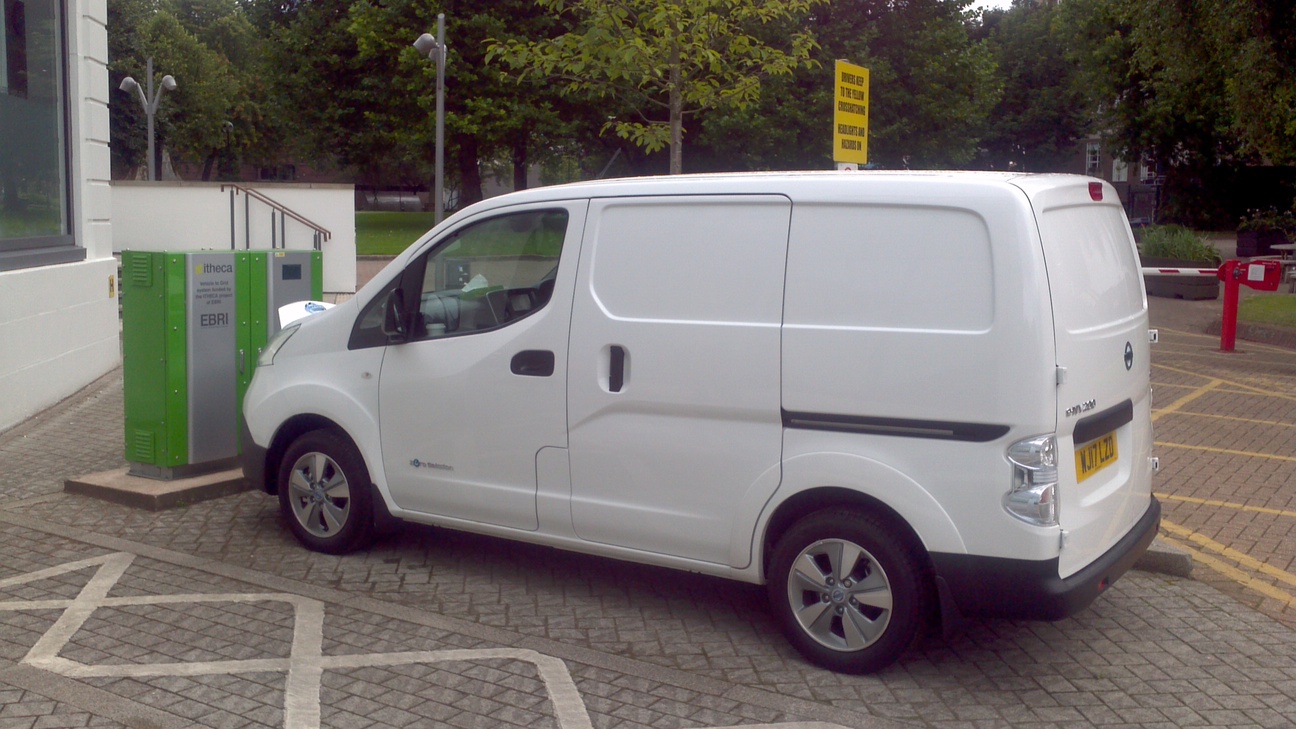
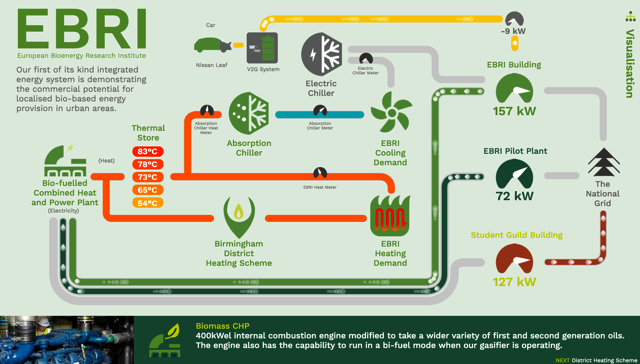
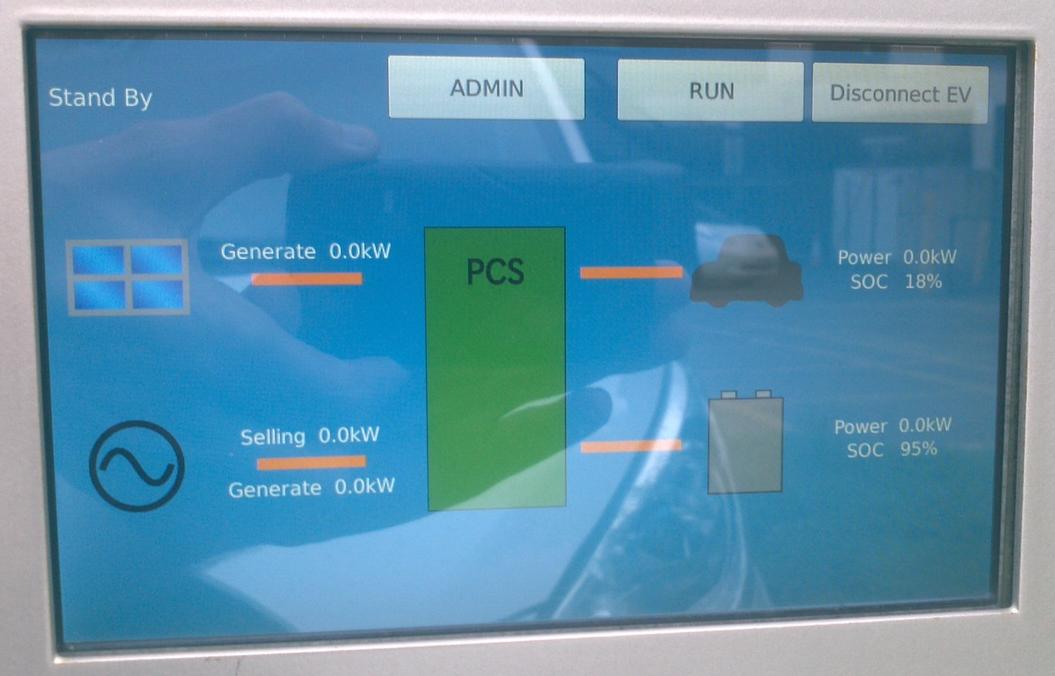
As you can see at the top of that page, a bidirectional charging station with associated static storage connected to a Nissan LEAF pool car is employed at EBRI as both an energy source and sink, in what is the UK’s first V2x pilot project. Strictly speaking it’s vehicle to building (V2B) rather than fully fledged V2G, but as far as the charging station itself is concerned that is of no consequence.
The BMS software at EBRI is now being further developed by Grid Edge Ltd. who assure me that it utilises various machine learning methods using a variety of inputs including weather forecasts, energy usage history, WiFi connections and football match schedules to optimise the overall energy use profile of the building and the assets within. As well as a modest amount of battery storage the EBRI building also includes energy storage in the form of large tanks of both hot and cold water in the basement, as indicated on the real time infographic shown above. That’s where the MyEnergi system depicted in slide 5 above comes in. It doesn’t use complex prediction or optimisation software, but it does attempt to sensibly direct the electricity generated by domestic solar PV panels to charge your EV, heat up your hot water, or if all else fails export some to the grid.
The United Kingdom Government have finally seen the light and have pledged to pump £20 million into vehicle-to-grid technology:
Up to £20 million is available from the Department for Business, Energy & Industrial Strategy – working with the Office for Low Emission Vehicles and Innovate UK – to fund projects that investigate new business models, consumer awareness and technologies that support interaction between electric vehicles and the grid.
So-called vehicle-to-grid technologies are expected to play a big part in making the UK’s electricity supply network smarter and in encouraging take-up.
Vehicles that can take electricity from the grid when demand is low and return it when demand is high could help to even out peaks and troughs and make the grid more efficient.
The UK government wants nearly all cars to be zero emission by 2050, and it sees a smarter and more flexible electricity system as a major benefit to consumers and a key to future growth.
This is of course very good news, apart from the time it has taken UK plc to get around to it! As a consequence of the announcement V2G UK booked ourselves in to give a two minute “elevator pitch” at a Knowledge Transfer Network V2G briefing event at the Energy Systems Catapult offices in Birmingham.
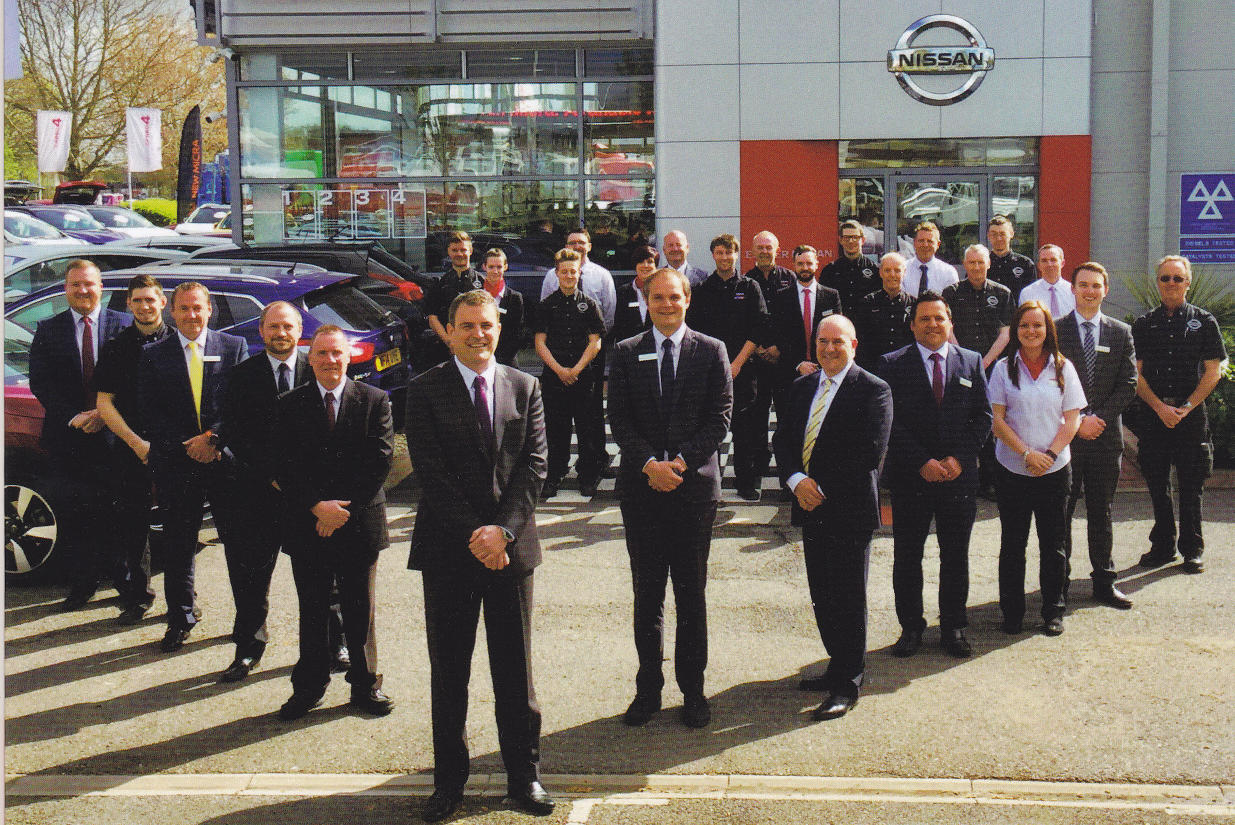
We decided we should travel in style, and Exeter Nissan kindly offered us an extended test drive in an almost brand new Nissan e-NV200 van! That’s much better for our purposes than a black stretch limo, which we will hopefully prove to you in due course. Here’s a photo of the Exeter Nissan team for posterity:
Arguably the most enthusiastic and experienced Nissan team in the UK!
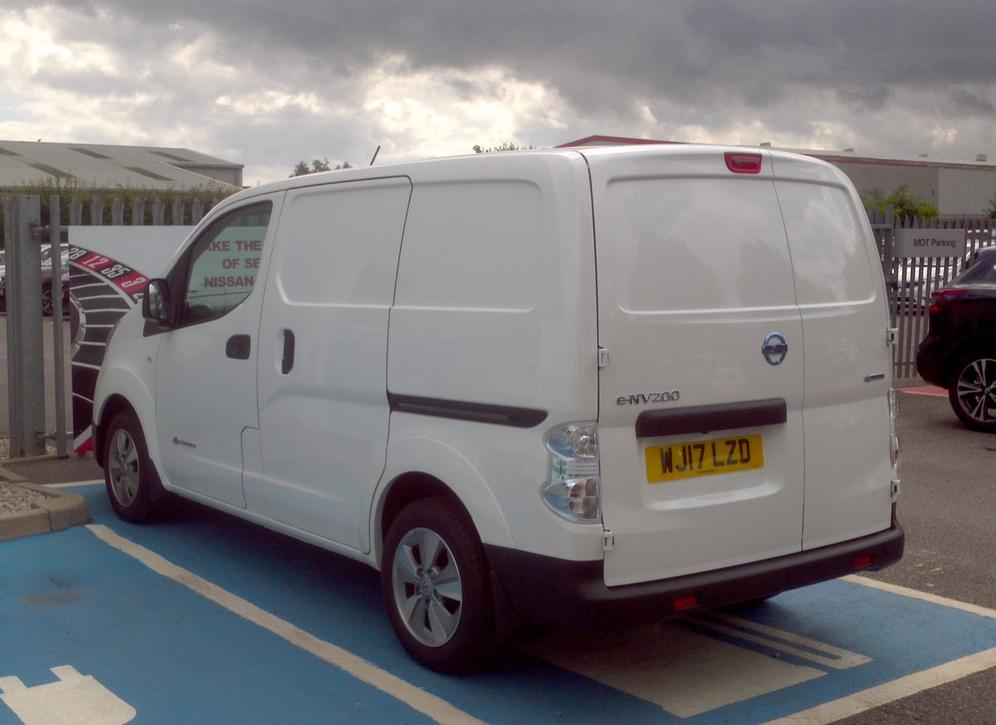
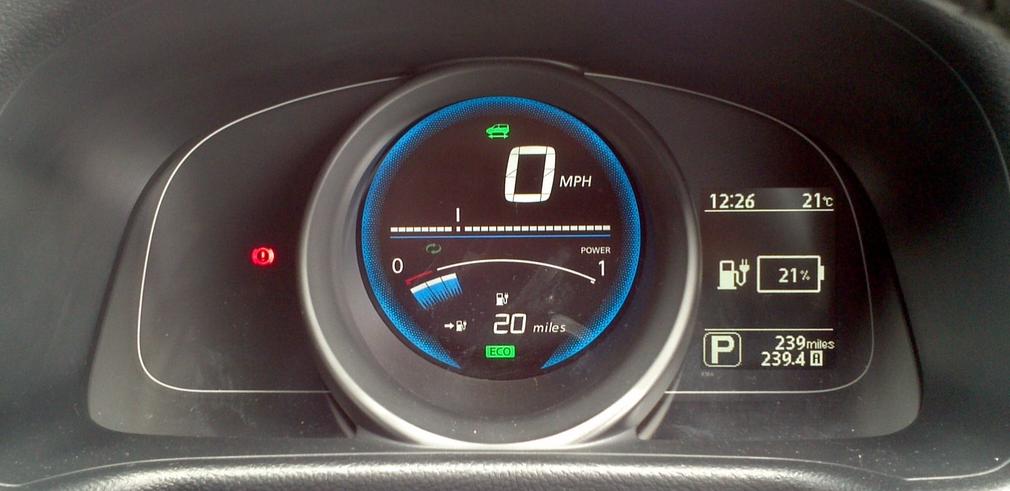
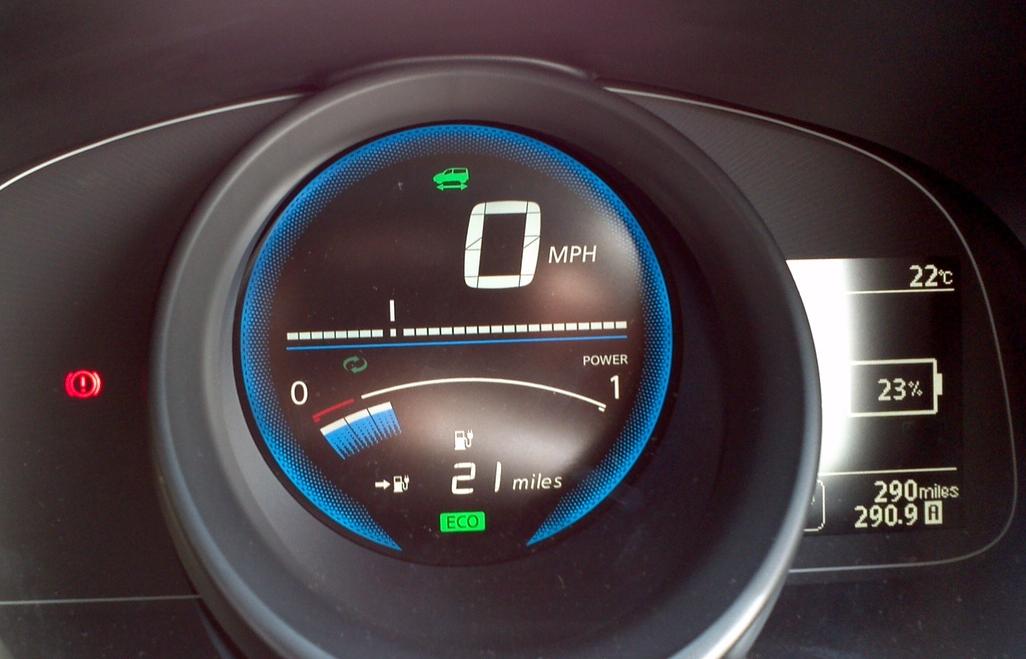
We picked up the e-NV200 from them almost fully charged, and here’s how it looked at the time:
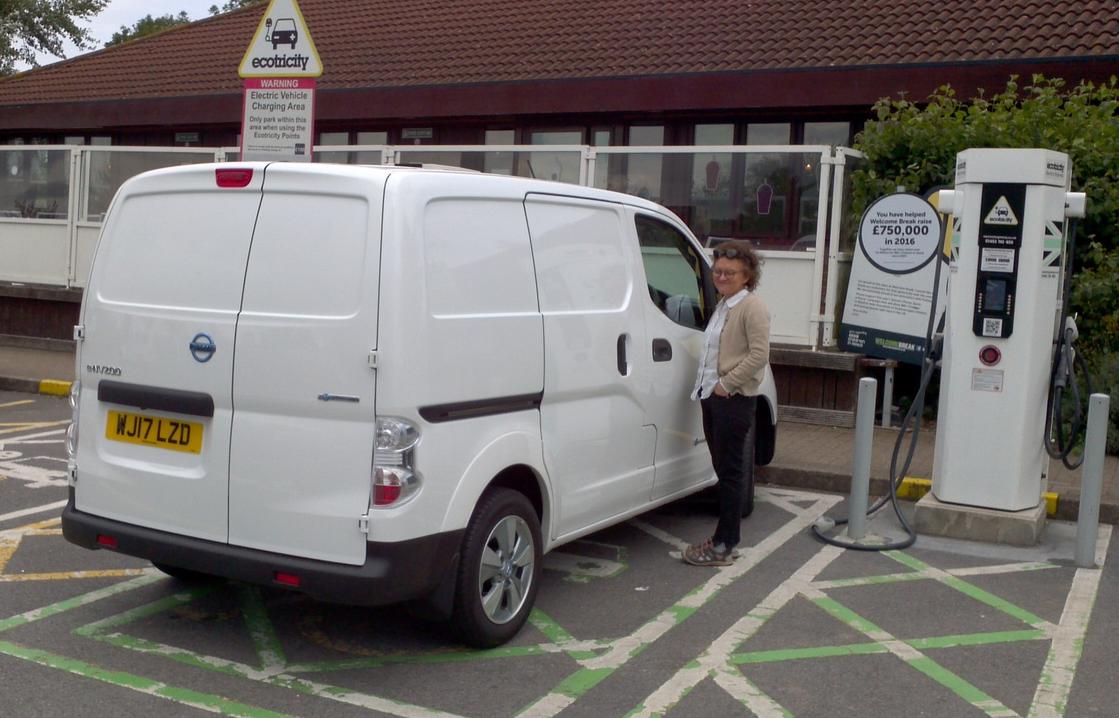
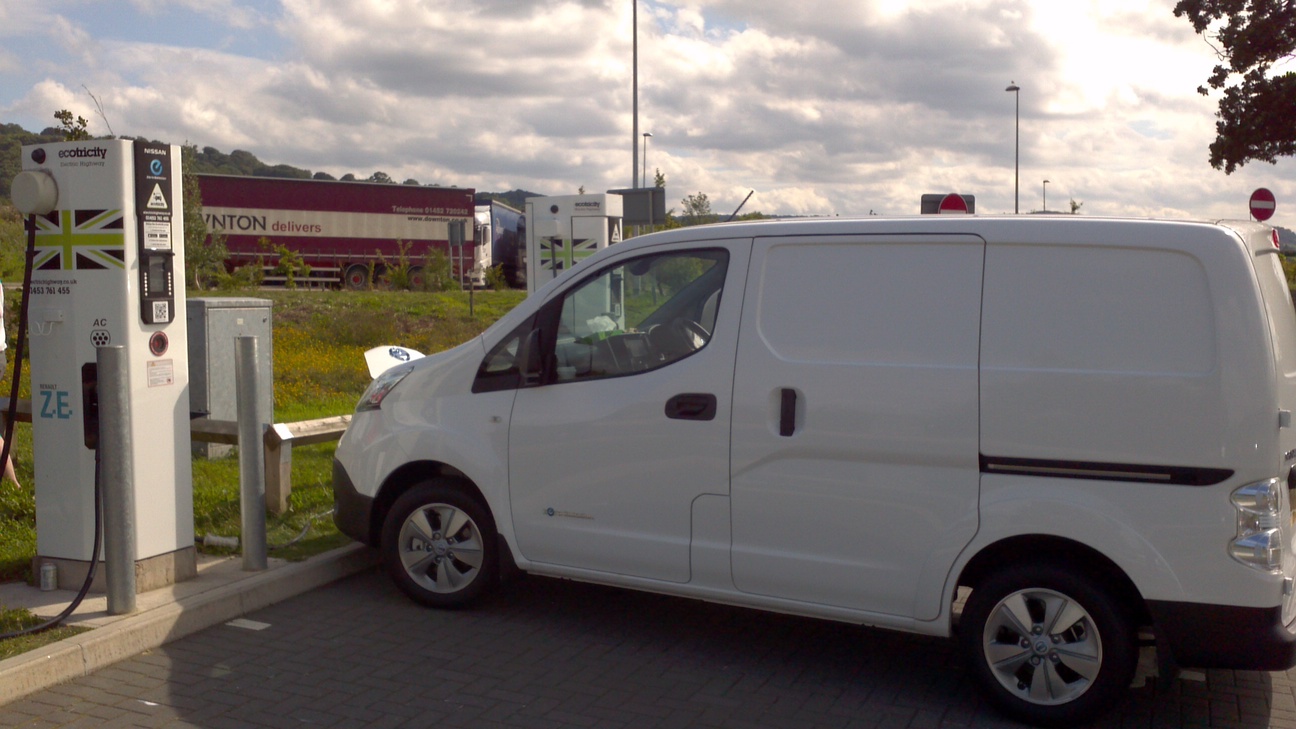
The weather wasn’t too bad, so we jumped straight in and drove the 56 and a bit miles up the M5 to Sedgemoor Services in “Eco” mode at a steady 60 mph or thereabouts. Now zooming up the motorway carrying an overnight bag and a couple of suits in the back isn’t a typical days work for a van, but with that proviso in mind here are some of the sights we saw on arrival at Sedgemoor:
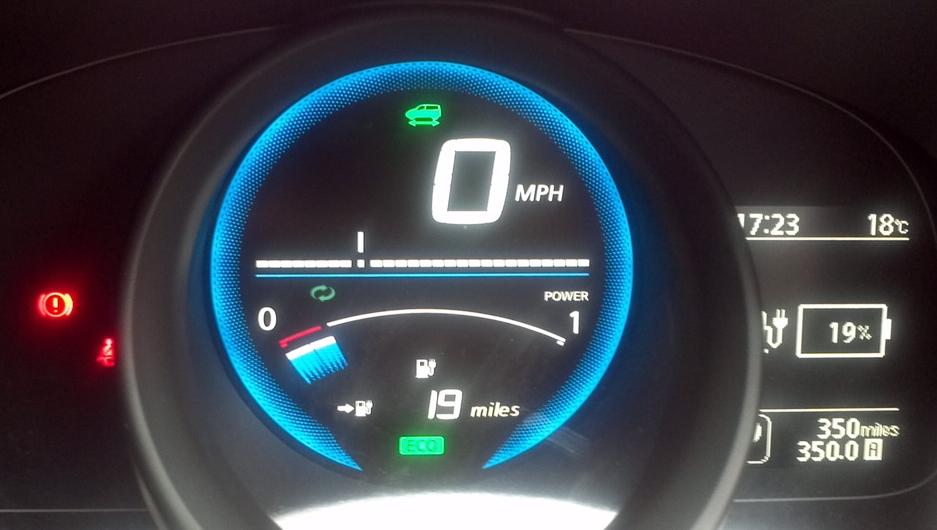
The e-NV200 dashboard will be familiar to LEAF drivers, although there are some other differences. The “gear stick” is mounted below the dashboard, and the foot operated parking brake has morphed back into a conventional handbrake. In our case the 56 miles we’d travelled plus 20 left in “the tank” equates to a range of 76 miles by my reckoning, which is roughly what we achieved during the entire journey.
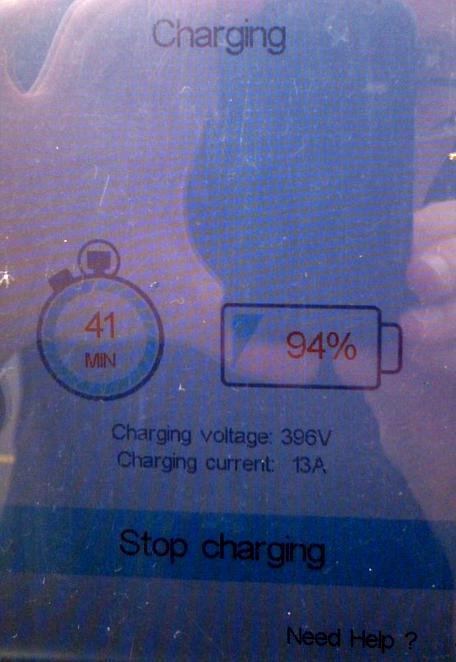
We’d used the old Ecotricity free “smart card” system on previous test drives, but this time we had to pay through the nose using their new smartphone app. That refused to install on my ancient Motorola Atrix, but we eventually got things working on Kasia’s more modern Sony Xperia. After a lengthy lunch break we returned to see this:
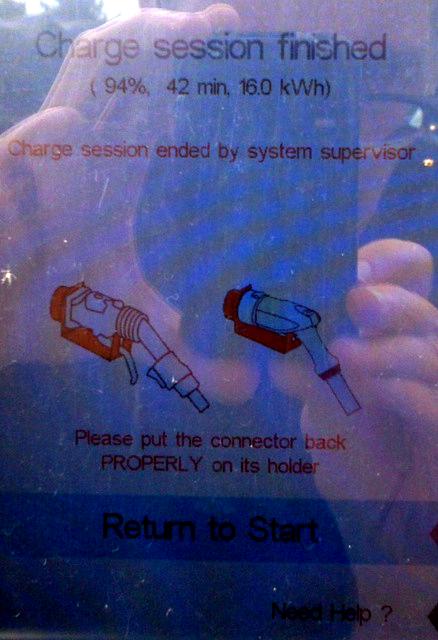
Stopping charging proved to be a non trivial procedure. Pressing the button on the charging station prompted Kasia to tap a button on her phone. That seemed to do the trick on the physical equipment but the virtual app insisted that charging hadn’t stopped yet.
We eventually pressed on regardless to the shiny new Gloucester Services:
51.7 miles according to Google maps. 51 miles according to the e-NV200:
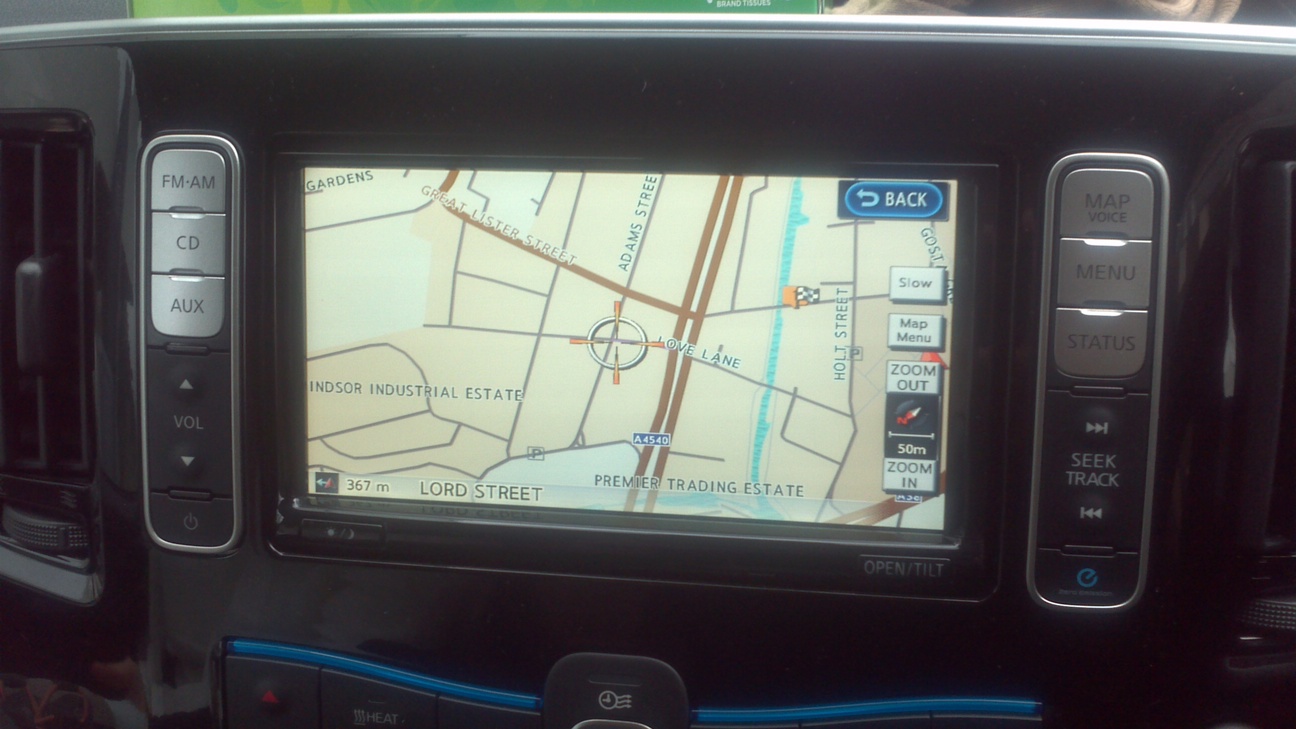
Kasia’s Ecotricity app was still insisting the charging session at Sedgemoor hadn’t finished yet! Power cycling her phone enabled us to get a new session started. After a slightly swifter coffee break this time we set off on the last leg to Birmingham with a 95% charge. That was when our troubles really began. The Nissan satellite navigation system kept insisting “you may be unable to reach your destination” even though there was apparently plenty of juice in the battery. It seems the M5 north of junction 5 was jammed solid. The sat nav eventually suggested an alternative route taking the A38 around Bromsgrove and then the M42 before heading towards Aston University in the centre of Birmingham. After several apologetic phone calls we eventually arrived at the European Bioenergy Research Institute well behind schedule:
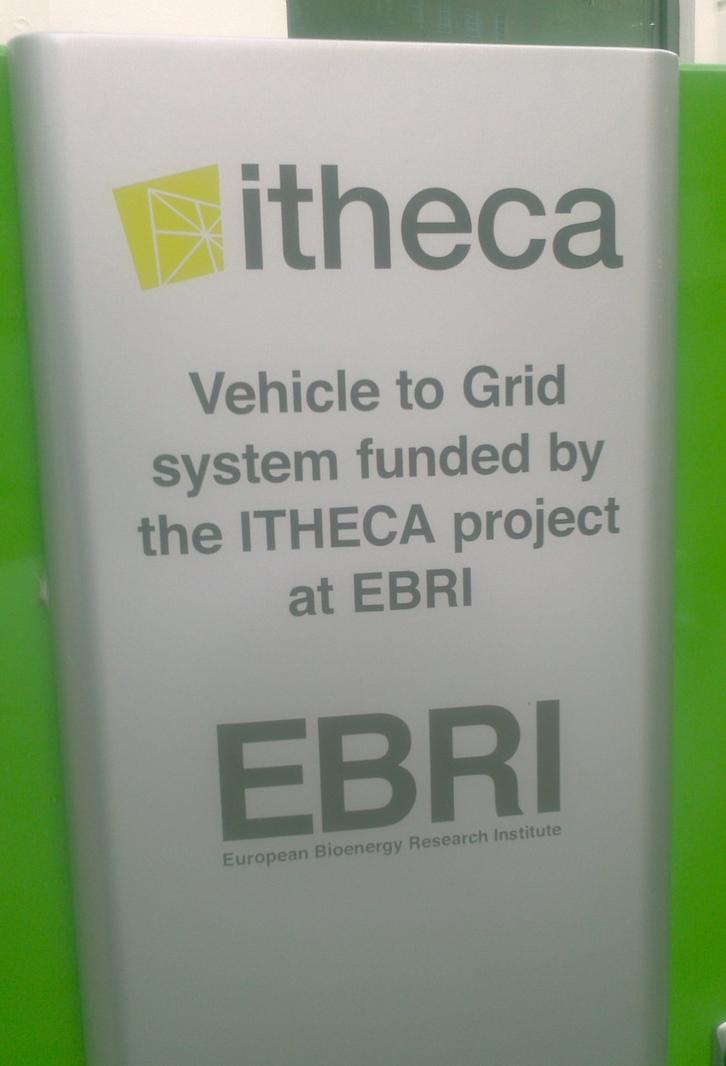
Thankfully in all the circumstances our e-NV200 started charging without problems on the ITHECA project‘s bright green bi-directional charger!
Spring is in the air here in the United Kingdom. Several of the people I debate the future of distributed energy storage with on a regular basis have been in the news this week!
EVs are stable energy storage asset, says Innovate UK
The article goes on to explain that:
Innovate UK has brushed aside ongoing fears around using electric and plug-in vehicles as an energy storage facility, insisting they present a “car park of energy storage” for UK network companies after 2025.
Innovate UK’s lead technologist for energy systems Mark Thompson said at a recent storage event that fears that using EV batteries for grid support will rapidly degrade the batteries are unfounded. Innovation projects already undertaken into EV charging reveal the batteries will be accessible to the grid 95 per cent of the time.
Thompson said “a lot of anxiety” around using EVs as energy storage centres on battery recycling, but tests show that using an EV battery to provide 7kW of grid support is equivalent to driving at just 20mph.
Mark went on to point out:
That is a modest amount of power but aggregated would be very useful for a distribution network operator. The stress level on that battery of sitting there continually pushing out 7kW compared to a 35 minute journey is a no-brainer, it’s an extremely calm and un-stressful environment for that vehicle. Car manufacturer Nissan has been very vocal on the potential benefits of using EVs for grid support because there really isn’t an issue compared to the complexities and stresses that the battery goes through for a pretty normal driving scenario.
If we can be clever and come up with the right business models to engage people in moving their charging and allow network operators to have some control, if we can be savvy about that then network investment costs are virtually zero until you are well into the 2020s
UK Plc “being savvy” and providing support for the “right business models” is another matter entirely however! Utility Week continued:
Projects such as My Electric Avenue have revealed that vehicles are sat stationary at either the home or workplace, both potential charging locations, 95 percent of the time making EVs a “stable storage asset”. Based on “very modest projections” there could be as many as 300,000 EV or hybrid vehicles on UK roads by 2025, presenting around 4GW of potential storage to the UK’s electricity system with very little network reinforcement required.
Having discussed the Utility Week article with Mark Thompson it seems they have misinterpreted a couple of points:
I didn’t wish to imply that cars would be 95% available, just that they are “parked for 95% of the time” but that data DNO projects such as My Electric Avenue and ETI analysis indicate that a “very healthy proportion” of plugins will be accessible over the 24 hour cycle for grid support given charging and use patterns. The 95% figure as currently illustrated is not of course realistic, but perhaps eventually grid “connected availability” may be in the region of 30-60% depending on the time of day, which in time will amount to a significant amount of grid connected resource.
Also, the 4GW figure should be 4GWh.
Here’s the original slide from Mark’s presentation, with the correct units clearly visible on the Y axis and in big letters towards the end of the headline:
Today the mainstream media picked up the story in the form of an article by Damian Carrington in The Guardian entitled “From liquid air to supercapacitors, energy storage is finally poised for a breakthrough”. Damian opens with a quote from Jill Cainey, director of the UK’s Electricity Storage Network.
It doesn’t always rain when you need water, so we have reservoirs – but we don’t have the same system for electricity.
A battery project can take 12-18 months from saying we will do it, to completion. California is aggressively pursuing a low-carbon agenda and they don’t want diesel [generator back-up] on the system. Amber Rudd is talking a lot about energy storage, but we need a clear regulatory steer. The planes are circling, but there is no runway to land on.
Next Mark Thompson is quoted once again, apparently from the Utility Week article rather than from his actual presentation:
Using electric car batteries as a smart storage network while still in the cars is a promising option in the future, according to Mark Thompson at Innovate UK, a government agency. He says there could be 4GW capacity – a nuclear power station is about 1GW – by 2025 across the 300,000 electric cars projected to be on UK roads by then. He says cars are stationary for 95% of the time and using them could save billions of pounds, removing the need for new power stations and power lines.
However the article continues:
While interest in energy storage projects in the UK is surging – a recent call from National Grid for 200MW of short-term storage was oversubscribed six times – it is starting from a low base: just 24MW has been installed compared to the 5,000MW the government’s official advisers, the Committee on Climate Change, envisages in a low-carbon nation in 2030.
In November, energy secretary Amber Rudd said: “Locally generated energy supported by storage, interconnection and demand response, offers the possibility of a radically different model… We are looking at removing regulations that are holding back smart solutions, such as demand side response and storage.”
Removing the regulations that are holding back smart solutions is one of the reasons Mark and Jill were already on my list of people to call this week. That’s because DECC’s current consultation about how to “Ensure Regulation in the Energy Sector Encourages Innovation” closes on February 11th!