An Exeter Nissan e-NV200 Heads North

The United Kingdom Government have finally seen the light and have pledged to pump £20 million into vehicle-to-grid technology:

Up to £20 million is available from the Department for Business, Energy & Industrial Strategy – working with the Office for Low Emission Vehicles and Innovate UK – to fund projects that investigate new business models, consumer awareness and technologies that support interaction between electric vehicles and the grid.

So-called vehicle-to-grid technologies are expected to play a big part in making the UK’s electricity supply network smarter and in encouraging take-up.

Vehicles that can take electricity from the grid when demand is low and return it when demand is high could help to even out peaks and troughs and make the grid more efficient.

The UK government wants nearly all cars to be zero emission by 2050, and it sees a smarter and more flexible electricity system as a major benefit to consumers and a key to future growth.

This is of course very good news, apart from the time it has taken UK plc to get around to it! As a consequence of the announcement V2G UK booked ourselves in to give a two minute “elevator pitch” at a Knowledge Transfer Network V2G briefing event at the Energy Systems Catapult offices in Birmingham.

We decided we should travel in style, and Exeter Nissan kindly offered us an extended test drive in an almost brand new Nissan e-NV200 van! That’s much better for our purposes than a black stretch limo, which we will hopefully prove to you in due course. Here’s a photo of the Exeter Nissan team for posterity:
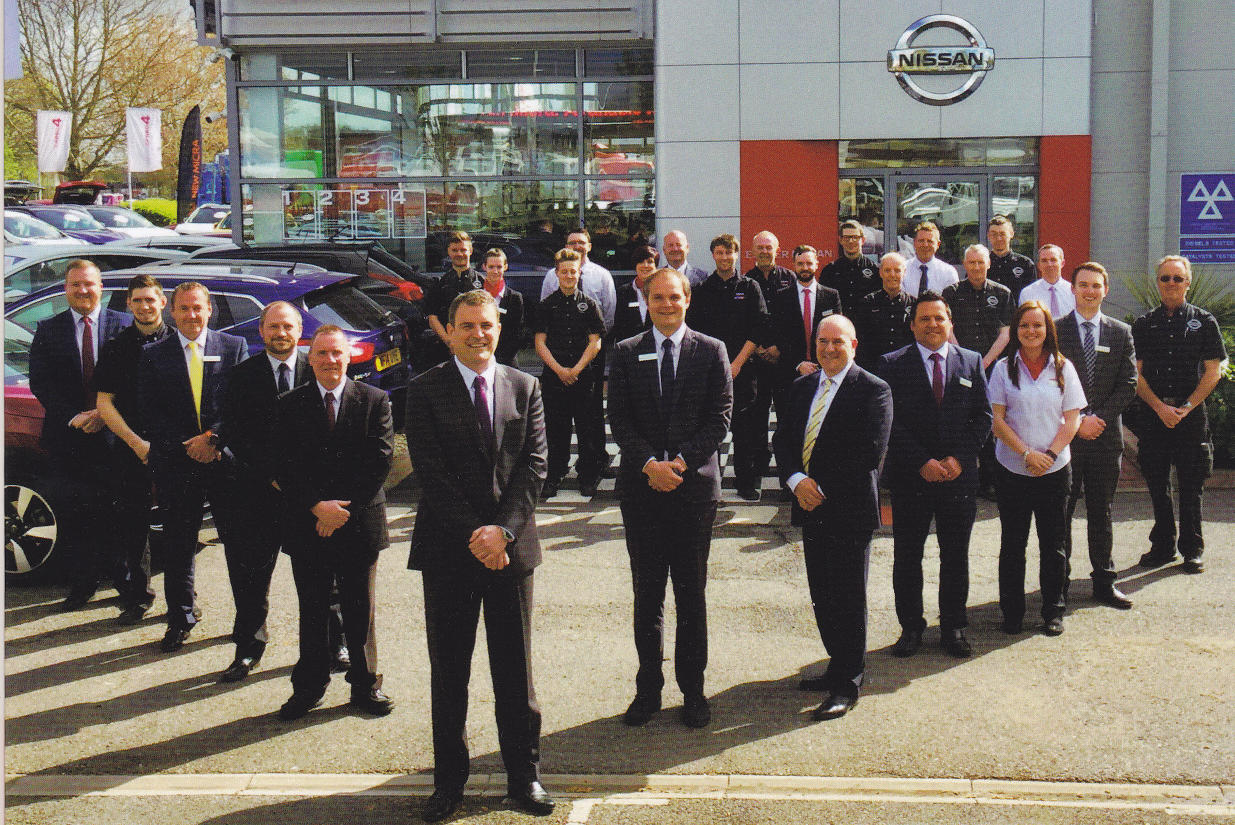
Exeter Nissan - Arguably the most enthusiastic and experienced Nissan team in the UK!

Arguably the most enthusiastic and experienced Nissan team in the UK!

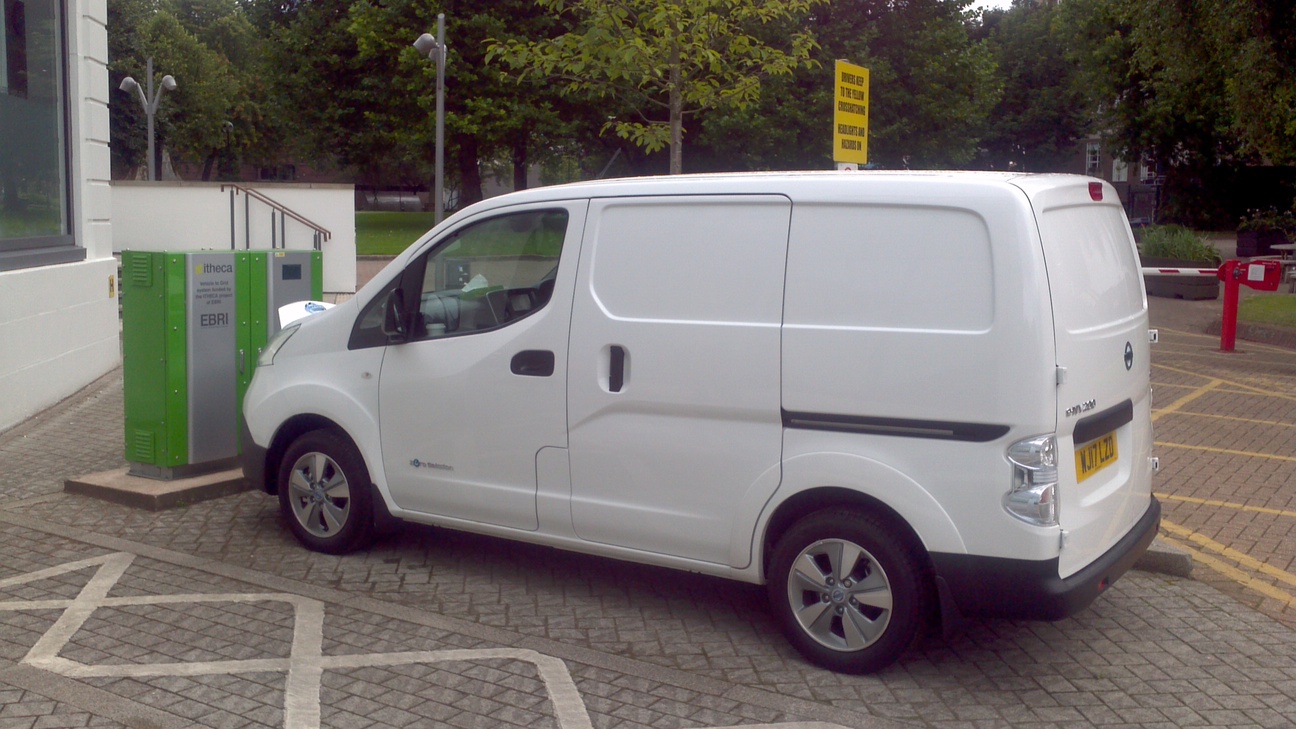
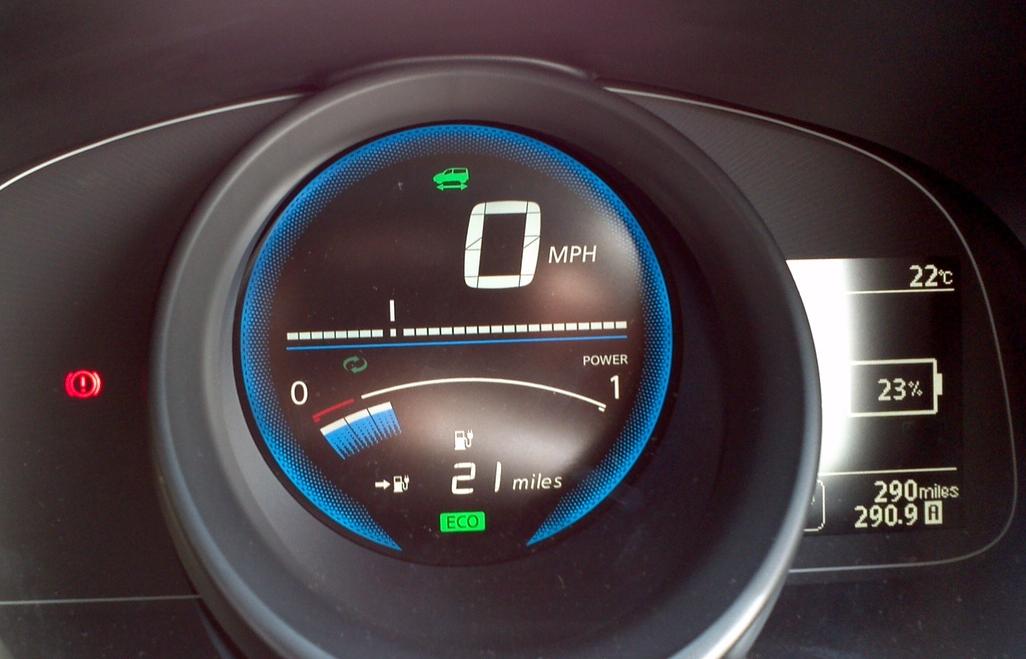
We picked up the e-NV200 from them almost fully charged, and here’s how it looked at the time:
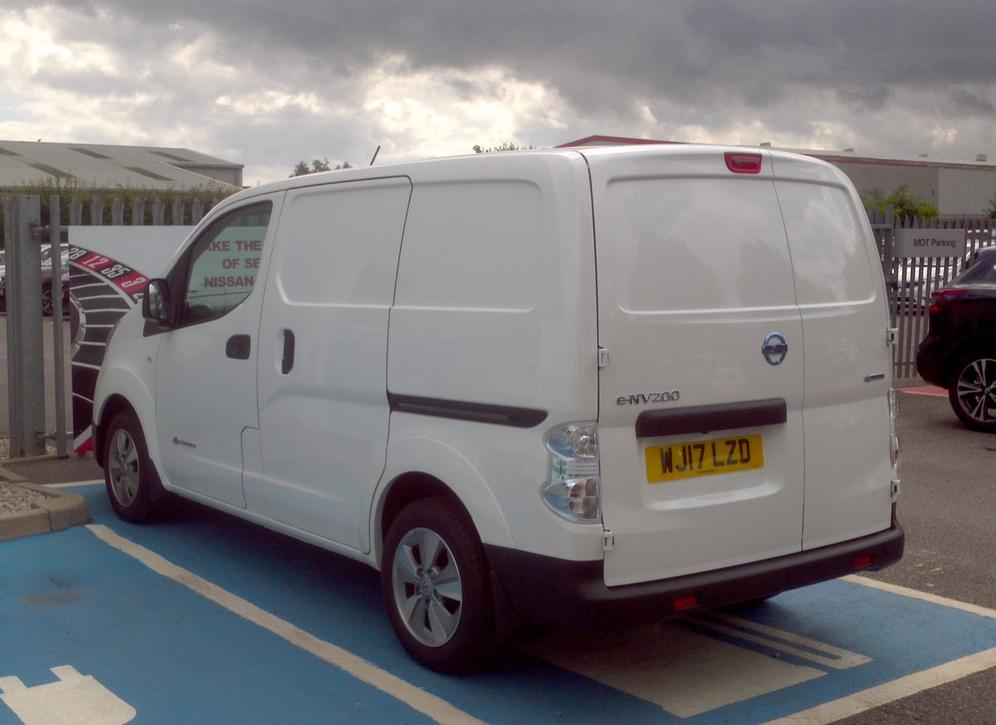
The weather wasn’t too bad, so we jumped straight in and drove the 56 and a bit miles up the M5 to Sedgemoor Services in “Eco” mode at a steady 60 mph or thereabouts. Now zooming up the motorway carrying an overnight bag and a couple of suits in the back isn’t a typical days work for a van, but with that proviso in mind here are some of the sights we saw on arrival at Sedgemoor:
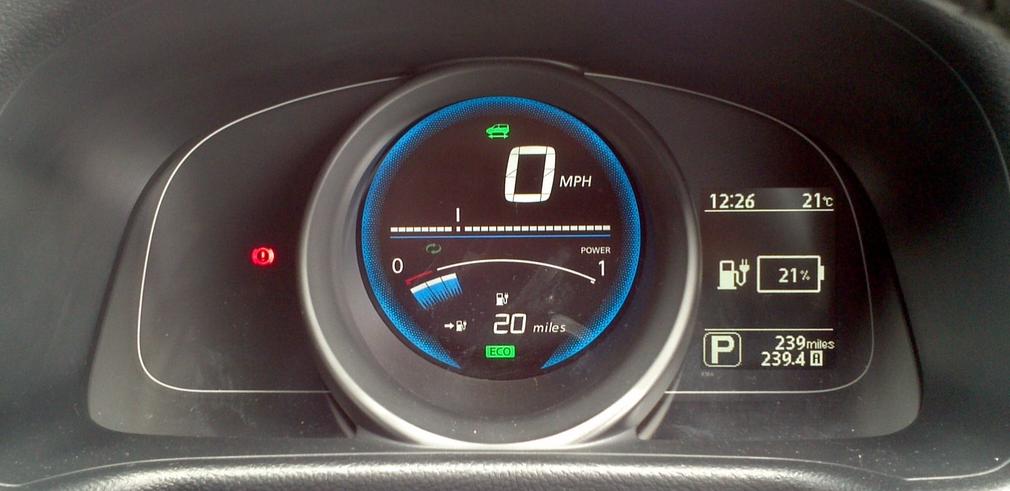
The e-NV200 dashboard will be familiar to LEAF drivers, although there are some other differences. The “gear stick” is mounted below the dashboard, and the foot operated parking brake has morphed back into a conventional handbrake. In our case the 56 miles we’d travelled plus 20 left in “the tank” equates to a range of 76 miles by my reckoning, which is roughly what we achieved during the entire journey.
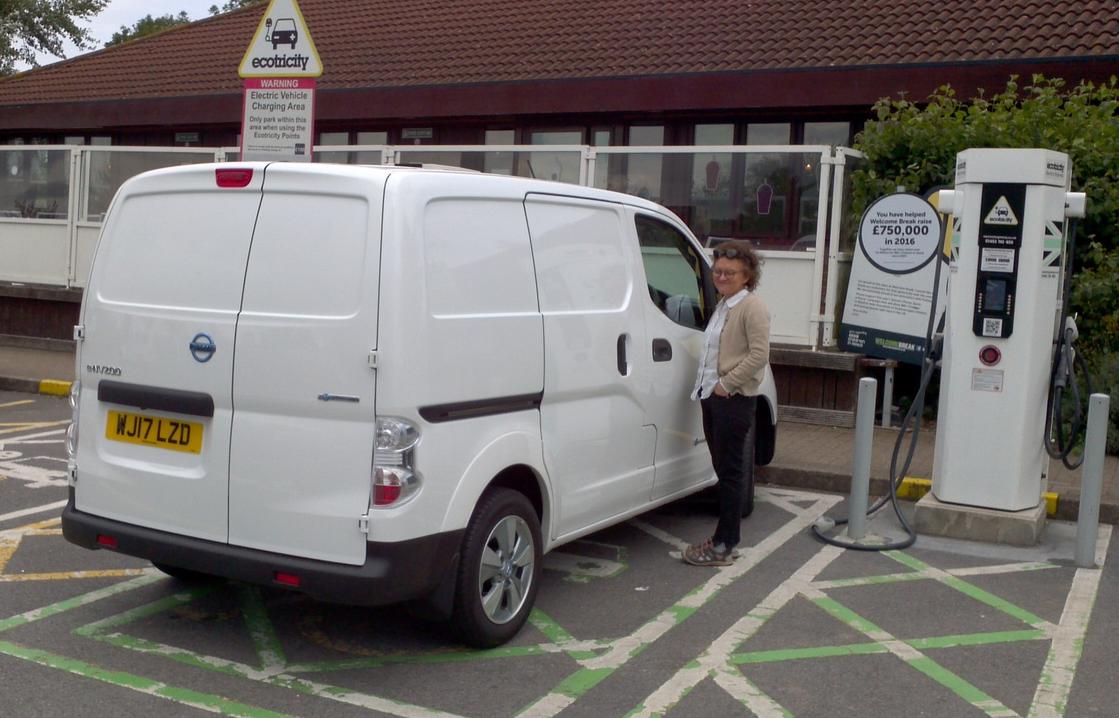
We’d used the old Ecotricity free “smart card” system on previous test drives, but this time we had to pay through the nose using their new smartphone app. That refused to install on my ancient Motorola Atrix, but we eventually got things working on Kasia’s more modern Sony Xperia. After a lengthy lunch break we returned to see this:
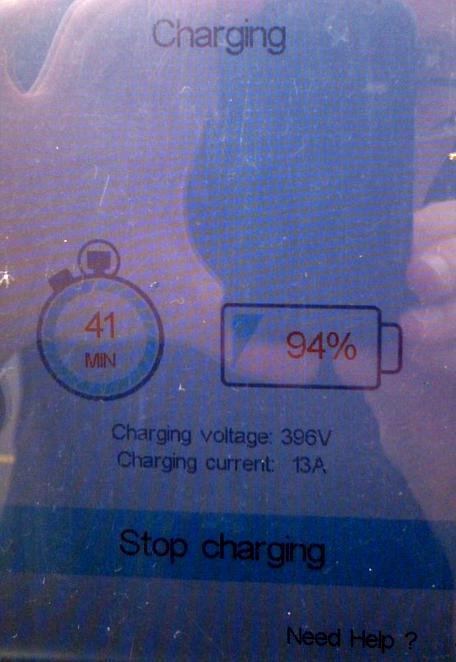
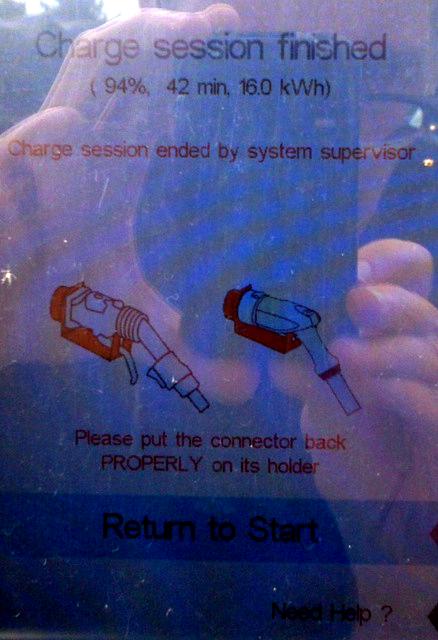
Stopping charging proved to be a non trivial procedure. Pressing the button on the charging station prompted Kasia to tap a button on her phone. That seemed to do the trick on the physical equipment but the virtual app insisted that charging hadn’t stopped yet.
We eventually pressed on regardless to the shiny new Gloucester Services:
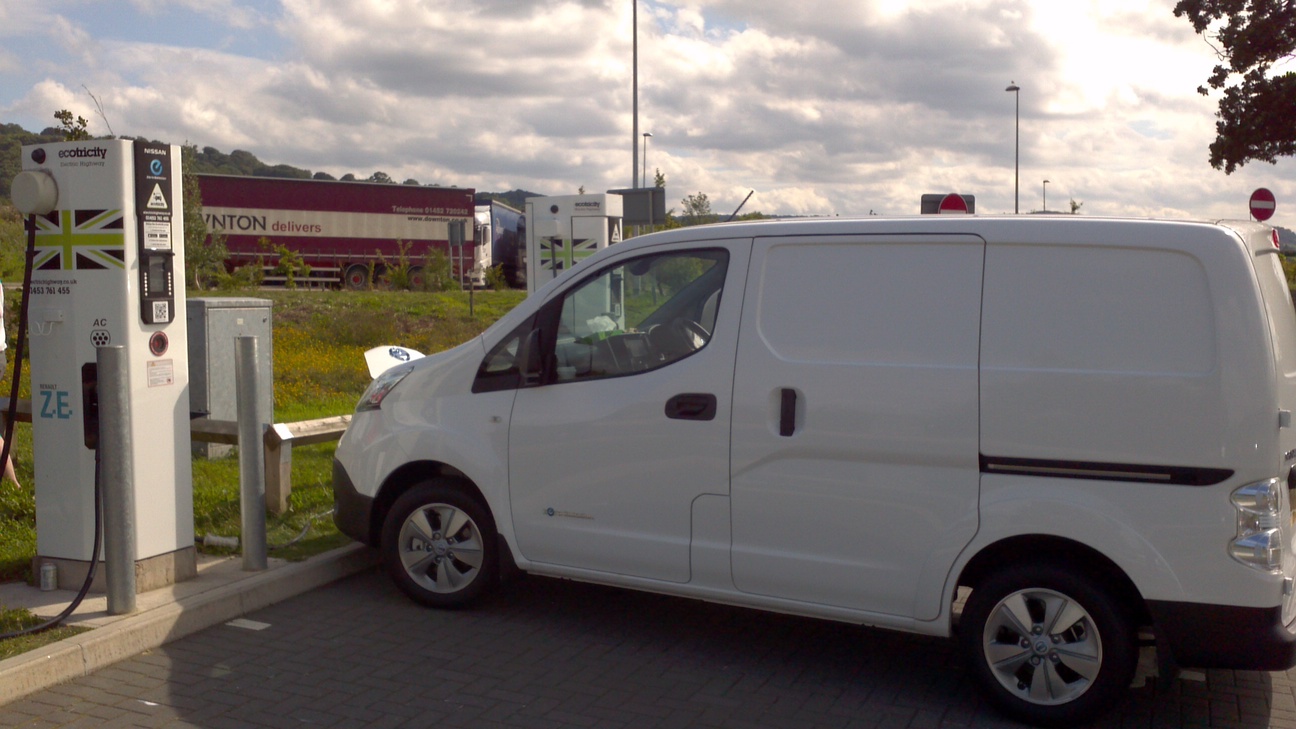
51.7 miles according to Google maps. 51 miles according to the e-NV200:
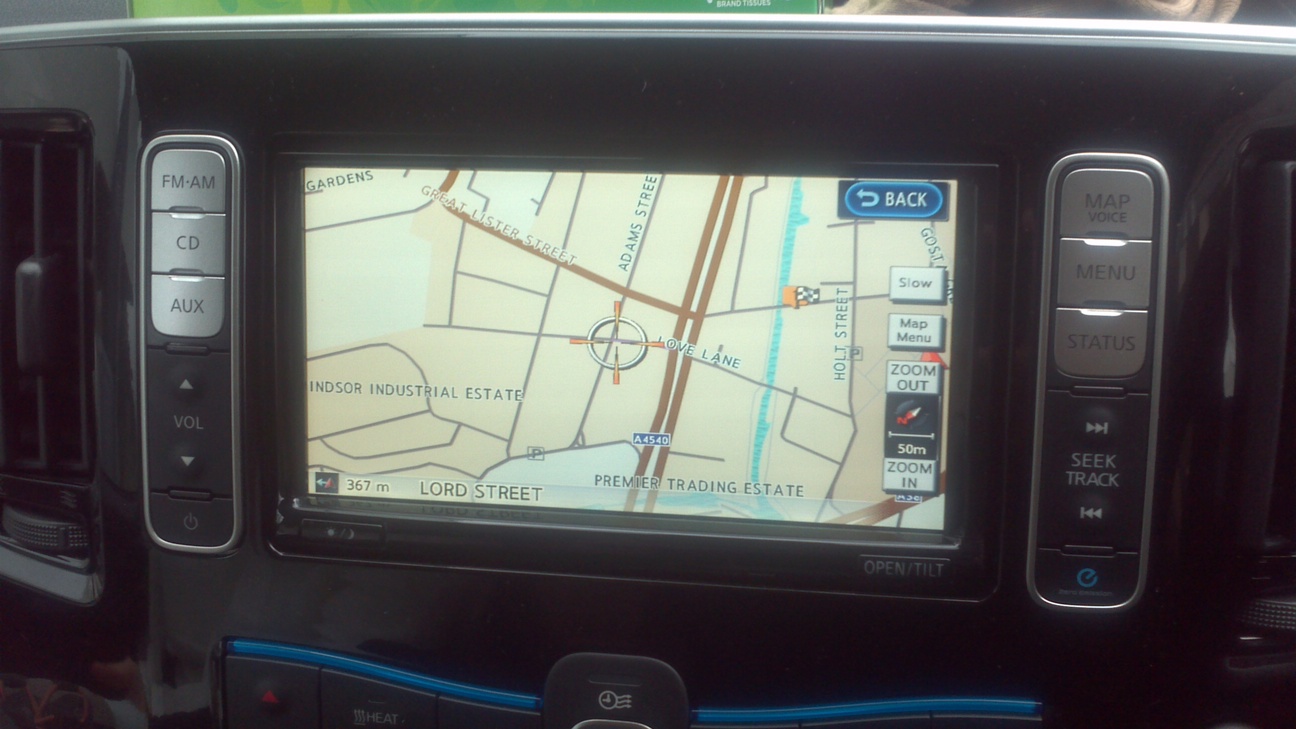
Kasia’s Ecotricity app was still insisting the charging session at Sedgemoor hadn’t finished yet! Power cycling her phone enabled us to get a new session started. After a slightly swifter coffee break this time we set off on the last leg to Birmingham with a 95% charge. That was when our troubles really began. The Nissan satellite navigation system kept insisting “you may be unable to reach your destination” even though there was apparently plenty of juice in the battery. It seems the M5 north of junction 5 was jammed solid. The sat nav eventually suggested an alternative route taking the A38 around Bromsgrove and then the M42 before heading towards Aston University in the centre of Birmingham. After several apologetic phone calls we eventually arrived at the European Bioenergy Research Institute well behind schedule:
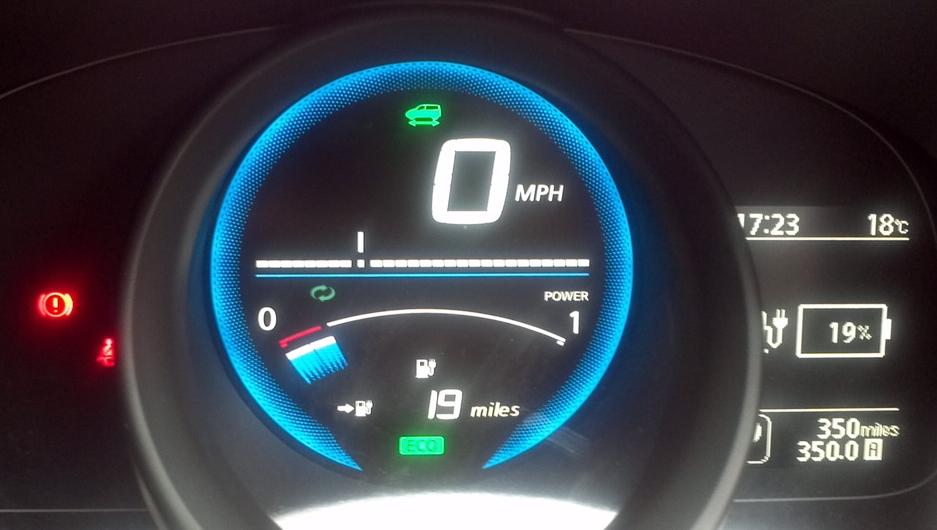
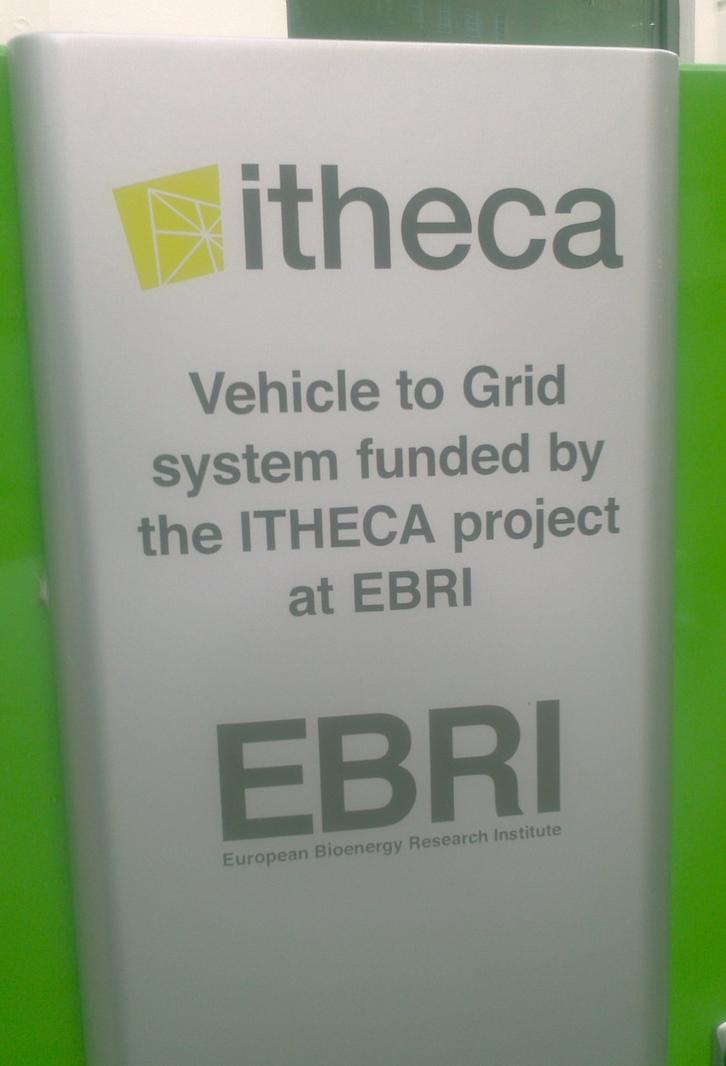
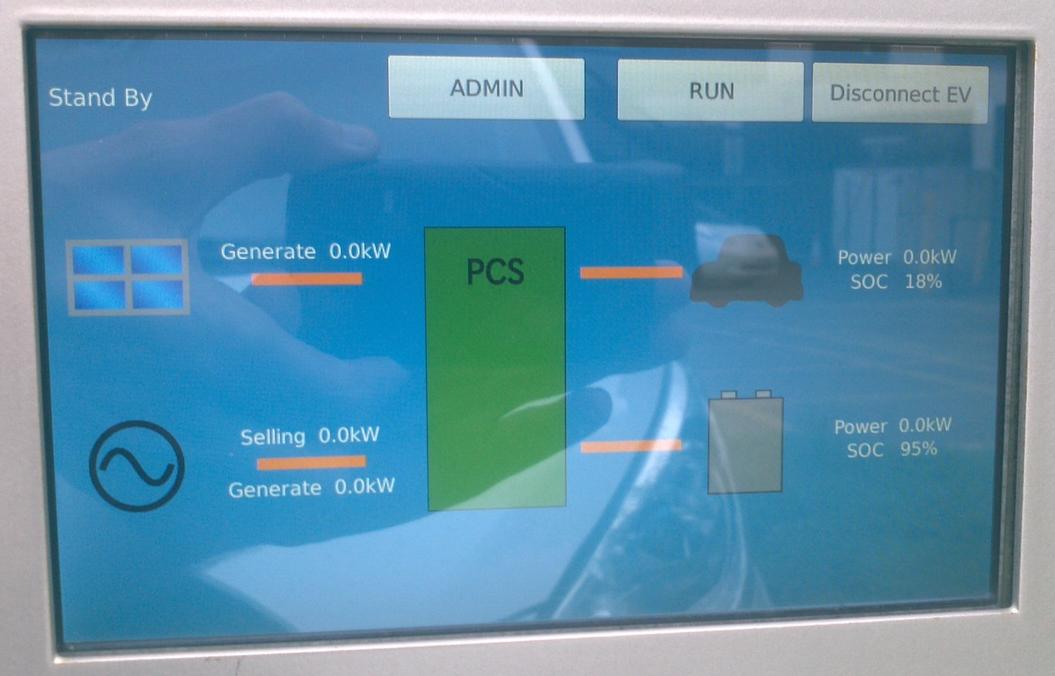
Thankfully in all the circumstances our e-NV200 started charging without problems on the ITHECA project‘s bright green bi-directional charger!
To be continued….
Renault and Eneco Announce Smart Charging App at COP21

As we reported yesterday, the Nissan half of the Renault-Nissan Alliance made an interesting V2G announcement at the COP21 meeting in Paris. Now it’s Renault’s turn, although this one concerns “smart charging” rather than fully fledged vehicle-to-grid technology. In a December 7th press release they said that:

Renault & Eneco collaborate on smart charging solution for electric vehicles.

  • Agreement signed between electric vehicle leader Renault and energy supplier Eneco on December 7, 2015 at COP21 Paris conference
  • Eneco will develop smart charging app for ZOE, Renault’s 100% electric compact car
  • Renault ZOE users will be able to charge their car at lower costs using renewable energy

Eneco subsidiary Jedlix will develop a version of its existing smart charging app, to adapt it to Renault ZOE. This app makes it possible to charge electric cars using renewable energy at times when the market prices are most favourable. Like at night, when the production of sustainable wind energy exceeds demand in most European countries.

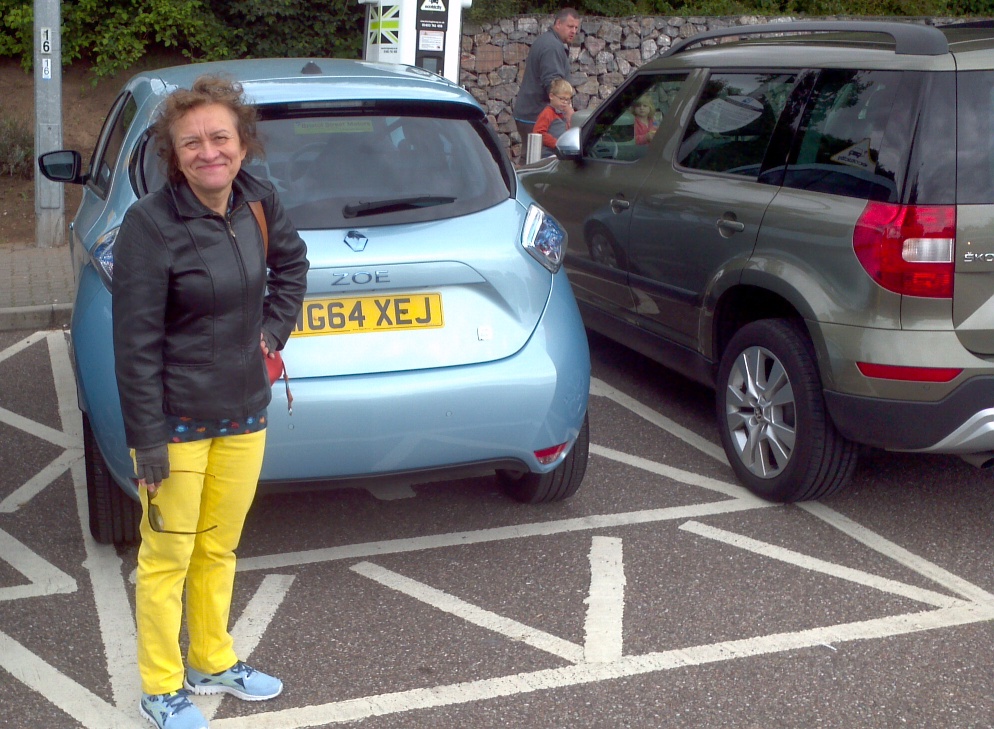
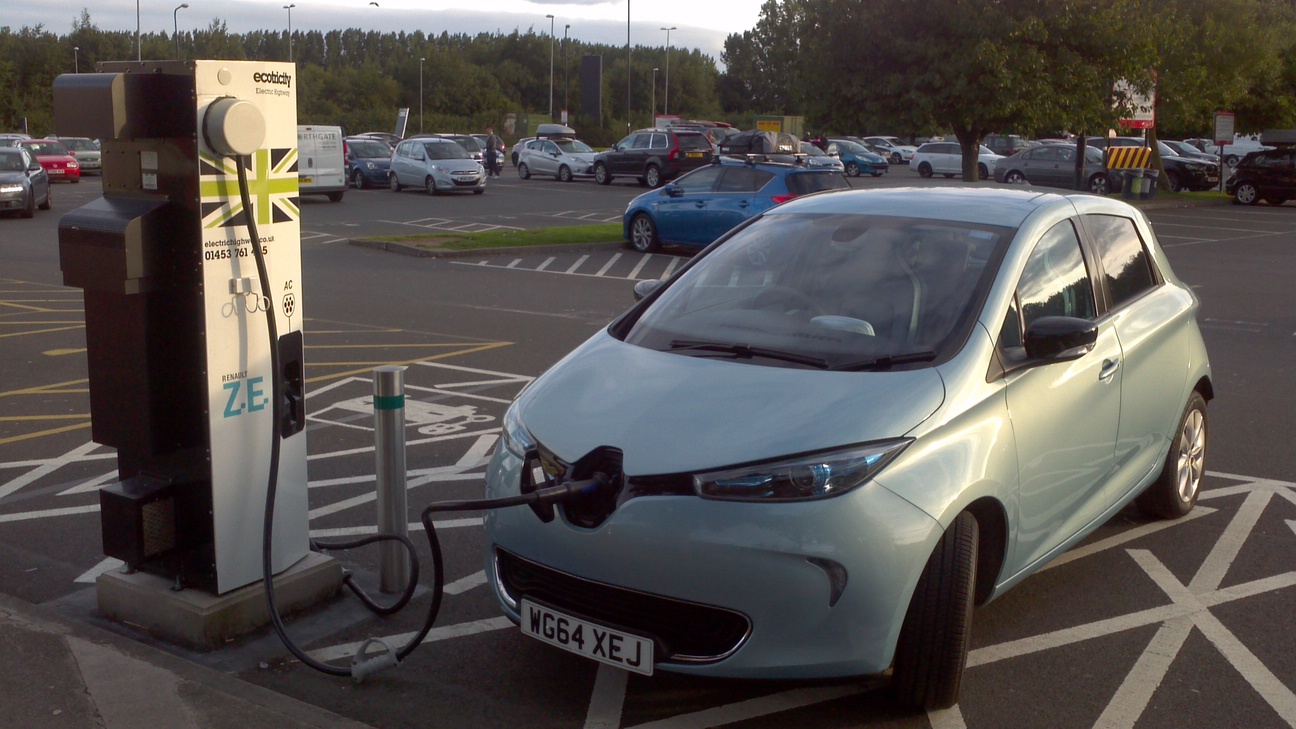
As far as “lower costs” go, here’s a glimpse of V2G UK filling up a Renault ZOE 100% electric compact car 100% free of charge using renewable energy in a UK motorway service station, courtesy of Nissan & Ecotricity:

Heading back to Paris, Eneco Executive Board member Marc van der Linden said :

It is expected that there will be three million electric vehicles in the whole of Europe by 2020. To reduce CO2 emissions, it is essential that this vehicle fleet will use green power. It is also important to prevent power grid overloads as a result of peaks in demand if all the cars would be charged at the same time. Our app forms a direct link between the electric vehicle and the supply of sustainably generated energy. Consequently, the energy used for charging is more sustainable, energy supply and demand is balanced and the costs of driving an electric vehicle are reduced because users charge their cars at lower rates.

Eric Feunteun, who is Electric Vehicle Program Director at Renault, added:

Renault electric cars support the energy transition in the automotive industry as they contribute to the replacement of fossil fuels by renewable energies. With smart charging systems like the one developed by Eneco, Renault electric vehicles make a big contribution to power systems’ stability and reliability: EVs turn into an asset for the grid rather than create overload. They can store and use electricity when it is less carbon-dependent and cheapest for their owners. Our partnership with Eneco is a move towards making driving a Renault ZOE more interesting and affordable and will contribute to an electric vehicles’ scale up.

Renault’s press release continues:

A pilot test carried out by Eneco in the Netherlands demonstrates that users can save up to 15% on their electricity costs by using the app. To achieve this, all they have to do is indicate by what time the car must be fully charged and the system will automatically determine the lowest price within this time frame. The app will first be available for ZOE users in the Netherlands and soon be available in other countries where Eneco operates.

Eneco do have a UK office, but quite how Renault ZOE drivers across the UK might be able to make use of “a flexible [electricity] price negotiated electronically by computers” to save a few quid on their fuel bills whilst “prevent[ing] power grid overloads” is a mystery to me at the moment, despite the fact that I sit on committees tasked with designing international standards for such things! However, here’s Eneco’s vision of “Everyone as an Energy Supplier in 2030”:

Make sure that, if nothing else, you watch the bit at 1 minute 20 seconds which mentions that “The car plays a pivotal role as an energy storage buffer”.

Renault ZOE – An Offer You Can’t Refuse? Day 1!

A few days ago I received an unsolicited telephone call asking me if I would like to test drive any Renault car. I said yes, as long as it was possible to test the Renault ZOE in and around Exeter. I was told “Certainly sir, which free gift would you like?”. I gather this offer is by invitation only, but you can nonetheless read all about it here, where it explains that one can:

Test drive and experience any model from the Renault range before 30 September 2015 and you can choose one of three complimentary gifts. Choose from a night away for two in a choice of hotels, afternoon tea for two or a spa treatment.

That definitely seemed like too good an offer to refuse, so I didn’t! The first thing I do at times like this is to take a look at Robert Llewellyn’s always entertaining reviews of electric vehicles on his Fully Charged show. Here’s the one for the Renault ZOE, recorded in 2013:

and here are a few of Robert’s bullet points concerning the ZOE:

  • It’s a small car. It has a really big boot, which is a surprise.
  • It’s got enough oomph to “get you out of trouble”.
  • A range of between 80 and 120 miles.
  • It’s much lighter than the Nissan LEAF.
  • It’s got a really clever heating system, that uses a heat exchanger, and it can also do the other way round. It’s 3 times more energy efficient than conventional heaters and air conditioning systems.
  • It has a 22 kWh battery.
  • It really holds the road well.
  • It’s got very good visibility.
  • When you buy this car it’s much, much cheaper than any other electric car that’s been on the market.
  • When you buy this car you don’t buy the batteries. The batteries belong to Renault, and they rent you the batteries.
  • It is a really nice car to drive. It’s a really simple car to drive.
  • It comes with a special car rental deal. If you buy this car and then you want to “Go to Scotland” or “Go to the South of France”, then you ring up and you book a car and it gets delivered to your house and you’ve got a rental internal combustion engine (ICE) car and you go on holiday [in that instead].

So far so good then, and a couple of days later we had a short drive around the Marsh Barton trading estate in Exeter. We both took our turn at driving the ZOE, and Kasia liked it a lot. Daniel Mann, the Renault Sales Manager at Bristol Street Motors in Exeter, explained that their most attractive offer at the moment is a two year PCP deal for £79 down and then £79/month, which doesn’t include the battery. The small print explains that “Battery hire is £55 per month for 750 miles per quarter“. That also sounds very much like an offer one cannot refuse, but it was at that point that I had to explain our particular circumstances to Dan. The ZOE seems to us like an excellent way of driving a few tens of miles to work and back, but V2G’s home, office and laboratory are all in the same building. We don’t do a daily commute, but we do occasionally drive to Bristol Airport, we do occasionally go on business trips to the far side of London, and we do from time to time go surfing on the north coast of both Devon and Cornwall. Our short test drive hadn’t given us much of a feel for how the ZOE would be able to cope in those situations. As Robert explains in the video above we could always hire a more conventional car as and when required, but then we’d hardly ever use the ZOE!

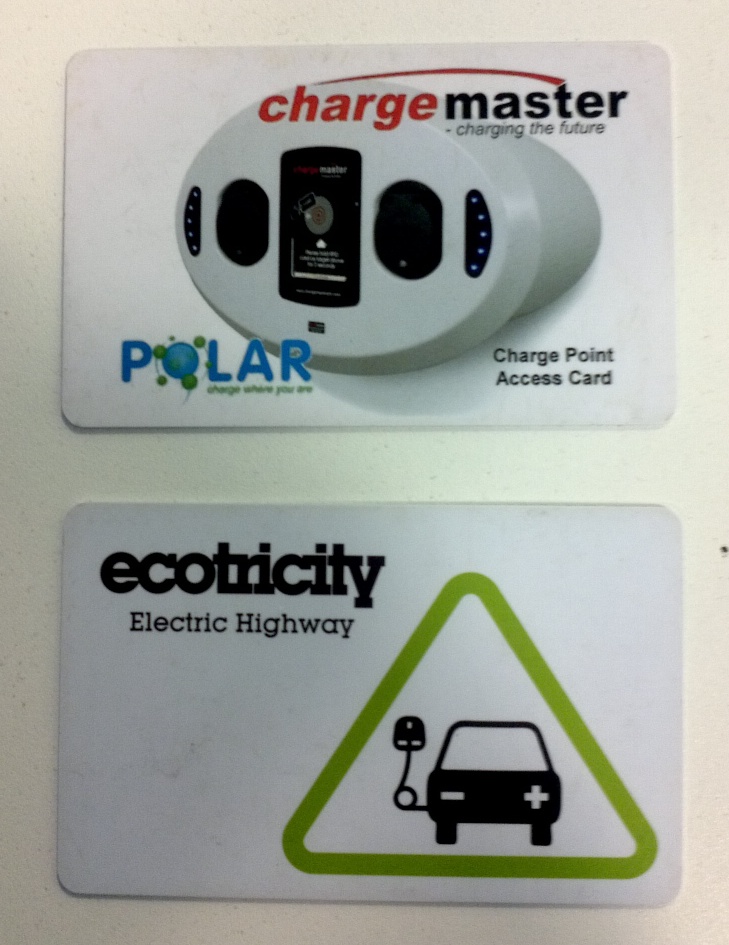
We had a chat to Marc Seabridge, Bristol Street Motors EV specialist (pictured below), and explained that I’d be dropping Kasia off at Bristol Airport the following weekend and then returning to Exeter. I wondered whether we could borrow the ZOE to do that trip, in an endeavour to discover if it was fit for our particular purposes. Marc said yes! When we picked the car up at 11:00 on Friday he lent us a couple of RFID cards so that we could charge the ZOE en route, one for ChargeMaster’s Polar network and one for Ecotricity’s Electric Highway:

The ZOE’s lithium ion battery was about 70% full when we picked it up, so we thought we’d get the hang of charging an EV at a public fast charger by heading straight to Exeter Services, just off the M5 motorway. That’s where our troubles began!

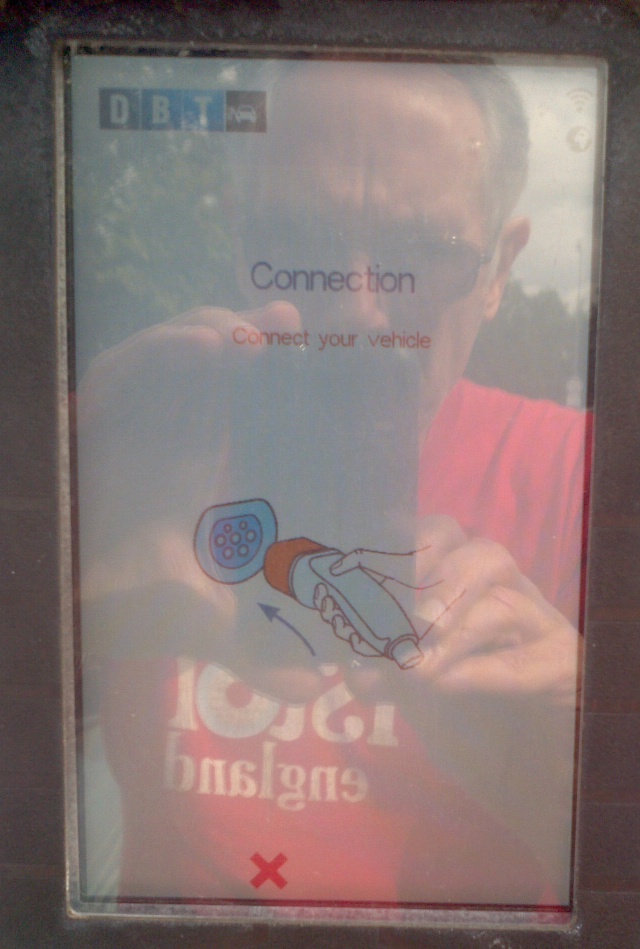
Try as we might, and even with lots of telephone assistance from James Cocks, the Service Manager at Bristol Street Motors, we couldn’t persuade the ZOE to successfully connect to the Electric Highway type 2 fast charger. Here’s what the problem looked like:

Whatever we tried, there was no way we could persuade a little green tick to show itself. Chastened, we headed back to Marsh Barton to top up the ZOE at one of BSM’s own charging points:

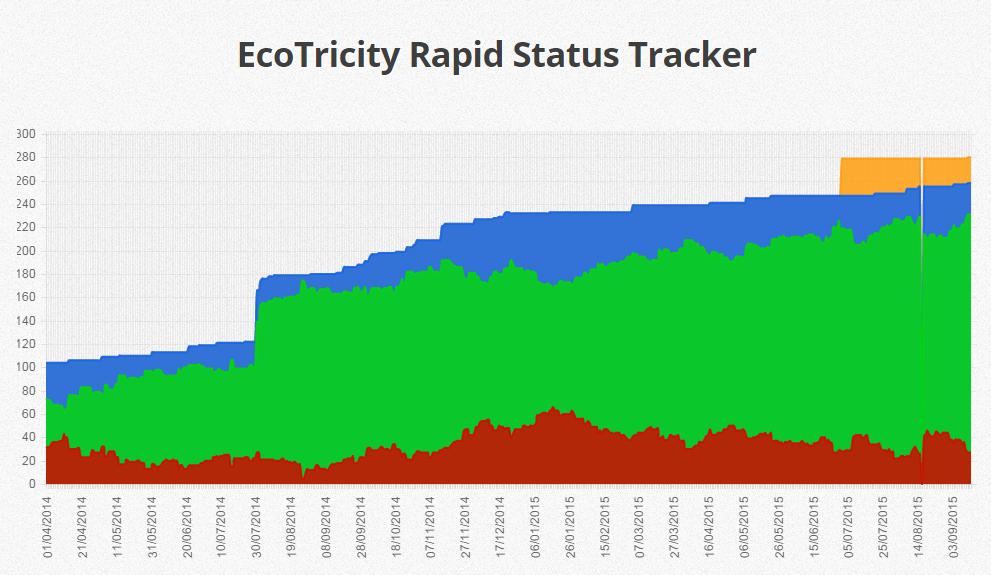
Whilst we waited I telephoned the Electric Highway helpline and explained what we’d discovered. I was told that Ecotricity were already aware of the problem, but they couldn’t tell me when it might be fixed. It seems they have quite a few non functional chargers, and not many engineers available to repair those that cannot be restored to full health via a remote connection from Ecotricity’s offices. Here’s a graphical demonstration of the problem:

To be continued……..

Electric Land Rover Defender Starts Work at the Eden Project

Land Rover have recently announced that:

The first Electric Defender started worked work at the Eden Project near St Austell in Cornwall this summer in an inaugural real world trial of its capabilities. Unveiled at this year’s Geneva Motor Show, the Land Rover Electric Defender is a pioneering research project into the electrification of an all-terrain vehicle.

The project forms part of Land Rover’s overall sustainability objectives which have included the move to aluminium platforms in the latest all-new Range Rover and Range Rover Sport as well as the forthcoming Range Rover hybrid products. The innovative 4×4 is a rolling laboratory to develop new ideas, and investigate electrification in a real-world environment. A fleet of six vehicles will be placed with organisations where their performance can be assessed.

Here’s what both the Electric Defender and The Eden Project look like:

An Electric Land Rover Defender poses for a picture at the Eden Project

An Electric Land Rover Defender poses for a picture at the Eden Project

The press release also reported the opinions of senior managers involved in the project. Jeremy Greenwood, Principal Engineer on the Electric Defender project, said that:

The car has been modified so it now includes a second battery. That will allow it to work a full day at the Eden Project, but also improves weight distribution and stability. In addition, we’ve linked the land-train’s air brakes to the foot pedal of the Land Rover, enhancing safety.

Gus Grand, Climate Change Lead for the Eden Project, said:

We’re very pleased to be working with Land Rover on this exciting project. It will be a great talking point for our visitors and proves that electric vehicles can be every bit as tough and rugged as their fossil fuel counterparts, while being much quieter, cheaper to run and with zero emissions at the point of use.

Here’s a video of an Electric Defender in action, driven by Robert Llewellyn of “Fully Charged” fame. Feel free to ignore the Ecotricity advert at the end if you so wish:

I wonder if Jaguar Land Rover have any plans for retro-fitting V2H and/or V2G technology to an Electric Defender in their R&D pipeline?