In Which Kasia Falls in Love with the 2018 Nissan LEAF

A lot of people are afraid or even horror-struck with the idea of driving in an autonomous car. But I belong to the opposite group – I dream about an autonomous car, I long for it and I long to have one. An ideal one would be able to float over the roads and country lanes. For these longings and dreams about floating self driving vehicles I should probably blame SF writers.

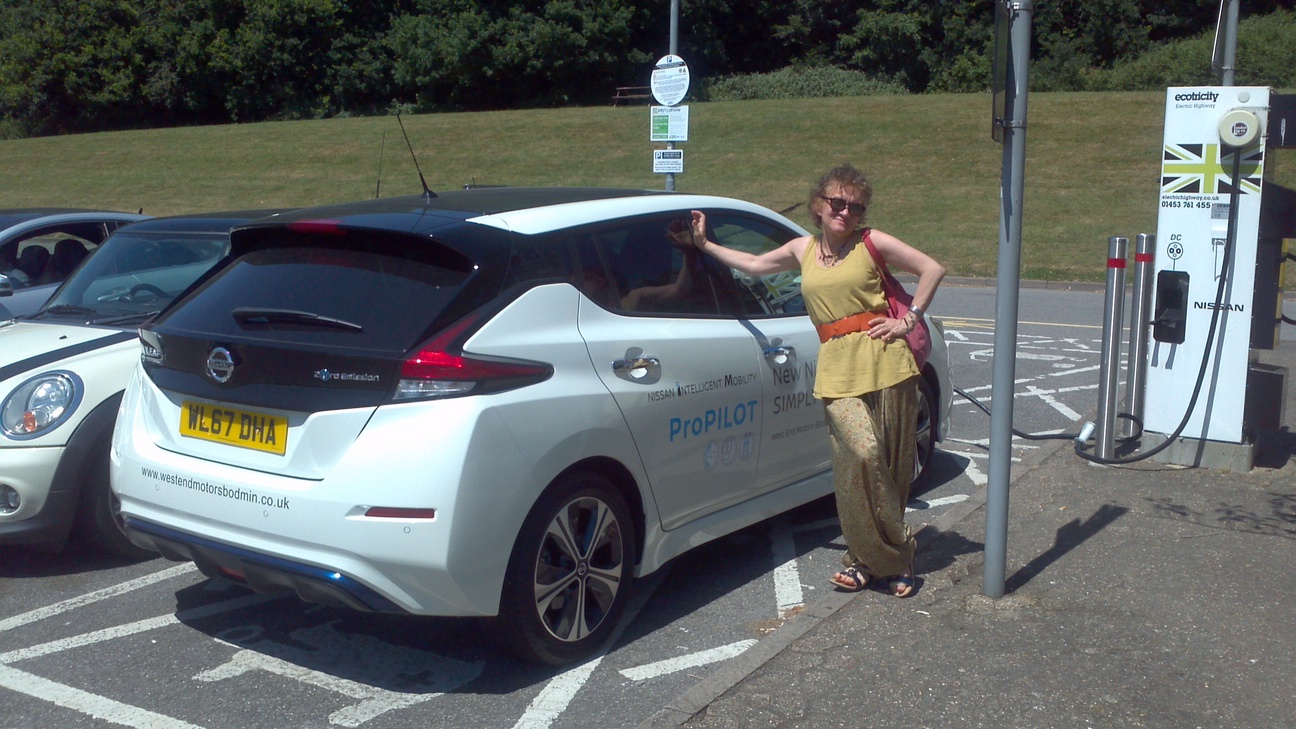
To make it clear I am not a professional test driver, I don’t work for Nissan, I am a woman, 62 years old, an artist and writer but also a huge fan of electric cars.
2018-06-26_13-47-17_336

A few days ago (Today is June, 30th 2018) we had the pleasure to go on an alas not many days journey in a new Nissan Leaf with the proPILOT “autonomous” mode, from the North Cornish town of Bodmin, through Devon (A30 and M5), Somerset, across country lanes and carriageways into Wiltshire, then Gloucestershire to sunny Cardiff and then back. The sun was shining, the air-conditioning was working, the temperature outside was rising above 30C and the quality of the audio was flawless and using the Amazon Music app we could listen to the newly released 50 legendary albums.

To start with I felt a kind of uneasiness and unreal-ness when using the cruise control – could I really trust the car to control things in all the busy traffic on the M5 and to take the decision about slowing down behind other cars and then accelerating again? Could I just start a series of yoga legs and feet exercises without causing an accident? I have to tell you that I could. The car is intelligent enough to keep us in a lane, to anticipate the bends in the road, to read all the traffic around it, to spot the car in front of it, even a car which cuts us up. I was trying to drive without keeping my hands on the steering wheel, the car was driving totally autonomously but not for long. After a while it started piping and blushing at me. I had to put my hands back on the steering wheel otherwise according to the manual the car will start to slow down and finally will make a stop. Not a good idea on a motorway.

The Leaf in the cruise control (ACC for short – adaptive cruise control) mode performs marvellously on the motorway, it also does a spot-on job on partly B-roads, partly A-single and dual roads and even those roads in the towns and villages, something none of these systems is really made for but is a good indication of how well they read lane markings. The Leaf stays within its lane at the speed limit, reads all the diverse speeds limits between 70, 60, 50,40, 30 and 20 miles/h and even drives itself around corners sharper than those on the average highway.

Several times on those roads we encountered stop-and-go traffic and the ACC was able to track the vehicle ahead of it stationary at the line for a stop sign or just for busy traffic and after waiting it started to move forward when a gap opened to the car in front. Just marvellous. On the last day I tested the e-pedal – one pedal system and it worked fabulously too. I totally forgot to say that I drove all the time in eco-mode. And even in the eco mode the acceleration of the Leaf was pretty good, in my opinion. A few times I speeded to over 70 mph to overtake a few annoying cars on highways/motorways and it happened pretty fast only the car did complain about my behaviour ;-).
It is an intelligent car – perfect for me, an undisciplined car driver, to correct me and teach me how to behave as a civil and polite person and citizen on the roads.

We did have issues with charging. Every time we left the Leaf at a charging point to become fully charged, it never happened. The Ecotricity chargers stopped every time after charging for 45 minutes. It is a pity.

The only concern for me is the seat, more specifically the headrest. It is pushed forward too much for my taste, and it is impossible to adjust it. It only moves up and down. Maybe it is my problem because I am short, 5’2 inch.

It is fair to say we were simply amazed by the proPILOT autonomous functionality. I love this car, just love it:

To be continued……
Road Testing the 2018 Nissan LEAF and “RapidGate” Rumours

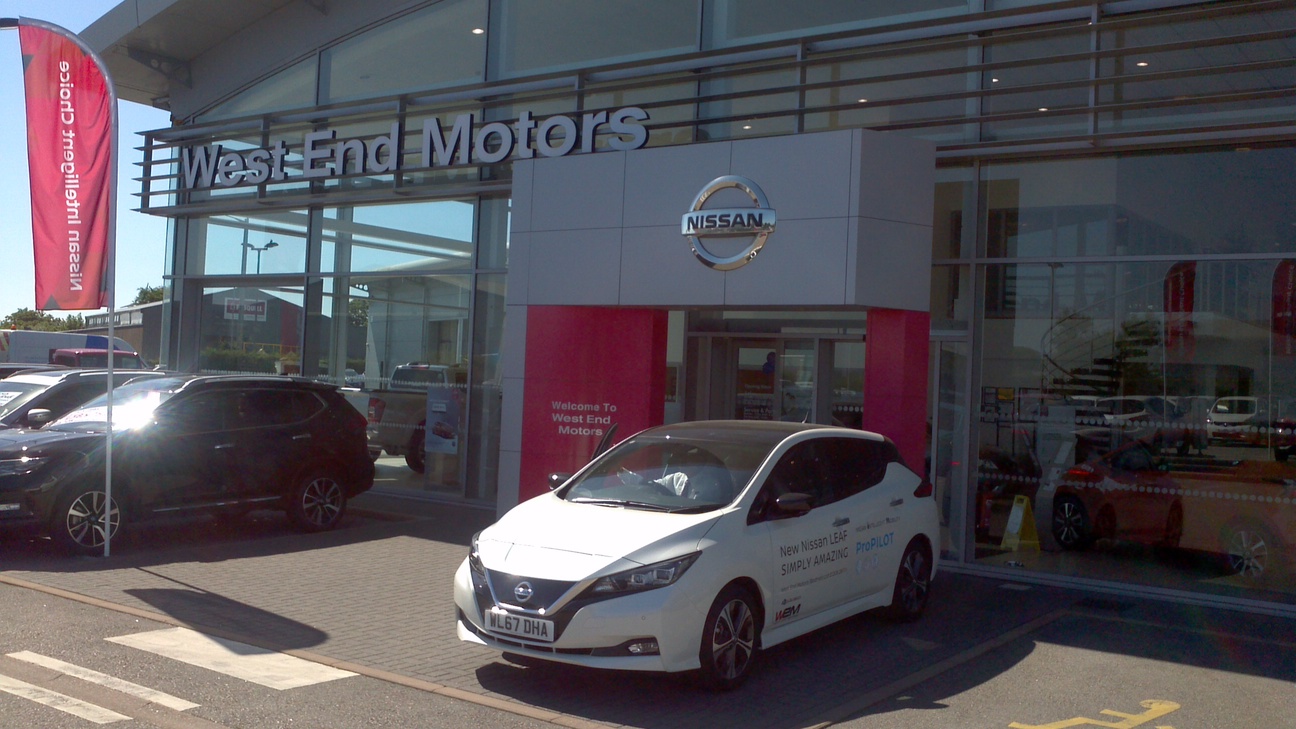
Here at V2G UK we’ve finally managed to complete an extended test drive of the 2018 model Nissan LEAF 2.0! We’d booked a 2 day test a couple of months ago, but had to cry off thanks to yours truly suffering a dose of the “man flu”. This time around my health held up and we picked up our two tone LEAF from West End Motors just down the A30 from here in Bodmin:

2018-06-26_10-29-07_147

Our test drive was timed to coincide with the Welsh Government’s Connected and Autonomous Vehicles briefing in Cardiff. More on that in due course, but amongst many other things we wanted to discover if there was any truth to the so called “#RapidGate” rumours flying around on Twitter and elsewhere. If that is double Dutch to you then please watch this explanation of the term from the inimitable Bobby Llewellyn:

When the “kerfuffle” started Nissan issued the following “news release” on Twitter:

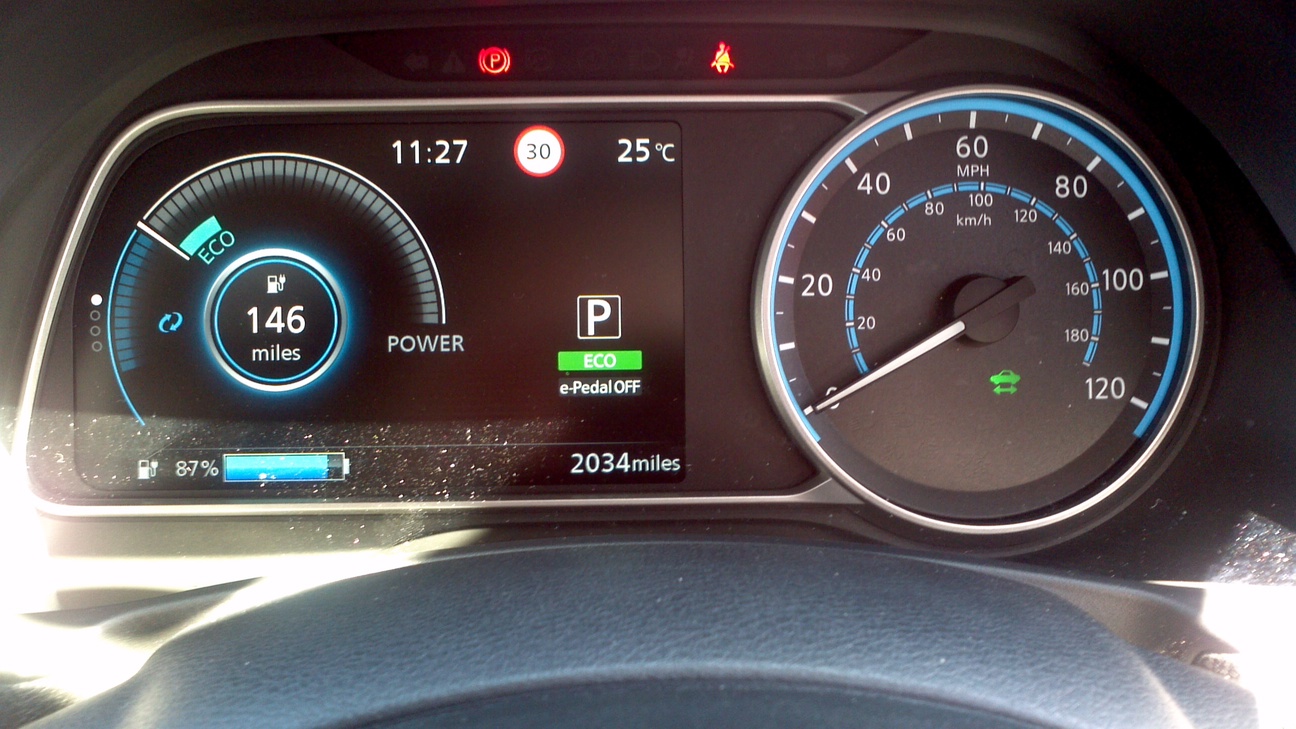
During our trip we intended to do a lot of motorway driving at 70 mph, including a cross country trip to visit Platinum Nissan in Trowbridge. Much more on proPILOT in due course as well, but we set off up the A30 from Bodmin and engaged Nissan’s by now somewhat autonomous version of “cruise control” with a target speed of 70 mph:

2018-06-26_11-27-10_686

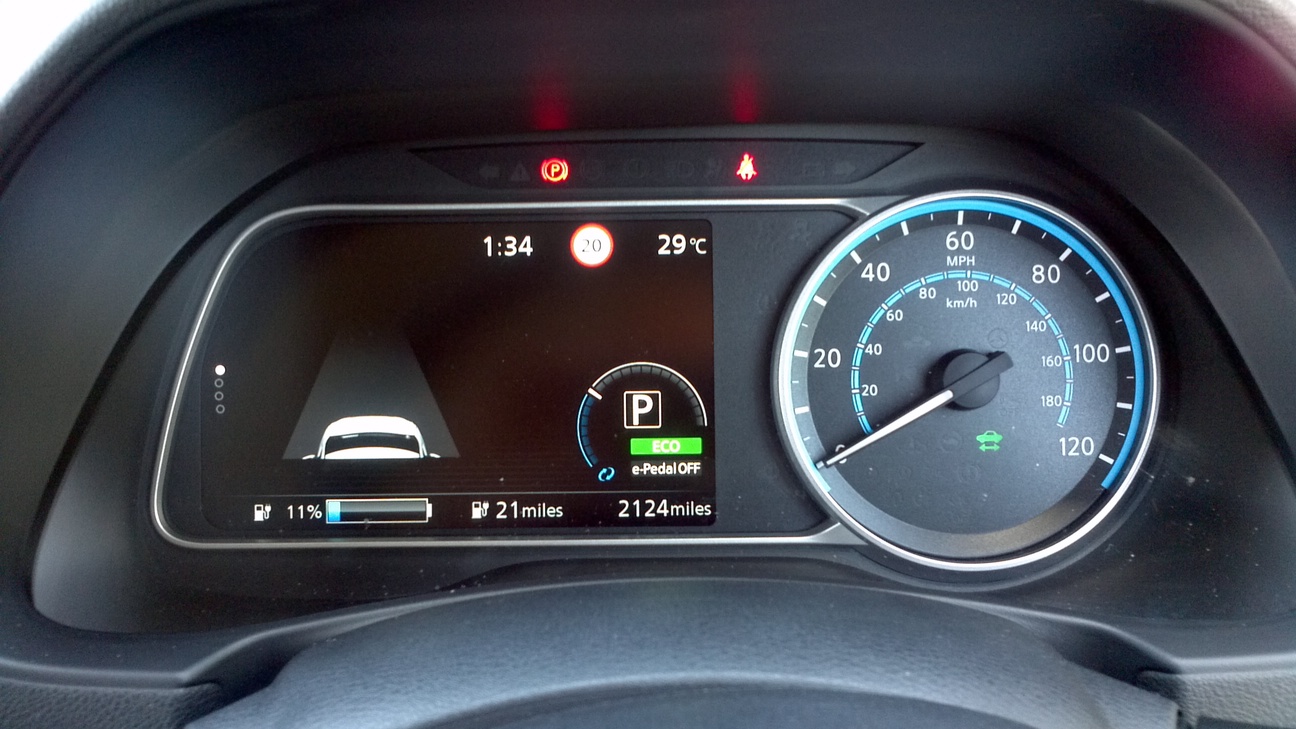
We still had some juice left in “the tank” by the time we reached Taunton Deane Services. According to the LEAF’s clock a distance of 90 miles:

2018-06-26_13-34-15_225

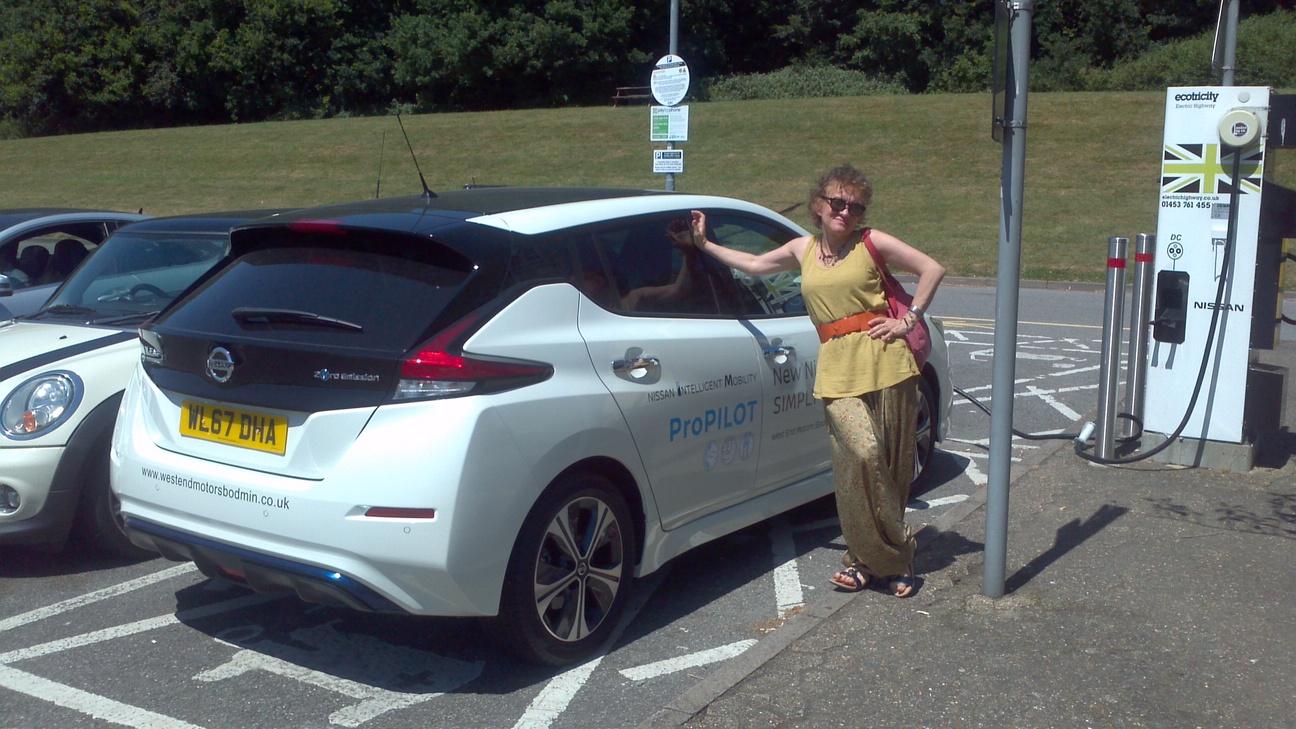
Before heading cross country we plugged in to the Ecotricity charging station:

2018-06-26_13-47-17_336

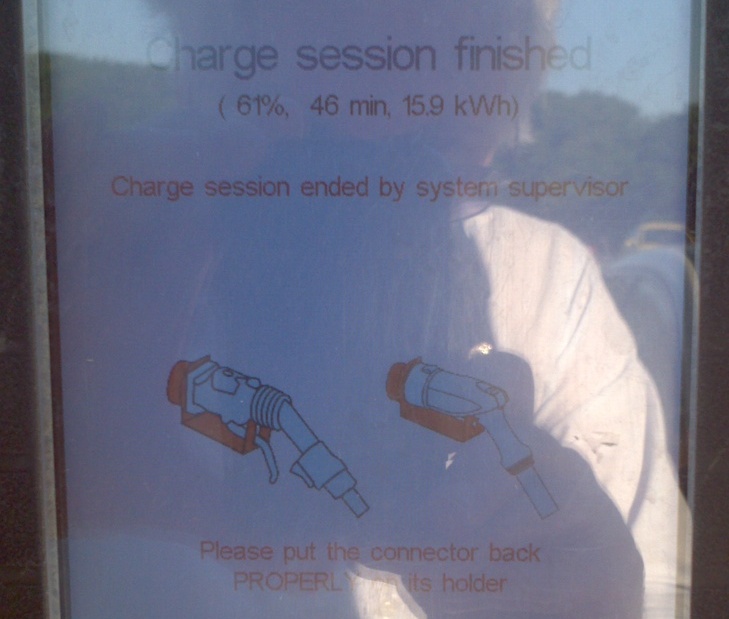
Having set things in motion we grabbed some lunch, then returned to discover this:

2018-06-26_14-36-Session1

We certainly weren’t “fully charged”, and 25.2 kWh over 48 minutes is rather less than the advertised 50 kW rapid charging. We called Platinum to inform them we’d be arriving late, and enquired whether they had a “rapid” charger. They haven’t!

The LEAF’s satellite navigation system directed us to Trowbridge via the A303, and we followed its instructions. Certainly not the shortest route, but arguably the quickest? Once at Platinum we plugged in quickly and topped up “slowly”. Discretion being the better part of valour we departed an hour or so later and headed for Leigh Delamere Services for what we hoped would be a “rapid” charge. We were sadly disappointed:

2018-06-26_18-57-Session2

Our own experience suggests that the #RapidGate rumours are not without foundation, and what is more the issue is not confined to the third “rapid” charging session of the day and beyond.

To be continued……

3 MW xStorage Now Live at the Johan Cruijff ArenA

We covered the start of this story, and are now pleased to be able to report that the xStorage Buildings electricity storage system at the Johan Cruijff ArenA, home of Ajax Amsterdam, is now live. According to this morning’s press release:

Today the largest European energy storage system using second-life and new electric vehicle batteries in a commercial building was made live. Amsterdam Alderman Udo Kock, deputy mayor for Finance and Economic Affairs (Amsterdam) conducted the official opening ceremony.

This unique project is the result of collaboration between Nissan, Eaton, BAM, The Mobility House and the Johan Cruijff ArenA, supported by the Amsterdam Climate and Energy Fund (AKEF) and Interreg.

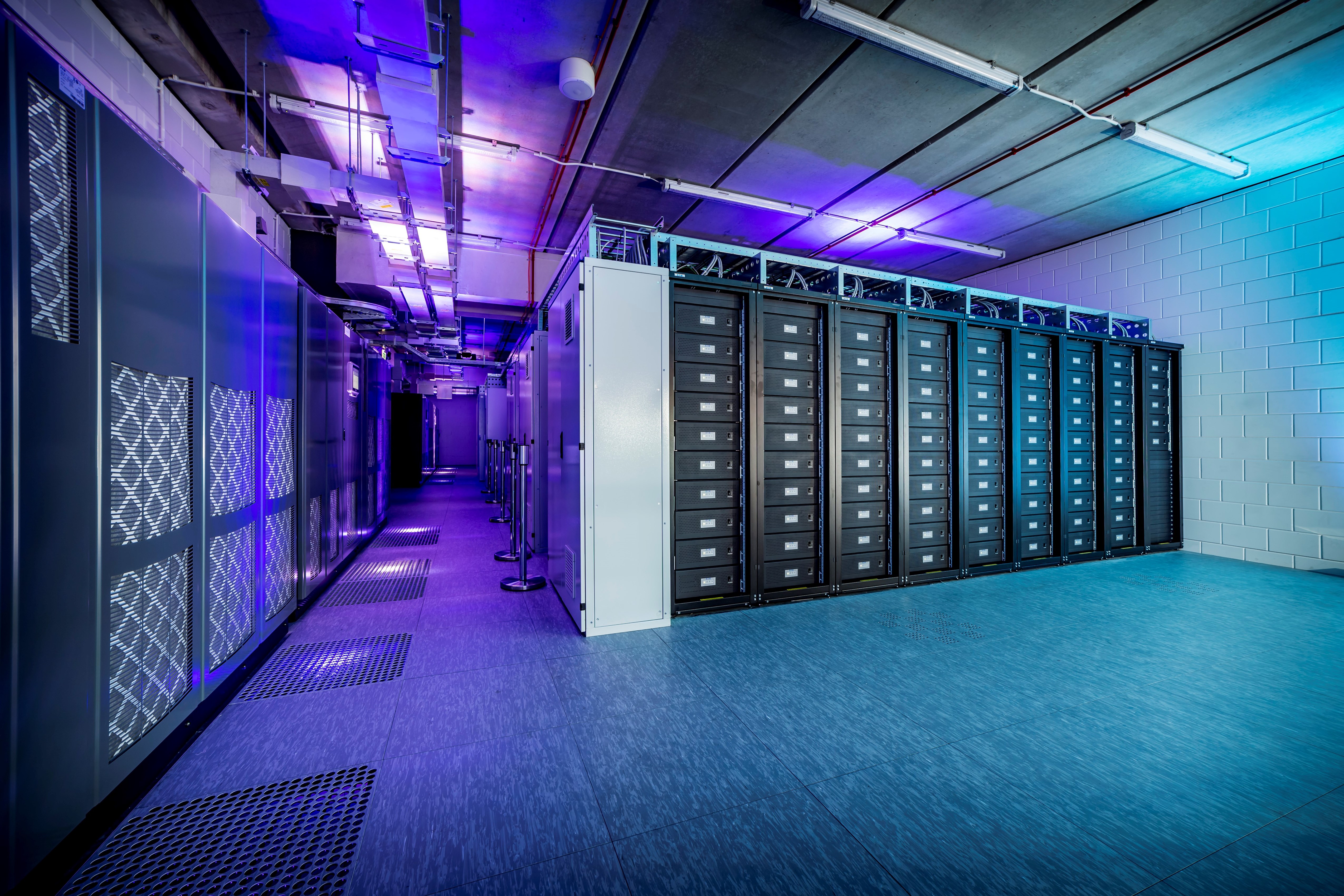
The 3 megawatt storage system provides a more reliable and efficient energy supply and usage for the stadium, its visitors, neighbors and the Dutch energy grid. Combining Eaton power conversion units and the equivalent of 148 Nissan LEAF batteries, the energy storage system not only enables a more sustainable energy system, it also creates a circular economy for electric vehicle batteries.

Europe’s largest energy storage system is now live at the the Johan Cruijff Arena

Europe’s largest energy storage system is now live at the the Johan Cruijff Arena

According to Henk van Raan, director of innovation at the Johan Cruijff ArenA:

Thanks to this energy storage system, the stadium will be able to use its own sustainable energy more intelligently and, as Amsterdam Energy ArenA BV, it can trade in the batteries’ available storage capacity.

The ArenA is assured of a considerable amount of power, even during an outage. As a result, the stadium will contribute to a stable Dutch energy grid. The Johan Cruijff ArenA is one of the most sustainable stadiums in the world and leads the way in introducing smart innovations like this unique energy storage system.

The press release continues:

The energy storage system plays an important role in balancing supply and demand of energy in the Johan Cruijff ArenA. The storage system has a total capacity of 3 megawatt, enough to power several thousand households. This capacity also means that the energy produced by the 4,200 solar panels on the roof of the ArenA can also be stored and used optimally. The energy storage system will provide back-up power, reducing the use of diesel generators, and provide relief to the energy grid by flattening the peaks that occur during concerts.

Finally, for the moment at least, here’s a video of the Ajax Amsterdam ArenA and it’s new static distributed energy storage system in action:

BP Buys Chargemaster

We have previously reported on Shell’s plans to add “ultra rapid” charging points for electric vehicles on their filling station forecourts here in the UK. Now BP are following suit, according to today’s press release:

BP today announced that it has entered into an agreement to purchase Chargemaster, the UK’s largest electric vehicle (EV) charging company. Chargemaster operates the UK’s largest public network of EV charging points, with over 6,500 across the country. It also designs, builds, sells and maintains EV charging units for a wide range of locations, including for home charging.

According to BP Downstream’s chief executive, Tufan Erginbilgic:

Bringing together the UK’s leading fuel retailer and its largest charging company, BP Chargemaster will deliver a truly differentiated offer for the country’s growing number of electric vehicle owners.

At BP we believe that fast and convenient charging is critical to support the successful adoption of electric vehicles. Combining BP’s and Chargemaster’s complementary expertise, experience and assets is an important step towards offering fast and ultra-fast charging at BP sites across the UK and to BP becoming the leading provider of energy to low carbon vehicles, on the road or at home.

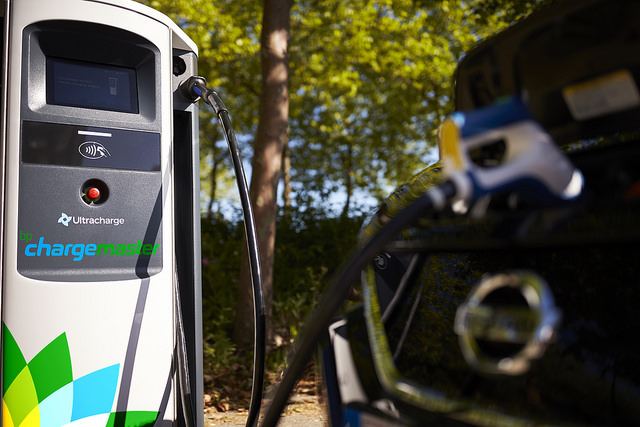
Here’s an artist’s impression of a BP Chargemaster branded “electric pump”:

BP-Chargemaster-1

BP’s press release continues:

The number of EVs on the road is anticipated to increase rapidly in coming decades. By 2040 BP estimates that there will be 12 million EVs on UK roads, up from around 135,000 in 2017.

The development of convenient and innovative EV charging technologies and networks is a key part of BP’s strategy to advance the energy transition. BP is committed to developing new offers to meet changing customer demand and growing new businesses and supporting opportunities for customers to reduce their emissions.

BP believes that to accelerate the adoption of EVs, customers will require convenient access to fast and ultra-fast charging. BP’s UK retail network is well positioned to provide this access with over 1,200 service stations across the country. A key priority for BP Chargemaster will be the rollout of ultra-fast charging infrastructure, including 150kW rapid chargers capable of delivering 100 miles of range in just 10 minutes. BP customers in the UK can expect to access BP Chargemaster chargers on forecourts over the next 12 months.

Chargemaster’s Chief Executive David Martell added:

The acquisition of Chargemaster by BP marks a true milestone in the move towards low carbon motoring in the UK. I am truly excited to lead the Chargemaster team into a new era backed by the strength and scale of BP, which will help us maintain our market-leading position and grow the national POLAR charging network to support the large range of exciting new electric vehicles that are coming to market in the next couple of years.

As we idly wondered after Shell’s announcement, “when will BP’s plans extend as far as South West England though, if ever?”