
Volkswagen’s V2G Vision

Back in March 2019 I was in Amsterdam to watch Volkswagen’s Martin Römheld give the final keynote speech at the rEVolution conference:

Amongst many other things he said that:

For VW I can tell you, and I think you can read that from the papers and the news currently they’re really doing a paradigm shift. The top management is really turning around the company big time.

and then went on to outline VW’s ID series of electric vehicles:
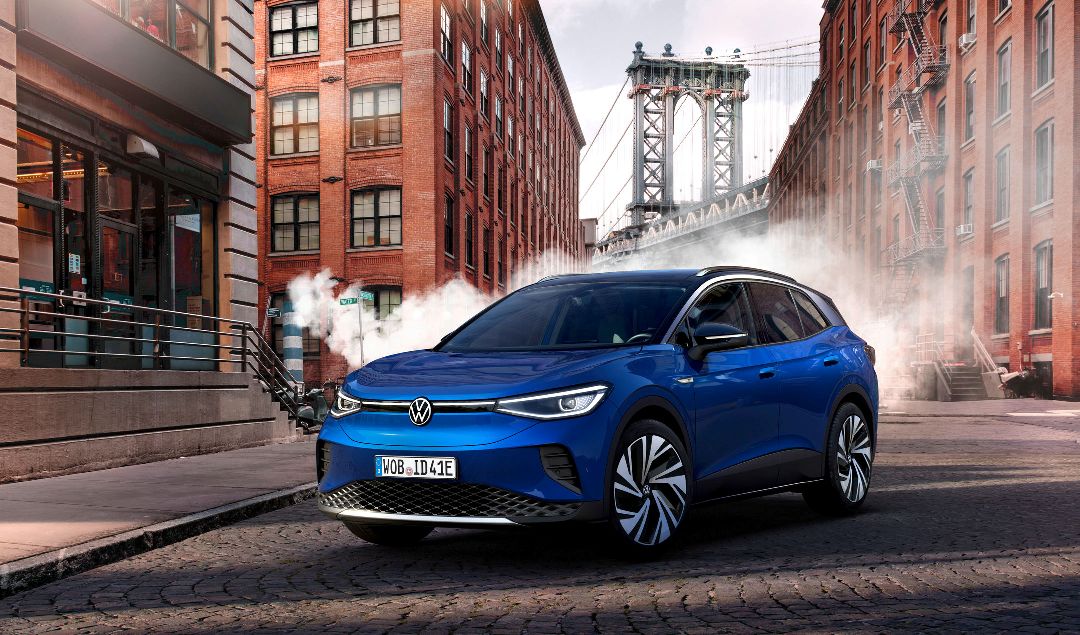
Volkswagen ID.4 1ST Max

At the rEVolution after party I asked Martin whether Volkswagen had any ambitions by way of bidirectional power transfer. He dropped a heavy hint, but I was of course sworn to secrecy. Now at long last VW Development Board Member Thomas Ulbrich has revealed much more about those ambitions in an interview with German newspaper Handelsblatt. I’ve been hoping for a definitive English language version to appear, but no such luck. Hence what follows is aided by Google Translate.

According to Handelsblatt:

In order for a fleet of millions of EVs to be used as a new, flexible energy storage facility, electric cars must also be able to return the electricity to the grid at any time – they must be designed to be “bidirectional”. The VW group will be the first major manufacturer to start doing so next year.

I assume Handelsblatt must actually mean “the first major German manufacturer”, since on this side of the North Sea Japanese EV OEM Nissan certainly count as “major”, and they’ve been offering V2G capable vehicles for quite some time! Moving on we are told:

From 2022 onwards, every electric car from the Volkswagen Group that is based on the MEB (“Modularer E-Antriebs-Baukasten” but “modular electrification kit” according to Google) electrical platform can not only be charged with electricity but also return it to the grid. In addition to VW, the MEB is also used by the sister brands Audi , Skoda and Seat-Cupra.

The first generation of MEB models that Volkswagen has been delivering since autumn last year is not yet designed to be bidirectional. These cars can only charge. Volkswagen will be able to retrofit V2G to those cars with comparatively few technical changes and additional software.

Production should begin in December, and the bidirectional electric cars will go on sale after the turn of the year. At least 300,000 vehicles are likely to be manufactured at the VW plant in Zwickau alone in 2022.

Nissan does then get a mention, albeit a rather Deutschland centric one:

Nissan’s e-models have been able to charge bidirectionally as a standard feature since 2013. “The fact that this ability has not yet been exploited is solely due to the lack of relevant functions in the current charging stations,” said a Nissan spokeswoman.

But if the European industry leader opts for bidirectionality, then many other competitors will have to follow suit for competitive reasons alone. “Volkswagen is setting things in motion”, says Stefan Bratzel, professor at the Center of Automotive Management (CAM) at the Bergisch Gladbach University of Applied Sciences.

Other automakers are likely to present similar offers for the foreseeable future. Hyundai from Korea has already made a corresponding announcement.

We have recently covered that Hyundai V2x announcement in detail, and I have to say that I very much look forward to a wide variety of VW’s competitors shipping hundreds of thousands of V2G enabled electric vehicles beginning in 2022 or shortly thereafter.

However there remains the issue of that unfortunate “lack of relevant functions in the current charging stations”. Currently installed V2G capable charging stations use the Japanese CHAdeMO system, and even Nissan’s new Ariya EV has dropped that way of doing things here in Europe. Hence I cannot help but wonder how hundreds of thousands of VW MEB/ID compatible bidirectional charging stations are suddenly going to spring up along the highways and byways of Europe. And the United Kingdom too of course.

In conclusion, here is an infographic from Volkswagen’s current Energy Storage FAQ:
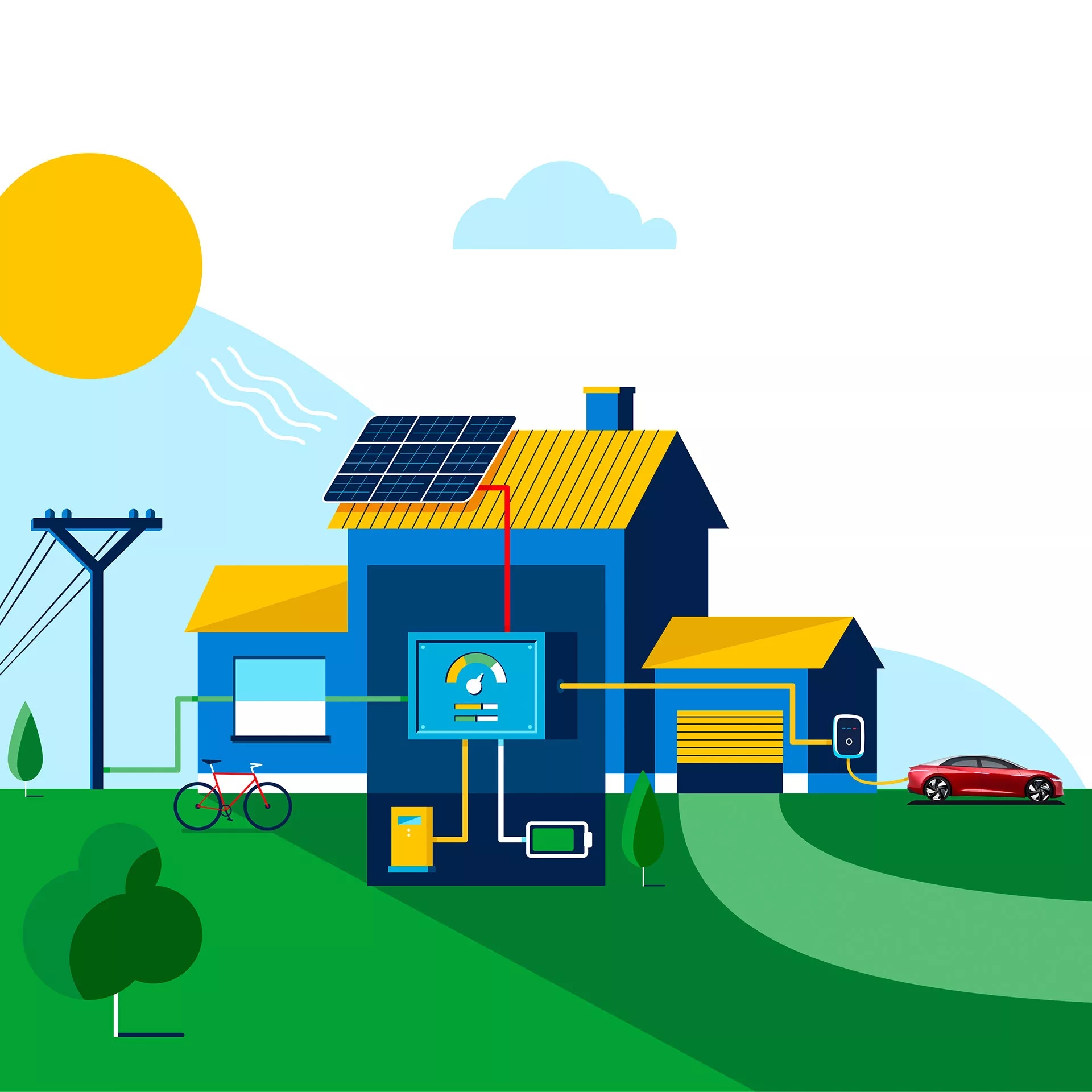
For some strange reason it bears a striking resemblance to our SaMDES banner at the top of this article. However in VW’s V2G vision the EV is outside the garage rather than inside!
Global Power System Transformation Consortium Announced

Imperial College announced in a news release yesterday that:

US and UK ministers launch a global effort – which features Imperial expertise – to speed up the energy transition.

An innovative public-private partnership to accelerate the clean energy transition by transforming our power systems has been formally launched, ahead of US President Joe Biden’s Earth Day climate summit.

The Global Power System Transformation Consortium (G-PST), which includes technical expertise from Imperial, was officially launched by the UK Secretary of State for Business, Energy and Industrial Strategy Kwasi Kwarteng and US Secretary of the Department of Energy Jennifer Granholm, alongside CEOs of power system operators and institutions from around the world.

G-PST aims to enable the integration of renewable energy sources into power systems at an unprecedented scope and scale, contributing to a 50 per cent reduction in emissions of all pollutants over the next ten years.

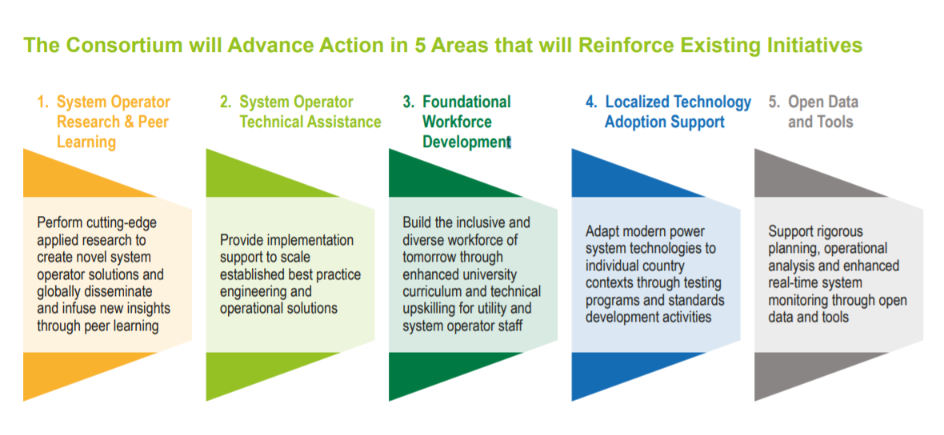
The Global PST Consortium Action Areas

Kwasi Kwarteng pointed out that:

Tackling climate change requires international cooperation and if we want to successfully achieve cost-efficient, green energy networks that work for everyone, we need to work together.

As a world leader in both technological innovation and the renewable energy market, I am delighted that the UK is co-hosting the launch of this new consortium, uniting the very best of business, research and academia to bring world-class renewable energy to the grid – key for economic growth, job creation, the climate and building back greener.

Unfortunately Kwasi didn’t go into detail about exactly how “building back greener” would “bring world-class renewable energy to the grid “, desirable as that undoubtedly is.

However some academics and engineers are members of the Global PST Consortium:

Continue reading →

Hyundai Announce V2B Partnership with We Drive Solar

The press release is in Dutch, so I’m relying on Google Translate somewhat for this article! There is no explicit mention of V2x technology, but let’s read between the lines:

Hyundai and mobility provider We Drive Solar announced on April 13th a strategic partnership to provide housing projects with the energy system of the future.

I don’t know about you, but I’m getting a hint of vehicle-to-building already. Moving on:

Hyundai is well on its way to becoming a top 3 manufacturer of zero-emission vehicles worldwide, with a specific focus on 100% electric propulsion. By 2040, Hyundai aims to have its global car line-up fully electrified, aiming for a market share of 8 to 10 percent of the global EV market.

In addition to a leading role in electric driving, Hyundai also wants to accelerate the transition to sustainable mobility and optimally unburden customers with the help of innovative services, fully in line with the brand’s Progress for Humanity philosophy. In that context, Hyundai is expanding its e-mobility activities in the Netherlands significantly this year. Hyundai recently announced its partnership with Jedlix, the market leader in smart charging. Starting today, Hyundai is adding a new chapter in accelerating sustainable mobility by announcing its partnership with We Drive Solar.

Smart charging, sometimes referred to as V1G, is part of the equation but what about smart discharging? The press release continues:

Continue reading →

Stellantis & Engie Announce V2G Joint Venture

Earlier this week Stellantis announced that:

In a major step as they move towards the completion of their Joint Venture as announced on 26 January 2021, Stellantis and Engie EPS today announce the composition of the Board of Directors and the corporate name of the new entity: Free2Move eSolutions.

Free2Move eSolutions has the ambition to support and ease the transition to electric mobility by offering innovative and tailor-made electric solutions for both private and business actors of the value chain.

Through a digital and seamless journey across all product lines, the scope of Free2Move eSolutions activities will range from charging infrastructures (installation, servicing and operations), public and home charging subscriptions with monthly fee, to battery lifecycle management and advanced energy services such as Vehicle-to-Grid (V2G) integration and energy management solutions to reduce the total cost of vehicle ownership.

The joint venture between Stellantis and Engie EPS will simplify the access to e-mobility and will complement Free2Move current portfolio, with a new set of offers 100% dedicated to electric mobility.

Free2Move (part of the Stellantis Group) is a mobility tech company, created in 2016, whose objective is to simplify and guarantee mobility for both private and business customers with solutions adapted to all needs, anywhere and anytime from 1 hour, 1 day, to 1 month or more, via a single platform. It also provides solutions supporting energy transition and fleet management for professionals.