Nissan UK Announce V2G Enabled Next Generation LEAF

There have recently been a series of press releases from Nissan UK about their forthcoming range of electrically powered vehicles. At the end of May Nissan UK announced the electric MICRA. Yesterday they launched what was described as “The all-new LEAF“:

Today marks the debut of the all-new version of the Nissan LEAF – a British-built electric car icon.  

  • The all-new Nissan LEAF is the next step in Nissan’s EV journey, building on its legacy as the world’s first mass-market electric car
  • The sleek, aerodynamic, and spacious crossover design comes with two battery options for an impressive range of up to 375 miles (WLTP), ensuring confident driving for everyday and long-distance trips
  • Delivers a fully connected mobility experience with Google built-in, dual 14.3” screens, and advanced driver assistance technologies
  • Built in Sunderland, UK, as part of Nissan’s EV36Zero initiative, supporting a sustainable electric future for Europe

This third generation of the pioneering LEAF continues to lead the charge in Nissan’s electrification strategy with a sleek design, significantly extended range, and intuitive technology that is seamlessly integrated for today’s connected driver.

Engineered to tackle key barriers to EV adoption, the all-new LEAF has a substantially increased maximum range of up to 375 miles on a single charge for a no-compromise driving experience. It also offers enhanced charging speeds (up to 260 miles of range in 30 minutes) and a suite of technologies that make both driving easier and EV ownership more rewarding.

Since its debut in 2010, the Nissan LEAF has sold close to 700,000 units worldwide, earning its place in history as the world’s first mass-market electric vehicle. Today, Nissan is ushering in a new chapter for this nameplate, re-designed and re-engineered to meet the needs of modern EV customers, while remaining true to its innovative roots…

Designed at Nissan’s Global Design Studio in Atsugi, Japan, the all-new LEAF introduces a stylish silhouette that reflects its dynamic character and aerodynamic efficiency. With a drag coefficient of just 0.25, its sleek design optimises airflow to enhance both performance and range. Flush door handles, a flowing roofline, full under floor cover, and sculpted surfaces create a modern profile, while its signature front and rear lighting delivers a distinct, high-tech identity on the road.
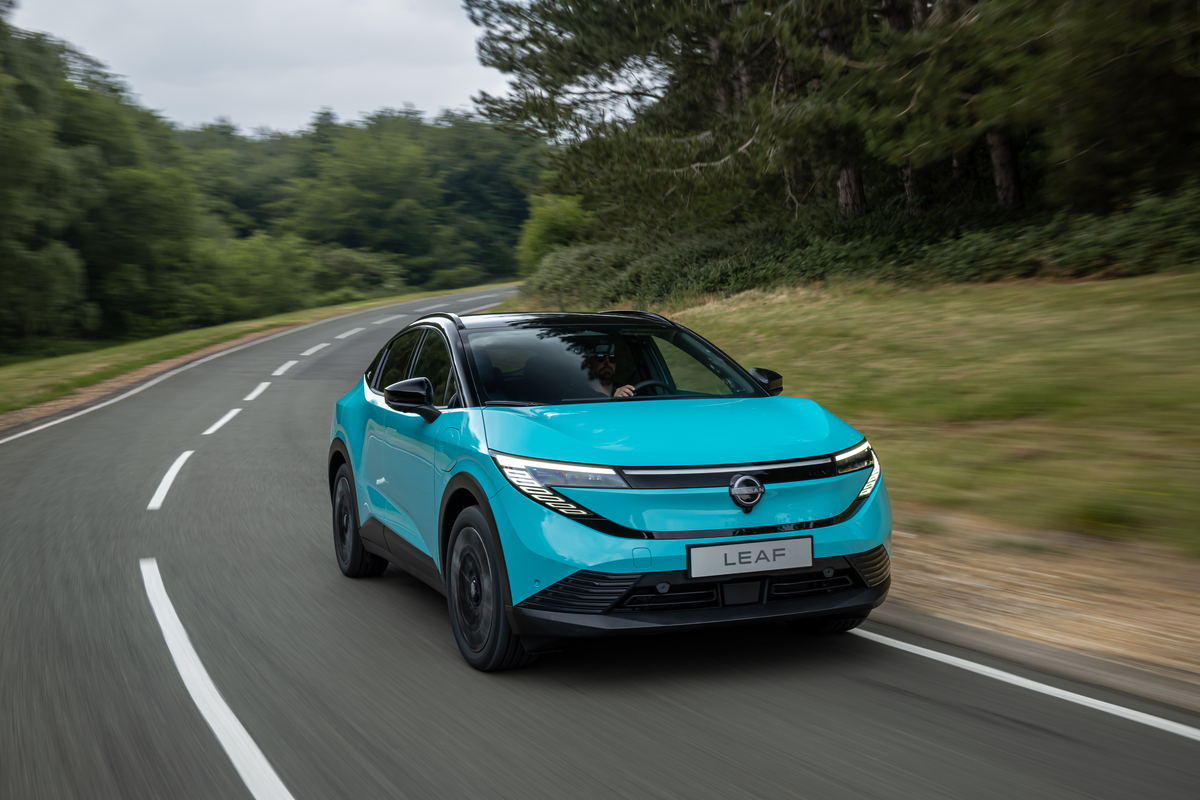
Pretty pictures and low drag coefficients are all very well, but “What about the all new LEAF’s V2x capabilities?” I hear you ask. Heading for the small print I learn that:

Continue reading →
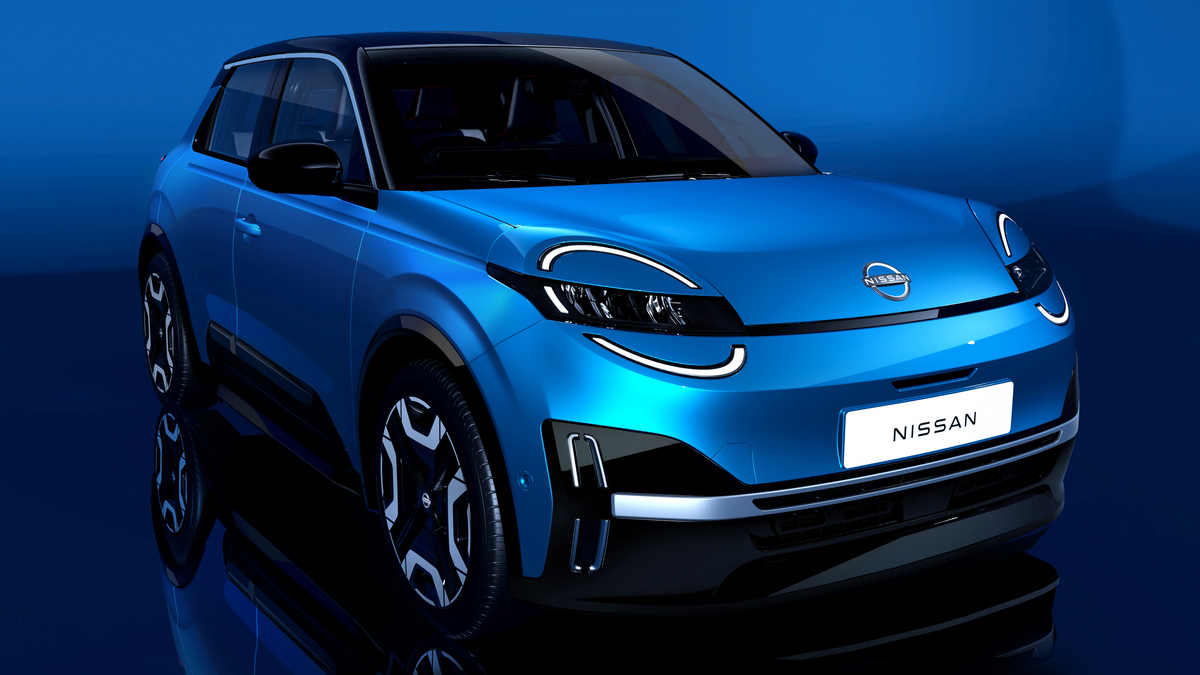
Nissan Announce V2L Enabled Electric MICRA

Earlier this week Nissan UK announced that:

The all-new, sixth-generation Nissan MICRA will return to the B-segment in 2025 as a fully-connected, pure EV. Combining an assertive personality with zero-emission mobility, the new MICRA will stay true to its guiding principles as a stylish and unpretentious car, which has underpinned its popularity and success as an iconic compact car across five generations and more than 40 years.

Its arrival signals the next major step in Nissan’s bold product offensive in Europe, where the company will introduce four new fully electric models by 2027 as part of its push towards electrification. These include the all-new MICRA, followed by the Nissan LEAF, Nissan JUKE, and a A-Segment model, as well as the upgraded third generation of Nissan’s unique e-Power technology – to be rolled out on the best-selling Nissan Qashqai.

Needless to say I headed straight for the V2x small print, where I read that:

Continue reading →

V2G at the 361 Energy Fair in Barnstaple

The 361 Energy Fair is back in Barnstaple on September 29th. The 2024 event starts at 10 AM in the Pannier Market with an introduction by Ian Roome, the newly elected Liberal Democrat MP for North Devon.

To give you a better idea of what to expect, here’s a video with extracts from previous 361 energy fairs:

For the first time this year’s fair includes a series of talks on a variety of topics. Our very own Jim Hunt will be giving a presentation on the topic of “An introduction to V2x, making greater use of EV batteries”, and the emphasis will be on vehicle-to-home and vehicle-to-building rather than fully fledged vehicle-to-grid.

Continue reading →

V2G at Everything Electric NORTH 2024

I was fortunate enough to find myself on stage for two different panel sessions at the Everything Electric NORTH show in Harrogate last weekend. We recorded those two sessions in full for posterity, but there were plenty of other interesting topics apart from V2x. Some extracts from those can also be found below.

My first panel on Saturday was on the topic of “Vehicle to Everything? What’s the true potential?”, held in the EEN “Giga Theatre”. The tagline for the session was “We believe that V2X could be the biggest benefit of all in a world with battery electric vehicles, but how do we go ‘bidirectional’?”:

As you can see from the video below, I found myself sat next to Robert Llewellyn of Fully Charged fame as a last minute replacement for host Dan Caesar:

Mark Potter from 3ti explained the full suite of V2x three letter acronyms (TLAs for short).

  • V2L = vehicle-to-load
  • V2H = vehicle-to-home
  • V2B = vehicle-to-building
  • V2G = vehicle-to-grid
  • V2I = vehicle-to-infrastructure
  • V2V = vehicle-to-vehicle
Continue reading →

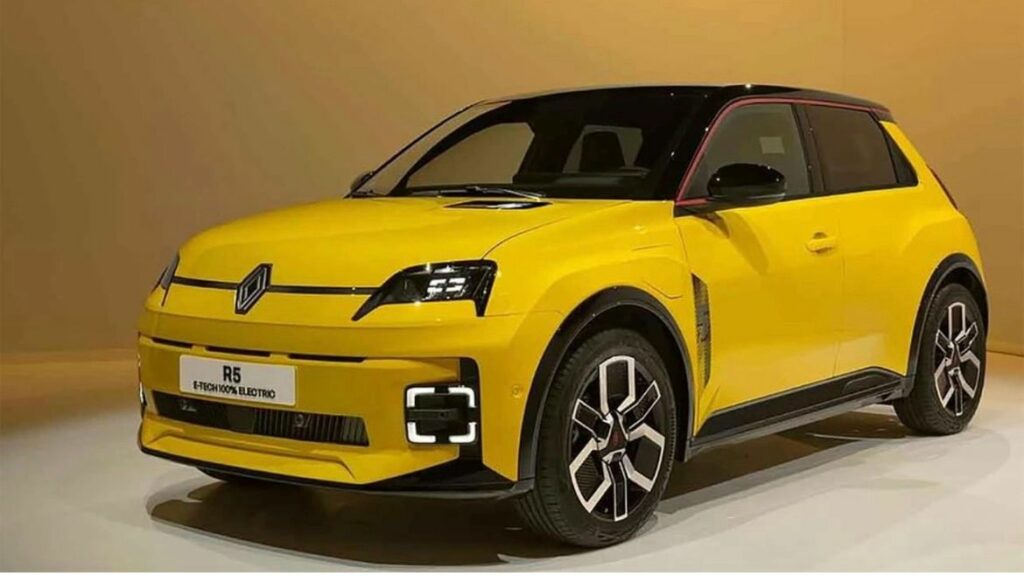
Renault Reveal V2x Enabled R5 at Geneva Motor Show

We have been following the progress of the new Renault 5 for quite some time, and the long awaited reveal of the R5 will be live streamed tomorrow from the 2024 Geneva International Motor Show.

Some pictures of a bright yellow version of the “production” Renault 5 have been “leaked” to the press. Here is a sneak preview:

And from the reverse angle:

Continue reading →

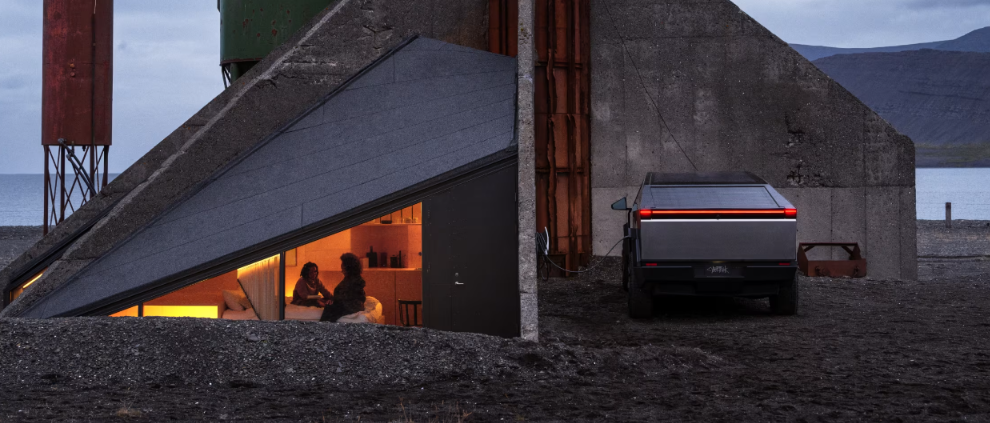
Tesla Reveal Powershare V2H on Cybertruck

After maintaining an anti V2x stance for many years Tesla have finally accepted the inevitable! On the new Powershare page on the Tesla web site they say that:

Tesla vehicles* equipped with Powershare technology have onboard electronics that unlock your battery’s ability to provide power whenever you need it, wherever you are. Whether you need to power a construction site, pre-game tailgate, another electric vehicle or even your home during an outage, your Tesla vehicle with Powershare has you covered.

That sounds awfully exciting, but following the asterisk to the small print at the bottom of the page reveals that:

Tesla Powershare is currently available for Cybertruck only.

Without actually mentioning vehicle-to-load or vehicle-to-home Tesla suggest some use cases for the newly unlocked power:

Continue reading →

The New Renault 5 Mobilizes V2G

Renault have released more details about the forthcoming Renault 5, and it’s excellent news to our ears:

The future electric Renault 5 will be Renault’s first car to come with a bidirectional on-board charger.

Over the years we have covered at some length Renault’s experiments with ZOEs modified to include bi-directional capabilities, and we are pleased to hear that AC V2G will finally be going into production in the shape of the new Renault 5.

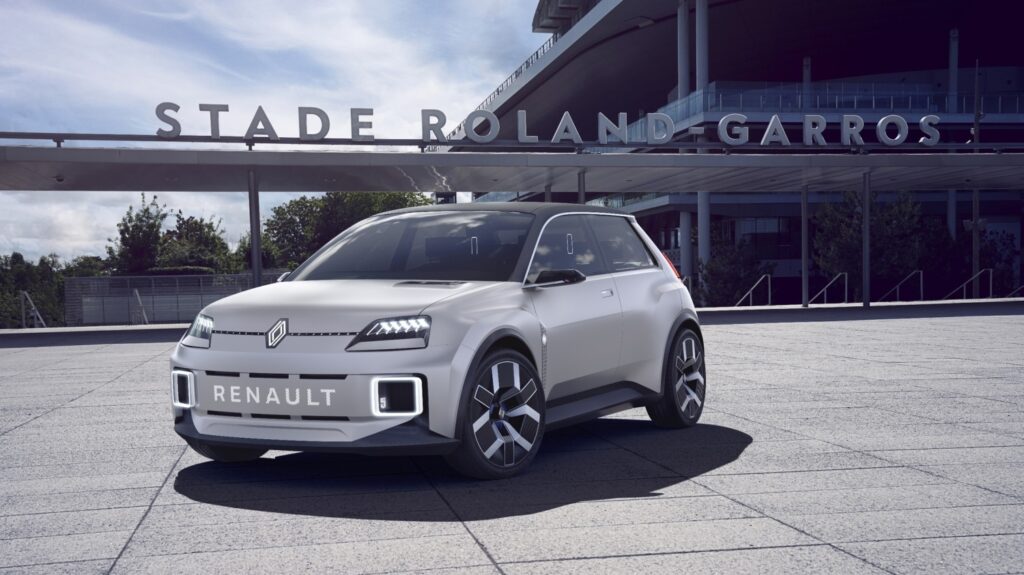
A previous press release revealed the external shape of the new R5 outside Stade Roland Garros:

Now we get to see the internals too! According to Renault:

Continue reading →

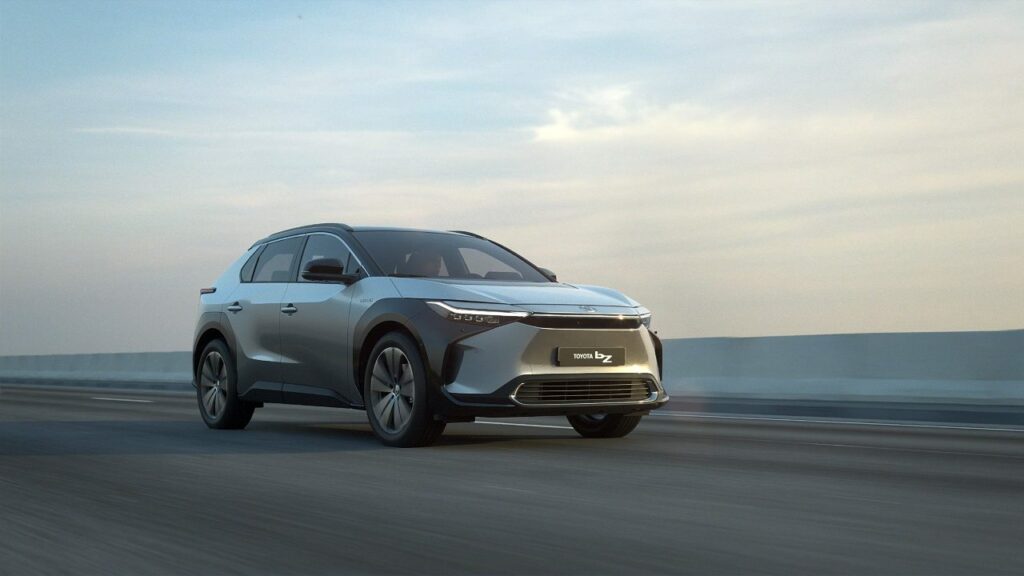
Toyota Announce bZ4X 100% BEV, with V2L!

You could argue that Toyota’s recent launch of a 100% battery, non hybrid, electric vehicle was worthy of an article on this web site, but what with one thing and another we had more important things to write about. However that has now changed!

“First of all here’s the UK version of the bZ4X “world premiere” press release from October 29th, which states that:

Today, Toyota presents the world premiere of the all-new bZ4X, the first model in a new series of bZ – beyond Zero – battery electric vehicles (BEVs).

Faithful in its design and technology to its concept predecessor, revealed earlier this year, the production-ready bZ4X is the first model to be developed by Toyota entirely as a BEV. It is also the first car to be built on the company’s new dedicated BEV platform. Based on e-TNGA philosophy, this has been co-developed by Subaru and Toyota.

Incorporating the battery unit as an integral part of the chassis, beneath the vehicle floor, it gives the fundamental benefits of a low centre of gravity, excellent front/rear weight balance and high body rigidity for high levels of safety and ride and handling quality…

With a fully charged battery, expected range is more than 280 miles (depending on version, exact data to be confirmed later). The bZ4X will also offer advanced technology features, including a solar panel roof to help charge the battery while driving or parked, and third generation Toyota Safety Sense with new and improved active safety and driver assistance systems.

The bZ4X will have its European premiere on 2 December; customers who want to be among the first to obtain the new model will be able to place a reservation via the Toyota.co.uk website from 15 December.

The “European premiere” press release on December 2nd added a range of additional information, including:

Toyota has drawn on almost 25 years’ experience in electrified vehicle battery technology to ensure the new lithium-ion unit in the bZ4X has world-leading quality, durability and reliability. Its confidence in the technology is reflected in an extended care programme that guarantees the battery will still operate to 70 per cent of its original capacity after up to 10 years of ownership or one million kilometres driven, subject to the customer taking their vehicle to an authorised Toyota service centre for an annual health check. To ensure this guarantee could be offered, Toyota developed the battery with a target of 90 per cent of capacity retained after 10 years/240,000 km.

This level of quality and performance is supported by multiple monitoring of the battery’s voltage, current and temperature, from individual cell level. If any abnormal heat generation is detected, controls are automatically triggered. Countermeasures have been put in place to mitigate any material degradation, and there are safeguards in the manufacturing process to prevent foreign matter from entering the battery. In a Toyota first, the battery is water-cooled.

All very interesting of course but still no mention of any mechanism for discharging the bZ4X’s water cooled battery to the outside world. Until now that is! Earlier today my attention was drawn to the Toyota Global bZ4X launch video:

https://youtu.be/d9qp2eoOWCk?t=230

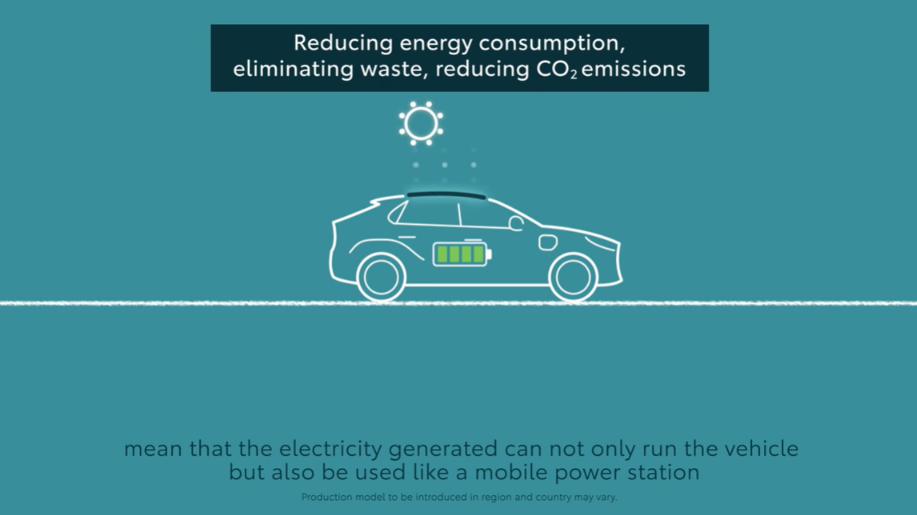
On board solar panels included with the bZ mean that the electricity generated can not only run the vehicle but also be used like a mobile power station in emergencies and in outdoor activities.

Which sounds an awful lot like V2L to me! Close inspection of the associated
press release
reveals the following information:


Roof solar panel (specially equipped vehicles)

Generates electricity equivalent to 1,800 km of driving distance per year (in-house estimate), contributing to superb cruising range. Can charge in parking lots where there are no charging stations, and solar power can be used to charge in disasters or other emergencies.

DC external power supply function (Japanese specifications)

Can connect to a power feeder to supply high-output electricity to homes and home appliances for outdoor activities, and during disasters and other emergencies.

When used with home solar power generation, solar power can supply electricity to the house in the daytime, surplus electricity can be used to recharge the vehicle via a power feeder, and electricity stored in the vehicle can be used to power the home at night.

The bZ4X is scheduled for launch in all regions from mid-2022.

Which is extremely interesting, because unlike other V2L/V2H capable EVs that have been announced recently this one seems to claim that it offers a “high-output DC” rather than a “low-output AC” feed:

However be sure to read the (very) small print. Only in Japan by the sound of it.

Watch this space!

VW preview the ID.5 e-SUV, including V2x

Earlier today Volkswagen announced the “world premiere” of the ID.5 “electric SUV coupé” and the ID.5 GTX. According to the press release:

On the “Way to ZERO”: The new ID.5 does more than just expand the successful ID. family; the new Volkswagen launch moves the electrification of its new car fleet forward and into a new market segment. The elegant, expressive E-SUV coupé is equipped with the new ID. software version 3.0, which includes improved charging performance and voice control among other features. With the use of swarm data and latest-generation driver assistance systems, Volkswagen is also taking the next step towards automated driving…

Elegant and dynamic design, outstanding aerodynamics, extensive range. The new ID.5 and the sporty ID.5 GTX with dual-motor all-wheel drive are the new, long-range top models in the ID. family. Like all ID. models, Volkswagen’s first e-SUV coupé is based on the Volkswagen modular electric drive matrix (MEB).

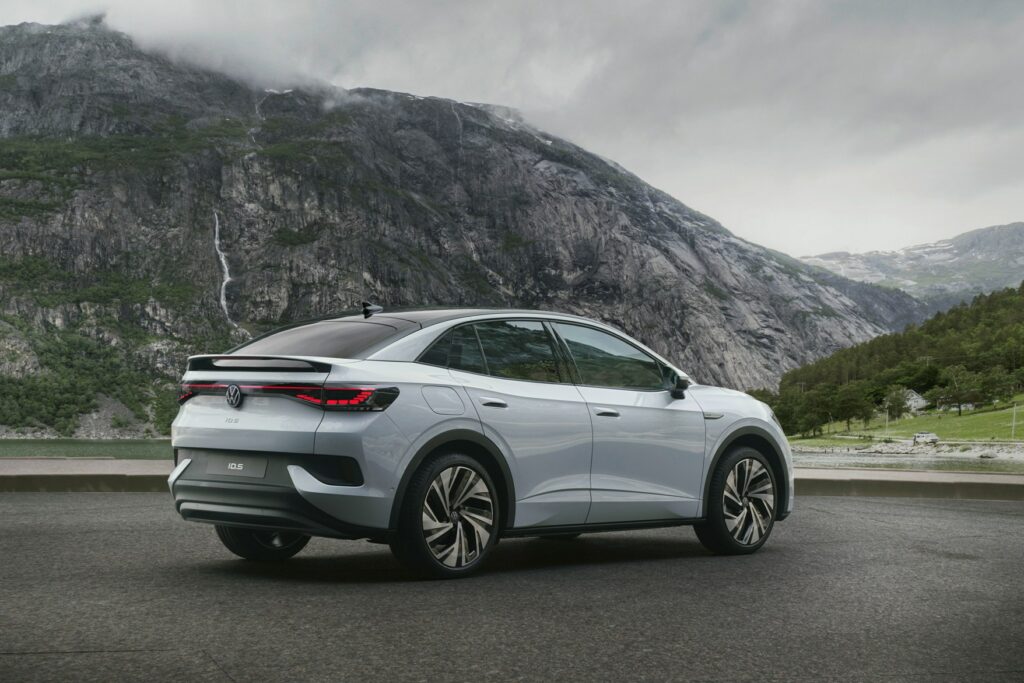
Our interest is of course primarily in the (dis)charging capabilities of the new VW. We carefully selected a promotional picture that includes the charging port, albeit with the door closed. The press release states that:

With its We Charge charging system, Volkswagen offers the fastest-growing environmentally friendly system for convenient, networked and sustainable charging. The network has around 250,000 charging points across Europe. Using the standard Mode 3 cable, the e-SUV coupé can also be charged with up to 11 kW of alternating current (AC), even when it is out and about. Charging performance can reach up to 135 kW as standard at a fast-charge station.

However despite VW’s earlier hints, the press release makes no mention of any potential ability to discharge the ID.5’s traction battery! For that we have to turn to the launch video:

At 7:35 in the video Klaus Zellmer puts it this way:

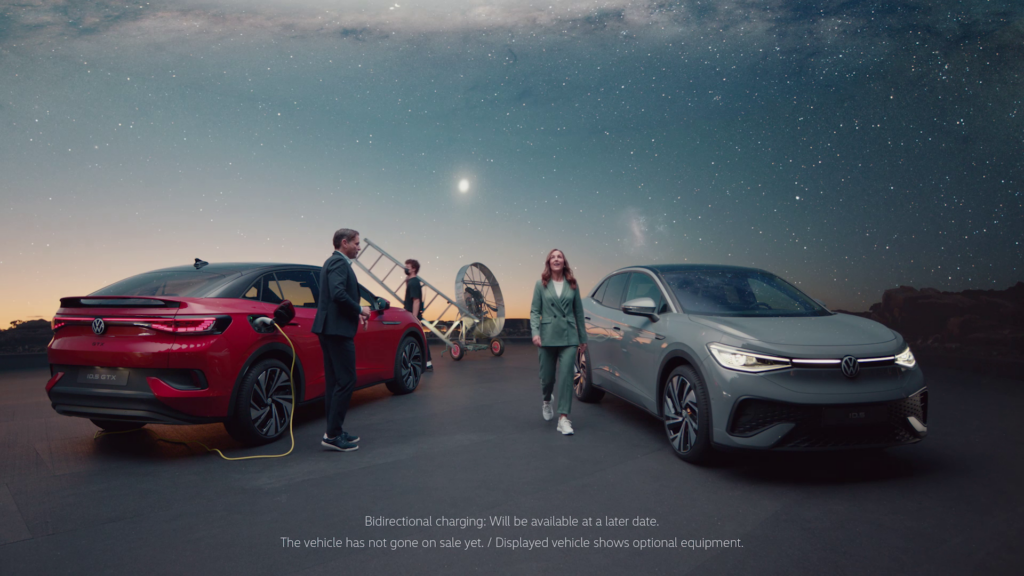
We lost power, and in order to keep the lights on we now use the ID, with its battery, and it’s called bidirectional charging…

In your usual use case you would use the electricity from the grid, use it for your car to power the battery and drive around. But it can also be done the other way around, so you can also use the battery power, the electricity, to power whatever you want to power.

There’s no mention of the word “grid” however, so let’s settle on vehicle-to-load (V2L for short) for the moment shall we? Also be sure to read the (very) small print:

There is one other interesting technical feature of the ID.5 that does gets a mention in the press release:

With Car2X communication, Volkswagen is taking safety to a whole new level. Data from compatible vehicles in the Volkswagen fleet and signals from infrastructure within a radius of up to 800 metres can be locally interpreted in a fraction of a second, enabling driver alerts about dangerous areas, accidents and stationary traffic.

Add vehicle-to-infrastructure using WLANp to the ID.5’s list of capabilities as well!

Hyundai Announce V2B Partnership with We Drive Solar

The press release is in Dutch, so I’m relying on Google Translate somewhat for this article! There is no explicit mention of V2x technology, but let’s read between the lines:

Hyundai and mobility provider We Drive Solar announced on April 13th a strategic partnership to provide housing projects with the energy system of the future.

I don’t know about you, but I’m getting a hint of vehicle-to-building already. Moving on:

Hyundai is well on its way to becoming a top 3 manufacturer of zero-emission vehicles worldwide, with a specific focus on 100% electric propulsion. By 2040, Hyundai aims to have its global car line-up fully electrified, aiming for a market share of 8 to 10 percent of the global EV market.

In addition to a leading role in electric driving, Hyundai also wants to accelerate the transition to sustainable mobility and optimally unburden customers with the help of innovative services, fully in line with the brand’s Progress for Humanity philosophy. In that context, Hyundai is expanding its e-mobility activities in the Netherlands significantly this year. Hyundai recently announced its partnership with Jedlix, the market leader in smart charging. Starting today, Hyundai is adding a new chapter in accelerating sustainable mobility by announcing its partnership with We Drive Solar.

Smart charging, sometimes referred to as V1G, is part of the equation but what about smart discharging? The press release continues:

Continue reading →