Sero Group Announce “UK’s largest domestic DSR trial”

In a press release on Tuesday the Sero Group announced that:

FLATLINE, an industry led research project aiming to demonstrate the viability of a demand-side approach to energy management at domestic level, has reached a major milestone as residents move into three pilot homes at The Mill site in Cardiff.

Backed by the Department of Business, Energy & Industrial Strategy, the ‘Fixed Level Affordable Tariffs Led by Intelligently Networked Energy’ (FLATLINE) project aims to significantly reduce residents’ energy bills, using a combination of domestic Demand Side Response and demand shifting for both heat and electricity.

The specially built pilot homes at The Mill development site in Cardiff will be closely followed by a further 46 homes at a separate site, Parc Eirin in Tonyrefail – which will see first residents move in this autumn as the first phase of the 225 new home scheme is complete.

According to the “Zero Carbon Lifestyle” section of the Sero Homes web site:

Every Sero Home is built ready for future generations, and that includes the future of travel.

Our homes are built with three phase electricity – the “broadband” of power – and electric vehicle (EV) fast charging points. You can recharge your car at a Sero Home in less than four hours, compared to around twelve hours in a traditional home (or about three days on a 13amp plug).

Sero Homes’ class-leading recharging times are only useful if you can afford the car in the first place. To tackle this, on most of our sites we offer our residents an option to take an EV lease with inclusive miles bundled in.

It’s probably no coincidence that today Robert Llewellyn announced a new edition of his Fully Charged Show. An introduction to the “Affordable Eco Housing” at The Mill and Parc Eirin:

Continue reading →

Storm Francis Follows Hot on the Heels of Ellen

At the moment I’m too busy writing about the seemingly never ending sequence of power cuts due to “extreme weather” events to wax lyrical about developments in vehicle-to-grid technology!

In California the heat wave is over and rolling blackouts a thing of the past, for the moment at least. However the wildfires continue, and the Lawrence Berkeley
National Laboratory is temporarily closed:

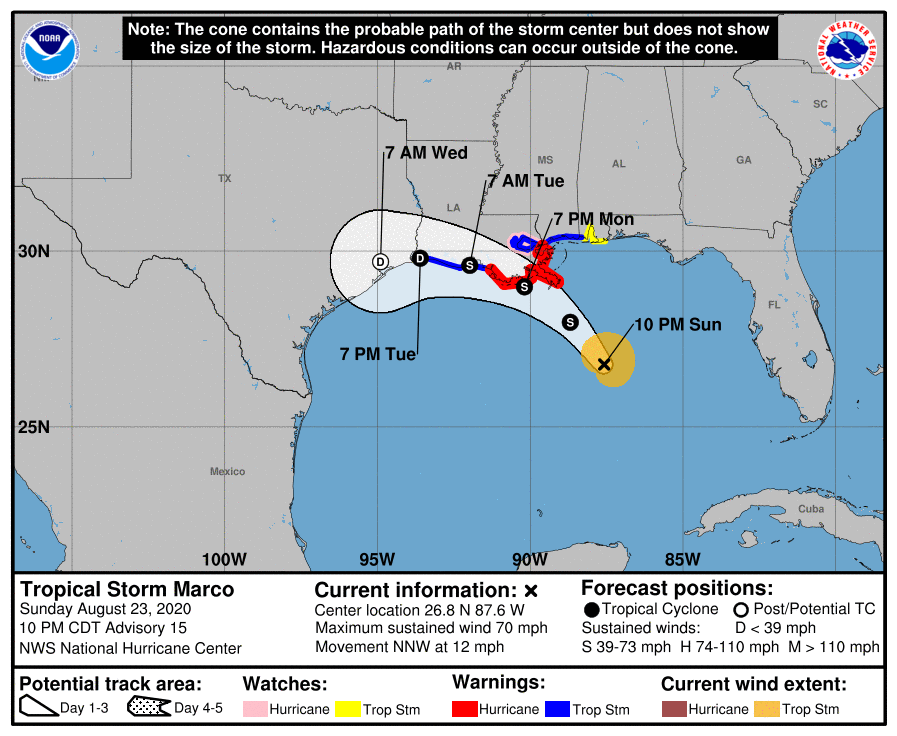
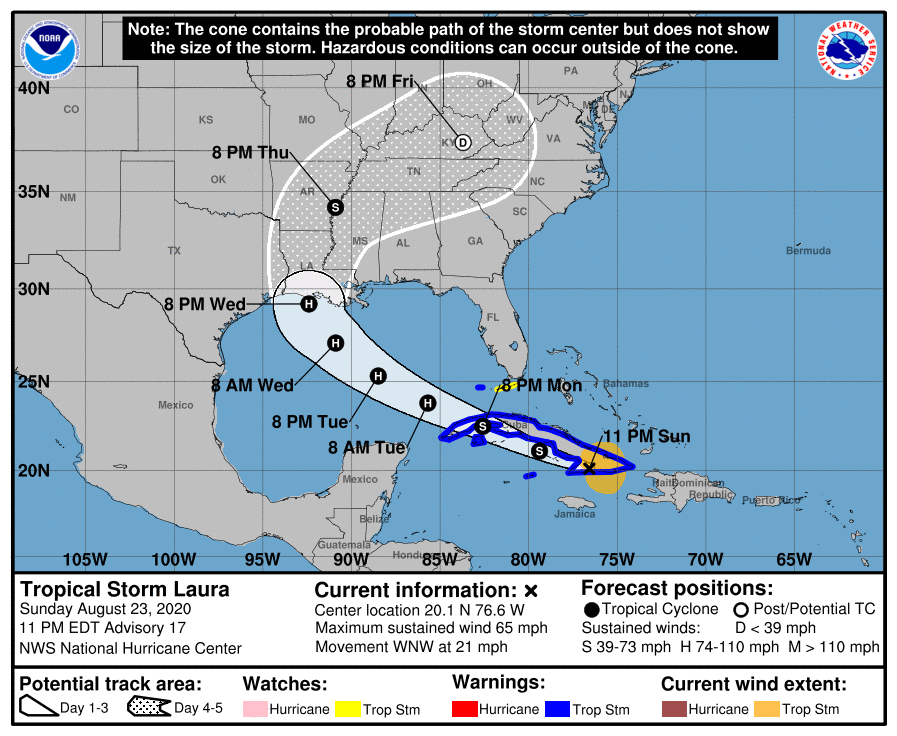
Meanwhile in the Gulf of Mexico tropical storms Laura and Marco are simultaneously heading for the Louisiana coast. Laura is forecast to be a hurricane by the time she gets there, with Marco being merely an ex hurricane by landfall later today.

Now this morning comes news that hot on the heels of Storm Ellen last week, which caused many tens of thousands of properties in Ireland to suffer a power cut, the United Kingdom’s Meteorological Office has named Storm Francis:

Further power cuts are expected in the near future, on the shores of both the Gulf of Mexico and the North Atlantic! Here is the local wind forecast for the V2G Group office in (Silic)Inny Valley, North Cornwall, courtesy of MeteoCiel:

Please note that this forecast is for the peak of the post 2020 Covid-19 lockdown Cornish staycation season, not the middle of winter!


[Edit – August 25th 08:00]

As the winds from Storm Francis increase over South West England let’s take a quick look at current and projected electricity generation for today:

Plus today’s Octopus Energy Agile electricity tariff for South West England:

and the United Kingdom’s carbon intensity forecast:

[Edit – August 25th 22:00]

Here’s an image of Storm Francis over the British Isles recorded earlier today by the Suomi satellite:

Marco and Laura Gang Up On Gulf Coast

Only last week we were following power cuts caused by both a heat wave in California and hurricane force winds in Ireland thanks to the extratropical cyclone dubbed Storm Ellen by Met Éireann. This week we already have two hurricanes heading for the United States coast in the Gulf of Mexico, where a significant storm surge and numerous power outages are now expected.

The sustained wind speeds of Hurricane Marco have just dropped below the Saffir-Simpson scale category 1 threshold of 74 miles per hour. However storm surge and hurricane warnings are still in place for the Gulf coast of Lousiana:

A STORM SURGE WARNING IS IN EFFECT FOR.... 
* MORGAN CITY LOUISIANA TO OCEAN SPRINGS MISSISSIPPI
* LAKE BORGNE
A HURRICANE WARNING IS IN EFFECT FOR...
* MORGAN CITY LOUISIANA TO THE MOUTH OF THE PEARL RIVER

Marco is due to make landfall later this evening. Meanwhile Tropical Storm Laura, currently crossing Cuba, is forecast to strengthen as she crosses the Gulf before making landfall at hurricane strength on Wednesday night, in Louisiana once again:

FORECAST VALID 27/0000Z 29.2N  92.4W
MAX WIND 90 KT...GUSTS 110 KT.
50 KT... 50NE 40SE 30SW 40NW.
34 KT...100NE 100SE 50SW 80NW.

Significant damage to the electricity distribution infrastructure in the southern USA is expected. Yet again we are compelled to wonder if many of the anticipated power outages could have been prevented if areas of the United States vulnerable to hurricane damage already possed significant numbers of vehicle-to-grid capable electric vehicles and bidirectional charging stations?

Continue reading →

Bad Weather Batters Global Electricity Grids

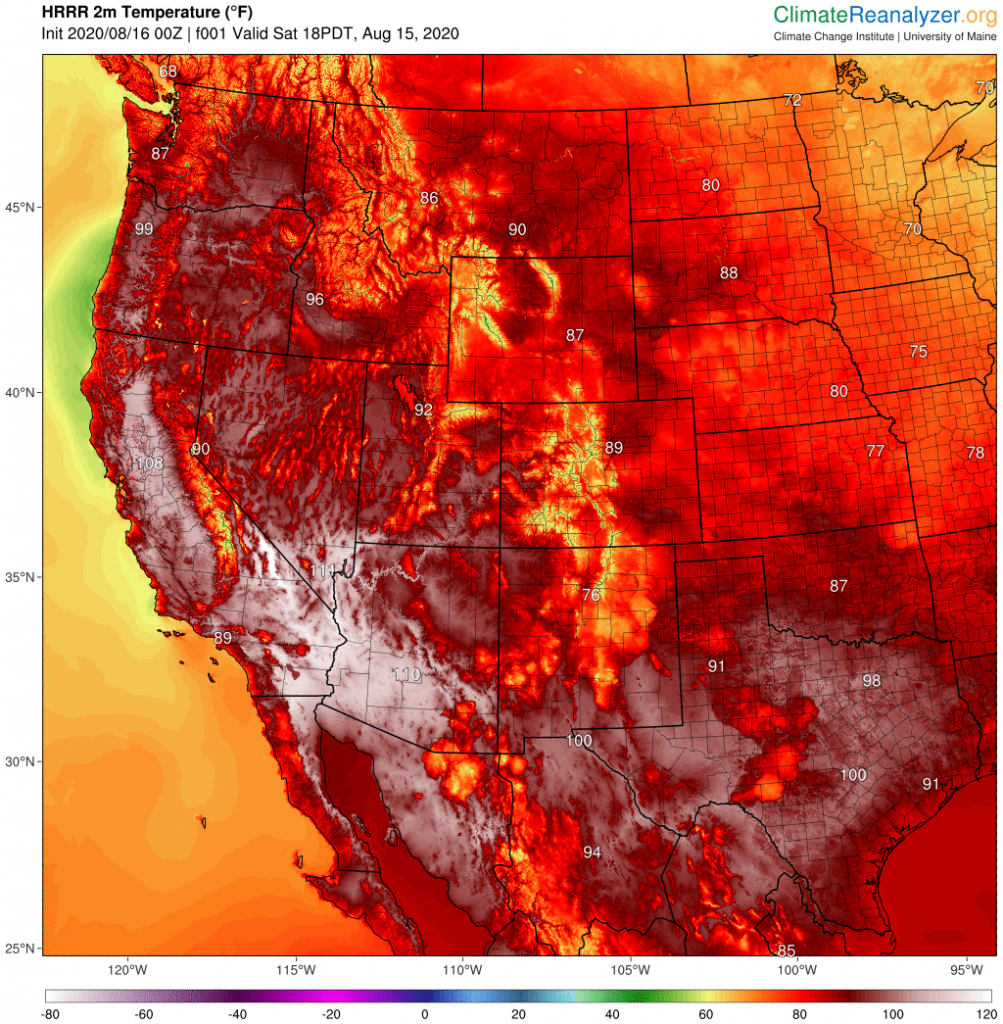
Over on the eastern side of the Pacific Ocean there has been a summer heat wave in California:


As a consequence air conditioning works hard, electricity demand goes up, and over the last few days there have been some rolling blackouts across the Golden State. According to the New York Times on August 16th:

As temperatures began to rise in California on Friday and again on Saturday, the manager of much of the state’s electric grid called on utilities to cut power to hundreds of thousands of customers.
But the rolling blackouts on those days left some of the state’s energy experts bewildered. They said that the utilities had plenty of power available and that the blackouts weren’t necessary. The grid’s capacity may be tested in coming days as temperatures are forecast to reach into the triple digits again in some places.

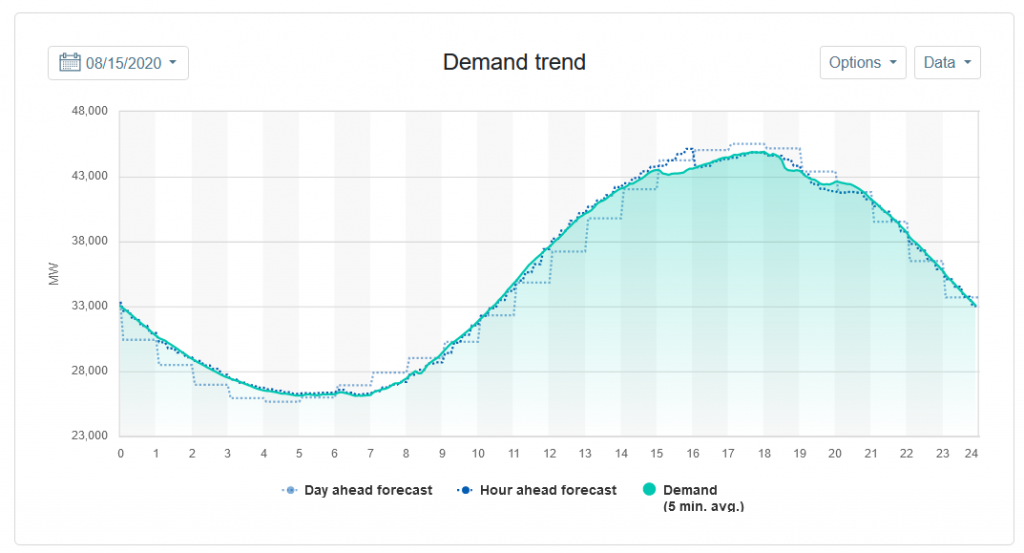
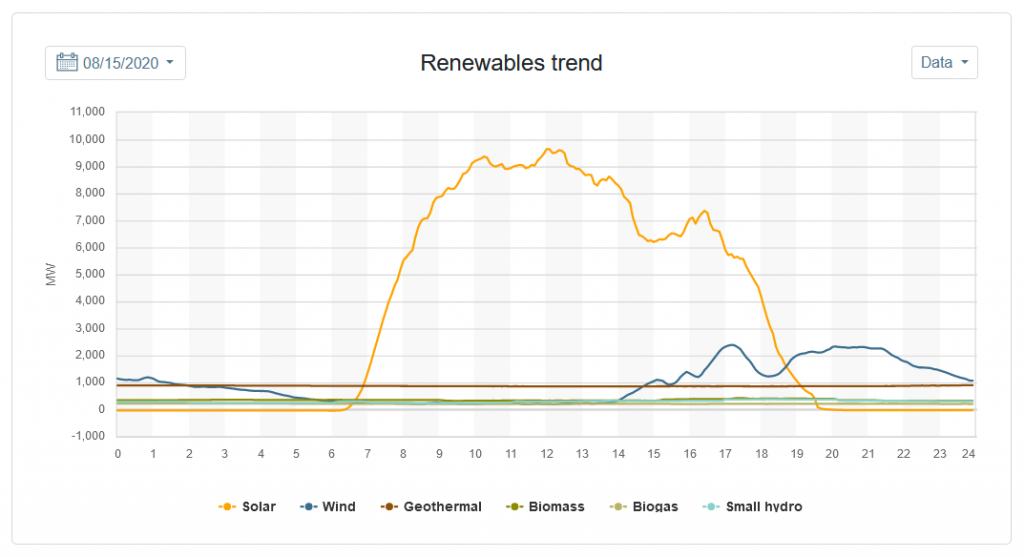
The grid’s capacity was indeed tested in the following days. It’s not clear why the California Independent System Operator (CAISO for short) didn’t issue a call for a voluntary “Flex Alert” on August 15th, but the ultimate consequence was some power cuts. Here’s CAISO’s record of electricity demand and renewable generation that day:

Continue reading →

Lucid Air Supports AC CCS V2G

In a press release yesterday Lucid Motors announced that:

The Lucid Air will be a groundbreaking EV in terms of charging capabilities and will include:

DC fast charging at up to 20 miles per minute, with a peak charging rate of over 300kW

Ultra-high voltage 900V+ electrical architecture
19.2kW AC onboard charger that can support AC charging speeds up to 80 miles per hour

Integrated boost charging and the broadest range of charging compatibility from AC Levels 1 and 2, up to the most powerful Level 3 DC fast charging, utilizing the universal CCS connector standard for connectivity to, and fast charging at, any public charging network.

Full bi-directionality for advanced Vehicle-to-Everything (V2X) capabilities built-in for future enablement of Vehicle-to-Grid (V2G) and Vehicle-to-Vehicle (V2V) features

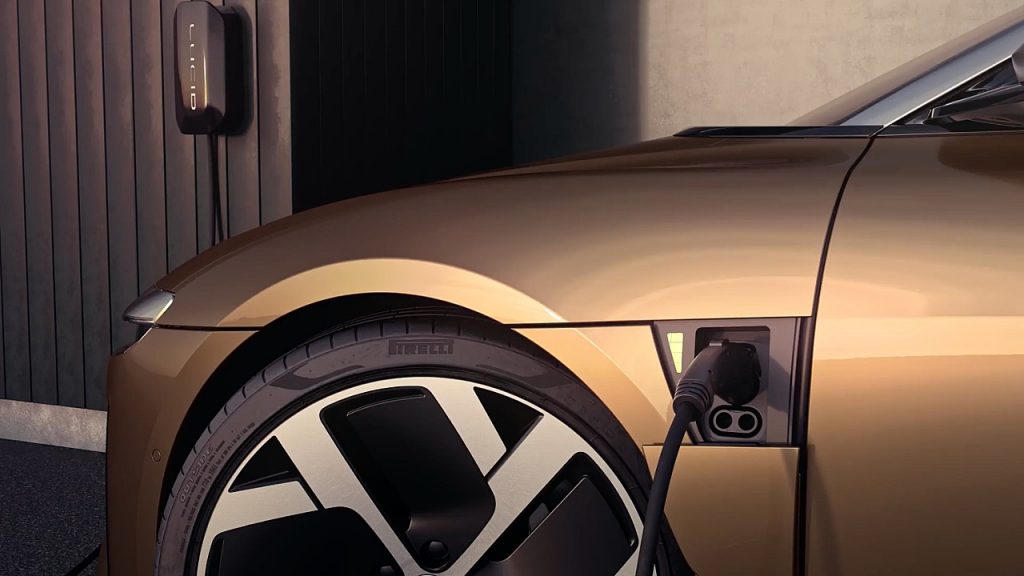
That last bullet is obviously the one of most interest to us here at the V2G Group, so to begin with here’s a picture of the Air’s CCS charging socket:

Continue reading →

E.ON and Nissan Report on 20 V2G Charger Trial

In a press release earlier today E.ON and Nissan announced that they:

Have successfully deployed 20 vehicle-to-grid (V2G) chargers as part of a trial to demonstrate how electric vans and cars could play a role in supporting the UK grid and provide a profitable and sustainable solution for business fleets.

The install at Nissan’s European Technical Centre in Cranfield is the first in a large-scale V2G trial co-funded by Innovate UK. The project will test and demonstrate how storing and sharing electricity in fleet vehicles’ batteries can generate additional revenue for participating companies as well as supporting the power grid.

Having validated the technology at Nissan’s Cranfield site, the project is now recruiting further participants for the trial and plans to deploy V2G chargers for organisations across the UK.

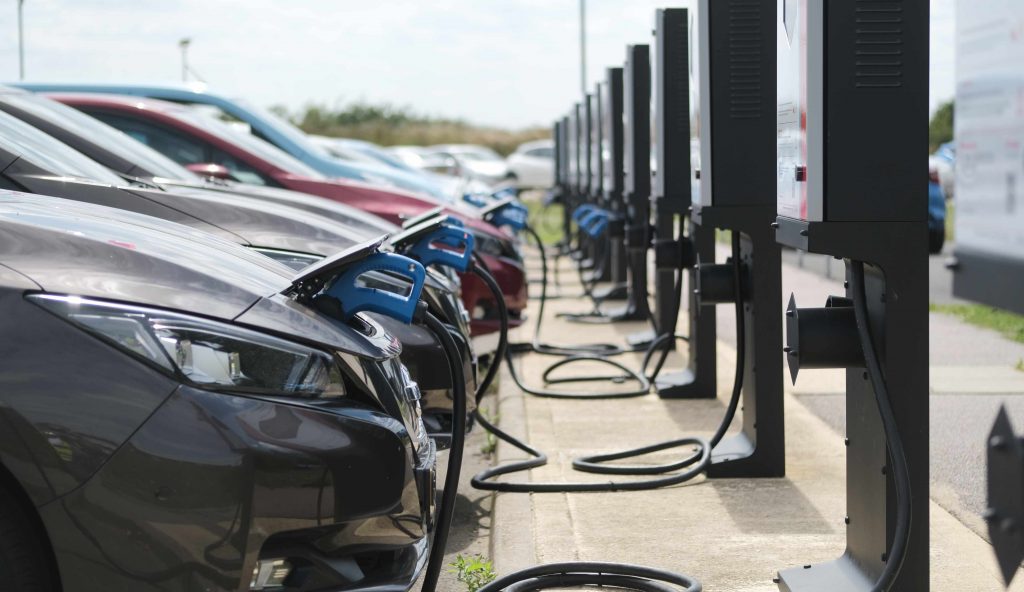
E.ON Drive’s Vehicle to Grid chargers at Nissan’s UK Research and Innovation site in Cranfield.

If you are a fleet owner think of going electric then Nissan want to talk to you! The press release continues with this quote from Nissan Motor GB’s Fleet Director, Peter McDonald:

We know many fleets are not just looking at electric vehicle acquisition, they are also reviewing their energy infrastructure for a world where electric vehicles are fast becoming the norm. Nissan is collaborating with E.ON on this exciting energy infrastructure project to expedite V2G technology in the UK. Thanks to the LEAF and e-NV200 being V2G-capable, these EVs are well set for the future.

I wonder whether Lisa, our very own Nissan LEAF counts for the purposes of this trial. As regular readers will no doubt be aware, we have been looking to expand our small “fleet” with an e-NV200 for quite some time. Perhaps this is the perfect opportunity, since:

The V2G package for participants in the trial will be offered at a heavily subsidised price through grant funding made available through Innovate UK. Vehicles compatible with the technology being used in this project are currently the Nissan e-NV200 and the Nissan LEAF2.

As well as E.ON and Nissan the V2G project consortium (known as e4Future) includes Newcastle University, Imperial College London, Northern Powergrid, UK Power Networks and National Grid ESO. The V2G platform used on the trial utilises a combination of E.ON’s existing Virtual Power Plant software as well as a charger operating system provided by E.ON’s e-mobility partner Virta.

The project is part of the V2G programme, funded by the Department for Business, Energy and Industrial Strategy and the Office for Low Emission Vehicles (OLEV), in partnership with Innovate UK. Part of UK Research and Innovation (UKRI), Innovate UK is the UK’s innovation agency investing in science and research.

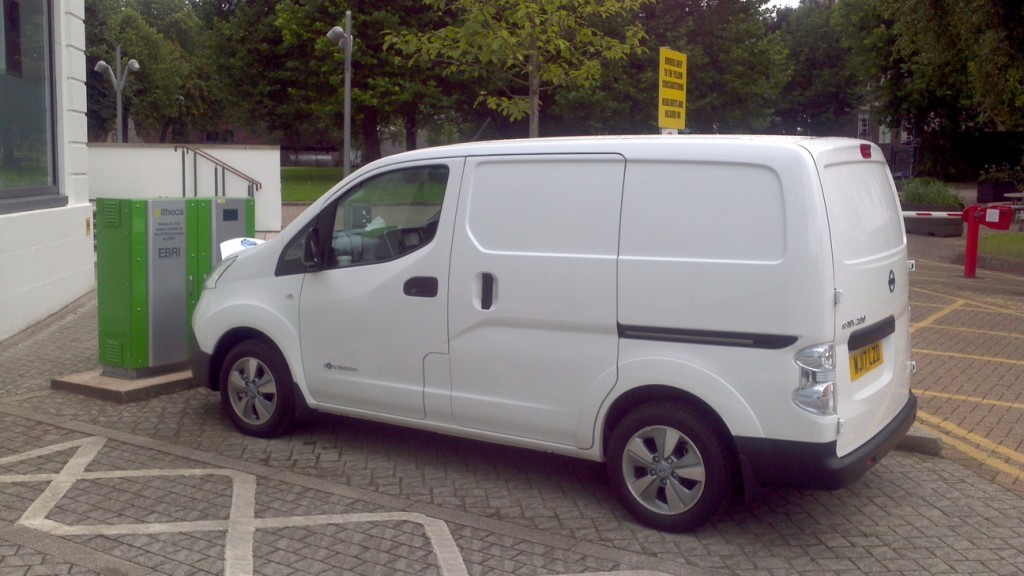
Here is an image of our concept that we prepared earlier. In 2017 to be precise: