Nissan UK Announce V2G Enabled Next Generation LEAF

There have recently been a series of press releases from Nissan UK about their forthcoming range of electrically powered vehicles. At the end of May Nissan UK announced the electric MICRA. Yesterday they launched what was described as “The all-new LEAF“:

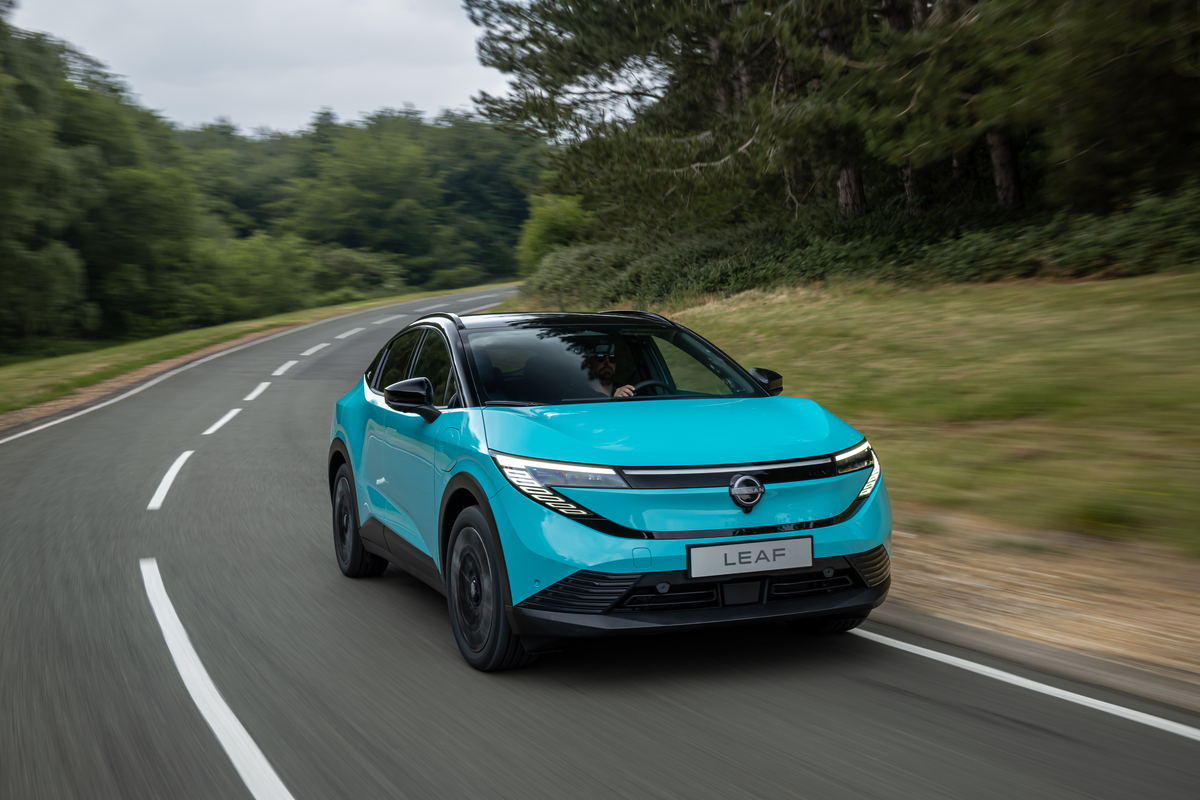
Today marks the debut of the all-new version of the Nissan LEAF – a British-built electric car icon.  

  • The all-new Nissan LEAF is the next step in Nissan’s EV journey, building on its legacy as the world’s first mass-market electric car
  • The sleek, aerodynamic, and spacious crossover design comes with two battery options for an impressive range of up to 375 miles (WLTP), ensuring confident driving for everyday and long-distance trips
  • Delivers a fully connected mobility experience with Google built-in, dual 14.3” screens, and advanced driver assistance technologies
  • Built in Sunderland, UK, as part of Nissan’s EV36Zero initiative, supporting a sustainable electric future for Europe

This third generation of the pioneering LEAF continues to lead the charge in Nissan’s electrification strategy with a sleek design, significantly extended range, and intuitive technology that is seamlessly integrated for today’s connected driver.

Engineered to tackle key barriers to EV adoption, the all-new LEAF has a substantially increased maximum range of up to 375 miles on a single charge for a no-compromise driving experience. It also offers enhanced charging speeds (up to 260 miles of range in 30 minutes) and a suite of technologies that make both driving easier and EV ownership more rewarding.

Since its debut in 2010, the Nissan LEAF has sold close to 700,000 units worldwide, earning its place in history as the world’s first mass-market electric vehicle. Today, Nissan is ushering in a new chapter for this nameplate, re-designed and re-engineered to meet the needs of modern EV customers, while remaining true to its innovative roots…

Designed at Nissan’s Global Design Studio in Atsugi, Japan, the all-new LEAF introduces a stylish silhouette that reflects its dynamic character and aerodynamic efficiency. With a drag coefficient of just 0.25, its sleek design optimises airflow to enhance both performance and range. Flush door handles, a flowing roofline, full under floor cover, and sculpted surfaces create a modern profile, while its signature front and rear lighting delivers a distinct, high-tech identity on the road.
Pretty pictures and low drag coefficients are all very well, but “What about the all new LEAF’s V2x capabilities?” I hear you ask. Heading for the small print I learn that:

Continue reading →
Nissan UK announce Townstar eVan

In a press release on Friday Nissan UK announced that:

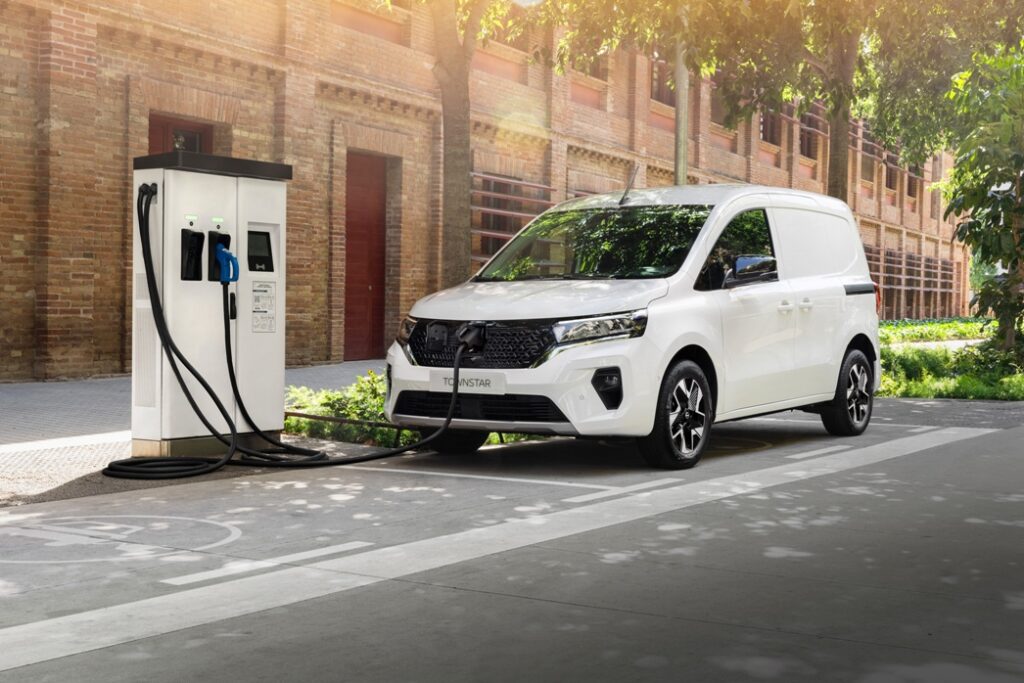
Commercial vehicle customers looking to future-proof their business operations and transition to zero emission motoring now have an exciting new option, following the launch of the electric Nissan Townstar van.

The Townstar EV builds on the success of the e-NV200, Nissan’s previous all-electric compact van and a former UK best-seller, which was designed with business owners’ needs in mind:

The electric Townstar was first announced in September 2021, but it seems that at long last it is possible to order one here in the United Kingdom:

Continue reading →

Enphase Announces V2G Charger

It has just been brought to my attention that at the beginning of this month Enphase Energy issued a press release announcing that:

Enphase Energy, Inc., a global energy technology company and the world’s leading supplier of microinverter-based solar and battery systems, announced today a successful demonstration of its bidirectional EV charger enabling vehicle-to-home (V2H) and vehicle-to-grid (V2G) functionality.

This product will leverage the power of grid-forming IQ8™ Microinverters and Ensemble™ energy management technology to seamlessly integrate into Enphase® home energy systems. In addition, Enphase’s bidirectional EV charger is expected to work with most EVs that support standards such as CCS (Combined Charging System) and CHAdeMO (a Japanese charging standard).

Here’s Enphase’s introductory V2G video:

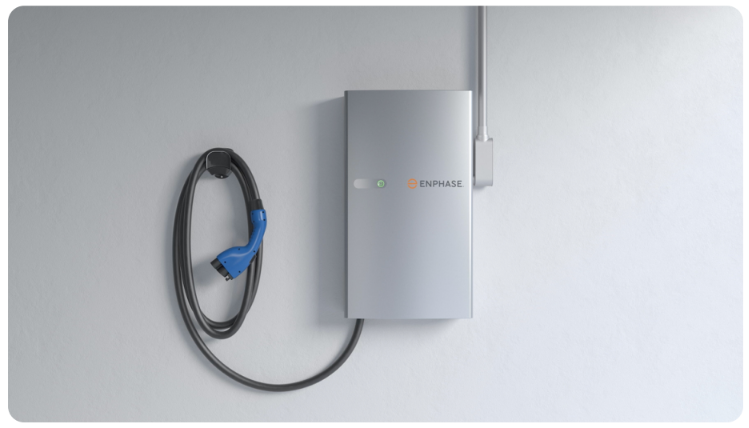
Here too is a still image from the video, which once again looks remarkably reminiscent of the decade old V2G UK banner at the top of this article!

The press release continues:

In addition to charging an EV, Enphase’s bidirectional charger will support the following functionality:

Vehicle-to-home (V2H) –enables the EV battery to provide uninterrupted power to a home during a power outage.
Vehicle-to-grid (V2G) –allows the EV battery to share energy with the grid to help relieve the strain on electric utilities during times of peak energy demand.
Green charging –sends clean solar energy directly to the EV battery.

Raghu Belur, co-founder and chief products officer at Enphase Energy, said that:

The new bidirectional EV charger, along with Enphase’s solar and battery storage system, can be controlled from the Enphase App, empowering homeowners to make, use, save, and sell their own power. We are working with standards organizations, EV manufacturers, and regulators to bring this charger to market in 2024.”

Since I sit on numerous EV (dis)charging and energy management standard development committees it would be very interesting to discover precisely which “standards organizations, EV manufacturers, and regulators” Enphase is working with!

Mohammad Alkuran, Ph.D., senior director of systems engineering at Enphase Energy, added that:

“ The Enphase bidirectional EV charger is the next step on our roadmap to building a solar-powered, all-in-one home energy system that further unlocks electrification, resilience, savings, and control for homeowners. This product will be a game changer for homeowners who want maximum control over their energy usage.”

For those of us that are more technically inclined Enphase Energy has also published a white paper about their bidirectional EV charger. Here’s an extract:

The Enphase Bidirectional EV Charger is part of the Ensemble energy management technology, which is the heart of the Enphase® Energy System™. The Enphase Energy System is a complete solution that produces, stores, monitors, exports, controls, and analyzes the energy in your home.

To achieve this, Enphase Energy System brings solar, batteries, other energy resources like generators, fuel cells, connected appliances and software together in one complete package so that a homeowner can make, use, save, and sell their own power—all through the Enphase mobile app.

Enphase has pioneered power conversion devices called IQ8™ Microinverters. These microinverters are best-in class power electronics components that convert power and comply with standards like UL 1741 for grid reliability functions and IEEE 1547 for interconnection of distributed energy resources (DER). These microinverters can create their own grid, also known as microgrid. They can operate in on-grid mode (as grid-tied) and off-grid mode (creating a microgrid). Enphase microinverter technology is at the forefront of the grid interface for our solar microinverters, storage batteries, and EV chargers.

The Enphase Bidirectional EV Charger leverages Enphase’s IQ Microinverter technology and IQ™ Battery architecture. When the charger is used with a vehicle that supports bidirectional charging, it enables the transfer of power and communication between the Enphase Energy System and the EV. The combination of the EV and the bidirectional charger is similar to an Enphase IQ Battery and can be controlled in an equivalent fashion.

The use of the terms “grid-forming” and “microgrid” is of particular interest to yours truly, since not all V2x charging stations are so well endowed.

Roll on 2024!

The Future of Vehicle to Grid EV Charging?

Our title for today is shamelessly plagiarised from an article of the same name on the Electric Nation web site, which begins as follows:

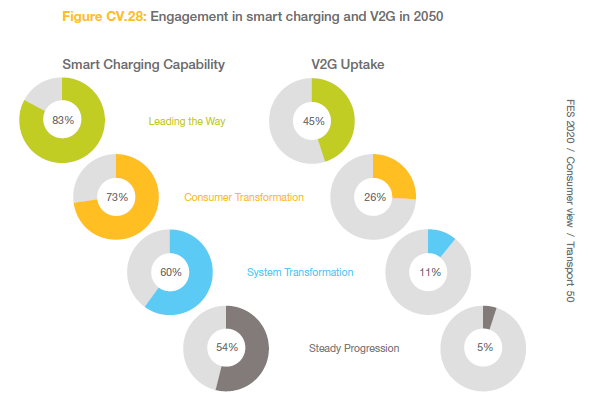
By 2050, up to 45% of households will actively provide Vehicle to Grid (V2G) services, according to National Grid’s Future Energy Scenarios, published in July 2020. But will the average Electric Vehicle (EV) driver be able to use V2G charging over the next few years?

A very good question and a very interesting infographic! The article continues:

The rapid growth in the numbers of electric vehicles on our roads will mean more demand on local electricity networks if EVs are all plugged in at the same time, such as during the peak between 5pm and 7pm in the evening. Smart charging, or ‘V1G’, which allows management of the time when EV charging occurs – as trialled by the original Electric Nation project – will help to avoid this situation.

V2G charging will be more effective than smart charging. This is due to the ability to link EVs together and put significant levels of energy back into the grid at peak times, like a huge decentralised power station. V2G will therefore help to reduce the grid’s need for additional energy generation, typically supplied by fossil fuels at peak times, as well as reducing demand on electricity networks, and allowing EV drivers to use greener and cheaper electricity.

So far so good, I agree entirely. However the next paragraph states:

Continue reading →

Lucid Air Supports AC CCS V2G

In a press release yesterday Lucid Motors announced that:

The Lucid Air will be a groundbreaking EV in terms of charging capabilities and will include:

DC fast charging at up to 20 miles per minute, with a peak charging rate of over 300kW

Ultra-high voltage 900V+ electrical architecture
19.2kW AC onboard charger that can support AC charging speeds up to 80 miles per hour

Integrated boost charging and the broadest range of charging compatibility from AC Levels 1 and 2, up to the most powerful Level 3 DC fast charging, utilizing the universal CCS connector standard for connectivity to, and fast charging at, any public charging network.

Full bi-directionality for advanced Vehicle-to-Everything (V2X) capabilities built-in for future enablement of Vehicle-to-Grid (V2G) and Vehicle-to-Vehicle (V2V) features

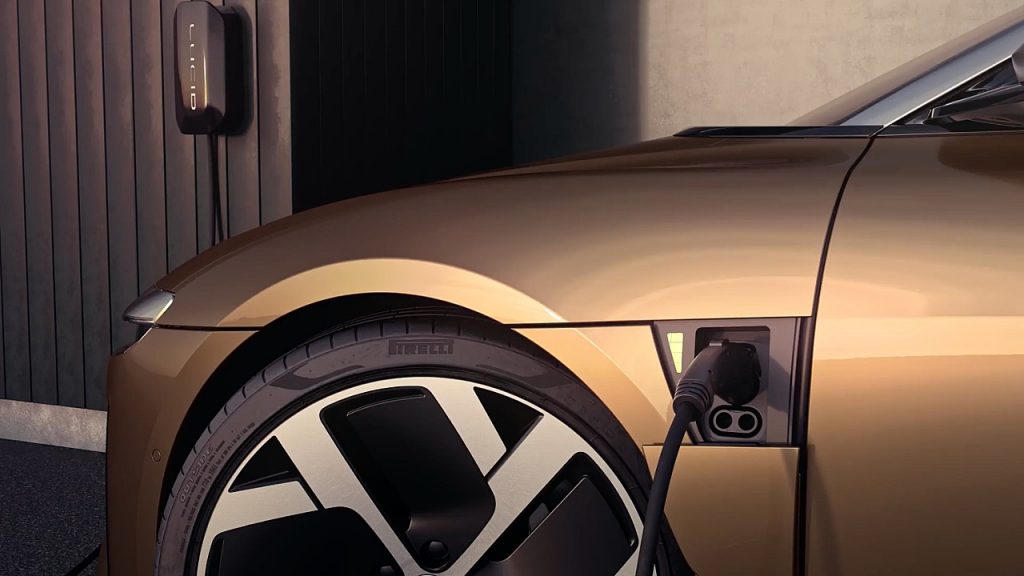
That last bullet is obviously the one of most interest to us here at the V2G Group, so to begin with here’s a picture of the Air’s CCS charging socket:

Continue reading →

Nissan Launches CHAdeMO-less Ariya eSUV

In a press release earlier this week Nissan announced that it had:

Revealed to the world the all-new Nissan Ariya electric coupé crossover, marking a new chapter for Nissan electric vehicles. The EV premiered globally through a virtual event hosted at the soon-to-open Nissan Pavilion in Yokohama.

The Ariya – Nissan’s first all-electric coupé crossover– offers powerful acceleration and smooth, quiet operation, as well as an interior with a welcoming, luxurious lounge-like atmosphere. Its stress-free autonomous driving features, voice personal assistance and seamless connectivity heighten on-road confidence and provides a welcoming environment for the driver and passengers. And with an estimated range of up to 500 kilometers (based on WLTP combined cycle, subject to homologation), Ariya is the perfect partner for daily commutes and road trips alike.

The Nissan Ariya is heavily based on the similarly-named concept vehicle displayed at the 2019 Tokyo Motor Show and first hinted at with the IMx at the 2017 Tokyo Motor Show. It’s the first production model to represent Nissan’s new electrified brand identity, forging a path toward a new automotive era where electrification, optimized platform packaging and seamless vehicle AI technology will become standard.

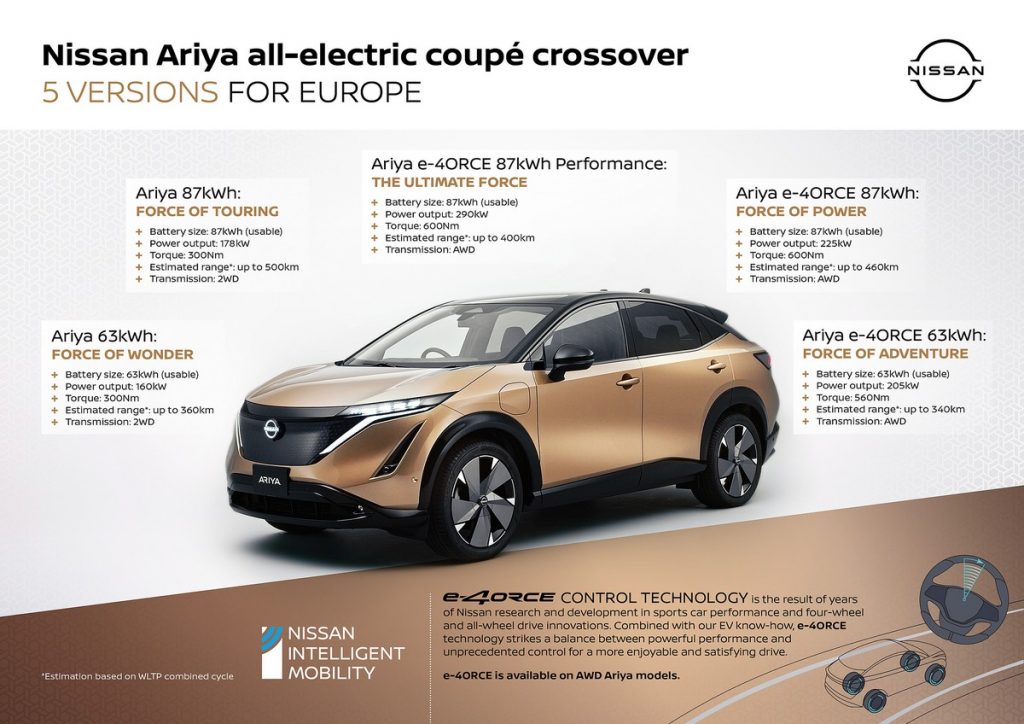
A bit of a change from the venerable LEAF then, with a dual motor 4 wheel drive option accompanying the “new electrified brand identity”, which does reduce the range somewhat:

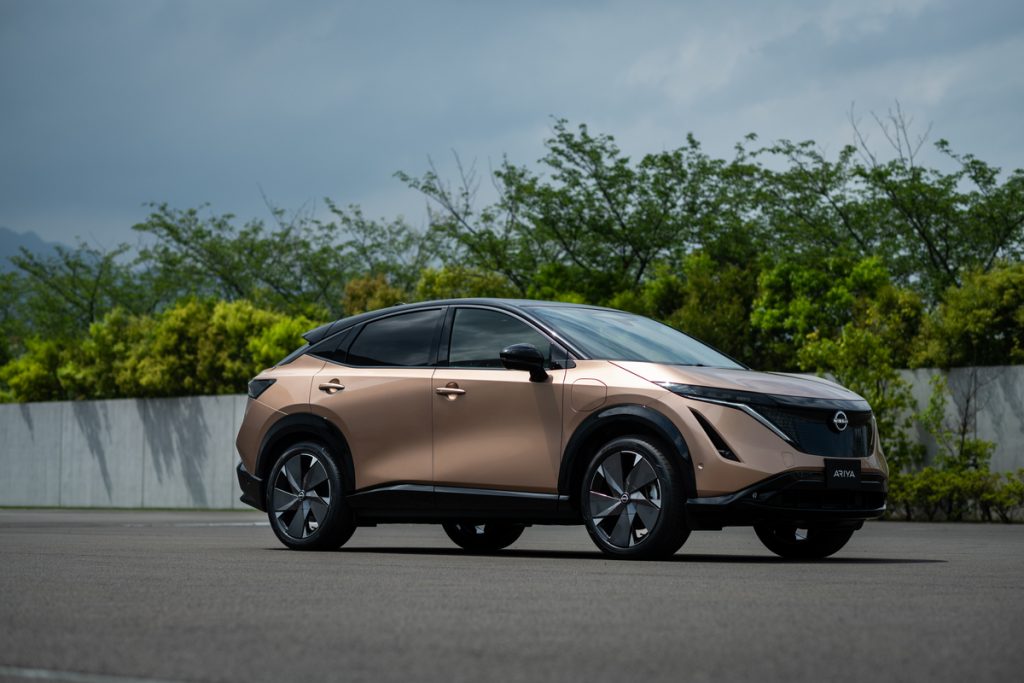
As you can see from Nissan’s Ariya infographic, the LEAF’s dual AC/DC charging connector has moved from front and centre to the nearside front wing. Nissan haven’t provided an image of what’s hiding under the cover, but the press release does mention in passing that:

Continue reading →

New Kia Soul EV Ditches CHAdeMO For CCS

In a news release earlier today Kia announced that:

The all-new Kia Soul EV brings long-range, zero-tailpipe emissions power to the urban crossover class. The third globally-sold electric vehicle from Kia Motors will make its European debut at the 2019 Geneva International Motor Show next month.

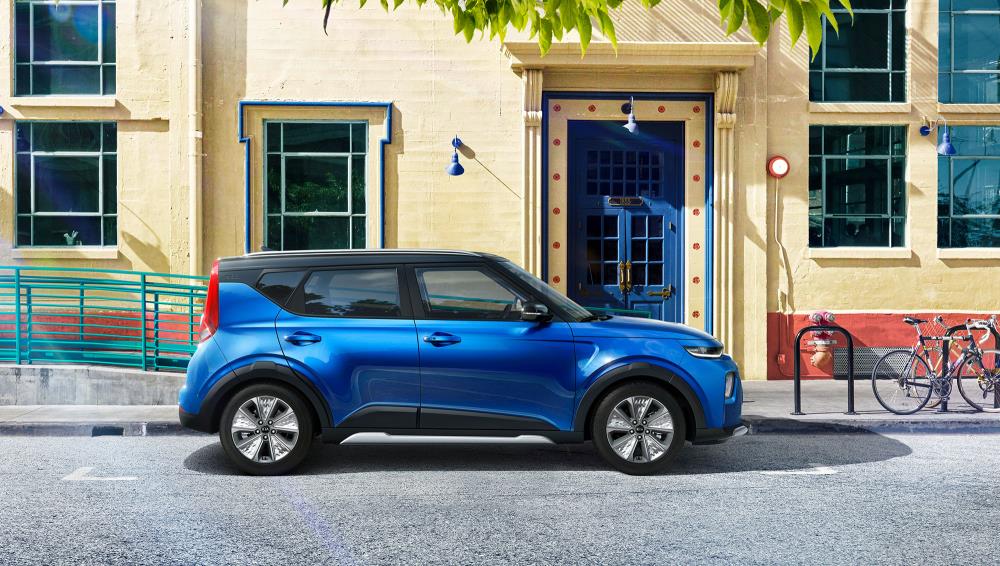
1680430_kia_pressrelease_2018_PRESS-HIGHRES_ESOUL_side

Not only that, but also:

The Kia Soul EV will be sold in Europe exclusively as an electric vehicle, with a choice of two fully-electric, zero-emission powertrains to meet the needs and budgets of different customers.

Drivers have a choice of long-range (64 kWh) and standard-range (39.2 kWh) powertrains. Whichever version a buyer chooses, both variants offer vastly improved range over the outgoing Soul EV. On-road performance is also enhanced, with significantly more powerful electric motors providing 395 Nm of torque – 39 per cent more than before.

As if that wasn’t exciting enough there’s also:

A Combined Charging System (CCS) DC fast charger is fitted as standard to both models, enabling shorter stops for charging. Both battery packs can be recharged from 20 per cent up to 80 per cent capacity in just 42 minutes from a 100 kW DC fast-charger.

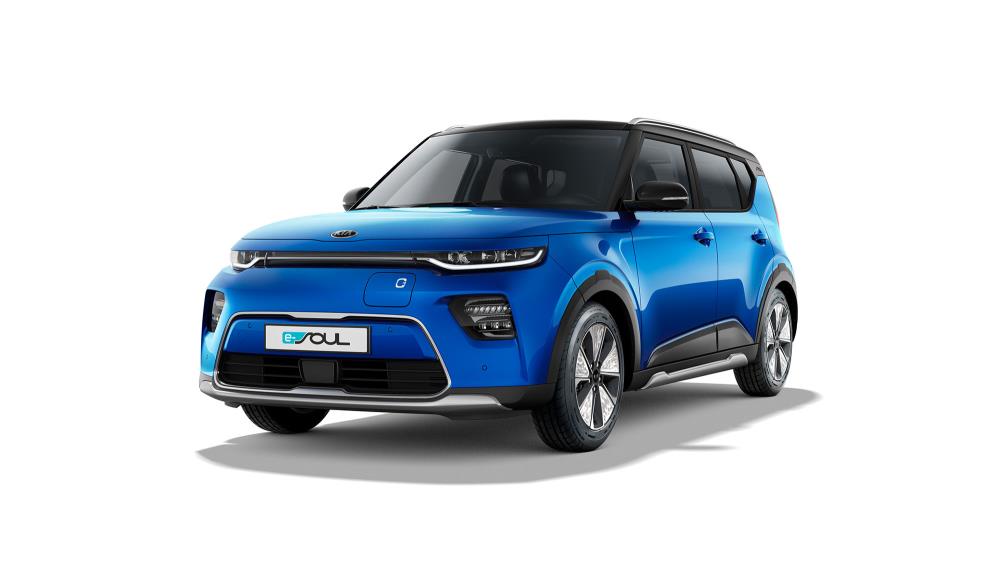
Previous versions of the Soul EV have been V2G capable via a CHAdeMO connector. None of the images accompanying Kia’s announcement showed a close up of the shiny new Soul EV charging connector. Here’s the best we can do:

1680428_kia_pressrelease_2018_PRESS-HIGHRES_ESOUL_front-white

The $64,000 question at this juncture is therefore “Will Kia be demonstrating V2G over CCS at Geneva next month?”

Sono Motors Sion Supports AC Vehicle to Grid!

We have been following the development of the Sono Motors Sion “solar powered” electric vehicle with much interest for a while now. Here’s a new video from Robert Llewellyn’s “Fully Charged” series revealing recent progress by the Sono team:

Note in particular that at 10:35 into the video Jonny Smith says “It’s just so obvious you wonder whay it hasn’t been done before, followed by Fabian Duensing of Sion saying “This is, I would say, the secret weapon of this car”:

SonoSionSecret

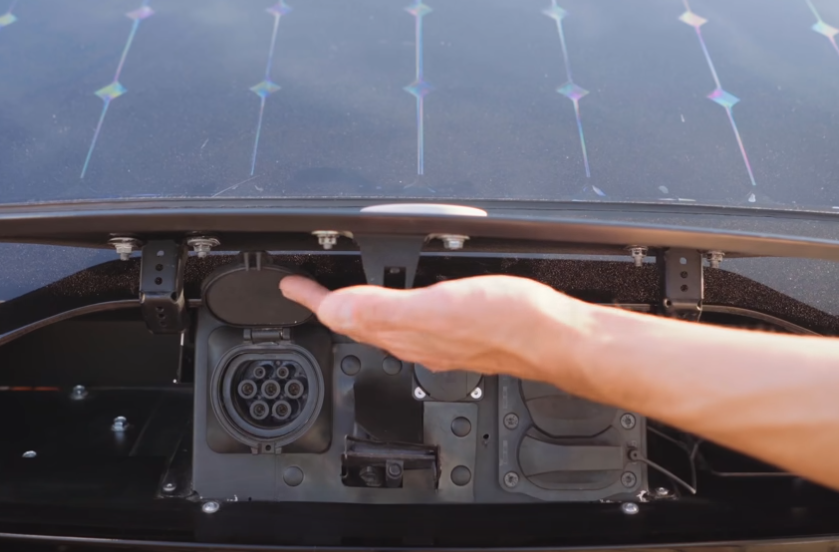
Through this one, the type 2 outlet, you can take back the energy from the battery of the car, not only to devices but to the grid.

Jonny clarifies:

So vehicle to grid?

To which Fabian responds:

So vehicle to grid! It’s not just hardware, it’s a lot of software as well, to make it able to actually do it.

Note also that under the other side of the charging flap there is a CCS socket for DC rapid charging of the Sion’s battery pack on those long trips from the city into the countryside.

Wallbox Announces the “First ever DC charger for the home”

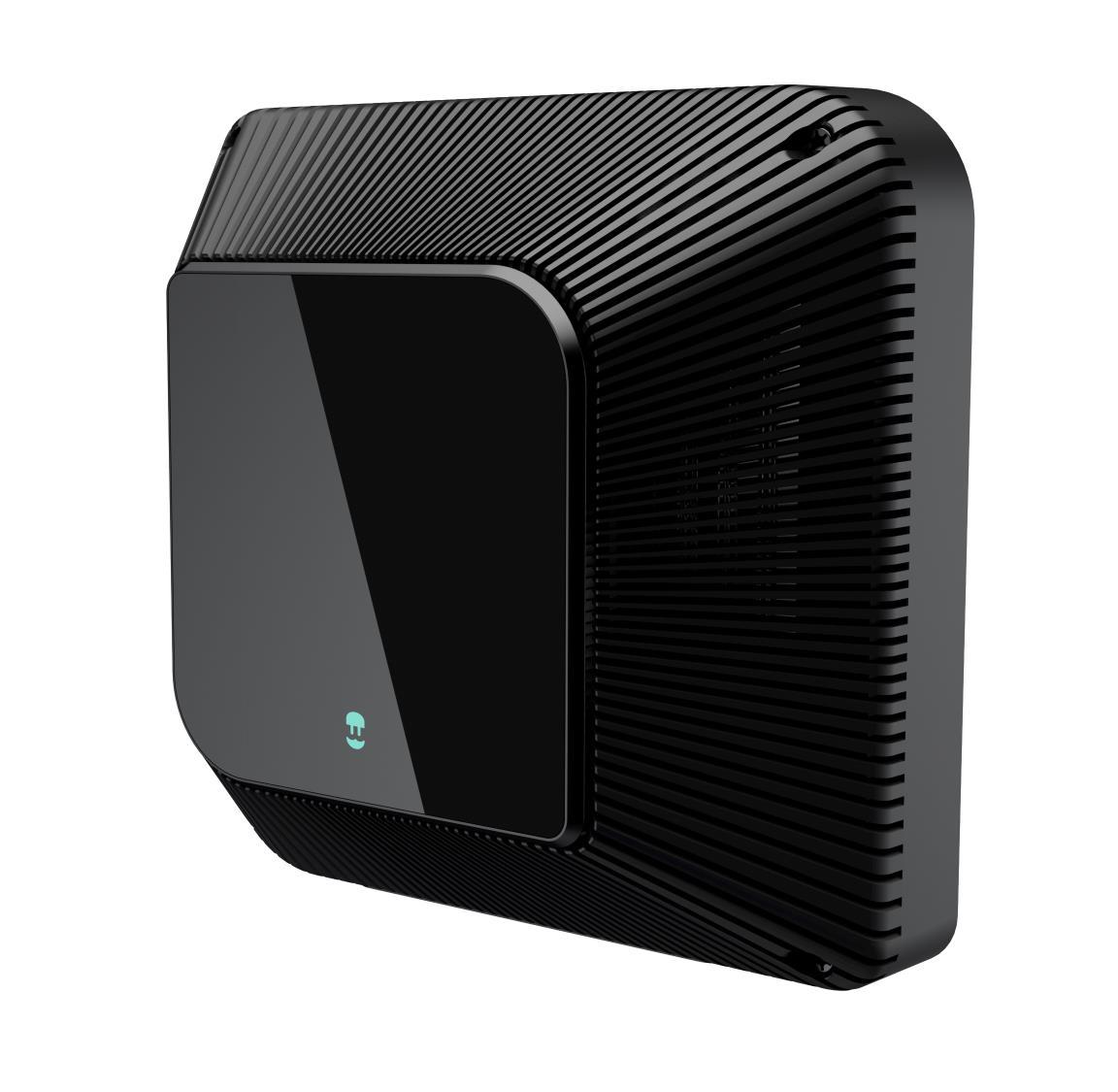
I don’t recall ever being quite so excited reading a press release. I’m afraid I’ve been far too busy here in the UK to travel to China this week to work on EV charging station standards, as I originally planned a few months ago. I’m still far too busy even to travel to the eMove360° conference and trade fair in Munich today. Which is something of a pity since I’d like to take a very close look at this device in the flesh, so to speak:

DC-Wallbox

The Wallbox press release I’ve recently been reading contains a few interesting pieces of background information for we V2G watchers here in the UK, such as:

Research, technical development, product testing and manufacturing take place in Barcelona, where Wallbox has strong engineering resource and capacity to produce 100,000 chargers per year.

The company is Spanish but the brand is international. Wallbox operations are solely conducted in English. It began UK operations in September 2018.

not to mention:

Wallbox operates in 30 markets around Europe and overseas as far as New Zealand and China. Wallbox is partner to major automotive OEMs and energy companies. The company is approaching 20,000 installations across all markets and sees the UK as one of its most important growth opportunities. The company is 80-strong and growing, with over half of the workforce involved in software and hardware development. Many employees have made the transition from IT to automotive, coming from the likes of Apple and Tesla, which in part accounts for the unique design quality.

Moving on to Wallbox’s shiny new black box pictured above, let’s take a look at the basic specification first. According to the press release:

All Wallbox chargers are rated up to 22 kW, suitable for domestic and commercial installation and connect to the myWallbox energy management platform. This enables scheduling to take advantage of time and use tariffs, energy balancing between vehicle and the home, and a host of other easily accessible features. Wallbox chargers have connectivity through WiFi, Ethernet or Bluetooth.

Presumably that 22 kW applies to the DC black box as well in which case it can handle three phase, and if the entire Wallbox range can connect to an energy management system (EMS for short) somewhere in the clouds I’d like to take a very close look at all the other AC boxes as well! Sticking with DC for now though:

The new DC charger puts energy created and stored in the home, straight into the electric vehicle through a CCS or ChaDeMo connector. Home generation and storage are now becoming much more cost effective considerations as electric vehicle range and battery size increase and reduce ROI timescales.

The charger’s unique bi-directional power electronics reconcile the alternating (AC) and direct (DC) energy that flows between vehicle charging, rooftop PV generation or garden wind turbines, and home battery storage.

Wallbox are talking just the sort of language we like to hear when discussing our “Static & Mobile Distributed Energy Storage” (SaMDES) project, and they have even uttered the magic words “bi-directional power electronics”. This sounds like pukka vehicle-to-home capable kit, so the next obvious question from our North Cornwall perspective is “when will it start shipping to the UK?”

First sales are planned for mid 2019

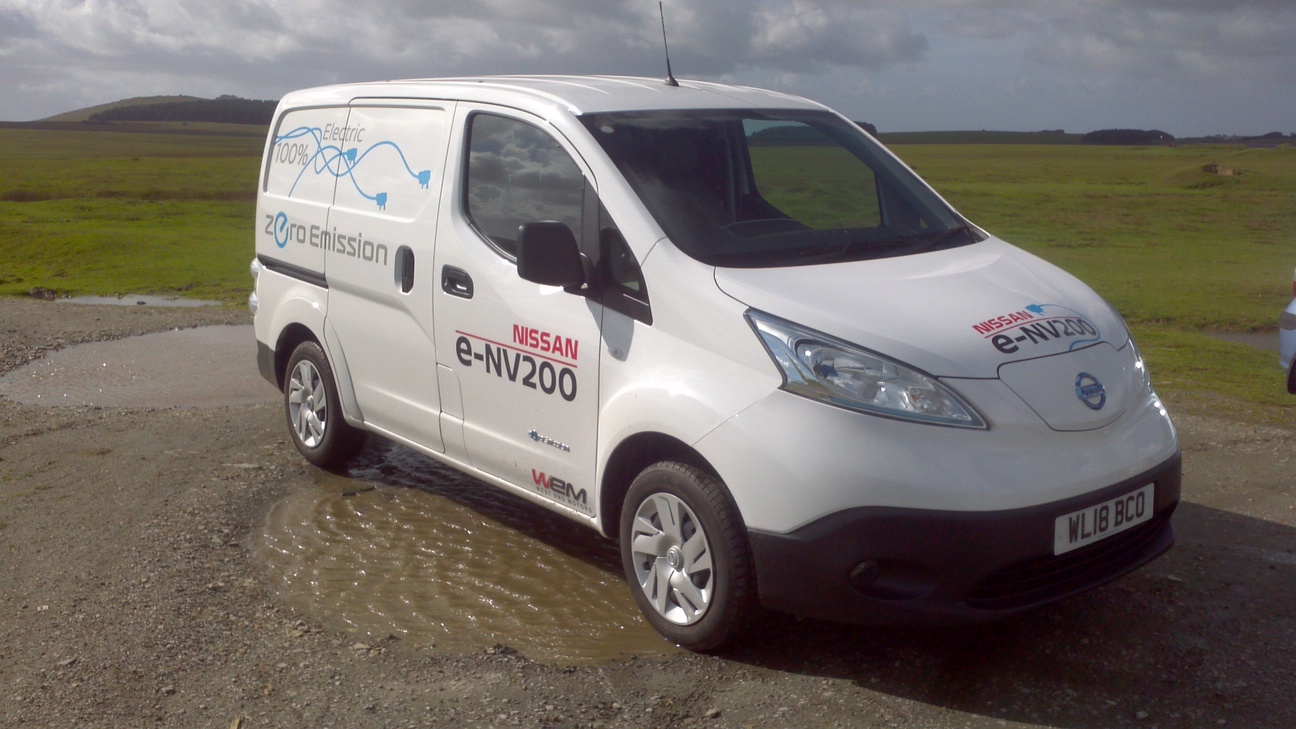
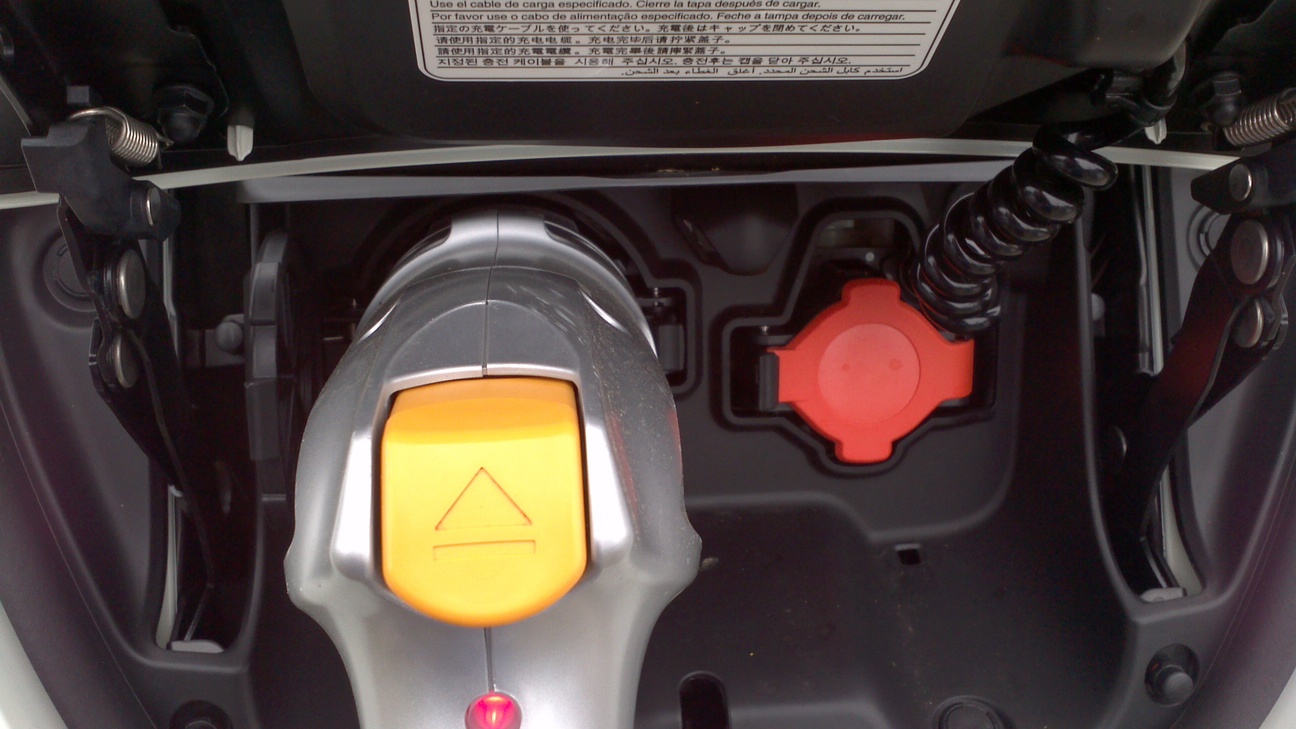
A minor disappointment there then, but yesterday I did manage to speak at length with Stewart Mckee who is Director of Wallbox UK. He assures me that the black box on display in Munich today isn’t just an empty shell. It is in fact “production ready”. That being the case I cannot wait to experiment with plugging one into the CHAdeMO connector at the front of one of Nissan’s new 40 kWh e-NV200 vans, which we test drove for three days following the recent Cornwall New Energy EV event in Wadebridge:

2018-09-21_11-45-21_174

As if all that wasn’t exciting enough there’s more where that came from!

Wallbox is also making it easier to manage electric vehicle charging at home. The company is introducing software that allows spoken commands, and cognitive intelligence that learns about an owner’s charging behaviour and preferences, in order to predict optimum energy balance with home and grid.

This unique two-tier combination of software technologies means that you can speak directly to your home charging system and it will interpret your requirements in the most energy efficient manner. For instance, you can simply say: ‘I need my car fully charged for the morning’ and Wallbox will take care of the rest, with consideration for all other home energy demands during the same period of charging.

The ability for Wallbox software to automatically manage charging in this way adds another smart layer to dynamic load balancing between between vehicle and the home, and vehicles parked in the same area.

Please forgive me, but after all that excitement I need to go and lie down now. However make sure to watch this space, because we’re hoping to have a chat with Wallbox’s CEO Enric Asunción real soon now.

CHAdeMO and GB/T Join Forces!

In a press release yesterday the CHAdeMO Association made a most interesting announcement. Here is what they said:

CHAdeMO Association announced today their decision to jointly develop the next generation Ultra-Fast charging standard with China Electricity Council (hereafter CEC), China’s official association of utilities in charge of their national regulations and standards related to electricity. Two entities will sign a Memorandum of Understanding on August 28th in Beijing, China, to kick-start their collaboration.

  • CHAdeMO signs an MoU with China Electricity Council (CEC) for co-development of next generation ultra-fast EV charging standard
  • New ultra-fast charging standard will ensure backward compatibility with both current CHAdeMO and GB/T standards, in order not to penalize current EV users
  • Both Japanese and Chinese governments support this industry initiative, which is expected to lead the way towards a single harmonised future standard

CHAdeMO protocol, a Direct Current fast charging standard recognised by the IEC* and the most popular international standard with over 18,500 charging points covering the EV market worldwide, set its specification at 500V and 125A when it was initially defined in 2009. After updates in 2017 and 2018, its current specification goes up to 1000V and 400A to cater to the market demand.

CEC, a Government approved association in charge of starndardisation of EV charging equipment. is evaluating high-power charging technologies and promoting demo projects and pilot studies for the creation of a new, Ultra-Fast charging standard to prepare for the expected market needs in the future. CHAdeMO Association and CEC reached an agreement to jointly proceed with such development.

This joint development should lead to a next-generation Ultra-Fast charging technology that is safe and versatile. As the new Ultra-Fast charging standard aims to ensure interoperability with existing CHAdeMO and GB/T fast charging standards, it is also expected that the new standard will be adopted not only in Japan and China but also in many other EV markets worldwide, and to contribute to the further roll-out of EV charging network.

That potentially makes life easier for those of us beavering away behind the scenes developing international standards for electric vehicle charging. Here’s what the current “rapid charging” 50 kW CHAdeMO connector looks like in action:

2016-03-18_10-58-08_97

2016-03-19_13-20-30_265

From a slightly different perspective, CHAdeMO’s Secretary General Dave Yoshida said:

We are pleased to work together with CEC to develop an ultra-fast charging standard to prepare for the future charging needs, while ensuring safety and interoperability, which is a core value of CHAdeMO protocol. We believe the outcome of this joint development will pave the way towards a single harmonised standard in the future.

The members of CharIN group who are developing the competing Combined Charging System “standard” might well quibble over Dave’s “single harmonised standard” remark, since their stated mission is:

Establishing the Combined Charging System (CCS) as the global standard for charging battery powered electric vehicles.

The CHAdeMO Association press release continues:

This joint development falls into one of the strategic categories defined as “Enhancing international harmonisation in vehicle electrification policies” in the Japanese government’s New Strategy for the automobile industry, which was recently announced by the Ministry of Economy, Trade and Industry, and will be strongly supported by both the Japanese and Chinese governments.

The Memorandum of Understanding aims to kick-start harmonisation for the next-generation international charging standard, for accelerating further deployment of electrified vehicles in wider vehicle categories, by starting the joint development activities based on the cutting-edge technologies foreseeable in the near term as an initial step.

As an apparent afterthought they finally point out that:

*IEC: International Electrotechnical Commission

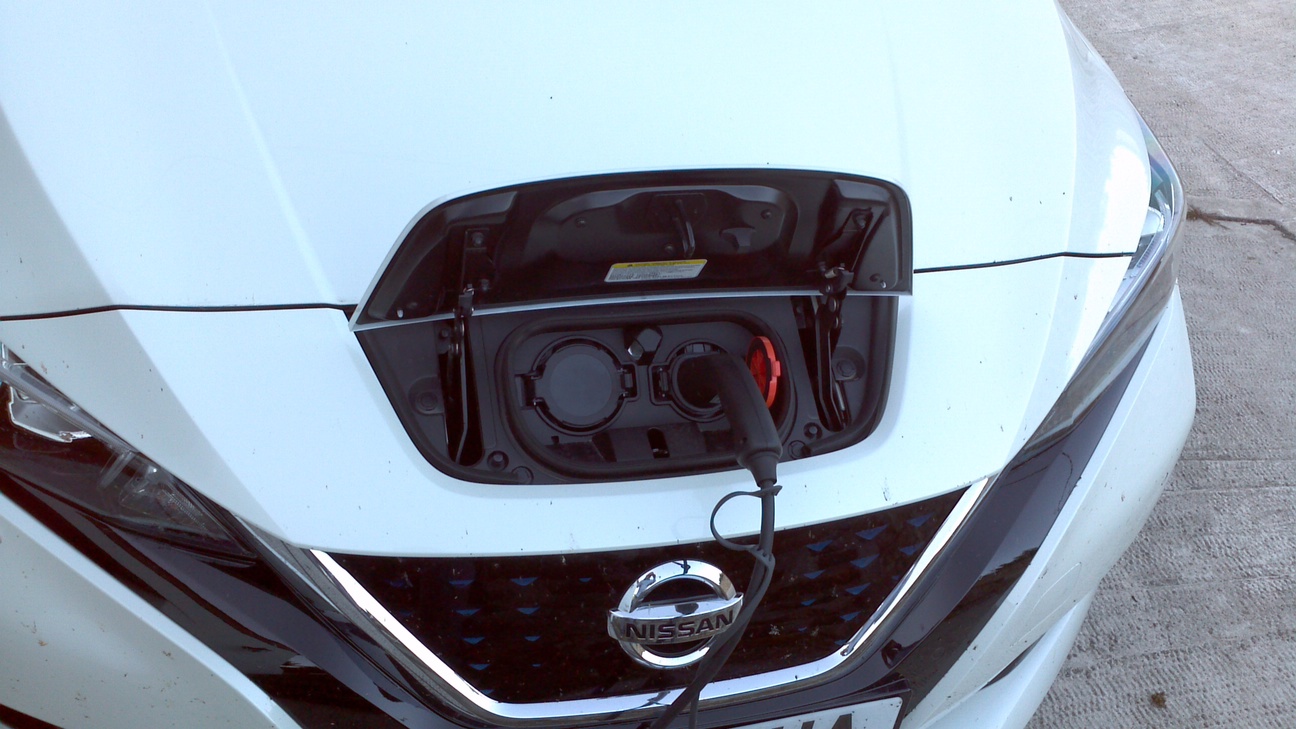
As an afterthought from us here at V2G UK in Cornwall’s (Silic)Inny Valley, here’s a 2018 Nissan LEAF charging from a standard UK 3 pin socket in our courtyard:

2018-06-27_19-55-14_606

Perhaps the CHAdeMO Association and/or the CEC could lend us a suitably “ultra-fast charging standard” equipped vehicle for future such tests?