Electric Vehicles as “Energy Smart Appliances”

The British Standards Institution has just published a new “specification”, and unlike most BSI “standards” this one is free to download, as long as you don’t mind parting with an email address. As the download page puts it:

BSI is working with the UK Government to encourage the uptake of safe, secure and interoperable Energy Smart Appliances (ESAs). These are needed for the active management of demand on the electricity network, known as Demand Side Response (DSR). PAS 1878 is a critical component in this because it details the requirements and criteria necessary to make an energy smart appliance compatible with DSR activities.

At this point you may have a couple of question, such as “What on Earth is a PAS?”. The BSI have a ready answer for that question:

A PAS (Publicly Available Specification) is a fast-track standardization document – the result of an expert consulting service from BSI. It defines good practice for a product, service or process. It’s a powerful way to establish the integrity of an innovation or approach.

The next obvious question is “What has this got to do with electric vehicles and/or vehicle-to-grid technology?”. The answer to which is that a “smart” EV charging station is a special case of an interoperable Energy Smart Appliance. As the foreword to PAS 1878 states:

Continue reading →

The 2021 G7 Summit in Cornwall

The forthcoming summit of the G7 nations is taking place just down the road from the V2G UK office in North Cornwall. According to the G7 UK web site:

In June, Prime Minister Boris Johnson will welcome fellow G7 leaders to one of the most beautiful parts of the UK: Carbis Bay in Cornwall.

Other parts of the region will also play a key role in the Summit, including neighbouring St Ives, Falmouth and Newquay airport.

With over 400 miles of coastline, Cornwall’s stunning landscape provides a perfect setting for world leaders to come together and discuss how to respond to global challenges like coronavirus and climate change.

Here’s one of my recent pictures of some of that coastline, including part of Cornwall’s industrial heritage and some large waves!

Climate change is top of the G7 agenda along with Covid-19, and that must mean that UK and global energy policy will be somewhere very near the top as well. Obviously I’ll be reporting on what transpires in Carbis Bay in a month’s time, but for now here’s some topical G7 “tech” news:

Continue reading →

The Future of Vehicle to Grid EV Charging?

Our title for today is shamelessly plagiarised from an article of the same name on the Electric Nation web site, which begins as follows:

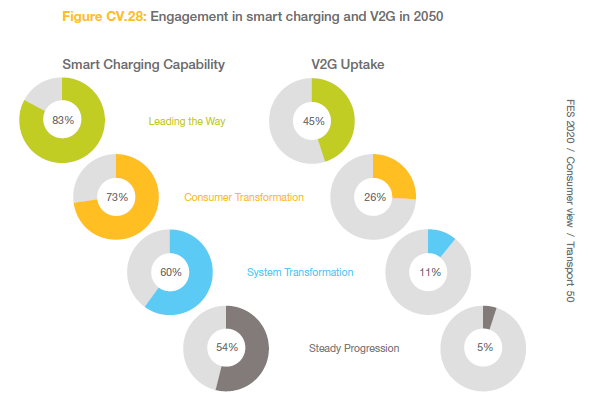
By 2050, up to 45% of households will actively provide Vehicle to Grid (V2G) services, according to National Grid’s Future Energy Scenarios, published in July 2020. But will the average Electric Vehicle (EV) driver be able to use V2G charging over the next few years?

A very good question and a very interesting infographic! The article continues:

The rapid growth in the numbers of electric vehicles on our roads will mean more demand on local electricity networks if EVs are all plugged in at the same time, such as during the peak between 5pm and 7pm in the evening. Smart charging, or ‘V1G’, which allows management of the time when EV charging occurs – as trialled by the original Electric Nation project – will help to avoid this situation.

V2G charging will be more effective than smart charging. This is due to the ability to link EVs together and put significant levels of energy back into the grid at peak times, like a huge decentralised power station. V2G will therefore help to reduce the grid’s need for additional energy generation, typically supplied by fossil fuels at peak times, as well as reducing demand on electricity networks, and allowing EV drivers to use greener and cheaper electricity.

So far so good, I agree entirely. However the next paragraph states:

Continue reading →

IEC 63110-1 Committee Draft for Vote Draws Near

Please read on to discover the latest news from the smoke filled back offices of the International Electrotechnical Commission’s (IEC for short) electric vehicle standards development committees.

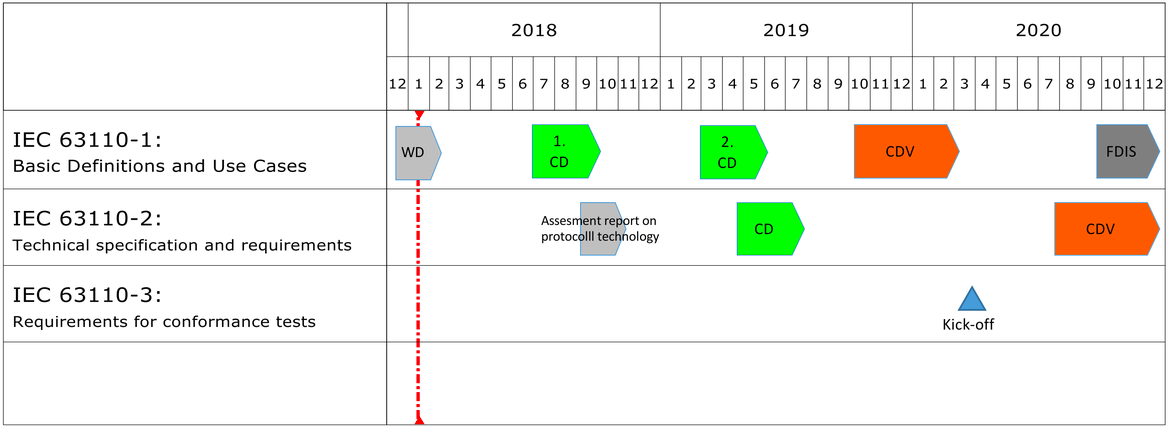
Here once again is the roadmap for the development of the IEC 63110 international standard defining a protocol for the management of electric vehicles charging and discharging infrastructures:

2018-01-IEC-63110-Roadmap

Part 1 of the standard (IEC 63110-1 for short) concerns itself with potential EV charging and discharging use cases. As we have previously mentioned the committee produced a draft document for comment many months ago. The original draft has now been modified to incorporate the suggestions contained in several hundred comments received from around the world. A grand total of zero of those comments emanated from the United Kingdom. The committee is issuing one final call for informal suggestions for further vehicle-to-grid use cases before their next face to face meeting which will be held in Seoul, South Korea starting on June 18th 2019. At that meeting the Committee Draft for Vote (CDV) document for 63110-1 will be finalised, following which the assorted national committees that make up the IEC will vote on the committee’s proposals.

Meanwhile the IEC 63110 part 2 (IEC 63110-2) task force looking into possible options for “message encoding and transmission technology” to be included in the standard are also currently completing their work. It was agreed on the IEC Technical Committee 69 Joint Working Group 11 (TC 69/JWG 11 PT1 and PT2 web conference calls earlier this week that the Seoul meeting should be extended by a day in order to finalise this aspect of part 2 of the standard. By way of example, version 2 of the Open Charge Point Protocol (OCPP 2.0) specifies using JSON encoding over RFC 6455 WebSockets transport, but the task force have been considering a wide range of other possibilities.

Should you have any thoughts on these thorny eMobility topics then please do not hesitate to get in touch at your earliest convenience. After the TC 69/JWG 11 meeting in Seoul these matters will be starting to be set in stone (SSS for short).

IEC 63110 Project Team 2 Kicks Off

In our continuing endeavour to explain the arcane workings of the International Electrotechnical Commission’s (IEC for short) electric vehicle standards development committees we have some exciting news to report!

As predicted last November:

2018-01-IEC-63110-Roadmap

it was agreed at the IEC Technical Committee 69 Joint Working Group 11 (TC 69/JWG 11 for short) meeting in Toronto last week that work on the IEC 63110 part 2 standard (IEC 63110-2 for short) should begin by setting up a task force (TF for short) to “evaluate possible options for message encoding and transmission technology”. We swiftly volunteered for the new task force, not least because our V2G EVSE subsidiary is already evaluating precisely that for the United Kingdom’s Department for Transport (DfT for short).

In actual fact the Project Team 1 (PT1 for short) schedule has slipped a bit, so if you still have any out of the ordinary new “protocol for the management of electric vehicles charging and discharging infrastructures” use cases to bring to our attention there is still time before the Committee Draft (CD for short) stage of the IEC process is reached. In addition if you have any suggestions for “message encoding and transmission technologies” above and/or beyond the industry standard TCP/IP over cellular comms please do not hesitate to get in touch.

Lastly, but certainly not least, the existing IEC 63110 Security Task Force is still seeking input from suitably qualified experts in that particularly important domain.

Are EV Charging Station Standards Patentable?

Regular readers of the V2G UK blog will be aware that I have just returned from a visit to Rome. I hasten to add that this was for business, not pleasure! However I am happy to be able to report that the venue for day 1 of the IEC 63110 standard committee meeting that I attended was Enel X‘s fairly pleasurable Villa Lazzaroni, situated on the banks of the River Tiber:

2018-01-23_12-44-51_897

What was discussed inside the villa is of course currently confidential. However one issue raised is already in the public domain. In a press release on December 15th 2017 ChargePoint, Inc. announced that:

ChargePoint today filed a patent infringement lawsuit against SemaConnect, a manufacturer of electric vehicle (EV) charging stations, alleging the infringement of four patents focused on networked electric vehicle charging. The complaint was filed in the District of Maryland and seeks injunctive relief and monetary damages.

ChargePoint has invested substantial resources over the years to create EV charging solutions designed with drivers and businesses in mind. With an industry leading patent portfolio, ChargePoint is committed to leading the way in developing the world’s most comprehensive suite of charging technologies that support the transformation to electric mobility. ChargePoint invented networked EV charging and holds the patents related to the technology. A hallmark of the company’s technology portfolio, networked charging is a significant piece of ChargePoint’s offering and a critical ingredient to its business. As with any company, protecting vital IP is imperative to the future success of the organization and its contribution to the marketplace.

The back story to the court case can be perused over at Lexology:

ChargePoint, Inc., a leading provider of Electric Vehicle (EV) charging stations, appears to have lost a bid to provide charging stations to Electrify America and promptly sued the winning bidder for patent infringement. In a lawsuit filed December 15, 2017, in federal court in Maryland, ChargePoint accused SemaConnect, Inc. of infringing four patents directed to networked charging station technology.

Electrify America is a subsidiary of Volkswagen Group of America (VW). Electrify America was established as part of VW’s diesel emissions settlement with the U.S. Environmental Protection Agency. In the settlement, VW agreed to spend $2 billion over ten years on Zero Emissions Vehicle (ZEV) infrastructure and education programs. Electrify America announced plans last spring to partner with EV charging station companies to install and maintain at least 2,800 charging stations at more than 500 locations across the country.

From court documents it appears that Electrify America put out a request for EV charging station partners, and whittled the bids it received down to four finalists. After additional scrutiny, Electrify America selected three partners: SemaConnect, Greenlots, and EV Connect. ChargePoint, which may have been named as one of the four finalists, was not selected as a partner. SemaConnect’s portion of the partnership agreement includes the installation and maintenance of more than 1,400 charging stations.

According to the associated documents courtesy of the Free Law Projects‘s “Court Listener” web site SemaConnect’s attorneys aren’t going to take ChargePoint’s allegations lying down:

A party cannot infringe an invalid patent. Since each Asserted Patent is invalid, SemaConnect does not infringe any Asserted Patent. As explained in SemaConnect’s Motion to Dismiss filed concurrently, the Asserted Patents are invalid under § 101 because they are directed to an abstract idea (turning a switch “on” and “off”) and doing so using a conventional and known “remote server” is not an inventive concept sufficient to confer patent eligibility onto that abstract idea.

Expect the legal eagle’s fees on this one to rise faster than the current US EV charging point predictions!

Last Call for IEC 63110 Use Case Submissions

Our regular reader(s) will be aware that quite some time ago I suggested that:

There’s a few more urgent things to be ticked off on the to do list. How about OCPP 2.0 or even fully fledged British and international standards for “smart charging”, V2B and ultimately pukka V2G protocols for starters?

I am happy to now be able to report that my wish has come true! An international standard is now being developed for electric vehicle supply equipment (EVSE for short) communications with the “back office”, including vehicle to grid (V2G for short) functionality. For my sins I now sit on IEC technical committee 69 joint working group 11 (TC69/JWG11 for short). According to the Wikipedia article on the subject, which I wrote:

IEC 63110 is an international standard defining a protocol for the management of electric vehicles charging and discharging infrastructures, which is currently under development. IEC 63110 is one of the International Electrotechnical Commission’s group of standards for electric road vehicles and electric industrial trucks.

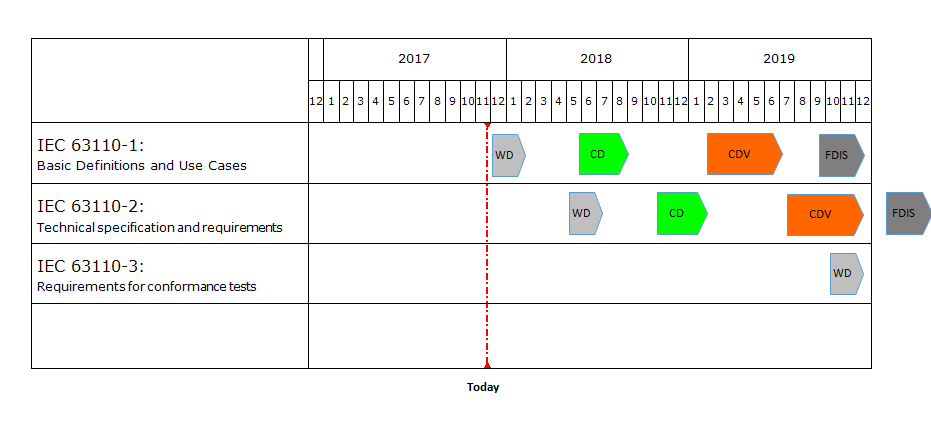
You will no doubt be delighted to discover that proceedings are still at a fairly early stage. Here’s the current IEC 63110 roadmap:

IEC-63110-2017-11-24

The top line indicates to the initiated that I am still able to point out that IEC TC69/JWG11 is currently seeking submissions for potential use cases to add to our initial list. The current deadline is December 6th. It is probably safe for you to assume that all the obvious stuff from the Open Charge Alliance’s Open Charge Point Protocol and ISO/IEC’s 15118 protocol is already included on our list.

However if you have a use case that isn’t in amongst the obvious stuff then please do not hesitate to get in touch!

Are you ready?

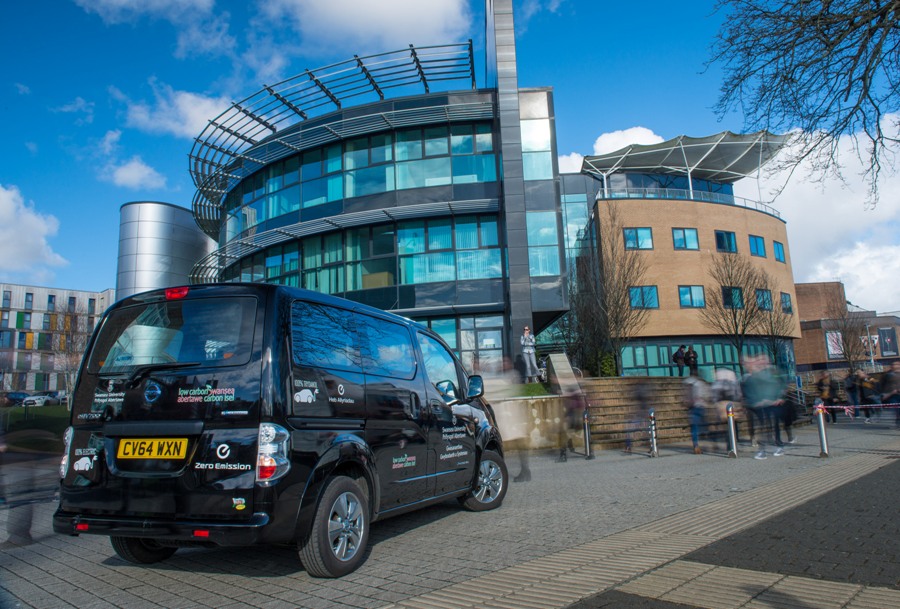
Nissan Electric Vehicles Prove Popular at UK Universities

In a news release today Nissan UK point out that:

The all-electric Nissan e-NV200 van has graduated with flying colours to become one of the most popular new vehicle choices for university fleets in the UK.

The multi award-winning van, which costs from just two pence per mile to run and offers zero emissions mobility whilst driving, is now in service on the fleets at more than 20 of the nation’s leading academic institutions.

University of Birmingham was the first fleet operator in the country to take delivery of the model when it added two to its fleet in 2014.

Since then, the University has added four more and the e-NV200 has moved to the top of the of the list for universities and colleges the length and breadth of the UK.

e-NV200s are now in service at universities including Bath, Brighton, Coventry, Dundee, Edinburgh, Exeter, Leicester, Leeds, Manchester, Manchester Metropolitan, Newcastle, Oxford, Sheffield, St Andrews, Swansea, the University of Central Lancashire and the University of Wales.

In addition, a number of other universities across the UK are currently trialling the e-NV200 as they explore the environmental and financial benefits it could have for their fleets.

Many moons ago I lived in Mayals and I’ve studied at Swansea University:

Nissan point out that in Swansea:

The e-NV200 Combi has been introduced as part of a broader commitment to sustainability and is operated as a pool vehicle, available on a booking system, by the information services and systems team.

As part of a seven-strong EV fleet, which also includes four Nissan LEAFs, the e-NV200 has proved a popular choice thanks to its size, flexibility and car-like driving dynamics.

Nigel Morris from the information services and systems team at Swansea University said:
 “Our EV fleet has already been a big success, cutting our carbon emissions by 4.5 metric tons and saving around several thousand pounds in fuel so far.

“The e-NV200 has made a terrific contribution to those figures as it’s proved so popular with staff. It’s a big vehicle that’s got lots of space for cargo or people but it’s very easy to drive.”

This news is all very encouraging of course, but I cannot help but wonder about something Nissan didn’t reveal to us this morning. Which of their long list of UK universities might actively be researching the application of vehicle-to-building or even fully fledged vehicle-to grid technology?

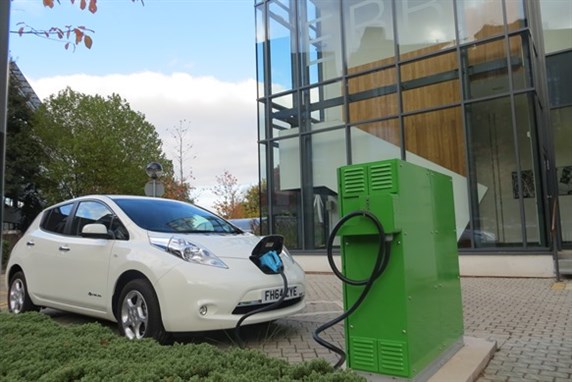
Perhaps the answer is “none of them”, but I am able to reveal that a UK University not mentioned by Nissan is in fact already so doing. Here’s an exterior view of the European Bioenergy Research Institute (EBRI for short) at Aston University:

and here’s what EBRI’s press release from a month or more ago has to say about the bright green box attached to the 24 kWh battery equipped 2014 model year Nissan LEAF pictured above:

Aston University has successfully commissioned the UK’s first permanent electric vehicle to grid (V2G) charging system.

This next generation of electric vehicle charging infrastructure allows power to flow both in the traditional way (grid to vehicle) and in reverse (vehicle to grid). The technology, developed in Japan to improve electricity supply reliability in the wake of the Fukushima disaster, is being investigated in collaboration with our leading industry partners, as a new method for energy storage and grid balancing services in Europe.

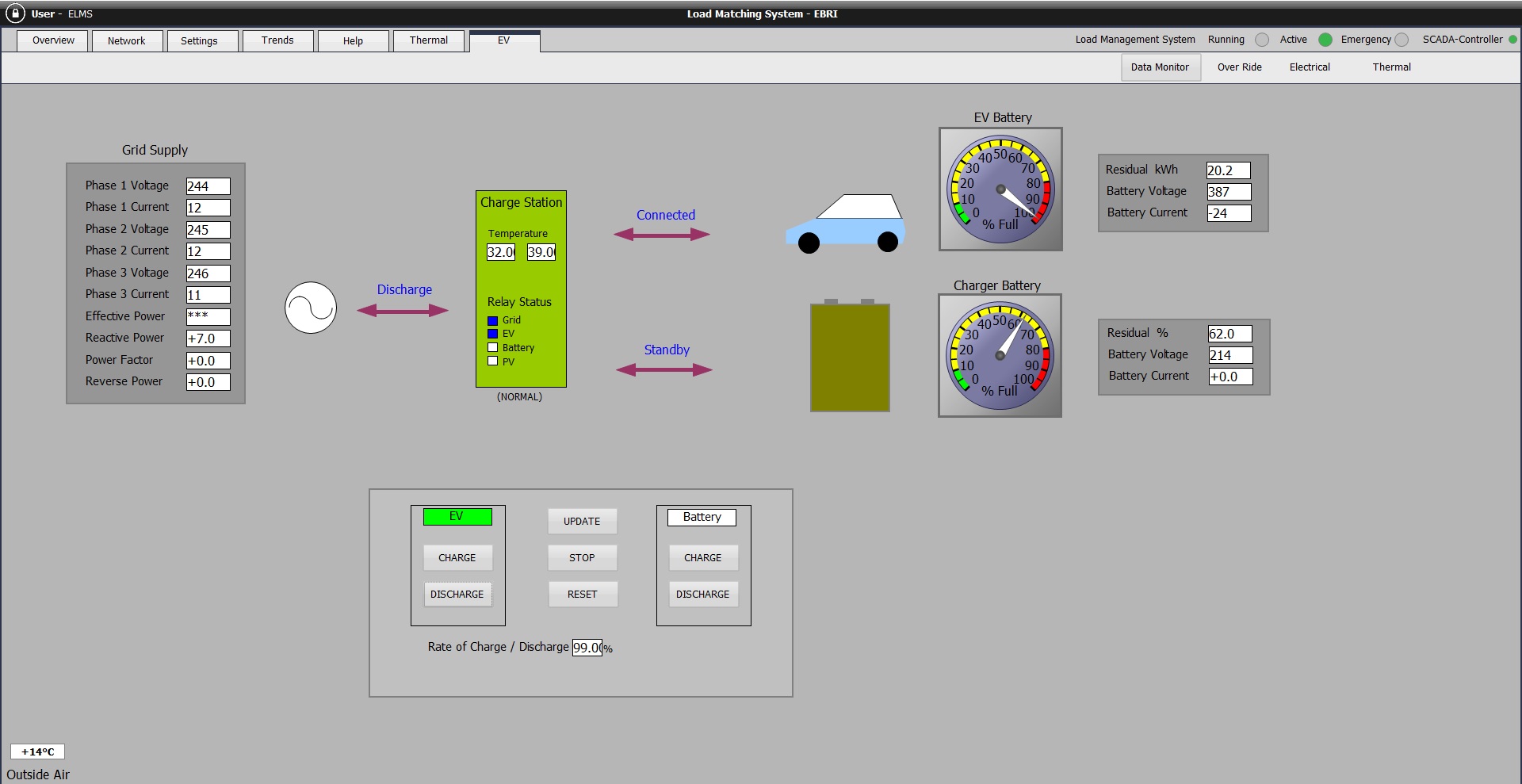
Please do read the press release in it’s entirety, and when you’ve done that also take a good look at the user interface of EBRI’s “load matching system”:

Exciting times for V2G enthusiasts here in the United Kingdom! Now that this pilot project is up and running there’s a few more urgent things to be ticked off on the to do list. How about OCPP 2.0 or even fully fledged British and international standards for “smart charging”, V2B and ultimately pukka V2G protocols for starters?

Here’s how the Open Charge Alliance explain the need for “Open Standards”:

The specification for version 2.0 of the Open Charge Point Protocol still seems to be absent from their web site however!

Independent Body of Experts Needed to Inform Energy Policy

The Institute for Sustainability at Newcastle University have announced this week that:

The UK’s energy industry is fragmented and a ‘system architect’ is needed to inform technical decisions and take a holistic view of the energy system in order to secure the country’s future energy supply, experts are warning. Now academics at Newcastle University are calling on the Government to create an independent, expert body to inform energy policy.

The recommendation is included in a briefing note on energy policy, being sent today, 6 May 2014, to relevant MPs and other organisations, outlining a number of concerns about the fundamental problems facing the UK’s energy market. These include: energy storage and distribution; energy pricing models; lack of competition; and water use in electricity generation.

The press release goes on to quote Professor Phil Taylor, Director of the Newcastle Institute for Research on Sustainability, as saying that:

Energy is a hot topic at the moment and the Government has made some positive steps to open up competition in the market, but much more work is required – and quickly. There’s an urgent need to reduce carbon emissions while protecting the UK’s future energy security. It’s vital that politicians move beyond short-term political soundbites and instead support those initiatives that could make a real and sustainable difference.

The University is calling on the Government to establish a group of experts that can take a long-term view about what is required and inform technical decisions and energy policy in a more effective manner than the current situation. For instance, debate among policymakers focuses almost exclusively on issues of affordability and emissions reductions, ignoring the vital issue of the energy sector’s use of water. This thinking risks locking the UK into a future in which water availability could put energy security at risk, and power stations could be forced to reduce production or even shut down if there isn’t sufficient water available to keep them safely operational.

The briefing note itself elucidates:

The Energy Act received Royal Assent on 18 December 2013. The Act is designed to establish a legislative framework for the delivery of secure, affordable and low carbon energy. However, we are concerned that the Act does not take into account some of the more fundamental problems facing the energy market, putting the sustainability of the UK’s energy systems at risk. We believe there are five areas that need further consideration:

  1. Energy storage and distribution
  2. Energy pricing models
  3. Competition
  4. Water use in electricity generation
  5. The need for a system architect

Here at V2G we have long championed the cause of distributed energy storage, so we have nothing to quibble about with this from the first bullet:

The national electricity network… cannot feasibly be replaced. But it will struggle to cope with the substantial additional demands likely to be placed on it over the coming decades, such as decarbonisation and additional electrification of transport and heat demand.

Policymakers and energy providers need to do more to understand how and why customers use and generate energy, so they can look at ways to enable behaviour change and reduce demand on the network in peak times.

  • We need to find ways to store energy efficiently and effectively when plentiful and low carbon so it can be released during periods of high demand, high carbon or to keep the lights on after major storms have damaged network assets.
  • In addition, smart grids… will provide better understanding of when and why people use energy in the ways they do.

Moving on to competition:

The way energy provision is managed needs to be transformed. Currently, companies that develop and build energy generators, whether wind farms, solar panels or tidal turbines, have to sell the energy they produce on the wholesale market. This puts them at a serious disadvantage to the big six energy suppliers, who can generate energy and then sell it back to themselves at preferential rates, before selling it on to customers at a profit.

Agreed. Pricing models next:

  • Currently, energy companies make very small margins on each unit of energy produced, so they need to sell volume in order to make a profit. This leads to a bad deal for consumers, as there is no incentive for companies to help customers reduce their energy use.
  • Instead, energy providers should be rewarded for providing tools and techniques that help customers use energy efficiently and cost-effectively.

So far so good, but how might that second bullet be implemented in practice?

The Government needs to work with the energy industry to fundamentally change the way energy is priced, to enable us to move from a system where generation follows demand to one where demand is based on the cost of generation, storage and distribution at any given time.

For us here at V2G this is the 64,000 ExaPound (E£64k for short) question. That’s very easy to say Phil, but how on Earth do you achieve it in practice? Given the fact that I sit on international standards committees that discuss this sort of thing on a regular basis, perhaps I might rephrase the question as “What international standards for deregulated energy markets will be required in order to facilitate a system in which demand follows generation + storage at any given time?”

The Guardian “Energy Industry” section has published an article on this topic, but they seem to me to miss that vital (IMHO!) point. They lead off with a picture of some electricity pylons with no storage in sight, and say that:

The government must urgently establish a strategic authority to oversee the future growth of Britain’s ageing energy infrastructure, a study argues on Tuesday .

Academics at Newcastle University challenge the government’s market-based approach, saying the £100bn needed to secure energy security is not being delivered by a fragmented system that lacks central direction.

The academics, led by Prof Phil Taylor, argue that the country needs a “systems architect” and that energy, at least for the bulk of the population, is too cheap, which is leading to waste.

While the Labour party has already said it wants an energy security board, one leading figure in the industry has said that Taylor was highlighting that “nobody is in charge” of the country’s energy policy.

The Guardian doesn’t mention the word “standards” once, and neither do Newcastle University. Here are their concluding bullet points:

  • There are a number of problems facing the energy market, and policymakers need to think seriously about the wide ranging and long lasting effect their decisions will have.
  • The Government needs to ensure that the price of energy reflects the cost of storing and distributing it, as well as generating it, and that those firms that provide energy to the wholesale market are rewarded fairly with respect to those who sell it direct to consumers.
  • In addition, the impact of energy generation on water availability must be considered to avoid a future in which the UK faces power shortages and even blackouts.
  • Finally, the Government should make better use of independent experts when considering energy policy.

Hear, hear! To that last bullet point at the very least! For the Guardian and anybody else out there that might be interested, here’s what some storage in Spain looks like:
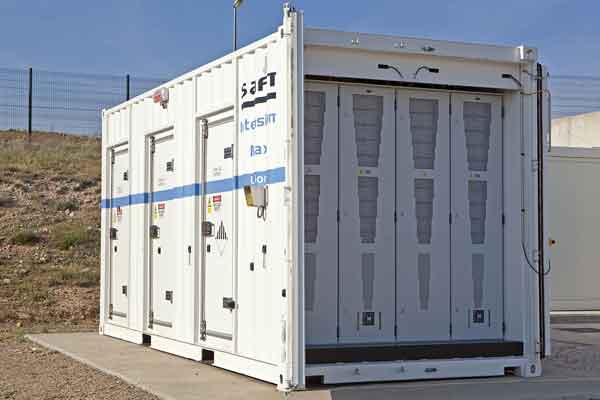
Saft 1 MW Li-ion storage module in northern Spain

Saft 1 MW Li-ion storage module at Tudela in northern Spain

Europe’s PowerUp Project Releases V2G Conformance Testing Suite

Almost exactly a year since they first released their V2G interface specification the EU funded PowerUp project has now released a V2G interface conformance testing suite. According to the announcement on their web site:

The PowerUp project has published the TTCN-3 based implementation of the conformance test cases which it has developed for testing ISO/IEC 15118-2 protocol implementations, i.e. the V2G application protocol.

With this publication, a V2G standards compliance testing suite has been made available for the first time. The PowerUp team believes that this testing suite will prove to be valuable for the validation and maturing of V2G system implementations which incorporate the ISO/IEC 15118 standards.

Further extensions of this TTCN-3 suite, along with its incorporation into the ISO/IEC 15118-4 V2G testing standard are possible.

The conformance testing suite and associated documentation can be downloaded from the PowerUp web site.