Electric Vehicles as “Energy Smart Appliances”

The British Standards Institution has just published a new “specification”, and unlike most BSI “standards” this one is free to download, as long as you don’t mind parting with an email address. As the download page puts it:

BSI is working with the UK Government to encourage the uptake of safe, secure and interoperable Energy Smart Appliances (ESAs). These are needed for the active management of demand on the electricity network, known as Demand Side Response (DSR). PAS 1878 is a critical component in this because it details the requirements and criteria necessary to make an energy smart appliance compatible with DSR activities.

At this point you may have a couple of question, such as “What on Earth is a PAS?”. The BSI have a ready answer for that question:

A PAS (Publicly Available Specification) is a fast-track standardization document – the result of an expert consulting service from BSI. It defines good practice for a product, service or process. It’s a powerful way to establish the integrity of an innovation or approach.

The next obvious question is “What has this got to do with electric vehicles and/or vehicle-to-grid technology?”. The answer to which is that a “smart” EV charging station is a special case of an interoperable Energy Smart Appliance. As the foreword to PAS 1878 states:

Continue reading →

Storm Caroline Power Cuts

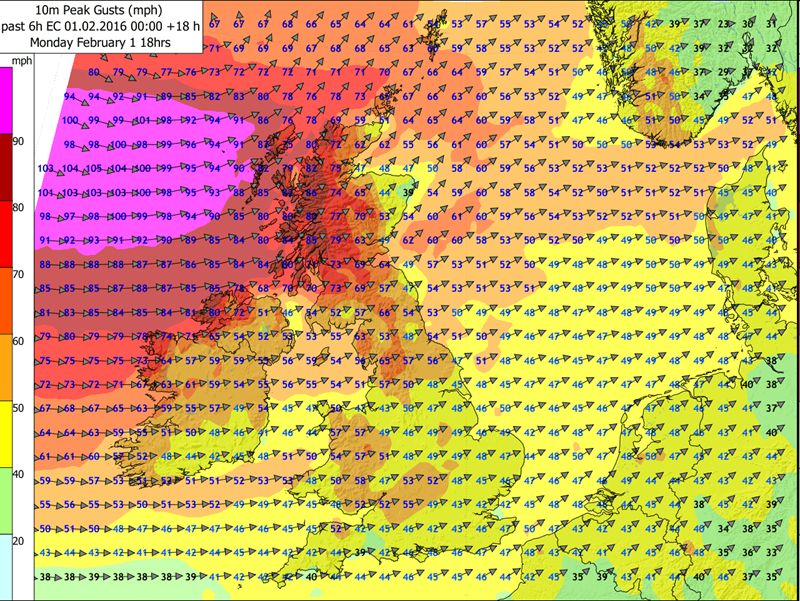
Yesterday the UK Met Office issued an amber warning for strong winds caused by Caroline, the third named storm of the winter in this part of the world:

With up to 90 mph gusts expected in the north of Scotland the Met Office pointed out that:

Flying debris is likely and could lead to injuries or danger to life. Some damage to buildings is possible, such as tiles blowing off roofs. Longer journey times and cancellations are likely, as road, rail, air and ferry services may be affected. There is a good chance that power cuts may also occur. Large waves are expected and beach material may be thrown onto coastal roads, sea fronts and properties.

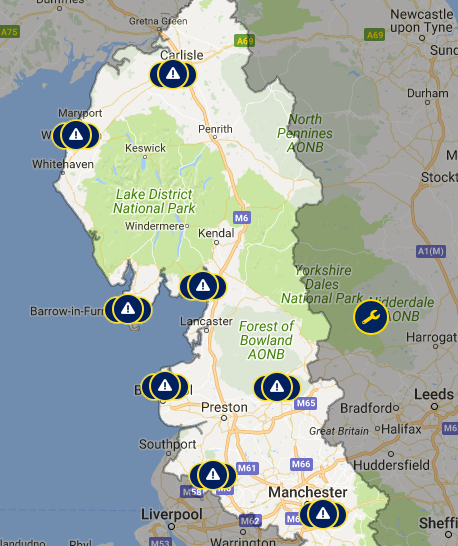
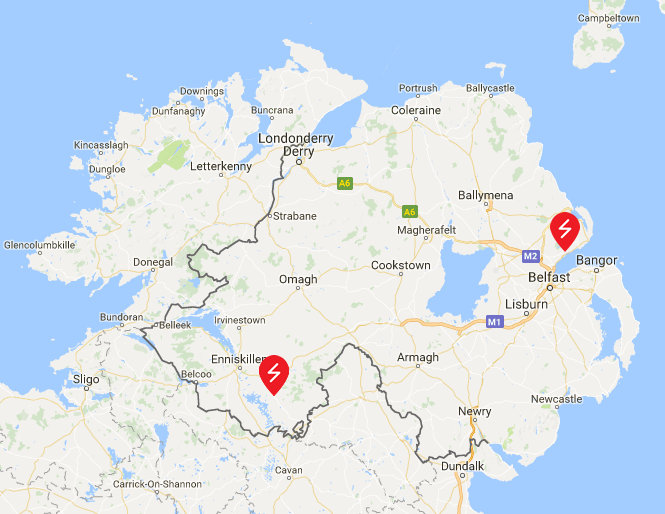
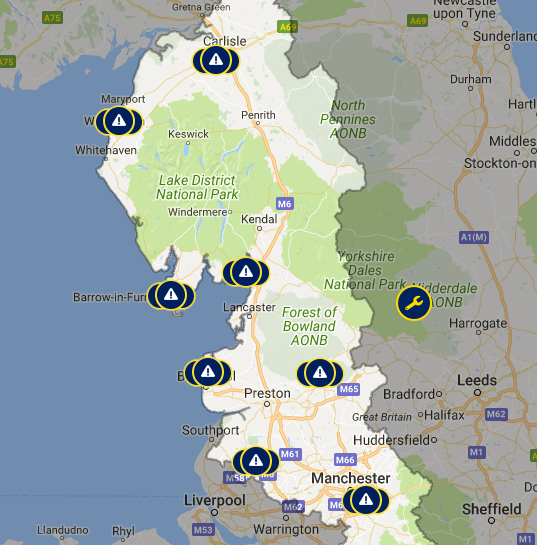
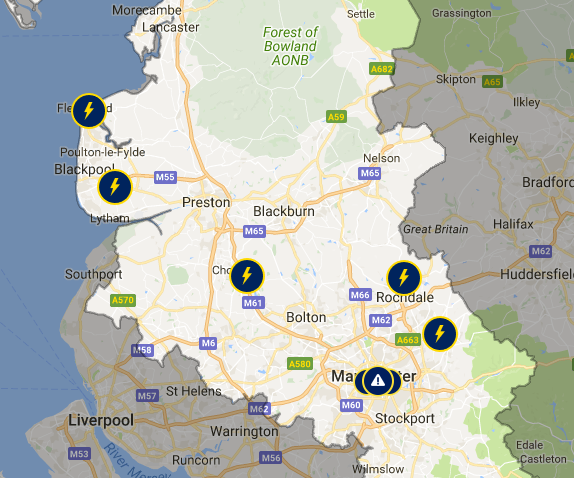
Sticking with those power cuts for the moment, here are the lunchtime maps from the assorted Distribution Network Operators spread across the west and north of the British Isles:
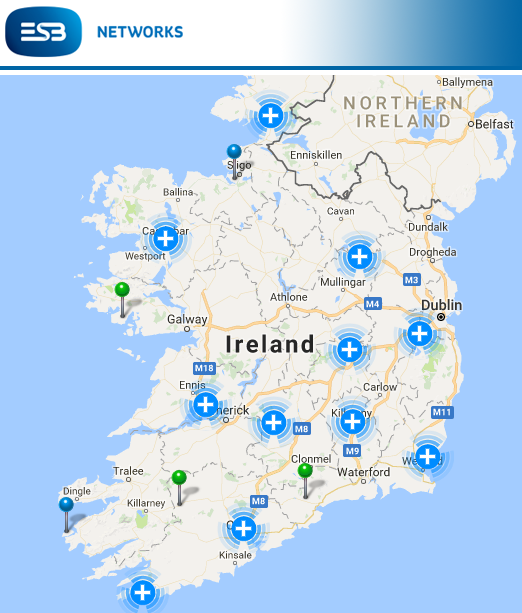
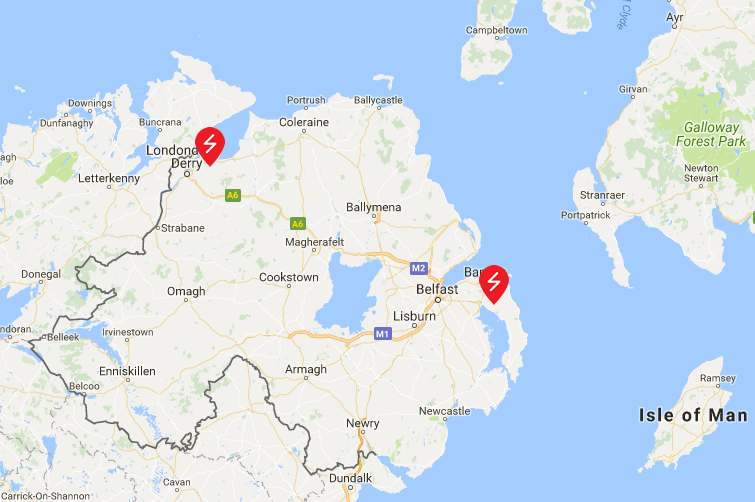
ESB-2017-12-07_1308

NIE-2017-12-07_1309

ENW-2017-12-07_1311

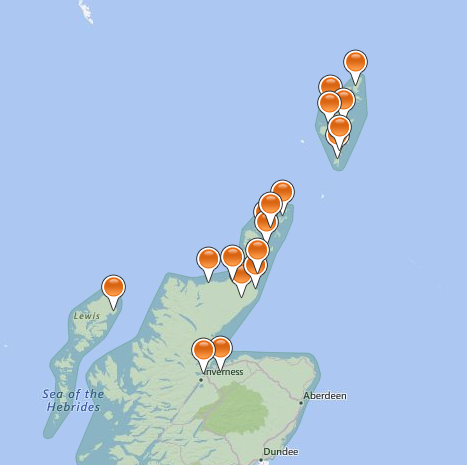
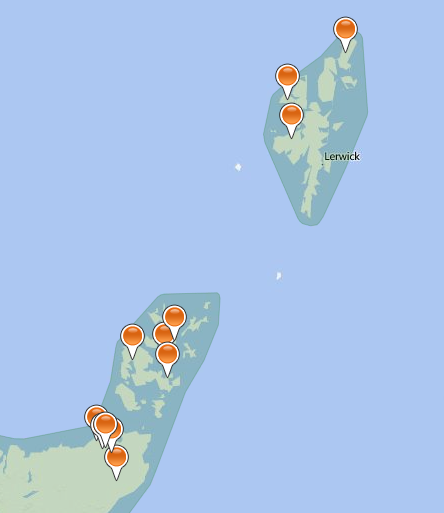
Scottish and Southern Energy Networks:
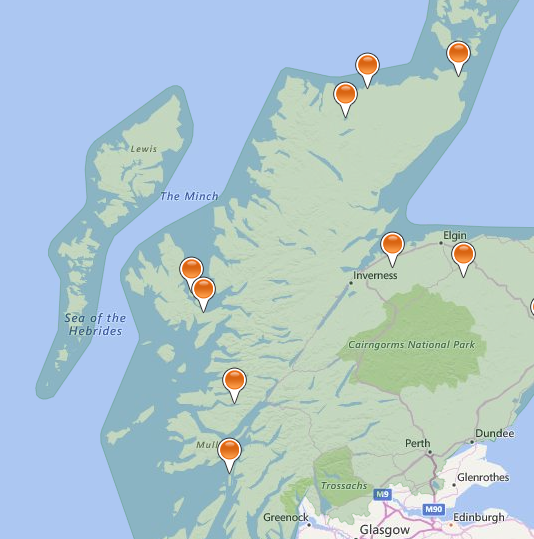
SSEN-2017-12-07_1312

Scottish Power Energy Networks don’t provide an overview map of the area covered by their network, but they do issue severe weather updates from time to time. Today’s currently states that:

The MET Office has issued a yellow/amber warnings for Thursday 7th December 2017 to much of Scotland. Storm Caroline is expected to bring a spell of very windy weather reaching up to speeds of 80mph over the higher grounds.

Moving into Friday 8th and Saturday 9th, the yellow Met Office warning is still in place and it now covers Scotland, North Wales and Northwest Midlands. The yellow warning continues to bring strong winds but also frequent snow showers of 2-5cm, with 10-20cm in some places.

Icy surfaces are also likely to be an additional hazard, especially overnight. The heaviest and most frequent snow showers will progressively become confined to northeast Scotland during Saturday.

We have not yet seen any impact of Storm Caroline on our Network and as such we are presently working as business as usual, however, we will continue to monitor the weather situation closely.

Scottish and Southern do however provide timely news updates. The lunchtime edition reports that:

As forecast, gale-force winds reached the Western Isles from the early hours of this morning, with wind gusts in excess of 85mph recorded. SSEN’s network has stood up well to the initial impact and power has been safely restored to over 3,900 customers, mainly on the Western Isles and north-west Highlands, with around 780 homes currently without power as of 12pm today.

The full impact of Storm Caroline has not yet been felt across much of SSEN’s network region and it is expected there will be further faults throughout the day as the weather front continues to track across the north Highlands, into the Moray Firth and up to Orkney. Winds are expected to peak between midday and 6pm this evening with gusts of 70 -95mph forecast. Shetland is expected to feel the full force of Storm Caroline from midnight tonight through to lunchtime on Friday.

With snow and falling temperatures forecast for Friday, there is also a risk of line icing, where snow accumulates and freezes on the overhead electricity network, which can result in damage due to the sheer weight of accumulated snow and ice. Infrequent lightning also remains a risk.


[Edit – December 7th 18:00]

Firstly here are the tea time power cut maps:
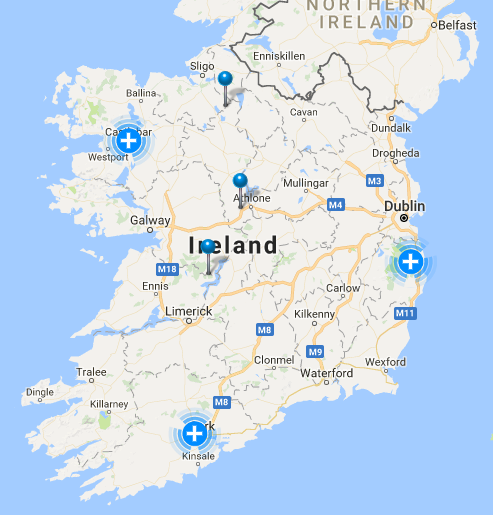
ESB-2017-12-07_1751

NIE-2017-12-07_1753

ENW-2017-12-07_1754

SSEN-2017-12-07_1757

SPEN still haven’t updated their “Severe weather update” from yesterday.

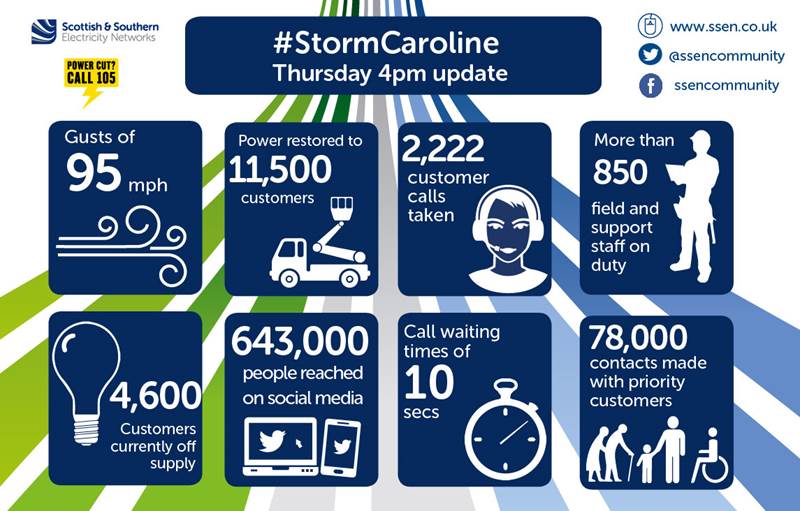
SSEN have issued a 4 PM update, which reads as follows:
SSEN-News-2017-12-07-1600

As forecast, gale-force winds have tracked slowly across SSEN’s network region, starting in the Western Isles in the early hours of the morning with the storm moving from west to east throughout the day. Wind gusts of 95mph have been recorded at Burgar Hill in Orkney, with widespread gusts in excess of 80mph observed across the north of Scotland.

SSEN’s network continues to stand up well to the impact of Storm Caroline and power has been safely restored to over 11,500 customers. The main areas affected have been the Western Isles, north-west Highlands, Caithness, Moray, north-east Aberdeenshire, Orkney and Shetland.

As of 4pm, around 4,600 homes remain without power, mainly in Caithness, Orkney and Shetland. All faults are resourced with teams working to restore power, where it is safe to do so.

Wind speeds are forecast to subside for most parts from around 6pm this evening, with the exception of Shetland which is expected to continue to feel the effects of Storm Caroline through to tomorrow morning.

With snow and falling temperatures forecast for Friday, SSEN will remain on Yellow Alert due to the risk of line icing, where snow accumulates and freezes on the overhead electricity network, which can result in damage due to the sheer weight of accumulated snow and ice. A risk of lightning also remains.

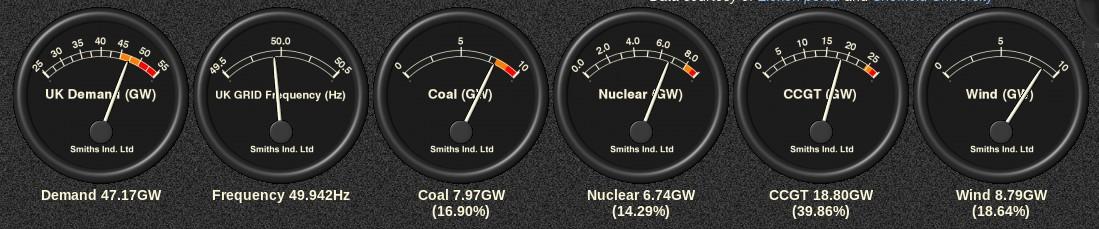
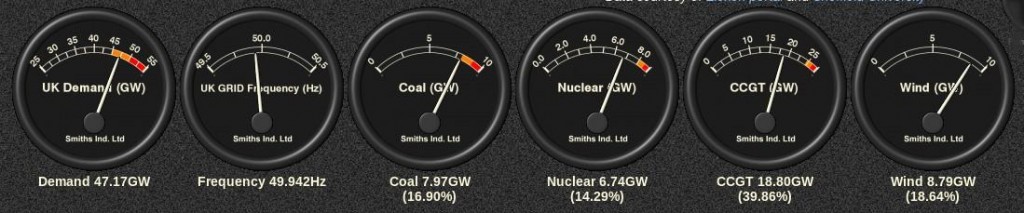
Whilst the far north of Scotland may be experiencing very strong winds, further south wind turbines across the nation will be spinning furiously, so lets now take a look at the mix of UK electricity generation at the moment, courtesy of Gridwatch:
GridWatch-Main-20171207-1720

We’re currently experiencing the usual early evening peak in demand and we’re also experiencing a bit of a cold snap at the moment:

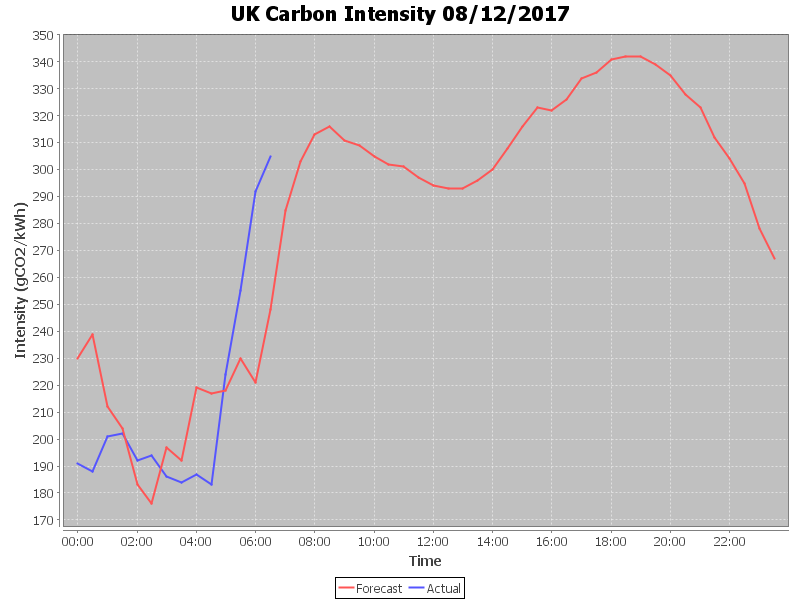
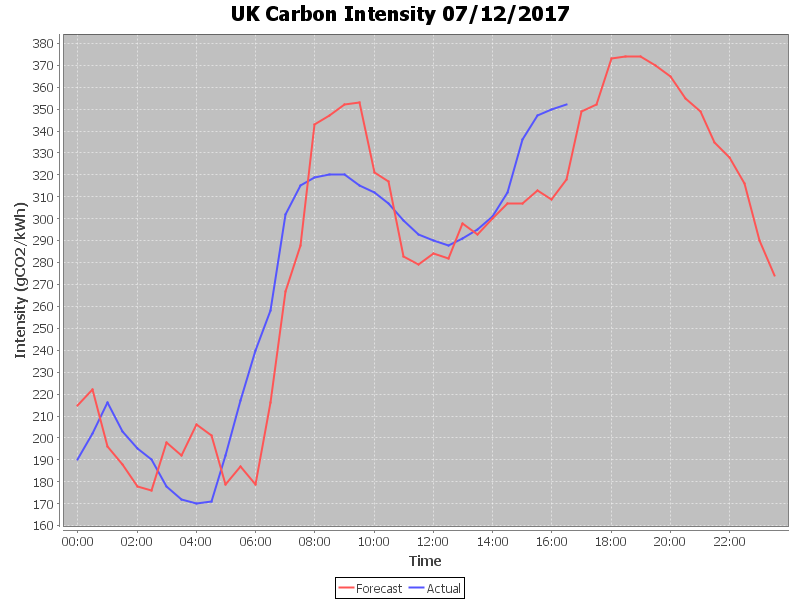
Hence there’s also an “amber warning” for electricity demand this evening, with wind contributing almost 9 GW of the required 47.17 GW. Here’s how that looks expressed as UK plc’s “Carbon intensity“:
CarbonIntensity_20171207-053211


[Edit – December 7th 22:30]

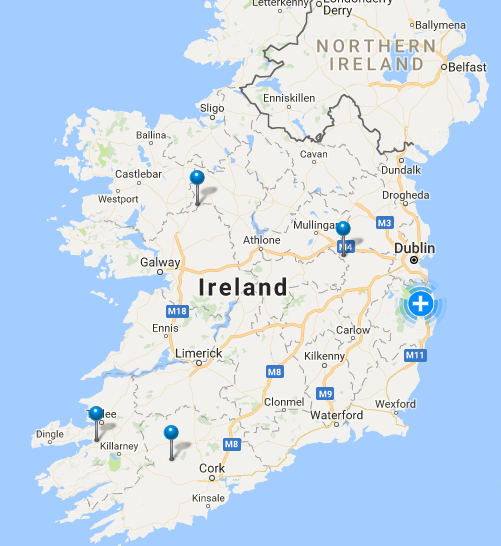
Our suite of power cut maps reveal that the worst effects of Storm Caroline are now confined to the far north east of Scotland, including Orkney and Shetland:
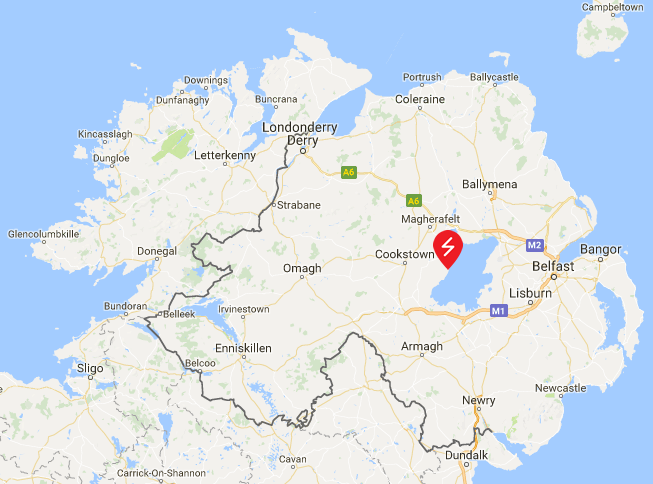
ESB-2017-12-07_2226

NIE-2017-12-07_2227

ENW-2017-12-07_2229

SSE-2017-12-07_2231

Scottish and Southern have issued another updates:
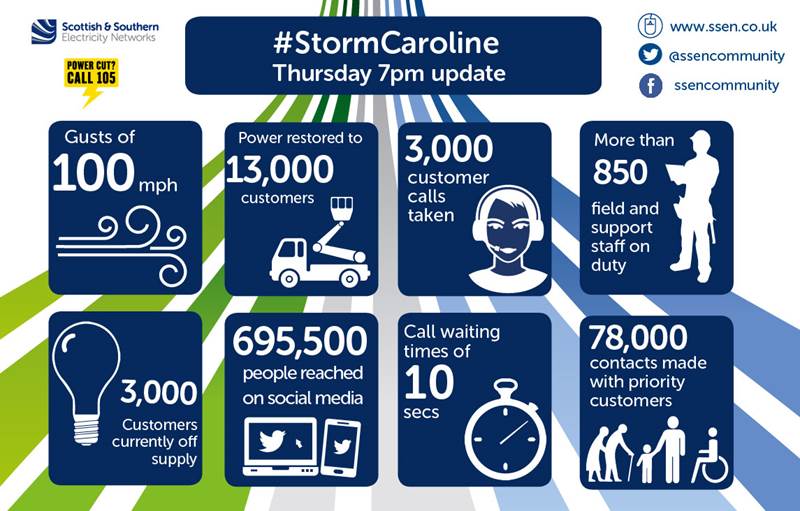
SSEN-News-2017-12-07-1900

From the early hours of this morning, gale-force winds have battered the north of Scotland, tracking slowly across SSEN’s network region from west to east throughout the course of the day. Over the last few hours, Shetland has borne the brunt of Storm Caroline, with wind gusts of over 100mph recorded at Gremista.

Power has been safely restored to over 13,000 customers across SSEN’s network, the main areas affected being the Western Isles, north-west Highlands, Caithness, Moray, north-east Aberdeenshire, Orkney and Shetland. With wind speeds now starting to subside for most areas it is anticipated the vast majority of customers will be restored this evening. As of 7pm, there are currently 3,000 customers still off supply, 1,300 of which are in Shetland.

Due to the continued severity of the wind speeds experienced in Shetland, which are forecast to continue through to tomorrow morning, and access issues affecting a small number of customers on Orkney, it is likely that some homes will remain off supply overnight. SSEN’s teams remain on standby and will carry out repairs as soon as it is safe to do so.

As the evening has progressed UK electricity demand has dropped as forecast, and the generation mix now looks like this:
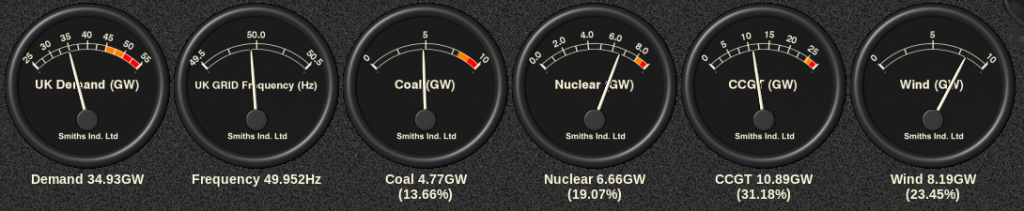
GridWatch-Main-20171207-2250


[Edit – December 8th 07:00]

There’s still a wind warning in place for the Northern Isles:

Consequently Scottish and Southern’s map of power cuts in the area still looks like this at the moment:
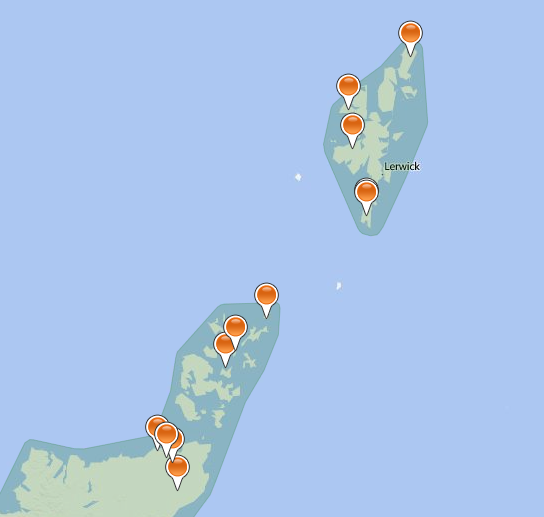
SSEN-2017-12-08_0657

Scottish and Southern issued a further update on Storm Caroline late last night:

Following the impact of Storm Caroline, which has seen prolonged gale force winds affecting many areas across the north of Scotland, SSEN has now successfully reconnected the vast majority of homes affected, with power safely restored to over 14,000 customers. The main areas affected have been the Western Isles, north-west Highlands, Caithness, Moray, north-east Aberdeenshire, Orkney and Shetland.

Due to the persistent and severe nature of wind speeds still being felt across parts of Caithness, Orkney and Shetland, coupled with difficulty gaining access to faults, as of 10pm this evening SSEN has taken the decision to stand down its field based teams in these locations for safety reasons and around 500 customers will remain off supply overnight.

Here’s the UK’s generation mix this morning:
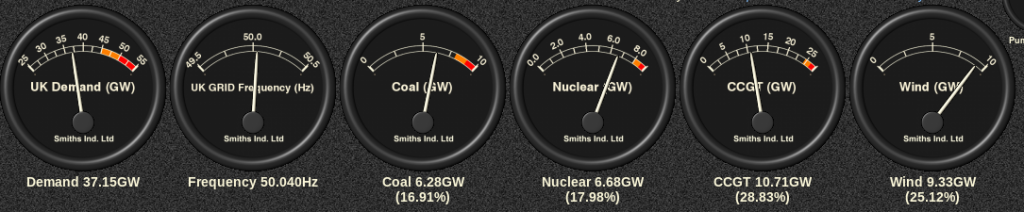
GridWatch-Main-20171208-0700

and here’s the final UK plc carbon intensity graph for yesterday:
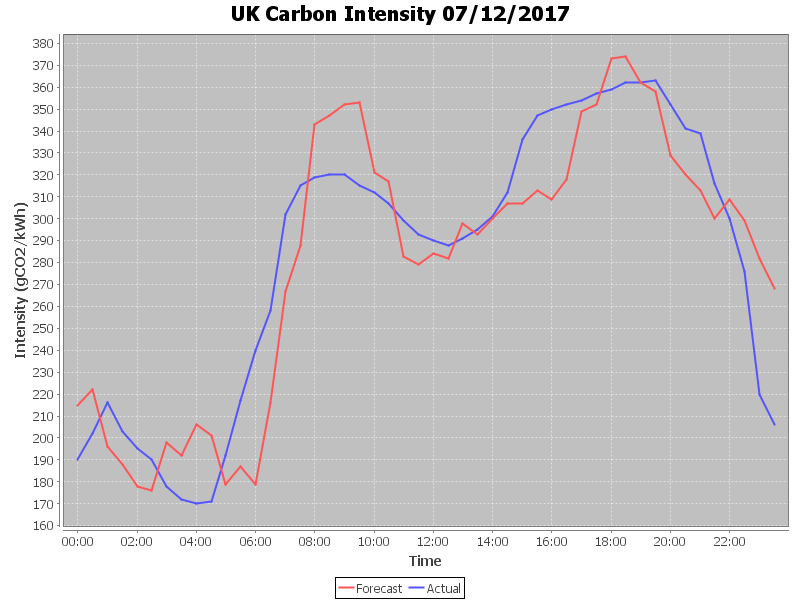
CarbonIntensity_20171207

plus today’s thus far:

CarbonIntensity_20171208-070858


[Edit – December 8th 15:00]

Scottish and Southern’s map of power cuts still shows several outages this afternoon:
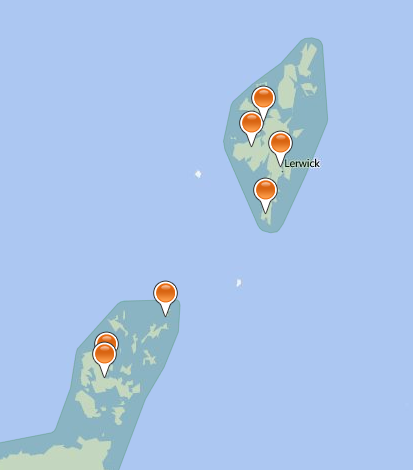
SSEN-2017-12-08_1452

In their latest bulletin they say that:

SSEN’s teams continue to make good progress to restore power to the last remaining customers affected by the impact of Storm Caroline, which brought sustained gale force winds to many areas across the north of Scotland. Throughout the course of the event, SSEN has successfully reconnected power to over 18,000 homes. The main areas affected have been the Western Isles, north-west Highlands, Caithness, Moray, north-east Aberdeenshire, Orkney and Shetland.

As of 2.30pm, just 250 homes remain off supply, with the main areas still affected being Orkney and Shetland. All faults have been resourced and SSEN anticipates all homes will have power restored by this evening.

To support efforts to restore power to those homes who remained off supply overnight, SSEN has moved additional teams to the areas affected and is also working closely with its resilience partners to help overcome challenges with gaining access to faults as a result of cancellations to local ferry services and road closures due to snow. This includes working in coordination with the RNLI, who are providing a helicopter to get additional teams and resource to South Ronaldsay, Orkney.

Here’s the current generation mix:
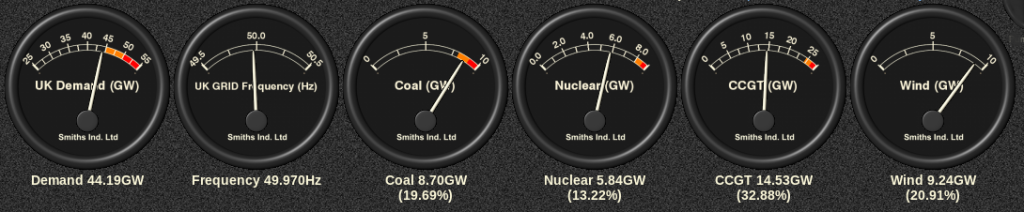
GridWatch-Main-20171208-1430


[Edit – December 8th 18:15]

Scottish and Southern Electricity Networks say they:

Have now returned to business as usual but we will continue to monitor conditions and are well prepared to respond to whatever other challenges the Scottish weather has in store for us this winter.

Their current power cut map confirms that:
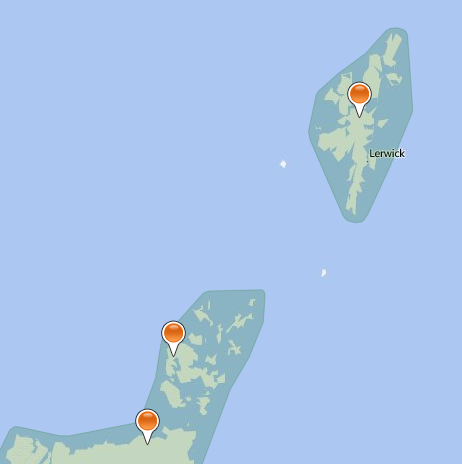
SSEN-2017-12-08_1802

Much like yesterday, this evening’s demand is back up in the amber zone:
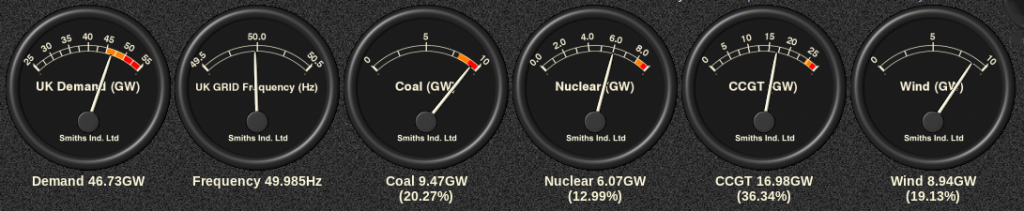
GridWatch-Main-20171208-1815


[Edit – December 9th]

Here is the final UK plc carbon intensity graph for yesterday:
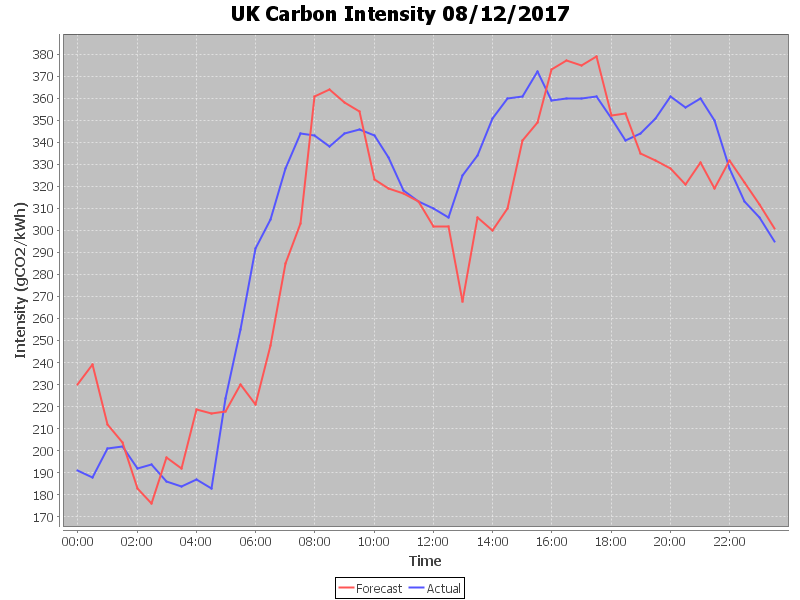
CarbonIntensity_20171208

UK Government Consultation on EV Charging Infrastructure

Earlier this year the OECD’s chief Economist recommended “fiscal stimulus and investment in infrastructure”. Perhaps Theresa May was listening? I ponder that point because earlier this week the Department for Transport unveiled their “Plans for more charging stations to encourage low emission vehicles”. According to the accompanying press release:

As part of our ongoing commitment to making transport greener and improving air quality, the Department for Transport is consulting on a series of measures that will make chargepoints more accessible, making it easier for drivers to recharge as demand for low emission vehicles increases. The measures are due to be included in the Modern Transport Bill.

The government has pledged more than £600 million over this parliament to further boost the ultra low emission vehicle market, which is going from strength to strength after the number of new ultra low emission vehicles registered rose by 250% in just 2 years.

According to Chris Grayling, the United Kingdom’s new Secretary of State for Transport:

  • We are committed to making transport cleaner and giving even more drivers the option of using a low emission vehicle as we strive to improve air quality across the country.
  • Our ambition is for nearly all new cars and vans to be zero emission by 2040, and we are taking real steps to achieve this in the Modern Transport Bill. We now want to hear the views of businesses and the wider public.

That final bullet point is addressed by an announcement from the Office for Low Emission Vehicles:

This consultation seeks views on measures to support the uptake of ultra low emission vehicles (ULEVs), proposed for inclusion in the Modern Transport Bill.

The proposed measures relate to refueling and recharging infrastructure for ULEVs and focus specifically on:

  • the consumer experience of infrastructure
  • smart charging – infrastructure and the electricity system
  • the provision of infrastructure

The consultation closes at 11:45 PM on November 23rd 2016, so if you have strong views on the UK’s EV charging infrastructure in general or “smart charging” in particular now is the time to start putting your thoughts on virtual paper before sending them to Chris Grayling.

Perhaps I’ll have to precis this blog for him, since the consultation document itself summarises the proposed measures in the Modern Transport Bill as follows:

Consumer experience of infrastructure

a) Power to require operators of publicly accessible chargepoints and hydrogen refuelling stations, and networks, to provide data in an open source format on the geographical location and live availability of charging and refuelling infrastructure

b) Power to require operators of publicly accessible chargepoints and hydrogen refuelling stations, and networks, to ensure consumers can use them without the need for multiple memberships

c) Power to require operators of publicly accessible chargepoints and hydrogen refuelling stations, and networks, to publish transparent and comparable pricing information

d) Power to specify minimum standards of design and functionality for new publicly accessible chargepoints and hydrogen refuelling stations and networks

Smart charging – Infrastructure and the electricity system

e) Power to require infrastructure installed for the purposes of charging EVs to have ‘smart’ functionality to receive, understand and respond to signals sent by energy system participants (e.g. Distribution Network Operators (DNOs), energy suppliers, National Grid or other third parties) for the purposes of balancing energy supply and demand, and to require any technological functionality in EVs necessary to ensure ‘smart’ functionality

f) Power to require that technical standards used by operators of chargepoints and networks comply with the requirements set out in these measures are available and implemented on an open access basis. This includes making publicly accessible the necessary protocols to allow the charging infrastructure to communicate, understand and respond to signals or grid balancing

Provision of infrastructure

g) Power to require that operators of motorway service areas (MSAs) ensure a minimum provision of electric and hydrogen fuels for ULEVs at MSAs

h) Power to require a minimum provision of electric and hydrogen fuels for ULEVs at large fuel retailers

i) Power to franchise hydrogen refuelling

I’m sure Chris will be interested to discover more about “technical standards used by operators of chargepoints and networks… implemented on an open access basis”. Perhaps he’d like to learn more about vehicle-to-grid technology too?

UK Parliament Debates Energy Storage

It’s all go on the energy storage front in the UK. Yesterday not only was V2G mentioned in the mainstream media but it was also debated by a committee in the House of Commons. The summary of the Energy Bill [Lords] 2015-16 states that it is:

A Bill to make provision about the Oil and Gas Authority and its functions; to make provision about fees in respect of activities relating to oil, gas, carbon dioxide and pipelines; to make provision about wind power; and for connected purposes.

I presume energy storage must count as a “connected purpose”, since the proposed New Clause 14 which was under discussion yesterday, reads as follows:

Electricity storage

(1) Section 4 of the electricity Act 1989 is amended as follows.

(2) After subsection (1)(c) insert—

“(d) stores electricity for the purpose of giving a supply to any premises or enabling a supply to be so given,”

(3) At end of subsection (4) insert—

““Store” means the conversion of electricity into a form of energy which can be stored, the storing of the energy which has been so converted and the reconversion of the stored energy into electrical energy in devices with an individual capacity of more than 50MW.”

(4) Section 6 of the electricity Act 1989 is amended as follows.

(5) After subsection (1)(d) insert—

“(e) a licence authorising a person to store electricity for the purpose of giving a supply to any premises or enabling a supply to be so given (‘a storage licence’);”

(6) After subsection (2) insert—

“(2ZA) In addition to holding a storage licence, the same person may be a holder of—

(a) a distribution licence,

(b) a transmission licence, or

(c) a generation licence.

(2ZB) The Secretary of State may by order determine the circumstances under which a person may hold a storage licence in addition to a distribution licence, a transmission licence or a generation licence under subsection (2ZA).

Events in The House were recorded for posterity, and the debate about NC14 can be seen in this video:

In some of the edited highlights Dr. Alan Whitehead, who is Shadow Minister for Energy and Climate Change, pointed out that:

A number of the issues we have discussed in the Committee—intermittency of wind, base-load problems and a whole range of other issues—can begin to be addressed by battery storage of electricity.

For example, if a battery storage system is attached to a solar array, the life of that solar array can be extended far beyond the period during the day when the sun shines. Clearly, the power that comes from it can go right through the night. We are already seeing that effect, to a minor extent, with solar arrays on streetlights, but on a much larger scale it could revolutionise the way in which solar is used in future.

Battery storage can also be used in relation to wind. We have heard that wind, quite self-evidently, does not always blow, and sometimes when it does blow, it blows rather a lot. Ensuring that the capturing of that variability is smoothed out into a regular supply through the attachment of battery storage to the wind turbine is clearly a positive step forward as far as wind supply is concerned.

However Andrea Leadsom, who is The Minister of State at the Department of Energy and Climate Change ultimately responded by saying:

On this last new clause, I am as keen as mustard on electricity storage; it has a vital contribution to make to dealing with intermittency and I wish we were five years ahead—it will be interesting to see how much we have managed to achieve in creating this new ability to store intermittent generation.

New clause 14 would create a new licence category for electricity storage operators and allow other licence holders, such as generators and transmission and distribution network operators, to hold an electricity storage licence. The creation of a separate electricity storage licence is an option that is being considered by my Department and one of a number of issues for storage operators to be included in a call for evidence in the spring. This will enable us to test it against other options, which may be less regulatory and burdensome, more targeted and, importantly, faster to implement. So, much as I would love to say, on this very last new clause, that we agree with the hon. Gentleman, the problem is that licensing storage now would be premature. Indeed, the Electricity Storage Network, which is a key trade body for the storage industry, has criticised this new clause on the grounds that it

“pre-empts the current work by the Department” and

“may hinder, rather than help, the progress of well thought-out strategies to support … the storage industry.”

following which Dr. Whitehead withdrew his proposed amendment.

All of which does rather beg the question of what “well thought-out strategies to support the storage industry” here in the United Kingdom will eventually look like, and whether they will accommodate “EV owners”, “Communities” and/or “Aggregators” as well as Distribution Network Operators, Transmission System Operators and electricity generators, whether distributed or centralised.

The Great Storm Henry Blackout Saga

Regular readers will realise that here at V2G UK we take an unhealthy interest in power cuts, or outages as they call them on the other side of the Atlantic. Not least that’s because we suffered an extended lack of mains electricity ourselves not so very long ago!

We recently followed the progress of the controversially named “Storm Jonas” along the eastern seaboard of the United States using helpful information provided online by Distribution System Operators (DSO using the generic term, or ISO if you’re from the US!) such as Duke Energy. Here’s an example:

Since “Storm Henry” was officially named by the UK’s Met Office a couple of days ago, and is due to arrive over on this side of the North Atlantic today, we thought we’d undertake a similar exercise for the western seaboard of the United Kingdom this week. However there is a fly in the blackout ointment. After perusing the web sites of the Distribution Network Operators (DNO in the Queen’s English) most likely to be affected by Storm Henry it seems none of them provide the summary information available in the top left hand corner of Duke Energy’s power outage map, including in particular “Active outages” and “Affected customers”.

Following some conversations with the DNOs on Twitter it appears as though we’ll need to keep track of a set of press releases to try and keep real-time tabs on the forthcoming Great British Blackouts. The first of these that we’ll bring to your attention is from Scottish Hydro Electric Power Distribution (SHEPD for short), the Scottish portion of Scottish and Southern Energy Power Distribution (SSEPD for short):

Scottish Hydro Electric Power Distribution (SHEPD) has moved to Yellow Alert after closely monitoring the development of high winds.

Our weather models anticipate Storm Henry will bring wind speeds over 90 mph in the Western Isles and Skye. All other parts of our network area will see winds reach 70-90 mph.

We have frontline and support staff standing by and we have engineers in the areas we expect to be hit by the storm.

Our customer service team has been making outbound calls to customers on our Priority Service Register in the affected areas to alert them and offer extra assistance, where required.

Members of the public should not approach fallen or damaged power lines, which may still be live.

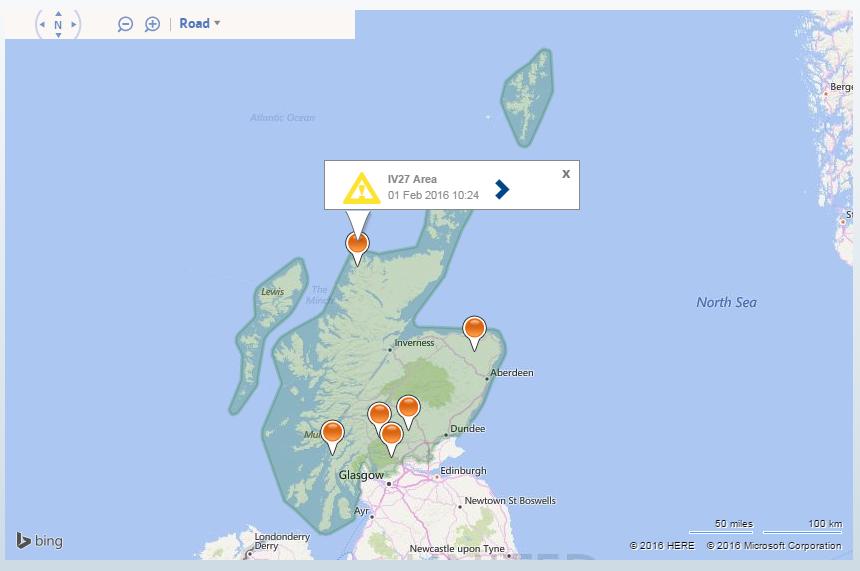
Whilst we wait for the full force of Storm Henry to hit, here’s how the SHEPD live power cut map looks at lunchtime on Monday February 1st 2016:

My Electric Avenue Preliminary Results Revealed

Just in case the name is unfamiliar to you, the My Electric Avenue project has been running for a couple of years now. According to the My Electric Avenue web site:

Whilst there’s plenty of capacity to deliver power for EV charging across the UK, if the charging requirements are concentrated in small areas and during peak demand, local feeders can become overloaded. With the development of even faster charging times, this problem shows no signs of fading.

The full size and scale of the problem that EV clusters could cause will only become apparent to Distribution Network Operators (DNOs) when they are already on the network, demanding costly mitigation measures in short timescales.

EA Technology and Scottish and Southern Energy Power Distribution (SSEPD) are working together with partners under the Ofgem Low Carbon Networks (LCN) Fund to develop a ready-made low cost solution. EA Technology is developing an EV charge control system to balance out the charging cycles of EVs at times of network stress.

To test the system the trial is simulating a future EV network, and to do this, clusters of EVs have been ‘created’.

If all that information strikes you as being a bit on the dry side, here’s an episode of Robert Llewellyn’s “Fully Charged” show that explains the project in a more entertaining fashion!

I watched a webinar last week in which some preliminary results from the project were released, but EA Technology had a few internet connection problems due to high winds in the North of England, and the feed gave up the ghost halfway through! To rectify that they’ve made a video of the proceedings available to all and sundry, and here it is:

There’s also a page on the My Electric Avenue web site where you can download additional information.

The data referred to in the video is based on the initial results from an ongoing survey. It explains that the approximately 200 participants who each leased a Nissan LEAF were split into two roughly equal groups. The “technical” group used “smart” or “controlled” charging, whilst the “social” group simply had their EV charging activity monitored. There’s obviously much more detail available from the video and accompanying documentation, but in brief:

  • Only ~5% of people disagreed with the proposition that “EVs are easy to live with”, however
  • 117 out of 193 people “struggle to charge away from home”
  • Of those 117, 12% intend to buy their LEAF at the end of the trial and 43% intend to lease it
  • Overall 17% intend to buy their LEAF at the end of the trial and 41% intend to lease it
  • Even after the “controlled” charging trial 80% of people like to charge their car until it is full
  • Of the people on the “technical” trial, 16% disagreed with the proposition that “My electric vehicle charges sufficiently in the time available to charge”

The concluding section of the presentation points out that the sense of “community” was very important to the success of the project, with “local champions” recruiting friends and neighbours into their “cluster” of EVs a vital element of that.

The final report on the My Electric Avenue project is due to be released by De Montfort University towards the end of October 2015. In the meantime if you are in the EV business and you would like to take a quick survey yourself on the topic of “Industry Views on the Impact of Cycling Electric Vehicle Charging” then you can do so over at:

https://www.surveymonkey.com/s/Y5N8TTV

The Great Dunchideock Blackout Saga

We recently suffered a power outage, or power cut as we prefer to call such things here in the UK. This wasn’t any old power outage either. Let me explain.

The lights went out at 17:44 on Friday April 11th 2014. I hurriedly powered down everything in the lab and office except my laptop and our broadband router, which was by then being powered from the battery in an uninterruptible power supply. When the lights hadn’t come back on a few minutes later I telephoned our local Distribution Network Operator (DNO for short), Western Power Distribution, to enquire what the problem was, and when it might be fixed. WPD’s automated system suggested that our power should be restored by about 21:00 that evening.

9 o’clock came and went, by which time the batteries in my laptop and UPS were flat. I called WPD again, to be informed that the latest estimate for the time at which I would be able to get connected to the internet once again would be 01:00 on Saturday morning. I figured I’d allow WPD a bit of leeway, and eventually went to bed having set the alarm on my smartphone for 02:00. The alarm went off, but the lights still hadn’t come back on.  I phoned Western Power again to be informed that things should be back to normal in an hour or so. Bleary eyed I returned to bed.

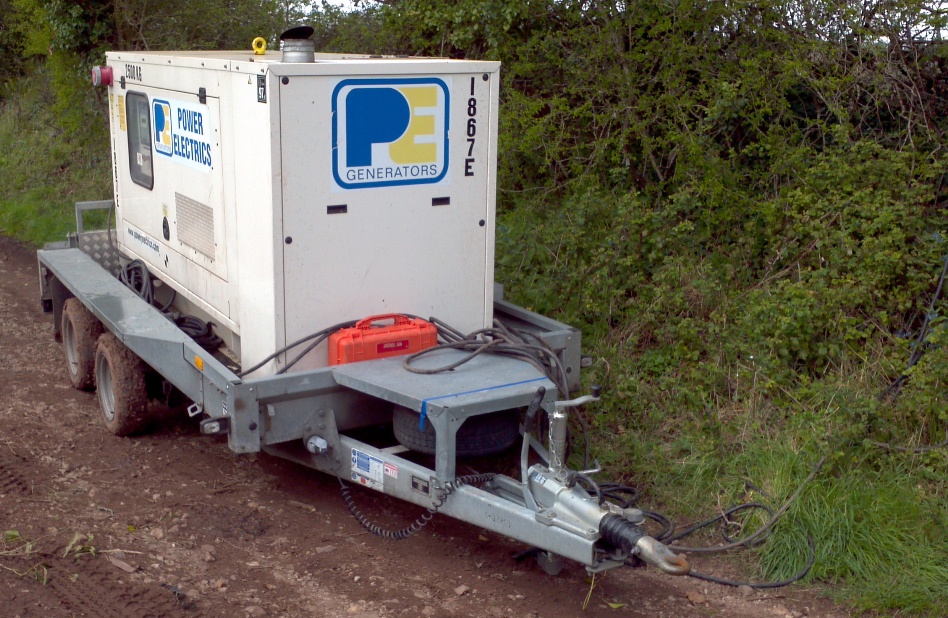
When I arose next morning I wasn’t in need of any lights, but my router and laptop were working once again. There was, however, the continuous drone of an engine audible not too far away so I set out to investigate by following the sound, and here is what I discovered:

Generator on the track to Haldon Belvedere on April 12th 2014

Diesel generator on the track to Haldon Belvedere on April 12th 2014

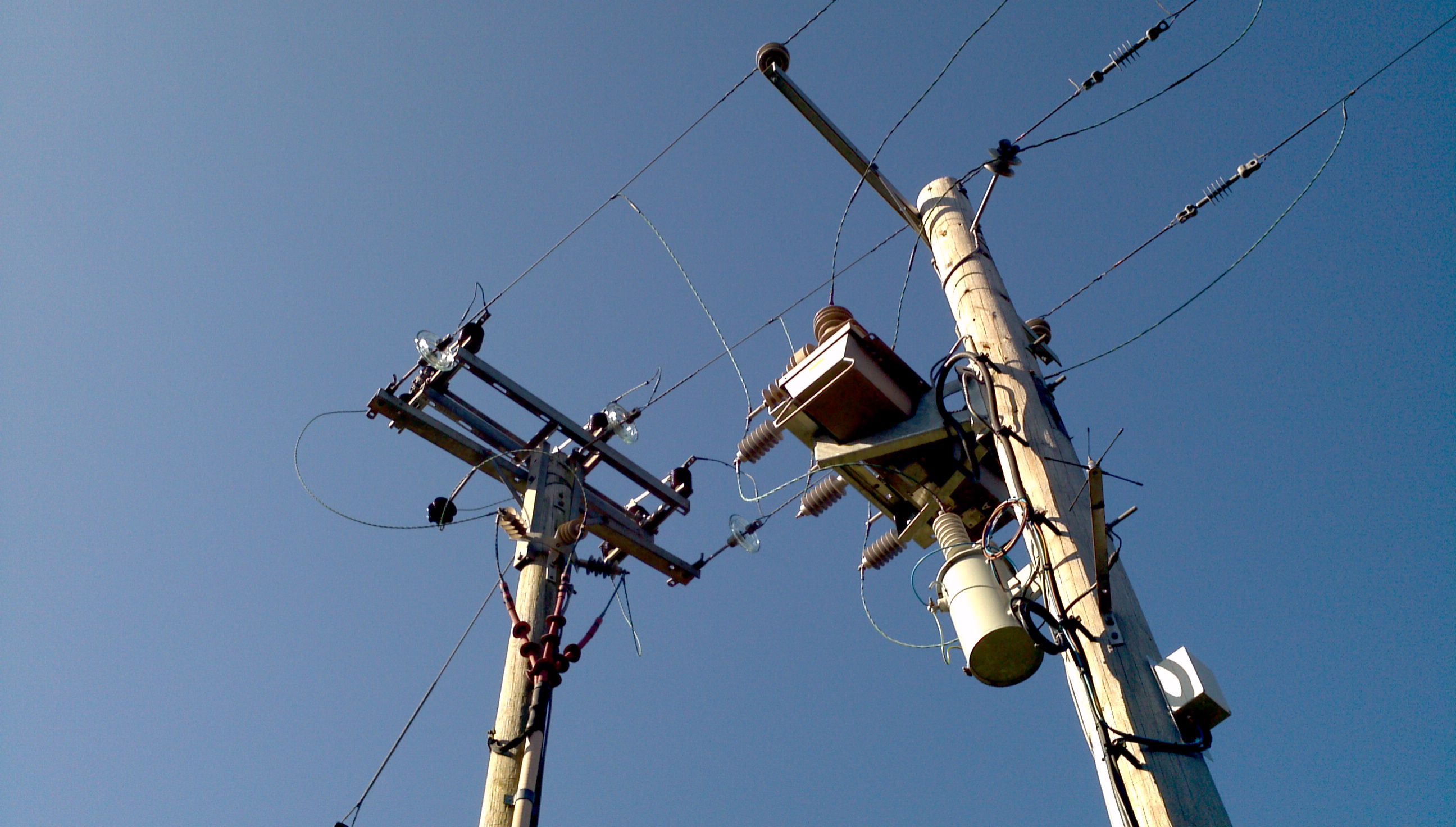
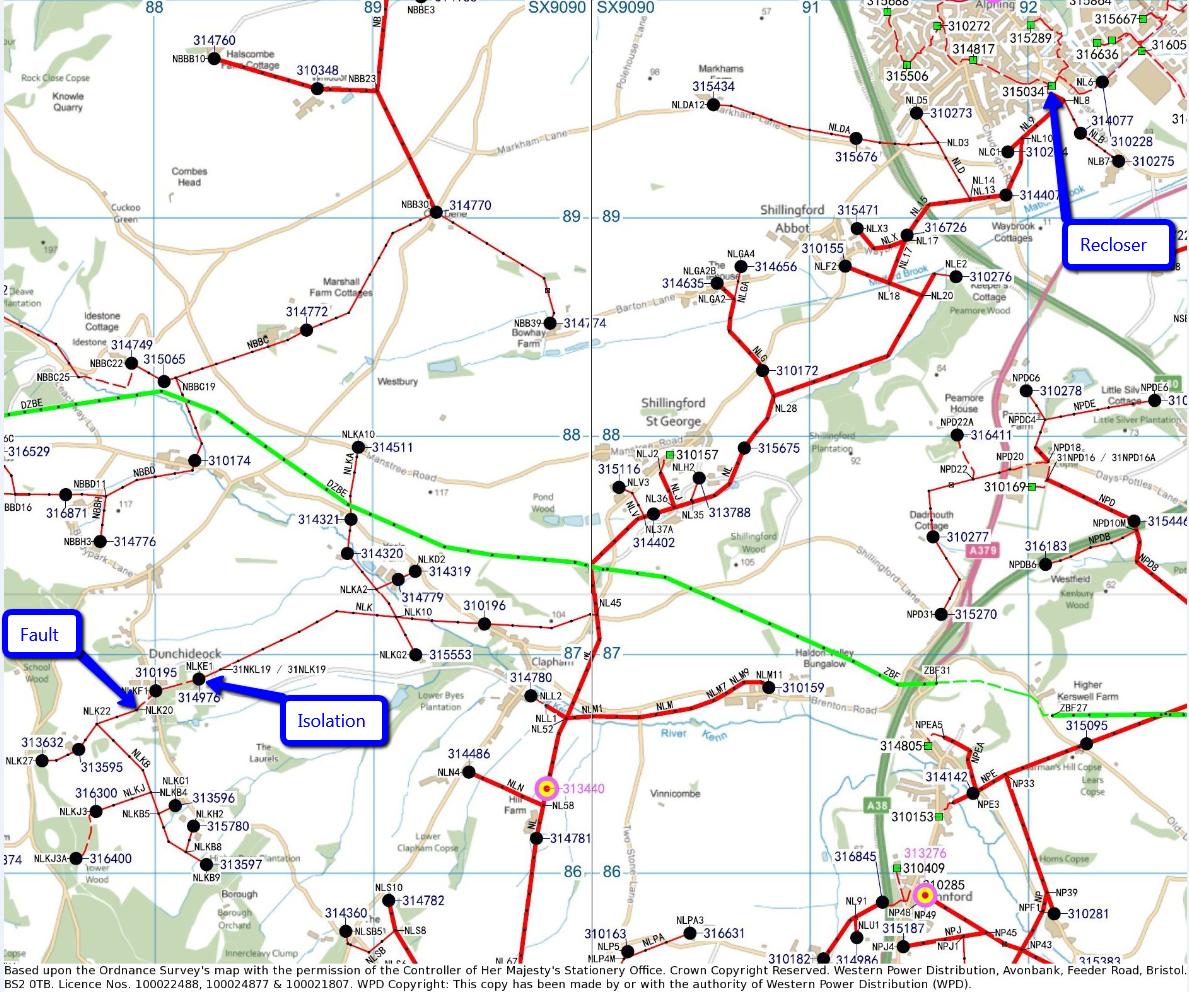
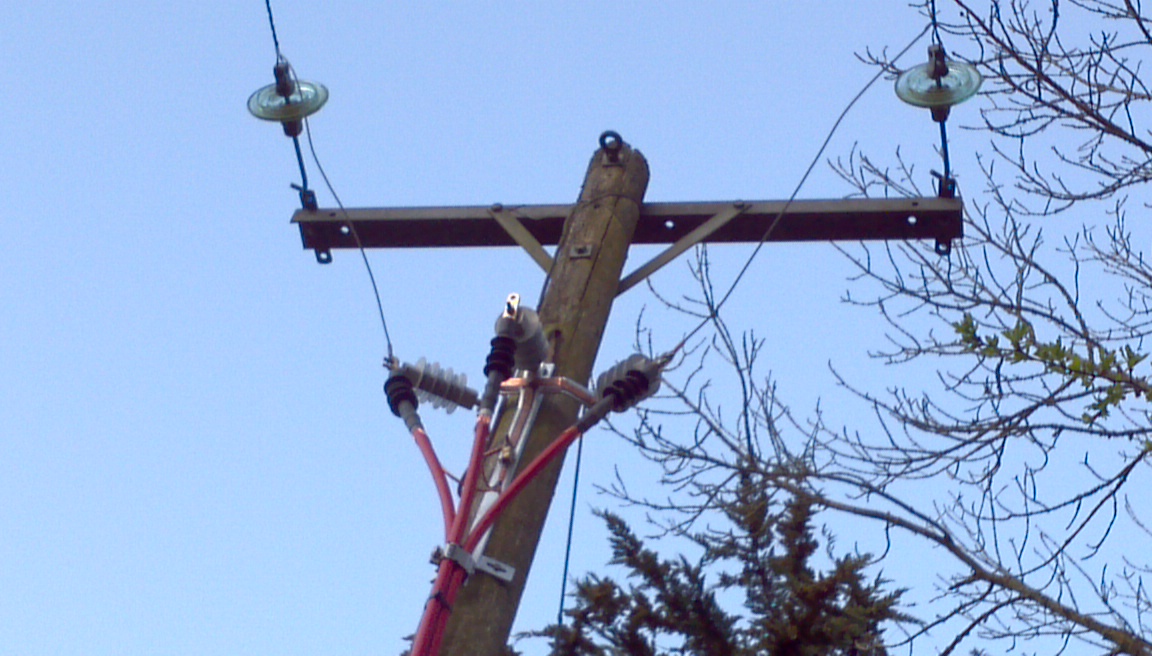
Another call to Western Power Distribution elicited some further information. I managed to speak to WPD’s standby manager for the day, who explained what had happened the previous evening. Initally over 300 properties had been without electricity following the operation of an automatic circuit recloser mounted on pole NLT1M in Alphington, as shown at the top right of the map of WPD’s network below (click the image for a larger version), and in this photo I took subsequently:
Schneider pole mounted recloser and air break isolator in Alphington

Schneider U-Series pole mounted recloser and an air break isolator in Alphington

WPD map of 11 kV and 33 kV cables Southwest of Exeter

WPD map of 11 kV (red) and 33 kV (green) cables south west of Exeter

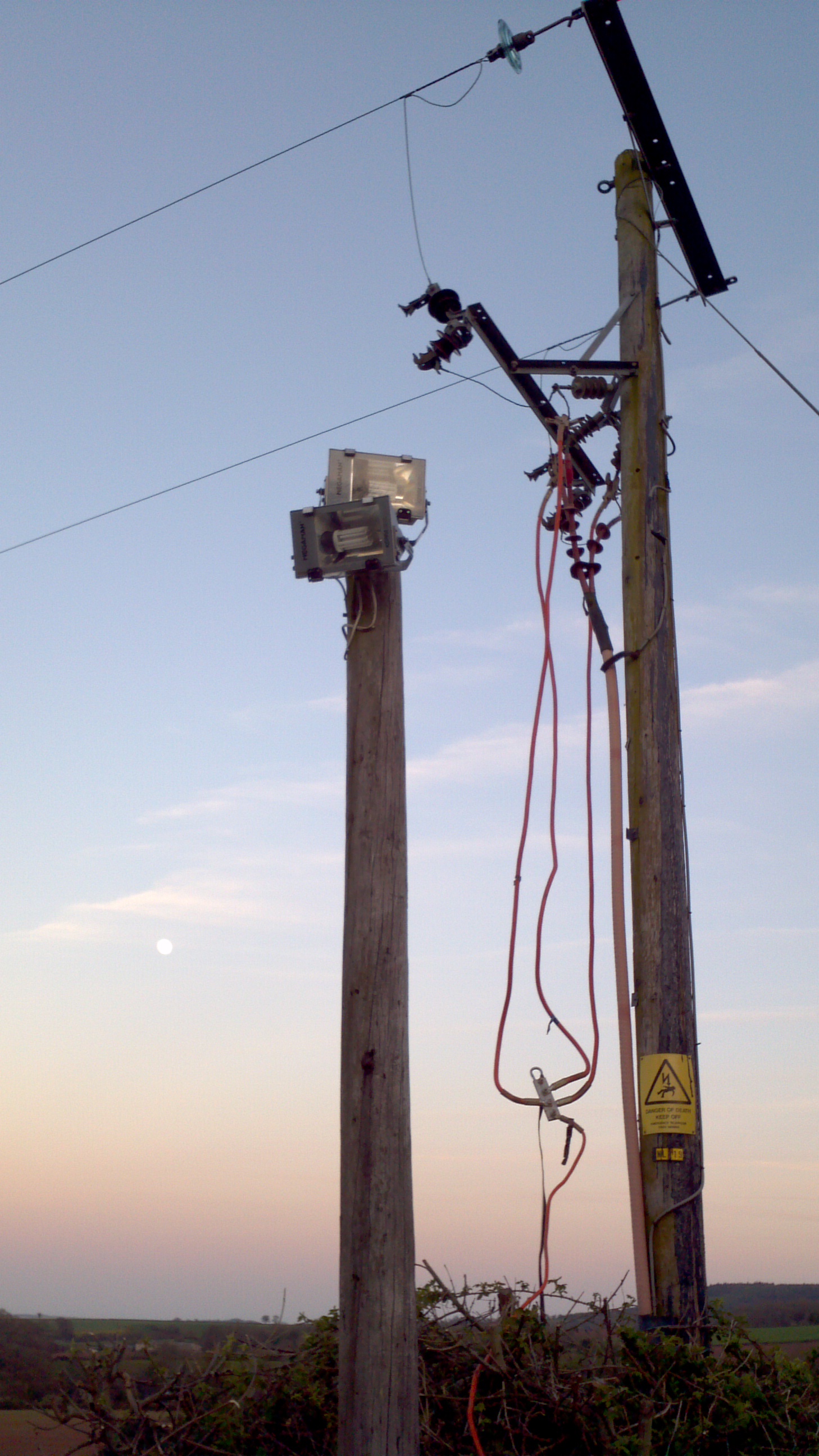
At that point everything powered via the 11 kV 3 phase (thick red) cables running from top right to bottom left of WPD’s map was without electricity. By around 21:00 the problem had been isolated to somewhere in the bottom left corner of the map, and power now reached as far as pole NLK19, near the north east corner of The Lord Haldon Hotel car park.

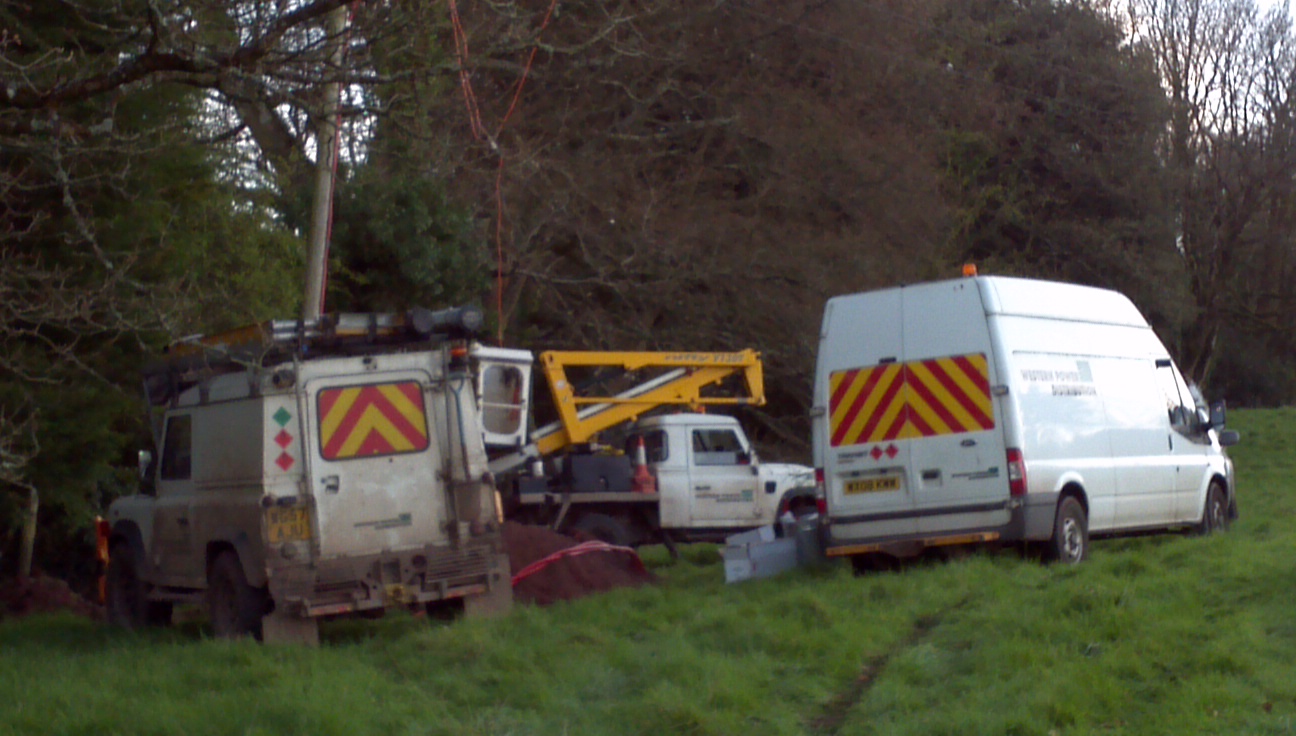
Pole 31NLK19, whilst The Lord Haldon Hotel and The Haldon Belvedere were running from WPD generators

Pole 31NLK19, draped with extra cables, whilst The Lord Haldon Hotel and The Haldon Belvedere were running from WPD generators

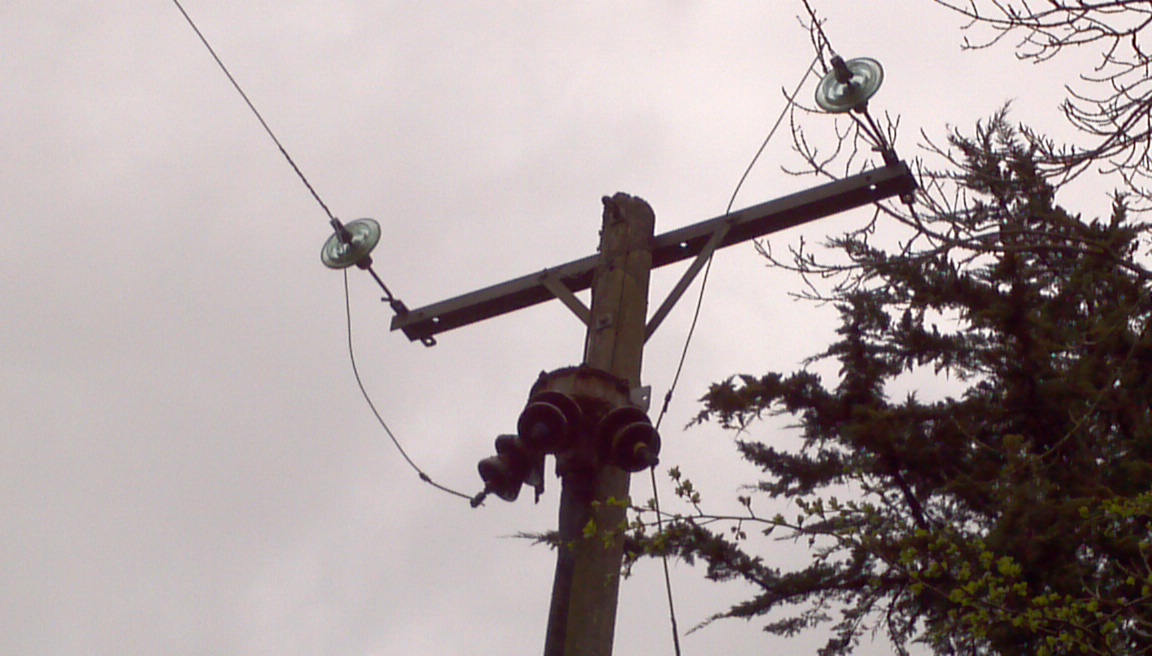
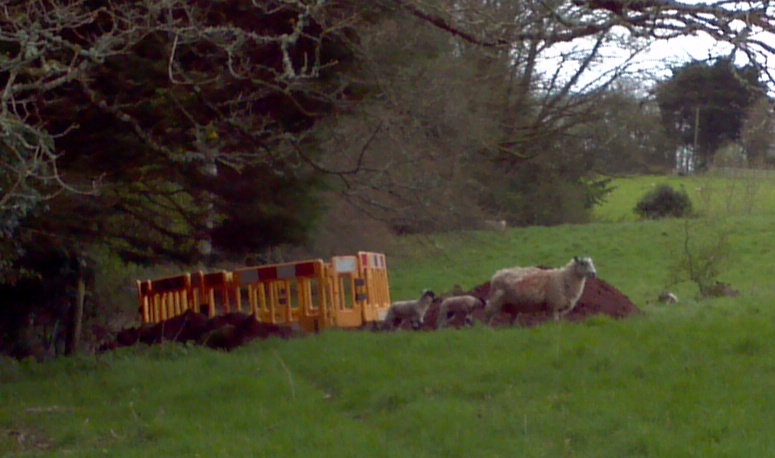
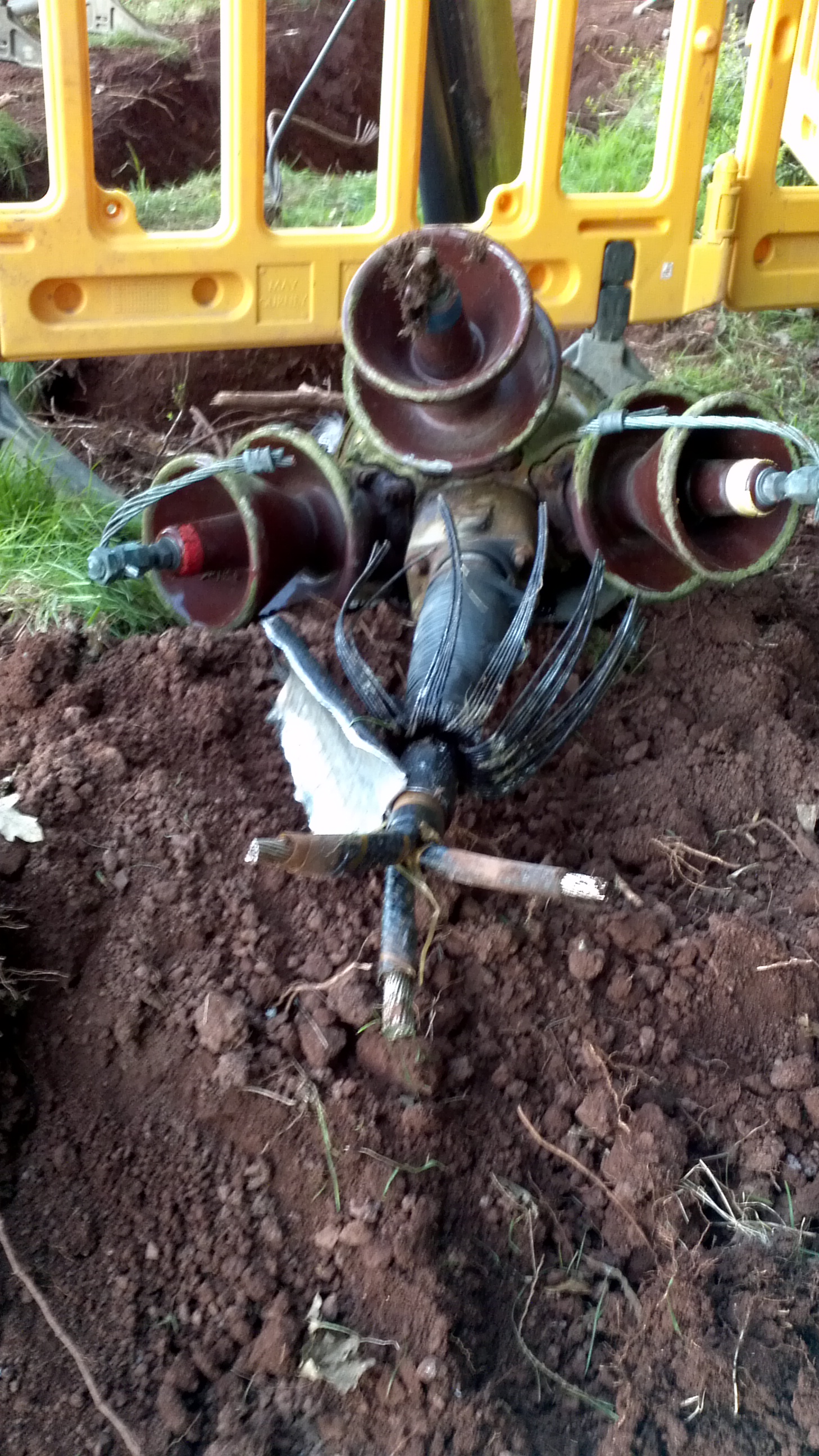
Unfortunately the hotel itself, which had a wedding reception booked that night, and everyone else in our corner of the village of Dunchideock and Haldon Hill were still without power, and WPD still didn’t know where the fault was. I am assured by a local resident that once it had got dark his wife noticed some arcing at the top of an electricity pole in a field behind his house, so he drove to the hotel car park and informed the WPD engineers gathered there about her discovery. The problem ultimately proved to be a faulty pole top cable termination, shown below in situ together with some inquisitive lambs:
A 48 year old cable termination at the top of pole NLK20

Youthful interest is shown in a big hole in the ground

Some youthful interest is shown in a big hole in the ground

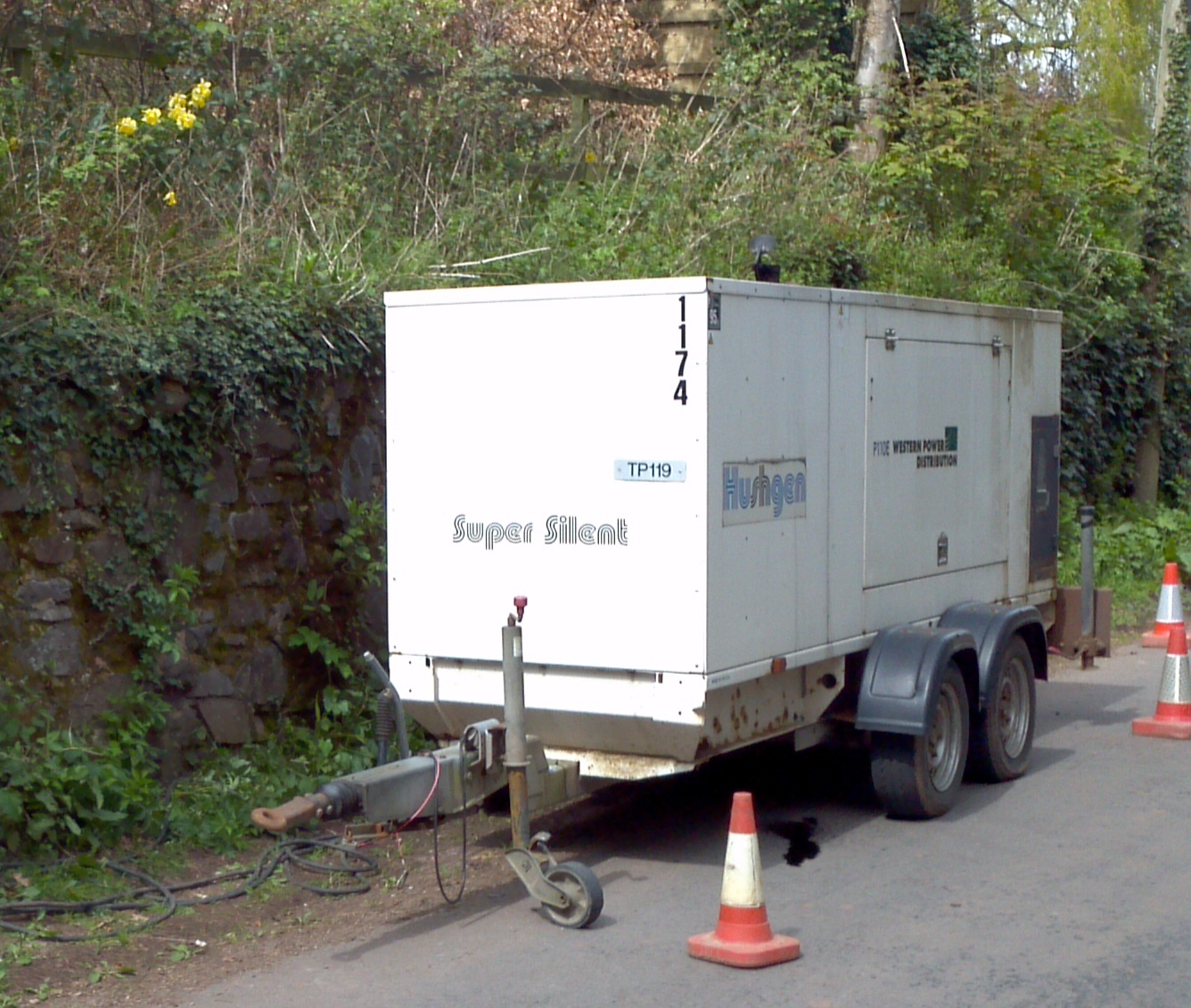
By the time the likelihood that this was indeed the ultimate cause of the problem had been established time was pressing. According to WPD they have a self imposed 12 hour time limit on turning the power back on after any interruption in supply, and there was no way this problem would be fixed within that timeframe. That being the case some generators would be required, which presented WPD with another big headache. It seems there had been some other problems in Devon on the same day, and there weren’t enough generators in Exeter to go around, so WPD brought some more in from Torbay. That still wasn’t adequate for the scale of the problem, so they brought some more in from Taunton. Even that wasn’t sufficient, so finally they had to hire a few more from Bristol, one of which was emitting the dulcet tones that greeted me on Saturday morning. Here’s one of WPD’s own generators, that was located a bit further up the road near the entrance to the hotel:

WPD Generator hard at work outside Pen Hill Cottage

WPD diesel generator hard at work outside Pen Hill Cottage

All in all, by the time everyone affected had their electricity supply restored, which in our case seems to have been at around 3:30 on Saturday morning, 9 diesel generators were scattered across the north side and ridge of Haldon Hill. WPD assured me there was no danger of any further power cuts, since every 12 hours or so they would be hauling a bowser around the local vicinity to top up the tanks of any generator that might be running low on diesel fuel.

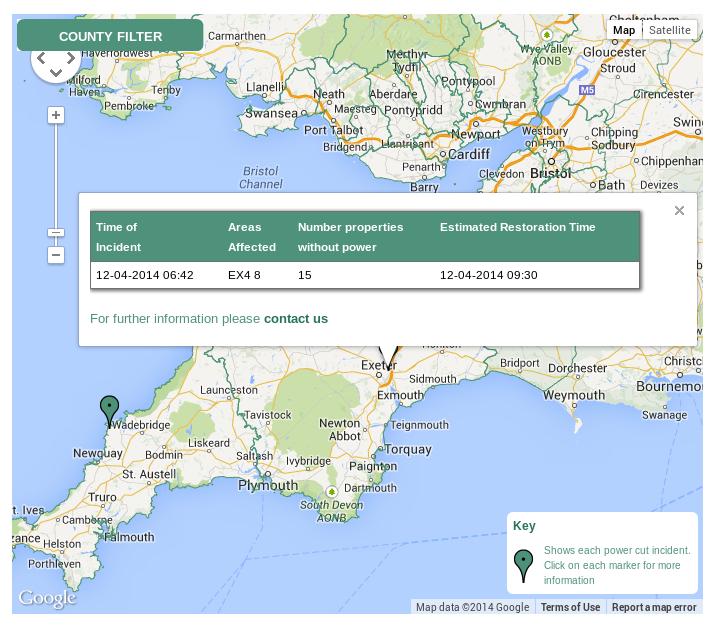
Whilst they didn’t have such a thing last time I checked, during the recent winter storms, I was also informed that Western Power now provide an online power cut map. This is how it looked on the morning of Saturday April 12th 2014:

Western Power Distribution power cut map at 08:39 BST on Saturday April 12th

Western Power Distribution power cut map at 08:39 BST on Saturday April 12th


It seems as though “running off a generator” doesn’t count as a “power cut”, because Dunchideock isn’t on that map, all of which meant that WPD could now fix the problem as and when time permitted. Here’s how things were looking by Sunday evening:

By Monday morning the epoxy resin in the Lovink red box had set, the big hole in the ground was filled in, and we were all back on mains power once again. All of which raises a few questions, in my mind at least.

In my conversations with WPD’s duty engineers I enquired whether this particular failure might be in any way attributable to the recent wet and windy winter weather here in South West England I alluded to earlier. I was told that while a causal link with any single failure was impossible to establish, it was conceivable that WPD’s electricity distribution network had suffered additional “stress” due to increased lightning strikes and the potential for trees to be more easily toppled by strong winds whilst their roots were sitting in sodden soil. I also idly enquired about the stresses placed on the network by renewable generation in the South West, but that story will require an article of its own at the very least.

In the meantime I’ve been pondering how this saga would have panned out if some of the homes in Dunchideock had already been in possession of an electric vehicle and some vehicle to home or even vehicle to grid technology. Since the powers that be here in the UK don’t seem to be wild about either of those concepts maybe a pile of shiny new lithium ion batteries from Tesla in the corner of each garage in Dunchideock might be more realistic to speculate about, or at the very least some second user EV batteries that are at least receiving some R&D funding on this side of the Atlantic? In that case perhaps we should add distributed storage to grid (or S2G for short) to our list of TLAs under consideration?

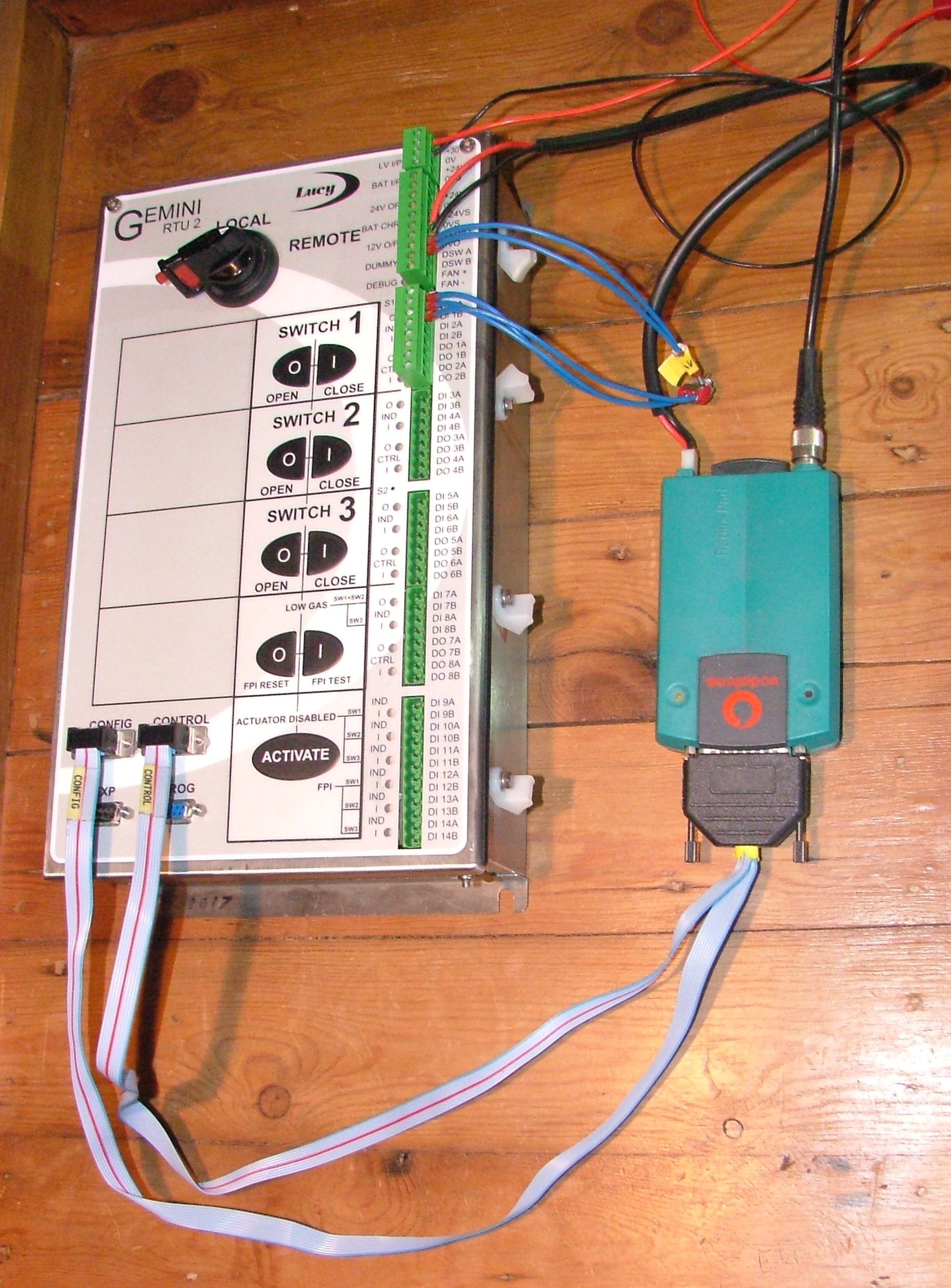
The lights wouldn’t have gone out in any V2H or storage equipped home. Their broadband would have kept on working too, so information about the failure could have been swiftly despatched to WPD’s control centre to enable the location of the fault to be pinpointed more swiftly. If some people had V2G and/or S2G installed as well, and subject to being suitably reimbursed for their public spiritedness, they could have kept their neighbours’ lights on as well as their own provided that WPD’s equipment was capable of sectionalising their network with greater granularity than at present. As luck would have it there is a pile of such equipment already in Dunchideock, although it’s only in the V2G lab at the moment rather than attached to any of the WPD poles I’ve mentioned apart from the one in Alphington, or in the corner of anyone else’s garage in Dunchideock. Here’s what a remote terminal unit looks like from the outside:

A Lucy Switchgear Gemini Remote Terminal Unit plus PakNet PAD

A Lucy Switchgear Gemini Remote Terminal Unit plus PakNet PAD

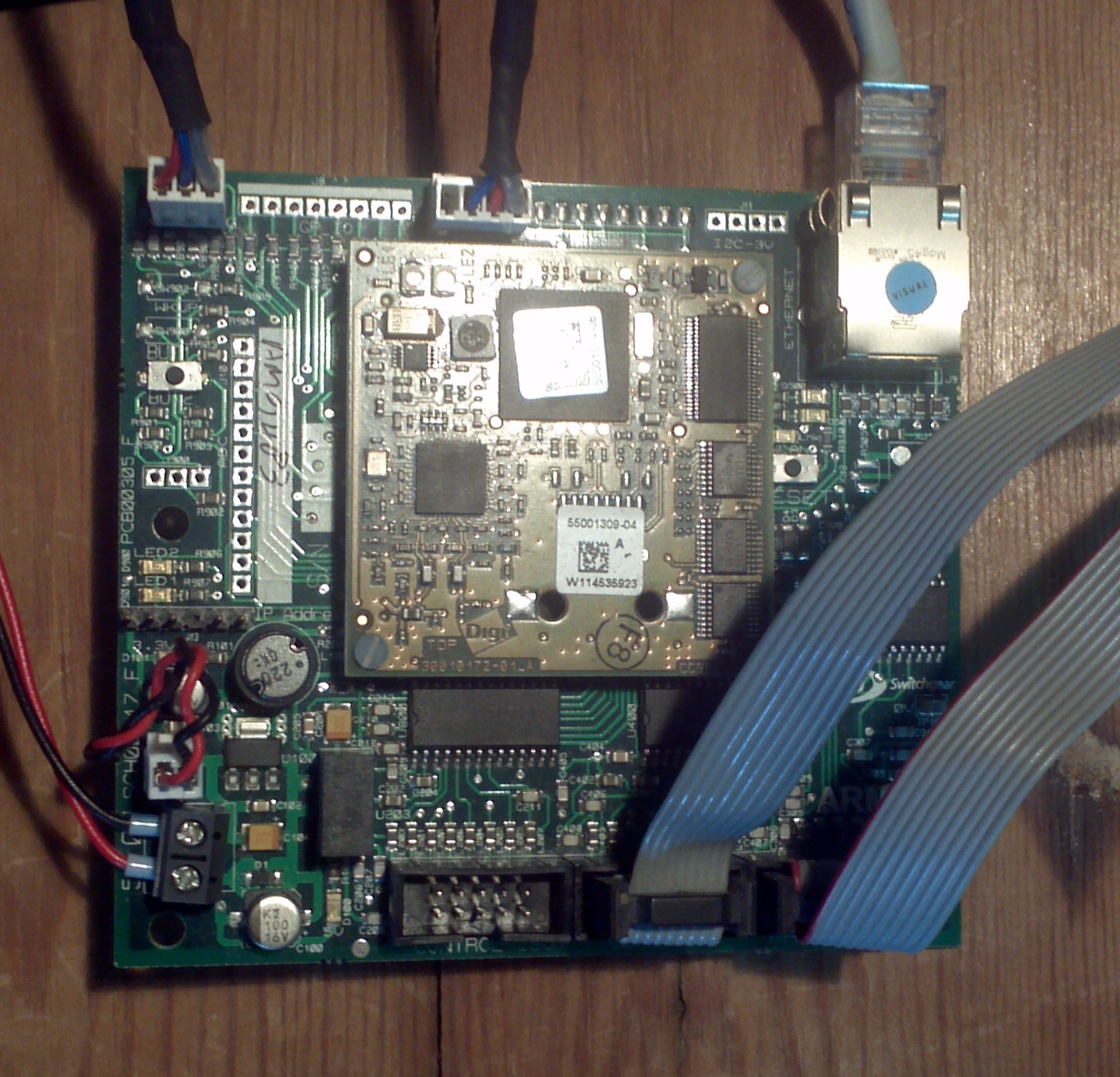
and here’s what the ARM powered CPU board on the inside looks like:

Gemini ARM CPU card

A Lucy Switchgear Gemini ARM CPU card, connected to the internet

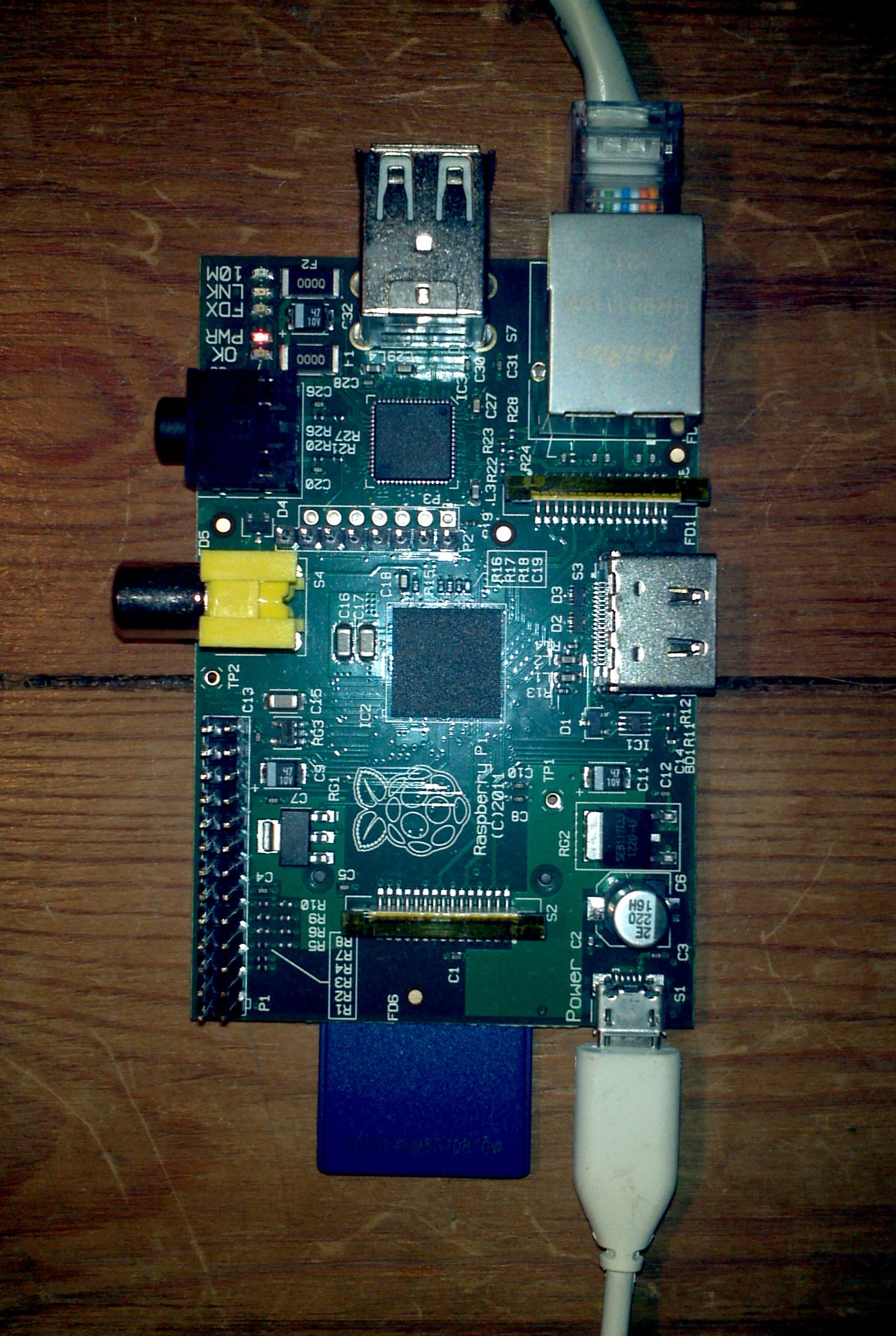
As you can see, in actual fact it’s not a whole lot different to a Raspberry Pi, or the guts of the average smartphone for that matter:

A Raspberry Pi model B, connected to the internet

A Raspberry Pi model B, connected to the internet

Hence such a piece of electronics wouldn’t in and of itself add a whole lot to the price of an electric vehicle and/or a garage in Dunchideock, or anywhere else on the planet for that matter.

In conclusion, I also cannot help but wonder how much the Great Dunchideock Blackout cost Western Power Distribution, how much the evidently changing climate in this part of the world is costing and will cost them, and how their electricity distribution network is coping with the assorted stresses and strains generated by all the renewable power sources currently being tacked onto it down here in not so Sunny South West England that do not currently have any form of energy storage associated with them.

UK Smart Grid Vision Lukewarm on V2G

Last week the United Kingdom’s Department of Energy & Climate Change published their new “Smart Grid Vision and Routemap“. According to DECC’s introduction to the document it:

Sets out the wide ranging benefits that smart grids will bring, for example: minimising consumer bills; allowing consumers to play a more active role in managing the energy system; increasing energy security; helping to facilitate the integration of low carbon technologies; and supporting economic growth.


Great Britain is already recognised as a European leader with respect to the investment in smart grid research and demonstration projects and has begun the nationwide rollout of smart meters, which will help improve network management and facilitate demand response. The Smart Grid Vision and Routemap outlines what action is now needed to build on this initial success to ensure the benefits are realised as soon as possible.

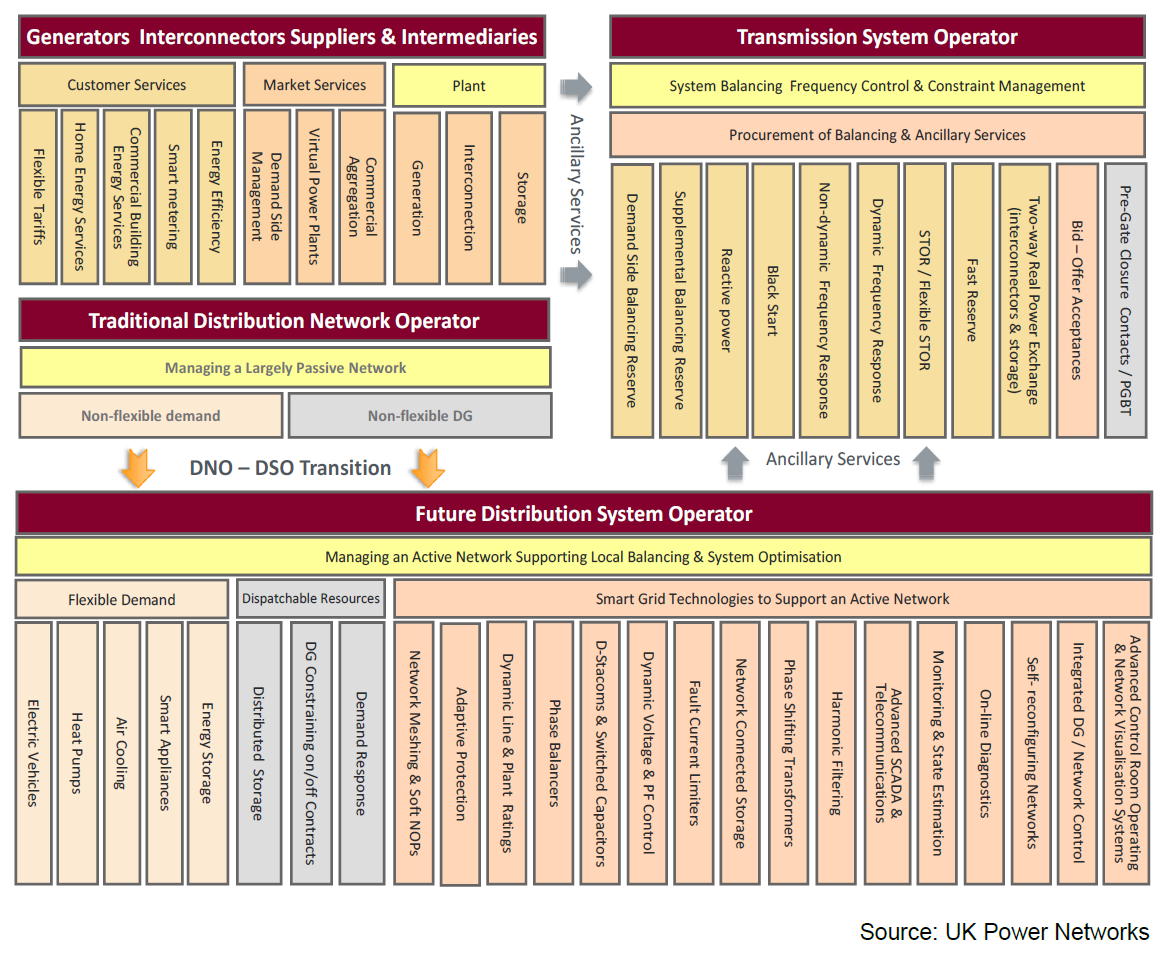
Delving into the routemap itself, I searched for any substantive reference to electric vehicles in general, or vehicle to grid technology in particular. Here’s what I managed to dig up. Firstly a diagram illustrating where EVs fit into the grand design of the future Great British Smart Grid:

February 2014 UK "Smart Grid Vision and Routemap" graphic

February 2014 UK "Smart Grid Vision and Routemap" graphic

Click on the image to see a larger version, where you will note it is anticipated that the “Traditional Distribution Network Operator, managing a largely passive network” will be transformed into a “Future Distribution System Operator, managing an active network supporting local balancing & system optimisation”. Electric vehicles are down in the extreme bottom left hand corner, under the heading of “Flexible Demand”, apparently totally separate from either “Energy Storage” or even “Distributed Storage”.

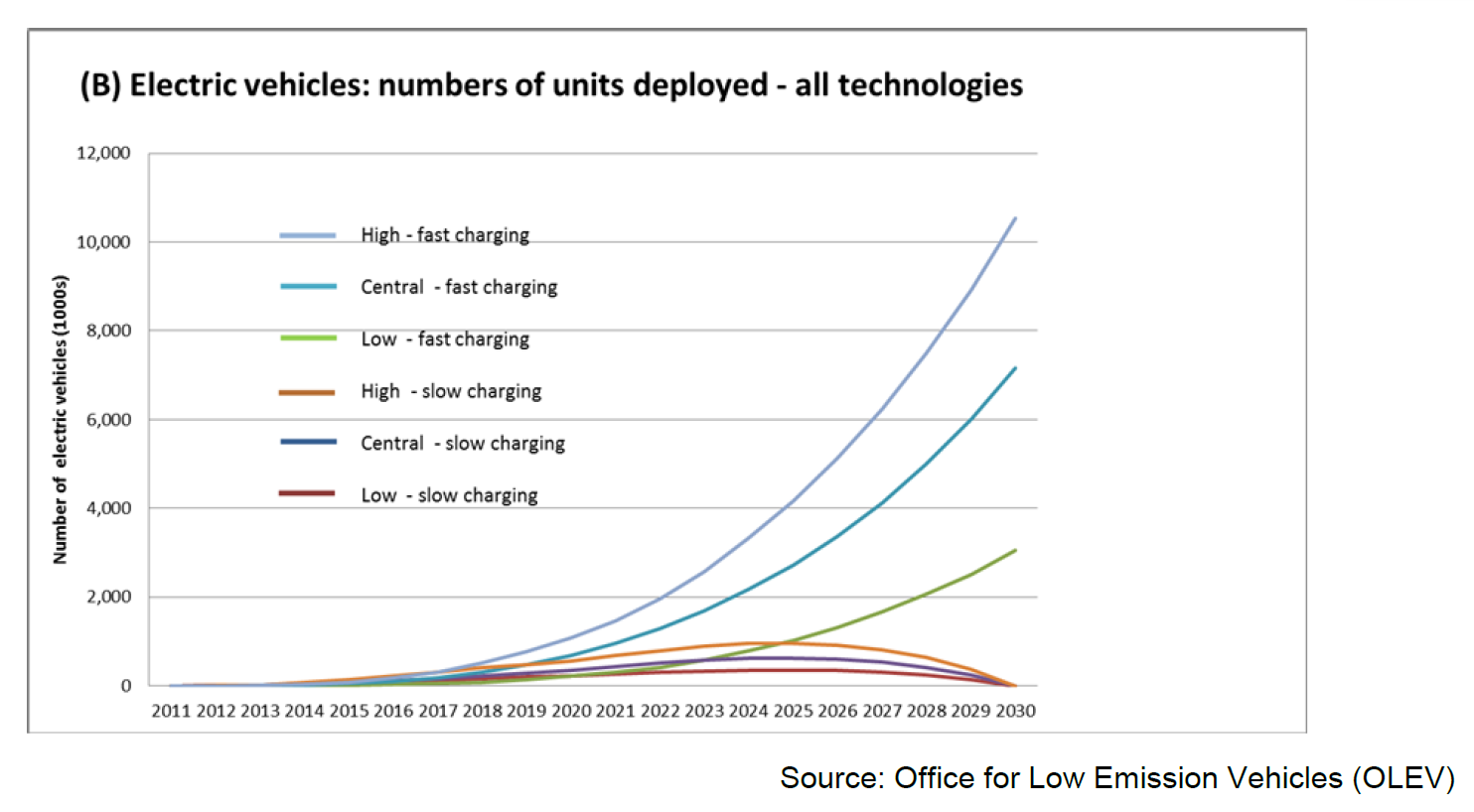
Secondly there is a forecast for the future growth in the number of EVs humming along the UK’s highways and byways, which looks like this:

February 2014 OLEV projection for number of electric vehicles deployed in the UK

February 2014 OLEV projection for number of electric vehicles deployed in the UK

The significant bullet points in the document that mention electric vehicles seem to think that an EV is much like a heat pump. A future British smart grid will:

  • Minimise consumer bills – more efficient use of network assets helps reduce the need to invest in costly infrastructure and ultimately reduces the costs passed through to consumer bills. It is estimated that by 2050, smart grids will reduce the cost of additional distribution reinforcement needed to accommodate the connection of low carbon technologies such as heat pumps, solar PV and electric vehicles by between £2.5bn and £12bn (a 20 to 30 per cent reduction)
  • Enable new low carbon technology to be deployed – heat pumps and electric vehicles will deliver significant carbon reductions, but will increase demand on the electricity network. Using smart grid technology to phase operating times, these devices can be incorporated into the network in conjunction with distributed generation to balance supply and demand, reducing the need for costly network reinforcement.

Finally there is a reference to another document, “Driving the future today – a strategy for ultra-low emission vehicles in the UK” from the Office for Low Emission Vehicles, which contains a few more bullet points about electric vehicles combined with smart grids:

  • The mass adoption of ULEVs will have significant implications for the energy sector at both a local and a national level. As the number of plug-in vehicles on our roads increases, so will the demand for electricity, placing additional pressures on the electricity system.
  • However, ULEVs can also help to balance the demand for electricity at peak periods and support the efficient use of energy by consumers. This will be facilitated by the introduction of intelligent power supply networks (smart grids) and the roll out of electricity smart meters across all domestic properties in the UK by 2020.
  • The majority of plug-in vehicle owners will charge their vehicles at home, at night time, during the off-peak period. This is not only most convenient for drivers, but also maximises the environmental and economic benefits of plug-in vehicles by using cheaper, lower carbon night-time electricity generation.
  • To help people charge at home as easily as possible, the Government is ensuring that smart metering in Great Britain includes the functionality to support charging of plug-in vehicles. This will allow recharging to happen when it is cheapest for consumers and the energy system (subject to appropriate technology in the chargepoint or plug-in vehicle).
  • Plug-in vehicles could also act as distributed energy storage during periods when renewable (or nuclear) electricity generation exceeds demand. This could happen during the life of the vehicle or as a potential end-of-life use for batteries. There may even be the potential for these vehicles to be used as an energy store, to power the house or feed electricity back to the grid at peak periods.

At long last a reference to something resembling V2G, or at the very least V2H! Moving on to page 71 of “Driving the future today” I finally found what I was searching for, an explicit (if somewhat grudging) reference to V2G technology. I reproduce it here in full:

Vehicle to home and vehicle to grid

As the smart grid and battery technologies develop, there may be the potential for plug-in vehicles to act as backup energy sources for homes and supplement the grid during peak demand periods. Nissan already offers a ‘power control system’ to its customers in Japan which allows their LEAF car to power a house for up to two days from its battery pack. Development of this technology was brought forward following the Fukushima nuclear reactor disaster.


There remain issues about the potential impact of taking charge from vehicles on battery life and the investment necessary to facilitate this on a large scale. However, Government will continue to talk to industry and researchers in this area and monitor developments.

Storage has the technical ability to provide a number of benefits to the electricity system – for example, smoothing supply profiles from variable generation and potentially reducing constraint costs by allowing generation to run during periods of low demand. It can also potentially save or defer network upgrade costs that may be required in the future to meet peak demand. Sixteen organisations have recently been awarded a share of £2 million by Government to help develop innovative storage solutions for energy. This funding is helping to drive forward innovation and encourage private sector investment.

The only trouble then is that none of those sixteen projects mention V2G or V2H, although both the the EVEREST project and Aston University’s Hybrid Batteries to Grid project refer to “‘Second Life’ EV batteries” but unfortunately not to EV batteries in situ. It rather sounds as though “Storage to Grid” (or S2G for short) is a more likely prospect here in the United Kingdom than fully fledged V2G.