The Great Dunchideock Blackout Saga

We recently suffered a power outage, or power cut as we prefer to call such things here in the UK. This wasn’t any old power outage either. Let me explain.

The lights went out at 17:44 on Friday April 11th 2014. I hurriedly powered down everything in the lab and office except my laptop and our broadband router, which was by then being powered from the battery in an uninterruptible power supply. When the lights hadn’t come back on a few minutes later I telephoned our local Distribution Network Operator (DNO for short), Western Power Distribution, to enquire what the problem was, and when it might be fixed. WPD’s automated system suggested that our power should be restored by about 21:00 that evening.

9 o’clock came and went, by which time the batteries in my laptop and UPS were flat. I called WPD again, to be informed that the latest estimate for the time at which I would be able to get connected to the internet once again would be 01:00 on Saturday morning. I figured I’d allow WPD a bit of leeway, and eventually went to bed having set the alarm on my smartphone for 02:00. The alarm went off, but the lights still hadn’t come back on.  I phoned Western Power again to be informed that things should be back to normal in an hour or so. Bleary eyed I returned to bed.

When I arose next morning I wasn’t in need of any lights, but my router and laptop were working once again. There was, however, the continuous drone of an engine audible not too far away so I set out to investigate by following the sound, and here is what I discovered:
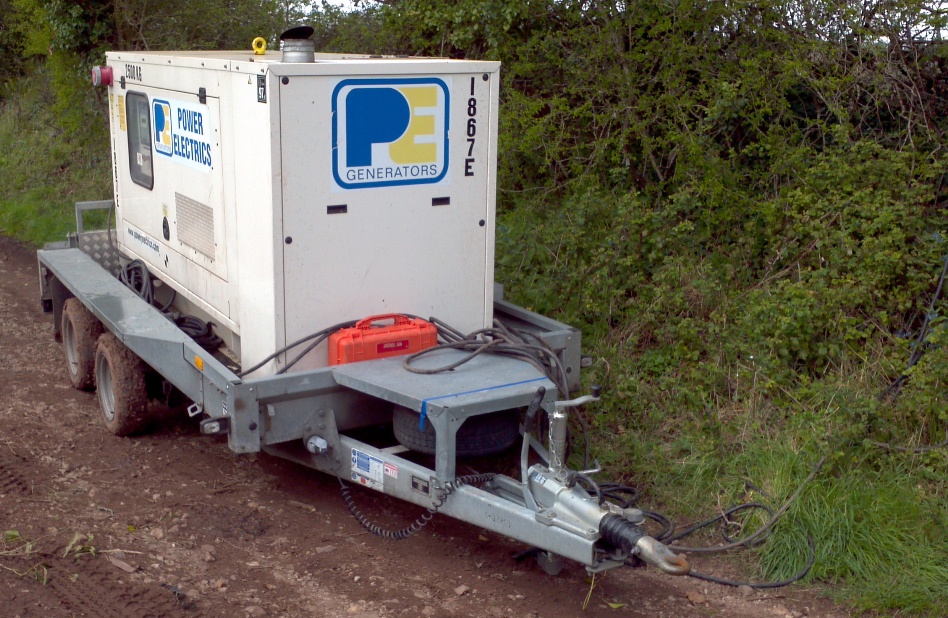
Generator on the track to Haldon Belvedere on April 12th 2014

Diesel generator on the track to Haldon Belvedere on April 12th 2014

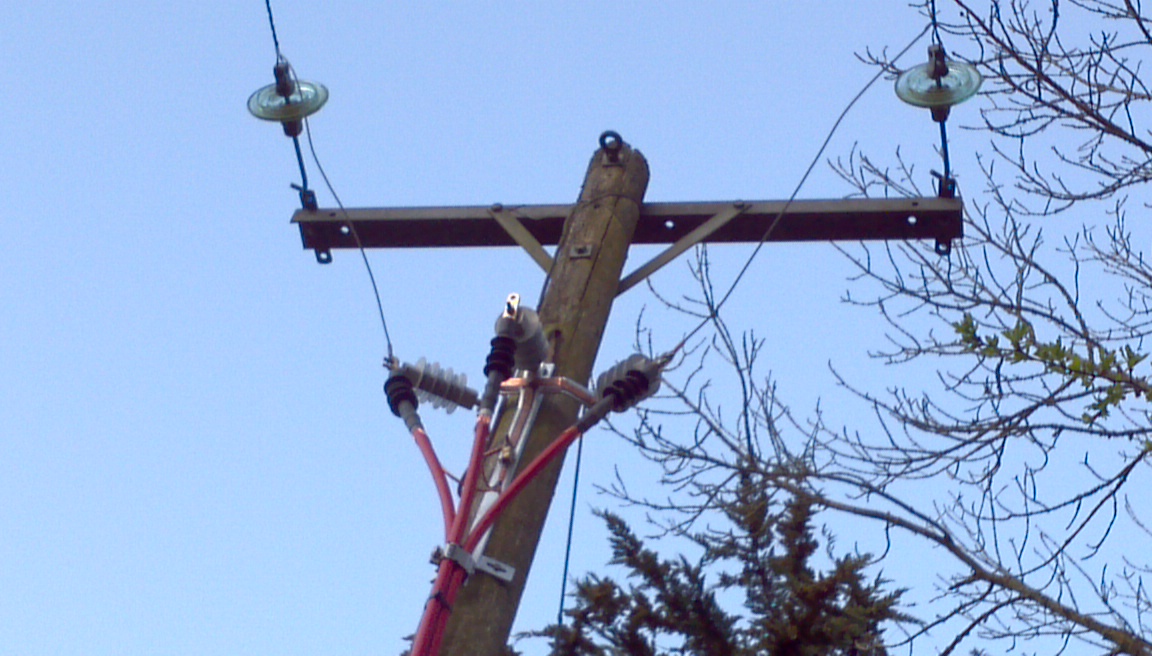
Another call to Western Power Distribution elicited some further information. I managed to speak to WPD’s standby manager for the day, who explained what had happened the previous evening. Initally over 300 properties had been without electricity following the operation of an automatic circuit recloser mounted on pole NLT1M in Alphington, as shown at the top right of the map of WPD’s network below (click the image for a larger version), and in this photo I took subsequently:
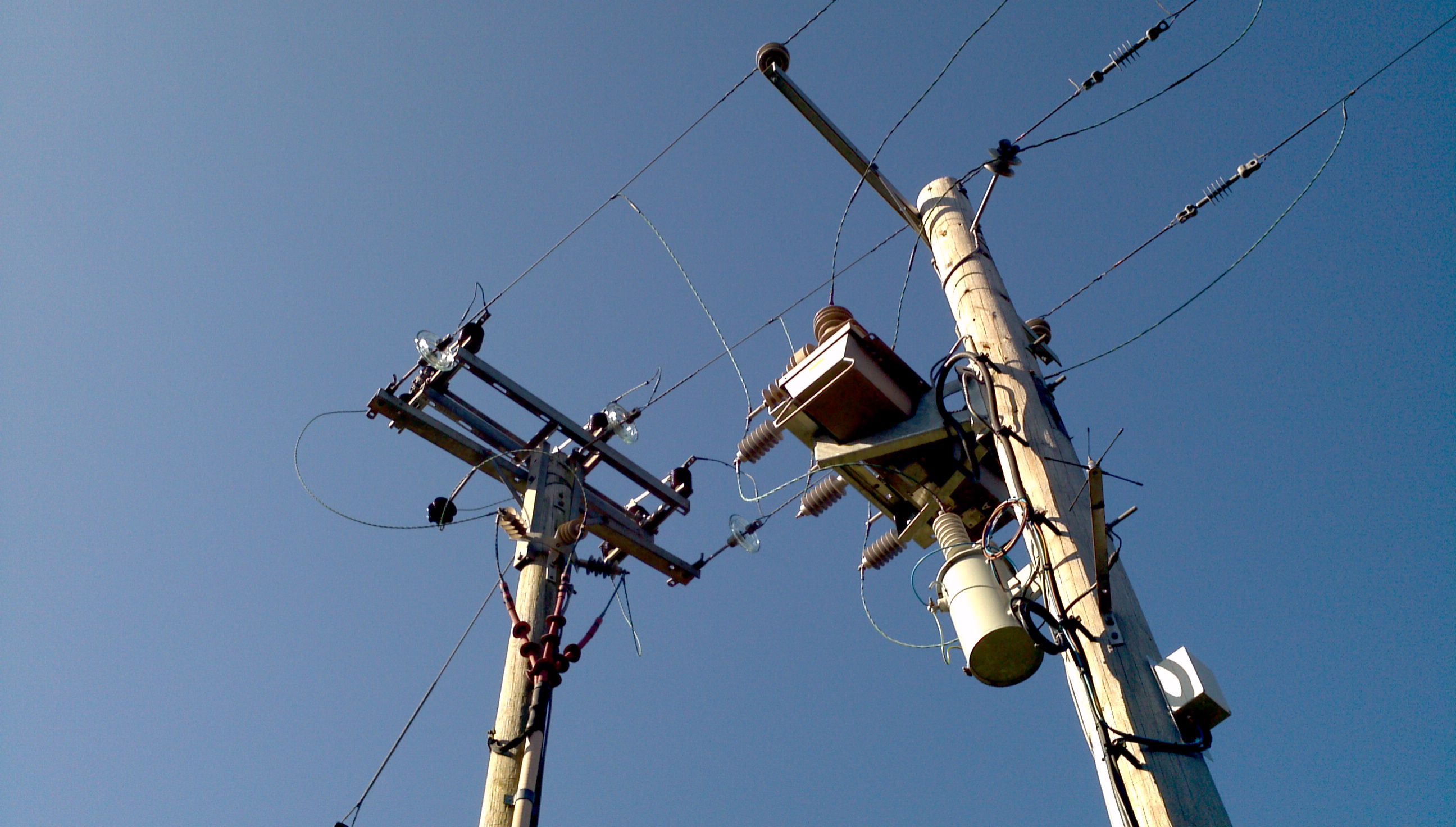
Schneider pole mounted recloser and air break isolator in Alphington

Schneider U-Series pole mounted recloser and an air break isolator in Alphington
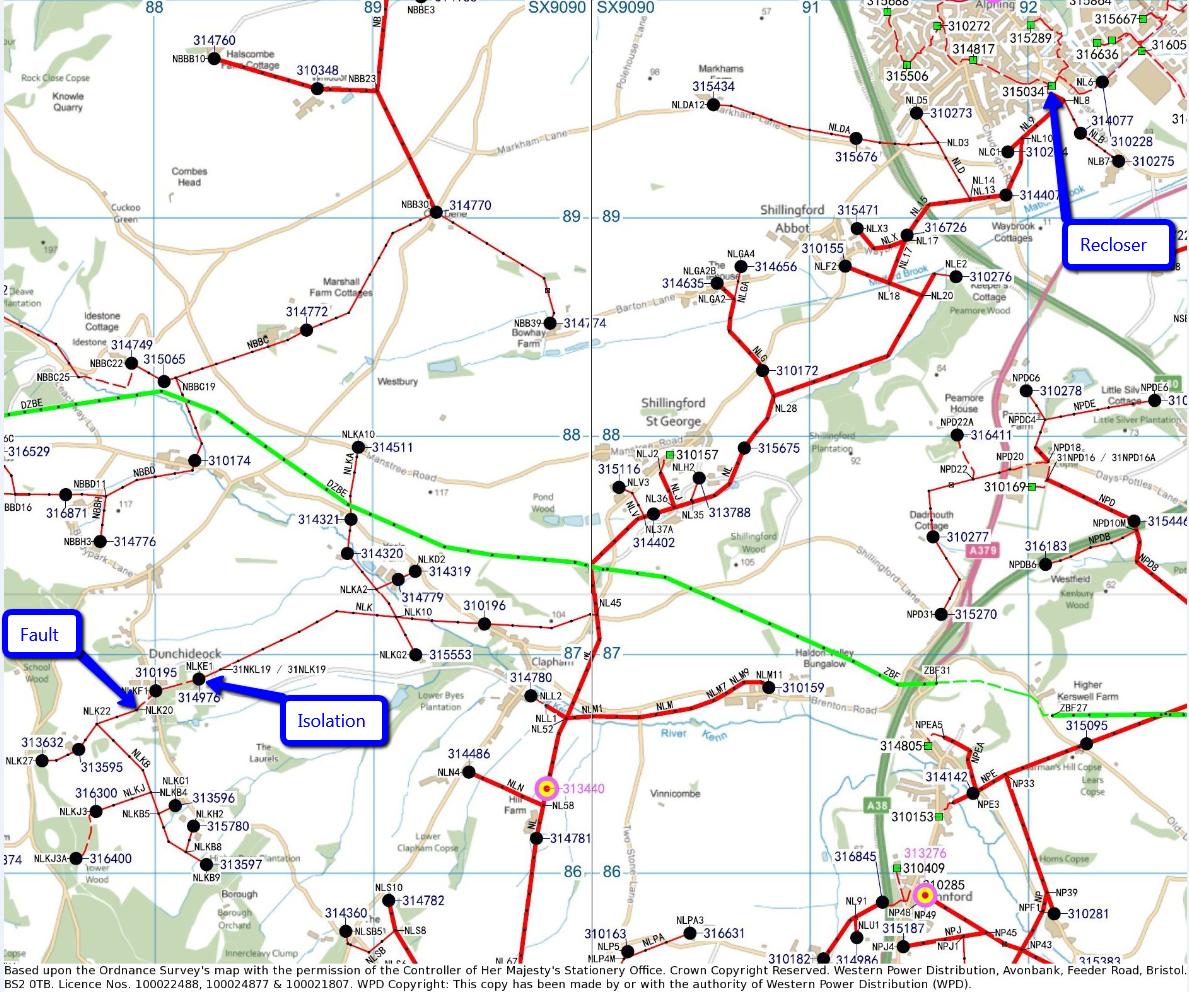
WPD map of 11 kV and 33 kV cables Southwest of Exeter

WPD map of 11 kV (red) and 33 kV (green) cables south west of Exeter

At that point everything powered via the 11 kV 3 phase (thick red) cables running from top right to bottom left of WPD’s map was without electricity. By around 21:00 the problem had been isolated to somewhere in the bottom left corner of the map, and power now reached as far as pole NLK19, near the north east corner of The Lord Haldon Hotel car park.
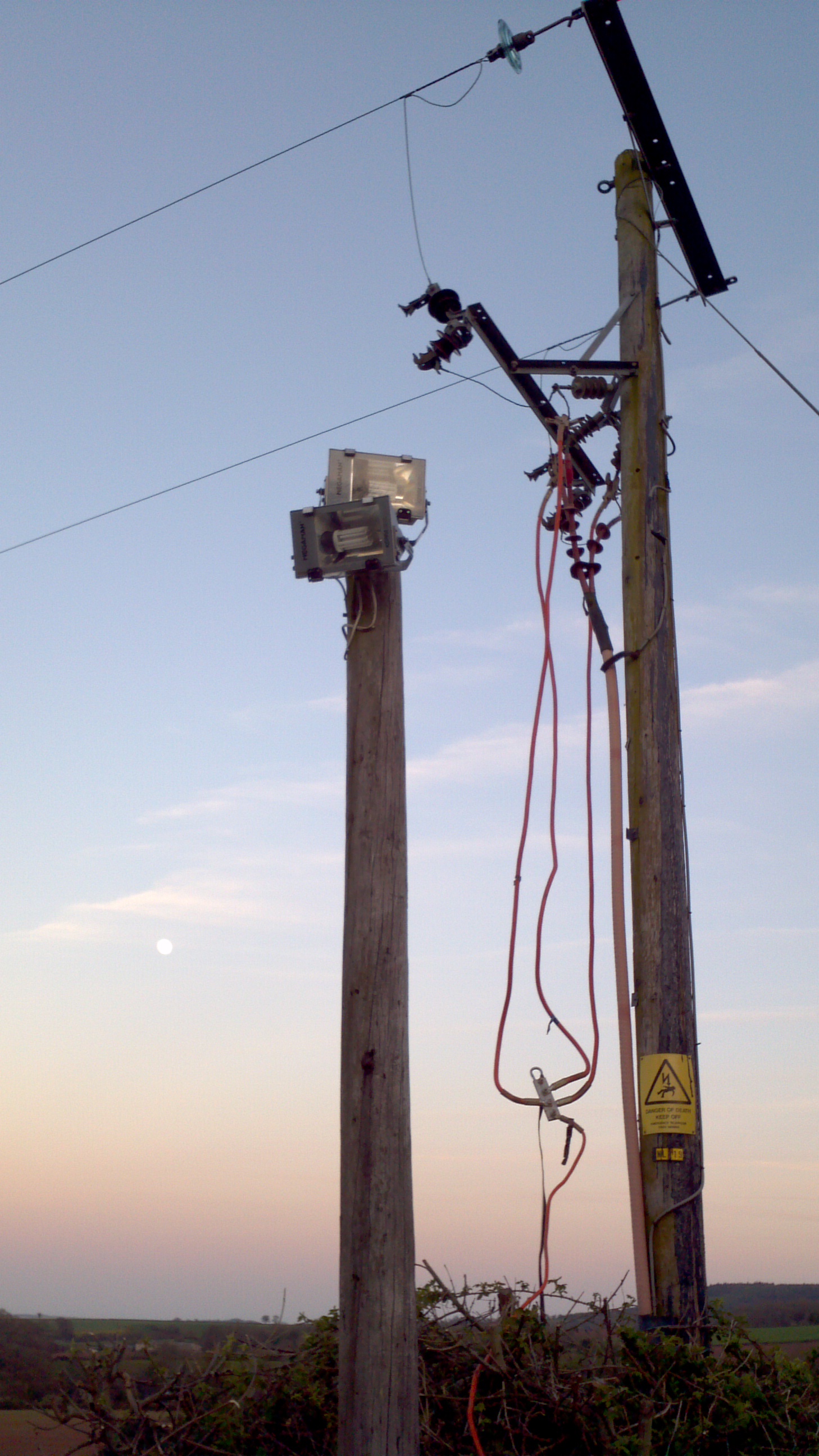
Pole 31NLK19, whilst The Lord Haldon Hotel and The Haldon Belvedere were running from WPD generators

Pole 31NLK19, draped with extra cables, whilst The Lord Haldon Hotel and The Haldon Belvedere were running from WPD generators

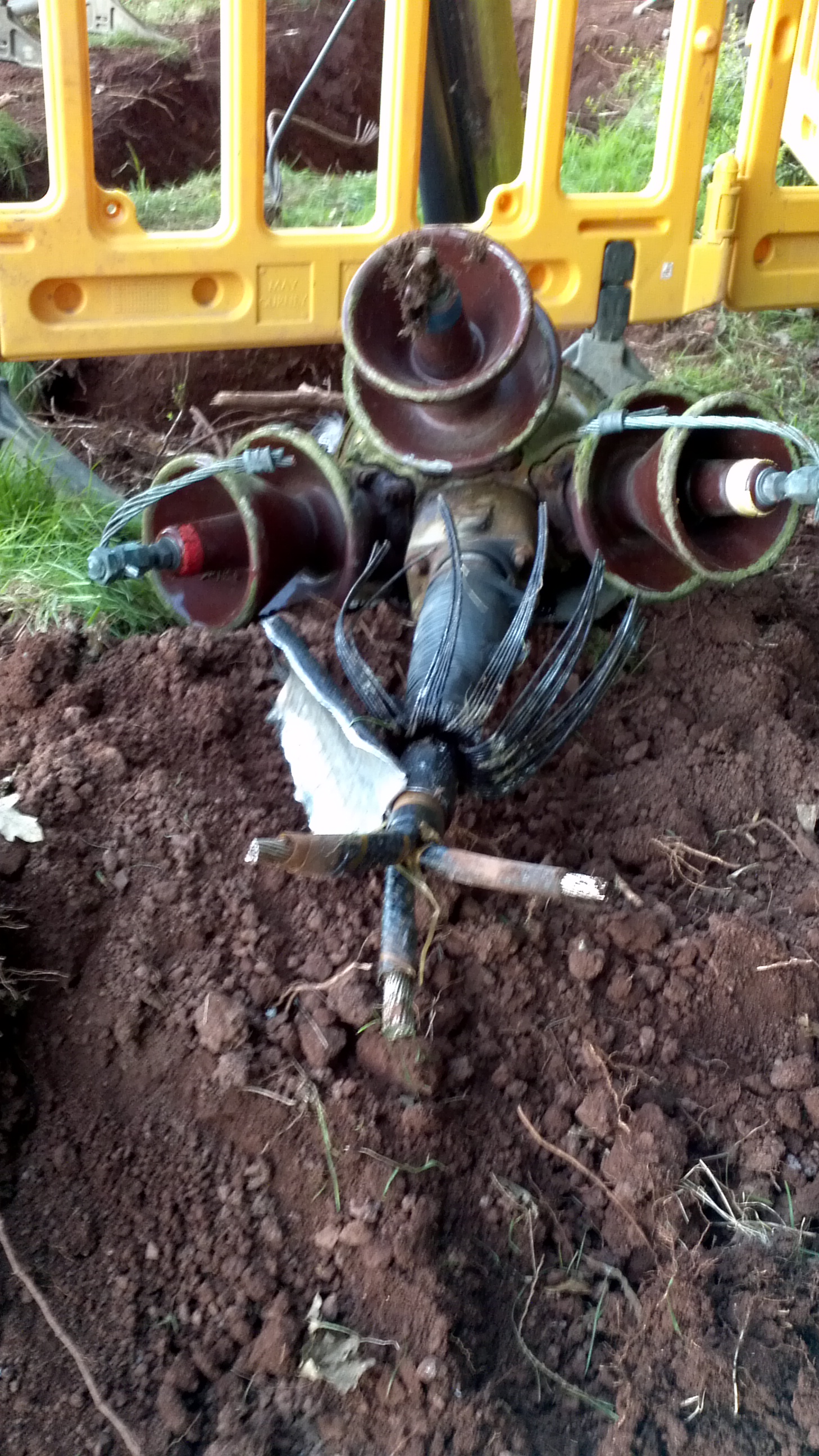
Unfortunately the hotel itself, which had a wedding reception booked that night, and everyone else in our corner of the village of Dunchideock and Haldon Hill were still without power, and WPD still didn’t know where the fault was. I am assured by a local resident that once it had got dark his wife noticed some arcing at the top of an electricity pole in a field behind his house, so he drove to the hotel car park and informed the WPD engineers gathered there about her discovery. The problem ultimately proved to be a faulty pole top cable termination, shown below in situ together with some inquisitive lambs:
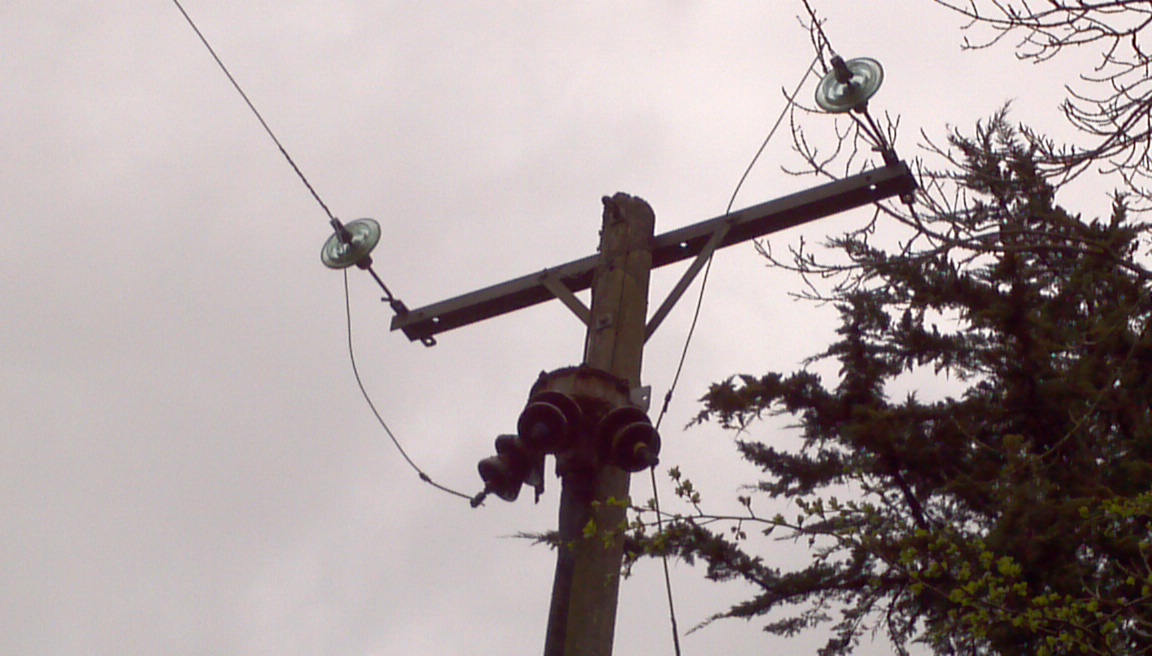
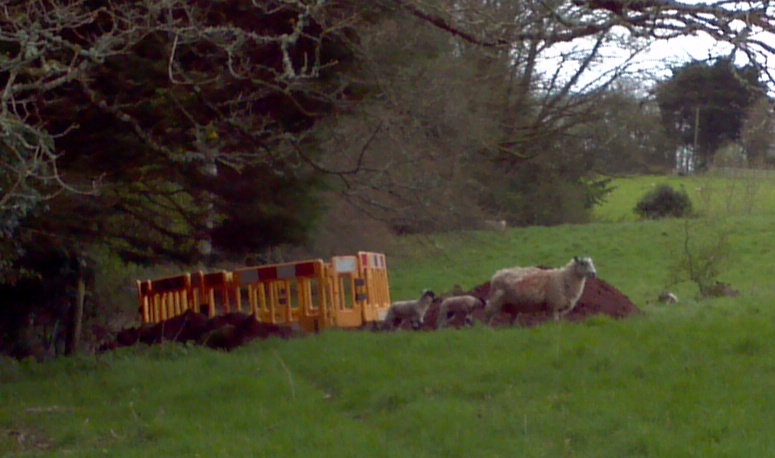
A 48 year old cable termination at the top of pole NLK20

Youthful interest is shown in a big hole in the ground

Some youthful interest is shown in a big hole in the ground

By the time the likelihood that this was indeed the ultimate cause of the problem had been established time was pressing. According to WPD they have a self imposed 12 hour time limit on turning the power back on after any interruption in supply, and there was no way this problem would be fixed within that timeframe. That being the case some generators would be required, which presented WPD with another big headache. It seems there had been some other problems in Devon on the same day, and there weren’t enough generators in Exeter to go around, so WPD brought some more in from Torbay. That still wasn’t adequate for the scale of the problem, so they brought some more in from Taunton. Even that wasn’t sufficient, so finally they had to hire a few more from Bristol, one of which was emitting the dulcet tones that greeted me on Saturday morning. Here’s one of WPD’s own generators, that was located a bit further up the road near the entrance to the hotel:
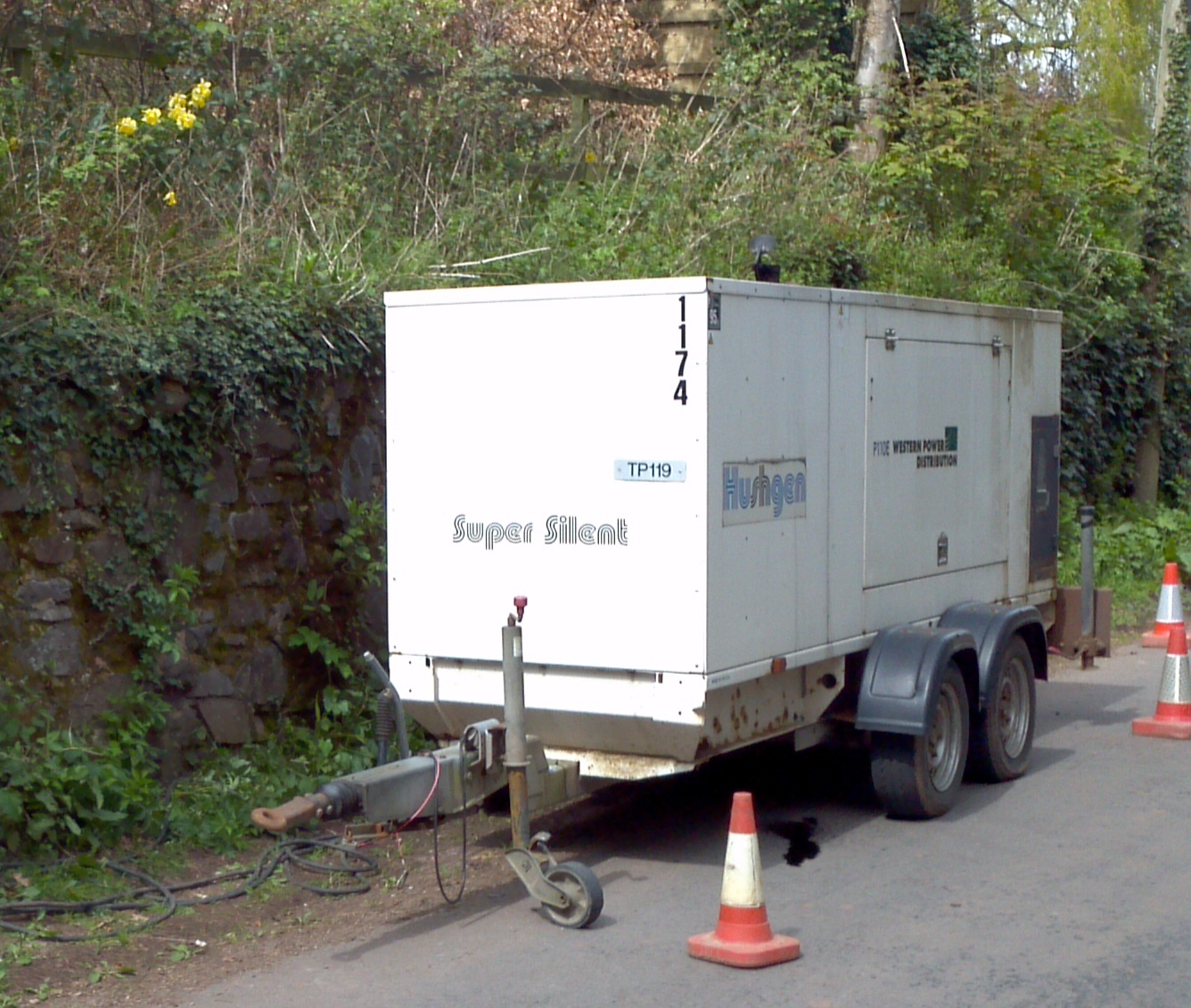
WPD Generator hard at work outside Pen Hill Cottage

WPD diesel generator hard at work outside Pen Hill Cottage

All in all, by the time everyone affected had their electricity supply restored, which in our case seems to have been at around 3:30 on Saturday morning, 9 diesel generators were scattered across the north side and ridge of Haldon Hill. WPD assured me there was no danger of any further power cuts, since every 12 hours or so they would be hauling a bowser around the local vicinity to top up the tanks of any generator that might be running low on diesel fuel.

Whilst they didn’t have such a thing last time I checked, during the recent winter storms, I was also informed that Western Power now provide an online power cut map. This is how it looked on the morning of Saturday April 12th 2014:
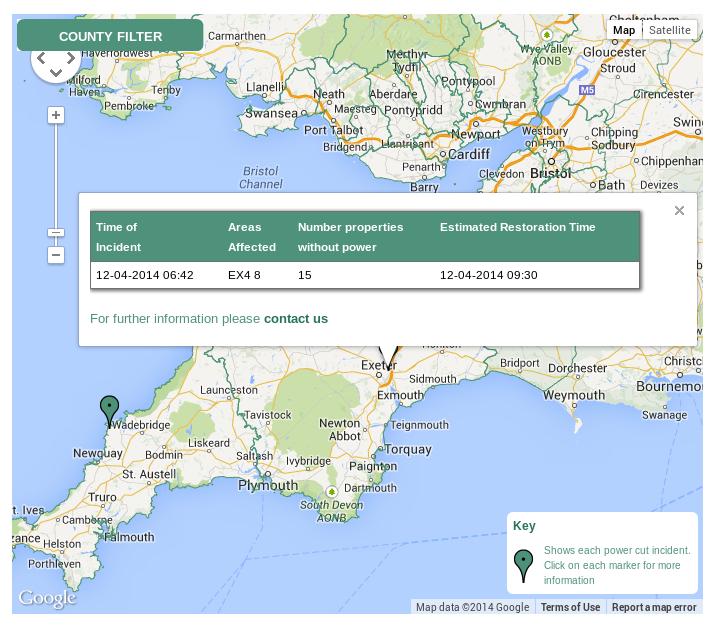
Western Power Distribution power cut map at 08:39 BST on Saturday April 12th

Western Power Distribution power cut map at 08:39 BST on Saturday April 12th


It seems as though “running off a generator” doesn’t count as a “power cut”, because Dunchideock isn’t on that map, all of which meant that WPD could now fix the problem as and when time permitted. Here’s how things were looking by Sunday evening:
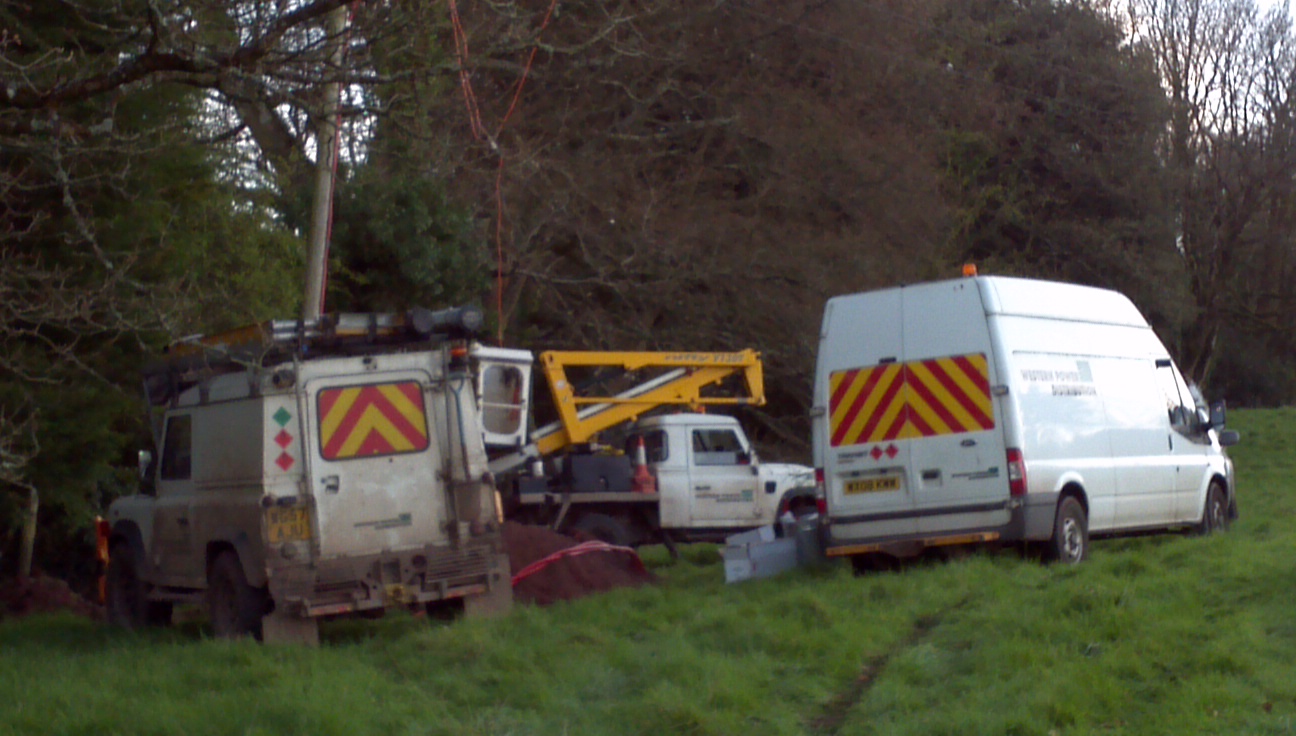
By Monday morning the epoxy resin in the Lovink red box had set, the big hole in the ground was filled in, and we were all back on mains power once again. All of which raises a few questions, in my mind at least.

In my conversations with WPD’s duty engineers I enquired whether this particular failure might be in any way attributable to the recent wet and windy winter weather here in South West England I alluded to earlier. I was told that while a causal link with any single failure was impossible to establish, it was conceivable that WPD’s electricity distribution network had suffered additional “stress” due to increased lightning strikes and the potential for trees to be more easily toppled by strong winds whilst their roots were sitting in sodden soil. I also idly enquired about the stresses placed on the network by renewable generation in the South West, but that story will require an article of its own at the very least.

In the meantime I’ve been pondering how this saga would have panned out if some of the homes in Dunchideock had already been in possession of an electric vehicle and some vehicle to home or even vehicle to grid technology. Since the powers that be here in the UK don’t seem to be wild about either of those concepts maybe a pile of shiny new lithium ion batteries from Tesla in the corner of each garage in Dunchideock might be more realistic to speculate about, or at the very least some second user EV batteries that are at least receiving some R&D funding on this side of the Atlantic? In that case perhaps we should add distributed storage to grid (or S2G for short) to our list of TLAs under consideration?

The lights wouldn’t have gone out in any V2H or storage equipped home. Their broadband would have kept on working too, so information about the failure could have been swiftly despatched to WPD’s control centre to enable the location of the fault to be pinpointed more swiftly. If some people had V2G and/or S2G installed as well, and subject to being suitably reimbursed for their public spiritedness, they could have kept their neighbours’ lights on as well as their own provided that WPD’s equipment was capable of sectionalising their network with greater granularity than at present. As luck would have it there is a pile of such equipment already in Dunchideock, although it’s only in the V2G lab at the moment rather than attached to any of the WPD poles I’ve mentioned apart from the one in Alphington, or in the corner of anyone else’s garage in Dunchideock. Here’s what a remote terminal unit looks like from the outside:
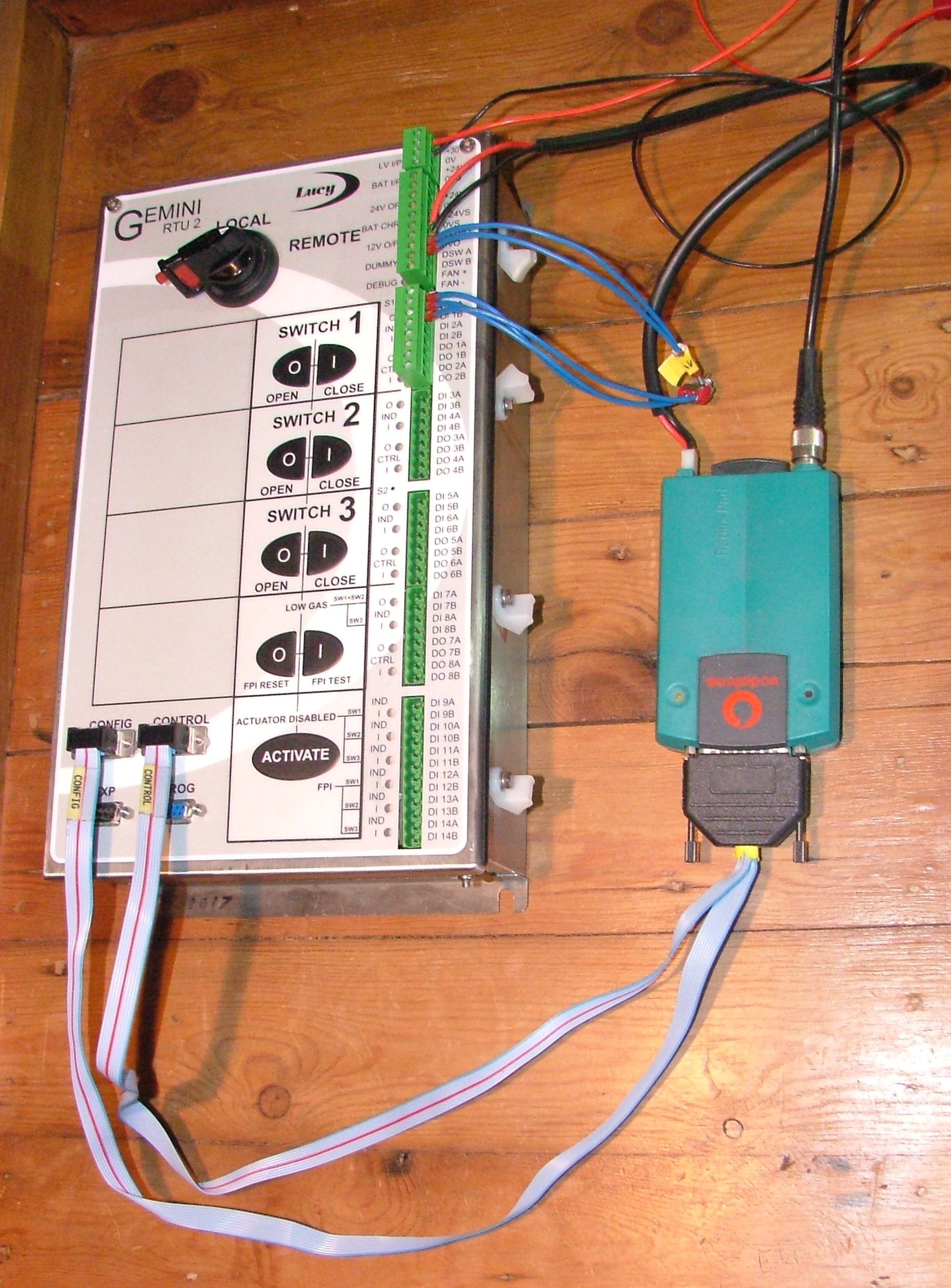
A Lucy Switchgear Gemini Remote Terminal Unit plus PakNet PAD

A Lucy Switchgear Gemini Remote Terminal Unit plus PakNet PAD

and here’s what the ARM powered CPU board on the inside looks like:
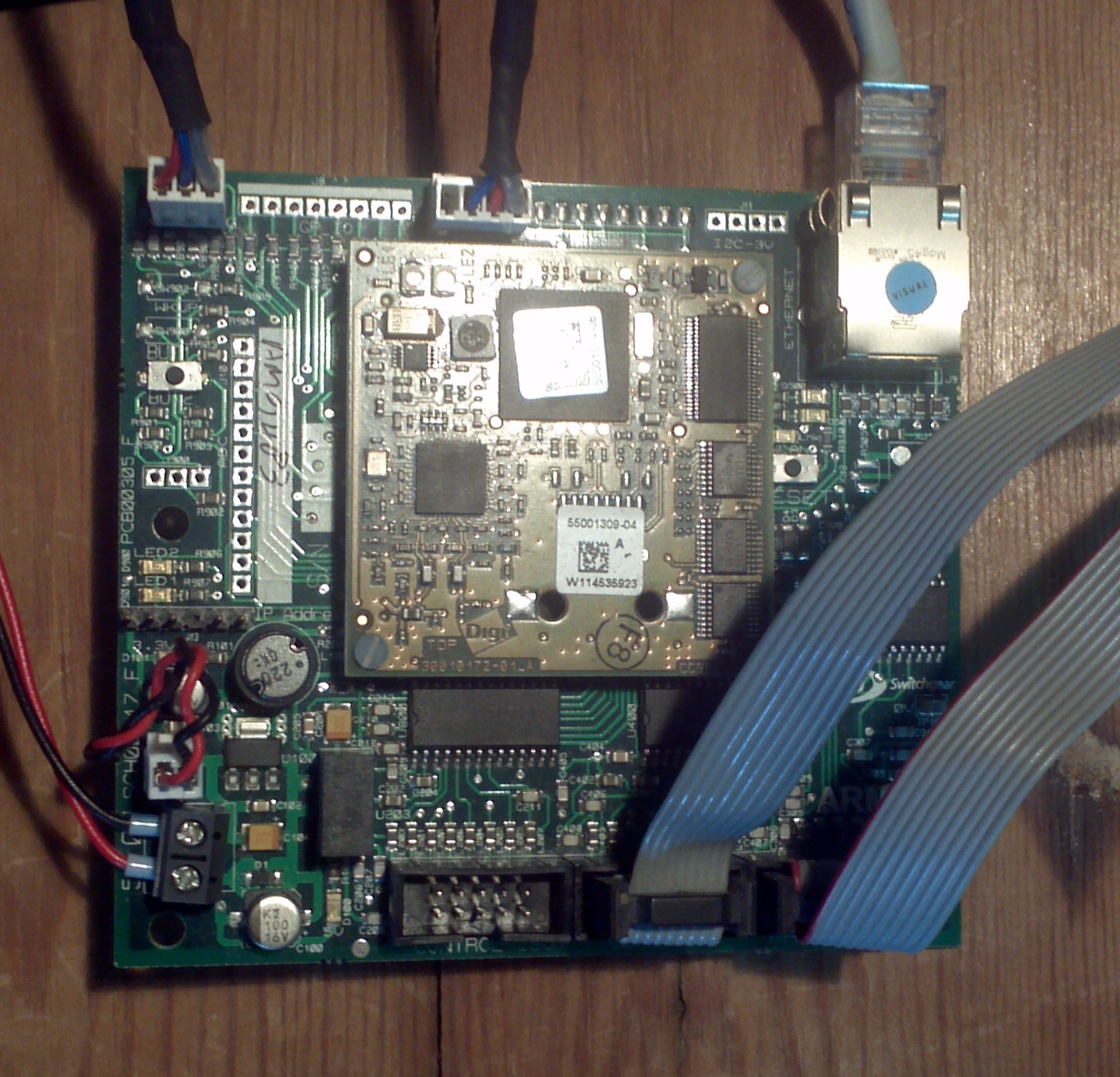
Gemini ARM CPU card

A Lucy Switchgear Gemini ARM CPU card, connected to the internet

As you can see, in actual fact it’s not a whole lot different to a Raspberry Pi, or the guts of the average smartphone for that matter:

A Raspberry Pi model B, connected to the internet

A Raspberry Pi model B, connected to the internet

Hence such a piece of electronics wouldn’t in and of itself add a whole lot to the price of an electric vehicle and/or a garage in Dunchideock, or anywhere else on the planet for that matter.

In conclusion, I also cannot help but wonder how much the Great Dunchideock Blackout cost Western Power Distribution, how much the evidently changing climate in this part of the world is costing and will cost them, and how their electricity distribution network is coping with the assorted stresses and strains generated by all the renewable power sources currently being tacked onto it down here in not so Sunny South West England that do not currently have any form of energy storage associated with them.
One Objection to the Gold’s Cross Hill Solar PV Park in Devon

There follows the basis of a 5 minute presentation I will be giving to a meeting of the Teignbridge District Council planning committee later on this morning, hastily copied from PowerPoint. Upon my return I’ll let you know what effect it had, if any. You can also download a PDF version of the presentation here.

Gold’s Cross Hill Solar PV Park

Objections to the proposal

from

Jim Hunt

V2G Limited


Who Am I?

•Technical Director of V2G Limited

•V2G is short for “Vehicle to Grid” (Small scale electricity storage. Nissan Leaf = 24 kWh)

•I have decades of experience in the automation of electricity distribution.

See Appendix A for more information


Why’s That Relevant?

•In brief, I help keep your lights on!

•I help keep the lights on in places like Nigeria, Ghana and Sierra Leone too.

•Solar parks need a lot of that sort of technology as well. A fact that never seems to get mentioned by their proposers.

•“Sustainability” of renewable energy projects, especially solar “farms”, requires “grid level energy storage”, which doesn’t currently exist at sufficient scale (1 MW for 1 Day = 24,000 kWh).

•Electrical energy storage never seems to get mentioned by developers either.

See Appendix B for more information


Planning Guidelines?

•From paragraph 3.19 of your officer’s report before you – “NPPF introduces the presumption in favour of sustainable development”

•From paragraph 3.38 of that report – “The proposal is considered to be finely balanced”

•From the Ministerial foreword to the NPPF –“Sustainable means ensuring that better lives for ourselves don’t mean worse lives for future generations”.

•“Sustainable development is about change for the better, and not only in our built environment. Our natural environment is essential to our wellbeing, and it can be better looked after than it has been.”

•Let’s look more closely at how “sustainable” this particular proposed PV “development” really is.

•Food Security versus Energy Security?

•The Realities of Solar PV!


The Site is Mainly Arable Land

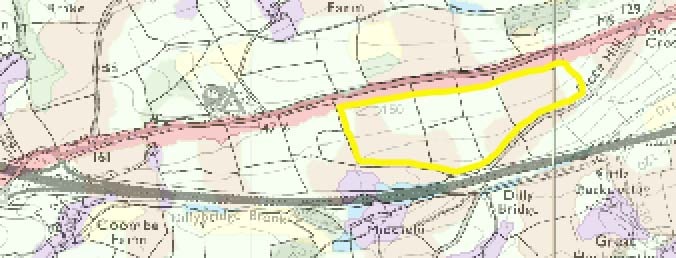
•From paragraph 3.2 of the report in front of you – “There can be no certainty about whether [the land] is Grade 3[b] or 3a”

•Despite that comment, please note the pink coloured areas on the Dudley Stamp Land Use Inventory for the Gold’s Cross Hill site

Gold's Cross Hill Land Use

Gold's Cross Hill Land Use

See http://magic.defra.gov.uk/website/magic/viewer.htm?startTopic=maglandscape&xygridref=279292,92523&startScale=25000

The Site is Mainly Arable Land(cont.)

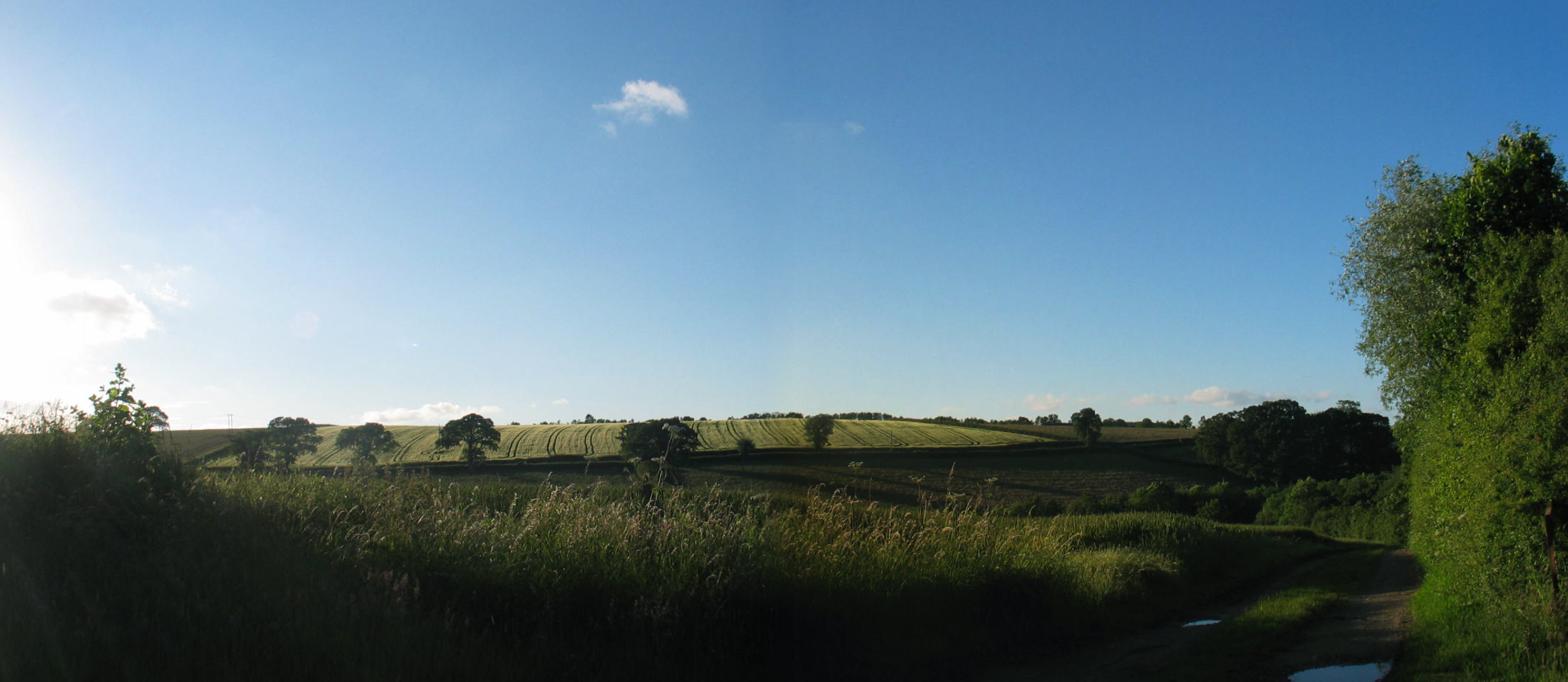
Recent site photographs clearly show the cereal crop currently being grown on the land:

Cereals in the Distance

Cereals in the Distance


Expert Opinions

•Zero Carbon Britain – “On a larger scale, putting solar farms on prime agricultural land that could be used for food production is problematic.”

See http://econnexus.org.uk/a-brief-view-of-the-bowhay-farm-solar-pv-public-information-evening/

and http://www.zerocarbonbritain.org/

•David Green of the EcoIsland CIC, and Sustainability Executive of the Year– “Given the choice solar PV should be on roofs, not on arable land.”

See http://www.eco-island.org/images/uploads/press/BusinessGreen_Leaders_Awards_-_David_Green_Announcement_-_04-07-2012.pdf

Solar PV “Efficiency”?

•Efficiency in terms of incident solar energy converted into electrical energy is around 15%.

•However please note the “Load factor”/“Capacity factor” statistics for renewable energy sources in the UK, recently released by DECC (Solar PV for the first time)


Technology 2009 2010 2011
Onshore wind 27.4% 21.7% 27.3%
Offshore wind 26.0% 30.4% 36.8%
Solar PV 9.3% 7.3% 5.5%
Hydro 36.7% 25.4% 39.1%
Bioenergy 54.9% 53.5% 43.1%


The Reality of “8 MW”

•Even if we generously assume a 12% load factor that works out to 1 MW on average in practice.

•According to Zero Carbon Britain – “[Solar PV] energy is generated primarily in the summer, which clashes with our peak consumption which is highest on long, sunless winter nights.”

•With no electricity storage on site, output of the proposed solar park will vary from zero on a long, sunless winter night to 8 MW on a sunny summer’s day, with an average of 1 MW at best.

Grid Load Balancing at Present

•This variation between seasonal electricity demand and solar PV supply, plus intra-day variations, causes problems for the National Grid – “Unlike gas, electricity can’t be stored in large quantities. As a result, part of National Grid’s role involves making sure that demand and supply match up. We do this on a minute-by-minute basis. It’s a bit like trying to keep a car at 50mph while driving up and down hills.”

See http://www.nationalgrid.com/uk/Electricity/AboutElectricity/Balancing+the+network/

•The majority of the 8 MW maximum output of the proposed solar park needs to be quickly available from an alternative source if the sun suddenly becomes hidden behind some heavy cloud.

Watch a video – http://www.ted.com/talks/view/lang/en//id/1401 – “[Storage] changes everything!”

•In the UK this will typically be a gas fired power station running at less than full rated output by design.


The Future?

•It’s unknown, but let’s examine “What might happen in 25 years time?”

•What if the “Solar PV industry” collapses along with the subsidies?

•What if the “industry” lives on, but is consolidated into the likes of EDF and E.ON?

•What if an “efficient and economic” energy storage technology is developed, so that solar PV parks are no longer “50 acre white elephants”?

•What if that technology happens to be pumped heat?

See https://v2g.co.uk/2012/06/isentropic-and-western-power-to-test-pumped-heat-electricity-storage/

•Please note the Eden Project is investigating more “joined up” ways of handling these hugely important questions.

See http://econnexus.org.uk/the-award-winning-eden-project-solar-pv-staff-share-scheme/

In Conclusion

•Please take note of the NPPF paragraph 112 – “Local planning authorities should take into account the economic and other benefits of the best and most versatile agricultural land. Where significant development of agricultural land is demonstrated to be necessary, local planning authorities should seek to use areas of poorer quality land in preference to that of a higher quality.”

•Please also take note of the Devon Structure Plan policy CO14 – Conserving Agricultural Land – “The use of agricultural land, particularly the best and most versatile agricultural land (grades 1, 2 and 3a), for any form of development not associated with agriculture or forestry should only be permitted where there is an over-riding need for development in that location which outweighs the need to protect such land or where it implements other policies and proposals of the Development Plan.


Finally

•Finally please also take note of the Teignbridge Local Plan policy P1 on Agriculture – “Development of the best and most versatile agricultural land (MAFF grades 1, 2 and 3a) will only be permitted where there is a strong case for development on that site which overrides the need to protect such land. Where development is permitted on the best and most versatile agricultural land and there is a choice of sites, the lowest grade land suitable for the development will be used first.”

•I invite you to join me in exercising your democratic right to vote to refuse this proposed development. In my professional opinion the “fine balance” is tipped against the proposal. The costs to sustainable development in this rural area if permission is granted are apparent, whilst the benefits (if any) are not.


Appendix A

•15 Years Technical Expertise in Electricity Distribution

See https://v2g.co.uk/about-v2g/

•Member of Regen SW

See http://www.regensw.co.uk/directory/?filter=quick&keywords=v2g

•Smart Grid Consultant

•Smart Grid = “An electrical grid that uses computers and other technology to gather and act on information, such as information about the behaviors of suppliers and consumers, in an automated fashion to improve the efficiency, reliability, economics, and sustainability of the production and distribution of electricity”

From http://en.wikipedia.org/wiki/Smart_grid

Appendix A (cont.)

•Financial Information eXchange protocol working group on electrical energy pricing

See http://fixprotocol.org/working_groups/smartgrid/members

•US National Institute of Standards and Technology (NIST) PAP03 working group on the common specification for electrical energy pricing and product definition

•NIST PAP09 working group on energy interoperation (Demand Response & Distributed Energy Resources)

See http://www.naesb.org/pdf4/smart_grid_ssd062410announcement.doc

Appendix B

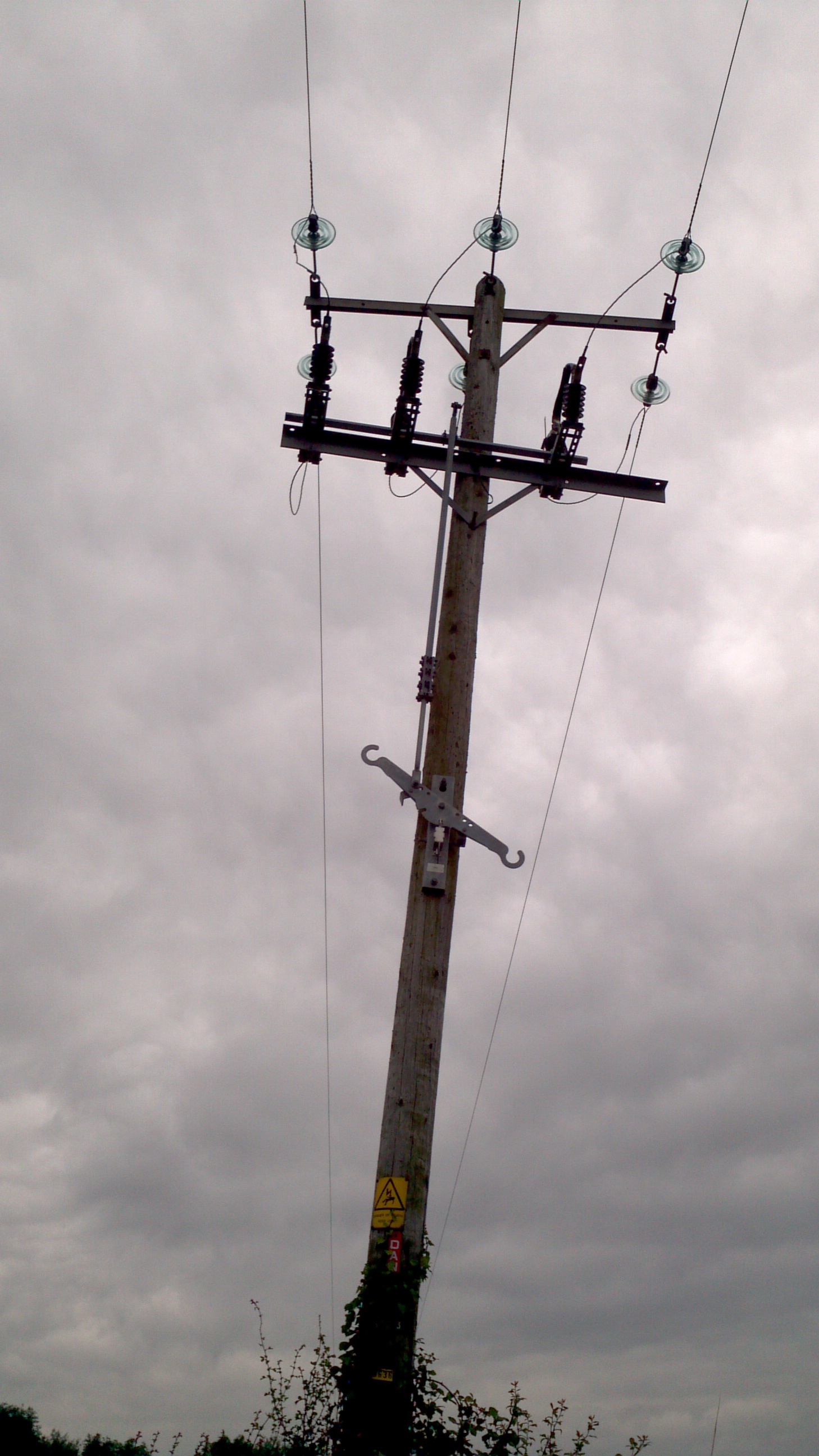
•Air Break Isolator near Exminster (Manual)

Air Break Isolator near Exminster

Air Break Isolator near Exminster

The Current UK “Smart Grid” (cont.)

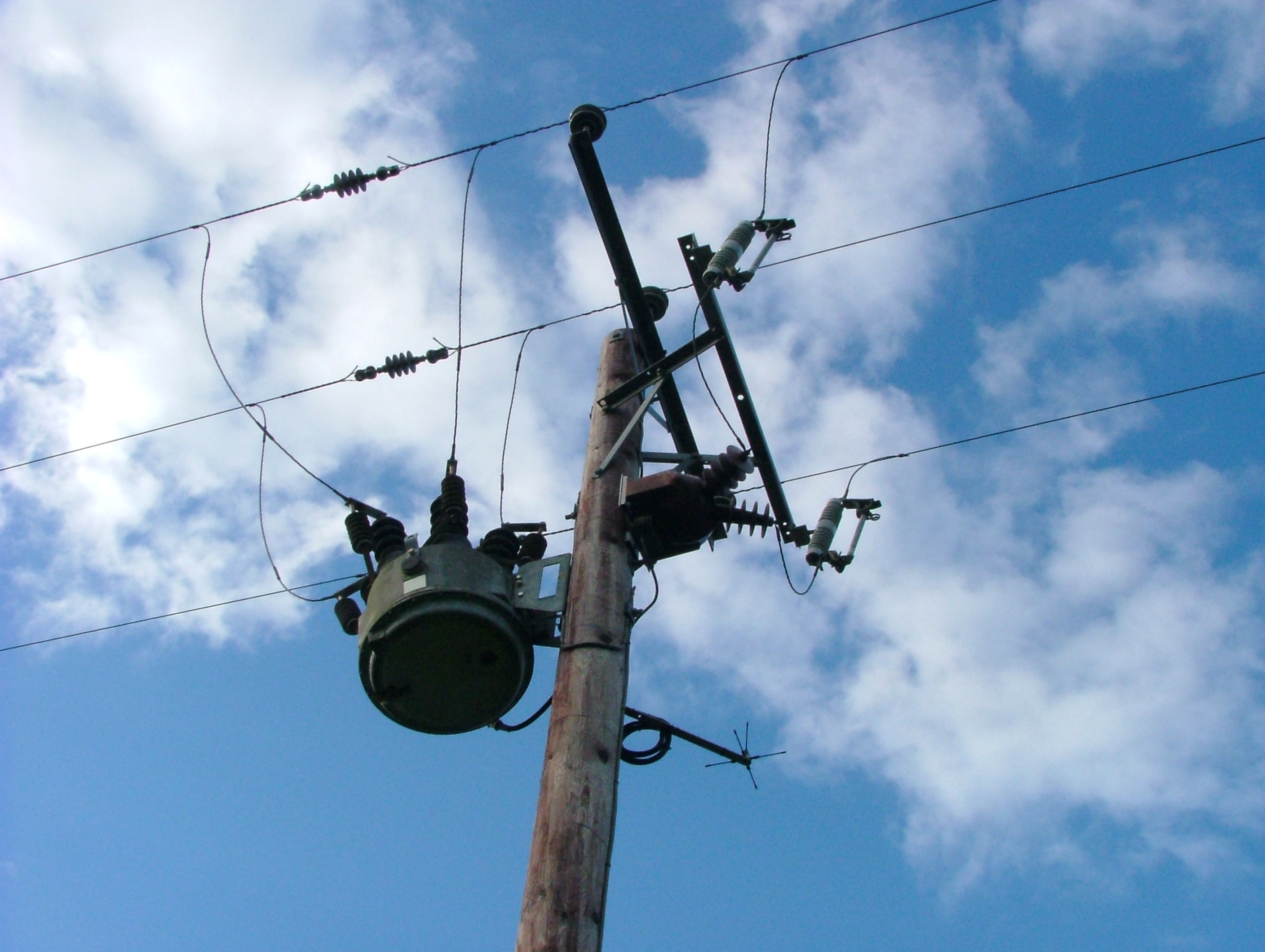
•Pole Mounted Recloser near Kennford

Pole Mounted Recloser near Kennford

Pole Mounted Recloser near Kennford

Current UK “Solar Farms”

Eastacombe Farm near Clawton

Eastacombe Farm near Clawton

Eastacombe Farm near Clawton

Current UK “Solar Farms” (cont.)

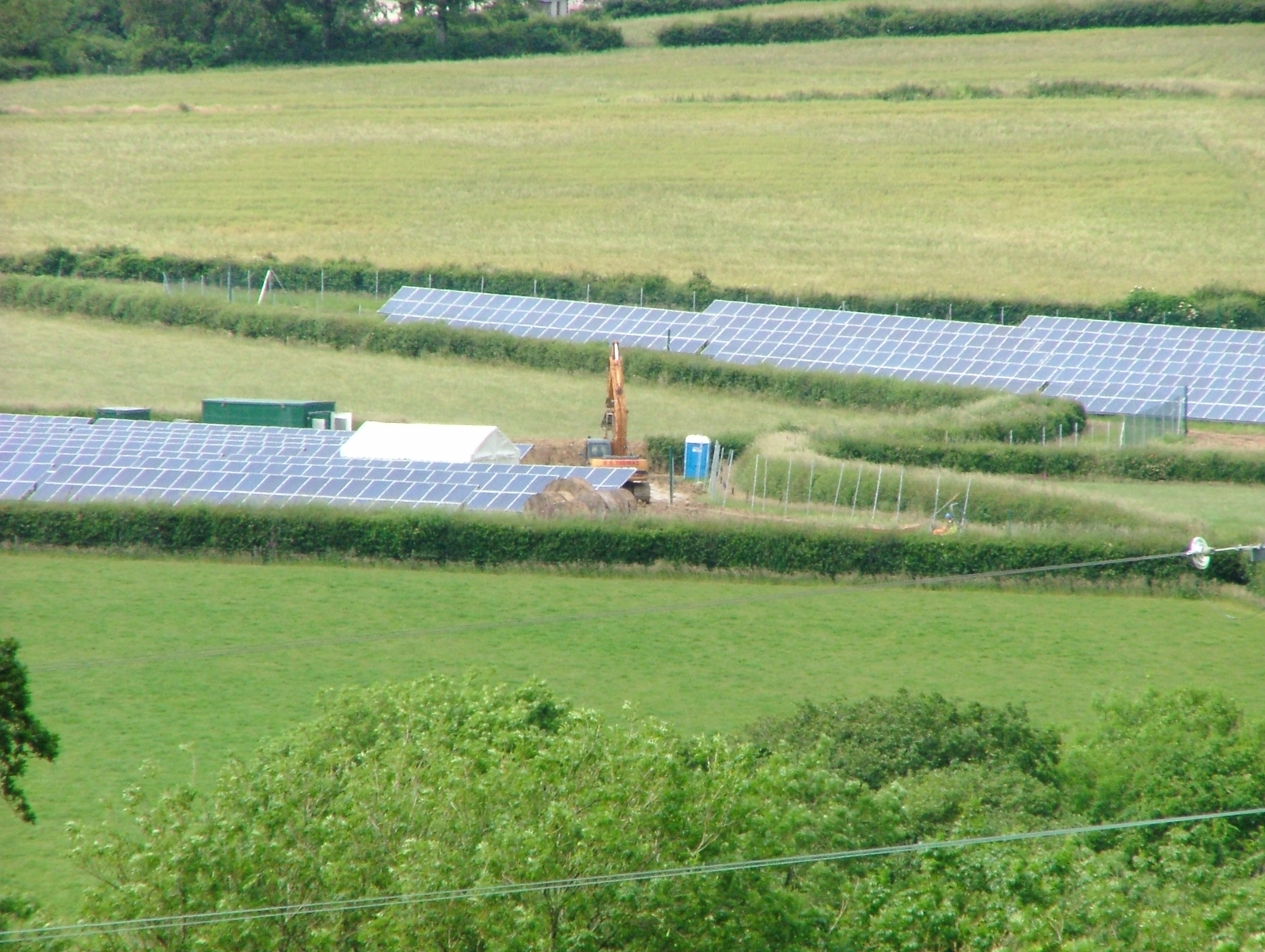
Great Knowle Farm near Pyworthy

Great Knowle Farm near Pyworthy

Great Knowle Farm near Pyworthy

Current UK “Solar Farms” (cont.)

•This solar farm must have an 8 MW capable “Connection” to the National Grid

•All solar farms must have “Protection”

•All solar farms must have “Communication”

•To be truly “Sustainable” solar farms desperately need “Energy Storage” as well.

•Will all that fit into one “Big Green Box?”

Gold’s Cross Hill Solar PV Park
Objections to the proposalfromJim Hunt
V2G LimitedWho Am I?
Technical Director of V2G Limited
V2G is short for “Vehicle to Grid” (Small scale electricity storage. Nissan Leaf = 24 kWh)
I have decades of experience in the automation of electricity distribution.See Appendix A for more information
Why’s That Relevant?
In brief, I help keep your lights on!
I help keep the lights on in places like Nigeria, Ghana and Sierra Leone too.
Solar parks need a lot of that sort of technology as well. A fact that never seems to get mentioned by their proposers.
“Sustainability” of renewable energy projects, especially solar “farms”, requires “grid level energy storage”, which doesn’t currently exist at sufficient scale (1 MW for 1 Day = 24,000 kWh).
Electrical energy storage never seems to get mentioned by developers either.See Appendix B for more information
Planning Guidelines?
From paragraph 3.19 of your officer’s report before you – “NPPF introduces the presumption in favour of sustainable development”
From paragraph 3.38 of that report – “The proposal is considered to be finely balanced”
From the Ministerial foreword to the NPPF – “Sustainable means ensuring that better lives for ourselves don’t mean worse lives for future generations”.
“Sustainable development is about change for the better, and not only in our built environment. Our natural environment is essential to our wellbeing, and it can be better looked after than it has been.”
Let’s look more closely at how “sustainable” this particular proposed PV “development” really is.
Food Security versus Energy Security?
The Realities of Solar PV!
The Site is Mainly Arable Land
From paragraph 3.2 of the report in front of you – “There can be no certainty about whether [the land] is Grade 3[b] or 3a”
Despite that comment, please note the pink coloured areas on the Dudley Stamp Land Use Inventory for the Gold’s Cross Hill site
The Site is Mainly Arable Land (cont.)
Recent site photographs clearly show the cereal crop currently being grown on the land:

Expert Opinions
Zero Carbon Britain – “On a larger scale, putting solar farms on prime agricultural land that could be used for food production is problematic.”
See http://econnexus.org.uk/a-brief-view-of-the-bowhay-farm-solar-pv-public-information-evening/
and http://www.zerocarbonbritain.org/

David Green of the EcoIsland CIC, and Sustainability Executive of the Year – “Given the choice solar PV should be on roofs, not on arable land.”
See http://www.eco-island.org/images/uploads/press/BusinessGreen_Leaders_Awards_-_David_Green_Announcement_-_04-07-2012.pdf
Solar PV “Efficiency”?
Efficiency in terms of incident solar energy converted into electrical energy is around 15%.
However please note the “Load factor”/“Capacity factor” statistics for renewable energy sources in the UK, recently released by DECC (Solar PV for the first time)
The Reality of “8 MW”
Even if we generously assume a 12% load factor that works out to 1 MW on average in practice.
According to Zero Carbon Britain – “[Solar PV] energy is generated primarily in the summer, which clashes with our peak consumption which is highest on long, sunless winter nights.”
With no electricity storage on site, output of the proposed solar park will vary from zero on a long, sunless winter night to 8 MW on a sunny summer’s day, with an average of 1 MW at best.

Grid Load Balancing at Present
This variation between seasonal electricity demand and solar PV supply, plus intra-day variations, causes problems for the National Grid – “Unlike gas, electricity can’t be stored in large quantities. As a result, part of National Grid’s role involves making sure that demand and supply match up. We do this on a minute-by-minute basis. It’s a bit like trying to keep a car at 50mph while driving up and down hills.”
See http://www.nationalgrid.com/uk/Electricity/AboutElectricity/Balancing+the+network/

The majority of the 8 MW maximum output of the proposed solar park needs to be quickly available from an alternative source if the sun suddenly becomes hidden behind some heavy cloud.
Watch a video – http://www.ted.com/talks/view/lang/en//id/1401 – “[Storage] changes everything!”

In the UK this will typically be a gas fired power station running at less than full rated output by design.
The Future?
It’s unknown, but let’s examine “What might happen in 25 years time?”
What if the “Solar PV industry” collapses along with the subsidies?
What if the “industry” lives on, but is consolidated into the likes of EDF and E.ON?
What if an “efficient and economic” energy storage technology is developed, so that solar PV parks are no longer “50 acre white elephants”?
What if that technology happens to be pumped heat?
See https://v2g.co.uk/2012/06/isentropic-and-western-power-to-test-pumped-heat-electricity-storage/
Please note the Eden Project is investigating more “joined up” ways of handling these hugely important questions.
See http://econnexus.org.uk/the-award-winning-eden-project-solar-pv-staff-share-scheme/
In Conclusion
Please take note of the NPPF paragraph 112 – “Local planning authorities should take into account the economic and other benefits of the best and most versatile agricultural land. Where significant development of agricultural land is demonstrated to be necessary, local planning authorities should seek to use areas of poorer quality land in preference to that of a higher quality.”
Please also take note of the Devon Structure Plan policy CO14 – Conserving Agricultural Land – “The use of agricultural land, particularly the best and most versatile agricultural land (grades 1, 2 and 3a), for any form of development not associated with agriculture or forestry should only be permitted where there is an over-riding need for development in that location which outweighs the need to protect such land or where it implements other policies and proposals of the Development Plan.

Finally
Finally please also take note of the Teignbridge Local Plan policy P1 on Agriculture – “Development of the best and most versatile agricultural land (MAFF grades 1, 2 and 3a) will only be permitted where there is a strong case for development on that site which overrides the need to protect such land. Where development is permitted on the best and most versatile agricultural land and there is a choice of sites, the lowest grade land suitable for the development will be used first.”

I invite you to join me in exercising your democratic right to vote to refuse this proposed development. In my professional opinion the “fine balance” is tipped against the proposal. The costs to sustainable development in this rural area if permission is granted are apparent, whilst the benefits (if any) are not.

Appendix A
15 Years Technical Expertise in Electricity Distribution
See https://v2g.co.uk/about-v2g/
Member of Regen SW
See http://www.regensw.co.uk/directory/?filter=quick&keywords=v2g
Smart Grid Consultant
Smart Grid = “An electrical grid that uses computers and other technology to gather and act on information, such as information about the behaviors of suppliers and consumers, in an automated fashion to improve the efficiency, reliability, economics, and sustainability of the production and distribution of electricity”
From http://en.wikipedia.org/wiki/Smart_grid

Appendix A (cont.)
Financial Information eXchange protocol working group on electrical energy pricing
See http://fixprotocol.org/working_groups/smartgrid/members
US National Institute of Standards and Technology (NIST) PAP03 working group on the common specification for electrical energy pricing and product definition
NIST PAP09 working group on energy interoperation (Demand Response & Distributed Energy Resources)
See http://www.naesb.org/pdf4/smart_grid_ssd062410announcement.doc

Appendix B
Air Break Isolator near Exminster (Manual)
The Current UK “Smart Grid” (cont.)
Pole Mounted Recloser near Kennford
Current UK “Solar Farms”
Eastacombe Farm near Clawton
Current UK “Solar Farms” (cont.)
Great Knowle Farm near Pyworthy
Current UK “Solar Farms” (cont.)
This solar farm must have an 8 MW capable “Connection” to the National Grid
All solar farms must have “Protection”
All solar farms must have “Communication”
To be truly “Sustainable” solar farms desperately need “Energy Storage” as well.
Will all that fit into one “Big Green Box?”