V2G in the BEIS Basement

Last Thursday we took the train up to London because the next morning we were attending a meeting organised by the British Standards Institution on the topic of “The future of standards for a smart, flexible energy system“. Instead of one of the BSI’s own offices the venue for the event was the conference centre of the Department for Business, Energy and Industrial Strategy, just around the corner from Westminster Abbey.

Apart from attending the event itself we were also one of five SMEs displaying our wares in an adjacent room. Here’s how our stand looked when we’d just about finished setting up:

RasPisGalore

That was when a BEIS engineer told us what we’d missed during our journey the previous day. The announcement of the UK Government’s new Clean Growth Strategy:

An ambitious blueprint for Britain’s low carbon future.

This strategy sets out our proposals for decarbonising all sectors of the UK economy through the 2020s. It explains how the whole country can benefit from low carbon opportunities, while meeting national and international commitments to tackle climate change.

No doubt we’ll have much more to say on all that in due course, but for the moment here’s an overview of V2G Limited’s clean growth strategy, as displayed in the BEIS basement last week. First of all let’s take a look at the problem UK plc has committed to tackle:
DSC_1252

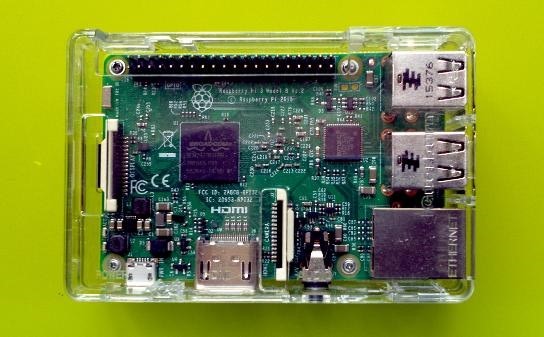
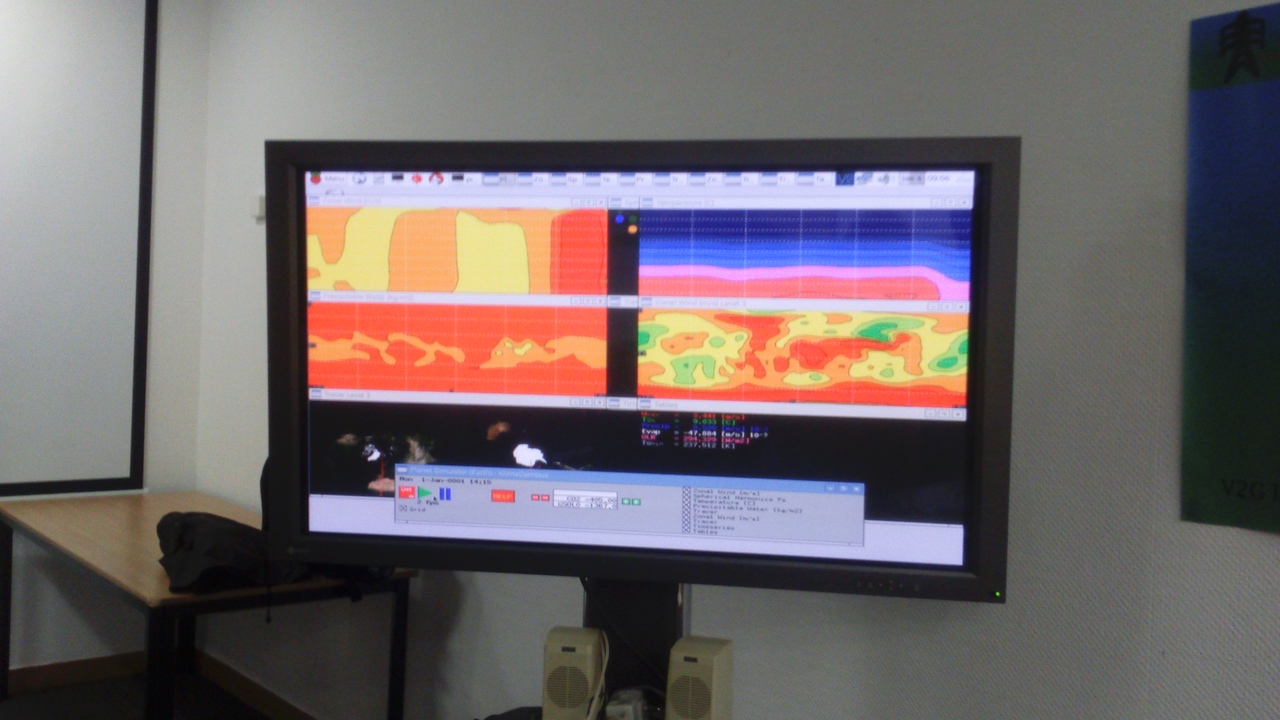
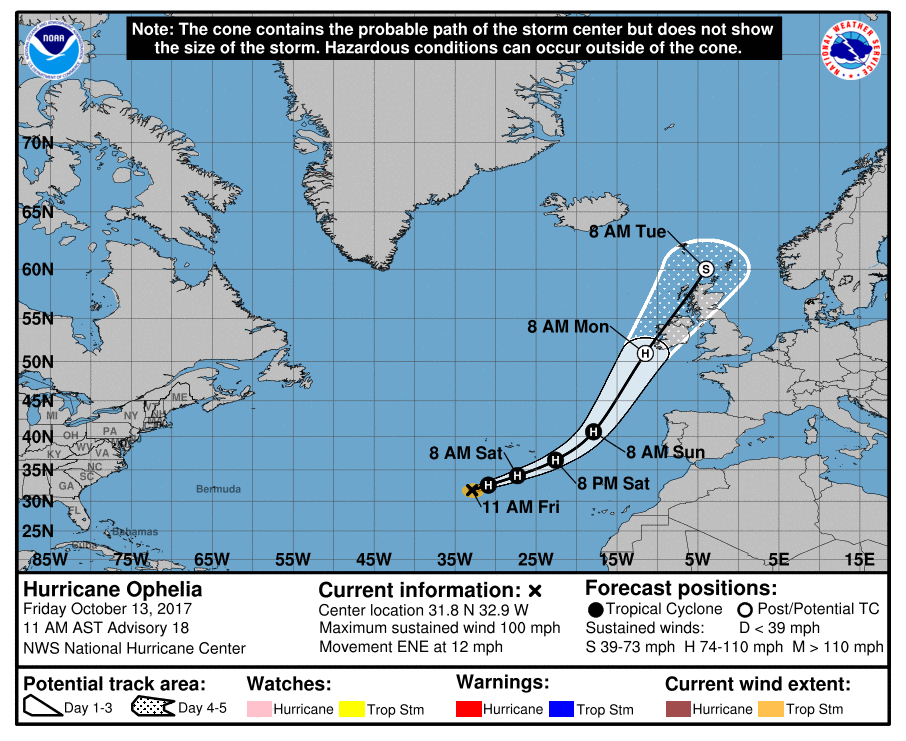
That’s the output of a “medium complexity” climate model running on V2G’s trusty Raspberry Pi 3B and displayed on BEIS’ 55 inch screen. Note that the carbon dioxide concentration had been increased to 405 ppm from the default 280. Amongst other things that’s a graphical demonstration of just how much number crunching bang you get for 1.3 bucks in this day and age. Now our little computational engine doesn’t forecast the weather of course, but the United States’ National Hurricane Center’s much larger engine does. Here is its Friday 13th forecast for Hurricane Ophelia:
ophelia_5day_cone_20171013-15Z

I don’t think anybody’s accurately added up the costs attributable to Ophelia yet, but according to Wikipedia at the moment:

Damage has been estimated at 1 billion euros ($1.18 billion USD), making it one of the most expensive storms ever to strike the UK and Ireland.

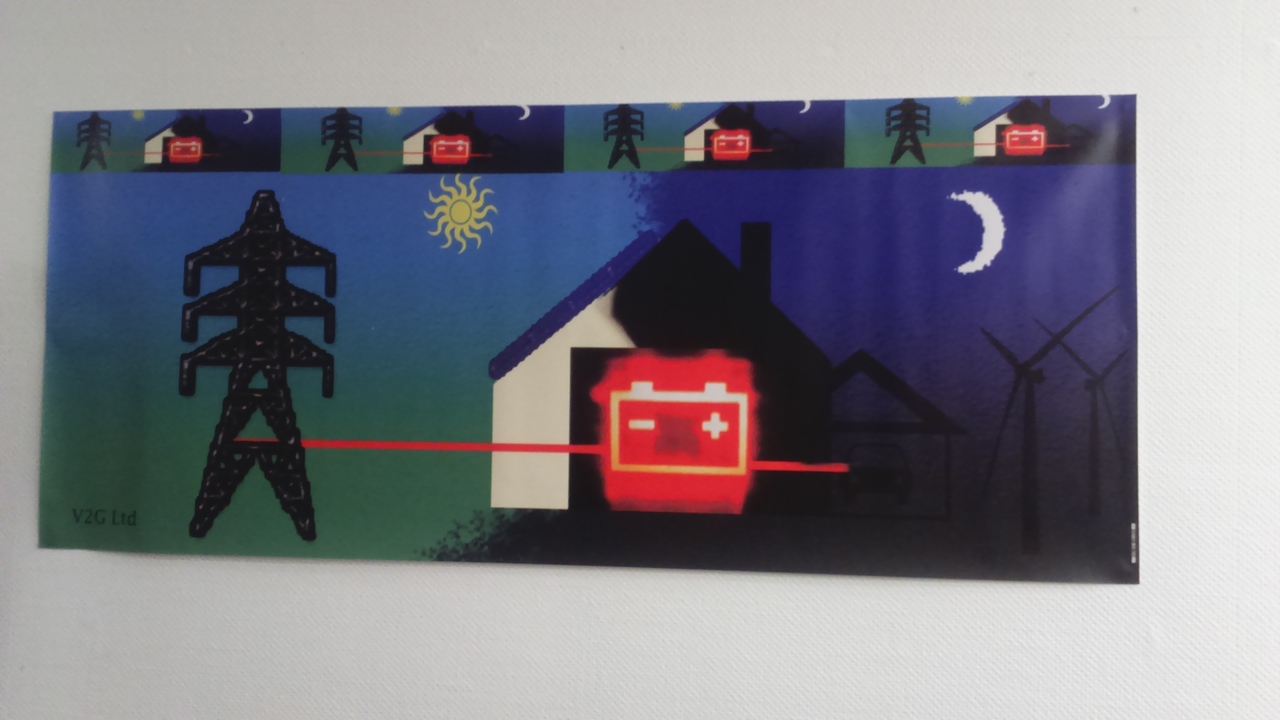
Having outlined the problem, here’s a slightly modified version of V2G’s 5 year old artist’s impression of part of the solution that was also on display in the BEIS basement:
DSC_1251

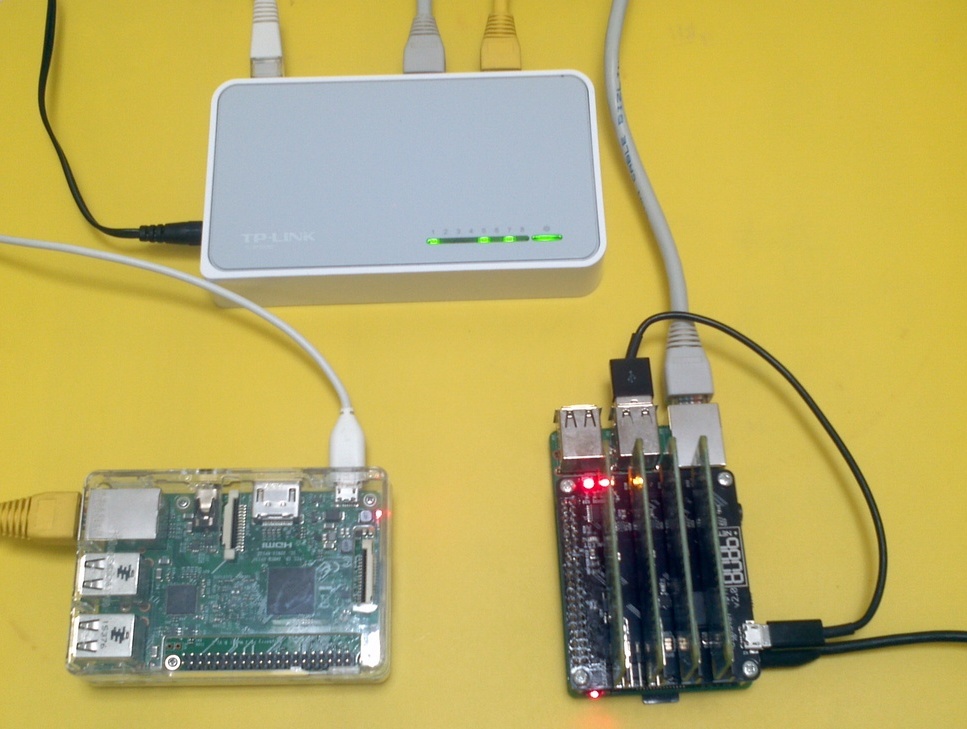
How much might the financial damage caused by Ophelia’s passage have been reduced if every building in the UK and Ireland had access to some local energy generation plus some static and/or mobile energy storage? Whilst you ponder that question, here’s a close up of our RasPi 3B together with its cousin, a Raspberry Pi 2B with a cluster of 4 baby Raspberry Pi Zeros on its back:
2017-10-13-RasPis

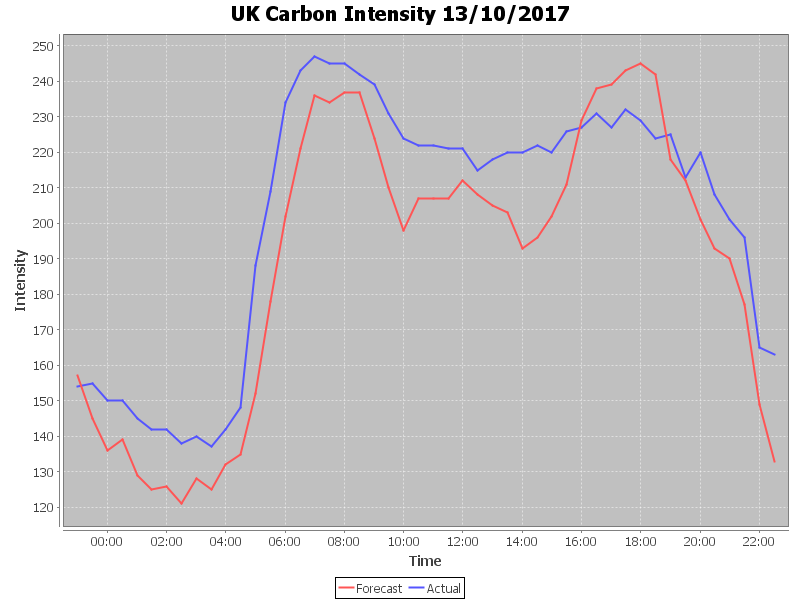
The RasPi 2 was running our new open source UK plc carbon intensity plotter. Here’s what that revealed on Friday the 13th of October 2017:
CarbonIntensity-20171013

As you can no doubt readily appreciate the graph is not a horizontal line! The value at any time is dependent on demand of course, but also on the amount of renewable generation in the mix. That is highly dependent on the weather, and indeed the weather forecast should you be attempting to control UK plc’s carbon emissions. If you’re “committed to tackling climate change” you really should be committed to minimising the integral of the blue line representing UK plc’s actual carbon intensity. Unfortunately that’s not how the UK’s energy markets currently operate. Perhaps they need a redesign?

The Raspberry Pi Zeros only have a single core rather than the 4 cores on the climate modelling 3B. Nonetheless at a cost of four Great British Pounds a pop (plus tax) they are more than capable of acting as a highly “intelligent” device connected to a Great British “smart grid”. Ours already run a variety of British “standards for a smart, flexible energy system”. If you doubt that please feel free to read all about the time V2G’s offices suffered their very own “blackout”. As I pointed out way back then:

Such a piece of electronics wouldn’t in and of itself add a whole lot to the price of an electric vehicle and/or a garage in Dunchideock, or anywhere else on the planet for that matter.

I cannot help but wonder how much the Great Dunchideock Blackout cost Western Power Distribution, how much the evidently changing climate in this part of the world is costing and will cost them, and how their electricity distribution network is coping with the assorted stresses and strains generated by all the renewable power sources currently being tacked onto it down here in not so Sunny South West England that do not currently have any form of energy storage associated with them.

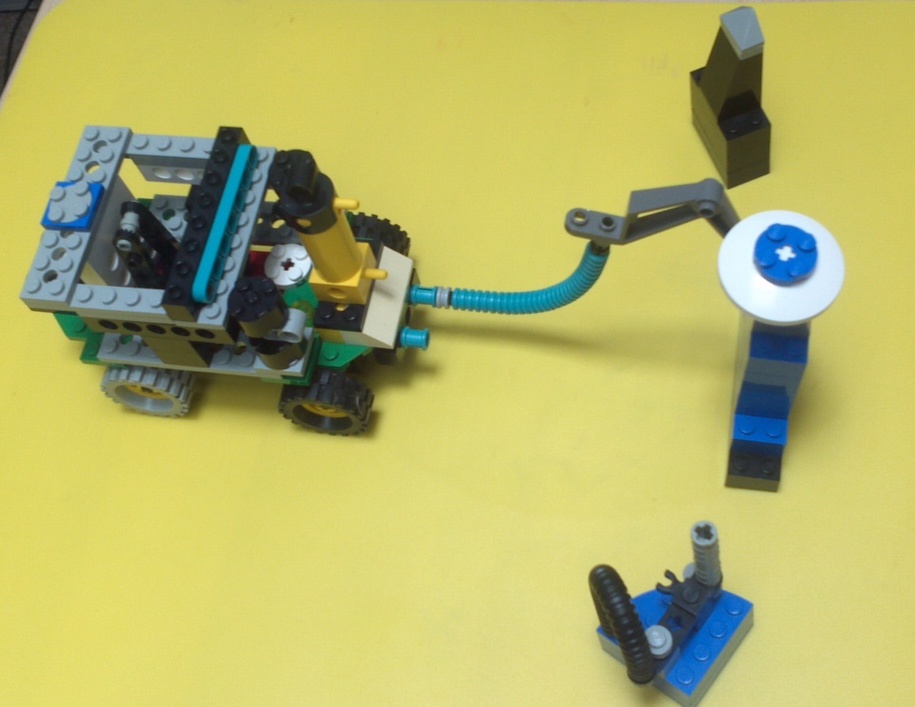
Moving on to the near end of our table at BEIS, here’s a LEGO tableau representing our artist’s impression of a passenger free connected vehicle driven by a “robot” deciding which of three possible electric vehicle charging stations it should connect to:
2017-10-13-Connected-2

In this instance its battery is nearly flat, it’s in a hurry to pick up another human and the grid is in good shape so it’s therefore decided to select the ultra rapid “robotic” charging station. This may seem like child’s play, but it isn’t. On Friday Julian Anderson of Thales e-Security stopped by our stand. We had a bit of a play with the Lego and a longer discussion about the cyber security implications of connected vehicles and autonomous EV charging.

Here’s another point to ponder. Apart from BEIS and Thales we also had a long conversation with an engineer from Ofgem about “community energy markets“. However the people who make policy were conspicuous only by their absence from our audience.

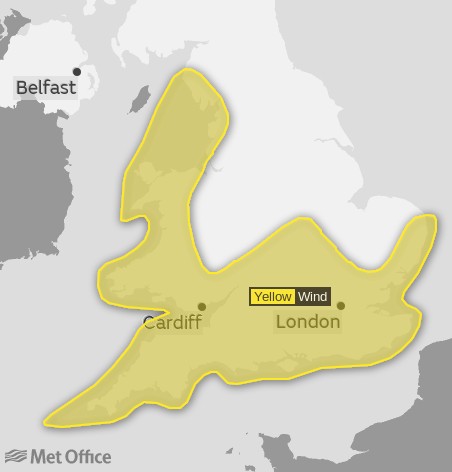
N.B. There’s already another big storm on the way to us here in South West England, as well as Ireland once again. This one’s called Brian, and according to the Met Office:

Between 04:00 Sat 21st and 23:59 Sat 21st

A spell of strong southwesterly winds is expected. Some coastal routes and communities are likely to be affected by large waves, with potential for flooding of properties. Some transport disruption is likely across the warning area, with delays to road, rail, air and ferry transport. Short term loss of power and other services is also possible.
Brian-20171019+2d

Evangelising V2G in South West England

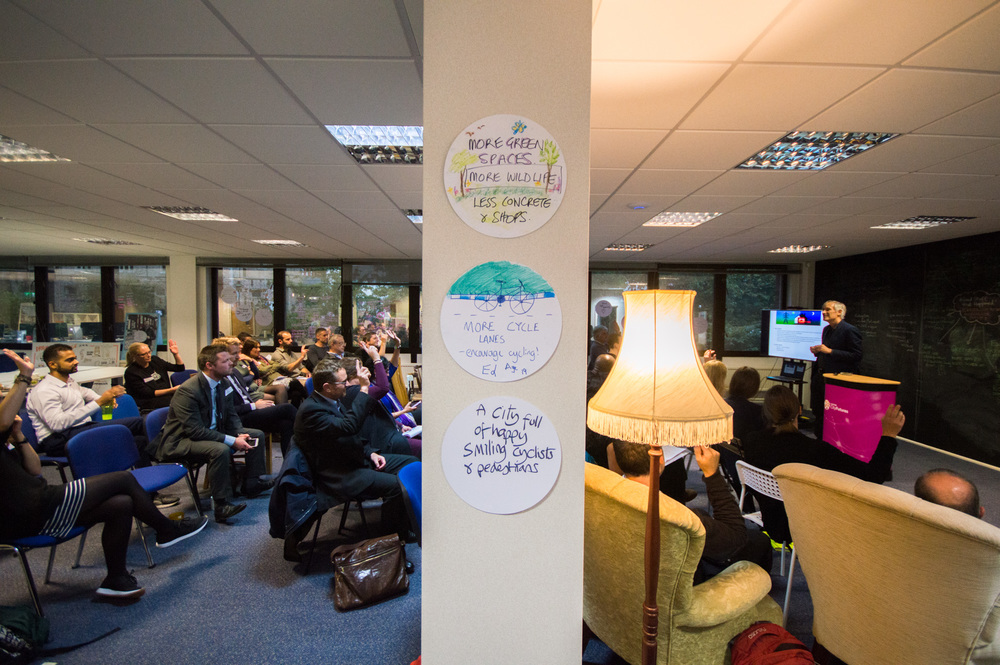
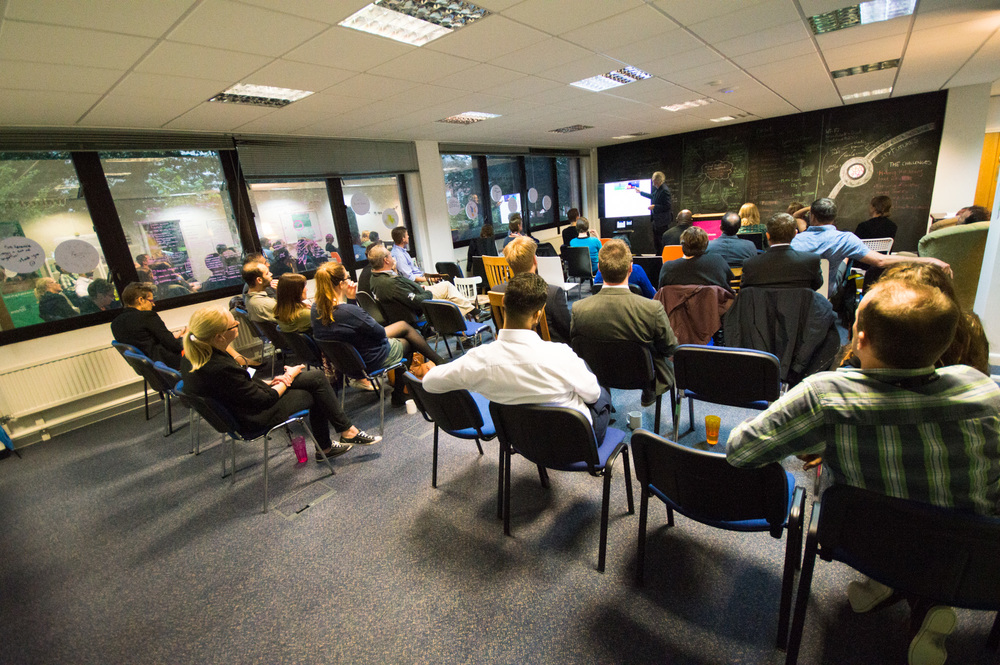
I’ve been out on the road this week, explaining the potential benefits of vehicle-to-grid technology to a variety of audiences. First up on Wednesday evening was the “Autumn Connect” event at Exeter City Futures, where I made a presentation entitled “V2G – How to simultaneously store energy and reduce congestion.”. I had the luxury of being allowed 5 minutes to present an “elevator pitch” on that subject to the assembled throng:

Image Autumn Connect 2017 (for web)_013 (1)

Here’s an expanded version of the PowerPoint slide deck I used. They all had Kasia’s “artist’s impression” of V2G in action at the top, so I’ll omit that part here. The first two slides are taken from a 2 minute pitch I presented at the Met Office on Thursday (see below) and have to conform to a template provided by the Knowledge Transfer Network. Hence:

V2G Limited

  • A small “smart grid” consultancy located amongst the wind and solar “farms” of North Cornwall
  • The “smart grid” is actually the “internet of big things”!
  • Producing embedded firmware for 35 years
  • Under a previous name provided multi-drop fleet routing interfaced to SAP for a FTSE 250 company
  • Long experience in electricity distribution. The Lucy Switchgear Gemini RTU firmware is our baby
  • Whilst we understand hardware our expertise is in designing software/firmware
  • Evangelising Vehicle-to-Grid technology for 5 years

I trust that is all self explanatory?! If not please see below or ask questions in the space made available for that purpose in the comments section at the bottom.

I always like to encourage some audience participation at these events, and Exeter City Futures delivered in spades! For the first time ever I didn’t need to blow my own bidirectional trumpet:

BiDirectionalTrumpet-Horiz

Timekeeper Lyndsey volunteered to blow the V2G trumpet for me, though ultimately it informed me that my time was up before I even managed to display the last slide, so make sure to read all about that below!

To make my “internet of big things” point I waved my trusty Raspberry Pi 3B at the audience. Here is what it looks like close up:

RasPi3B-Horiz

Dr. Sarah Ward from the University of Exeter correctly, if somewhat hesitantly, identified the mystery object. Now I’ve been programming the firmware (i.e. the software inside the hardware) in those sorts of devices for a very long time. 35 years ago single board computers were a lot slower and a lot bigger, but they still did the same sort of job. In those days they didn’t have USB ports like the Pi. Instead they had serial ports that conformed to the RS-232 standard. Getting two devices to talk to each other was always “interesting”!

I asked the audience to raise their hands if they’d previously heard of the “smart grid”. Quite a lot had:

Image Autumn Connect 2017 (for web)_012 (1)

Then I asked who had heard of the “internet of things”. Slightly more hands were raised. The point being that hardware a lot like the Raspberry Pi is at the heart of your smartphone, at the heart of the Smart Grid and (albeit in a smaller form factor) at the heart of the Internet of Things. The main difference being that the smart grid has been around quite a lot longer than the IoT! A point that some of my audience at the Met Office on Thursday seemed to agree with since they nodded their heads vigorously at that juncture!

Moving on to slide 2:

WP-banner-V2G

1. Our project idea

  • See the infographic above
  • North Cornwall is ideal!
  • Charge EVs on sunny lunchtimes
2. What’s innovative about it?

  • Nobody’s done it yet
  • On all sorts of levels!
  • Price signals / regulation?
3. The services we can offer?

  • Vast systems integration experience
  • Vast enthusiasm
  • AI for Energy Systems
4. The partners/services we seek?

  • Kite marked V2G hardware
  • An all electric car club
  • A suitable site

I asked the audience if it was obvious what the infographic represented. I was subsequently informed that a hand had gone up in the far corner of the room, but I didn’t notice at the time. To explain, imagine a conventional home with solar PV panels on the roof exporting excess electricity to the local distribution grid. Now add some static batteries in the utility room or the garage. Store any excess “free” energy generated when the sun is shining in that battery. When the household electric vehicle returns from the daily commute charge it up from the battery rather than from the mains, since by now the sun will be low in the sky or already below the horizon in winter.

If you have that basic hardware setup available then there’s lots of other things you can do with it! How about buying electricity from the grid when it’s cheap and storing it in your static and/or mobile batteries. Then just for starters you could sell it back to the grid when electricity’s more expensive? There are other possibilities too, which brings me on to slide 3:

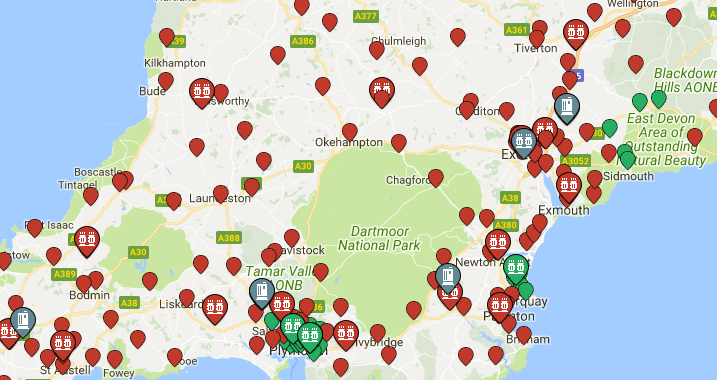
WPD-NoCapacity

That’s a portion of Western Power Distribution‘s network constraint map. Note that most of Devon & Cornwall is plastered in red due to all the intermittent renewable electricity generation we have down here. One day (hopefully!) soon you’ll be able to earn money by allowing WPD to charge and discharge your batteries when it suits them, in order to help them cope with the stresses that intermittent generation can subject their electricity distribution grid to. The current fly in that particular pot of ointment are the rules and regulations currently enforced by Ofgem, which make it nigh on impossible for neighbouring energy “prosumers” to trade electricity with each other. Highlighting bullet point 2(c) I idly enquired if anybody else in the room “has had problems with Ofgem’s red tape?”. Not a single hand was raised in protest.

As regular readers will be aware, the town of Camelford in North Cornwall is an Air Quality Management Area (AQMA for short). Much like the centre of Exeter, the air quality in the centre of Camelford is fairly foul due to the noxious emissions of all the diesel engines that travel slowly through it. Electric vehicles can help with that, since they have no exhaust pipes and by and large use regenerative braking rather than rubbing dust off brake pads when they want to slow down. Hence slide 4 consisted of pictures of V2G capable examples of such vehicles, plus an image of the xStorage static battery storage device being produced from ex Nissan LEAF batteries by Eaton. An electric car club in Camelford and/or Exeter would be a small step along the road to reducing congestion and air pollution in both town and city centres, whilst V2G enabled vehicles in the fleet would also provide a mobile energy storage facility!

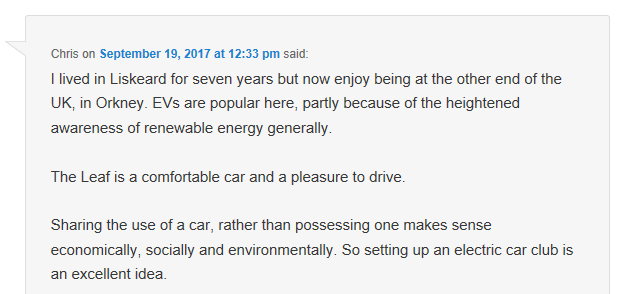
That’s about as far as I got on Wednesday before Lyndsey blew the metaphorical whistle on me, so I hastily concluded by mentioning this apposite comment from blog reader Chris:

Chris-CarClub

It seems that struck a chord with at least one member of the audience. In the first image above you can see the back of Mark Hodgson’s head, if you know where to look. Mark’s Co-Cars car club certainly isn’t 100% electric, but it has just installed a couple of EV charging points in the Exeter area. That would seem to fit the bill for my bullet point 4(b) quite nicely?

Here’s the final slide I never had a chance to mention on Wednesday evening:

Of course solar PV isn’t the only form of RE generation, and batteries aren’t the only way of storing energy, at home or in the office. There’s also heat, and cold, and eddi & zappi: http://myenergi.uk/products/

MyEnergi

What do you suppose that’s all about? To help answer that question let’s move on to Thursday and my trip to the Met Office. At least the previous evening’s rain had stopped:

2017-09-21_16-12-28_189

I was presenting at a briefing event for Innovate UK’s Emerging and Enabling Technologies competition. I got the feeling that since this was (one of?) the first KTN briefing(s) held in Exeter most delegates weren’t making the most of the KTN’s “Meeting Mojo” facility. Anybody who ventured in there would have discovered that I was hoping to meet:

Partners who appreciate that the “Smart grid” is a subset of “The internet of things”, and predates the IoT!

whilst offering a potential consortium:

Smart Grid Consultancy: 5 years vehicle-to-grid, 15 years electricity distribution, 35 years system integration. Now with added blockchain!

Shortly before the event proper got underway I explained to the KTN’s Simon Yarwood, MC for the pitch session, that although I only had 2 slides in my deck I was actually representing 2 companies from a nascent V2G consortium. He graciously allowed me to overrun my allotted 2 minutes, and here’s what I added to the top two slides above:

EBRI-Live-2017-09-23-0924

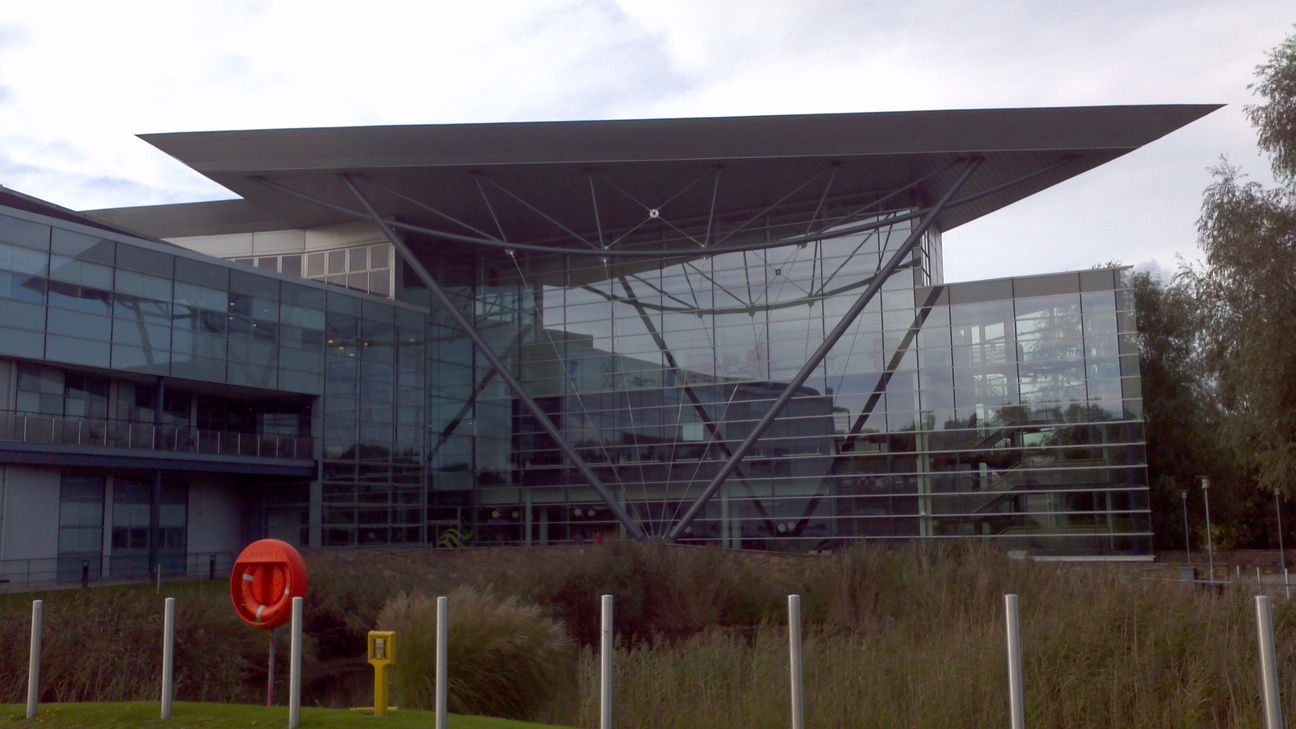
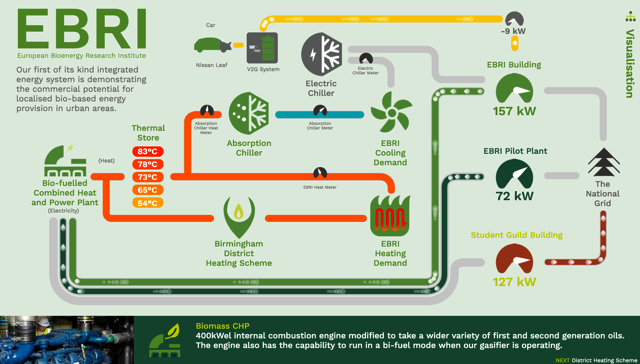
That’s a still from a web page that provides real time updates on the state of the building management system at the European Bioenergy Research Institute at Aston University:

https://youtu.be/89RDjp1E3W4

As you can see at the top of that page, a bidirectional charging station with associated static storage connected to a Nissan LEAF pool car is employed at EBRI as both an energy source and sink, in what is the UK’s first V2x pilot project. Strictly speaking it’s vehicle to building (V2B) rather than fully fledged V2G, but as far as the charging station itself is concerned that is of no consequence.

The BMS software at EBRI is now being further developed by Grid Edge Ltd. who assure me that it utilises various machine learning methods using a variety of inputs including weather forecasts, energy usage history, WiFi connections and football match schedules to optimise the overall energy use profile of the building and the assets within. As well as a modest amount of battery storage the EBRI building also includes energy storage in the form of large tanks of both hot and cold water in the basement, as indicated on the real time infographic shown above. That’s where the MyEnergi system depicted in slide 5 above comes in. It doesn’t use complex prediction or optimisation software, but it does attempt to sensibly direct the electricity generated by domestic solar PV panels to charge your EV, heat up your hot water, or if all else fails export some to the grid.

Q.E.D?

Red Hat 64 Bit ARM Program Hardware Enablement Complete

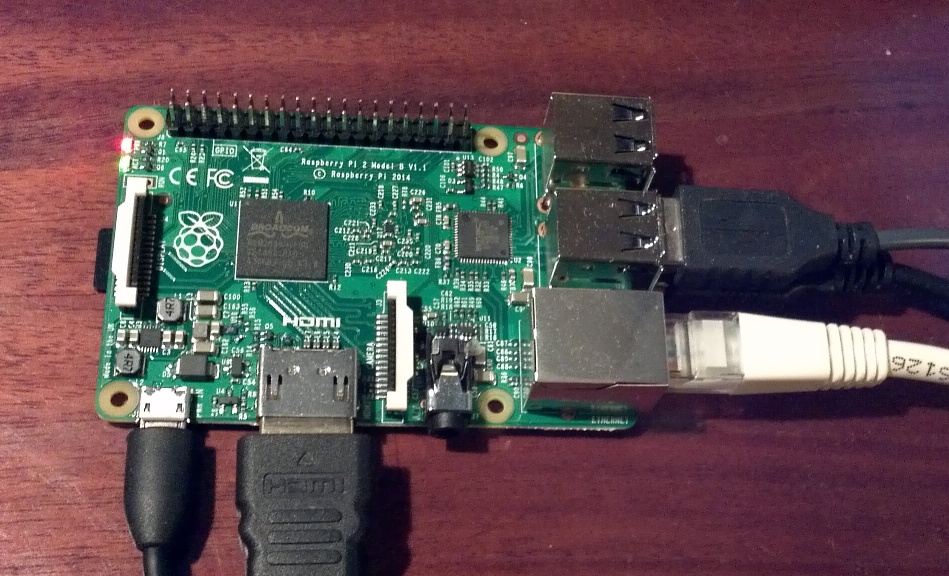
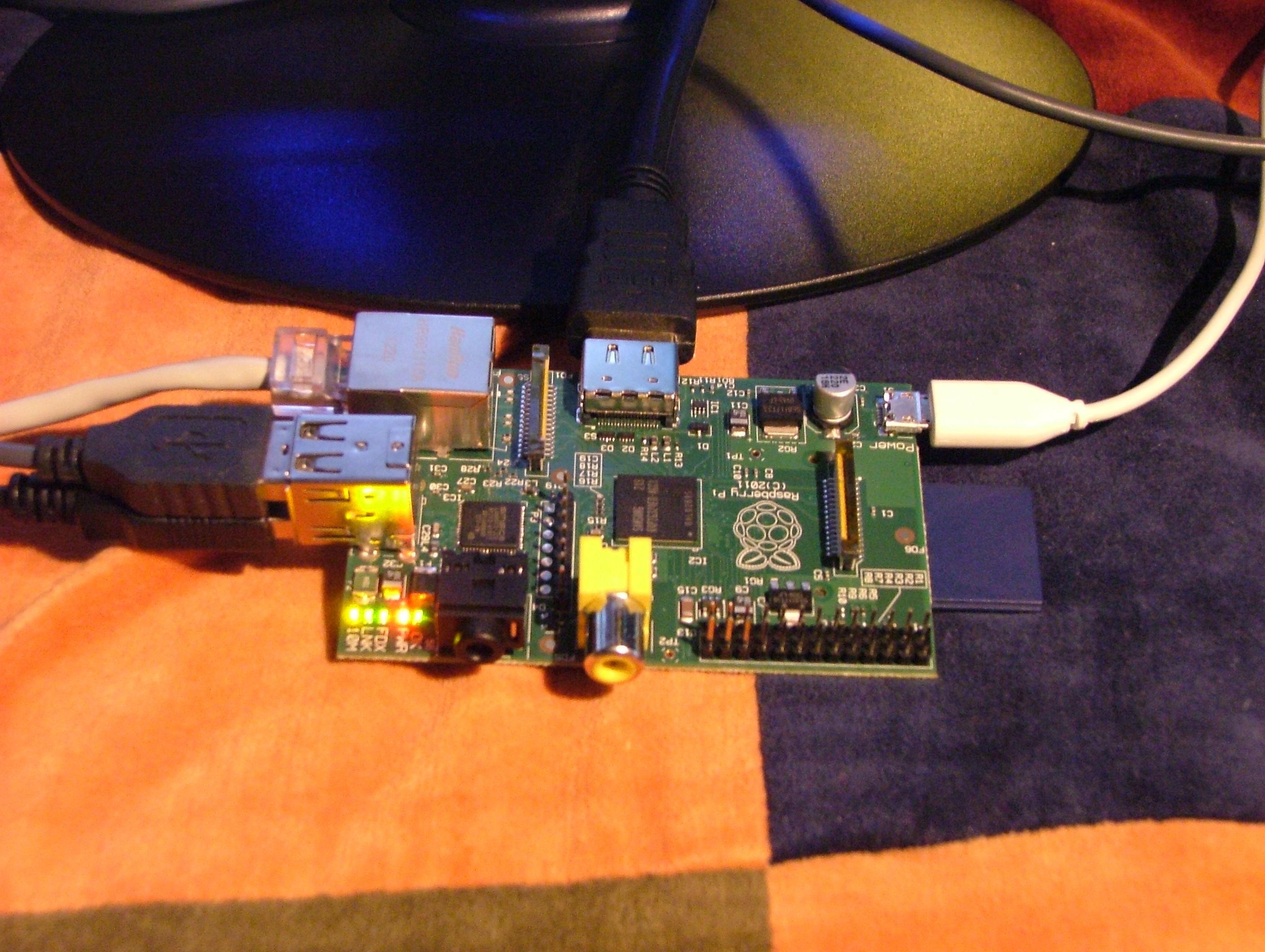
As regular readers here will realise we have a liking for running Linux on ARM processors. Hence we were delighted to recently receive our very own quad core Raspberry Pi 2 to experiment with. Here’s what it looks like:

However we’ve recently received even more interesting news, to us at least. In a press release earlier this week Red Hat announced that:

The Red Hat ARM Partner Early Access Program has expanded to include more than 35 member companies, ranging from silicon vendors and original equipment manufacturers (OEMs) to independent software vendors (ISVs).

According to Mike Werner, who is Senior Director of Global Technology Ecosystems at Red Hat:

Since its launch just over six months ago, the Red Hat ARM Partner Early Access Program has achieved two critical goals, driving significant interest and participation from both hardware vendors and independent software vendors as well as the successful completion of the hardware enablement phase. The program is a perfect example of how Red Hat, along with our vast network of partners and ISVs, drives standardization within specific technology segments, with the ultimate goal of delivery of fully tested and certified solutions to the marketplace.

whilst Kumar Sankaran, who is an associate vice president at Applied Micro, said that:

As the only silicon vendor shipping an enterprise-hardened, ARMv8-A Server-on-a-ChipTM solution and an initial participant of the Red Hat ARM Partner Early Access Program, we are pleased to continue our work with Red Hat. The program is strengthening the entire ARM 64-bit ecosystem while allowing OEM and end-user partners the opportunity to work with fully operational software and hardware. We have had a great working relationship with Red Hat dating back to our X-Gene launch in 2011 and we are excited to provide a serious alternative to incumbent solutions.

and Susan Blocher, who is Hewlett Packard’s vice president of Product Management and Business Development for their Moonshot server range, said that:

Today, customers are already leveraging the industry-leading HP Moonshot servers with 64-bit ARM technology to improve application performance, drive business innovation and deliver breakthrough datacenter economics. We are committed to working with partners in the Red Hat Partner Early Access Program to extend the ARM ecosystem and deliver enterprise-ready solutions to address customer challenges.

The practical benefits to all concerned are summed up by Red Hat as follows:

Launched in July 2014 with nine participants, the program aims to deliver, via collaboration, a singular operating platform capable of supporting multiple partner-initiated system designs based on the 64-bit ARMv8-A architecture. As a part of that commitment, program participants have successfully completed the hardware enablement phase by incorporating necessary architectural requirements into the latest version of the development software. Based on that, Red Hat ARM Partner Early Access Program participants are now expected to contribute system-specific software and drivers to an open source upstream Linux community for incorporation into future commercial offerings.

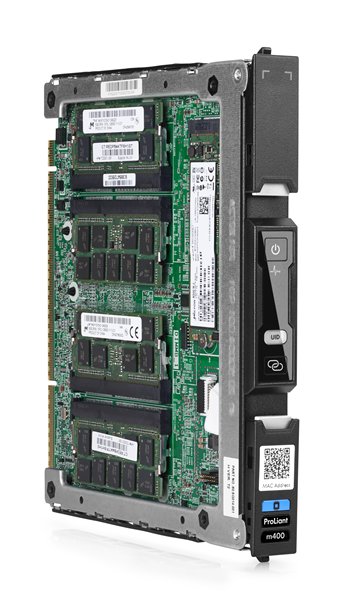
Bear in mind that it costs rather more than the $35 that a Raspberry Pi 2 will set you back, but here’s what an HP 64 bit ARM Moonshot server cartridge looks like:

Bear in mind also that whether you’re considering a Raspberry Pi, a Moonshot or a data centre packed full of ARMv8s, an ARM CPU delivers rather more bang per Watt than the average microprocessor.

The Great Dunchideock Blackout Saga

We recently suffered a power outage, or power cut as we prefer to call such things here in the UK. This wasn’t any old power outage either. Let me explain.

The lights went out at 17:44 on Friday April 11th 2014. I hurriedly powered down everything in the lab and office except my laptop and our broadband router, which was by then being powered from the battery in an uninterruptible power supply. When the lights hadn’t come back on a few minutes later I telephoned our local Distribution Network Operator (DNO for short), Western Power Distribution, to enquire what the problem was, and when it might be fixed. WPD’s automated system suggested that our power should be restored by about 21:00 that evening.

9 o’clock came and went, by which time the batteries in my laptop and UPS were flat. I called WPD again, to be informed that the latest estimate for the time at which I would be able to get connected to the internet once again would be 01:00 on Saturday morning. I figured I’d allow WPD a bit of leeway, and eventually went to bed having set the alarm on my smartphone for 02:00. The alarm went off, but the lights still hadn’t come back on.  I phoned Western Power again to be informed that things should be back to normal in an hour or so. Bleary eyed I returned to bed.

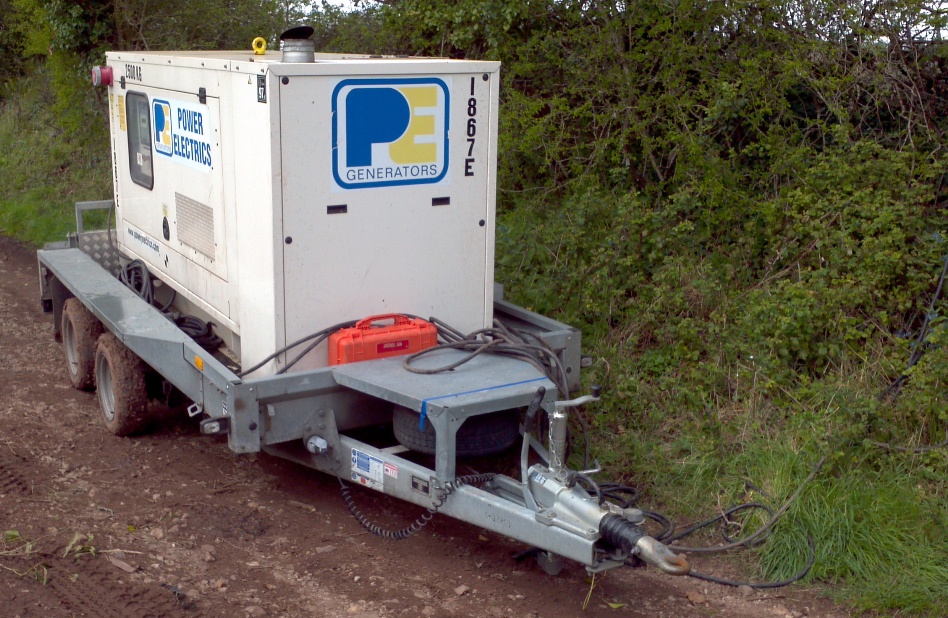
When I arose next morning I wasn’t in need of any lights, but my router and laptop were working once again. There was, however, the continuous drone of an engine audible not too far away so I set out to investigate by following the sound, and here is what I discovered:

Generator on the track to Haldon Belvedere on April 12th 2014

Diesel generator on the track to Haldon Belvedere on April 12th 2014

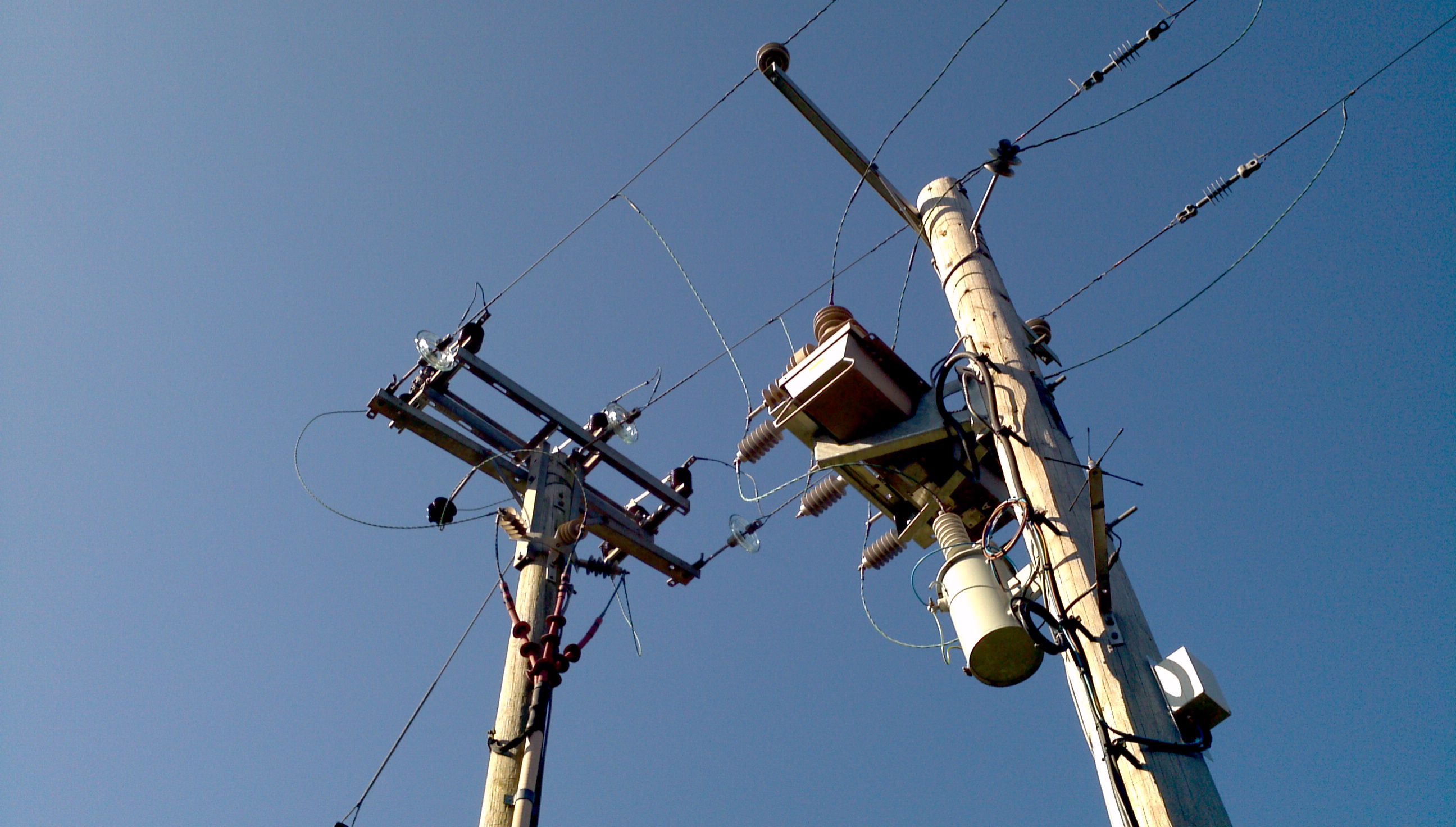
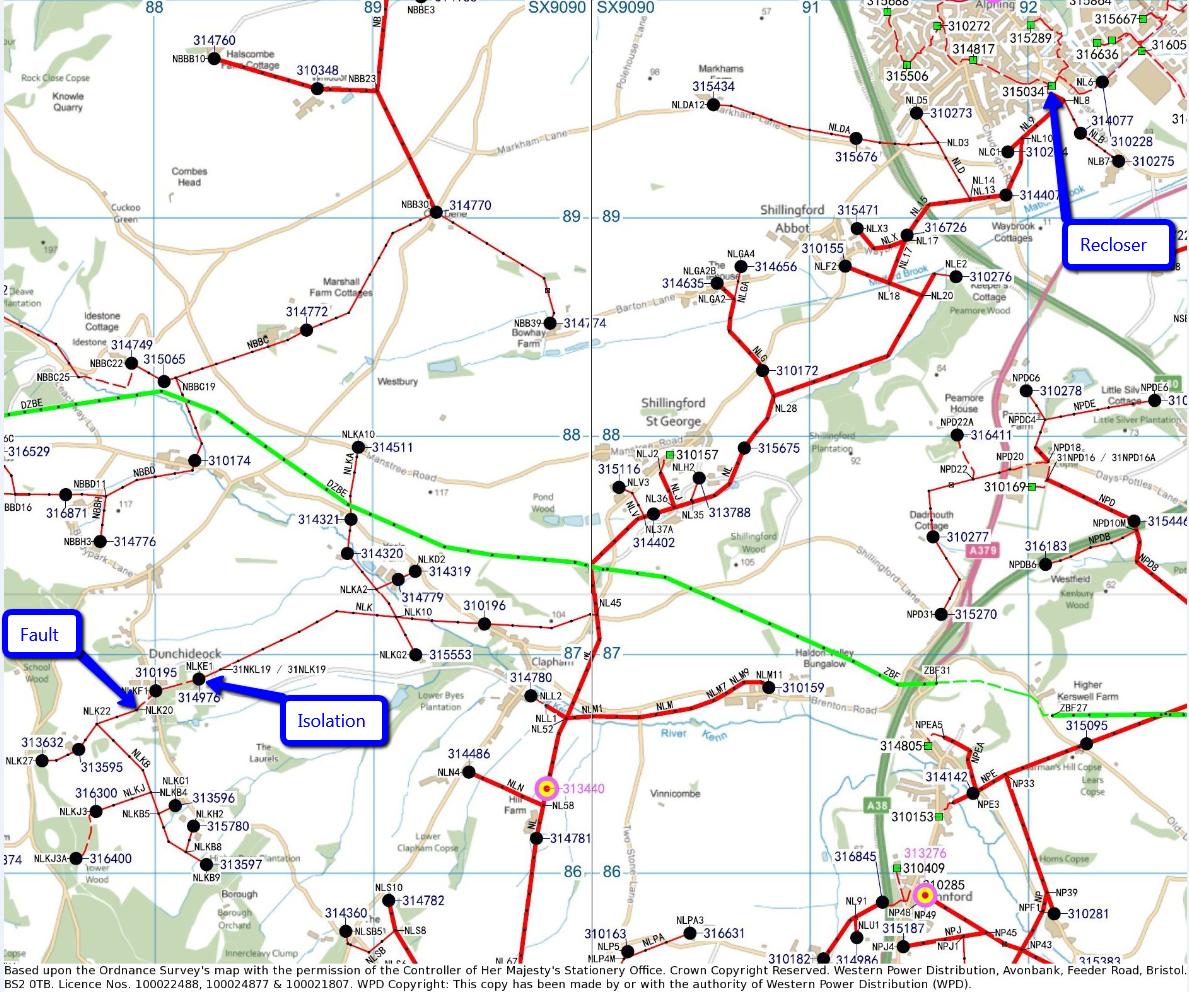
Another call to Western Power Distribution elicited some further information. I managed to speak to WPD’s standby manager for the day, who explained what had happened the previous evening. Initally over 300 properties had been without electricity following the operation of an automatic circuit recloser mounted on pole NLT1M in Alphington, as shown at the top right of the map of WPD’s network below (click the image for a larger version), and in this photo I took subsequently:

Schneider pole mounted recloser and air break isolator in Alphington

Schneider U-Series pole mounted recloser and an air break isolator in Alphington

WPD map of 11 kV and 33 kV cables Southwest of Exeter

WPD map of 11 kV (red) and 33 kV (green) cables south west of Exeter

At that point everything powered via the 11 kV 3 phase (thick red) cables running from top right to bottom left of WPD’s map was without electricity. By around 21:00 the problem had been isolated to somewhere in the bottom left corner of the map, and power now reached as far as pole NLK19, near the north east corner of The Lord Haldon Hotel car park.

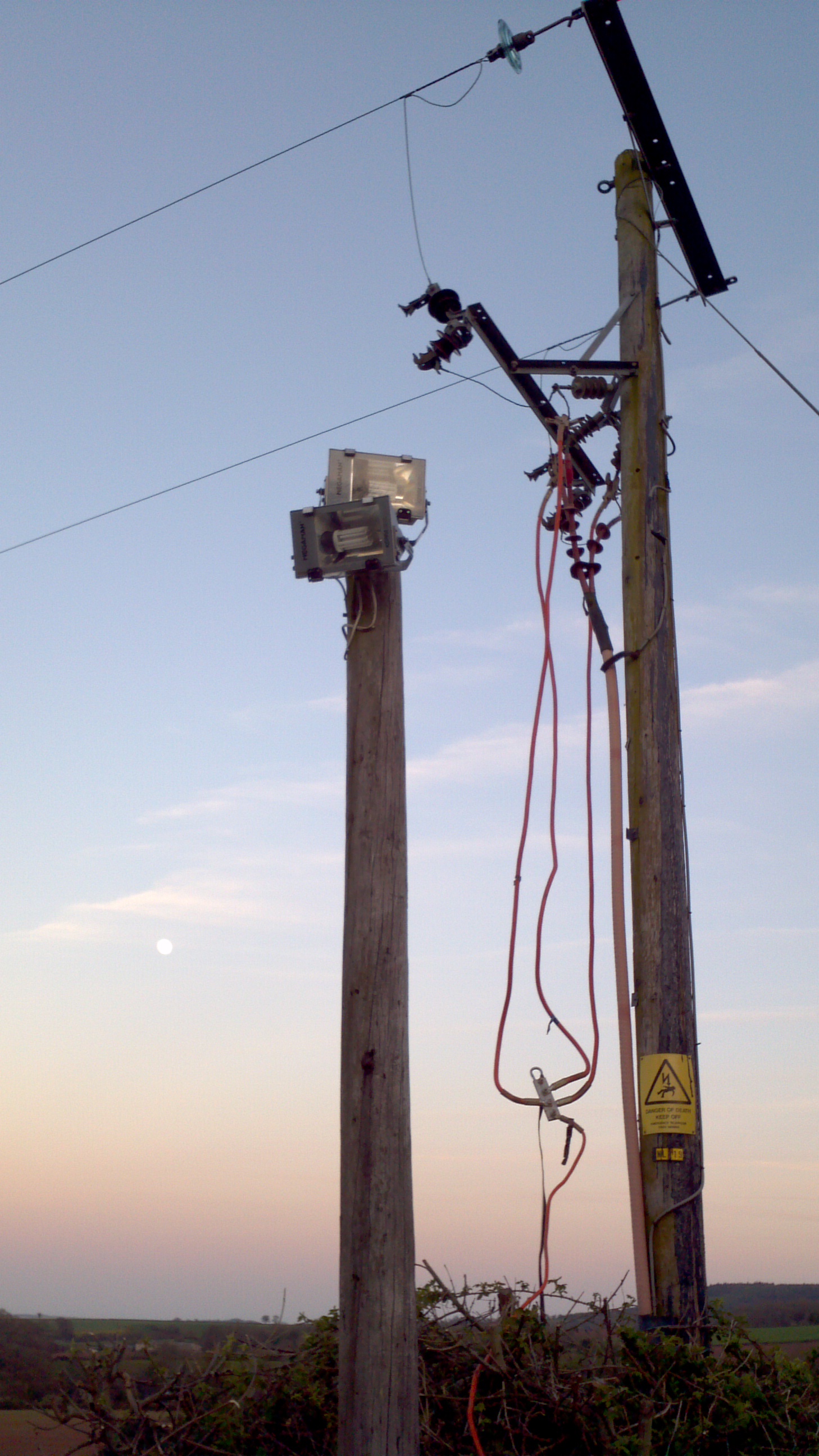
Pole 31NLK19, whilst The Lord Haldon Hotel and The Haldon Belvedere were running from WPD generators

Pole 31NLK19, draped with extra cables, whilst The Lord Haldon Hotel and The Haldon Belvedere were running from WPD generators

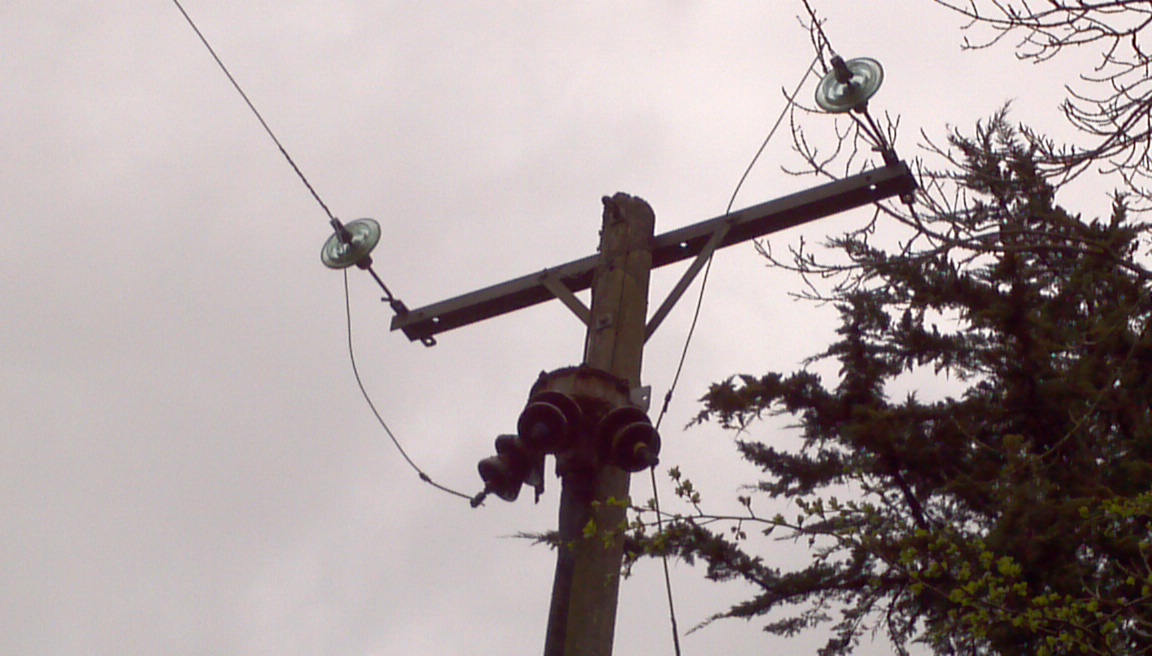
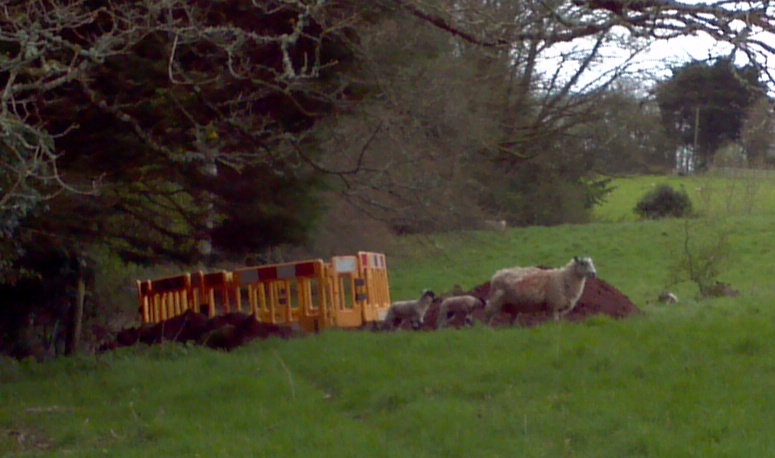
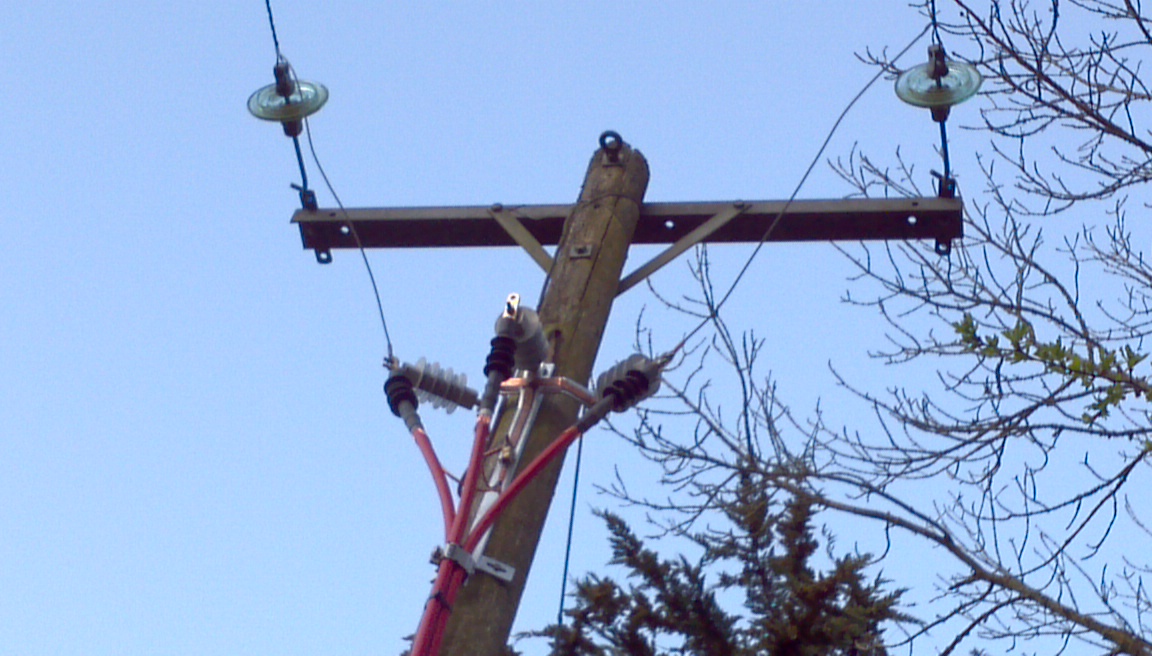
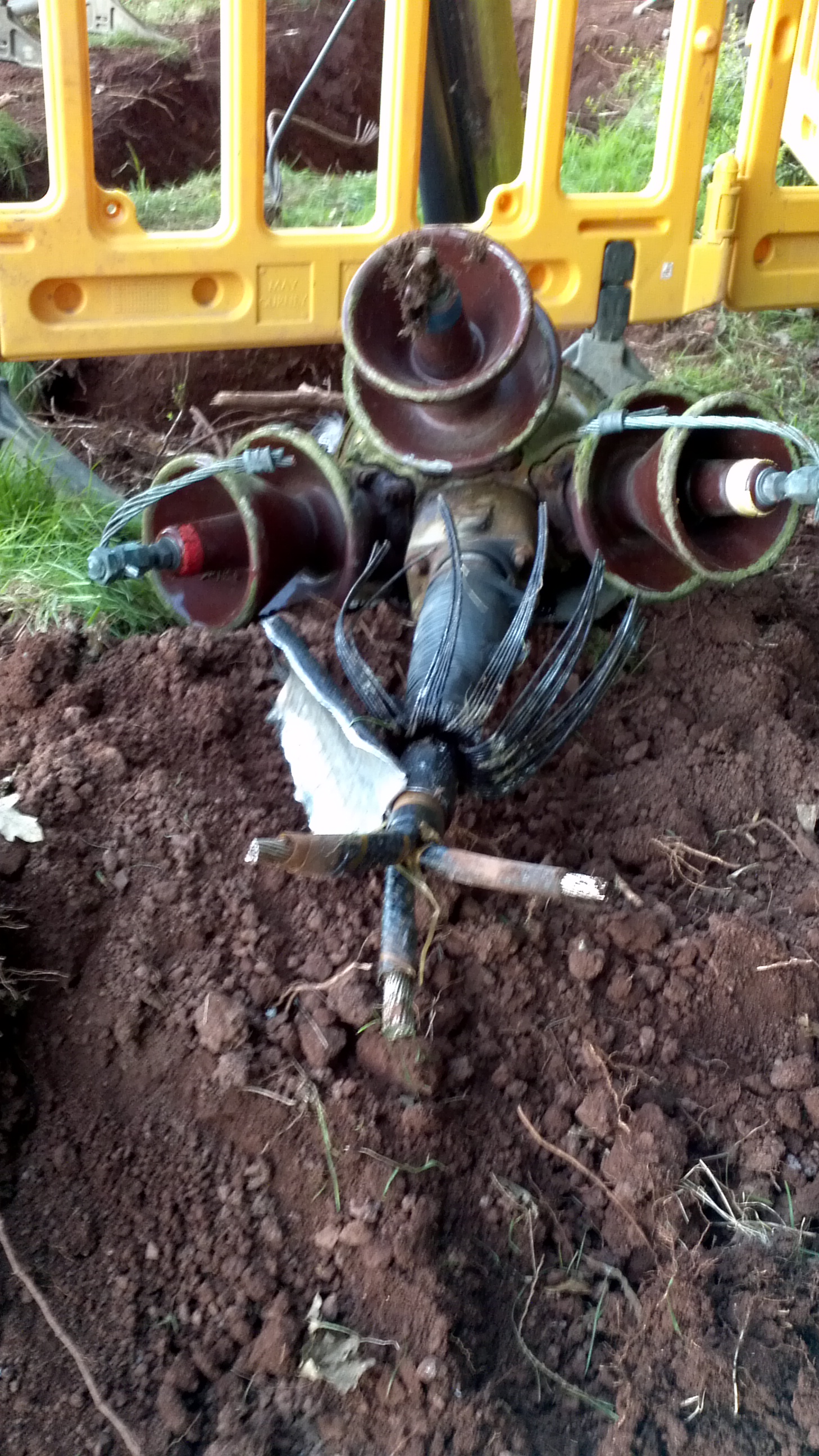
Unfortunately the hotel itself, which had a wedding reception booked that night, and everyone else in our corner of the village of Dunchideock and Haldon Hill were still without power, and WPD still didn’t know where the fault was. I am assured by a local resident that once it had got dark his wife noticed some arcing at the top of an electricity pole in a field behind his house, so he drove to the hotel car park and informed the WPD engineers gathered there about her discovery. The problem ultimately proved to be a faulty pole top cable termination, shown below in situ together with some inquisitive lambs:

A 48 year old cable termination at the top of pole NLK20

Youthful interest is shown in a big hole in the ground

Some youthful interest is shown in a big hole in the ground

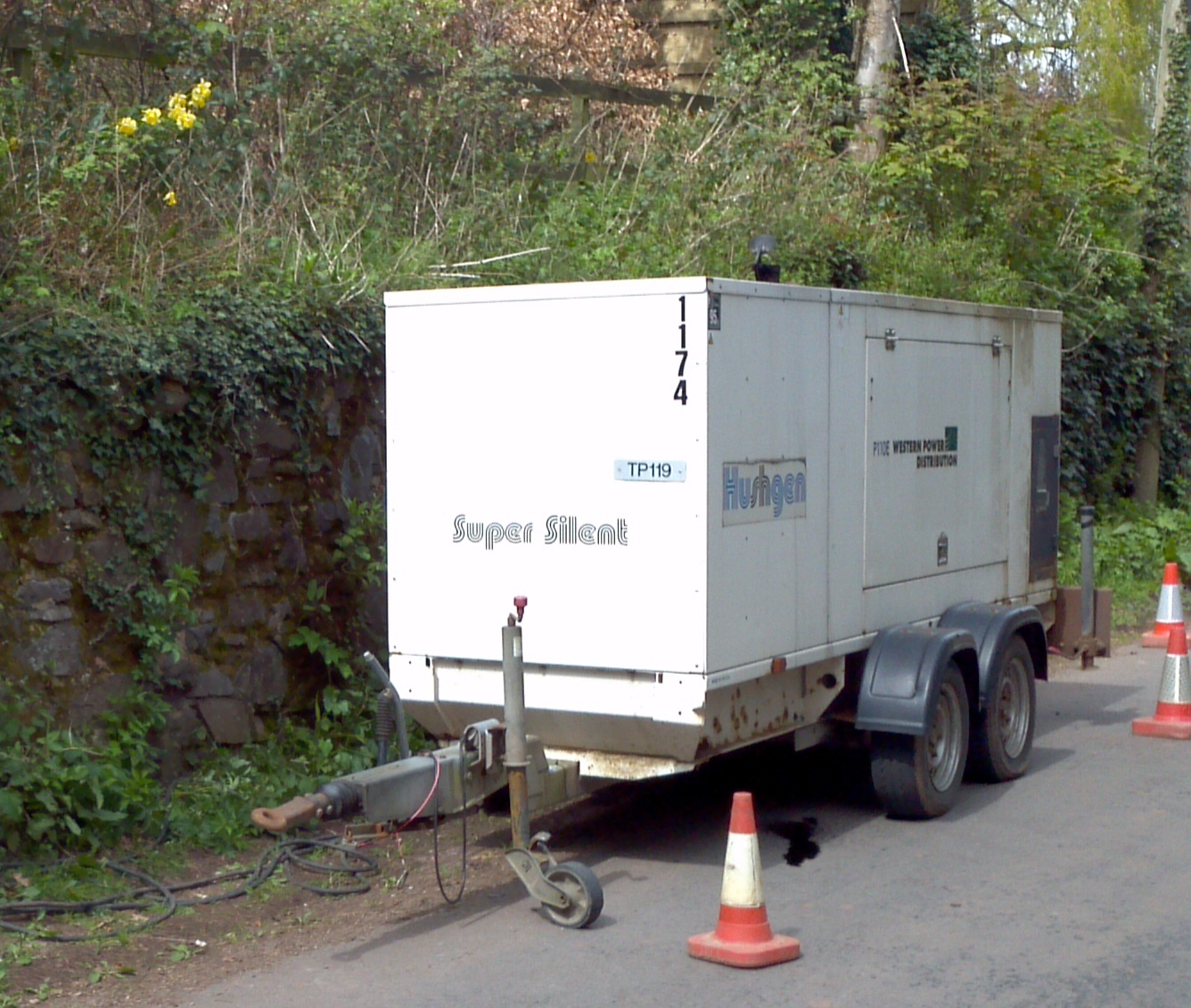
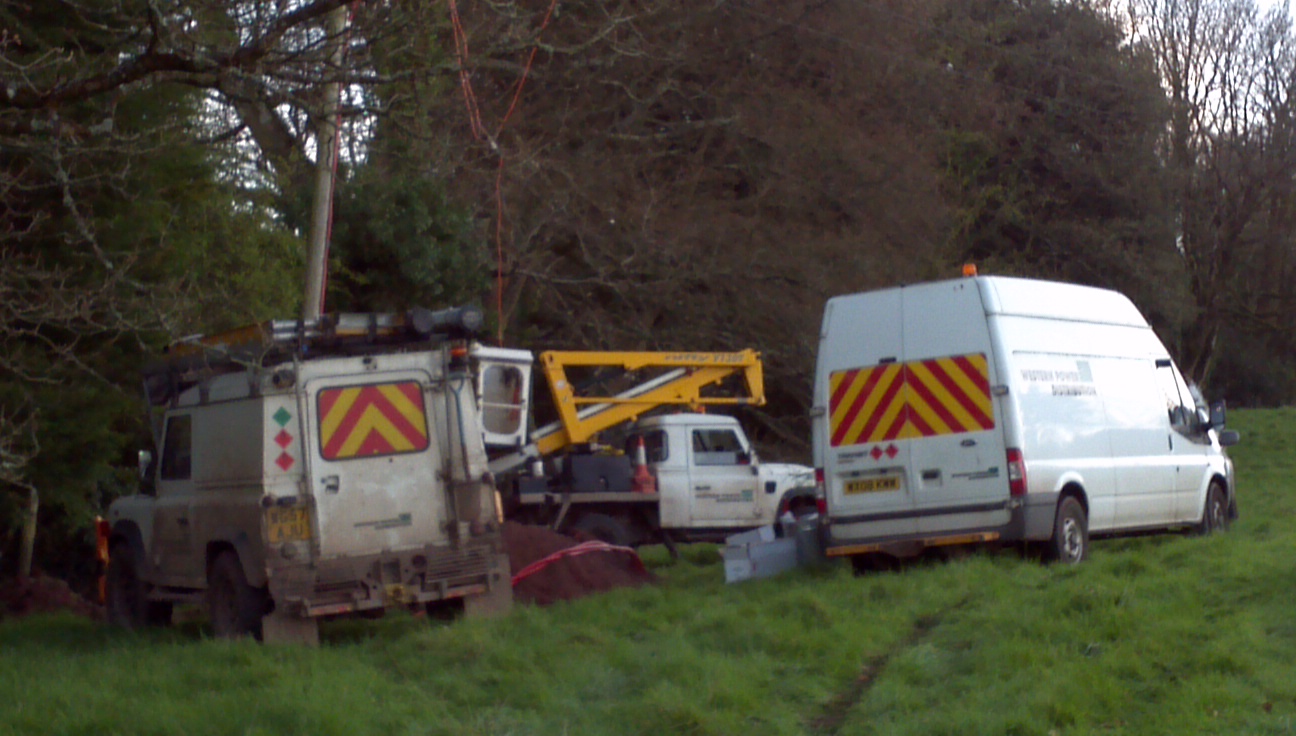
By the time the likelihood that this was indeed the ultimate cause of the problem had been established time was pressing. According to WPD they have a self imposed 12 hour time limit on turning the power back on after any interruption in supply, and there was no way this problem would be fixed within that timeframe. That being the case some generators would be required, which presented WPD with another big headache. It seems there had been some other problems in Devon on the same day, and there weren’t enough generators in Exeter to go around, so WPD brought some more in from Torbay. That still wasn’t adequate for the scale of the problem, so they brought some more in from Taunton. Even that wasn’t sufficient, so finally they had to hire a few more from Bristol, one of which was emitting the dulcet tones that greeted me on Saturday morning. Here’s one of WPD’s own generators, that was located a bit further up the road near the entrance to the hotel:

WPD Generator hard at work outside Pen Hill Cottage

WPD diesel generator hard at work outside Pen Hill Cottage

All in all, by the time everyone affected had their electricity supply restored, which in our case seems to have been at around 3:30 on Saturday morning, 9 diesel generators were scattered across the north side and ridge of Haldon Hill. WPD assured me there was no danger of any further power cuts, since every 12 hours or so they would be hauling a bowser around the local vicinity to top up the tanks of any generator that might be running low on diesel fuel.

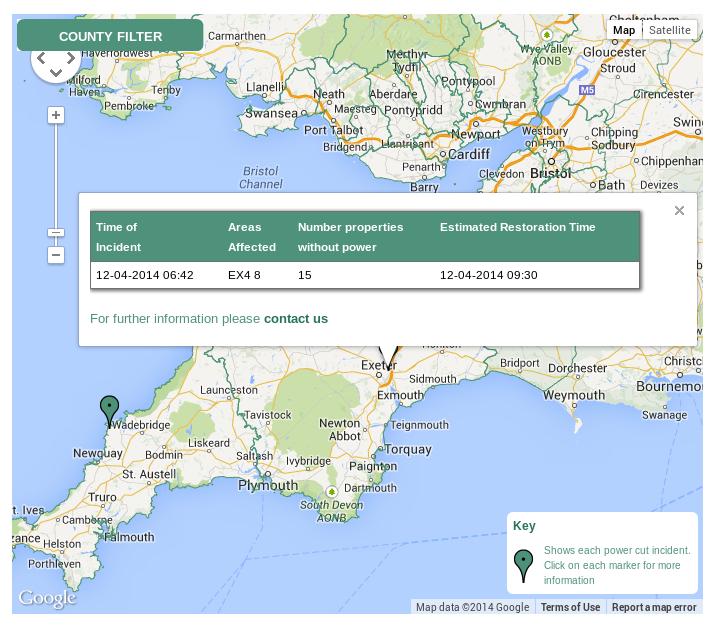
Whilst they didn’t have such a thing last time I checked, during the recent winter storms, I was also informed that Western Power now provide an online power cut map. This is how it looked on the morning of Saturday April 12th 2014:

Western Power Distribution power cut map at 08:39 BST on Saturday April 12th

Western Power Distribution power cut map at 08:39 BST on Saturday April 12th


It seems as though “running off a generator” doesn’t count as a “power cut”, because Dunchideock isn’t on that map, all of which meant that WPD could now fix the problem as and when time permitted. Here’s how things were looking by Sunday evening:

By Monday morning the epoxy resin in the Lovink red box had set, the big hole in the ground was filled in, and we were all back on mains power once again. All of which raises a few questions, in my mind at least.

In my conversations with WPD’s duty engineers I enquired whether this particular failure might be in any way attributable to the recent wet and windy winter weather here in South West England I alluded to earlier. I was told that while a causal link with any single failure was impossible to establish, it was conceivable that WPD’s electricity distribution network had suffered additional “stress” due to increased lightning strikes and the potential for trees to be more easily toppled by strong winds whilst their roots were sitting in sodden soil. I also idly enquired about the stresses placed on the network by renewable generation in the South West, but that story will require an article of its own at the very least.

In the meantime I’ve been pondering how this saga would have panned out if some of the homes in Dunchideock had already been in possession of an electric vehicle and some vehicle to home or even vehicle to grid technology. Since the powers that be here in the UK don’t seem to be wild about either of those concepts maybe a pile of shiny new lithium ion batteries from Tesla in the corner of each garage in Dunchideock might be more realistic to speculate about, or at the very least some second user EV batteries that are at least receiving some R&D funding on this side of the Atlantic? In that case perhaps we should add distributed storage to grid (or S2G for short) to our list of TLAs under consideration?

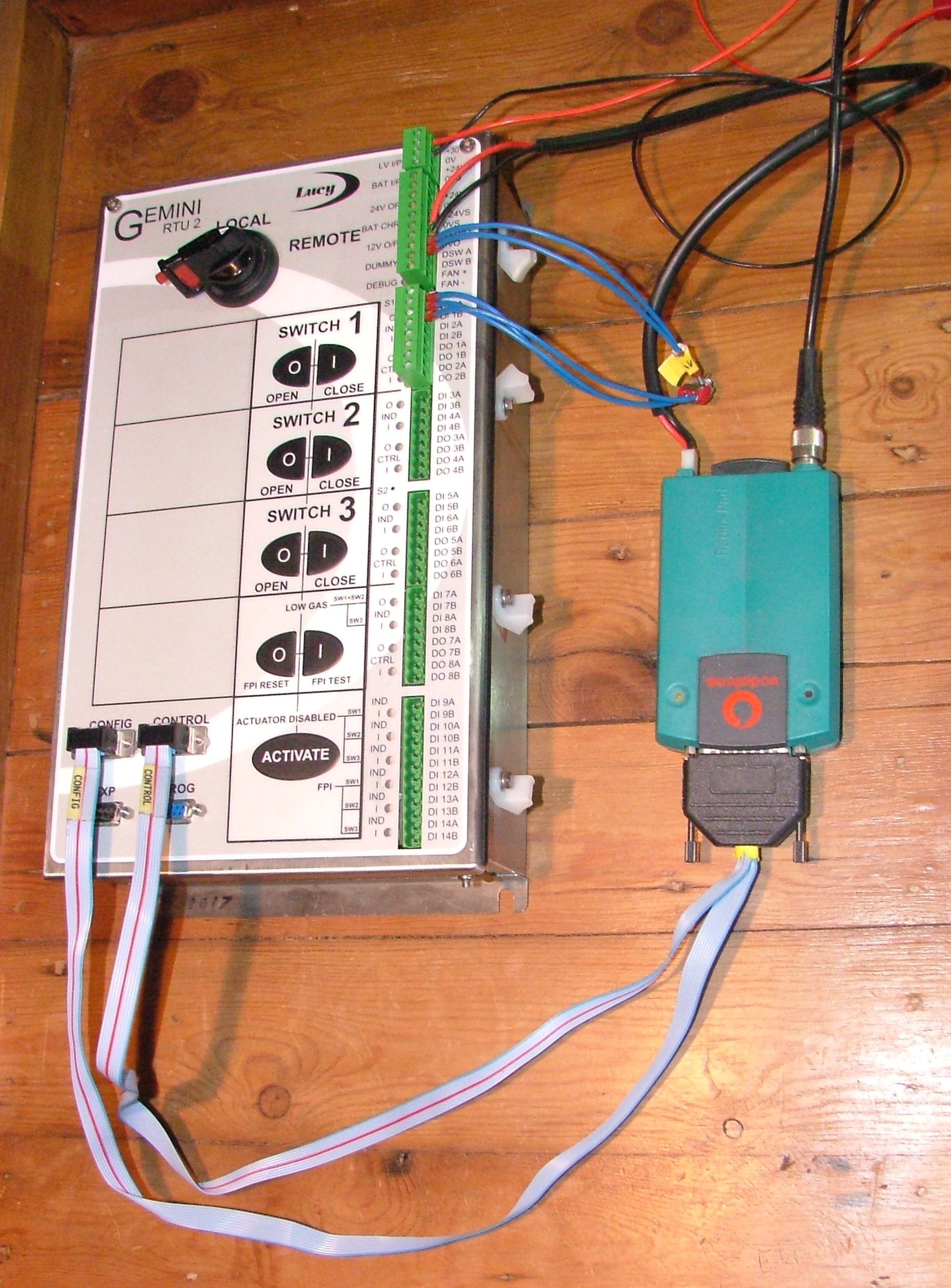
The lights wouldn’t have gone out in any V2H or storage equipped home. Their broadband would have kept on working too, so information about the failure could have been swiftly despatched to WPD’s control centre to enable the location of the fault to be pinpointed more swiftly. If some people had V2G and/or S2G installed as well, and subject to being suitably reimbursed for their public spiritedness, they could have kept their neighbours’ lights on as well as their own provided that WPD’s equipment was capable of sectionalising their network with greater granularity than at present. As luck would have it there is a pile of such equipment already in Dunchideock, although it’s only in the V2G lab at the moment rather than attached to any of the WPD poles I’ve mentioned apart from the one in Alphington, or in the corner of anyone else’s garage in Dunchideock. Here’s what a remote terminal unit looks like from the outside:

A Lucy Switchgear Gemini Remote Terminal Unit plus PakNet PAD

A Lucy Switchgear Gemini Remote Terminal Unit plus PakNet PAD

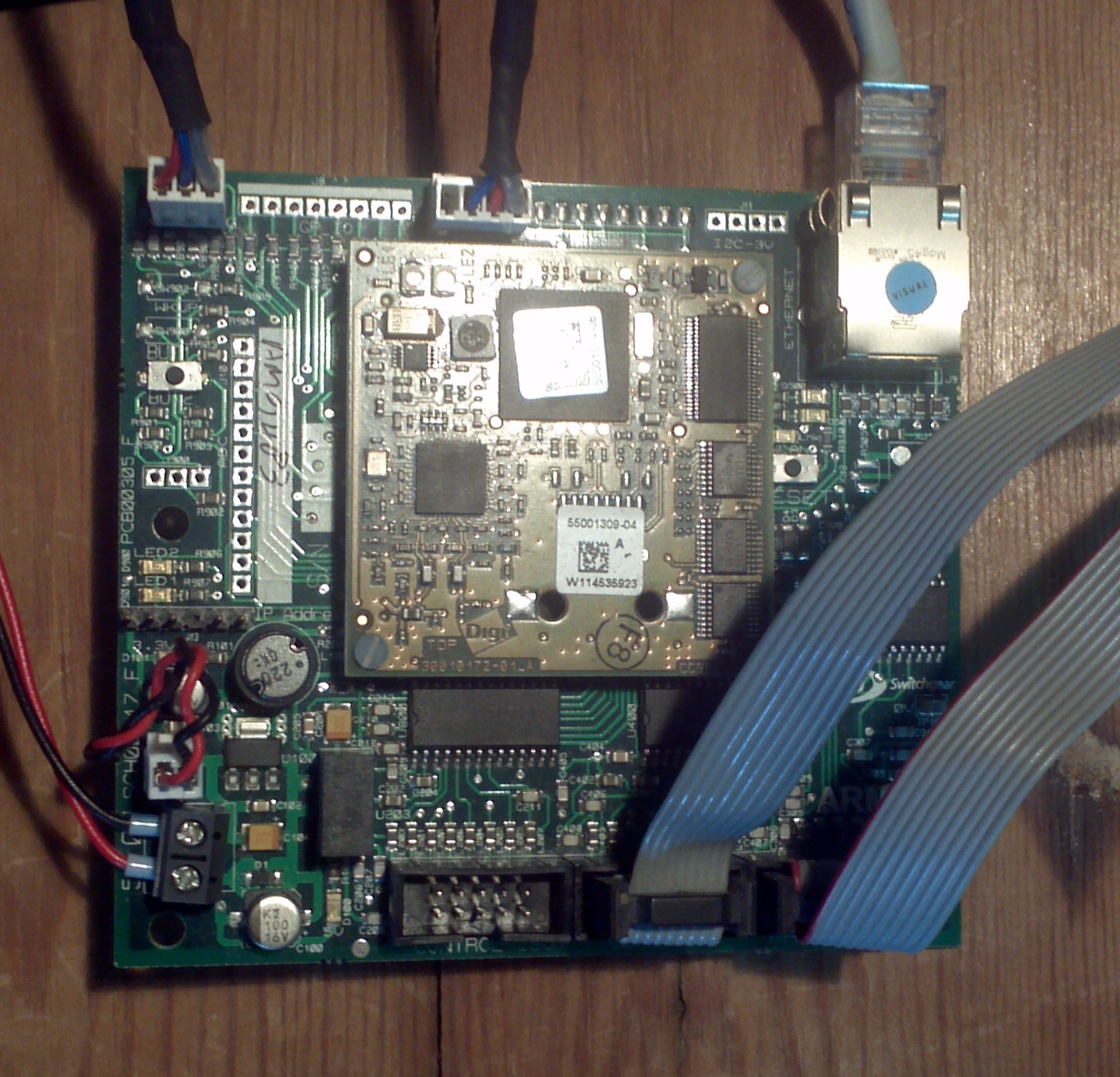
and here’s what the ARM powered CPU board on the inside looks like:

Gemini ARM CPU card

A Lucy Switchgear Gemini ARM CPU card, connected to the internet

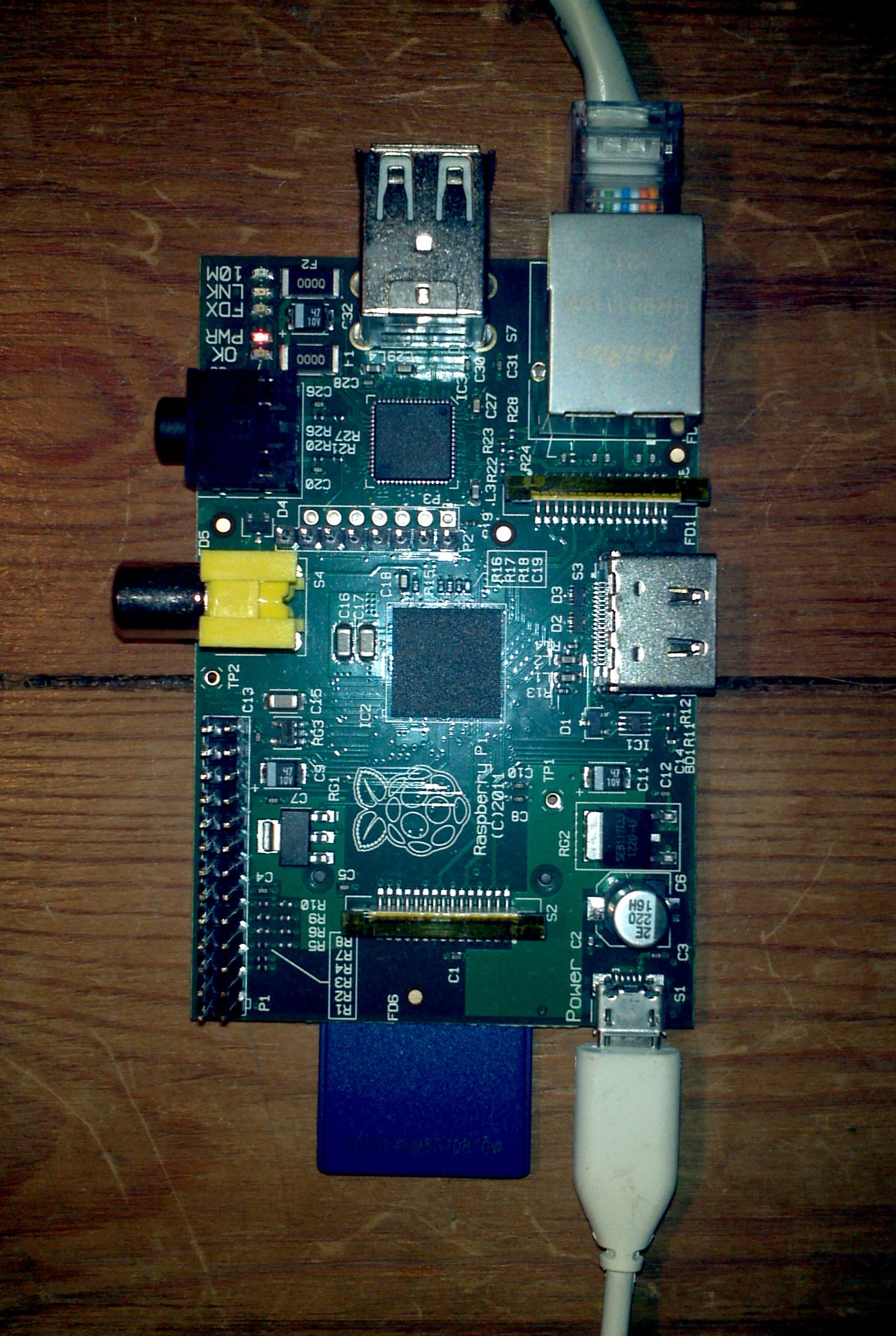
As you can see, in actual fact it’s not a whole lot different to a Raspberry Pi, or the guts of the average smartphone for that matter:

A Raspberry Pi model B, connected to the internet

A Raspberry Pi model B, connected to the internet

Hence such a piece of electronics wouldn’t in and of itself add a whole lot to the price of an electric vehicle and/or a garage in Dunchideock, or anywhere else on the planet for that matter.

In conclusion, I also cannot help but wonder how much the Great Dunchideock Blackout cost Western Power Distribution, how much the evidently changing climate in this part of the world is costing and will cost them, and how their electricity distribution network is coping with the assorted stresses and strains generated by all the renewable power sources currently being tacked onto it down here in not so Sunny South West England that do not currently have any form of energy storage associated with them.

Google Gives UK Schools Piles of Raspberry Pi Kits

Last year Google chairman Eric Schmidt warned that Britain was throwing away its “great computer heritage” by failing to teach programming in schools. Mr. Schmidt also promised some funds to teach teachers how to use the Raspberry Pi “microcomputer” to teach programming. Now Google has taken the next obvious step, and promised more money to put piles of Pis in UK classrooms. According to the BBC:

Schools around the UK are to be given 15,000 free microcomputers, with a view to creating a new generation of computer scientists. Funded by Google, the Raspberry Pi Foundation hopes the free devices will inspire children to take up coding.

Eric Schmidt put it this way:

Britain’s innovators and entrepreneurs have changed the world – the telephone, television and computers were all invented here. We have been working to encourage the next generation of computer scientists and we hope this donation… to British school pupils will help drive a new wave of innovation.

Not everybody appears to be happy with Google’s initiative however. The National Union of Teachers said that:

Schools are increasingly being used as marketing venues by companies promoting their own brands in return for teaching resources, books, sports equipment or computers. Commercial sponsorship of school resources and equipment and their involvement in training can actively undermine teachers’ efforts to educate children about the dangers of manipulation and commercial exploitation.

Somewhat surprisingly it seems that Microsoft are at least partly in agreement with Google on this issue. According to Steve Beswick, their Director of Education:

Computer science is something that we have been calling the ‘fourth science’ for some time. We believe that it is every bit as important as physics, chemistry and biology. By formally introducing children to computer science basics at primary school, we stand a far greater chance of increasing the numbers taking the subject through to degree level and ultimately the world of work.

Perhaps Microsoft will soon also be providing NUT members with free hardware around which to develop cross-curricular “fourth science/dismal science” lessons on modelling the benefits of increased knowledge of computer science to the Great British Economy?

Whether that comes to pass or not it seems that the Great British Government agrees with Google and Microsoft that such benefits will in fact occur. Education Secretary Michael Gove has just announced that computer science will be added to the English Baccalaureate syllabus. According to a Department for Education spokesperson:

We need to bring computational thinking into our schools. Having Computer Science in the EBacc will have a big impact on schools over the next decade. It will mean millions of children learning to write computer code so they are active creators and controllers of technology instead of just being passive users. It will be great for education, great for the economy, and will help restore the spirit of Alan Turing and make Britain a world leader again.

Here’s Eben Upton and Eric Schmidt explaining “Google’s secret plan” to some Great British Schoolchildren:

Long live the spirit of Alan Turing!

Fresh Raspbian Refreshes the Raspberry Pi

A few days ago I was complaining (albeit only slightly!) about sluggishness whilst scrolling through the V2G blog on my shiny new Raspberry Pi. Now however help is at hand, in the form of the official release of the “Raspbian” flavour of Debian “Wheezy” Linux. According to Eben Upton on the Raspberry Pi blog this morning:

We are pleased to announce the release of our first SD card image based on the Raspbian distribution. This is the result of an enormous amount of hard work by Alex and Dom over the past couple of months, and replaces the existing Debian squeeze image as our recommended install. Notably, it is the first official image to take full advantage of the Raspberry Pi’s floating point hardware for, amongst other things, much faster web browsing.

Users who are still using Debian squeeze will definitely want to switch to this, as it contains numerous tweaks and performance improvements to the firmware, kernel and applications.

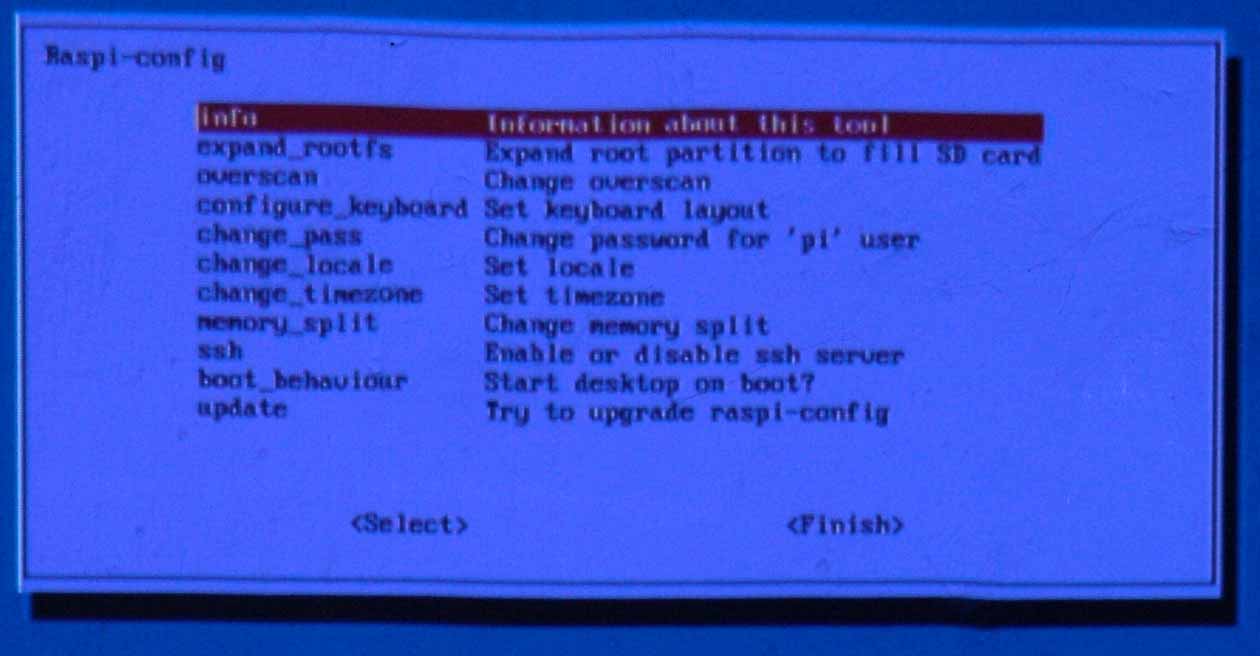
Needless to say the first thing I did when I heard the news was to download the new image  (2012-07-15-wheezy-raspbian.zip) from one of the many “alternative” Raspberry Pi mirror sites.  The first thing I noticed was that on the inital boot I was presented with the shiny new (to me at least) raspi-config utility:

The RasPiConfig utility on the V2G Office wall

The RasPiConfig utility on the V2G office wall

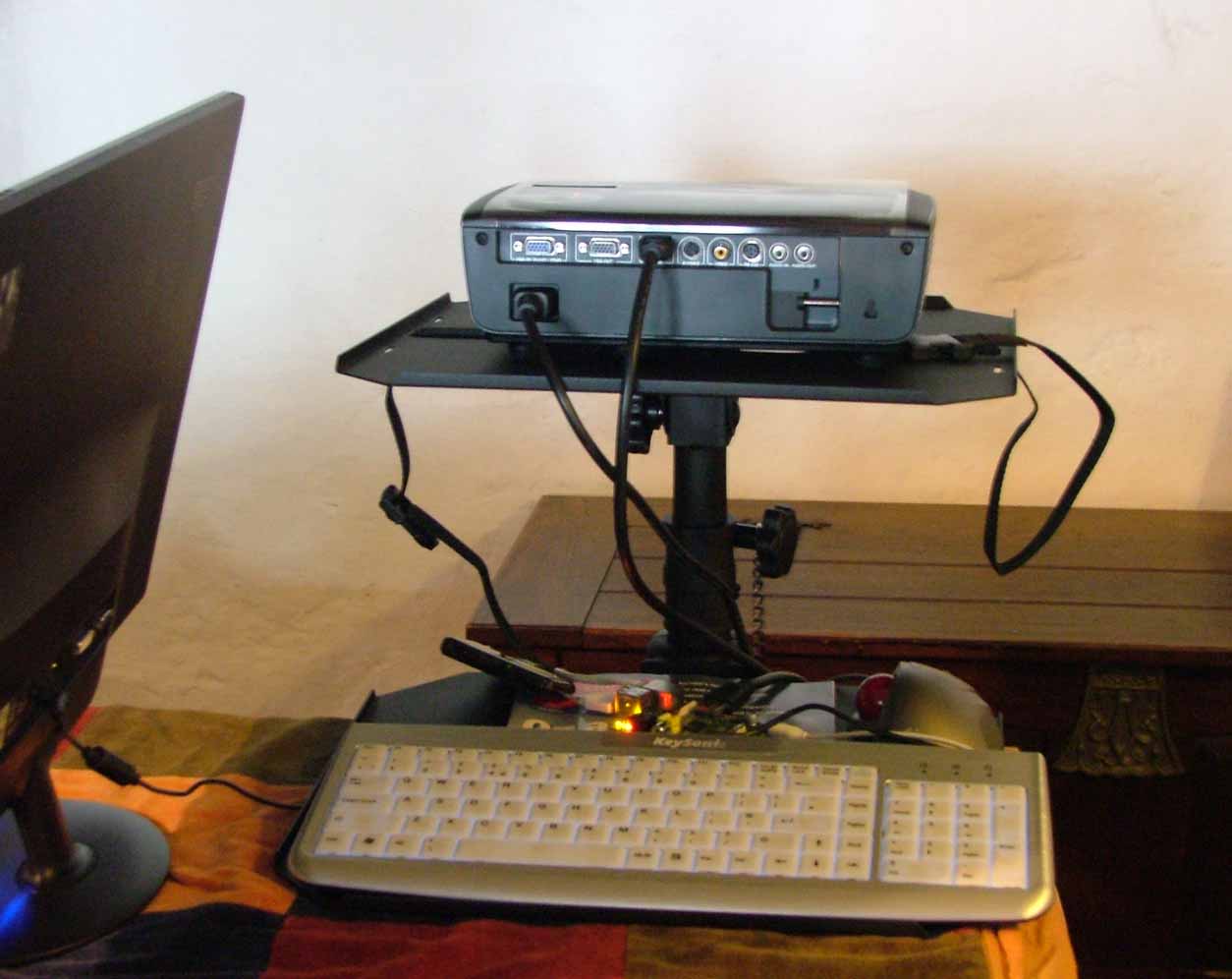
I duly used it to expand the root partition to use the whole of my 8Gb SD card, and also to configure my Pi to boot into a graphical desktop automatically. In case you’re wondering why that picture is a bit fuzzy and a slightly strange colour, here’s one reason.

The V2G Pi Projector System

The V2G Pi Projector System

You’ll note that we have a shiny new display device to go with our shiny new operating system.  The first picture is of the V2G office wall, now powered by a shiny new Optoma HD600-X LV projection display driven by a Raspbian equipped Raspberry Pi model B.

After a reboot I then tried out the Midori web browser in anger once more, I’m happy to confirm that reading the V2G blog on a RasPi no longer feels “remarkably similar to wading through treacle”:.

No Gnome Means No Screenshots

No Gnome means no screenshots

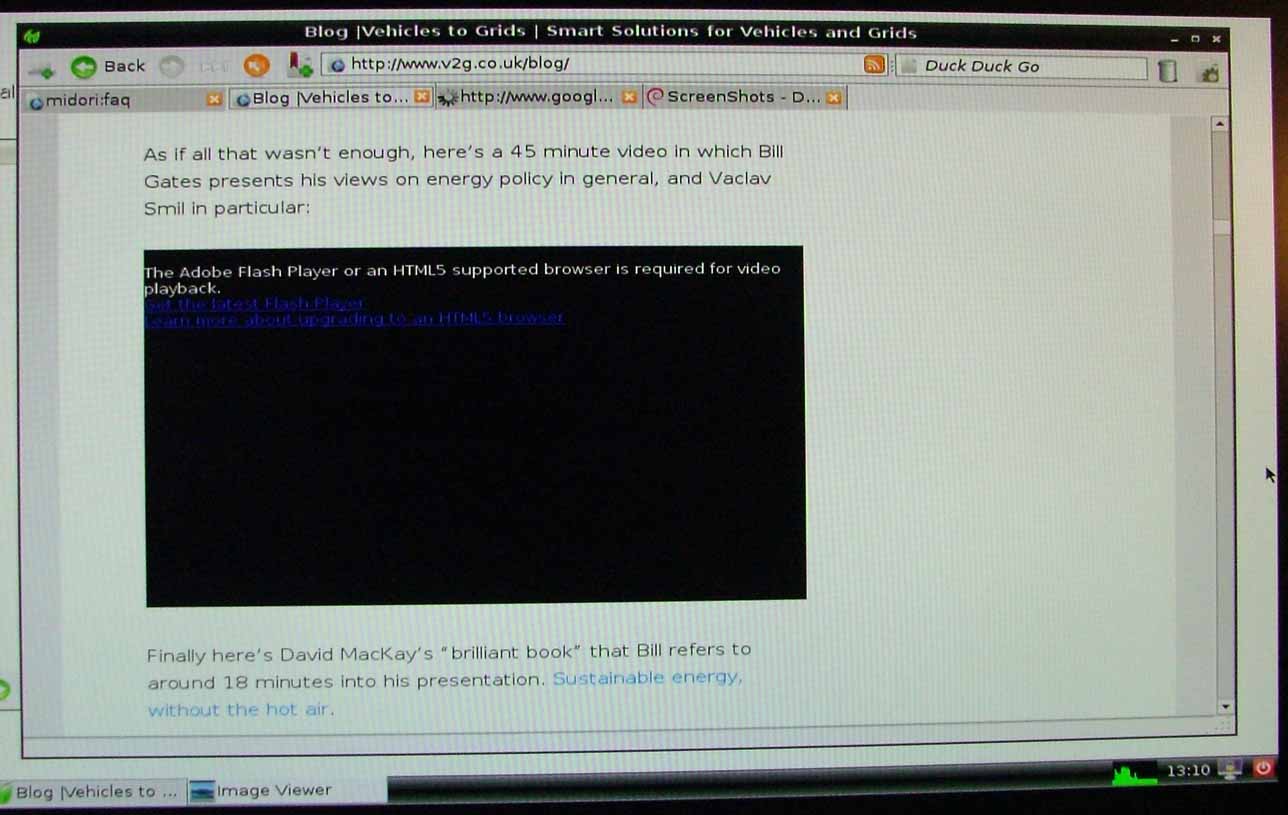
The raw Raspbian distribution seems to be cut right down to the bare essentials, and after a brief hunt I couldn’t find my familiar Gnome desktop, or even some sort of “Paint” utility. Hence I’ve resorted to taking pictures of screens, not to mention walls! Finally, for today at least, swiftly scrolling through the V2G blog did reveal one remaining “feature” to me:

"An HTML5 supported browser is required for video playback"

"An HTML5 supported browser is required for video playback"

It seems to be a trifle tricky to watch web videos with Raspbian Midori at the moment!


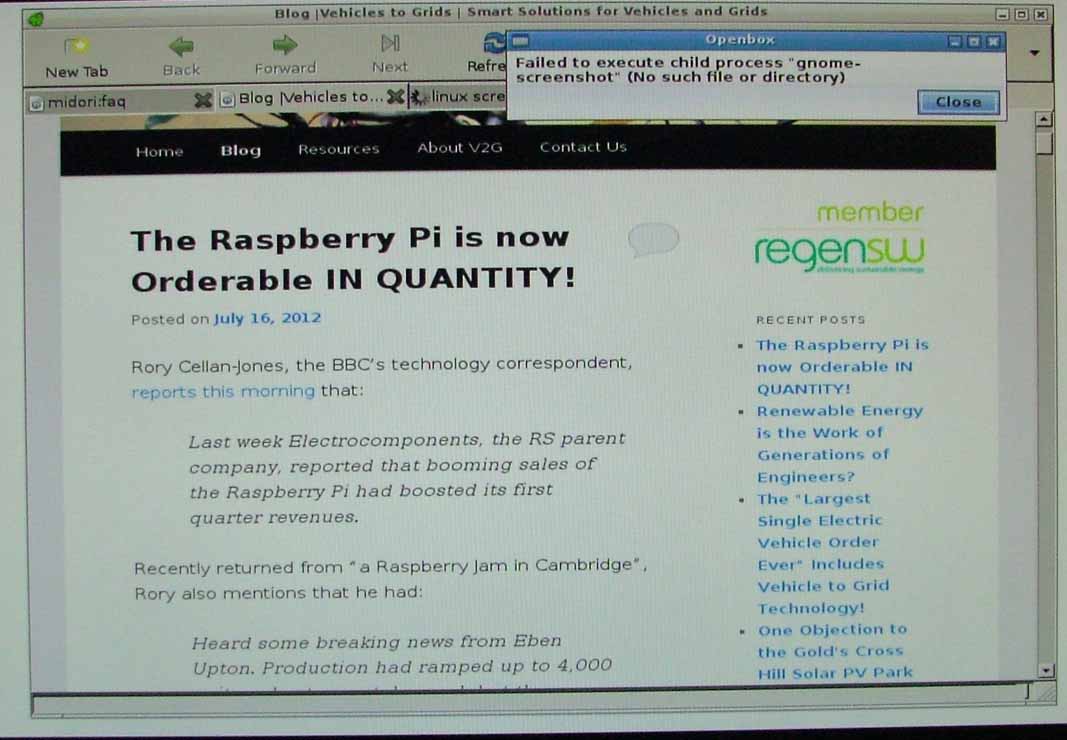
The Raspberry Pi is now Orderable IN QUANTITY!

Rory Cellan-Jones, the BBC’s technology correspondent, reports this morning that:

Last week Electrocomponents, the RS parent company, reported that booming sales of the Raspberry Pi had boosted its first quarter revenues.

Recently returned from “a Raspberry Jam in Cambridge”, Rory also mentions that he had:

Heard some breaking news from Eben Upton. Production had ramped up to 4,000 units a day to meet demand, but there was still a backlog of orders.


But what really excited the crowd was the announcement that a camera module for the device was coming very soon, priced at $20-$25 and offering 5MP photos and good quality video.

According to Rory, Eben also said:

It’s been completely crazy. At Christmas last year we thought we might sell 10,000 of these devices, so to be sitting here with 200,000 out in the wild and plans to get to a million by the end of the year is just incredible.

In other Raspberry Pi flavoured news this morning, Liz Upton reports on the Raspberry Pi blog that:

Up until now, we’ve had to restrict purchases of the Raspberry Pi to one per customer  because the demand has been (and continues to be) so high. Both of our manufacturing partners have been working at building capacity so you we can lift that limit – right now, 4000 Raspberry Pis are being made every day. As of this morning, you’ll be able to buy as many Raspberry Pis as you want.

Unfortunately delivery won’t be next day, because according to Jo from RS:

We’re currently forecasting that these orders will start reaching customers by the end of September.

Nonetheless this would seem to be a step in the right direction if you’re currently planning on having a classroom full of RasPis ready in time for the start of the next academic year, with or without 5 megapixel cameras attached.


Liz Upton reports on the Raspberry Pi blog this morning that:

Up until now, we’ve had to restrict purchases of the Raspberry Pi to one per customer  because the demand has been (and continues to be) so high. Both of our manufacturing partners have been working at building capacity so you we can lift that limit – right now, 4000 Raspberry Pis are being made every day. As of this morning, you’ll be able to buy as many Raspberry Pis as you want.

Delivery won’t be next day however, because according to Jo from RS Components:

We’re currently forecasting that these orders will start reaching customers by the end of September.

Nonetheless this would seem to be a step in the right direction if you’re currently planning on having a classroom full of RasPis ready in time for the start of the next school year.


V2G Celebrate the Arrival of a Raspberry Pi

I expressed my interest in purchasing a Raspberry Pi from both Farnell Element14 and RS Components way back on April 18th. Finally my patience has been rewarded, and the one from Farnell landed on my doormat this morning. This is what it looks like:

The V2G Raspberry Pi connected up and working well

The V2G Raspberry Pi connected up and working well

I followed the instructions for “if you’re just starting out” and loaded my trusty 8Gb class 6 SD card with the Debian “Squeeze” flavour of Linux, downloaded from the Raspberry Pi downloads page. Then I plugged everything in and powered up my Pi using the charger from my Kindle. According to the label on the bottom this puts out “5V at 0.85A”. This seemed to be adequate, since things seemed to work as anticipated after starting up for first time. I found I needed to start X manually (“sudo startx &” seemed to do the trick) and having done that opening up an xterm and the Midori web browser went well enough also. Here’s how things looked at that stage:

The V2G Rapberry Pi displaying a self referntial V2G blog post!

The V2G Raspberry Pi, displaying a self referential V2G blog post!

I did notice that scrolling through the V2G blog become remarkably similar to wading through treacle at one point, as the CPU usage indicator hit the end stops. As teething troubles go running embedded Linux on a new board for the first time that’s pretty minor though, I can assure you!

Apart from Debian, other prebuilt images are available for the RasPi. As a CentOS/Fedora man myself I was pleased to discover that  Fedora is available too, even though it’s not advertised on the main download page. That’s what I’ll experiment with next, as soon as I’ve ordered a few more SD cards. As if all that wasn’t enough to be going on with a new kid on the block arrived a few days ago, since an official port of Google’s Chromium OS by Liam McLoughlin is now available also.

Finally, for the moment at least, a few days ago I got an email from RS informing me I could now preorder a Raspberry Pi from them too. The only downside is that the lead time currently appears to be 11 weeks!

The V2G RasPi from RS is due in three months or so

The V2G RasPi from RS is due in three months or so

Google Recommend the Raspberry Pi at The Science Museum

Yesterday Nesta and The Science Museum unveiled a report on the “Legacy of the BBC Micro“.  The preface to the report outlines how last year Google Chairman Eric Schmidt gave a speech at the Edinburgh TV Festival that:

Contained a stark warning about how Britain was throwing away its great computer heritage by failing to teach programming in schools.

and then explains how the report:

Explores the lessons for bringing back an ambitious vision of technological literacy to today’s Britain.

Coincidentally Eric Schmidt gave another speech yesterday at the Science Museum in London, which also mentioned the topic of computer literacy . This time around Mr Schmidt offered to put some of Google’s money where it’s mouth is. According to the BBC they:

Would provide the funds to support Teach First – a charity which puts “exceptional” graduates on a six-week training programme before deploying them to schools where they teach classes over a two-year period.

and according to Nesta:

Some of the money has been earmarked for relevant teaching equipment, including the new Raspberry Pi computer.

According to Eric Schmidt in his speech yesterday:

If the past has taught us anything, it’s that if you connect people with information they will change the world. The success of the BBC Micro in the 1980s shows what’s possible. There’s no reason why Raspberry Pi shouldn’t have the same impact, with the right support.
It remains to be seen how much support will be forthcoming in these troubled times, and how much impact Google’s initiative and the Raspberry Pi will ultimately have on technological literacy here in the UK and abroad.


Raspberry Pi Progresses on a Few Fronts

I registered my interest in buying a Raspberry Pi single board computer several weeks ago, and yesterday I finally received an email from Farnell/Element14 assuring me that:

We are very pleased to tell you that you can now pre-order your Raspberry Pi. Current lead-times for new orders are July/August depending upon where you are in the registration queue. At this time orders will continue to be kept to one per person, to ensure the products get into the right hands.

Of course I clicked the link in the email and parted with my company credit card number for the grand total of 29.46 GBP including shipping and VAT for my very own RasPi model B.  Unfortunately the order confirmation informs me that the “Estimated Delivery Date” is the “Week Commencing 17/09/2012”, so I’m still not entirely clear when I’ll be able to start my own experiments with what Rory Cellan-Jones, the BBC’s technology correspondent describes as:

A credit-card sized computer designed to encourage children to learn programming, [which] caught the imagination of millions when it was unveiled in February.

Rory is one of the lucky few to have received his credit-card sized board already, and concludes his review of the Raspberry Pi as follows:

The device may inspire a new generation of computer programmers or it could leave children used to smartphones and tablet computers baffled and bewildered.  A great experiment with the way we teach computing has begun and we can’t be sure how it will end.

which seems to me to sum up the current position nicely.

Although the product seems to be selling itself, here’s how Element14 are currently presenting the Raspberry Pi to the world:

On another raspberry flavoured front it was announced on Twitter earlier today that:

The MagPi team are proud to launch a new official HTML website.

The MagPi is “is a voluntary-run magazine for the Raspberry Pi computer user community.” and the first issue of the magazine is available for download via the aforementioned website. One of the articles discusses “the dawn of affordable computing” in the United Kingdom.

It would seem that my memory extends slightly further back in time than the MagPi team’s. My own first “home computer” was a Nascom 1, which predates the Sinclairs and Acorns that they mention by a few years.  It bore some similarity to the Raspberry Pi in so far as it came as a bare board that needed connecting to a TV if you wanted to see what was going on.  However the size of the board was very much larger than a credit card, which was just as well since you had to solder in the numerous components yourself. The price was also very much higher than the Raspberry Pi model B’s $35, especially if you allow for inflation since the late 70’s!

I trust that the Raspberry Pi Foundation won’t suffer the same fate as Nascom, who were effectively victims of their own success. They swiftly went bankrupt following component sourcing difficulties caused by unanticipated demand for their ground breaking products!