
Is Apple Developing an Electric Vehicle?

According to Bloomberg the answer to the question posed in our title is a most definite yes! In a February 19th article Tim Higgins says that:

Apple Inc., which has been working secretly on a car, is pushing its team to begin production of an electric vehicle as early as 2020, people with knowledge of the matter said.

The timeframe — automakers typically spend five to seven years developing a car — underscores the project’s aggressive goals and could set the stage for a battle for customers with Tesla Motors Inc. and General Motors Co., both of which are targeting a 2017 release of an electric vehicle that can go more than 200 miles on a single charge and cost less than $40,000.

then adds that:

Apple representatives declined to comment for this story.

According to Bloomberg, however:

Apple began around June an “aggressive campaign to poach” employees from A123 Systems LLC, the Waltham, Massachusetts-based battery maker said in a lawsuit against Apple filed this month.

Apple hired five people from A123 and has tried to hire battery experts from LG Chem Ltd, Samsung Electronics Co., Panasonic Corp., Toshiba Corp. and Johnson Controls Inc., according to the lawsuit.

Bloomberg also talked to Tesla CEO Elon Musk, who told them:

That Apple was seeking to hire away his workers, offering $250,000 signing bonuses and 60 percent salary increases.

It seems as though when it comes to EVs, there’s never any smoke without fire?

[Edit – Saturday February 21st 2015]

This morning’s edition of The Economist includes an article on the Apple EV rumours:

APPLE’S ability to make desirable iGadgets designed for easy portability is beyond question. Reports emerged this week that it is planning to make a mobile device that will instead carry its users—an electric car. Apple’s plans are unclear and unconfirmed. By some accounts it has put a few hundred people to work developing cars to match Tesla, another Silicon Valley firm that makes fast and luxurious battery-powered saloons. Others reckon that it is working on a self-driving car.

Plenty of other tech firms are turning their attention to cars. In February Uber, a firm that provides taxis through a smartphone app, said it would set up a laboratory in Pittsburgh to develop self-driving taxis. Sony recently put money into ZMP, a self-driving car startup; Google has been working for years on driverless cars.

The Economist doesn’t sound optimistic about the future for the alleged Apple EV:

The likes of Apple may not know much about pistons and gearboxes, but the big challenge for electric cars is batteries. Battery-powered cars have many advantages: refuelling at home, cheap running costs and no tailpipe emissions. But the market for pure electric vehicles is tiny:

Expensive batteries make for costly cars, and limited range and a lack of recharging infrastructure have put off most drivers. Nissan’s Leaf, the world’s best-selling electric car, attracted only 40,000 buyers last year compared with the 250,000 the company once hoped to shift. Tesla aspires to enter the mass market but so far it has dealt with the battery problem by putting lots of them in a big, expensive car, thereby limiting it to a luxury niche. The plunging oil price dents the prospects for electrification still further.
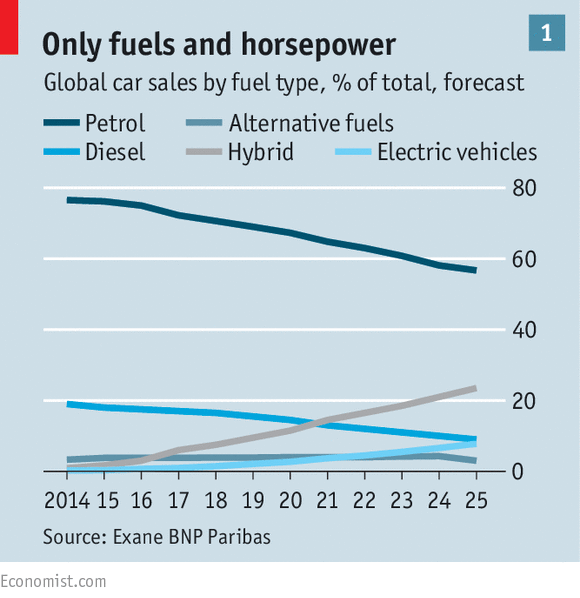
and concludes:

Tech firms may be better off working with carmakers, to develop the software that will provide the brains of the self-driving car, and to improve the range and battery costs of the electric car. In the motor industry, supplying the key parts is generally more profitable than putting the cars together, even if you do not get your company’s badge on the bonnet. In the future cars will be different but the brands will probably be much the same.


Google Gives UK Schools Piles of Raspberry Pi Kits

Last year Google chairman Eric Schmidt warned that Britain was throwing away its “great computer heritage” by failing to teach programming in schools. Mr. Schmidt also promised some funds to teach teachers how to use the Raspberry Pi “microcomputer” to teach programming. Now Google has taken the next obvious step, and promised more money to put piles of Pis in UK classrooms. According to the BBC:

Schools around the UK are to be given 15,000 free microcomputers, with a view to creating a new generation of computer scientists. Funded by Google, the Raspberry Pi Foundation hopes the free devices will inspire children to take up coding.

Eric Schmidt put it this way:

Britain’s innovators and entrepreneurs have changed the world – the telephone, television and computers were all invented here. We have been working to encourage the next generation of computer scientists and we hope this donation… to British school pupils will help drive a new wave of innovation.

Not everybody appears to be happy with Google’s initiative however. The National Union of Teachers said that:

Schools are increasingly being used as marketing venues by companies promoting their own brands in return for teaching resources, books, sports equipment or computers. Commercial sponsorship of school resources and equipment and their involvement in training can actively undermine teachers’ efforts to educate children about the dangers of manipulation and commercial exploitation.

Somewhat surprisingly it seems that Microsoft are at least partly in agreement with Google on this issue. According to Steve Beswick, their Director of Education:

Computer science is something that we have been calling the ‘fourth science’ for some time. We believe that it is every bit as important as physics, chemistry and biology. By formally introducing children to computer science basics at primary school, we stand a far greater chance of increasing the numbers taking the subject through to degree level and ultimately the world of work.

Perhaps Microsoft will soon also be providing NUT members with free hardware around which to develop cross-curricular “fourth science/dismal science” lessons on modelling the benefits of increased knowledge of computer science to the Great British Economy?

Whether that comes to pass or not it seems that the Great British Government agrees with Google and Microsoft that such benefits will in fact occur. Education Secretary Michael Gove has just announced that computer science will be added to the English Baccalaureate syllabus. According to a Department for Education spokesperson:

We need to bring computational thinking into our schools. Having Computer Science in the EBacc will have a big impact on schools over the next decade. It will mean millions of children learning to write computer code so they are active creators and controllers of technology instead of just being passive users. It will be great for education, great for the economy, and will help restore the spirit of Alan Turing and make Britain a world leader again.

Here’s Eben Upton and Eric Schmidt explaining “Google’s secret plan” to some Great British Schoolchildren:

Long live the spirit of Alan Turing!

Google Recommend the Raspberry Pi at The Science Museum

Yesterday Nesta and The Science Museum unveiled a report on the “Legacy of the BBC Micro“.  The preface to the report outlines how last year Google Chairman Eric Schmidt gave a speech at the Edinburgh TV Festival that:

Contained a stark warning about how Britain was throwing away its great computer heritage by failing to teach programming in schools.

and then explains how the report:

Explores the lessons for bringing back an ambitious vision of technological literacy to today’s Britain.

Coincidentally Eric Schmidt gave another speech yesterday at the Science Museum in London, which also mentioned the topic of computer literacy . This time around Mr Schmidt offered to put some of Google’s money where it’s mouth is. According to the BBC they:

Would provide the funds to support Teach First – a charity which puts “exceptional” graduates on a six-week training programme before deploying them to schools where they teach classes over a two-year period.

and according to Nesta:

Some of the money has been earmarked for relevant teaching equipment, including the new Raspberry Pi computer.

According to Eric Schmidt in his speech yesterday:

If the past has taught us anything, it’s that if you connect people with information they will change the world. The success of the BBC Micro in the 1980s shows what’s possible. There’s no reason why Raspberry Pi shouldn’t have the same impact, with the right support.

It remains to be seen how much support will be forthcoming in these troubled times, and how much impact Google’s initiative and the Raspberry Pi will ultimately have on technological literacy here in the UK and abroad.