Storm Katie Cuts Power Across Southern England

On Easter Saturday the Met Office announced the impending arrival of another named storm from across the Atlantic:

Storm Katie is forecast to affect southern England and south Wales on Easter Monday

Anticipating the development of an area of low pressure, which will affect southern England and south Wales on Easter Monday, The Met Office has decided to name the storm Katie. This will be the 11th named storm since last autumn.

A National Severe Weather Warning for strong winds has been issued, covering much of Easter Monday.

The Met Office also issued a severe weather warning for the winds from Storm Katie across Southern England:

Issued at: 1031 on Sat 26 Mar 2016
Valid from: 0115 on Mon 28 Mar 2016
Valid to: 1400 on Mon 28 Mar 2016

Winds will strengthen markedly across southern England and through the Bristol Channel from the start of Monday, with the potential for 50-60 mph gusts inland and 70 mph gusts around coasts exposed to the south. Whilst there is a low likelihood of all areas seeing these strong gusts for a time southern coastal counties from Hampshire eastwards look most likely to see the strongest winds. These will then ease from the southwest during the morning, clearing from the east early in the afternoon. Additional hazards may include large waves around exposed coasts as well as a period of heavy rain.

Please be aware of the potential for disruption to outdoor activities and travel, as well as the possibility of fallen trees and temporary interruptions to power supplies.

On Easter Sunday the Met Office’s “Chief Forecaster’s assessment” firmed up the forecast a bit, saying that:

There is increased confidence in the likelihood of a period of disruptive southerly winds, veering westerly later. Winds are likely to be strongest in southern coastal areas, but there is potential for some very strong, squally gusts inland during the morning before winds ease from the west during the day.

Now the morning of Easter Monday has arrived, as have those “temporary interruptions to power supplies”. Storm Katie has done her worst, and here’s how the damage looked at 08:00 BST. First of all here’s Western Power Distribution‘s current power cut map:

Further east here’s Scottish and Southern Energy Power Distribution‘s power cut map:

and here’s one from UK Power Networks‘ for South East England:

Unlike WPD, SSEPD and UKPN don’t publish real time tables of the number of properties without power. SSEPD are however providing a “Live Storm Feed” for Katie:

According to their latest news bulletins:

Southern Electric Power Distribution has more than 900 engineering, technical and support staff on duty to deal with Storm Katie, and since last night power has been restored to 40,300 customers.

There are currently 28,497 customers in West Sussex whose power supply have been affected by Storm Katie.

There are currently 4,152 customers in Berkshire whose power supply have been affected by Storm Katie.

There are currently 2,893 customers in Dorset whose power supply have been affected by Storm Katie.

According to the UKPN Press Office:

There are currently 19,000 properties without power across South East England (Kent, Surrey and Sussex)

SSEPD are also “Live Tweeting” about the problems Katie’s winds have caused their network:

A Nissan LEAF Goes Surfing

Our apologies for the delay in publishing this article, but at this juncture it appears as though British Telecom have pushed out a firmware upgrade which has broken some (or all?) of their “business hubs” in the UK:

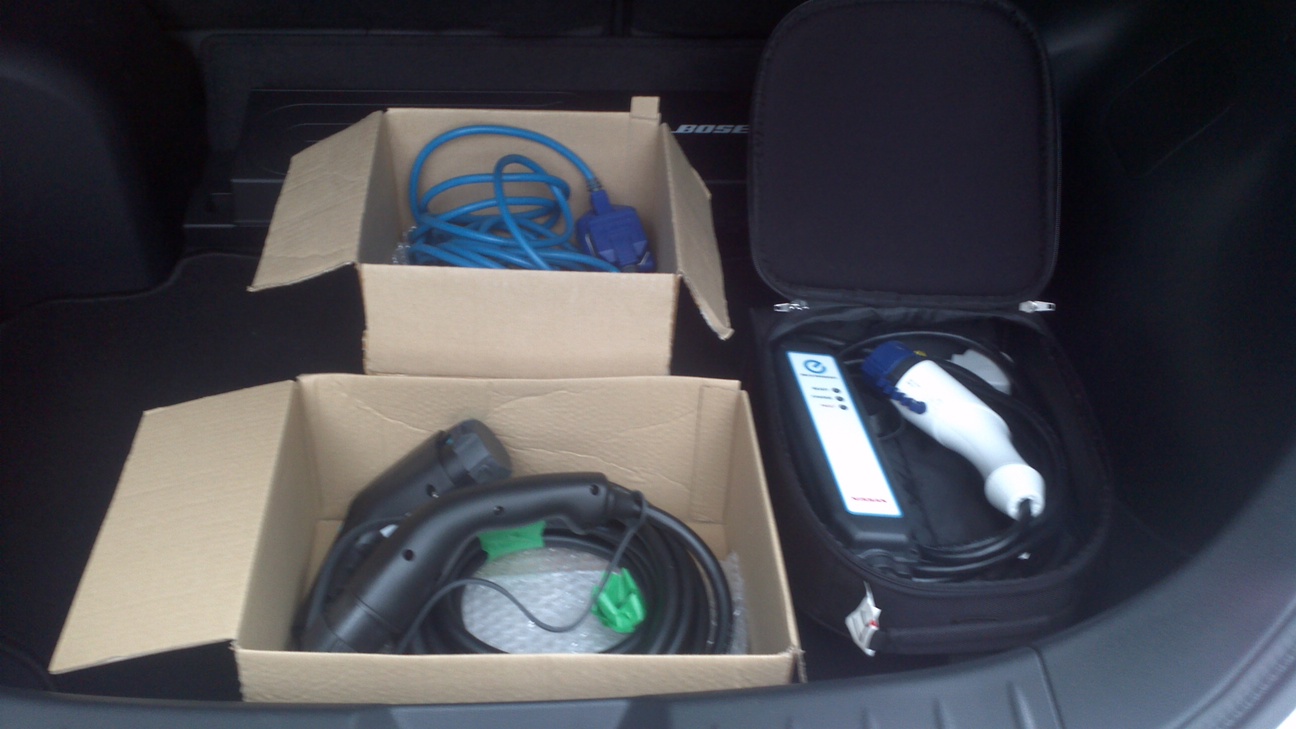
Whilst we wait for them to sort out the problem, which hit us 2 days ago, we’ve reverted to an ancient “2Wire” WiFi router that was gathering dust on one of our shelves. Having intended to head for North Cornwall at 9:30 on Saturday at the latest we eventually hit the road shortly after 11:00. Here’s our set of charging cables:

The blue one is a 10 meter 13 amp extension cable, just in case none of our planned rapid charging stations en route proved to be fully functional! When packing our bodyboarding gear Kasia’s 36″ board fitted in the boot easily:

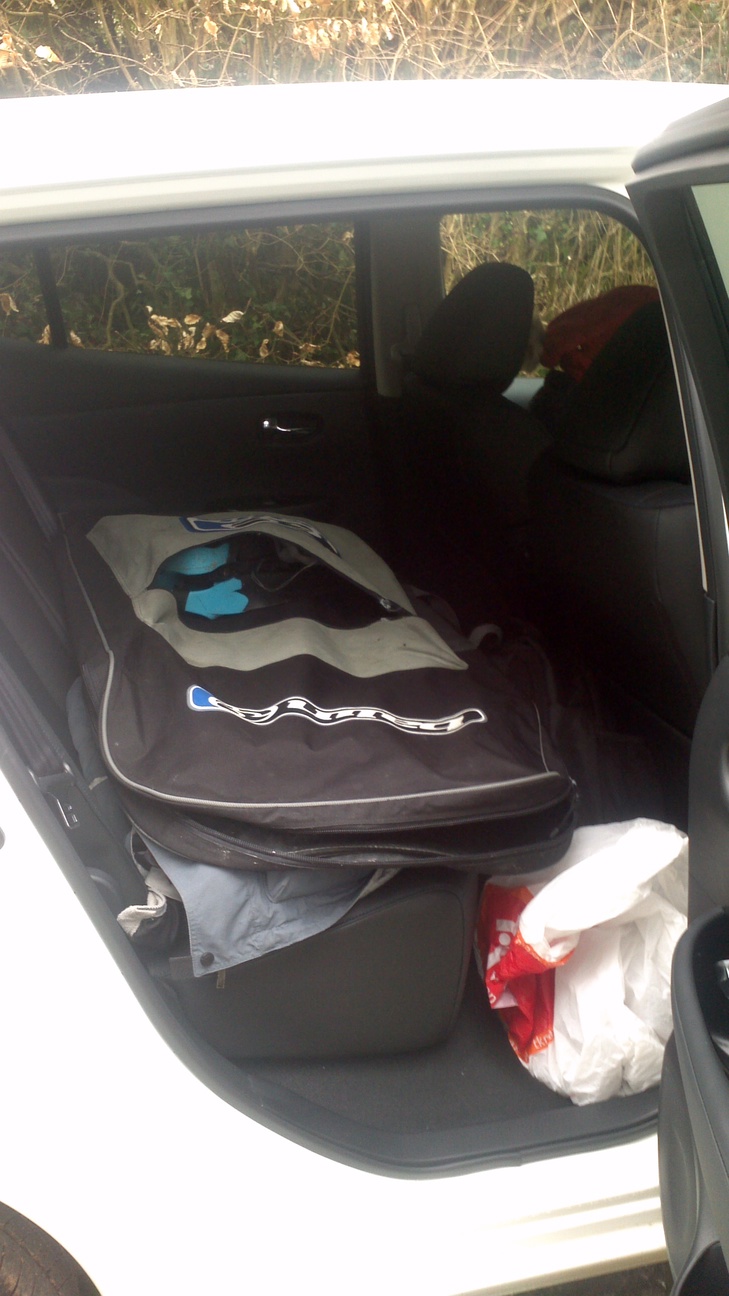
whereas my 42″ bat tail was just too long and had to sit on the back seat:

The LEAF also has a split rear seat so if there had been three of us on the trip we could have used that to fit everyone and everything in. Finally we were ready to leave!

The Nissan sat nav planned a route past Whitehouse Services near Okehampton which suited us perfectly, and the open road beckoned:

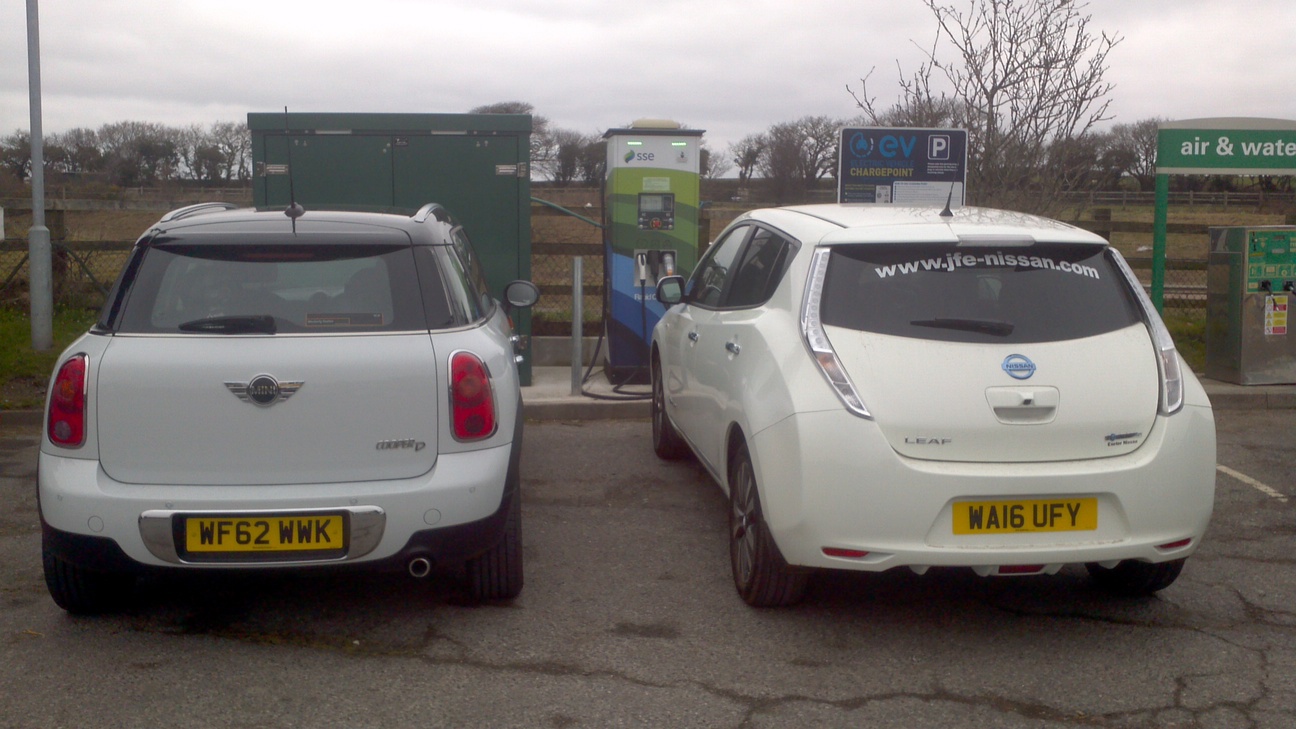
This is the sight that greeted us when we arrived at Whitehouse Services:

Just in case you’re wondering, the vehicle on the left does not incorporate an electric drive train!

To be continued….

30 kWh Nissan LEAF Extended Test Drive

We have mentioned the new “go further” Nissan LEAF previously on the V2G blog, and now thanks to JFE Nissan in Exeter we have the chance to test the new 30 kWh battery pack equipped 2016 LEAF for ourselves. According to the Nissan UK web site:

Every full charge will give you a range of up to 155 miles.

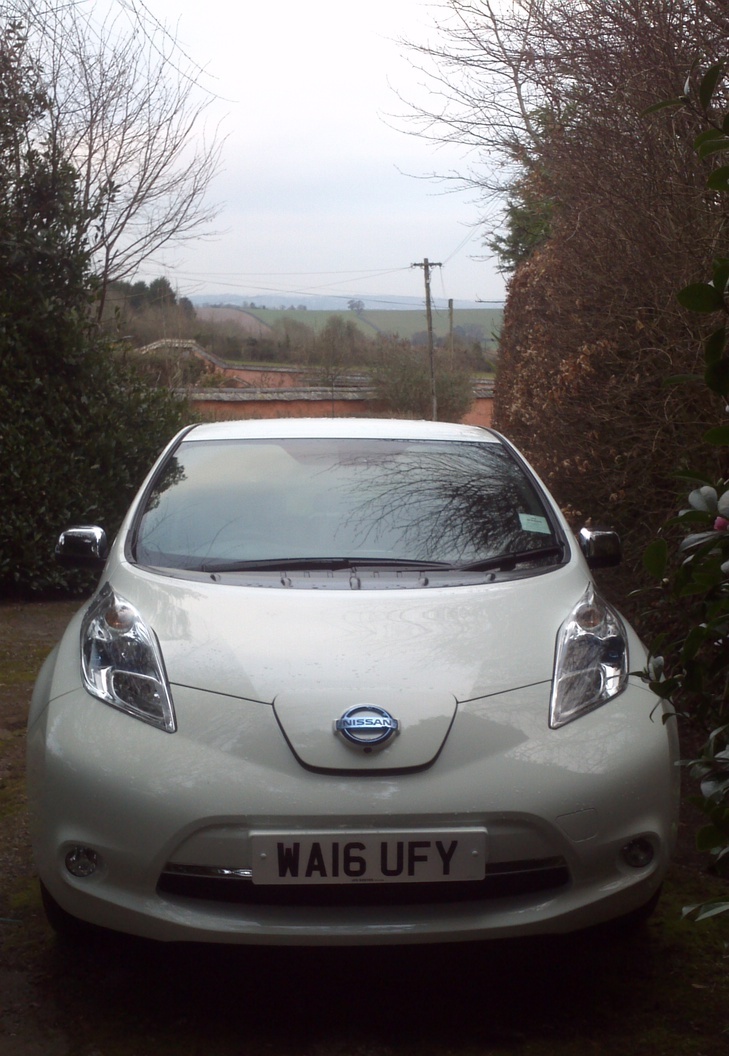
I don’t know about you, but we’d like to check that claim for ourselves! At the very start of our test the odometer on the bright white LEAF we were borrowing read 6 miles as we collected it earlier today, and had advanced to 11 miles by the time we got back to base:

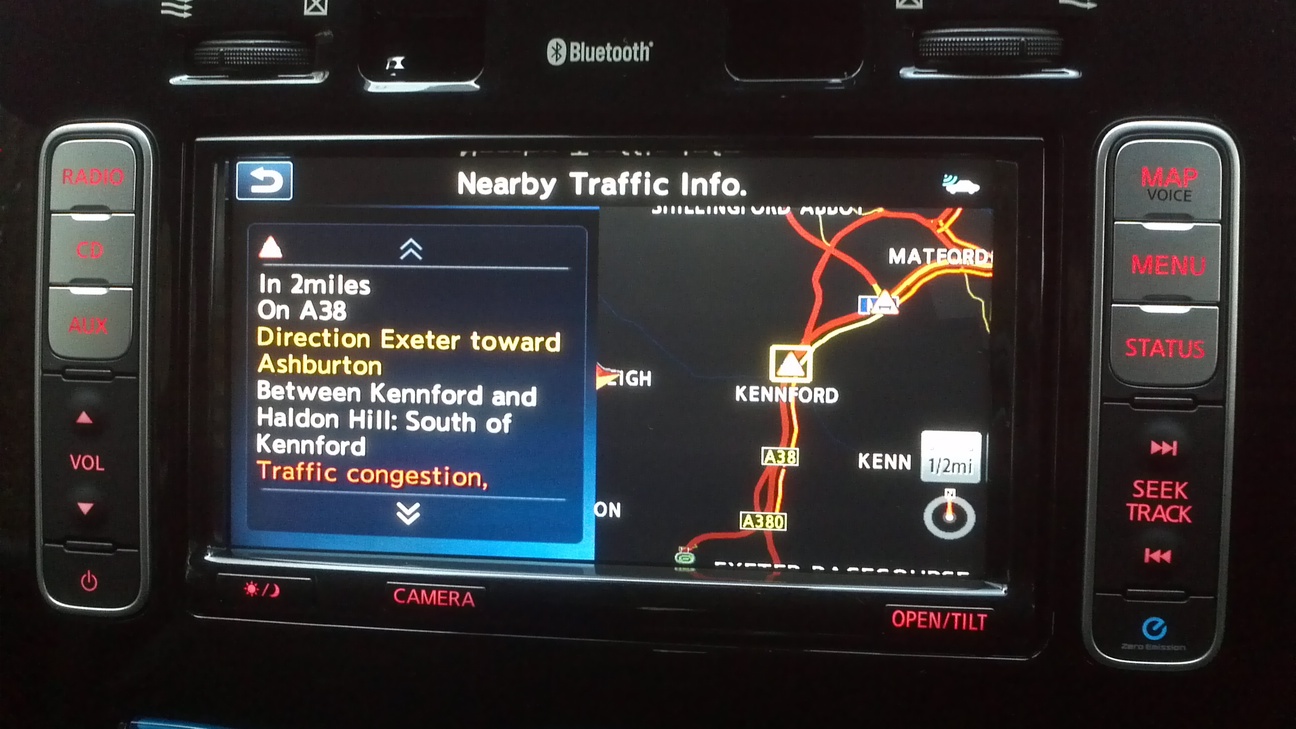
We had intended returning from Exeter to the wilds of the Haldon Hills via a main road. However before we left the Marsh Barton trading estate we consulted the LEAF’s handy traffic news feed, which revealed this:

According to Radio Devon “a caravan’s been abandoned in the inside lane on Telegraph Hill”! Hence we took the scenic route through some narrow Devon country lanes, and ended up with 20 miles worth of range left in the traction battery pack, according to the LEAF’s dashboard at least:

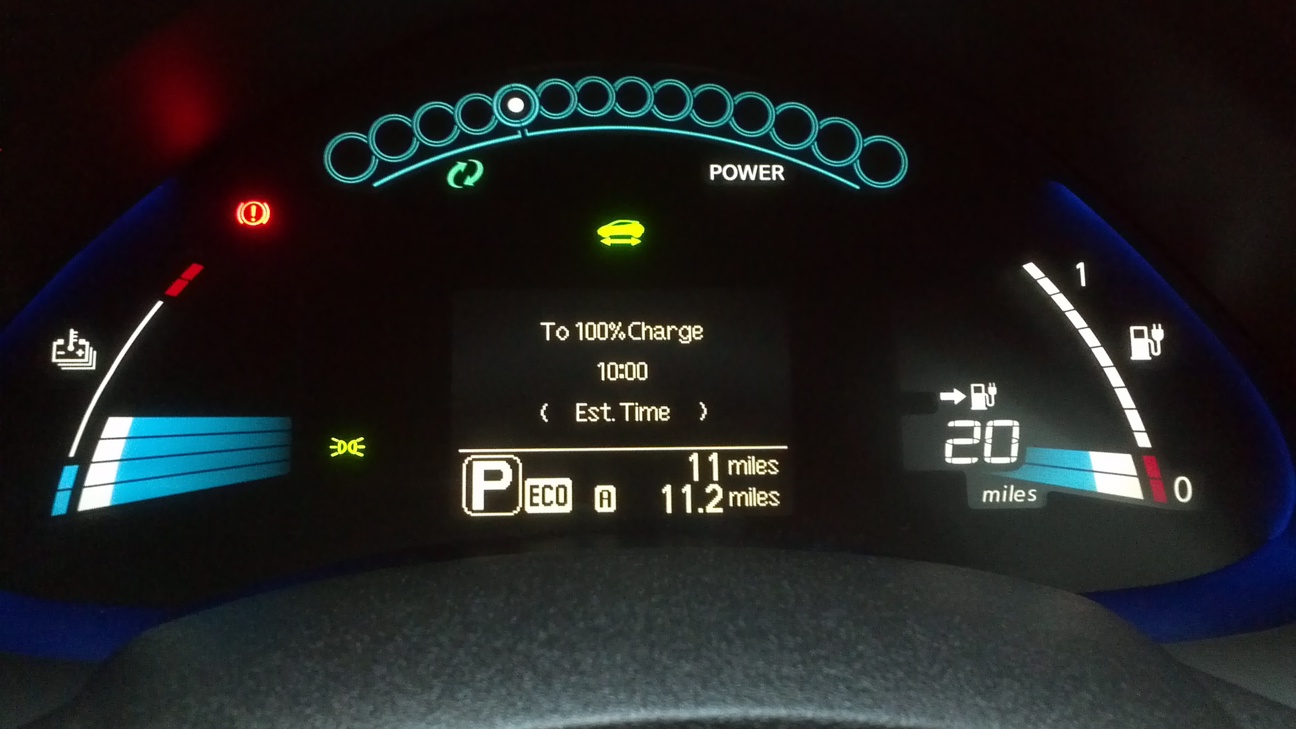
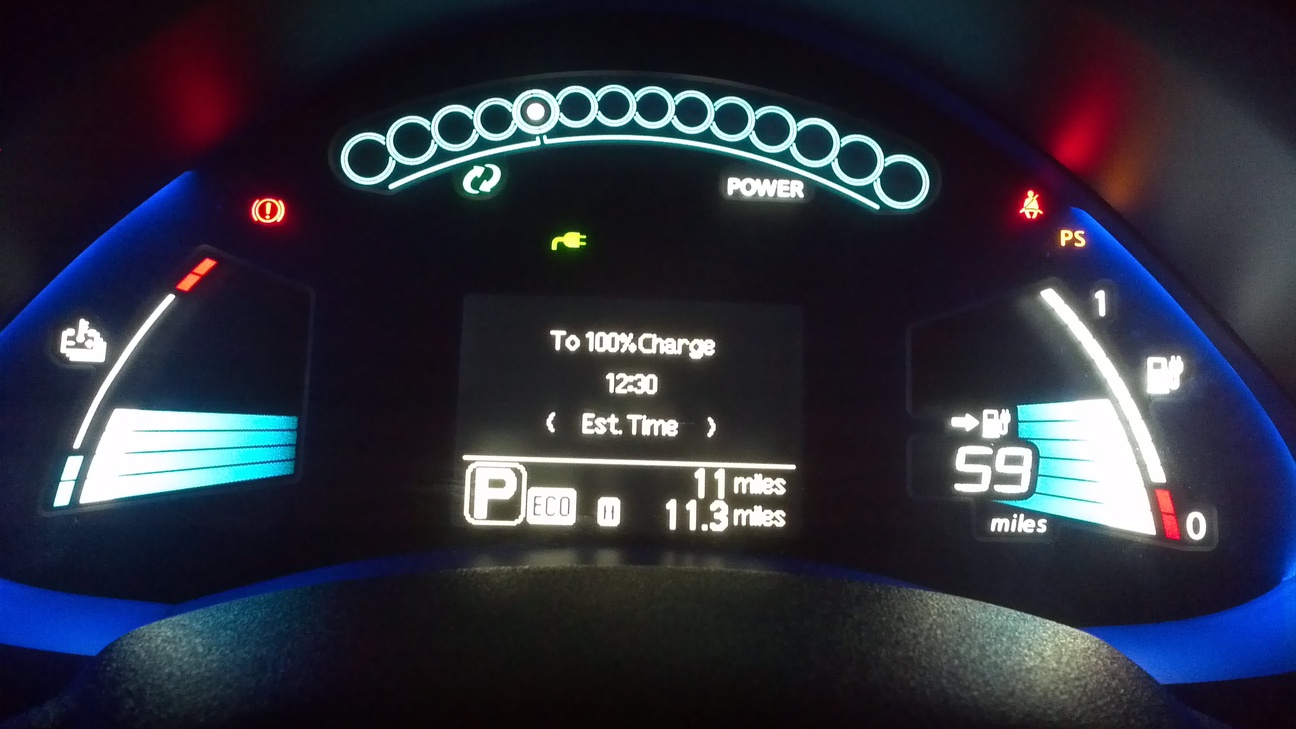
Having previously had some trouble using the rapid charger at Exeter Services, and having to avoid the motorway for other reasons on this occasion, we were in the perfect position to test the LEAF’s 13 amp “Electric Vehicle Supply Equipment” charging lead. We plugged it in at 18:30, and by 22:30 tonight the dashboard told us this:

More from us tomorrow on our Spring 2016 LEAF test, but for now we leave you with the inimitable Robert Llewellyn’s take on the new LEAF:

À bientôt, as I believe they say in France.

Solar Smart Charging in Utrecht with 150 Renault ZOEs

In a press release earlier today Renault announced that:

Renault has signed a letter of intent with the Dutch Utrecht City Council, ElaadNL and LomboXnet on Smart Solar Charging for electric vehicles.

The signature took place during the state visit to Paris of King Willem-Alexander and Queen Máxima of the Netherlands.

According to the letter of intent, the city of Utrecht could be the testing ground for the solar smart-charge project. Renault, Europe’s leader in electric vehicles, would supply a fleet of 150 Renault ZOE models through 2017 to the city. ElaadNL would handle management of infrastructures and the smart-charge standard, and LomboXnet would take charge of installing the network of unique public charging terminals powered by a 44 kW grid connection. Grid operator Stedin would be involved to balance supply and demand of the grid.

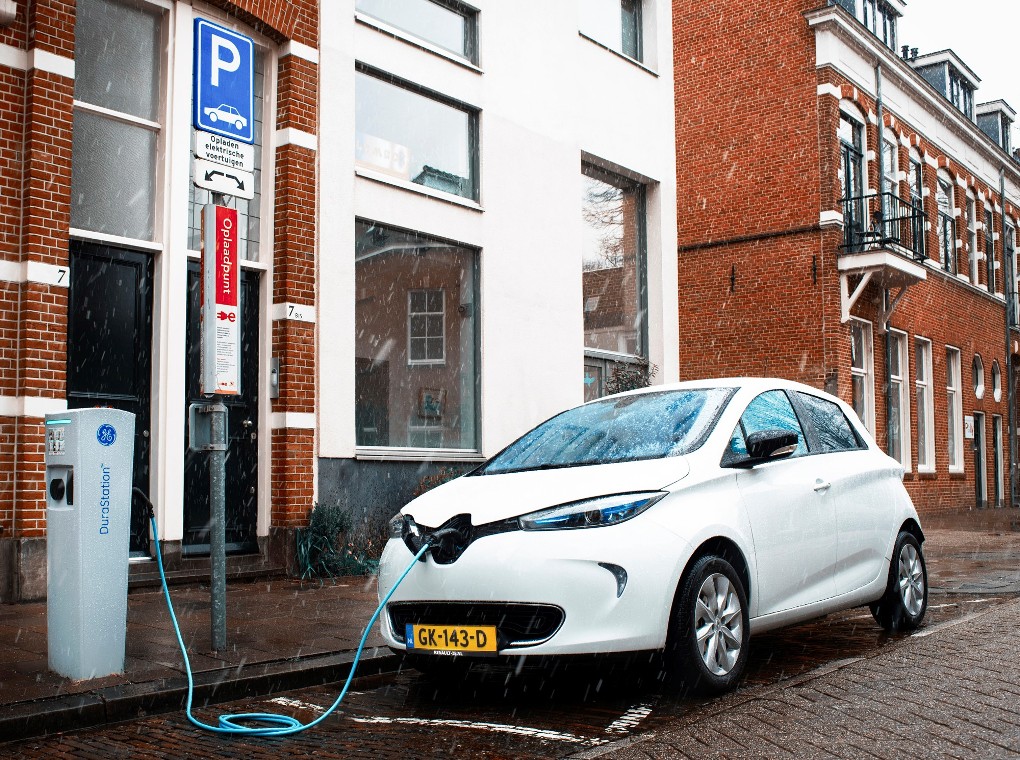
The Royal Family might have left better weather behind during their trip to Paris, but here’s a Renault ZOE charging outside the LomboXnet offices in Utrecht, in the rain:

Moving on to some more technical details of the Utrecht project:

Phase one of the project would involve setting up 1,000 smart solar-charge stations, powered by 10,000 photovoltaic panels in the Utrecht region. Infrastructure installation would run side by side with development of a car-share service of electric cars, powered by renewable energy, for Utrecht residents. The Renault ZOE R.Access connectivity and 22 kW charging make it ideal for car-share and smart charging applications.

So far so good, and then comes phase 2!

Phase two of the project would proceed with the partners developing a vehicle-to-grid ecosystem, with the network of solar chargers capable of both charging the electric cars and of feeding energy stored in the batteries of parked cars onto the grid to meet demand peaks. This could be the starting point for a new system storing renewably sourced energy.

As always at this juncture, one cannot help but wonder where and when the first “vehicle-to-grid ecosystem” will evolve here in the United Kingdom!

Nissan’s New Office Will Be Electric Vehicle Powered

Nissan announced at the Geneva Motor Show today that:

Its new regional office in France will house the largest grid-integrated electric vehicle (EV) system and second life battery storage unit ever installed in a building, anywhere in the world.

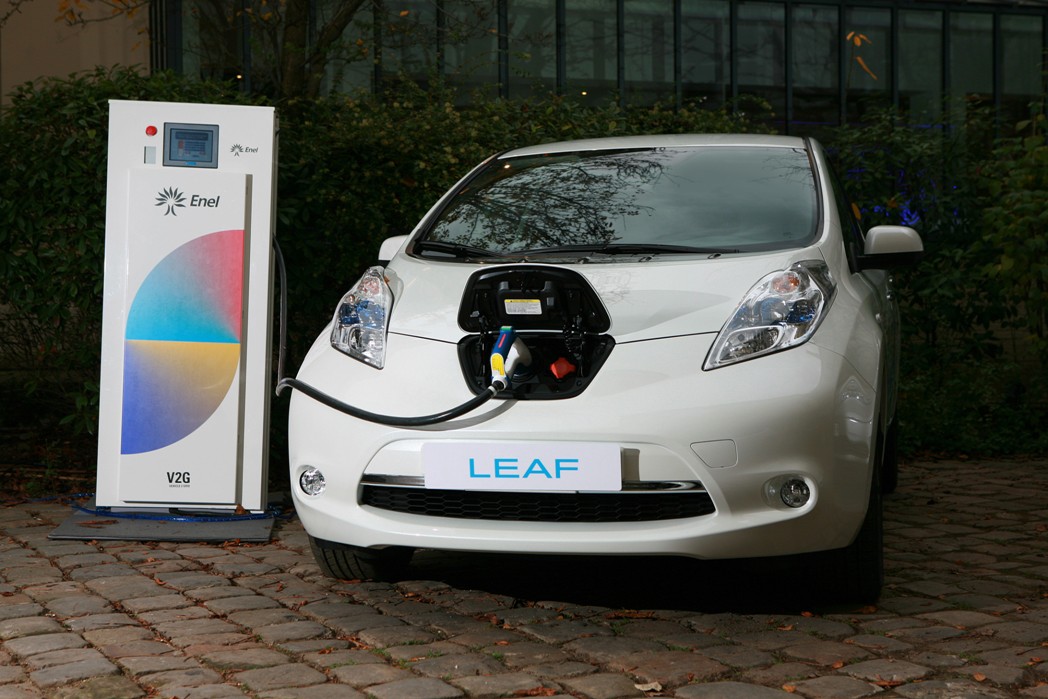
The new building will feature 100 vehicle-to-grid chargers, from Nissan’s partner ENEL, allowing Nissan’s range of EVs to plug in and draw down energy from the grid at off-peak periods with the ability to “sell back” the stored energy to the grid. It will also feature a 1 MWh energy storage system, from Nissan’s partner EATON, the battery storage experts, powered by 64 Nissan LEAF second life EV batteries combined with solar energy generation.

The company hopes to extend this innovative battery technology to other major Nissan sites and facilities around the world over the next few years. The systems which will be installed at Nissan’s new French office will serve as a live test case of what can be achieved when electric cars are used to their full potential.

By reducing grid dependency and using excess energy stored in EV batteries in a smart way, Nissan believes today’s announcement will be a game-changer in the way people and businesses utilise electric vehicle fleets.

The new technology is expected to slash energy costs at the new France office by reducing drawdown of energy during peak periods in favour of off-peak tariffs. The new energy management system will also decrease the amount of contracted power consumed from the local electricity supplier.

Nissan announced plans to create a viable long-term solution to environmental protection in relation to energy use and storage at the COP21 climate conference in Paris last year. This included a partnership between Nissan and EATON on giving electric vehicle batteries a second life as stationary energy storage units and a partnership with ENEL on vehicle-to-grid integration. Grid integration trials have already begun in Denmark.