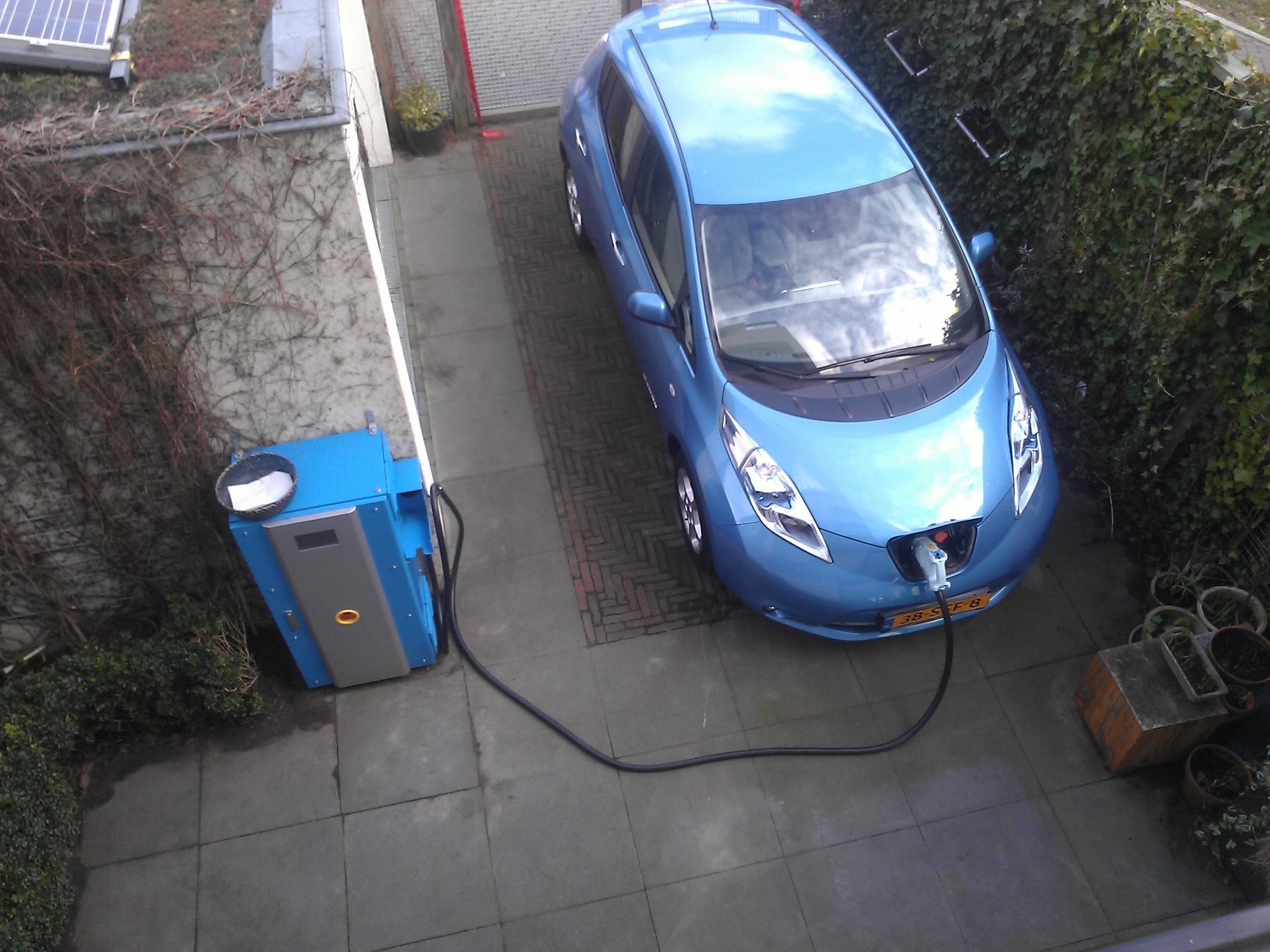
Solar Smart Charging in Utrecht with 150 Renault ZOEs

In a press release earlier today Renault announced that:

Renault has signed a letter of intent with the Dutch Utrecht City Council, ElaadNL and LomboXnet on Smart Solar Charging for electric vehicles.

The signature took place during the state visit to Paris of King Willem-Alexander and Queen Máxima of the Netherlands.
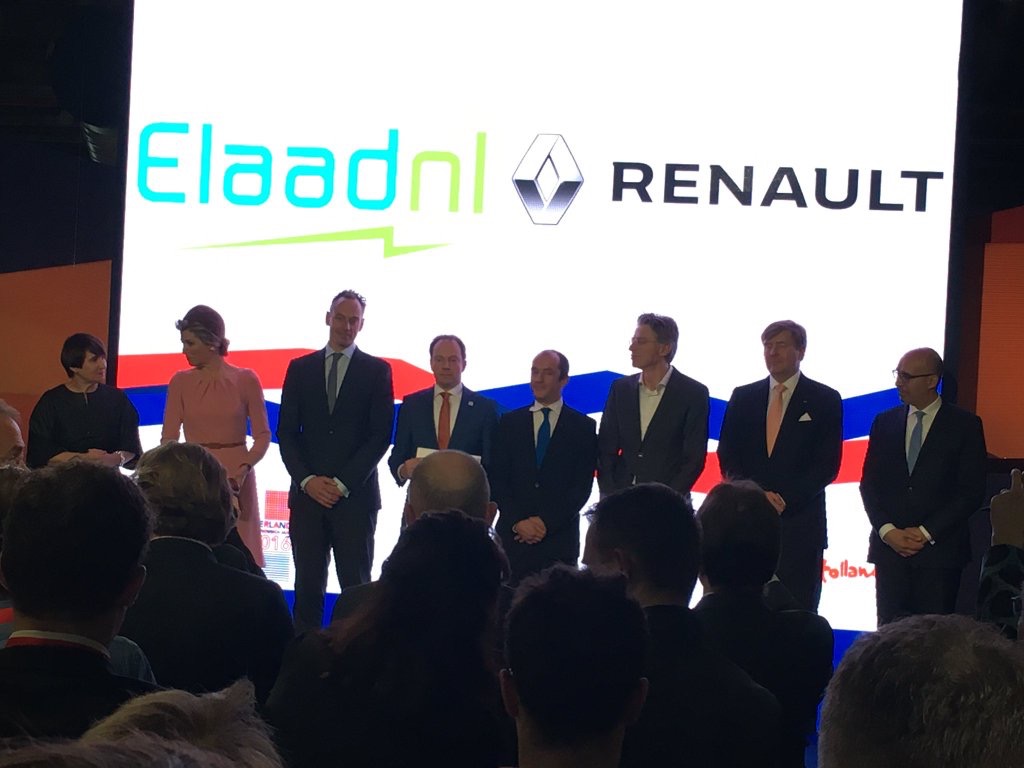
According to the letter of intent, the city of Utrecht could be the testing ground for the solar smart-charge project. Renault, Europe’s leader in electric vehicles, would supply a fleet of 150 Renault ZOE models through 2017 to the city. ElaadNL would handle management of infrastructures and the smart-charge standard, and LomboXnet would take charge of installing the network of unique public charging terminals powered by a 44 kW grid connection. Grid operator Stedin would be involved to balance supply and demand of the grid.

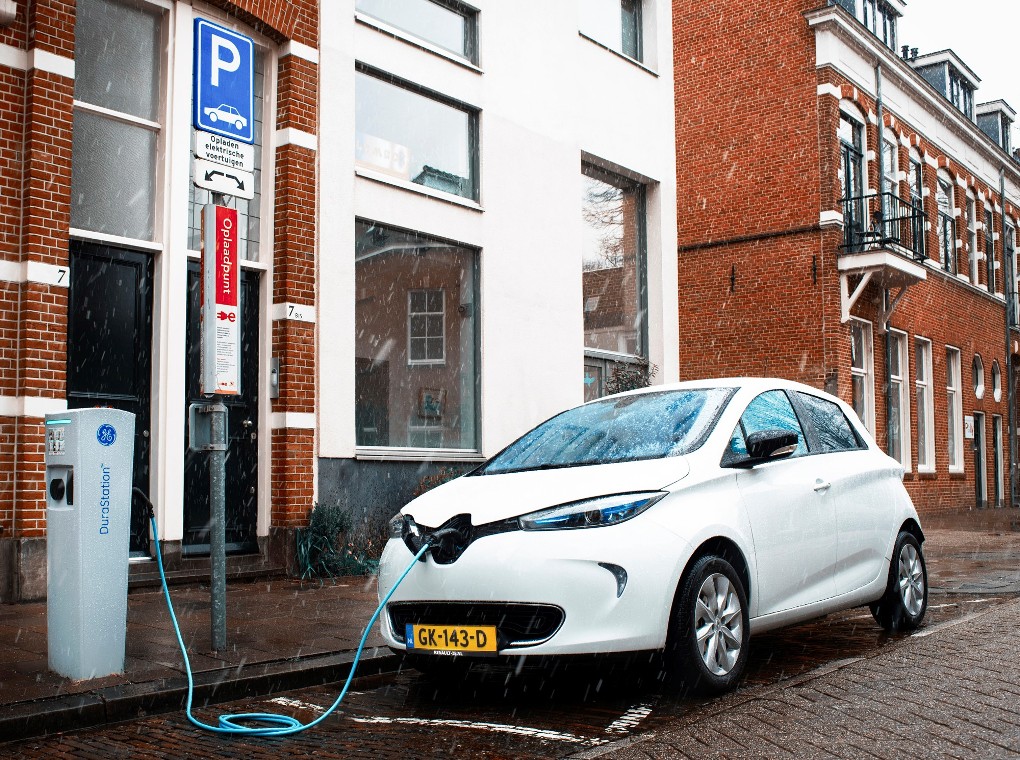
The Royal Family might have left better weather behind during their trip to Paris, but here’s a Renault ZOE charging outside the LomboXnet offices in Utrecht, in the rain:
Moving on to some more technical details of the Utrecht project:

Phase one of the project would involve setting up 1,000 smart solar-charge stations, powered by 10,000 photovoltaic panels in the Utrecht region. Infrastructure installation would run side by side with development of a car-share service of electric cars, powered by renewable energy, for Utrecht residents. The Renault ZOE R.Access connectivity and 22 kW charging make it ideal for car-share and smart charging applications.

So far so good, and then comes phase 2!

Phase two of the project would proceed with the partners developing a vehicle-to-grid ecosystem, with the network of solar chargers capable of both charging the electric cars and of feeding energy stored in the batteries of parked cars onto the grid to meet demand peaks. This could be the starting point for a new system storing renewably sourced energy.

As always at this juncture, one cannot help but wonder where and when the first “vehicle-to-grid ecosystem” will evolve here in the United Kingdom!
Robin Berg’s TEDx talk on “A new local energy and transport system”

I had the pleasure of meeting Robin Berg in Utrecht last summer at the launch of the LomboXnet solar PV powered bi-directional vehicle to grid system. Here is a video of Robin’s recent presentation at TEDx Utrecht:

Robin says many interesting and enlightening things, but for the moment please consider this one:

Tomorrow your car will run electric. The day after it will power your house. It will be 100% renewable, it will be 100% clean, and it will be the end of coal, oil and gas.

Solar PV Powered Public V2G Charging Launched in Utrecht

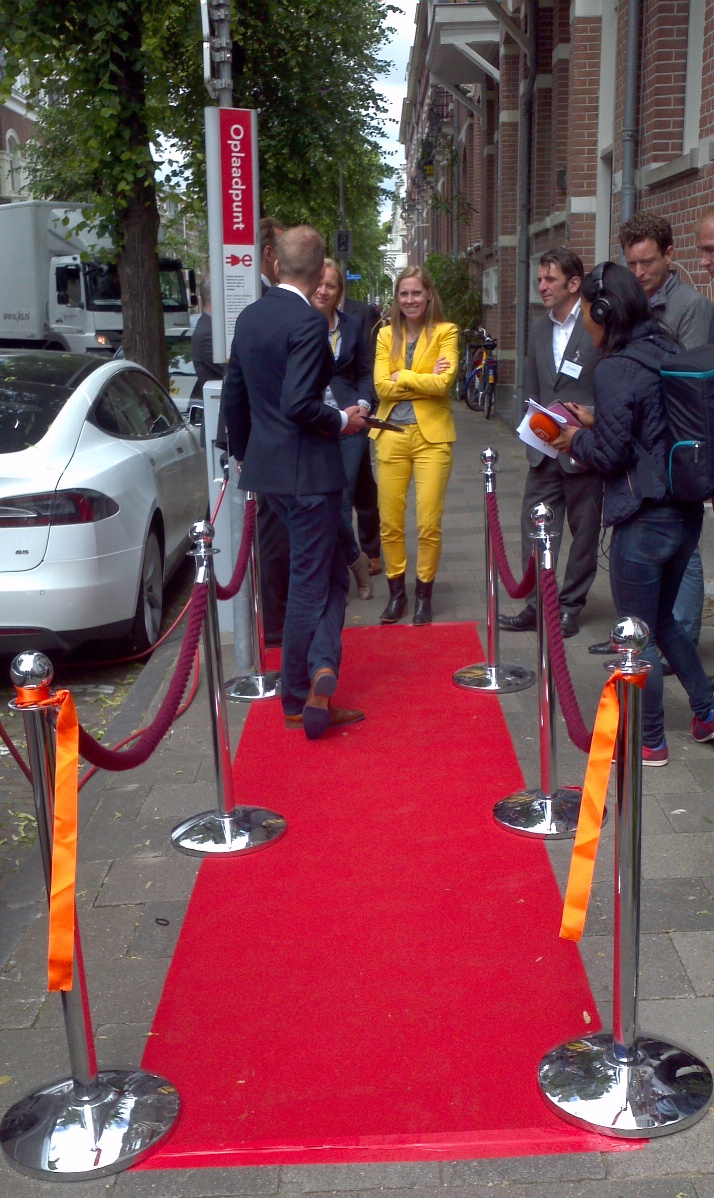
Earlier this week I attended a vehicle-to-grid workshop organised by Nissan Europe. This one was held in Utrecht in The Netherlands, where I discovered that the workshop coincided with the announcement of a new partnership between the City of Utrecht and a number of Dutch companies to ultimately deliver 120 “smart charging stations” across Utrecht. There’ll be more from me on the workshop itself in due course, but for now let’s take a close look at the world’s first publicly available solar powered V2G capable AC electric vehicle charging station:

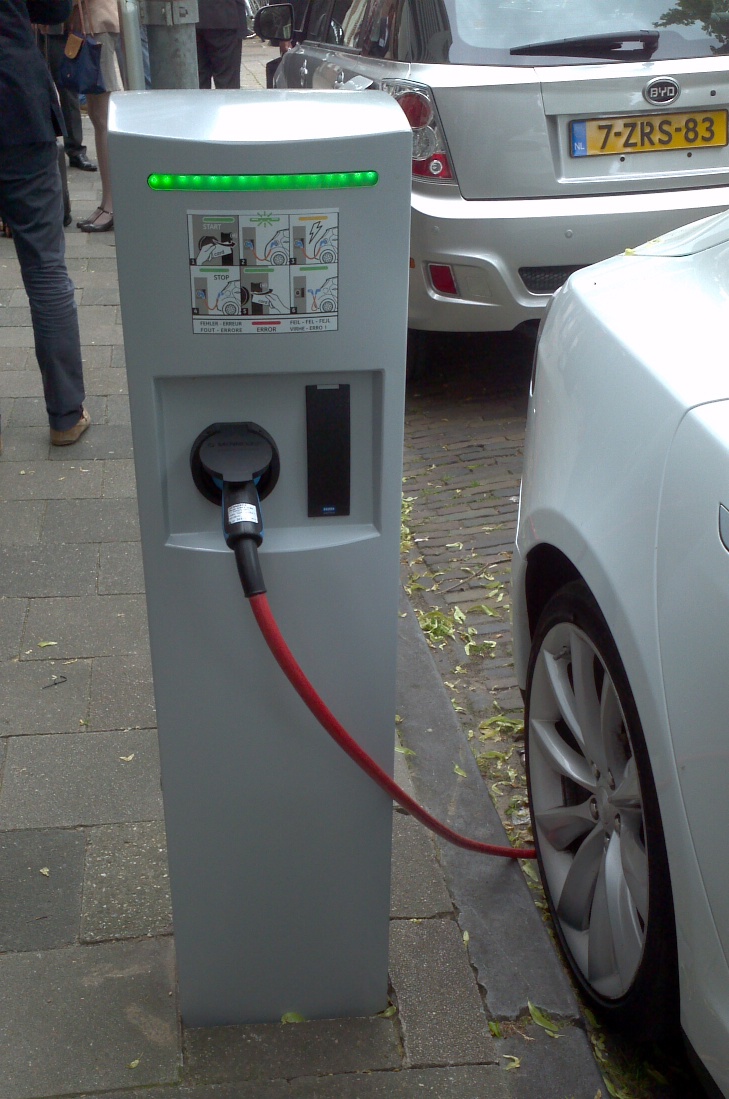
The charging station itself is a GE DuraStation with added bi-directional capability. Sadly my wish of a few weeks ago has not yet come true, and the Tesla model S you can see in the foreground is still only capable of being charged by the DuraStation, which is IEC 61851/62196 mode 3 compliant. However the BYD e6 visible in the background IS able to discharge its batteries back to the local distribution grid.

This particular charger is situated outside the offices of LomboXnet, and hence integrated with the CHAdeMO compliant V2G system we reported on back in March, which stores the excess energy generated by the Solar PV installation at a nearby primary school. Here’s another angle on the event, showing Councillor Lot van Hooijdonk shortly after she cut the ribbon to officially open the charging station:

Another part of my wish from last month has also yet to come true. In Utrecht as in the United Kingdom, and despite the red carpet, whether you own an electric vehicle manufactured by Nissan, BYD or Tesla, and whether it prefers to be charged via CHAdeMO, IEC 62196 or a Supercharger, you still won’t get paid for allowing your battery pack to be used to provide an extremely useful service to the local distribution grid. However, perhaps mighty oaks from little acorns do eventually grow?

Whilst we wait to discover if/when/how that happens, here’s the video that Robin Berg of LomboXnet showed the attendees of the 3rd Nissan V2G workshop:

Utrecht Gets V2G Based Energy Storage

In a ceremony at the Parkschool in the Lombok district of Utrecht on March 4th deputy Remco van Lunteren, officially opened the first Vehicle to Grid (V2G) energy storage system in Europe. The event was recorded for posterity:


The solar energy storage system supplied by Nissan charges electric cars but can also discharge their batteries in order to power houses. It helps to provide a higher return on solar power, reduces peak current on the grid and helps promote electric vehicles.  The opening of the V2G system is a sequel to the opening by Councillor Lot van Hooijdonk of a smart charging station from General Electric in Lombok on December 2nd 2014. The first charging station was unique because it had some built-in intelligence, and the V2G system adds an energy storage capability to it. Together, these are the first building blocks of Lombok’s Smart Solar Charging pilot project.

As the “Storage4all” project page puts it:

To create a truly smart grid using renewable energy, it is necessary to find a solution to the existing time differentials between generation and demand. The storage of energy is one way of achieving that.

Electric cars have a large storage capacity and are a major consumer of  future electric power generation. By making use of the storage facility of electric cars the “Smart Grid” can be made more sustainable.

In order to utilize the battery of an electric car for energy storage, it is necessary for the car batteries to be able to be discharged. In many cases this is not possible and the majority of EVs have internal protection against this. Only the Nissan LEAF currently has this possibility because of the Japanese market demand for storage (to protect against disruptions and power failures caused by earthquakes). The pilot project therefore initiated discussions with Nissan Europe and the provider of such a bi-directional charging system to achieve this in ​​Lombok.

Simulations show that there is much potential for storage of renewable energy in Smart Grids. Economically, it is not yet possible under current market conditions. The pilot project has ensured international recognition for this initiative, the development of the first European bi-directional charging station and a possible big roll out of them in Utrecht in the coming years.

Unfortunately market conditions here in the UK are currently also not economically favourable to this type of initiative.