At the beginning of June I attended the “Utrecht Energized” extravaganza at the Jaarbeurs Convention Centre in the heart of Utrecht in the Netherlands. According to Renault’s press release about the event:
Renault Group, MyWheels and We Drive Solar, together with the Municipality of Utrecht, announce the go-live of Europe’s first large‑scale Vehicle‑to‑Grid (V2G) car‑sharing service: Utrecht energized. The initiative supports a more sustainable, efficient energy system in a city where 35 % of rooftops are already fitted with solar panels. Thanks to the V2G technology, electric vehicles can store energy and feed it back to the local grid during peak periods, so renewable power remains available around the clock. By combining a shared‑mobility service with advanced technology, the project keeps the local grid in balance while accelerating the transition to sustainable urban transport.
Here’s Renault Nederland’s brief promotional video:
More about all that in due course, but first of all please note these paragraphs from the press release:
In response to the massive growth of renewable energy in the Netherlands, Renault Group, We Drive Solar, MyWheels and the City of Utrecht have joined forces to launch Europe’s first large-scale car-sharing service utilizing Vehicle-to-Grid (V2G) technology.
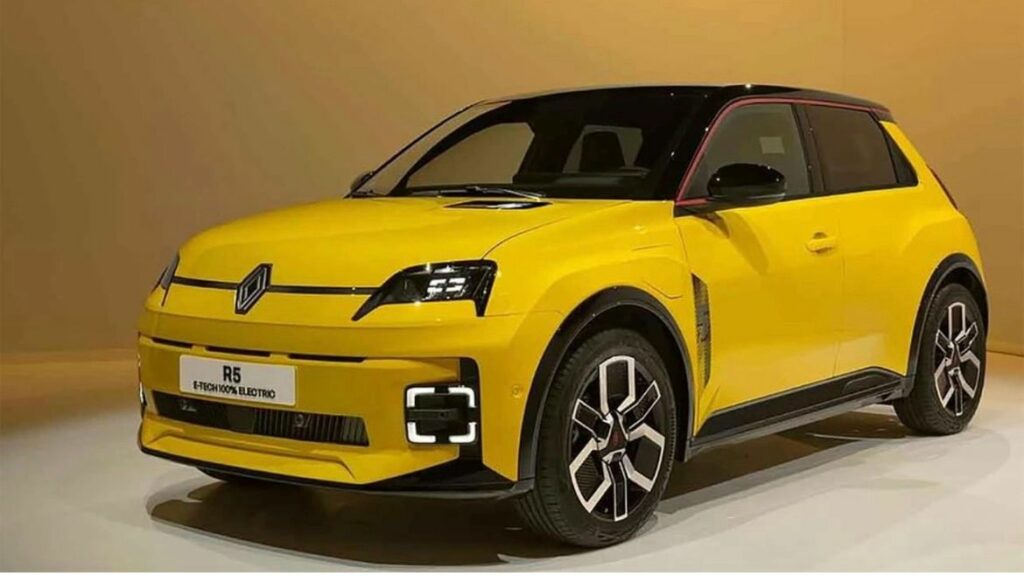
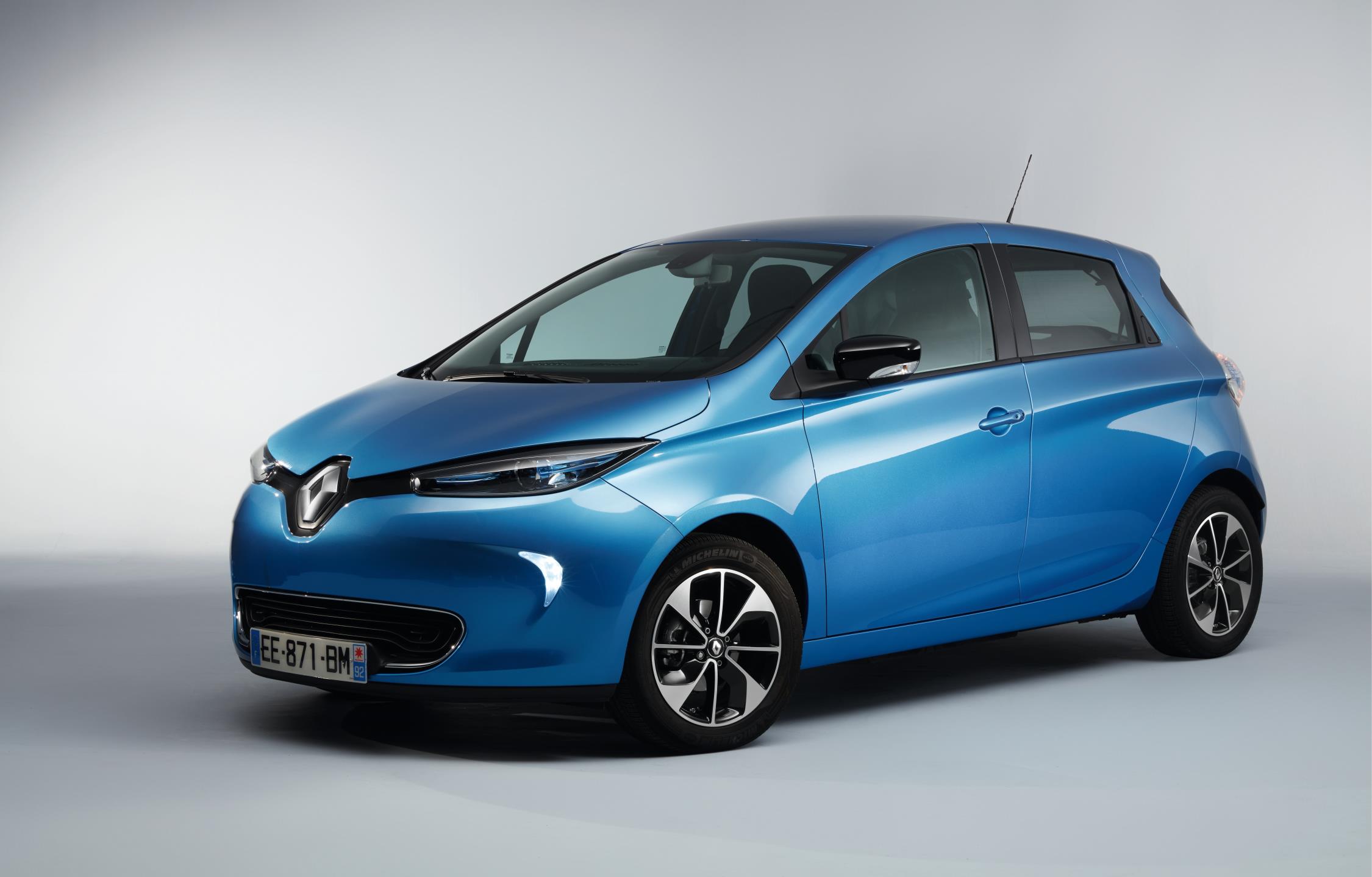
Renault Group will supply 500 Renault 5 E-Tech electric equipped with Mobilize’s V2G technology.
We Drive Solar will provide and operate bidirectional charging stations.
MyWheels, the leading car-sharing platform in the Netherlands, will operate the fleet.
Utrecht is taking a bold step towards more sustainable mobility with this groundbreaking collaboration. This initiative aims to facilitate the large-scale availability of electric shared mobility while offering an innovative way to balance the city’s electric grid through bi-directional charging technology. The Netherlands has become a world leader in the roll-out of solar and wind energy, causing challenges on the electricity grid. Utrecht is one of the most advanced European cities in using renewable energy, with already 35% of all rooftops covered with solar panels.
Renault have released more details about the forthcoming Renault 5, and it’s excellent news to our ears:
The future electric Renault 5 will be Renault’s first car to come with a bidirectional on-board charger.
Over the years we have covered at some length Renault’s experiments with ZOEs modified to include bi-directional capabilities, and we are pleased to hear that AC V2G will finally be going into production in the shape of the new Renault 5.
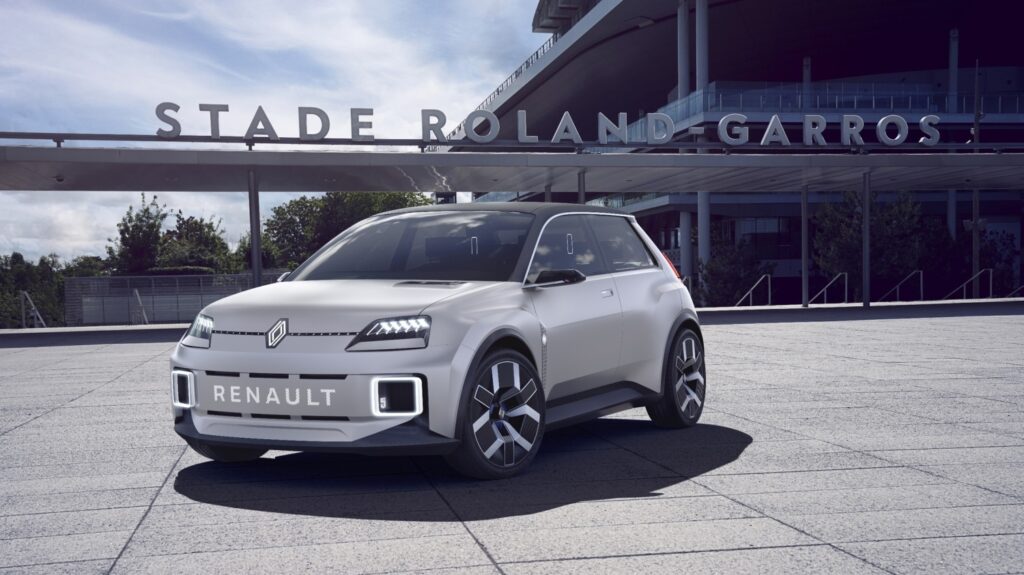
A previous press release revealed the external shape of the new R5 outside Stade Roland Garros:
Now we get to see the internals too! According to Renault:
Today we are finally able to bring you exciting news of a large vehicle-to-grid installation in the Netherlands, with some unusual twists apart from the sheer number of charging stations.
In a thankfully English language article in PlaceTech it was reported earlier this week that:
Edge has delivered an office building for Triodos Bank in the Netherlands engineered to be sustainable inside and out with the latest circular construction principles designed throughout. The 135,000 sq ft office in Driebergen-Zeist, Netherlands was built with the intention to harmonise with the surrounding fauna and flora, on a construction level and beyond.
Please bear in mind that the article is referring to EDGE Technologies which is part of Dutch developer OVG Real Estate, and not the U2 guitarist!
After further description of the office building itself the article eventually gets to the part of the project of most interest to us. The solar PV covered car park:
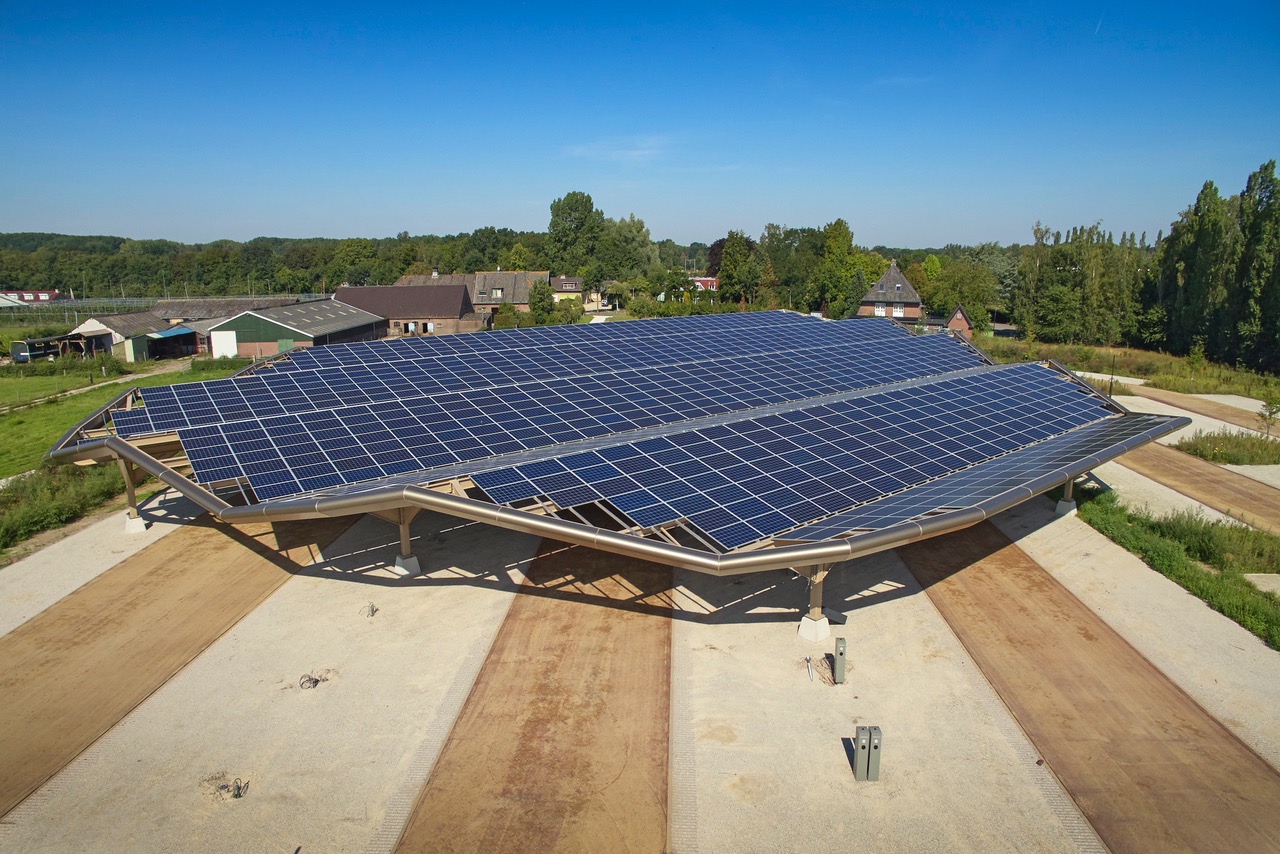
The extensive use of renewable energy, reflected in over 3,000 m² of solar panels, as well as heat and cold storage, contributes to the energy neutrality of the building. The project encompasses ‘smart charging’ electric cars from solar energy and ‘Vehicle2grid’ technology. Vehicle2grid means that the cars cannot only be charged with solar energy but also discharged, which is called bi-directional charging. The cars become an active part of a ‘smart net’, which includes such benefits as being able to store solar energy.
The PlaceTech article doesn’t go into any more detail than that but we certainly intend to, not least because the aerial view of the solar PV canopy reveals a number of electric vehicle charging stations that look identical to the one we have installed in our “wall to wall” V2G “living lab”:
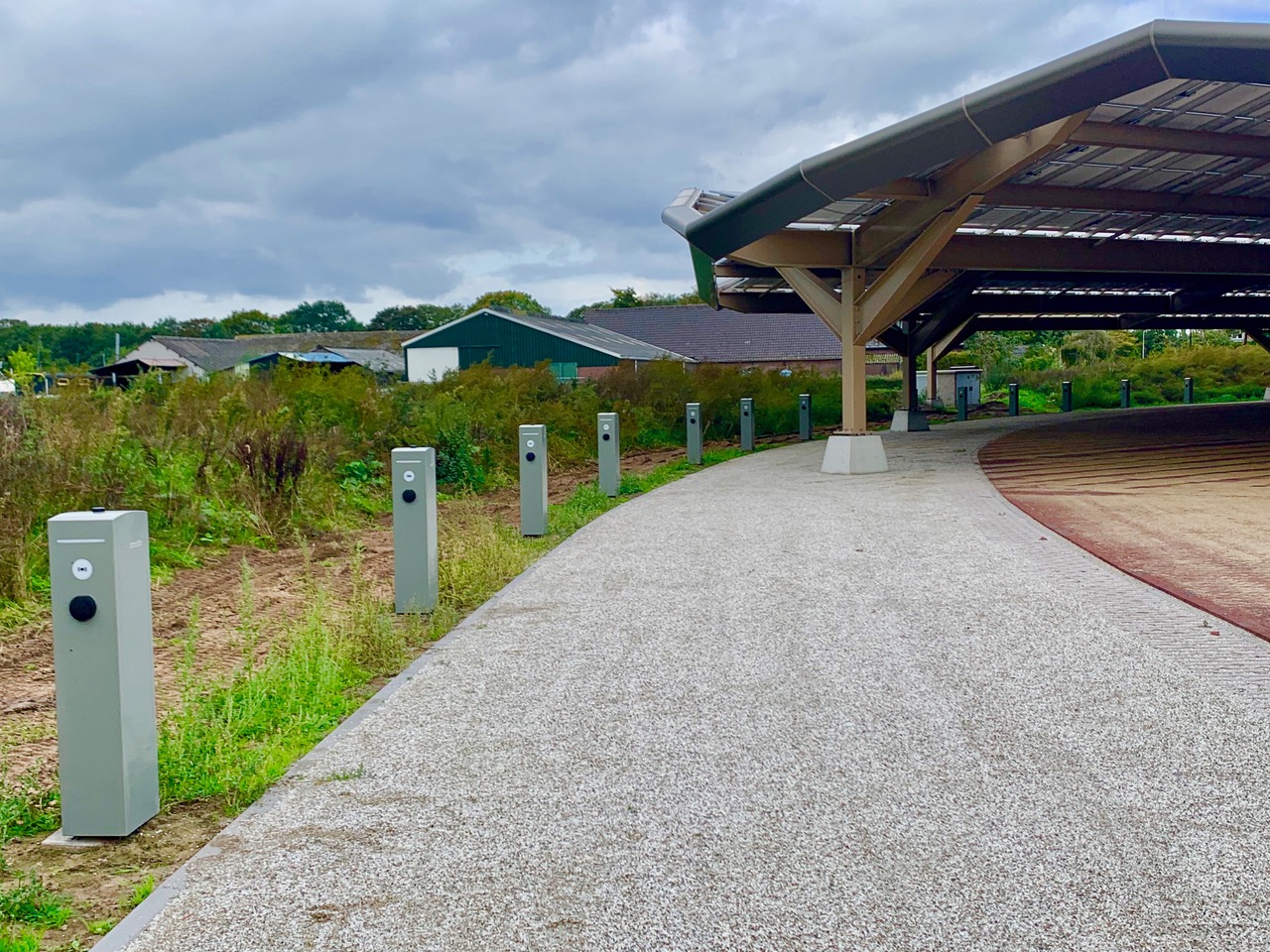
Taking a look at the new Triodos car park from ground level it becomes apparent that a large array of AC V2G capable charging stations are currently being installed, both under and around the solar PV canopy:
To find out more about what’s going on we’ve had to resort to Google Translate. According to a Dutch language article on the Triodos Bank web site from earlier this year:
The largest bidirectional charging plaza in the world is under construction at the new office building of Triodos Bank next to Driebergen-Zeist station. From this Autumn, 120 smart chargers will be able to store solar energy in the batteries of shared electric cars.
Triodos Bank have realised the project in close collaboration with developer EDGE Technologies and We Drive Solar. The bidirectional chargers are directly connected to 3,253 m² of solar panels and have a triple function. Electric cars can charge here. Cars whose battery is full enough can also supply power, so that the energy can be used in the office building or be fed back into the electricity grid.
Part of the plan is that Triodos Bank will replace its pool cars with 100% electric cars, so that they become part of the bidirectional charging ecosystem. Triodos Bank will investigate how, in addition to Triodos Bank employees, the residents of Zeist and the surrounding area can also use its shared electric cars. According to Triodos Bank director Matthijs Bierman “The plan fits in with our new ambitions in the field of sustainable mobility. We want to make car sharing as sustainable and attractive as possible. Not only for our employees, but also for the local community.”
Now 120 AC V2G charging stations sounds amazing, but where are 120 or more AC V2G capable electric cars going to come from? I can help answer that question, since I attended the launch of the We Drive Solar bi-directional ecosystem in Utrecht earlier this year. According to Renault:
A fleet of fifteen Zoe vehicles with vehicle-to-grid charging will be introduced in Europe over the course of 2019 to develop our future offerings in reversible charging and lay the groundwork for the future standards —with our partners’ help. These pilot schemes will begin today in Utrecht (the Netherlands) in an ecosystem developed by We Drive Solar and on Porto Santo Island (in the archipelago of Madeira, Portugal) with Empresa de Electricidade da Madeira, an energy supplier. Following these, more pilot schemes will be introduced in France, Germany, Switzerland, Sweden and Denmark.
So that explains 15 prototype AC V2G capable Renault ZOE’s across Europe in 2019, but that’s a lot less than 120 in the Triodos car park! As far as I am aware Renault have not announced when V2G enabled ZOEs will go into production, but when ultimately they do Triodos Bank will be ready! In the meantime I’m sure that plenty of “smart charging” will be going on in Driebergen-Zeist and across the Netherlands
All in all the project sounds a lot like a combination of our “Camelford Electric Car Club” and “Static and Mobile Distributed Energy Storage” projects, albeit on a much grander scale! That probably explains this remark by Robin Berg of We Drive Solar to Bobby Llewellyn at the recent Fully Charged LIVE event at Silverstone in the summer?
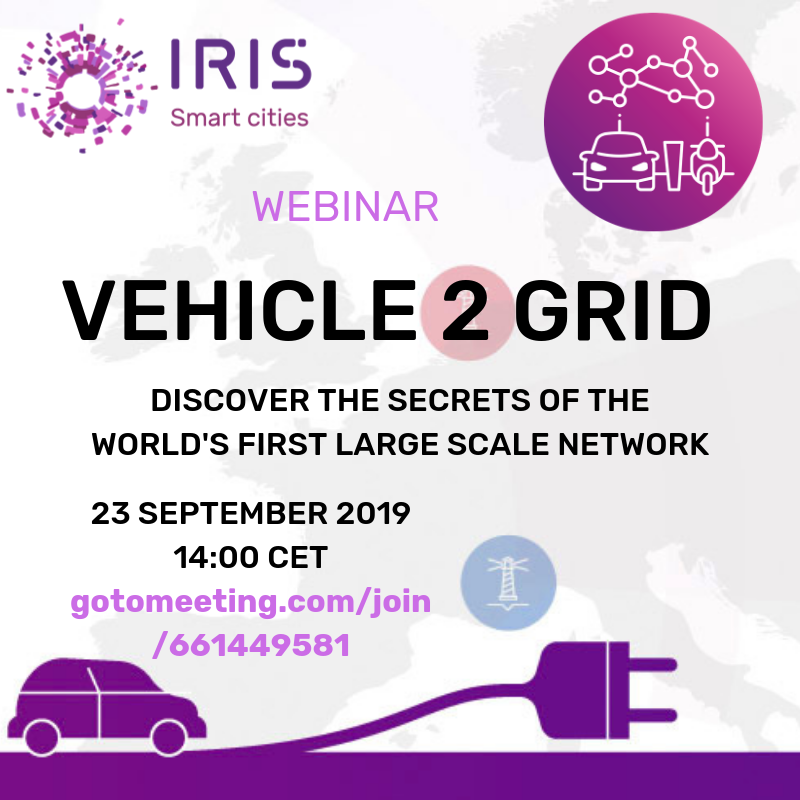
If you want to discover more about the We Drive Solar bi-directional ecosystem then please feel free to attend this webinar on September 23rd at 13:00 British Summer Time:
Groupe Renault, the European leader in electric vehicles, is beginning the first large-scale pilot schemes in reversible electric charging. Our alternating-current technology has the particularity of placing the reversible charger inside vehicles, so it just requires a simple, inexpensive adaptation of the existing charging terminals.
A fleet of fifteen Zoe vehicles with vehicle-to-grid charging will be introduced in Europe over the course of 2019 to develop our future offerings in reversible charging and lay the groundwork for the future standards —with our partners’ help. These pilot schemes will begin today in Utrecht (the Netherlands) in an ecosystem developed by We Drive Solar and on Porto Santo Island (in the archipelago of Madeira, Portugal) with Empresa de Electricidade da Madeira, an energy supplier. Following these, more pilot schemes will be introduced in France, Germany, Switzerland, Sweden and Denmark.
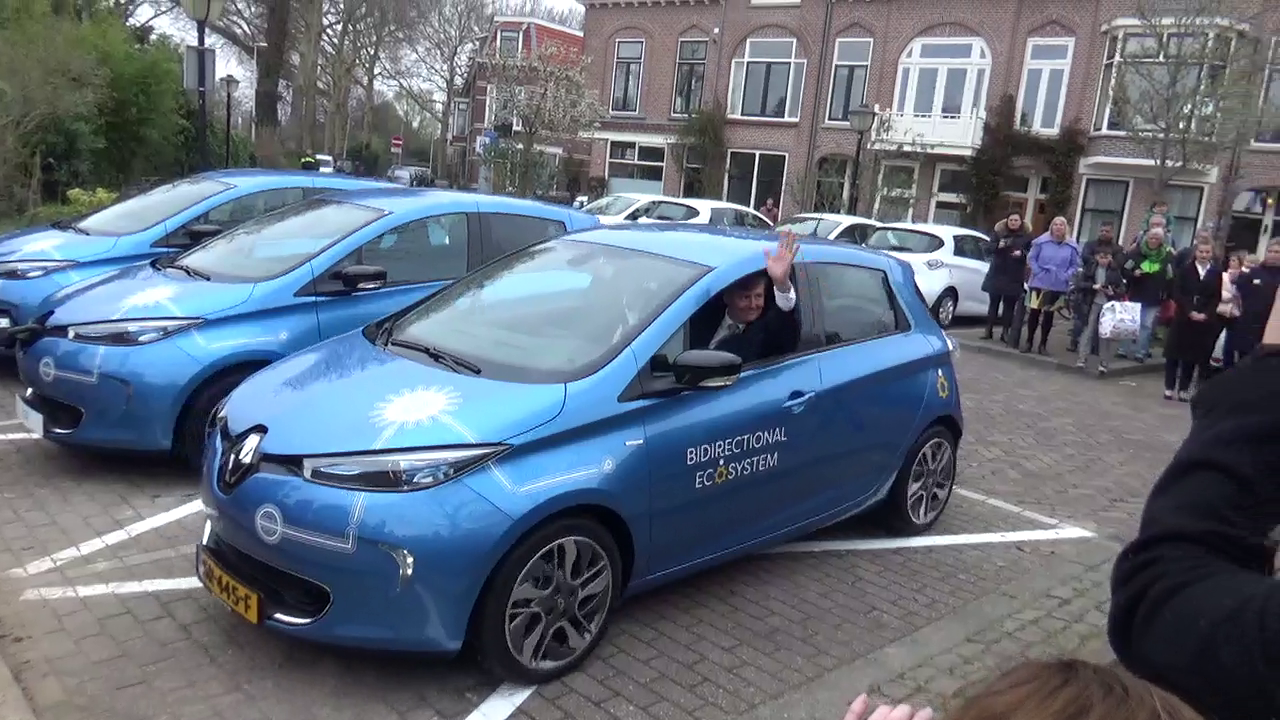
It looks like we’ll have to (metaphorically of course) twist someone’s arm at Renault to let us try one or more of their modified Zoes with AC V2G capability! I was at the launch in Utrecht today and spoke to a variety of representatives from Renault Netherlands and Renault France, who by and large seemed amenable to the idea of a suitably funded UK pilot project. Renault’s press release was of course accompanied by a variety of images. However I took lots of pictures of my own, and a fair few videos too. Here’s the three Zoes that were lined up in Utrecht today:
and here’s King Willem-Alexander of the Netherlands driving away in one of them, accompanied by Robin Berg of We Drive Solar:
Here too is a video recording of some of the excellent entertainment at the event, provided by the Hillsback Brassband:
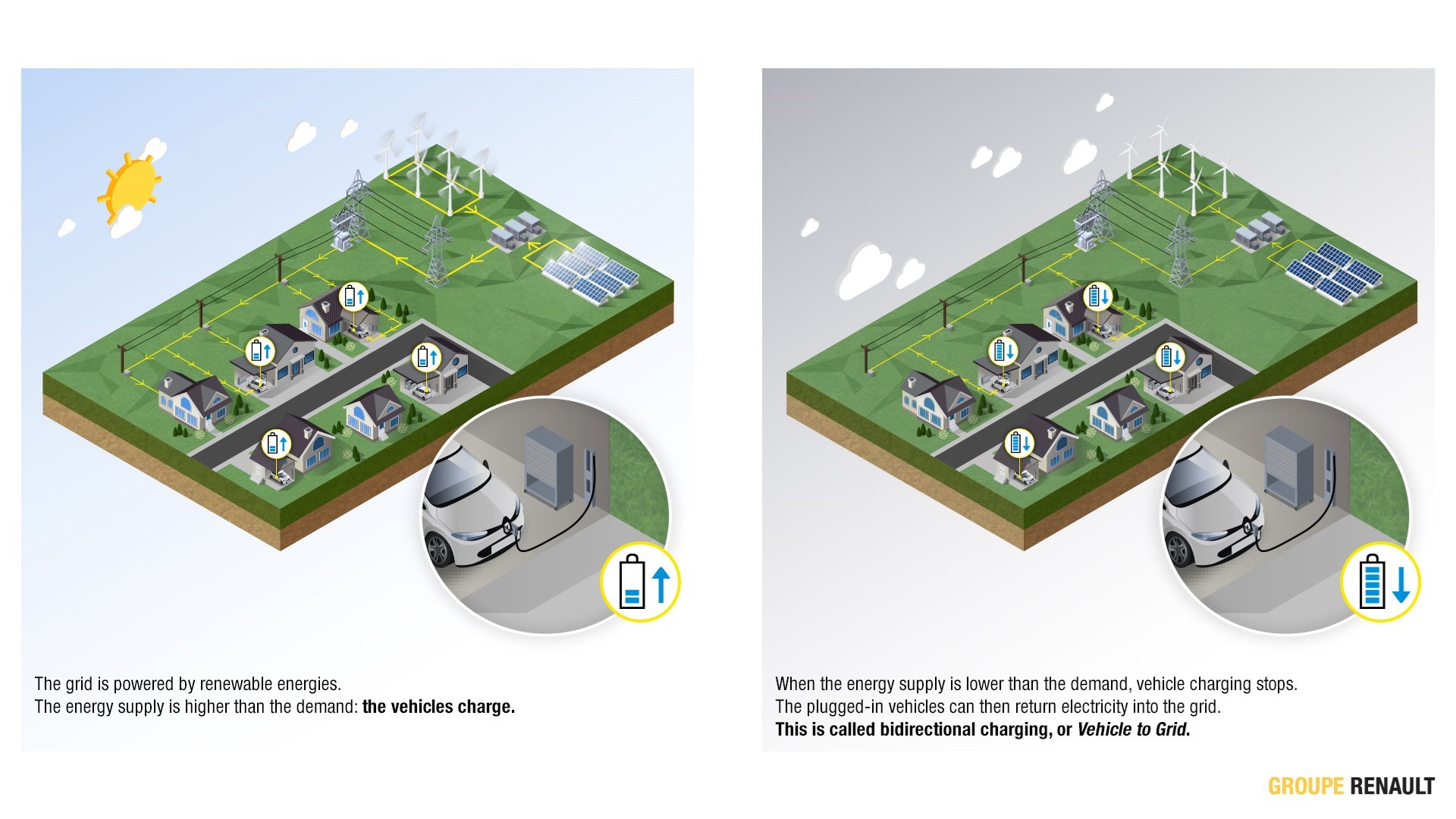
Invigorated by the brilliant brass section here’s one of the press release infographics that I couldn’t snap for myself. Renault’s visualisation of vehicle-to-grid technology in action:
2019 – Recharge bidirectionnelle
Charging during the day on the left. Discharging during the night on the right. Much like our very own V2G UK banner above! Renault’s press release continues:
Vehicle-to-grid charging — also called reversible charging — modulates the charging and discharging of electric-vehicle batteries in accordance with users’ needs and the grid’s supply of available electricity. Charging reaches its maximum level when the electricity supply exceeds demand, notably during peaks in production of renewable energy. But vehicles are also capable of injecting electricity into the grid during peaks in consumption. Electric vehicles can therefore serve units of temporary energy storage and become key drivers in the development of renewable energy. In this way, the electricity grid optimizes the supply of local renewable energy and reduces infrastructure costs. At the same time, customers enjoy greener, more economical consumption of electricity and are financially rewarded for serving the electricity grid.
Reversible charging will be piloted in several projects (electric ecosystems or mobility services) through seven countries and alongside various partners to lay the groundwork for Groupe Renault’s future offering. The aim is twofold: to measure large-scale feasibility and potential gains. In particular, these pilot schemes will help us:
Underline the technical and economic advantages of an onboard solution in electric vehicles
Demonstrate—in concrete terms—the value of services provided for the local and national electricity grid, such as encouraging consumption of solar and wind energy, checking the grid’s frequency or tension, and reducing infrastructure costs
Work on the regulatory frameworks of a mobile energy-storage scheme, detecting any pitfalls in it and offering concrete solutions
Establish common standards, the basic requirement for an industrial-scale roll-out.
I now have a few more videos of the event to go away and edit, but whilst those are being prepared here’s one that Renault provided earlier, illustrating both “Smart charging” and “Bidirectional smart charging”:
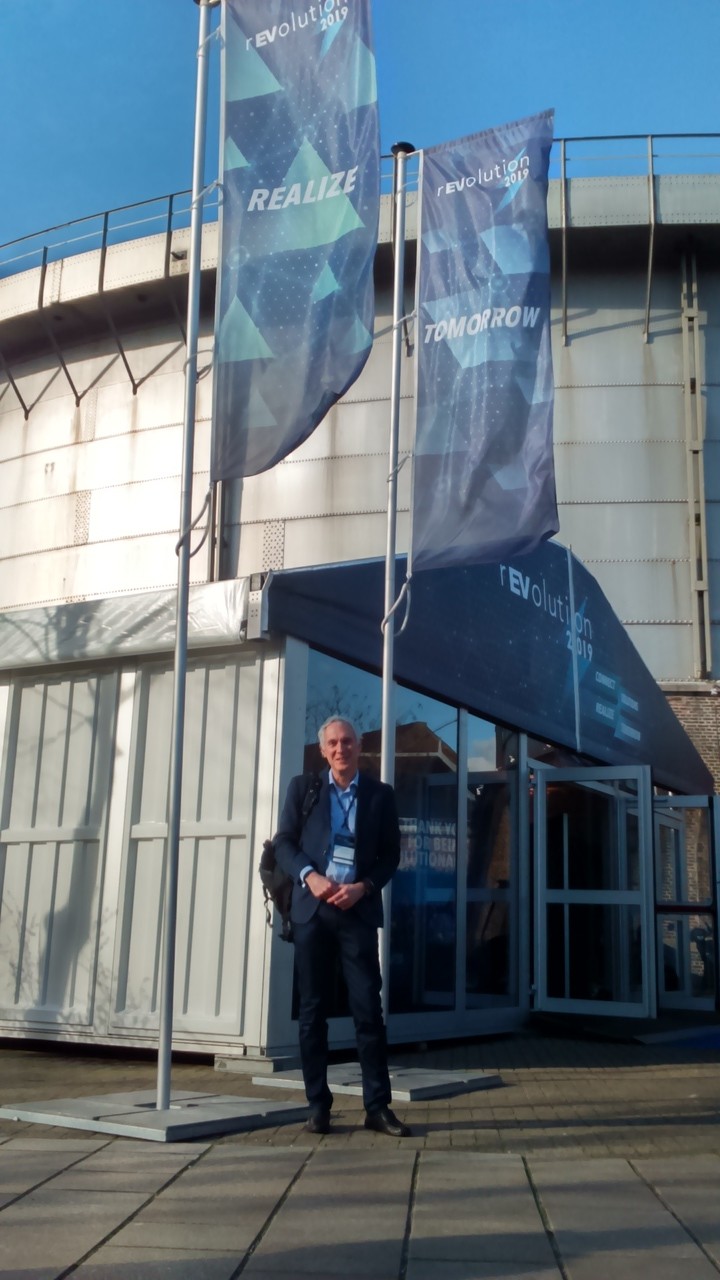
On the first day of V2G UK’s trip to The Netherlands I attended EVBox’s rEVolution 2019 event in Amsterdam. Here’s EVBox’s own brief overview of the event:
and here’s yours truly during a quiet interlude at the entrance to the Gashouder Westergasfabriek:
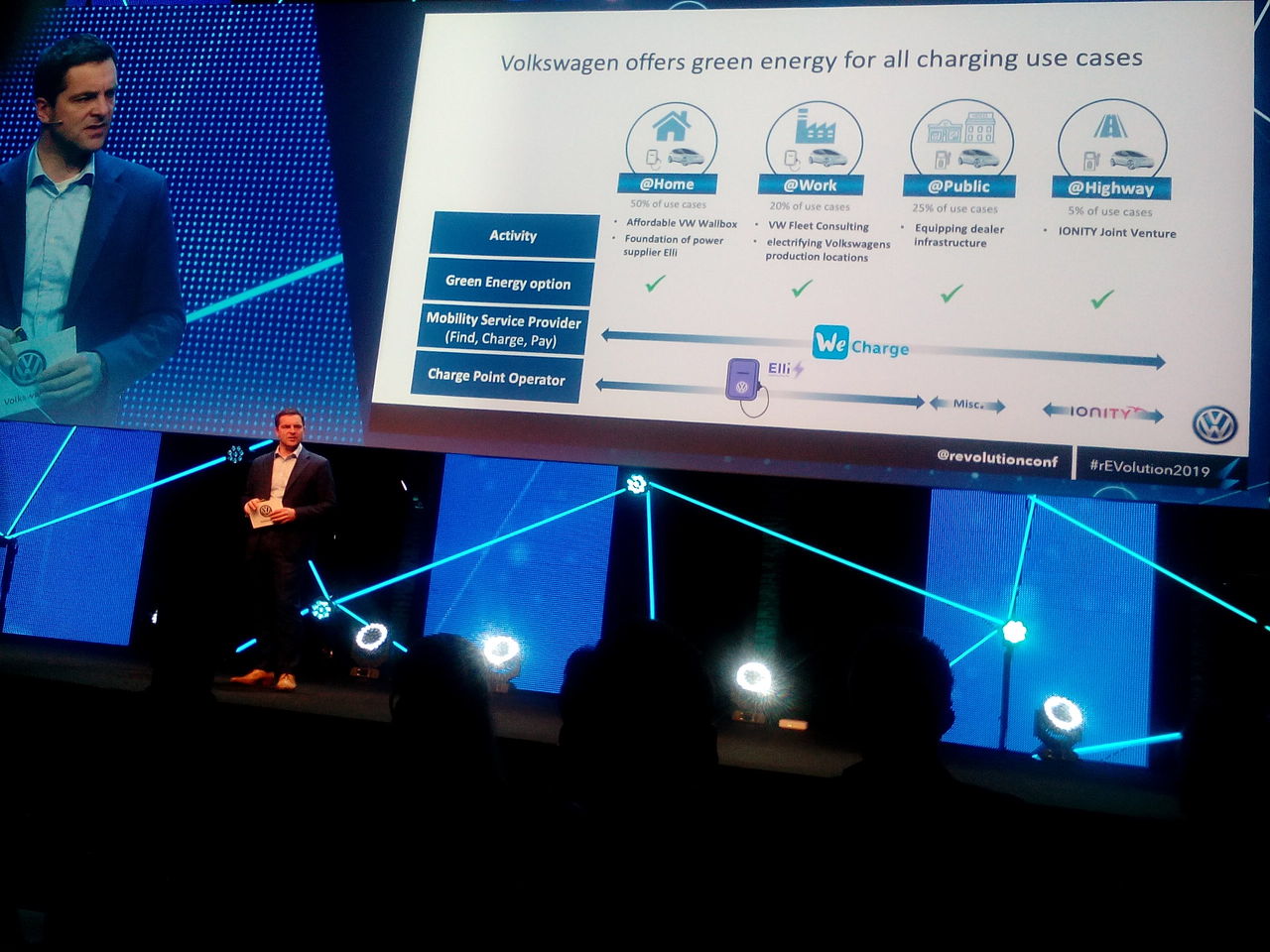
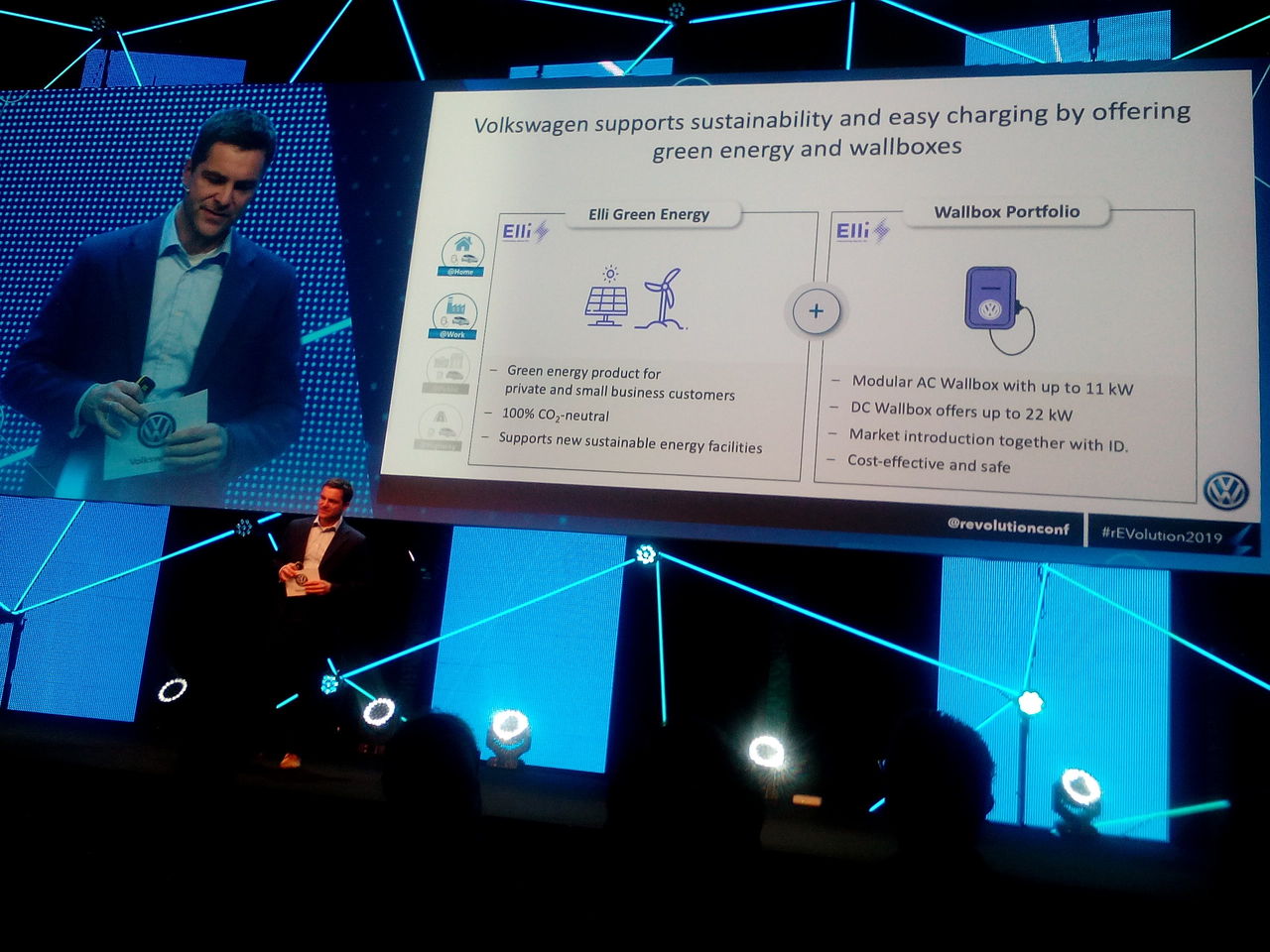
In the first of several reports from Amsterdam, here’s what Martin Römheld of Volkswagen revealed in the final keynote speech:
Here are a few of the key points from Martin’s presentation:
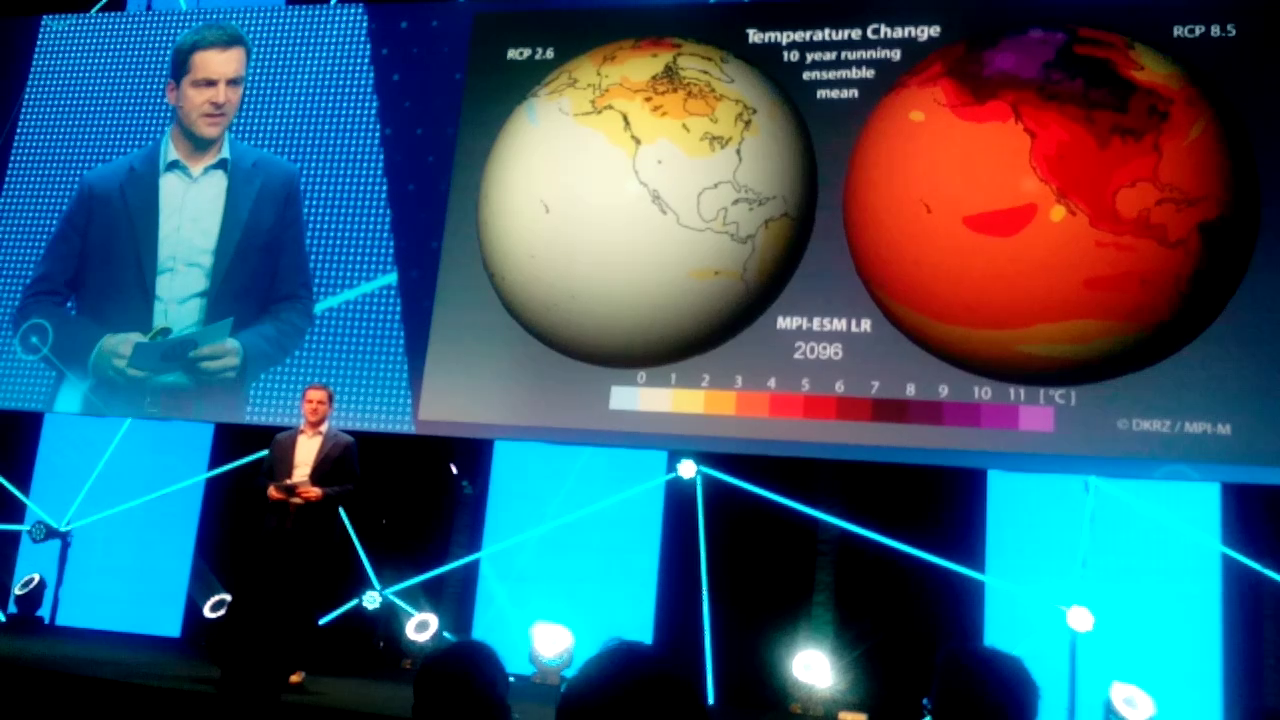
My smallest daughter, she’s 3 years now, so by 2090 she’s probably going to be 74. So that means this is not a far distant scenario. I know people now who are spilling their breakfast all over them who will have to live on that planet by 2090:
Martin was referring to his animation of two alternative Representative Concentration Pathways (RCPs for short). RCP 2.6 on the left “assumes that global annual greenhouse gas emissions peak between 2010–2020, with emissions declining substantially thereafter”, whereas RCP 8.5 on the right “assumes that global GHG emissions continue to rise throughout the 21st century”.
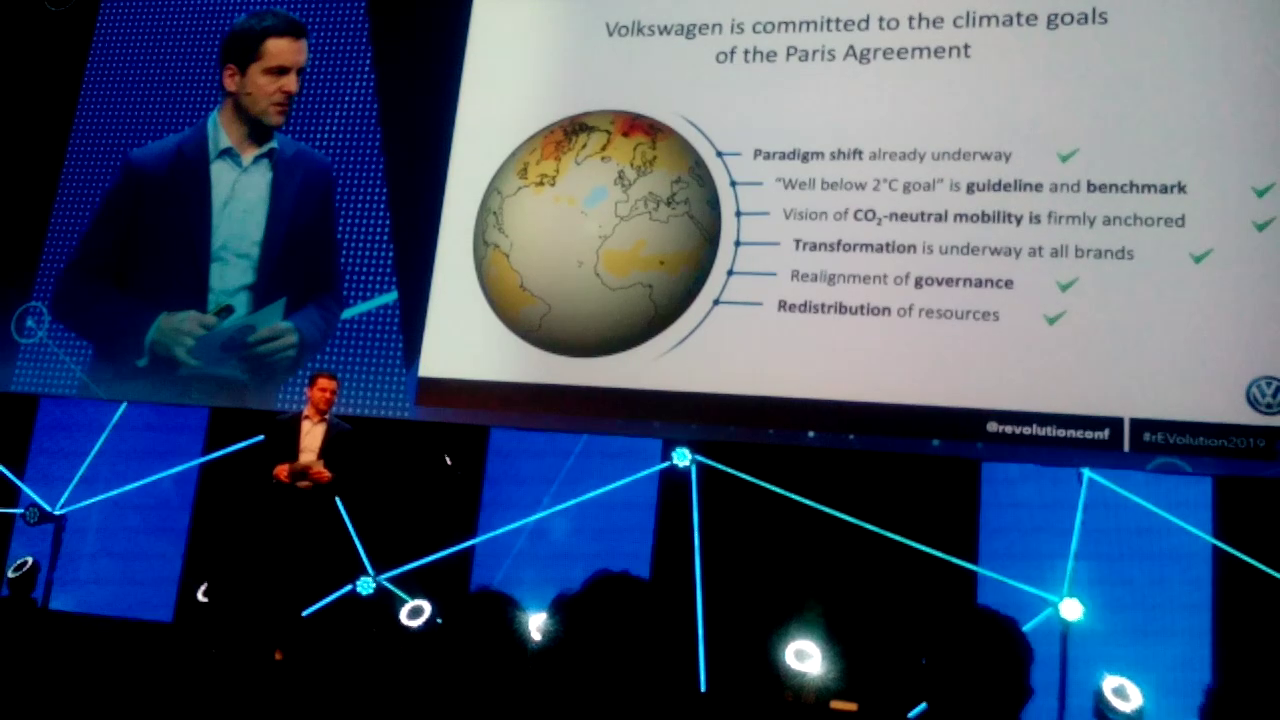
For VW I can tell you, and I think you can read that from the papers and the news currently they’re really doing a paradigm shift. The top management is really turning around the company big time. The “dieselgate” that Roger mentioned was definitely a facilitator in that. Something had to happen, and it’s really happening now. It caused a lot of fear. It caused a lot of movement, but it’s absolutely necessary.
Volkswagen’s “new paradigm” includes a “commitment to the climate goals of the Paris Agreement“.
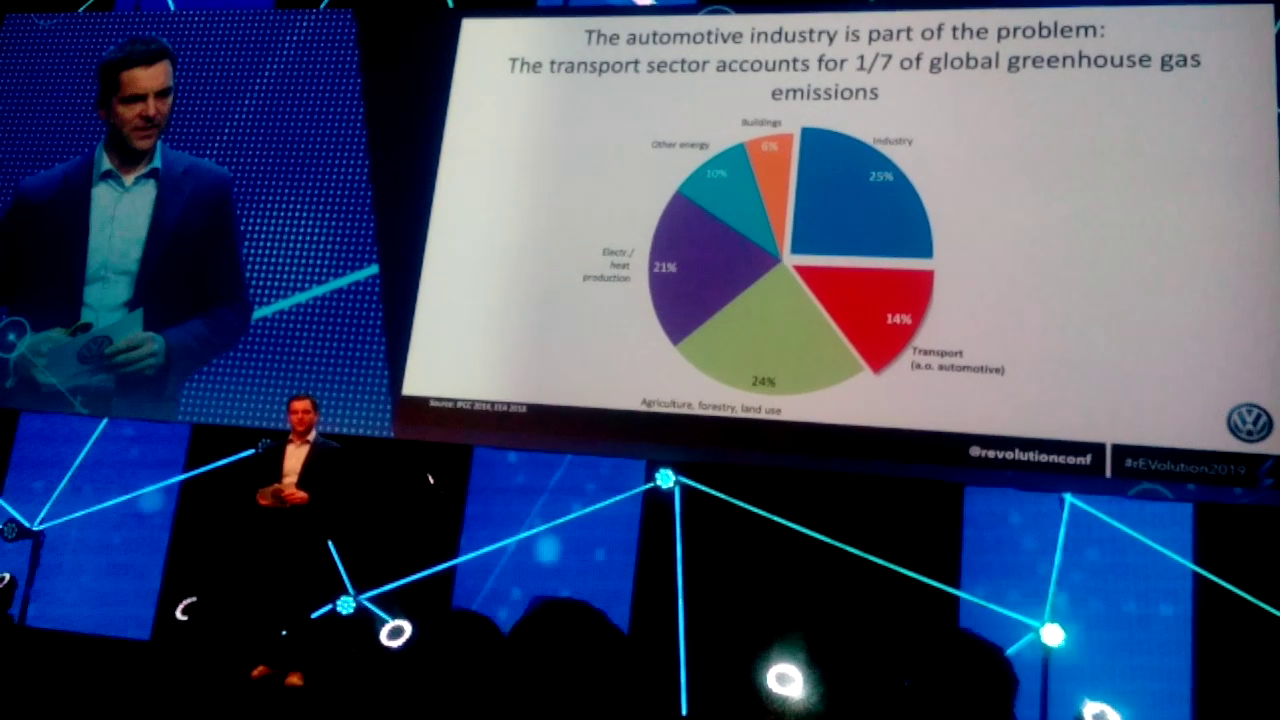
Here you can see the greenhouse gas emissions by different sectors. I’ve singled out the two that we have an influence on. We are part of the industry, so within the value chain and the production of the vehicle we have a big influence on that section, and of course with our products and the services we provide to our customers we have a big impact on the other 14%, the emissions while the vehicle are being used.
Moving on from VW’s aspirations to some engineering, Martin pointed out that:
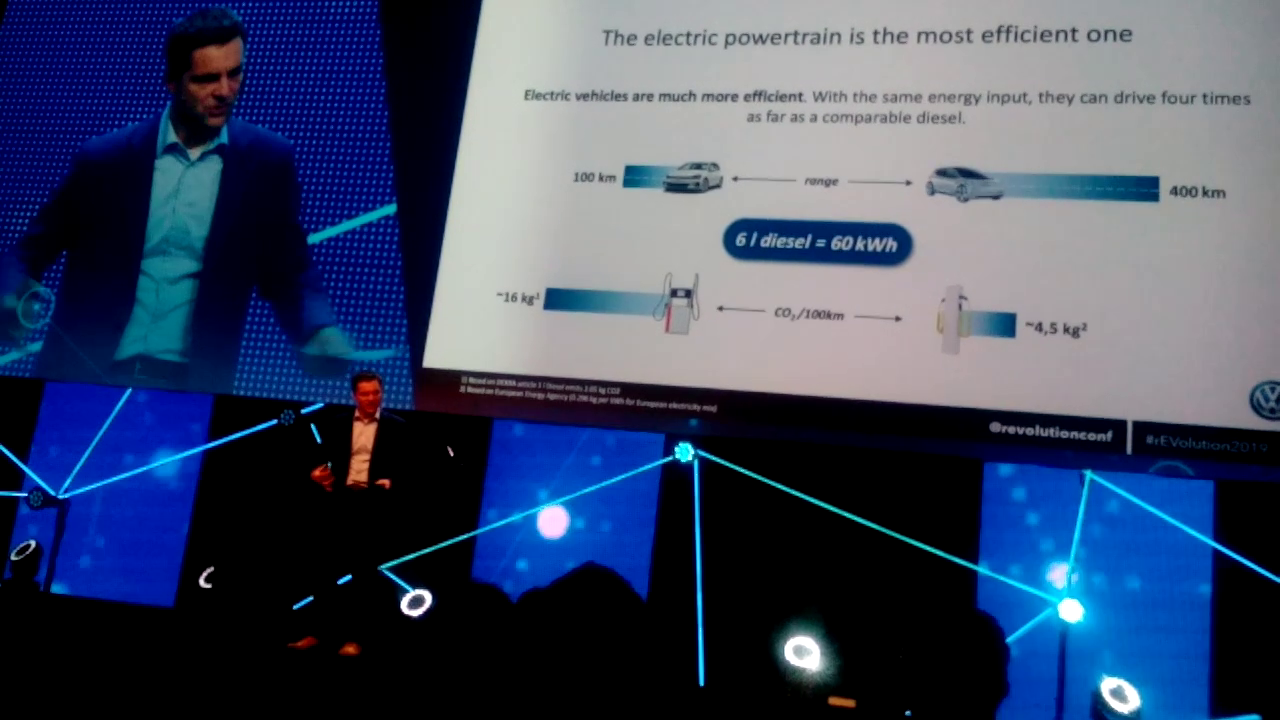
The question is “How much energy is contained in one litre of diesel?”. Very few people know that. It’s about 10 kWh, so 6 litres of diesel are the equivalent of 60 kWh of energy. So how far will that takes us? With a diesel car, if you have a moderate driving style, it will take you about 100 km… With an EV you go four times that far. And that’s the discussion we have to take. It’s not a question about how much more electricity do we consume, it’s a question about how much less energy do we consume.
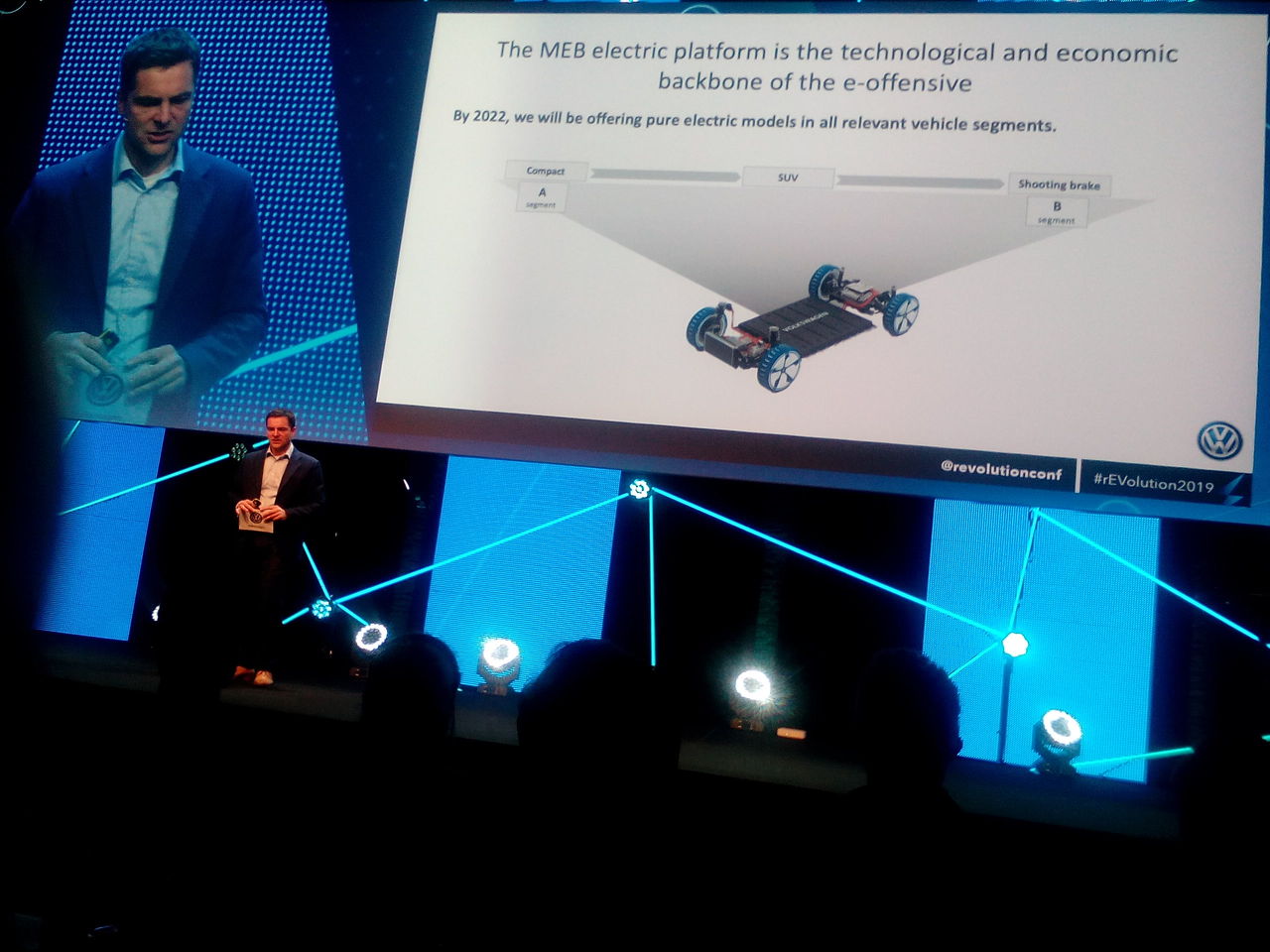
When it comes to reducing the energy consumption of “personal mobility” by a factor of four, here are Volkswagen Group’s plans. Firstly an overview of their “Modularer E-Antriebs-Baukasten” (MEB) Platform:
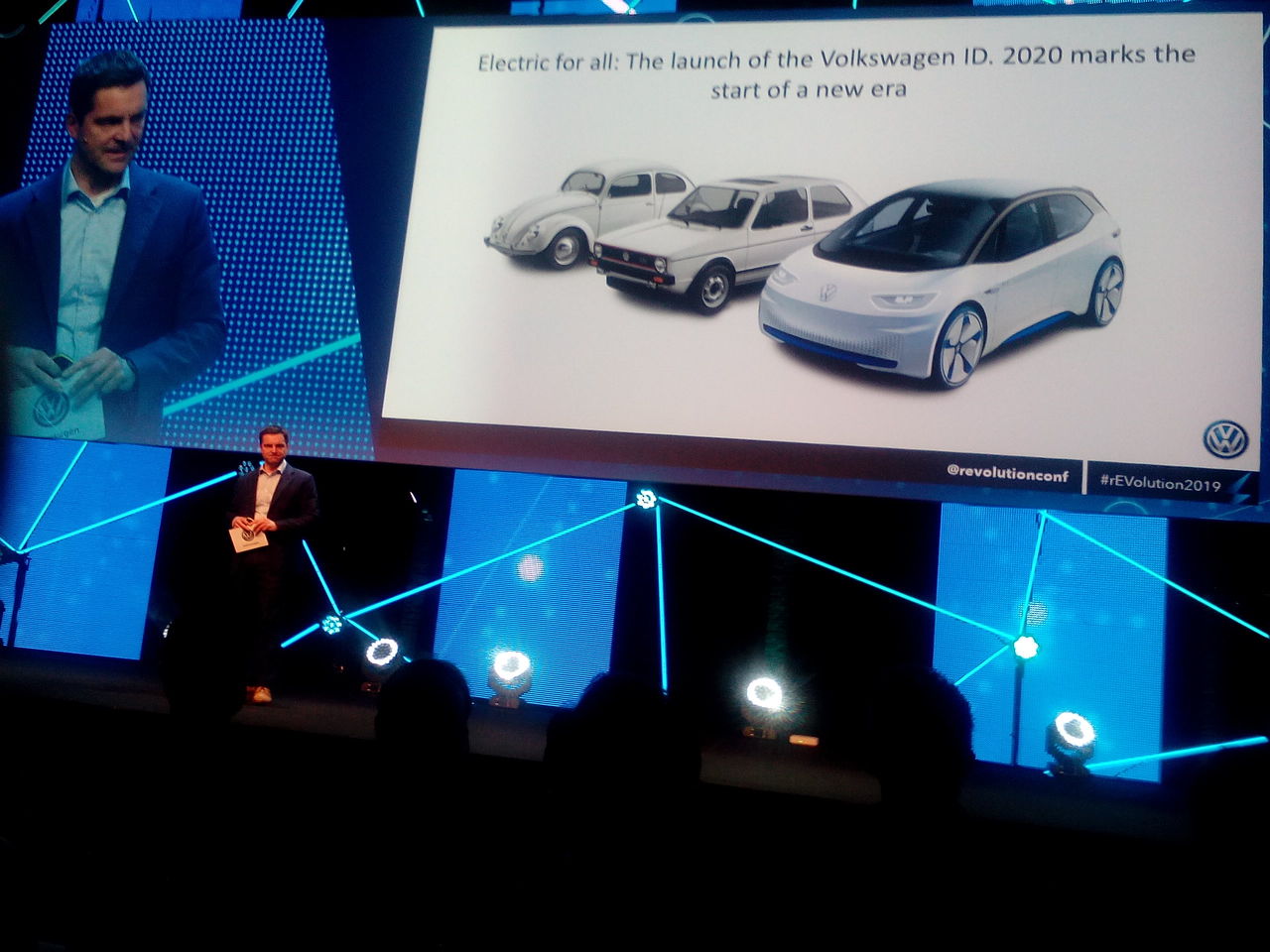
which will form the basis for their forthcoming I.D. series of electric vehicles:
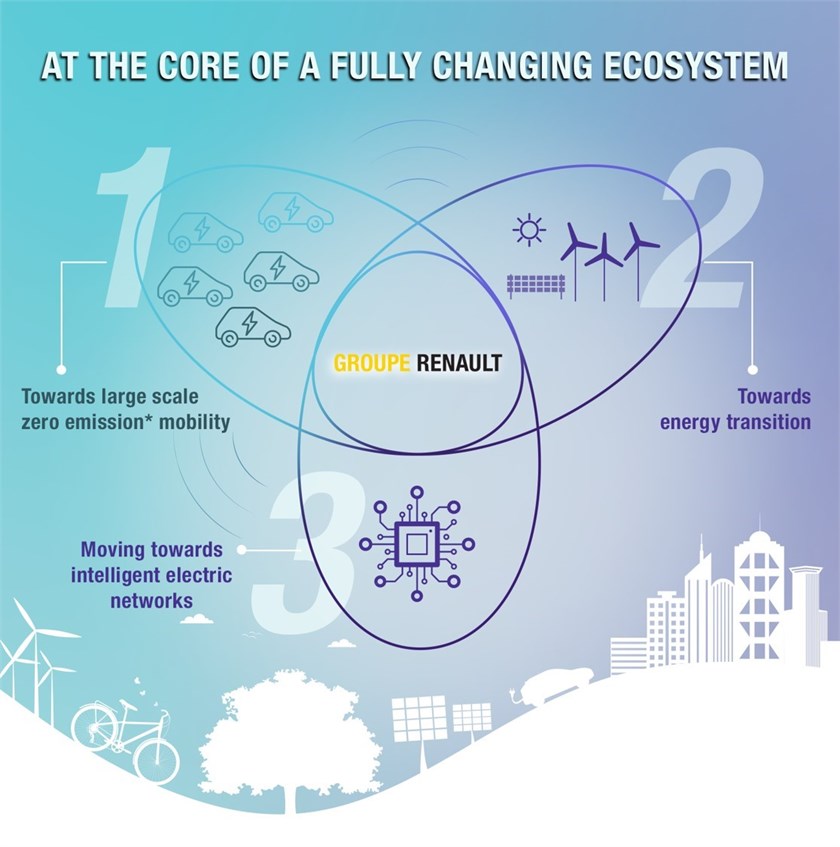
Groupe Renault, Europe’s number one manufacturer of electric vehicles, is pleased to announce the creation of Renault Energy Services. The aim of this new subsidiary is to have an active presence in the energy and smart grid sectors, both of which are fundamental to the expansion of electric mobility.
We certainly won’t argue with that proposition, since we’ve been saying much the same thing at much greater length for over 5 years now! The press release continues:
Renault Energy Services will function much like a start-up and its objective is to invest in smart grid-related projects by forging privileged ties with the energy industry’s various stakeholders. Renault Energy Services will focus chiefly on the development of smart charging, vehicle to grid interaction and second-life batteries.
It seems as though Renault are 5 years behind us on this one? There is more. According to Renault’s Senior Vice President for Electric Vehicles, Gilles Normand:
The creation of Renault Energy Services marks an important step forward. Investing in smart grids is key to both reinforcing the lead we enjoy in the European electric vehicle market and accelerating the EV industry’s scale-up.
This is what Renault’s “Smart Grid” infographic looks like:
According to Renault’s press release once again:
Groupe Renault intends to make a real contribution to the expansion of smart charging networks which, by facilitating the communication of data, are capable of making real-time adjustments to the supply of electricity for more-efficient management of resources. Renault electric vehicles connected to smart grids will benefit from more economical, lower-carbon electricity. In addition to permitting the development of smart charging, smart grids favour both interaction between electric vehicles and networks (vehicle to grid) and projects involving second-life batteries:
Smart charging adjusts battery charging rates as a function of customers’ needs and the availability of electricity via the grid. Batteries are charged when supply exceeds demand, notably during renewable energy production peaks and when rates are at their cheapest.
In vehicle to grid systems, electric vehicles provide electricity to the grid during peak hours. In this way, not only do they benefit from the advantages of smart charging but they also serve as a means to temporarily store energy.
Even once their life as a power source for electric vehicles is over, EV batteries continue to be capable of storing a significant amount of energy. Renault is able to harness this energy, notably for the purposes of stationary energy storage. By giving batteries a second lease of life, Renault is today in a position where it can cover the full spectrum of energy storage needs, from individual homes to office buildings, factories, schools and apartment blocks, and even the charging of electric vehicles.
Unfortunately the press release doesn’t include Gilles’ mobile number. That’s a shame, because I’d love to have a quick word with him!
At the recent Paris Motor Show Carlos Ghosn, Chairman and CEO of Groupe Renault, announced that:
This month Renault surpassed 100,000 electric vehicles sold and now ZOE will travel up to 250 miles (400km) without recharging.
Over the past twelve months both Nissan and BMW have made similar announcements, but neither claimed as many miles as Renault. Eric Feunteun, Vice President of Renault’s electric vehicle programme, added that:
Renault has added a new dimension to the world of electric vehicles now that the ZOE’s range stands at 250 miles (400km) NEDC. It’s a breakthrough in all-electric motoring that will provide the range needed to make any motorist comfortable choosing electric.
In real-world driving, Renault estimates the new Z.E. 40 battery has a range of 186 miles (300km) in urban or suburban areas.
The range offered today by the new ZOE is the longest of any mainstream all-electric vehicle and motorists can take advantage of this step forward now. The ZOE is the best-selling electric vehicle in Europe and provides a real alternative to internal combustion- engine cars, since average daily commuting distances are well within the ZOE’s capabilities.
The new battery removes the final psychological barrier that stands in the way of buying an electric car, so-call ‘range anxiety’, since ZOE users can now travel further and enjoy a wider variety of driving situations without worry about charging.
Not exactly a range of 250 miles in “real life” driving then! We would of course like to test the range of the new ZOE for ourselves, but at the moment our local Renault dealer could only promise that they will be taking orders in November for delivery in January 2017. When a demonstrator might become available is, unfortunately, still unknown. Whilst we all wait for a test drive, here’s a video!
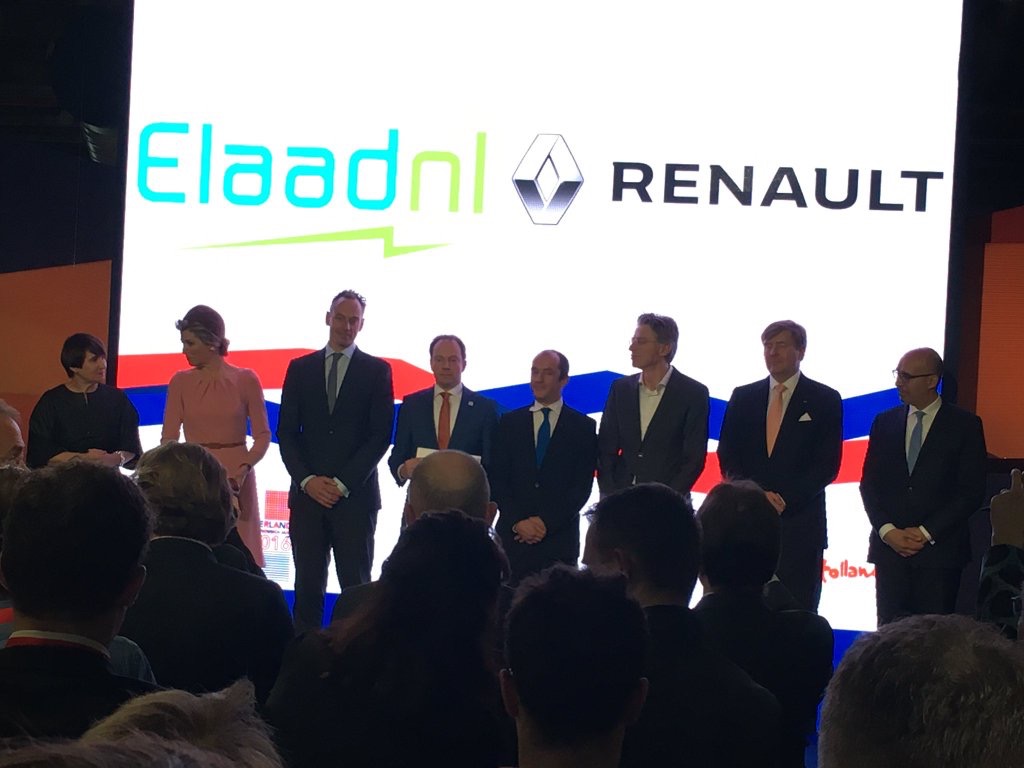
The signature took place during the state visit to Paris of King Willem-Alexander and Queen Máxima of the Netherlands.
According to the letter of intent, the city of Utrecht could be the testing ground for the solar smart-charge project. Renault, Europe’s leader in electric vehicles, would supply a fleet of 150 Renault ZOE models through 2017 to the city. ElaadNL would handle management of infrastructures and the smart-charge standard, and LomboXnet would take charge of installing the network of unique public charging terminals powered by a 44 kW grid connection. Grid operator Stedin would be involved to balance supply and demand of the grid.
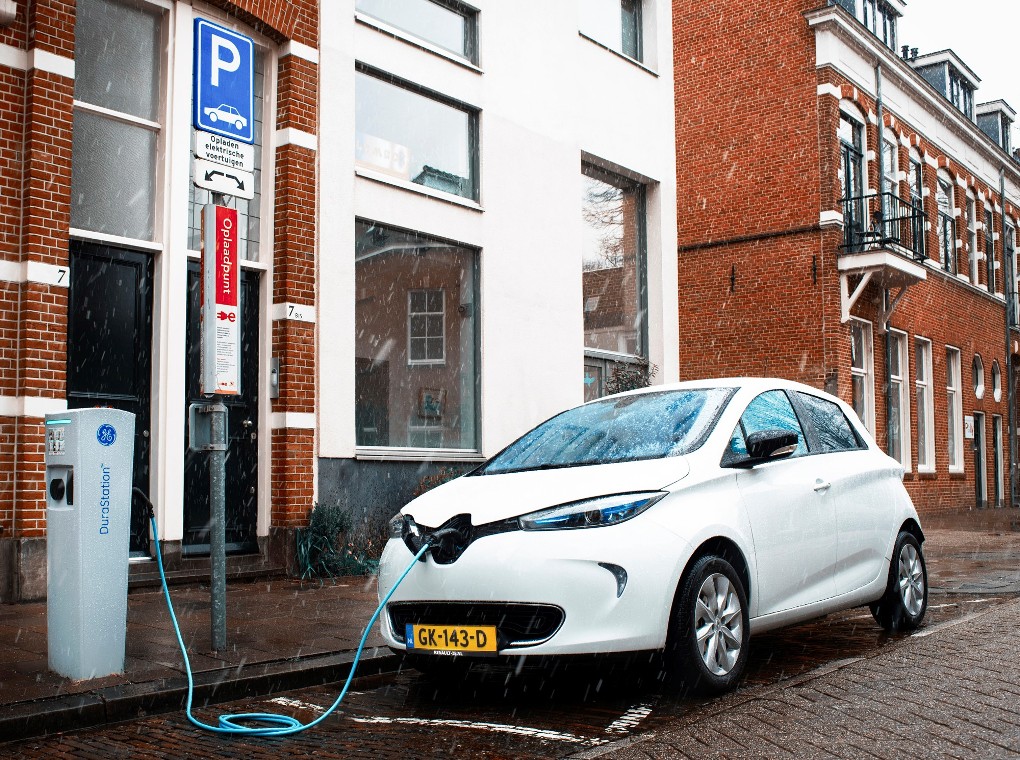
The Royal Family might have left better weather behind during their trip to Paris, but here’s a Renault ZOE charging outside the LomboXnet offices in Utrecht, in the rain:
Moving on to some more technical details of the Utrecht project:
Phase one of the project would involve setting up 1,000 smart solar-charge stations, powered by 10,000 photovoltaic panels in the Utrecht region. Infrastructure installation would run side by side with development of a car-share service of electric cars, powered by renewable energy, for Utrecht residents. The Renault ZOE R.Access connectivity and 22 kW charging make it ideal for car-share and smart charging applications.
So far so good, and then comes phase 2!
Phase two of the project would proceed with the partners developing a vehicle-to-grid ecosystem, with the network of solar chargers capable of both charging the electric cars and of feeding energy stored in the batteries of parked cars onto the grid to meet demand peaks. This could be the starting point for a new system storing renewably sourced energy.
As always at this juncture, one cannot help but wonder where and when the first “vehicle-to-grid ecosystem” will evolve here in the United Kingdom!