There have recently been a series of press releases from Nissan UK about their forthcoming range of electrically powered vehicles. At the end of May Nissan UK announced the electric MICRA. Yesterday they launched what was described as “The all-new LEAF“:
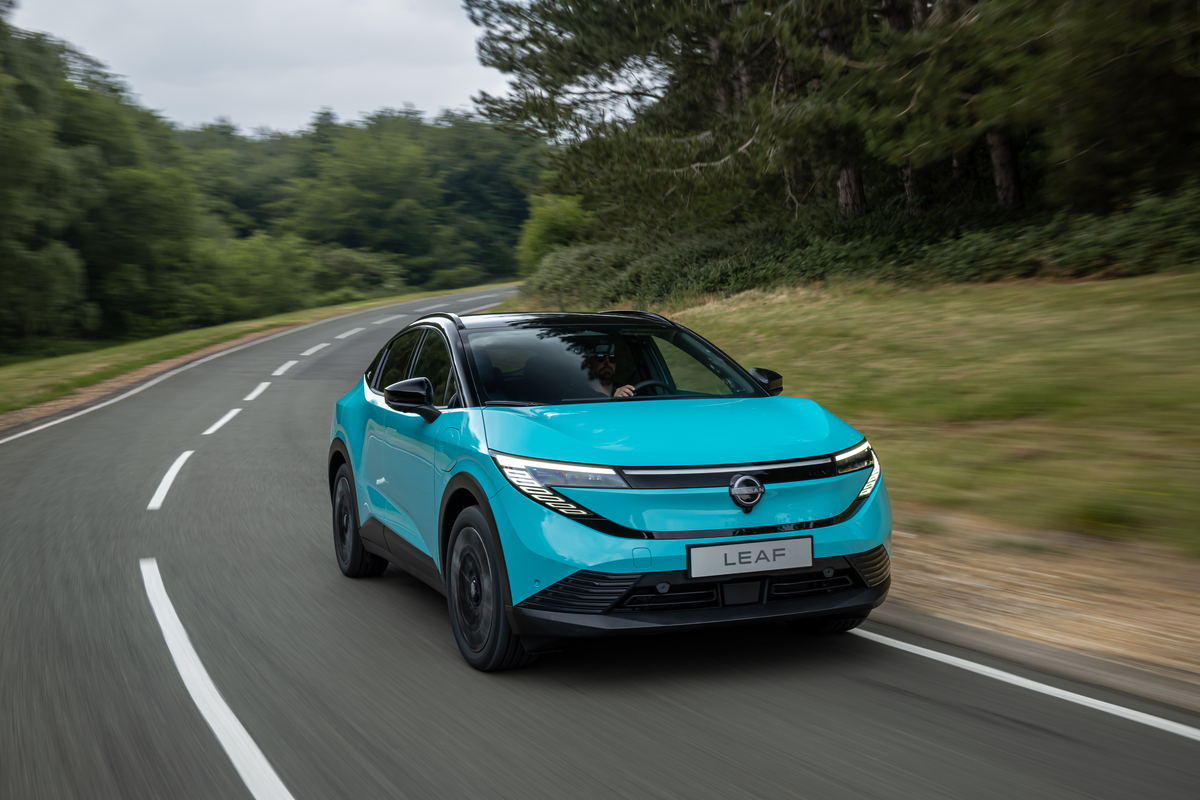
Today marks the debut of the all-new version of the Nissan LEAF – a British-built electric car icon.
The all-new Nissan LEAF is the next step in Nissan’s EV journey, building on its legacy as the world’s first mass-market electric car
The sleek, aerodynamic, and spacious crossover design comes with two battery options for an impressive range of up to 375 miles (WLTP), ensuring confident driving for everyday and long-distance trips
Delivers a fully connected mobility experience with Google built-in, dual 14.3” screens, and advanced driver assistance technologies
Built in Sunderland, UK, as part of Nissan’s EV36Zero initiative, supporting a sustainable electric future for Europe
This third generation of the pioneering LEAF continues to lead the charge in Nissan’s electrification strategy with a sleek design, significantly extended range, and intuitive technology that is seamlessly integrated for today’s connected driver.
Engineered to tackle key barriers to EV adoption, the all-new LEAF has a substantially increased maximum range of up to 375 miles on a single charge for a no-compromise driving experience. It also offers enhanced charging speeds (up to 260 miles of range in 30 minutes) and a suite of technologies that make both driving easier and EV ownership more rewarding.
Since its debut in 2010, the Nissan LEAF has sold close to 700,000 units worldwide, earning its place in history as the world’s first mass-market electric vehicle. Today, Nissan is ushering in a new chapter for this nameplate, re-designed and re-engineered to meet the needs of modern EV customers, while remaining true to its innovative roots…
Designed at Nissan’s Global Design Studio in Atsugi, Japan, the all-new LEAF introduces a stylish silhouette that reflects its dynamic character and aerodynamic efficiency. With a drag coefficient of just 0.25, its sleek design optimises airflow to enhance both performance and range. Flush door handles, a flowing roofline, full under floor cover, and sculpted surfaces create a modern profile, while its signature front and rear lighting delivers a distinct, high-tech identity on the road.
Pretty pictures and low drag coefficients are all very well, but “What about the all new LEAF’s V2x capabilities?” I hear you ask. Heading for the small print I learn that:
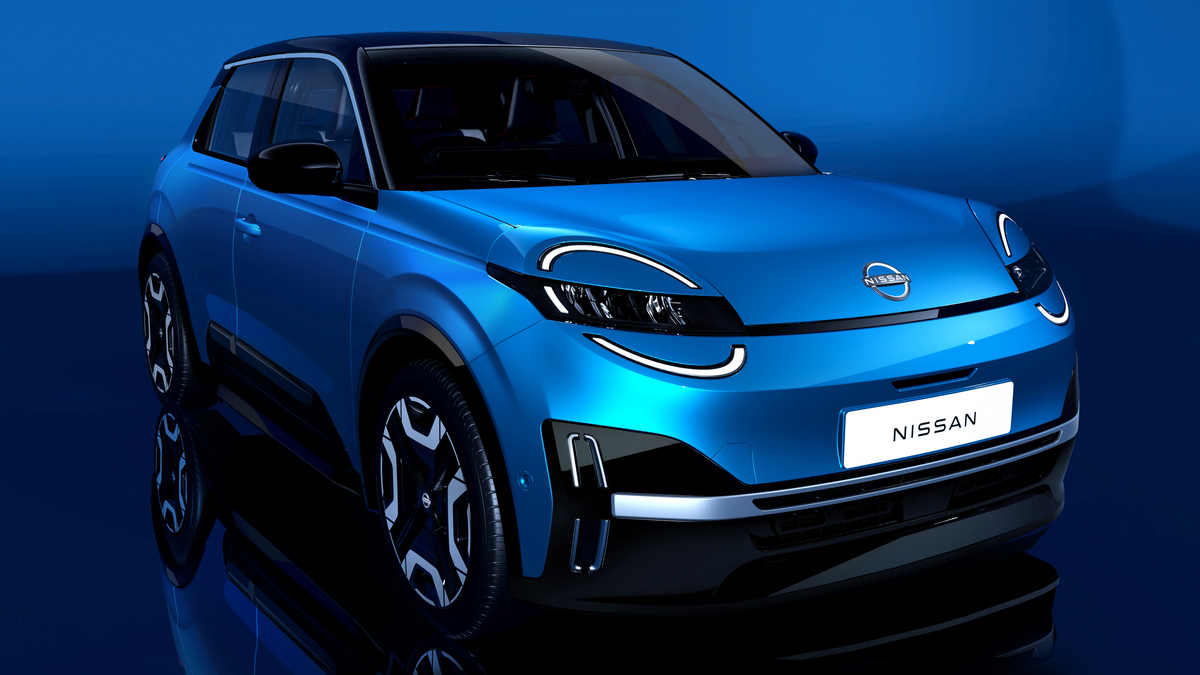
The all-new, sixth-generation Nissan MICRA will return to the B-segment in 2025 as a fully-connected, pure EV. Combining an assertive personality with zero-emission mobility, the new MICRA will stay true to its guiding principles as a stylish and unpretentious car, which has underpinned its popularity and success as an iconic compact car across five generations and more than 40 years.
Its arrival signals the next major step in Nissan’s bold product offensive in Europe, where the company will introduce four new fully electric models by 2027 as part of its push towards electrification. These include the all-new MICRA, followed by the Nissan LEAF, Nissan JUKE, and a A-Segment model, as well as the upgraded third generation of Nissan’s unique e-Power technology – to be rolled out on the best-selling Nissan Qashqai.
Needless to say I headed straight for the V2x small print, where I read that:
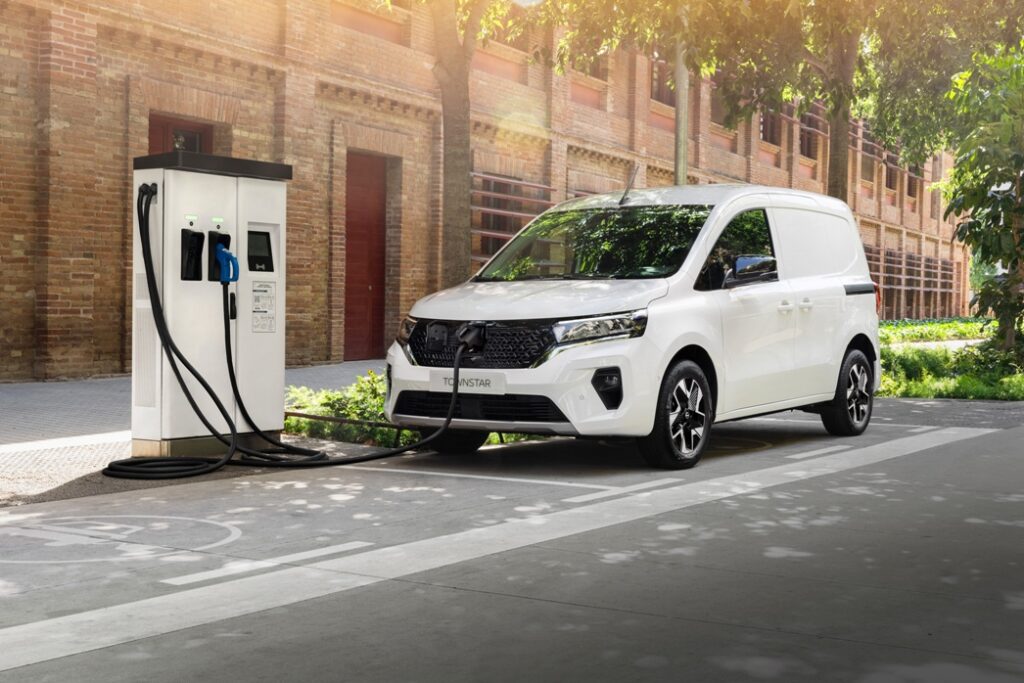
Commercial vehicle customers looking to future-proof their business operations and transition to zero emission motoring now have an exciting new option, following the launch of the electric Nissan Townstar van.
The Townstar EV builds on the success of the e-NV200, Nissan’s previous all-electric compact van and a former UK best-seller, which was designed with business owners’ needs in mind:
The electric Townstar was first announced in September 2021, but it seems that at long last it is possible to order one here in the United Kingdom:
I remotely attended several sessions at the recently completed COP26 conference in Glasgow, but what with one thing and another I missed out on attending this one as it happened:
As you can already see it was organised by Scottish and Southern Electricity Networks (SSEN for short) and was hosted by Laura Sandys. Note in particular the part at 6:30 where Professor Malcolm McCulloch of Oxford University says that:
So the challenge is to say “How do we allow that potential problem and risk, how do we turn that around to be something that’s really a friend and an aid to the system?”
And the one thing that worries me right at the moment is that we’re seeing a huge uptake in electric vehicles over the last while, I mean it’s kind of fascinating that at the beginning of this year the most popular vehicle being sold was the Ford Focus, last three months it’s been the Tesla Model 3! That kinds of tells you what the change in our dynamics is looking at.
At the moment we’re missing a trick because most of the vehicles being sold except for a few Nissan’s and a few others don’t have vehicle-to-grid. In other words the power flows in only one direction, so all that huge amount of storage capacity that’s available on the grid, we’re talking about by the time we get to 2030 there’s enough energy in the batteries of our electric vehicles to power the UK for two days. That’s a tremendous amount of energy that’s sitting there, but if we don’t install V2G soon, really soon, that boat is going to pass and we’re going to have real trouble in trying to, or much more costly ways of doing that.
Needless to say we broadly agree with Malcolm’s analysis, and the conversation in Glasgow continued. Please watch the whole 30+ minutes, but now there is further news. The Local Energy Oxfordshire project (LEO for short) has just released a white paper authored by Origami Energy and the Low Carbon Hub catchily entitled “Vision on the inclusion of small (under 7kW) flexibility from the grid edge and its role in Future Energy System“. Please also read it from cover to cover, and note that it briefly (and belatedly!) mentions that:
In 2021, British Standards Institute as part of [its] Smart Energy Appliance programme published two standards designed to support [a] testing and certification programme to motivate greater potential for demand response from [the] residential sector.
Note also LEO’s recommendations:
Grid-edge flexibility has great potential to be the enabler of Net Zero as outlined by the “Leading the Way” FES scenario. However, t he two biggest challenges facing the inclusion of small flexibility from the grid edge into delivering Net Zero are societal participation and commercial environment. A common pillar to both challenges is the value of flexibility which only partially reflects the benefits delivered through the flexibility markets. Today, each flexibility market is monopsonistic (market dominated by one buyer), segregated and short-term (there is a lack of long term stability in the regulatory landscape). There is a need to standardise products and services across all flexibility markets to encourage greater transparency and involvement of flexibility as these flexibility markets grow.
To support the inclusion of grid-edge flexibility, the proposed recommendations include:
• To tailor the legislation and regulation to support the development of local communities who act collectively to manage their LCTs and interact with the flexibility markets and other users of the system at a single node (e.g. enabled by an iDNO) or multiple nodes.
• Create a new energy and carbon marketplace to encourage wider deployment of Smart Local Energy Systems where local generation and demand flexibility is recognised as being critical for a healthy and affluent society. The Flexible Services players are seen to add significant benefit to the local society and also provide support to the National scale economy.
• Align the energy policy, welfare policy and housing policy to deliver long-term strategy for Net Zero and beyond ensuring balanced distribution of costs and benefits associated with grid-edge flexibility and cost of energy.
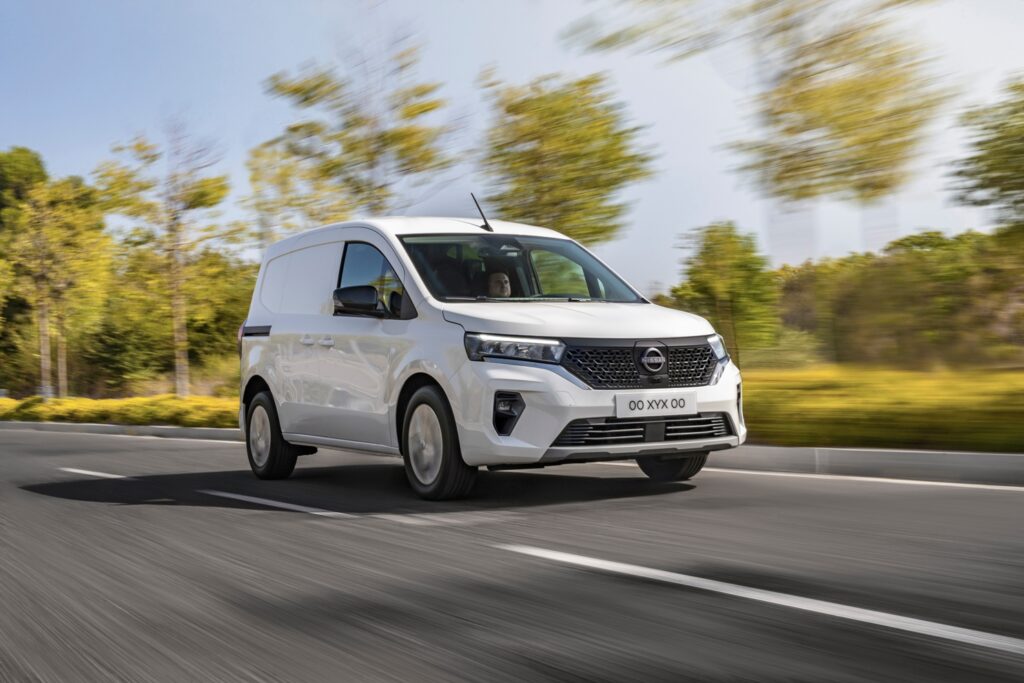
PARIS – Nissan reveals the next generation compact Light Commercial Vehicle (LCV), the all-new Townstar. With a fully electric powertrain in addition to a fuel-powered option, this new LCV range is primed to future-proof business operations and accelerate the transition towards electrification.
Demonstrating Nissan’s most technologically comprehensive LCV offering to date, the all-new Townstar brings a suite of 20+ technologies to the compact van offering, presenting a bold contender within the segment.
Building on the success of the Nissan e-NV200, a pioneer and leader in the electric LCV market, the fully electric version of the all-new Townstar is optimised to meet customer needs. With an enhanced 44kWh battery, advanced technology and low running costs the electric Townstar offers an efficient, sustainable mobility solution.
Here’s the Townstar launch video:
In view of the captions I cannot help but wonder when a right hand drive version will become available! In the meantime the press release tells us that:
The fully electric all-new Townstar will be equipped with a 44kWh battery and advanced technology. It will combine intelligent energy management and effective battery thermal cooling in one optimised package. The new van will replace the range offering of the e-NV200 and offer 245Nm of torque and 285km [range] (pending homologation)…
With a broad range of safety technologies and advanced driver assistance features such as Side Wind Assist and Trailer Sway Assist, the all-new Townstar provides a reassuring and confident experience behind the wheel. Intelligent Emergency Braking featuring Pedestrian and Cyclist Detection and Junction Assist, as well as Hands-Free Parking and Intelligent Cruise Control puts Townstar at the forefront of the category.
Nissan is integrating the Around View Monitor (AVM) for the first time in the compact van segment, democratising this cutting-edge technology. Using a suite of cameras, the system displays a 360-degree overview of the area around the vehicle, providing drivers with full peace of mind when parking in the city.
Customers of the fully electric all-new Townstar will also enjoy the innovative ProPILOT advanced driver assistance system. Supporting motorists with highway driving, the feature allows the vehicle to automatically slow to a full stop and accelerate by following the vehicle ahead, as well as keeping it centred in the lane – even around a gentle curve.
Convenient connectivity features such as E-Call, Apple CarPlay/Android Auto, and wireless phone charging will be available across the range from launch, with further enhanced Connected Services available from the launch of the fully electric version.
These connected services will be presented via an 8-inch touchscreen, which is linked to a 10-inch digital combimeter in front of the driver in the fully electric all-new Townstar.A
Built on the Alliance CMF-C platform, the all-new Townstar has been built from the ground up with quality and functionality in mind. It will bear the new Nissan brand logo, making it the first European model to be produced with it and the latest to be introduced under the Nissan NEXT transformation plan, which prioritizes sustainable growth and profitability across the company’s global operations.
The all-new Townstar van version has been developed to perfectly meet the needs of customers like SMEs who are looking for versatility, convenience, space and cargo on top of a hands-free parking system for complex city parking.
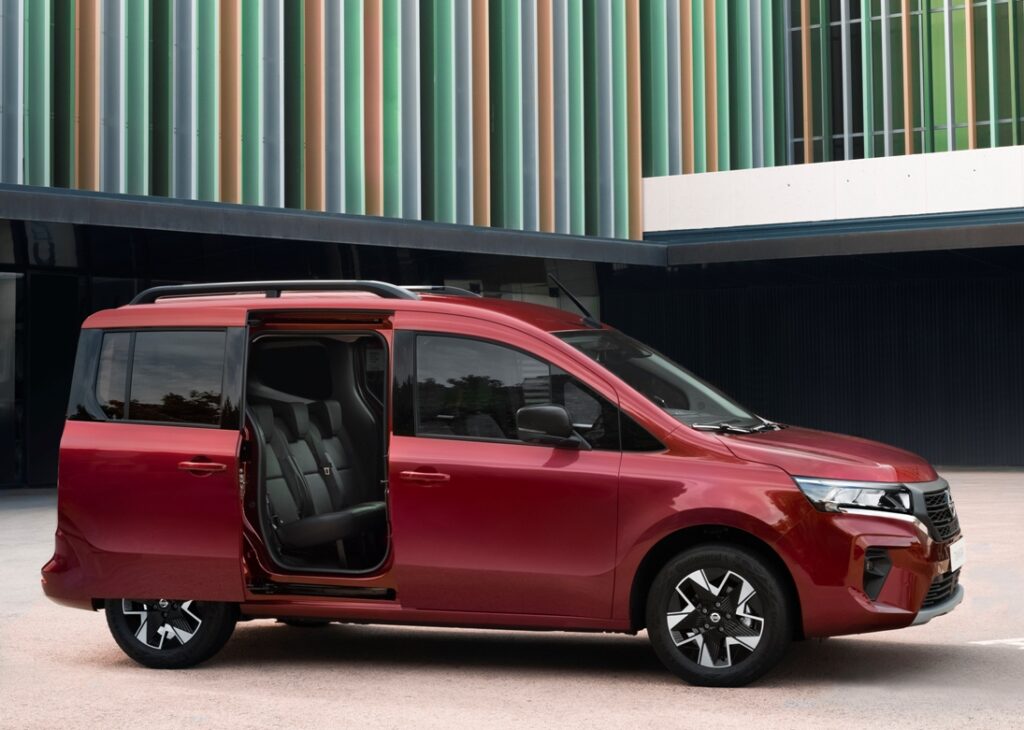
The combi version of the all-new Townstar will support families on the go with vast smart storage options that go up to 775 litres. From refined seat and door trims to a modern centre console and instrument panel finish, the all-new Townstar’s cabin welcomes customers with passenger-car-like comfort.
The fully electric all-new Townstar will reflect aesthetic cues of Ariya, including signature standard LED headlamps and an aerodynamic front shield integrating an intricate Kumiko pattern and a fresh V-motion design with daytime running lamps…
Featuring up to 3.9m3 of cargo space with a swivelling bulkhead, the new compact van can transport two Euro pallets and up to 800kg of cargo with ease, while the powerful powertrains allow the vehicle to offer a 1,500kg towing capacity, adapting to each businesses’ specific requirements.
The cargo area integrates large sliding doors on the side which facilitate unloading the van and the possibility to have 60/40 French doors with 180 degree opening or a tailgate at the rear. It also includes smart storage solutions and a dedicated space for on-board office tools.
Nissan presenta la nueva furgoneta Townstar: un cambio de juego dentro del mercado de Vehículos Comerciales Ligeros (LCV)
Unfortunately none of the above tells me what I really want to know, the ins and outs of (dis)charging the Townstar! Since there is no mention of it I can only assume that initial deliveries of the Townstar will not incorporate the vehicle-to-grid technology familiar from the e-NV200. However the Townstar specification sheet at the end of the press release does include some charging information:
Battery Capacity ( Usable )
44 kWh
Max. power
90kW (122HP)
Max. torque
245
Range estimation
Up to 285 (pending homologation)
Charging type AC
11 kw standard, or 22 kw optional
Charging type DC
75 DC in CCS
Charging time DC
0 to 80% 42 min
Battery cooling
Yes (with 22kW AC charger, or opt with 11kW)
If Nissan are working on incorporating V2G technology in the Townstar and/or the Ariya I wonder whether it will be AC or DC?
Last, but not necessarily least, here is a picture of the ICE Combi version of the Nissan Townstar:
Now I cannot help but wonder when we will be able to test drive one here in soggy South West England.
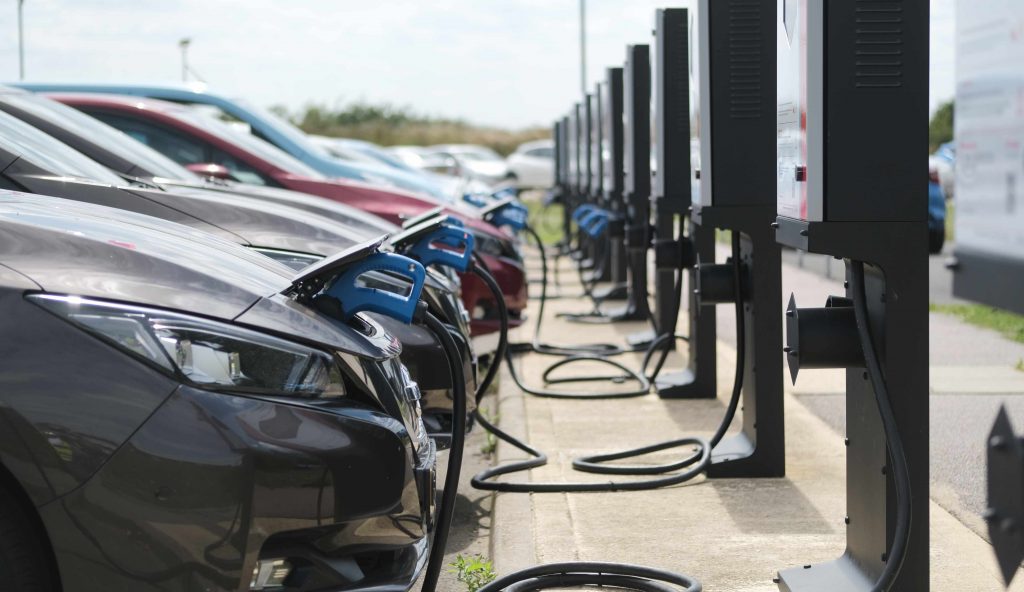
EDF, through EDF Group subsidiary DREEV, has launched a new commercial charging service using vehicle-to-grid (V2G) technology in the UK, in partnership with Nissan. This means businesses can support the grid by consuming low carbon energy, and progress towards their net zero and decarbonisation targets, whilst reducing their costs.
The V2G technology developed by DREEV, which is a joint venture between EDF and Nuvve – the global leader in V2G technology, allows for two-way energy flow; both recharging an EV’s battery when electricity is at its cheapest, and discharging excess energy to sell back into the grid.
The EDF V2G offer is available for fleet owners of Nissan’s LEAF and e-NV200 models and will allow fleet customers to achieve around £350 savings per charger each year, which equates to approximately 9,000 miles of driving charge per year[1].
EDF’s V2G business solution includes:
The supply and installation of a two-way connected compact 11kW charger capable of fully charging a Nissan LEAF, depending on the battery model, in just 3 hours and 30 minutes – 50 per cent faster than a standard charger – with integrated DREEV technology.
A dedicated DREEV smart phone application, to define the vehicles’ driving energy requirements, track their state of charge in real time, and control charging at any time
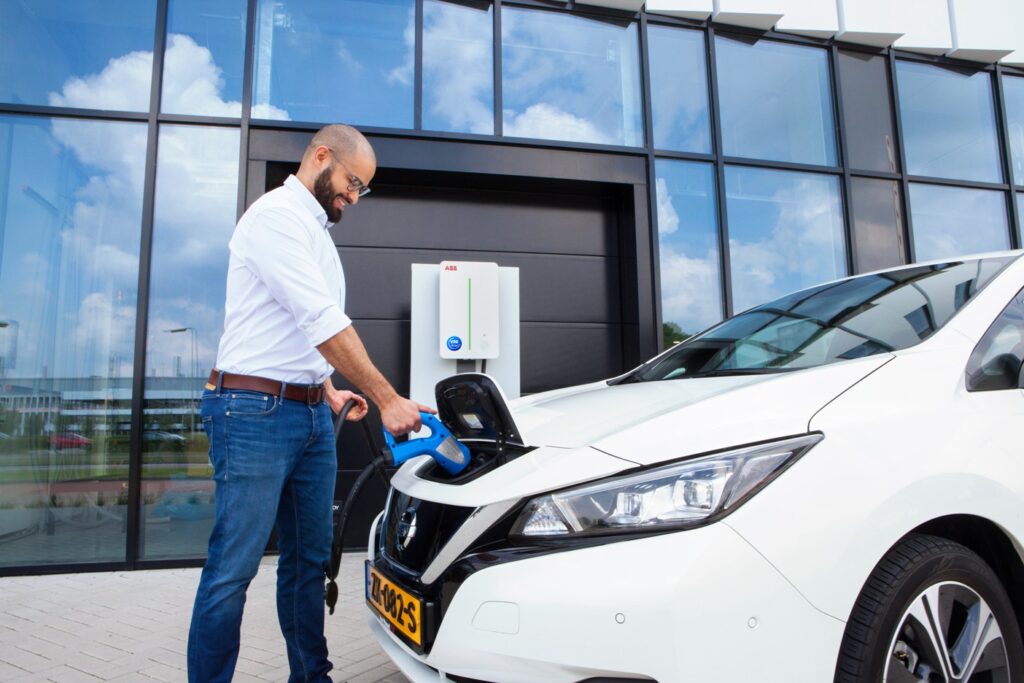
I’m not entirely sure that I agree with the copywriter’s assertion stating “Nuvve – the global leader in V2G technology” though. Take a look at the image accompanying the press release:
I’d swear I’ve seen that picture somewhere before. In the background can be seen a wallbox bearing the ABB logo. It looks an awful lot like the unit pictured in this recent ABB video:
Perhaps I’ve blinked and missed it, but I don’t recall seeing the announcement of Nuvve’s takeover of ABB?
Our title for today is shamelessly plagiarised from an article of the same name on the Electric Nation web site, which begins as follows:
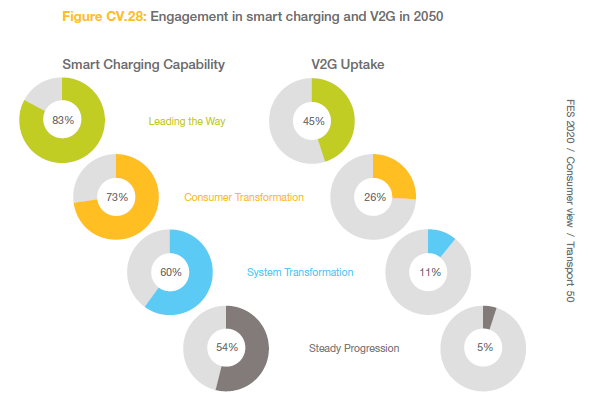
By 2050, up to 45% of households will actively provide Vehicle to Grid (V2G) services, according to National Grid’s Future Energy Scenarios, published in July 2020. But will the average Electric Vehicle (EV) driver be able to use V2G charging over the next few years?
A very good question and a very interesting infographic! The article continues:
The rapid growth in the numbers of electric vehicles on our roads will mean more demand on local electricity networks if EVs are all plugged in at the same time, such as during the peak between 5pm and 7pm in the evening. Smart charging, or ‘V1G’, which allows management of the time when EV charging occurs – as trialled by the original Electric Nation project – will help to avoid this situation.
V2G charging will be more effective than smart charging. This is due to the ability to link EVs together and put significant levels of energy back into the grid at peak times, like a huge decentralised power station. V2G will therefore help to reduce the grid’s need for additional energy generation, typically supplied by fossil fuels at peak times, as well as reducing demand on electricity networks, and allowing EV drivers to use greener and cheaper electricity.
So far so good, I agree entirely. However the next paragraph states:
In a press release earlier today E.ON and Nissan announced that they:
Have successfully deployed 20 vehicle-to-grid (V2G) chargers as part of a trial to demonstrate how electric vans and cars could play a role in supporting the UK grid and provide a profitable and sustainable solution for business fleets.
The install at Nissan’s European Technical Centre in Cranfield is the first in a large-scale V2G trial co-funded by Innovate UK. The project will test and demonstrate how storing and sharing electricity in fleet vehicles’ batteries can generate additional revenue for participating companies as well as supporting the power grid.
Having validated the technology at Nissan’s Cranfield site, the project is now recruiting further participants for the trial and plans to deploy V2G chargers for organisations across the UK.
E.ON Drive’s Vehicle to Grid chargers at Nissan’s UK Research and Innovation site in Cranfield.
If you are a fleet owner think of going electric then Nissan want to talk to you! The press release continues with this quote from Nissan Motor GB’s Fleet Director, Peter McDonald:
We know many fleets are not just looking at electric vehicle acquisition, they are also reviewing their energy infrastructure for a world where electric vehicles are fast becoming the norm. Nissan is collaborating with E.ON on this exciting energy infrastructure project to expedite V2G technology in the UK. Thanks to the LEAF and e-NV200 being V2G-capable, these EVs are well set for the future.
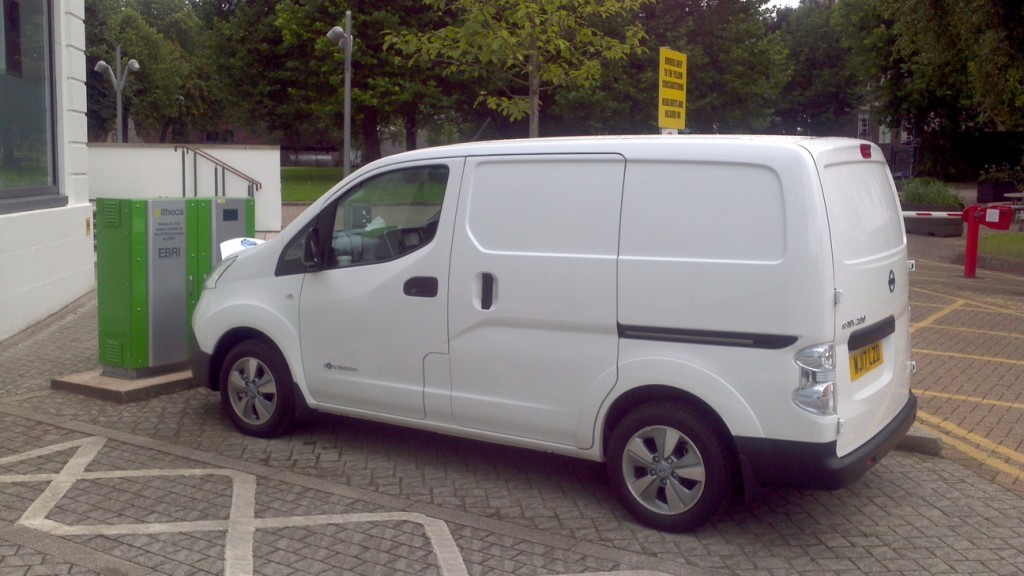
I wonder whether Lisa, our very own Nissan LEAF counts for the purposes of this trial. As regular readers will no doubt be aware, we have been looking to expand our small “fleet” with an e-NV200 for quite some time. Perhaps this is the perfect opportunity, since:
The V2G package for participants in the trial will be offered at a heavily subsidised price through grant funding made available through Innovate UK. Vehicles compatible with the technology being used in this project are currently the Nissan e-NV200 and the Nissan LEAF2.
As well as E.ON and Nissan the V2G project consortium (known as e4Future) includes Newcastle University, Imperial College London, Northern Powergrid, UK Power Networks and National Grid ESO. The V2G platform used on the trial utilises a combination of E.ON’s existing Virtual Power Plant software as well as a charger operating system provided by E.ON’s e-mobility partner Virta.
The project is part of the V2G programme, funded by the Department for Business, Energy and Industrial Strategy and the Office for Low Emission Vehicles (OLEV), in partnership with Innovate UK. Part of UK Research and Innovation (UKRI), Innovate UK is the UK’s innovation agency investing in science and research.
Here is an image of our concept that we prepared earlier. In 2017 to be precise:
In a press release earlier this week Nissan announced that it had:
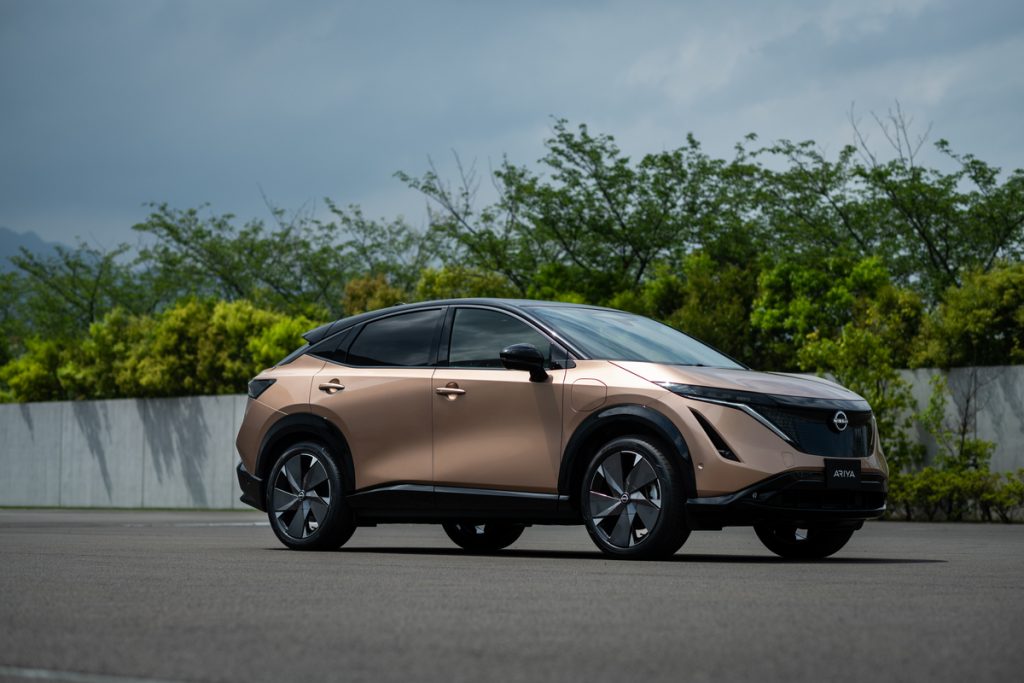
Revealed to the world the all-new Nissan Ariya electric coupé crossover, marking a new chapter for Nissan electric vehicles. The EV premiered globally through a virtual event hosted at the soon-to-open Nissan Pavilion in Yokohama.
The Ariya – Nissan’s first all-electric coupé crossover– offers powerful acceleration and smooth, quiet operation, as well as an interior with a welcoming, luxurious lounge-like atmosphere. Its stress-free autonomous driving features, voice personal assistance and seamless connectivity heighten on-road confidence and provides a welcoming environment for the driver and passengers. And with an estimated range of up to 500 kilometers (based on WLTP combined cycle, subject to homologation), Ariya is the perfect partner for daily commutes and road trips alike.
The Nissan Ariya is heavily based on the similarly-named concept vehicle displayed at the 2019 Tokyo Motor Show and first hinted at with the IMx at the 2017 Tokyo Motor Show. It’s the first production model to represent Nissan’s new electrified brand identity, forging a path toward a new automotive era where electrification, optimized platform packaging and seamless vehicle AI technology will become standard.
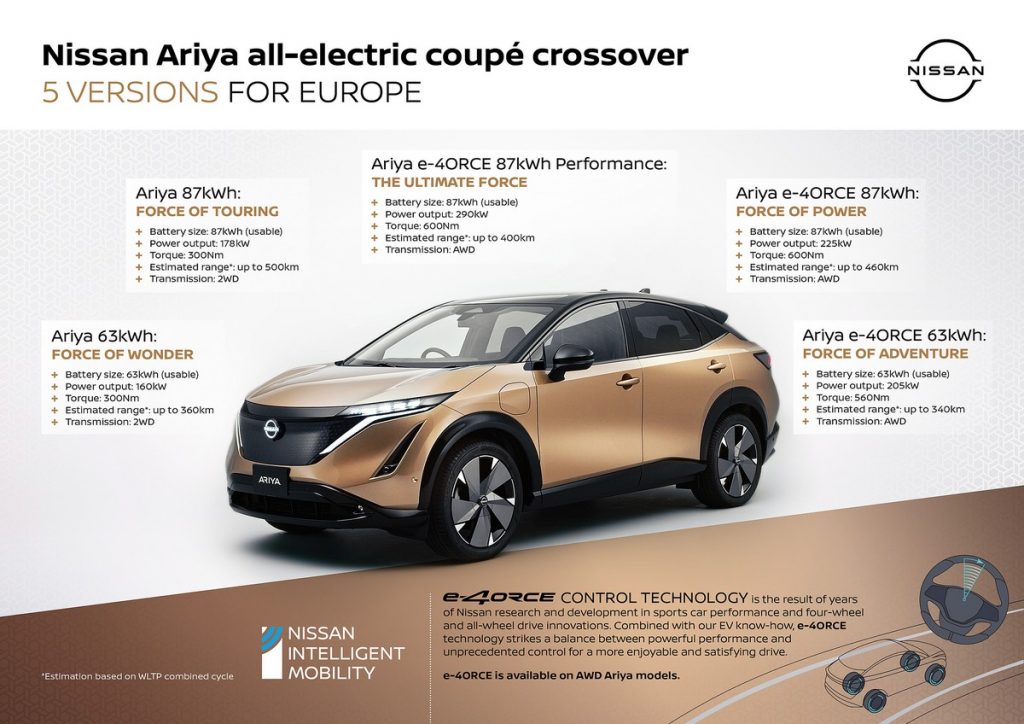
A bit of a change from the venerable LEAF then, with a dual motor 4 wheel drive option accompanying the “new electrified brand identity”, which does reduce the range somewhat:
As you can see from Nissan’s Ariya infographic, the LEAF’s dual AC/DC charging connector has moved from front and centre to the nearside front wing. Nissan haven’t provided an image of what’s hiding under the cover, but the press release does mention in passing that:
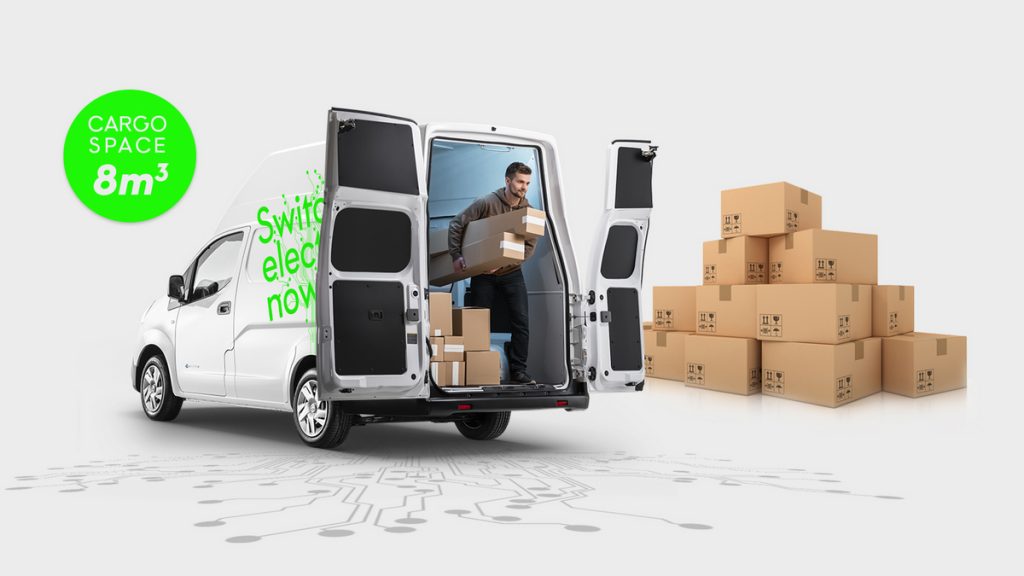
Nissan expands its electric e-NV200 line-up across Europe with the versatile e-NV200 XL Voltia.
The electric van for urban deliveries, the e-NV200 XL Voltia is a highly versatile conversion of the trusted electric Nissan e-NV200 van. The new model is already the zero-emissions vehicle of choice for major last-mile delivery suppliers across Europe.
The e-NV200 is cementing its reputation as the ideal vehicle for urban deliveries where operators and residents appreciate its near-silent and zero emission operation.
Broadening the diversity of the e-NV200 model family, the e-NV200 XL Voltia offers a compact body and sizeable cargo capacity. With a load space of 8 m³, the new model expands the standard e-NV200’s competitive load space by 90%. This allows businesses to complete fewer trips on each delivery round, allowing them to streamline operations and save time.
The newest member of the e-NV200 family is designed with versatility and practicality in mind. Combining an elongated load bay with an expansive roof space, the 8 m³ van allows drivers to load cargo easily, with standing room ensuring they remain comfortable on the job. The van is highly manoeuvrable on the road, too, with an optimised turning circle making it an ideal solution for urban roads.
The e-NV200 XL Voltia also benefits from technology inspired by the Nissan LEAF’s tried-and-tested powertrain. The model is equipped with Nissan’s highly capable 40kWh battery and an on-board CHAdeMO charger for rapid DC charging capability – making it the perfect solution for flexible urban delivery.
Alongside the efficient powertrain, intelligent energy management technology enhances the e-NV200 XL Voltia’s sustainability credentials even further. B mode optimises regenerative braking to recharge the battery on the move, whilst ECO mode manages power output to conserve battery capacity. When used together, both technologies maximise range to help drivers go longer on each delivery.
The Nissan e-NV200 has enjoyed widespread popularity since its launch in 2014, with 42,000 units produced– almost 10,000 sold across Europe in 2019 alone – supporting Nissan in its commitment to reduce urban emissions from commercial operations.
The e-NV200 XL Voltia will be made available in all European markets, with local pricing to be revealed upon launch.
The press release makes no mention of the inclusion of V2G technology in the Voltia, but since the van is based on the existing e-NV200 platform we assume the new vehicle is V2G capable. If we discover otherwise you will be the first to hear!