The 361 Energy Fair is back in Barnstaple on September 29th. The 2024 event starts at 10 AM in the Pannier Market with an introduction by Ian Roome, the newly elected Liberal Democrat MP for North Devon.
To give you a better idea of what to expect, here’s a video with extracts from previous 361 energy fairs:
For the first time this year’s fair includes a series of talks on a variety of topics. Our very own Jim Hunt will be giving a presentation on the topic of “An introduction to V2x, making greater use of EV batteries”, and the emphasis will be on vehicle-to-home and vehicle-to-building rather than fully fledged vehicle-to-grid.
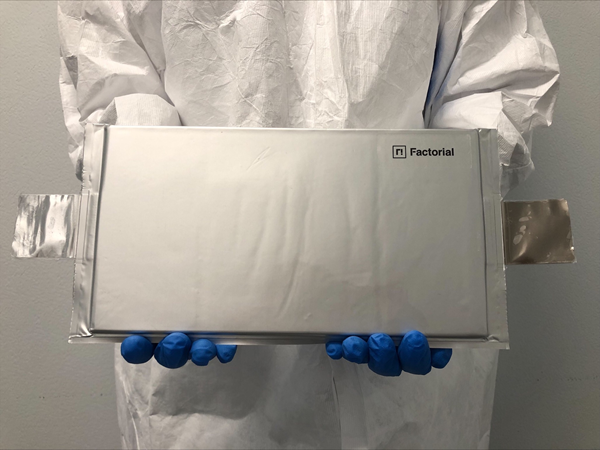
At the end of last month Factorial Energy issued a press release which announced that:
Factorial Energy, Hyundai Motor Company and Kia Corporation are partnering to test Factorial’s novel solid-state battery technology and its integration in Hyundai electric vehicles. Under the Joint Development Agreement, which includes a strategic investment, the companies will integrate Factorial technology at the cell, module, and system levels, perform vehicle-level integration, and co-develop specifications for manufacturing Factorial’s batteries. The announcement is Factorial’s first major strategic investment from a major automotive Original Equipment Manufacturer (OEM) group and deepens its existing research relationship with Hyundai.
Factorial has developed breakthrough solid-state technology that addresses key issues holding back widescale consumer adoption of electric vehicles: driving range, and safety.
Factorial’s advances are based on FEST™ (Factorial Electrolyte System Technology), which leverages a proprietary solid electrolyte material that enables safe and reliable cell performance with high-voltage and high-capacity electrodes and has been scaled in 40Ah cells that perform at room temperature. FEST™ is safer than conventional lithium-ion technology, extends driving range by 20 to 50 percent, and is drop-in compatible for easy integration into existing lithium-ion battery manufacturing infrastructure.
Earlier today Stellantis issued a press release which also announced an investment in Factorial Energy:
Stellantis N.V. and Factorial Energy announced today the signing of a joint development agreement to advance Factorial’s high-voltage traction solid-state battery technology. The agreement also includes a strategic investment from Stellantis.
“Our investment in Factorial and other highly recognised battery partners boosts the speed and agility needed to provide cutting-edge technology for our electric vehicle portfolio,” said Stellantis CEO Carlos Tavares. “Initiatives like these will yield a faster time to market and more cost-effective transition to solid-state technology.”
Factorial has developed breakthrough solid-state technology that addresses key issues holding back wide-scale consumer adoption of electric vehicles: driving range and safety.
“It is a great honor to partner with Stellantis, a leading global mobility player, which has some of the most iconic auto brands in the world,” said Siyu Huang, Co-founder and CEO of Factorial Energy. “It is an incredible opportunity for us to advance the adoption of our clean, efficient and safe solid-state battery technology to the mass market.”
Stellantis announced during its EV Day program in July 2021 its target of having the first competitive solid state battery technology introduced by 2026.
One cannot help but wonder how well this exciting new battery technology will handle the modest cycling requirements of V2G technology!
In a press release earlier this week Nissan announced that it had:
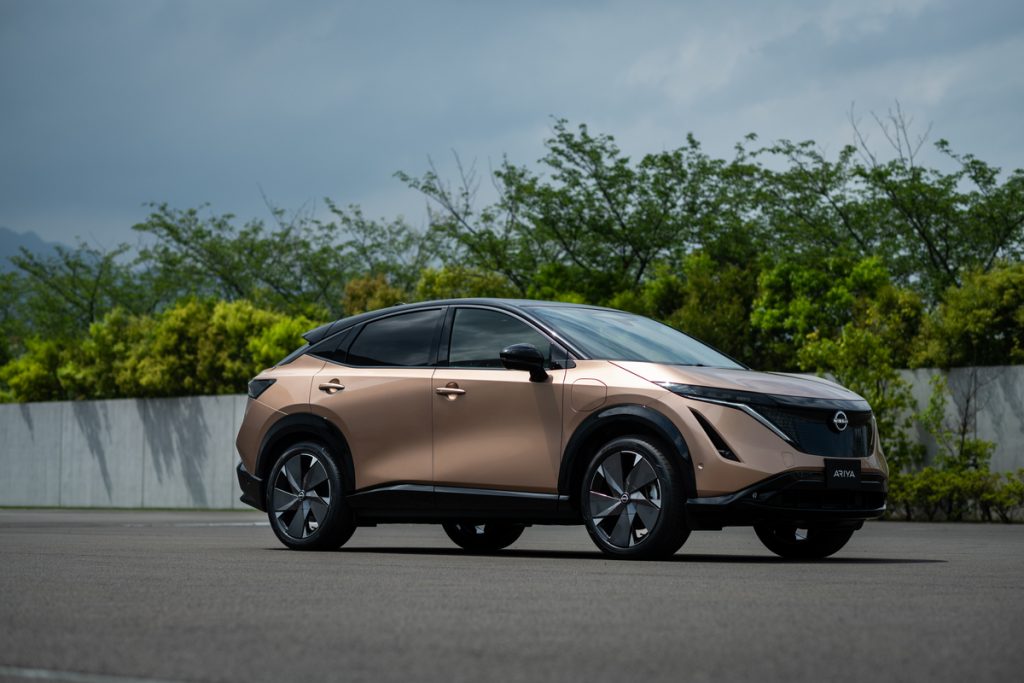
Revealed to the world the all-new Nissan Ariya electric coupé crossover, marking a new chapter for Nissan electric vehicles. The EV premiered globally through a virtual event hosted at the soon-to-open Nissan Pavilion in Yokohama.
The Ariya – Nissan’s first all-electric coupé crossover– offers powerful acceleration and smooth, quiet operation, as well as an interior with a welcoming, luxurious lounge-like atmosphere. Its stress-free autonomous driving features, voice personal assistance and seamless connectivity heighten on-road confidence and provides a welcoming environment for the driver and passengers. And with an estimated range of up to 500 kilometers (based on WLTP combined cycle, subject to homologation), Ariya is the perfect partner for daily commutes and road trips alike.
The Nissan Ariya is heavily based on the similarly-named concept vehicle displayed at the 2019 Tokyo Motor Show and first hinted at with the IMx at the 2017 Tokyo Motor Show. It’s the first production model to represent Nissan’s new electrified brand identity, forging a path toward a new automotive era where electrification, optimized platform packaging and seamless vehicle AI technology will become standard.
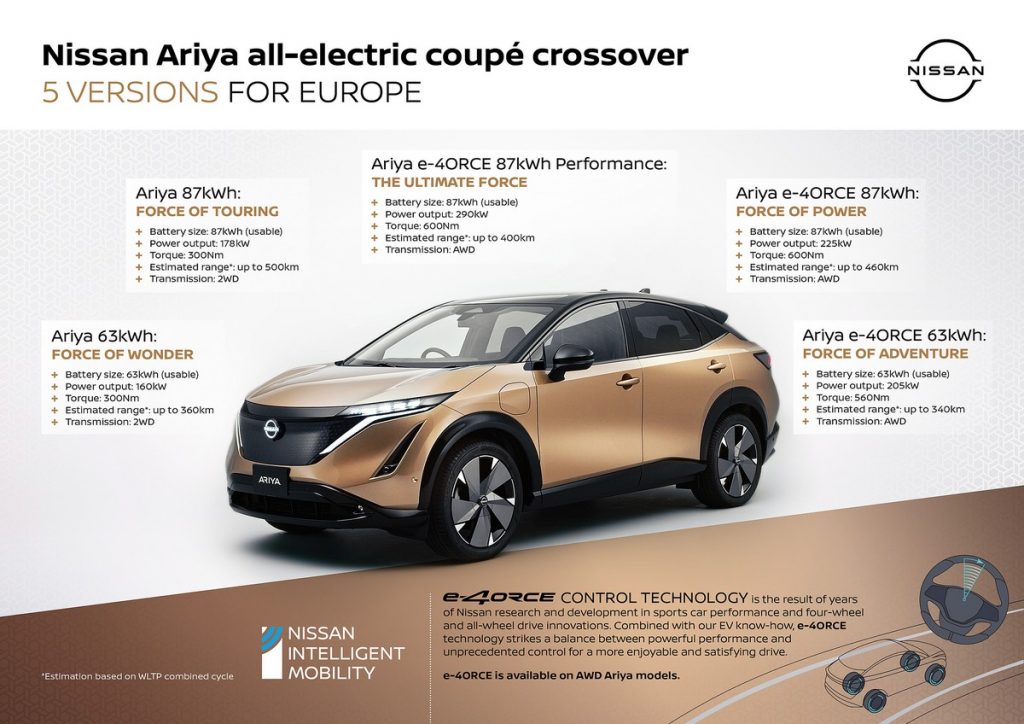
A bit of a change from the venerable LEAF then, with a dual motor 4 wheel drive option accompanying the “new electrified brand identity”, which does reduce the range somewhat:
As you can see from Nissan’s Ariya infographic, the LEAF’s dual AC/DC charging connector has moved from front and centre to the nearside front wing. Nissan haven’t provided an image of what’s hiding under the cover, but the press release does mention in passing that:
In a news release earlier today Kia announced that:
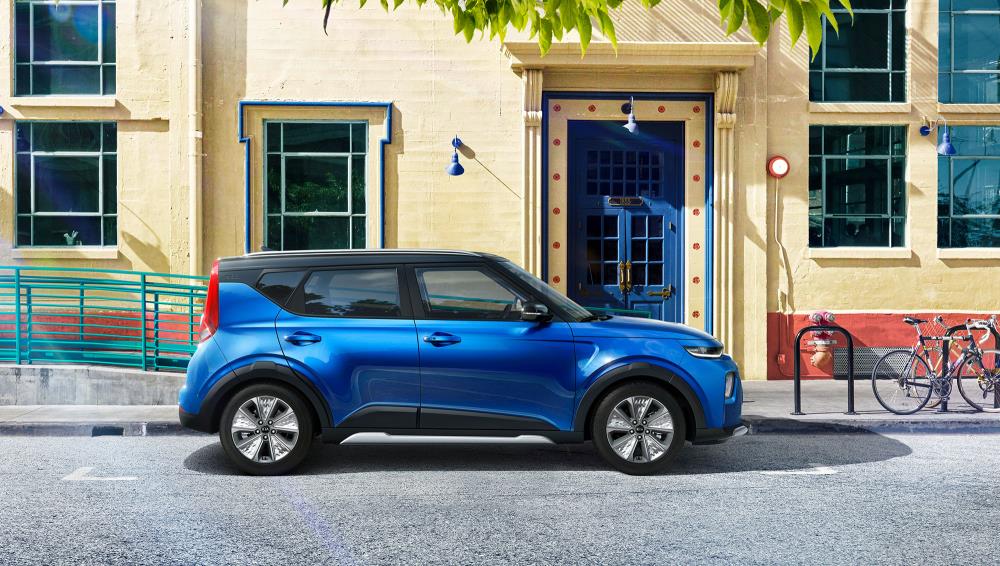
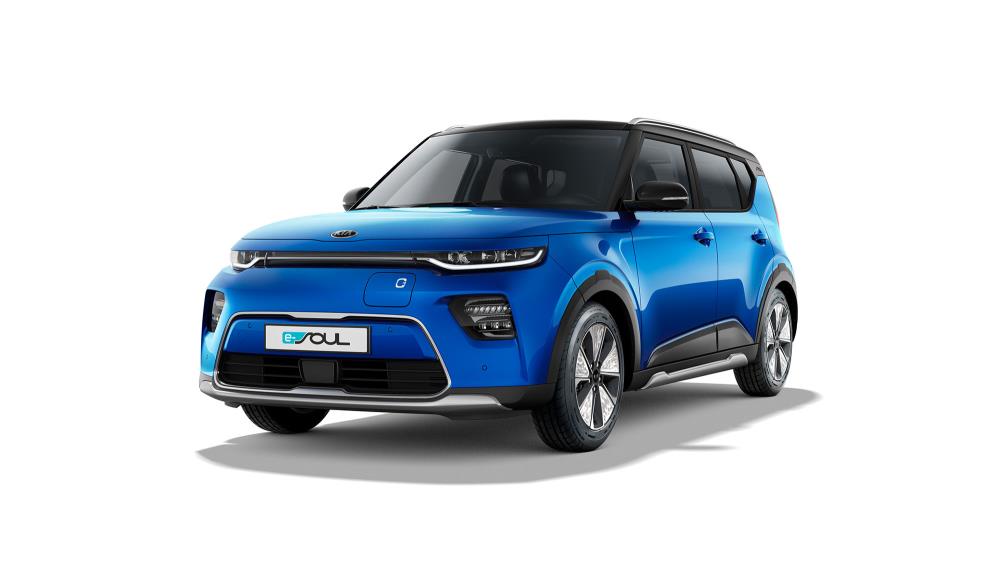
The all-new Kia Soul EV brings long-range, zero-tailpipe emissions power to the urban crossover class. The third globally-sold electric vehicle from Kia Motors will make its European debut at the 2019 Geneva International Motor Show next month.
Not only that, but also:
The Kia Soul EV will be sold in Europe exclusively as an electric vehicle, with a choice of two fully-electric, zero-emission powertrains to meet the needs and budgets of different customers.
Drivers have a choice of long-range (64 kWh) and standard-range (39.2 kWh) powertrains. Whichever version a buyer chooses, both variants offer vastly improved range over the outgoing Soul EV. On-road performance is also enhanced, with significantly more powerful electric motors providing 395 Nm of torque – 39 per cent more than before.
As if that wasn’t exciting enough there’s also:
A Combined Charging System (CCS) DC fast charger is fitted as standard to both models, enabling shorter stops for charging. Both battery packs can be recharged from 20 per cent up to 80 per cent capacity in just 42 minutes from a 100 kW DC fast-charger.
Previous versions of the Soul EV have been V2G capable via a CHAdeMO connector. None of the images accompanying Kia’s announcement showed a close up of the shiny new Soul EV charging connector. Here’s the best we can do:
The $64,000 question at this juncture is therefore “Will Kia be demonstrating V2G over CCS at Geneva next month?”