In the wake of the BBC’s “RapidGate” article last weekend I find myself debating the pros and cons of the 2018 model year Nissan LEAF that we road tested last week with a fan of the Hyundai Ioniq EV:
As you may possibly gather from our company name, #V2G capability is vital for our particular use case. Hence the #Ioniq is currently utterly useless to us. On the other hand we love the #LEAF, irrespective of its #V2x expertise. #YMMV!#ThoughtForTheDay – Horses for courses?
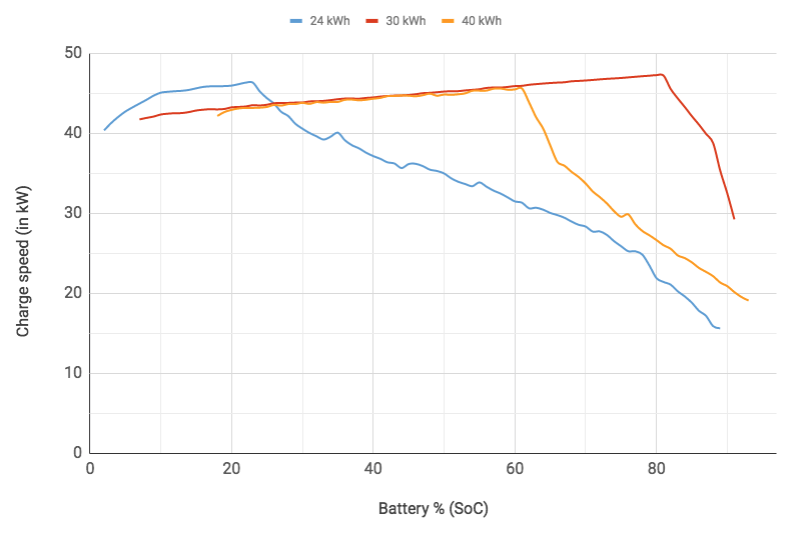
Dutch charging station operator Fastned helpfully provides some experimental evidence to inform the debate. Whilst they don’t publish data on the effects of successive rapid charging sessions on a long drive they do provide charging profiles for all three flavours of the Nissan LEAF:
which does indeed show the latest LEAF fitted with a 40 kWh battery pack throttling the charging rate earlier than the preceding 30 kWh version. According to Fastned:
With a Nissan Leaf or e-NV200 (Evalia) you use the CHAdeMO plug. The charge speed is up to 50 kW at all of our chargers. In the charge curve below you can see the charge speed of the Nissan Leaf and e-NV200. On average both cars charge 100 km of range in 20 – 25 minutes. Charging behaviour largely depends on the battery size:
24 kWh edition: fast charging until 25%, charging will gradually go slower after this
30 kWh edition: fast charging until 80%, charging will go slower after this
40 kWh edition: fast charging until 60%, charging will go slower after this
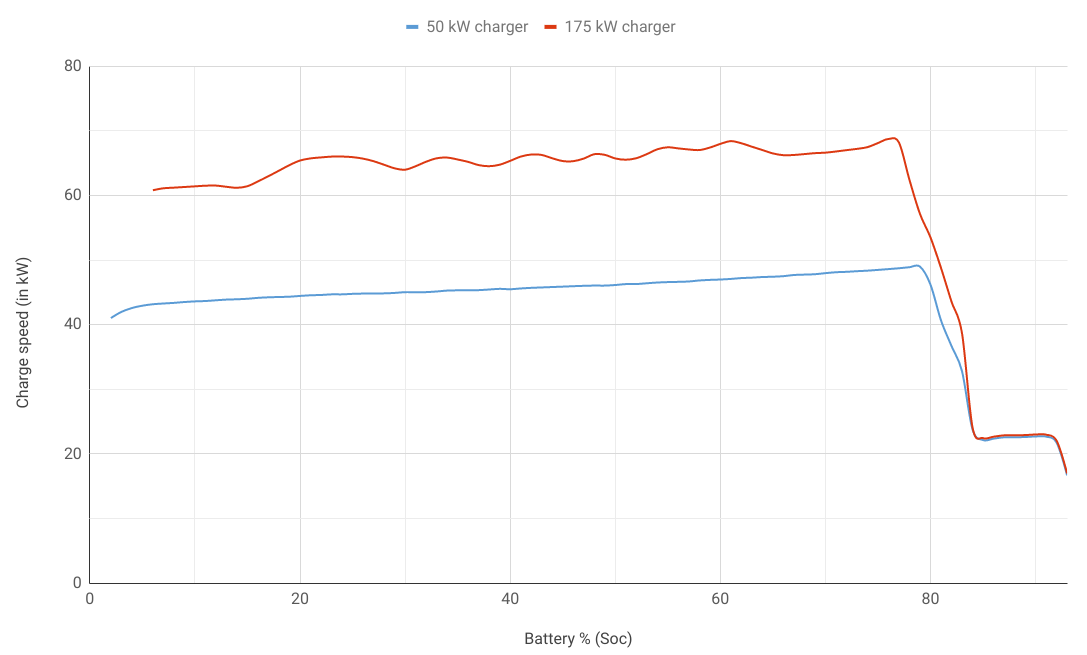
For comparison purposes here’s the equivalent graph for the Hyundai Ioniq:
According to Fastned once again:
If you have a Hyundai Ioniq, then you use the CCS plug. The charge speed is up to 70 kW at our next generation fast chargers and 50 kW at our other chargers. In the charge curve below you can see the charge speed of the Ioniq at both chargers. On average the Ioniq charges 100 km in 15 – 25 minutes. Above 75% the charge speed requested by the car will drop, and above 85% the charge speed is reduced to 22 kW.
Owners of Nissan’s new electric Leaf say they were given misleading information about the car before buying it.
They say charging the Leaf can take three times longer than claimed on Nissan’s website.
Others are unhappy that the range on a single charge is not as good as the 235 miles (378km) they were promised.
Nissan admitted that charging times can vary, but denied there was a problem or that any customers were misled.
The Advertising Standards Authority is now considering whether to launch an investigation into the issue.
We were already aware of “charging can take three times longer” issue, which was originally reported by Jonathan Porterfield of Eco Cars in Orkney:
For our test we weren’t intending to drive from Land’s End to John o’Groats, or even Leicestershire to Aberdeen. However we were planning a trip from Bodmin to Cardiff via Trowbridge, then back via the M4/M5/A30.
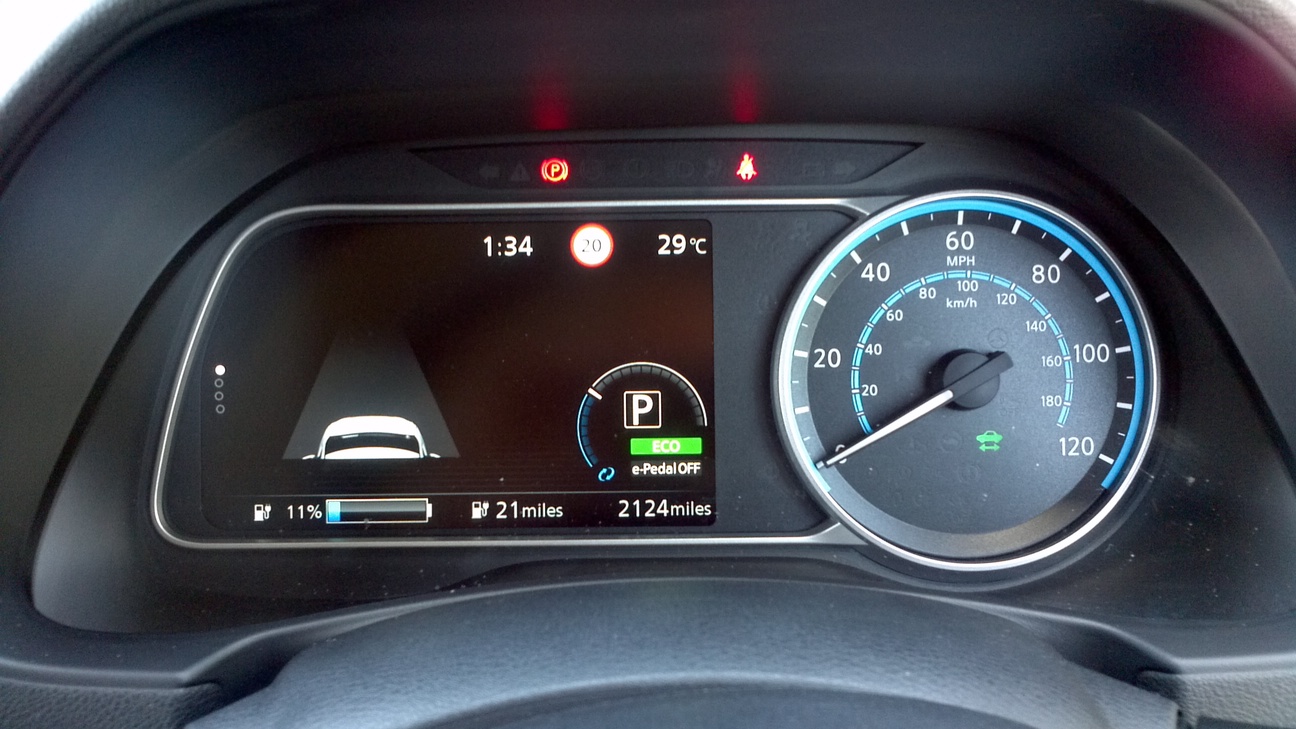
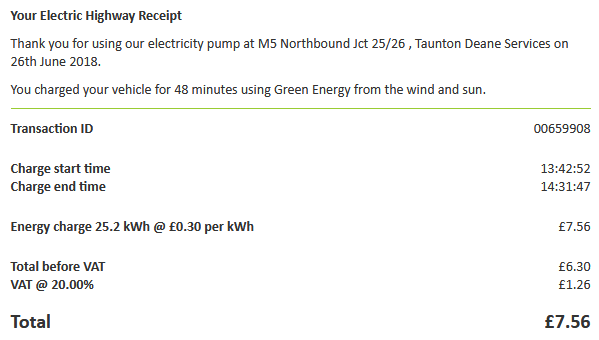
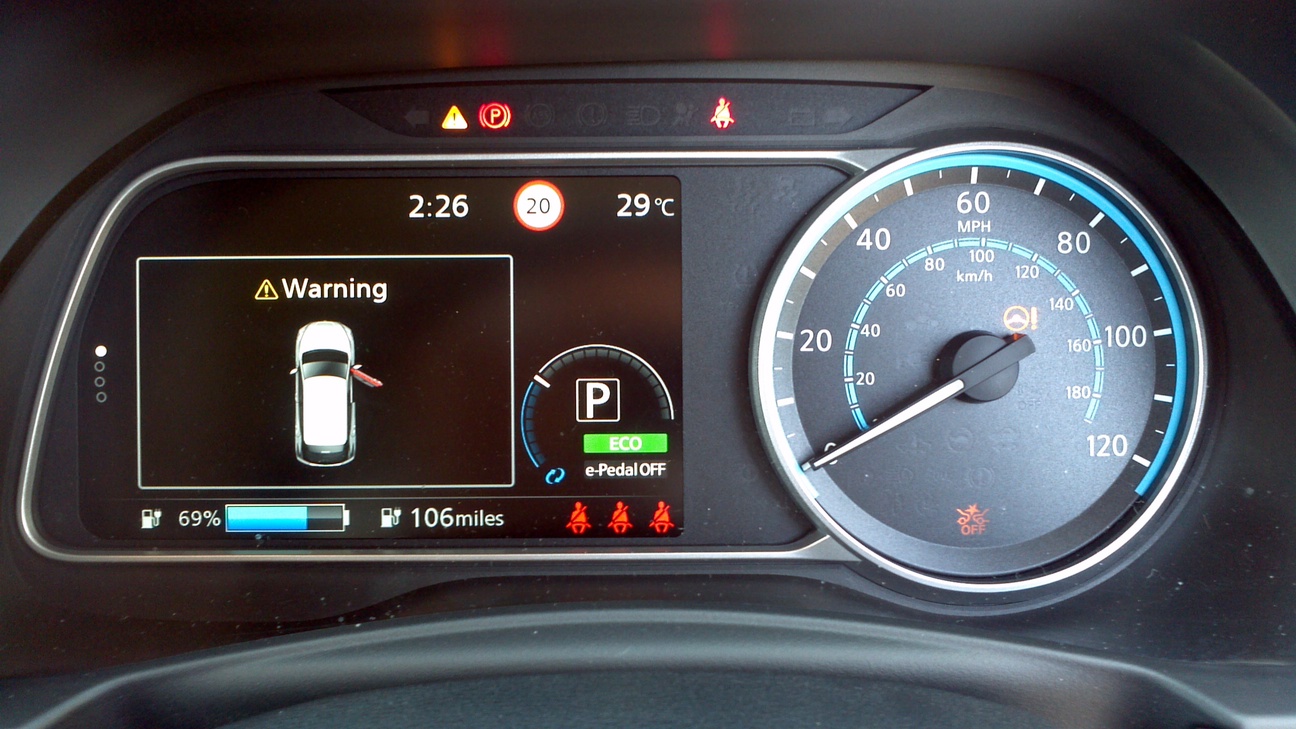
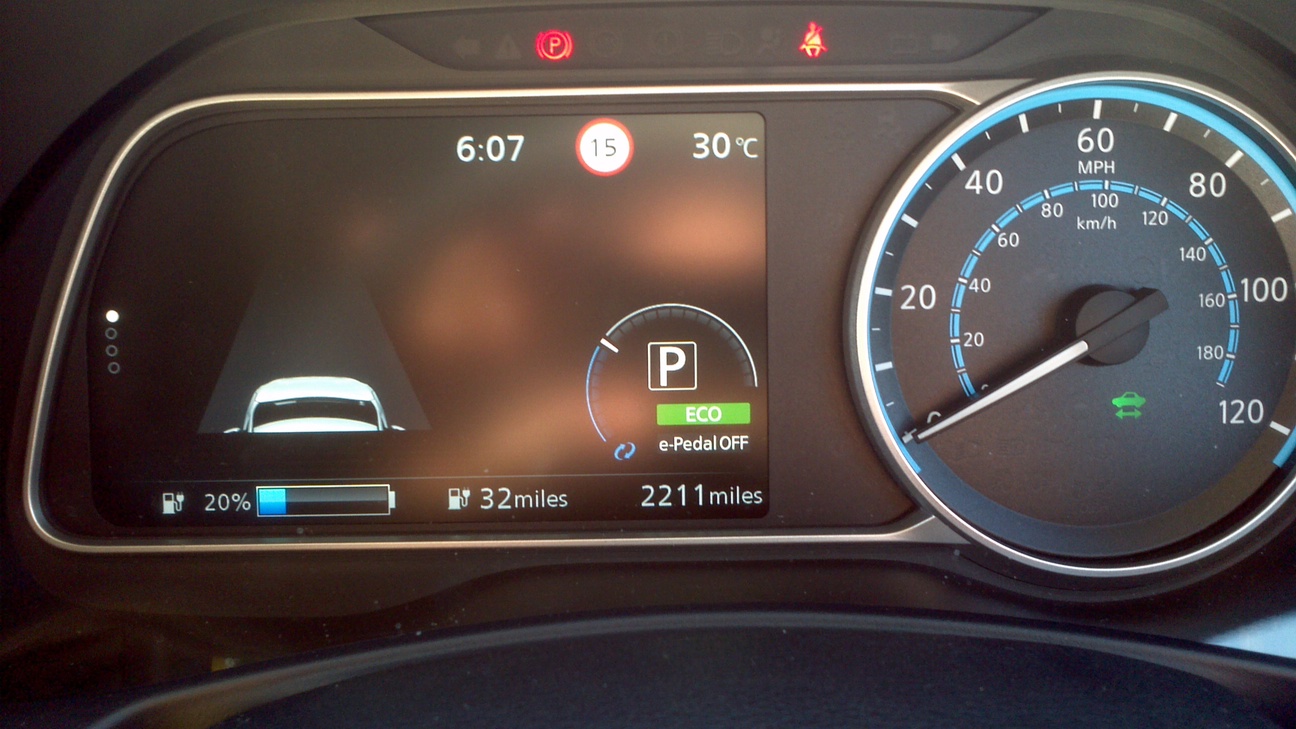
Here is what we discovered. After heading up the A30 and then the M5 at a proPILOT controlled 70 mph our first stop to “rapid charge” was at Taunton Deane Services where this transpired:
By my calculations that’s an average of ~31.5 kW
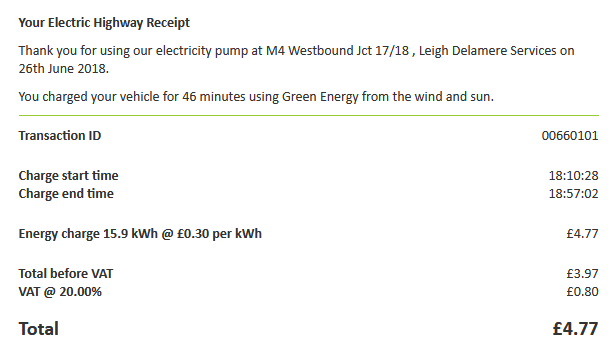
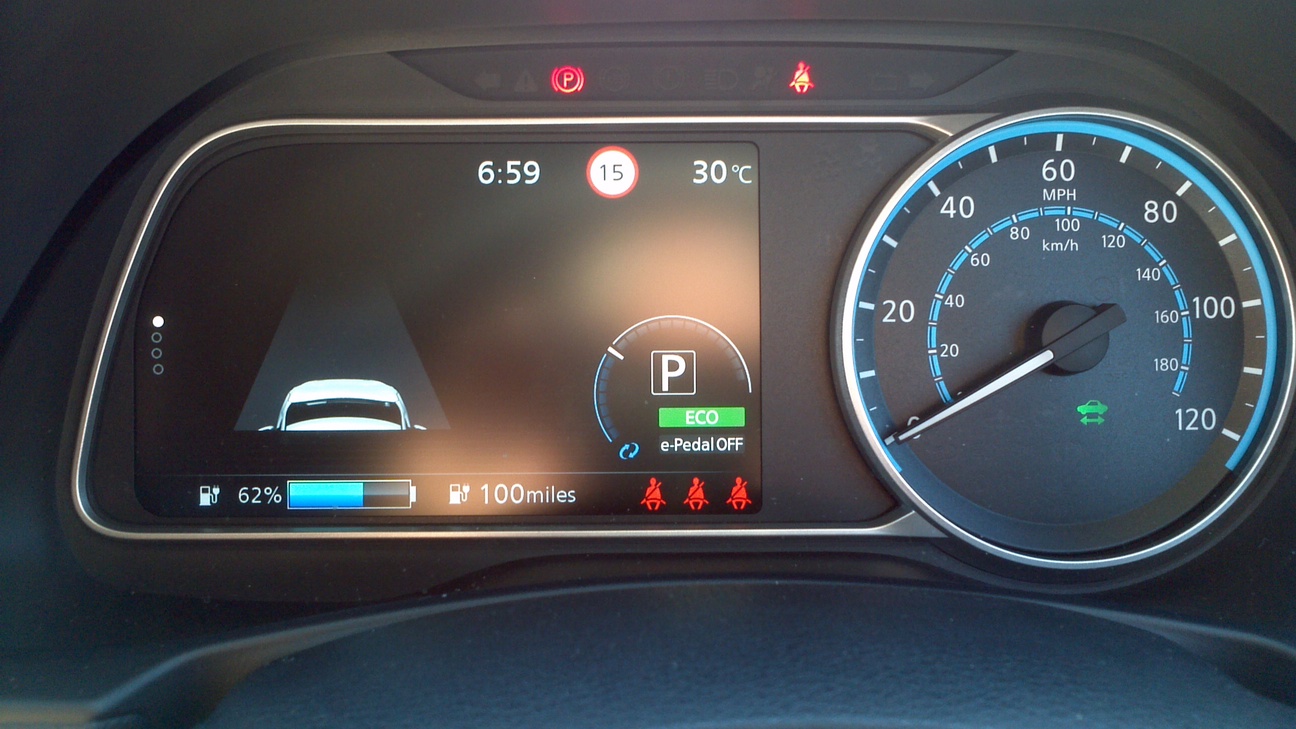
After driving to Trowbridge via the A303, and hence a fair bit more at speeds of 60 and 70 mph, we spent an hour or so charging at a stately 6.6 kW. Then we headed north to Leigh Delamare services, where this transpired.
By my calculations that’s a lot less than 31.5 kW. An average of ~21 kW in actual fact. It certainly looks as though there is some truth to those RapidGate rumours.
“Several of the Twitterati debating the issue have been suggesting that the 40 kWh LEAF 2.0 should have employed the same sort of “active battery temperature management” employed in the e-NV200 van. Let’s take a look at what Nissan themselves have to say about that:
The Nissan e-NV200’s motor is powered by a Nissan-developed 48-module compact lithium-ion battery, just like LEAF, but there are significant differences between the two packs.
Like LEAF, the cells are manufactured at Nissan’s new battery plant in Sunderland close to the NMUK facility, but these are then shipped to Barcelona where they are assembled into a pack specially configured for e-NV200 to avoid encroaching into the cargo area.
The battery pack is shorter and narrower than that in LEAF but, for the most part, deeper. Weighing 267.5 kg, it is also 7.5 kg lighter.
It is mounted under the floor of the vehicle within the wheelbase to keep the centre of gravity as low as possible and is contained within in a sturdy metal casing to provide extra protection in the event of a side impact.
As in the LEAF, the battery pack comprises 48 modules with a nominal capacity of 24 kWh, but it incorporates a bespoke cooling pack that operates automatically during quick charging.
Due to more compact packaging and because e-NV200’s duty cycle is likely to be quite different to LEAF – it is anticipated that the vehicle will be operated intensively during the working day and there will be greater use of Quick Chargers to minimise down time – cooled air from the vehicle’s heating and ventilation system is channelled over the battery cells to ensure optimum charging conditions at all times.
Conversely, in cold weather, the vehicle’s HVAC system wafts warm air over the battery, again to ensure it reaches its optimum operating temperature as quickly as possible.
It does rather sound as though Nissan didn’t anticipate that quite so many people would want to operate the new LEAF “intensively during the working day”, and through the night too is some cases. However to be frank it beats me why all those people want to work their new LEAF that hard. For Jonathan driving LEAF’s a long way in a hurry is part of his business. For everybody else though, this seems to sum things up nicely:
A lot of people are afraid or even horror-struck with the idea of driving in an autonomous car. But I belong to the opposite group – I dream about an autonomous car, I long for it and I long to have one. An ideal one would be able to float over the roads and country lanes. For these longings and dreams about floating self driving vehicles I should probably blame SF writers.
To make it clear I am not a professional test driver, I don’t work for Nissan, I am a woman, 62 years old, an artist and writer but also a huge fan of electric cars.
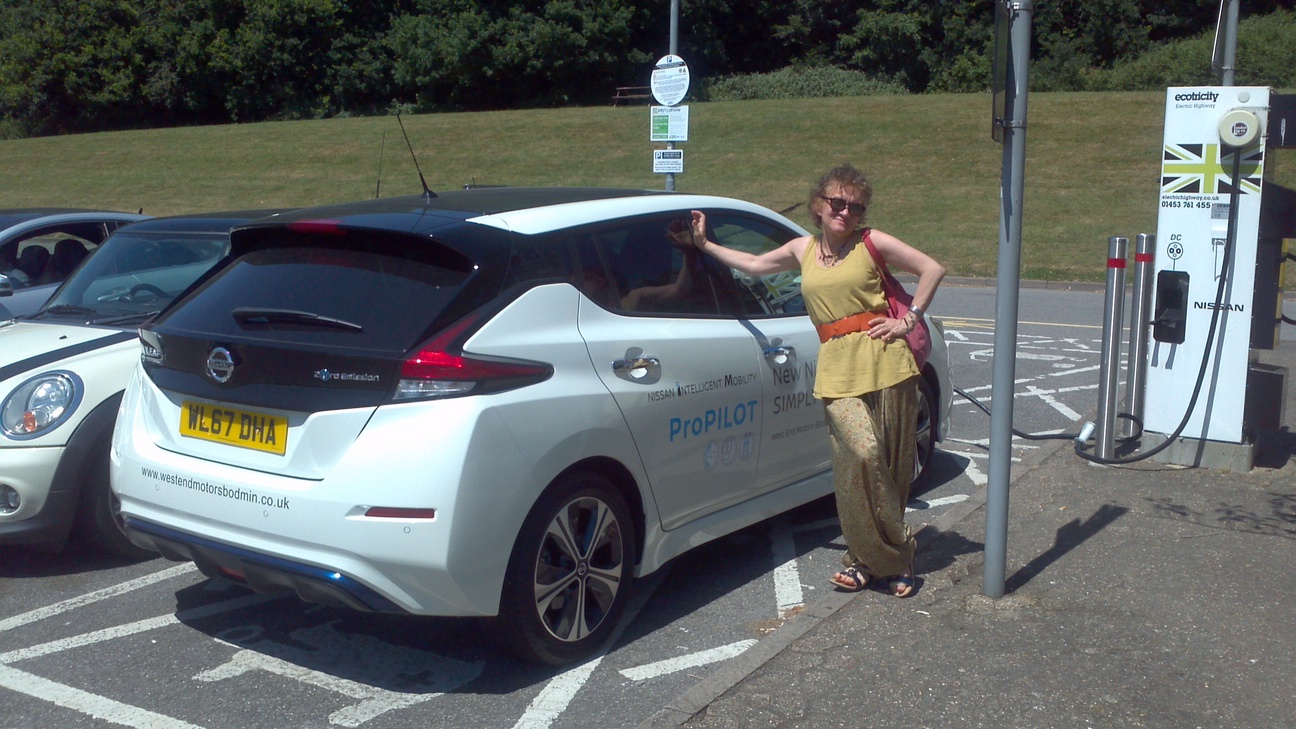
A few days ago (Today is June, 30th 2018) we had the pleasure to go on an alas not many days journey in a new Nissan Leaf with the proPILOT “autonomous” mode, from the North Cornish town of Bodmin, through Devon (A30 and M5), Somerset, across country lanes and carriageways into Wiltshire, then Gloucestershire to sunny Cardiff and then back. The sun was shining, the air-conditioning was working, the temperature outside was rising above 30C and the quality of the audio was flawless and using the Amazon Music app we could listen to the newly released 50 legendary albums.
To start with I felt a kind of uneasiness and unreal-ness when using the cruise control – could I really trust the car to control things in all the busy traffic on the M5 and to take the decision about slowing down behind other cars and then accelerating again? Could I just start a series of yoga legs and feet exercises without causing an accident? I have to tell you that I could. The car is intelligent enough to keep us in a lane, to anticipate the bends in the road, to read all the traffic around it, to spot the car in front of it, even a car which cuts us up. I was trying to drive without keeping my hands on the steering wheel, the car was driving totally autonomously but not for long. After a while it started piping and blushing at me. I had to put my hands back on the steering wheel otherwise according to the manual the car will start to slow down and finally will make a stop. Not a good idea on a motorway.
The Leaf in the cruise control (ACC for short – adaptive cruise control) mode performs marvellously on the motorway, it also does a spot-on job on partly B-roads, partly A-single and dual roads and even those roads in the towns and villages, something none of these systems is really made for but is a good indication of how well they read lane markings. The Leaf stays within its lane at the speed limit, reads all the diverse speeds limits between 70, 60, 50,40, 30 and 20 miles/h and even drives itself around corners sharper than those on the average highway.
Several times on those roads we encountered stop-and-go traffic and the ACC was able to track the vehicle ahead of it stationary at the line for a stop sign or just for busy traffic and after waiting it started to move forward when a gap opened to the car in front. Just marvellous. On the last day I tested the e-pedal – one pedal system and it worked fabulously too. I totally forgot to say that I drove all the time in eco-mode. And even in the eco mode the acceleration of the Leaf was pretty good, in my opinion. A few times I speeded to over 70 mph to overtake a few annoying cars on highways/motorways and it happened pretty fast only the car did complain about my behaviour ;-).
It is an intelligent car – perfect for me, an undisciplined car driver, to correct me and teach me how to behave as a civil and polite person and citizen on the roads.
We did have issues with charging. Every time we left the Leaf at a charging point to become fully charged, it never happened. The Ecotricity chargers stopped every time after charging for 45 minutes. It is a pity.
The only concern for me is the seat, more specifically the headrest. It is pushed forward too much for my taste, and it is impossible to adjust it. It only moves up and down. Maybe it is my problem because I am short, 5’2 inch.
It is fair to say we were simply amazed by the proPILOT autonomous functionality. I love this car, just love it:
Our apologies for the delay in publishing this article, but at this juncture it appears as though British Telecom have pushed out a firmware upgrade which has broken some (or all?) of their “business hubs” in the UK:
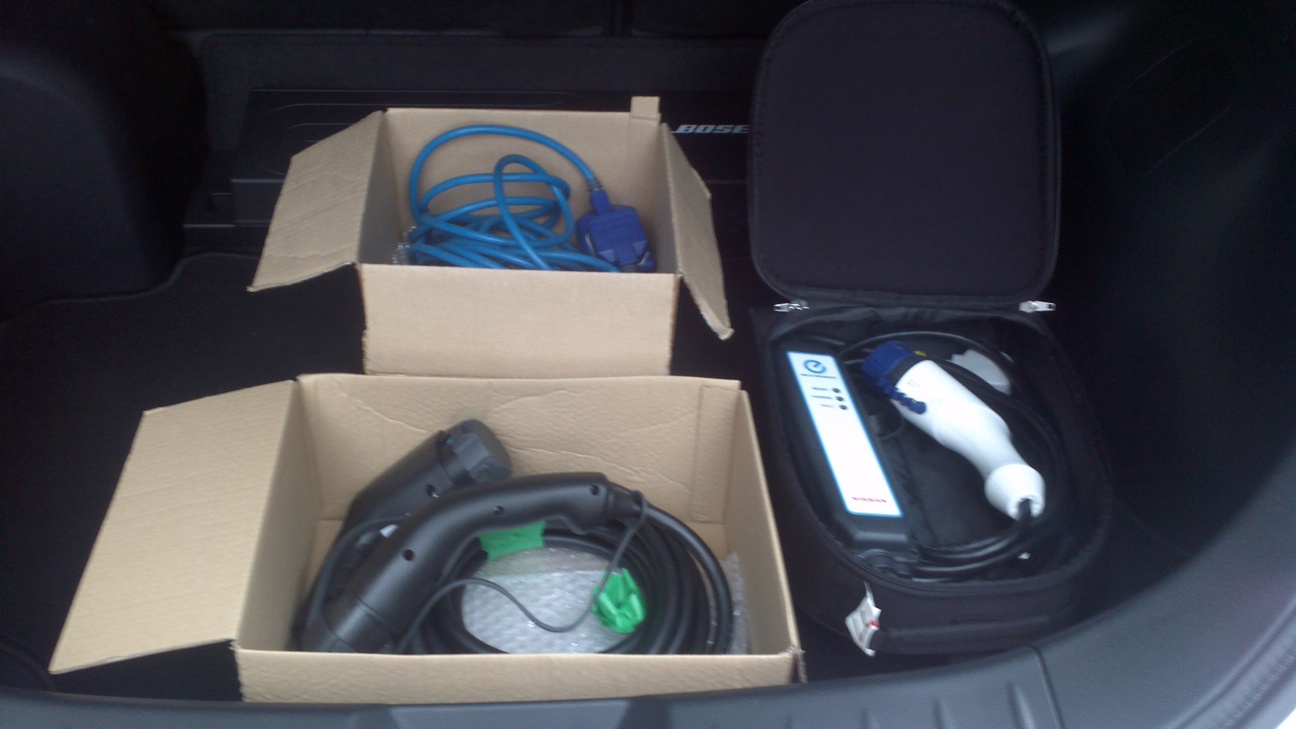
Whilst we wait for them to sort out the problem, which hit us 2 days ago, we’ve reverted to an ancient “2Wire” WiFi router that was gathering dust on one of our shelves. Having intended to head for North Cornwall at 9:30 on Saturday at the latest we eventually hit the road shortly after 11:00. Here’s our set of charging cables:
The blue one is a 10 meter 13 amp extension cable, just in case none of our planned rapid charging stations en route proved to be fully functional! When packing our bodyboarding gear Kasia’s 36″ board fitted in the boot easily:
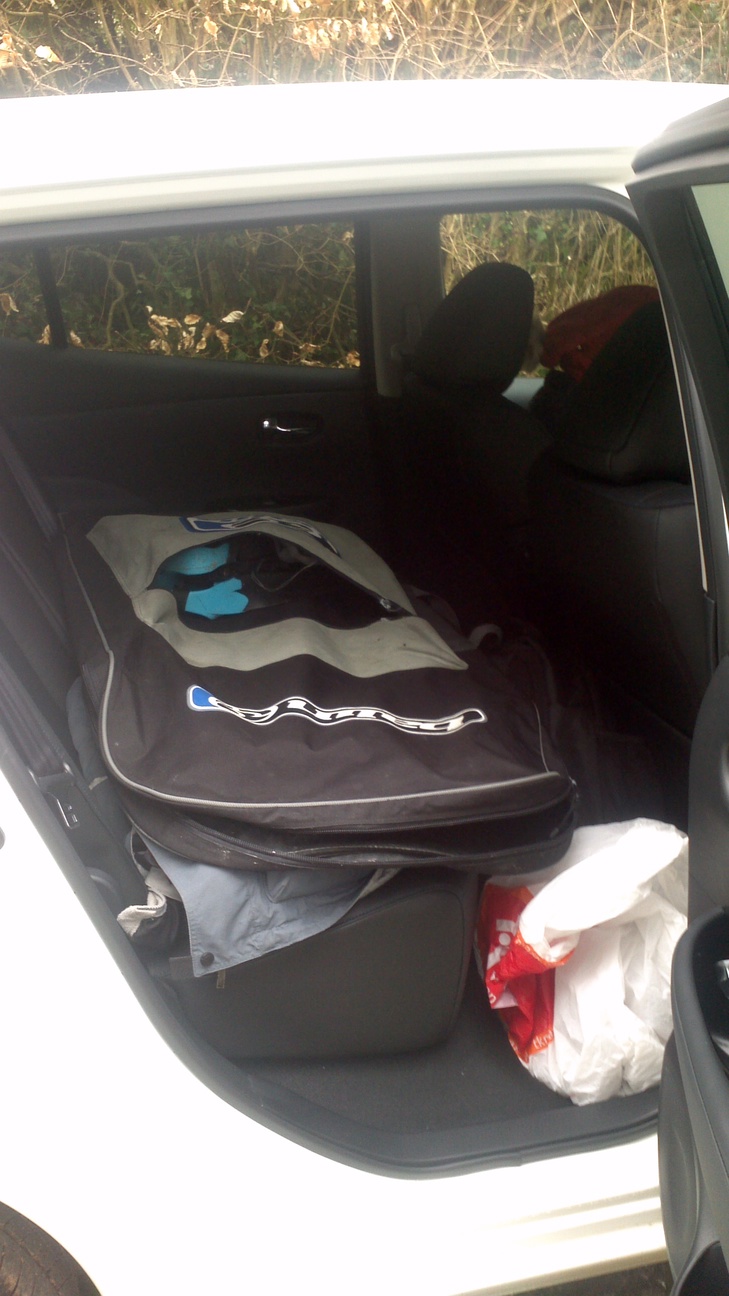
whereas my 42″ bat tail was just too long and had to sit on the back seat:
The LEAF also has a split rear seat so if there had been three of us on the trip we could have used that to fit everyone and everything in. Finally we were ready to leave!
The Nissan sat nav planned a route past Whitehouse Services near Okehampton which suited us perfectly, and the open road beckoned:
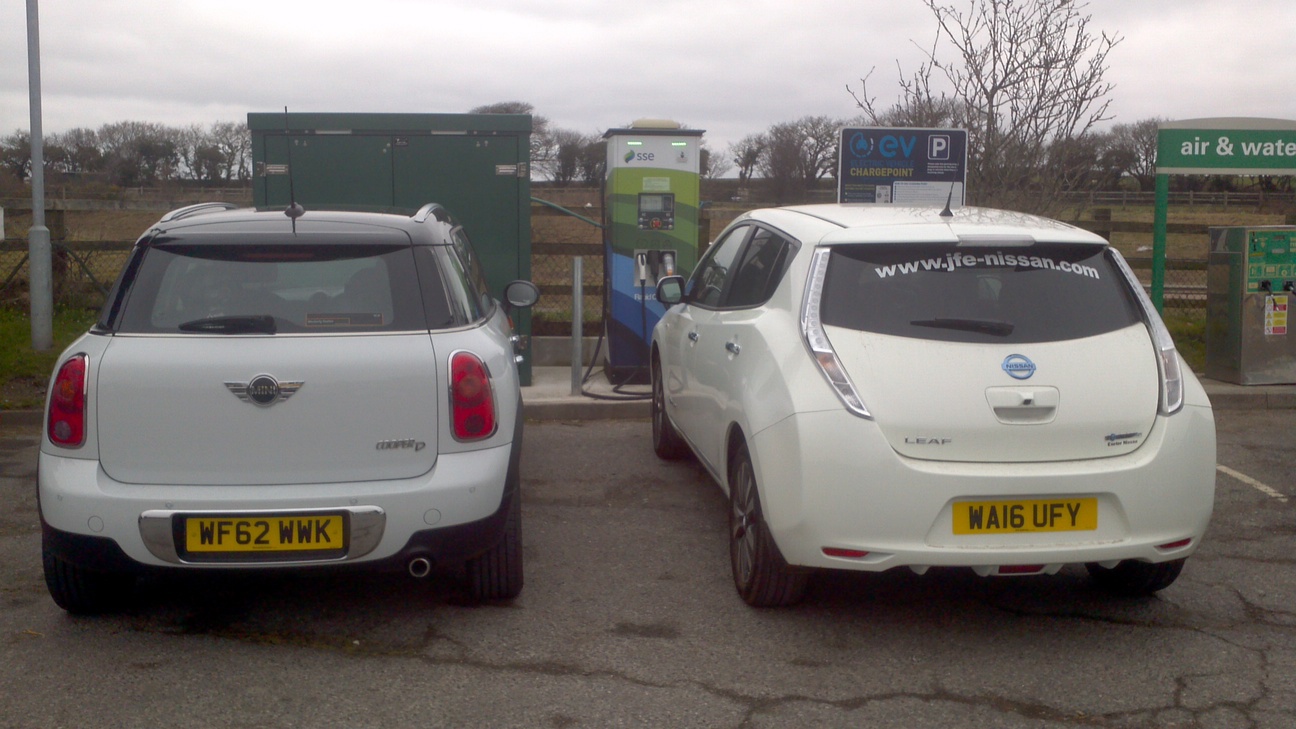
This is the sight that greeted us when we arrived at Whitehouse Services:
Just in case you’re wondering, the vehicle on the left does not incorporate an electric drive train!
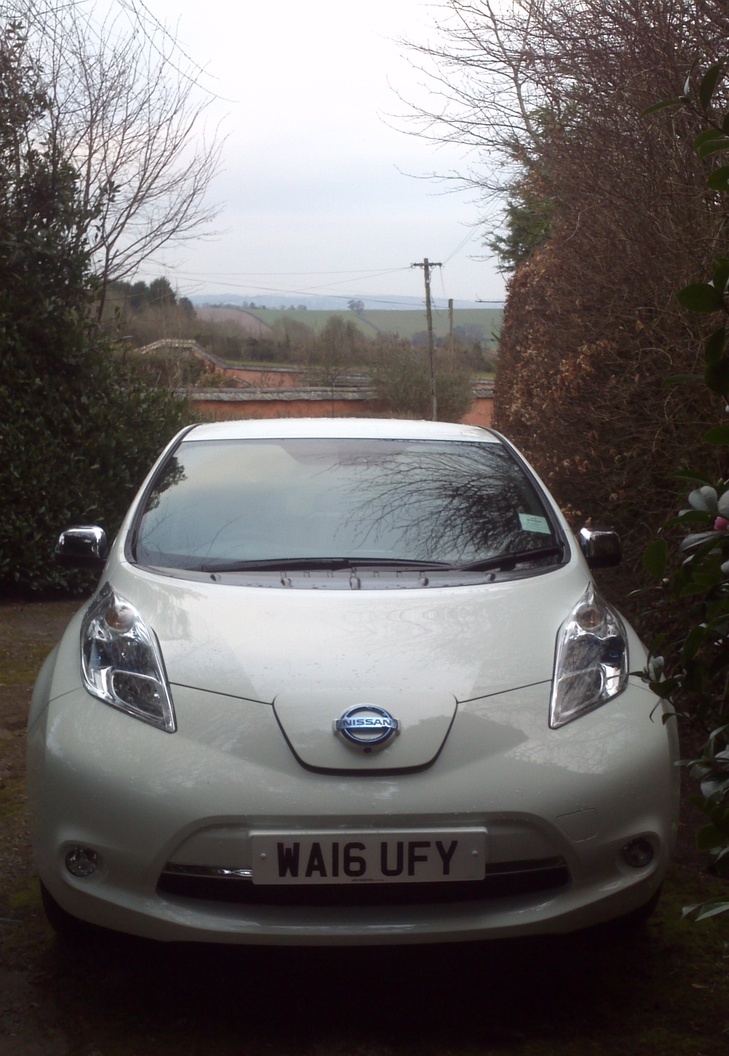
We have mentioned the new “go further” Nissan LEAF previously on the V2G blog, and now thanks to JFE Nissan in Exeter we have the chance to test the new 30 kWh battery pack equipped 2016 LEAF for ourselves. According to the Nissan UK web site:
Every full charge will give you a range of up to 155 miles.
I don’t know about you, but we’d like to check that claim for ourselves! At the very start of our test the odometer on the bright white LEAF we were borrowing read 6 miles as we collected it earlier today, and had advanced to 11 miles by the time we got back to base:
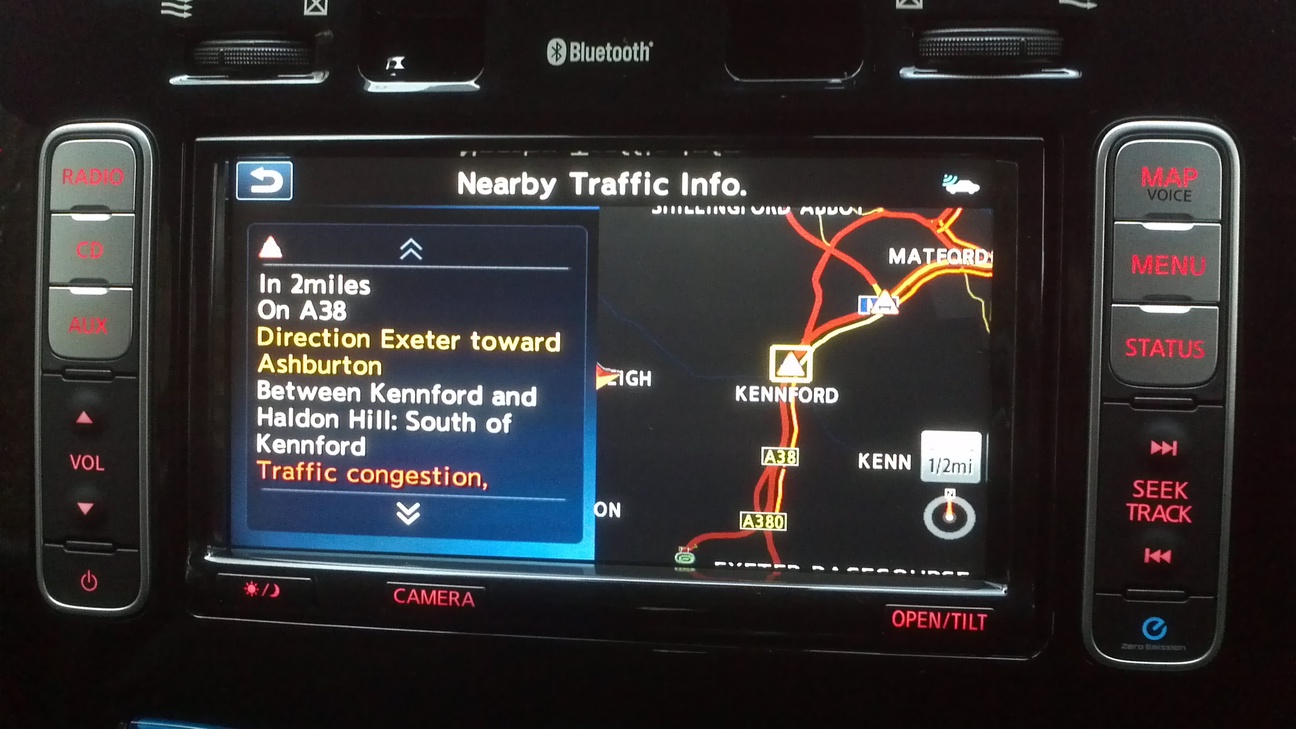
We had intended returning from Exeter to the wilds of the Haldon Hills via a main road. However before we left the Marsh Barton trading estate we consulted the LEAF’s handy traffic news feed, which revealed this:
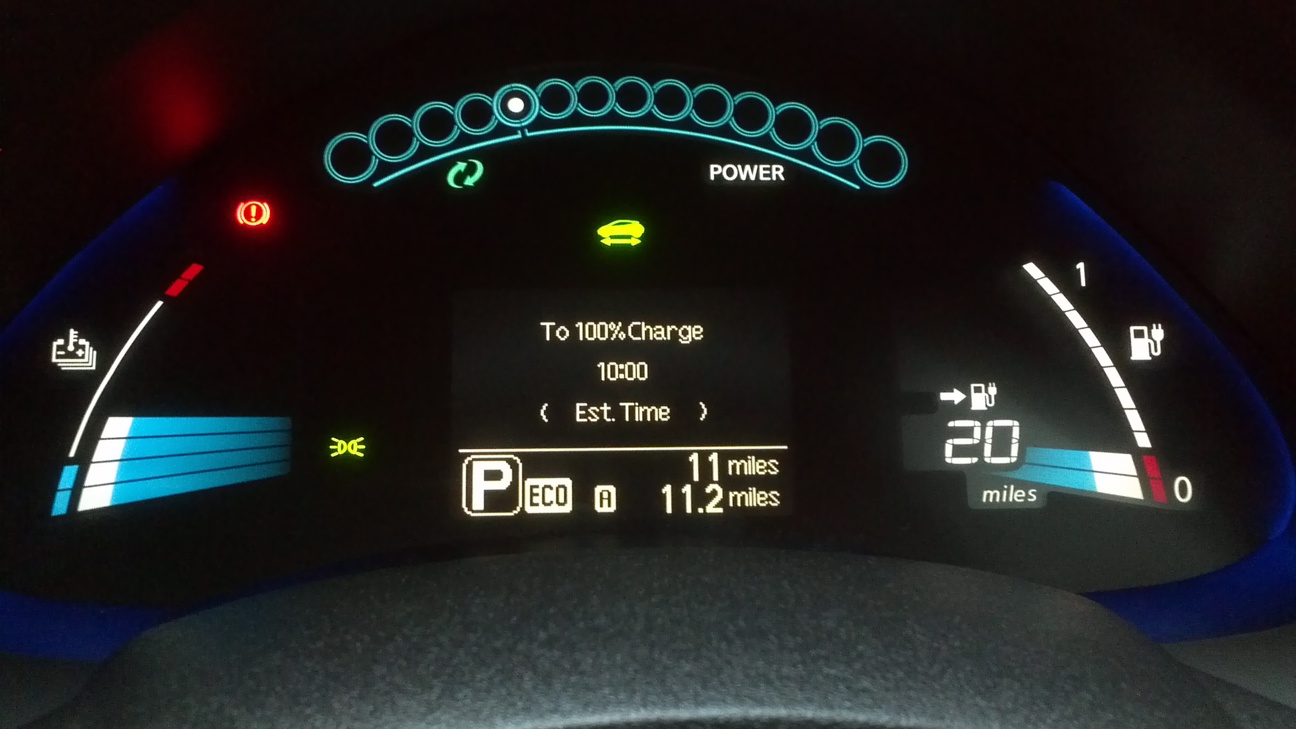
According to Radio Devon “a caravan’s been abandoned in the inside lane on Telegraph Hill”! Hence we took the scenic route through some narrow Devon country lanes, and ended up with 20 miles worth of range left in the traction battery pack, according to the LEAF’s dashboard at least:
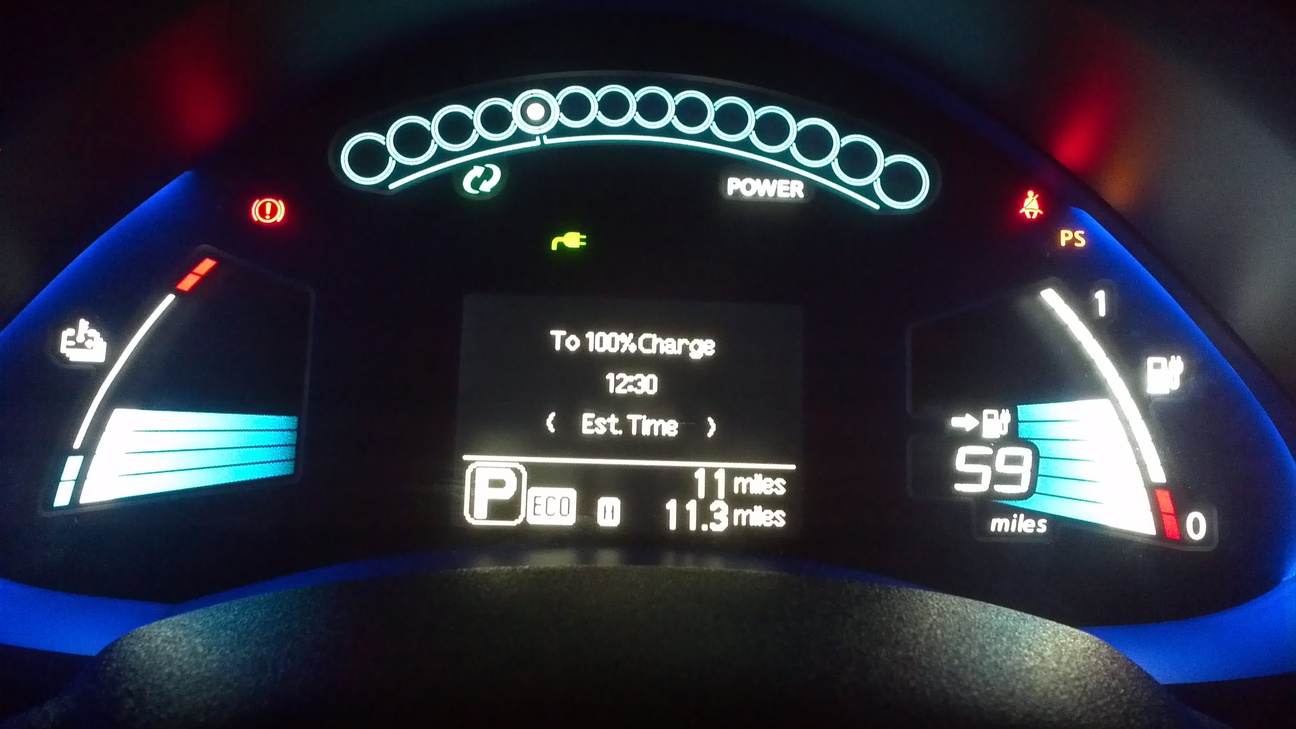
Having previously had some trouble using the rapid charger at Exeter Services, and having to avoid the motorway for other reasons on this occasion, we were in the perfect position to test the LEAF’s 13 amp “Electric Vehicle Supply Equipment” charging lead. We plugged it in at 18:30, and by 22:30 tonight the dashboard told us this:
More from us tomorrow on our Spring 2016 LEAF test, but for now we leave you with the inimitable Robert Llewellyn’s take on the new LEAF: