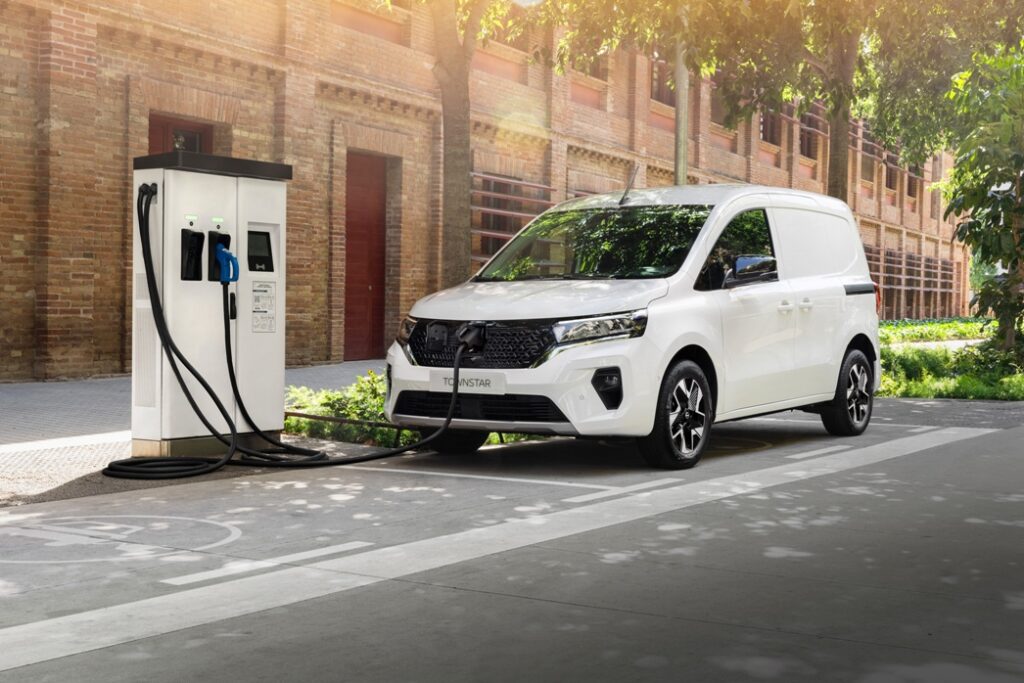
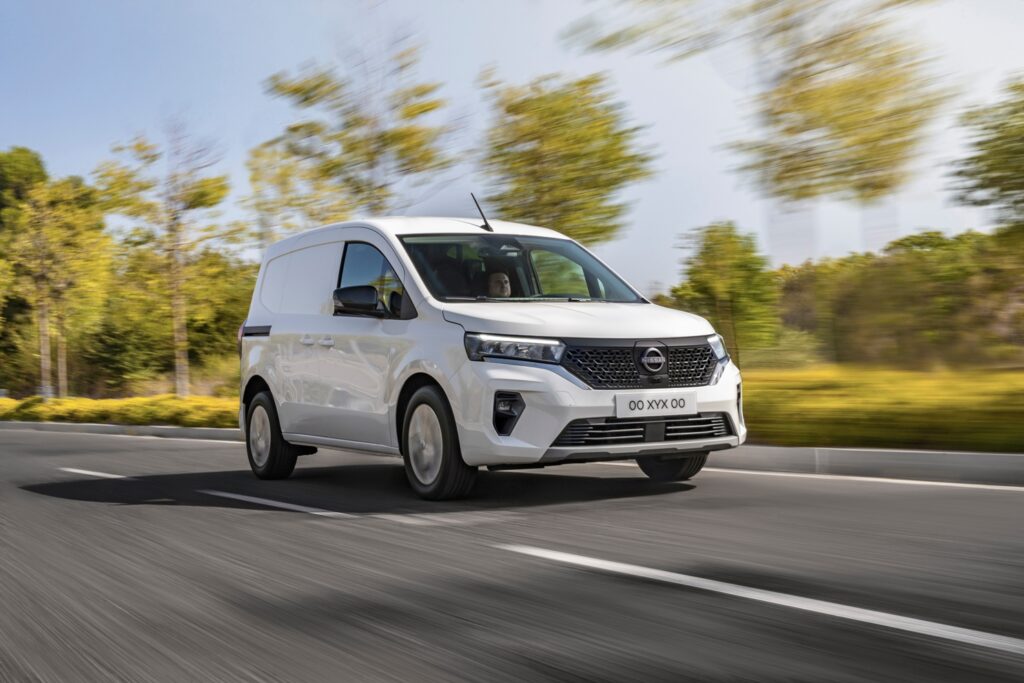
Commercial vehicle customers looking to future-proof their business operations and transition to zero emission motoring now have an exciting new option, following the launch of the electric Nissan Townstar van.
The Townstar EV builds on the success of the e-NV200, Nissan’s previous all-electric compact van and a former UK best-seller, which was designed with business owners’ needs in mind:
The electric Townstar was first announced in September 2021, but it seems that at long last it is possible to order one here in the United Kingdom:
PARIS – Nissan reveals the next generation compact Light Commercial Vehicle (LCV), the all-new Townstar. With a fully electric powertrain in addition to a fuel-powered option, this new LCV range is primed to future-proof business operations and accelerate the transition towards electrification.
Demonstrating Nissan’s most technologically comprehensive LCV offering to date, the all-new Townstar brings a suite of 20+ technologies to the compact van offering, presenting a bold contender within the segment.
Building on the success of the Nissan e-NV200, a pioneer and leader in the electric LCV market, the fully electric version of the all-new Townstar is optimised to meet customer needs. With an enhanced 44kWh battery, advanced technology and low running costs the electric Townstar offers an efficient, sustainable mobility solution.
Here’s the Townstar launch video:
In view of the captions I cannot help but wonder when a right hand drive version will become available! In the meantime the press release tells us that:
The fully electric all-new Townstar will be equipped with a 44kWh battery and advanced technology. It will combine intelligent energy management and effective battery thermal cooling in one optimised package. The new van will replace the range offering of the e-NV200 and offer 245Nm of torque and 285km [range] (pending homologation)…
With a broad range of safety technologies and advanced driver assistance features such as Side Wind Assist and Trailer Sway Assist, the all-new Townstar provides a reassuring and confident experience behind the wheel. Intelligent Emergency Braking featuring Pedestrian and Cyclist Detection and Junction Assist, as well as Hands-Free Parking and Intelligent Cruise Control puts Townstar at the forefront of the category.
Nissan is integrating the Around View Monitor (AVM) for the first time in the compact van segment, democratising this cutting-edge technology. Using a suite of cameras, the system displays a 360-degree overview of the area around the vehicle, providing drivers with full peace of mind when parking in the city.
Customers of the fully electric all-new Townstar will also enjoy the innovative ProPILOT advanced driver assistance system. Supporting motorists with highway driving, the feature allows the vehicle to automatically slow to a full stop and accelerate by following the vehicle ahead, as well as keeping it centred in the lane – even around a gentle curve.
Convenient connectivity features such as E-Call, Apple CarPlay/Android Auto, and wireless phone charging will be available across the range from launch, with further enhanced Connected Services available from the launch of the fully electric version.
These connected services will be presented via an 8-inch touchscreen, which is linked to a 10-inch digital combimeter in front of the driver in the fully electric all-new Townstar.A
Built on the Alliance CMF-C platform, the all-new Townstar has been built from the ground up with quality and functionality in mind. It will bear the new Nissan brand logo, making it the first European model to be produced with it and the latest to be introduced under the Nissan NEXT transformation plan, which prioritizes sustainable growth and profitability across the company’s global operations.
The all-new Townstar van version has been developed to perfectly meet the needs of customers like SMEs who are looking for versatility, convenience, space and cargo on top of a hands-free parking system for complex city parking.
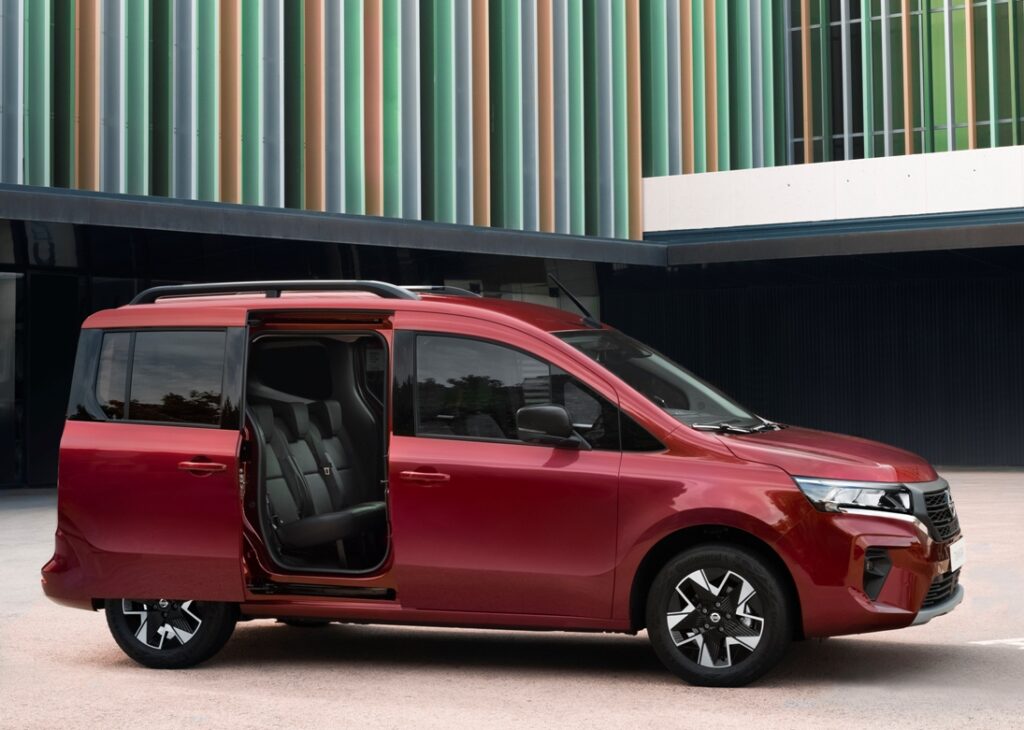
The combi version of the all-new Townstar will support families on the go with vast smart storage options that go up to 775 litres. From refined seat and door trims to a modern centre console and instrument panel finish, the all-new Townstar’s cabin welcomes customers with passenger-car-like comfort.
The fully electric all-new Townstar will reflect aesthetic cues of Ariya, including signature standard LED headlamps and an aerodynamic front shield integrating an intricate Kumiko pattern and a fresh V-motion design with daytime running lamps…
Featuring up to 3.9m3 of cargo space with a swivelling bulkhead, the new compact van can transport two Euro pallets and up to 800kg of cargo with ease, while the powerful powertrains allow the vehicle to offer a 1,500kg towing capacity, adapting to each businesses’ specific requirements.
The cargo area integrates large sliding doors on the side which facilitate unloading the van and the possibility to have 60/40 French doors with 180 degree opening or a tailgate at the rear. It also includes smart storage solutions and a dedicated space for on-board office tools.
Nissan presenta la nueva furgoneta Townstar: un cambio de juego dentro del mercado de Vehículos Comerciales Ligeros (LCV)
Unfortunately none of the above tells me what I really want to know, the ins and outs of (dis)charging the Townstar! Since there is no mention of it I can only assume that initial deliveries of the Townstar will not incorporate the vehicle-to-grid technology familiar from the e-NV200. However the Townstar specification sheet at the end of the press release does include some charging information:
Battery Capacity ( Usable )
44 kWh
Max. power
90kW (122HP)
Max. torque
245
Range estimation
Up to 285 (pending homologation)
Charging type AC
11 kw standard, or 22 kw optional
Charging type DC
75 DC in CCS
Charging time DC
0 to 80% 42 min
Battery cooling
Yes (with 22kW AC charger, or opt with 11kW)
If Nissan are working on incorporating V2G technology in the Townstar and/or the Ariya I wonder whether it will be AC or DC?
Last, but not necessarily least, here is a picture of the ICE Combi version of the Nissan Townstar:
Now I cannot help but wonder when we will be able to test drive one here in soggy South West England.
EDF, through EDF Group subsidiary DREEV, has launched a new commercial charging service using vehicle-to-grid (V2G) technology in the UK, in partnership with Nissan. This means businesses can support the grid by consuming low carbon energy, and progress towards their net zero and decarbonisation targets, whilst reducing their costs.
The V2G technology developed by DREEV, which is a joint venture between EDF and Nuvve – the global leader in V2G technology, allows for two-way energy flow; both recharging an EV’s battery when electricity is at its cheapest, and discharging excess energy to sell back into the grid.
The EDF V2G offer is available for fleet owners of Nissan’s LEAF and e-NV200 models and will allow fleet customers to achieve around £350 savings per charger each year, which equates to approximately 9,000 miles of driving charge per year[1].
EDF’s V2G business solution includes:
The supply and installation of a two-way connected compact 11kW charger capable of fully charging a Nissan LEAF, depending on the battery model, in just 3 hours and 30 minutes – 50 per cent faster than a standard charger – with integrated DREEV technology.
A dedicated DREEV smart phone application, to define the vehicles’ driving energy requirements, track their state of charge in real time, and control charging at any time
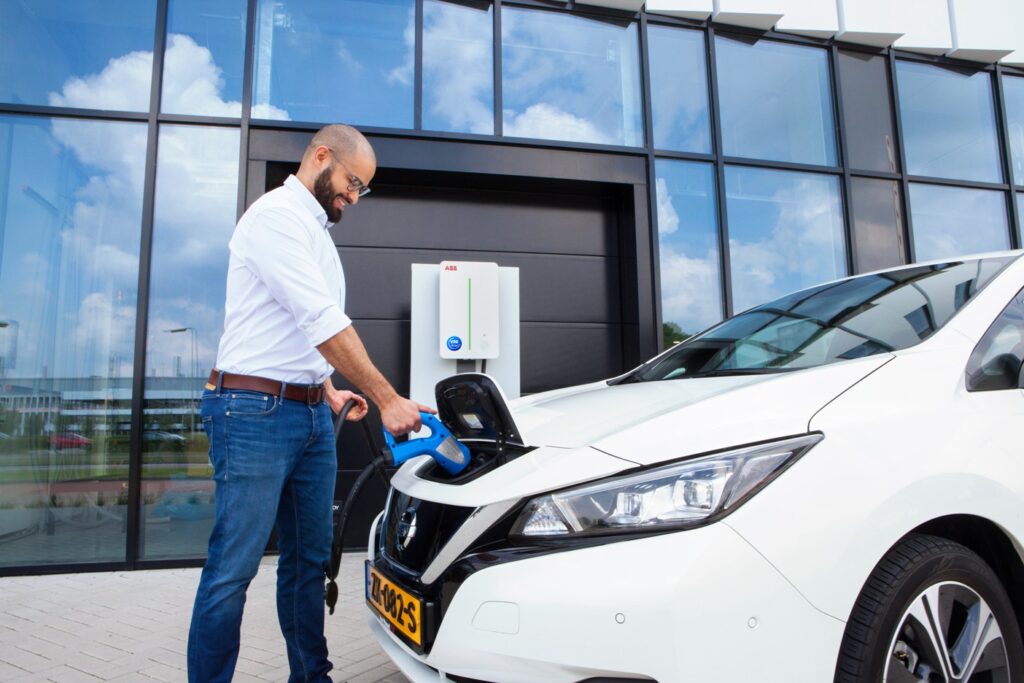
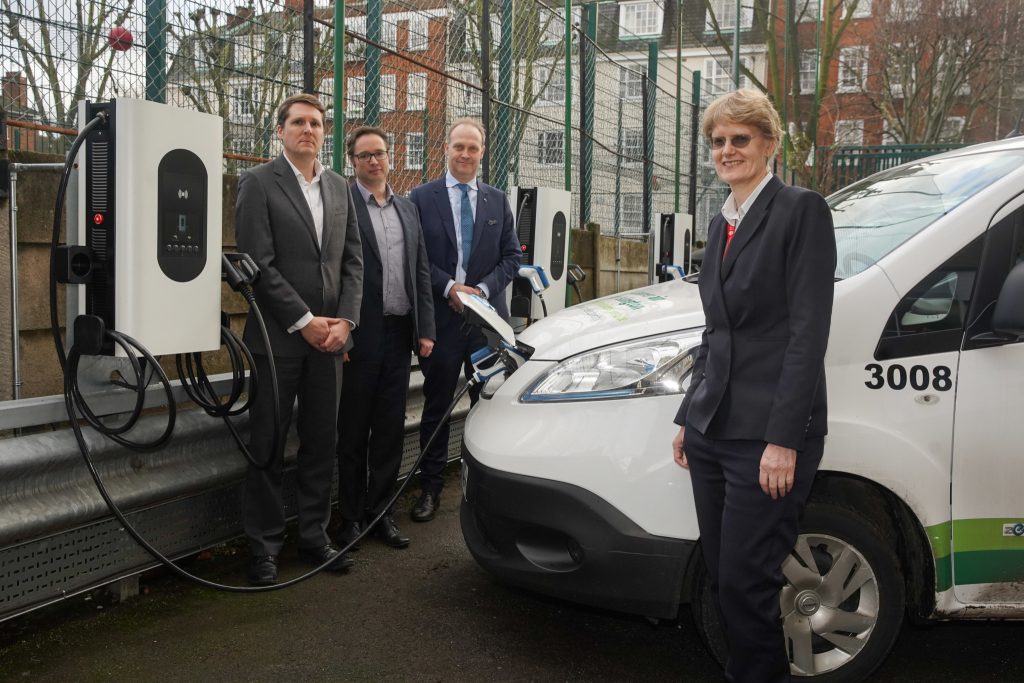
I’m not entirely sure that I agree with the copywriter’s assertion stating “Nuvve – the global leader in V2G technology” though. Take a look at the image accompanying the press release:
I’d swear I’ve seen that picture somewhere before. In the background can be seen a wallbox bearing the ABB logo. It looks an awful lot like the unit pictured in this recent ABB video:
Perhaps I’ve blinked and missed it, but I don’t recall seeing the announcement of Nuvve’s takeover of ABB?
In a press release earlier today E.ON and Nissan announced that they:
Have successfully deployed 20 vehicle-to-grid (V2G) chargers as part of a trial to demonstrate how electric vans and cars could play a role in supporting the UK grid and provide a profitable and sustainable solution for business fleets.
The install at Nissan’s European Technical Centre in Cranfield is the first in a large-scale V2G trial co-funded by Innovate UK. The project will test and demonstrate how storing and sharing electricity in fleet vehicles’ batteries can generate additional revenue for participating companies as well as supporting the power grid.
Having validated the technology at Nissan’s Cranfield site, the project is now recruiting further participants for the trial and plans to deploy V2G chargers for organisations across the UK.
E.ON Drive’s Vehicle to Grid chargers at Nissan’s UK Research and Innovation site in Cranfield.
If you are a fleet owner think of going electric then Nissan want to talk to you! The press release continues with this quote from Nissan Motor GB’s Fleet Director, Peter McDonald:
We know many fleets are not just looking at electric vehicle acquisition, they are also reviewing their energy infrastructure for a world where electric vehicles are fast becoming the norm. Nissan is collaborating with E.ON on this exciting energy infrastructure project to expedite V2G technology in the UK. Thanks to the LEAF and e-NV200 being V2G-capable, these EVs are well set for the future.
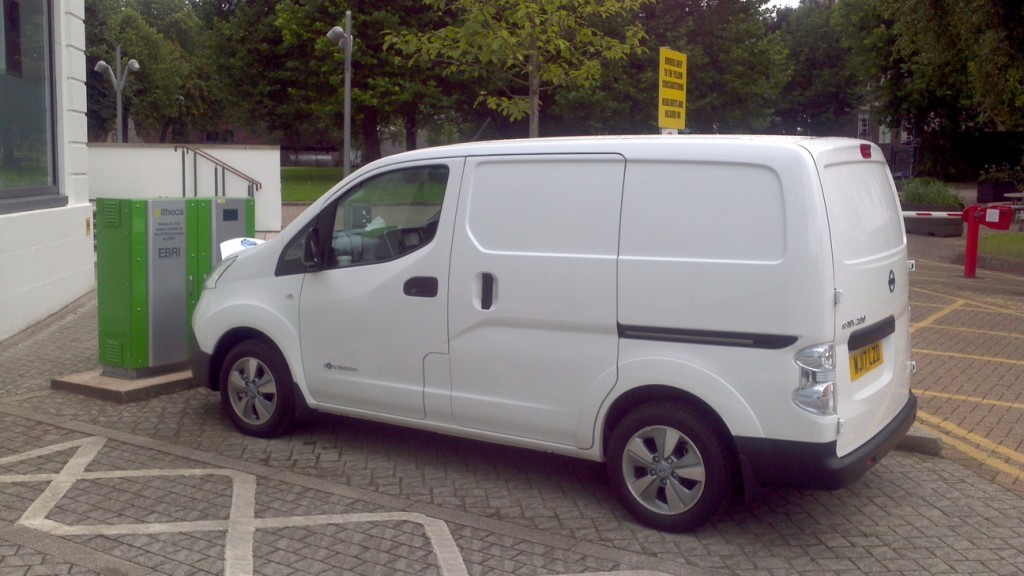
I wonder whether Lisa, our very own Nissan LEAF counts for the purposes of this trial. As regular readers will no doubt be aware, we have been looking to expand our small “fleet” with an e-NV200 for quite some time. Perhaps this is the perfect opportunity, since:
The V2G package for participants in the trial will be offered at a heavily subsidised price through grant funding made available through Innovate UK. Vehicles compatible with the technology being used in this project are currently the Nissan e-NV200 and the Nissan LEAF2.
As well as E.ON and Nissan the V2G project consortium (known as e4Future) includes Newcastle University, Imperial College London, Northern Powergrid, UK Power Networks and National Grid ESO. The V2G platform used on the trial utilises a combination of E.ON’s existing Virtual Power Plant software as well as a charger operating system provided by E.ON’s e-mobility partner Virta.
The project is part of the V2G programme, funded by the Department for Business, Energy and Industrial Strategy and the Office for Low Emission Vehicles (OLEV), in partnership with Innovate UK. Part of UK Research and Innovation (UKRI), Innovate UK is the UK’s innovation agency investing in science and research.
Here is an image of our concept that we prepared earlier. In 2017 to be precise:
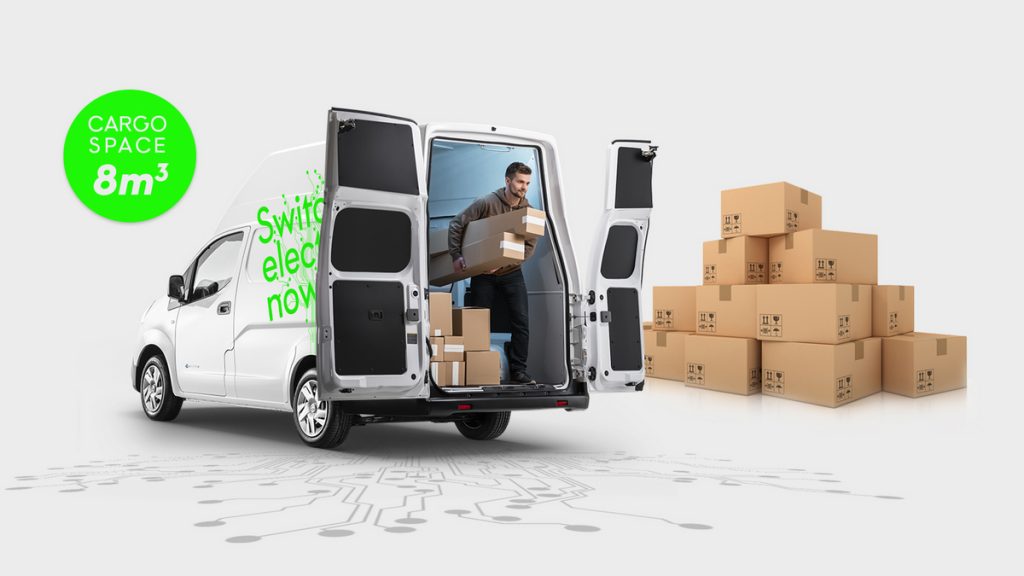
Nissan expands its electric e-NV200 line-up across Europe with the versatile e-NV200 XL Voltia.
The electric van for urban deliveries, the e-NV200 XL Voltia is a highly versatile conversion of the trusted electric Nissan e-NV200 van. The new model is already the zero-emissions vehicle of choice for major last-mile delivery suppliers across Europe.
The e-NV200 is cementing its reputation as the ideal vehicle for urban deliveries where operators and residents appreciate its near-silent and zero emission operation.
Broadening the diversity of the e-NV200 model family, the e-NV200 XL Voltia offers a compact body and sizeable cargo capacity. With a load space of 8 m³, the new model expands the standard e-NV200’s competitive load space by 90%. This allows businesses to complete fewer trips on each delivery round, allowing them to streamline operations and save time.
The newest member of the e-NV200 family is designed with versatility and practicality in mind. Combining an elongated load bay with an expansive roof space, the 8 m³ van allows drivers to load cargo easily, with standing room ensuring they remain comfortable on the job. The van is highly manoeuvrable on the road, too, with an optimised turning circle making it an ideal solution for urban roads.
The e-NV200 XL Voltia also benefits from technology inspired by the Nissan LEAF’s tried-and-tested powertrain. The model is equipped with Nissan’s highly capable 40kWh battery and an on-board CHAdeMO charger for rapid DC charging capability – making it the perfect solution for flexible urban delivery.
Alongside the efficient powertrain, intelligent energy management technology enhances the e-NV200 XL Voltia’s sustainability credentials even further. B mode optimises regenerative braking to recharge the battery on the move, whilst ECO mode manages power output to conserve battery capacity. When used together, both technologies maximise range to help drivers go longer on each delivery.
The Nissan e-NV200 has enjoyed widespread popularity since its launch in 2014, with 42,000 units produced– almost 10,000 sold across Europe in 2019 alone – supporting Nissan in its commitment to reduce urban emissions from commercial operations.
The e-NV200 XL Voltia will be made available in all European markets, with local pricing to be revealed upon launch.
The press release makes no mention of the inclusion of V2G technology in the Voltia, but since the van is based on the existing e-NV200 platform we assume the new vehicle is V2G capable. If we discover otherwise you will be the first to hear!
Honda is installing five bi-directional electric vehicle charging points at Islington Town Hall in London, in partnership with smart charging specialists, Moixa. The initiative will help Islington Council electrify its entire vehicle fleet; part of its efforts to achieve net-zero emissions by 2030.
This is the first project resulting from the collaboration between Honda and Moixa, which was announced at Geneva Motor Show in 2019. The strategic partnership forms a significant part of Honda’s Electric Vision strategy to deliver industry-leading innovation through a portfolio of energy management products and services in Europe.
The bi-directional vehicle-to-grid (V2G) chargers incorporate Moixa’s GridShare smart software, which optimises EV battery charging when grid power is cheapest and cleanest. The software can also aggregate groups of plugged-in EVs to provide battery power to the grid when it is most expensive and carbon intensive. When EVs are plugged in to all the chargers, the smart technology can provide enough energy to power the base load of Islington Town Hall.
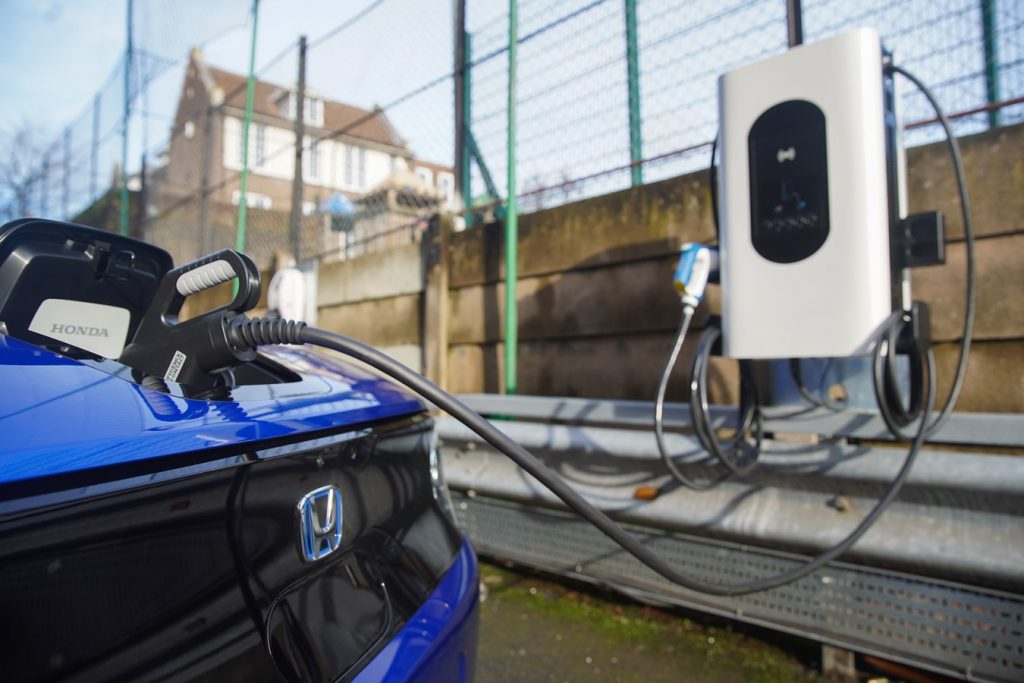
The press release was accompanied by an image showing a CCS connector plugged into the front of an anonymous vehicle with a Honda badge:
However a Moixa press release about the Islington project had a somewhat different emphasis:
At Moixa, we’ve hit the ground running in 2020, unveiling a new smart EV charging project to optimise Islington Council’s fleet at the town hall. This is an exciting first step in our partnership with Honda, to deploy smart EV charging and management solutions across Europe.
We’re working with Honda to support Islington Council achieve its ultra-low emissions zone (ULEZ) standard across its fleet of 500+ vehicles. The council’s goal is to electrify its entire fleet, cutting 1,400 tonnes of dangerous carbon dioxide (CO2) emissions every year. This project will reduce harmful air pollution, save money for essential services and help Islington achieve its 2030 net-zero carbon emissions target.
and a rather different image:
That looks suspiciously like a CHAdeMO connector plugged into the front of a Nissan e-NV200 van, with Simon Daniel and Chris Wright from Moixa looking on in the background!
According to Chris, who is Moixa’s Chief Technology Officer:
The EV revolution will put millions of ‘batteries on wheels’ on our roads in the next decade. By using AI-driven charging technology, we can intelligently manage these fleets of batteries, securing lowest-cost charging and highest-impact carbon savings. Our project with Honda and Islington shows what is possible and provides a blueprint for all large organisations to follow.
Whilst according to Honda Motor Europe’s Project Leader of Energy Management, Jørgen Pluym:
As the shift towards electrification accelerates, we must continue to innovate with projects like these – helping to drive awareness and uptake of charging solutions and advanced vehicle-to-grid technologies. Honda is committed to promoting sustainable future energy management in Europe, and this project in Islington represents an important part of our vision for future energy solutions.
It looks to me as if Islington Council already possesses one or more Nissan e-NV200’s, but I suspect they will have to wait quite a while for a V2G enabled Honda, especially if it’s vans that they’re after!
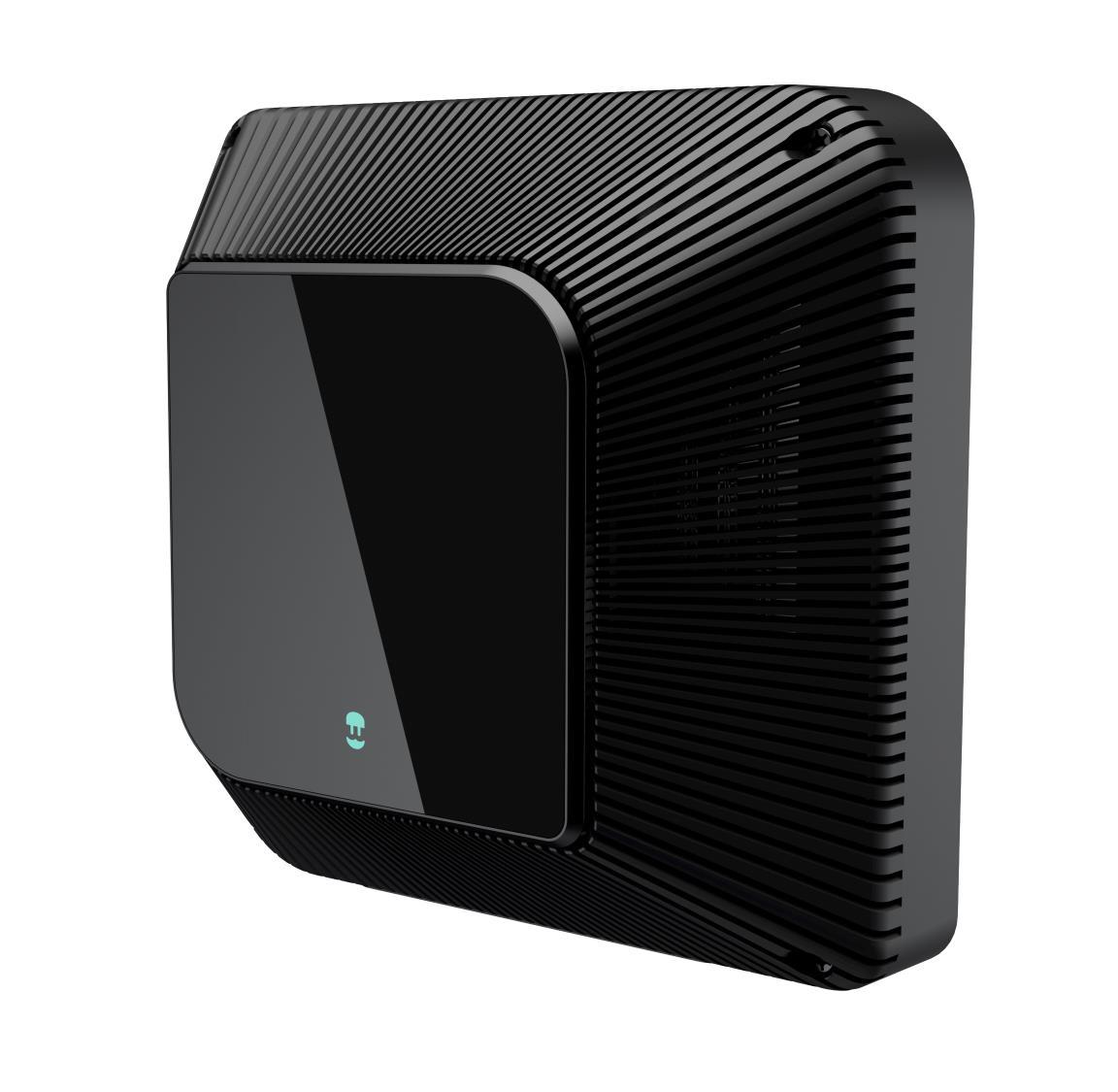
I don’t recall ever being quite so excited reading a press release. I’m afraid I’ve been far too busy here in the UK to travel to China this week to work on EV charging station standards, as I originally planned a few months ago. I’m still far too busy even to travel to the eMove360° conference and trade fair in Munich today. Which is something of a pity since I’d like to take a very close look at this device in the flesh, so to speak:
The Wallbox press release I’ve recently been reading contains a few interesting pieces of background information for we V2G watchers here in the UK, such as:
Research, technical development, product testing and manufacturing take place in Barcelona, where Wallbox has strong engineering resource and capacity to produce 100,000 chargers per year.
The company is Spanish but the brand is international. Wallbox operations are solely conducted in English. It began UK operations in September 2018.
not to mention:
Wallbox operates in 30 markets around Europe and overseas as far as New Zealand and China. Wallbox is partner to major automotive OEMs and energy companies. The company is approaching 20,000 installations across all markets and sees the UK as one of its most important growth opportunities. The company is 80-strong and growing, with over half of the workforce involved in software and hardware development. Many employees have made the transition from IT to automotive, coming from the likes of Apple and Tesla, which in part accounts for the unique design quality.
Moving on to Wallbox’s shiny new black box pictured above, let’s take a look at the basic specification first. According to the press release:
All Wallbox chargers are rated up to 22 kW, suitable for domestic and commercial installation and connect to the myWallbox energy management platform. This enables scheduling to take advantage of time and use tariffs, energy balancing between vehicle and the home, and a host of other easily accessible features. Wallbox chargers have connectivity through WiFi, Ethernet or Bluetooth.
Presumably that 22 kW applies to the DC black box as well in which case it can handle three phase, and if the entire Wallbox range can connect to an energy management system (EMS for short) somewhere in the clouds I’d like to take a very close look at all the other AC boxes as well! Sticking with DC for now though:
The new DC charger puts energy created and stored in the home, straight into the electric vehicle through a CCS or ChaDeMo connector. Home generation and storage are now becoming much more cost effective considerations as electric vehicle range and battery size increase and reduce ROI timescales.
The charger’s unique bi-directional power electronics reconcile the alternating (AC) and direct (DC) energy that flows between vehicle charging, rooftop PV generation or garden wind turbines, and home battery storage.
Wallbox are talking just the sort of language we like to hear when discussing our “Static & Mobile Distributed Energy Storage” (SaMDES) project, and they have even uttered the magic words “bi-directional power electronics”. This sounds like pukka vehicle-to-home capable kit, so the next obvious question from our North Cornwall perspective is “when will it start shipping to the UK?”
First sales are planned for mid 2019
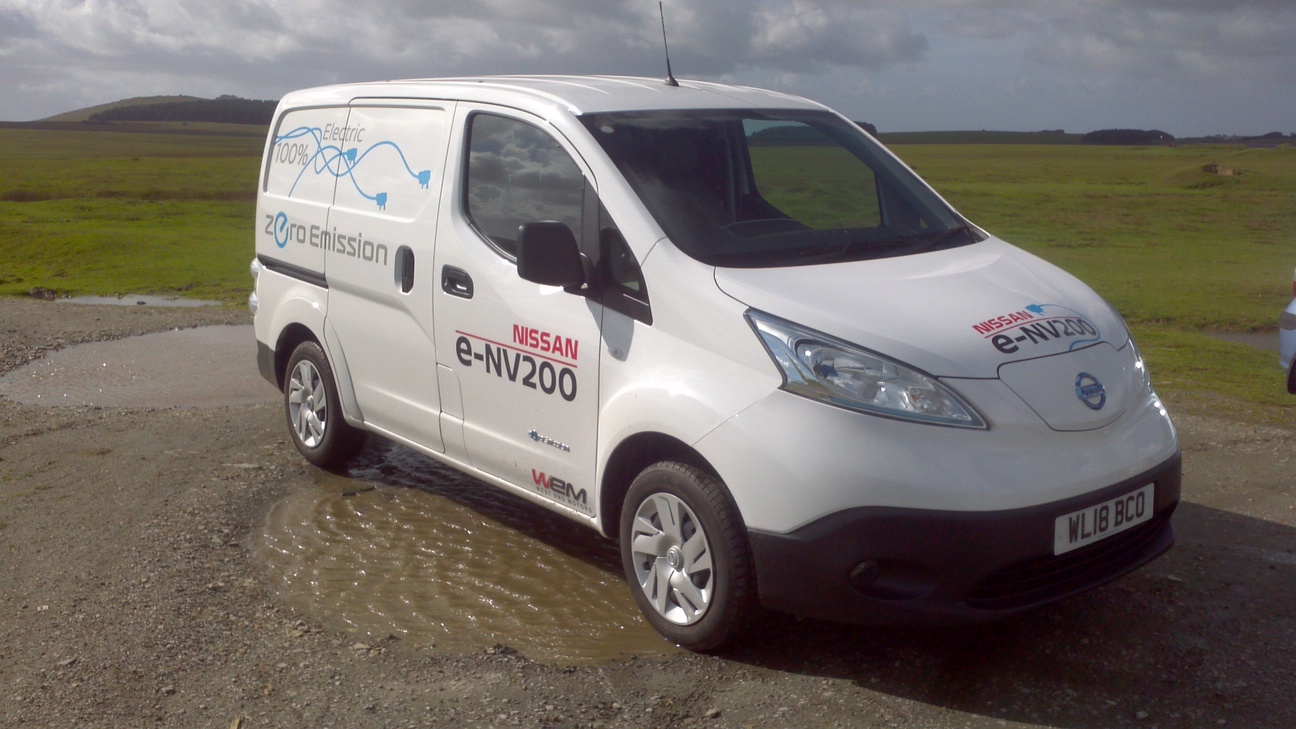
A minor disappointment there then, but yesterday I did manage to speak at length with Stewart Mckee who is Director of Wallbox UK. He assures me that the black box on display in Munich today isn’t just an empty shell. It is in fact “production ready”. That being the case I cannot wait to experiment with plugging one into the CHAdeMO connector at the front of one of Nissan’s new 40 kWh e-NV200 vans, which we test drove for three days following the recent Cornwall New Energy EV event in Wadebridge:
As if all that wasn’t exciting enough there’s more where that came from!
Wallbox is also making it easier to manage electric vehicle charging at home. The company is introducing software that allows spoken commands, and cognitive intelligence that learns about an owner’s charging behaviour and preferences, in order to predict optimum energy balance with home and grid.
This unique two-tier combination of software technologies means that you can speak directly to your home charging system and it will interpret your requirements in the most energy efficient manner. For instance, you can simply say: ‘I need my car fully charged for the morning’ and Wallbox will take care of the rest, with consideration for all other home energy demands during the same period of charging.
The ability for Wallbox software to automatically manage charging in this way adds another smart layer to dynamic load balancing between between vehicle and the home, and vehicles parked in the same area.
Please forgive me, but after all that excitement I need to go and lie down now. However make sure to watch this space, because we’re hoping to have a chat with Wallbox’s CEO Enric Asunción real soon now.
In the wake of the BBC’s “RapidGate” article last weekend I find myself debating the pros and cons of the 2018 model year Nissan LEAF that we road tested last week with a fan of the Hyundai Ioniq EV:
As you may possibly gather from our company name, #V2G capability is vital for our particular use case. Hence the #Ioniq is currently utterly useless to us. On the other hand we love the #LEAF, irrespective of its #V2x expertise. #YMMV!#ThoughtForTheDay – Horses for courses?
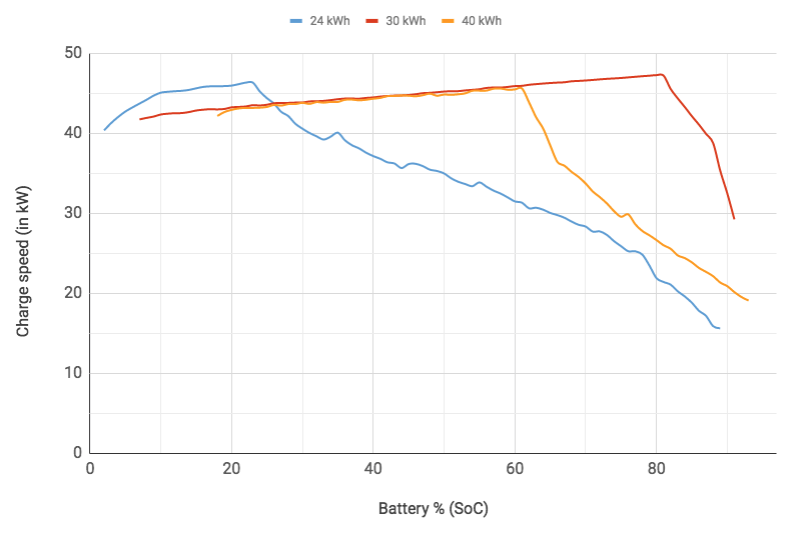
Dutch charging station operator Fastned helpfully provides some experimental evidence to inform the debate. Whilst they don’t publish data on the effects of successive rapid charging sessions on a long drive they do provide charging profiles for all three flavours of the Nissan LEAF:
which does indeed show the latest LEAF fitted with a 40 kWh battery pack throttling the charging rate earlier than the preceding 30 kWh version. According to Fastned:
With a Nissan Leaf or e-NV200 (Evalia) you use the CHAdeMO plug. The charge speed is up to 50 kW at all of our chargers. In the charge curve below you can see the charge speed of the Nissan Leaf and e-NV200. On average both cars charge 100 km of range in 20 – 25 minutes. Charging behaviour largely depends on the battery size:
24 kWh edition: fast charging until 25%, charging will gradually go slower after this
30 kWh edition: fast charging until 80%, charging will go slower after this
40 kWh edition: fast charging until 60%, charging will go slower after this
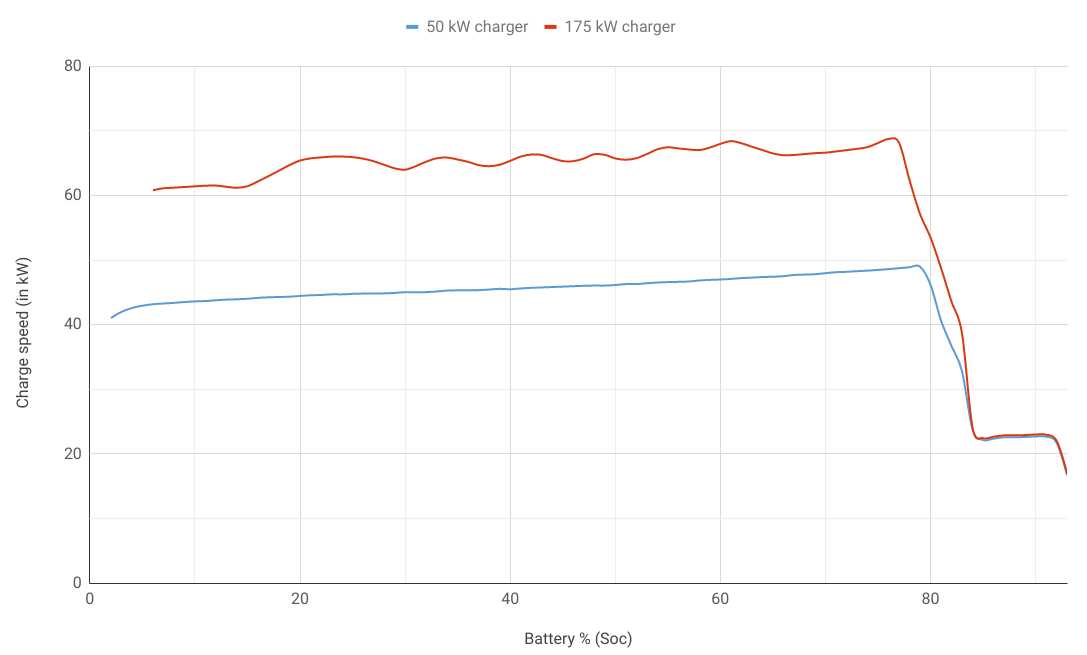
For comparison purposes here’s the equivalent graph for the Hyundai Ioniq:
According to Fastned once again:
If you have a Hyundai Ioniq, then you use the CCS plug. The charge speed is up to 70 kW at our next generation fast chargers and 50 kW at our other chargers. In the charge curve below you can see the charge speed of the Ioniq at both chargers. On average the Ioniq charges 100 km in 15 – 25 minutes. Above 75% the charge speed requested by the car will drop, and above 85% the charge speed is reduced to 22 kW.
Owners of Nissan’s new electric Leaf say they were given misleading information about the car before buying it.
They say charging the Leaf can take three times longer than claimed on Nissan’s website.
Others are unhappy that the range on a single charge is not as good as the 235 miles (378km) they were promised.
Nissan admitted that charging times can vary, but denied there was a problem or that any customers were misled.
The Advertising Standards Authority is now considering whether to launch an investigation into the issue.
We were already aware of “charging can take three times longer” issue, which was originally reported by Jonathan Porterfield of Eco Cars in Orkney:
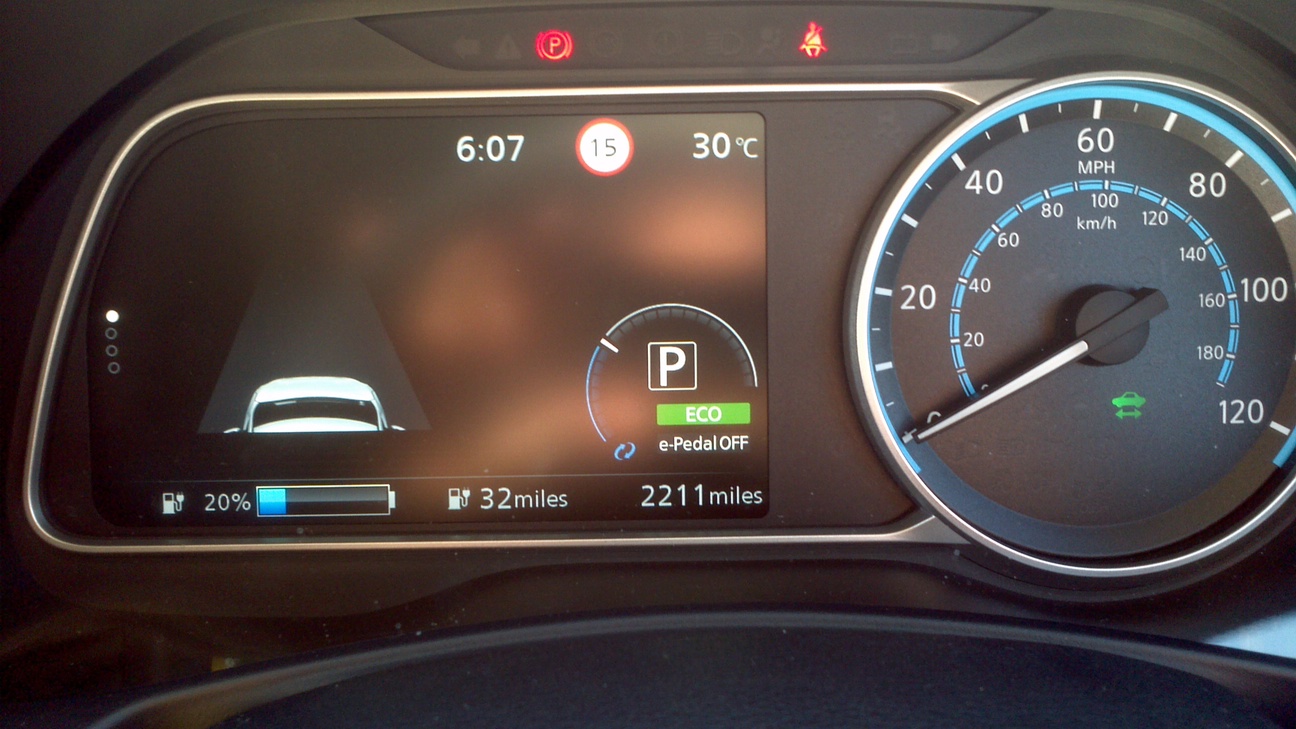
For our test we weren’t intending to drive from Land’s End to John o’Groats, or even Leicestershire to Aberdeen. However we were planning a trip from Bodmin to Cardiff via Trowbridge, then back via the M4/M5/A30.
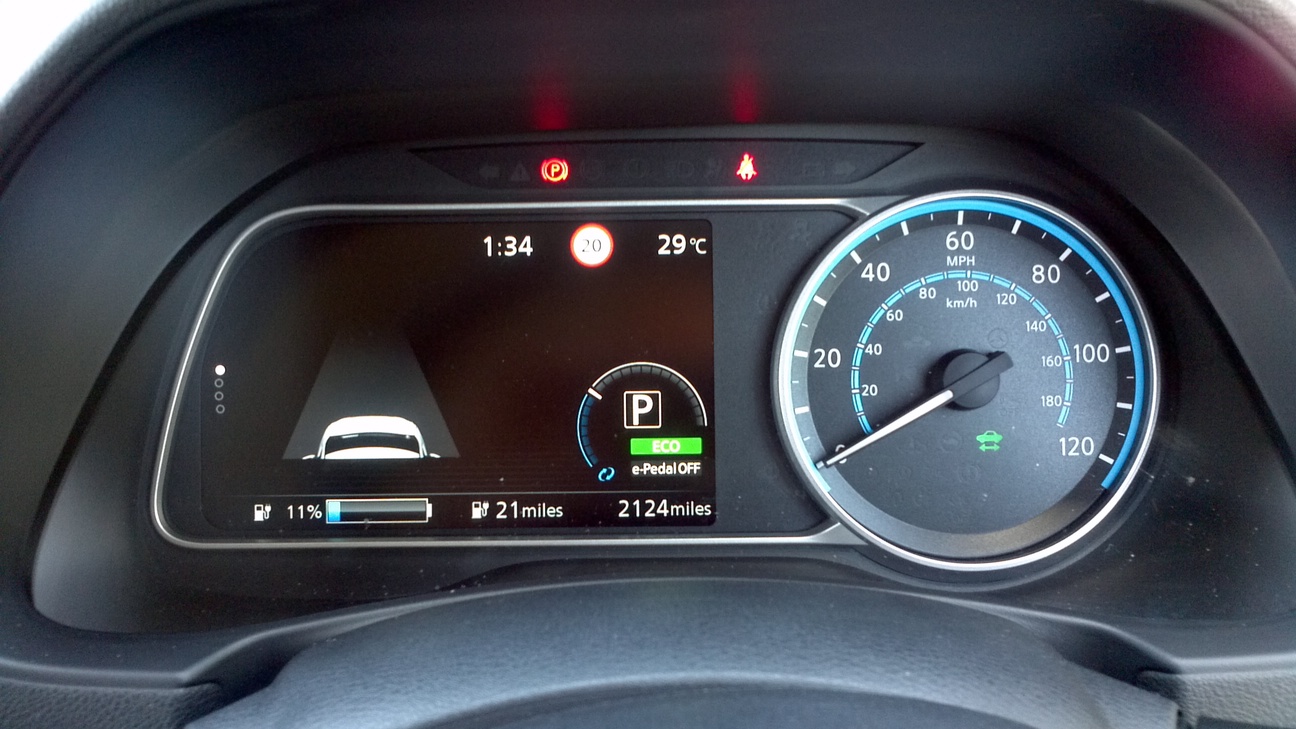
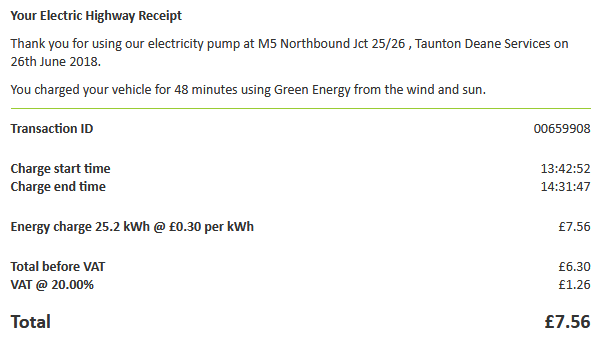
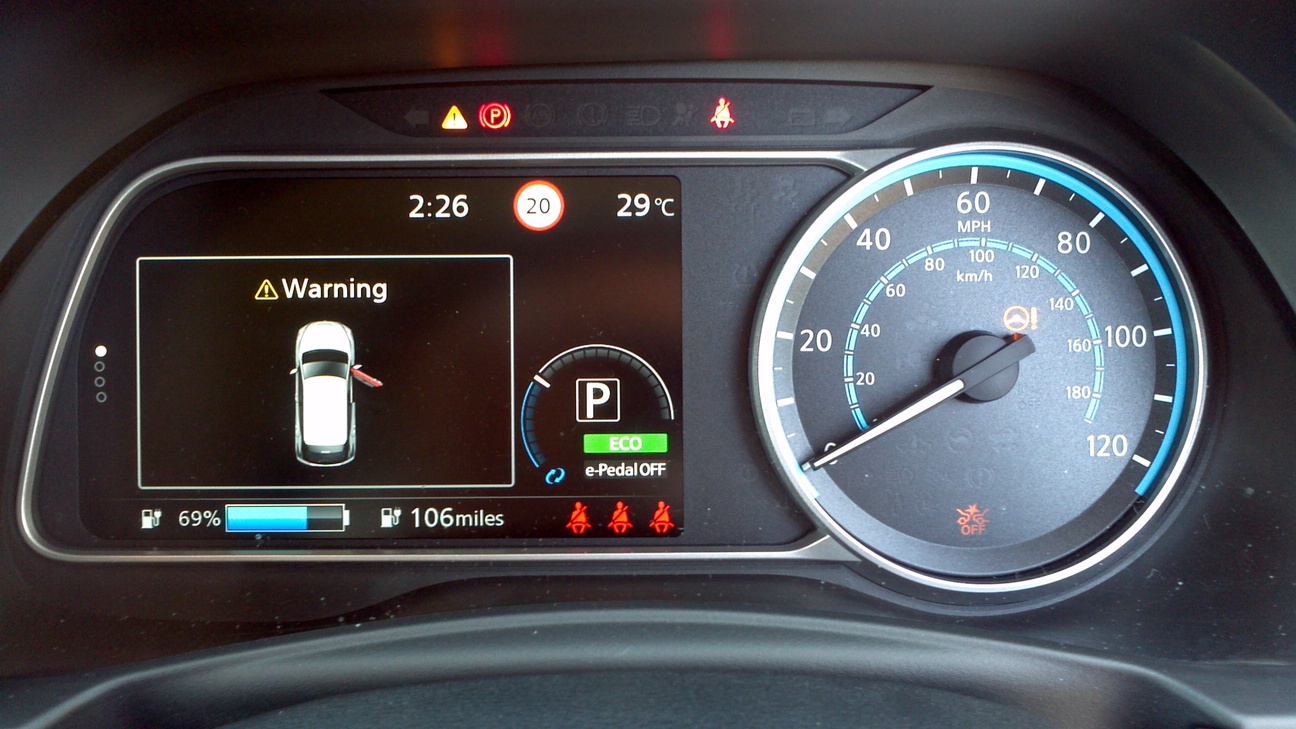
Here is what we discovered. After heading up the A30 and then the M5 at a proPILOT controlled 70 mph our first stop to “rapid charge” was at Taunton Deane Services where this transpired:
By my calculations that’s an average of ~31.5 kW
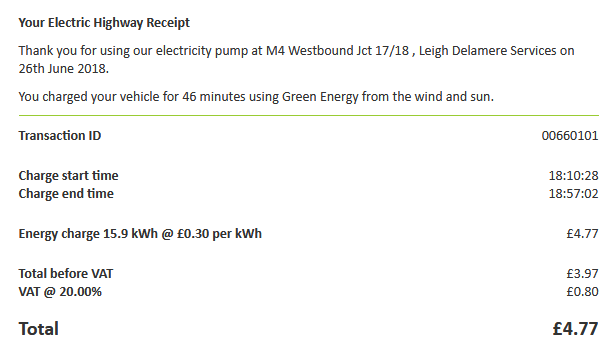
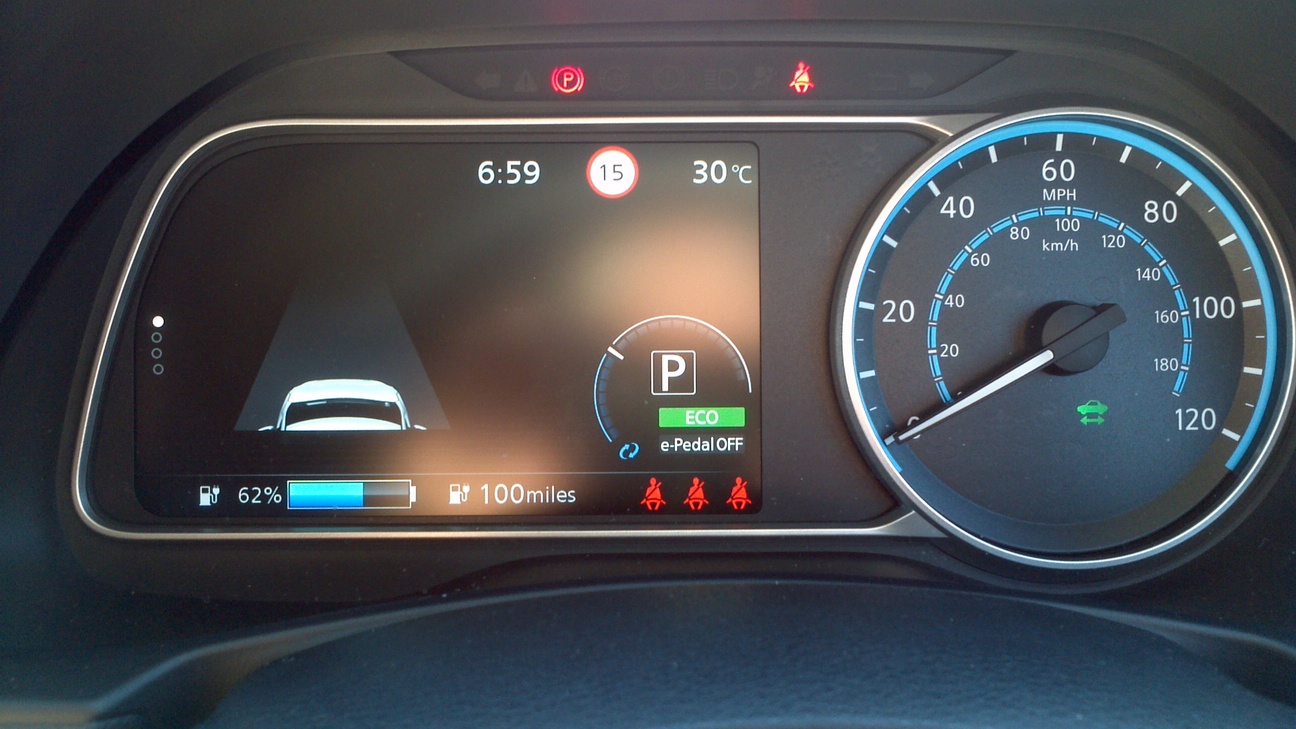
After driving to Trowbridge via the A303, and hence a fair bit more at speeds of 60 and 70 mph, we spent an hour or so charging at a stately 6.6 kW. Then we headed north to Leigh Delamare services, where this transpired.
By my calculations that’s a lot less than 31.5 kW. An average of ~21 kW in actual fact. It certainly looks as though there is some truth to those RapidGate rumours.
“Several of the Twitterati debating the issue have been suggesting that the 40 kWh LEAF 2.0 should have employed the same sort of “active battery temperature management” employed in the e-NV200 van. Let’s take a look at what Nissan themselves have to say about that:
The Nissan e-NV200’s motor is powered by a Nissan-developed 48-module compact lithium-ion battery, just like LEAF, but there are significant differences between the two packs.
Like LEAF, the cells are manufactured at Nissan’s new battery plant in Sunderland close to the NMUK facility, but these are then shipped to Barcelona where they are assembled into a pack specially configured for e-NV200 to avoid encroaching into the cargo area.
The battery pack is shorter and narrower than that in LEAF but, for the most part, deeper. Weighing 267.5 kg, it is also 7.5 kg lighter.
It is mounted under the floor of the vehicle within the wheelbase to keep the centre of gravity as low as possible and is contained within in a sturdy metal casing to provide extra protection in the event of a side impact.
As in the LEAF, the battery pack comprises 48 modules with a nominal capacity of 24 kWh, but it incorporates a bespoke cooling pack that operates automatically during quick charging.
Due to more compact packaging and because e-NV200’s duty cycle is likely to be quite different to LEAF – it is anticipated that the vehicle will be operated intensively during the working day and there will be greater use of Quick Chargers to minimise down time – cooled air from the vehicle’s heating and ventilation system is channelled over the battery cells to ensure optimum charging conditions at all times.
Conversely, in cold weather, the vehicle’s HVAC system wafts warm air over the battery, again to ensure it reaches its optimum operating temperature as quickly as possible.
It does rather sound as though Nissan didn’t anticipate that quite so many people would want to operate the new LEAF “intensively during the working day”, and through the night too is some cases. However to be frank it beats me why all those people want to work their new LEAF that hard. For Jonathan driving LEAF’s a long way in a hurry is part of his business. For everybody else though, this seems to sum things up nicely:
Nissan Energy Solar is the all-in-one solution that combines world-class residential solar panels with energy storage system to make the most of UK homes.
The solution has been designed to allow UK homeowners to reduce their energy bills and get more independence from the grid, allowing them to live more sustainably.
Traditionally, solar energy has been used to power home appliances during the day, but now with Nissan Energy Solar householders can collect and store the excess energy from their solar panels and use it during the night – even to charge their Nissan LEAF and e-NV200 – and on cloudy days.
Nissan launches Nissan Energy Solar: the ultimate all-in-one energy solution for UK homes
The accompanying image shows an xStorage static battery on the garage wall, but no electric vehicle is to be seen. No mention is made of discharging said absent electric vehicle, so Nissan’s new offering only delivers part of the functionality implied by our artist’s impression of our SaMDES project displayed at the top of the page.
The press release continues:
Francisco Carranza, Managing Director, Nissan Energy, Nissan Europe says ‘Solar panels have become the world’s fastest growing source of new energy and we’re thrilled to launch Nissan Energy Solar in the UK. Over 880,000 UK homes already have solar panels installed and they are seeing the benefits every day, from decreasing electricity bills to increasing property values.’
‘Nissan Energy Solar is just one step in supporting our commitment to investing in innovative energy solutions for a more sustainable future and intelligent way of living.’
The new product also includes a home energy management system that will allow users to control how and when they want to use their energy in real time as well as making the entire energy system more efficient and sustainable. The system reduces energy costs and carbon footprint for homeowners significantly, by automating energy flows, purposefully utilizing solar production peaks and storage capacities.
Nissan Energy Solar solution will start at £3881**.
Here’s the small print:
**Includes the supply and installation of a six panel solar system, Home Energy Management system, and VAT at 5%.
The xStorage unit shown in the garage obviously adds to that price, as would upgrading to the “most efficient” or “sleek integrated” solar PV panels. The product web site merely states “On sale soon” and provides no additional pricing information as yet.