The Results of our Recent “RapidGate” Research

No sooner had we completed our extended test drive of the new 40 kWh Nissan LEAF than the BBC published an article by Brian Milligan stating that:

Owners of Nissan’s new electric Leaf say they were given misleading information about the car before buying it.

They say charging the Leaf can take three times longer than claimed on Nissan’s website.

Others are unhappy that the range on a single charge is not as good as the 235 miles (378km) they were promised.

Nissan admitted that charging times can vary, but denied there was a problem or that any customers were misled.

The Advertising Standards Authority is now considering whether to launch an investigation into the issue.

We were already aware of “charging can take three times longer” issue, which was originally reported by Jonathan Porterfield of Eco Cars in Orkney:

For our test we weren’t intending to drive from Land’s End to John o’Groats, or even Leicestershire to Aberdeen. However we were planning a trip from Bodmin to Cardiff via Trowbridge, then back via the M4/M5/A30.

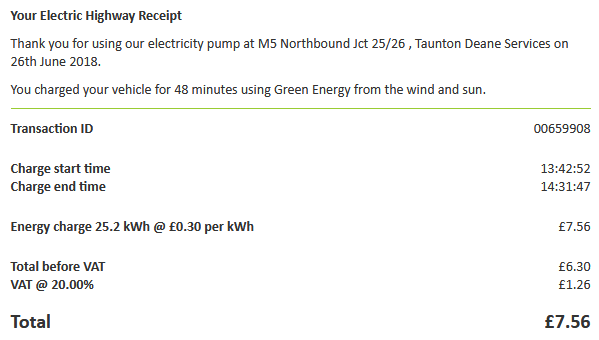
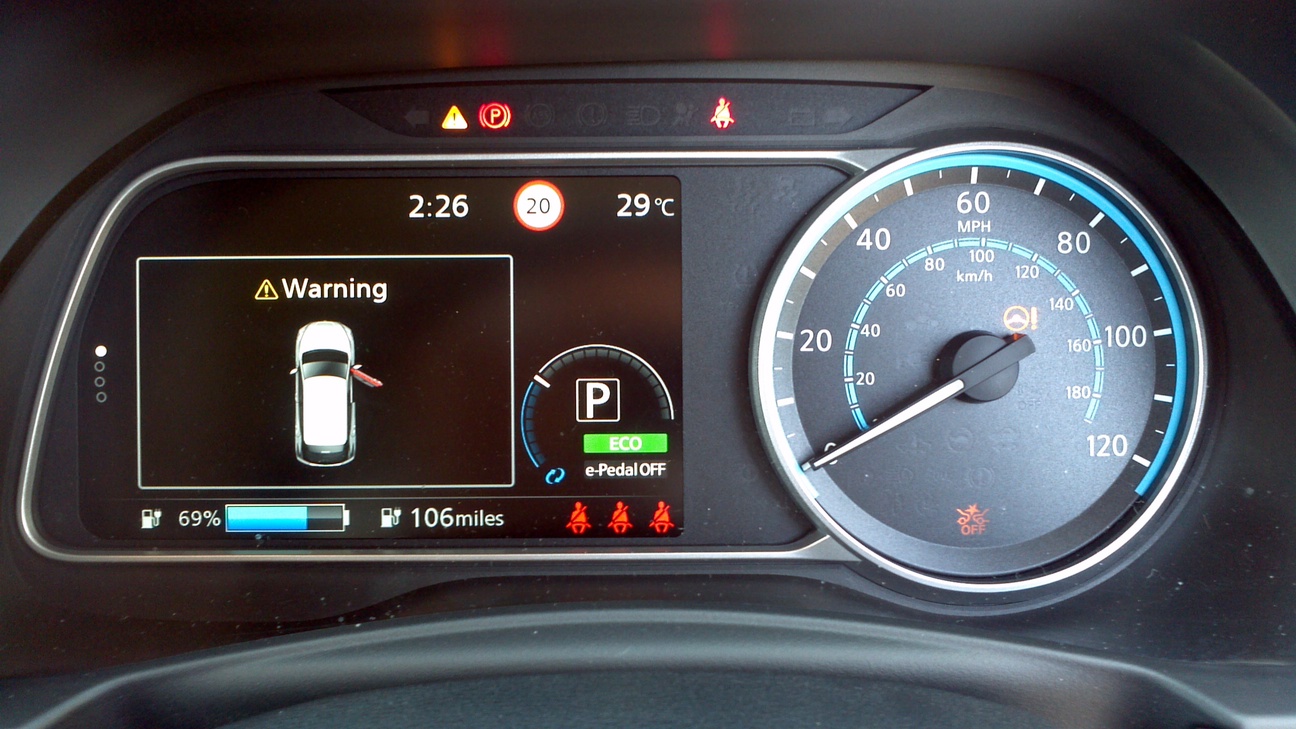
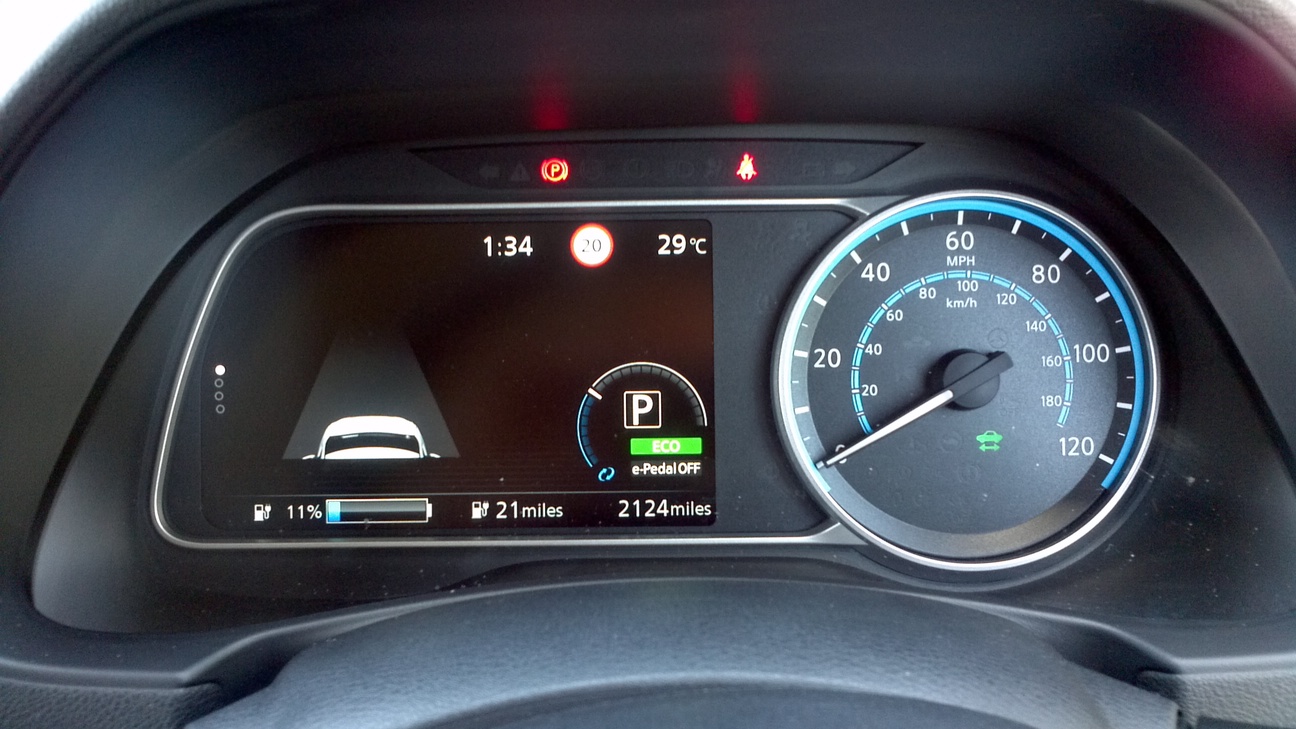
Here is what we discovered. After heading up the A30 and then the M5 at a proPILOT controlled 70 mph our first stop to “rapid charge” was at Taunton Deane Services where this transpired:

2018-06-26_13-34-15_225

2018-06-26-TauntonDeane

2018-06-26_14-26-07_595

By my calculations that’s an average of ~31.5 kW

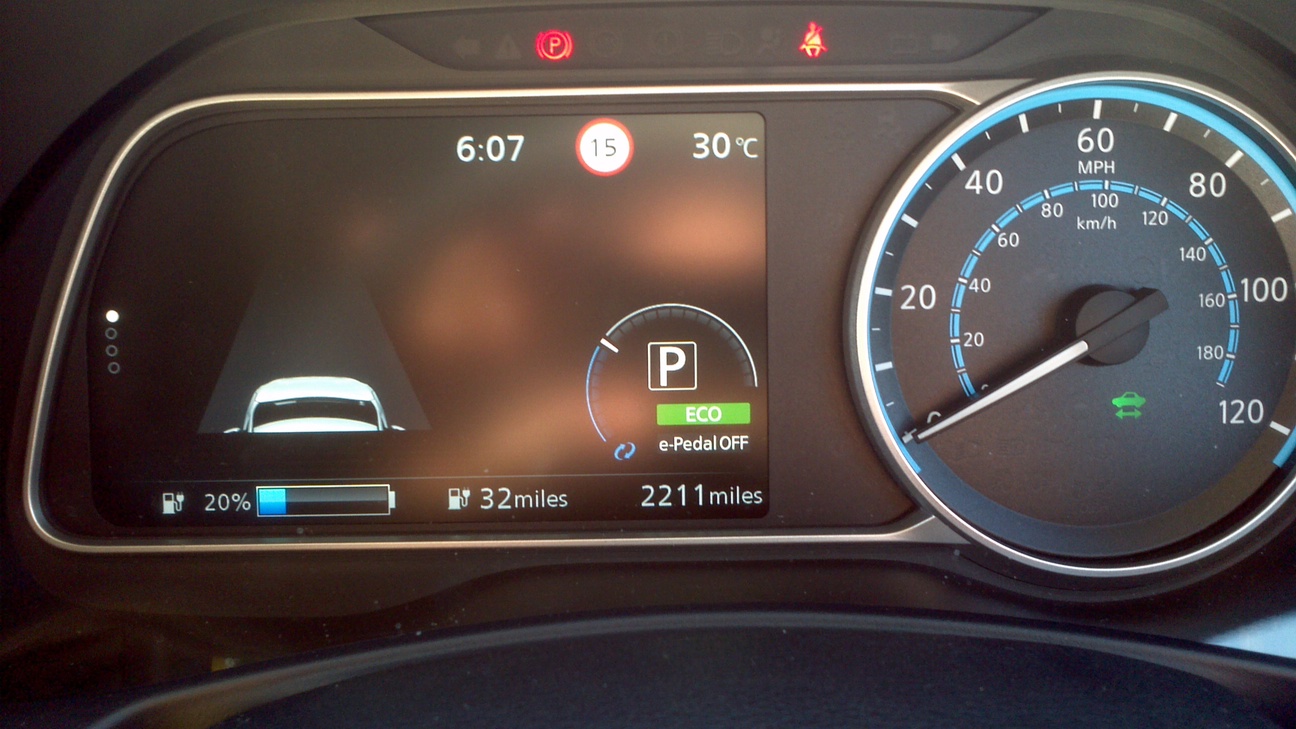
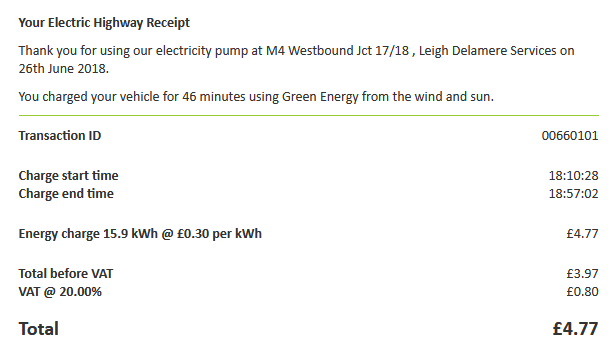
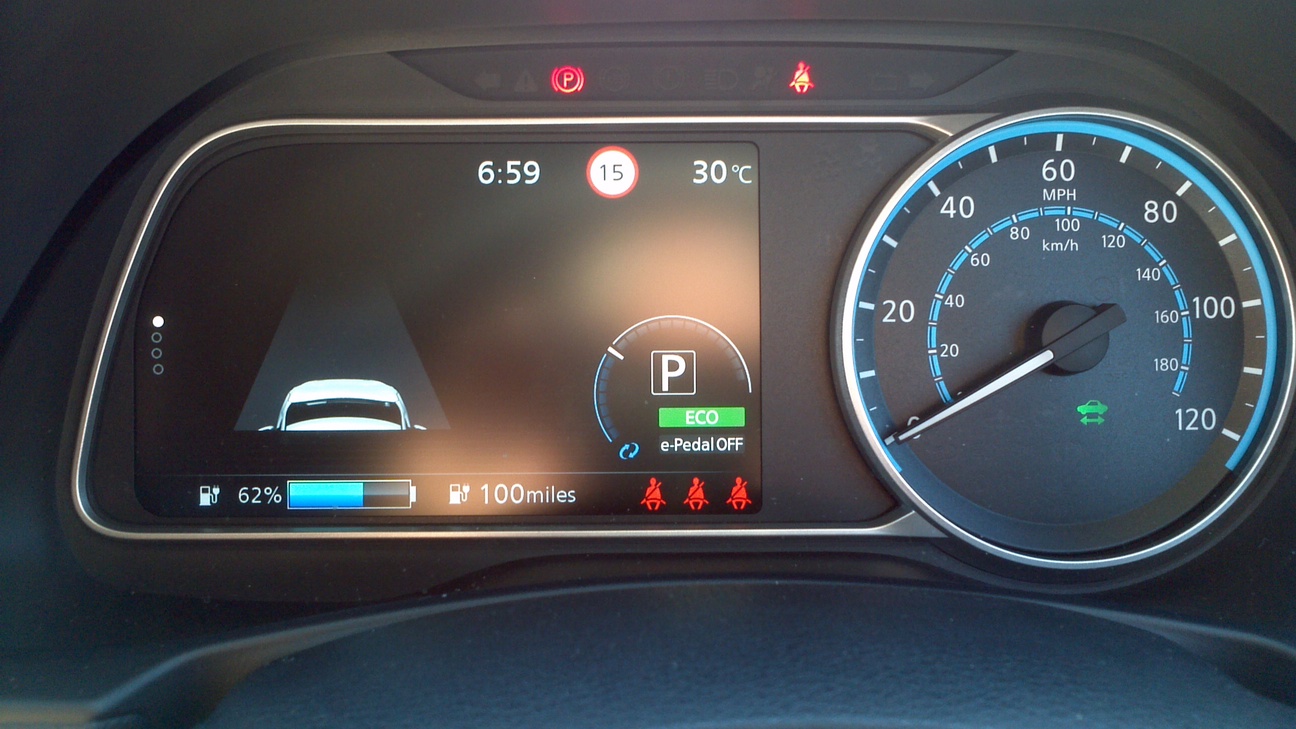
After driving to Trowbridge via the A303, and hence a fair bit more at speeds of 60 and 70 mph, we spent an hour or so charging at a stately 6.6 kW. Then we headed north to Leigh Delamare services, where this transpired.

2018-06-26_18-07-46_824

2018-06-26-LeighDelamare

2018-06-26_18-59-15_667

By my calculations that’s a lot less than 31.5 kW. An average of ~21 kW in actual fact. It certainly looks as though there is some truth to those RapidGate rumours.

“Several of the Twitterati debating the issue have been suggesting that the 40 kWh LEAF 2.0 should have employed the same sort of “active battery temperature management” employed in the e-NV200 van. Let’s take a look at what Nissan themselves have to say about that:

The Nissan e-NV200’s motor is powered by a Nissan-developed 48-module compact lithium-ion battery, just like LEAF, but there are significant differences between the two packs.

Like LEAF, the cells are manufactured at Nissan’s new battery plant in Sunderland close to the NMUK facility, but these are then shipped to Barcelona where they are assembled into a pack specially configured for e-NV200 to avoid encroaching into the cargo area.

The battery pack is shorter and narrower than that in LEAF but, for the most part, deeper. Weighing 267.5 kg, it is also 7.5 kg lighter.

It is mounted under the floor of the vehicle within the wheelbase to keep the centre of gravity as low as possible and is contained within in a sturdy metal casing to provide extra protection in the event of a side impact.

As in the LEAF, the battery pack comprises 48 modules with a nominal capacity of 24 kWh, but it incorporates a bespoke cooling pack that operates automatically during quick charging.

Due to more compact packaging and because e-NV200’s duty cycle is likely to be quite different to LEAF – it is anticipated that the vehicle will be operated intensively during the working day and there will be greater use of Quick Chargers to minimise down time – cooled air from the vehicle’s heating and ventilation system is channelled over the battery cells to ensure optimum charging conditions at all times.

Conversely, in cold weather, the vehicle’s HVAC system wafts warm air over the battery, again to ensure it reaches its optimum operating temperature as quickly as possible.

It does rather sound as though Nissan didn’t anticipate that quite so many people would want to operate the new LEAF “intensively during the working day”, and through the night too is some cases. However to be frank it beats me why all those people want to work their new LEAF that hard. For Jonathan driving LEAF’s a long way in a hurry is part of his business. For everybody else though, this seems to sum things up nicely:

Finally, for the moment at least, here is an excellent video from Dr. Euan McTurk on the complexities of electric vehicle battery chemistry:

Note that around the 22 minute mark Euan mentions that there are lithium rich brines here in Cornwall!

To be continued……

Mitsubishi Motors Reveals New “Hyper Energy Station”

Mitsubishi Motors recently revealed a vehicle-to-building (V2B for short) pilot project here in Europe, and now they’ve announced an even more ambitious project in Japan, in a new release last week they announced that:

MMC already has 28 showrooms throughout Japan which have solar panels and the ability to use an electric vehicle’s battery power as an emergency power source, via a Vehicle-to-Building (V2B) charger. However the new Omiya “Hyper Energy Station”, opened this week in Saitama City, has also been fitted with its own lithium-ion battery packs to provide substantial power back up to the local electricity grid.

Saitama City has partially subsidized the cost of the facilities and the dealership has been designated a Next-generation Automobile & Smart Energy Special Zone by the Japanese government. The Omiya showroom, run by the Kanto Mitsubishi Motors Sales Group, is the fourth private facility and the first automobile dealer to adopt the system.

Featuring lithium-ion batteries with a capacity of 12kWh, the building can supply power for recharging electric vehicles (EV) in the event of a natural disaster or power outage, when normal power supplies are cut off. EVs have played a key role in transporting people and good in previous emergencies in Japan, when conventional fuel supplies have been severely disrupted.

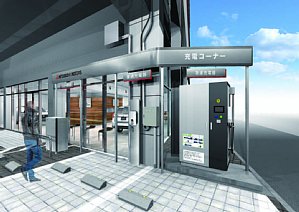
Here’s an artist’s impression of the combined “Static and Mobile Distributed Energy Storage” (SaMDES for short) unit:

HyperSaMDES

Apart from the new hardware that combines both static and mobile lithium ion battery storage Mitsubishi also pointed out that:

MMC has already opened 28 “DENDO Drive Station” showrooms across Japan, all featuring solar panels and V2B charging stations. It plans to increase this number to 200 by 2020.

In addition to charging vehicles, V2B allows the EV’s battery to provide power to the building in times of high demand or an emergency. The building will then switch to charging the car at times of low grid demand, or when renewable energy production is at a peak. This has major benefits for the grid and provides cheaper, sustainable power for the EV owner.

Will a Cornish Lithium Gigafactory Rival Open Soon?

V2G have recently relocated to North Cornwall. As a consequence I spent yesterday afternoon with Scott Mann, my new MP, at a meeting organised by the Federation of Small Businesses in Launceston:


Scott imparted a piece of news that hadn’t previously appeared on my radar screen. It seems there’s lots of lithium to be found down old Cornish tin mines! In a news release last month Cornish Lithium Ltd. announced:

Cornish Lithium, today announces that it plans to explore for, and to potentially develop, lithium contained in underground hot spring brines in Cornwall.

The presence of lithium in hot spring brines in Cornwall has been known since the mid-1800s but this was regarded as a curiosity, given there was no developed market for the metal at that time. New technology now offers the potential to extract lithium from these hot spring brines and to supply product to the rapidly growing battery market for electric cars and for power storage.

Cornish Lithium has entered into definitive mineral rights agreements with Strongbow Exploration (listed on the Toronto Stock Exchange, TSX-V: SBW) and Mineral Exploration Limited, and has signed a Heads of Agreement with Tregothnan Estates, to carry out exploration for, and development of, lithium in hot spring brines within the majority of the mineral rights held by these entities.

Rights secured by Cornish Lithium will allow the Company to undertake what it believes to be the largest, single, unified mineral exploration programme in Cornwall’s history.

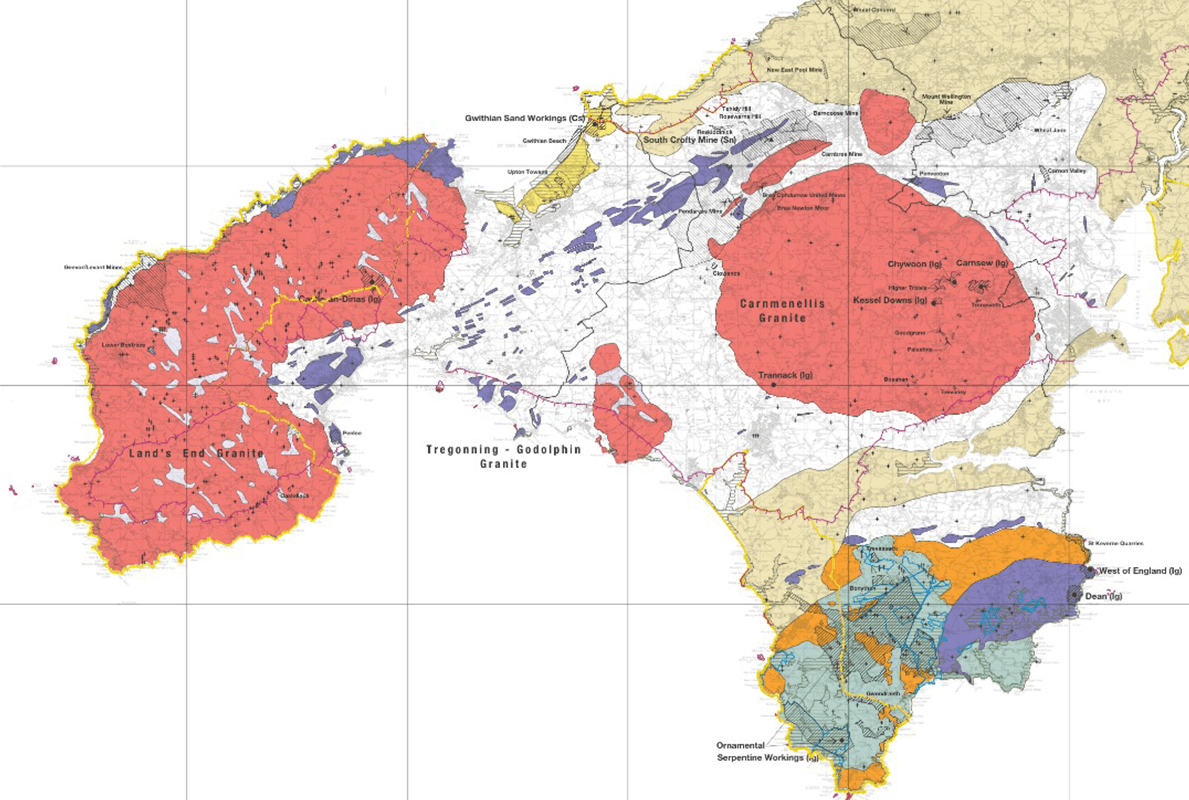
Here’s a map of the “areas around Camborne, Redruth and St. Day” that Cornish Lithium are looking into:

A bullet point further down the announcement also reveals that:

The Company has also secured rights to geothermal energy contained in the hot spring brines. It is anticipated that this energy will be utilised to generate power to reduce processing costs, but also may be used for other industries in the region.

Now as Scott Mann pointed out yesterday, with the potential for tidal and wave power as well as geothermal energy generation the South West Peninsula is well suited for “24/7” renewable energy generation as well as the more familiar “intermittent” wind and solar photovoltaic electricity generation, so that aspect of the proposed project is also of great interest to us here at V2G UK. Getting back to the lithium bearing hot spring brines though, Cornish Lithium’s news release also points out that:

  • Cornish Lithium is an independent company that has been created to develop lithium in geothermal “hot spring brines” in Cornwall. The Company believes this could result in the creation of a new lithium production industry in Cornwall.
  • Cornish Lithium’s legal agreements encompass a large area centered around the area of Camborne, Redruth and St Day, but also cover other areas of Cornwall that the Company believes may be prospective for geothermal hot spring brines. Negotiations are ongoing with other owners of mineral rights within Cornwall.
  • The rapid growth in demand for lithium-ion batteries is now centre stage globally given the dramatic switch towards electric cars. Most major vehicle manufacturers have outlined an electric car development programme with some manufacturers expecting 25 per cent of their sales to be electric vehicles by 2025. It is considered vital that new sources of lithium are developed, particularly in Europe in order that European car manufacturers can gain secure access to the lithium required.
  • The UK Government has defined lithium as a metal of strategic importance to the country.
  • The majority of lithium produced today comes from South America, Australia and China.
  • Cornish Lithium is an independent company that has been created to develop lithium in geothermal “hot spring brines” in Cornwall. The Company believes this could result in the creation of a new lithium production industry in Cornwall.
  • Cornish Lithium’s legal agreements encompass a large area centered around the area of Camborne, Redruth and St Day, but also cover other areas of Cornwall that the Company believes may be prospective for geothermal hot spring brines. Negotiations are ongoing with other owners of mineral rights within Cornwall.

The following day Cornish Lithium announced that this video had been released:

You will note that at around 5:15 Cornish Lithium CEO Jeremy Wrathall says:

We’ll hopefully go into production, with a fair wind, maybe in the next 5 years or after 5 years. That’s the sort of timeframe we’re looking at.

Presumably within that timeframe we’ll also find out whether there will be another geothermal energy generation project to add to our map of geothermal energy generation projects in the United Kingdom!

The prospect of lithium being “mined” in Cornwall also raises the question of what might happen to the metal once it’s been extracted? Perhaps Tesla and SpaceX founder Elon Musk will use the proposed Spaceport Cornwall nearby to ship the raw material to Tesla’s “Gigafactory” in Nevada? More realistically, perhaps Cornwall’s very own Lithium ion battery factory might be developed alongside Cornish Lithium’s hot brine wells?

Finally, for the moment at least, here’s some further information on Cornwall’s long mining heritage:

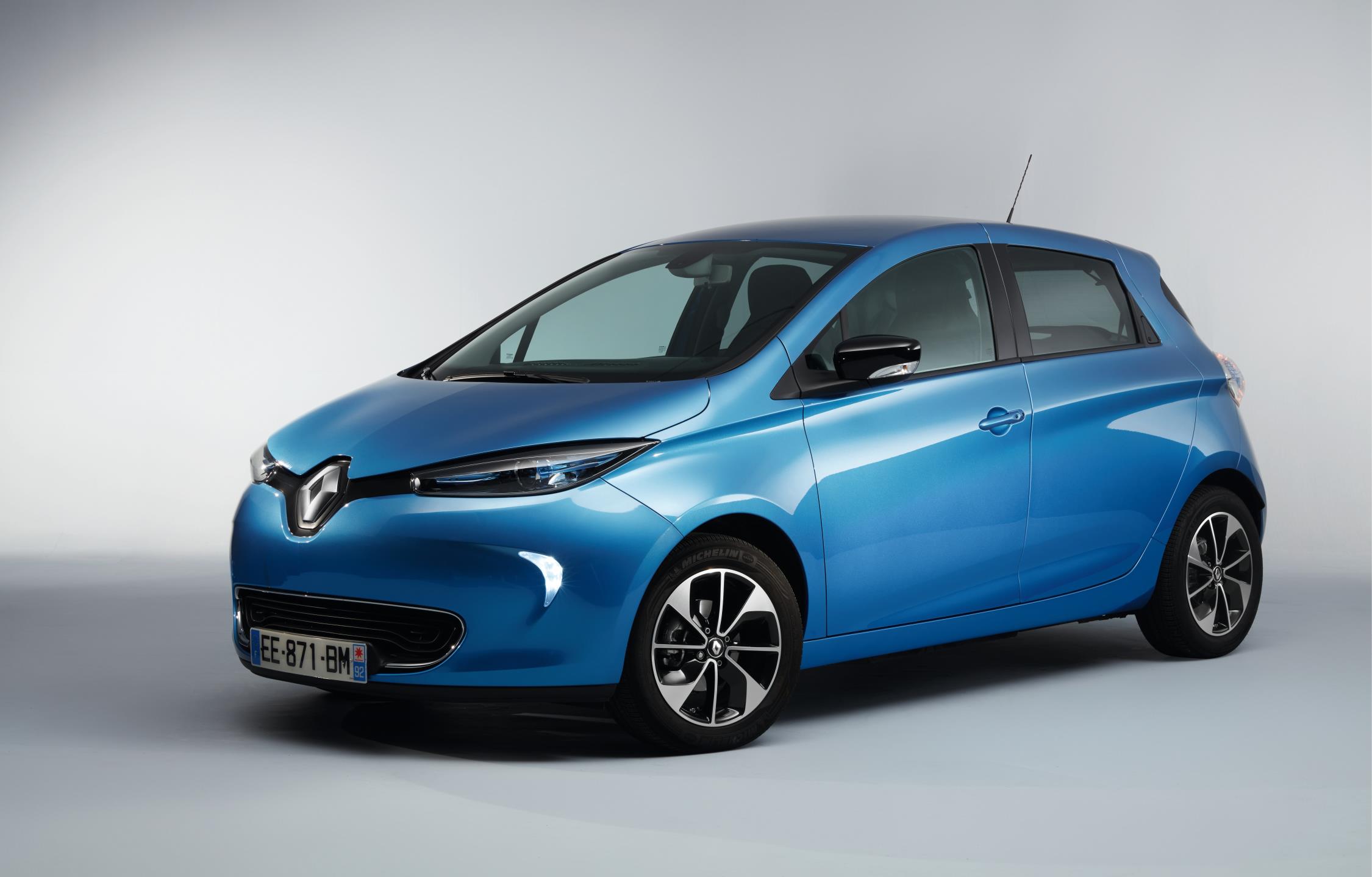
Renault Launches New ZOE With “250 mile” Range

At the recent Paris Motor Show Carlos Ghosn, Chairman and CEO of Groupe Renault, announced that:

This month Renault surpassed 100,000 electric vehicles sold and now ZOE will travel up to 250 miles (400km) without recharging.

Over the past twelve months both Nissan and BMW have made similar announcements, but neither claimed as many miles as Renault. Eric Feunteun, Vice President of Renault’s electric vehicle programme, added that:

Renault has added a new dimension to the world of electric vehicles now that the ZOE’s range stands at 250 miles (400km) NEDC. It’s a breakthrough in all-electric motoring that will provide the range needed to make any motorist comfortable choosing electric.

Renault’s press release adds that:

In real-world driving, Renault estimates the new Z.E. 40 battery has a range of 186 miles (300km) in urban or suburban areas.

The range offered today by the new ZOE is the longest of any mainstream all-electric vehicle and motorists can take advantage of this step forward now. The ZOE is the best-selling electric vehicle in Europe and provides a real alternative to internal combustion- engine cars, since average daily commuting distances are well within the ZOE’s capabilities.

The new battery removes the final psychological barrier that stands in the way of buying an electric car, so-call ‘range anxiety’, since ZOE users can now travel further and enjoy a wider variety of driving situations without worry about charging.

Not exactly a range of 250 miles in “real life” driving then! We would of course like to test the range of the new ZOE for ourselves, but at the moment our local Renault dealer could only promise that they will be taking orders in November for delivery in January 2017. When a demonstrator might become available is, unfortunately, still unknown. Whilst we all wait for a test drive, here’s a video!

Renault ZOE – An Offer You Can’t Refuse? Day 1!

A few days ago I received an unsolicited telephone call asking me if I would like to test drive any Renault car. I said yes, as long as it was possible to test the Renault ZOE in and around Exeter. I was told “Certainly sir, which free gift would you like?”. I gather this offer is by invitation only, but you can nonetheless read all about it here, where it explains that one can:

Test drive and experience any model from the Renault range before 30 September 2015 and you can choose one of three complimentary gifts. Choose from a night away for two in a choice of hotels, afternoon tea for two or a spa treatment.

That definitely seemed like too good an offer to refuse, so I didn’t! The first thing I do at times like this is to take a look at Robert Llewellyn’s always entertaining reviews of electric vehicles on his Fully Charged show. Here’s the one for the Renault ZOE, recorded in 2013:

and here are a few of Robert’s bullet points concerning the ZOE:

  • It’s a small car. It has a really big boot, which is a surprise.
  • It’s got enough oomph to “get you out of trouble”.
  • A range of between 80 and 120 miles.
  • It’s much lighter than the Nissan LEAF.
  • It’s got a really clever heating system, that uses a heat exchanger, and it can also do the other way round. It’s 3 times more energy efficient than conventional heaters and air conditioning systems.
  • It has a 22 kWh battery.
  • It really holds the road well.
  • It’s got very good visibility.
  • When you buy this car it’s much, much cheaper than any other electric car that’s been on the market.
  • When you buy this car you don’t buy the batteries. The batteries belong to Renault, and they rent you the batteries.
  • It is a really nice car to drive. It’s a really simple car to drive.
  • It comes with a special car rental deal. If you buy this car and then you want to “Go to Scotland” or “Go to the South of France”, then you ring up and you book a car and it gets delivered to your house and you’ve got a rental internal combustion engine (ICE) car and you go on holiday [in that instead].

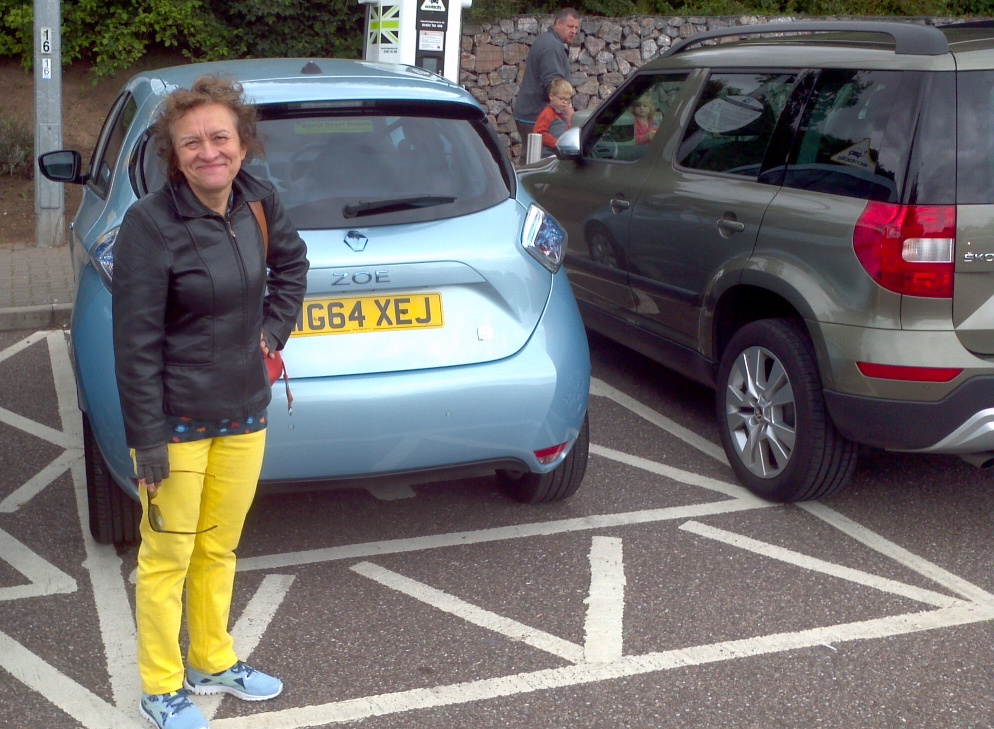
So far so good then, and a couple of days later we had a short drive around the Marsh Barton trading estate in Exeter. We both took our turn at driving the ZOE, and Kasia liked it a lot. Daniel Mann, the Renault Sales Manager at Bristol Street Motors in Exeter, explained that their most attractive offer at the moment is a two year PCP deal for £79 down and then £79/month, which doesn’t include the battery. The small print explains that “Battery hire is £55 per month for 750 miles per quarter“. That also sounds very much like an offer one cannot refuse, but it was at that point that I had to explain our particular circumstances to Dan. The ZOE seems to us like an excellent way of driving a few tens of miles to work and back, but V2G’s home, office and laboratory are all in the same building. We don’t do a daily commute, but we do occasionally drive to Bristol Airport, we do occasionally go on business trips to the far side of London, and we do from time to time go surfing on the north coast of both Devon and Cornwall. Our short test drive hadn’t given us much of a feel for how the ZOE would be able to cope in those situations. As Robert explains in the video above we could always hire a more conventional car as and when required, but then we’d hardly ever use the ZOE!

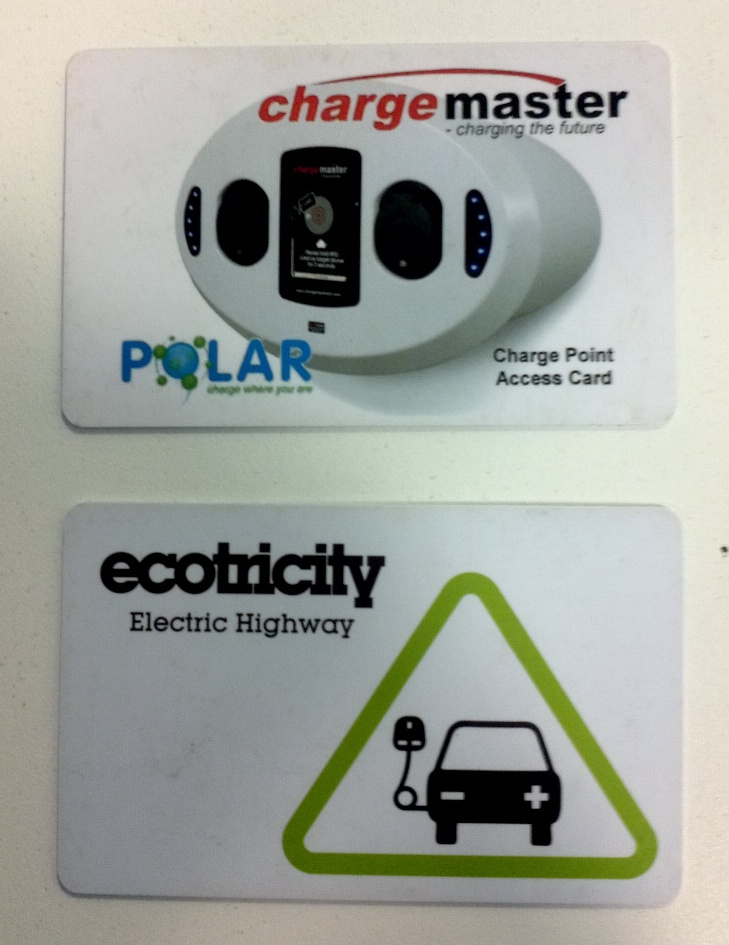
We had a chat to Marc Seabridge, Bristol Street Motors EV specialist (pictured below), and explained that I’d be dropping Kasia off at Bristol Airport the following weekend and then returning to Exeter. I wondered whether we could borrow the ZOE to do that trip, in an endeavour to discover if it was fit for our particular purposes. Marc said yes! When we picked the car up at 11:00 on Friday he lent us a couple of RFID cards so that we could charge the ZOE en route, one for ChargeMaster’s Polar network and one for Ecotricity’s Electric Highway:

The ZOE’s lithium ion battery was about 70% full when we picked it up, so we thought we’d get the hang of charging an EV at a public fast charger by heading straight to Exeter Services, just off the M5 motorway. That’s where our troubles began!

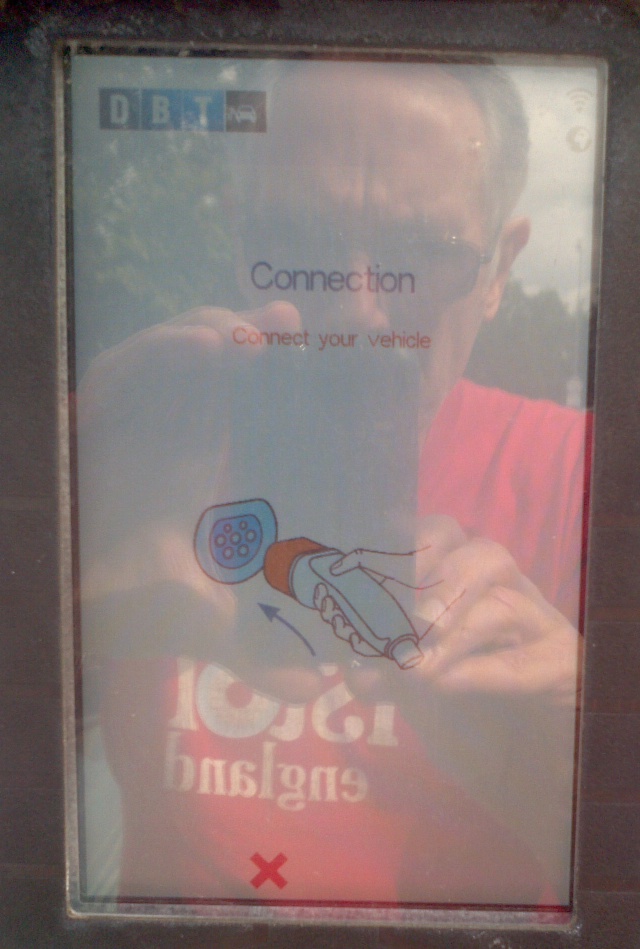
Try as we might, and even with lots of telephone assistance from James Cocks, the Service Manager at Bristol Street Motors, we couldn’t persuade the ZOE to successfully connect to the Electric Highway type 2 fast charger. Here’s what the problem looked like:

Whatever we tried, there was no way we could persuade a little green tick to show itself. Chastened, we headed back to Marsh Barton to top up the ZOE at one of BSM’s own charging points:

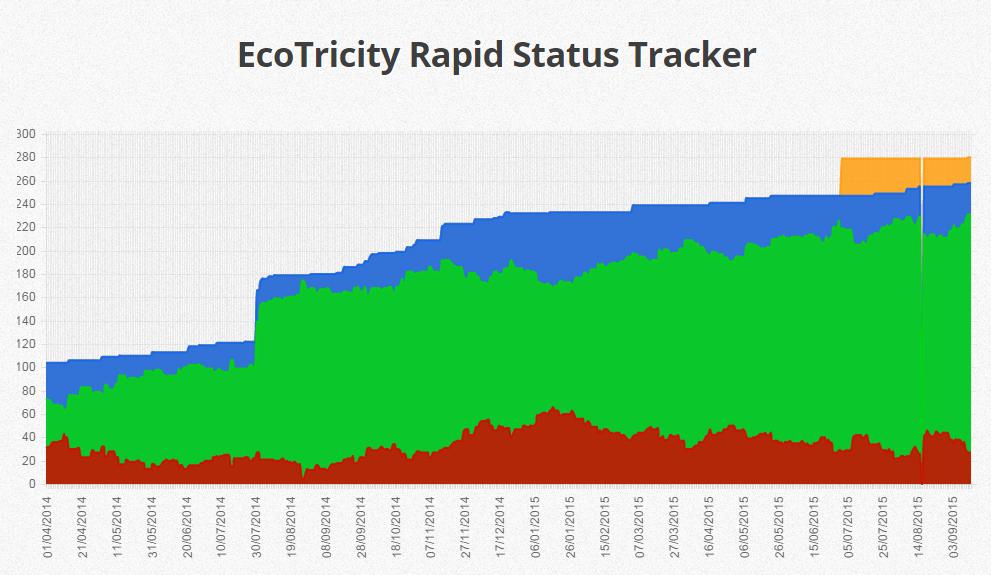
Whilst we waited I telephoned the Electric Highway helpline and explained what we’d discovered. I was told that Ecotricity were already aware of the problem, but they couldn’t tell me when it might be fixed. It seems they have quite a few non functional chargers, and not many engineers available to repair those that cannot be restored to full health via a remote connection from Ecotricity’s offices. Here’s a graphical demonstration of the problem:

To be continued……..

Nissan GB Announce 30 kWh LEAF

Carlos Ghosn hinted at this during the Nissan annual shareholder’s meeting in Yokohama in June, and it has now come to pass. In a press release yesterday Nissan GB announced:

The introduction of the LEAF 30 kWh – an updated Nissan LEAF that gives drivers 155 miles of motoring range, beating all of its competitors in the segment.

This remarkable achievement – one that opens up a new world of opportunity for drivers – is made possible thanks to the introduction of a new 30kWh battery. The new battery is the highlight of an update package that will see the 2016MY LEAF 30 kWh reinforce its position as the most capable and practical electric vehicle in the world, and with the best value. The longer range significantly broadens the LEAF’s appeal – making it a true alternative to an internal combustion engine vehicle for thousands of motorists and reinforcing its position as the world’s best electric car.

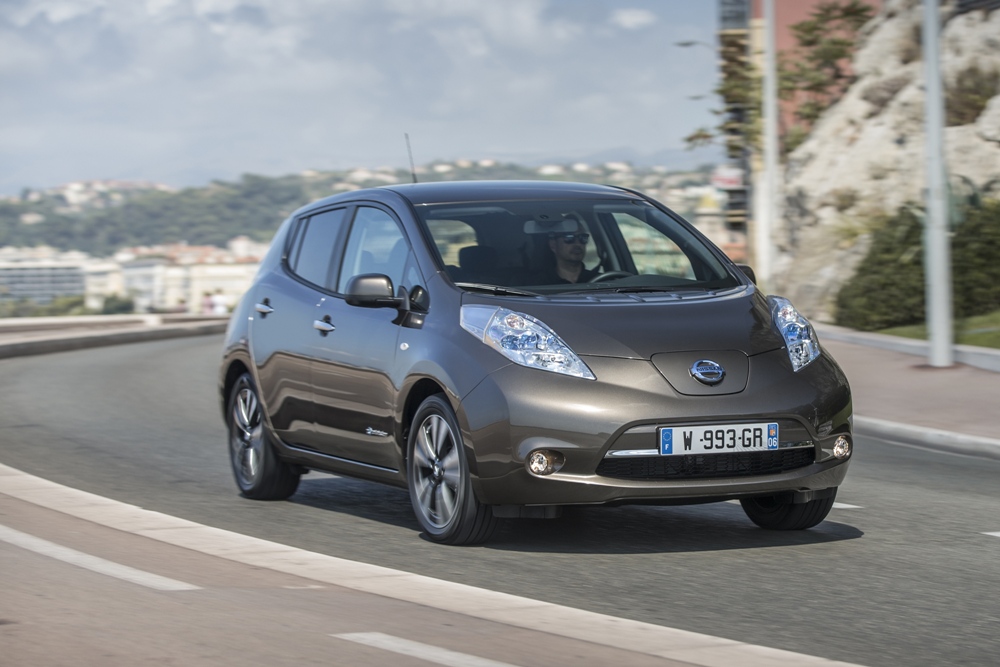
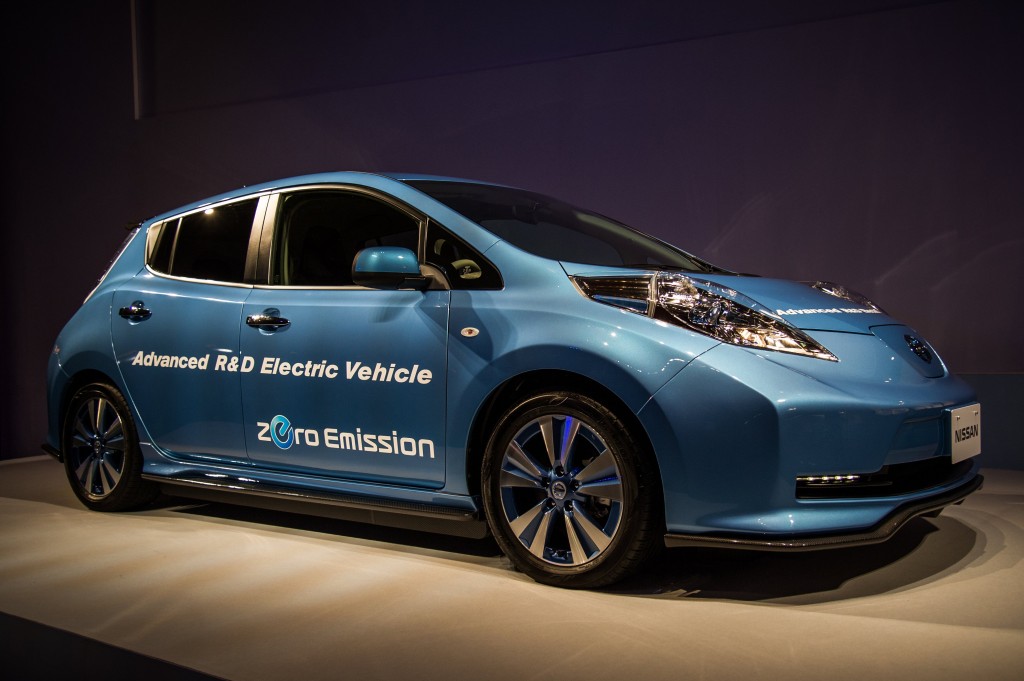
Here’s how the go farther 2016 LEAF looks:

Based on our recent EV road tests it seems extremely unlikely that it will actually average 155 miles per charge in real world driving on British roads. Whilst increased range is of course very welcome, here at V2G UK we’re most interested in the new battery technology that enabled that improvement. On that topic Nissan had this to say:

The LEAF’s new 30kWh battery delivers a longer range with no compromise on internal packaging. Available on Acenta and Tekna trim grades, it has exactly the same exterior dimensions as existing 24kWh unit and only a modest 21 kg increase in weight. The result? A car that goes significantly further while offering the same practicality and usability as previous versions.

Key to the new battery’s higher performance is an update to its internal design and chemistry. The introduction of Carbon, Nitrogen and Magnesium to the electrodes improves performance, while the change to the cell layout also contributes to the gain. Indeed, Nissan is so confident about the performance and reliability of the new 30kWh battery that the capacity will be covered by an eight year, 100,000 mile warranty.

By all means read all about the other new features of the 2016 LEAF, but that last sentence holds the key for us, since it underlines the message we received at a Nissan vehicle-to-grid workshop, also in June of this year:

Nissan’s battery electric vehicle “warranty doesn’t prohibit V2G” and the “impact [of V2G] on the battery is insignificant”.

If like us you’re now wondering “where, when and how much” Nissan GB have this to say:

Sales of the model year 2016 Nissan LEAF 30kW will begin in the UK in December 2015. Priced from £24,490 for the Acenta trim, the LEAF 30kW is available for just £1,600 more than the equivalent LEAF with a 24kW battery.

I don’t know about you, but we can’t wait!

Nissan and Green Charge to Deploy Second-Life EV Batteries

In a press release earlier this week Nissan expanded on some of the points Carlos Ghosn made in his speech to Nissan shareholders last month. “In his latest LinkedIn Influencer post, Renault-Nissan Alliance CEO Carlos Ghosn points to encouraging figures for electric vehicles, including the sale of the Alliance’s 250,000th EV in early June”

I don’t see other automakers as competitors when it comes to zero-emissions vehicles. They’re allies. And it is great to see the number of “Alliance allies” growing, as other automakers introduce more affordable EVs to compete with the segment-leading Nissan LEAF.

We reached the 250,000-unit milestone in early June, four-and-a-half years after the LEAF was introduced as the world’s first mass-market, zero-emission vehicle.

We also are seeing demand grow quickly in places where businesses and governments are joining to expand the charging infrastructure, and as more motorists get the chance to experience an EV.

In fact, computer engineer Yves Nivelle, who bought our 250,000th EV, was spurred in part by an incentive in France that encourages owners of older diesel-engine vehicles to trade them in on a new EV.

That sort of enthusiasm is quite common among our EV owners. Our EVs enjoy among the highest levels of customer satisfaction that we have seen for any vehicle. Operating costs are low, they require less maintenance, and they are fun to drive.

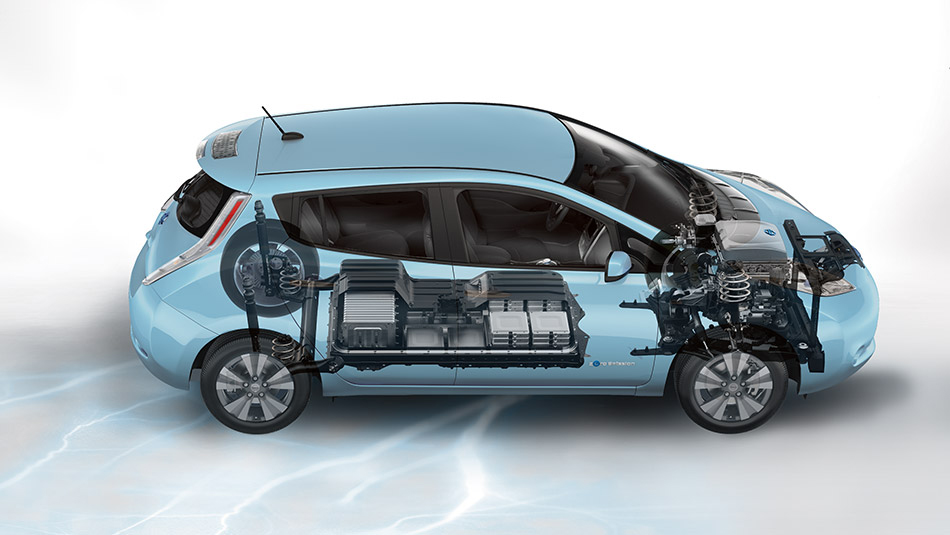
2015 Nissan LEAF cutaway

2015 Nissan LEAF cutaway

In other recent news, companies are forming to take advantage of re-packaging used EV batteries for other uses. Nissan recently announced it is teaming up with Green Charge Networks, an energy start-up, to reuse LEAF batteries to store energy for commercial and industrial buildings.

After many years of service, car batteries eventually need to be replaced. But they still retain enough charge for lighter chores.

When electricity rates are highest, in the middle of the day, a corporate customer can switch its energy use from the power grid to these re-packaged batteries. Or, even better, it can use the batteries to store unused energy from rooftop solar panels. Some homeowners already are doing this by connecting their solar panels to their EVs, to store the energy in the car’s batteries for later use.

Battery technology continues to improve, as well. In fact, the day is nearing when the typical EV motorists will be able to leave home with a full charge, go about their daily routine, and return home with ample charge remaining in their Nissan LEAF or Renault ZOE.

Later this year, you will hear more about our initial steps to increase the range of our EVs. Our goal is to eliminate “range anxiety” for our customers, as we continue our effort to make zero-emission vehicle a mainstream choice.

I missed it first time around, but additional information is available in the “Second-life” press release of June 15th:

Nissan Motor Company and Green Charge Networks, the largest provider of commercial energy storage, have joined forces to deploy second-life lithium-ion vehicle batteries for stationary commercial energy storage in the U.S. and international markets.

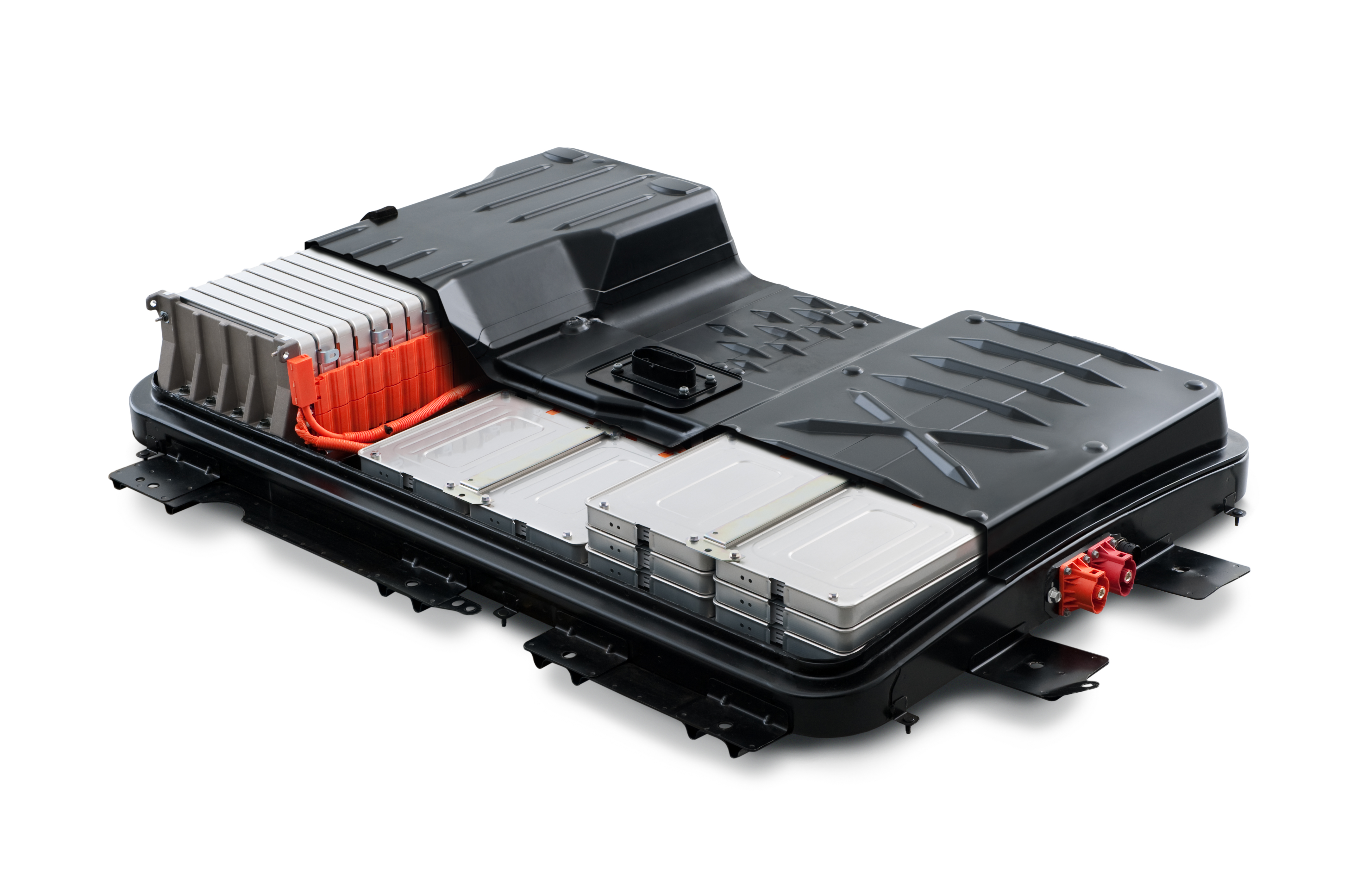
2015 Nissan LEAF battery pack

2015 Nissan LEAF battery pack

As part of the company’s commitment to sustainability and reducing greenhouse gas emissions, Nissan has conducted multiple research projects in Japan, the U.S. and Europe to use LEAF batteries outside the vehicle through 4R Energy, a joint-venture with Sumitomo Corp. formed in 2010.

In a new stationary storage application powered by Green Charge’s intelligent software and Power Efficiency Agreement™, the second-life energy storage unit has a cost advantage over traditional units, opening up new markets where incentive programs are currently not offered.

Engineering teams from both companies have worked together for more than a year to ensure safety, reliability and performance of this offering for commercial customers.

The first combined storage unit will be installed at a Nissan facility this summer, where multiple Nissan LEAF batteries will be configured to offset peak electricity demand, creating savings while also benefiting the utility grid. Systems like this also can be paired with renewable energy sources such as wind or solar to further reduce a facility’s environmental footprint and enhance energy savings.


Carlos Ghosn Reveals Long Range Nissan LEAF

I visited Bristol yesterday to attend the Regen SW “Community Energy Markets” conference. More from me on the event in due course, but before that I must point out that Bristol is “European Green Capital” for 2015. Here’s a video revealing how Bristol looks from behind the wheel of the current Nissan LEAF:

Earlier this week BBC News revealed how Japan looks from behind the wheel of the current Nissan LEAF:

According to the BBC:

The boss of Nissan, Carlos Ghosn, has not been shy about expressing his disdain for hydrogen. Instead, Nissan is betting on lithium ion batteries.

Coincidentally earlier this week Carlos Ghosn spoke at the Nissan annual shareholder’s meeting in Yokohama. Here’s the “Technology” part of his presentation:

All forthcoming products will reflect Nissan’s commitment to delivering breakthroughs that advance vehicle safety, efficiency, and connectivity.

During our discussion later in this meeting, we will update you on Nissan’s plans to introduce an autonomous drive vehicle by 2020. We are continuing to develop this exciting technology.

The vehicle that stands to my left features the latest versions of hardware and software that Nissan is developing.

The vehicle that stands to my right is another advanced technology breakthrough. It explores how far we can extend electric vehicle range by making changes to the battery.

Today there are only two reliable ways to increase electric vehicle range.

  • The first is to have a massive network of EV chargers, so that when you are away from home you have the ability to recharge easily.
  • The other option is to put a larger battery pack into the vehicle so that the driver enjoys greater range. However, with today’s level of technology, adding more battery means adding more cost.

As you know, Nissan has been one of the world’s foremost advocates for the development of recharging networks. With our efforts and the support of government and private sector partners, Japan has one of the most highly developed charging infrastructures in the world.

There are now more than 14,000 EV chargers, not including home chargers, in Japan. This means that EV drives already have the freedom to drive throughout mainland Japan without worrying about battery range.

Unlike customers in some other markets, where the charging networks are in earlier stages, customers in Japan who want to enjoy the benefits of driving a LEAF have no need to wait. Japan’s vast EV charging network already provides an incentive for you to move to Nissan’s zero-emission technology. And, during FY2015, the number of chargers in Japan will increase even further. However, that doesn’t mean we will become complacent and stop working to advance our battery and vehicle technologies.

We believe that, in the near future, Nissan can provide EV drivers with even greater “peace of mind” range, by offering comparative mobility to today’s conventional vehicles.

Nissan is exploring new materials and chemistry solutions in order to make thinner, lighter weight and less costly batteries. We foresee the day when you leave your home with a full charge, and are able to go about your day with no concerns…then return home with ample charge.

This video shows how we envision a routine day.

With this vision in mind, our advanced battery research will continue. But we will not wait for its completion to move forward. Later this year, you will hear more about our initial steps to increase EV range.

All of which puts me in mind of a couple of things a Nissan representative said in response to a question about “warranties” that was posed at the V2G workshop I attended earlier this month. It seems Nissan’s battery electric vehicle “warranty doesn’t prohibit V2G” and the “impact [of V2G] on the battery is insignificant”.

The Great Dunchideock Blackout Saga

We recently suffered a power outage, or power cut as we prefer to call such things here in the UK. This wasn’t any old power outage either. Let me explain.

The lights went out at 17:44 on Friday April 11th 2014. I hurriedly powered down everything in the lab and office except my laptop and our broadband router, which was by then being powered from the battery in an uninterruptible power supply. When the lights hadn’t come back on a few minutes later I telephoned our local Distribution Network Operator (DNO for short), Western Power Distribution, to enquire what the problem was, and when it might be fixed. WPD’s automated system suggested that our power should be restored by about 21:00 that evening.

9 o’clock came and went, by which time the batteries in my laptop and UPS were flat. I called WPD again, to be informed that the latest estimate for the time at which I would be able to get connected to the internet once again would be 01:00 on Saturday morning. I figured I’d allow WPD a bit of leeway, and eventually went to bed having set the alarm on my smartphone for 02:00. The alarm went off, but the lights still hadn’t come back on.  I phoned Western Power again to be informed that things should be back to normal in an hour or so. Bleary eyed I returned to bed.

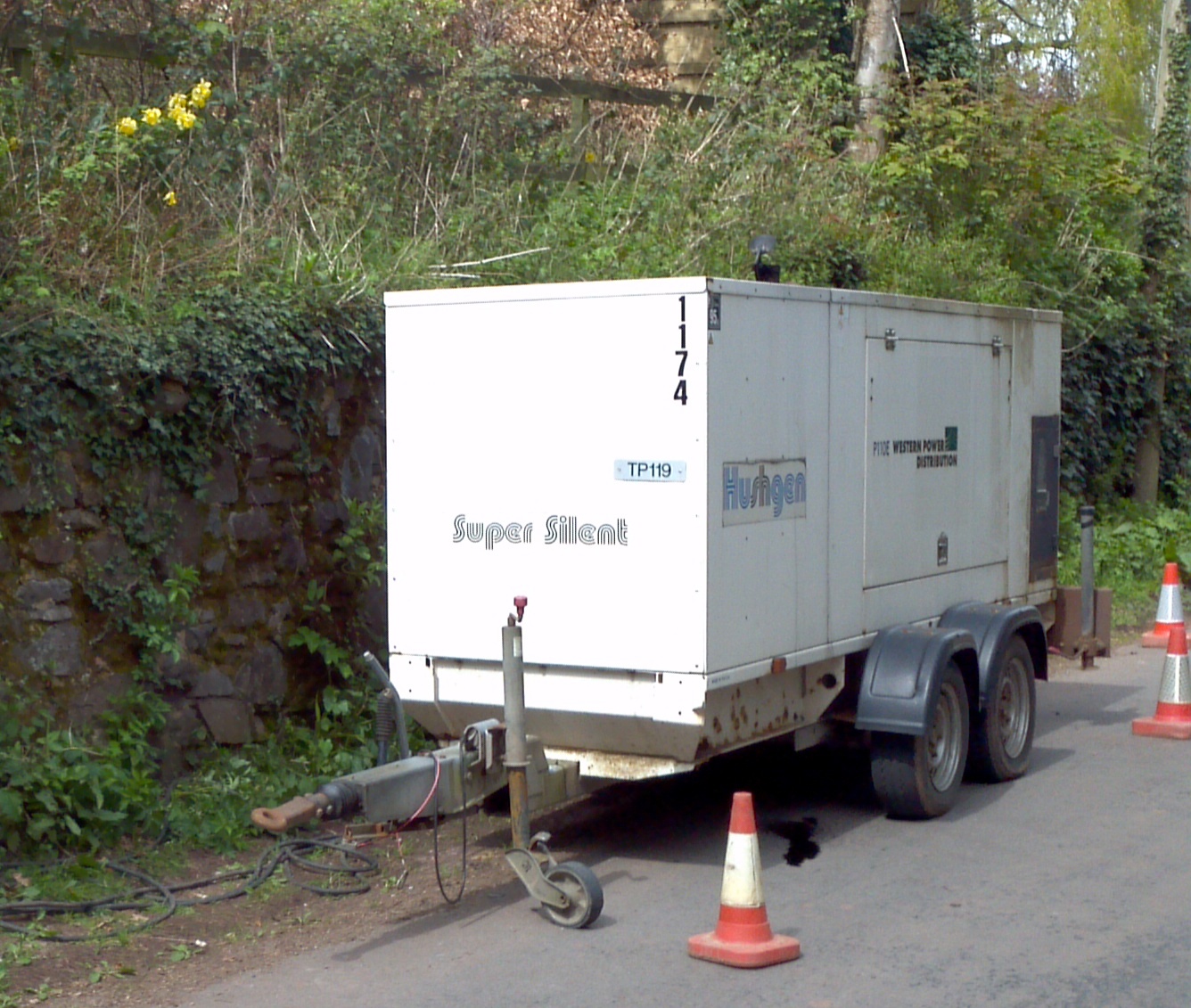
When I arose next morning I wasn’t in need of any lights, but my router and laptop were working once again. There was, however, the continuous drone of an engine audible not too far away so I set out to investigate by following the sound, and here is what I discovered:
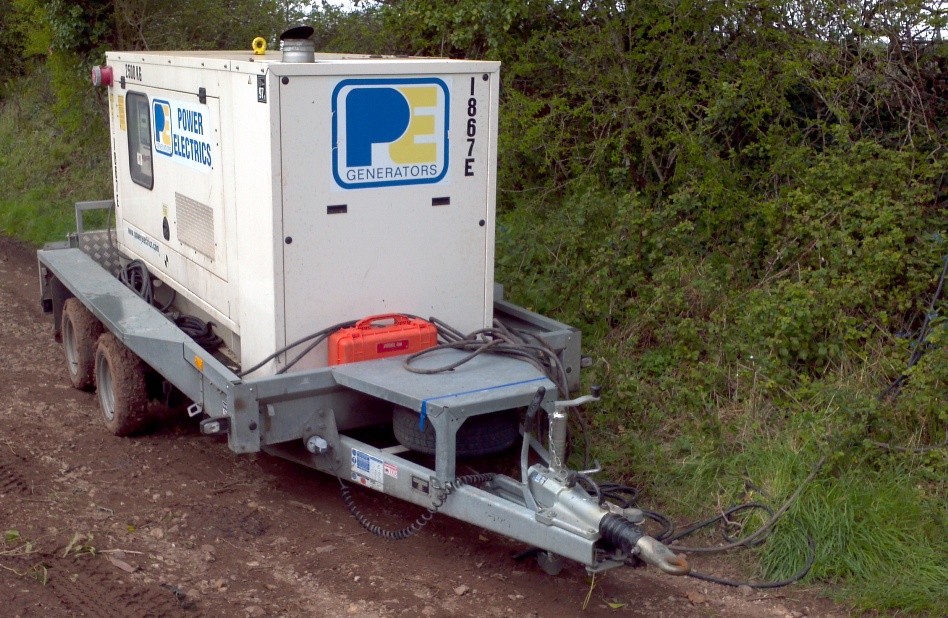
Generator on the track to Haldon Belvedere on April 12th 2014

Diesel generator on the track to Haldon Belvedere on April 12th 2014

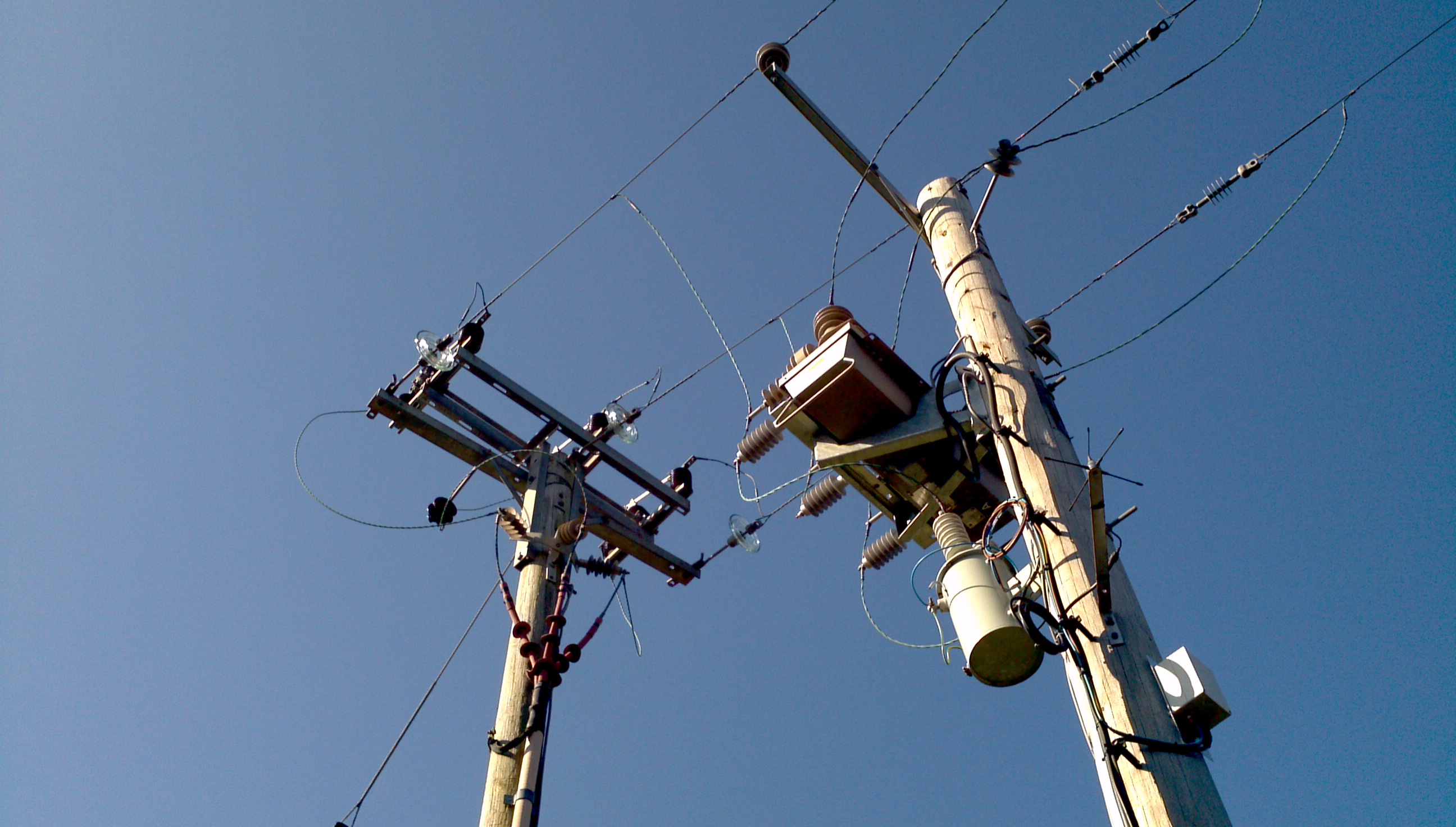
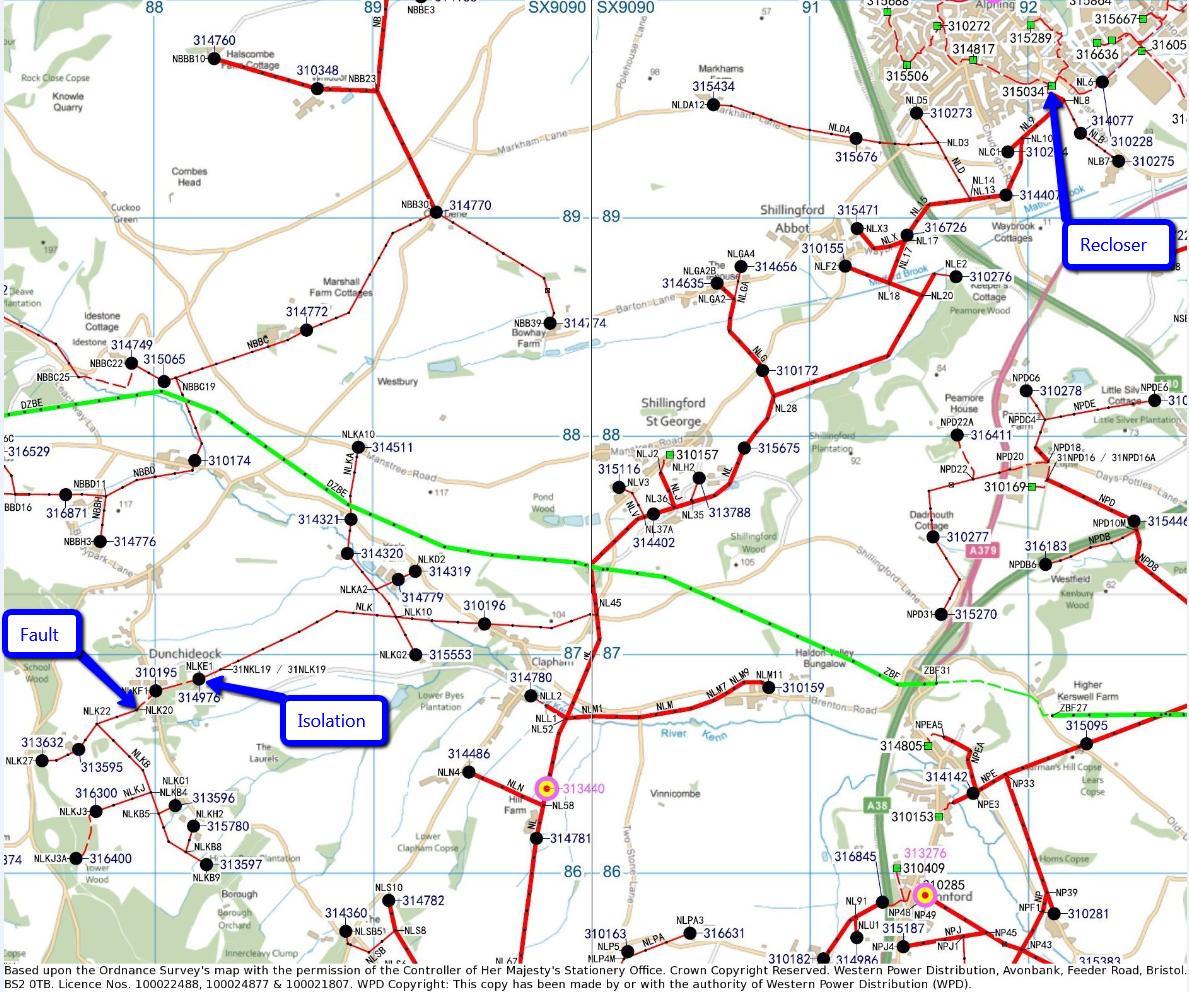
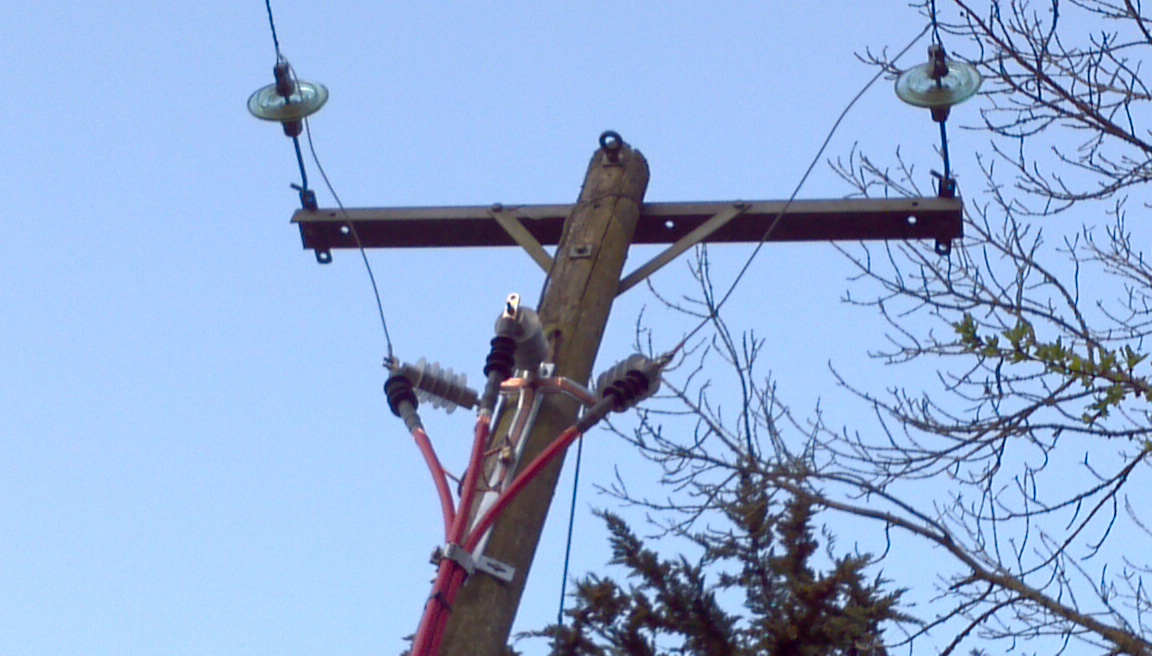
Another call to Western Power Distribution elicited some further information. I managed to speak to WPD’s standby manager for the day, who explained what had happened the previous evening. Initally over 300 properties had been without electricity following the operation of an automatic circuit recloser mounted on pole NLT1M in Alphington, as shown at the top right of the map of WPD’s network below (click the image for a larger version), and in this photo I took subsequently:
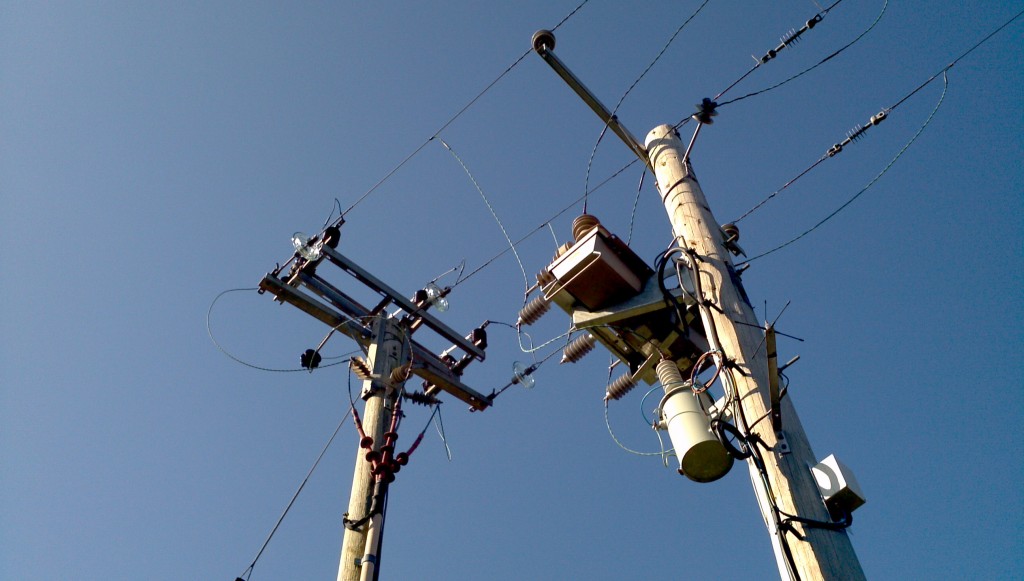
Schneider pole mounted recloser and air break isolator in Alphington

Schneider U-Series pole mounted recloser and an air break isolator in Alphington
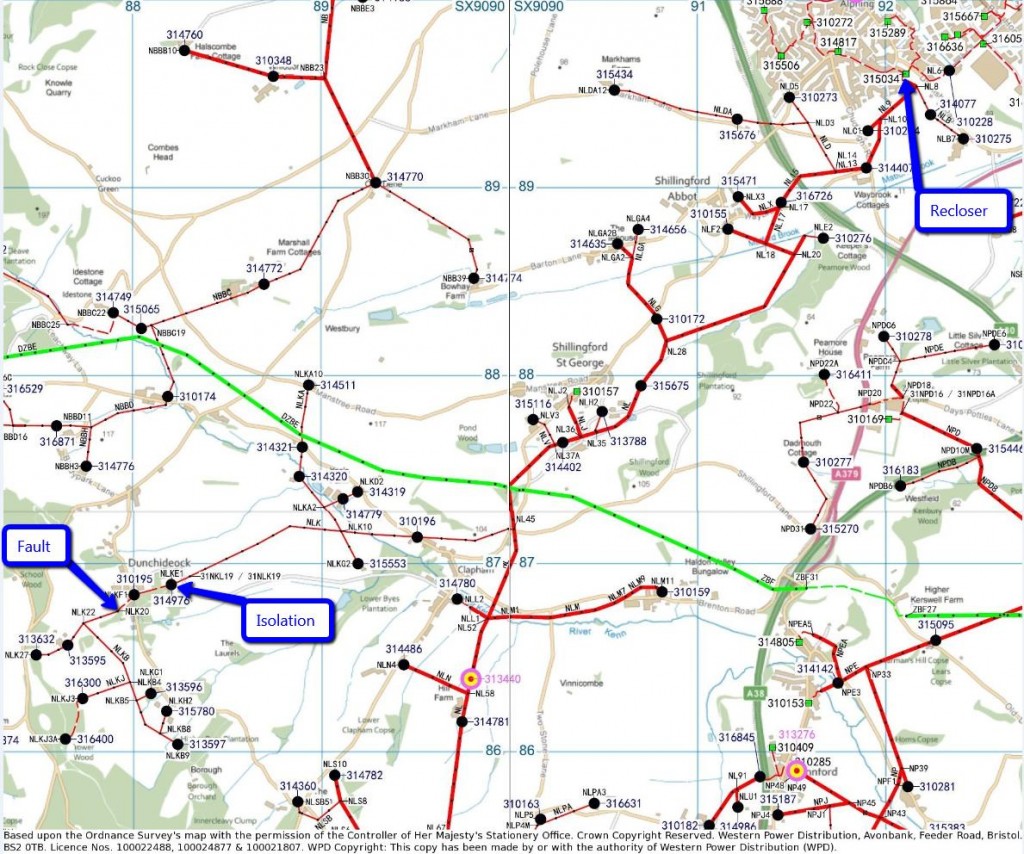
WPD map of 11 kV and 33 kV cables Southwest of Exeter

WPD map of 11 kV (red) and 33 kV (green) cables south west of Exeter

At that point everything powered via the 11 kV 3 phase (thick red) cables running from top right to bottom left of WPD’s map was without electricity. By around 21:00 the problem had been isolated to somewhere in the bottom left corner of the map, and power now reached as far as pole NLK19, near the north east corner of The Lord Haldon Hotel car park.
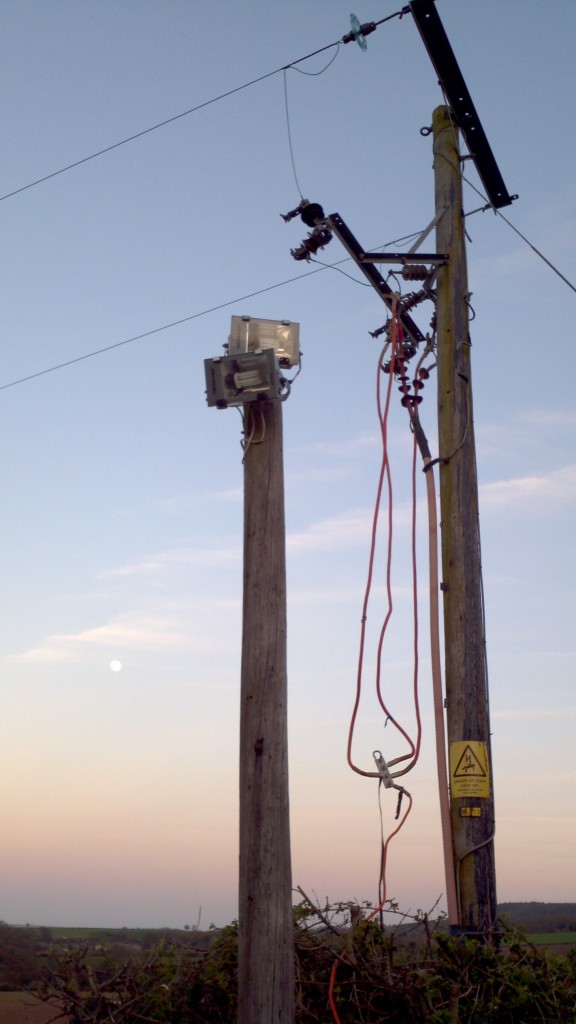
Pole 31NLK19, whilst The Lord Haldon Hotel and The Haldon Belvedere were running from WPD generators

Pole 31NLK19, draped with extra cables, whilst The Lord Haldon Hotel and The Haldon Belvedere were running from WPD generators

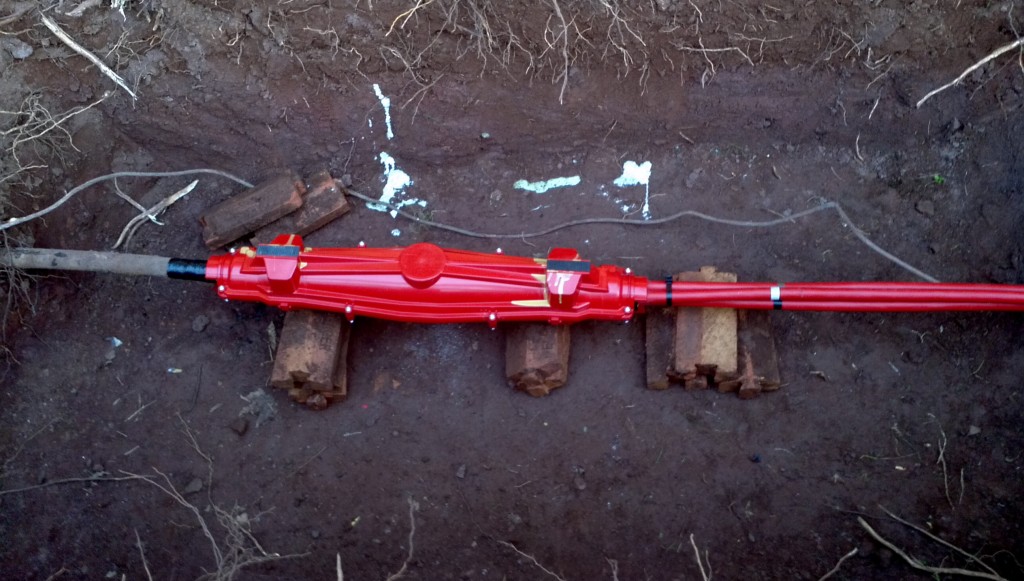
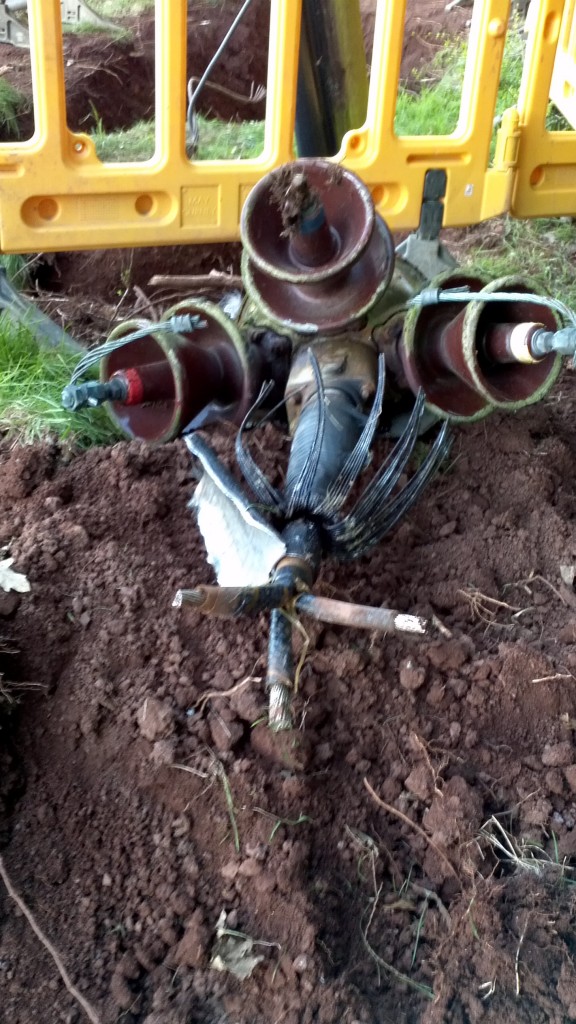
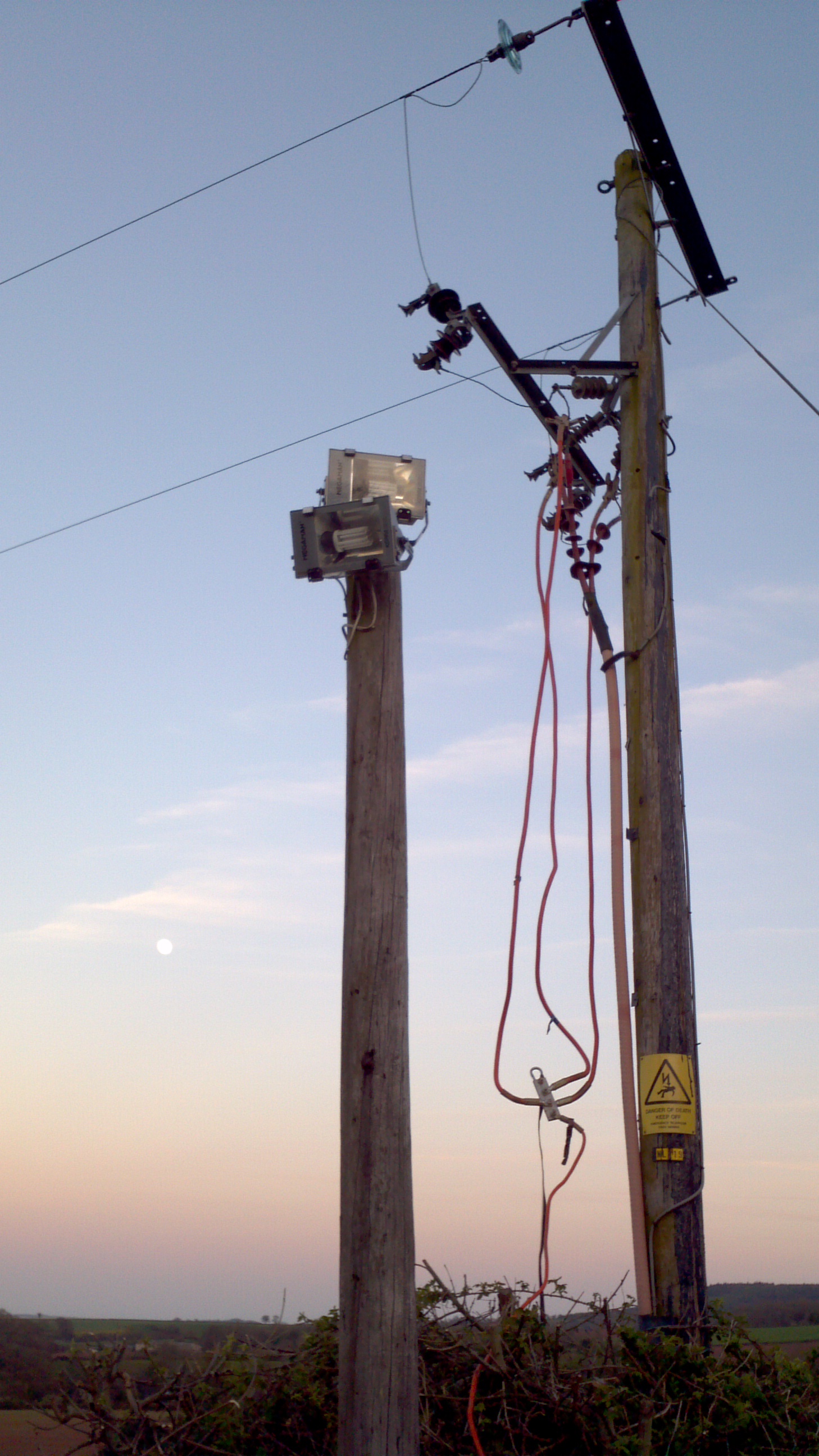
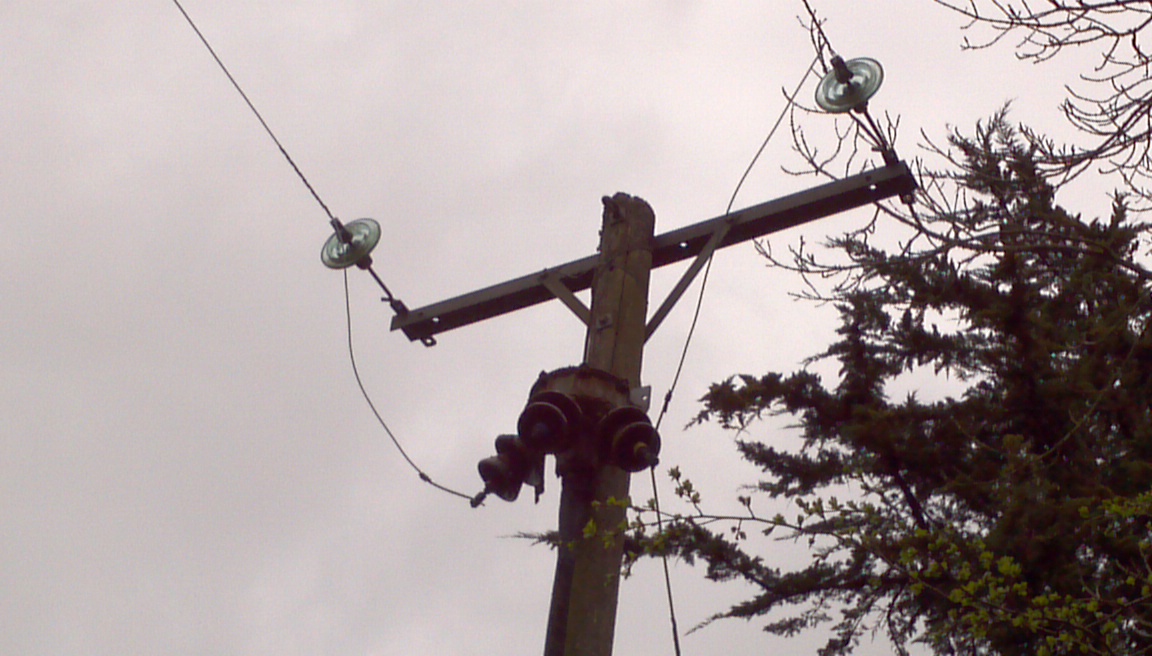
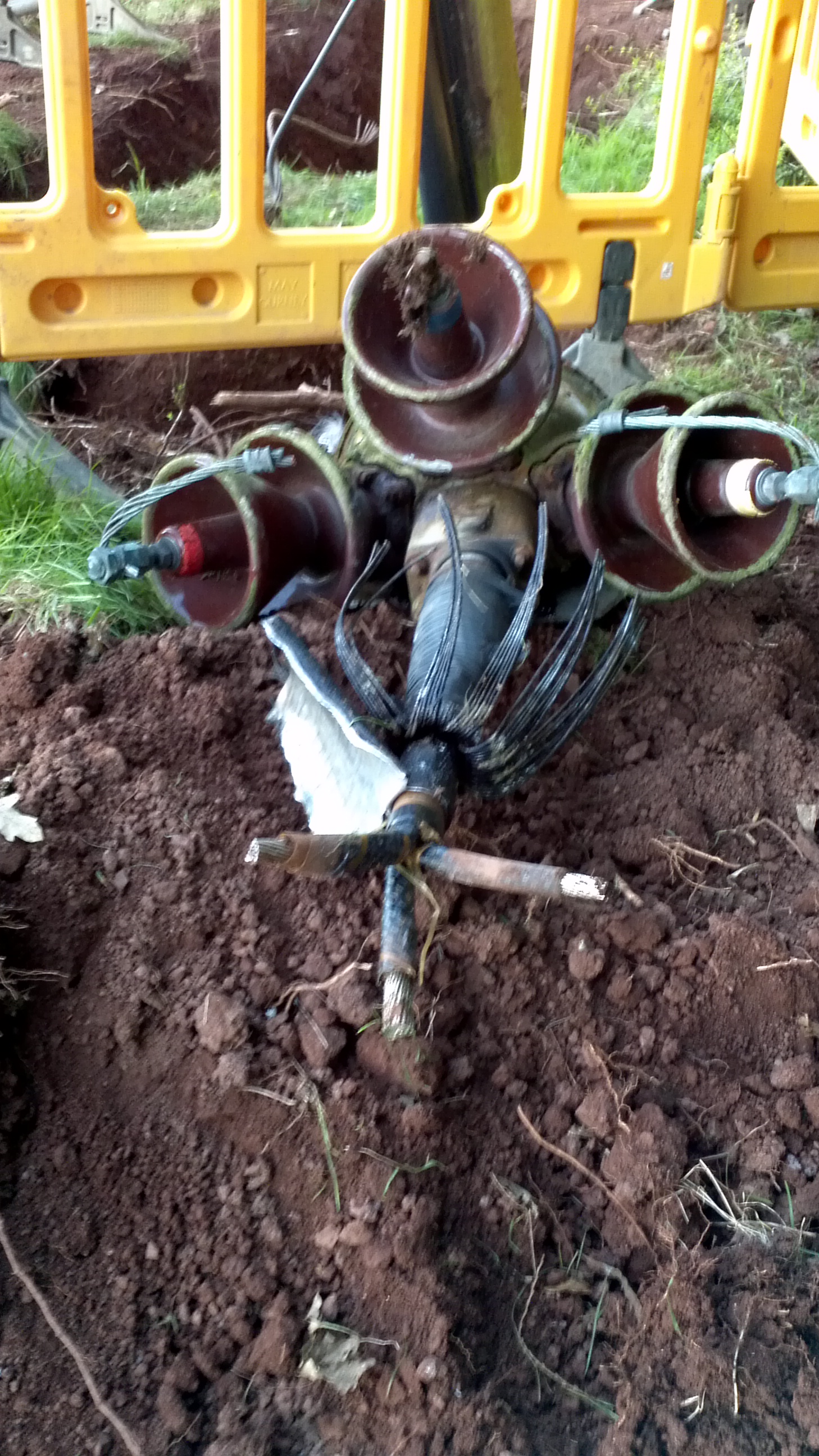
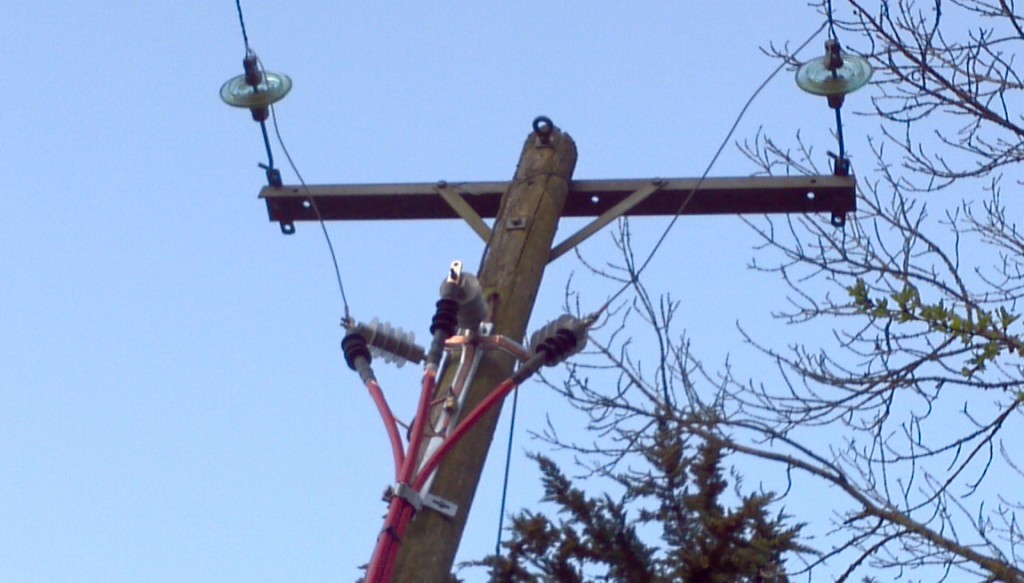
Unfortunately the hotel itself, which had a wedding reception booked that night, and everyone else in our corner of the village of Dunchideock and Haldon Hill were still without power, and WPD still didn’t know where the fault was. I am assured by a local resident that once it had got dark his wife noticed some arcing at the top of an electricity pole in a field behind his house, so he drove to the hotel car park and informed the WPD engineers gathered there about her discovery. The problem ultimately proved to be a faulty pole top cable termination, shown below in situ together with some inquisitive lambs:
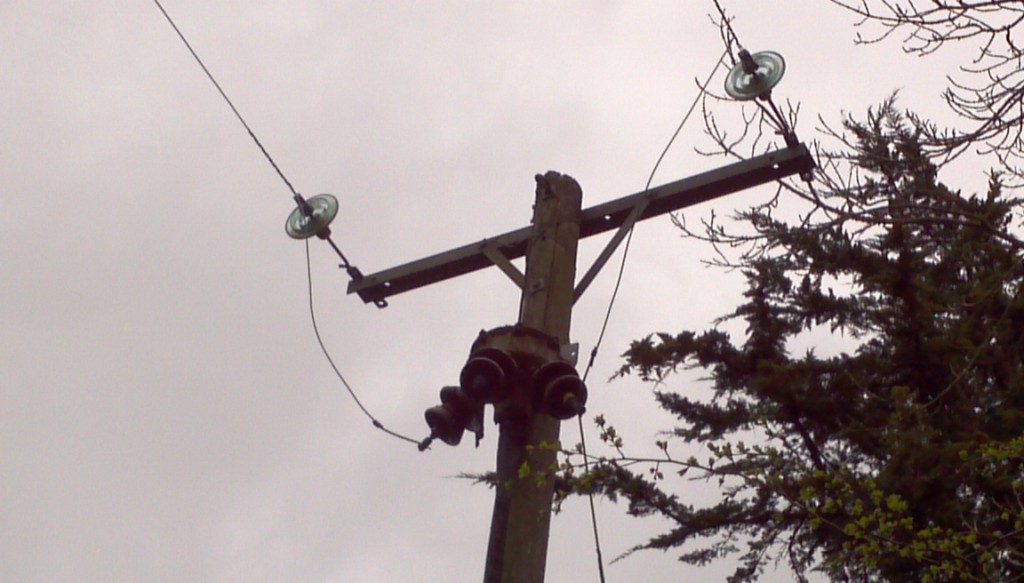
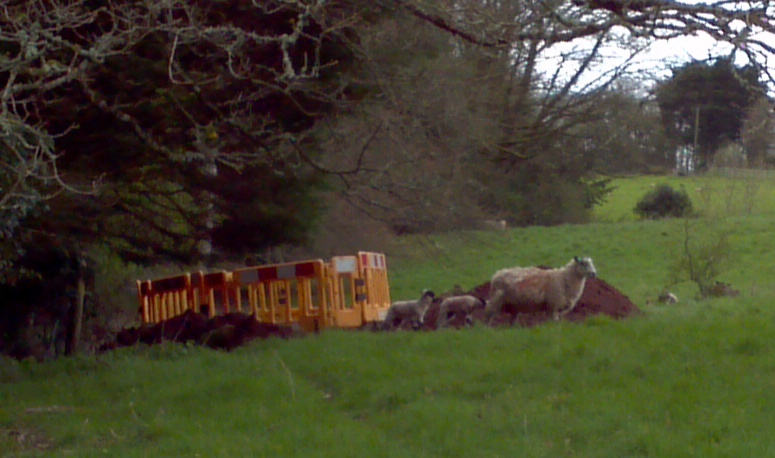
A 48 year old cable termination at the top of pole NLK20

Youthful interest is shown in a big hole in the ground

Some youthful interest is shown in a big hole in the ground

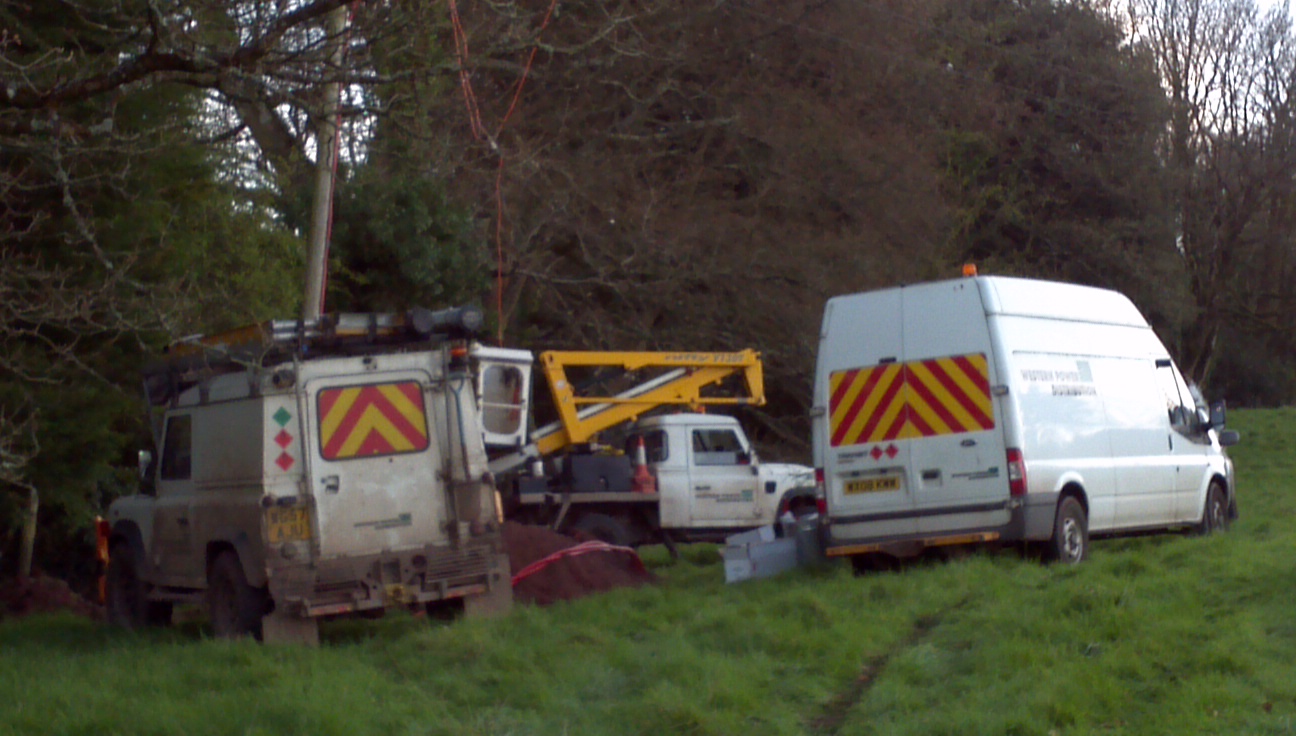
By the time the likelihood that this was indeed the ultimate cause of the problem had been established time was pressing. According to WPD they have a self imposed 12 hour time limit on turning the power back on after any interruption in supply, and there was no way this problem would be fixed within that timeframe. That being the case some generators would be required, which presented WPD with another big headache. It seems there had been some other problems in Devon on the same day, and there weren’t enough generators in Exeter to go around, so WPD brought some more in from Torbay. That still wasn’t adequate for the scale of the problem, so they brought some more in from Taunton. Even that wasn’t sufficient, so finally they had to hire a few more from Bristol, one of which was emitting the dulcet tones that greeted me on Saturday morning. Here’s one of WPD’s own generators, that was located a bit further up the road near the entrance to the hotel:
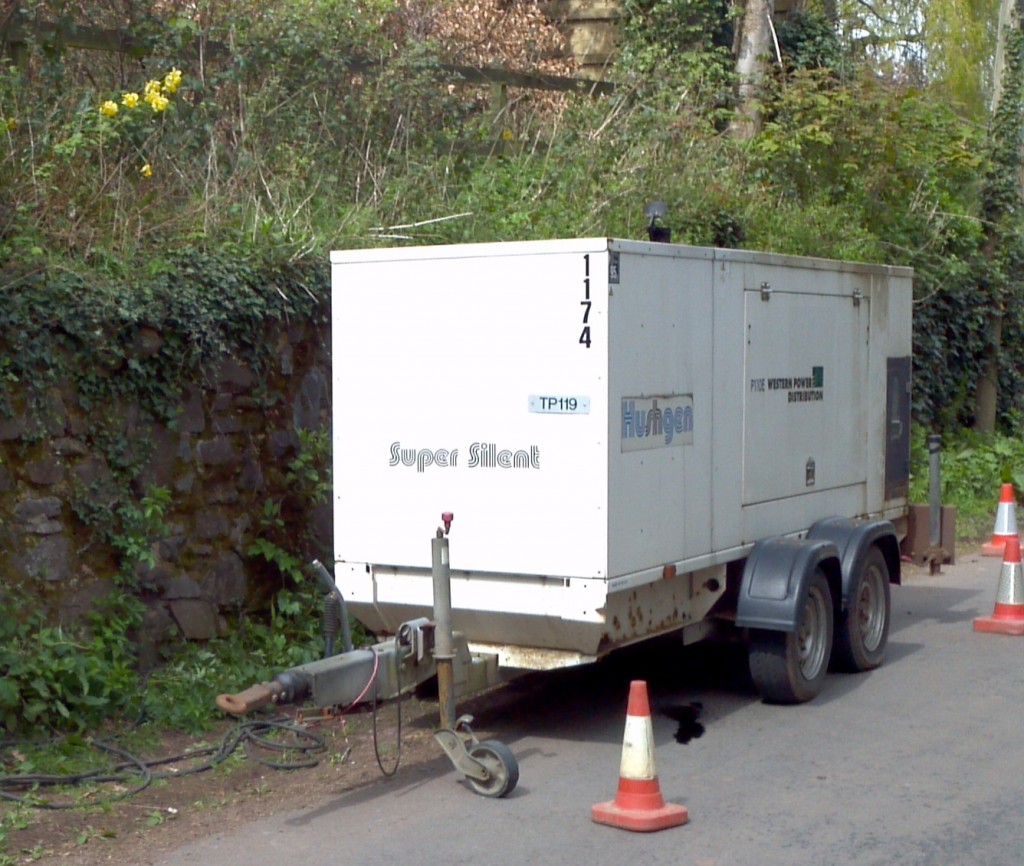
WPD Generator hard at work outside Pen Hill Cottage

WPD diesel generator hard at work outside Pen Hill Cottage

All in all, by the time everyone affected had their electricity supply restored, which in our case seems to have been at around 3:30 on Saturday morning, 9 diesel generators were scattered across the north side and ridge of Haldon Hill. WPD assured me there was no danger of any further power cuts, since every 12 hours or so they would be hauling a bowser around the local vicinity to top up the tanks of any generator that might be running low on diesel fuel.

Whilst they didn’t have such a thing last time I checked, during the recent winter storms, I was also informed that Western Power now provide an online power cut map. This is how it looked on the morning of Saturday April 12th 2014:
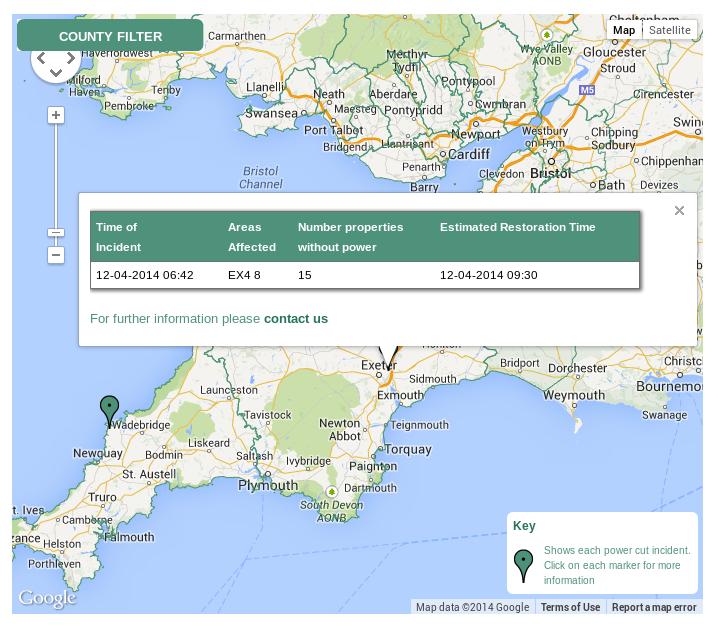
Western Power Distribution power cut map at 08:39 BST on Saturday April 12th

Western Power Distribution power cut map at 08:39 BST on Saturday April 12th


It seems as though “running off a generator” doesn’t count as a “power cut”, because Dunchideock isn’t on that map, all of which meant that WPD could now fix the problem as and when time permitted. Here’s how things were looking by Sunday evening:
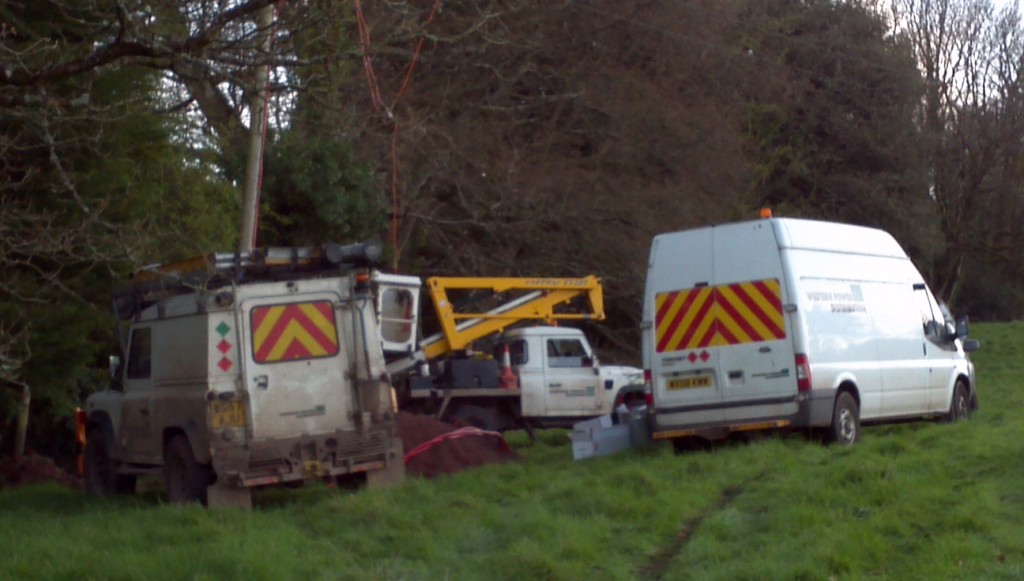
By Monday morning the epoxy resin in the Lovink red box had set, the big hole in the ground was filled in, and we were all back on mains power once again. All of which raises a few questions, in my mind at least.

In my conversations with WPD’s duty engineers I enquired whether this particular failure might be in any way attributable to the recent wet and windy winter weather here in South West England I alluded to earlier. I was told that while a causal link with any single failure was impossible to establish, it was conceivable that WPD’s electricity distribution network had suffered additional “stress” due to increased lightning strikes and the potential for trees to be more easily toppled by strong winds whilst their roots were sitting in sodden soil. I also idly enquired about the stresses placed on the network by renewable generation in the South West, but that story will require an article of its own at the very least.

In the meantime I’ve been pondering how this saga would have panned out if some of the homes in Dunchideock had already been in possession of an electric vehicle and some vehicle to home or even vehicle to grid technology. Since the powers that be here in the UK don’t seem to be wild about either of those concepts maybe a pile of shiny new lithium ion batteries from Tesla in the corner of each garage in Dunchideock might be more realistic to speculate about, or at the very least some second user EV batteries that are at least receiving some R&D funding on this side of the Atlantic? In that case perhaps we should add distributed storage to grid (or S2G for short) to our list of TLAs under consideration?

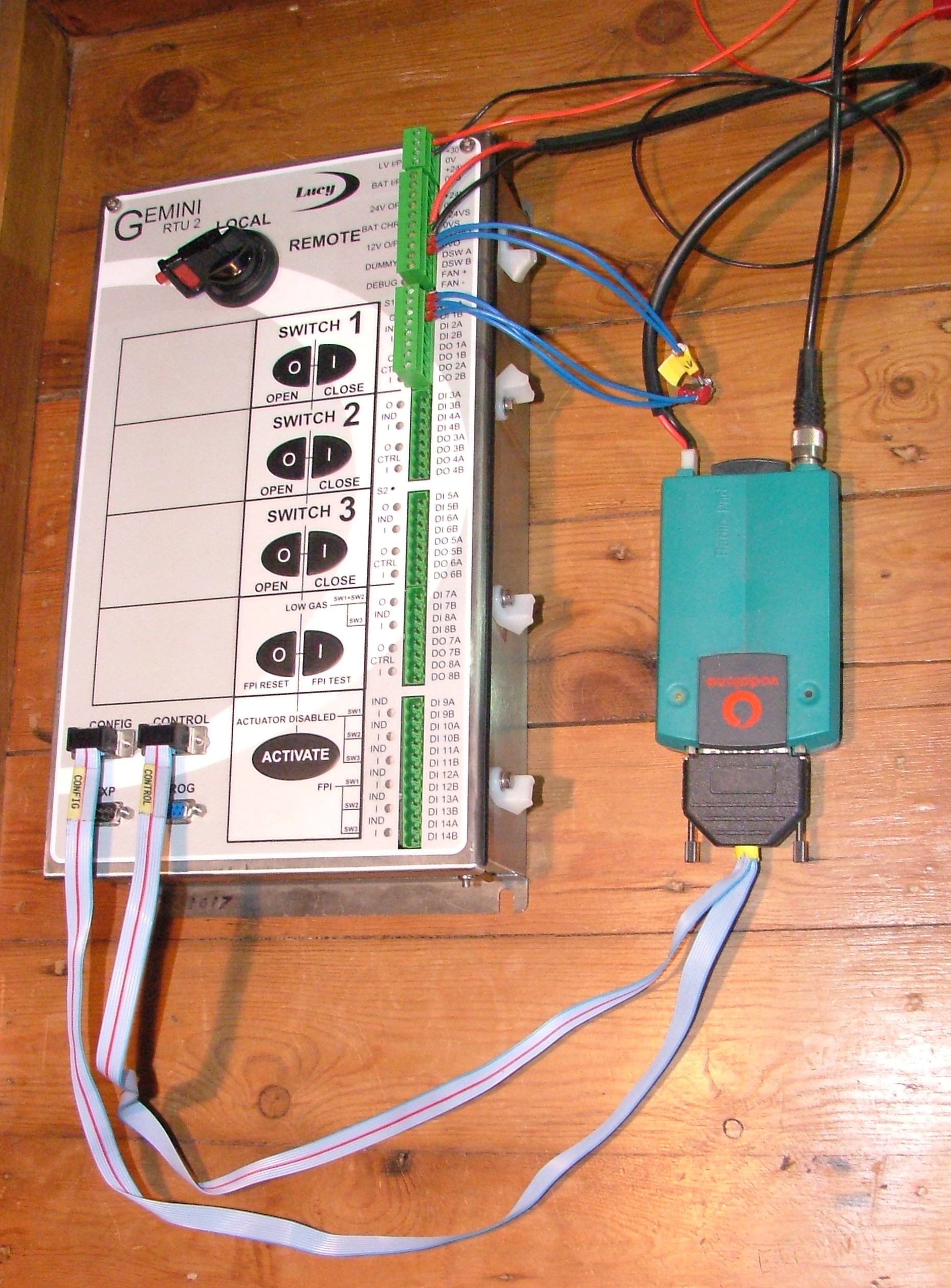
The lights wouldn’t have gone out in any V2H or storage equipped home. Their broadband would have kept on working too, so information about the failure could have been swiftly despatched to WPD’s control centre to enable the location of the fault to be pinpointed more swiftly. If some people had V2G and/or S2G installed as well, and subject to being suitably reimbursed for their public spiritedness, they could have kept their neighbours’ lights on as well as their own provided that WPD’s equipment was capable of sectionalising their network with greater granularity than at present. As luck would have it there is a pile of such equipment already in Dunchideock, although it’s only in the V2G lab at the moment rather than attached to any of the WPD poles I’ve mentioned apart from the one in Alphington, or in the corner of anyone else’s garage in Dunchideock. Here’s what a remote terminal unit looks like from the outside:
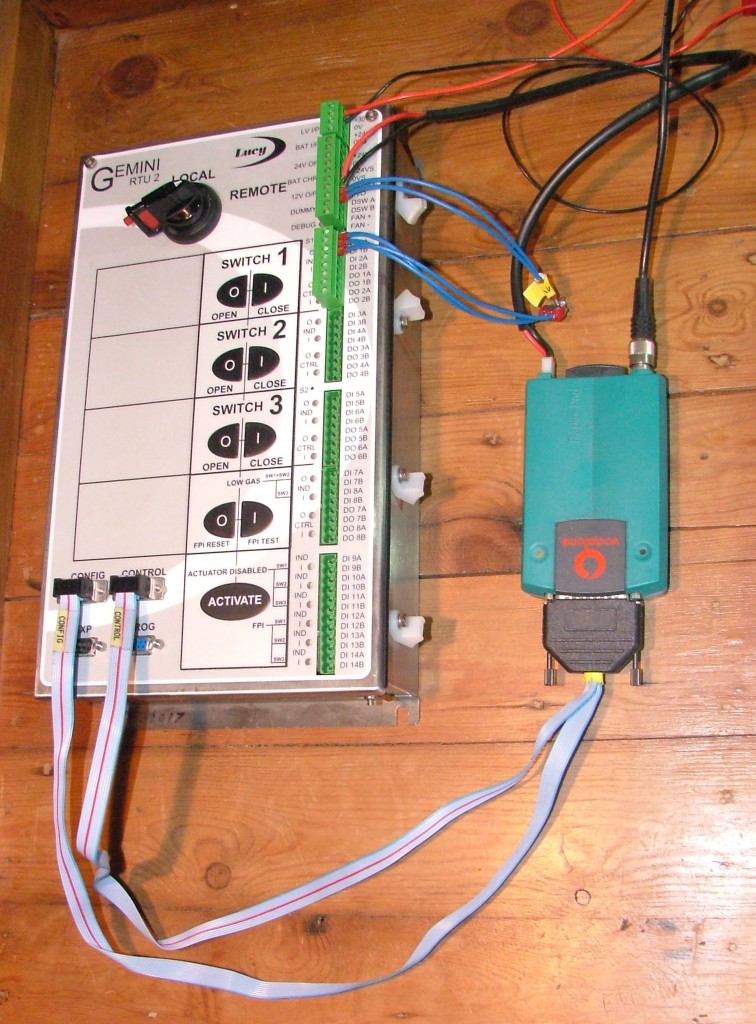
A Lucy Switchgear Gemini Remote Terminal Unit plus PakNet PAD

A Lucy Switchgear Gemini Remote Terminal Unit plus PakNet PAD

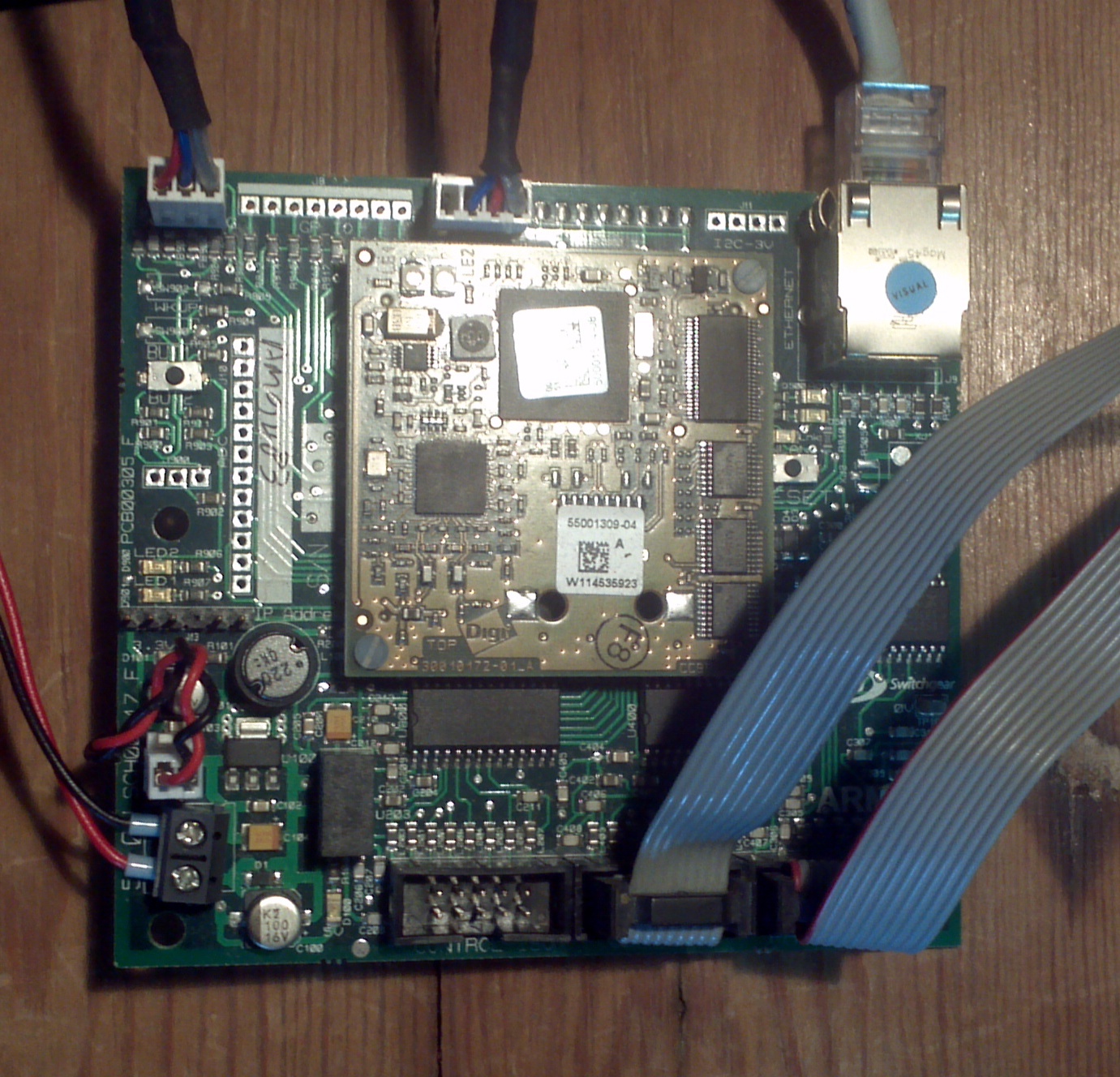
and here’s what the ARM powered CPU board on the inside looks like:
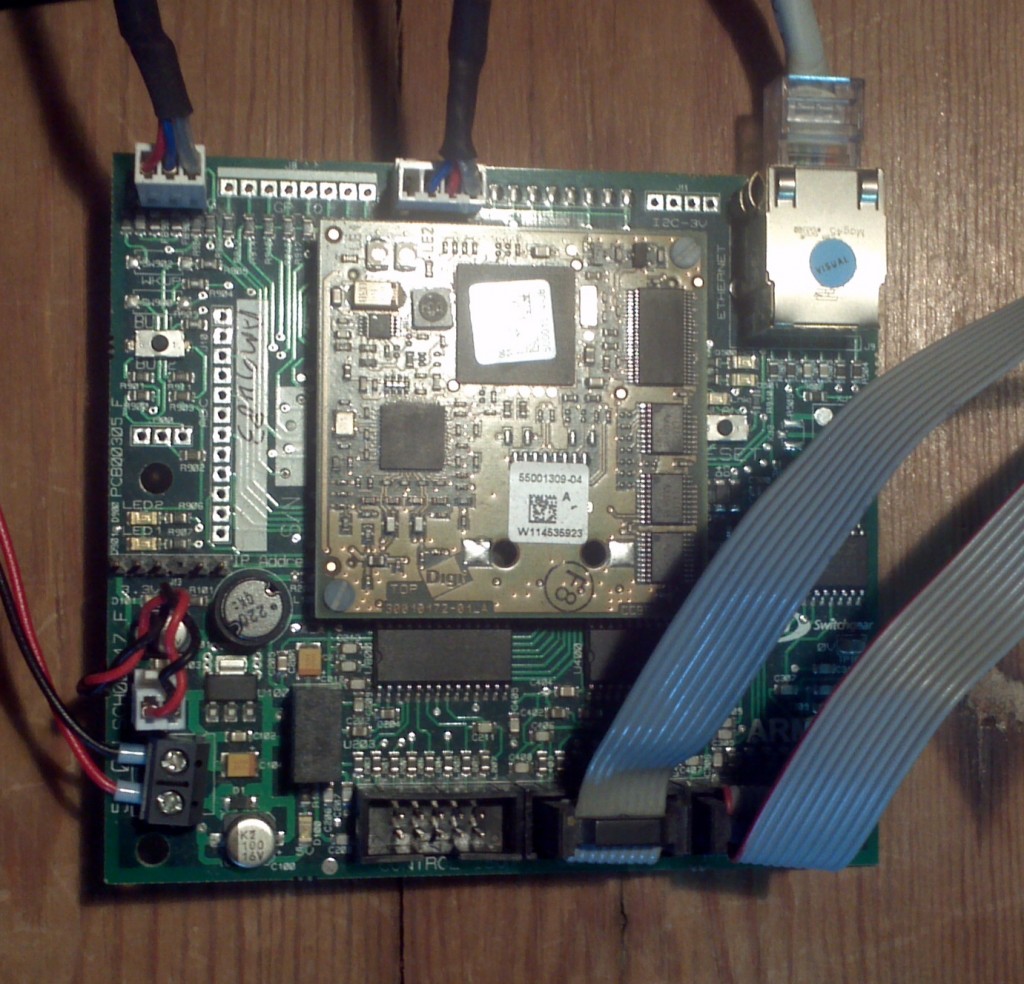
Gemini ARM CPU card

A Lucy Switchgear Gemini ARM CPU card, connected to the internet

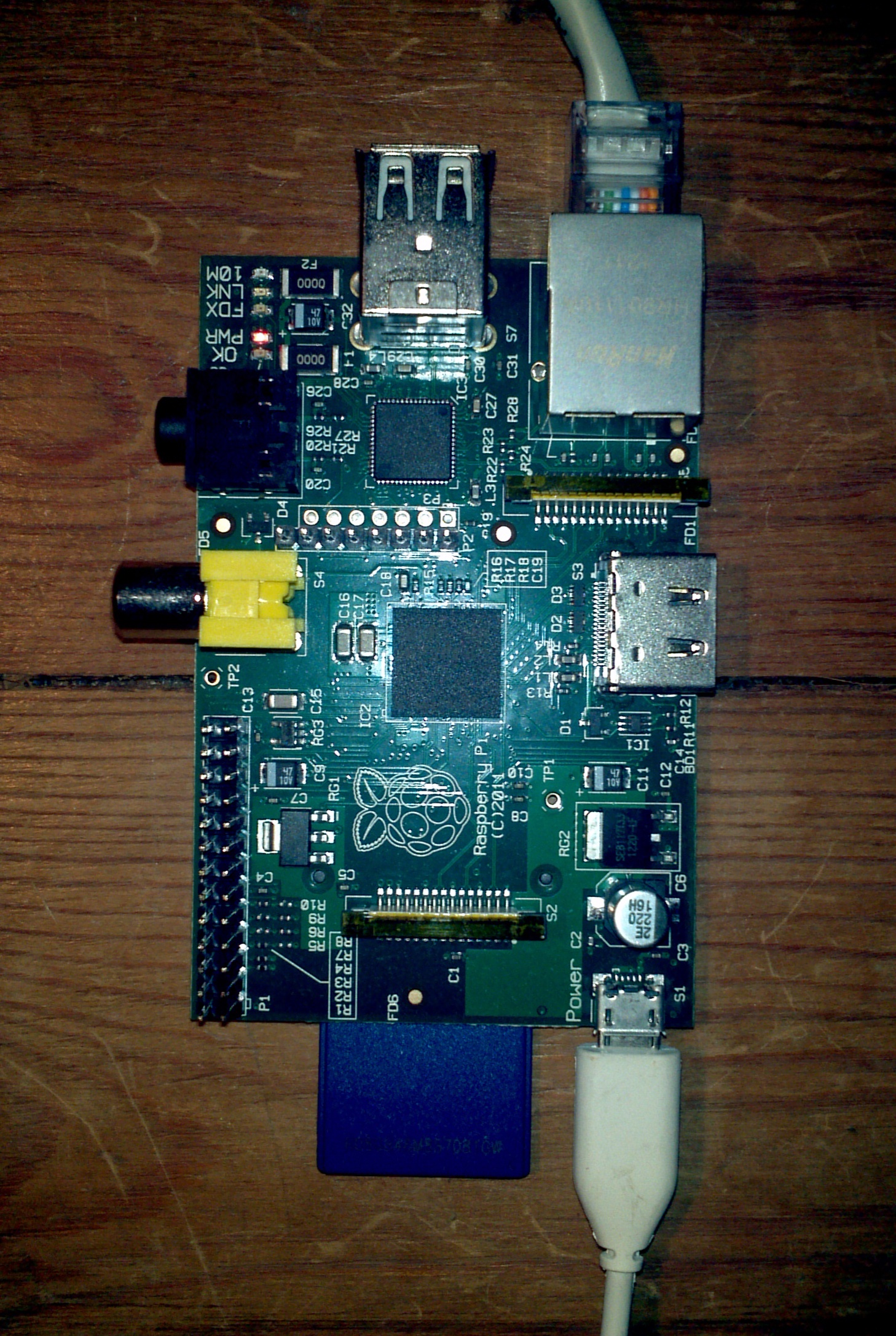
As you can see, in actual fact it’s not a whole lot different to a Raspberry Pi, or the guts of the average smartphone for that matter:
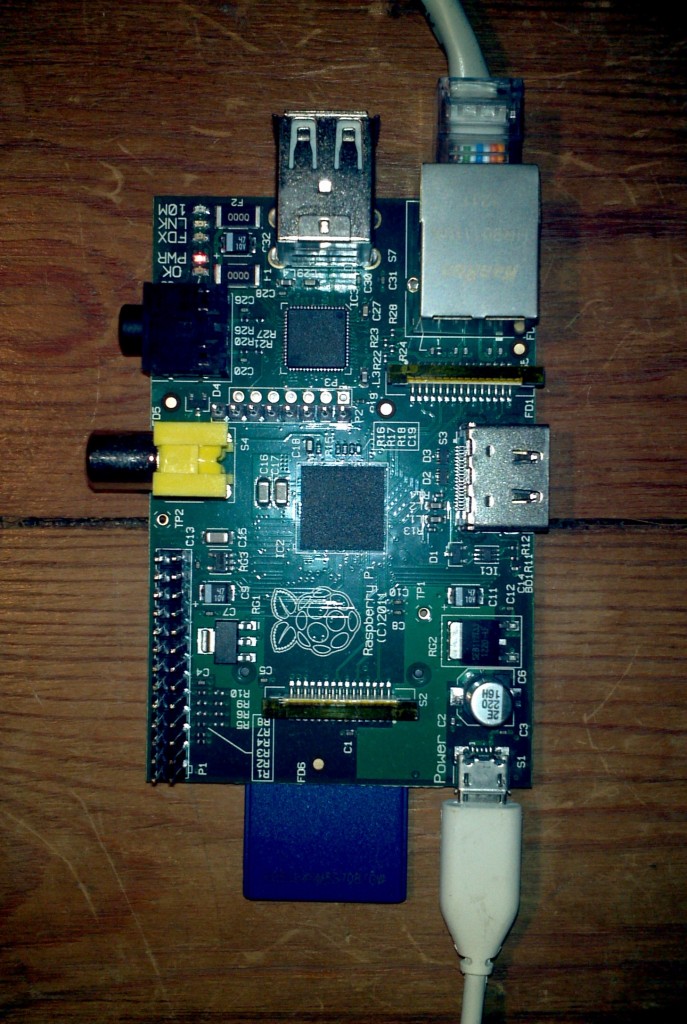
A Raspberry Pi model B, connected to the internet

A Raspberry Pi model B, connected to the internet

Hence such a piece of electronics wouldn’t in and of itself add a whole lot to the price of an electric vehicle and/or a garage in Dunchideock, or anywhere else on the planet for that matter.

In conclusion, I also cannot help but wonder how much the Great Dunchideock Blackout cost Western Power Distribution, how much the evidently changing climate in this part of the world is costing and will cost them, and how their electricity distribution network is coping with the assorted stresses and strains generated by all the renewable power sources currently being tacked onto it down here in not so Sunny South West England that do not currently have any form of energy storage associated with them.

Used Nissan EV Batteries Now Provide Grid Scale Storage

Nissan have recently announced that:

The manmade island of Yumeshima in western Japan’s Osaka is now home to the world’s first large-scale energy storage system, a project that also highlights the potential to reuse electric vehicle batteries.

Hikari-no-Mori – or Forest of Light – is a mega-solar project of 36,000 solar panels built on top of a landfill and managed by Sumitomo Corporation.

The first paragraph is not strictly accurate, since as we reported a couple of years ago, such things have been in use in Spain for a while now. Sumitomo’s press release about the project was nearer the mark stating instead that:

Sumitomo Corporation has developed and installed the world’s first large-scale power storage system which utilizes used batteries collected from electric vehicles.

Nissan did however also release the following video, so we can see for ourselves what the partnership has in fact developed:

According to Sumitomo once more:

Over the next three years, the system will measure the smoothing effect of energy output fluctuation from the nearby “Hikari-no-mori,” solar farm, and will aim to establish a large-scale power storage technology by safely and effectively utilizing the huge quantities of discarded used EV batteries which will become available in the future. This project has been selected as a model project for “Verification of the battery storage control to promote renewable energy” for the fiscal year 2013 by the Ministry of the Environment of Japan.

Sumitomo Corporation created the joint venture company, “4R Energy Corporation”, in collaboration with Nissan Motor Co., Ltd. in September 2010, to address the secondary use of EV lithium-ion batteries. The used EV batteries that will be recycled into this large-scale storage system have been recovered and have gone through thorough inspection and maintenance at 4R, to confirm safety and performance. This prototype system (600kW/400kWh) consists of sixteen used EV batteries.

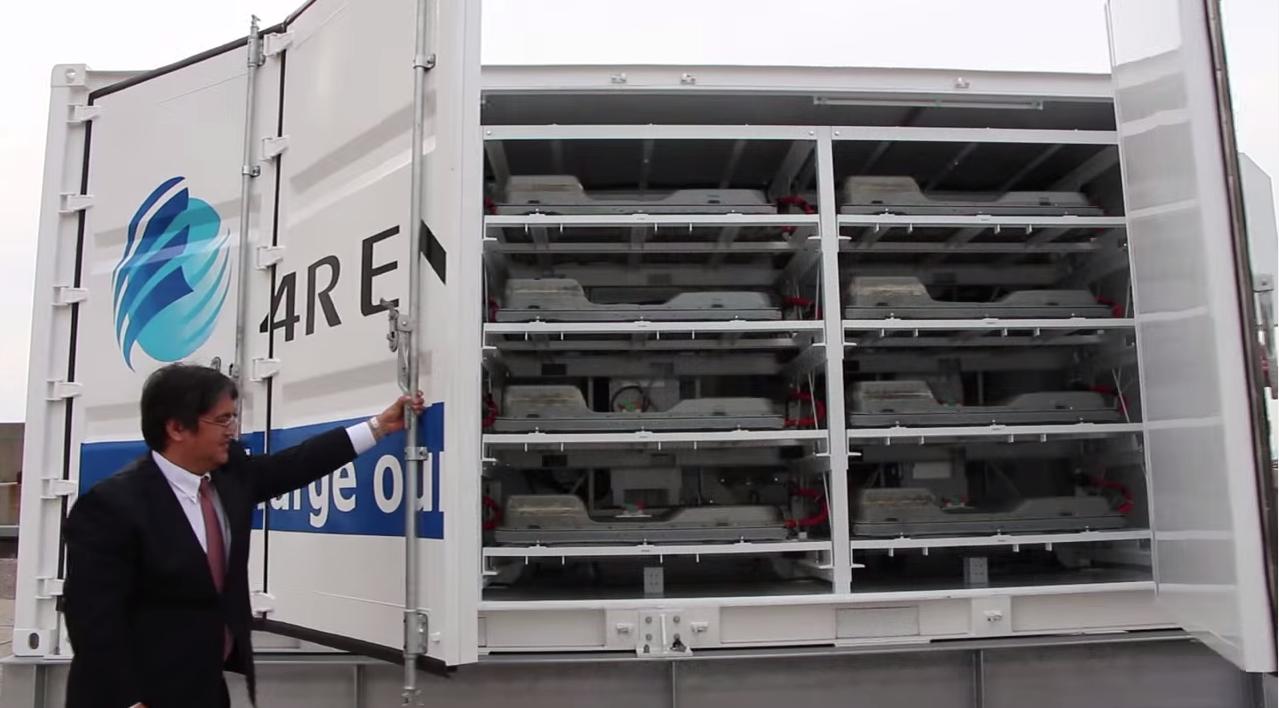
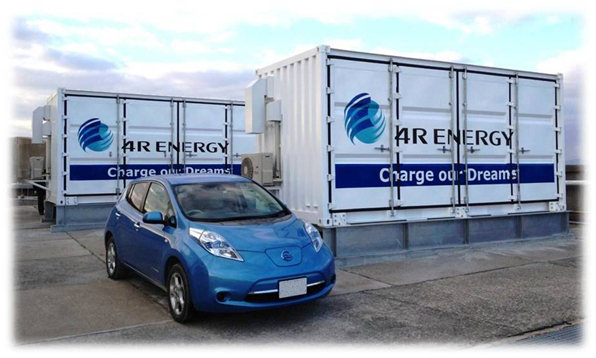
The 600kW/400kWh rating of the Japanese energy storage system compares unfavourably with the 1.1MW/560kWh of the lithium-ion battery Saft system installed in Spain, so it can’t even claim to be the largest such system in the world, but the French system uses new batteries rather than ones that are no longer up to the job of powering an electric vehicle. Here’s what the 4R system looks like:

A glimpse inside a 4R Energy used EV battery storage system

A glimpse inside a 4R Energy used EV battery storage system

It seems to have 12 battery packs per container, although Nissan claim that:

A joint venture between Sumitomo and Nissan called 4R Energy – Reuse, Resell, Refabricate and Recycle – uses 16 lithium-ion batteries from EVs to help monitor energy fluctuations and store the solar farm’s energy output.

Judging by both Nissan’s video and Sumitomo’s picture there looks to be two of those on the man-made island, so maybe the actual number is in fact 24?

Continuing with some further (hopefully accurate!) quotes from Nissan’s press release:

Natural energy sources, such as solar and wind, vary in strength and frequency, and the innovative battery management system developed by 4R is the first of its kind, says the firm’s President Eiji Makino.

“Depending on use, a battery’s degree and rate of deterioration and the battery’s condition vary by vehicle,” says Makino. “So 4R has created a technology that allows us to have optimal control in regulating those conditions.”

The project is part of a three-year test under Japan’s Environment Ministry to expand renewable energy resources and power grid management. In Japan, electricity liberalization will be realized after 2016.

The batteries have up to 70% of capacity remaining – the average left after 100,000 kilometers or five years of driving.

Sumitomo General Manager Norihiko Nonaka said his company, in cooperation with 4R, expects to make the results of the project commercially viable in 5 years or so.

“The electricity-value-chain is divided into 3 sections: electricity generation, transmission and distribution. We would like to focus on electricity generation and transmission. If we rely on renewables to obtain energy – like solar and wind – they don’t always generate the necessary amount of energy and that may cause an issue with supply-and-demand,” said Nonaka.

“On the other hand, if the cost of batteries is too high and is economically inefficient, 4R will have to continue to work and investigate the situation and market in the long term, about 5 years or maybe after 2020.

In conclusion I fear I may have to disagree slightly with Sumitomo for a change. Why should “the electricity-value-chain” not also include community renewable energy projects such as the South Brent Community Energy Society’s 250 kW wind turbine, which is located a few miles down the A38 from the V2G offices, and of which I am a proud (albeit modest) shareholder?