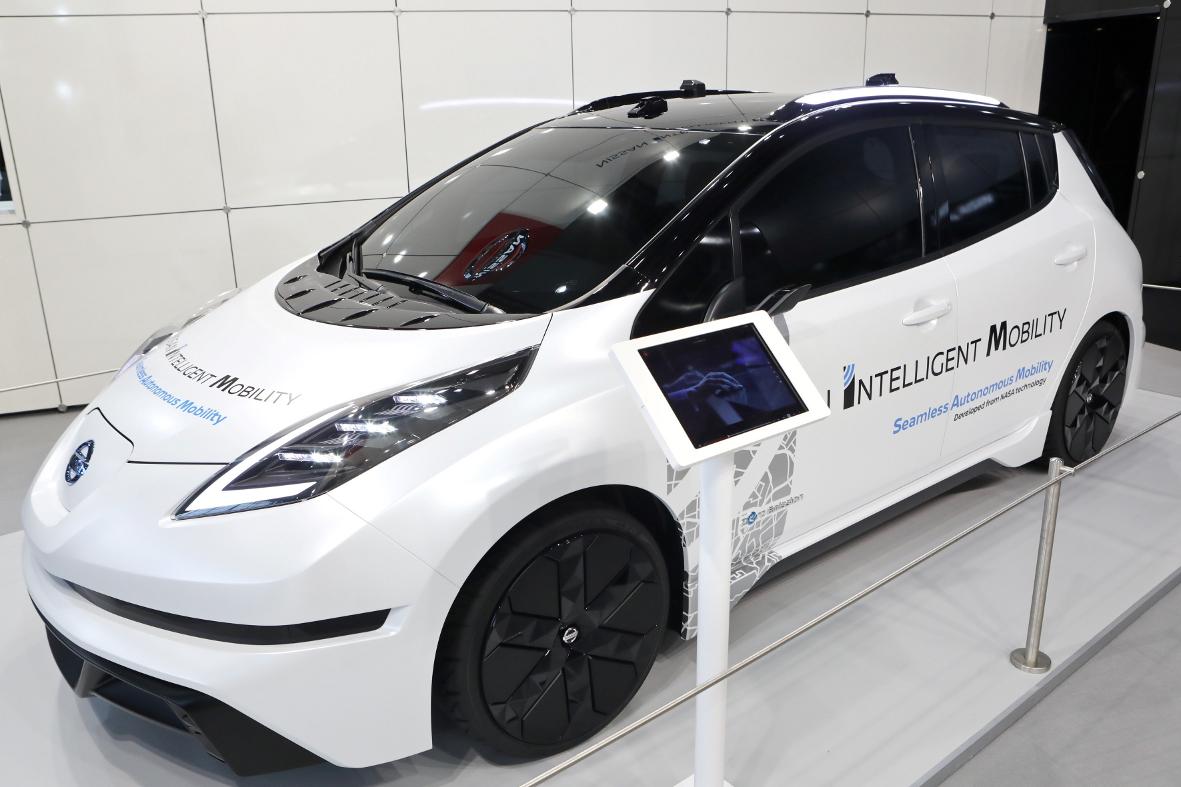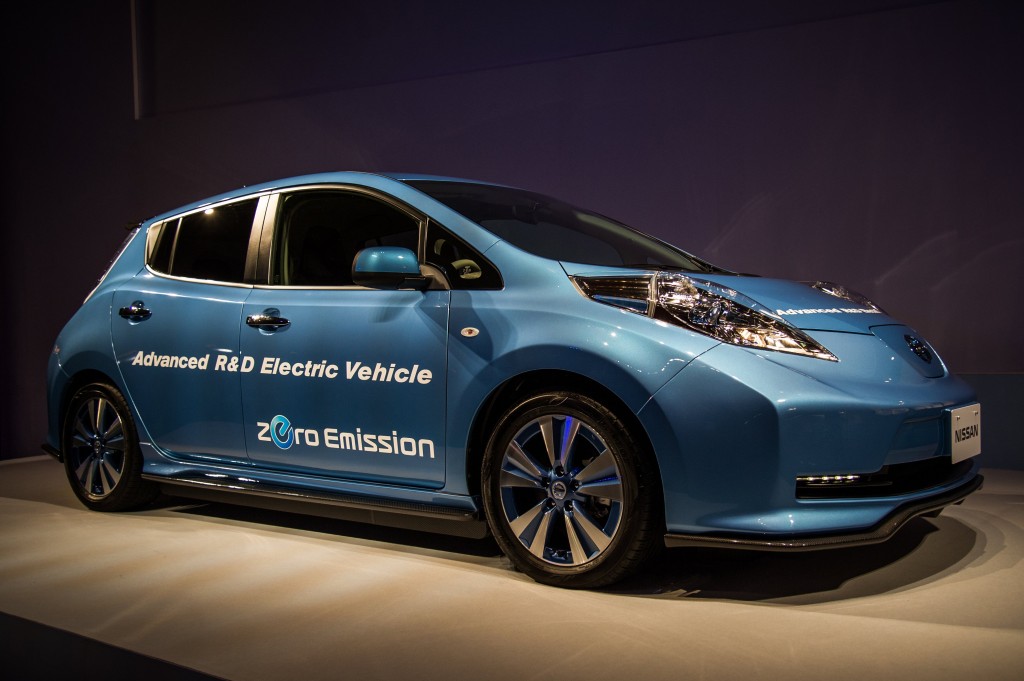
Autonomous Nissan LEAF Drives 230 Miles

A press release from Cranfield University reveals that:

A car developed with advanced vehicle engineering research and testing facilities at Cranfield University has successfully completed the UK’s longest and most complex self-navigated journey. Travelling 230 miles on UK roads from the Nissan European Technical Centre in Cranfield up to its factory in Sunderland, the autonomous car journey was alongside regular road users and marks a significant milestone in the development of autonomous cars.

Here’s a video of the autonomous Nissan LEAF’s “Grand Drive” road trip:

The Cranfield press release continues:

The HumanDrive project – jointly funded by the UK Government through the Centre for Connected and Autonomous Vehicles (CCAV) and Innovate UK, and nine other consortium partners – includes:

  • Nissan – Lead partner and leading the autonomous vehicle (AV) development
  • Hitachi – Artificial Intelligence (AI) to provide human-like control and perception
  • University of Leeds – Understanding humanistic driving and its application to AVs whilst also developing a driver risk model
  • Connected Places Catapult (CPC) – Project management, communications and marketing activity, dissemination and safety case elements of the project
  • HORIBA MIRA – Provider of test facilities, supported safety aspects of the project
  • SBD Automotive – Cyber security support and AV Human machine Interface (HMI) studies
  • Atkins Ltd – Provision of a Cyber Security Framework
  • Aimsun Ltd – Studying the impact of AVs on the transport system
  • Highways England – Understanding the infrastructure needs for AV deployment

The Grand Drive journey was successfully completed on 28 November 2019, with two engineers on board and monitoring the vehicle’s actions at all times. Both were fully trained to conduct autonomous vehicle testing, with one behind the wheel and ready to take control if required, and the second supervising the car’s control and monitoring systems.

The New 2018 Nissan LEAF

The rumours have been flying around for months, but Nissan have just issued another “teasing” press release about the next generation LEAF. It makes no mention of new battery technology or increased range, but it does say this:

Packed with our most advanced technologies, the redesigned next-generation LEAF will amaze your senses and raise the bar for the electric vehicle market.

Being 100% electric and zero emissions, the new Nissan LEAF, an icon of Nissan Intelligent Mobility, offers a quiet and refreshing experience while driving. With Nissan Intelligent Mobility technologies, you are more confident with enhanced vision and can better sense what is around the car. Premium interiors designed to suit your taste offer a touch more comfort.

Nissan established itself as a pioneer in the EV movement by launching the LEAF, the world’s first mass-market electric vehicle.

The world premiere for the new Nissan LEAF will take place on September 6, 2017 in Japan and we will be bringing the unveil to you live online.

It also includes this image:

and comes complete with this video:

Nissan’s previous 2018 LEAF press release suggested improved aerodynamics would lead to increased range even in the absence of a novel battery pack:

The new Nissan LEAF will feature an improved aerodynamic design that makes it even more efficient, allowing drivers to travel farther on a single charge.

Aerodynamics is key to how efficiently an electric car moves. Less drag and better stability enable the vehicle to drive longer distances before having to recharge.

The redesigned next-generation Nissan LEAF is lower to the ground, helping it realize zero lift for better stability at high speeds. Other new design features significantly stabilize the car when hit by strong crosswinds.

Inspired by airplane wings, Nissan engineers recreated the ideal shape for the new LEAF, enabling a symmetric air flow that helps it slice through the air for a smoother, more efficient journey.

It also included this image:

There was also another associated video!

Before that there was the “e-Pedal” teaser:

Nissan announced today that the widely anticipated new Nissan LEAF will come with e-Pedal, a revolutionary technology that transforms the way we drive.

With the flip of a switch, the technology turns your accelerator into an e-Pedal, allowing drivers to accelerate, decelerate and stop using just the e-Pedal. e-Pedal technology is the world’s first one-pedal operation that allows drivers to bring the car to a complete stop even on hills, stay in position, and resume driving instantly.

Drivers can cover 90% of their driving needs with the e-Pedal, making the process of driving more exciting. In heavy traffic and during city commutes, drivers will greatly reduce the need to shift from one pedal to the other, making your drive simpler and more engaging.

The e-Pedal technology represents another key milestone in Nissan’s ongoing commitment to bring accessible, advanced driver assistance technologies to the mainstream. Set to make driving safer and more enjoyable, the development of these technologies is part of Nissan Intelligent Mobility, the company’s blueprint for transforming how cars are driven, powered and integrated into society.

Here’s the e-Pedal video:

Please note the extremely important footnote:

Use conventional brake pedal for aggressive braking situations.

Before you leave please make sure to also take a look at our previous article that includes video of the next generation LEAF’s autonomous driving capabilities.

Watch this space!

Next Generation Nissan LEAF to Include “Autonomous” Technology

Nissan Europe exhibited at the CeBIT exhibition in Hannover, Germany for the first time last week. According to their press release:

Just weeks after demonstrating its advanced autonomous drive technology on public roads in Europe, Nissan today makes its debut at CeBIT, Europe’s largest digital expo, showcasing innovations set to revolutionise the future of motoring.

At the heart of its display at CeBIT, Nissan will showcase another autonomous innovation – Seamless Autonomous Mobility (SAM) system which was demonstrated earlier this year at CES.

Developed from NASA technology, SAM partners in-vehicle artificial intelligence with human support to help autonomous vehicles make decisions in unpredictable situations such as accidents, road construction, or other obstacles. With SAM, the autonomous vehicle becomes aware of when it should attempt to negotiate the situation by itself, and when it should seek human assistance. Knowing how to manoeuvre these situations will be key to realising a fully autonomous driving future.

Nissan has also confirmed that phase one of its innovative ProPILOT autonomous drive technology will be made available in the new Nissan Qashqai launching in FY17 and the second-generation model of the Nissan LEAF coming soon. This technology enables single lane autonomous driving on motorways and is already available on the Nissan Serena which was launched in Japan last year.

What should we expect from Nissan’s assorted “autonomous” technologies? The answer is provided by Robert Llewellyn in his latest “Fully Charged” video! As Bobby puts it:

Our first ride in a fully autonomous car on public roads in the UK.

What this car can do already, now, is drive itself anywhere on the roads. Obviously this is not available now. You can’t buy one of these Nissan LEAFs yet. This is still a development vehicle.

The idea with this, according to Nissan, is that this will be part of standard cars in around 2020

The next question is obviously “when should we expect the second-generation model of the Nissan LEAF to become available in the UK?”. A partial answer has just been “Tweeted” by Nissan UK:

Meanwhile, and perhaps not entirely coincidentally, the Department for Business, Energy & Industrial Strategy has announced:

The first competition to access funding supporting the creation of test facilities for connected and autonomous vehicles.

Business Secretary Greg Clark launched the first competition to access funding from the government’s £100 investment programme supporting the creation of test facilities for connected and autonomous vehicles today (30 March 2017) at the Society of Motor Manufacturers and Traders Connected Conference in London.

In his speech to an international audience of over 400 industry leaders from the automotive and technology sectors he outlined plans to create a cluster of excellence in CAV testing along the M40 corridor between Birmingham and London.

Time for me to call our local Nissan dealer to try to arrange a “test driven”! Perhaps there’s one small fly in the BEIS ointment though? South West England isn’t “along the M40 corridor between Birmingham and London”.

P.S. Nissan have released a “teaser” video in the build up to the launch of the “next generation” 2018 LEAF:

Carlos Ghosn Reveals Long Range Nissan LEAF

I visited Bristol yesterday to attend the Regen SW “Community Energy Markets” conference. More from me on the event in due course, but before that I must point out that Bristol is “European Green Capital” for 2015. Here’s a video revealing how Bristol looks from behind the wheel of the current Nissan LEAF:

Earlier this week BBC News revealed how Japan looks from behind the wheel of the current Nissan LEAF:

According to the BBC:

The boss of Nissan, Carlos Ghosn, has not been shy about expressing his disdain for hydrogen. Instead, Nissan is betting on lithium ion batteries.

Coincidentally earlier this week Carlos Ghosn spoke at the Nissan annual shareholder’s meeting in Yokohama. Here’s the “Technology” part of his presentation:

All forthcoming products will reflect Nissan’s commitment to delivering breakthroughs that advance vehicle safety, efficiency, and connectivity.

During our discussion later in this meeting, we will update you on Nissan’s plans to introduce an autonomous drive vehicle by 2020. We are continuing to develop this exciting technology.

The vehicle that stands to my left features the latest versions of hardware and software that Nissan is developing.

The vehicle that stands to my right is another advanced technology breakthrough. It explores how far we can extend electric vehicle range by making changes to the battery.

Today there are only two reliable ways to increase electric vehicle range.

  • The first is to have a massive network of EV chargers, so that when you are away from home you have the ability to recharge easily.
  • The other option is to put a larger battery pack into the vehicle so that the driver enjoys greater range. However, with today’s level of technology, adding more battery means adding more cost.

As you know, Nissan has been one of the world’s foremost advocates for the development of recharging networks. With our efforts and the support of government and private sector partners, Japan has one of the most highly developed charging infrastructures in the world.

There are now more than 14,000 EV chargers, not including home chargers, in Japan. This means that EV drives already have the freedom to drive throughout mainland Japan without worrying about battery range.

Unlike customers in some other markets, where the charging networks are in earlier stages, customers in Japan who want to enjoy the benefits of driving a LEAF have no need to wait. Japan’s vast EV charging network already provides an incentive for you to move to Nissan’s zero-emission technology. And, during FY2015, the number of chargers in Japan will increase even further. However, that doesn’t mean we will become complacent and stop working to advance our battery and vehicle technologies.

We believe that, in the near future, Nissan can provide EV drivers with even greater “peace of mind” range, by offering comparative mobility to today’s conventional vehicles.

Nissan is exploring new materials and chemistry solutions in order to make thinner, lighter weight and less costly batteries. We foresee the day when you leave your home with a full charge, and are able to go about your day with no concerns…then return home with ample charge.

This video shows how we envision a routine day.

With this vision in mind, our advanced battery research will continue. But we will not wait for its completion to move forward. Later this year, you will hear more about our initial steps to increase EV range.

All of which puts me in mind of a couple of things a Nissan representative said in response to a question about “warranties” that was posed at the V2G workshop I attended earlier this month. It seems Nissan’s battery electric vehicle “warranty doesn’t prohibit V2G” and the “impact [of V2G] on the battery is insignificant”.