Reduced Battery Degradation Using V2G

We have previously discussed the work of the Warwick Manufacturing Group on mitigating potential battery degradation by “intelligently managing V2G technology”. In a recent press release the EV-elocity project refers to a new WMG paper on that subject, reporting that:

A number of studies have identified the strategic importance of charging infrastructure to support the introduction of electrified vehicles (EVs) and to underpin consumer acceptance of the technology. For this reason, considerable research has been undertaken to evaluate the different facets of the technology, including the ability to charge at higher rates of electrical power, the introduction of smart charging (V1G) that allows dynamic management of the charging process in terms of both power and charge time and vehicle-to-grid (V2G) that enables bidirectional energy flow between the vehicle and the supply. In recent years, the term V2G has become more generalised to V2X, to acknowledge the variability in which the EV may be integrated, either to the grid or behind-the-meter, for example within a local electrical network, such as a building (V2B).

Irrespective of the exact nature of the integration method, understanding the impact of different strategies on battery degradation is a key requirement that may ultimately underpin consumer acceptance. Only a few studies have examined the potential impact of V2G operation on battery degradation. Often their assertion is that the increased charge-throughput will negatively impact battery life. These works often neglect that the battery will equally degrade through a process of calendar-ageing in which the retained capacity of the battery reduces as the battery is stored at no-load.

As highlighted in these results from the EV-elocity project, the nature of the degradation is highly complex with dependencies that crosscut: the state of charge (SOC) of the battery with respect to the optimal SOC storage condition and the duration of the parking interval. To further compound the challenge, experimental results shows that the optimal SOC point varies with battery life.

The paper referred to is open access and entitled “A Study of Reduced Battery Degradation Through State-of-Charge Pre-Conditioning for Vehicle-to-Grid Operations“. The abstract begins as follows:

Transport electrification is a key enabler to reduce fossil fuel depletion and related carbon dioxide emissions. However, critical barriers exist in terms of battery costs and their expected life. Vehicle-to-grid technology can bring benefits to both the electrical power grid and electric vehicle owners, while its practical implementation faces challenges due to the concerns over accelerated battery degradation. This paper presents a comprehensive study on reduced Lithium-ion battery degradation through state-of-charge pre-conditioning strategies that allow an electric vehicle to participate in vehicle-to-grid operations during periods in which the vehicle is parked. Energy capacity reduction of the electric vehicle battery are predicted using semi-empirical ageing models, which have been built and validated to capture the degradation behaviours of the battery with respect to both calendar and cycling ageing. Five charging strategies for battery state-of-charge pre-conditioning have been developed to evaluate the ability to mitigate battery ageing before commencing vehicle-to-grid operations. Simulation studies on battery degradation utilizing such charging mechanisms under two different operational profiles have been undertaken.

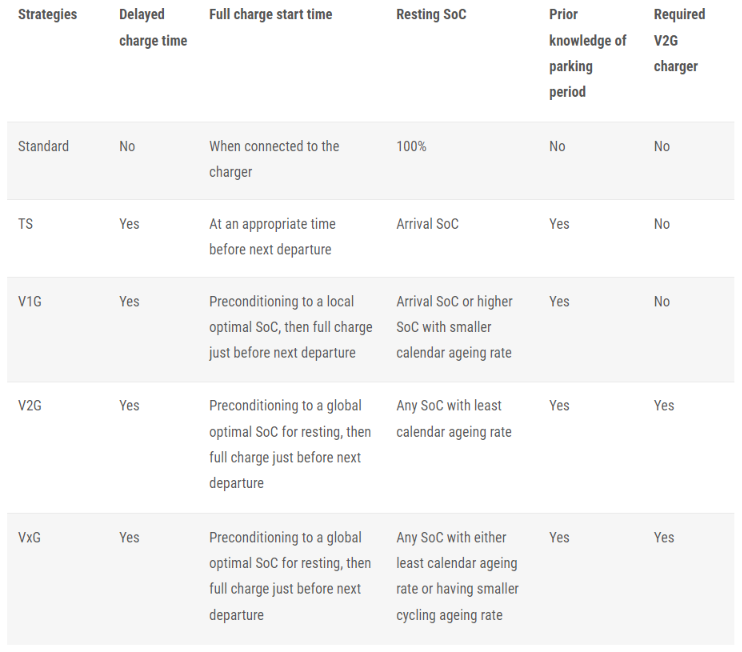
At this point you may be wondering exactly what the various charging mechanisms entail? Here’s a summary of the assorted strategies from the press release:
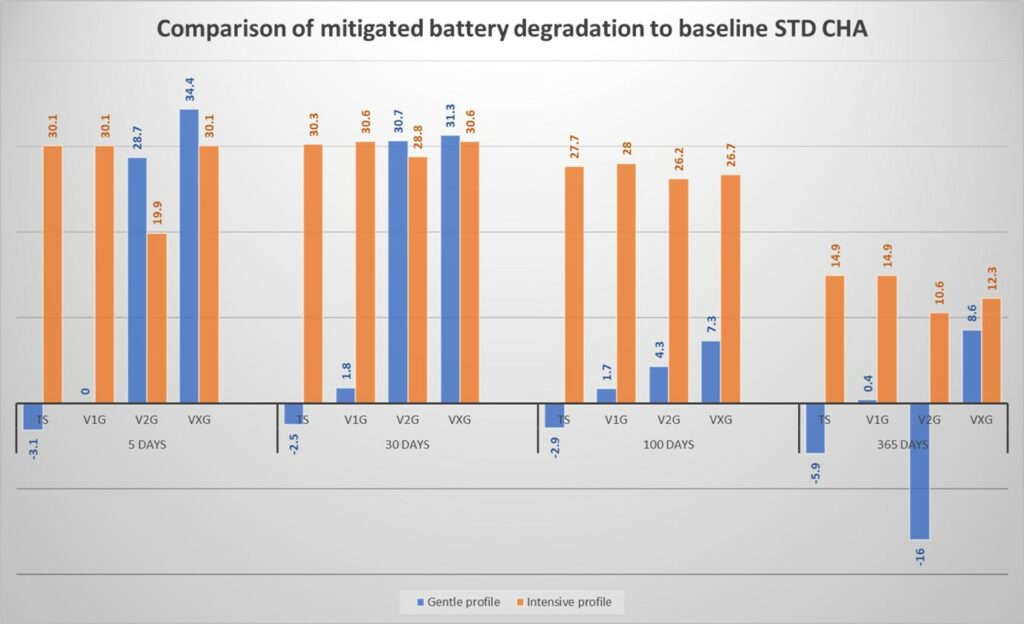
and here’s a summary of the results:
Going back to the abstract from the Bui et al. paper, the brief conclusions are that:

The analytical results show that the proposed charging strategies do not accelerate battery degradation and are capable of mitigating the total ageing process from 7.3 – 26.7% for the first 100 days of operational life and gradually vary to 8.6 – 12.3% for one-year continual operation compared to the reference standard charging approach.

To summarise, leaving your electric vehicle plugged in and “fully charged” is not good for the “state of health” of its traction battery. Here’s a video from Euan McTurk that delivers a similar message:
Sono Announce AC V2G Wallbox

On a press release a couple of days ago Sono Motors announced that:

Mobility provider Sono Motors is fulfilling the Community’s desire for an affordable wall charging station, suitable for home charging, vehicle-to-grid (V2G) and vehicle-to-home (V2H) with the first bidirectional AC wallbox on the market. This brings the company a significant step closer to its vision of a world without fossil fuels. The wallbox enables the Sion to be used as a mobile power plant and also to feed stored electricity either back into their house or into the grid itself. Homeowners with photovoltaic systems especially save a large amount of money as they are able to use more of their own electricity without having to buy an expensive home storage system. The Sono wallbox charges and discharges the Sion with up to 11 kW via the integrated Type 2 charging cable, and will save up to 70% of costs incurred by DC bidirectional wallboxes available to date. It is already possible to reserve the new wallbox free of charge, delivery is expected to take place with the Sion start of production in 2023.

This is of course very exciting news, and Sono also address a question that we have been pondering for many years, and which we discussed in detail more recently with the British Standard Institution’s launch of its PAS 1878 specification for home energy management systems:

A home energy management system (HEMS) controls when the Sion is charged and discharged: the wallbox communicates with the HEMS via various protocols such as EEBUS, Modbus or OCPP. A recommendation as to which HEMS are compatible with the Sono wallbox will be available shortly after its sales launch. The Sono app and Sono infotainment can also be used to set the level of the vehicle’s battery at which discharging can be terminated. This ensures that it always has enough range to cover any mobility needs.

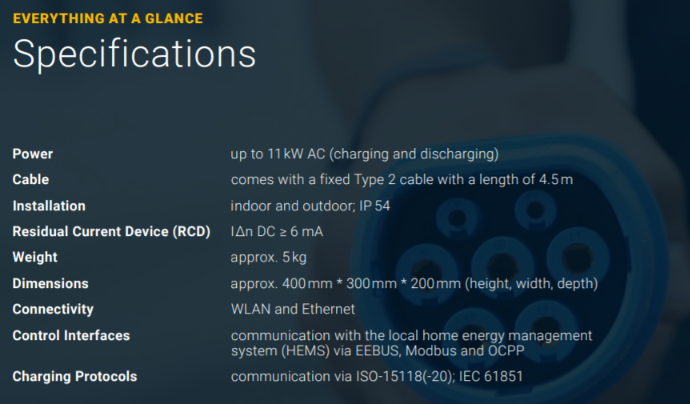
The specification for the Sono bidirectional wallbox looks like this:

That all looks very good, but there are a couple of flies in Sono’s ointment. Their wallbox won’t be available until 2023, and there appear to be no plans to release it in the United Kingdom.

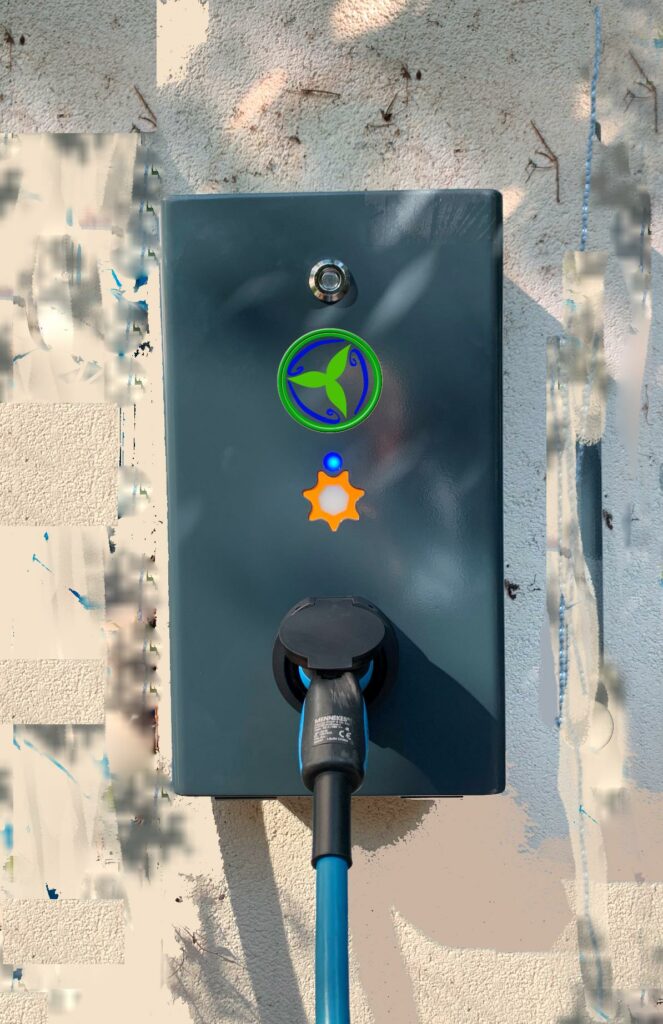
What’s more Sono’s copywriter needs a slight slap on the wrist. Here’s a picture of a 22 kW 3 phase bidirectional AC wallbox that has been available off the shelf for over a year!

Here’s Sono’s video explaining the benefits of their forthcoming, albeit less powerful, piece of equipment:

Perhaps Tillman would be good enough to appear in another Sion Motors video with more accurate commentary in the not too distant future?

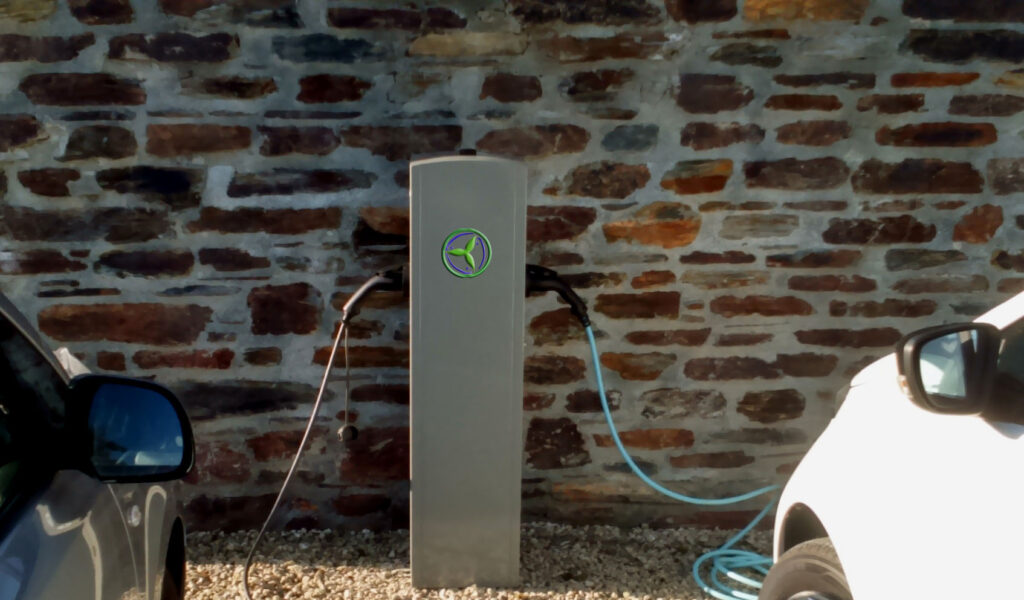
Finally, for the moment at least, here once again is a dual 22 kW bidirectional AC charging pillar that has been installed in our car park for over two years:

Triodos’ New Car Park with Solar Powered AC V2G

Today we are finally able to bring you exciting news of a large vehicle-to-grid installation in the Netherlands, with some unusual twists apart from the sheer number of charging stations.

In a thankfully English language article in PlaceTech it was reported earlier this week that:

Edge has delivered an office building for Triodos Bank in the Netherlands engineered to be sustainable inside and out with the latest circular construction principles designed throughout. The 135,000 sq ft office in Driebergen-Zeist, Netherlands was built with the intention to harmonise with the surrounding fauna and flora, on a construction level and beyond.

Edge-triodos-12

Please bear in mind that the article is referring to EDGE Technologies which is part of Dutch developer OVG Real Estate, and not the U2 guitarist!

After further description of the office building itself the article eventually gets to the part of the project of most interest to us. The solar PV covered car park:

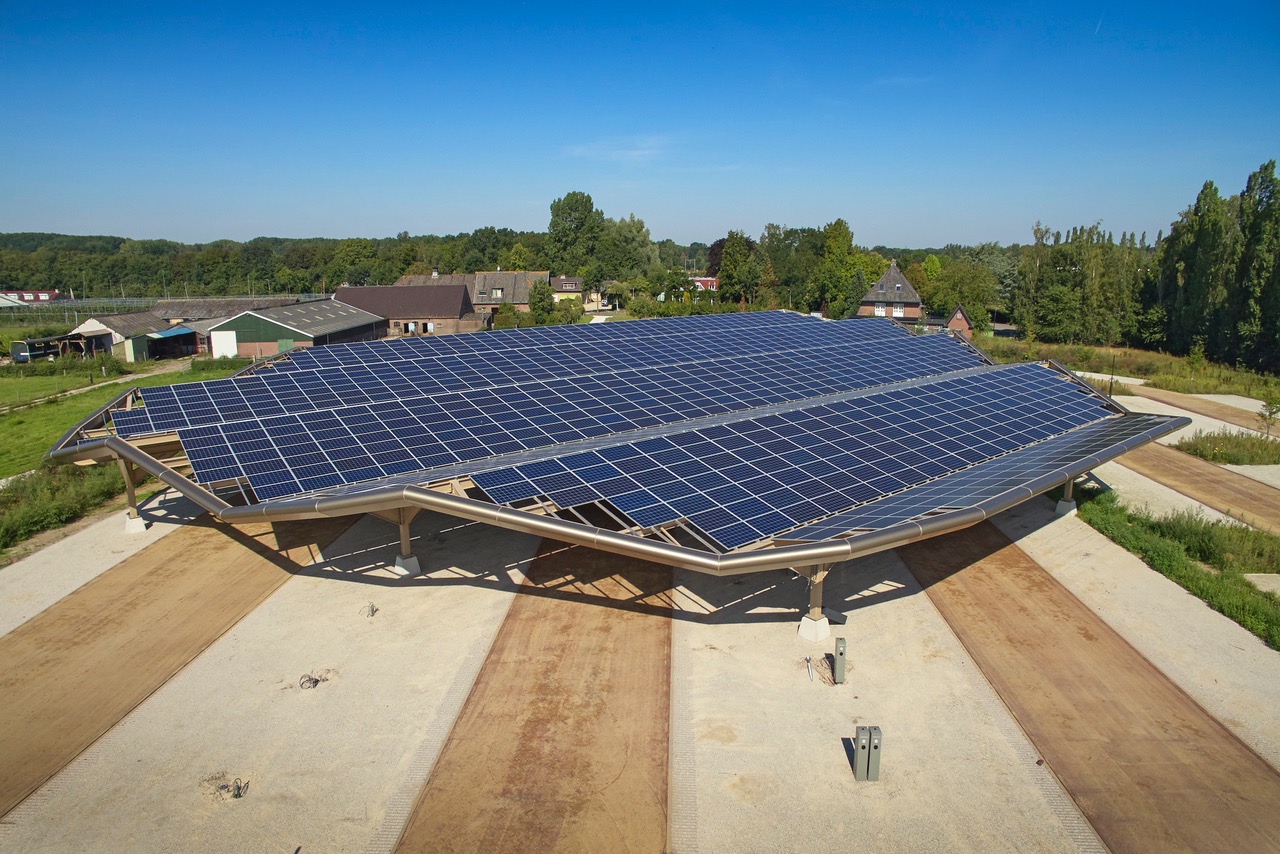
The extensive use of renewable energy, reflected in over 3,000 m² of solar panels, as well as heat and cold storage, contributes to the energy neutrality of the building. The project encompasses ‘smart charging’ electric cars from solar energy and ‘Vehicle2grid’ technology. Vehicle2grid means that the cars cannot only be charged with solar energy but also discharged, which is called bi-directional charging. The cars become an active part of a ‘smart net’, which includes such benefits as being able to store solar energy.

Drone triodos

The PlaceTech article doesn’t go into any more detail than that but we certainly intend to, not least because the aerial view of the solar PV canopy reveals a number of electric vehicle charging stations that look identical to the one we have installed in our “wall to wall” V2G “living lab”:

DSC_0464

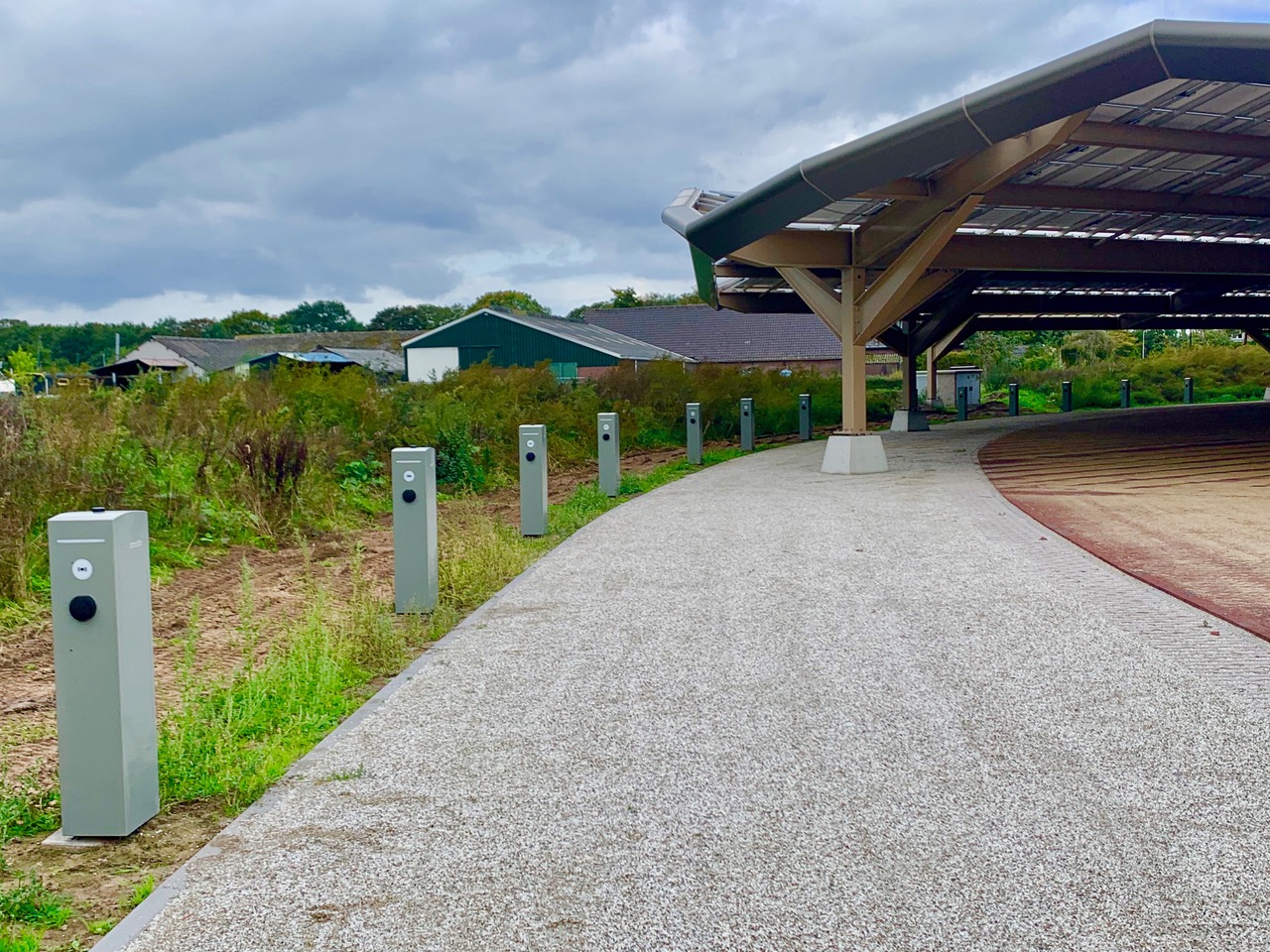
Taking a look at the new Triodos car park from ground level it becomes apparent that a large array of AC V2G capable charging stations are currently being installed, both under and around the solar PV canopy:
SolarStations

To find out more about what’s going on we’ve had to resort to Google Translate. According to a Dutch language article on the Triodos Bank web site from earlier this year:

The largest bidirectional charging plaza in the world is under construction at the new office building of Triodos Bank next to Driebergen-Zeist station. From this Autumn, 120 smart chargers will be able to store solar energy in the batteries of shared electric cars.

Triodos Bank have realised the project in close collaboration with developer EDGE Technologies and We Drive Solar. The bidirectional chargers are directly connected to 3,253 m² of solar panels and have a triple function. Electric cars can charge here. Cars whose battery is full enough can also supply power, so that the energy can be used in the office building or be fed back into the electricity grid.

Part of the plan is that Triodos Bank will replace its pool cars with 100% electric cars, so that they become part of the bidirectional charging ecosystem. Triodos Bank will investigate how, in addition to Triodos Bank employees, the residents of Zeist and the surrounding area can also use its shared electric cars. According to Triodos Bank director Matthijs Bierman “The plan fits in with our new ambitions in the field of sustainable mobility. We want to make car sharing as sustainable and attractive as possible. Not only for our employees, but also for the local community.”

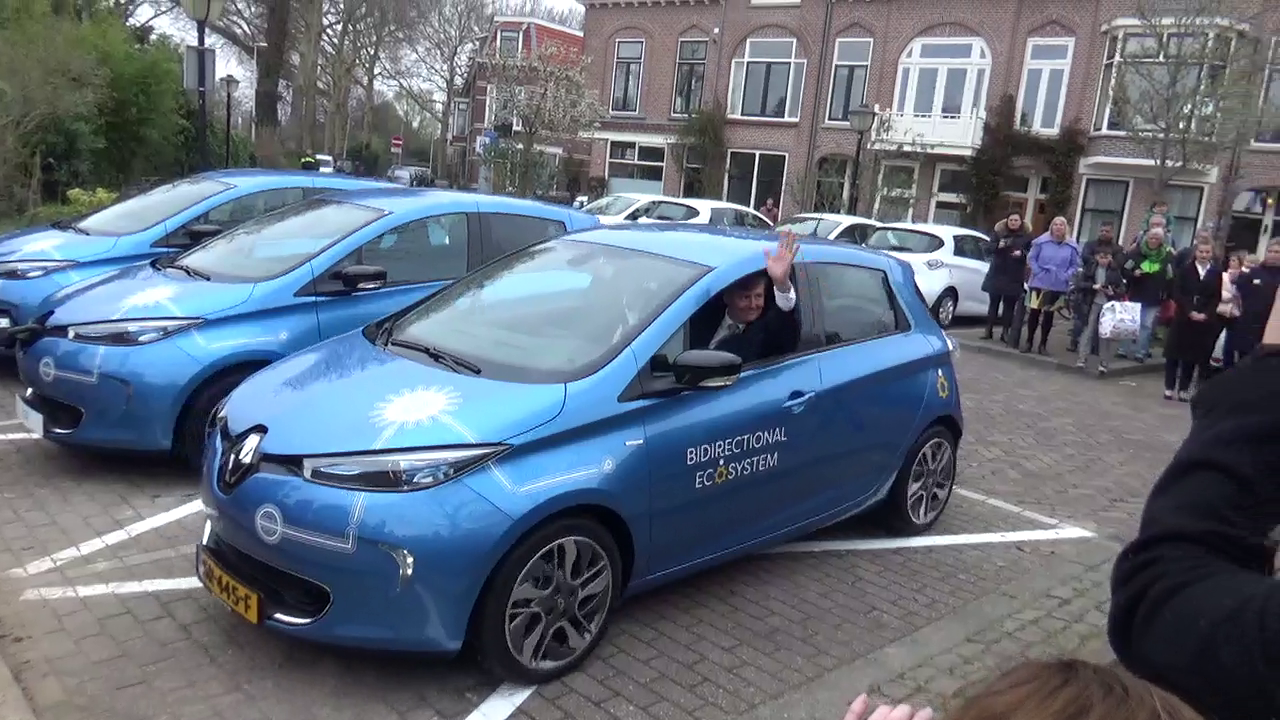
Now 120 AC V2G charging stations sounds amazing, but where are 120 or more AC V2G capable electric cars going to come from? I can help answer that question, since I attended the launch of the We Drive Solar bi-directional ecosystem in Utrecht earlier this year. According to Renault:

A fleet of fifteen Zoe vehicles with vehicle-to-grid charging will be introduced in Europe over the course of 2019 to develop our future offerings in reversible charging and lay the groundwork for the future standards —with our partners’ help. These pilot schemes will begin today in Utrecht (the Netherlands) in an ecosystem developed by We Drive Solar and on Porto Santo Island (in the archipelago of Madeira, Portugal) with Empresa de Electricidade da Madeira, an energy supplier. Following these, more pilot schemes will be introduced in France, Germany, Switzerland, Sweden and Denmark.

vlcsnap-2019-03-21-18h30m55s189

So that explains 15 prototype AC V2G capable Renault ZOE’s across Europe in 2019, but that’s a lot less than 120 in the Triodos car park! As far as I am aware Renault have not announced when V2G enabled ZOEs will go into production, but when ultimately they do Triodos Bank will be ready! In the meantime I’m sure that plenty of “smart charging” will be going on in Driebergen-Zeist and across the Netherlands

All in all the project sounds a lot like a combination of our “Camelford Electric Car Club” and “Static and Mobile Distributed Energy Storage” projects, albeit on a much grander scale! That probably explains this remark by Robin Berg of We Drive Solar to Bobby Llewellyn at the recent Fully Charged LIVE event at Silverstone in the summer?

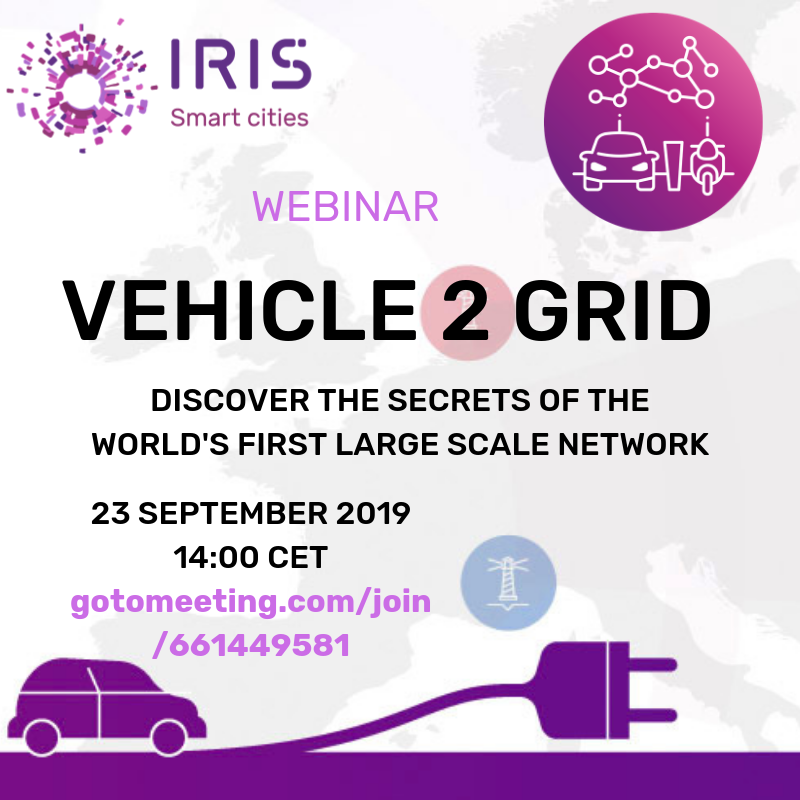
If you want to discover more about the We Drive Solar bi-directional ecosystem then please feel free to attend this webinar on September 23rd at 13:00 British Summer Time:

Webinar-2019-09-23

Sono Motors Sion Supports AC Vehicle to Grid!

We have been following the development of the Sono Motors Sion “solar powered” electric vehicle with much interest for a while now. Here’s a new video from Robert Llewellyn’s “Fully Charged” series revealing recent progress by the Sono team:

Note in particular that at 10:35 into the video Jonny Smith says “It’s just so obvious you wonder whay it hasn’t been done before, followed by Fabian Duensing of Sion saying “This is, I would say, the secret weapon of this car”:

SonoSionSecret

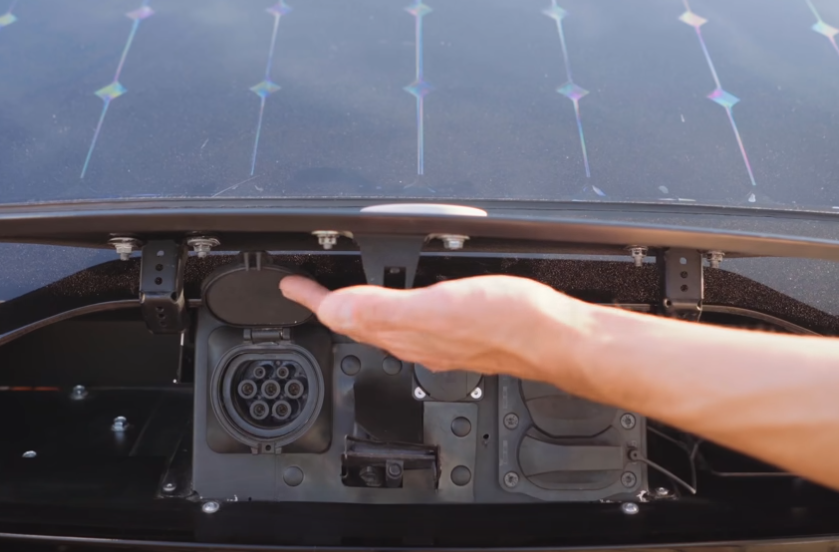
Through this one, the type 2 outlet, you can take back the energy from the battery of the car, not only to devices but to the grid.

Jonny clarifies:

So vehicle to grid?

To which Fabian responds:

So vehicle to grid! It’s not just hardware, it’s a lot of software as well, to make it able to actually do it.

Note also that under the other side of the charging flap there is a CCS socket for DC rapid charging of the Sion’s battery pack on those long trips from the city into the countryside.

Honda Research V2G Technology in Europe

Honda have just announced in a press release that:

Honda has invested in advanced bi-directional charging technology at its European R&D site in Offenbach, Germany, which is helping to balance demand and store energy more efficiently across the facility. The new charging system incorporates renewable energy generation, and is a test bed for hardware that will be available to private households in the future.

The technology installation in Germany follows the debut of the domestic Honda Power Manager Concept at the 2017 Frankfurt Motor Show in September. The concept previewed a fully-integrated energy transfer, which takes power from the grid and can return stored energy from electric vehicle (EV) batteries – through ‘Vehicle-to-Grid’ or ‘V2G’ technology. This latest trial installation at Honda’s Offenbach site applies the same principles on a larger scale.

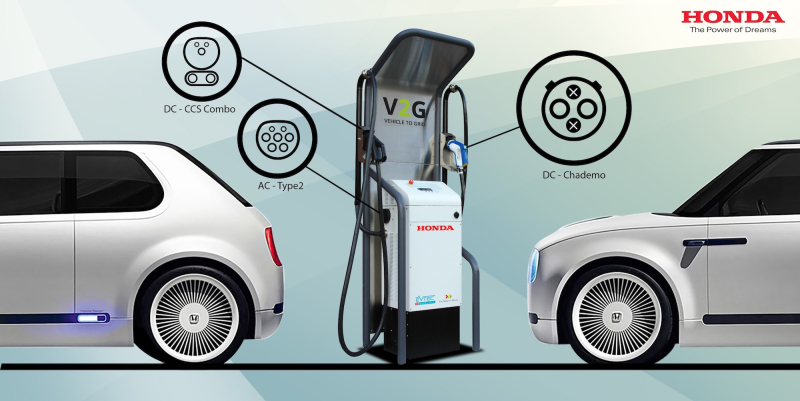
Here’s how Honda’s new bi-directional V2G capable charging station looks, albeit not in situ in Offenbach by the looks of it!

Honda installs new bi-directional charging technology at European R&D centre

Honda installs new bi-directional charging technology at European R&D centre

According to Jörg Böttcher, Vice President of Honda R&D Europe:

With the installation of the latest bi-directional charging technology at our R&D site in Germany, we are adding the next technology to our Smart Company project, which will further enhance our research activity in the field of zero-emission society and future mobility.

Here at V2G UK we have come to associate the word “Honda” with “hydrogen“, although Honda did take part in a V2G trial in the United States back in 2013. Here in Europe in 2017 they point out that:

With the help of the bi-directional hardware and with the technology of The Mobility House, Honda aims to optimise energy management at its European R&D campus, maximising the use of renewable solar power in particular. The project is testing the interaction, compatibility and power flow between specific electrical components, including the renewable energy cells and the EV batteries. The installation represents a collaboration between Honda R&D Europe, energy service provider The Mobility House and Swiss technology company EVTEC.

The investment in the bi-directional energy transfer technology further enhances the world’s most advanced public charging station for plug-in vehicles, which was launched at Honda R&D Europe in summer 2017. Its state-of-the-art 940V capability can deliver up to 150kW of energy, enabling as many as four vehicles to charge simultaneously with different types of connectors. Since its installation in June, the EV charging station has supplied power for 447 charge sessions and has saved 3.87 tonnes of CO2.

Here’s a video from The Mobility House explaining their vision of a future “V2G enabled” world:

https://youtu.be/qGtCClE4tcY

There’s more information on that topic in a press release from EVTEC which doesn’t seem to be available online at the moment. In slightly stilted English the Swiss company explain that:

With the growing importance of electric mobility, the two worlds of energy and mobility are merging. The closer this connection becomes, the more importance gain intelligent technologies that ensure this development secures a sustainable future. Such a technology is Vehicle-to-Grid, in short “V2G”. What is behind this term, is the intelligent integration of electric vehicles in the energy system and markets.

This advantage is well known to Honda, where the V2G technology is already in use today: with the help of a bidirectional charging solution, the company aims to optimize energy management at its European R & D campus in Offenbach. Within the framework of a comprehensive project over the last 12 month, the interaction of various energy components – from vehicle battery to photovoltaic system – is being tested here.

According to EVTEC co-founder and CEO Markus Kramis:

A reliable, precise, and fast acting bi-directional charger is the necessary base for every V2G application, like peak shaving and energy optimization.

All in all that EVTEC charging station sounds like just the sort of thing we need to try out at V2G Towers over here in North Cornwall, located in a distant corner of sunny South West England amongst an impressive array of large scale solar PV and onshore wind “farms”!

The same may well apply to Honda’s Power Manager mentioned above, which was announced at the Frankfurt Motor Show in September. According to a Honda press release once again:

Its all-new Power Manager Concept, a fully-integrated energy transfer system, is designed to incorporate electric vehicles into a smart power grid. It enables the collection and distribution of electricity between the grid, homes and businesses and electric vehicles, to intelligently balance demand and efficient storage of energy. Honda will apply its Power Manager technology as part of a smart grid pilot scheme in the west of France.

Honda-Power-Manager

Power Manager Concept works by aggregating and distributing energy to and from the grid, solar panel-equipped homes or workplaces, and electric vehicles.

Electricity is received into the system from the grid or is generated by the solar panels and can be used to power and heat the building as well as to charge the EV. While the EV is plugged in, the energy can be stored and used at home or sold back to the grid, potentially generating value for EV owners.

The Power Manager Concept system can help to stabilise the grid at times of either short or surplus supply, as well as representing a revenue opportunity for EV owners.

That sounds like just the sort of thing that Western Power Distribution needs to help stabilise the electricity distribution grid in our neck of the woods, which is currently heavily “constrained”:

WPD-NoCapacity

Do you suppose that we could possibly persuade Honda to apply its Power Manager technology as part of a smart grid pilot scheme here in the south west of England too?

30 kWh Nissan LEAF Extended Test Drive

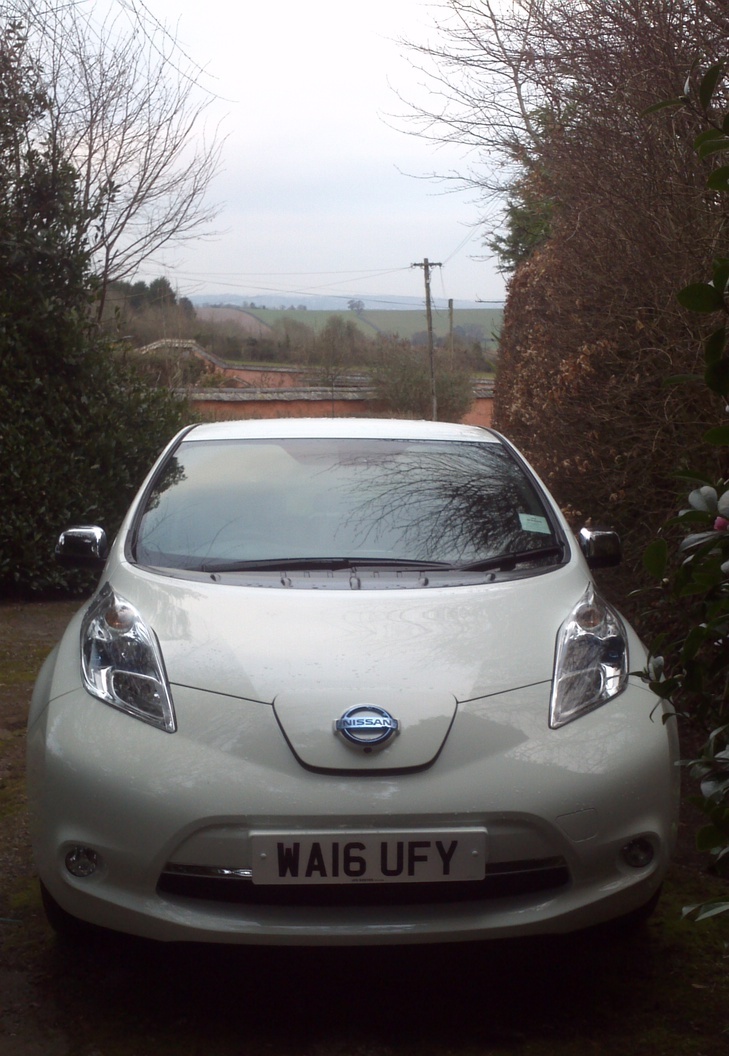
We have mentioned the new “go further” Nissan LEAF previously on the V2G blog, and now thanks to JFE Nissan in Exeter we have the chance to test the new 30 kWh battery pack equipped 2016 LEAF for ourselves. According to the Nissan UK web site:

Every full charge will give you a range of up to 155 miles.

I don’t know about you, but we’d like to check that claim for ourselves! At the very start of our test the odometer on the bright white LEAF we were borrowing read 6 miles as we collected it earlier today, and had advanced to 11 miles by the time we got back to base:

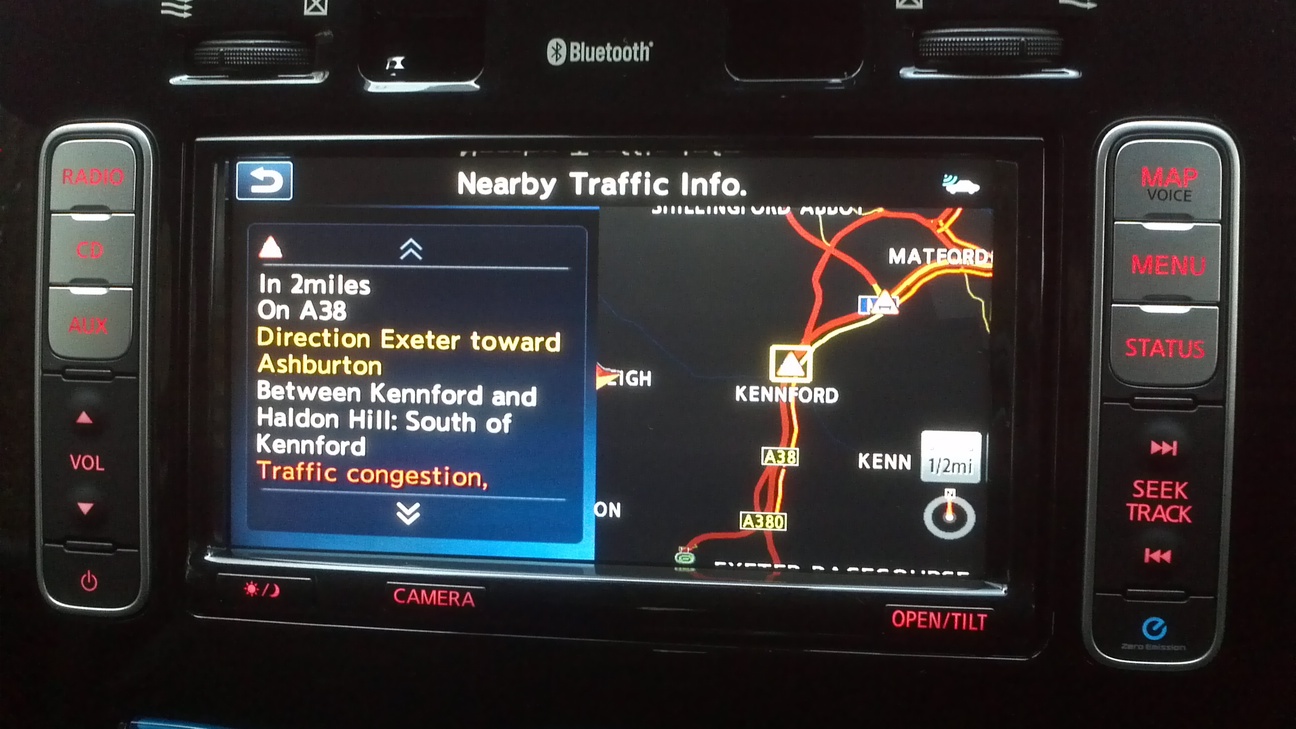
We had intended returning from Exeter to the wilds of the Haldon Hills via a main road. However before we left the Marsh Barton trading estate we consulted the LEAF’s handy traffic news feed, which revealed this:

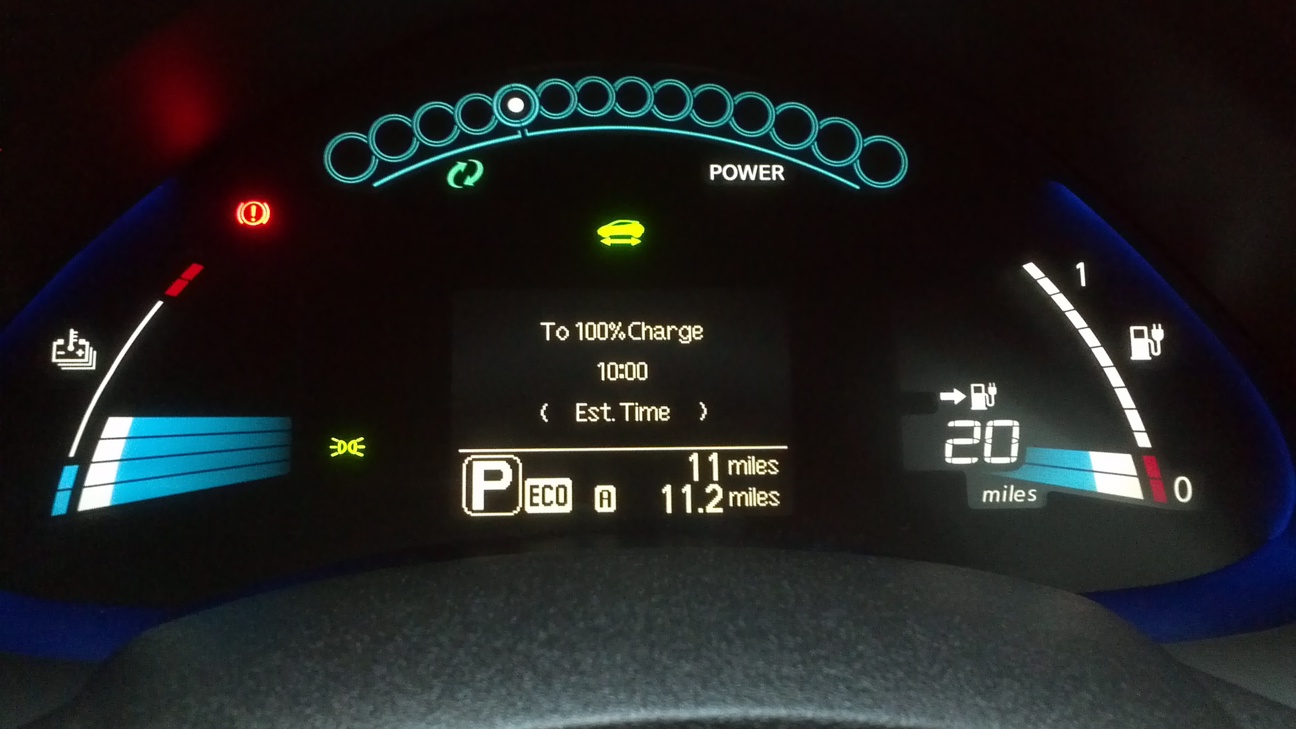
According to Radio Devon “a caravan’s been abandoned in the inside lane on Telegraph Hill”! Hence we took the scenic route through some narrow Devon country lanes, and ended up with 20 miles worth of range left in the traction battery pack, according to the LEAF’s dashboard at least:

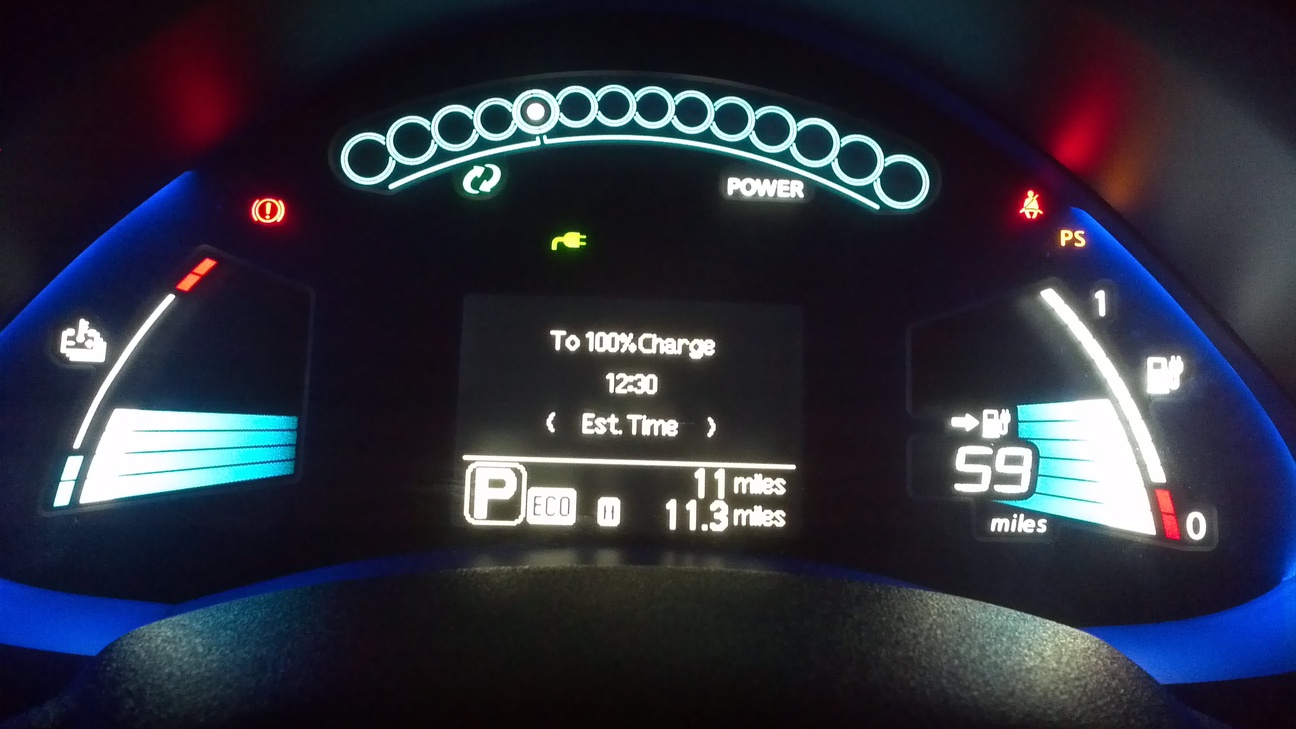
Having previously had some trouble using the rapid charger at Exeter Services, and having to avoid the motorway for other reasons on this occasion, we were in the perfect position to test the LEAF’s 13 amp “Electric Vehicle Supply Equipment” charging lead. We plugged it in at 18:30, and by 22:30 tonight the dashboard told us this:

More from us tomorrow on our Spring 2016 LEAF test, but for now we leave you with the inimitable Robert Llewellyn’s take on the new LEAF:

À bientôt, as I believe they say in France.

Consumer Attitudes to Smart Meters

According to a press release from Smart Energy GB:

Consumers who have upgraded to a smart meter as part of Britain’s national rollout are continuing to demonstrate high satisfaction with their new technology, and greater control over their energy bills.

Smart Energy GB, the national campaign for Britain’s smart meter rollout, today publishes the third Smart energy outlook, the largest independent barometer of national public opinion on energy and smart meters. The research surveys more than 10,000 people around the country.

The bullet point from the “Smart Energy Outlook” report are:

  • More than half (52 per cent) of people with smart meters say their new meter is helping them save money
  • Eight in ten (80 per cent) people with smart meters have taken at least one step to reduce how much energy they use
  • Eight in ten (79 per cent) people with smart meters would recommend them to others
  • 85 per cent of those with smart meters say they have a better understanding of what they are spending on energy
  • People with smart meters are more confident in the accuracy of their bills (81 per cent) when compared to those with traditional meters (64 per cent)
  • Three quarters of people with smart meters (75 per cent) say that they understand their energy bills, while just 61 per cent of people using traditional meters said the same
  • Nearly three quarters (72 per cent) of people with smart meters say that they have the information they need to choose the right energy tariff, far higher than those with traditional meters (57 per cent)

Just in case you are now wondering “How do smart meters work?” here’s a video explanation from Smart Energy GB:

I wonder how many of the people surveyed by Populus would be interested in having an electric vehicle capable of powering their home, together with a smart meter and a “Smart Grid” that allowed them to optimise the charging and discharging of their EV’s batteries to their own financial advantage?

In partial answer to that supplementary question, here is our report on consumer attitudes to “Smart Charging” of electric vehicles

Riversimple Launch the Rasa Hydrogen FCEV

We’ve mentioned the Riversimple open source hydrogen fuel cell electric vehicle before, and we could not help but notice the countdown to the launch of their new “Rasa” model on their Twitter feed:

Today there’s an in depth article in the Financial Times about the Rasa and the reasoning behind it. Here’s the edited highlights:

Riversimple Movement is taking its hydrogen fuel-cell project — now 15 years in the making — to the next stage with the unveiling of its first production-ready, road-legal prototype and the start of a public trial.

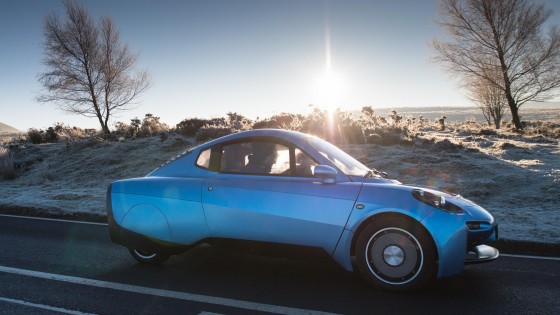
In the autumn, about 20 people will have the chance to drive away a carbon-fibre Rasa, which may look slightly kooky with its rear-wheel spats and butterfly doors but packs four electric motors and can travel for 300 miles on a single fill-up.

“We’re not targeting the ecological market. We want it to look good,” says Hugo Spowers, who founded the company in 2001.

The Rasa was named for the blank-slate approach the company says it is taking to carmaking. Parts are chosen not on the basis of how cheap, light or powerful they are but how they will affect the business model.

“One investor told me this was the first time he’d seen a car built for a business model rather than the other way round,” says Mr Spowers.

Please read the FT article in full, but also take a look at what Riversimple themselves have to say. According to “Technology behind the car” section of their web site:

Every aspect of the hydrogen Mark ll Alpha has been created and interrogated for simplicity, efficiency, lightness, strength, affordability, safety and sustainability.

This first car is a two seater ‘network electric’ car, powered by a hydrogen fuel cell. The chassis is a carbon fibre monocoque made from very lightweight but extremely stiff carbon fibre composites. The monocoque chassis weighs less than 40kg.

Our car is very light – we have a target weight of 520 kg. It embodies various key features:

  • Four electric motors, one in each wheel
  • Motors as brakes – recovering over 50% of kinetic energy when braking
  • Super-capacitors to store this energy and provide most of the power for acceleration
  • A low powered hydrogen fuel cell ( 8.5 kW)
  • A body made of lightweight composites

It’s the synthesis of all these technologies that delivers the groundbreaking efficiency and range, many times better than inserting fuel cells into conventional, heavy, vehicles. The production prototype should do c.250 mpg (equivalent), with a range of 300 miles. Emissions are zero at tailpipe and c.40gCO2/km Well-to-Wheel – even if the hydrogen comes from natural gas.

We’ll keep you posted as the Rasa launch countdown continues. According to Twitter:

Here’s a teaser video to whet the appetite for the big reveal on 17 Feb – 5days to go!

[Edit – February 17th 2016]

The Riversimple Rasa has been unveiled today:

According to the Riversimple blog:

The new car reflects a simple idea that was first mooted in the 4th century BC by the great philosopher and scientist, Aristotle. It is the idea that something new begins, not with predetermined structure and characteristics, but with a blank slate – tabula rasa – moment of potential.

We set out with a blank slate, to design a car for the world in which we now live, shaped by the best technology available to us and answerable to our most pressing concerns. We set out to build a local car that will take people on their local journeys, in the way that they wish to travel, at a cost that is affordable – and without leaving a heavy footprint of air pollution and environmental degradation. To do this we selected a still evolving, but incredibly promising and safe technology. This is hydrogen fuel cell technology.

Here’s another video, this time revealing the Rasa in all its low drag glory:

I did enquire on Twitter where the nearest suitable filling station for a Rasa might ultimately be. I haven’t received an answer yet, but if it isn’t “Exeter” then I rather hope it will be “Plymouth”. According to the SWARM Project web site:

This project will establish a demonstration fleet of small passenger vehicles that builds on and expands existing hydrogen refuelling infrastructure. Three European regions will be participating in this effort: the UK (the Midlands and Plymouth), the Brussels area and Wallonia, and the Weser-Ems region in NorthWest Germany. Each of these regions will deploy a new hydrogen refuelling site to close the gaps in a continuous ‘hydrogen highways’ that leads from Scotland via the Midlands to London, connecting to Brussels and on to Cologne and Hamburg/Scandinavia/Berlin via Bremen.

The vehicles employed are low-cost, high fuel-efficiency, hybridised, light-weight passenger cars specifically designed for city and regional transport. These vehicles provide a complementary pathway to commercialisation to the large Original Equipment Manufacturer (OEM) of hydrogen fuel cell options, by allowing near-term rollout on a commercial basis to a wide range of users – in parallel with the planned rollouts for large OEM vehicles from 2015. Their deployment regions will gain the infrastructure, public exposure and technological understanding to act as seed locations for future large scale OEM vehicle rollout.

You will note that Riversimple are a member of the SWARM project consortium.

Four Cities Awarded £40 million “Go Ultra Low” Funding

The United Kingdom’s Department for Transport has just announced that:

Nottingham, Bristol, Milton Keynes and London named as winners of multi-million fund to encourage drivers to go green.

Four cities have been awarded significant funds today (25 January 2016) to promote green vehicle technology after successfully bidding for a share of a multi-million pot created to support the take-up of plug-in electric cars across the United Kingdom”.

Here’s the video version of the announcement:

Transport Secretary Patrick McLoughlin said:

  • These Go Ultra Low Cities have proposed exciting, innovative ideas that will encourage drivers to choose an electric car. I want to see thousands more greener vehicles on our roads and I am proud to back this ambition with £40 million to help the UK become international pioneers of emission cutting technology.
  • The UK is a world leader in the uptake of low emission vehicles and our long-term economic plan is investing £600 million by 2020 to improve air quality, create jobs and achieve our goal of every new car and van in theUK being ultra-low emission by 2040.

Third in the list of winners is Bristol, just up the M5 motorway from us here in Exeter, who were actually bidding under the banner of the “West of England”. According to this morning’s announcement:

Bristol get £7 million to offer residents free residential parking for ULEVs, access to 3 carpool lanes in the city, over 80 rapid and fast chargers across the city and a scheme encouraging people to lease a plug-in car for up to 4 weeks to help them better understand the range of benefits that electric vehicles bring.

There’s no mention anywhere in OLEV’s announcement about vehicle-to-grid or distributed storage however. Perhaps that sort of thing is still not on UK plc’s shopping list?

Renault and Eneco Announce Smart Charging App at COP21

As we reported yesterday, the Nissan half of the Renault-Nissan Alliance made an interesting V2G announcement at the COP21 meeting in Paris. Now it’s Renault’s turn, although this one concerns “smart charging” rather than fully fledged vehicle-to-grid technology. In a December 7th press release they said that:

Renault & Eneco collaborate on smart charging solution for electric vehicles.

  • Agreement signed between electric vehicle leader Renault and energy supplier Eneco on December 7, 2015 at COP21 Paris conference
  • Eneco will develop smart charging app for ZOE, Renault’s 100% electric compact car
  • Renault ZOE users will be able to charge their car at lower costs using renewable energy

Eneco subsidiary Jedlix will develop a version of its existing smart charging app, to adapt it to Renault ZOE. This app makes it possible to charge electric cars using renewable energy at times when the market prices are most favourable. Like at night, when the production of sustainable wind energy exceeds demand in most European countries.

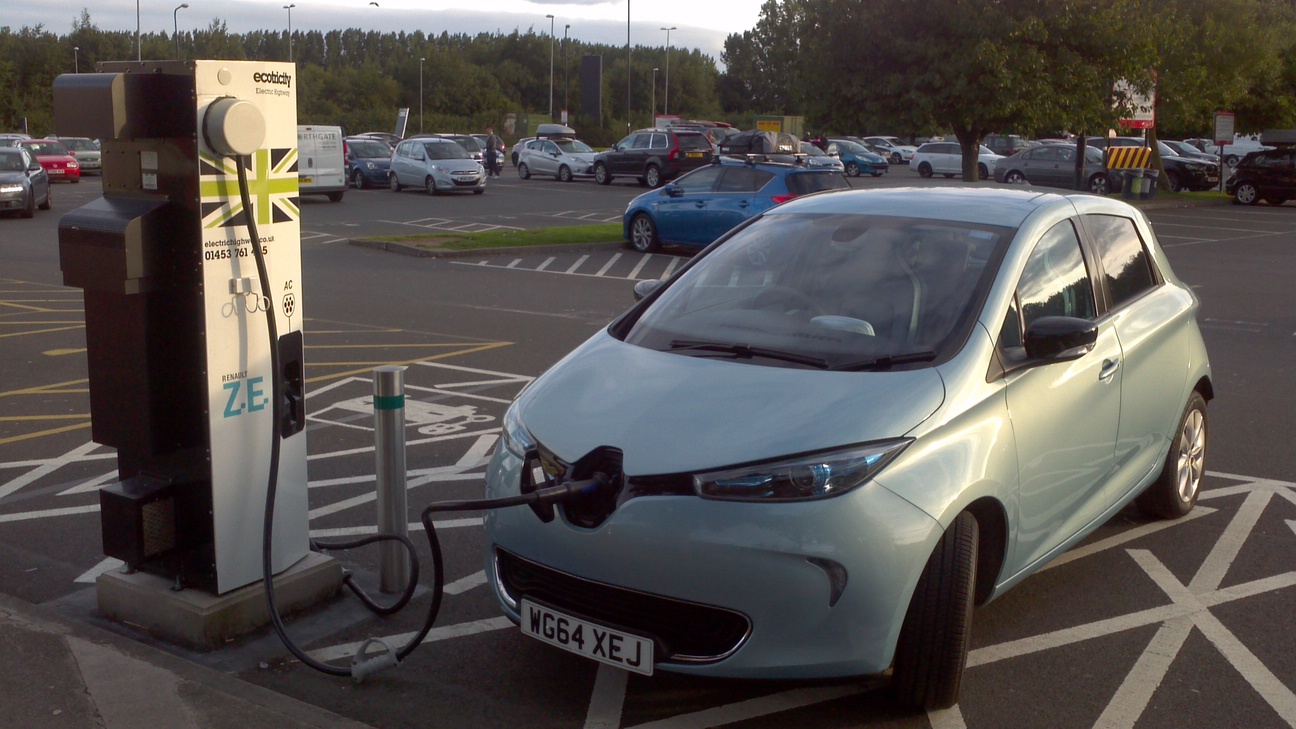
As far as “lower costs” go, here’s a glimpse of V2G UK filling up a Renault ZOE 100% electric compact car 100% free of charge using renewable energy in a UK motorway service station, courtesy of Nissan & Ecotricity:

Heading back to Paris, Eneco Executive Board member Marc van der Linden said :

It is expected that there will be three million electric vehicles in the whole of Europe by 2020. To reduce CO2 emissions, it is essential that this vehicle fleet will use green power. It is also important to prevent power grid overloads as a result of peaks in demand if all the cars would be charged at the same time. Our app forms a direct link between the electric vehicle and the supply of sustainably generated energy. Consequently, the energy used for charging is more sustainable, energy supply and demand is balanced and the costs of driving an electric vehicle are reduced because users charge their cars at lower rates.

Eric Feunteun, who is Electric Vehicle Program Director at Renault, added:

Renault electric cars support the energy transition in the automotive industry as they contribute to the replacement of fossil fuels by renewable energies. With smart charging systems like the one developed by Eneco, Renault electric vehicles make a big contribution to power systems’ stability and reliability: EVs turn into an asset for the grid rather than create overload. They can store and use electricity when it is less carbon-dependent and cheapest for their owners. Our partnership with Eneco is a move towards making driving a Renault ZOE more interesting and affordable and will contribute to an electric vehicles’ scale up.

Renault’s press release continues:

A pilot test carried out by Eneco in the Netherlands demonstrates that users can save up to 15% on their electricity costs by using the app. To achieve this, all they have to do is indicate by what time the car must be fully charged and the system will automatically determine the lowest price within this time frame. The app will first be available for ZOE users in the Netherlands and soon be available in other countries where Eneco operates.

Eneco do have a UK office, but quite how Renault ZOE drivers across the UK might be able to make use of “a flexible [electricity] price negotiated electronically by computers” to save a few quid on their fuel bills whilst “prevent[ing] power grid overloads” is a mystery to me at the moment, despite the fact that I sit on committees tasked with designing international standards for such things! However, here’s Eneco’s vision of “Everyone as an Energy Supplier in 2030”:

Make sure that, if nothing else, you watch the bit at 1 minute 20 seconds which mentions that “The car plays a pivotal role as an energy storage buffer”.