SOLCER “Zero Carbon” House Wins “Innovation in Sustainability” Award

Prompted by last Friday’s bombshell from Westminster we bring you this only slightly stale news about an award winning “Zero Carbon House” developed by the Welsh School of Architecture at Cardiff University. The building does incorporate energy storage so we’re still on topic, and here’s a video that reveals how the “SOLCER House” manages to generate more energy than it uses, averaged over a calendar year:

As a Cardiff University press release revealed less than a month ago:

In a bid to meet tough targets for zero carbon housing, Professor Phil Jones and his team from Cardiff University’s Welsh School of Architecture developed the first low-cost energy positive house.

Designed and constructed as part of the Wales Low Carbon Research Institute’s (LCRI) SOLCER project, the house is the first to combine reduced energy demand, building integrated renewable energy supply and energy storage.

Professor Jones said: “We are proud of our house, and delighted to win this Award. Governments across the world, including the UK, have set a target of achieving zero carbon housing by 2019. We have to rise to that challenge and come-up with innovative new ways to build the homes of the future.”

The ‘Innovation in Sustainability’ Award, sponsored by leading law firm Geldards and IP Group, recognises the team’s outstanding contribution to the environment.

The SOLCER House is in the news again today, since the official launch is currently taking place near Bridgend in South Wales. According to the BBC:

Designers at Cardiff University say they have constructed the sort of house George Osborne once described as impossible. The chancellor scrapped a requirement for new homes to be zero carbon by 2016 because he said it would prove too expensive, but Cardiff University say they have built a house that exports more power to the grid than it uses, and crucially they say the cost fell within the normal budget for social housing.

A government spokesman said house builders needed to be given more time to develop low energy homes.

The house took just 16 weeks to construct and cost £1,000 per sq m – that’s within the range for social housing of £800 to £1,000 per sq m, the designers said. In future, they say its owners will make money from selling excess energy.

Here’s a slightly longer video that uses time-lapse photography to reveal how the house was constructed over those 16 weeks:

As the original press release concluded:

The story of the SOLCER house will be documented in academic journals and conferences, the project was supported by the European Regional Development Fund (ERDF).

The award was presented to Professor Phil Jones; Dr Joanne Patterson; Ester Coma (Welsh School of Architecture) and Andrew Davies (SIPs Wales) by Andrew Evans, Partner, Geldards Law Firm.

Do you suppose that George Osborne and David Cameron are qualified to comprehend academic architectural journals?
Nissan and Green Charge to Deploy Second-Life EV Batteries

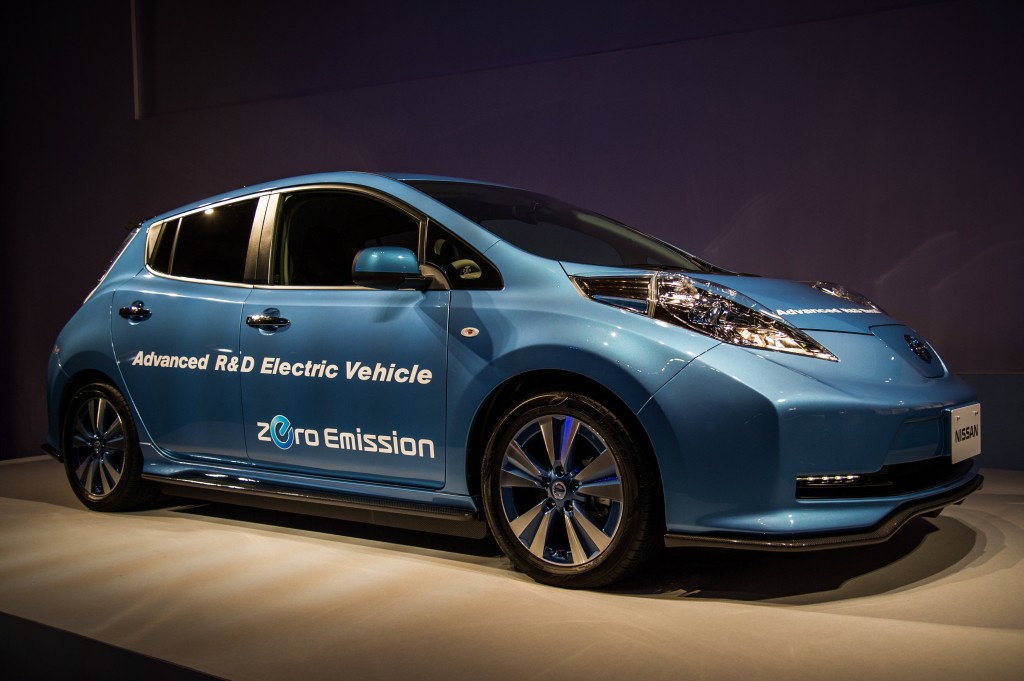
In a press release earlier this week Nissan expanded on some of the points Carlos Ghosn made in his speech to Nissan shareholders last month. “In his latest LinkedIn Influencer post, Renault-Nissan Alliance CEO Carlos Ghosn points to encouraging figures for electric vehicles, including the sale of the Alliance’s 250,000th EV in early June”

I don’t see other automakers as competitors when it comes to zero-emissions vehicles. They’re allies. And it is great to see the number of “Alliance allies” growing, as other automakers introduce more affordable EVs to compete with the segment-leading Nissan LEAF.

We reached the 250,000-unit milestone in early June, four-and-a-half years after the LEAF was introduced as the world’s first mass-market, zero-emission vehicle.

We also are seeing demand grow quickly in places where businesses and governments are joining to expand the charging infrastructure, and as more motorists get the chance to experience an EV.

In fact, computer engineer Yves Nivelle, who bought our 250,000th EV, was spurred in part by an incentive in France that encourages owners of older diesel-engine vehicles to trade them in on a new EV.

That sort of enthusiasm is quite common among our EV owners. Our EVs enjoy among the highest levels of customer satisfaction that we have seen for any vehicle. Operating costs are low, they require less maintenance, and they are fun to drive.

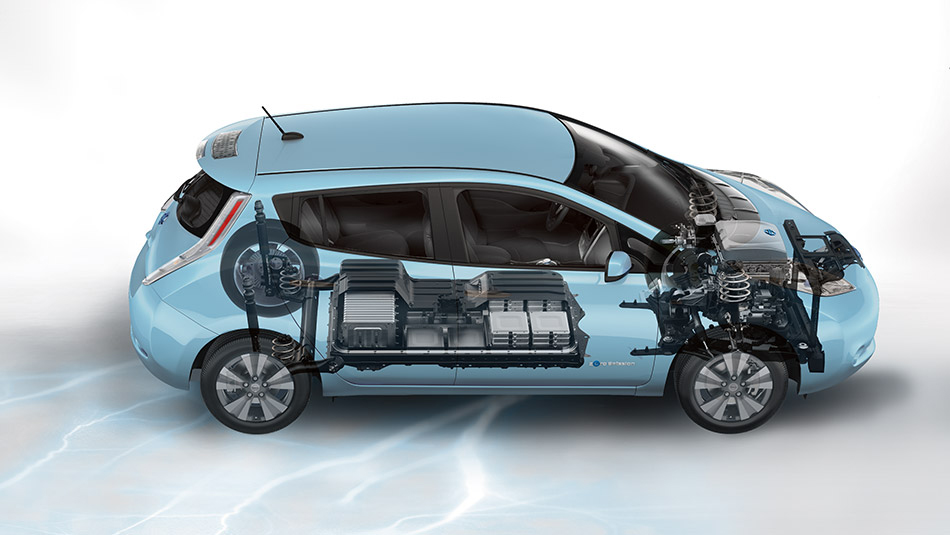
2015 Nissan LEAF cutaway

2015 Nissan LEAF cutaway

In other recent news, companies are forming to take advantage of re-packaging used EV batteries for other uses. Nissan recently announced it is teaming up with Green Charge Networks, an energy start-up, to reuse LEAF batteries to store energy for commercial and industrial buildings.

After many years of service, car batteries eventually need to be replaced. But they still retain enough charge for lighter chores.

When electricity rates are highest, in the middle of the day, a corporate customer can switch its energy use from the power grid to these re-packaged batteries. Or, even better, it can use the batteries to store unused energy from rooftop solar panels. Some homeowners already are doing this by connecting their solar panels to their EVs, to store the energy in the car’s batteries for later use.

Battery technology continues to improve, as well. In fact, the day is nearing when the typical EV motorists will be able to leave home with a full charge, go about their daily routine, and return home with ample charge remaining in their Nissan LEAF or Renault ZOE.

Later this year, you will hear more about our initial steps to increase the range of our EVs. Our goal is to eliminate “range anxiety” for our customers, as we continue our effort to make zero-emission vehicle a mainstream choice.

I missed it first time around, but additional information is available in the “Second-life” press release of June 15th:

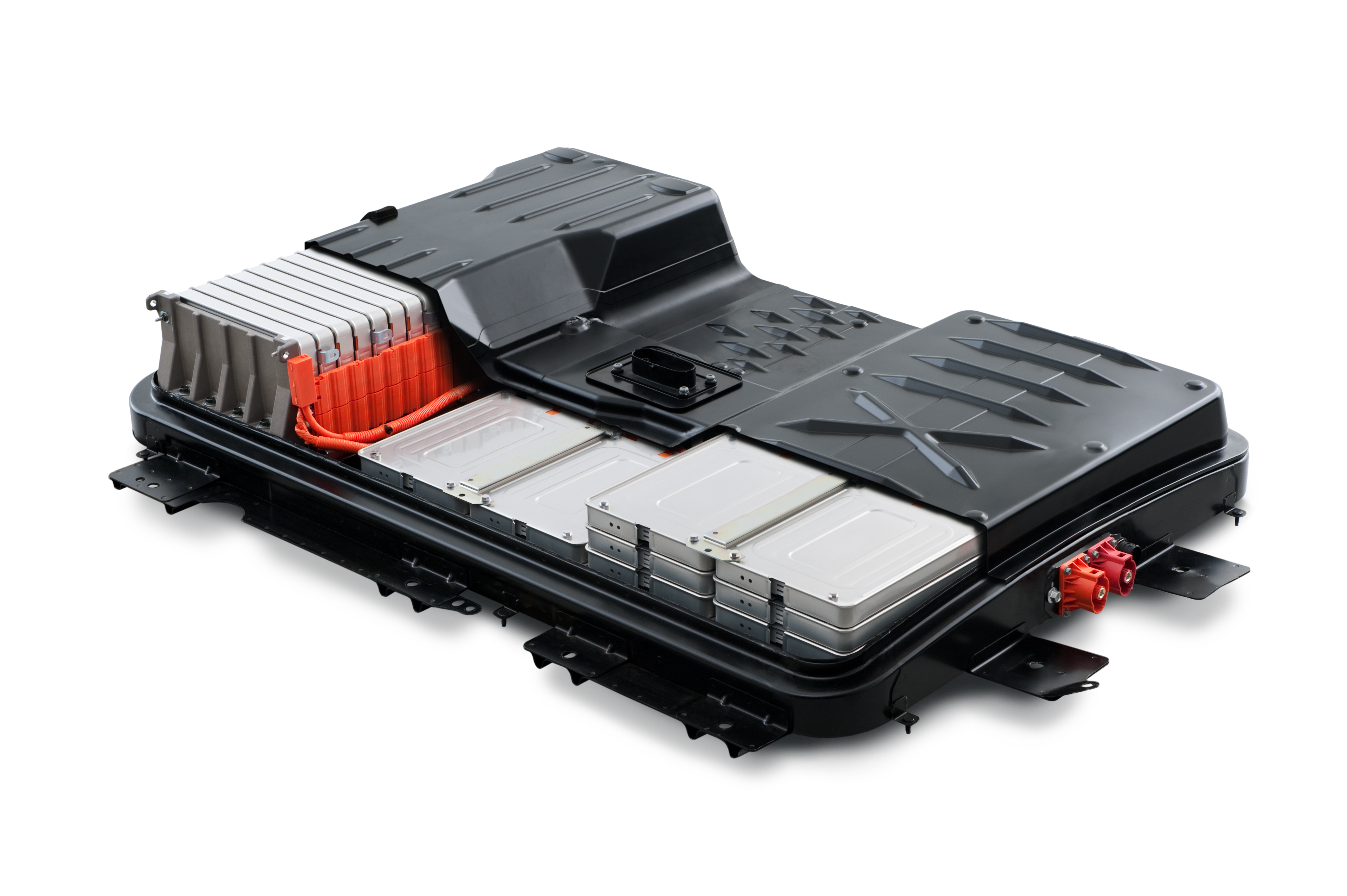
Nissan Motor Company and Green Charge Networks, the largest provider of commercial energy storage, have joined forces to deploy second-life lithium-ion vehicle batteries for stationary commercial energy storage in the U.S. and international markets.

2015 Nissan LEAF battery pack

2015 Nissan LEAF battery pack

As part of the company’s commitment to sustainability and reducing greenhouse gas emissions, Nissan has conducted multiple research projects in Japan, the U.S. and Europe to use LEAF batteries outside the vehicle through 4R Energy, a joint-venture with Sumitomo Corp. formed in 2010.

In a new stationary storage application powered by Green Charge’s intelligent software and Power Efficiency Agreement™, the second-life energy storage unit has a cost advantage over traditional units, opening up new markets where incentive programs are currently not offered.

Engineering teams from both companies have worked together for more than a year to ensure safety, reliability and performance of this offering for commercial customers.

The first combined storage unit will be installed at a Nissan facility this summer, where multiple Nissan LEAF batteries will be configured to offset peak electricity demand, creating savings while also benefiting the utility grid. Systems like this also can be paired with renewable energy sources such as wind or solar to further reduce a facility’s environmental footprint and enhance energy savings.


Carlos Ghosn Reveals Long Range Nissan LEAF

I visited Bristol yesterday to attend the Regen SW “Community Energy Markets” conference. More from me on the event in due course, but before that I must point out that Bristol is “European Green Capital” for 2015. Here’s a video revealing how Bristol looks from behind the wheel of the current Nissan LEAF:

Earlier this week BBC News revealed how Japan looks from behind the wheel of the current Nissan LEAF:

According to the BBC:

The boss of Nissan, Carlos Ghosn, has not been shy about expressing his disdain for hydrogen. Instead, Nissan is betting on lithium ion batteries.

Coincidentally earlier this week Carlos Ghosn spoke at the Nissan annual shareholder’s meeting in Yokohama. Here’s the “Technology” part of his presentation:

All forthcoming products will reflect Nissan’s commitment to delivering breakthroughs that advance vehicle safety, efficiency, and connectivity.

During our discussion later in this meeting, we will update you on Nissan’s plans to introduce an autonomous drive vehicle by 2020. We are continuing to develop this exciting technology.

The vehicle that stands to my left features the latest versions of hardware and software that Nissan is developing.

The vehicle that stands to my right is another advanced technology breakthrough. It explores how far we can extend electric vehicle range by making changes to the battery.

Today there are only two reliable ways to increase electric vehicle range.

  • The first is to have a massive network of EV chargers, so that when you are away from home you have the ability to recharge easily.
  • The other option is to put a larger battery pack into the vehicle so that the driver enjoys greater range. However, with today’s level of technology, adding more battery means adding more cost.

As you know, Nissan has been one of the world’s foremost advocates for the development of recharging networks. With our efforts and the support of government and private sector partners, Japan has one of the most highly developed charging infrastructures in the world.

There are now more than 14,000 EV chargers, not including home chargers, in Japan. This means that EV drives already have the freedom to drive throughout mainland Japan without worrying about battery range.

Unlike customers in some other markets, where the charging networks are in earlier stages, customers in Japan who want to enjoy the benefits of driving a LEAF have no need to wait. Japan’s vast EV charging network already provides an incentive for you to move to Nissan’s zero-emission technology. And, during FY2015, the number of chargers in Japan will increase even further. However, that doesn’t mean we will become complacent and stop working to advance our battery and vehicle technologies.

We believe that, in the near future, Nissan can provide EV drivers with even greater “peace of mind” range, by offering comparative mobility to today’s conventional vehicles.

Nissan is exploring new materials and chemistry solutions in order to make thinner, lighter weight and less costly batteries. We foresee the day when you leave your home with a full charge, and are able to go about your day with no concerns…then return home with ample charge.

This video shows how we envision a routine day.

With this vision in mind, our advanced battery research will continue. But we will not wait for its completion to move forward. Later this year, you will hear more about our initial steps to increase EV range.

All of which puts me in mind of a couple of things a Nissan representative said in response to a question about “warranties” that was posed at the V2G workshop I attended earlier this month. It seems Nissan’s battery electric vehicle “warranty doesn’t prohibit V2G” and the “impact [of V2G] on the battery is insignificant”.

Fort Carson Microgrid Adds Bidirectional Chargers

Burns & McDonnell say they are “a full-service engineering, architecture, construction, environmental and consulting solutions firm” and they have announced that:

A team of Burns & McDonnell engineers, along with subcontractor Coritech Services, has developed a system of bidirectional, fast-charging stations for a fleet of plug-in electric vehicles at Fort Carson, Colorado. This first-of-its-kind system will push power back to the base microgrid when needed to meet installation demand or improve overall power quality.

On Aug. 29, the team successfully commissioned five bidirectional chargers and the aggregating control system as part of the Smart Power Infrastructure Demonstration for Energy Reliability and Security (SPIDERS) microgrid project at Fort Carson. Commissioning was performed using both Boulder Electric Vehicle and Smith Electric trucks, which are being provided for use on SPIDERS under separate agreements with the U.S. Army’s Construction Engineering Research Laboratory (CERL) and Tank Automotive Research, Development and Engineering Center (TARDEC).

Commissioning of the vehicle charging stations represents an important milestone of the Fort Carson SPIDERS project, which is nearing completion. The project is managed by the U.S. Army Corps of Engineers (USACE), Omaha District, and includes technical guidance from CERL and TARDEC.

The bidirectional charging units are capable of providing up to 300 kilowatts (kW) of power to plug-in electric vehicles and also can discharge a like amount of stored energy from the vehicle batteries to the grid or microgrid via Society of Automotive Engineers (SAE) standard J1772-compliant bidirectional charging cables. The vehicle-to-grid (V2G) charging includes power factor correction, which is a growing concern at locations such as Fort Carson that are experiencing a growth in on-site solar power generation, resulting in utility rate penalties.

Here’s what a Smith Electric Vehicle looks like, both inside and out:

Google Gives UK Schools Piles of Raspberry Pi Kits

Last year Google chairman Eric Schmidt warned that Britain was throwing away its “great computer heritage” by failing to teach programming in schools. Mr. Schmidt also promised some funds to teach teachers how to use the Raspberry Pi “microcomputer” to teach programming. Now Google has taken the next obvious step, and promised more money to put piles of Pis in UK classrooms. According to the BBC:

Schools around the UK are to be given 15,000 free microcomputers, with a view to creating a new generation of computer scientists. Funded by Google, the Raspberry Pi Foundation hopes the free devices will inspire children to take up coding.

Eric Schmidt put it this way:

Britain’s innovators and entrepreneurs have changed the world – the telephone, television and computers were all invented here. We have been working to encourage the next generation of computer scientists and we hope this donation… to British school pupils will help drive a new wave of innovation.

Not everybody appears to be happy with Google’s initiative however. The National Union of Teachers said that:

Schools are increasingly being used as marketing venues by companies promoting their own brands in return for teaching resources, books, sports equipment or computers. Commercial sponsorship of school resources and equipment and their involvement in training can actively undermine teachers’ efforts to educate children about the dangers of manipulation and commercial exploitation.

Somewhat surprisingly it seems that Microsoft are at least partly in agreement with Google on this issue. According to Steve Beswick, their Director of Education:

Computer science is something that we have been calling the ‘fourth science’ for some time. We believe that it is every bit as important as physics, chemistry and biology. By formally introducing children to computer science basics at primary school, we stand a far greater chance of increasing the numbers taking the subject through to degree level and ultimately the world of work.

Perhaps Microsoft will soon also be providing NUT members with free hardware around which to develop cross-curricular “fourth science/dismal science” lessons on modelling the benefits of increased knowledge of computer science to the Great British Economy?

Whether that comes to pass or not it seems that the Great British Government agrees with Google and Microsoft that such benefits will in fact occur. Education Secretary Michael Gove has just announced that computer science will be added to the English Baccalaureate syllabus. According to a Department for Education spokesperson:

We need to bring computational thinking into our schools. Having Computer Science in the EBacc will have a big impact on schools over the next decade. It will mean millions of children learning to write computer code so they are active creators and controllers of technology instead of just being passive users. It will be great for education, great for the economy, and will help restore the spirit of Alan Turing and make Britain a world leader again.

Here’s Eben Upton and Eric Schmidt explaining “Google’s secret plan” to some Great British Schoolchildren:

Long live the spirit of Alan Turing!

Liquid Nitrogen Storage As Well As Electric Cars?

The Economist published an article on their web site last week entitled “End of the Electric Car?”. According to the Economist’s columnist “Babbage”:

A breakthrough in engine design has made liquid nitrogen an even more attractive alternative than the lithium-ion batteries used in electric cars. An invention made by an independent British engineer called Peter Dearman dispenses with the costly heat exchanger that is needed to vaporise the liquid nitrogen quickly.


The Institution of Mechanical Engineers in London, the leading standards-setting and registration body for the profession, was so impressed with the Dearman Engine Company’s developments that it has now established a working group comprising engineers, academics, government officials and industry leaders, to explore ways of exploiting liquid-nitrogen technology.

An aspect of the story that the Economist unaccountably failed to mention can instead be found on the web site of the Liquid Air Energy Group, where Tim Fox, Head of Energy and Environment at the Institution of Mechanical Engineers is quoted as saying:

We’re coming out of the cave blinking on this one and we’re only just getting an inkling of how great the energy benefits of liquid air could be.

which the Liquid Air home page follows up with:

Cryogenic liquids are widely used in industry already, but their adoption as an energy vector is only just beginning. A number of British organisations, research teams and Universities are already developing ways to use liquefied air (or liquid nitrogen, its major constituent) as a zero emission energy storage medium and transport fuel.

Note the emphasis on energy storage rather than transport fuel?  The Economist story has thus far attracted 422 comments, only one of which mentioned energy storage. That was one I made myself! I did get one recommendation for it, so perhaps at least one other Economist reader understands what I was on about?  Heading back to the Liquid Air Energy Group home page, they share the following video:

The first minute or so is spent on the Dearman Engine, but the video then goes on to point out that:

Liquid air could also have helped to keep the lights on

and then takes a look at a:

Liquid air pilot plant near Slough [that] uses up excess electricity from power stations and wind farms when consumer demand is low. It’s cheap energy storage that could reduce the need for so many power stations.

As I pointed out to the Economist, I’m afraid that cheap energy storage that’s already connected to the UK National Grid is a concept that gets me a lot more excited than speculation about liquid nitrogen pumps at motorway service stations.