Power Packed Cyber Security?

Given my evident enthusiasm for all things V2x, regular readers may be wondering why I have been more hesitant than most commentators to unequivocally applaud Greg Jackson’s announcement of Octopus Energy’s “Power Pack” retail vehicle-to-grid offer last week? £299 per month which covers all your electric mobility needs including “fuel”. What’s not to like? Surely it’s “a compelling consumer offer”, as I myself put it!

As already hinted at in my introductory article linked to above, perhaps it’s not quite so attractive if you are in fact a “prosumer”, with a few solar PV panels already installed on your very own roof? Here are some other recent items of news to ponder too. In these troubled times hackers are hard at work around the world. There was initial speculation that the recent Spanish “blackout” was a cyber attack. However, according to the BBC on April 29th:

The Spanish grid operator has ruled out a cyber attack as the cause of a massive power cut that crippled Spain, Portugal and parts of France on Monday.

Red Eléctrica’s operations director Eduardo Prieto said preliminary findings suggest “there was no kind of interference in the control systems” to imply an attack, echoing Portuguese Prime Minister Luís Montenegro the day before.

But the exact reason behind the cut is still unclear.

More recently, it was announced on June 17th that:

In January 2025, we participated in Pwn2Own Automotive with multiple targets. One of them was the Tesla Wall Connector — the home charger for electric vehicles (including non-Tesla ones)…

This article explains how we studied the device, how we built a Tesla car simulator to communicate with the charger, and how we exploited this logic bug during the competition.
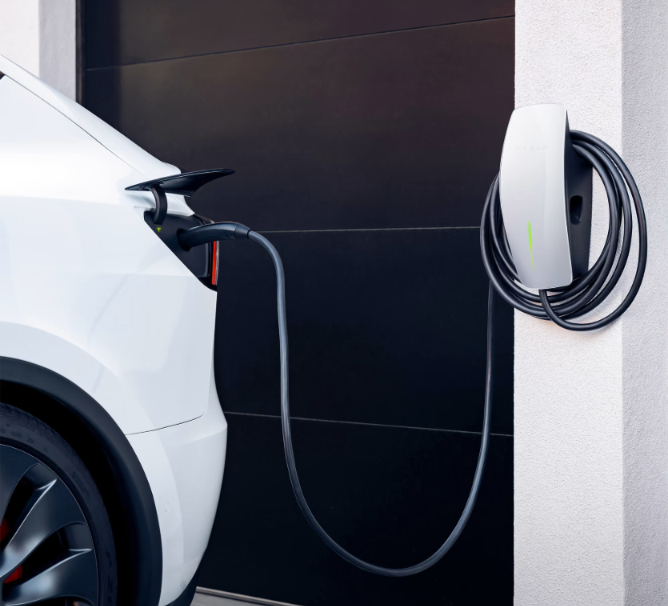
The “hackers” of the Tesla wallbox wore “white hats”, but what might have happened if they had been wearing “black hats” instead? While you ponder your answer to that question, you may find it reassuring that the United Kingdom’s National Cyber Security Centre has been worrying about it for quite some time. According to the NCSC’s web site their mission is:

Making the UK the safest place to live and work online.

We support the most critical organisations in the UK, the wider public sector, industry, SMEs as well as the general public. When incidents do occur, we provide effective incident response to minimise harm to the UK, help with recovery, and learn lessons for the future.

The first example use case for their efforts reads:

Defending the digital infrastructure on which a sustainable world depends.

For example, by helping to protect a flexible energy system from cyber threats.

Image courtesy of ImageFX

In November 2023 the NCSC published a blog post that began as follows:

In 2020, the NCSC published a white paper on Preparing for Quantum-Safe Cryptography. This paper explained the threat that a possible future quantum computer – one much larger, and much more capable, than any that exist today – would pose to a large class of widely deployed cryptography. That cryptography is known as public-key cryptography (PKC). PKC is the enabling technology for secure communication at scale, on the internet and many other networks.

The same white paper also explains why NCSC’s recommended mitigation of the quantum computing threat is quantum-safe cryptography, or post-quantum cryptography (PQC). PQC is cryptography that is resistant to attack by quantum computers, and also to today’s digital, or classical, computers. Furthermore, PQC offers broadly equivalent functionality to the quantum-vulnerable PKC currently in use, and can be deployed in many of today’s devices (including PCs, smartphones etc.) with a software update.

This seems like a simple solution to the threat from a potentially disruptive technology. And conceptually, it is – but the migration to PQC is a very complicated undertaking. This blog explains why.

Do you suppose that Greg and/or the Octopus Power Pack team have read it?

Europe’s first large-scale car-sharing service utilizing Vehicle-to-Grid technology

In a press release earlier today Renault announced that:

In response to the massive growth of renewable energy in the Netherlands, Renault Group, We Drive Solar, MyWheels and the City of Utrecht have joined forces to launch Europe’s first large-scale car-sharing service utilizing Vehicle-to-Grid (V2G) technology.

  • Renault Group will supply 500 Renault 5 E-Tech electric equipped with Mobilize’s V2G technology.
  • We Drive Solar will provide and operate bidirectional charging stations.
  • MyWheels, the leading car-sharing platform in the Netherlands, will operate the fleet.


Utrecht is taking a bold step towards more sustainable mobility with this groundbreaking collaboration. This initiative aims to facilitate the large-scale availability of electric shared mobility while offering an innovative way to balance the city’s electric grid through bi-directional charging technology. The Netherlands has become a world leader in the roll-out of solar and wind energy, causing challenges on the electricity grid. Utrecht is one of the most advanced European cities in using renewable energy, with already 35% of all rooftops covered with solar panels.

Continue reading →

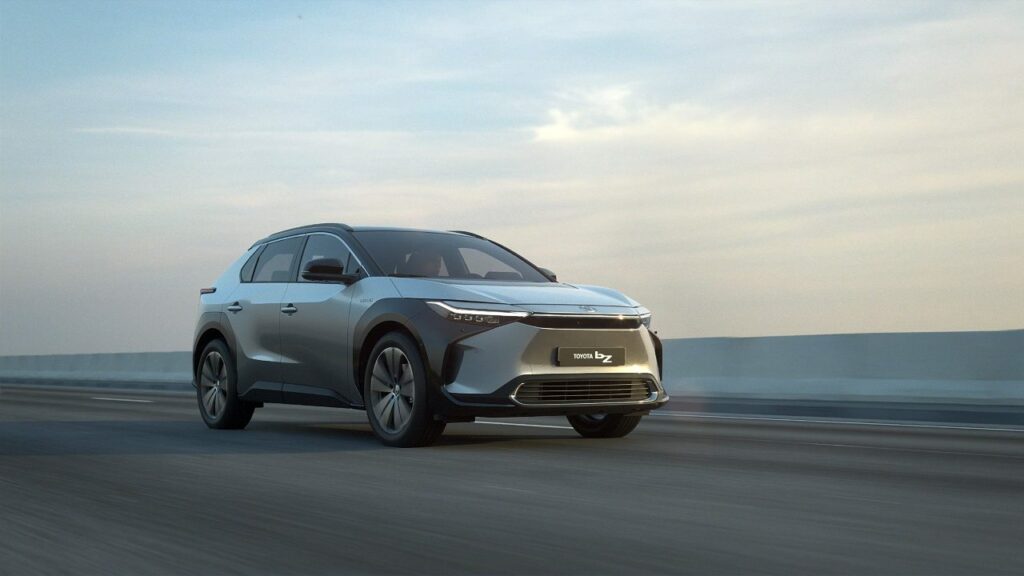
Toyota Announce bZ4X 100% BEV, with V2L!

You could argue that Toyota’s recent launch of a 100% battery, non hybrid, electric vehicle was worthy of an article on this web site, but what with one thing and another we had more important things to write about. However that has now changed!

“First of all here’s the UK version of the bZ4X “world premiere” press release from October 29th, which states that:

Today, Toyota presents the world premiere of the all-new bZ4X, the first model in a new series of bZ – beyond Zero – battery electric vehicles (BEVs).

Faithful in its design and technology to its concept predecessor, revealed earlier this year, the production-ready bZ4X is the first model to be developed by Toyota entirely as a BEV. It is also the first car to be built on the company’s new dedicated BEV platform. Based on e-TNGA philosophy, this has been co-developed by Subaru and Toyota.

Incorporating the battery unit as an integral part of the chassis, beneath the vehicle floor, it gives the fundamental benefits of a low centre of gravity, excellent front/rear weight balance and high body rigidity for high levels of safety and ride and handling quality…

With a fully charged battery, expected range is more than 280 miles (depending on version, exact data to be confirmed later). The bZ4X will also offer advanced technology features, including a solar panel roof to help charge the battery while driving or parked, and third generation Toyota Safety Sense with new and improved active safety and driver assistance systems.

The bZ4X will have its European premiere on 2 December; customers who want to be among the first to obtain the new model will be able to place a reservation via the Toyota.co.uk website from 15 December.

The “European premiere” press release on December 2nd added a range of additional information, including:

Toyota has drawn on almost 25 years’ experience in electrified vehicle battery technology to ensure the new lithium-ion unit in the bZ4X has world-leading quality, durability and reliability. Its confidence in the technology is reflected in an extended care programme that guarantees the battery will still operate to 70 per cent of its original capacity after up to 10 years of ownership or one million kilometres driven, subject to the customer taking their vehicle to an authorised Toyota service centre for an annual health check. To ensure this guarantee could be offered, Toyota developed the battery with a target of 90 per cent of capacity retained after 10 years/240,000 km.

This level of quality and performance is supported by multiple monitoring of the battery’s voltage, current and temperature, from individual cell level. If any abnormal heat generation is detected, controls are automatically triggered. Countermeasures have been put in place to mitigate any material degradation, and there are safeguards in the manufacturing process to prevent foreign matter from entering the battery. In a Toyota first, the battery is water-cooled.

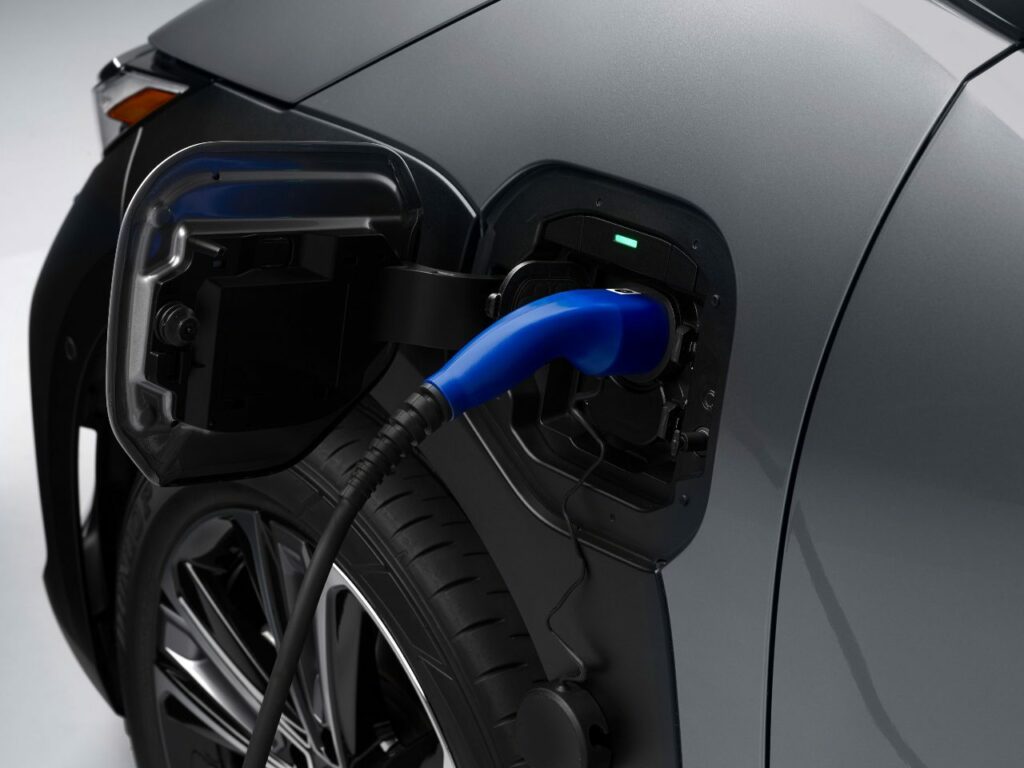
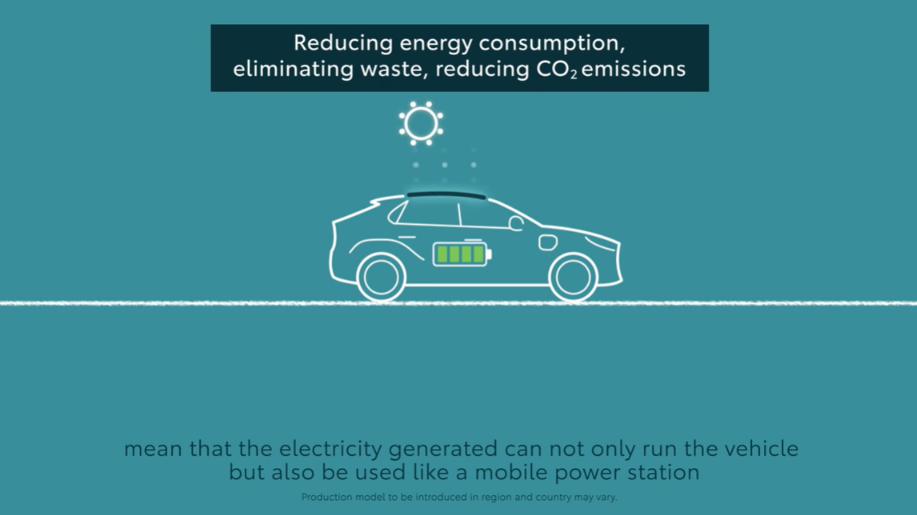
All very interesting of course but still no mention of any mechanism for discharging the bZ4X’s water cooled battery to the outside world. Until now that is! Earlier today my attention was drawn to the Toyota Global bZ4X launch video:

https://youtu.be/d9qp2eoOWCk?t=230

On board solar panels included with the bZ mean that the electricity generated can not only run the vehicle but also be used like a mobile power station in emergencies and in outdoor activities.

Which sounds an awful lot like V2L to me! Close inspection of the associated
press release
reveals the following information:


Roof solar panel (specially equipped vehicles)

Generates electricity equivalent to 1,800 km of driving distance per year (in-house estimate), contributing to superb cruising range. Can charge in parking lots where there are no charging stations, and solar power can be used to charge in disasters or other emergencies.

DC external power supply function (Japanese specifications)

Can connect to a power feeder to supply high-output electricity to homes and home appliances for outdoor activities, and during disasters and other emergencies.

When used with home solar power generation, solar power can supply electricity to the house in the daytime, surplus electricity can be used to recharge the vehicle via a power feeder, and electricity stored in the vehicle can be used to power the home at night.

The bZ4X is scheduled for launch in all regions from mid-2022.

Which is extremely interesting, because unlike other V2L/V2H capable EVs that have been announced recently this one seems to claim that it offers a “high-output DC” rather than a “low-output AC” feed:

However be sure to read the (very) small print. Only in Japan by the sound of it.

Watch this space!

Bad Weather Batters Global Electricity Grids

Over on the eastern side of the Pacific Ocean there has been a summer heat wave in California:


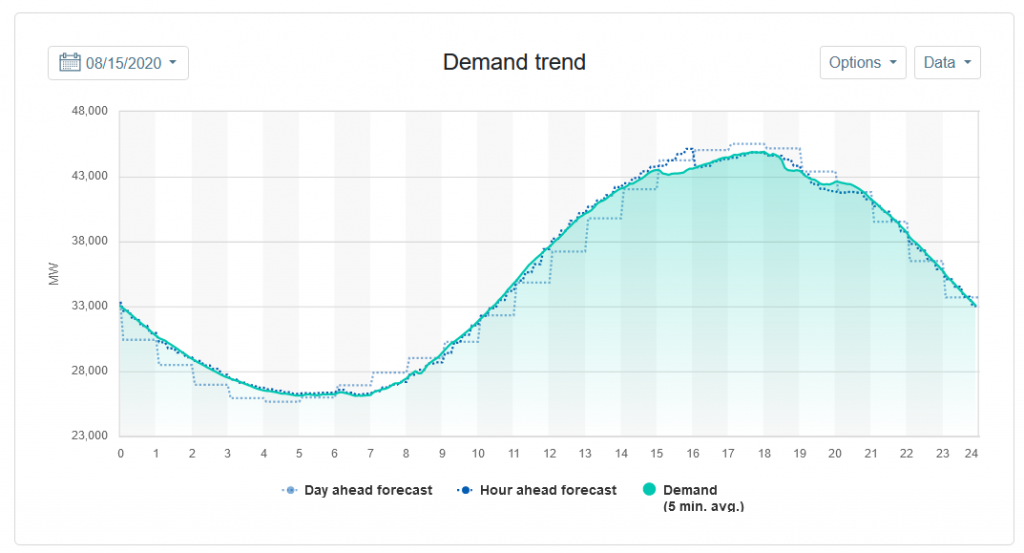
As a consequence air conditioning works hard, electricity demand goes up, and over the last few days there have been some rolling blackouts across the Golden State. According to the New York Times on August 16th:

As temperatures began to rise in California on Friday and again on Saturday, the manager of much of the state’s electric grid called on utilities to cut power to hundreds of thousands of customers.
But the rolling blackouts on those days left some of the state’s energy experts bewildered. They said that the utilities had plenty of power available and that the blackouts weren’t necessary. The grid’s capacity may be tested in coming days as temperatures are forecast to reach into the triple digits again in some places.

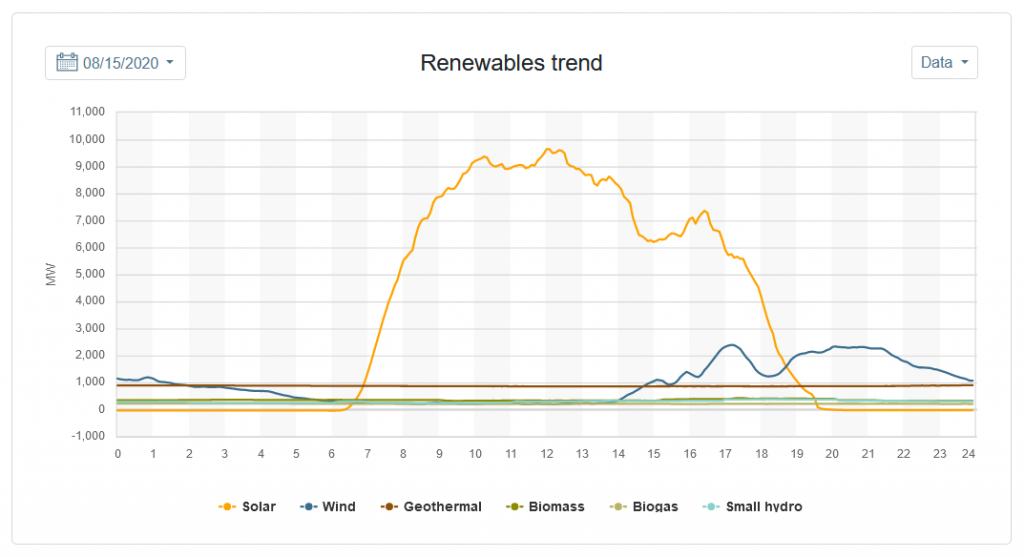
The grid’s capacity was indeed tested in the following days. It’s not clear why the California Independent System Operator (CAISO for short) didn’t issue a call for a voluntary “Flex Alert” on August 15th, but the ultimate consequence was some power cuts. Here’s CAISO’s record of electricity demand and renewable generation that day:

Continue reading →

Triodos’ New Car Park with Solar Powered AC V2G

Today we are finally able to bring you exciting news of a large vehicle-to-grid installation in the Netherlands, with some unusual twists apart from the sheer number of charging stations.

In a thankfully English language article in PlaceTech it was reported earlier this week that:

Edge has delivered an office building for Triodos Bank in the Netherlands engineered to be sustainable inside and out with the latest circular construction principles designed throughout. The 135,000 sq ft office in Driebergen-Zeist, Netherlands was built with the intention to harmonise with the surrounding fauna and flora, on a construction level and beyond.

Edge-triodos-12

Please bear in mind that the article is referring to EDGE Technologies which is part of Dutch developer OVG Real Estate, and not the U2 guitarist!

After further description of the office building itself the article eventually gets to the part of the project of most interest to us. The solar PV covered car park:

The extensive use of renewable energy, reflected in over 3,000 m² of solar panels, as well as heat and cold storage, contributes to the energy neutrality of the building. The project encompasses ‘smart charging’ electric cars from solar energy and ‘Vehicle2grid’ technology. Vehicle2grid means that the cars cannot only be charged with solar energy but also discharged, which is called bi-directional charging. The cars become an active part of a ‘smart net’, which includes such benefits as being able to store solar energy.

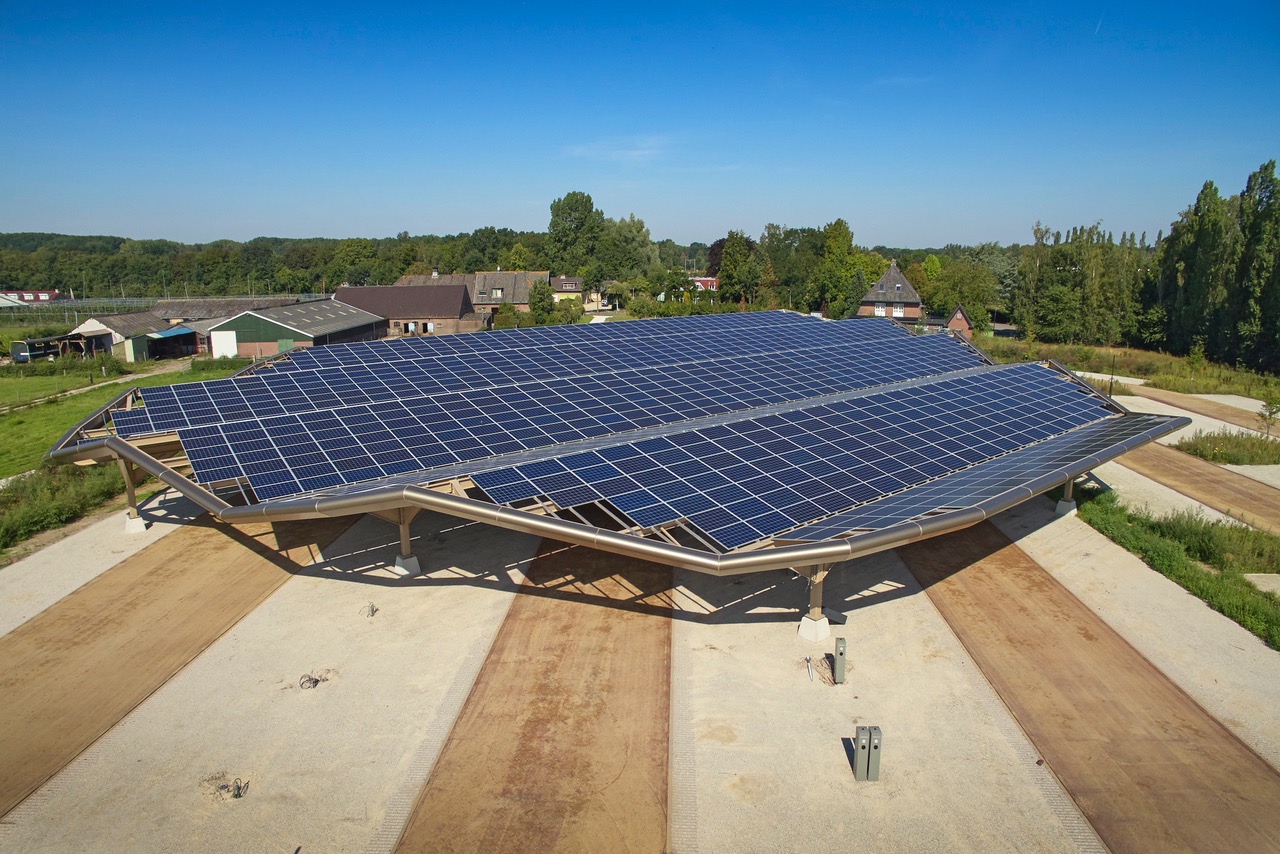
Drone triodos

The PlaceTech article doesn’t go into any more detail than that but we certainly intend to, not least because the aerial view of the solar PV canopy reveals a number of electric vehicle charging stations that look identical to the one we have installed in our “wall to wall” V2G “living lab”:

DSC_0464

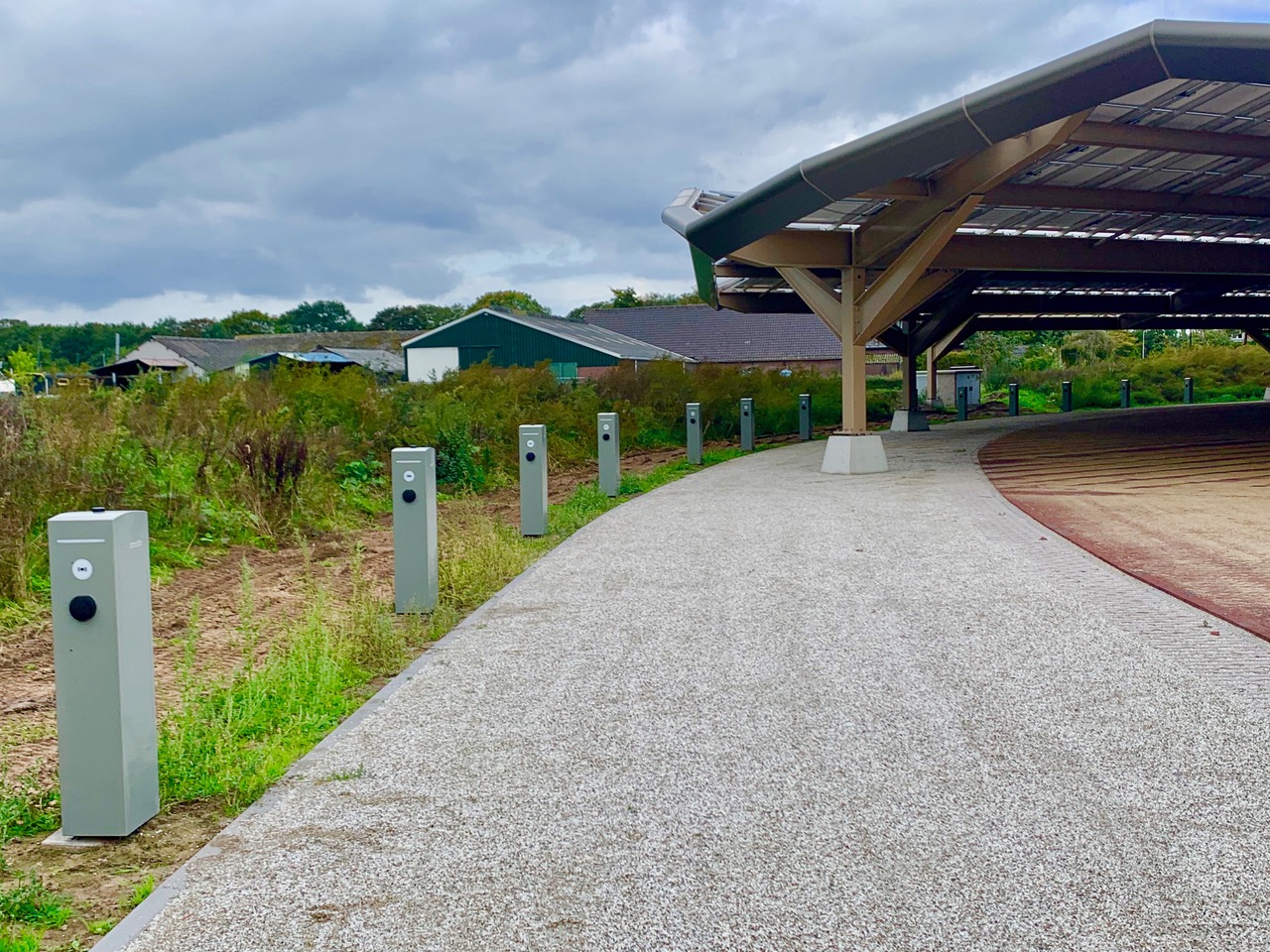
Taking a look at the new Triodos car park from ground level it becomes apparent that a large array of AC V2G capable charging stations are currently being installed, both under and around the solar PV canopy:
SolarStations

To find out more about what’s going on we’ve had to resort to Google Translate. According to a Dutch language article on the Triodos Bank web site from earlier this year:

The largest bidirectional charging plaza in the world is under construction at the new office building of Triodos Bank next to Driebergen-Zeist station. From this Autumn, 120 smart chargers will be able to store solar energy in the batteries of shared electric cars.

Triodos Bank have realised the project in close collaboration with developer EDGE Technologies and We Drive Solar. The bidirectional chargers are directly connected to 3,253 m² of solar panels and have a triple function. Electric cars can charge here. Cars whose battery is full enough can also supply power, so that the energy can be used in the office building or be fed back into the electricity grid.

Part of the plan is that Triodos Bank will replace its pool cars with 100% electric cars, so that they become part of the bidirectional charging ecosystem. Triodos Bank will investigate how, in addition to Triodos Bank employees, the residents of Zeist and the surrounding area can also use its shared electric cars. According to Triodos Bank director Matthijs Bierman “The plan fits in with our new ambitions in the field of sustainable mobility. We want to make car sharing as sustainable and attractive as possible. Not only for our employees, but also for the local community.”

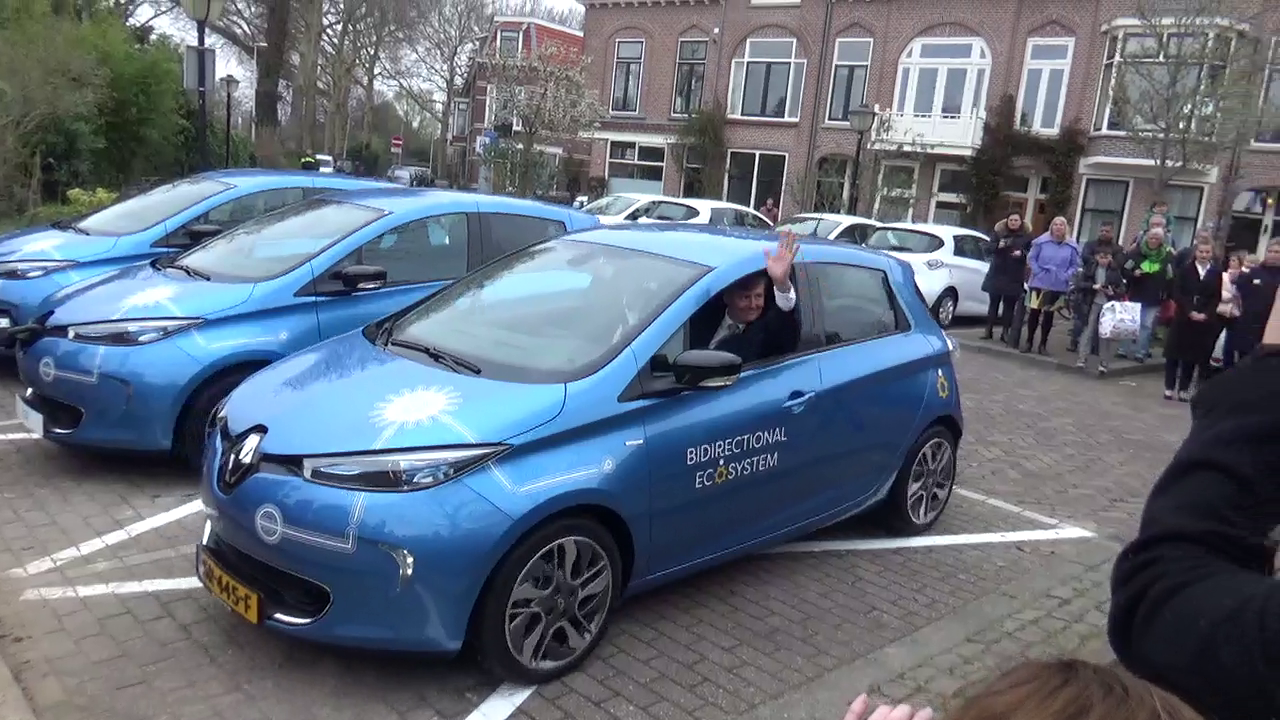
Now 120 AC V2G charging stations sounds amazing, but where are 120 or more AC V2G capable electric cars going to come from? I can help answer that question, since I attended the launch of the We Drive Solar bi-directional ecosystem in Utrecht earlier this year. According to Renault:

A fleet of fifteen Zoe vehicles with vehicle-to-grid charging will be introduced in Europe over the course of 2019 to develop our future offerings in reversible charging and lay the groundwork for the future standards —with our partners’ help. These pilot schemes will begin today in Utrecht (the Netherlands) in an ecosystem developed by We Drive Solar and on Porto Santo Island (in the archipelago of Madeira, Portugal) with Empresa de Electricidade da Madeira, an energy supplier. Following these, more pilot schemes will be introduced in France, Germany, Switzerland, Sweden and Denmark.

vlcsnap-2019-03-21-18h30m55s189

So that explains 15 prototype AC V2G capable Renault ZOE’s across Europe in 2019, but that’s a lot less than 120 in the Triodos car park! As far as I am aware Renault have not announced when V2G enabled ZOEs will go into production, but when ultimately they do Triodos Bank will be ready! In the meantime I’m sure that plenty of “smart charging” will be going on in Driebergen-Zeist and across the Netherlands

All in all the project sounds a lot like a combination of our “Camelford Electric Car Club” and “Static and Mobile Distributed Energy Storage” projects, albeit on a much grander scale! That probably explains this remark by Robin Berg of We Drive Solar to Bobby Llewellyn at the recent Fully Charged LIVE event at Silverstone in the summer?

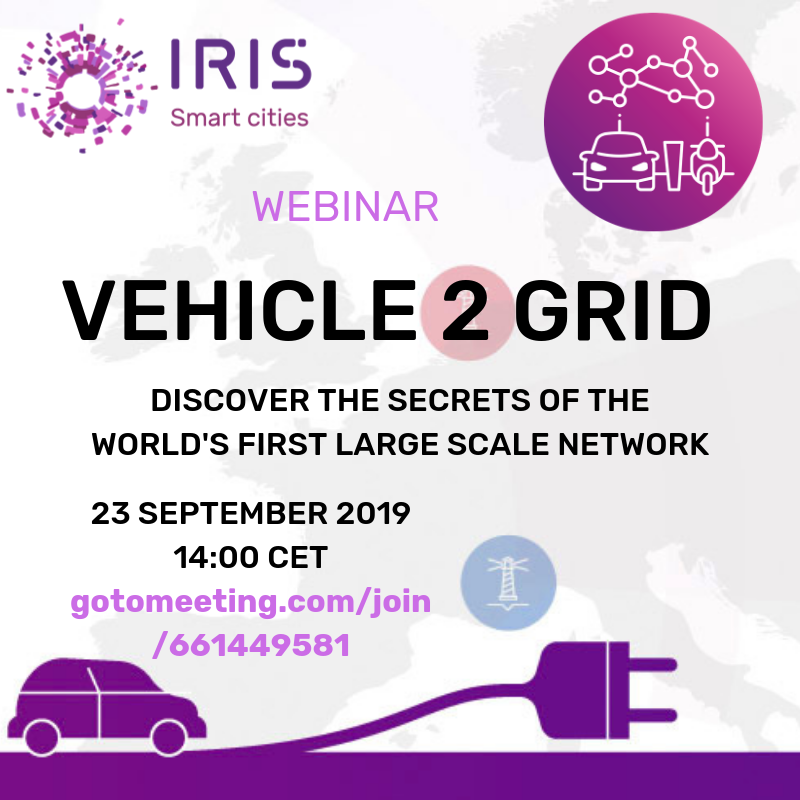
If you want to discover more about the We Drive Solar bi-directional ecosystem then please feel free to attend this webinar on September 23rd at 13:00 British Summer Time:

Webinar-2019-09-23

Sono Motors Sion Supports AC Vehicle to Grid!

We have been following the development of the Sono Motors Sion “solar powered” electric vehicle with much interest for a while now. Here’s a new video from Robert Llewellyn’s “Fully Charged” series revealing recent progress by the Sono team:

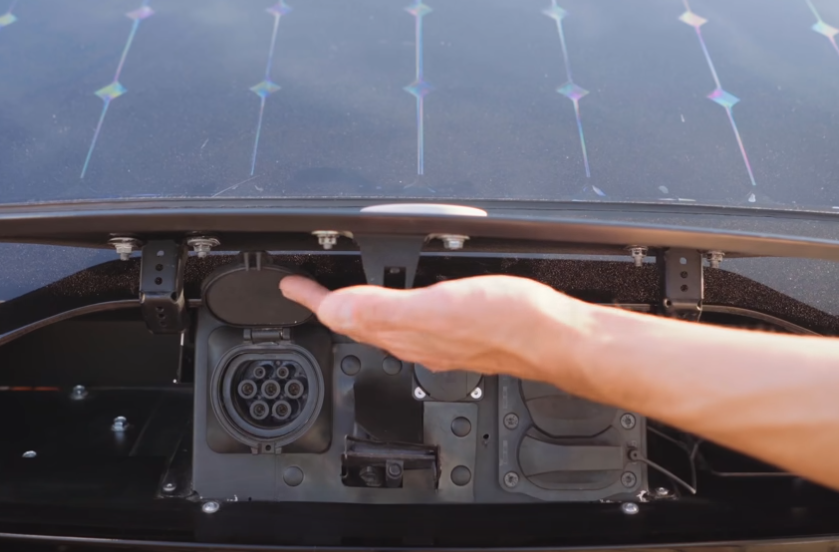
Note in particular that at 10:35 into the video Jonny Smith says “It’s just so obvious you wonder whay it hasn’t been done before, followed by Fabian Duensing of Sion saying “This is, I would say, the secret weapon of this car”:

SonoSionSecret

Through this one, the type 2 outlet, you can take back the energy from the battery of the car, not only to devices but to the grid.

Jonny clarifies:

So vehicle to grid?

To which Fabian responds:

So vehicle to grid! It’s not just hardware, it’s a lot of software as well, to make it able to actually do it.

Note also that under the other side of the charging flap there is a CCS socket for DC rapid charging of the Sion’s battery pack on those long trips from the city into the countryside.

Mitsubishi Motors Reveals New “Hyper Energy Station”

Mitsubishi Motors recently revealed a vehicle-to-building (V2B for short) pilot project here in Europe, and now they’ve announced an even more ambitious project in Japan, in a new release last week they announced that:

MMC already has 28 showrooms throughout Japan which have solar panels and the ability to use an electric vehicle’s battery power as an emergency power source, via a Vehicle-to-Building (V2B) charger. However the new Omiya “Hyper Energy Station”, opened this week in Saitama City, has also been fitted with its own lithium-ion battery packs to provide substantial power back up to the local electricity grid.

Saitama City has partially subsidized the cost of the facilities and the dealership has been designated a Next-generation Automobile & Smart Energy Special Zone by the Japanese government. The Omiya showroom, run by the Kanto Mitsubishi Motors Sales Group, is the fourth private facility and the first automobile dealer to adopt the system.

Featuring lithium-ion batteries with a capacity of 12kWh, the building can supply power for recharging electric vehicles (EV) in the event of a natural disaster or power outage, when normal power supplies are cut off. EVs have played a key role in transporting people and good in previous emergencies in Japan, when conventional fuel supplies have been severely disrupted.

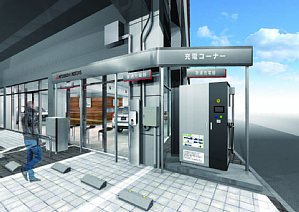
Here’s an artist’s impression of the combined “Static and Mobile Distributed Energy Storage” (SaMDES for short) unit:

HyperSaMDES

Apart from the new hardware that combines both static and mobile lithium ion battery storage Mitsubishi also pointed out that:

MMC has already opened 28 “DENDO Drive Station” showrooms across Japan, all featuring solar panels and V2B charging stations. It plans to increase this number to 200 by 2020.

In addition to charging vehicles, V2B allows the EV’s battery to provide power to the building in times of high demand or an emergency. The building will then switch to charging the car at times of low grid demand, or when renewable energy production is at a peak. This has major benefits for the grid and provides cheaper, sustainable power for the EV owner.

Nissan launches “Nissan Energy Solar” for the UK

In a press release today Nissan announced “Nissan Energy Solar“:

Nissan Energy Solar is the all-in-one solution that combines world-class residential solar panels with energy storage system to make the most of UK homes.

The solution has been designed to allow UK homeowners to reduce their energy bills and get more independence from the grid, allowing them to live more sustainably.

Traditionally, solar energy has been used to power home appliances during the day, but now with Nissan Energy Solar householders can collect and store the excess energy from their solar panels and use it during the night – even to charge their Nissan LEAF and e-NV200 – and on cloudy days.

Nissan launches Nissan Energy Solar: the ultimate all-in-one energy solution for UK homes

Nissan launches Nissan Energy Solar: the ultimate all-in-one energy solution for UK homes

The accompanying image shows an xStorage static battery on the garage wall, but no electric vehicle is to be seen. No mention is made of discharging said absent electric vehicle, so Nissan’s new offering only delivers part of the functionality implied by our artist’s impression of our SaMDES project displayed at the top of the page.

The press release continues:

Francisco Carranza, Managing Director, Nissan Energy, Nissan Europe says ‘Solar panels have become the world’s fastest growing source of new energy and we’re thrilled to launch Nissan Energy Solar in the UK. Over 880,000 UK homes already have solar panels installed and they are seeing the benefits every day, from decreasing electricity bills to increasing property values.’

‘Nissan Energy Solar is just one step in supporting our commitment to investing in innovative energy solutions for a more sustainable future and intelligent way of living.’

The new product also includes a home energy management system that will allow users to control how and when they want to use their energy in real time as well as making the entire energy system more efficient and sustainable. The system reduces energy costs and carbon footprint for homeowners significantly, by automating energy flows, purposefully utilizing solar production peaks and storage capacities.

Nissan Energy Solar solution will start at £3881**.

Here’s the small print:

**Includes the supply and installation of a six panel solar system, Home Energy Management system, and VAT at 5%.

The xStorage unit shown in the garage obviously adds to that price, as would upgrading to the “most efficient” or “sleek integrated” solar PV panels. The product web site merely states “On sale soon” and provides no additional pricing information as yet.

Honda Research V2G Technology in Europe

Honda have just announced in a press release that:

Honda has invested in advanced bi-directional charging technology at its European R&D site in Offenbach, Germany, which is helping to balance demand and store energy more efficiently across the facility. The new charging system incorporates renewable energy generation, and is a test bed for hardware that will be available to private households in the future.

The technology installation in Germany follows the debut of the domestic Honda Power Manager Concept at the 2017 Frankfurt Motor Show in September. The concept previewed a fully-integrated energy transfer, which takes power from the grid and can return stored energy from electric vehicle (EV) batteries – through ‘Vehicle-to-Grid’ or ‘V2G’ technology. This latest trial installation at Honda’s Offenbach site applies the same principles on a larger scale.

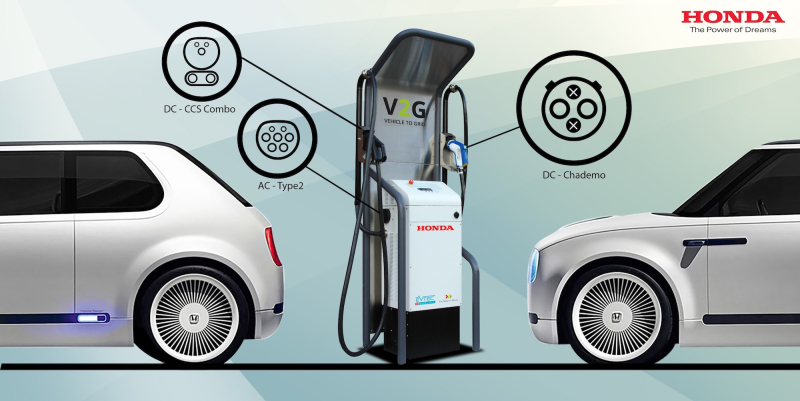
Here’s how Honda’s new bi-directional V2G capable charging station looks, albeit not in situ in Offenbach by the looks of it!

Honda installs new bi-directional charging technology at European R&D centre

Honda installs new bi-directional charging technology at European R&D centre

According to Jörg Böttcher, Vice President of Honda R&D Europe:

With the installation of the latest bi-directional charging technology at our R&D site in Germany, we are adding the next technology to our Smart Company project, which will further enhance our research activity in the field of zero-emission society and future mobility.

Here at V2G UK we have come to associate the word “Honda” with “hydrogen“, although Honda did take part in a V2G trial in the United States back in 2013. Here in Europe in 2017 they point out that:

With the help of the bi-directional hardware and with the technology of The Mobility House, Honda aims to optimise energy management at its European R&D campus, maximising the use of renewable solar power in particular. The project is testing the interaction, compatibility and power flow between specific electrical components, including the renewable energy cells and the EV batteries. The installation represents a collaboration between Honda R&D Europe, energy service provider The Mobility House and Swiss technology company EVTEC.

The investment in the bi-directional energy transfer technology further enhances the world’s most advanced public charging station for plug-in vehicles, which was launched at Honda R&D Europe in summer 2017. Its state-of-the-art 940V capability can deliver up to 150kW of energy, enabling as many as four vehicles to charge simultaneously with different types of connectors. Since its installation in June, the EV charging station has supplied power for 447 charge sessions and has saved 3.87 tonnes of CO2.

Here’s a video from The Mobility House explaining their vision of a future “V2G enabled” world:

https://youtu.be/qGtCClE4tcY

There’s more information on that topic in a press release from EVTEC which doesn’t seem to be available online at the moment. In slightly stilted English the Swiss company explain that:

With the growing importance of electric mobility, the two worlds of energy and mobility are merging. The closer this connection becomes, the more importance gain intelligent technologies that ensure this development secures a sustainable future. Such a technology is Vehicle-to-Grid, in short “V2G”. What is behind this term, is the intelligent integration of electric vehicles in the energy system and markets.

This advantage is well known to Honda, where the V2G technology is already in use today: with the help of a bidirectional charging solution, the company aims to optimize energy management at its European R & D campus in Offenbach. Within the framework of a comprehensive project over the last 12 month, the interaction of various energy components – from vehicle battery to photovoltaic system – is being tested here.

According to EVTEC co-founder and CEO Markus Kramis:

A reliable, precise, and fast acting bi-directional charger is the necessary base for every V2G application, like peak shaving and energy optimization.

All in all that EVTEC charging station sounds like just the sort of thing we need to try out at V2G Towers over here in North Cornwall, located in a distant corner of sunny South West England amongst an impressive array of large scale solar PV and onshore wind “farms”!

The same may well apply to Honda’s Power Manager mentioned above, which was announced at the Frankfurt Motor Show in September. According to a Honda press release once again:

Its all-new Power Manager Concept, a fully-integrated energy transfer system, is designed to incorporate electric vehicles into a smart power grid. It enables the collection and distribution of electricity between the grid, homes and businesses and electric vehicles, to intelligently balance demand and efficient storage of energy. Honda will apply its Power Manager technology as part of a smart grid pilot scheme in the west of France.

Honda-Power-Manager

Power Manager Concept works by aggregating and distributing energy to and from the grid, solar panel-equipped homes or workplaces, and electric vehicles.

Electricity is received into the system from the grid or is generated by the solar panels and can be used to power and heat the building as well as to charge the EV. While the EV is plugged in, the energy can be stored and used at home or sold back to the grid, potentially generating value for EV owners.

The Power Manager Concept system can help to stabilise the grid at times of either short or surplus supply, as well as representing a revenue opportunity for EV owners.

That sounds like just the sort of thing that Western Power Distribution needs to help stabilise the electricity distribution grid in our neck of the woods, which is currently heavily “constrained”:

WPD-NoCapacity

Do you suppose that we could possibly persuade Honda to apply its Power Manager technology as part of a smart grid pilot scheme here in the south west of England too?

Static and Mobile Distributed Energy Storage Launched At Long Last

Our roadmap didn’t call for this announcement just yet, but on Autumn 2017 budget day Philip Hammond, the Great British Chancellor of the Exchequer, had this to say:

The next day Nissan’s Francisco Carranza made an interesting announcement on Twitter:

In a bit more detail, Nissan announced:

Nissan Motor Parts Center in Europe is the first company in the Netherlands to make its roof available to others for the production of sustainable energy on a large scale. The electricity generated is sufficient for the power consumption of 900 households. The first section becomes operational at the end of February. The project will be fully completed in May.

With the installation of this immense solar roof, Nissan is taking a further step toward its strategy focusing on Intelligent Mobility, with sustainable energy as one of its cornerstones.

“This project is perfectly suited to Nissan’s endeavors to make mobility smarter and more sustainable,” said Koen Maes, managing director Nissan Benelux (Belgium, Netherlands and Luxembourg). “That’s why we are working on sustainable energy production and on projects such as energy storage in used batteries – vehicles which return energy to the network and car sharing. The solar roof is one of the cornerstones.”

That’s pretty much the way we see things too, and after a couple of false starts over the years the team here at V2G UK decided to accelerate our plans:

Here are some other things that have been happening on Twitter over recent days:

In case it’s not yet obvious to you, our Static and Mobile Distributed Energy Storage project roadmap includes rolling out just the right sort of V2G capable electric vehicle charging station for our purposes. My personal Twitter profile reads as follows:

I’ve been programming computers since the late 60s. We had to build our own! Now what can I program next? Will I have to build it first?

It looks as though the answer to that question is YES!

Meanwhile the V2G UK Twitter profile concludes:

A friendly local neighbourhood energy market would also be nice!

Are we going to have to build that too?