Toyota Announce bZ4X 100% BEV, with V2L!

You could argue that Toyota’s recent launch of a 100% battery, non hybrid, electric vehicle was worthy of an article on this web site, but what with one thing and another we had more important things to write about. However that has now changed!

“First of all here’s the UK version of the bZ4X “world premiere” press release from October 29th, which states that:

Today, Toyota presents the world premiere of the all-new bZ4X, the first model in a new series of bZ – beyond Zero – battery electric vehicles (BEVs).

Faithful in its design and technology to its concept predecessor, revealed earlier this year, the production-ready bZ4X is the first model to be developed by Toyota entirely as a BEV. It is also the first car to be built on the company’s new dedicated BEV platform. Based on e-TNGA philosophy, this has been co-developed by Subaru and Toyota.
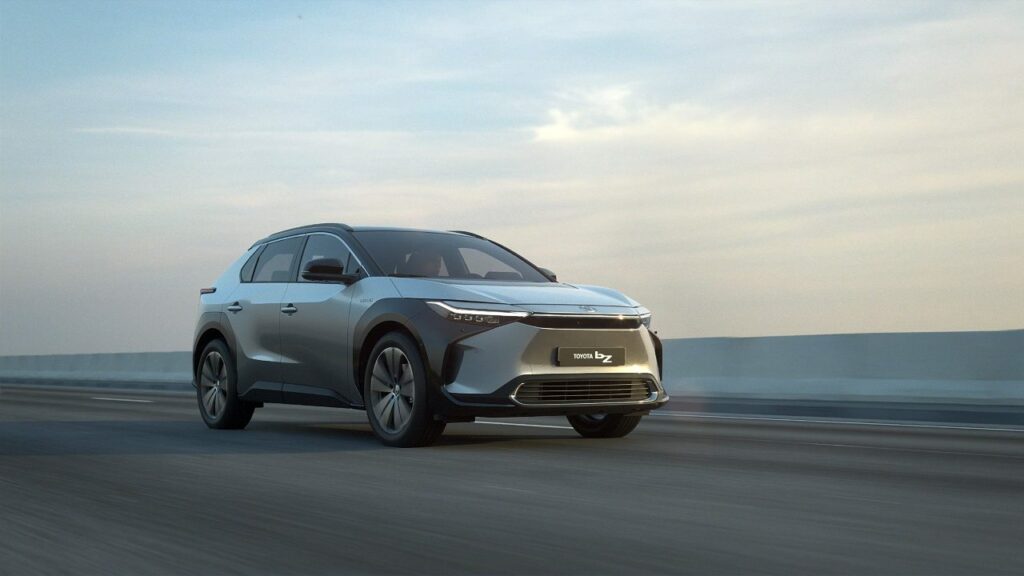
Incorporating the battery unit as an integral part of the chassis, beneath the vehicle floor, it gives the fundamental benefits of a low centre of gravity, excellent front/rear weight balance and high body rigidity for high levels of safety and ride and handling quality…

With a fully charged battery, expected range is more than 280 miles (depending on version, exact data to be confirmed later). The bZ4X will also offer advanced technology features, including a solar panel roof to help charge the battery while driving or parked, and third generation Toyota Safety Sense with new and improved active safety and driver assistance systems.

The bZ4X will have its European premiere on 2 December; customers who want to be among the first to obtain the new model will be able to place a reservation via the Toyota.co.uk website from 15 December.

The “European premiere” press release on December 2nd added a range of additional information, including:

Toyota has drawn on almost 25 years’ experience in electrified vehicle battery technology to ensure the new lithium-ion unit in the bZ4X has world-leading quality, durability and reliability. Its confidence in the technology is reflected in an extended care programme that guarantees the battery will still operate to 70 per cent of its original capacity after up to 10 years of ownership or one million kilometres driven, subject to the customer taking their vehicle to an authorised Toyota service centre for an annual health check. To ensure this guarantee could be offered, Toyota developed the battery with a target of 90 per cent of capacity retained after 10 years/240,000 km.
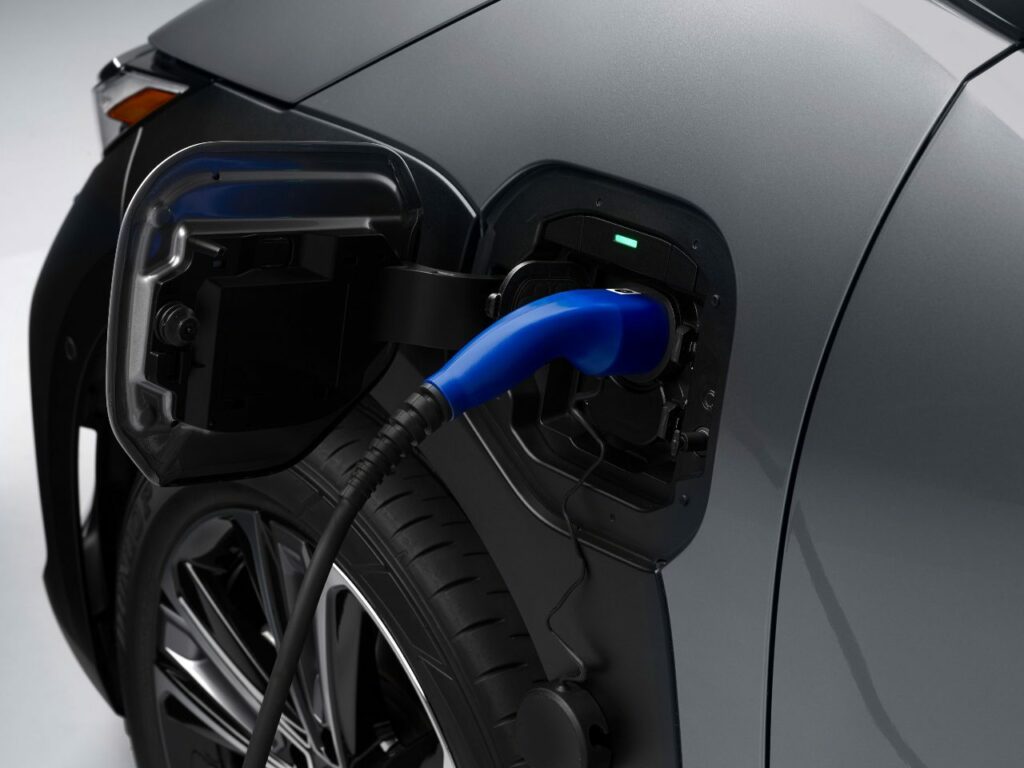
This level of quality and performance is supported by multiple monitoring of the battery’s voltage, current and temperature, from individual cell level. If any abnormal heat generation is detected, controls are automatically triggered. Countermeasures have been put in place to mitigate any material degradation, and there are safeguards in the manufacturing process to prevent foreign matter from entering the battery. In a Toyota first, the battery is water-cooled.

All very interesting of course but still no mention of any mechanism for discharging the bZ4X’s water cooled battery to the outside world. Until now that is! Earlier today my attention was drawn to the Toyota Global bZ4X launch video:

https://youtu.be/d9qp2eoOWCk?t=230

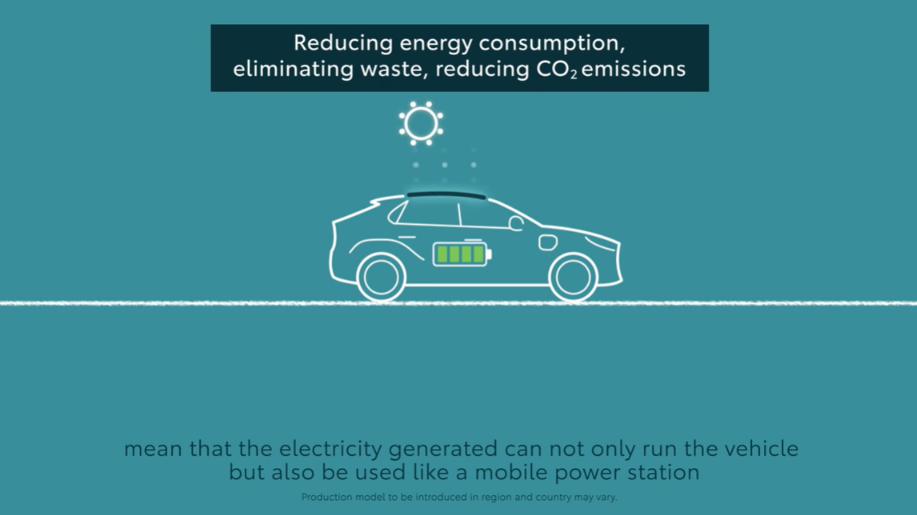
On board solar panels included with the bZ mean that the electricity generated can not only run the vehicle but also be used like a mobile power station in emergencies and in outdoor activities.

Which sounds an awful lot like V2L to me! Close inspection of the associated
press release
reveals the following information:


Roof solar panel (specially equipped vehicles)

Generates electricity equivalent to 1,800 km of driving distance per year (in-house estimate), contributing to superb cruising range. Can charge in parking lots where there are no charging stations, and solar power can be used to charge in disasters or other emergencies.

DC external power supply function (Japanese specifications)

Can connect to a power feeder to supply high-output electricity to homes and home appliances for outdoor activities, and during disasters and other emergencies.

When used with home solar power generation, solar power can supply electricity to the house in the daytime, surplus electricity can be used to recharge the vehicle via a power feeder, and electricity stored in the vehicle can be used to power the home at night.

The bZ4X is scheduled for launch in all regions from mid-2022.

Which is extremely interesting, because unlike other V2L/V2H capable EVs that have been announced recently this one seems to claim that it offers a “high-output DC” rather than a “low-output AC” feed:
However be sure to read the (very) small print. Only in Japan by the sound of it.

Watch this space!
Hydrogen Mobility Europe Launched with €32 Million Funding

In a press release earlier today ITM Power announced that:

The most ambitious hydrogen mobility initiatives in Europe have joined forces to support the introduction of hydrogen-fuelled transport

A large coalition of European partners has launched the Hydrogen Mobility Europe project (H2ME). H2ME is co-funded with €32 million from the Fuel Cells and Hydrogen Joint Undertaking (FCH JU). The project will support the deployment of Fuel Cell Electric Vehicles (FCEVs) and Hydrogen Refuelling Stations (HRS) across Europe.

ITM’s headline summed things up so perfectly that we’ve unashamedly plagiarised it! The Hydrogen Mobility Europe project web site still says “Full website launching soon” at the top, but does state that:

The project brings together Europe’s four most ambitious national initiatives on hydrogen mobility (in Germany, France, Scandinavia and the UK) and will:

  • Place 200 fuel cell cars (from Daimler and Hyundai) and 125 fuel cell range-extended vans (Symbio FCell collaborating with Renault) in customer hands
  • Deploy 29 state-of-the art-hydrogen stations
  • Carry out a long-term evaluation campaign to demonstrate the readiness of the technology for a mass market
  • Develop insights into the customer experience and practical challenges of rolling out the technology at a large scale, which can be used in optimising the technology during its commercial roll-out

It also includes a link to their own press release, which adds that:

H2ME is the largest European project of this nature and is based around an alliance of the four most ambitious hydrogen mobility initiatives in Europe: H2 MOBILITY Deutschland, Mobilité Hydrogène France, Scandinavian Hydrogen Highway Partnership and UK H2 Mobility.

These initiatives originally brought together the key stakeholders in the hydrogen sector (vehicle manufacturers, hydrogen refuelling station providers and Government representatives), to study and develop strategies to make hydrogen-fuelled transport a reality in the respective regions. These initiatives will now be working together to make hydrogen-fuelled transport a reality in Europe.

Under H2ME they will deploy 200 FCEVs, 125 fuel cell range-extended electric (FC RE-EVs) commercial vans and 29 new HRSs in 10 countries (Austria, Belgium, Denmark, France, Germany, Iceland, Netherlands, Norway, Sweden and the UK) by 2019. This plan ties in with existing national level initiatives for the roll-out of a large scale hydrogen refuelling infrastructure, aimed at enabling Europe wide emission-free driving. The consortium, led by Element Energy, includes global leaders in the hydrogen and fuel cell sector, from fuel cells and car manufacturers (Daimler, SymbioFCell, Hyundai, Honda, Intelligent Energy, Nissan) and infrastructure providers (Air Liquide, BOC, H2Logic, ITM Power, Linde, McPhy Energy, OMV, AREVA, EIFER, H2 MOBILITY Deutschland, HYOP, Icelandic New Energy, Communauté d’Agglomération Sarreguemines Confluences) to data monitoring and dissemination organisations (Cenex, WaterstofNet).

The original agreements for the project were signed in July this year and the project has already delivered the first vehicles to customers in France and Germany (Daimler, SymbioFCell).

We have previously reported on BMW’s FCEV technology, developed in conjuction with Toyota, whose names are strangely absent from the above press releases. Perhaps that’s something to do with BMW’s use of “cryogenic pressure vessel technology”? Here’s BMW’s “CCH2 FCEV i8” prototype:

We wondered back in July about the:

Wait to discover how, where and when the hydrogen infrastructure BMW refer to materialises in Europe.

The H2ME project seems to be at least a partial answer to that question. In similar vein see also our report on the UK’s Riversimple open source hydrogen fuel cell vehicle. A much less extravagent beast than either BMW’s prototype FCEV i8, or the production Tesla Model S for that matter!

Hydrogen Fuel Cell Drive System is the Future of BMW eDrive technology?

In a press release about their 2015 Innovation Days the BMW Group have revealed that:

The strategic collaboration between the BMW Group and the Toyota Motor Company agreed at the beginning of 2013 has provided fresh momentum for the development of FCEV drive technology. The aim of the collaboration is to have an initial group of approved components ready by 2020. The successful introduction of FCEVs is dependent on the development of a hydrogen infrastructure in the markets concerned.

The two collaboration partners are supporting this process through jointly created technological standards which make fuel cell-powered vehicles easier to use and help to increase their reach and numbers.

Whilst we wait to discover how, where and when the hydrogen infrastructure BMW refer to materialises in Europe they go on to state that:

The hydrogen Fuel Cell Electric Vehicle (FCEV) represents a pioneering concept focusing on locally emission-free mobility combined with hallmark BMW dynamics and a high level of energy efficiency. The hydrogen fuel cell drive system combines the benefits of BMW eDrive technology with a host of qualities familiar from conventional combustion engines:

  • All-electric, locally emission-free driving.
  • BMW eDrive electric motor generates instantaneous power delivery and impressive dynamics.
  • Power electronics, high-voltage battery and intelligent energy management based on the BMW Group’s eDrive technology.
  • Long-distance capability with an operating range of more than 500 kilometres (300 miles) thanks to the high energy density of the hydrogen carried on board.
  • Fast and convenient refuelling in under five minutes.

Fuel cell technology therefore makes an ideal addition to both the BMW i models and, in the future, the series-produced models from the BMW brand fitted with tried-and-tested eDrive technology. It converts the gaseous hydrogen contained in the storage tank into electric power and water vapour. The vehicle’s high-voltage battery serves as an energy storage unit and can therefore be considerably smaller – with a net capacity of around one kilowatt hour – than in battery-electric concepts. Storing hydrogen in a cryogenic pressure vessel can, depending on the type of vehicle, allow an operating range comparable with that of conventional vehicles powered by combustion engines. Filling up the hydrogen storage tank takes a similar amount of time as refuelling a petrol or diesel tank.

This seems to suggest that in the not too distant future we can expect to see a version of the BMW i3 with a much smaller traction battery plus a hydrogen fuel cell instead of the existing range extender, together with a similarly equipped although presumably more powerful version of the i8!

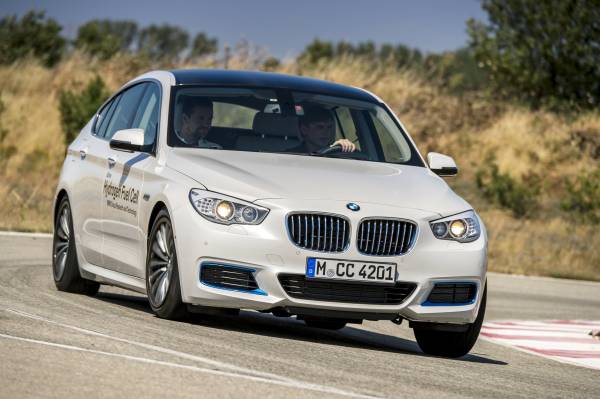
By way of a hint about what to expect the press release includes pictures such as this:

plus a video:

which according to BMW show:

The demonstration vehicle, based on a BMW 5 Series Gran Turismo, [which] reveals a take on this form of propulsion in keeping with the brand’s profile and character. It combines locally emission-free mobility with sporting dynamics, excellent ride comfort and long-distance capability. Its key features are as follows:

  • Electric motor developing 180 kW/245 hp, power electronics and high-voltage battery for interim energy storage; developed as a variant of BMW eDrive technology for BMW i cars and BMW brand plug-in hybrid models.
  • Hydrogen storage in the form of a tunnel tank between the front and rear axle; industry standard 700 bar CGH2 vessel technology and cryogenic pressure vessel technology (CCH2) patented by the BMW Group for storing gaseous hydrogen at low temperature and 350 bar pressure; operating range: over 500 kilometres (more than 300 miles).
  • Fuel cells, housing and ancillary systems: initial results from the collaboration between the BMW Group and the Toyota Motor Corporation on Fuel Cell Electric Vehicle (FCEV) technology.

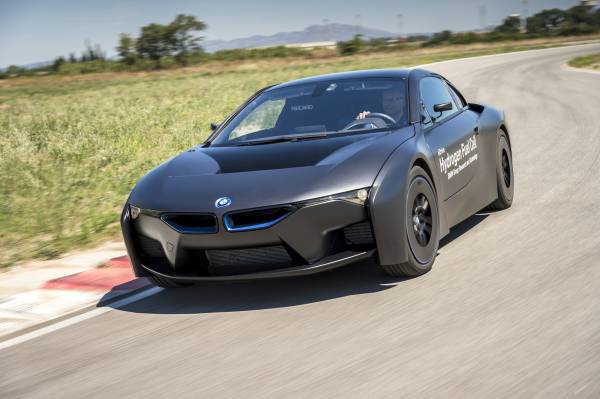
In the press kit BMW also reveal another vehicle emblazoned with the “Hydrogen Fuel Cell” logo:

According to Autocar the car:

Has been used as a rolling test bed for the German company’s hydrogen fuel cell technology, which is planned to head into large-scale production by 2020, according to the head of BMW’s vast research and development operations, Klaus Fröhlich.

Based around the contemporary new i8, the sleek two-door coupé relies on carbonfibre construction to keep its weight down and also features an aerodynamic package honed at BMW’s wind tunnel in Munich. The BMW research vehicle, which was constructed back in 2012 and remains unnamed, sites its fuel stack at the rear in the position usually taken up by the i8’s compact turbocharged 1.5-litre three-cylinder petrol engine.

Energy for the fuel stack is provided by cryogenically stowed hydrogen contained in a cylindrical tank mounted down the centre line of the car’s platform and oxygen provided by cooling air. The fuel stack subsequently provides electricity to run a rear-mounted electric motor, with the only emissions being water.

Here’s a video of the vehicle in action:

Evidently all sorts of exciting stuff is already well on the way to production. Now all we need, as so often seems to be the case these days, is the associated infrastructure!