Power Packed Cyber Security?

Given my evident enthusiasm for all things V2x, regular readers may be wondering why I have been more hesitant than most commentators to unequivocally applaud Greg Jackson’s announcement of Octopus Energy’s “Power Pack” retail vehicle-to-grid offer last week? £299 per month which covers all your electric mobility needs including “fuel”. What’s not to like? Surely it’s “a compelling consumer offer”, as I myself put it!

As already hinted at in my introductory article linked to above, perhaps it’s not quite so attractive if you are in fact a “prosumer”, with a few solar PV panels already installed on your very own roof? Here are some other recent items of news to ponder too. In these troubled times hackers are hard at work around the world. There was initial speculation that the recent Spanish “blackout” was a cyber attack. However, according to the BBC on April 29th:

The Spanish grid operator has ruled out a cyber attack as the cause of a massive power cut that crippled Spain, Portugal and parts of France on Monday.

Red Eléctrica’s operations director Eduardo Prieto said preliminary findings suggest “there was no kind of interference in the control systems” to imply an attack, echoing Portuguese Prime Minister Luís Montenegro the day before.

But the exact reason behind the cut is still unclear.

More recently, it was announced on June 17th that:

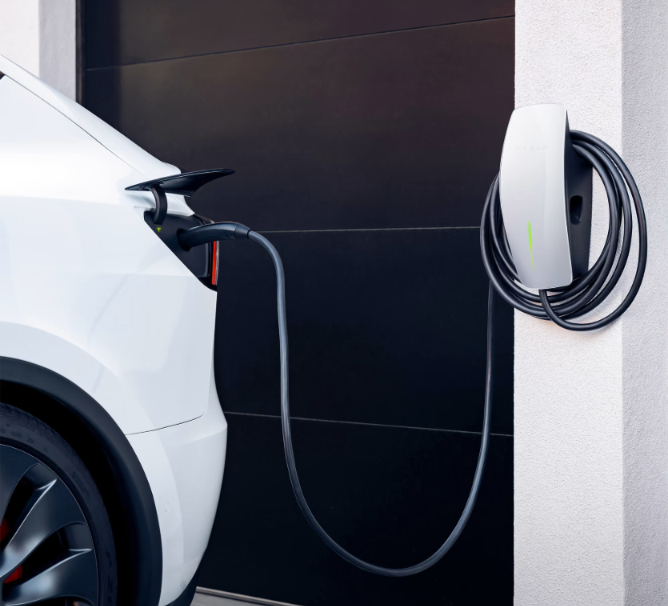
In January 2025, we participated in Pwn2Own Automotive with multiple targets. One of them was the Tesla Wall Connector — the home charger for electric vehicles (including non-Tesla ones)…

This article explains how we studied the device, how we built a Tesla car simulator to communicate with the charger, and how we exploited this logic bug during the competition.
The “hackers” of the Tesla wallbox wore “white hats”, but what might have happened if they had been wearing “black hats” instead? While you ponder your answer to that question, you may find it reassuring that the United Kingdom’s National Cyber Security Centre has been worrying about it for quite some time. According to the NCSC’s web site their mission is:

Making the UK the safest place to live and work online.

We support the most critical organisations in the UK, the wider public sector, industry, SMEs as well as the general public. When incidents do occur, we provide effective incident response to minimise harm to the UK, help with recovery, and learn lessons for the future.

The first example use case for their efforts reads:

Defending the digital infrastructure on which a sustainable world depends.

For example, by helping to protect a flexible energy system from cyber threats.
Image courtesy of ImageFX

In November 2023 the NCSC published a blog post that began as follows:

In 2020, the NCSC published a white paper on Preparing for Quantum-Safe Cryptography. This paper explained the threat that a possible future quantum computer – one much larger, and much more capable, than any that exist today – would pose to a large class of widely deployed cryptography. That cryptography is known as public-key cryptography (PKC). PKC is the enabling technology for secure communication at scale, on the internet and many other networks.

The same white paper also explains why NCSC’s recommended mitigation of the quantum computing threat is quantum-safe cryptography, or post-quantum cryptography (PQC). PQC is cryptography that is resistant to attack by quantum computers, and also to today’s digital, or classical, computers. Furthermore, PQC offers broadly equivalent functionality to the quantum-vulnerable PKC currently in use, and can be deployed in many of today’s devices (including PCs, smartphones etc.) with a software update.

This seems like a simple solution to the threat from a potentially disruptive technology. And conceptually, it is – but the migration to PQC is a very complicated undertaking. This blog explains why.

Do you suppose that Greg and/or the Octopus Power Pack team have read it?
BSI Requests Comments on a New Draft of PAS 1878

Regular readers may recall that in 2021 the British Standards Institution published the first edition of their Publicly Available Specification 1878 on the subject of “Energy smart appliances”? You may also recall that I wrote at the time:

A “smart” EV charging station is a special case of an interoperable Energy Smart Appliance.

The BSI has recently published a draft version of a new edition of the PAS 1878 specification, and is inviting comments from interested parties. Note that the deadline for submitting any such comments is July 9th 2025.

The BSI’s request for comments points out that:

This PAS specifies the following aspects of a system for the delivery of certain demand side response (DSR) services for domestic and small business premises…

This PAS is intended to be used by manufacturers of ESAs and CEMs.

NOTE 1 – Other audiences that might have an interest in this PAS are maintainers of ESAs, manufacturers and maintainers of interfacing products, software developers and service providers.

The introduction to the new draft includes the following information:

This is a full revision of the document, and introduces the following principal changes:

  • defined system architecture for both on-premises and hybrid cloud/on-premises implementations of ESAs and CEMs, and both 1-to-1 and 1-to-many CEM to ESA connections;
  • minimum requirements for secure communication between CEMs, ESAs and DSRSPs;
  • detailed sequence of DSR-based activities from consumer registration to decommissioning;
  • a move from OpenADR 2.0b to OpenADR 3.0 as the minimum application layer protocol to be supported by Interface A (between DSRSP-CEM);
  • the optional provision of flexibility performance requests from the DSRSP to enable ESAs to calculate relevant flexibility offers more easily;
  • updated compatibility with GB smart metering and a wide range of smart appliances – including EV charge points and battery storage;
  • new provisions for Open ADR 3 as the Interface A

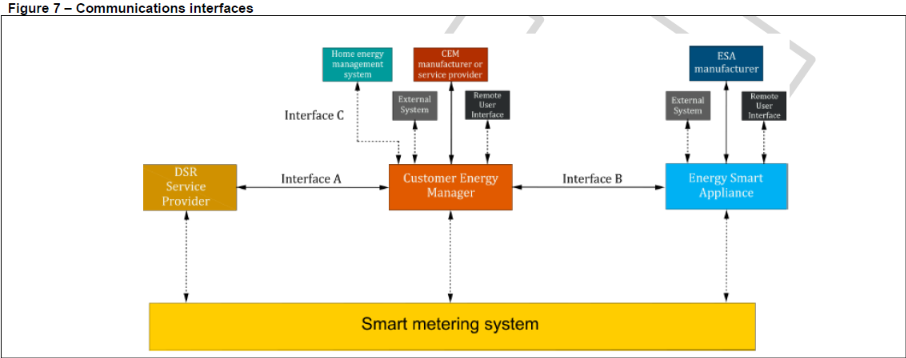
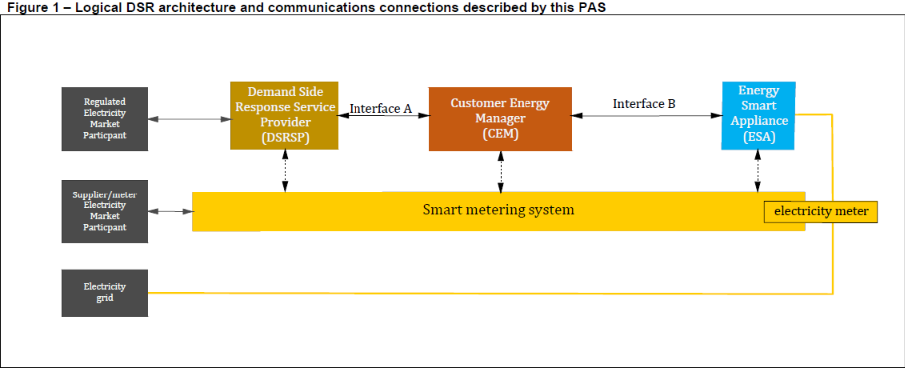
By way of a brief introduction to some of the assorted acronyms mentioned above, here is figure 1 from the draft PAS:

Clause 8 of the draft PAS includes these specific requirements regarding electric vehicle charging:

The smart EV chargepoint ESA shall be capable of reporting forecast power profiles based on operating capabilities, consumer preferences, including expected departure/arrival schedule and journey distance/ duration/characteristics, and external information, including estimates of EV battery capacity, EV state of charge (or state of charge if available via the charger – e.g. V2G, or accessible via the vehicle telematics) and EV physical operating limits. If a smart EV chargepoint supports V2G functionality and has been configured to present itself to the DSRSP as an ESA, it shall meet the information and messaging requirements specified in Clause 5 and Clause 6.

NOTE Smart EV chargepoints are not required to support V2G functionality.

Clause 5 is entitled “Communications and messaging” and includes this diagram:

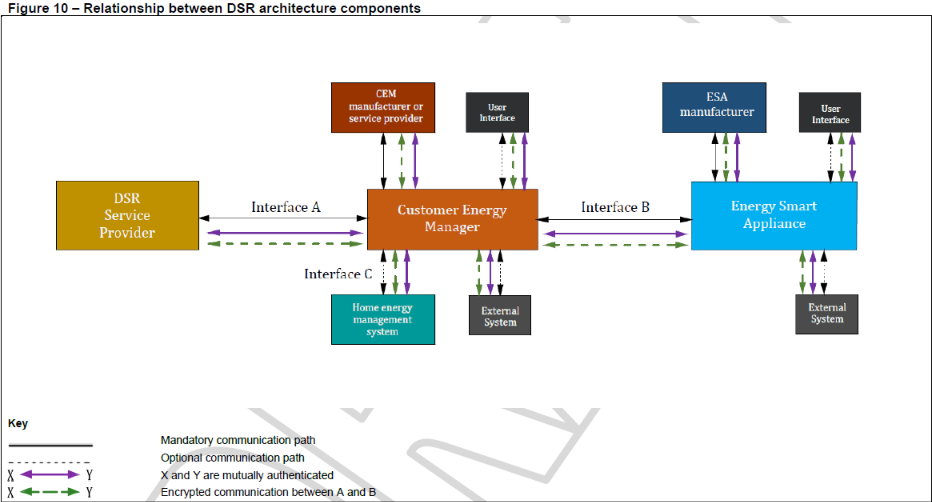
Clause 6 is entitled “Cyber security” and includes this diagram:

If you have any questions please do not hesitate to ask using the space provided for that purpose below.

The Kraken/EPRI “Mercury Consortium” Launch

Last week there was a significant “Energy Technology” announcement in Manchester. This article was supposed to be written/published last weekend, but Storm Darragh and our subsequent 20 hour power cut proved more than capable of disrupting the carefully laid plans of both mice and men!

Hastily returning to a rather damp Manchester on December 5th, here is a recording of the meat of the initial presentation by Devrim Celal, Chief Marketing and Flexibility Officer of KrakenFlex Limited, speaking at the launch of the “Mercury Consortium” at the “UK’s first energy tech superhub”:

Devrim’s presentation was followed by a panel session with representatives of four “manufacturers”, which we will cover at a future date. After a “networking break” there was another panel session with speakers from four “utilities”, introduced by Arshad Mansoor who is President and CEO of the Electric Power Research Institute. Here’s what Arshad had to say:

Continue reading →

An Open Letter to Trudy Harrison, Scott Mann et al.

Particularly given recent events in Ukraine and the publication of the IPCC’s AR6 WG2 report the urgency of this issue increases with every day that passes. Hence I reproduce below an email I sent to Trudy Harrison MP on December 17th 2021.

Below that is the only response I have received to date:

Electric Vehicles (Smart Charge Points) Regulations 2021

To: Trudy Harrison MP
Cc: Scott Mann MP

Hello Trudy,

I originally e-met Rachel Maclean via a Cicero Group webinar. Since you have now taken over her role it seemed appropriate to introduce myself to you, particularly in view of the Prime Minister’s recent announcement about electric vehicle charging points.

In particular I am the only UK representative on a wide range of “smart grid” and “EV charging” international (and hence British) standards setting committees. I also sit on the British Standards Institution’s L/13 “smart energy overview” committee as the UK’s leading expert on V2G technology.

If possible I would like to discuss some of the “interoperability standards” implications of the draft legislation associated with the Prime Minister’s statement with someone in Government. Who do you recommend?

Best wishes,

Jim Hunt
CEO
V2G EVSE Limited

=================================================================

Thank you for contacting me.  Please accept this as an acknowledgement of your email. You will receieve a response within 7 days.

Please note the following:

·  If you are a constituent please ensure that you have provided your full name and address, including postcode. There is a strict Parliamentary protocol that MPs only deal with matters raised by residents of their own constituency. 

· Where possible, all circular email campaigns will be responded to by letter and on my website – https://www.trudyharrison.co.uk/

· I may need to pass your details and email to any relevant authority deemed appropriate to help answer your query. If you do not wish this to happen you need to inform my office to this effect.

Thank you for taking the time to write to me.

=================================================================

The Electric Vehicles (Smart Charge Points) Regulations 2021

I’ve spent a busy few days covering the power cuts caused across the UK by Storm Arwen. Before she arrived on the scene I intended to go into more detail about Boris Johnson’s announcement last week about “New laws to supercharge the electric vehicle revolution”. Finally the time has come to look at some of those new laws in a bit more detail!

According to the preamble to “The Electric Vehicles (Smart Charge Points) Regulations 2021“, currently merely a “Draft Statutory Instrument”:

The Secretary of State, in exercise of the powers conferred by sections 15, 16, 17 and 18 of the Automated and Electric Vehicles Act 2018(1) (“the 2018 Act”), makes the following Regulations.

In accordance with section 18(4) of the 2018 Act, a draft of this instrument has been laid before Parliament and approved by a resolution of each House of Parliament.

The Secretary of State has consulted such persons as the Secretary of State considered appropriate in accordance with section 18(3) of the 2018 Act before making these Regulations.

PART 1
Introduction

Citation, commencement and extent
1.—(1) These Regulations may be cited as the Electric Vehicles (Smart Charge Points) Regulations 2021 and come into force on 30th June 2022.
(2) These Regulations extend to England and Wales and Scotland.

To summarise, if duly enacted by Parliament the following interesting extracts from the bill will come into force on 30th June 2022. Which is approximately 7 months from now:

Continue reading →

V2G UK Fall Victim to Open Source Cryptocurrency Scam

Long time followers of the V2G UK blog may recall that many moons ago we took Elon Musk to task for over hyping Tesla’s open source credentials?

Yesterday evening (British Summer Time) we spotted Elon “tweeting” about Tesla’s open source credentials once again!

Whilst we all wait to see exactly how Elon’s offer of “Tesla vehicle security software for free” pans out, I really must mention that something else flashed before my eyes on Twitter last night. Apparently one or more of the mavens in Tesla’s marketing department had dreamt up a scheme to create some much needed publicity by “giving away” two cryptocurrencies, namely bitcoin and ethereum!

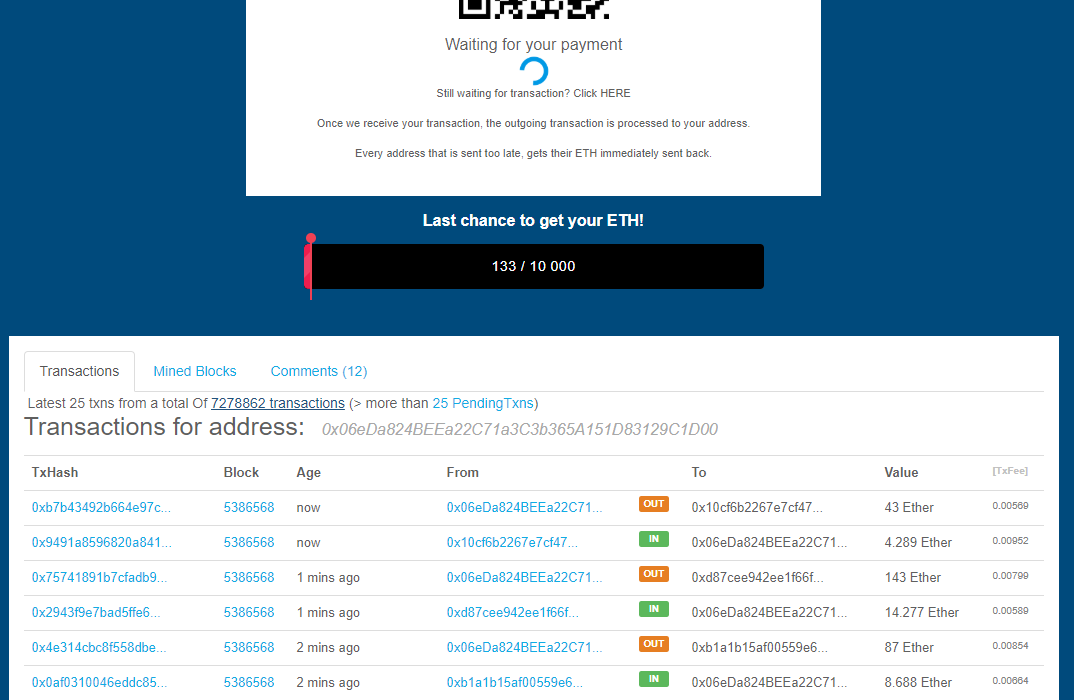
By this morning (BST) it seemed that Elon’s reserves of virtual riches had almost run out:

2018-08-12_1205-LastChanceSaloon

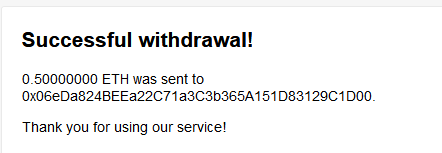
Unable to resist the temptation I hastily sent half a hard earned ethereum in Elon’s direction:

2018-08-12_1156

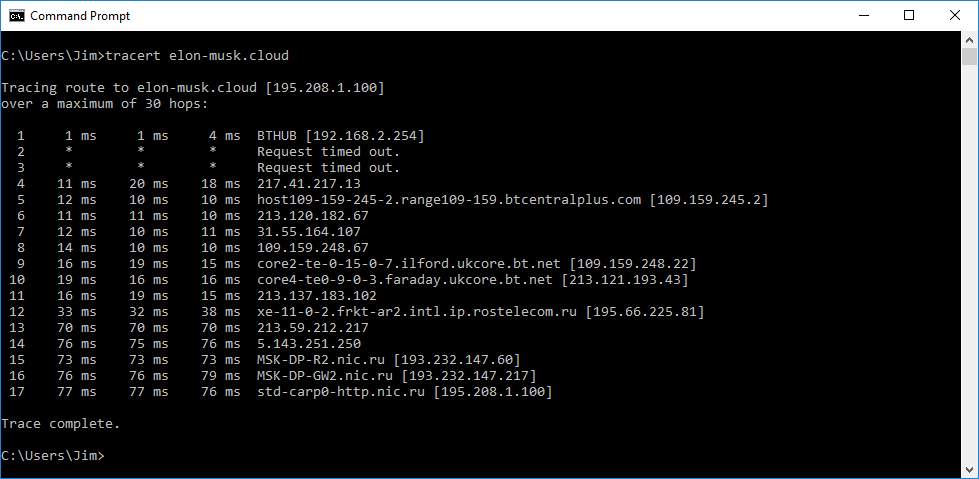
The strange thing was, half an hour later I still hadn’t received my minimum 0.5 ETH back, let alone the promised 5.0 ETH. It was at that point that things started smelling somewhat fishy. I belatedly put my almost atrophied command line skills to work, only to discover:

2018-08-12_1237-TraceRt

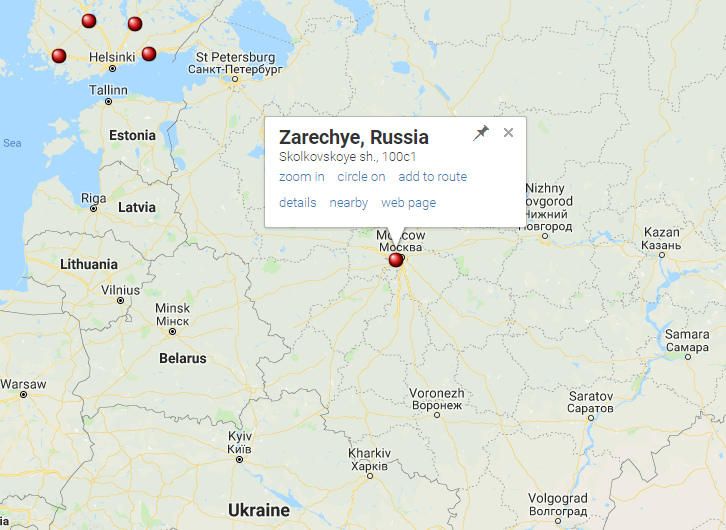
At first it looked as though my virtual currency must have been sent to one of Tesla’s showrooms in Russia. Belatedly doing my due diligence I discovered that whilst apparently there is a single Supercharger in Moscow, the showroom count is zero:

2018-08-12_1420-Tesla-Russia

I know that Superchargers are amazing machines, but can they run HTTP daemons? I fear not, and thus I’ve finally been forced to face the bitter truth. I’ve been conned. Now I cannot help but wonder whose desk the buck for the apparently total loss of my fractonal ethereum stops on? Perhaps someone at Twitter will carry the can?

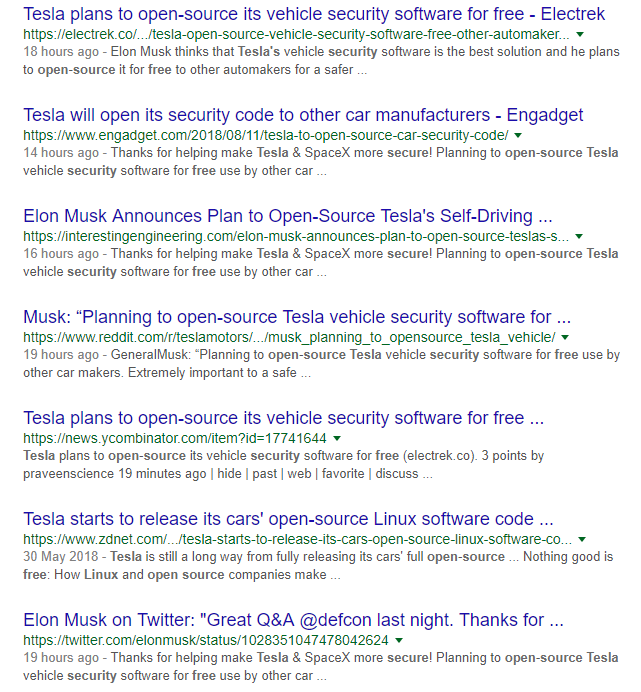
Or perhaps not? Meanwhile, according to the Great God Google:

2018-08-12_1435-OpenSourceSecurity

IEC 63110 Project Team 2 Kicks Off

In our continuing endeavour to explain the arcane workings of the International Electrotechnical Commission’s (IEC for short) electric vehicle standards development committees we have some exciting news to report!

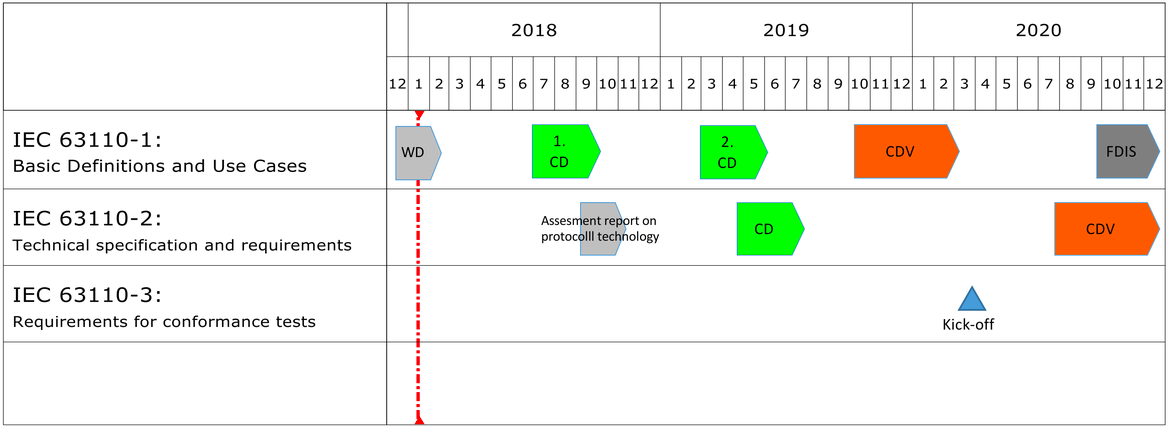
As predicted last November:

2018-01-IEC-63110-Roadmap

it was agreed at the IEC Technical Committee 69 Joint Working Group 11 (TC 69/JWG 11 for short) meeting in Toronto last week that work on the IEC 63110 part 2 standard (IEC 63110-2 for short) should begin by setting up a task force (TF for short) to “evaluate possible options for message encoding and transmission technology”. We swiftly volunteered for the new task force, not least because our V2G EVSE subsidiary is already evaluating precisely that for the United Kingdom’s Department for Transport (DfT for short).

In actual fact the Project Team 1 (PT1 for short) schedule has slipped a bit, so if you still have any out of the ordinary new “protocol for the management of electric vehicles charging and discharging infrastructures” use cases to bring to our attention there is still time before the Committee Draft (CD for short) stage of the IEC process is reached. In addition if you have any suggestions for “message encoding and transmission technologies” above and/or beyond the industry standard TCP/IP over cellular comms please do not hesitate to get in touch.

Lastly, but certainly not least, the existing IEC 63110 Security Task Force is still seeking input from suitably qualified experts in that particularly important domain.

V2G in the BEIS Basement

Last Thursday we took the train up to London because the next morning we were attending a meeting organised by the British Standards Institution on the topic of “The future of standards for a smart, flexible energy system“. Instead of one of the BSI’s own offices the venue for the event was the conference centre of the Department for Business, Energy and Industrial Strategy, just around the corner from Westminster Abbey.

Apart from attending the event itself we were also one of five SMEs displaying our wares in an adjacent room. Here’s how our stand looked when we’d just about finished setting up:

RasPisGalore

That was when a BEIS engineer told us what we’d missed during our journey the previous day. The announcement of the UK Government’s new Clean Growth Strategy:

An ambitious blueprint for Britain’s low carbon future.

This strategy sets out our proposals for decarbonising all sectors of the UK economy through the 2020s. It explains how the whole country can benefit from low carbon opportunities, while meeting national and international commitments to tackle climate change.

No doubt we’ll have much more to say on all that in due course, but for the moment here’s an overview of V2G Limited’s clean growth strategy, as displayed in the BEIS basement last week. First of all let’s take a look at the problem UK plc has committed to tackle:

DSC_1252

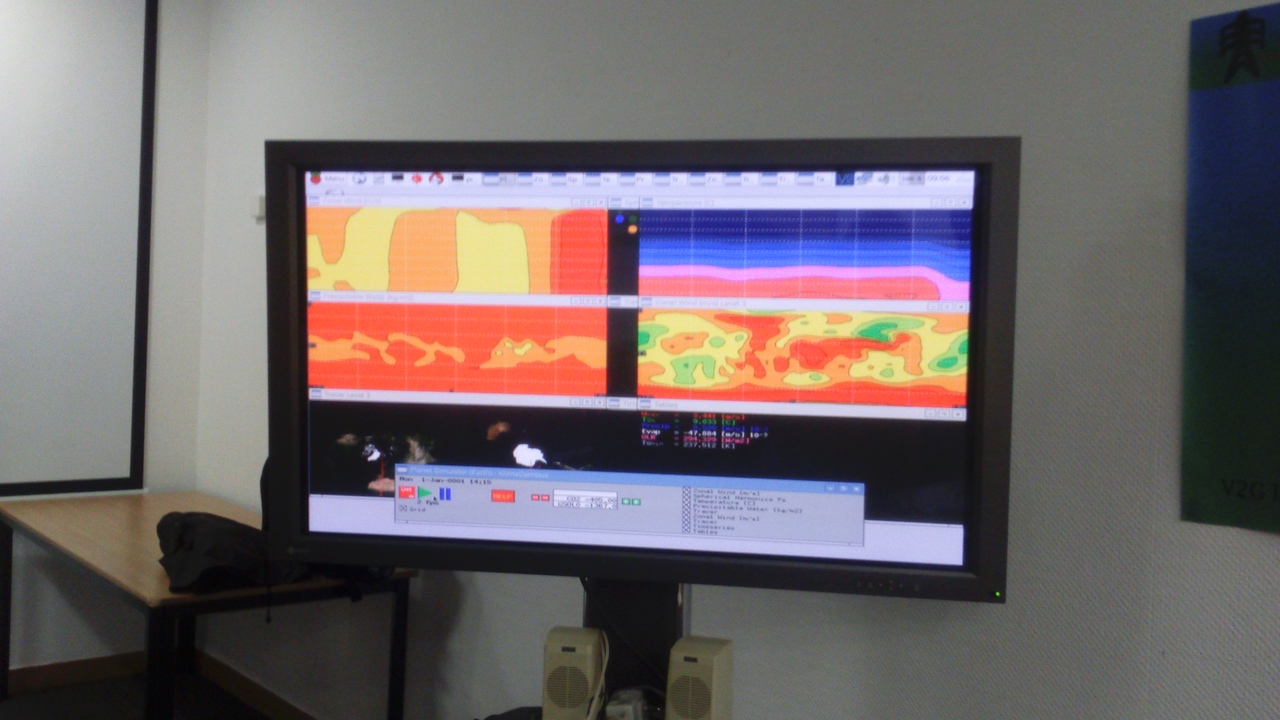
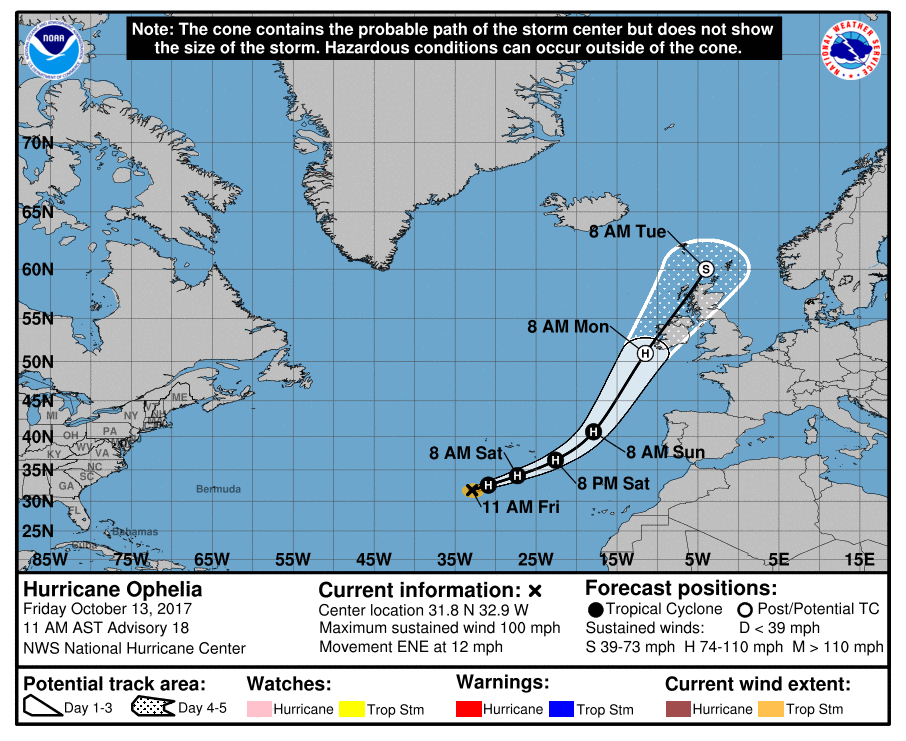
That’s the output of a “medium complexity” climate model running on V2G’s trusty Raspberry Pi 3B and displayed on BEIS’ 55 inch screen. Note that the carbon dioxide concentration had been increased to 405 ppm from the default 280. Amongst other things that’s a graphical demonstration of just how much number crunching bang you get for 1.3 bucks in this day and age. Now our little computational engine doesn’t forecast the weather of course, but the United States’ National Hurricane Center’s much larger engine does. Here is its Friday 13th forecast for Hurricane Ophelia:

ophelia_5day_cone_20171013-15Z

I don’t think anybody’s accurately added up the costs attributable to Ophelia yet, but according to Wikipedia at the moment:

Damage has been estimated at 1 billion euros ($1.18 billion USD), making it one of the most expensive storms ever to strike the UK and Ireland.

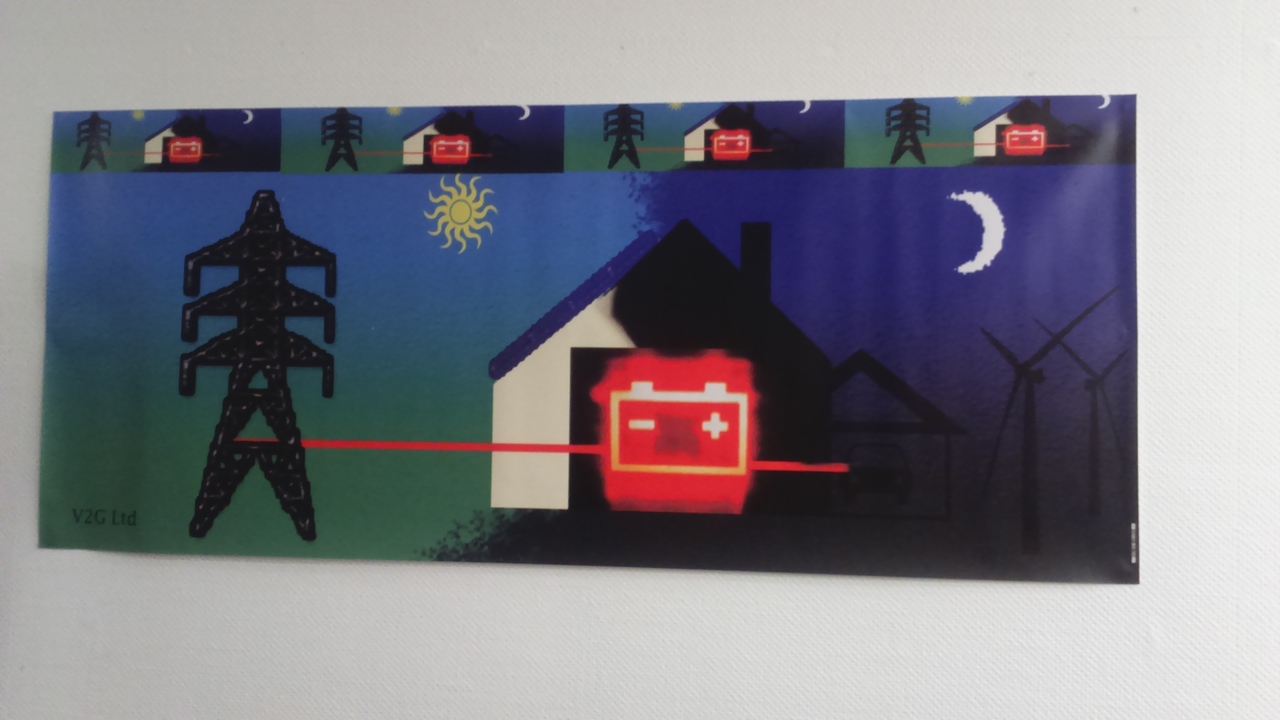
Having outlined the problem, here’s a slightly modified version of V2G’s 5 year old artist’s impression of part of the solution that was also on display in the BEIS basement:

DSC_1251

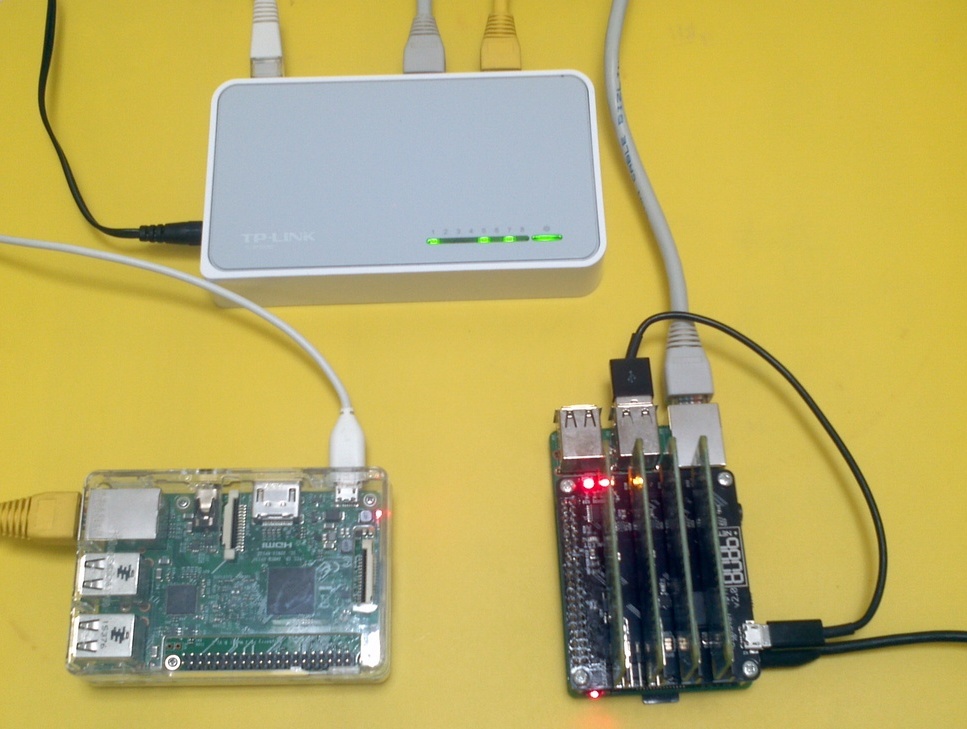
How much might the financial damage caused by Ophelia’s passage have been reduced if every building in the UK and Ireland had access to some local energy generation plus some static and/or mobile energy storage? Whilst you ponder that question, here’s a close up of our RasPi 3B together with its cousin, a Raspberry Pi 2B with a cluster of 4 baby Raspberry Pi Zeros on its back:

2017-10-13-RasPis

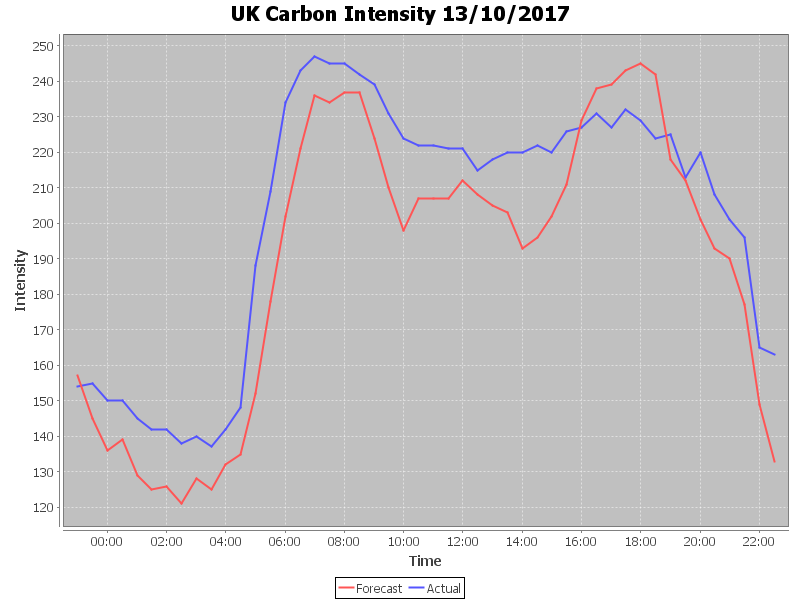
The RasPi 2 was running our new open source UK plc carbon intensity plotter. Here’s what that revealed on Friday the 13th of October 2017:

CarbonIntensity-20171013

As you can no doubt readily appreciate the graph is not a horizontal line! The value at any time is dependent on demand of course, but also on the amount of renewable generation in the mix. That is highly dependent on the weather, and indeed the weather forecast should you be attempting to control UK plc’s carbon emissions. If you’re “committed to tackling climate change” you really should be committed to minimising the integral of the blue line representing UK plc’s actual carbon intensity. Unfortunately that’s not how the UK’s energy markets currently operate. Perhaps they need a redesign?

The Raspberry Pi Zeros only have a single core rather than the 4 cores on the climate modelling 3B. Nonetheless at a cost of four Great British Pounds a pop (plus tax) they are more than capable of acting as a highly “intelligent” device connected to a Great British “smart grid”. Ours already run a variety of British “standards for a smart, flexible energy system”. If you doubt that please feel free to read all about the time V2G’s offices suffered their very own “blackout”. As I pointed out way back then:

Such a piece of electronics wouldn’t in and of itself add a whole lot to the price of an electric vehicle and/or a garage in Dunchideock, or anywhere else on the planet for that matter.

I cannot help but wonder how much the Great Dunchideock Blackout cost Western Power Distribution, how much the evidently changing climate in this part of the world is costing and will cost them, and how their electricity distribution network is coping with the assorted stresses and strains generated by all the renewable power sources currently being tacked onto it down here in not so Sunny South West England that do not currently have any form of energy storage associated with them.

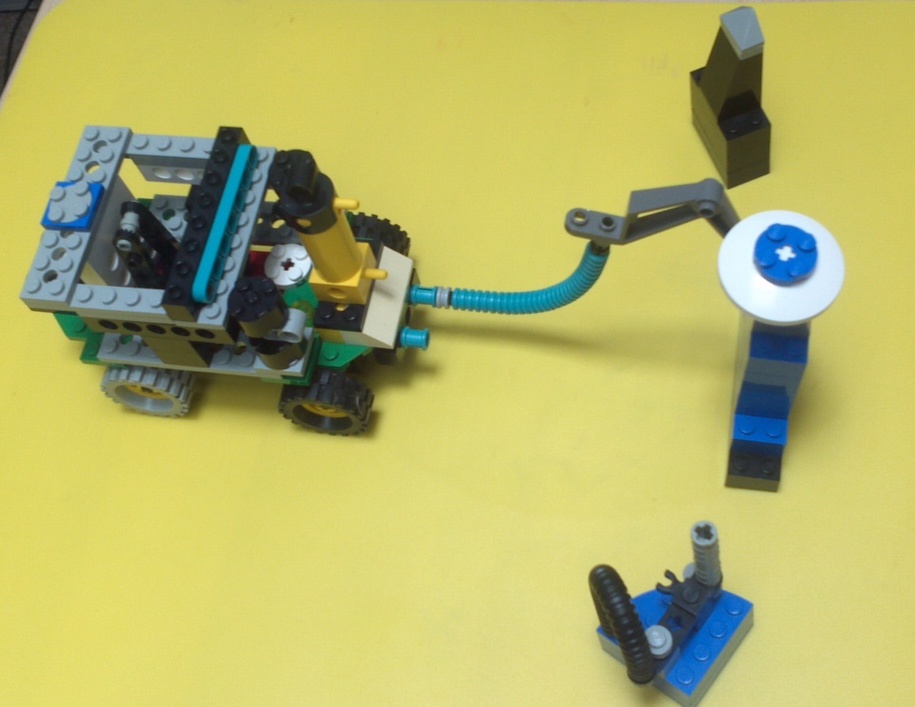
Moving on to the near end of our table at BEIS, here’s a LEGO tableau representing our artist’s impression of a passenger free connected vehicle driven by a “robot” deciding which of three possible electric vehicle charging stations it should connect to:

2017-10-13-Connected-2

In this instance its battery is nearly flat, it’s in a hurry to pick up another human and the grid is in good shape so it’s therefore decided to select the ultra rapid “robotic” charging station. This may seem like child’s play, but it isn’t. On Friday Julian Anderson of Thales e-Security stopped by our stand. We had a bit of a play with the Lego and a longer discussion about the cyber security implications of connected vehicles and autonomous EV charging.

Here’s another point to ponder. Apart from BEIS and Thales we also had a long conversation with an engineer from Ofgem about “community energy markets“. However the people who make policy were conspicuous only by their absence from our audience.

N.B. There’s already another big storm on the way to us here in South West England, as well as Ireland once again. This one’s called Brian, and according to the Met Office:

Between 04:00 Sat 21st and 23:59 Sat 21st

A spell of strong southwesterly winds is expected. Some coastal routes and communities are likely to be affected by large waves, with potential for flooding of properties. Some transport disruption is likely across the warning area, with delays to road, rail, air and ferry transport. Short term loss of power and other services is also possible.

Brian-20171019+2d