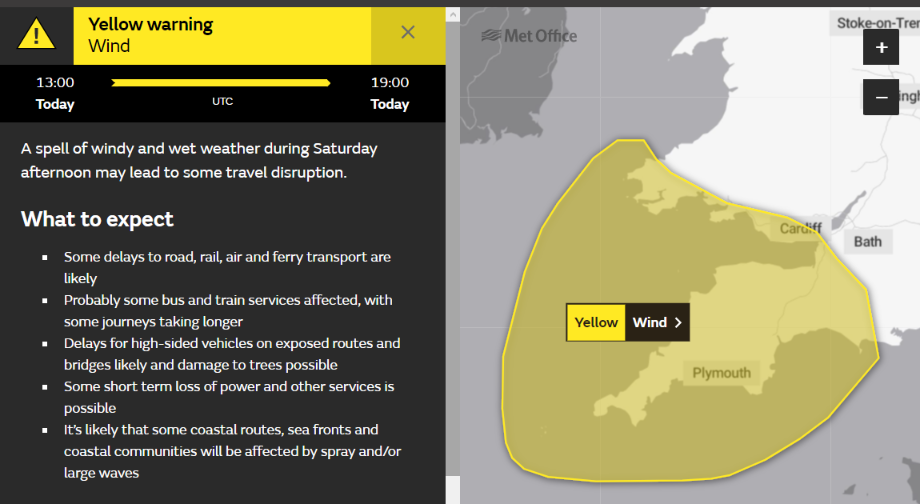
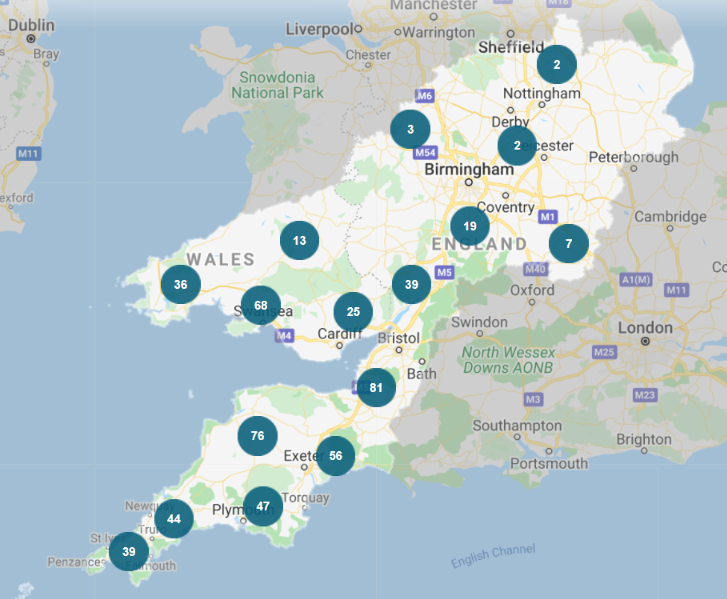
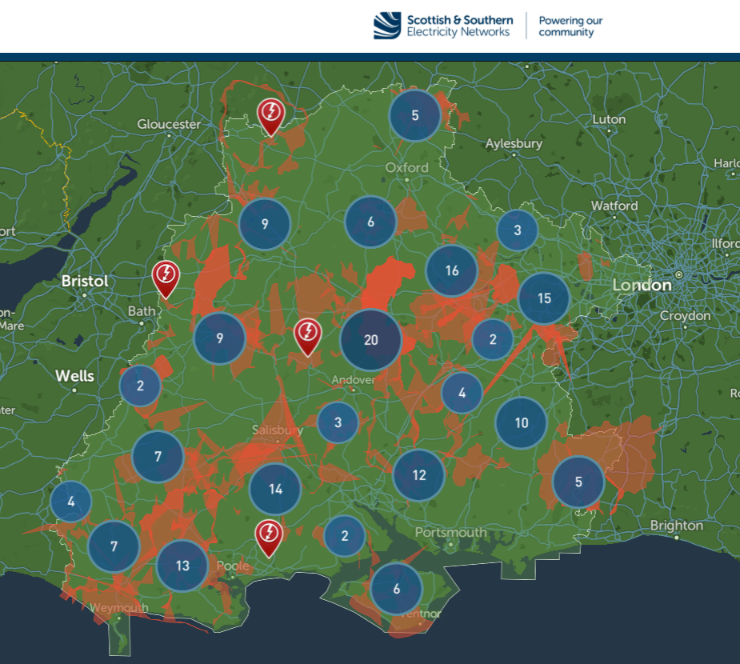
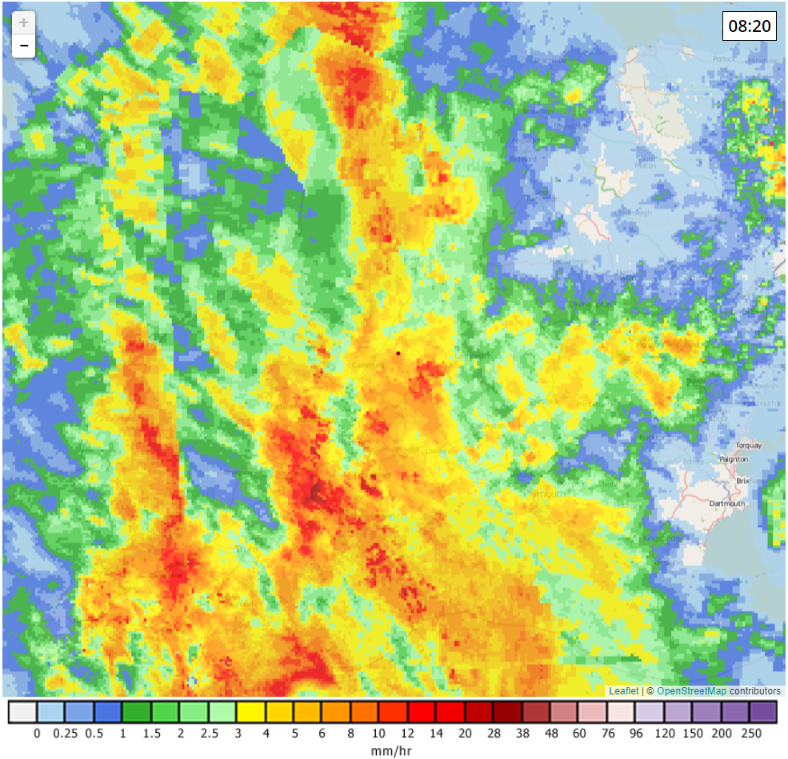
The UK’s Met Office has issued a yellow warning for wind and rain across South West England this afternoon:
As the Met Office point out:
Some short term loss of power and other services is possible.
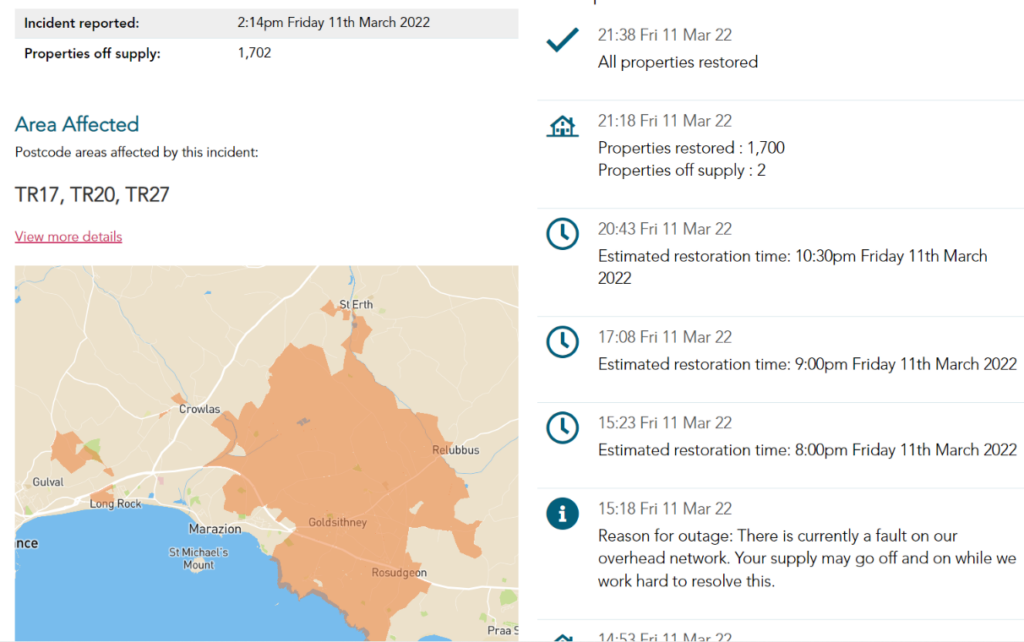
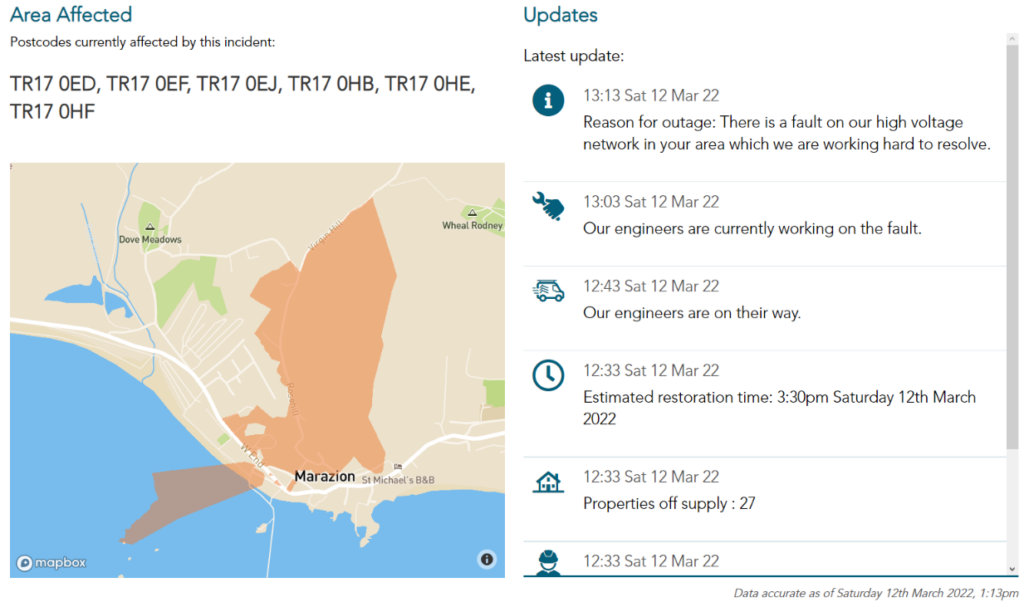
We would go somewhat further, and suggest that some power cuts are likely here in Cornwall. Not least because 1,702 properties near Marazion suffered a power cut yesterday afternoon:
There are still numerous faults across South West England caused by Storm Eunice last Friday that haven’t been repaired yet. Now a lot more power cuts have been added to the long lists of UK DNOs thanks to the arrival across the British Isles of yet another named storm yesterday, Storm Franklin. Here’s how the Met Office initially announced the news:
Storm Franklin has been named as the low-pressure system is expected to bring high winds during Sunday night and into Monday morning for much of the UK.
The latest storm follows on from a week in which Storm Dudley and Storm Eunice also impacted the UK, although wind gusts from Storm Franklin are expected to be lower than Eunice which triggered two Red Weather Warnings.
Northern areas of Northern Ireland are covered by an Amber Wind Warning that will be in force from early Monday morning. Within the Amber Warning area, winds could be in excess of 80mph in exposed coastal areas, but more widely between 60 and 70mph. Damage to buildings is possible, and there’s likely travel disruption.
An extended Yellow Warning for wind which covers much of the rest of the UK, except the northeast, has also been issued for Storm Franklin. Within the yellow warning area, wind gusts will be 65-75mph in coastal areas, and more widely 50-60mph further inland. The coasts of the northwest of England and the southwest of Scotland could see gusts of up to 75mph for a short period on Sunday night and early Monday morning.
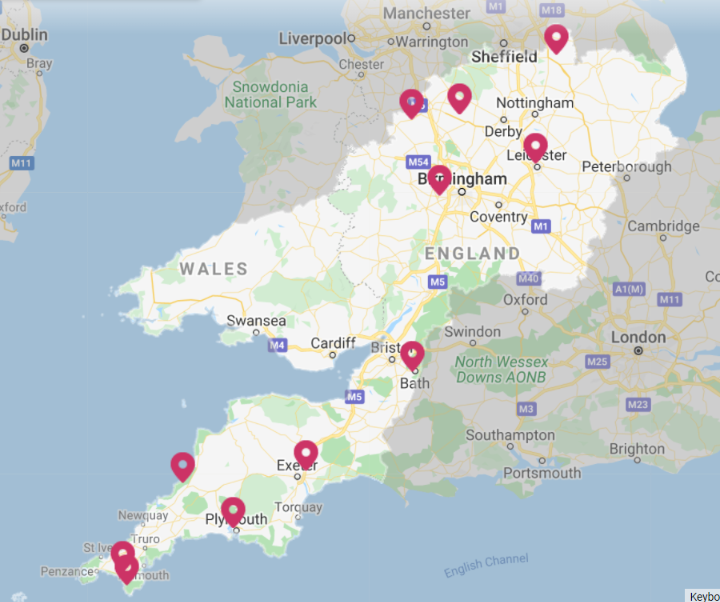
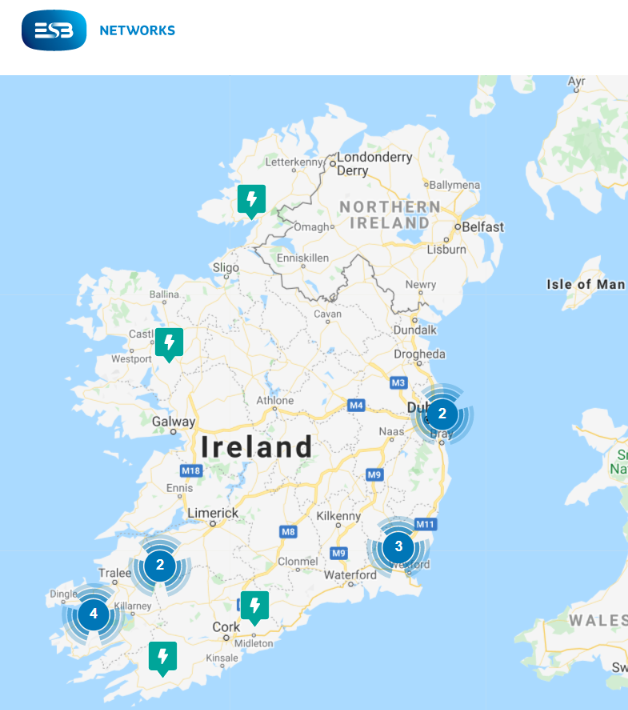
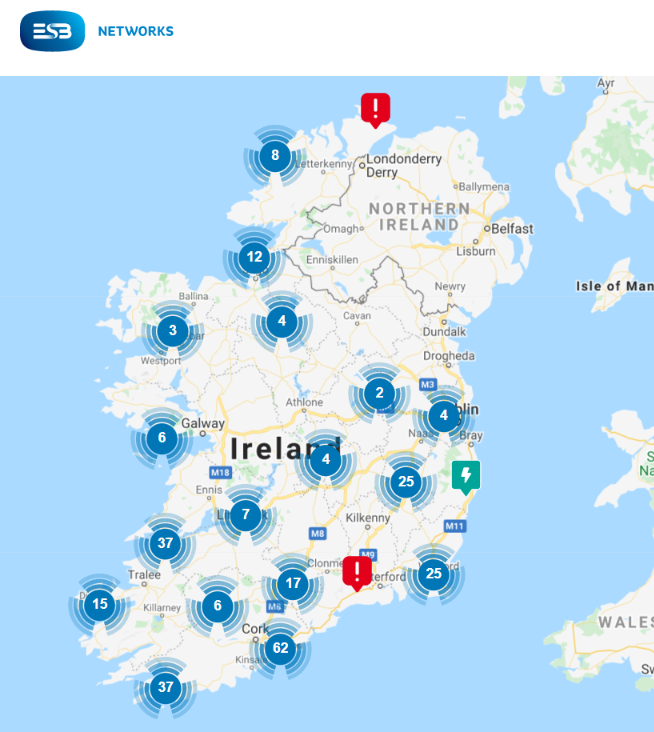
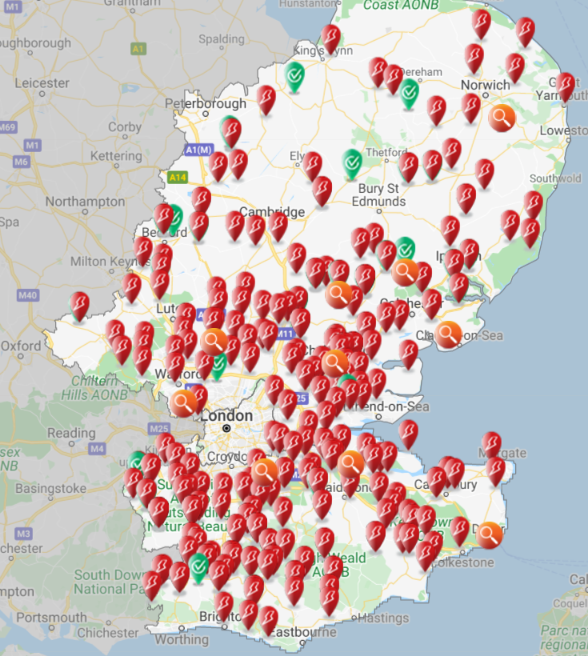
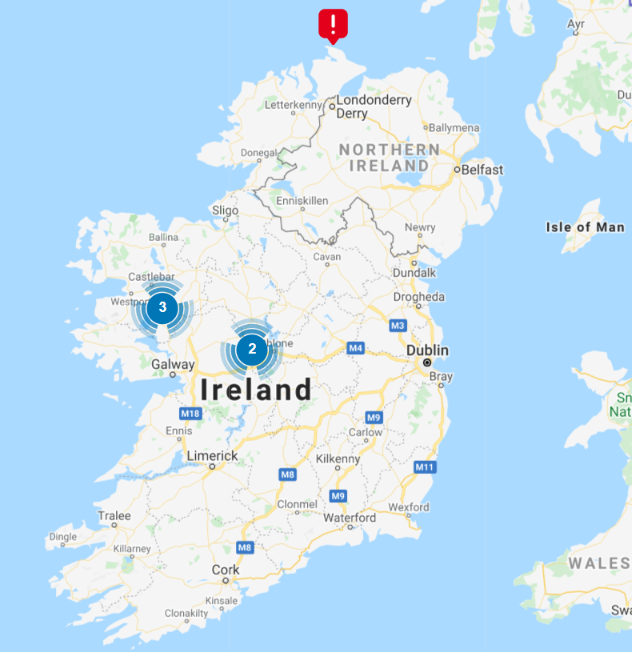
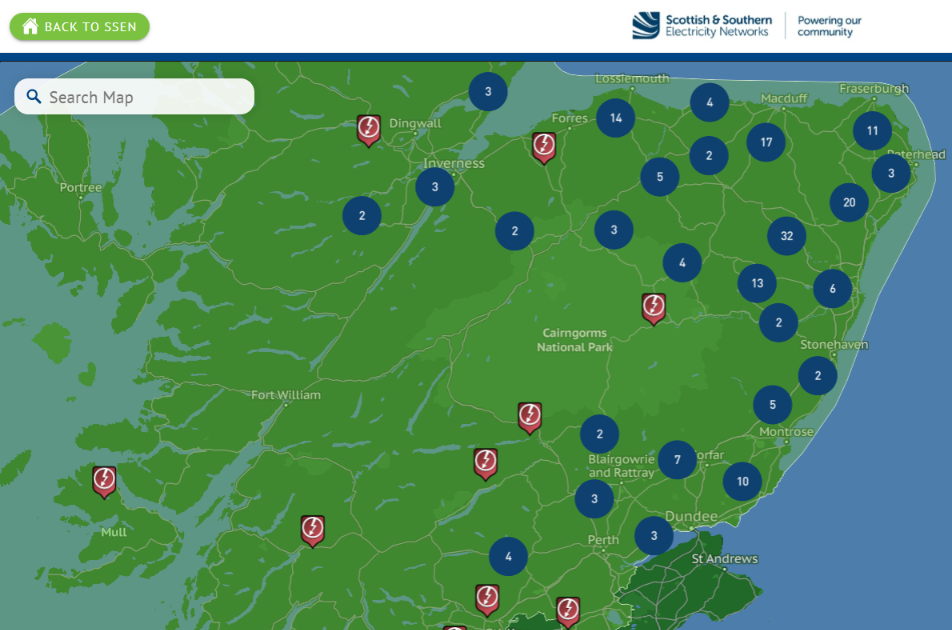
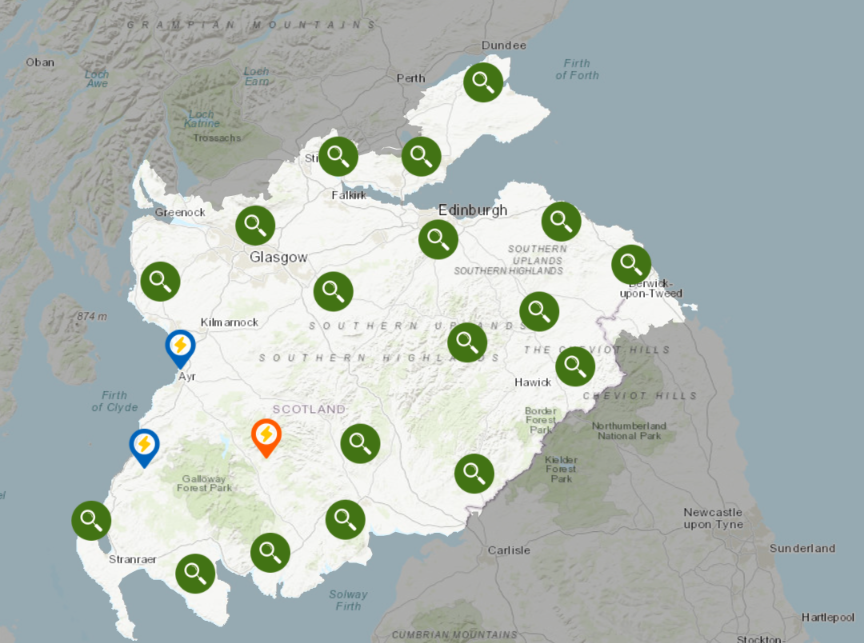
Here are the by now all too familiar live power cut maps from across the British Isles this morning, starting with the island of Ireland:
It’s just gone 10 AM, and Storm Eunice is raging outside. Our lights went out and our uninterruptible power supplies started beeping a couple of minutes ago. The lights came back on and the beeping stopped a few seconds later. There are 13,884 properties suffering a power cut in Cornwall, but at least ours was brief!
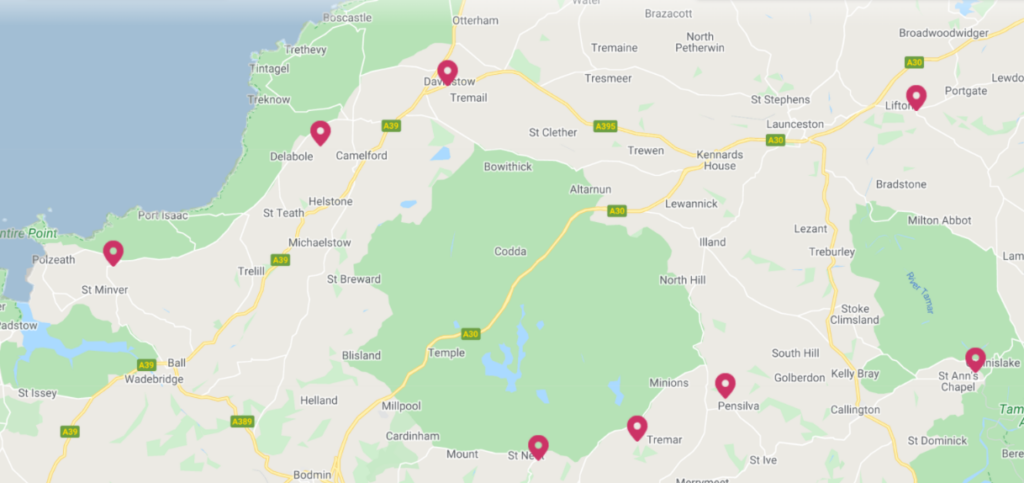
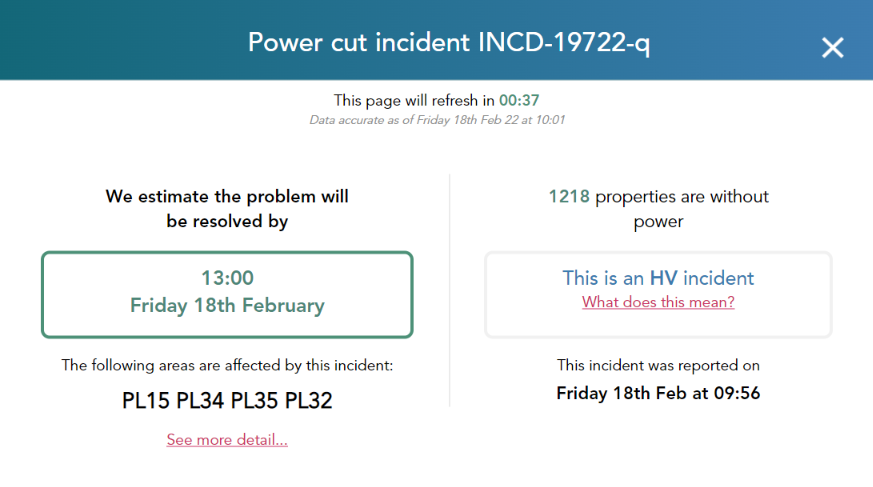
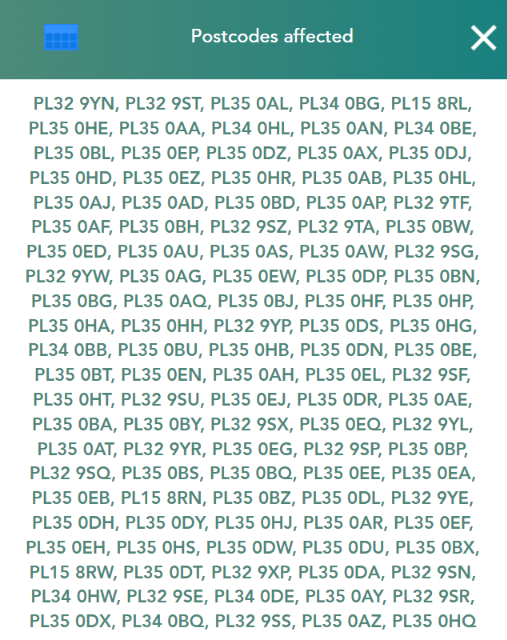
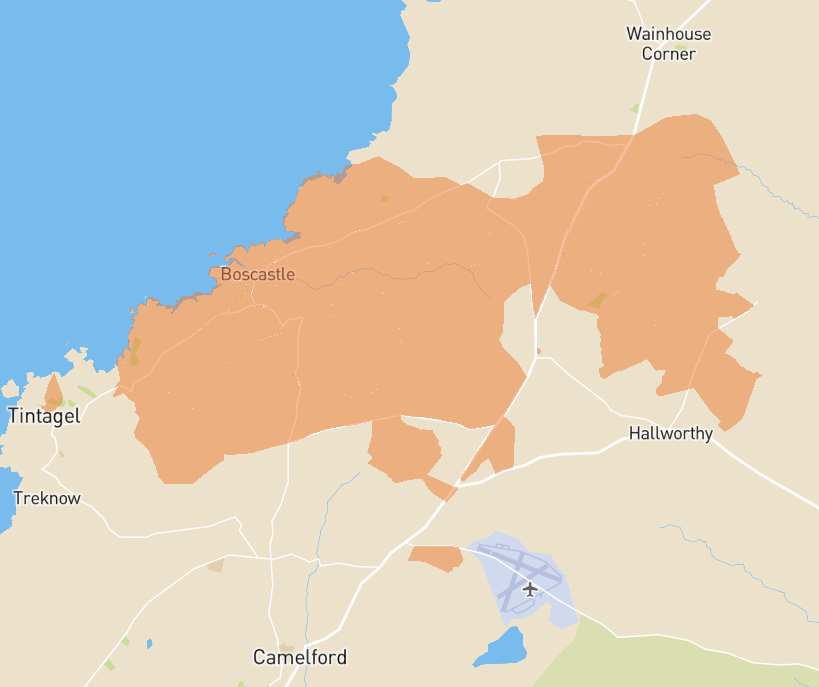
However some other local residents are not so fortunate:
Western Power Distribution currently estimate that the fault will be fixed by 1 PM, but what with one thing and another that strikes me as being a bit optimistic.
[Edit – 11:00 February 19th]
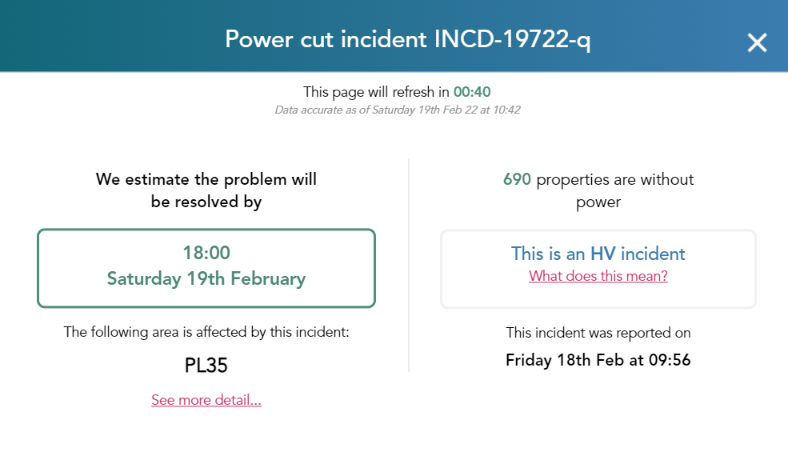
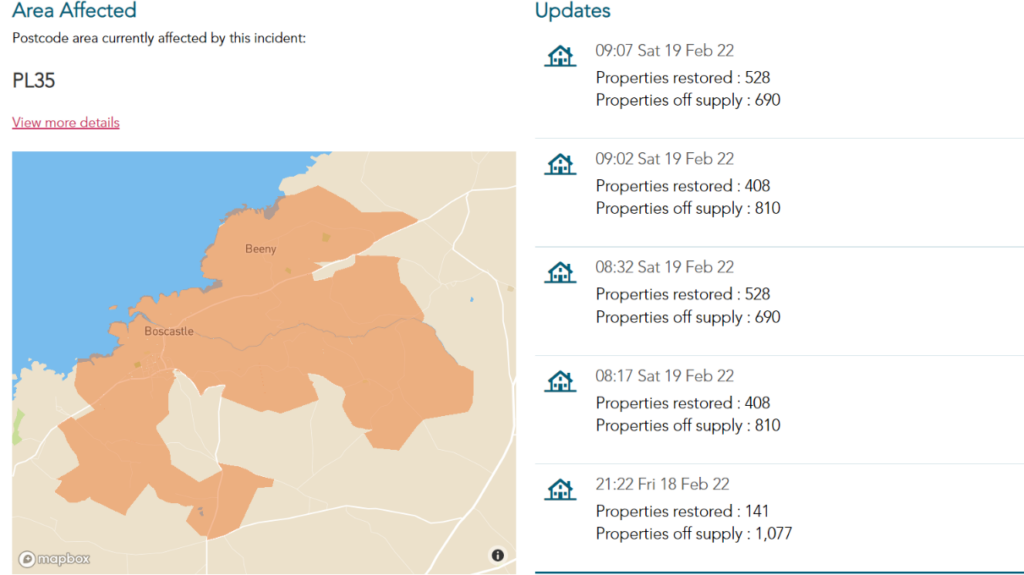
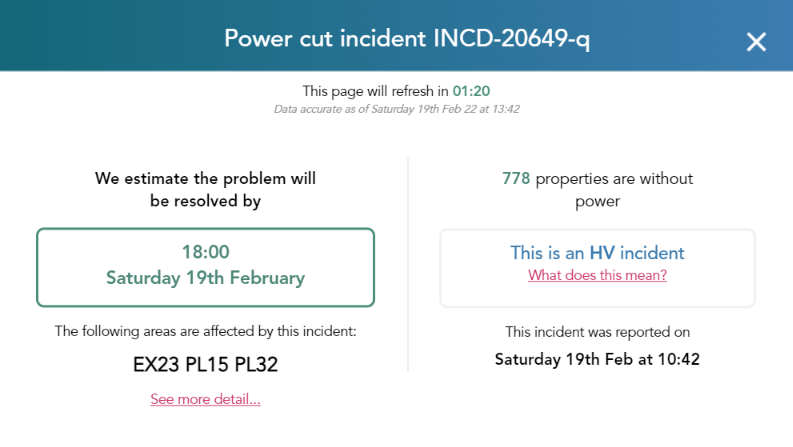
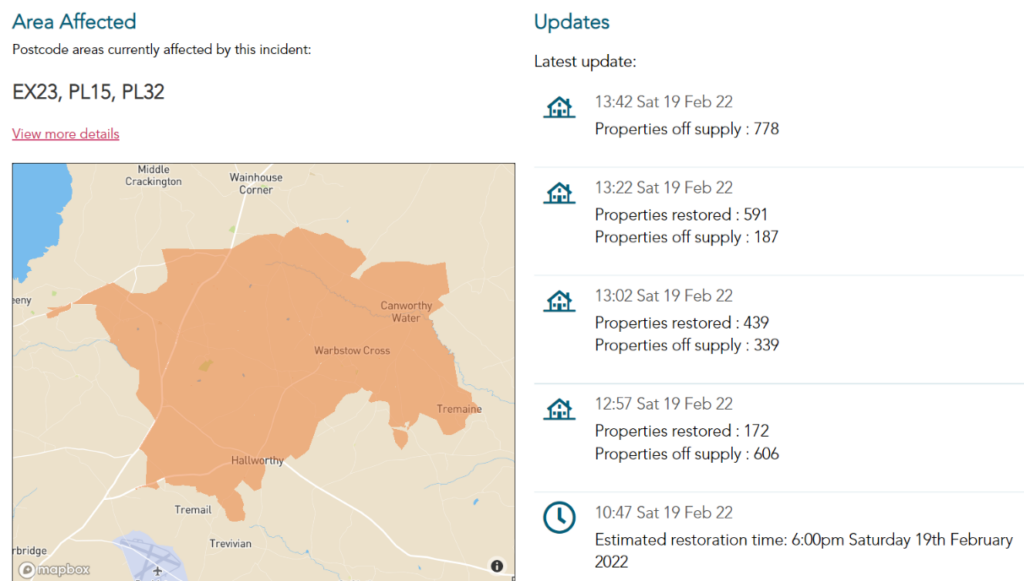
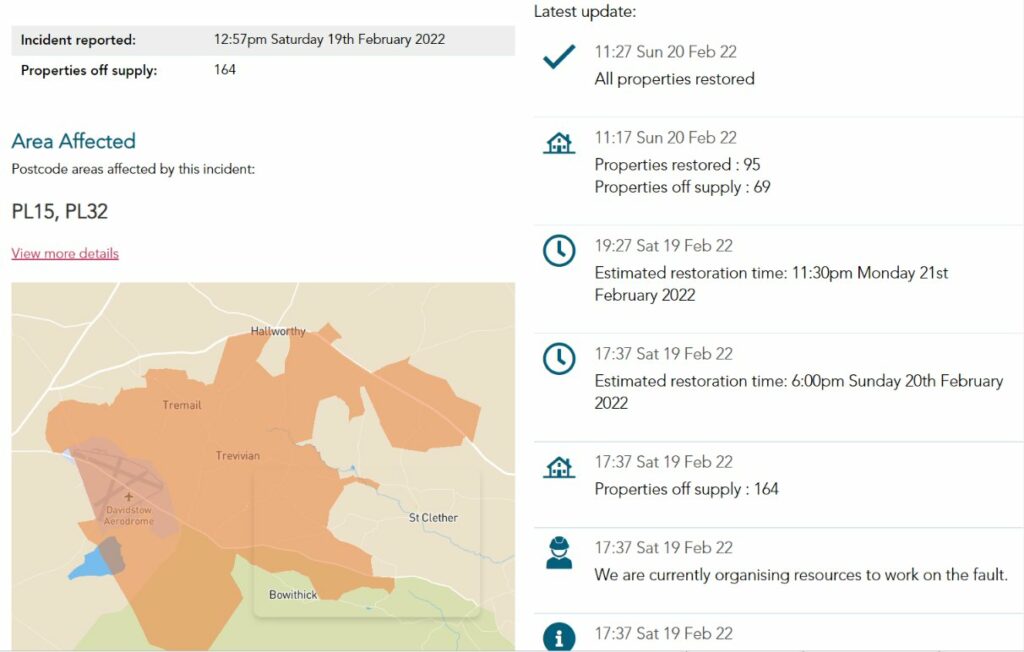
WPD have been gradually fixing the faults on their network in the Davidstow area following Storm Eunice yesterday. However there are still 690 properties that have been without electricity for over 24 hours:
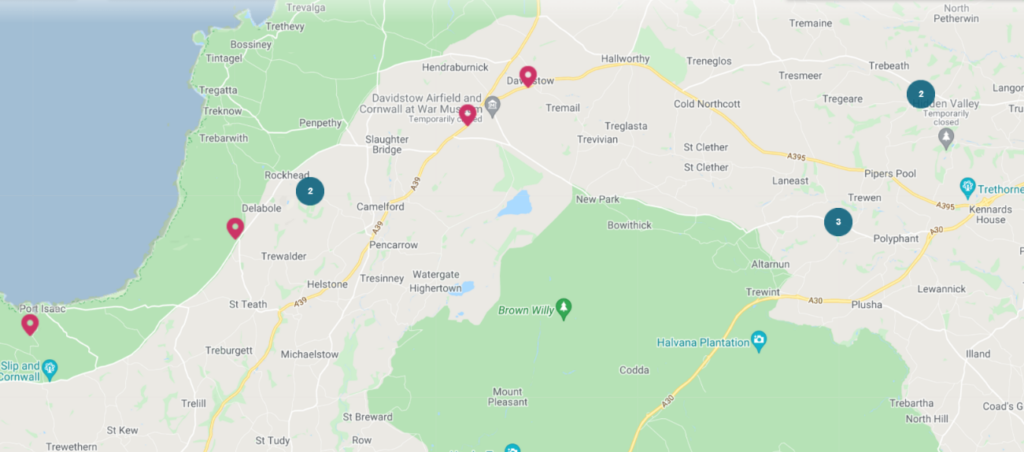
There are also still several more faults nearby:
[Edit – 14:00 February 19th]
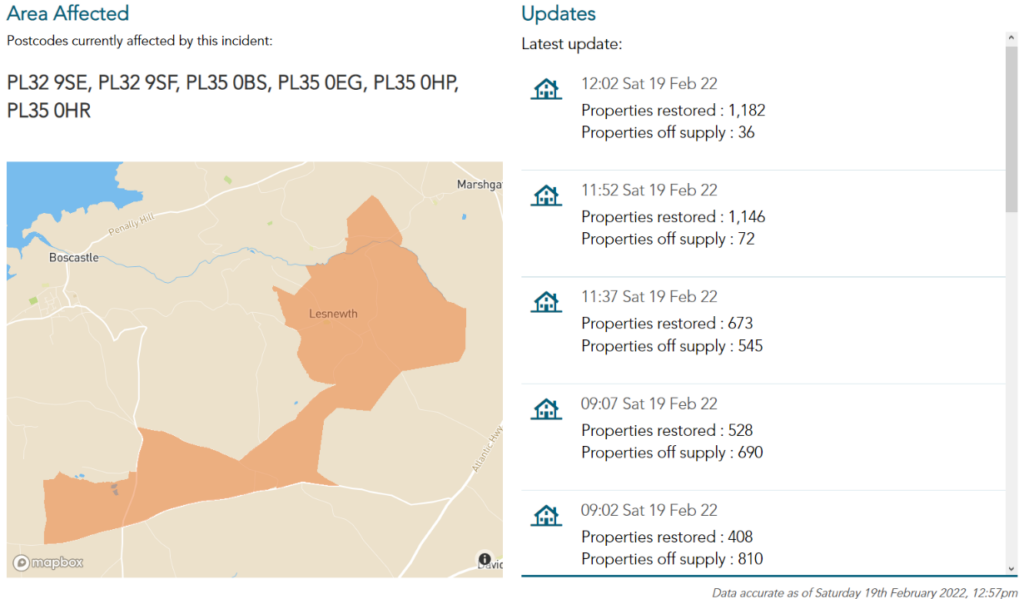
It seems our flickering lights this morning meant that we’ve just dodged another metaphorical electric bullet here on the fringes of Davidstow. Whilst yesterday’s fault is now almost fixed:
another big high voltage fault hit this side of the Atlantic Highway this morning:
[Edit – 18:00 February 19th]
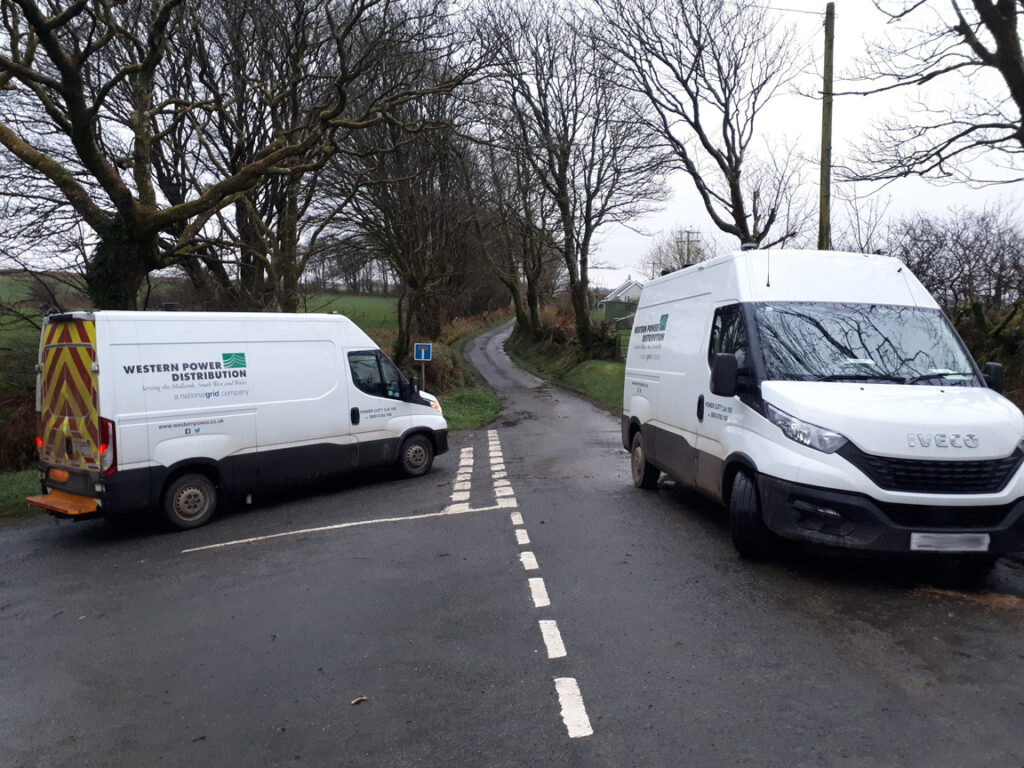
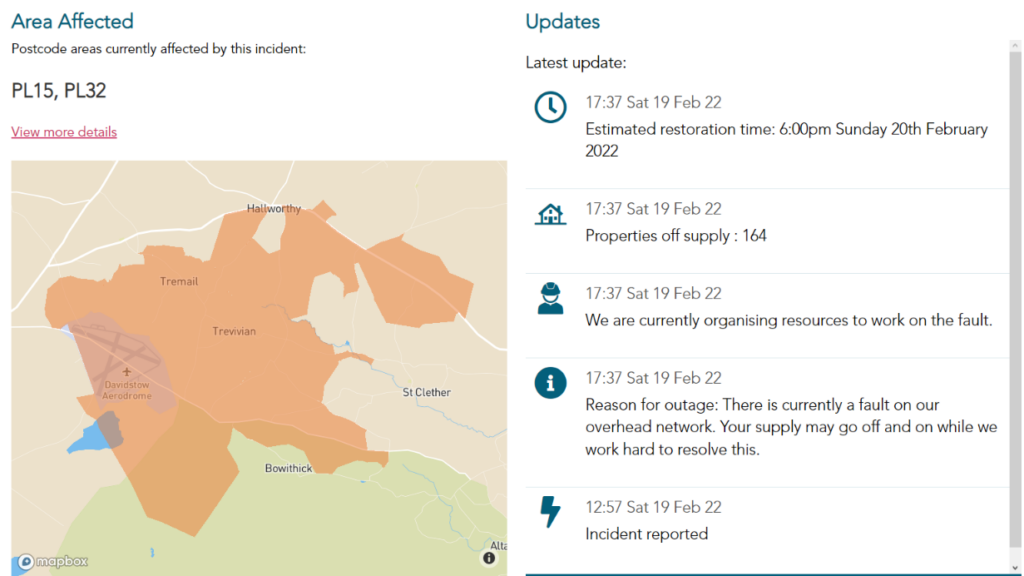
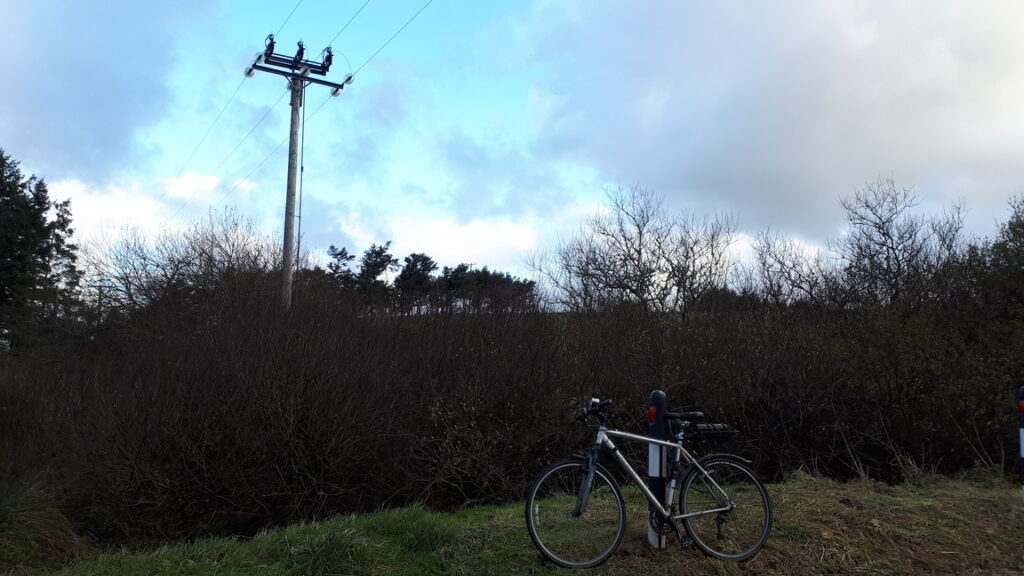
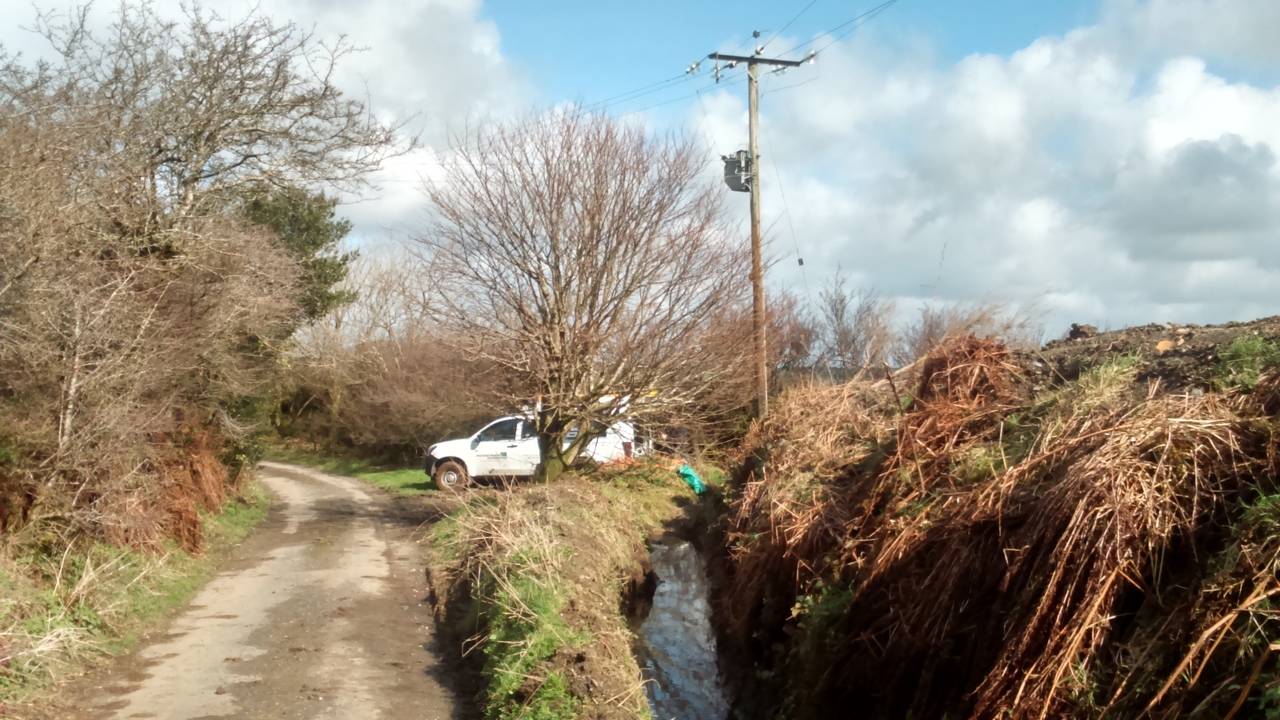
We may have managed to dodge the first two bullets, but unfortunately not the third. I went on a bike ride around the neighbourhood this afternoon try to find some WPD engineers. More on all that in due course, but I failed miserably in my mission until the very end of my ride. This was the sight that greeted me at the end of our lane:
This was the reason for their visit:
[Edit – 12:00 February 20th]
We’ve received some unexpected good news this morning. Thanks to the efforts of Western Power’s engineers by floodlight overnight electricity is already flowing around our ring mains once again!
Regular readers may recall our own recent power cut in the wake of Storm Arwen before Christmas? Whether we experience another one tomorrow remains to be seen, but I am confident that many other people down here in South West England will.
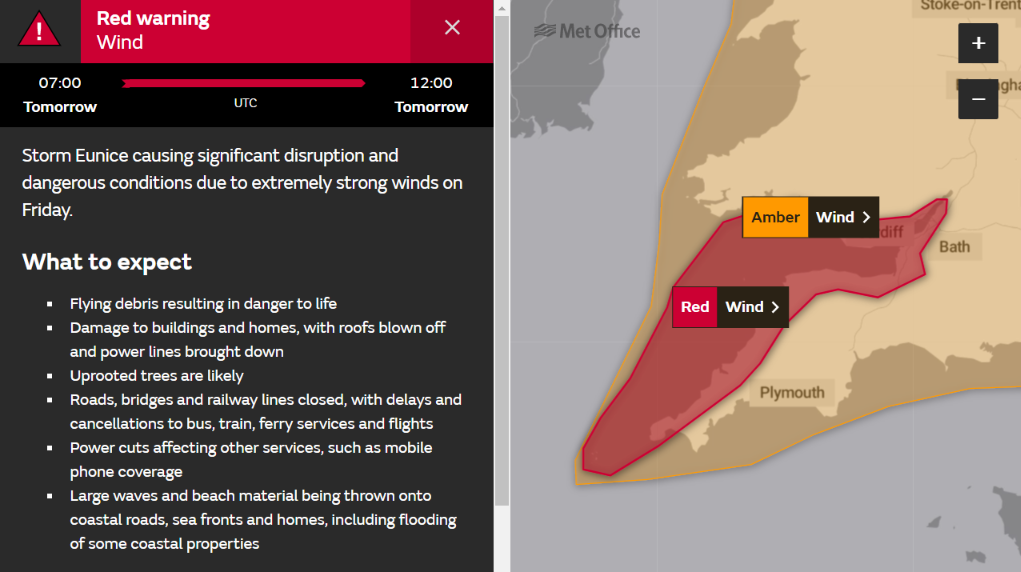
The Met Office issued a rare “red” wind warning for our part of the world earlier today:
The Met Office forecasts that:
Extremely strong west to southwesterly winds will develop over southwest England and south Wales early on Friday. Widespread inland gusts of 70-80 mph are likely and up to around 90 mph near some coasts, with dangerous conditions on beaches and seafronts. Winds are expected to ease from the west during the late morning.
What to expect
Flying debris resulting in danger to life
Damage to buildings and homes, with roofs blown off and power lines brought down
Uprooted trees are likely
Roads, bridges and railway lines closed, with delays and cancellations to bus, train, ferry services and flights
Power cuts affecting other services, such as mobile phone coverage
Large waves and beach material being thrown onto coastal roads, sea fronts and homes, including flooding of some coastal properties
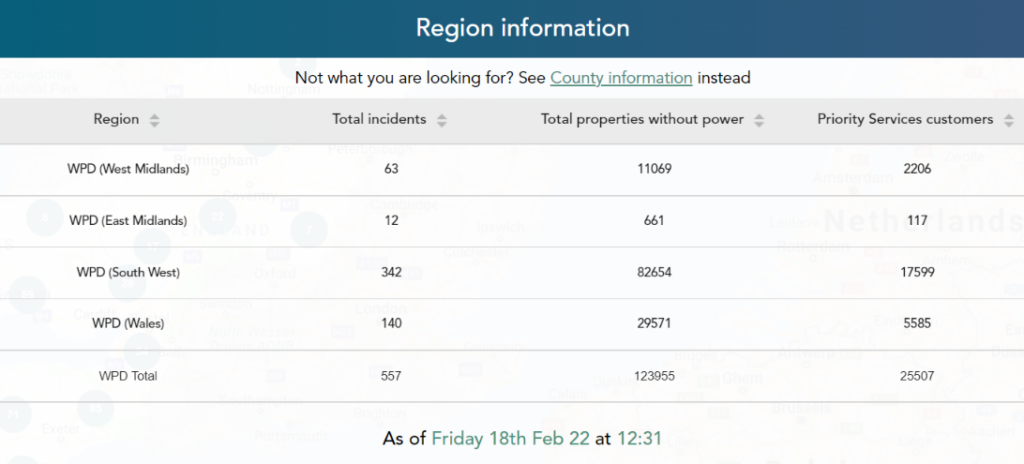
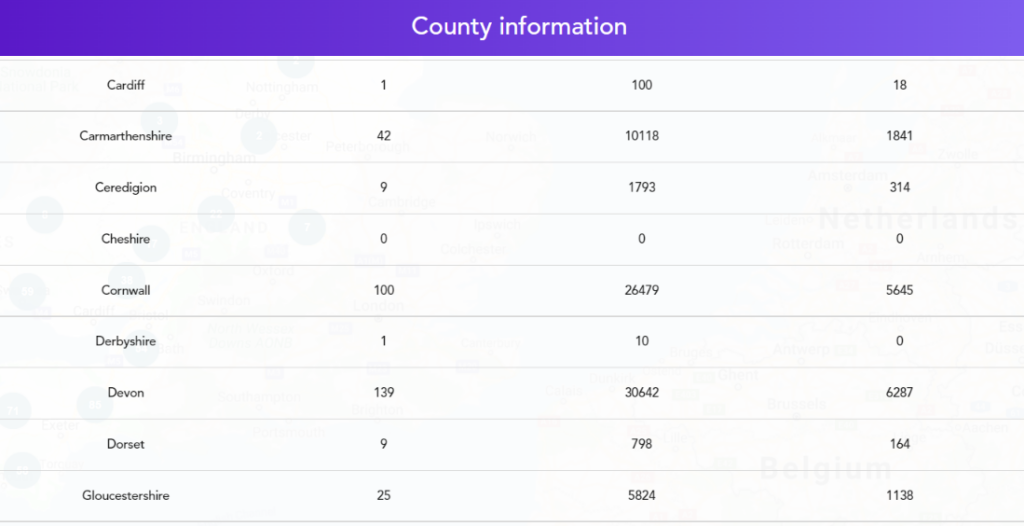
The other DNOs don’t provide handy tables of real time outage numbers, but WPD’s reveal that at 12:40 there were 123,955 properties without electric power across their four regions of the UK, of which 26,479 are here in Cornwall with another 30,642 next door in Devon.
Storm Franklin arrived on our shores before all the faults caused by Storm Eunice were repaired. Hence the story continues over at:
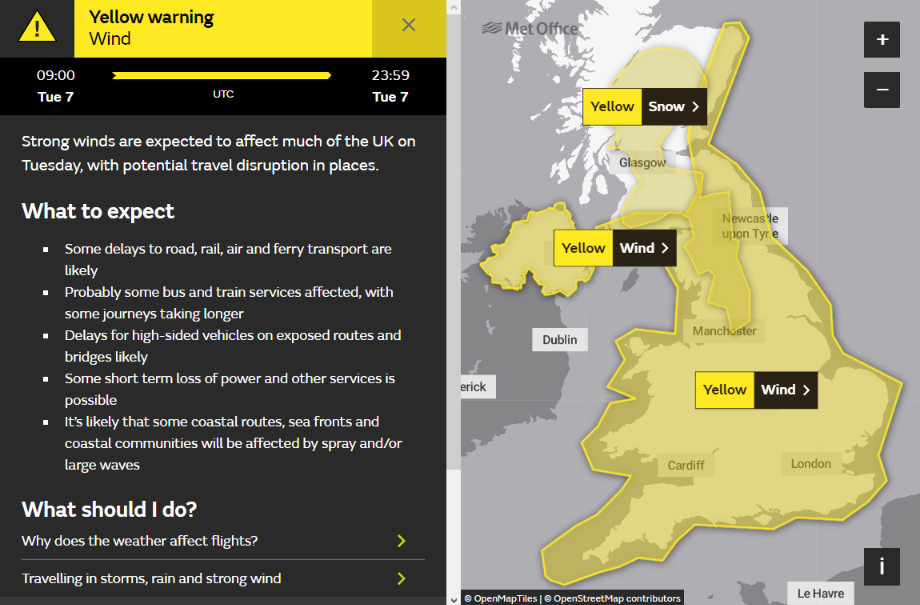
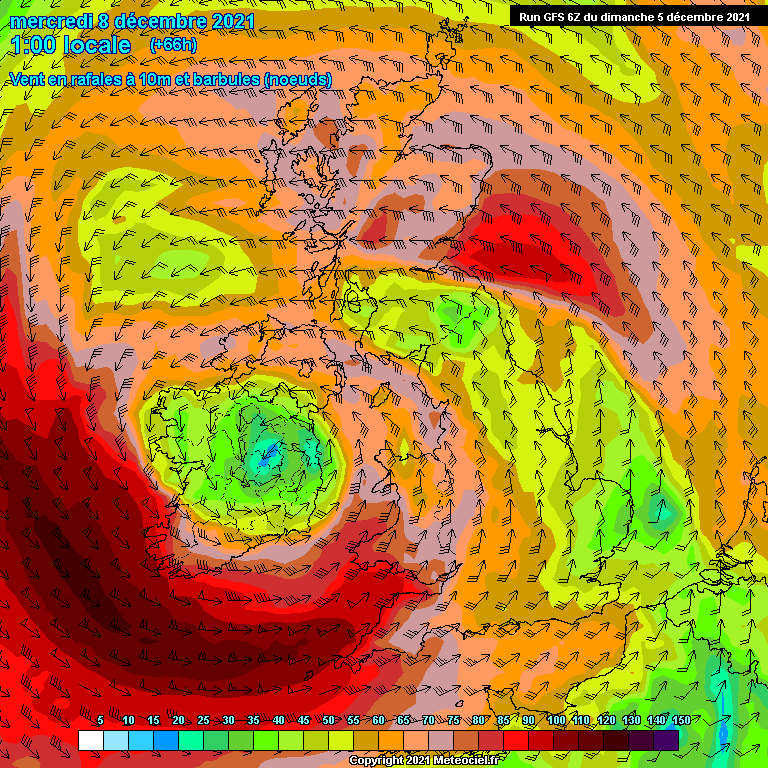
As we anticipated yesterday, Storm Barra has been officially named by Met Éireann even though the remaining power cuts due to Storm Arwen have yet to be repaired:
#StormBarra has been named by @MetEireann and is forecast to bring strong winds to much of the UK and snow to northern areas on Tuesday and into Wednesday
Today’s title refers back to a similar incident we experienced back in 2014 at our previous premises half way up Haldon Hill near Exeter. The forecast for Storm Arwen suggested lots of power cuts in lots of places. We thought we had escaped unscathed. Until the very early hours of this morning that is, when this happened:
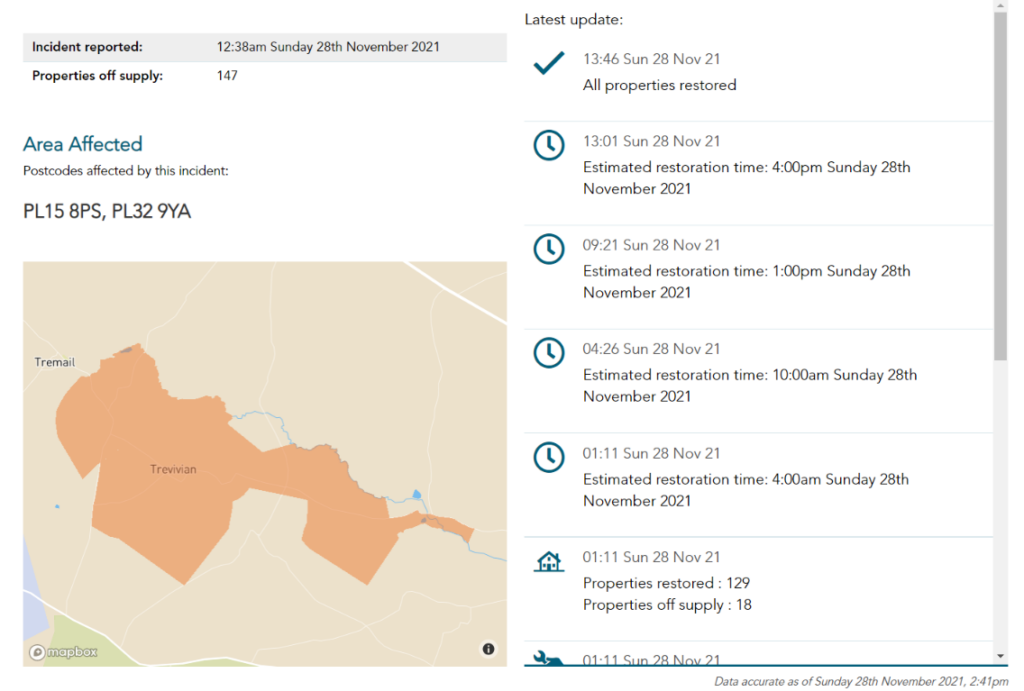
A few minutes later this information appeared on Western Power Distribution’s power cut map:
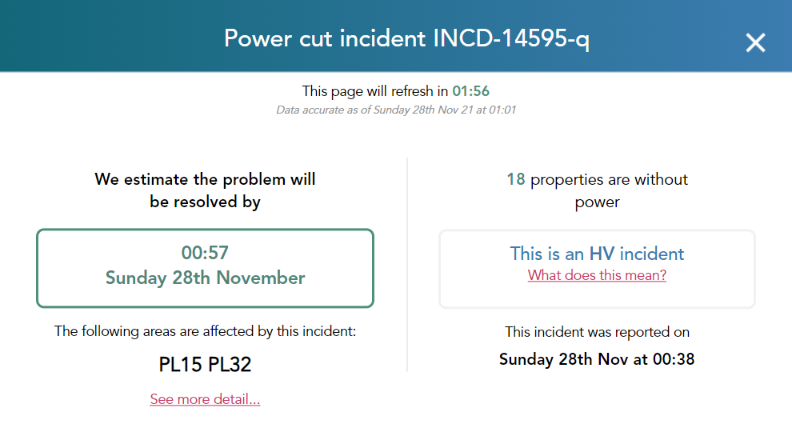
By that time our mains power had returned, but that of 18 of our near neighbours had not.
It is now over 12 hours later, and those 18 properties are still unintentionally “off grid”:
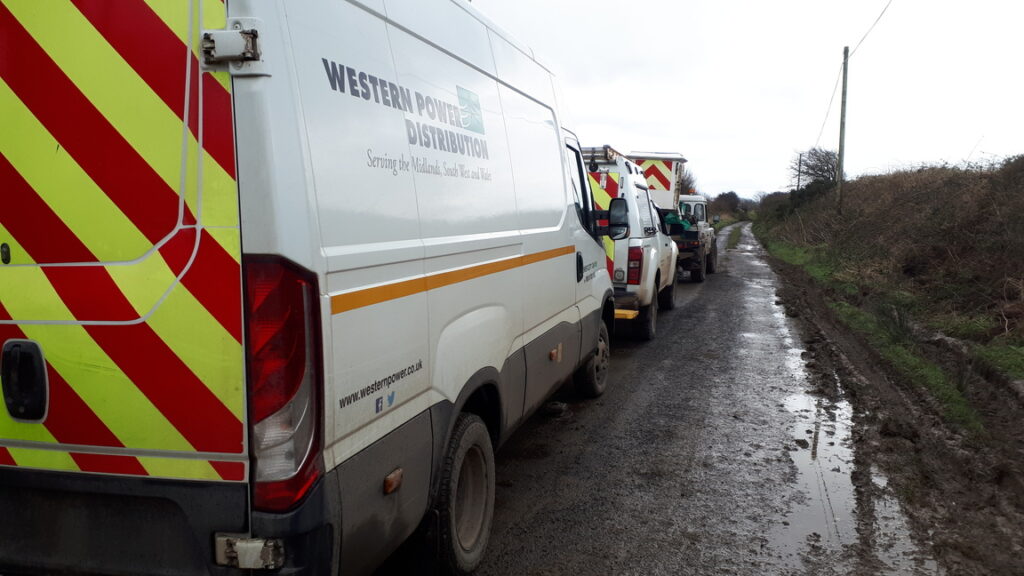
I’ve recently returned from a bike ride around the local, somewhat soggy lanes, where I happened across a valiant 3 man WPD repair crew:
It seems that some of their South West colleagues were up country helping out in the Midlands, and they had started their current shift a mere 6 hours after finishing the previous one.
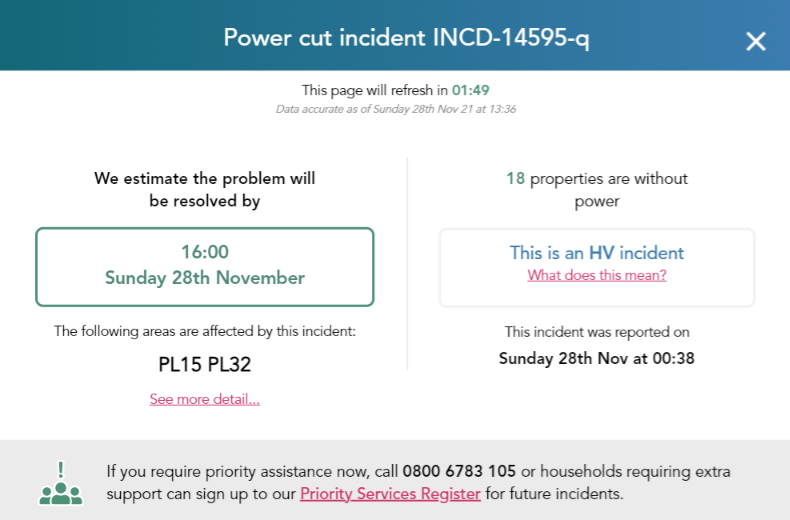
Their efforts seem to have paid off, since after returning home the WPD web site was running properly once again, to reveal this no doubt welcome information to our near neighbours:
Based on my conversation with the repair crew and subsequent poring over a map of WPD’s distribution grid here is my best estimation of what happened during the power cut in Trevivian. Firstly here’s my video of what was happening to WPD’s wires in the vicinty of Tremail in the immediate aftermath of Storm Arwen, together with a comment on the current high retail price of electricity:
After #StormArwen had subsided somewhat yesterday afternoon we took a stroll up the hill towards #Davidstow Moor to take a look at our local #OnshoreWind "power station"
Here are the sights (and sounds!) that greeted our sore eyes#LocalEnergy#NetZero
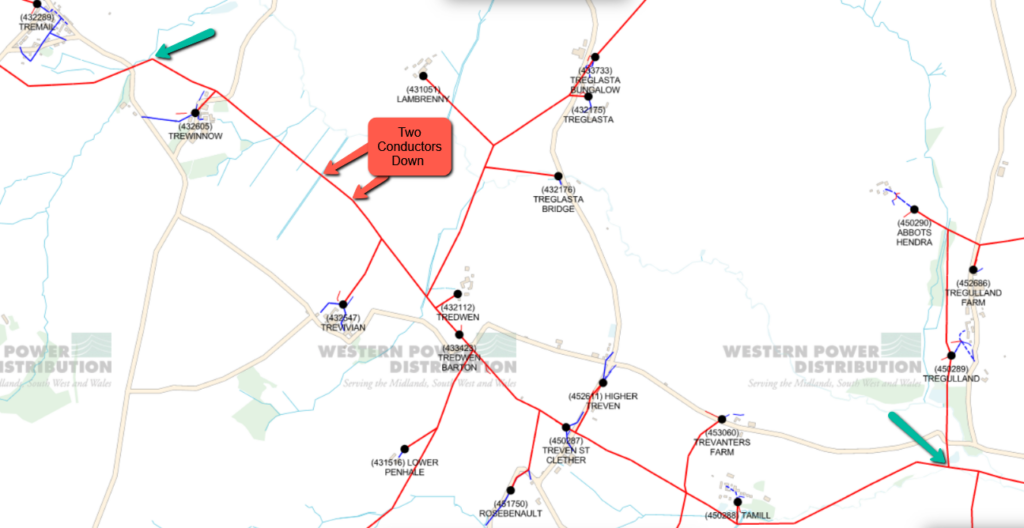
I’m not sure why it took until gone midnight, but 2 of the conductors carrying the 3 phase 11 kV supply from Tremail past Trevivian came down in the early hours of Sunday morning:
At first Tremail was amongst those cut off by the fault, but then WPD opened the air break isolators identified by green arrows and turned the power from Davidstow substation back on. After that everyone’s lights came back on apart from the properties powered by the network between the two isolating switches.
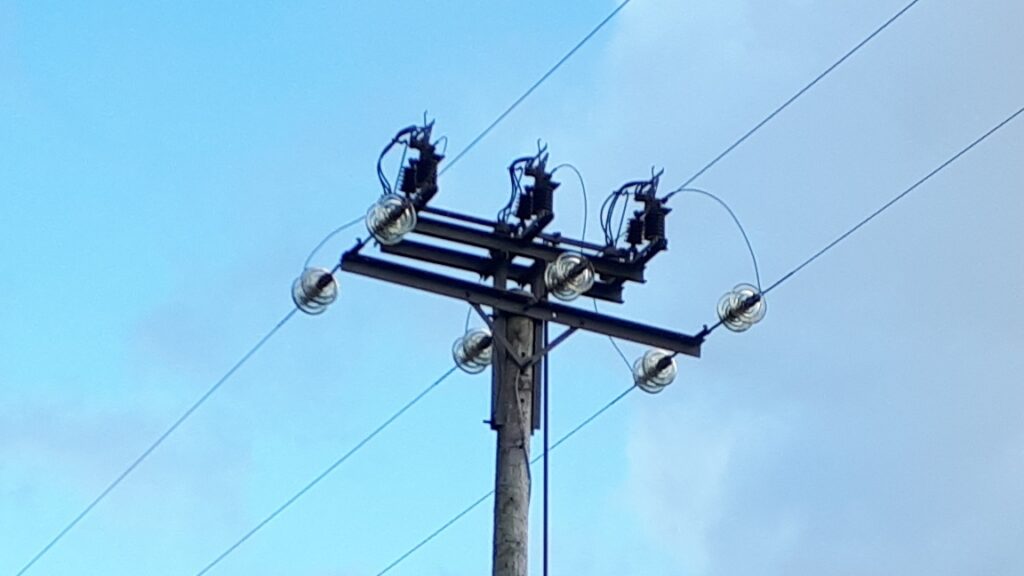
What with one thing and another it then took quite a while to repair those sections of cable and close the ABIs again! Here’s a close up of the ABI at the Tremail end of the isolated section of the local electricity distribution grid in normal operation:
and here’s a picture of it that might be more familiar to those who travel the road between Tremail and Trevivian on a regular basis:
As you can see from the forecast above, very strong winds are forecast to hit the north east coast of Scotland later today, which will inevitably lead to a large number of power cuts.
The UK Met Office has now also issued a red weather warning for Storm Arwen:
National Grid plc today announces that it has agreed to acquire PPL WPD Investments Limited, the holding company of Western Power Distribution (WPD), the UK’s largest electricity distribution business, from PPL WPD Limited, a subsidiary of PPL Corporation for an equity value of £7.8 billion and National Grid has agreed to sell The Narragansett Electric Company (NECO) to PPL Energy Holdings, LLC, also a subsidiary of PPL, for an equity value of US$3.8 billion (£2.7 billion).
In addition, National Grid announces that it will commence a process later this year for the sale of a majority stake in National Grid Gas plc, the owner of the national gas transmission system.
As is the way with such things, this is not all signed, sealed and delivered just yet:
Completion of the WPD Acquisition, which will be funded by fully committed bridge facilities, is expected to occur within the next four months and completion of the NECO Sale is expected to occur before the end of the first quarter of 2022. National Grid expects to launch the sale process for NGG in the second half of this year and complete the sale approximately a year later.
The Chief Executive of National Grid, John Pettigrew , commented that:
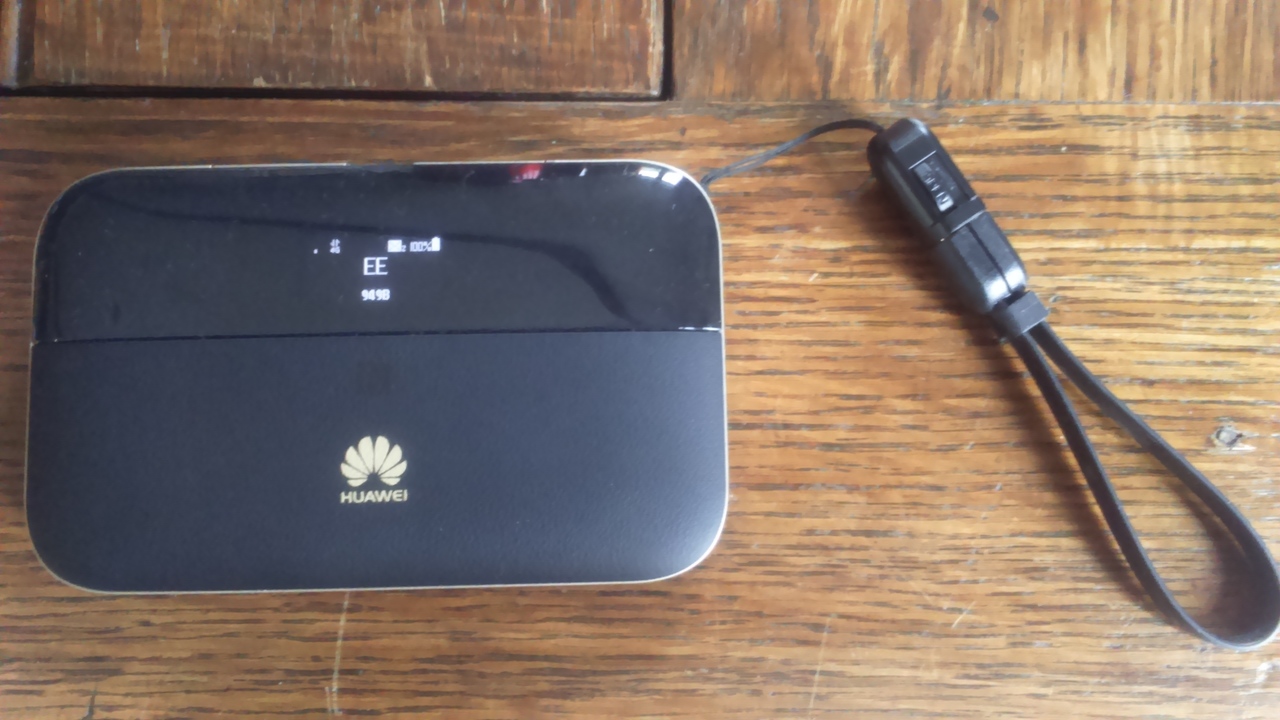
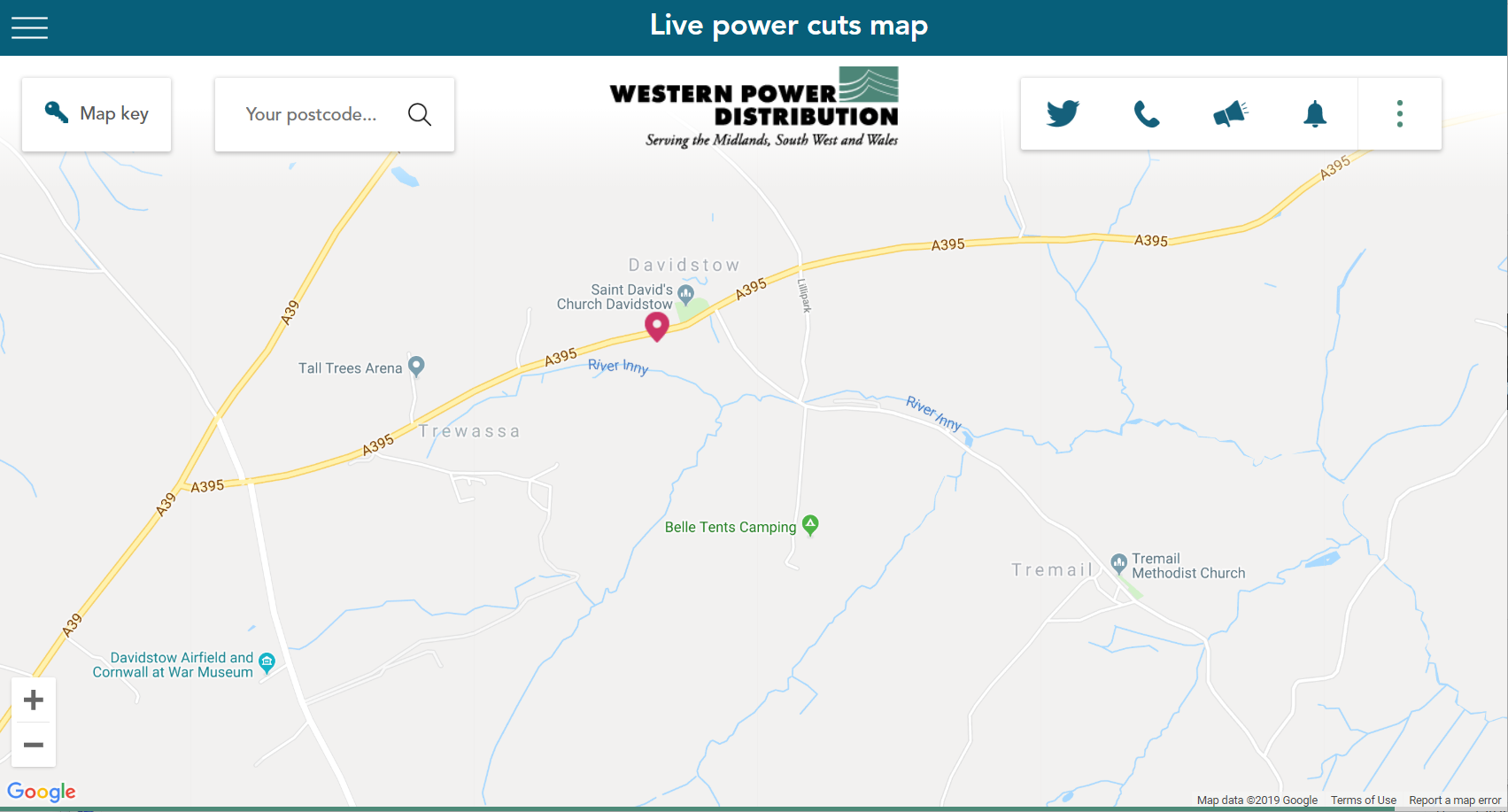
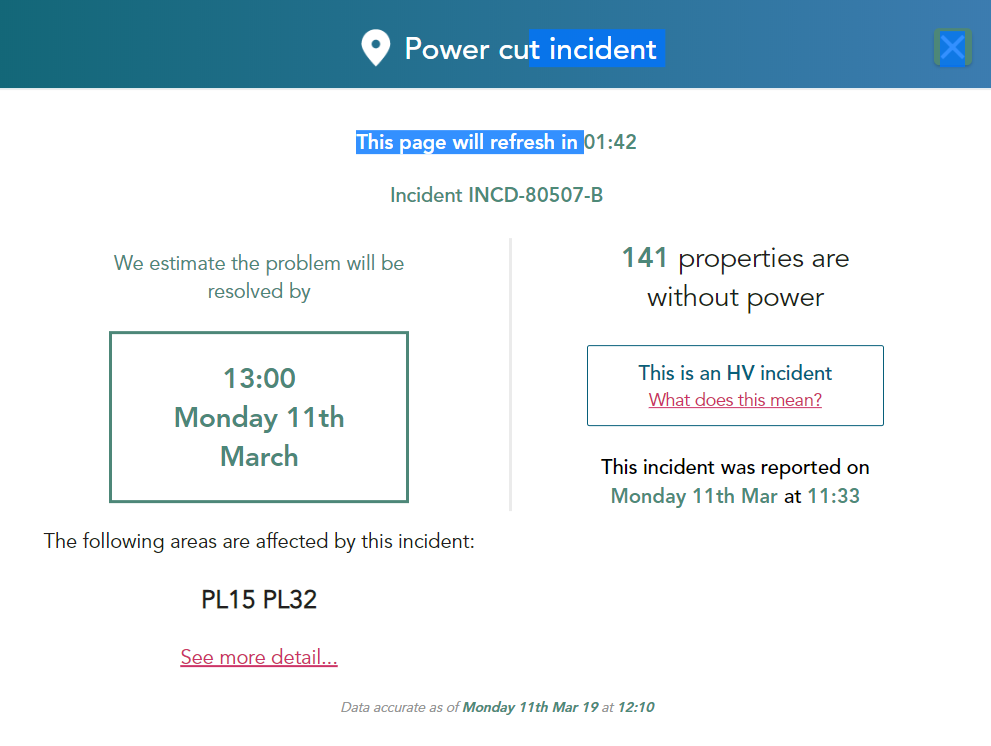
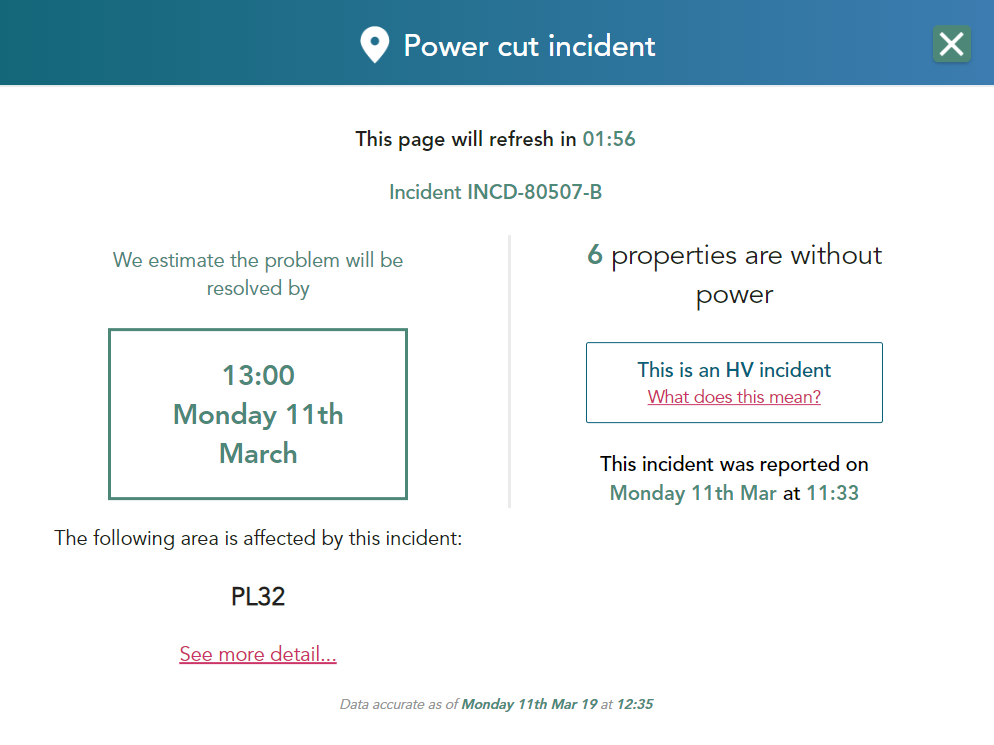
Our lights went out at 11:33 this morning, together with our telephone and “fibre to the premises” BT broadband. Fortunately we have backup for the latter two in the form of the by now ubiquitous mobile phones and this Huawei E5885L 4G mobile WiFi hotspot:
The cause of the problem was an 11 kV cable that had become detached from an insulator and was dangling lower than designed:
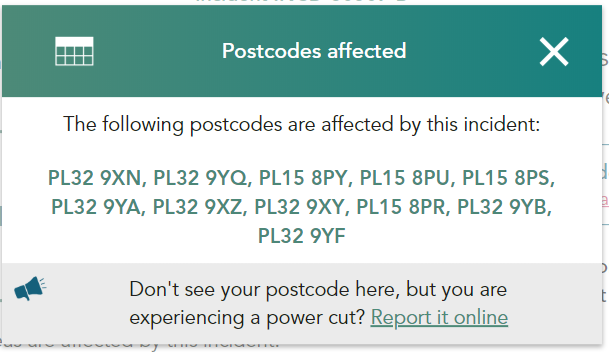
Initially we were one of 141 properties without power:
By 12:20 our power came back on since WPD’s engineers had arrived and isolated a small section of their distribution grid just up the hill from here leaving just 6 properties on the edge of Davidstow Moor without mains electricity:
They had their power restored somewhat later, at 13:50:
We really must persuade our current landlord to let us install a 3 phase supply and full strength V2G technology to enable us to weather such storms much more smoothly in our converted barn.
In a press release earlier today Nissan proudly announced that:
An important milestone on the road to emission-free energy and mobility has been achieved by technology company The Mobility House, energy supplier ENERVIE, transmission system operator Amprion and car maker Nissan. With the Nissan Leaf and an innovative charging and energy management technology, the project partners have now succeeded in qualifying an electric car for all the TSO regulatory requirements for primary power regulation. This means that the car can be integrated as a regulating reserve for the German electricity grid – a breakthrough in the establishment of Vehicle-to-Grid (V2G) technology in Germany.
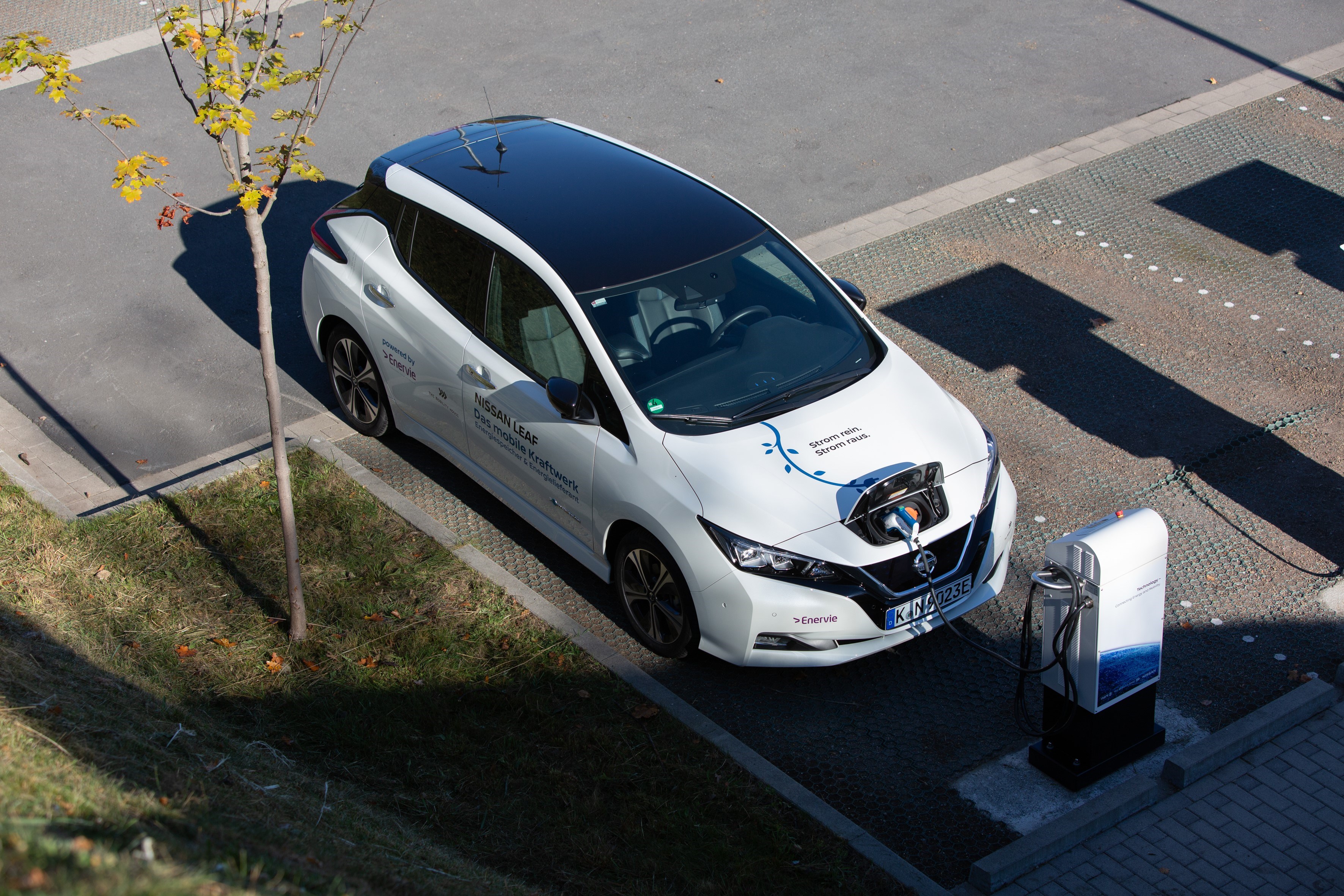
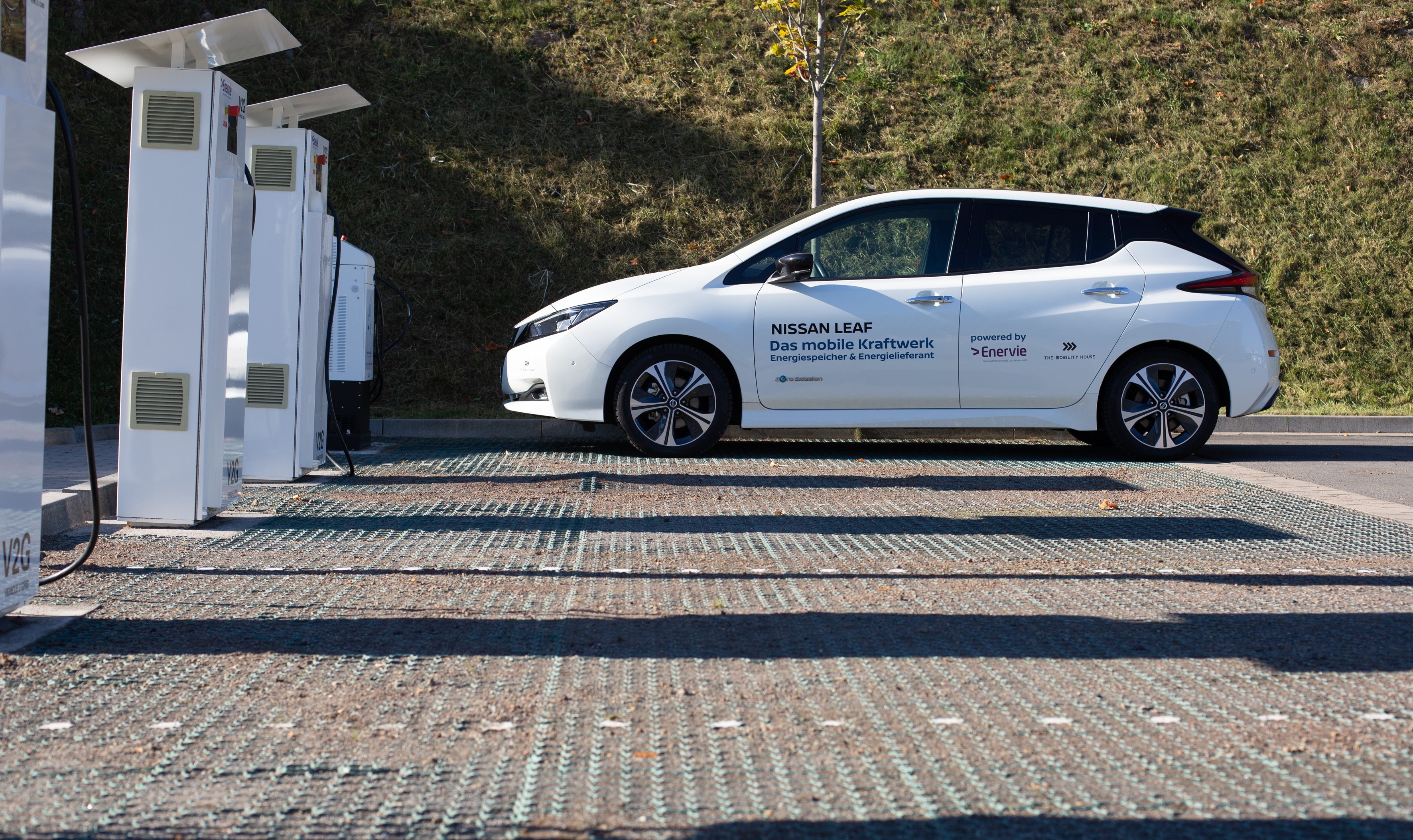
For some strange reason Nissan don’t mention the manufacturer of the V2G capable electric vehicle charging station displayed in their publicity pictures:
Nissan 2018 LEAF and EVTEC V2G charging station
Those pretty white boxes look a lot like the EVTEC units we have mentioned previously here on the V2G UK blog. Nissan’s press release continues:
To meet the universal desire for a transition to decentralised energy generation from renewable sources here in Germany, new and innovative solutions for stabilising the electricity grid are necessary. The increasing use of renewable energy leads to fluctuations in the grid, which must be initially balanced by primary regulation, able to prevent impending power cuts at a second’s notice.
Electric cars such as the Nissan Leaf, with integrated bidirectional charging technology, could play an important part in this. With its CHAdeMO charging connector, the Leaf is able not only to extract power from the grid and store it in its traction battery, but, if necessary, also to feed power back. This is called the Vehicle-to-Grid (V2G) concept.
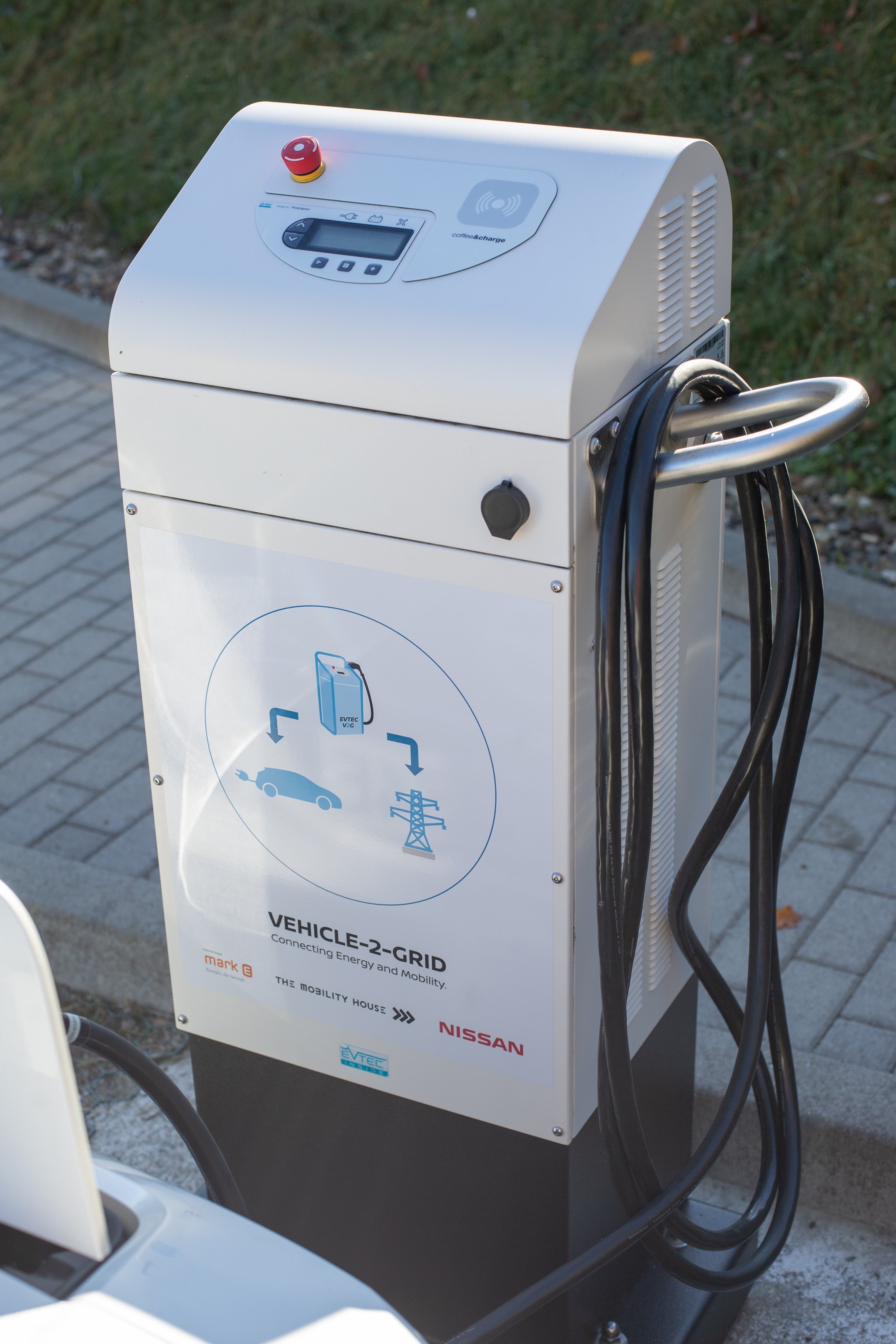
As luck would have it here at V2G UK we are very familiar with the V2G concept and CHAdeMO connectors. In fact our V2G EVSE subsidiary has recently received an Office for Low Emission Vehicles (OLEV for short) grant to assess the feasibility of using such technology on the streets of Plymouth, Exeter and Falmouth in order to provide flexibility services to Western Power Distribution’s electricity grid over here, and thereby defer expensive reinforcement of South West England’s distribution grid. Here’s a close up of the Vehicle-to-Grid Electric Vehicle Supply Equipment for (V2G EVSE for short) in ENERVIE‘s car park over in Hagen:
EVTEC Vehicle-to-Grid capable charging station
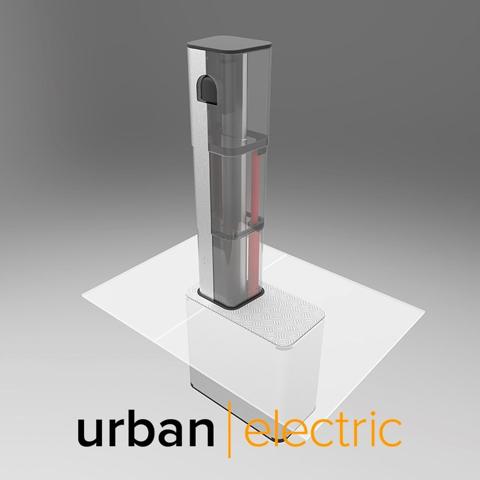
whilst here’s our concept for the inner city streets of Devon and Cornwall, Urban Electric‘s UEone “pop up” charging post:
According to Guillaume Pelletreau, the Vice President and Managing Director of Nissan Center Europe:
We strongly believe in an emission-free future. Accordingly, we are also very proud that the Nissan Leaf has, as the first electric car ever, been approved as suitable for stabilising grid frequencies. LEAF batteries could make an important contribution to energy transition in Germany and a sustainable future.
Nissan LEAF in ENERVIE’s car park in Hagen
Here at V2G UK we strongly believe that Nissan LEAF traction batteries could make an important contribution to the energy transition and a sustainable future here in the United Kingdom.