A new page has recently appeared on the Tesla web site, entitled “What is Powershare Grid Support“. In answer to that question Tesla state that:
With Powershare, your Cybertruck can support the electric grid when needed and earn you money. In participating regions listed below, Powershare Grid Support allows your vehicle to send energy back to the grid during high-demand energy events. For each event where you send energy to the grid, you’ll receive credit on your energy bill while helping your community’s energy resilience.
We have previously reported on several occasions about power outages across California at the height of summer. By contrast today we report on outages in the midst of winter.
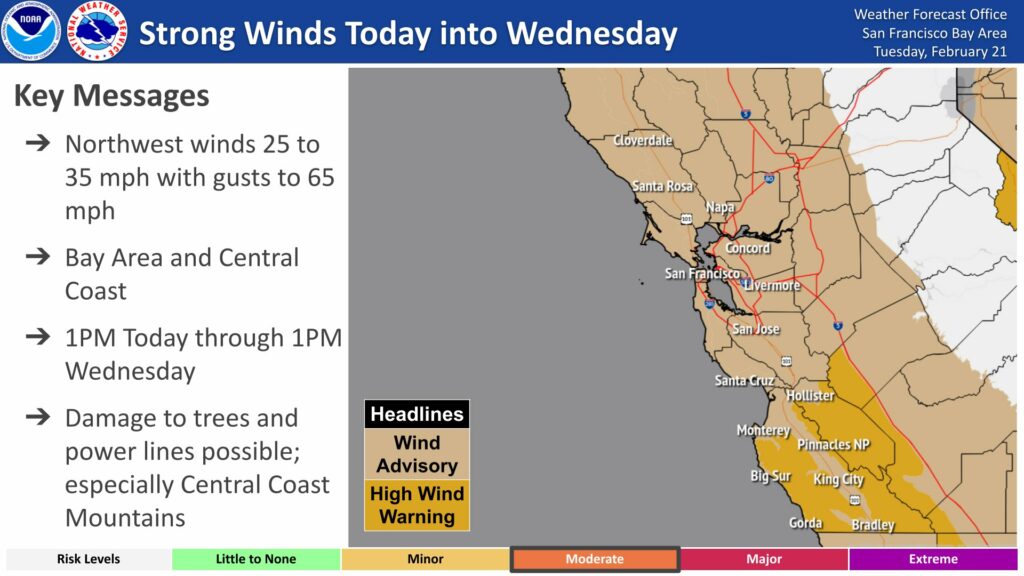
On Tuesday the United States’ National Weather Service’s San Francisco Bay area office issued a warning for high winds:
Note in particular the part about “damage to trees and power lines”. By Tuesday evening Pacific Gas and Electric had announced on their web site that:
As of 10 p.m., approximately 154,000 customers are without power in PG&E’s service area as heavy northwest winds impact electric equipment. More than 124,000 customers have been restored since 6 a.m.
PG&E crews will continue working through the night, safely and as quickly as possible to restore customers.
The NWS’s Weather Prediction Center also issued the following short term forecast for Wednesday:
A major winter storm is expected to deliver a large swath of heavy snow from the West Coast to the Northeast through Thursday…
The arrival of a large arctic air mass from Canada interacting with two energetic troughs/fronts forecast to move through the western half of the country will bring numerous weather hazards and highly anomalous temperatures coast-to-coast this week with almost all of the country experiencing some form of notable weather.
In a press release yesterday the Pacific Gas and Electric Company announced that:
PG&E has received approval to establish the nation’s first “vehicle-to-grid” export compensation mechanism for commercial electric vehicle charging customers in its California service area. The V2G export rate promotes EV adoption by providing upfront incentives to help commercial customers offset fleet costs and delivers an innovative solution for these vehicles to export power back to support the grid during peak energy demand periods.
The groundbreaking settlement agreement with the Vehicle-Grid Integration Council (VGIC), Electrify America LLC and the Public Advocates Office at the California Public Utilities Commission (CPUC) was adopted by the CPUC on Oct. 20, 2022. The rate is expected to increase participation from V2G school buses and other electric vehicles in response to near-real-time grid conditions and will be available to charging equipment paired with stationary energy storage systems, which can support the grid and provide backup power to charge vehicles during grid outages.
More than 420,000 EVs have been sold in PG&E’s service area, representing one in six EVs in the country. As large vehicles like school buses and commercial fleets continue to electrify, the opportunity grows for these vehicles to serve as crucial, flexible grid resources to support a more reliable, affordable and efficient energy system. Greater volumes of these vehicles on the road comes at a critical time, as peak energy demand challenges California’s grid and novel solutions like V2G emerge…
As part of PG&E’s 2030 targets, the company is aiming to proactively prepare the grid for 12,000 GWh of EV-related electric load and improve processes to enable rapid, safe EV energization and interconnection. It’s also working to enable 2 million EVs to participate in vehicle-grid integration applications, allowing EVs to be a cornerstone of both reliability and resilience.
Take a look at this recording of California Governor Gavin Newsom‘s closing remarks at the Climate Week NYC plenary session earlier this week:
By all means watch the whole thing, but make sure not to miss the part at 4:20 where Gavin says that:
We talk about grids and reliability? Give me a break!
The opportunity now with electric vehicles, and the vehicle-to-grid technology, and the bi-directional opportunity of two way charging creates opportunities for million and millions of batteries on wheels.
Then up on your home, in your phone, selling back electricity to the grid. Taking money not out of your pocket, but putting it now in your pocket.
Low carbon green growth!
In other recent news from the Golden State, Queen Máxima of the Netherlands met with Gavin’s wife Jennifer:
A number of commenters on Twitter are getting very excited about an announcement from General Motors earlier today. Here’s GM’s Mary Barra and PG&E’s Patti Poppe talking with Phil LeBeau on CNBC’s “Squawk Box”:
As Mary says to Phil:
Bi-directional charging will help when there’s a power outage or additional demand, to really help supply energy and keep everybody having the energy they need to live their lives.
Phil suggests:
What you guys are talking about doing is making smart vehicles and a smart grid, where the communication happens and I don’t need to be involved. Correct?
Patti responds:
Automatically! There’s like this value stack for electric vehicles that I don’t think people fully appreciate yet. The first is obviously decarbonising transportation, number one and everybody gets that. And it’s a great driving experience. But then you stack on the resiliency play because of the effects of climate change, and then on a peak summer day imagine being able to leverage the fleet of electric vehicles. In California, in fact in my service area alone, one in five electric vehicles sold in America are in my service area, so we can really deploy them to power homes and to enable the grid.
In the accompanying press release General Motors reveal that:
Pacific Gas and Electric Company and General Motors today announced a breakthrough collaboration to pilot the use of GM electric vehicles as on-demand power sources for homes in PG&E’s service area.
PG&E and GM will test vehicles with cutting-edge bidirectional charging technology that can help safely power the essential needs of a properly equipped home. EVs play a critical role in achieving California’s goals for reducing greenhouse gas emissions and already provide customers with many benefits. Bidirectional charging capabilities add even further value by improving electric resiliency and reliability…
Skipping to the “How the pilot will work” section of the news release GM explain that:
PG&E and GM aim to test the pilot’s first vehicle-to-home capable EV and charger by summer 2022. The pilot will include the use of bidirectional hardware coupled with software-defined communications protocols that will enable power to flow from a charged EV into a customer’s home, automatically coordinating between the EV, home and PG&E’s electric supply. The pilot will include multiple GM EVs.
Following lab testing, PG&E and GM plan to test vehicle-to-home interconnection allowing a small subset of customers’ homes to safely receive power from the EV when power stops flowing from the electric grid. Through this field demonstration, PG&E and GM aim to develop a user-friendly vehicle-to-home customer experience for this new technology. Both teams are working quickly to scale the pilot with the goal of opening larger customer trials by the end of 2022.
It seems as though Mary, Patti, Phil et al. are blissfully unaware that pilot projects involving V2H/V2G and several hundred electric vehicles have been under way here in the United Kingdom since 2018.
We have even been running a “cutting-edge bidirectional charging technology” project in our very own car park here in wild and woolly South West England for the last couple of years:
For a more detailed overview of the UK pilot projects referred to above please download the presentation available at our sister web site:
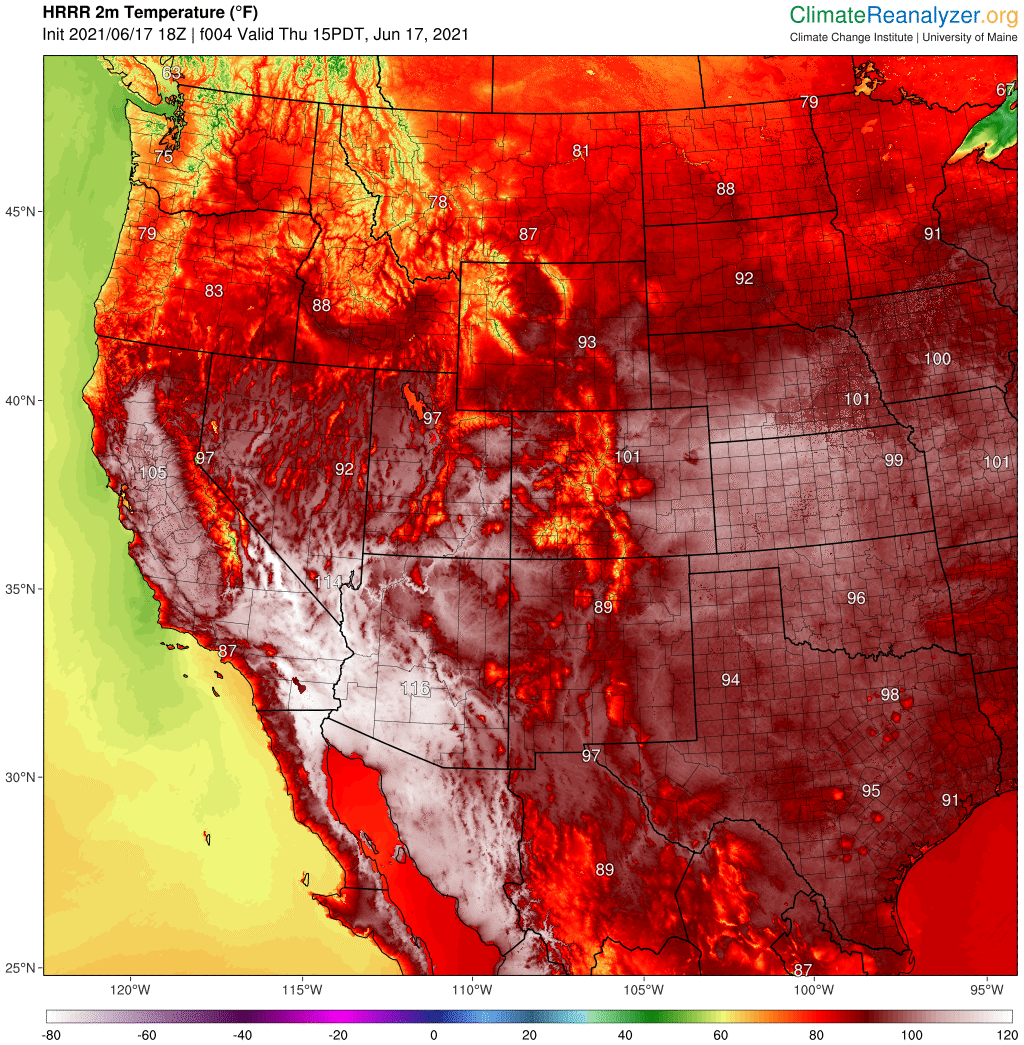
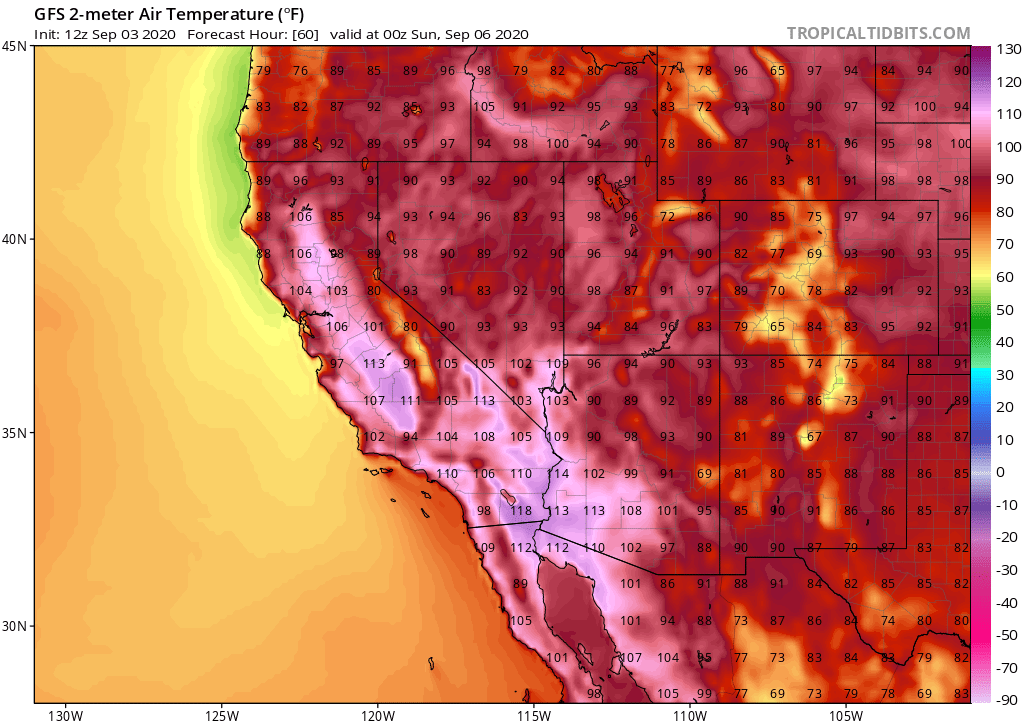
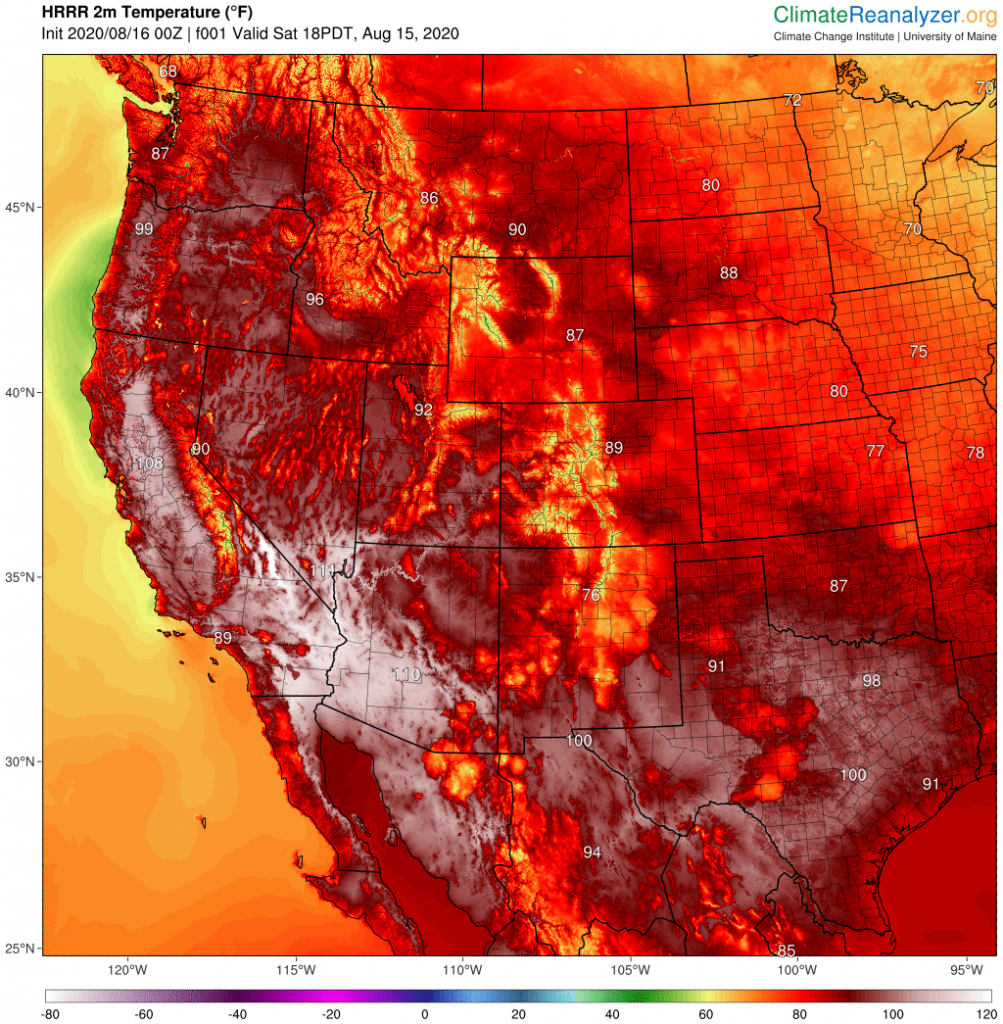
Midsummer’s Day is a few days away, and on the west coast of the United States things are heating up. Here is the surface temperature map for the western USA yesterday afternoon:
Those sort of temperatures mean that lots of air conditioning units are working hard, and consequently the California Independent System Operator (CAISO for short) called for a voluntary “Flex Alert” yesterday, in order to persuade its customers to voluntarily reduce electricity demand:
The California ISO's first #FlexAlert of the year takes effect this evening, with consumers encouraged to voluntarily conserve electricity from 5 p.m. – 10 p.m. to help maintain grid stability. Read the news release: https://t.co/vg1581QXm1pic.twitter.com/7gcIgP8MWm
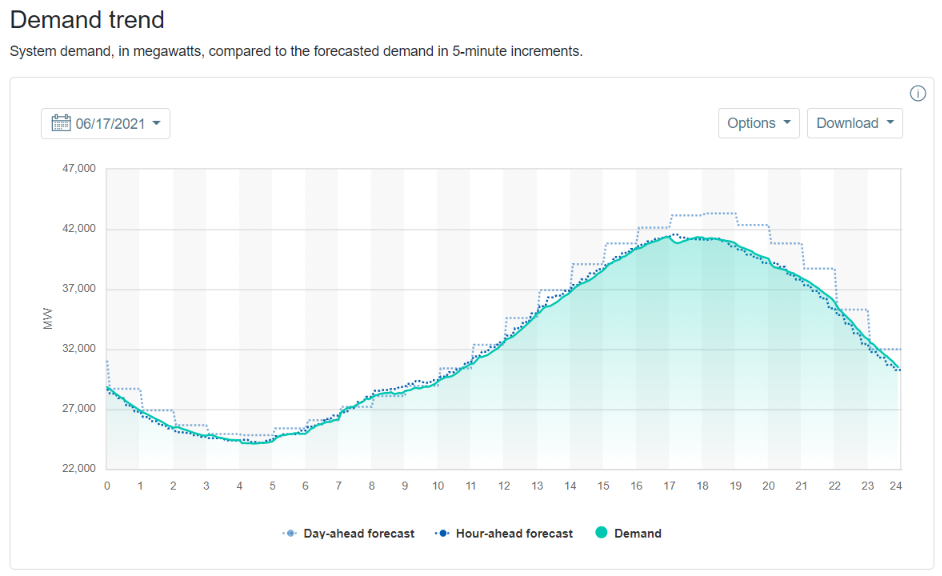
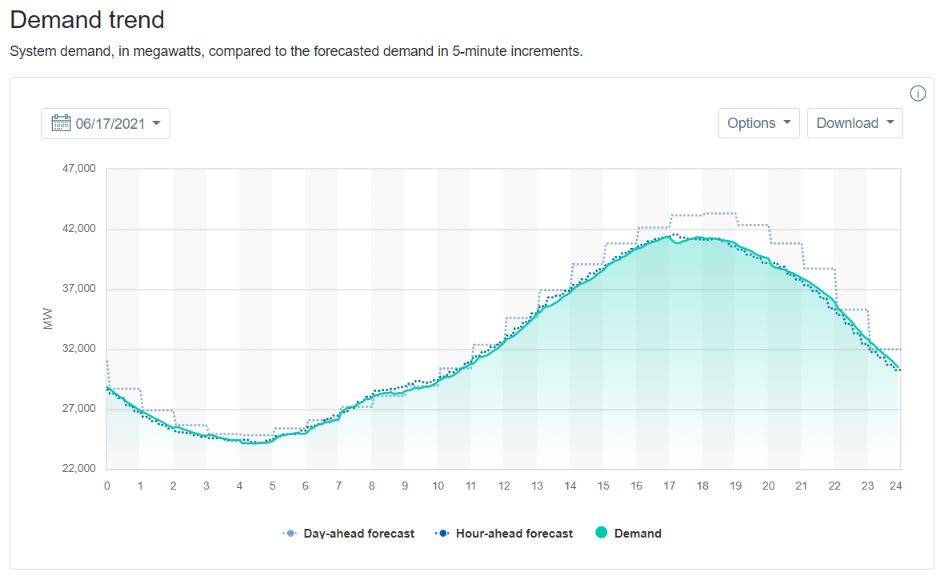
The desired aim seems to have been achieved, with the evening demand peak having been “shaved” somewhat, and with last year’s rolling blackouts averted so far in 2021:
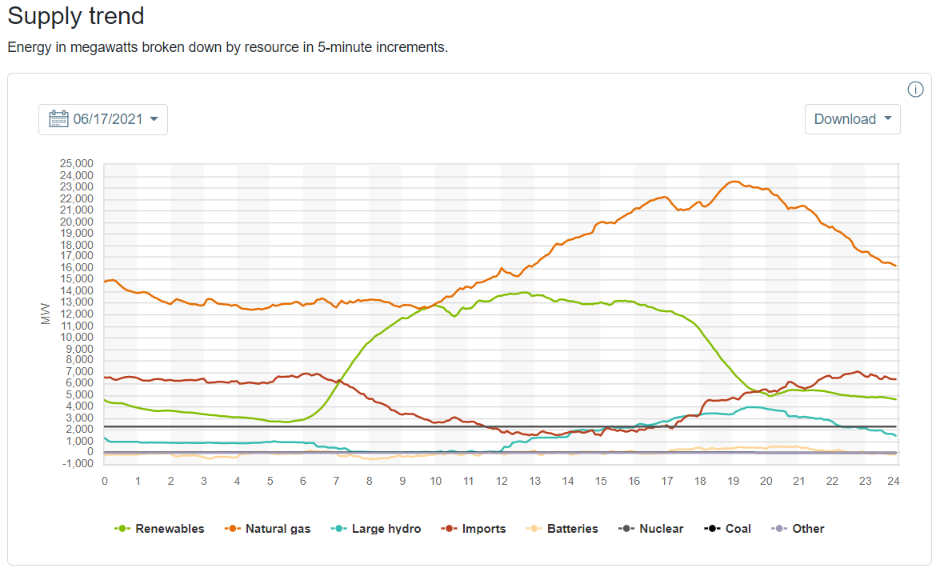
Here’s how the differing sources of electricity supply coped:
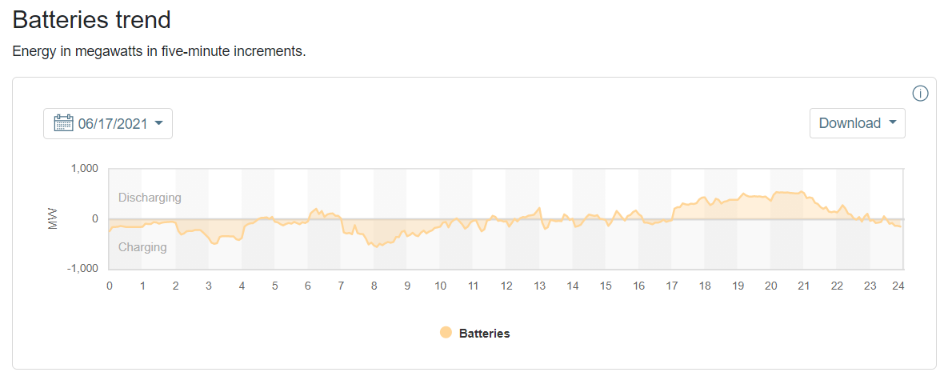
Here’s an expanded view of the contribution of the ever expanding amount Californian battery storage to electricity supply during the evening demand peak:
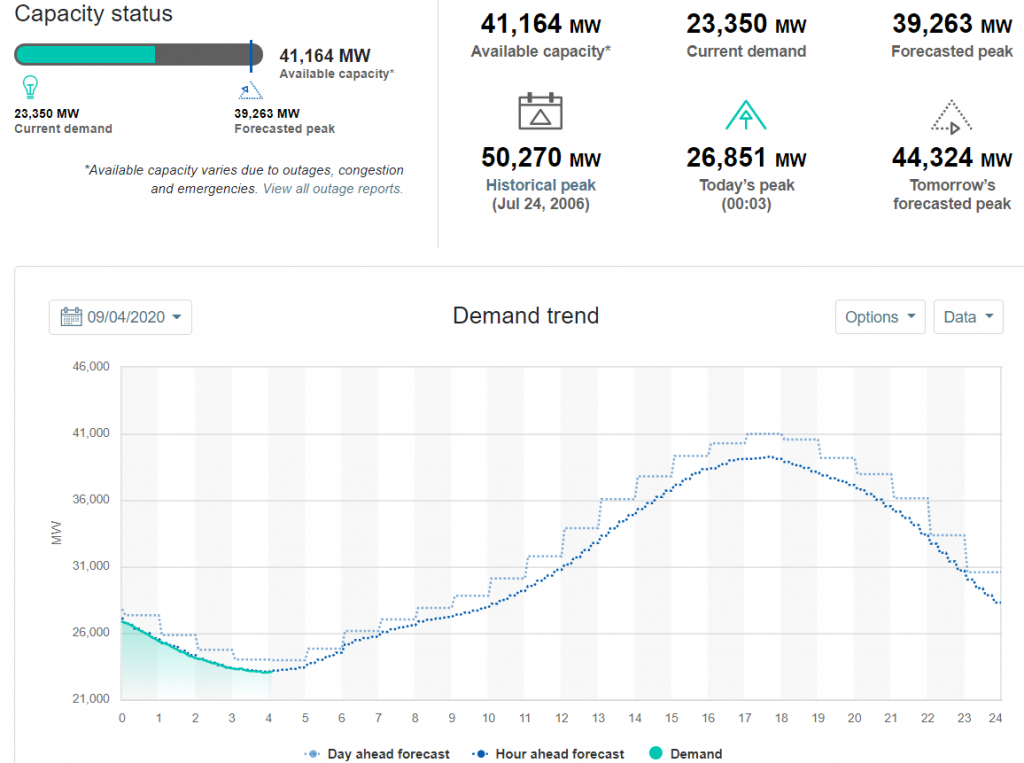
The California heat wave is forecast to continue today, as is another high peak in demand:
Over on the eastern side of the Pacific Ocean there has been a summer heat wave in California:
As a consequence air conditioning works hard, electricity demand goes up, and over the last few days there have been some rolling blackouts across the Golden State. According to the New York Times on August 16th:
As temperatures began to rise in California on Friday and again on Saturday, the manager of much of the state’s electric grid called on utilities to cut power to hundreds of thousands of customers. But the rolling blackouts on those days left some of the state’s energy experts bewildered. They said that the utilities had plenty of power available and that the blackouts weren’t necessary. The grid’s capacity may be tested in coming days as temperatures are forecast to reach into the triple digits again in some places.
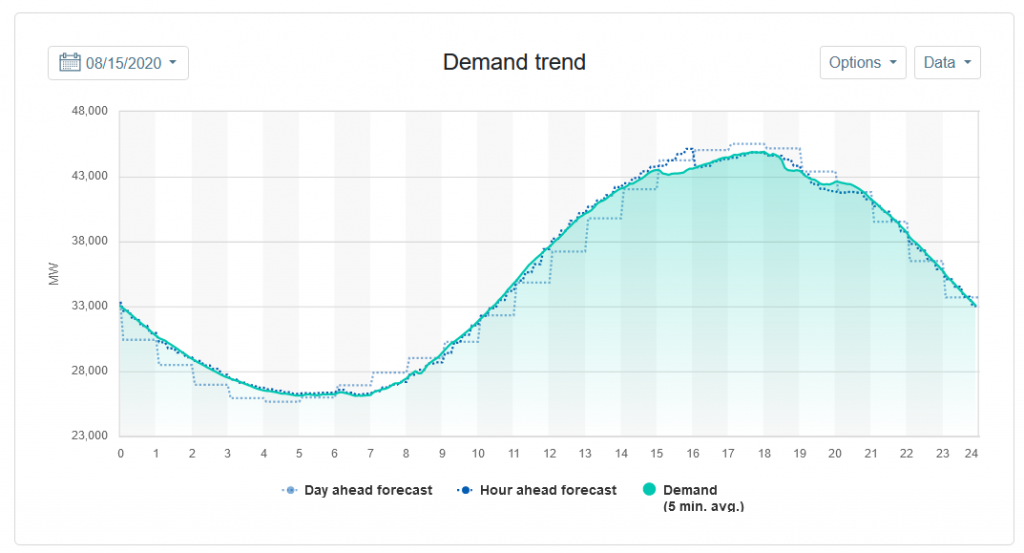
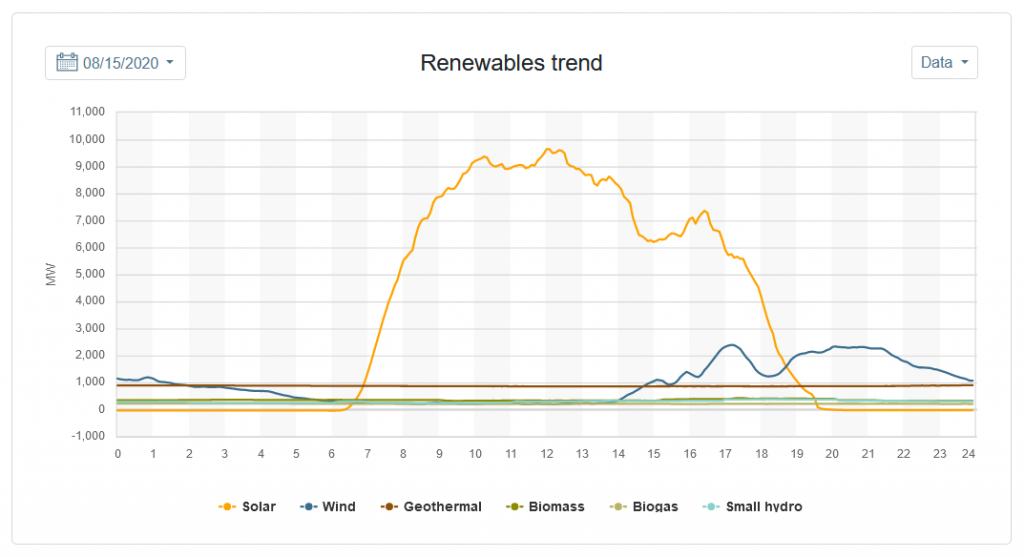
The grid’s capacity was indeed tested in the following days. It’s not clear why the California Independent System Operator (CAISO for short) didn’t issue a call for a voluntary “Flex Alert” on August 15th, but the ultimate consequence was some power cuts. Here’s CAISO’s record of electricity demand and renewable generation that day:
A $2.3 million contract to the U.S. Department of Energy’s Lawrence Berkeley National Laboratory will help fund demonstration of an all-electric, heavy duty, non-tactical vehicle-to-grid (V2G) fleet at Moffett Field near San Jose. The vehicles will explore the revenue-generating capability of V2G technology to participate in California’s electricity markets, where the vehicles can both get charged by the grid and send energy back to the grid to help meet demand.