Ford Announce Fathom Truck with AC V2G

In a press release last week Ford announced that:

In 2027, the all-new Ford Fathom™ electric truck will be the first EV from a U.S. automaker with an MSRP below $30,000 that does not need a separate wall-mounted inverter to supply over a projected 10 kW of AC power to a home.

The images accompanying the press release are not terribly revealing, but here’s a taste of what the Ford Fathom will look like when it becomes available in 2027:

The accompanying text is much more interesting! The press release continues:

After acquiring the startup Auto Motive Power in 2023, we started from a clean sheet on the Universal EV Platform’s bidirectional hardware and software. Our goal wasn’t just to add bidirectional power to our EVs, but to redesign the system to cost far less.

With fewer multifunctional parts and the inverter built right into the vehicle’s E-box — one of the five main modules in the vehicle — the system is simpler and more affordable, so more EV customers can have bidirectional power:
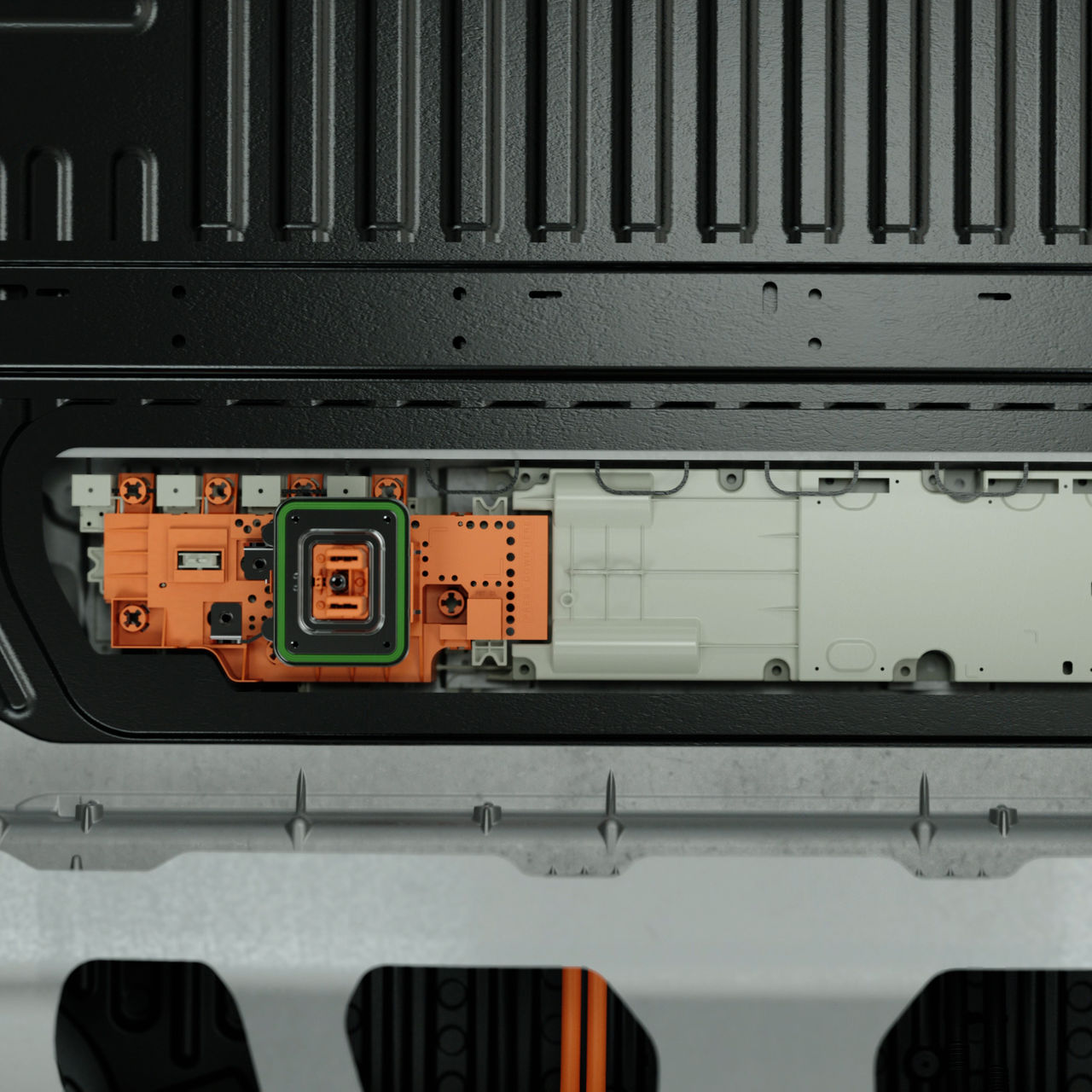
Fathom’s system is also designed to meet all applicable UL 1741 requirements and comply with IEEE 1547 interconnection standards to ensure the vehicle is safely connected to the grid.

It uses an existing communications technology standard called SAE J3068 (with LIN-CP), developed at the University of Delaware, which also helps reduce the cost of Fathom’s charger.

LIN-CP is protocol for communicating over the control pilot wire in the charging cable. It is an alternative to the ISO 15118 protocol familiar to those of us over here in Europe. Next the press release considers the uncomfortable realities of rolling out vehicle-to-grid technology at scale across the United States:

Affordable hardware is only part of the equation. Utilities and regulators also need processes that make it easier for customers to connect bidirectional EVs to the grid and participate in utility programs, such as virtual power plants (VPPs).

The opportunity is significant for utilities. But there are more than 3,000 utilities across the U.S. and Canada with largely unique interconnection processes.

Interconnection processes were primarily written for rooftop solar and stationary battery storage, which are fixed assets. Bidirectional EVs bring new considerations because they are vehicles first, not stationary equipment.

Bidirectional EVs at this volume are new territory for everyone. That’s why we formed a utility working group in July 2026 with five major utilities — American Electric Power, BC Hydro, Consumers Energy, Exelon, and Pacific Gas and Electric Co. — to help define scalable interconnection processes well before Fathom hits the road.

After going into more detail about the activities of the working group, the press release concludes:

Fathom arrives in 2027. The breakthrough moment for bidirectional power is nearly here.

With a more affordable EV and more affordable hardware, Fathom will bring this technology to more customers — and help unlock its potential for the grid — but we need your help.

If you’re a utility or regulator working on these opportunities or simply want to learn more, please reach out… We’d love to collaborate with you.

I cannot help but wonder whether such help will have been forthcoming by the time the Ford Fathom is available to purchase by American consumers, presumably with a more conventional paint job!
Tesla Reveal Powershare Grid Support V2G Program in Texas

A new page has recently appeared on the Tesla web site, entitled “What is Powershare Grid Support“. In answer to that question Tesla state that:

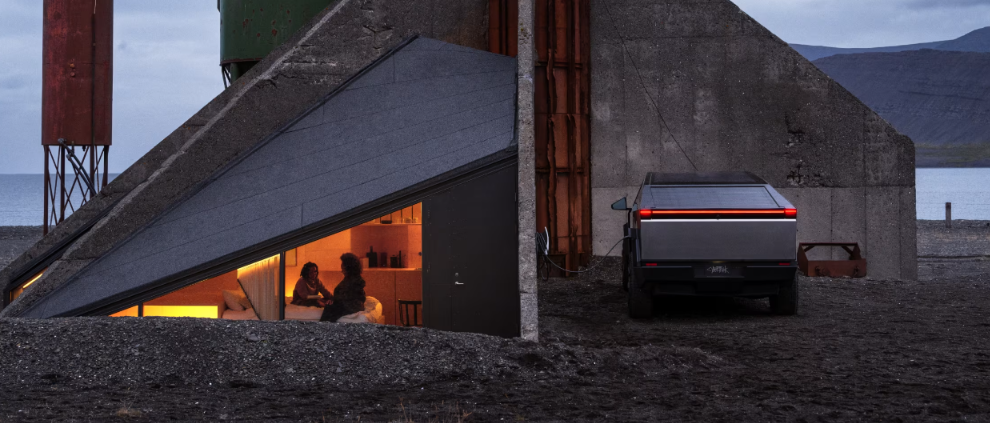
With Powershare, your Cybertruck can support the electric grid when needed and earn you money. In participating regions listed below, Powershare Grid Support allows your vehicle to send energy back to the grid during high-demand energy events. For each event where you send energy to the grid, you’ll receive credit on your energy bill while helping your community’s energy resilience.

The “participating regions” currently consist of:

Texas and California (coming soon)

Image from the Tesla Powershare V2H announcement
Continue reading →

Winter Storms Cut Power in California

We have previously reported on several occasions about power outages across California at the height of summer. By contrast today we report on outages in the midst of winter.

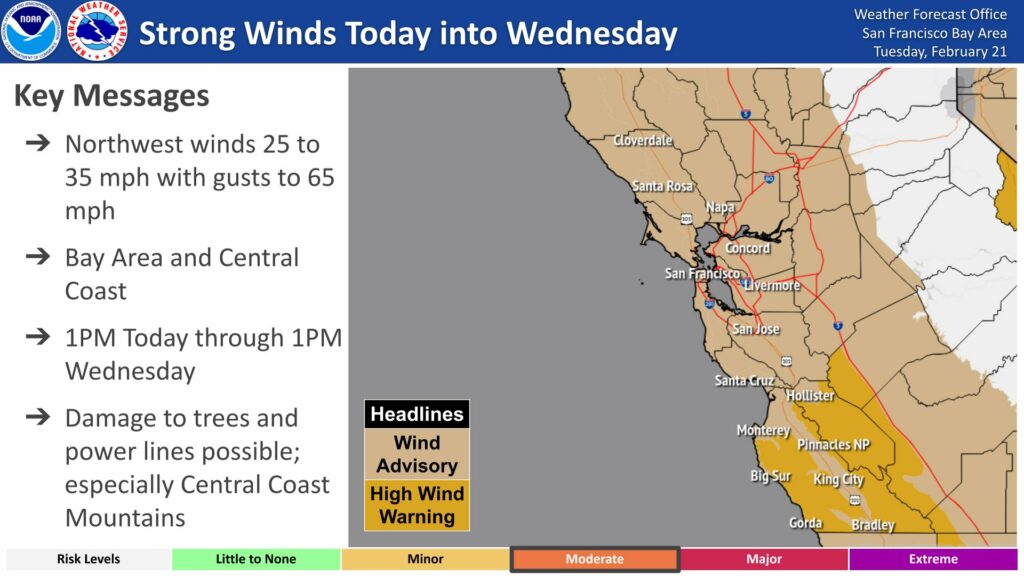
On Tuesday the United States’ National Weather Service’s San Francisco Bay area office issued a warning for high winds:

Note in particular the part about “damage to trees and power lines”. By Tuesday evening Pacific Gas and Electric had announced on their web site that:

As of 10 p.m., approximately 154,000 customers are without power in PG&E’s service area as heavy northwest winds impact electric equipment. More than 124,000 customers have been restored since 6 a.m.

PG&E crews will continue working through the night, safely and as quickly as possible to restore customers.

The NWS’s Weather Prediction Center also issued the following short term forecast for Wednesday:

A major winter storm is expected to deliver a large swath of heavy snow from the West Coast to the Northeast through Thursday…

The arrival of a large arctic air mass from Canada interacting with two energetic troughs/fronts forecast to move through the western half of the country will bring numerous weather hazards and highly anomalous temperatures coast-to-coast this week with almost all of the country experiencing some form of notable weather.

Continue reading →

PG&E Announce V2G Export Tariff for Commercial EVs

In a press release yesterday the Pacific Gas and Electric Company announced that:

PG&E has received approval to establish the nation’s first “vehicle-to-grid” export compensation mechanism for commercial electric vehicle charging customers in its California service area. The V2G export rate promotes EV adoption by providing upfront incentives to help commercial customers offset fleet costs and delivers an innovative solution for these vehicles to export power back to support the grid during peak energy demand periods.

The groundbreaking settlement agreement with the Vehicle-Grid Integration Council (VGIC), Electrify America LLC and the Public Advocates Office at the California Public Utilities Commission (CPUC) was adopted by the CPUC on Oct. 20, 2022. The rate is expected to increase participation from V2G school buses and other electric vehicles in response to near-real-time grid conditions and will be available to charging equipment paired with stationary energy storage systems, which can support the grid and provide backup power to charge vehicles during grid outages.

More than 420,000 EVs have been sold in PG&E’s service area, representing one in six EVs in the country. As large vehicles like school buses and commercial fleets continue to electrify, the opportunity grows for these vehicles to serve as crucial, flexible grid resources to support a more reliable, affordable and efficient energy system. Greater volumes of these vehicles on the road comes at a critical time, as peak energy demand challenges California’s grid and novel solutions like V2G emerge…

As part of PG&E’s 2030 targets, the company is aiming to proactively prepare the grid for 12,000 GWh of EV-related electric load and improve processes to enable rapid, safe EV energization and interconnection. It’s also working to enable 2 million EVs to participate in vehicle-grid integration applications, allowing EVs to be a cornerstone of both reliability and resilience.

General Motors Announce V2H Pilot Project

A number of commenters on Twitter are getting very excited about an announcement from General Motors earlier today. Here’s GM’s Mary Barra and PG&E’s Patti Poppe talking with Phil LeBeau on CNBC’s “Squawk Box”:

As Mary says to Phil:

Bi-directional charging will help when there’s a power outage or additional demand, to really help supply energy and keep everybody having the energy they need to live their lives.

Phil suggests:

What you guys are talking about doing is making smart vehicles and a smart grid, where the communication happens and I don’t need to be involved. Correct?

Patti responds:

Automatically! There’s like this value stack for electric vehicles that I don’t think people fully appreciate yet. The first is obviously decarbonising transportation, number one and everybody gets that. And it’s a great driving experience. But then you stack on the resiliency play because of the effects of climate change, and then on a peak summer day imagine being able to leverage the fleet of electric vehicles. In California, in fact in my service area alone, one in five electric vehicles sold in America are in my service area, so we can really deploy them to power homes and to enable the grid.

In the accompanying press release General Motors reveal that:

Pacific Gas and Electric Company and General Motors today announced a breakthrough collaboration to pilot the use of GM electric vehicles as on-demand power sources for homes in PG&E’s service area.

PG&E and GM will test vehicles with cutting-edge bidirectional charging technology that can help safely power the essential needs of a properly equipped home. EVs play a critical role in achieving California’s goals for reducing greenhouse gas emissions and already provide customers with many benefits. Bidirectional charging capabilities add even further value by improving electric resiliency and reliability…

Skipping to the “How the pilot will work” section of the news release GM explain that:

PG&E and GM aim to test the pilot’s first vehicle-to-home capable EV and charger by summer 2022. The pilot will include the use of bidirectional hardware coupled with software-defined communications protocols that will enable power to flow from a charged EV into a customer’s home, automatically coordinating between the EV, home and PG&E’s electric supply. The pilot will include multiple GM EVs.

Following lab testing, PG&E and GM plan to test vehicle-to-home interconnection allowing a small subset of customers’ homes to safely receive power from the EV when power stops flowing from the electric grid. Through this field demonstration, PG&E and GM aim to develop a user-friendly vehicle-to-home customer experience for this new technology. Both teams are working quickly to scale the pilot with the goal of opening larger customer trials by the end of 2022.

It seems as though Mary, Patti, Phil et al. are blissfully unaware that pilot projects involving V2H/V2G and several hundred electric vehicles have been under way here in the United Kingdom since 2018.

We have even been running a “cutting-edge bidirectional charging technology” project in our very own car park here in wild and woolly South West England for the last couple of years:

For a more detailed overview of the UK pilot projects referred to above please download the presentation available at our sister web site:

“UK ‘Domestic’ V2G and DSR Trial Projects”

Ford Announce F-150 Lightning with V2H

In a press release yesterday Ford announced that the:

F-150 Lightning with available Ford Intelligent Backup Power can provide power and security during an electrical outage – the first electric truck in the U.S. to offer this capability; in the future, new features will offer additional ways to manage energy use and potentially save on energy costs.

Truck owners are used to tapping a variety of features – torque, towing capability and more – to get things done. Now, with the all-electric F-150® Lightning™ pickup, Ford is the first in the U.S. to offer the ability for customers to power their homes with an electric truck when the grid goes dark, providing innovative new capabilities that enhance the energy independence of its customers.

Ford and F-Series, America’s best-selling trucks for 45 years*, are partnering with Sunrun, the nation’s leading solar company, to enhance home energy management, leveraging the substantial onboard battery capability of the all-electric F-150 Lightning. Americans experienced the most power interruptions on record in 2020, according to the U.S. Energy Information Administration; and with F-150 Lightning, homeowners can use their truck to maintain their routines during brief or extended outages.


The press release was accompanied by this video:

https://youtu.be/oc3sQ2UcTlg

As the narrator puts it:

What if the next time the power went out, your pickup truck could
electrify your home

A very good question! Which we here at V2G UK have been pondering for many a year.

Note that the narrator also points out that:

You’ll need a Ford Charge Station Pro, which comes with an F-150 Lightning Extended Range truck, and an available home integration system….

[Edit – February 12th]

Siemens have announced that:

Siemens Smart Infrastructure announced it has worked with Ford on the Ford Charge Station Pro, a custom electric vehicle (EV) charger for the Ford F-150 Lightning. This innovative charger is the first bidirectional-ready EV solution set for release at retail customer scale to receive certification under the newly expanded Underwriters Laboratories (UL) 9741, an important industry-wide benchmark that ensures products meet safety standards. The new charge station also features a peak power of 19.2kW, achieving the maximum power rating currently available for a Level 2 charge station.

The Ford Charge Station Pro is needed to enable Ford Intelligent Backup Power, a system that allows the Ford-150 Lightning to become an interactive part of the home and be used as a power generation source during outages, the first electric truck to do so. In the future, additional features will be made available with firmware updates to the charger that will help customers interact even further with the grid. 

“Together with Ford, Siemens is not only helping accelerate electric vehicle adoption in the residential space but is also empowering drivers to take more ownership of their energy future,” said John DeBoer, head of Siemens eMobility in North America. “The technology behind this charger is helping make charging at home more sustainable, more reliable, and more accessible. We’re incredibly proud to put our experience to work to help usher in a new era for electric vehicles and grid resiliency.” 

[Edit – March 1st]

Ford have announced pricing for their Charge Station Pro:

Ford Charge Station Pro comes with the F-150 Lightning with extended-range battery. If your F-150 Lightning has a standard-range battery, it is available for purchase:

Price: $1,310.00 (plus shipping and installation)

As far as I can see there are no details available on the “home integration system” mentioned above.

P.S. It has come to our attention that at least one purveyor of EV “news” is peddling inaccurate information. Hence:

[Edit – September 2024]

Earlier this year I was on a couple of panel sessions on the topic of V2x technology at the Everything Electric NORTH event in Harrogate. Whilst there I took a look at the
F-150 Lightning on show in the exhibition hall. Until now I have remained blissfully unaware that Everything Electric’s Robert Llewellyn recorded this exceedingly interesting interview with Ford CEO Jim Farley at the end of the previous year’s Fully Charged LIVE show in Harrogate:

Note in particular the part at 15:20 where Jim says:

The F-150, the main reason why people are buying the F-150, more than half the customers are new to a full size truck, is because it can power their house for 3 days. We didn’t know that a mobile battery on a work site was going to be that evocative as a reason to buy a vehicle. We thought it was going to be 0-60 4 seconds. We were wrong. So the exportable power turns out to be the main reason people are excited about the Lightning.

Watch this space!