
In a press release last week Ford announced that:
In 2027, the all-new Ford Fathom™ electric truck will be the first EV from a U.S. automaker with an MSRP below $30,000 that does not need a separate wall-mounted inverter to supply over a projected 10 kW of AC power to a home.
The images accompanying the press release are not terribly revealing, but here’s a taste of what the Ford Fathom will look like when it becomes available in 2027:

The accompanying text is much more interesting! The press release continues:
After acquiring the startup Auto Motive Power in 2023, we started from a clean sheet on the Universal EV Platform’s bidirectional hardware and software. Our goal wasn’t just to add bidirectional power to our EVs, but to redesign the system to cost far less.
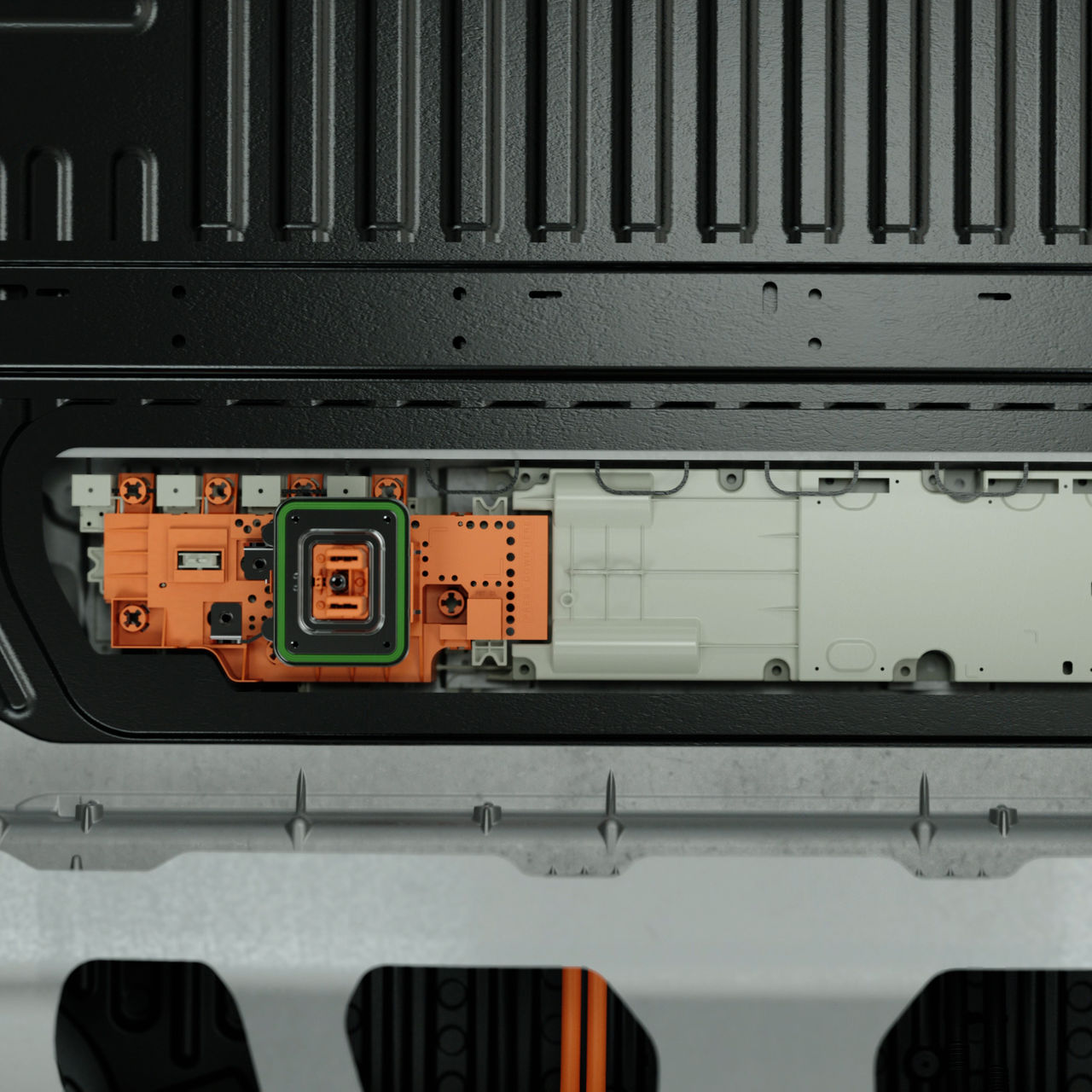
With fewer multifunctional parts and the inverter built right into the vehicle’s E-box — one of the five main modules in the vehicle — the system is simpler and more affordable, so more EV customers can have bidirectional power:
Fathom’s system is also designed to meet all applicable UL 1741 requirements and comply with IEEE 1547 interconnection standards to ensure the vehicle is safely connected to the grid.
It uses an existing communications technology standard called SAE J3068 (with LIN-CP), developed at the University of Delaware, which also helps reduce the cost of Fathom’s charger.
LIN-CP is protocol for communicating over the control pilot wire in the charging cable. It is an alternative to the ISO 15118 protocol familiar to those of us over here in Europe. Next the press release considers the uncomfortable realities of rolling out vehicle-to-grid technology at scale across the United States:
Affordable hardware is only part of the equation. Utilities and regulators also need processes that make it easier for customers to connect bidirectional EVs to the grid and participate in utility programs, such as virtual power plants (VPPs).The opportunity is significant for utilities. But there are more than 3,000 utilities across the U.S. and Canada with largely unique interconnection processes.
Interconnection processes were primarily written for rooftop solar and stationary battery storage, which are fixed assets. Bidirectional EVs bring new considerations because they are vehicles first, not stationary equipment.
Bidirectional EVs at this volume are new territory for everyone. That’s why we formed a utility working group in July 2026 with five major utilities — American Electric Power, BC Hydro, Consumers Energy, Exelon, and Pacific Gas and Electric Co. — to help define scalable interconnection processes well before Fathom hits the road.
After going into more detail about the activities of the working group, the press release concludes:
Fathom arrives in 2027. The breakthrough moment for bidirectional power is nearly here.
With a more affordable EV and more affordable hardware, Fathom will bring this technology to more customers — and help unlock its potential for the grid — but we need your help.
If you’re a utility or regulator working on these opportunities or simply want to learn more, please reach out… We’d love to collaborate with you.
I cannot help but wonder whether such help will have been forthcoming by the time the Ford Fathom is available to purchase by American consumers, presumably with a more conventional paint job!