
The Davy Initiative, Cornish Lithium and V2G

Yesterday I “raced” down the A30 to the Tremough Campus of the University of Exeter in Cornwall to discover more about what was billed on the Cornwall New Energy web site as “The Davy Initiative – Electrochemistry in Cornwall”. CNE point out that:

Humphry Davy (1778–1829), the son of an impoverished Cornish woodcarver, rose meteorically to help spearhead the reformed chemistry movement of the late 18th century and became a pioneer of electrochemistry. He discovered several new elements, including magnesium, calcium, strontium, and barium and in the course of his career was involved in many practical projects e,g. the application of chemistry to agriculture and designing a miner’s lamp which reduced spontaneous combustion!

Today, with the explosion in battery technologies, electrochemistry finds itself at the forefront of a wave of innovation again – an enabling technology relevant to a vast variety of industries and applications. It is also an area of increasing focus for government led funding opportunities such as Innovate UK calls and The Faraday Challenge.

What’s more, Cornwall finds itself leading the way again, one example being PV3 Technologies in Launceston who provide electrochemical materials, contract electrochemistry R&D and sub-contract manufacturing of electrochemical and nanomaterials to clients across the globe.

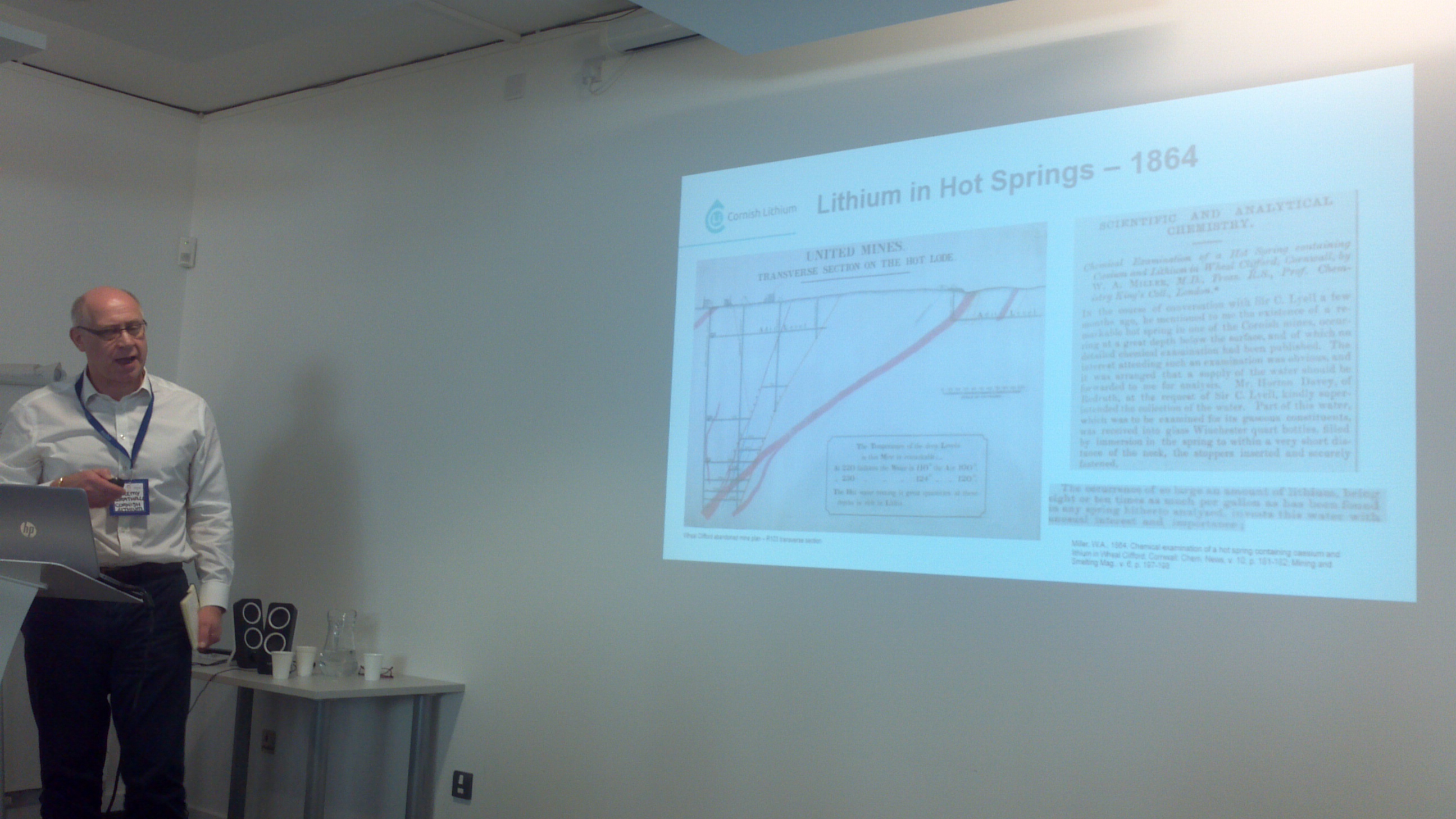
Obviously an event not to be missed by yours truly, but I’m afraid I arrived slightly late. My pathetic excuse is the 40 mph speed limit amidst the long lines of traffic cones currently gracing the new dual carriageway across Bodmin Moor. Once safely ensconced in my seat I learned all sorts of interesting things. Sticking with the science and technology for today, one of the presentations was given by Jeremy Wrathall of Cornish Lithium, who I mentioned almost a year ago in a previous article. After lunch Jeremy led some of us upstairs in the Tremough Innovation Centre to visit Cornish Lithium’s office, where I learnt a few more interesting things. My apologies for the quality of the image, but perhaps this will give you a flavour?
2018-02-01_13-16-45_258

Cornish Lithium are currently hard at work correlating the outputs of assorted “cutting edge” technologies with records from the heyday of the Cornish mining industry in order to identify “hot prospects” for sources of lithium and a variety of other useful materials. A couple of examples of 21st century data mentioned were Landsat satellite imagery and the Tellus geophysical survey of South West England. Here’s an example highlighting copper concentrations in streams in the Penryn area of Cornwall:

Tellus-Cu-Penryn

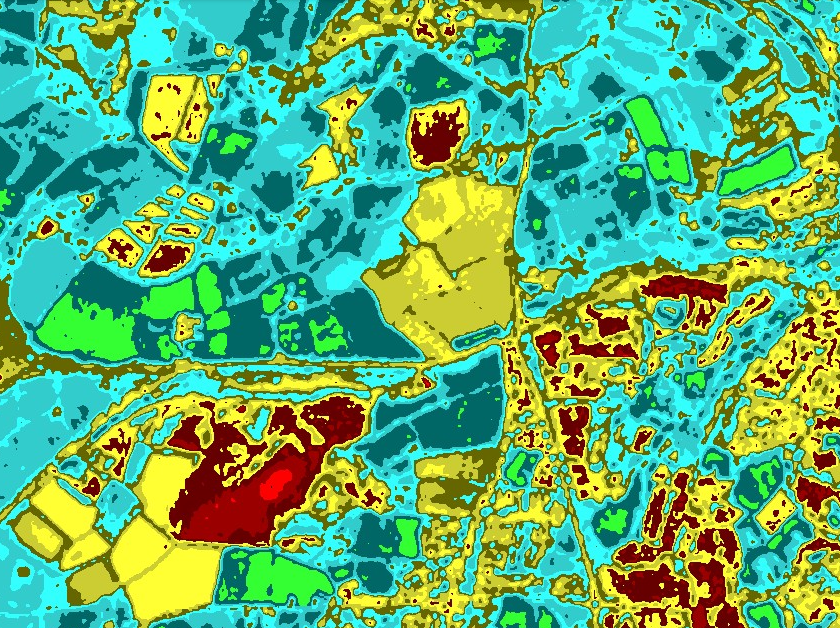
Personally I find the European Sentinel data easier to work with than Landsat, so here’s the Sentinel 2 visualisation of vegetation in the Penryn area:
S2-Vegetation-Tremough

Jeremy didn’t mention another recent related announcement, which is that Keith Russ has completed his 25 year mission to build a 3D model of all Cornwall’s old mines. Here’s the South Crofty area:

KeithRuss-SouthCrofty

Make sure to click through to Keith’s Facebook page where a variety of “mine fly through” animations are available.

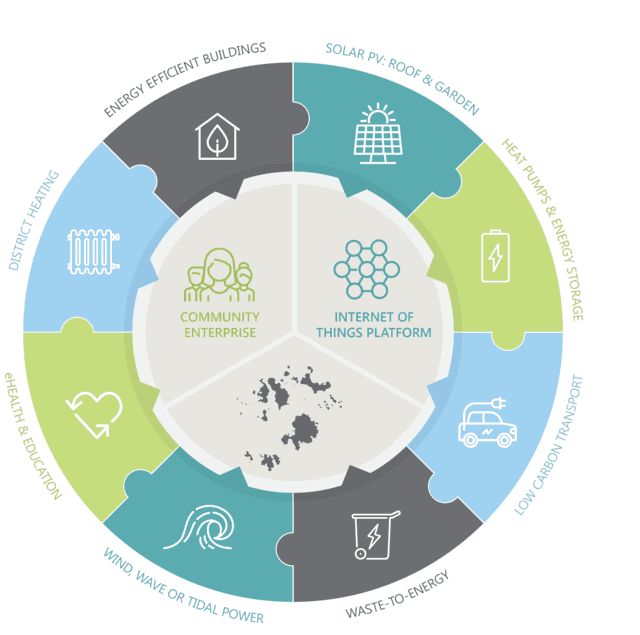
As a result of all this high tech wizardry perhaps the production of electric vehicle battery packs in Cornwall will become a reality in the not too distant future? Which does of course bring me back to distributed energy storage! According to Jim Wrigley of the Isles of Scilly Smart Energy Islands project the “low carbon transport” part of the project will include V2G technology:
IoS-SIP

According to the project’s latest newsletter:

The Islands have seen an upward trend in car ownership, and by 2014, the number of vehicles on the islands had grown to 1,253, almost one car per two people. Travel distances remain low with the average resident’s commute estimated at 1km (about a half mile). The relatively short travel distances and potential for shared ownership make electric vehicles a very suitable way to get around. Furthermore, using their batteries to
both store and supply locally-generated electricity could pioneer, in the long term, a zero-carbon transport system.

More on all that on another day!

Will a Cornish Lithium Gigafactory Rival Open Soon?

V2G have recently relocated to North Cornwall. As a consequence I spent yesterday afternoon with Scott Mann, my new MP, at a meeting organised by the Federation of Small Businesses in Launceston:


Scott imparted a piece of news that hadn’t previously appeared on my radar screen. It seems there’s lots of lithium to be found down old Cornish tin mines! In a news release last month Cornish Lithium Ltd. announced:

Cornish Lithium, today announces that it plans to explore for, and to potentially develop, lithium contained in underground hot spring brines in Cornwall.

The presence of lithium in hot spring brines in Cornwall has been known since the mid-1800s but this was regarded as a curiosity, given there was no developed market for the metal at that time. New technology now offers the potential to extract lithium from these hot spring brines and to supply product to the rapidly growing battery market for electric cars and for power storage.

Cornish Lithium has entered into definitive mineral rights agreements with Strongbow Exploration (listed on the Toronto Stock Exchange, TSX-V: SBW) and Mineral Exploration Limited, and has signed a Heads of Agreement with Tregothnan Estates, to carry out exploration for, and development of, lithium in hot spring brines within the majority of the mineral rights held by these entities.

Rights secured by Cornish Lithium will allow the Company to undertake what it believes to be the largest, single, unified mineral exploration programme in Cornwall’s history.

Here’s a map of the “areas around Camborne, Redruth and St. Day” that Cornish Lithium are looking into:

A bullet point further down the announcement also reveals that:

The Company has also secured rights to geothermal energy contained in the hot spring brines. It is anticipated that this energy will be utilised to generate power to reduce processing costs, but also may be used for other industries in the region.

Now as Scott Mann pointed out yesterday, with the potential for tidal and wave power as well as geothermal energy generation the South West Peninsula is well suited for “24/7” renewable energy generation as well as the more familiar “intermittent” wind and solar photovoltaic electricity generation, so that aspect of the proposed project is also of great interest to us here at V2G UK. Getting back to the lithium bearing hot spring brines though, Cornish Lithium’s news release also points out that:

  • Cornish Lithium is an independent company that has been created to develop lithium in geothermal “hot spring brines” in Cornwall. The Company believes this could result in the creation of a new lithium production industry in Cornwall.
  • Cornish Lithium’s legal agreements encompass a large area centered around the area of Camborne, Redruth and St Day, but also cover other areas of Cornwall that the Company believes may be prospective for geothermal hot spring brines. Negotiations are ongoing with other owners of mineral rights within Cornwall.
  • The rapid growth in demand for lithium-ion batteries is now centre stage globally given the dramatic switch towards electric cars. Most major vehicle manufacturers have outlined an electric car development programme with some manufacturers expecting 25 per cent of their sales to be electric vehicles by 2025. It is considered vital that new sources of lithium are developed, particularly in Europe in order that European car manufacturers can gain secure access to the lithium required.
  • The UK Government has defined lithium as a metal of strategic importance to the country.
  • The majority of lithium produced today comes from South America, Australia and China.
  • Cornish Lithium is an independent company that has been created to develop lithium in geothermal “hot spring brines” in Cornwall. The Company believes this could result in the creation of a new lithium production industry in Cornwall.
  • Cornish Lithium’s legal agreements encompass a large area centered around the area of Camborne, Redruth and St Day, but also cover other areas of Cornwall that the Company believes may be prospective for geothermal hot spring brines. Negotiations are ongoing with other owners of mineral rights within Cornwall.

The following day Cornish Lithium announced that this video had been released:

You will note that at around 5:15 Cornish Lithium CEO Jeremy Wrathall says:

We’ll hopefully go into production, with a fair wind, maybe in the next 5 years or after 5 years. That’s the sort of timeframe we’re looking at.

Presumably within that timeframe we’ll also find out whether there will be another geothermal energy generation project to add to our map of geothermal energy generation projects in the United Kingdom!

The prospect of lithium being “mined” in Cornwall also raises the question of what might happen to the metal once it’s been extracted? Perhaps Tesla and SpaceX founder Elon Musk will use the proposed Spaceport Cornwall nearby to ship the raw material to Tesla’s “Gigafactory” in Nevada? More realistically, perhaps Cornwall’s very own Lithium ion battery factory might be developed alongside Cornish Lithium’s hot brine wells?

Finally, for the moment at least, here’s some further information on Cornwall’s long mining heritage: