Nissan Announces the LEAF 3.ZERO

In a press release earlier this morning Nissan announced that:

Nissan has confirmed the evolution of the highly successful LEAF electric vehicle (EV) by launching two versions of the LEAF 3.ZERO. This new offer will broaden the appeal of EVs to more customers, and both models are ready to order from January 9, 2019.

Following a record-breaking year for Nissan electric vehicles, LEAF 3.ZERO brings to Europe’s best-selling electric vehicle a new 8-inch infotainment screen enabling additional connectivity services such as door-to-door navigation. An all-new and improved NissanConnect EV app will also be available when the LEAF 3.ZERO goes on sale in Europe.

The LEAF 3.ZERO – priced from £31,095 including the £3,500 UK Government Plug-in Car Grant – features the 40 kWh battery. New body colours and two-tone colour combinations will complete the choices. Customers can place their orders for LEAF 3.ZERO from now.

As you can see, other than the new colours the LEAF 3.0 looks a lot like the 2.0 flavour:
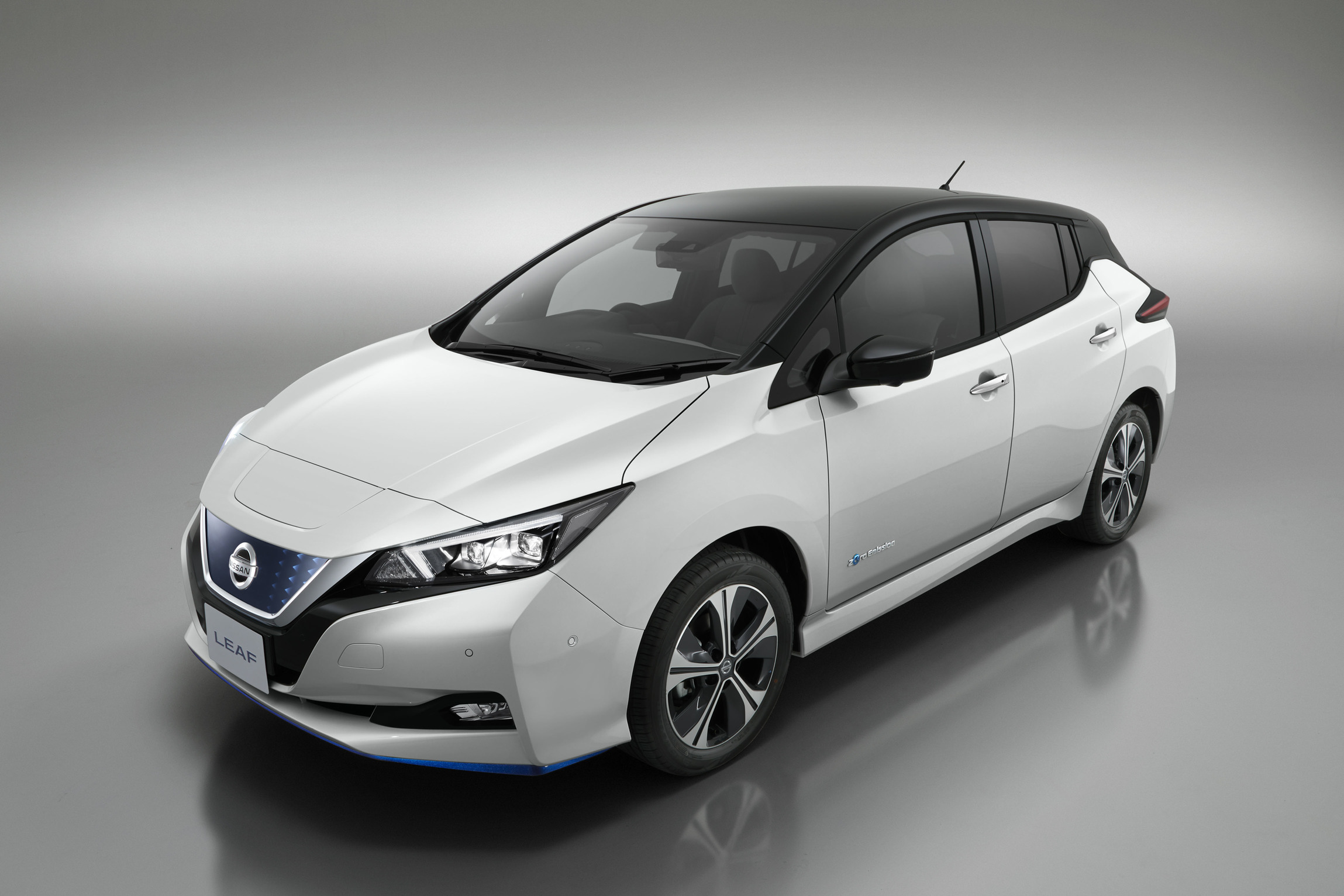
Exterior_03

The Nissan LEAF 3.ZERO e+ Limited Edition, priced from £36,795 including Government Grant, is also available to order from January 9. This limited edition – of which only 5,000 units will be produced for Europe – features a higher output capable of delivering 160 kW (217 PS) of power; 340Nm of torque; and a longer driving range expected to be up to 239 miles* from a single charge of the 62 kWh capacity battery.

Here’s a picture of the obviously highly desirable 62 kWh battery pack!
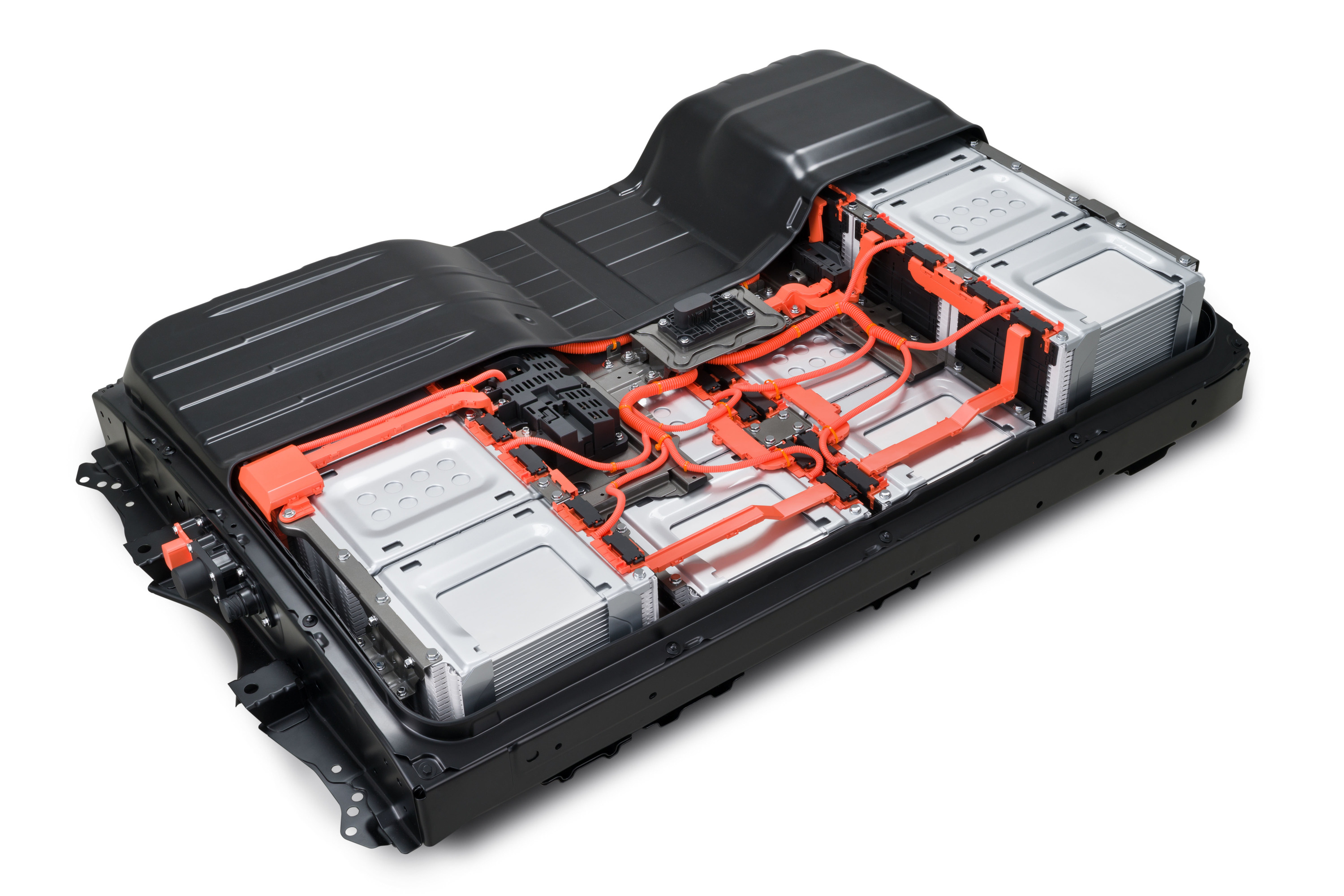
62kWh_Battery_181107_02

Nissan’s press release continues:

Both 3.ZERO launch versions are flagship models for the 2019 Nissan LEAF, sitting at the top of their respective ranges.

At the centre of the LEAF 3.ZERO e+ Limited Edition is an Intelligent Power-enhanced high-capacity battery and more powerful motor.

On the road, the LEAF 3.ZERO e+ Limited Edition will deliver a 40% range increase over the LEAF 3.ZERO which is equipped with a 40 kWh battery. This represents more than 62 miles additional range for a comparable usage, a clear evolution of the LEAF.

Now as you might expect there’s already a #RapidGate style kerfuffle about the LEAF 3.0 on social media. See for example:

I phoned Nissan and a spokesperson informed me that the 2019 LEAF does not possess an active battery cooling system. That’s because:

In the UK the average Nissan LEAF is driven 35-40 miles per day.

I was assured that if you should live near John O’Groats and fancy a trip to visit V2G Towers down here in North Cornwall your friendly local neighbourhood Nissan dealer will still lend you a Nissan Qashqai for up to 2 weeks per year. Enough said? I expect not!

I was also assured that the “5,000 units for Europe” refers to the 3.ZERO e+ Limited Edition, and that more 2019 LEAFs with 62 kWh battery packs will become available in due course.
Fastned Electric Vehicle Charging Profiles

In the wake of the BBC’s “RapidGate” article last weekend I find myself debating the pros and cons of the 2018 model year Nissan LEAF that we road tested last week with a fan of the Hyundai Ioniq EV:

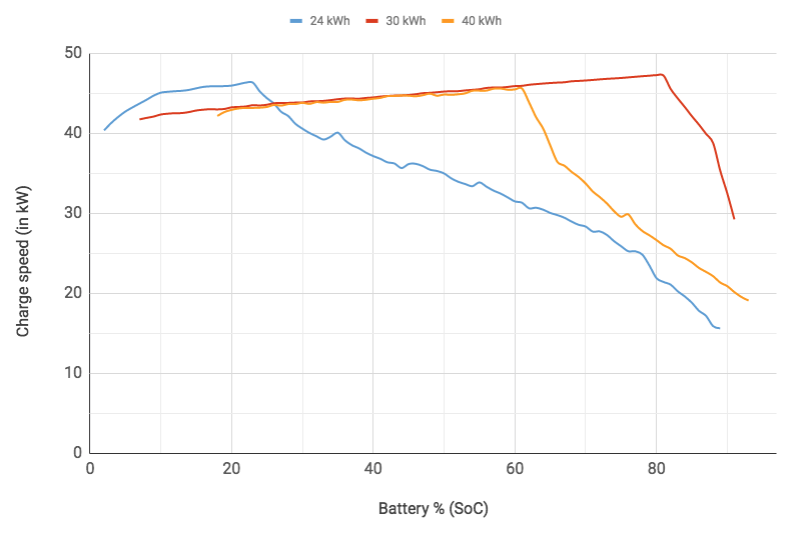
Dutch charging station operator Fastned helpfully provides some experimental evidence to inform the debate. Whilst they don’t publish data on the effects of successive rapid charging sessions on a long drive they do provide charging profiles for all three flavours of the Nissan LEAF:

Fastned Nissan Leaf GB

which does indeed show the latest LEAF fitted with a 40 kWh battery pack throttling the charging rate earlier than the preceding 30 kWh version. According to Fastned:

With a Nissan Leaf or e-NV200 (Evalia) you use the CHAdeMO plug. The charge speed is up to 50 kW at all of our chargers. In the charge curve below you can see the charge speed of the Nissan Leaf and e-NV200. On average both cars charge 100 km of range in 20 – 25 minutes. Charging behaviour largely depends on the battery size:

24 kWh edition: fast charging until 25%, charging will gradually go slower after this
30 kWh edition: fast charging until 80%, charging will go slower after this
40 kWh edition: fast charging until 60%, charging will go slower after this

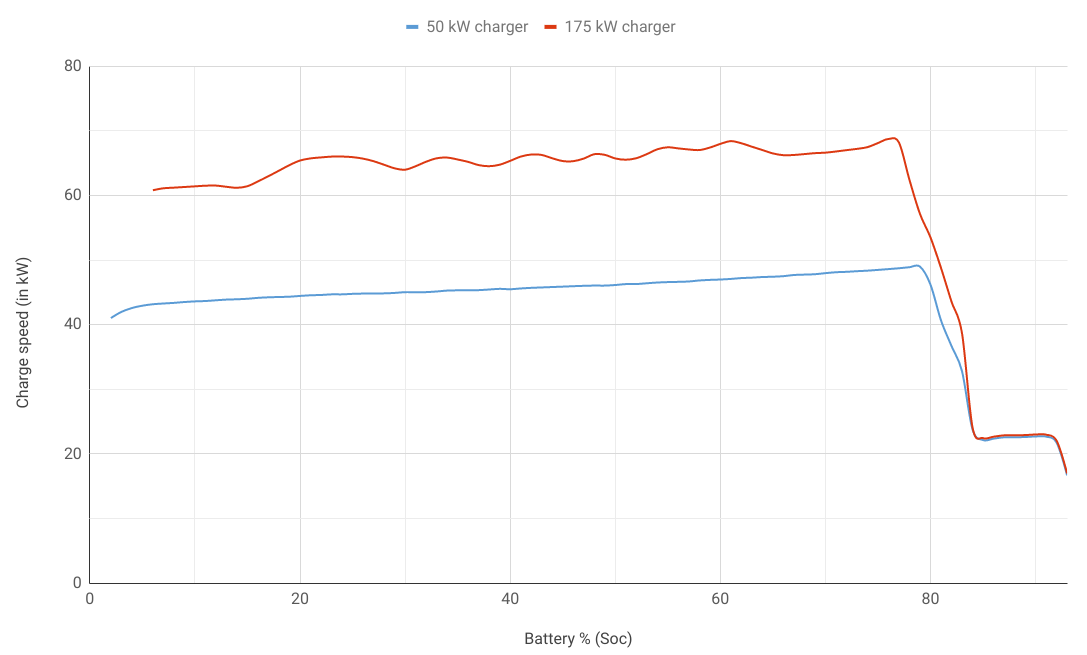
For comparison purposes here’s the equivalent graph for the Hyundai Ioniq:

Fastned Ioniq GB

According to Fastned once again:

If you have a Hyundai Ioniq, then you use the CCS plug. The charge speed is up to 70 kW at our next generation fast chargers and 50 kW at our other chargers. In the charge curve below you can see the charge speed of the Ioniq at both chargers. On average the Ioniq charges 100 km in 15 – 25 minutes. Above 75% the charge speed requested by the car will drop, and above 85% the charge speed is reduced to 22 kW.

The Results of our Recent “RapidGate” Research

No sooner had we completed our extended test drive of the new 40 kWh Nissan LEAF than the BBC published an article by Brian Milligan stating that:

Owners of Nissan’s new electric Leaf say they were given misleading information about the car before buying it.

They say charging the Leaf can take three times longer than claimed on Nissan’s website.

Others are unhappy that the range on a single charge is not as good as the 235 miles (378km) they were promised.

Nissan admitted that charging times can vary, but denied there was a problem or that any customers were misled.

The Advertising Standards Authority is now considering whether to launch an investigation into the issue.

We were already aware of “charging can take three times longer” issue, which was originally reported by Jonathan Porterfield of Eco Cars in Orkney:

For our test we weren’t intending to drive from Land’s End to John o’Groats, or even Leicestershire to Aberdeen. However we were planning a trip from Bodmin to Cardiff via Trowbridge, then back via the M4/M5/A30.

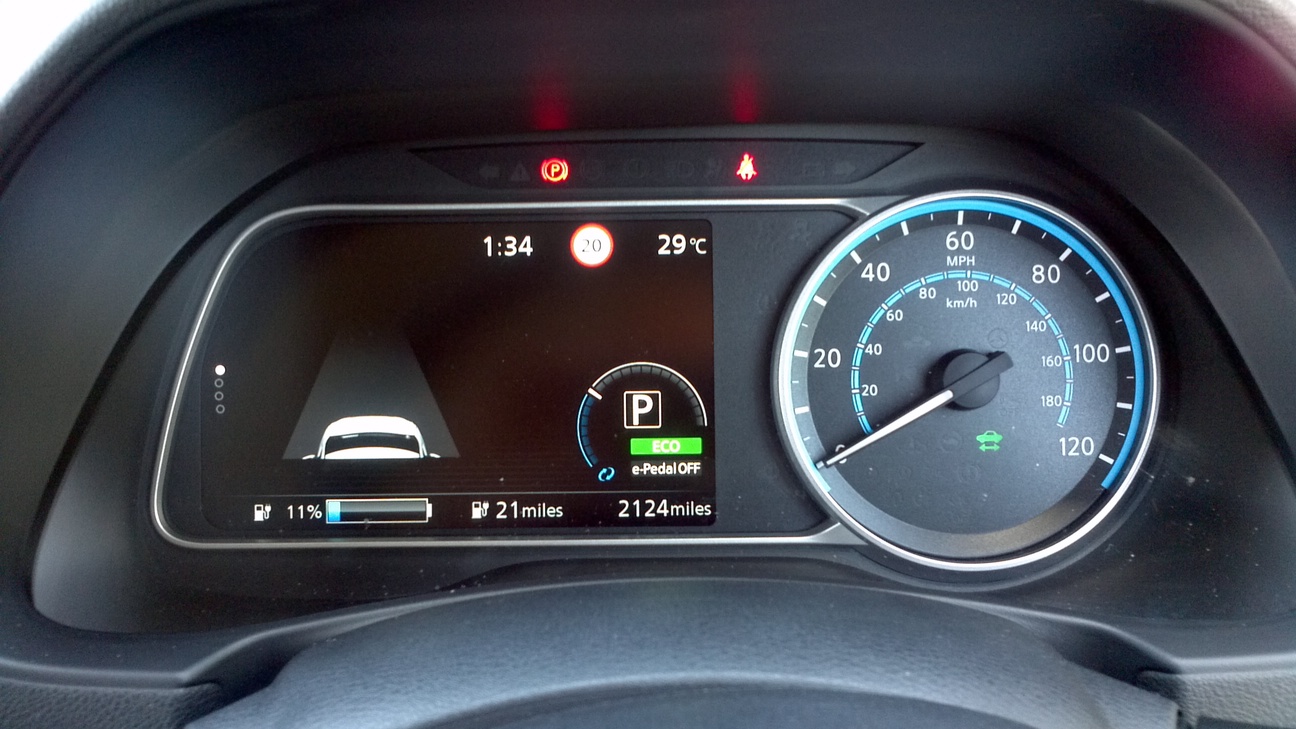
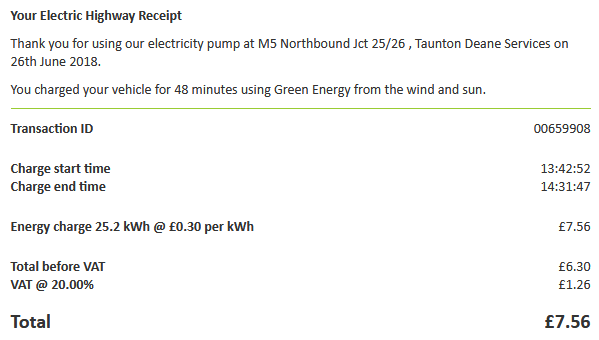
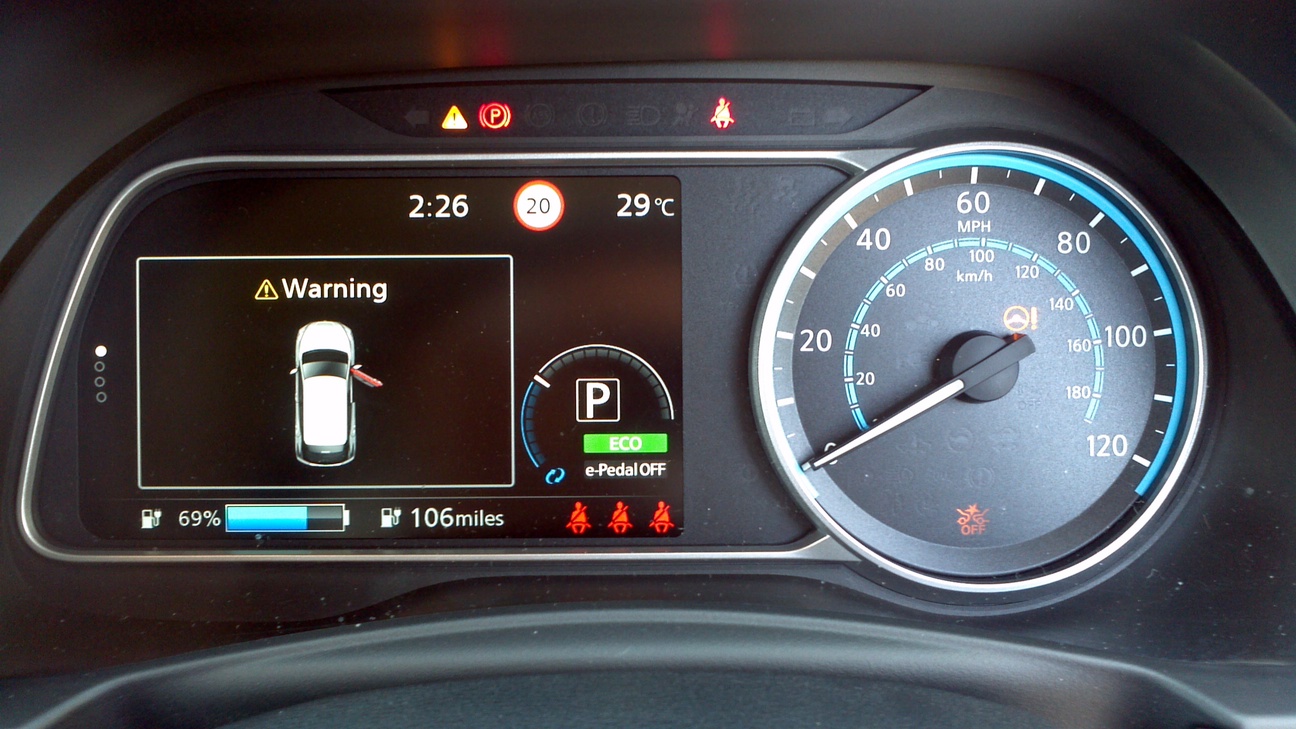
Here is what we discovered. After heading up the A30 and then the M5 at a proPILOT controlled 70 mph our first stop to “rapid charge” was at Taunton Deane Services where this transpired:

2018-06-26_13-34-15_225

2018-06-26-TauntonDeane

2018-06-26_14-26-07_595

By my calculations that’s an average of ~31.5 kW

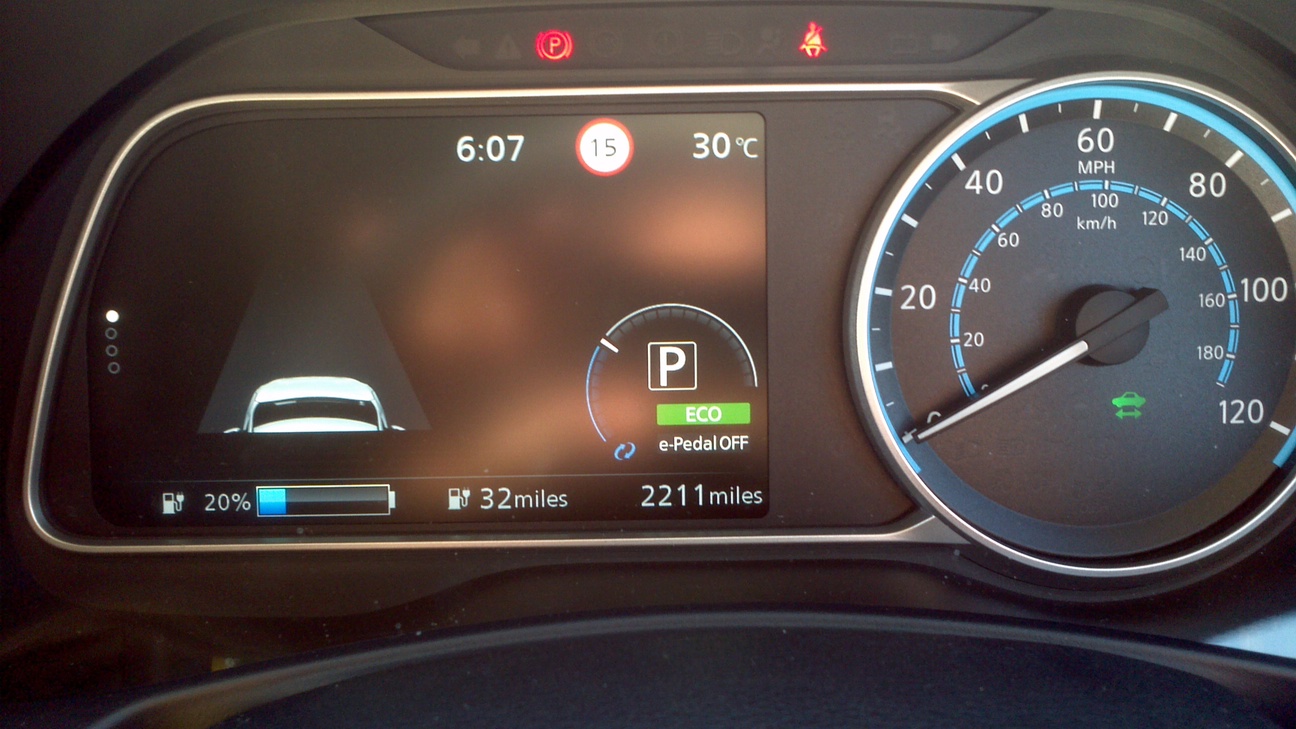
After driving to Trowbridge via the A303, and hence a fair bit more at speeds of 60 and 70 mph, we spent an hour or so charging at a stately 6.6 kW. Then we headed north to Leigh Delamare services, where this transpired.

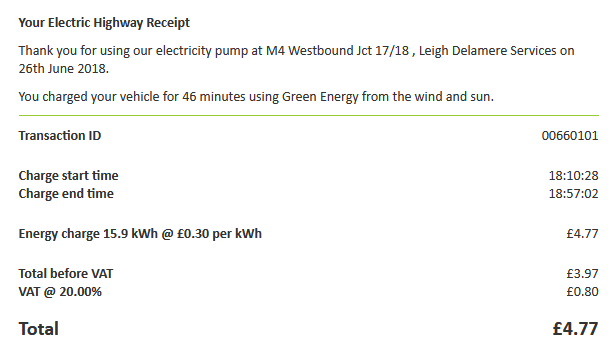
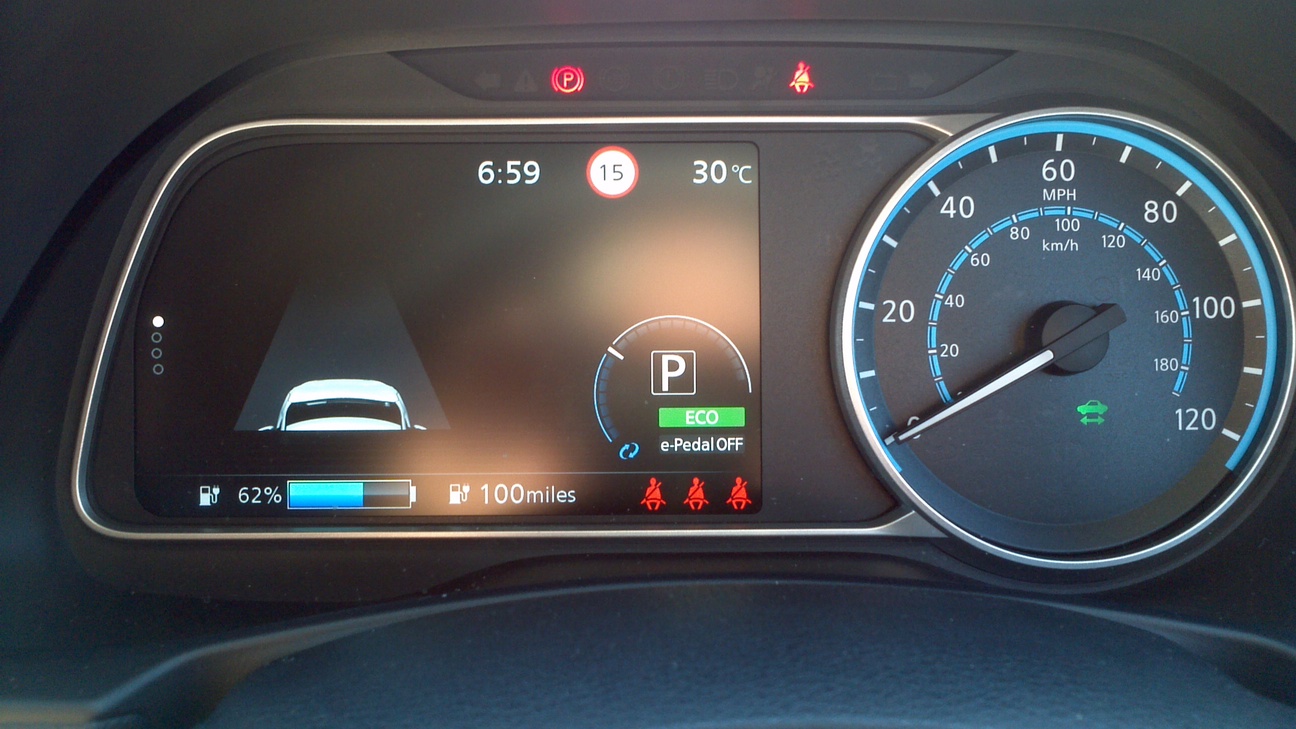
2018-06-26_18-07-46_824

2018-06-26-LeighDelamare

2018-06-26_18-59-15_667

By my calculations that’s a lot less than 31.5 kW. An average of ~21 kW in actual fact. It certainly looks as though there is some truth to those RapidGate rumours.

“Several of the Twitterati debating the issue have been suggesting that the 40 kWh LEAF 2.0 should have employed the same sort of “active battery temperature management” employed in the e-NV200 van. Let’s take a look at what Nissan themselves have to say about that:

The Nissan e-NV200’s motor is powered by a Nissan-developed 48-module compact lithium-ion battery, just like LEAF, but there are significant differences between the two packs.

Like LEAF, the cells are manufactured at Nissan’s new battery plant in Sunderland close to the NMUK facility, but these are then shipped to Barcelona where they are assembled into a pack specially configured for e-NV200 to avoid encroaching into the cargo area.

The battery pack is shorter and narrower than that in LEAF but, for the most part, deeper. Weighing 267.5 kg, it is also 7.5 kg lighter.

It is mounted under the floor of the vehicle within the wheelbase to keep the centre of gravity as low as possible and is contained within in a sturdy metal casing to provide extra protection in the event of a side impact.

As in the LEAF, the battery pack comprises 48 modules with a nominal capacity of 24 kWh, but it incorporates a bespoke cooling pack that operates automatically during quick charging.

Due to more compact packaging and because e-NV200’s duty cycle is likely to be quite different to LEAF – it is anticipated that the vehicle will be operated intensively during the working day and there will be greater use of Quick Chargers to minimise down time – cooled air from the vehicle’s heating and ventilation system is channelled over the battery cells to ensure optimum charging conditions at all times.

Conversely, in cold weather, the vehicle’s HVAC system wafts warm air over the battery, again to ensure it reaches its optimum operating temperature as quickly as possible.

It does rather sound as though Nissan didn’t anticipate that quite so many people would want to operate the new LEAF “intensively during the working day”, and through the night too is some cases. However to be frank it beats me why all those people want to work their new LEAF that hard. For Jonathan driving LEAF’s a long way in a hurry is part of his business. For everybody else though, this seems to sum things up nicely:

Finally, for the moment at least, here is an excellent video from Dr. Euan McTurk on the complexities of electric vehicle battery chemistry:

Note that around the 22 minute mark Euan mentions that there are lithium rich brines here in Cornwall!

To be continued……

In Which Kasia Falls in Love with the 2018 Nissan LEAF

A lot of people are afraid or even horror-struck with the idea of driving in an autonomous car. But I belong to the opposite group – I dream about an autonomous car, I long for it and I long to have one. An ideal one would be able to float over the roads and country lanes. For these longings and dreams about floating self driving vehicles I should probably blame SF writers.

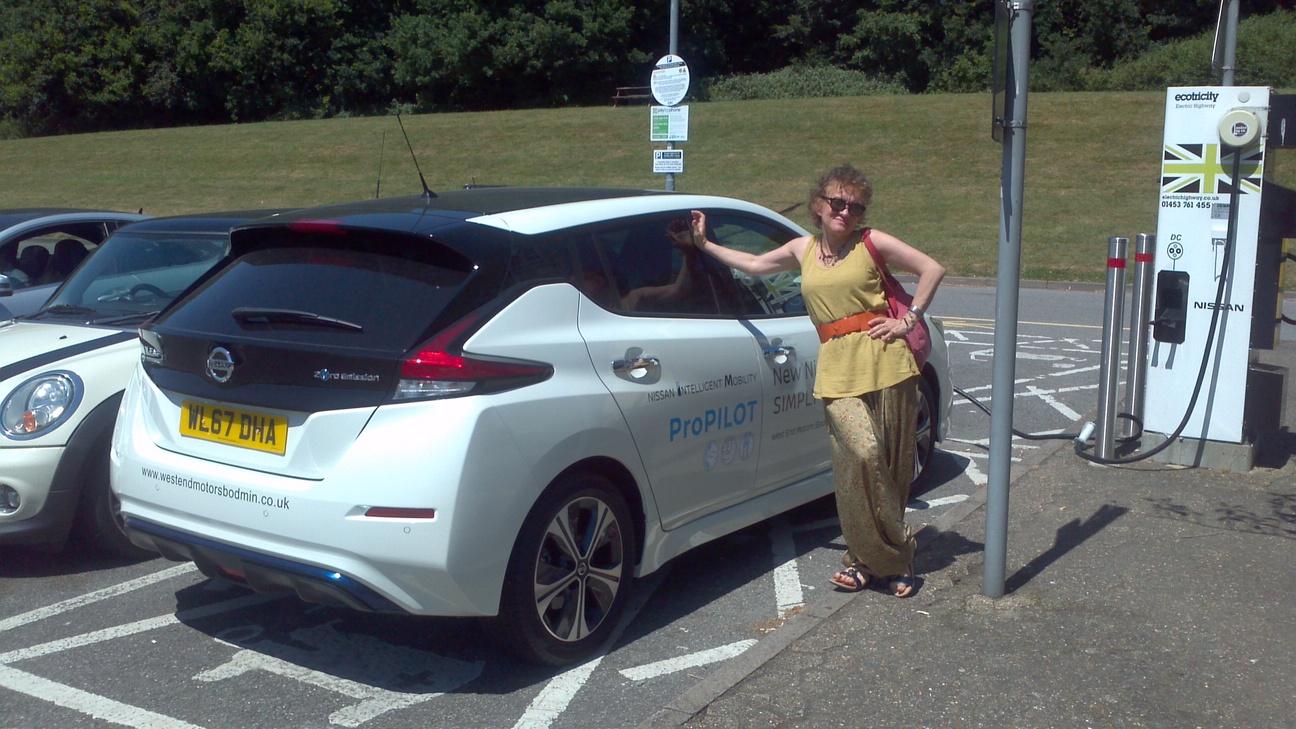
To make it clear I am not a professional test driver, I don’t work for Nissan, I am a woman, 62 years old, an artist and writer but also a huge fan of electric cars.

2018-06-26_13-47-17_336

A few days ago (Today is June, 30th 2018) we had the pleasure to go on an alas not many days journey in a new Nissan Leaf with the proPILOT “autonomous” mode, from the North Cornish town of Bodmin, through Devon (A30 and M5), Somerset, across country lanes and carriageways into Wiltshire, then Gloucestershire to sunny Cardiff and then back. The sun was shining, the air-conditioning was working, the temperature outside was rising above 30C and the quality of the audio was flawless and using the Amazon Music app we could listen to the newly released 50 legendary albums.

To start with I felt a kind of uneasiness and unreal-ness when using the cruise control – could I really trust the car to control things in all the busy traffic on the M5 and to take the decision about slowing down behind other cars and then accelerating again? Could I just start a series of yoga legs and feet exercises without causing an accident? I have to tell you that I could. The car is intelligent enough to keep us in a lane, to anticipate the bends in the road, to read all the traffic around it, to spot the car in front of it, even a car which cuts us up. I was trying to drive without keeping my hands on the steering wheel, the car was driving totally autonomously but not for long. After a while it started piping and blushing at me. I had to put my hands back on the steering wheel otherwise according to the manual the car will start to slow down and finally will make a stop. Not a good idea on a motorway.

The Leaf in the cruise control (ACC for short – adaptive cruise control) mode performs marvellously on the motorway, it also does a spot-on job on partly B-roads, partly A-single and dual roads and even those roads in the towns and villages, something none of these systems is really made for but is a good indication of how well they read lane markings. The Leaf stays within its lane at the speed limit, reads all the diverse speeds limits between 70, 60, 50,40, 30 and 20 miles/h and even drives itself around corners sharper than those on the average highway.

Several times on those roads we encountered stop-and-go traffic and the ACC was able to track the vehicle ahead of it stationary at the line for a stop sign or just for busy traffic and after waiting it started to move forward when a gap opened to the car in front. Just marvellous. On the last day I tested the e-pedal – one pedal system and it worked fabulously too. I totally forgot to say that I drove all the time in eco-mode. And even in the eco mode the acceleration of the Leaf was pretty good, in my opinion. A few times I speeded to over 70 mph to overtake a few annoying cars on highways/motorways and it happened pretty fast only the car did complain about my behaviour ;-).
It is an intelligent car – perfect for me, an undisciplined car driver, to correct me and teach me how to behave as a civil and polite person and citizen on the roads.

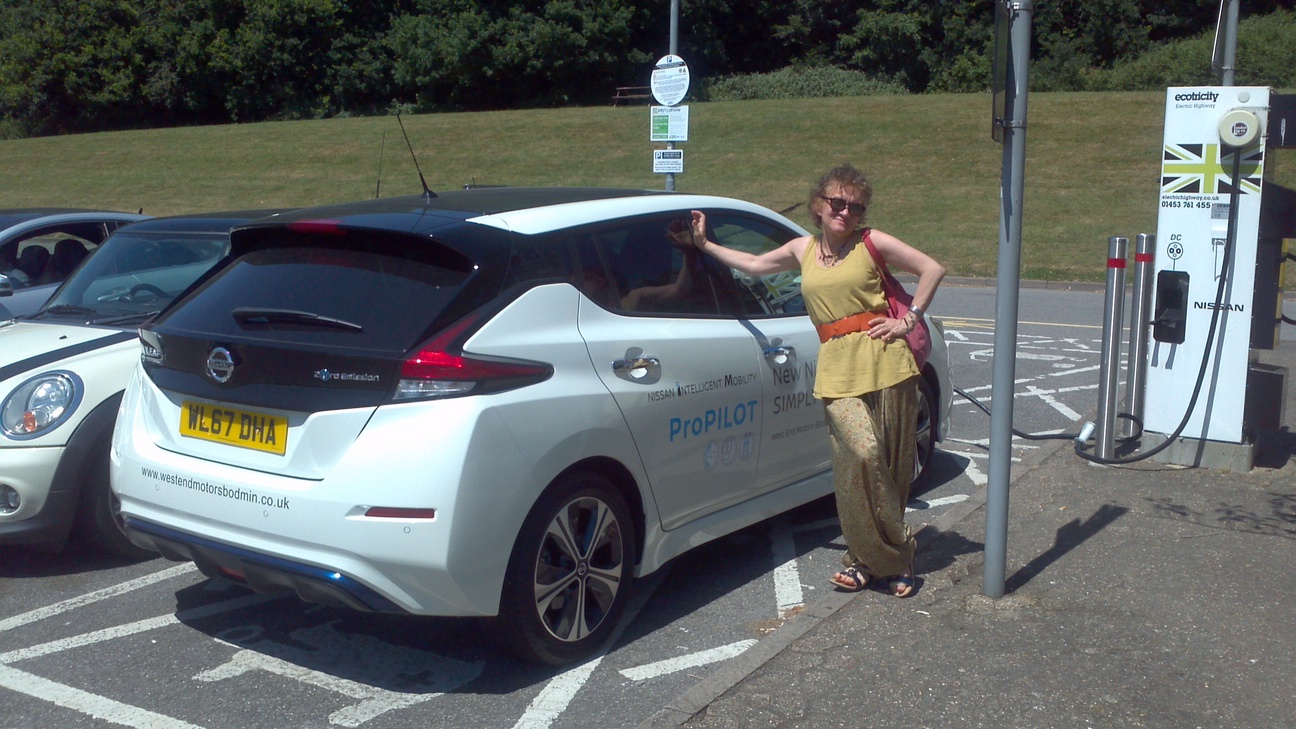
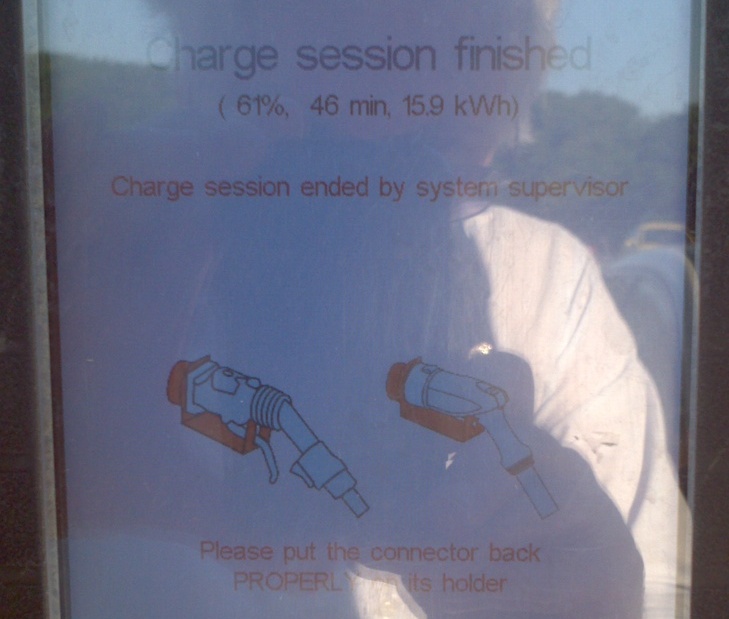
We did have issues with charging. Every time we left the Leaf at a charging point to become fully charged, it never happened. The Ecotricity chargers stopped every time after charging for 45 minutes. It is a pity.

The only concern for me is the seat, more specifically the headrest. It is pushed forward too much for my taste, and it is impossible to adjust it. It only moves up and down. Maybe it is my problem because I am short, 5’2 inch.

It is fair to say we were simply amazed by the proPILOT autonomous functionality. I love this car, just love it:

To be continued……

Road Testing the 2018 Nissan LEAF and “RapidGate” Rumours

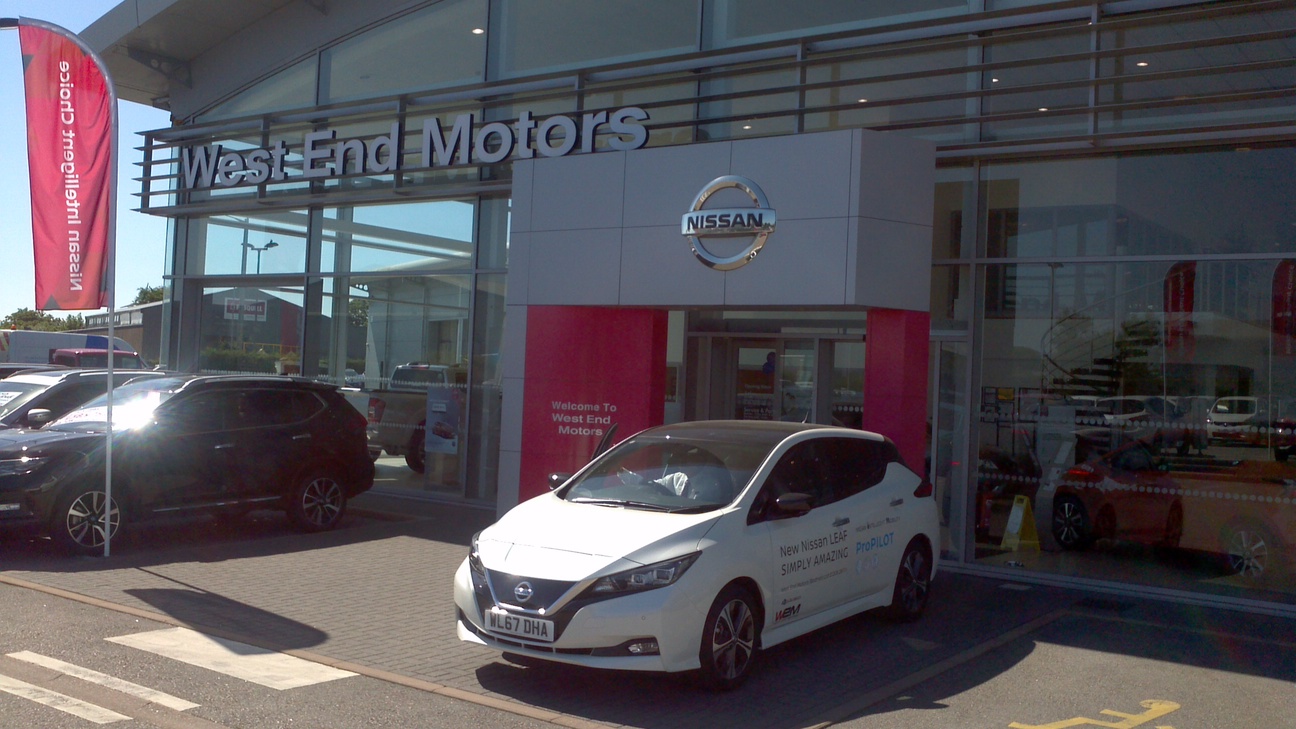
Here at V2G UK we’ve finally managed to complete an extended test drive of the 2018 model Nissan LEAF 2.0! We’d booked a 2 day test a couple of months ago, but had to cry off thanks to yours truly suffering a dose of the “man flu”. This time around my health held up and we picked up our two tone LEAF from West End Motors just down the A30 from here in Bodmin:

2018-06-26_10-29-07_147

Our test drive was timed to coincide with the Welsh Government’s Connected and Autonomous Vehicles briefing in Cardiff. More on that in due course, but amongst many other things we wanted to discover if there was any truth to the so called “#RapidGate” rumours flying around on Twitter and elsewhere. If that is double Dutch to you then please watch this explanation of the term from the inimitable Bobby Llewellyn:

When the “kerfuffle” started Nissan issued the following “news release” on Twitter:

During our trip we intended to do a lot of motorway driving at 70 mph, including a cross country trip to visit Platinum Nissan in Trowbridge. Much more on proPILOT in due course as well, but we set off up the A30 from Bodmin and engaged Nissan’s by now somewhat autonomous version of “cruise control” with a target speed of 70 mph:

2018-06-26_11-27-10_686

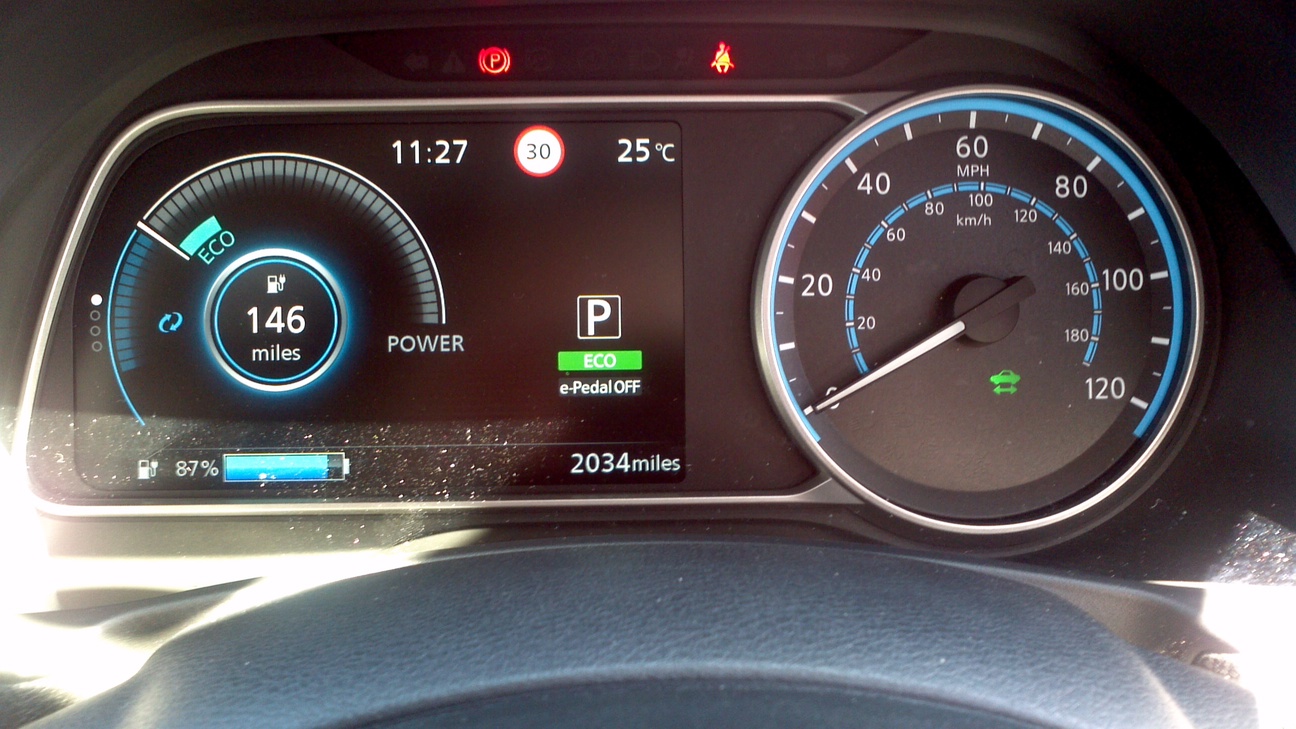
We still had some juice left in “the tank” by the time we reached Taunton Deane Services. According to the LEAF’s clock a distance of 90 miles:

2018-06-26_13-34-15_225

Before heading cross country we plugged in to the Ecotricity charging station:

2018-06-26_13-47-17_336

Having set things in motion we grabbed some lunch, then returned to discover this:

2018-06-26_14-36-Session1

We certainly weren’t “fully charged”, and 25.2 kWh over 48 minutes is rather less than the advertised 50 kW rapid charging. We called Platinum to inform them we’d be arriving late, and enquired whether they had a “rapid” charger. They haven’t!

The LEAF’s satellite navigation system directed us to Trowbridge via the A303, and we followed its instructions. Certainly not the shortest route, but arguably the quickest? Once at Platinum we plugged in quickly and topped up “slowly”. Discretion being the better part of valour we departed an hour or so later and headed for Leigh Delamere Services for what we hoped would be a “rapid” charge. We were sadly disappointed:

2018-06-26_18-57-Session2

Our own experience suggests that the #RapidGate rumours are not without foundation, and what is more the issue is not confined to the third “rapid” charging session of the day and beyond.

To be continued……