Decarbonisation and Mobility as a Service

Here’s a recording of the recent, virtual Shared Transport Conference organised by
Collaborative Mobility UK, which is timed to start with the keynote speech by Trudy Harrison, the current Under Secretary of State at the Department for Transport responsible for the decarbonisation of transport:


Trudy says a number of things of great interest to those of us that think that owning a car really should be a thing of the past for most residents of the United Kingdom. Take for example this from near the beginning:

We certainly need more voices such as [CoMoUK’s] so that we can design a transport system that is fit for the future and free of fossil fuels, which moves us away from the 20th century thinking centred around private vehicle ownership and towards greater flexibility, with personal choice and low carbon shared transport.

I think actually that the future is much closer than we may think. When you look at the progress that has been made in just a year, we’ve launched the Transport Decarbonisation plan, our Net Zero Strategy and of course we’ve hosted COP 26. And we’re trialling Future Transport Zones across the country, unleashing British innovation and transforming inner city journeys.

Fast forward to 5:05 and Trudy points out that:

According to Warwick Business School 78% of 18-24 year olds use a shared economy service, from Zipcar to Liftshare and Airbnb. These services are high convenience, and they can help people to manage the cost of travel flexibly, and in fact it’s becoming a lifestyle choice so transport must keep pace.

The Department for Transport’s “Decarbonising Transport” plan, published earlier this year, goes into much greater detail. For example the “Shared Mobility” section states that:

Shared mobility services can decarbonise and decongest our transport network, offer an alternative to traditional mass transit, and provide new forms of transport for the first and last mile connecting to public transport…

And outlines the following long list of “Commitments”:

  • We will take action to increase average road vehicle occupancy by 2030
  • We will publish guidance for local authorities on support for shared car ownership and shared occupancy schemes and services
  • We will support car clubs to go fully zero emission
  • We will consult on a Mobility as a Service Code of Practice
  • We will use national e-scooter trials to understand their environmental impact, safety, and mode shift potential to evaluate whether they should be legalised
  • We will reduce the barriers to data sharing across the transport sector
  • We have launched a new annual statistical release and guidance about transport’s impact on the environment and support its use by third parties
  • We will explore the introduction of a new sustainable travel reward scheme supported by businesses, community organisations and charities
  • We will support transport providers to develop communications campaigns that encourage mode-switch and sustainable transport behaviours
  • We will encourage and support UK businesses to lead the way in taking action to reduce emissions from their employees’ travel journeys through “Commute Zero”
  • We will identify specific opportunities for decarbonisation through innovation in rural areas in the upcoming Future of Transport: Rural Strategy
  • We will help build a skilled workforce for the future of transport

We at V2G UK cannot wait to see those commitments being put into practice. Especially the final two! As Trudy puts it at 9:00:

This is quite personal to me. These benefits should not be exclusive to city dwellers… I feel really strongly that this needs to be inclusive, and I also know that for many people in rural areas a car is a lifeline.
V2G meets Project LEO at COP26

I remotely attended several sessions at the recently completed COP26 conference in Glasgow, but what with one thing and another I missed out on attending this one as it happened:

As you can already see it was organised by Scottish and Southern Electricity Networks (SSEN for short) and was hosted by Laura Sandys. Note in particular the part at 6:30 where Professor Malcolm McCulloch of Oxford University says that:

So the challenge is to say “How do we allow that potential problem and risk, how do we turn that around to be something that’s really a friend and an aid to the system?”

And the one thing that worries me right at the moment is that we’re seeing a huge uptake in electric vehicles over the last while, I mean it’s kind of fascinating that at the beginning of this year the most popular vehicle being sold was the Ford Focus, last three months it’s been the Tesla Model 3! That kinds of tells you what the change in our dynamics is looking at.

At the moment we’re missing a trick because most of the vehicles being sold except for a few Nissan’s and a few others don’t have vehicle-to-grid. In other words the power flows in only one direction, so all that huge amount of storage capacity that’s available on the grid, we’re talking about by the time we get to 2030 there’s enough energy in the batteries of our electric vehicles to power the UK for two days. That’s a tremendous amount of energy that’s sitting there, but if we don’t install V2G soon, really soon, that boat is going to pass and we’re going to have real trouble in trying to, or much more costly ways of doing that.

Needless to say we broadly agree with Malcolm’s analysis, and the conversation in Glasgow continued. Please watch the whole 30+ minutes, but now there is further news. The Local Energy Oxfordshire project (LEO for short) has just released a white paper authored by Origami Energy and the Low Carbon Hub catchily entitled “Vision on the inclusion of small (under 7kW) flexibility from the grid edge and its role in Future Energy System“. Please also read it from cover to cover, and note that it briefly (and belatedly!) mentions that:

In 2021, British Standards Institute as part of [its] Smart Energy Appliance programme published two standards designed to support [a] testing and certification programme to motivate greater potential for demand response from [the] residential sector.

Note also LEO’s recommendations:

Grid-edge flexibility has great potential to be the enabler of Net Zero as outlined by the “Leading the Way” FES scenario. However, t he two biggest challenges facing the inclusion of small flexibility from the grid edge into delivering Net Zero are societal participation and commercial environment. A common pillar to both challenges is the value of flexibility which only partially reflects the benefits delivered through the flexibility markets. Today, each flexibility market is monopsonistic (market dominated by one buyer), segregated and short-term (there is a lack of long term stability in the regulatory landscape). There is a need to standardise products and services across all flexibility markets to encourage greater transparency and involvement of flexibility as these flexibility markets grow.

To support the inclusion of grid-edge flexibility, the proposed recommendations include:

• To tailor the legislation and regulation to support the development of local communities who act collectively to manage their LCTs and interact with the flexibility markets and other users of the system at a single node (e.g. enabled by an iDNO) or multiple nodes.

• Create a new energy and carbon marketplace to encourage wider deployment of Smart Local Energy Systems where local generation and demand flexibility is recognised as being critical for a healthy and affluent society. The Flexible Services players are seen to add significant benefit to the local society and also provide support to the National scale economy.

• Align the energy policy, welfare policy and housing policy to deliver long-term strategy for Net Zero and beyond ensuring balanced distribution of costs and benefits associated with grid-edge flexibility and cost of energy.


Boris Johnson Announces Electric Vehicle Revolution

Boris Johnson’s speech to the Confederation of British Industries has been in the news for other reasons, but here we’ll concentrate on his announcement about electric vehicle charging stations. According to 10 Downing Street on Monday morning:

PM to announce electric vehicle revolution

Hundreds of thousands of extra charge points in the pipeline with new laws to supercharge the electric vehicle revolution.

New homes and buildings such as supermarkets and workplaces, as well as those undergoing major renovation, will be required to install electric vehicle charge points from next year, under new legislation announced by Prime Minister Boris Johnson today.

England will lead the world to mandate such building regulations, kicking off a decade of delivery in hundreds of thousands of charge points while creating further green jobs across the country.

Up to 145,000 extra charge points will be installed across England each year thanks to these regulations, in the run up to 2030 when the sale of new petrol and diesel cars will end in the UK. This builds on the over 250,000 home and workplace charge points the government has already supported to date.

With the majority of charging happening at home, this will mean people can buy new properties already ready for an electric vehicle future, while ensuring charge points are readily available at new shops and workplaces across the UK – making it as easy as refuelling a petrol or diesel car today.

As well as new homes and non-residential buildings, those undergoing largescale renovations which leaves them with over 10 parking spaces will be required to install electric vehicle charge points.

After consulting with industry, the Government will also be going further to make it easier and simpler for people to go electric, by introducing simpler ways to pay whilst travelling, such as contactless, at all new fast and rapid charge points.

We’ll come on to that consultation shortly, but here’s what Boris was intending to say to the CBI:

Continue reading →

Icebreaker One Win UKRI’s MEDA Competition

In a press release this morning Ofgem, the United Kingdom’s energy regulator, announced that:

UKRI’s £2m Modernising Energy Data Access (MEDA) competition, which saw three rounds of increasingly competitive requirements to design and build a data access solution for the energy sector, completed the beta-stage build in July 2021. Icebreaker One, the competition winners, have developed Open Energy a non-profit service that provides data search, data access control and has been designed through collaborative industry groups.

Managed by UKRI as part of the MEDA project, Icebreaker One will deliver a pilot phase of Open Energy over the next 6 months to the end of February 2022. The aim of the pilot phase is to carry out further research and development activities that will prepare the product for public launch. This phase will include developing capabilities that enable organisational and data onboarding, developing further use-case(s), and delivering an operational pilot programme. 

The Open Energy initiative has already delivered value in improving visibility and access to data in the sector. It aims to act as a key enabler to innovation, help to drive down costs for consumers and support an open data landscape.

UKRI, BEIS and Ofgem are supportive of energy data sharing solutions and we will work with industry over the coming months to ensure that these solutions can operate within the energy market.

Here is Gavin Starks from Icebreaker One with a brief overview of the Open Energy initiative:


Masdar invests in UK’s Charging Infrastructure Investment Fund

In a press release yesterday Masdar announced that:

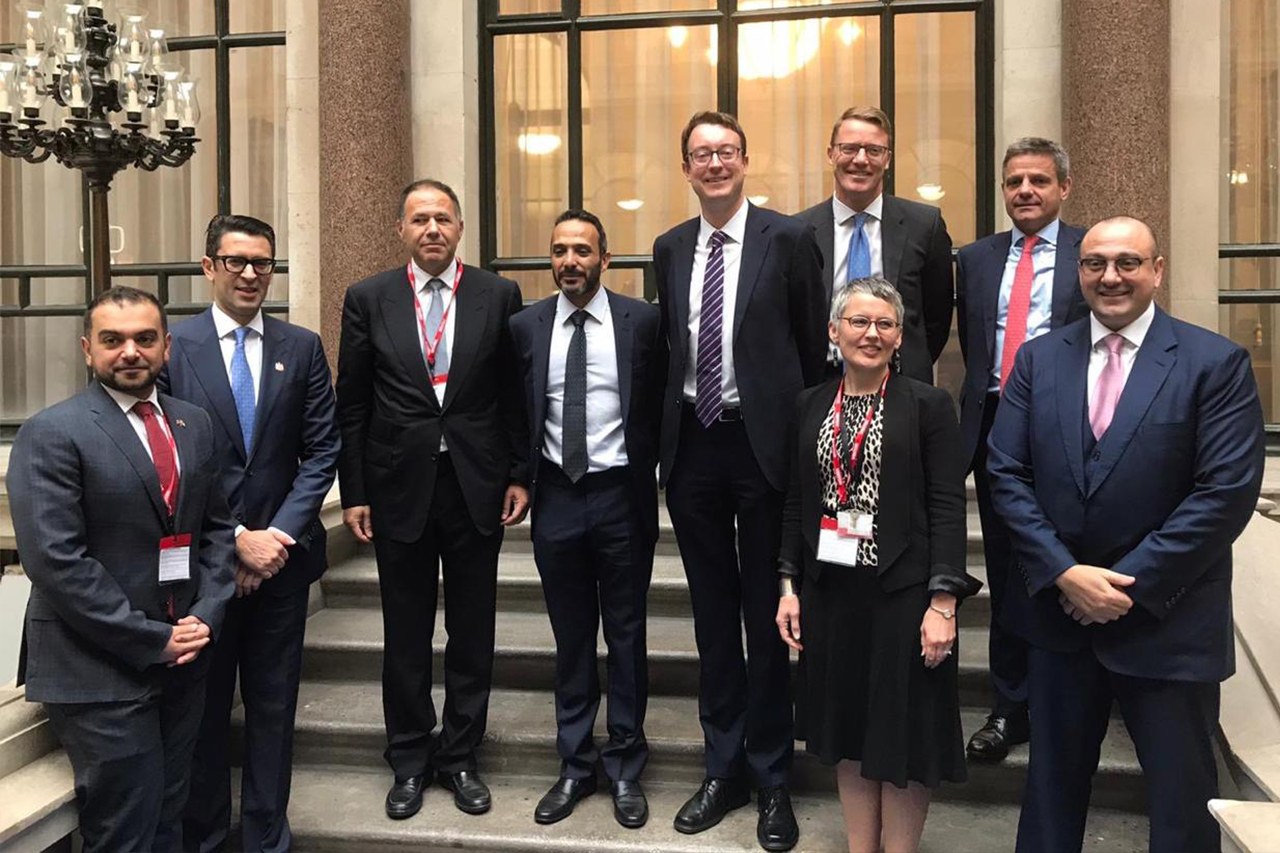
Masdar, one of the world’s leading sustainability investors and renewable energy developers, has today joined UK government leaders in London for a specialised industry event to discuss its recent investment in the Charging Infrastructure Investment Fund (CIIF).

Hosted by the Infrastructure and Projects Authority (IPA) at the Foreign and Commonwealth Office in Whitehall, participants included Simon Clarke, Exchequer Secretary to HM Treasury, Khaled Al Qubaisi, CEO of Aerospace, Renewables & ICT for Mubadala, HE Mansoor Abulhool, UAE Ambassador to the UK, Mohamed Jameel Al Ramahi, CEO of Masdar, Matthew Vickerstaff, Deputy CEO of IPA, and Samer Salty, Managing Partner of Zouk Capital.

Masdar, a subsidiary of Mubadala Investment Company, last month became the first commercial investor in the UK government’s £400 million CIIF, which aims to more than double the country’s electric vehicle charging infrastructure with 3,000 new rapid charge points by 2024 as part of its ambition to end the sale of petrol and diesel vehicles by 2040.

To be managed by Zouk Capital, Masdar has invested £35 million in the fund, which has been matched by the UK government.

UK-CIIF-group

HM Government also published a transcript of the speech made by Simon Clarke, the Exchequer Secretary to the Treasury, at the Foreign and Commonwealth Office yesterday:

In November of last year, I was one of 50 Tory MPs who wrote to the Prime Minister and urged her to set a target of net-zero emissions by 2050.

We felt then as we do now – that that we could decarbonise through science, not economic sacrifice…

…That our method would not be hair-shirted self-denial, but innovation and investment driven by the right incentives.

Our past should give us confidence.

This country’s ingenuity has kept the UK at the forefront of science and engineering for hundreds of years.

And, provided we keep our ambitions high, we will lead the world for hundreds more.

And the goal of net zero emissions will inspire us all to great heights of achievement.

Entrepreneurs will see opportunities in new industries, and create jobs all around the UK.

And the new technologies they create will clean the air we breathe, and cut the bills in our homes.

In June this year, the government became the first major economy in the world to adopt the Net Zero 2050 target, which is fantastic news.

I was made a minister a month later and – while this is possibly slightly less momentous – I can assure you all I will do everything I can to make sure the government keeps its promise.

By way of Her Majesty’s Government keeping its Net Zero promises, Mr. Clarke went on to say that:

The Charging Infrastructure Investment Fund is in many ways emblematic of our approach to Net Zero.

Our philosophy isn’t that government can solve everything.

Of course, we have an important role to play – but we have to do it in partnership with the energy and expertise of the private sector.

Our approach is therefore to set up the right incentives and conditions, and then allow a powerful green market to flourish.

In this case, we wanted to encourage more people to buy and use electric vehicles, or EVs, which are far less polluting than traditional cars.

We set up grants for cars, taxis, vans and motorcycles.

But we realised that people looking at buying EVs were wary of getting marooned, without any battery in their car left and miles away from home or the nearest charging point.

And handouts wouldn’t cut it – we needed to unleash the power of the market.

So, with Zouk Capital, we set up the Charging Infrastructure Investment Fund as a catalyst, with government money matching any private capital that comes in to maximise impact.

And we were delighted that Masdar chose to invest £35 million in the fund – which the government topped up to £70 million – for the installation of 3,000 rapid chargers across the country.

This more than doubles the UK’s number of rapid chargers, producing a dense network of stopping points where family cars can be charged in 20 minutes flat – the time it takes for a sandwich and a coffee on the way to the seaside.

And, further, it shows Masdar’s continued participation in the UK’s clean energy commitments.

Masdar has invested more than £3 billion in the UK in the past ten years, predominantly in offshore wind.

It’s a pleasure to welcome Mohamed Al Ramahi here today for the signing ceremony and to talk more about how we can work together.

Here’s hoping that Zouk Capital, HM Government and/or Masdar also decide to invest in vehicle-to-grid capable “destination” charging points in the not too distant future. If the UK is aiming for “Net Zero” carbon emissions in the foreseeable future one way or another UK plc needs to back up offshore wind and other renewable energy generation with some form of storage of that energy for those times when the wind doesn’t blow and the sun doesn’t shine. Electric vehicle battery packs can provide a very cost effective way of achieving that end, assuming that the appropriate infrastructure is already in place.

A problem we are already working hard on solving down here in the Wild and Windy West Country!