V2G is now a hot topic in the UK mainstream media! A few days ago The Times newspaper published an article on vehicle-to-grid technology. According to Edward Lucas:
The hunt is on for cheaper and better storage, which is where electric cars come in. For its owners, the car battery is an unused asset most of the time, just as the engine is for those of us with old-style vehicles. Yet for grid managers dealing with the spikes and troughs in demand, a terawatt hour stored in spare batteries is exactly what is needed. Instead of subsidising standby generators, we can pay car owners to sip power from their vehicles’ batteries.
But making this work on a larger scale requires change. Our existing energy set-up is centralised: big power plants transmit large amounts of electricity over long distances to passive consumers. This arrangement copes with the 115,000 electric cars we have now. But it will not be fit for 2040, when the government intends to ban the sale of new diesel and petrol cars. By then we are predicted to have more than 25 million electric vehicles.
Done wrong, that will resemble something like a vast network of electric kettles. Charging them all at once at home would crash the grid. Consumers will curse, costs will soar and benefits will shrivel. To avoid that, the electricity system of the future will have to look like the internet: decentralised and interactive. Consumers will also be producers — perhaps from rooftop solar panels or by supplying power from their car batteries back into the grid when needed. Demand will be smarter: appliances will adjust their consumption according to price. Electric car owners, for example, will not mind exactly when their vehicle is charged, so long as it is ready when they need it. They will take advantage of cheap electricity just as consumers do already with night storage heaters.
The prospect is both exciting and daunting. Dieter Helm, the energy economist who recently reviewed energy costs for the government, says that the combination of electric vehicles, battery technology and digitisation presents challenges of a scale and magnitude not witnessed since the reconstruction of our electricity system after 1945.
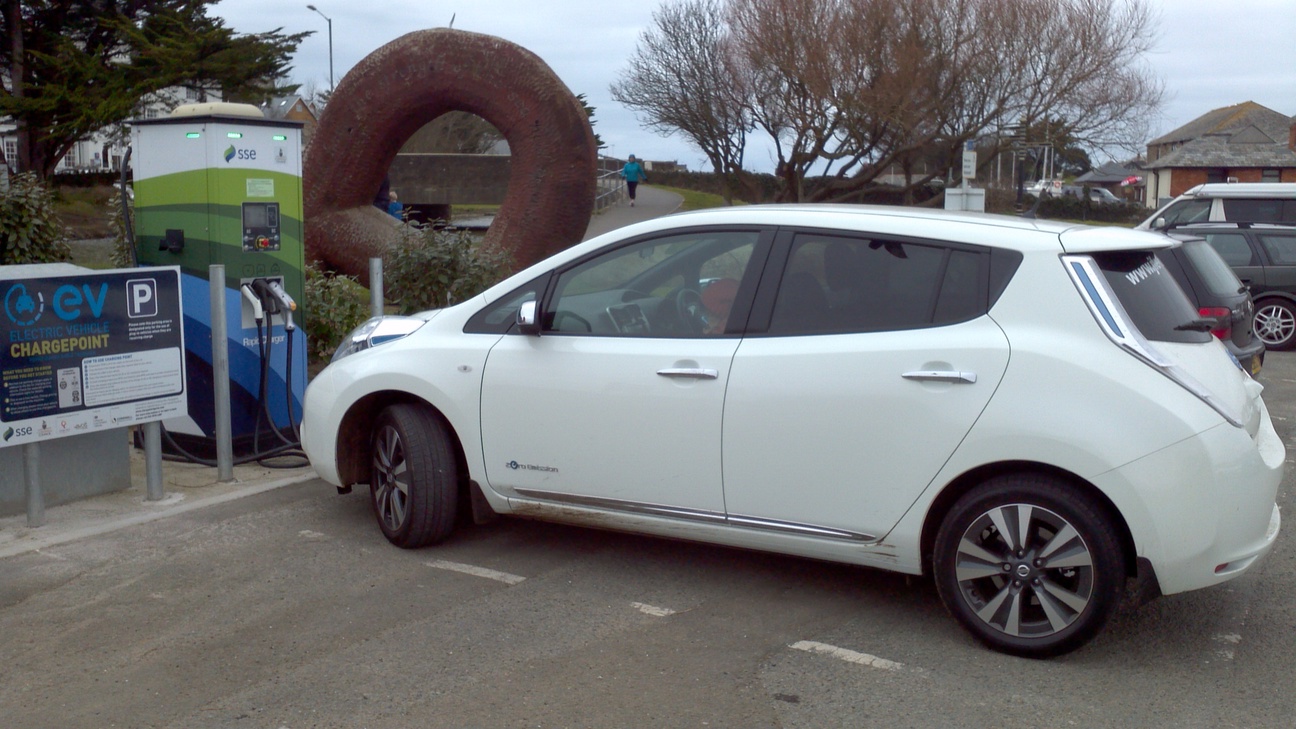
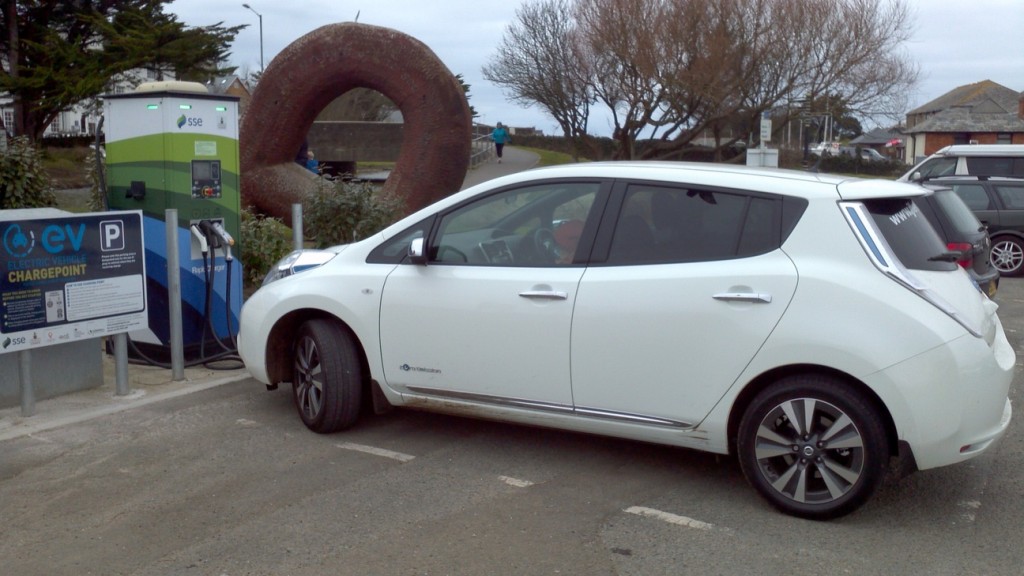
Today the BBC have followed the Times’ lead by publishing an article by Theo Leggett with a slightly different perspective. Unfortunately they included at the top a stock photo of what looks a lot like a Renault ZOE instead of a Nissan LEAF. Here’s one of our stock photos of a 2016 LEAF, which is V2G capable:
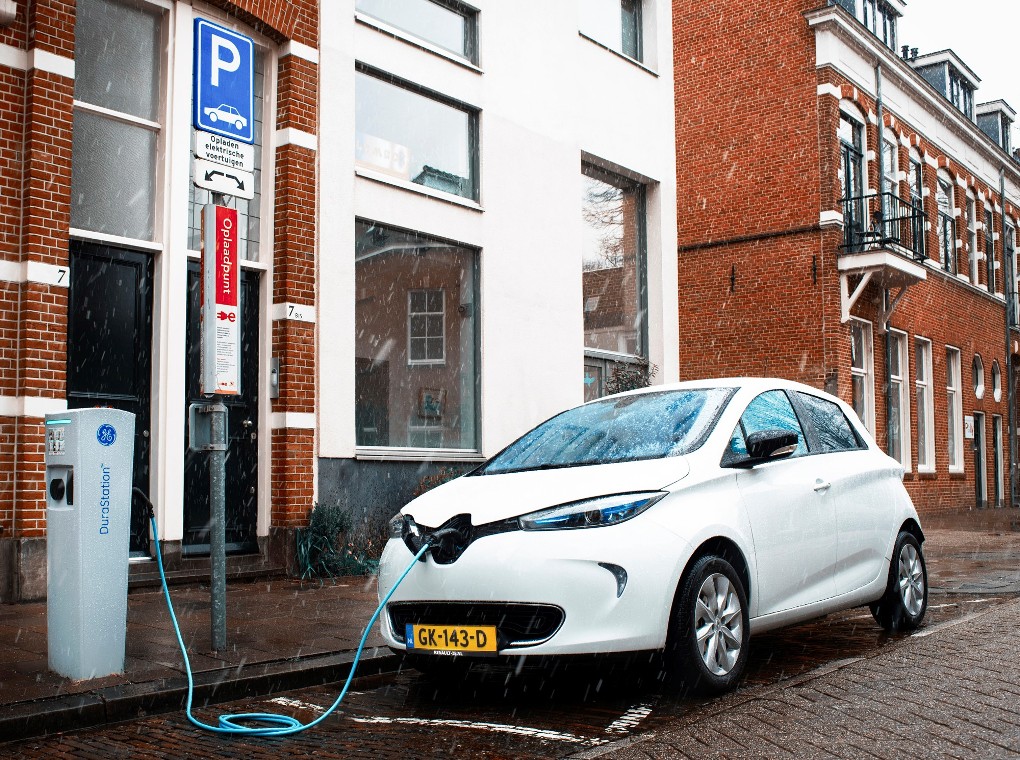
However currently the ZOE is not. Here’s what one of those looks like:
Theo points out that:
At the Nissan Technology Centre in Cranfield, Bedfordshire, a number of the company’s electric Leaf models are lined up alongside a bank of chargers. But these cars aren’t just drawing energy from the grid; they’re also putting it back.
The system is called Vehicle to Grid, or V2G. The Japanese company is developing it in partnership with the Italian power firm Enel and is already operating a small trial hub in Denmark.
Electric cars are, in effect, energy storage devices, and because they spend much of their time parked up not doing anything they can help smooth out the peaks and troughs in energy demand.
“Basically, we can consider the car as a battery with wheels,” says Maria Laura Corallini, the engineer in charge of the V2G project.
“You can use the energy storage capability in the battery to provide specific services back to the grid.”
The system uses software to regulate the charging level of multiple vehicles.
When the grid needs extra power, it can draw very small amounts from each individual vehicle. When energy is abundant, it can top them up again. Users will get paid for the electricity they provide.
If thousands of cars are connected together, then the amount of energy given back to the grid can be substantial, and it can be varied on a second-by-second basis.
Initially the plan is to sell it to businesses that operate large fleets, although the company says it will also introduce a residential version. Other organisations are also experimenting with the technology.
I suppose V2G UK must count as one of those “other organisations” in this context! Theo continues by referring to an oft mentioned tale of V2G woe:
Not everyone agrees that V2G makes commercial sense, however. The chief technical officer of Tesla, JB Straubel, for example, has suggested in the past that he doesn’t see it becoming a viable solution, largely due to its cost and complexity.
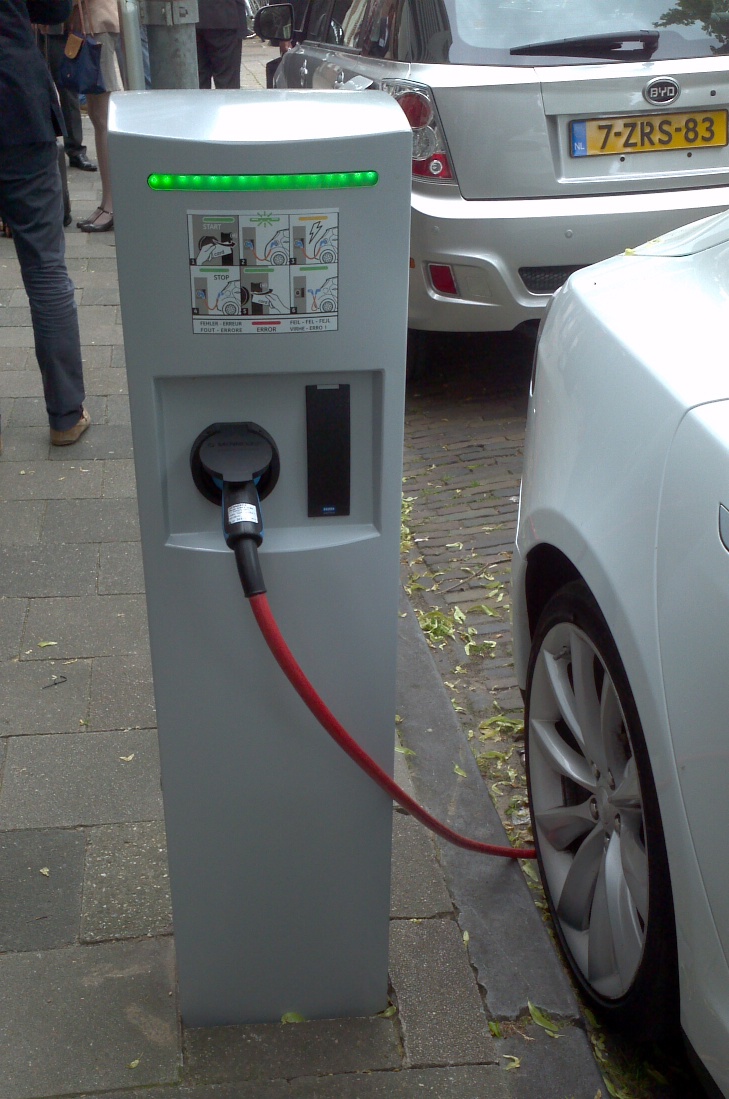
I am forced to agree with JB that here in the UK V2G currently doesn’t “make commercial sense”, which further forces me to reveal once again this image of a Tesla Model S connected to a V2G capable bi-directional charging station in the Netherlands:
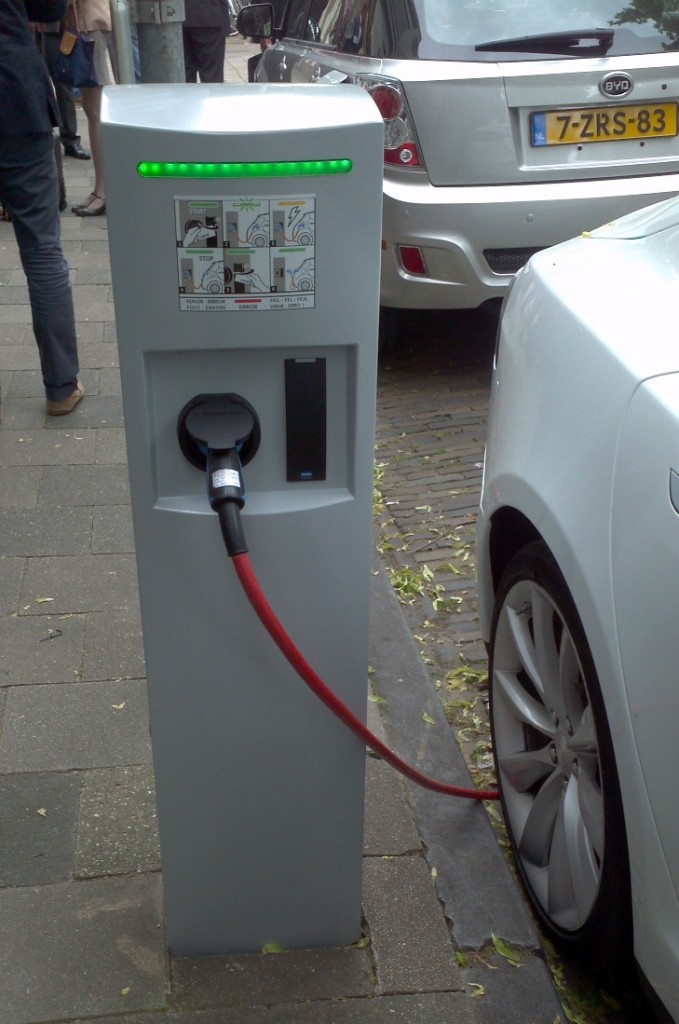
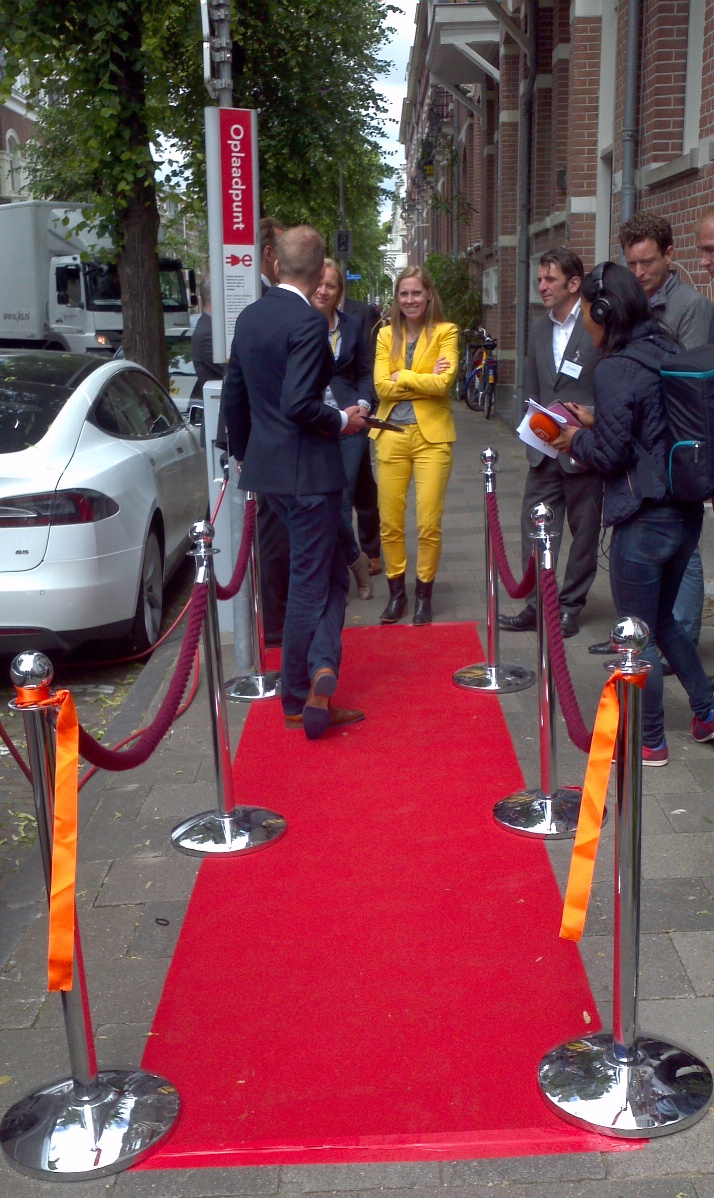
Unfortunately in all the circumstances that particular Tesla was only capable of charging from the kerbside bi-directional charging station. The BYD e6 parked next to it could however also discharge, ultimately to the local distribution grid. Do you suppose that if and when the “cost and complexity” reduces and V2G does “make commercial sense” in Tesla’s view, power will suddenly start flowing in the opposite direction down that stout red cable?