Storm Katie Cuts Power Across Southern England

On Easter Saturday the Met Office announced the impending arrival of another named storm from across the Atlantic:

Storm Katie is forecast to affect southern England and south Wales on Easter Monday

Anticipating the development of an area of low pressure, which will affect southern England and south Wales on Easter Monday, The Met Office has decided to name the storm Katie. This will be the 11th named storm since last autumn.

A National Severe Weather Warning for strong winds has been issued, covering much of Easter Monday.

The Met Office also issued a severe weather warning for the winds from Storm Katie across Southern England:

Issued at: 1031 on Sat 26 Mar 2016
Valid from: 0115 on Mon 28 Mar 2016
Valid to: 1400 on Mon 28 Mar 2016

Winds will strengthen markedly across southern England and through the Bristol Channel from the start of Monday, with the potential for 50-60 mph gusts inland and 70 mph gusts around coasts exposed to the south. Whilst there is a low likelihood of all areas seeing these strong gusts for a time southern coastal counties from Hampshire eastwards look most likely to see the strongest winds. These will then ease from the southwest during the morning, clearing from the east early in the afternoon. Additional hazards may include large waves around exposed coasts as well as a period of heavy rain.

Please be aware of the potential for disruption to outdoor activities and travel, as well as the possibility of fallen trees and temporary interruptions to power supplies.

On Easter Sunday the Met Office’s “Chief Forecaster’s assessment” firmed up the forecast a bit, saying that:

There is increased confidence in the likelihood of a period of disruptive southerly winds, veering westerly later. Winds are likely to be strongest in southern coastal areas, but there is potential for some very strong, squally gusts inland during the morning before winds ease from the west during the day.

Now the morning of Easter Monday has arrived, as have those “temporary interruptions to power supplies”. Storm Katie has done her worst, and here’s how the damage looked at 08:00 BST. First of all here’s Western Power Distribution‘s current power cut map:

Further east here’s Scottish and Southern Energy Power Distribution‘s power cut map:

and here’s one from UK Power Networks‘ for South East England:

Unlike WPD, SSEPD and UKPN don’t publish real time tables of the number of properties without power. SSEPD are however providing a “Live Storm Feed” for Katie:
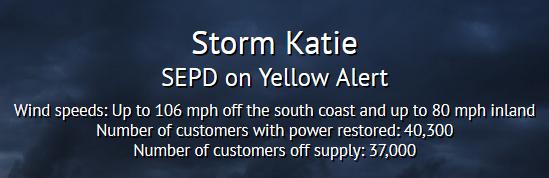
According to their latest news bulletins:

Southern Electric Power Distribution has more than 900 engineering, technical and support staff on duty to deal with Storm Katie, and since last night power has been restored to 40,300 customers.

There are currently 28,497 customers in West Sussex whose power supply have been affected by Storm Katie.

There are currently 4,152 customers in Berkshire whose power supply have been affected by Storm Katie.

There are currently 2,893 customers in Dorset whose power supply have been affected by Storm Katie.

According to the UKPN Press Office:

There are currently 19,000 properties without power across South East England (Kent, Surrey and Sussex)

SSEPD are also “Live Tweeting” about the problems Katie’s winds have caused their network:

The Great Storm Henry Blackout Saga

Regular readers will realise that here at V2G UK we take an unhealthy interest in power cuts, or outages as they call them on the other side of the Atlantic. Not least that’s because we suffered an extended lack of mains electricity ourselves not so very long ago!

We recently followed the progress of the controversially named “Storm Jonas” along the eastern seaboard of the United States using helpful information provided online by Distribution System Operators (DSO using the generic term, or ISO if you’re from the US!) such as Duke Energy. Here’s an example:

Since “Storm Henry” was officially named by the UK’s Met Office a couple of days ago, and is due to arrive over on this side of the North Atlantic today, we thought we’d undertake a similar exercise for the western seaboard of the United Kingdom this week. However there is a fly in the blackout ointment. After perusing the web sites of the Distribution Network Operators (DNO in the Queen’s English) most likely to be affected by Storm Henry it seems none of them provide the summary information available in the top left hand corner of Duke Energy’s power outage map, including in particular “Active outages” and “Affected customers”.

Following some conversations with the DNOs on Twitter it appears as though we’ll need to keep track of a set of press releases to try and keep real-time tabs on the forthcoming Great British Blackouts. The first of these that we’ll bring to your attention is from Scottish Hydro Electric Power Distribution (SHEPD for short), the Scottish portion of Scottish and Southern Energy Power Distribution (SSEPD for short):

Scottish Hydro Electric Power Distribution (SHEPD) has moved to Yellow Alert after closely monitoring the development of high winds.

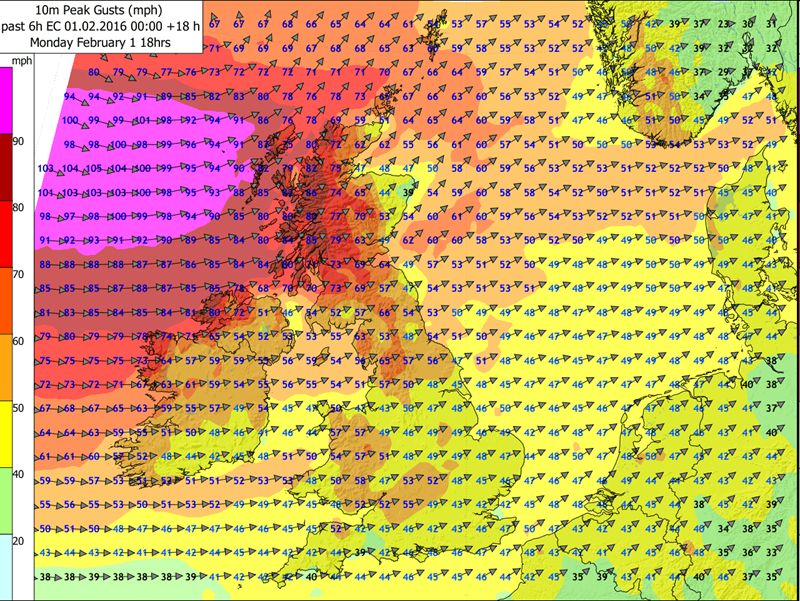
Our weather models anticipate Storm Henry will bring wind speeds over 90 mph in the Western Isles and Skye. All other parts of our network area will see winds reach 70-90 mph.

We have frontline and support staff standing by and we have engineers in the areas we expect to be hit by the storm.

Our customer service team has been making outbound calls to customers on our Priority Service Register in the affected areas to alert them and offer extra assistance, where required.

Members of the public should not approach fallen or damaged power lines, which may still be live.

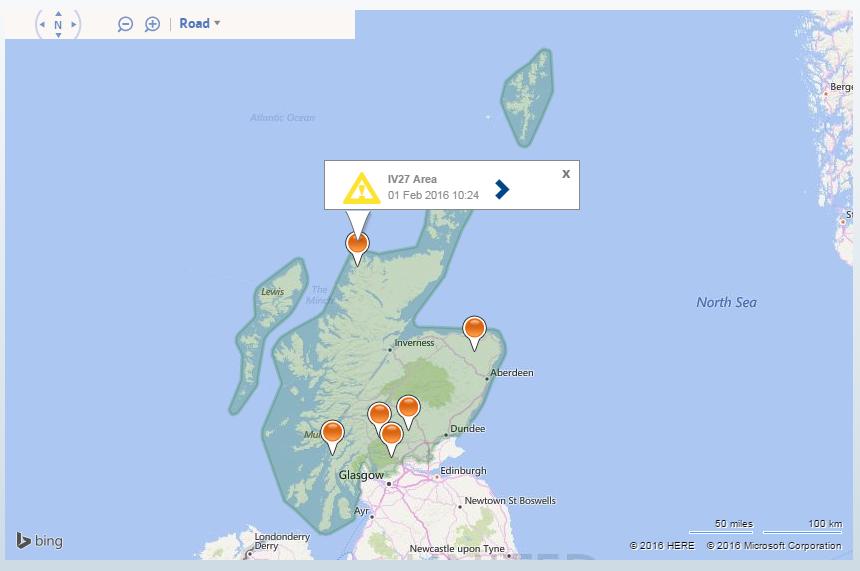
Whilst we wait for the full force of Storm Henry to hit, here’s how the SHEPD live power cut map looks at lunchtime on Monday February 1st 2016:

My Electric Avenue Preliminary Results Revealed

Just in case the name is unfamiliar to you, the My Electric Avenue project has been running for a couple of years now. According to the My Electric Avenue web site:

Whilst there’s plenty of capacity to deliver power for EV charging across the UK, if the charging requirements are concentrated in small areas and during peak demand, local feeders can become overloaded. With the development of even faster charging times, this problem shows no signs of fading.

The full size and scale of the problem that EV clusters could cause will only become apparent to Distribution Network Operators (DNOs) when they are already on the network, demanding costly mitigation measures in short timescales.

EA Technology and Scottish and Southern Energy Power Distribution (SSEPD) are working together with partners under the Ofgem Low Carbon Networks (LCN) Fund to develop a ready-made low cost solution. EA Technology is developing an EV charge control system to balance out the charging cycles of EVs at times of network stress.

To test the system the trial is simulating a future EV network, and to do this, clusters of EVs have been ‘created’.

If all that information strikes you as being a bit on the dry side, here’s an episode of Robert Llewellyn’s “Fully Charged” show that explains the project in a more entertaining fashion!

I watched a webinar last week in which some preliminary results from the project were released, but EA Technology had a few internet connection problems due to high winds in the North of England, and the feed gave up the ghost halfway through! To rectify that they’ve made a video of the proceedings available to all and sundry, and here it is:

There’s also a page on the My Electric Avenue web site where you can download additional information.

The data referred to in the video is based on the initial results from an ongoing survey. It explains that the approximately 200 participants who each leased a Nissan LEAF were split into two roughly equal groups. The “technical” group used “smart” or “controlled” charging, whilst the “social” group simply had their EV charging activity monitored. There’s obviously much more detail available from the video and accompanying documentation, but in brief:

  • Only ~5% of people disagreed with the proposition that “EVs are easy to live with”, however
  • 117 out of 193 people “struggle to charge away from home”
  • Of those 117, 12% intend to buy their LEAF at the end of the trial and 43% intend to lease it
  • Overall 17% intend to buy their LEAF at the end of the trial and 41% intend to lease it
  • Even after the “controlled” charging trial 80% of people like to charge their car until it is full
  • Of the people on the “technical” trial, 16% disagreed with the proposition that “My electric vehicle charges sufficiently in the time available to charge”

The concluding section of the presentation points out that the sense of “community” was very important to the success of the project, with “local champions” recruiting friends and neighbours into their “cluster” of EVs a vital element of that.

The final report on the My Electric Avenue project is due to be released by De Montfort University towards the end of October 2015. In the meantime if you are in the EV business and you would like to take a quick survey yourself on the topic of “Industry Views on the Impact of Cycling Electric Vehicle Charging” then you can do so over at:

https://www.surveymonkey.com/s/Y5N8TTV