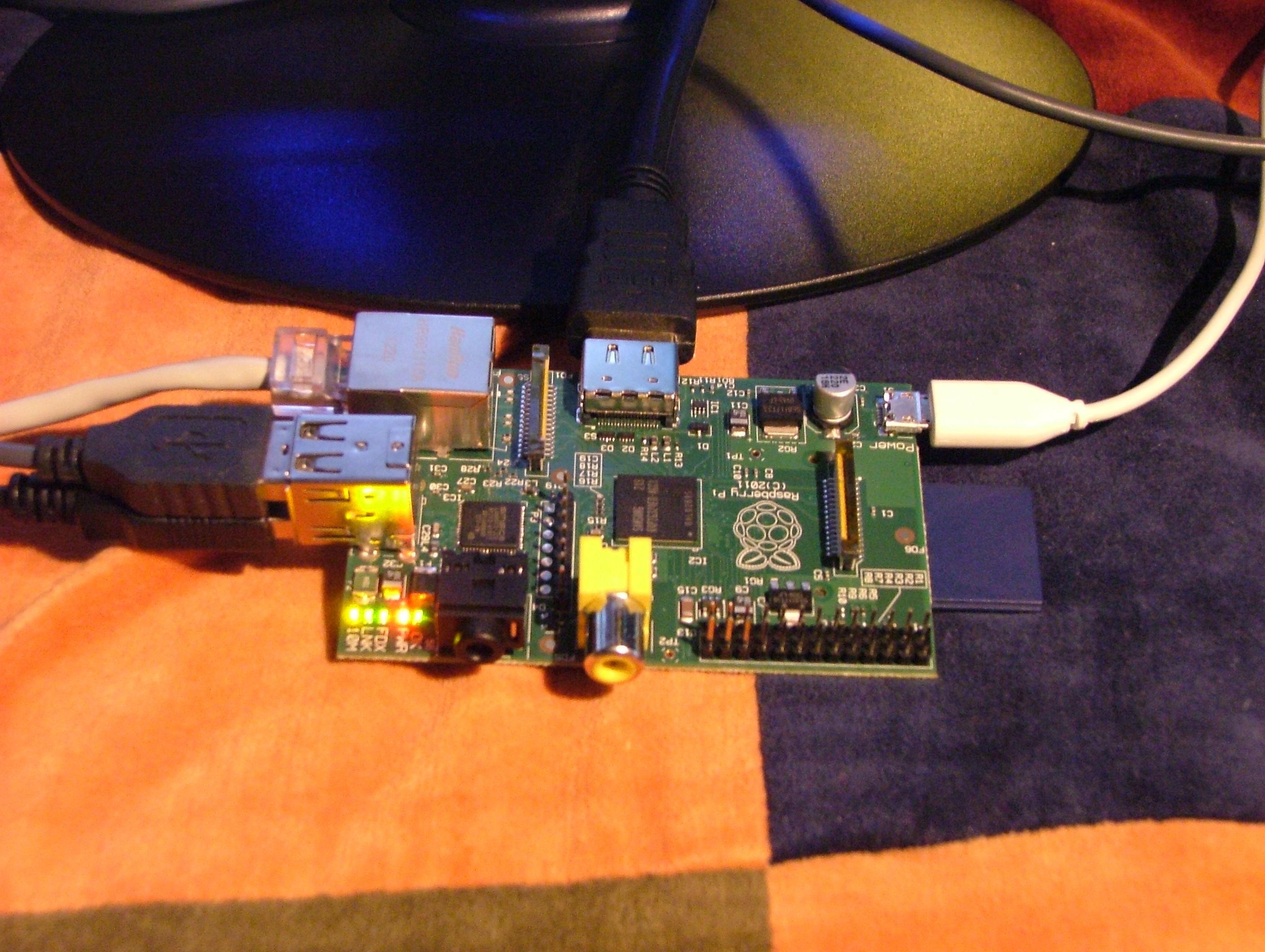
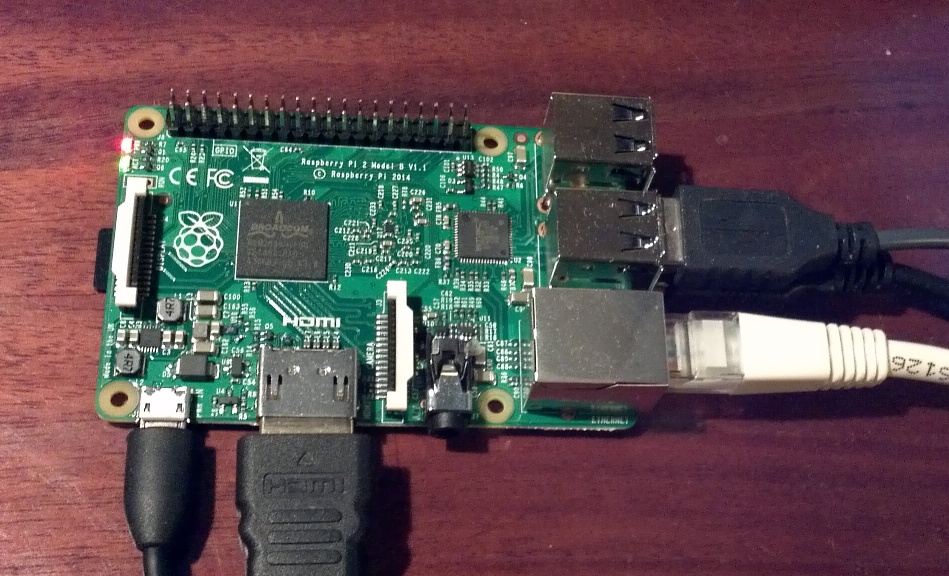
As regular readers here will realise we have a liking for running Linux on ARM processors. Hence we were delighted to recently receive our very own quad core Raspberry Pi 2 to experiment with. Here’s what it looks like:
 However we’ve recently received even more interesting news, to us at least. In a press release earlier this week Red Hat announced that:
The Red Hat ARM Partner Early Access Program has expanded to include more than 35 member companies, ranging from silicon vendors and original equipment manufacturers (OEMs) to independent software vendors (ISVs).
According to Mike Werner, who is Senior Director of Global Technology Ecosystems at Red Hat:
Since its launch just over six months ago, the Red Hat ARM Partner Early Access Program has achieved two critical goals, driving significant interest and participation from both hardware vendors and independent software vendors as well as the successful completion of the hardware enablement phase. The program is a perfect example of how Red Hat, along with our vast network of partners and ISVs, drives standardization within specific technology segments, with the ultimate goal of delivery of fully tested and certified solutions to the marketplace.
whilst Kumar Sankaran, who is an associate vice president at Applied Micro, said that:
As the only silicon vendor shipping an enterprise-hardened, ARMv8-A Server-on-a-ChipTM solution and an initial participant of the Red Hat ARM Partner Early Access Program, we are pleased to continue our work with Red Hat. The program is strengthening the entire ARM 64-bit ecosystem while allowing OEM and end-user partners the opportunity to work with fully operational software and hardware. We have had a great working relationship with Red Hat dating back to our X-Gene launch in 2011 and we are excited to provide a serious alternative to incumbent solutions.
and Susan Blocher, who is Hewlett Packard’s vice president of Product Management and Business Development for their Moonshot server range, said that:
Today, customers are already leveraging the industry-leading HP Moonshot servers with 64-bit ARM technology to improve application performance, drive business innovation and deliver breakthrough datacenter economics. We are committed to working with partners in the Red Hat Partner Early Access Program to extend the ARM ecosystem and deliver enterprise-ready solutions to address customer challenges.
The practical benefits to all concerned are summed up by Red Hat as follows:
Launched in July 2014 with nine participants, the program aims to deliver, via collaboration, a singular operating platform capable of supporting multiple partner-initiated system designs based on the 64-bit ARMv8-A architecture. As a part of that commitment, program participants have successfully completed the hardware enablement phase by incorporating necessary architectural requirements into the latest version of the development software. Based on that, Red Hat ARM Partner Early Access Program participants are now expected to contribute system-specific software and drivers to an open source upstream Linux community for incorporation into future commercial offerings.
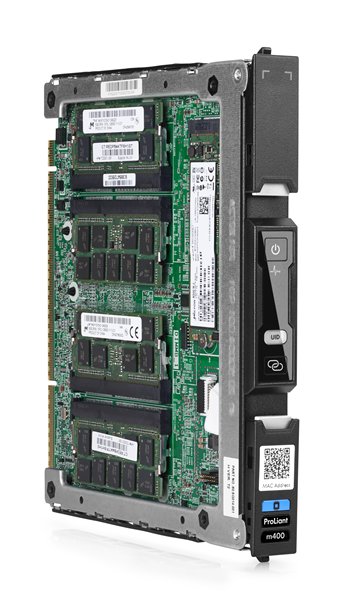
Bear in mind that it costs rather more than the $35 that a Raspberry Pi 2 will set you back, but here’s what an HP 64 bit ARM Moonshot server cartridge looks like:
Bear in mind also that whether you’re considering a Raspberry Pi, a Moonshot or a data centre packed full of ARMv8s, an ARM CPU delivers rather more bang per Watt than the average microprocessor.