Fastned Electric Vehicle Charging Profiles

In the wake of the BBC’s “RapidGate” article last weekend I find myself debating the pros and cons of the 2018 model year Nissan LEAF that we road tested last week with a fan of the Hyundai Ioniq EV:

Dutch charging station operator Fastned helpfully provides some experimental evidence to inform the debate. Whilst they don’t publish data on the effects of successive rapid charging sessions on a long drive they do provide charging profiles for all three flavours of the Nissan LEAF:
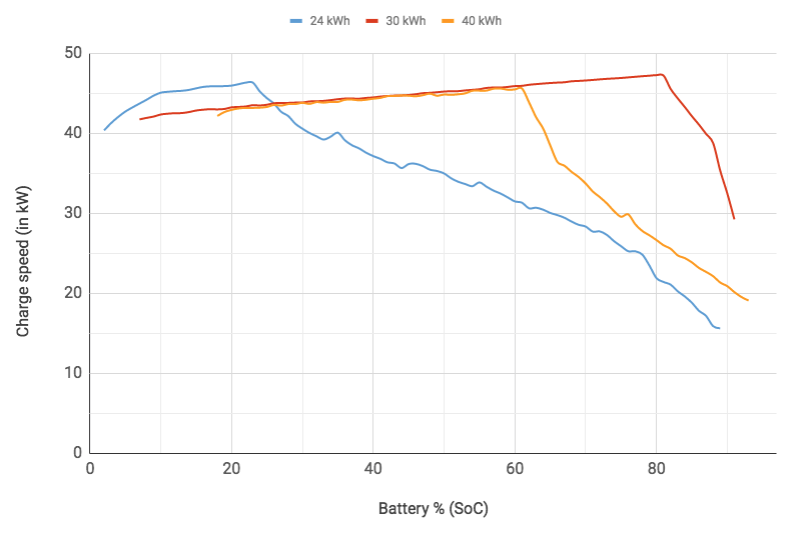
Fastned Nissan Leaf GB

which does indeed show the latest LEAF fitted with a 40 kWh battery pack throttling the charging rate earlier than the preceding 30 kWh version. According to Fastned:

With a Nissan Leaf or e-NV200 (Evalia) you use the CHAdeMO plug. The charge speed is up to 50 kW at all of our chargers. In the charge curve below you can see the charge speed of the Nissan Leaf and e-NV200. On average both cars charge 100 km of range in 20 – 25 minutes. Charging behaviour largely depends on the battery size:

24 kWh edition: fast charging until 25%, charging will gradually go slower after this
30 kWh edition: fast charging until 80%, charging will go slower after this
40 kWh edition: fast charging until 60%, charging will go slower after this

For comparison purposes here’s the equivalent graph for the Hyundai Ioniq:
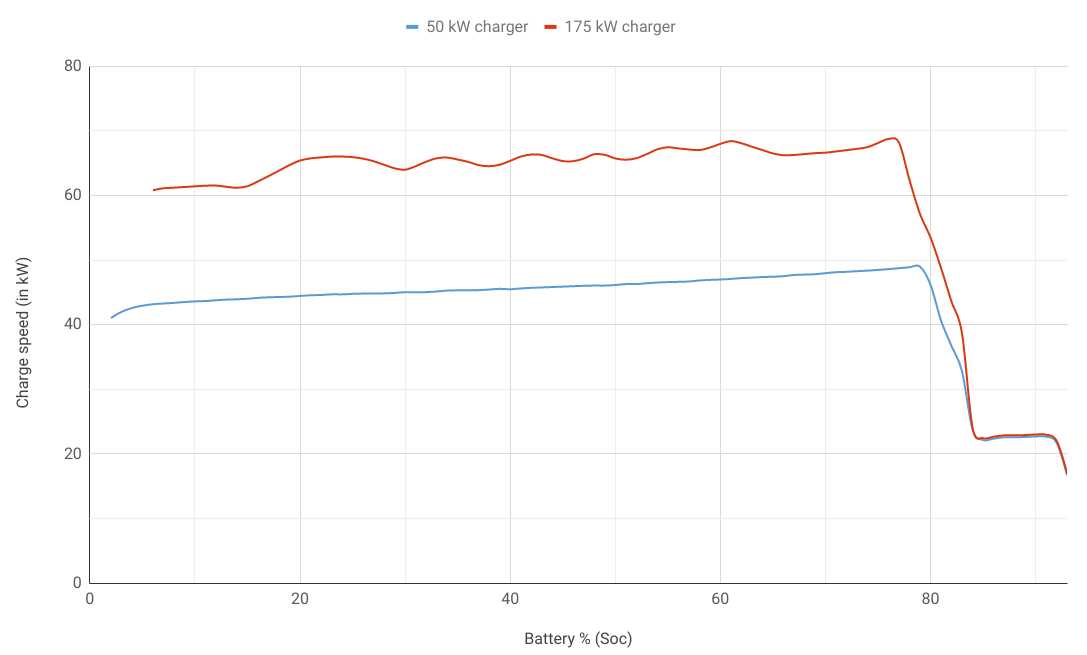
Fastned Ioniq GB

According to Fastned once again:

If you have a Hyundai Ioniq, then you use the CCS plug. The charge speed is up to 70 kW at our next generation fast chargers and 50 kW at our other chargers. In the charge curve below you can see the charge speed of the Ioniq at both chargers. On average the Ioniq charges 100 km in 15 – 25 minutes. Above 75% the charge speed requested by the car will drop, and above 85% the charge speed is reduced to 22 kW.
MRH Announces a Partnership with IONITY

MRH say they are the:

UK’s leading independent service station operator by number of sites, serving 2.5 million customers every week at our 491 sites across the country.

Following in the footsteps of Shell at the end of last month they announced today that:

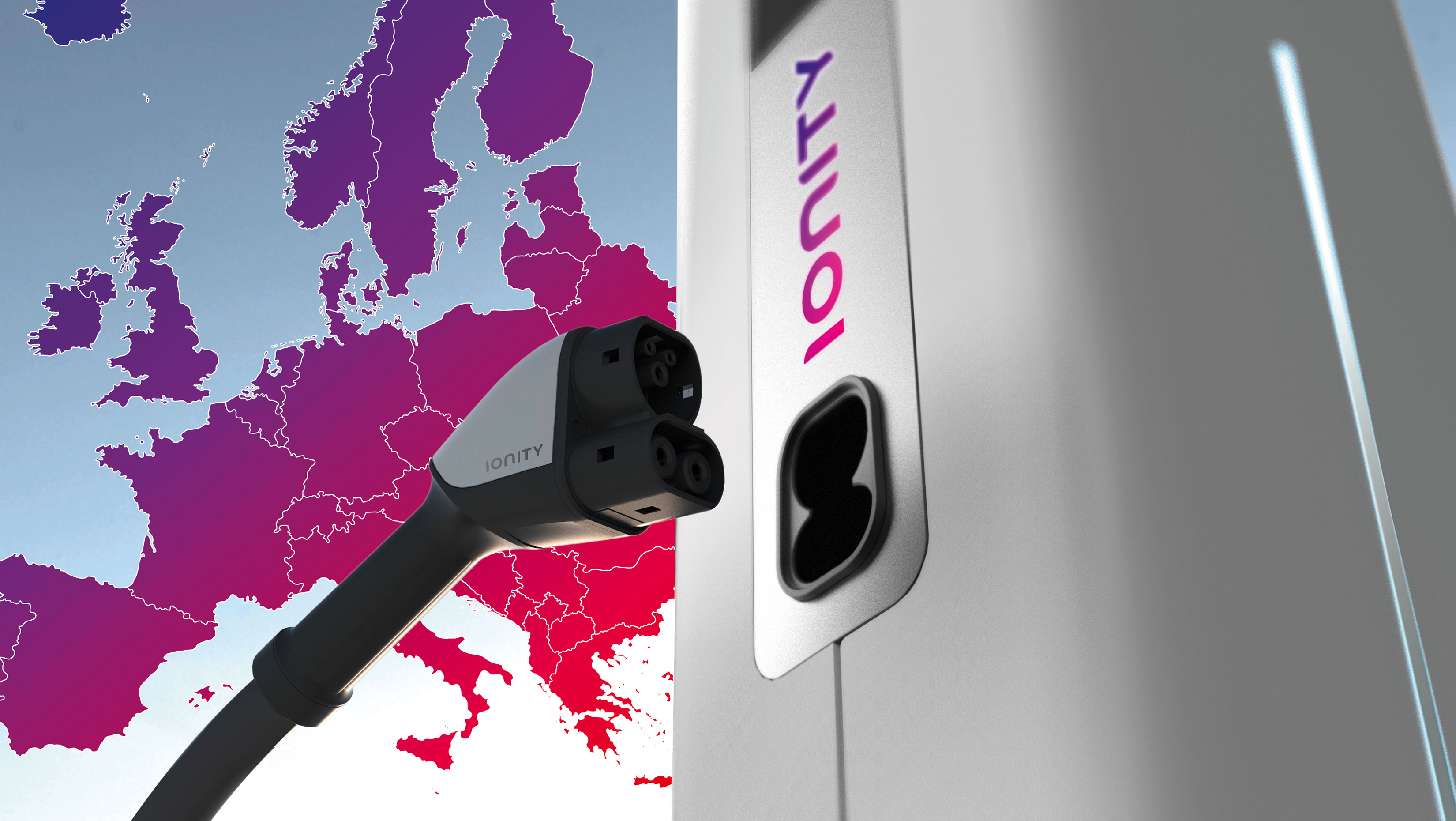
MRH, the leading independent forecourt trader, today announces a partnership with IONITY : a joint venture formed by leading car manufacturers which develops and implements a High-Power Charging (HPC) network for electric vehicles across Europe. The joint venture between BMW Group, Daimler AG, Ford Motor Company and the Volkswagen Group with Audi and Porsche, will build 400 fast charging stations across Europe by 2020.

MRH will be responsible for a significant number of sites across the UK by that time. The network will use the European charging standard Combined Charging System to significantly reduce charging times compared to existing systems. Each station will offer a capacity of 350 kilowatts, greater than the input capacity on any EV today. The current industry standard is just 50kW.

According to IONITY’s chief executive officer, Michael Hajesch:

We are excited to welcome MRH in the IONITY network. The partnership with MRH is key for us to leave a significant footprint in the United Kingdom as one of the major EV markets in Europe. It’s great to see how we are getting closer to our goal of enabling EV travel throughout Europe.

I’ll get excited once there’s a 350 kW EV charging station installed somewhere this side of Exeter!

Jeremy Clarkson on a Grand Tour to Save the World!

We’re currently planning a Grand Tour in an electric vehicle ourselves at the moment, heading to Italy via Switzerland. We were therefore both surprised and delighted to discover that ex Top Gear presenters Jeremy Clarkson, Richard Hammond and James May had revealed how to approach the challenge of charging an EV in Switzerland in the very first episode of the second series of Amazon’s “The Grand Tour” series!

In the boys supercar tour around Switzerland Jeremy was driving a Lamborghini Aventador S ICE, James was behind the wheel of a Honda NSX hybrid and Richard was piloting a Rimac Concept One all battery electric vehicle! Here’s a brief extract of some of Jeremy’s words of wisdom from the preview of the new series:

Here too is a sample of some of today’s other Grand Tour related Tweets:

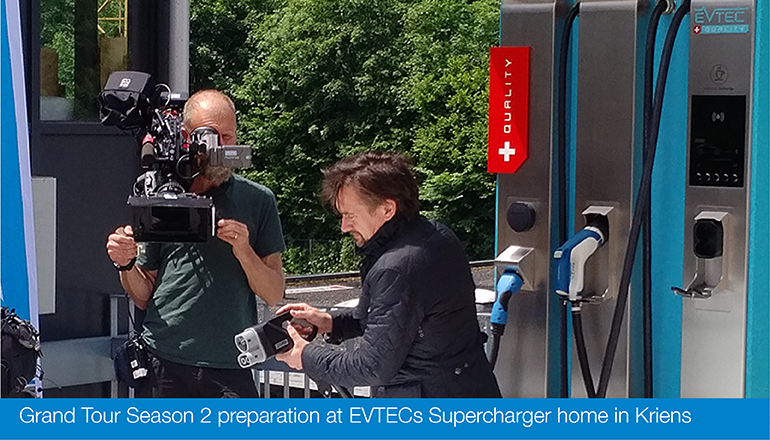
It’s great to hear the Grand Tour team singing the praises of a 100% electric vehicle. However it looks to us as if Jeremy et al’s researchers didn’t do their due diligence desperately doggedly. By way of one example, the episode was cut to suggest that Richard needed to go to the Swiss Museum of Transport on the edge of Lucerne in order to charge his Concept One. However in actual fact the ultra rapid EVTEC charger shown is located on the other side of Lucerne in Kriens. Here it is in all its glory in a photo on EVTEC’s web site:

Grandtour_EVTEC_Richard_Hammond_1

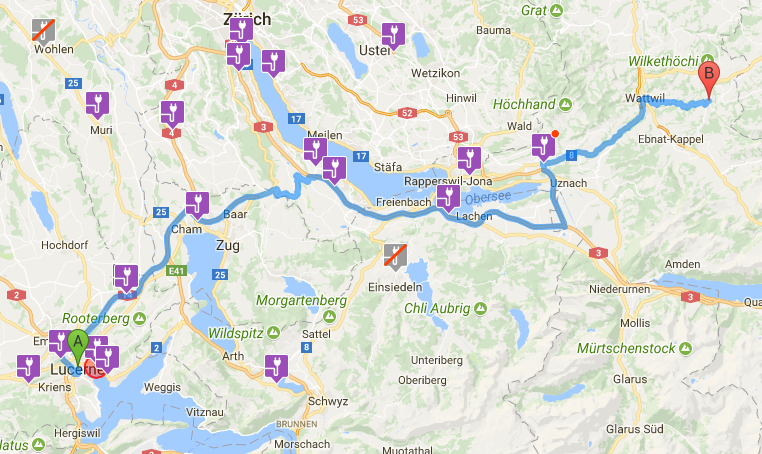
As you can see, the supercar fast charges via a CCS connector. Which leads us on to another example of The Grand Tour’s undue lack of diligence, since here is Chargemap.com‘s current map of CCS rapid chargers en route from Lucerne to Hemberg:

GrandTourCH

As you can see, there was really no need for Richard to drive the Rimac to Hemberg on the back of a truck, since there are any number of eminently suitable rapid chargers en route. I guess we’ll just have to put that down to dramatic licence on behalf of The Grand Tour’s producers?

Once the Rimac was unloaded from the back of the lorry, presumably with a fully charged battery pack, Richard managed to successfully negotiate the hill climb course. Here is what happened next:

Somehow I don’t think that was in the original script, do you?

IONITY – A New Pan-European High-Power Charging Network

In a press release a couple of days ago it was announced that:

BMW Group, Daimler AG, Ford Motor Company and the Volkswagen Group with Audi and Porsche today announced joint venture IONITY that will develop and implement a High-Power Charging (HPC) network for electric vehicles across Europe. Launching approximately 400 HPC stations by 2020, IONITY will make long-distance journeys easier and marks an important step for electric vehicles.

Based in Munich, Germany, the joint venture is led by Chief Executive Officer Michael Hajesch and Chief Operating Officer Marcus Groll, with a growing team, set to number 50 by the start of 2018.

A total of 20 stations will be opened to the public this year, located on major roads in Germany, Norway and Austria, at intervals of 120 km, through partnerships with “Tank & Rast”, “CircleK” and “OMV. Through 2018, the network will expand to more than 100 stations, each one enabling multiple customers, driving different manufacturer cars, to charge their vehicles simultaneously.

588961_ionity_2017_porsche_ag

As that image implies:

With a capacity of up to 350 kW per charging point, the network will use the European charging standard Combined Charging System to significantly reduce charging times compared to existing systems. The brand-agnostic approach and Europe-wide distribution is expected to help make electrified vehicles more appealing.

Unfortunately, from our perspective at least, it seems as though “Europe-wide” doesn’t currently include the United Kingdom. What’s more the new joint venture isn’t worldwide “brand-agnostic” either. It seems unlikely that any Japanese EV OEMs will be joining the group any time soon. When it comes to rapid charging they currently prefer the CHAdeMO connector!